
Presentation type:
PS – Planetary & Solar System Sciences

EGU26-44 | ECS | Orals | EOS1.1

SmarTerrae: Applied scientific training in geoscience from the earliest educational stages 

Lorena Salgado and Rubén Forján

We present an educational, learn-by-doing model that integrates real-world projects in geosciences, environmental management and conservation with the production and active dissemination of scientific outputs, complemented by digital communication as a largely passive outreach channel. The programme is motivated by a pronounced disconnection among young people—including those enrolled in environmental and territorial studies—and the place-based problems that surround them, a gap that jeopardizes the near-term availability of qualified environmental and land-management professionals. Our objective is to engage secondary, baccalaureate, vocational (FP), and undergraduate students as active participants in problem identification, project co-design, and execution—equipping them with the conceptual and technical tools needed to address environmental and territorial challenges in the north-west of the Iberian Peninsula.

A quasi-experimental pre-test–post-test design without a control group was implemented across multiple educational levels. The evolution of perceptions and competences was assessed using Likert-scale questionnaires, a register of scientific outputs, and baseline Instagram analytics. A distinctive feature of the model is that students are not only active co-designers of each project but also the primary executors of fieldwork and analysis under light supervision. In addition, they regularly present in age-appropriate scientific fora (e.g., school symposia, regional conferences), which deepens their sense of ownership and strengthens the bond with both the project and the territory.

Results indicate general improvements in interest in science and the environment, data-analysis capability, understanding of the research process, and willingness to participate in scientific activities. Tangible, transferable outputs were generated (e.g., a conference poster and articles published or in preparation), and continuity of training pathways was established. The @SmarTerrae profile is consolidating as a knowledge-transfer channel during the programme’s implementation phase, complementing in-person dissemination.

How to cite: Salgado, L. and Forján, R.: SmarTerrae: Applied scientific training in geoscience from the earliest educational stages, EGU General Assembly 2026, Vienna, Austria, 3–8 May 2026, EGU26-44, https://doi.org/10.5194/egusphere-egu26-44, 2026.

EGU26-712 | Posters on site | EOS1.1

Evaluating Dendroclimatology-Based Climate Education Across Stakeholder Groups in the Ukrainian Carpathians 

Dariia Kholiavchuk, Jan Šebesta, Maryna Dranichenko, Vladyslav Maievskyi, Alina Horiuk, Karolina Shestobanska, Yuliia Kuzenko, and Serhii Tokariuk

Translating paleoclimate evidence into actionable climate literacy requires context-specific pedagogical approaches. This study evaluates whether tangible proxy data (tree-ring records) enhances climate change comprehension compared to abstract datasets. It assesses differential educational strategies for three stakeholder groups with varying knowledge bases and decision-making responsibilities.

We conducted structured field workshops with 52 participants across three cohorts in the Ukrainian Carpathians during 2025 as part of the “Capacity Building for Research and Protection of Natural Forests in Western Ukraine” project. In collaboration with the Chernivtsi City Council’s Climate Policy Division, we designed learning objectives aligned with municipal adaptation planning needs, addressing a critical gap where protected area managers lack access to climate education. This integration of local ecological data with regional adaptation frameworks aims to enhance the effectiveness of climate adaptation efforts. University academics (n=8) and protected area rangers (n=4) attended seven-day workshops at Carpathian Biosphere Reserve and Vyzhnytskyi National Natural Park (July 2025). A separate field seminar at Tsetsyno highland employed a cascading pedagogy, where trained third-year geography students (n = 7) facilitated learning for second-year students (n = 7) and secondary pupils (grades 9-12, n = 25) in October 2025. All participants completed pre-workshop climate knowledge assessments, post-workshop evaluations, and structured feedback surveys (100% response rate).

Standardised content included physical examination of increment cores from 50- to 200-year-old beech and spruce, interpretation of ring-width chronologies showing documented climate extremes (the 1990s warming and the 2003 heatwave), soil and vegetation analysis, and regional temperature reconstruction visualisation (1750-2024). Municipal climate policy staff co-designed ranger modules emphasising management applications, including translating paleoclimate uncertainty into risk assessment and developing evidence-based adaptation strategies. Pre-assessment revealed critical baseline differences. Academics demonstrated strong theoretical knowledge (mean: 78%) but limited practical application capacity. Rangers possessed detailed, contemporary observational knowledge (mean: 65%), but lacked a historical context of climate. 93% of them could not identify whether current warming rates were unprecedented regionally. Secondary students showed the lowest baseline comprehension (mean: 41%).

Post-workshop assessments revealed differential gains among the groups. Rangers demonstrated the most significant increase in knowledge, particularly in interpreting timescales of climate variability. Academics showed modest gains, primarily in translating research for non-specialist audiences. Student moderators achieved substantial gains through the dual benefits of content mastery and pedagogical skill development. Secondary students showed significant improvements, with hands-on “tree doctor” activities generating the strongest engagement. Tangible proxy data effectively addressed the challenges of abstract temporal scales. Local site selection proved critical as participants connected evidence directly to familiar landscapes and management contexts.

Small sample sizes limit the generalizability of the findings, which represent a proof-of-concept that requires validation through larger studies and a cost-effectiveness analysis. However, the results suggest that paleoclimate proxies effectively communicate climate context to decision-makers who lack historical baselines, which is a critical gap in adaptation planning. The research-governance partnership model demonstrates how academic institutions can support the implementation of municipal climate policies through targeted capacity building, resulting in measurable outcomes in resource management and education.

How to cite: Kholiavchuk, D., Šebesta, J., Dranichenko, M., Maievskyi, V., Horiuk, A., Shestobanska, K., Kuzenko, Y., and Tokariuk, S.: Evaluating Dendroclimatology-Based Climate Education Across Stakeholder Groups in the Ukrainian Carpathians, EGU General Assembly 2026, Vienna, Austria, 3–8 May 2026, EGU26-712, https://doi.org/10.5194/egusphere-egu26-712, 2026.

EGU26-800 | ECS | Orals | EOS1.1

Speculative Storytelling as a Tool for Biodiversity and Climate Communication 

Chiara Anzolini, Fabio De Pascale, and Telmo Pievani

Communicating biodiversity loss and climate disruption to non-specialist audiences requires approaches that translate complex scientific processes into accessible and emotionally resonant forms. Speculative storytelling, including science fiction and future-oriented narratives, offers a promising strategy. By imagining plausible futures grounded in current scientific knowledge, these narratives illuminate the consequences of environmental change while encouraging reflection on societal choices, adaptive behaviours, and potential pathways forward.
Within the Science and Society spoke of the National Biodiversity Future Center (NBFC), funded by Italy’s National Recovery and Resilience Plan (PNRR), we adopt an interdisciplinary, research-informed framework for the design of such narratives. Science communicators operate as intermediaries between researchers and creative professionals – writers, illustrators, media producers – ensuring both scientific accuracy and narrative coherence. This role includes conceptual development, the selection of scientific experts based on thematic relevance and communication skills, and continuous collaboration throughout the creative process. It also extends to the public-facing dissemination of the resulting works, enabling coherence between scientific objectives, artistic expression, and audience engagement.

A key aspect of this approach is the strategic use of distinct speculative modes to engage different audiences. Dystopian narratives explore the ecological and social implications of biodiversity loss by depicting futures in which degraded ecosystems or climate-altered conditions shape daily life, effectively highlighting risks and long-term consequences. In contrast, positive or “post-crisis” futures imagine societies that have adopted sustainable practices and redefined their relationship with natural systems, promoting a sense of agency and motivating constructive engagement.
Embedding rigorous scientific input within imaginative world-building allows speculative storytelling to convey biodiversity and climate issues in ways that extend beyond traditional educational formats. By making abstract temporal scales, uncertain projections, and complex socio-ecological dynamics more concrete, these narratives support both understanding and emotional resonance. The use of varied media – from comics to podcasts – further enables the tailoring of content to diverse publics and communication contexts.
I will discuss selected initiatives that employ speculative storytelling for biodiversity and climate communication across different media formats. These examples show how interdisciplinary, narrative-driven approaches can create science communication that is both emotionally engaging and scientifically robust, enriching public understanding of environmental change.

How to cite: Anzolini, C., De Pascale, F., and Pievani, T.: Speculative Storytelling as a Tool for Biodiversity and Climate Communication, EGU General Assembly 2026, Vienna, Austria, 3–8 May 2026, EGU26-800, https://doi.org/10.5194/egusphere-egu26-800, 2026.

The project ‘Prison talks: bringing climate change conversations into the Irish prisons’ has been awarded an EGU Public Engagement Grant. This public engagement project brings talks on climate change, extreme weather events, and their impacts to inmates (people in prison) in Irish prisons, through the lens of science communication and outreach.

This project is raising awareness of climate change and its impacts among people in prison, a hard-to-reach audience with limited access to science communication and outreach activities. People in prison have an educational disadvantage, as many didn’t finish secondary school. This climate change outreach project plays a transformative role by providing values, knowledge, and skills to help individuals reach their full potential, motivate positive citizenship, develop social responsibility and personal transformation, increase well-being, and foster a sense of community and belonging, enabling them to live more successfully upon release.

People in prison completed anonymous surveys (quantitative and qualitative questions) before and after attending the climate change talks to assess their perceptions of climate change and science communication and to evaluate the project's effectiveness.

This presentation will outline the research methods, lesson plans, project’s findings and recommendations. The project ‘Prison talks: bringing climate change conversation into the Irish prisons’ highlights awareness of the importance of science communication and public engagement events among populations in prisons, which can be replicated in other countries.

How to cite: Mateus, C.: Prison talks: bringing climate change conversations into the Irish prisons, EGU General Assembly 2026, Vienna, Austria, 3–8 May 2026, EGU26-853, https://doi.org/10.5194/egusphere-egu26-853, 2026.

EGU26-1010 | ECS | Orals | EOS1.1

From Science to Practice: Co-Designing Windstorm Hazard & Risk Information for Dutch Portals 

Maria del Socorro Fonseca Cerda, Hans de Moel, Jeroen Aerts, Wouter Botzen, Koen Veenenbos, Lars de Ruig, Lisette Klok, and Toon Haer

Extreme winter windstorms are among the most expensive natural disasters in Europe and pose significant social and economic challenges.  The Netherlands frequently experiences winter storms that result in serious damage and large financial losses, especially for sectors like infrastructure and the built environment.

Climate Adaptation Services (CAS) created and manages national climate risk portals, such as the Klimaateffectatlas (www.klimaateffectatlas.nl) and the newly launched Dutch Climate Risk Portal (www.dutchclimaterisk.nl), which have helped the public in understanding vulnerabilities and risks by providing information on floods, drought, heat, and water-related hazards. However, until 2025, windstorms remained an essential missing risk, limiting urban and financial stakeholders' ability to interpret exposure and losses to these storms.

We studied winter windstorms, creating hazard maps and risk estimates. However, these scientific outputs are not directly applicable or understandable to stakeholders with diverse backgrounds and needs. Therefore, in collaboration with CAS, we co-created a map narrative and risk estimation tool, which was created through an iterative cycle of stakeholder workshops, feedback, and narrative design. The process aimed to make complex risk information accessible, usable, and intuitively understood for a wide range of users, regardless of technical background. The end result is the translation of windstorm science into practice, which is publicly available at the Klimaateffectatlas and the Dutch Climate Risk Portal, while ensuring relevance, clarity, and real-world impact for decision-makers.

How to cite: Fonseca Cerda, M. S., de Moel, H., Aerts, J., Botzen, W., Veenenbos, K., de Ruig, L., Klok, L., and Haer, T.: From Science to Practice: Co-Designing Windstorm Hazard & Risk Information for Dutch Portals, EGU General Assembly 2026, Vienna, Austria, 3–8 May 2026, EGU26-1010, https://doi.org/10.5194/egusphere-egu26-1010, 2026.

EGU26-1385 | Orals | EOS1.1

Scientific Storytelling in Geodesy: Using Cartoons, Videos, and Digital Platforms to Reach New Audiences 

Martin Sehnal, Laura Sánchez, and Detlef Angermann

Geodesy plays a fundamental role in observing and understanding Earth system processes, yet its societal relevance often remains under-recognized outside the specialist community. To address this gap, the Global Geodetic Observing System (GGOS) of the International Association of Geodesy (IAG) has expanded its science communication activities during the recent years to make geodetic concepts, products, and techniques accessible to diverse audiences. This contribution presents an integrated communication strategy combining digital platforms, visual storytelling, and community-driven initiatives.

A central element is the renewed GGOS and IAG web platform https://geodesy.science, which provides an easy understandable introduction to geodesy as well as clear, non-technical explanations of observation techniques, products, and real-world applications.

Complementing this, a growing series of multilingual short films (https://www.youtube.com/@iag-ggos) communicates the importance of geodesy for monitoring climate change, natural hazards, sea-level rise, and global reference frames. These videos have reached broad international audiences and are frequently used in public outreach events such as open-day exhibitions.

The newest initiative is the Geodesy Cartoons project https://geodesy.science/cartoon , which communicates complex geodetic topics through approachable, story-driven visual narratives. The associated Geodesy Cartoon Competition actively involves the international geodetic community in co-creating educational illustrations. This participatory approach fosters shared ownership, stimulates creativity, and supports the development of communication material usable across research, teaching, and outreach.

Together, these multimedia tools illustrate how geodesy contributes to society’s daily life and decision-making. This presentation reflects on successes and challenges in designing accessible content, coordinating contributions across the global geodesy community, and evaluating engagement through online analytics and feedback. By sharing insights from these ongoing initiatives, we aim to contribute to a broader discussion on effective communication of Earth and space sciences and to strengthen connections between geodesy and the wider public.

How to cite: Sehnal, M., Sánchez, L., and Angermann, D.: Scientific Storytelling in Geodesy: Using Cartoons, Videos, and Digital Platforms to Reach New Audiences, EGU General Assembly 2026, Vienna, Austria, 3–8 May 2026, EGU26-1385, https://doi.org/10.5194/egusphere-egu26-1385, 2026.

EGU26-1611 | Posters on site | EOS1.1

Innovative Tools for Science Education: Classroom Materials and Games from the INSE Project 

Eva Feldbacher, Laura Coulson, Carmen Sippl, Babette Lughammer, Ioana Capatu, Gregor Jöstl, Dominik Eibl, Michaela Panzenböck, Clara Rosenberger, Aimie Jung, and Gabriele Weigelhofer

The INSE project (Interdisciplinary Network for Science Education, led by WasserCluster Lunz and funded by GFF NÖ) has developed a comprehensive set of innovative, classroom-ready materials designed to strengthen scientific literacy across all educational levels. Co-created by researchers from the natural, social, and educational sciences together with partner schools, the materials translate core principles of scientific inquiry into engaging, age-appropriate learning experiences. All resources are freely available online and have been successfully tested in classroom settings.

For the primary level, the module The Forest of the Future introduces humanities-based inquiry through storytelling, exploratory learning, and creative techniques. Children investigate questions about environmental futures by engaging in narrative-based research tasks, learning how observation, interpretation, and imagination contribute to knowledge creation.

At the lower secondary level, a set of interactive Nature of Science (NOS) materials helps students understand the characteristics of scientific thinking. Activities highlight scientific evidence, uncertainty, the iterative nature of research, and the diversity of scientific methods. Abstract NOS concepts become tangible through hands-on tasks, role-play activities, and small-scale investigations.

For the upper secondary level, two modules allow students to conduct their own research:
(1) a natural science module in which students design and conduct an aquatic ecology respiration experiment, learning to formulate hypotheses, plan experiments, collect data, and interpret results; and
(2) a social science module that introduces learners to empirical social research through survey projects. Both modules guide students through the full research cycle and encourage reflective, evidence-informed thinking.

Beyond these core teaching packages, the project developed additional tools that make scientific inquiry accessible across informal and formal learning contexts: The research quartet Go Science introduces children aged 8+ to the fundamental steps of scientific inquiry through a playful card game. For teenagers, the Dive into Science learning app offers an interactive experience in which learners navigate scientific decisions based on real research questions - selecting hypotheses, designing experiments, analyzing sample datasets, and receiving direct feedback. Complementing these tools, the SCIBORG science board game supports learners aged 16+ in deepening their understanding of the scientific process.

Together, the INSE materials provide a powerful set of educational tools for fostering curiosity, critical thinking, scientific literacy, and trust in research. By showing how science works in practice, they support educators in integrating authentic scientific inquiry into everyday teaching.

In this presentation, we will showcase the full range of materials, allowing participants to explore, try out, and interact with the resources directly.

How to cite: Feldbacher, E., Coulson, L., Sippl, C., Lughammer, B., Capatu, I., Jöstl, G., Eibl, D., Panzenböck, M., Rosenberger, C., Jung, A., and Weigelhofer, G.: Innovative Tools for Science Education: Classroom Materials and Games from the INSE Project, EGU General Assembly 2026, Vienna, Austria, 3–8 May 2026, EGU26-1611, https://doi.org/10.5194/egusphere-egu26-1611, 2026.

EGU26-1677 | Posters on site | EOS1.1

Integrating Science Communication into Spain’s Atmospheric products: Insights from RESPIRE and CAMS-NCP 

Karinna Matozinhos de Faria, Marc Guevara, Paula Castesana, Paula Camps, Ivan Lombardich, Oliver Legarreta, Antonia Frangeskou, Diana Urquiza, Carles Tena, Francesco Benincasa, Elliott Steven, Santiago Ramírez, Carlos Pérez García-Pando, Yolanda Luna, Ernesto Barrera, Omaira Elena Garcia Rodriguez, and Ruben del Campo

Effective science communication is a central component of two major atmospheric initiatives in Spain: the “high-Resolution air Emissions Systems to suPport modellIng and monitoRing Efforts” (RESPIRE) and the Spanish component of the Copernicus Atmosphere Monitoring Service – National Collaboration Programme (CAMS-NCP). Both efforts, led collaboratively by the Barcelona Supercomputing Center (BSC) and the Spanish Meteorological Agency (AEMET), demonstrate how communication can be embedded into the design, implementation and societal uptake of advanced environmental projects.

Within RESPIRE, communication is treated as a strategic pillar supporting the development of high-resolution emissions estimates for air quality modelling and greenhouse gas (GHG) monitoring in Spain. Activities range from intuitive digital interfaces and stakeholder workshops to targeted web updates, newsletters, and social media outreach. A central element is a user-centric web application that visualizes carbon dioxide (CO₂) and methane (CH₄) fluxes. Together, these channels translate complex modelling outputs into actionable knowledge for public administrations, scientists, the private sector and citizens.

The CAMS-NCP communication strategy complements this by strengthening the visibility, understanding and uptake of CAMS products across national, regional and local levels. Building on the user network established during the first phase of the programme, Phase 2 implements a structured Communication and User Outreach Plan targeting policymakers, researchers, air quality planners, NGOs and citizens. Communication actions include regular updates to the CAMS-NCP website, coordinated press and social media campaigns, annual use case publications, and participation in national scientific and environmental events. Three annual CAMS User Forums and a final dissemination event provide spaces for technical dialogue, co-design and user feedback.

Across both initiatives, long-term communication experience reveals consistent lessons. Iterative co-creation with users increases uptake and ensures that tools respond to real needs. Trust is fostered through transparent messaging that acknowledges uncertainties while demonstrating methodological robustness. Effective communication requires not oversimplification but a strategic tailoring of information to specific decision contexts, from policy design and mitigation tracking to public awareness.

The challenges faced are also shared: conveying technically dense atmospheric information to non-experts, managing expectations about product capabilities, and maintaining visibility amid numerous parallel initiatives. Despite this, successes are significant. RESPIRE- has received international recognition from the Integrated Global Greenhouse Gas Information System (IG3IS), an initiative of the World Meteorological Organization (WMO), while CAMS-NCP continues to expand its user community and reinforce national alignment with European atmospheric services.

Together, RESPIRE and CAMS-NCP show how integrating communication into environmental science projects enhances societal impact. By combining advanced modelling with intentional, user-focused communication, both initiatives contribute to a more informed society and strengthen Spain’s capacity to address climate change and air quality challenges.


How to cite: Matozinhos de Faria, K., Guevara, M., Castesana, P., Camps, P., Lombardich, I., Legarreta, O., Frangeskou, A., Urquiza, D., Tena, C., Benincasa, F., Steven, E., Ramírez, S., Pérez García-Pando, C., Luna, Y., Barrera, E., Elena Garcia Rodriguez, O., and del Campo, R.: Integrating Science Communication into Spain’s Atmospheric products: Insights from RESPIRE and CAMS-NCP, EGU General Assembly 2026, Vienna, Austria, 3–8 May 2026, EGU26-1677, https://doi.org/10.5194/egusphere-egu26-1677, 2026.

EGU26-1870 | Orals | EOS1.1

Interactive wetland education: Classroom materials following a constructivist instructional framework (Horizon Europe Restore4Life) 

Gabriele Weigelhofer, Tim Grandjean, Eva Feldbacher, Clara Rosenberger, Viktória Miklósová, Alma Mikuška, Dubravka Čerba, Jasna Grabić, Zorica Srđević, and Gabriela Costea

Wetlands are some of the most endangered ecosystems on the planet. There is an urgent need for large-scale wetland restoration and protection efforts that involve local community support. In our Horizon Europe project, Restore4Life (https://restore4life.eu/citizen-science/), we have developed a range of innovative offline and online educational materials to raise awareness of the vital ecosystem services that wetlands provide to humans.

Our materials are based on the 5E constructivist learning model. This inquiry-based, student-centered approach encourages active learning as students’ knowledge is built on understanding connections and processes. The five phases start with capturing students' interest and assessing prior knowledge/misconceptions (Engage), leading to investigating topics through hands-on activities and observations (Explore). In the Explain phase, students interpret their findings with the teacher's support. The last two phases focus on the application of the students’ newly acquired knowledge to deepen their understanding (Elaborate) and, finally, on the knowledge assessment by students and teachers (Evaluate). While our materials were developed for 12-14-year-olds, they can be easily adapted to younger or older kids.

Beyond these core teaching packages, the project developed additional tools, such as the “Blue-Green Space4All” game, a dynamic Wetland Fresk, available in both online and offline formats. A manual and a video provide instructions for building a simple treatment wetland, and our Wetland4Life App can be used to assess the wetland status directly in the field. All resources are freely available online (Zenodo) and have been successfully tested in classroom settings. Together, the Restore4Life materials provide a robust set of educational tools for fostering understanding of the significance of intact wetlands for human well-being.

In this presentation, we will showcase 5E teaching materials on the social, economic, and ecological benefits of intact wetlands, including supplying construction materials, providing recreational areas, and mitigating climate change and pollution. Participants can explore, test, and interact with the materials. Restore4Life is funded by the European Union.

How to cite: Weigelhofer, G., Grandjean, T., Feldbacher, E., Rosenberger, C., Miklósová, V., Mikuška, A., Čerba, D., Grabić, J., Srđević, Z., and Costea, G.: Interactive wetland education: Classroom materials following a constructivist instructional framework (Horizon Europe Restore4Life), EGU General Assembly 2026, Vienna, Austria, 3–8 May 2026, EGU26-1870, https://doi.org/10.5194/egusphere-egu26-1870, 2026.

EGU26-1949 | Orals | EOS1.1

A little bit of activism increases trust in climate scientists 

Erik van Sebille, Celine Weel, Rens Vliegenthart, and Mark Bos

Some climate scientists refrain from advocacy and activism in their science communication because they fear it decreases their credibility. But whether there is indeed a relation between activism and credibility can be tested.

Here, we discuss the results of an experiment where 1,000 Dutch respondents first read a text on the impacts of the greening of gardens. Respondents are randomly assigned to either a version written in neutral tone, or a version written in an advocating tone. We then compare how the respondents perceive the credibility of the authoring scientist in these texts.

Our analyses show that the perceived credibility of the scientist who authored the text increases by advocacy overall, and that the advocating scientist is considered more credible than the neutral scientist specifically in their perceived sensitivity and care for society.

Based on these results, we conclude that advocacy can increase the climate scientist's average perceived credibility. This study may thus serve as endorsement for the many climate scientists who are willing to take a more advocacy-driven approach in their communications but are unsure of the consequences.

How to cite: van Sebille, E., Weel, C., Vliegenthart, R., and Bos, M.: A little bit of activism increases trust in climate scientists, EGU General Assembly 2026, Vienna, Austria, 3–8 May 2026, EGU26-1949, https://doi.org/10.5194/egusphere-egu26-1949, 2026.

It has been well documented that social norms play a key role in motivating behavioral change. Although research on the effects of normative messages on pro-environmental decision-making has increased in recent years, our understanding of how these messages influence behavior remains limited (Chung & Lapinski, 2024). In particular, many pro-environmental behaviors have not yet achieved widespread adoption, and normative influences are often ineffective in such contexts. Consequently, scholars have begun to focus on dynamic norms, which refer to changing patterns of norms surrounding specific behaviors (Sparkman & Walton, 2017). When only a minority engages in a particular behavior, static norms that reflect behavior at a single point in time may inadvertently discourage action by emphasizing low participation rates. In contrast, dynamic norms, which highlight increasing popularity of a given behavior, have been shown to promote engagement (Sparkman & Walton, 2017). Accordingly, dynamic norms are considered particularly effective in contexts where pro-environmental behaviors have not yet become the majority practice. However, empirical evidence remains limited, and existing findings are inconsistent.

To advance understanding of norm framing effects (static vs. dynamic), the present study examines the underlying mechanisms through which norm framing influences behavior and investigates how these effects vary as a function of individual skepticism, specifically in the context of climate change. Environmental skepticism—defined as the tendency to doubt the seriousness, causes, or scientific evidence of environmental problems—has been identified as a key factor hindering effective environmental communication and behavior change.

An online experiment was conducted with 367 participants in South Korea. Participants first completed measures assessing climate change skepticism and were then randomly assigned to one of two norm-framing conditions (static vs. dynamic) related to pro-environmental behaviors aimed at mitigating climate change. They subsequently responded to measures of key variables.

The results indicated that the interaction between norm framing and skepticism did not significantly affect preconformity; however, it had a significant effect on reactance. Specifically, higher levels of skepticism were associated with greater reactance in response to dynamic norm messages compared to static norm messages. Moreover, this increased reactance was associated with reduced pro-environmental attitudes and behavioral intentions. This study contributes to the theoretical understanding of normative influence and climate change skepticism and offers practical implications for climate communication as well as directions for future research.


References

Chung, M., & Lapinski, M. K. (2024). The effect of dynamic norms messages and group identity on pro-environmental behaviors. Communication Research, 51(4), 439–462.

Sparkman, G., & Walton, G. M. (2017). Dynamic norms promote sustainable behavior, even if it is counternormative. Psychological Science, 28(11), 1663–1674.

How to cite: Kim, J. and Shin, G.: Normative Influences and Climate Change Mitigation: How Skeptical Individuals Respond to Dynamic Norm Messages and Why, EGU General Assembly 2026, Vienna, Austria, 3–8 May 2026, EGU26-2148, https://doi.org/10.5194/egusphere-egu26-2148, 2026.

EGU26-2340 | Posters on site | EOS1.1

Expanding remote sensing–based environmental education: the Ecoview competition from national to international level 

Svitlana Babiichuk, Stanislav Dovgyi, and Lidiia Davybida

The rapid development of Earth observation technologies presents significant opportunities to promote environmental responsibility and data literacy globally. Building on the success of the All-Ukrainian competition "Ekopohliad" ("Ecoview"), established in 2019 by the GIS and Remote Sensing Laboratory of the National Centre "Junior Academy of Sciences of Ukraine", the initiative was expanded internationally in 2024 and 2025. The International Ecoview competition aims to engage school students (14-18 years old) from different countries in investigating real environmental and climate-related problems using open satellite data and geospatial tools. Participation requires the use of open-access remote sensing datasets and their analysis through accessible platforms, such as Copernicus Browser, Google Earth Engine, NASA Giovanni, NASA Worldview, Google Earth Pro, and QGIS.

The competition combines independent student research, mentor guidance, and evaluation by an international jury of experts in Earth observation and environmental science. Educational support includes webinars, methodological guidelines, and a video course on satellite data and GIS analysis, ensuring students develop practical research and analytical competencies. 

The first international edition in 2024 engaged 96 students from all school grades (K–12) from Ukraine and 14 other countries. In 2025, the competition was limited to participants aged 14–18 years to ensure fair competition among students of comparable age, engaging 60 students from Ukraine and 16 foreign countries, with balanced representation from Europe, Asia, Africa, and Latin America. Twenty finalists presented research covering a wide range of environmental topics, including urban environments, forests, surface water, desertification, extreme events, climate change, and notably, the ecological consequences of war. The diversity of geographical contexts allowed participants to compare environmental processes across regions and to develop a broader understanding of global environmental challenges.

Preliminary outcomes indicate that the international format of Ecoview enhances students' motivation, promotes critical thinking, and improves their ability to work with primary geospatial data sources. The competition also contributes to the formation of an international youth community interested in applying remote sensing for environmental research and sustainable development. These positive results demonstrate the project's effectiveness and underscore the need for continued support and expansion of the initiative.

Future priorities include expanding participation, strengthening the educational component with updated materials, promoting interdisciplinary research, and further developing mentor and expert networks. These plans aim to inspire continued engagement and innovation in environmental education.

The experience of scaling Ecoview from a national to an international initiative demonstrates its potential as a replicable model for integrating Earth observation into school-level science education while addressing complex global environmental challenges.

How to cite: Babiichuk, S., Dovgyi, S., and Davybida, L.: Expanding remote sensing–based environmental education: the Ecoview competition from national to international level, EGU General Assembly 2026, Vienna, Austria, 3–8 May 2026, EGU26-2340, https://doi.org/10.5194/egusphere-egu26-2340, 2026.

The water–energy–food–ecosystems (WEFE) nexus is increasingly recognized as a promising approach to addressing ‘wicked problems’, that is, complex challenges marked by uncertainty and conflicting interests. Climate extremes are exposing vulnerabilities and trade-offs within the nexus, underscoring the need for co-designed, participatory governance approaches that move beyond sectoral silos and expert-driven decision-making. This approach emphasises social learning, knowledge co-production, and exchange as means of integrating scientific expertise, policy priorities, and local community perspectives. By fostering cross-sector collaboration, co-designed processes can generate trusted and actionable solutions that are responsive to both local and systemic challenges.

This study introduces a collaborative, multi-stakeholder framework to explore the vision of the WEFE nexus, identify key internal and external drivers of change, and co-design solutions and policy scenarios that reinforce interlinkages between nexus dimensions under climate change. Lake Como, northern Italy, serves as a case study due to competing water demands and increasing impacts of extreme weather events. Between October 2023 and February 2025, we conducted a series of dialogues with 20 key stakeholders representing each nexus dimension (e.g., lake operator, regional government, energy companies, irrigation districts, environmental platforms, municipalities). These dialogues combined semi-structured interviews, questionnaires, and workshops. Content analysis and statistical methods were used to examine stakeholders’ narratives, providing insights on 1) a shared vision of the nexus dimensions, 2) assessment of two policy scenarios: hydropower maximization and risk management, 3) evaluation of proposed solutions in terms of priority, relevance, effects on nexus dimensions, facilitation instruments, and implementation barriers, and 4) governance standards in the decision-making process.

The main findings show that nexus dialogues are a central vehicle for operationalising the WEFE nexus. They enabled a deeper understanding of the local context and associated needs, grounded nexus assessments in real-world conditions, and fostered social learning through stakeholders’ engagement. Stakeholders agreed that the nexus is fragile, highlighting the need to reinforce the green energy transition, innovate in food security, and better align human pressures across sectors. The two policy scenarios were analysed with respect to the benefits and impacts of each nexus dimension. Selected solutions –such as changes in hydropower licenses, adjustments in ecological flow standards, adaptations in lake management protocols, and insurance programs to address weather extremes– were evaluated based on stakeholders’ preferences. Governance analysis revealed the multifunctional roles of specific stakeholders (e.g., lake operator, irrigation districts, environmental associations), gaps in representativeness (e.g., mountain communities, municipalities), and participants’ aims to both negotiate and influence decisions. By placing stakeholder engagement at the core of co-designed policy scenarios, this work contributes actionable knowledge for policymakers and practitioners tackling WEFE nexus challenges in climate-exposed regions worldwide.

How to cite: Ricart, S. and Castelletti, A.: Co-Designed, Stakeholder-Driven Governance for the WEFE Nexus under Climate Extremes: Lessons from Lake Como, Italy, EGU General Assembly 2026, Vienna, Austria, 3–8 May 2026, EGU26-2541, https://doi.org/10.5194/egusphere-egu26-2541, 2026.

EGU26-3476 | Posters on site | EOS1.1

The Rocca di Papa (Italy) INGV Geoscience Museum: the last four years of activities  

Laura Colini, Valeria Misiti, Tommaso Alberti, Giuseppe Falcone, Tiziana Lanza, Antonella Megna, Antonella Cirella, Nicola Pagliuca, Luca Tarchini, and Massimo Ranaldi

The Geoscience Museum of Rocca di Papa (MuGeos), Italy, promotes science communication and education on behalf of Istituto Nazionale di Geofisica e Vulcanologia (INGV). The Museum is located at the centre of Alban Hills volcanic district, a dormant volcano whose last eruptive activity, an hydromagmatic phase, is dated about 20 ky ago. During the last four years the MuGeos has carried out activities dedicated to generic non expert public also joined with the municipality of Rocca di Papa, and to schools from Primary to Secondary.  All these activities belong to the so called Third Mission of INGV that consists of the diffusion of scientific knowledge. The education activity has been focused on the involvement of a significant number of schools coming from the surrounding territory but also from distant regions. The activity with students has consisted of an interactive and attractive guided tour through the knowledge of the Earth system (i.e. space weather, geomagnetism, seismology and volcanology, climate change), the Alban Hills Volcano, its origin hazard and peculiarities.  Moreover, the Museum has been involved in the Science Together Net project cofunded by the European Union through the organization of the European Researcher Night. In this context we have proposed activities involving kids, children and adults such as geotrekking on Alban hill volcano, seminars, labs of explosive and effusive volcanoes, paper volcanoes (origami) and fairy tales on geological myths, guided tours of the Museum, stars and planets observation through a telescope. The above mentioned activities have been proposed also during the Museum opening of every second Sunday of the month.  Further several activities dedicated to generic public have been promoted together with Rocca di Papa municipality in occasion of local events such as the October Chestnut Festival, the World Moon Day, the World Horse Festival, the Marconian Day Recurrence etc. During these popular events the MuGeos has been a fundamental actor in the awareness of citizens towards natural hazard and risks related to the territory.  Feedbacks of all the MuGeos activities are extremely positive; same teachers keep coming to the Museum every scholastic year, many positive public review on Google platform, satisfaction questionnaire.

How to cite: Colini, L., Misiti, V., Alberti, T., Falcone, G., Lanza, T., Megna, A., Cirella, A., Pagliuca, N., Tarchini, L., and Ranaldi, M.: The Rocca di Papa (Italy) INGV Geoscience Museum: the last four years of activities , EGU General Assembly 2026, Vienna, Austria, 3–8 May 2026, EGU26-3476, https://doi.org/10.5194/egusphere-egu26-3476, 2026.

YouTube hosts several collections of videos that focus on topical geological topics. This presentation is concerned with viewer engagement around content on one of these. The Shear Zone channel, as of January 2026, has over 15k subscribers with over 1.25M views across its ~300 videos. Launched as a platform for sharing educational content aimed at university earth science students, over its five-year existence, films have evolved to a more documentary style and accessed increasingly by broader communities outside formal education environments. Although viewing figures, compared with some other popular YouTubers are not astronomical, some have attracted >>25k views with full views running at >18% (which is high for YouTube!). Comments are permitted, though moderated – which, along with “likes” and channel analytics – give insight on the reach, popularity, opinions and background of viewers.

To lever YouTube algorithms, content is monetised by permitting advertising at the start of each video but not with commercial breaks mid-programme, which can degrade viewer experience. Non-monetised content is marginalised by the platform. YouTube also has very strong recency bias in the content it reveals and it promotes content that attracts viewer engagement and retention. While there is long-term, recurrent viewer engagement for short-course teaching materials on The Shear Zone, views of the broader documentary style material generally die off after a few days. Very few users explore content by access channel home-pages or playlists – hence the preponderance of rather sensationalist thumbnails used by other content-creators to attract views. This presentation reports viewer engagement on a subset of content published on The Shear Zone channel.

In April-May 2024, the BBC’s broadcast the fourth series of Race Across The World, advertised as a journey through “The Ring of Fire in east and south-east Asia.  Independent of this, as the series developed, I dropped two videos each week, appropriate to that particular segment of the race, on YouTube. Meta-tagged to RATW, these covered topics as diverse as megathrust earthquakes and tsunamis, Holocene sea-level change, palaeogeographic assembly of SE Asia, volcanic eruptions and biogeography. Views ranged from around 2k to 25k, the most popular being a video on Krakatoa. Interestingly the tie-in to RATW seems to have yielded rather few views – most of the audience came from E and SE Asia!

More popular videos have attracted disproportionate comment from what politely might be called adherents to non-mainstream geoscience ideas – even when these are only tangentially associated with the video contents. Two films have attracted particular attention: The disappearing glaciers of Mont Blanc (published August 2022); and Trashing continental drift (in two parts; published September 2025). These commentaries provide useful insights on the types of evidence and information used by these communities and the challenge of communicating science when contested.


How to cite: Butler, R.: The Shear Zone Channel – reflections on sharing geological science on YouTube, EGU General Assembly 2026, Vienna, Austria, 3–8 May 2026, EGU26-3525, https://doi.org/10.5194/egusphere-egu26-3525, 2026.

EGU26-3534 | Orals | EOS1.1 | Angela Croome Award Lecture

Sleepy cat and the cosmic dust: Lessons for non-fiction writing from 10 years as a magazine editor  

Joshua Howgego

To oversimplify things slightly, there are two types of story in journalism: the short ones and the long ones. I’ve spent much of my career so far focussed on the latter, known as features, which has meant an awful lot of head-scratching about how to keep readers engaged, excited, gripped by a story that goes on for several thousand words – no simple matter in the age of AI slop and TikTok.  

In this lecture, I’ll spill the beans on how we do things at New Scientist magazine, where I have worked for just over 10 years, with special reference to an idea known as “sleepy cat” from the mind of my brilliant former colleague Graham Lawton. I’ll also show how I used some of the tricks of creating compelling narratives in one of the stories in my book, The Meteorite Hunters – namely the tale of Jon Larsen, the Norwegian jazz guitarist who hunts cosmic dust on urban rooftops. 

Whether you want to better understand how journalists think, yearn to improve your own writing, or just enjoy thinking about how stories work, there should be something of interest here for you.

How to cite: Howgego, J.: Sleepy cat and the cosmic dust: Lessons for non-fiction writing from 10 years as a magazine editor , EGU General Assembly 2026, Vienna, Austria, 3–8 May 2026, EGU26-3534, https://doi.org/10.5194/egusphere-egu26-3534, 2026.

EGU26-4107 | Orals | EOS1.1

Relaunching the Skeptical Science website to include prebunking tools 

Bärbel Winkler and John Cook

Skeptical Science is a highly-visited website featuring 250 rebuttals of misinformation about climate change and climate solutions. Many of the rebuttals are written at multiple levels—basic, intermediate, and advanced—in order to reach as wide an audience as possible. Results from a survey we've been running on our website since November 2021 indicate that there is some room for improvements in order to make the rebuttals more robust. It is therefore rather good timing that we've been working on a complete overhaul of our website which should increase the effectiveness of rebuttals in reducing acceptance in climate myths and increasing acceptance of climate facts. A key goal of misinformation interventions is to increase reader discernment, the difference between belief in facts and belief in myths. While there was overall an increase in discernment, with the decrease in agreement with myths greater than the decrease in agreement with facts, the result that belief in climate facts decreased for at least some rebuttals is unwelcome and counter to the goal of Skeptical Science. In this presentation, we'll give a sneak peek at how the new website will look like. One important new feature will be the inclusion - where applicable - of the fallacies employed by a climate myth, so that a rebuttal on the new website will then include all three elements of a successful debunking: fact, myth and fallacy. In my presentation, I'll also highlight some of the other updated or new features this website relaunch will include.

How to cite: Winkler, B. and Cook, J.: Relaunching the Skeptical Science website to include prebunking tools, EGU General Assembly 2026, Vienna, Austria, 3–8 May 2026, EGU26-4107, https://doi.org/10.5194/egusphere-egu26-4107, 2026.

EGU26-5228 | Posters on site | EOS1.1

Keeping users in the loop: Outreach activities for ECMWF IFS and AIFS forecast model updates 

Milana Vuckovic, Becky Hemingway, Martin Suttie, and Victoria Bennett

ECMWF develops and maintains operational forecasting systems, which include the physics-based Integrated Forecasting System (IFS) and the Artificial Intelligence Forecasting Systems (AIFS Single and AIFS Ensemble). These models are upgraded periodically, delivering significant scientific and technical improvements, however these changes pose challenges for users who need to understand the implications to their workflows and applications and make required modifications.

Outreach activities combine structured documentation, targeted email notifications of key upgrade milestones, and LinkedIn and the ECMWF forum posts to reach wider audiences and gather feedback. These channels are complemented by series of webinars and presentations at the annual Using ECMWF's Forecasts (UEF) meeting, where technical and scientific upgrades are presented and discussed with users.

This presentation will describe ECMWF’s outreach activities around IFS and AIFS model upgrades, which are designed to support a diverse user community, including researchers, operational forecasters and developers of AI driven applications, among others. Lessons learned and key challenges will be presented, these include addressing the needs and expectations of diverse audiences with different levels of expertise, synchronising communication with operational timelines and maintaining consistent narratives across platforms, ensuring that key information is accessible without overwhelming users.

How to cite: Vuckovic, M., Hemingway, B., Suttie, M., and Bennett, V.: Keeping users in the loop: Outreach activities for ECMWF IFS and AIFS forecast model updates, EGU General Assembly 2026, Vienna, Austria, 3–8 May 2026, EGU26-5228, https://doi.org/10.5194/egusphere-egu26-5228, 2026.

EGU26-5425 | Posters on site | EOS1.1

User outreach and engagement at ECMWF: Examples of partnerships, outreach and innovation support 

Becky Hemingway, Milana Vuckovic, Cristina Ananasso, Chris Stewart, Julia Ioannu, Athina Trakas, Olga Loegl, and Stijn Vermoote

ECMWF’s Partnerships and Engagement section supports the effective use of ECMWF, Copernicus and Destination Earth services, datasets and infrastructure through partnerships and many targeted outreach and engagement activities. This work serves a diverse user community, including the National Meteorological Services (NMS) of ECMWF Member and Co-operating States (MS and CS), EU Member States, EU institutions and agencies, and WMO and other UN bodies, as well as a growing community of researchers, private companies, weather enthusiasts and other users.

This poster presents selected examples of outreach and engagement activities and shows how different approaches are combined to respond to evolving user needs and to build sustained dialogue with user communities. Liaison visits to ECMWF MS and CS NMSs support long-term collaboration and enable direct discussions on ECMWF activities including operational needs of forecasters. Further engagement is delivered through the Copernicus CAMS and C3S National Collaboration Programmes, which aim to strengthen the links with National Partner institutions and increase the uptake of Copernicus services at country level. In addition, the first two Copernicus Thematic Hub pilots, which focus on health and energy, are demonstrating the value of targeted outreach and support across these sectors.

Training activities are a key part of ECMWF's outreach and cover topics ranging from Numerical Weather Prediction and machine learning to software development and high-performance computing. Experience shows that combining clear explanations with practical examples is important for supporting users with different backgrounds and levels of experience, especially in an increasingly open science environment.

ECMWF Outreach also includes activities around ECMWF’s forecast model upgrades, such as updates to the Integrated Forecasting System (IFS) and the Artificial Intelligence Forecasting System (AIFS) in the medium, sub-seasonal and seasonal forecast ranges. These activities focus on communicating and explaining scientific and technical developments in the models and how they may effect user workflows, new forecast products, and how the updated models perform based on evaluation results.

Code for Earth programme offers hands-on, challenge-based opportunities for participants to develop innovative applications using ECMWF, Copernicus and Destination Earth data and software. The AI Weather Quest is a real-time international competition in which participants submit AI-based sub-seasonal forecasts in an operational-like setting, with results evaluated through transparent and openly documented methods.

How to cite: Hemingway, B., Vuckovic, M., Ananasso, C., Stewart, C., Ioannu, J., Trakas, A., Loegl, O., and Vermoote, S.: User outreach and engagement at ECMWF: Examples of partnerships, outreach and innovation support, EGU General Assembly 2026, Vienna, Austria, 3–8 May 2026, EGU26-5425, https://doi.org/10.5194/egusphere-egu26-5425, 2026.

EGU26-5542 | ECS | Posters on site | EOS1.1

Graphic novel communicates changes in Arctic landscapes, fostering wonder and curiosity 

Domino Jones, Nina Kirchner, and Johanna Dahlkvist

The Arctic has long captured the imagination through its remoteness, wildlife, striking landscapes, and rich cultural histories. At the same time, Arctic environments are undergoing rapid and profound changes, with many landscapes expected to be transformed beyond contemporary recognition by the end of this century. Communicating these changes to non-specialist audiences presents a significant challenge: they unfold across vast spatial and temporal scales, are studied through multiple disciplinary lenses, and resist simple or singular narratives. From ancient glaciers to pioneering lichen, no single process exists in isolation. Rather, Arctic change emerges through the interaction of glaciological, geological, botanical, fluvial, and meteorological processes. Understanding and communicating this complexity requires approaches that can hold multiple perspectives together while making these remote landscapes emotionally accessible and relevant to the audience.

We present ‘Arctic Flowers’, a science communication graphic novel which explores changing Arctic landscapes through the lived experiences of scientists working in the Tarfala Valley of northern Sweden. As most of Sweden’s glaciers face complete disappearance before the year 2100, this story captures a pivotal moment in the region’s history. Rather than adopting a purely catastrophic narrative, ‘Arctic Flowers’ foregrounds nuance, emotional connection, and scientific practice through non-fiction visual storytelling. The narrative follows researchers at Tarfala Research Station as they document retreating glaciers and the parallel emergence of Arctic flora. A central narrative thread connects contemporary research to a rediscovered herbarium created in the 1960s by botanist Adélaïde Stork, allowing readers to grasp climate change through intergenerational scientific observation and long-term data.

Graphic novels offer a powerful medium for science communication, particularly for topics that span multiple spatial and temporal scales. Through the juxtaposition of panels, text, and imagery, multiple concepts can be laid out on the page together, encouraging reflection and synthesis from the audience. Shifts in perspective, scale, and framing are used to emphasize grandeur at multiple scales, from larger-than-life structures such as mountains, glaciers, and research station operations to small, attentive details—the textures of plants and rocks, or the correct way to hold an ice axe. By blending scientific data, historical context, personal experience, and observation of the landscape, the project aims to spark curiosity and invite readers to ask questions about the changing Arctic. This mirrors the inquisitive and exploratory approach practiced by scientists within the story, drawing on first-hand accounts and interviews with generations of researchers at Tarfala Research Station – their experience spanning six decades. We reflect on lessons learned from developing this work as a long-form science communication effort, including how narrative and character-driven inquiry can foster emotional engagement, encourage dialogue, and make Earth science accessible and meaningful to diverse audiences.

How to cite: Jones, D., Kirchner, N., and Dahlkvist, J.: Graphic novel communicates changes in Arctic landscapes, fostering wonder and curiosity, EGU General Assembly 2026, Vienna, Austria, 3–8 May 2026, EGU26-5542, https://doi.org/10.5194/egusphere-egu26-5542, 2026.

EGU26-6304 | Posters on site | EOS1.1

Slow Science Communication 

Siska Van Parys, Stijn Pardon, and Reinout Verbeke

Most science communication today is short and fast — but at the Institute of Natural Sciences we also try something different. Together with colleagues, Siska Van Parys works on long-form stories that highlight the institute’s core research areas — palaeontology, geology, archaeology, taxonomy, evolution — and the collections that support them. They create overview articles on the website, mini-documentaries about expeditions and fieldwork, and stories that put the spotlight on the people behind the research. 

Siska will share some of the projects she’s been involved in, what they hope to achieve with them, and why slow science communication has become part of the approach of the Institute of Natural Sciences.

The main examples will revolve around two geology projects: ROBOMINERS and LEAP. These scientific projects, carried out by the geologists of the Institute of Natural Sciences (Giorgia Stasi, Christian Burlet, Sophie Verheyden), were followed and documented by Siska and her colleagues. The results are two mini-documentaries and long-reads. 

How to cite: Van Parys, S., Pardon, S., and Verbeke, R.: Slow Science Communication, EGU General Assembly 2026, Vienna, Austria, 3–8 May 2026, EGU26-6304, https://doi.org/10.5194/egusphere-egu26-6304, 2026.

Over the past decade, we have carried out sustained outreach activity on social media aimed at presenting seismic data to students and the general public. The primary goal has been not only to increase the visibility of Earth sciences, but also to highlight the fundamental role of data acquisition in subsequent scientific tasks, such as numerical modeling and tectonic interpretation. A significant part of this effort has focused on visualizing seismic waves generated by local, regional, and teleseismic earthquakes, often using data recorded by the GEO3BCN Educational Seismic Network deployed in northeastern Spain. These activities are particularly valuable in regions characterized by low to moderate seismicity, where public familiarity with earthquakes is generally limited.

Beyond earthquake-related content, we have also shared posts illustrating ground vibrations generated by non-tectonic natural processes and anthropogenic sources. Topics related to environmental seismology often attract strong public interest, as it is not widely known that natural phenomena such as tides, ocean waves, rainfall, wind, and thunder can be monitored using seismic data. Similarly, vibrations induced by human activity -from student movement between classrooms to crowd dynamics during music concerts or football matches- tend to generate considerable attention, sometimes even reaching mass media coverage. We leverage this curiosity as an opportunity to bring seismology, and Earth sciences more broadly, closer to society.

This work has benefited from partial support of the EPYSIM Project, funded by the Spanish Ministry of Science and Innovation (Ref.: PID2022-136981NB-I00).

How to cite: Diaz, J.: A long-term review of outreach activity on social media related to seismic data , EGU General Assembly 2026, Vienna, Austria, 3–8 May 2026, EGU26-6484, https://doi.org/10.5194/egusphere-egu26-6484, 2026.

EGU26-7163 | ECS | Posters on site | EOS1.1

Altra Quota: a field-based monitoring and education initiative for Disaster Risk Management in the Western Italian Alps 

Vittorio Giordano, Maria Elena Alfano, Luigi Cafiero, Nike Chiesa Turiano, Martina Leone, Flavia Marini, and Andrea Vito Vacca

Effective Disaster Risk Management (DRM) education requires geoscientific knowledge to be grounded in local contexts and translated into practical skills for those involved in risk prevention and emergency response. Altra Quota is a monitoring initiative in the Western Italian Alps that integrates real-time environmental monitoring, field-based research, and dissemination activities. It operates through close collaboration with local administrations and stakeholders exposed to hydro-meteorological, hydrogeological and cryospheric hazards.

A core aim of the project is to support capacity building in DRM through risk communication and the dissemination of monitoring results. Data from hydrological, meteorological and geomorphological monitoring networks are actively employed in hands-on activities for students, practitioners and decision-makers, enabling participants to interpret real-world observations, understand early warning systems and explore decision-making under uncertainty. Through field-based training, laboratory activities and dissemination initiatives, the project bridges theoretical geoscientific concepts with operational DRM practices. These activities empower local communities to better understand risks and interpret information from monitoring and warning systems, which is crucial for effective prevention and rapid response to emergencies.

A key component of the project is the long-term monitoring of the Ciardoney Glacier, conducted in collaboration with the Italian Meteorological Society. The glacier’s retreat and the resulting hydrological stress offer a powerful case study to analyze and communicate the impacts of climate change on alpine water resources and downstream risks. By combining observations from ground stations, satellite data, and model simulations, the researchers from Altra Quota can offer engaging experiences that effectively contextualize hazards.

Ultimately, by linking scientific research, education, and community engagement, Altra Quota represents a model for DRM education that improves risk awareness, strengthens the dialogue between science and society, and supports informed decision-making under changing climatic conditions.

How to cite: Giordano, V., Alfano, M. E., Cafiero, L., Chiesa Turiano, N., Leone, M., Marini, F., and Vacca, A. V.: Altra Quota: a field-based monitoring and education initiative for Disaster Risk Management in the Western Italian Alps, EGU General Assembly 2026, Vienna, Austria, 3–8 May 2026, EGU26-7163, https://doi.org/10.5194/egusphere-egu26-7163, 2026.

Belgium's compact territory contains an exceptionally rich geological record. Through repeated collisions and tectonic upheavals during our long journey from the southern hemisphere, layers from nearly every period of the past half billion years are exposed at the surface. The Planet Belgium project explores this remarkable geological heritage through a multimedia approach combining five immersive podcast episodes, five longread articles in popular science media, and five educational posters. Longreads are in Dutch, French and English.

In each episode and article, we venture into the field with Belgian experts and citizen scientists. Step by step, we reconstruct the sequential building of Belgium's subsurface through deep time. The project aims to convey a sense of wonder about geology and encourage audiences to see "boring" stones with new eyes.

Featured geological elements include Belgian whetstones and cobblestones, the famous red and black Belgian marble, bluestone, coal - our former "black gold" - and chalk, among others. The spectacular fossil collections at the Royal Belgian Institute of Natural Sciences in Brussels, including the world-famous Bernissart Iguanodons, tell the evolutionary history of life on Earth from the Cambrian up until the last Ice Age, bringing these ancient worlds to life for modern audiences.

This presentation (oral or in a poster session) will discuss the strategies employed to make deep time accessible and engaging across multiple formats (podcast, ‘scrollitelling’, posters, teaser videos), the challenges of translating expert knowledge for public audiences, and the role of aesthetic design in science communication. I will share lessons learned and evaluate the project's success.

The first episode is published here: https://www.naturalsciences.be/r/planetbelgium
Three episodes will be online at the time of the conference. 

How to cite: Verbeke, R. and Piessens, K.: Planet Belgium: narrating the geological odyssey of a country through multimedia storytelling, EGU General Assembly 2026, Vienna, Austria, 3–8 May 2026, EGU26-7191, https://doi.org/10.5194/egusphere-egu26-7191, 2026.

The energy transition from fossil fuels to low-carbon energy systems is a crucial global aspect requiring sustainable and urgent solutions directed toward the use of renewable resources, such as geothermal energy. The general public still has little knowledge of geothermal energy, despite its advantages: misconceptions about safety, environmental impacts, and technological feasibility continue to hinder its wider adoption. To overcome these challenges, timely, transparent, and easily accessible public engagement strategies are required. In this scenario, translating complex geoscientific phenomena into stories that the general public can understand is key and demands effective science communication. An efficient way to promote interest and understanding is to combine scientific content with visual storytelling and illustration.
This poster outlines the creation of “The Magical Heat of the Earth”, an illustrated book for primary school students designed to convey the concept of geothermal energy and its application as an energy resource. The book was authored, designed, and illustrated at INGV (Istituto Nazionale di Geofisica e Vulcanologia, Italy) through ongoing collaboration between the geoscientist and the designer/illustrator. This analysis emphasises the creative and methodological processes involved in the product’s creation rather than focusing on the final outcome alone. The creative process is described as progressing from the initial scientific concept and narrative framework to visual research, character design, storyboard development, and final layout design, illustration, and typesetting. Significant focus is placed on the interaction between the scientist and the designer/illustrator, and on the balance achieved between scientific and artistic precision throughout the process. The case study indicates that using handcrafted, research-based illustrations remains an effective method for conveying scientific concepts, particularly to children. The authors reflect on simplification, the use of rhyming texts and visual metaphors, and emotional engagement as significant methods for educating individuals about science, particularly in fostering interest in geothermal energy and Earth sciences overall.

How to cite: Florindo, F. and Procesi, M.: From Geoscience to Visual Storytelling: an Illustrated Children’s Book to Communicate Geothermal Energy, EGU General Assembly 2026, Vienna, Austria, 3–8 May 2026, EGU26-7204, https://doi.org/10.5194/egusphere-egu26-7204, 2026.

EGU26-7398 | Posters on site | EOS1.1

Visualizing Science: The Role of Graphic Design in Educational and Outreach Activities at INGV 

Giuliana D'Addezio, Daniela Riposati, Francesca Di Laura, Patrizia Battelli, Federico Florindo, and Gianluca Nardi

One of the core missions of the Istituto Nazionale di Geofisica e Vulcanologia (INGV) is to promote awareness of geophysics and natural hazards through education and outreach. Central to this mission is the Laboratorio Grafica e Immagini, INGV’s primary hub for visual communication. Over the past five years, the laboratory has taken on an increasingly strategic role in bridging the gap between scientific research and public understanding.

This work presents a selection of educational materials—including books, scientific games, infographics, illustrated brochures, and interactive exhibits—designed to explain seismic, volcanic, and environmental phenomena to diverse audiences, ranging from school groups to the general public. Each product is developed in close collaboration with scientists to ensure accuracy, while leveraging visual storytelling techniques to enhance clarity and engagement.

Our work demonstrates that graphic design is not merely a supporting function, but a vital component of scientific communication—particularly in educational contexts, where visual language significantly improves learning and retention. We also reflect on key challenges, such as simplifying content without compromising accuracy, and designing for inclusivity. This contribution underscores the value of interdisciplinary collaboration between scientists and designers in achieving effective and impactful outreach.

How to cite: D'Addezio, G., Riposati, D., Di Laura, F., Battelli, P., Florindo, F., and Nardi, G.: Visualizing Science: The Role of Graphic Design in Educational and Outreach Activities at INGV, EGU General Assembly 2026, Vienna, Austria, 3–8 May 2026, EGU26-7398, https://doi.org/10.5194/egusphere-egu26-7398, 2026.

EGU26-7827 | ECS | Orals | EOS1.1

Using sequential art to communicate scientific ocean drilling 

C. Nur Schuba, Sara Satolli, Natsumi Nakano, Morgane Brunet, Piero Bellanova, and Maria Jose Jurado and the Expedition 405 and 502E Scientists

Scientific ocean drilling offers a unique window into Earth processes that cannot be accessed through surface observations alone, but its remote offshore setting and technical complexity pose challenges for public communication. International drilling programs such as the International Ocean Discovery Program (IODP) and the International Ocean Drilling Programme (IODP3) are also inherently multinational and multilingual, yet these collaborative dimensions are not always reflected in expedition outreach materials.

This presentation introduces Chikyu Chronicles, a two-volume comics-based outreach project developed for IODP Expeditions 405 and 502E in the Japan Trench. The project uses illustrated sequential narratives to communicate shipboard science, engineering workflows, and everyday expedition life to middle-grade audiences while remaining grounded in real people, roles, and practices. Rather than emphasizing scientific results, the comics focus on portraying scientific ocean drilling as a collaborative activity shaped by operational constraints and teamwork. Each volume combines comics with book back matter designed to extend engagement beyond the narrative. Photographic sections document shipboard spaces, tools, and activities, allowing readers to connect simplified illustrations they have encountered in the book to physical environments and scale. Activity-based back matter invites participation through creative and interpretive exercises, including making science comics and identifying plate boundary patterns using multiple geophysical and geological datasets. Together, these elements form a hybrid communication model that supports place-making and causal reasoning.

Production of Chikyu Chronicles was embedded within the expedition environment and extended after sailing through distributed collaboration. Expedition participants contributed through interviews, reference materials, scientific review, editorial feedback, and translation assistance, ensuring linguistic accuracy and contextual fidelity without separating communication from scientific practice. Reported outcomes so far are qualitative and formative, drawing on informal feedback and basic reach metrics from real-time dissemination during Expedition 405, with structured audience evaluation currently underway. The project illustrates how comics-based outreach can align communication practices with the collaborative realities of international geoscience research.

How to cite: Schuba, C. N., Satolli, S., Nakano, N., Brunet, M., Bellanova, P., and Jurado, M. J. and the Expedition 405 and 502E Scientists: Using sequential art to communicate scientific ocean drilling, EGU General Assembly 2026, Vienna, Austria, 3–8 May 2026, EGU26-7827, https://doi.org/10.5194/egusphere-egu26-7827, 2026.

EGU26-7980 | Posters on site | EOS1.1

The 2024 Collectors Tour: A Case Study in Field-Based Geoscience Communication 

Jeffrey Munroe and Andrew Cassel

The “2024 Collectors Tour” was a field-based science communication initiative that employed narrative structure, place-based explanation, and methodological transparency to bring Critical Zone science alive for a non-specialist audience.  The Collectors Tour consists of a 21-episode video series produced during an 18-day, 4,500-km field campaign to empty mineral dust collectors deployed across Utah, Nevada, and Idaho in the southwestern United States.  This work was part of the DUST^2 project, funded by the US National Science Foundation to investigate the role of mineral dust erosion, transport, and deposition in the geoecological functioning of Earth surface environments (i.e. the “Critical Zone).  Each video of the Collectors Tour was anchored to the location where a specific dust collector is deployed, and used that location to introduce concepts related to mineral dust, soil formation, snow hydrology, climate variability, ecosystem function, and human influence.  In this way, the Collectors Tour embedded scientific explanation directly within active fieldwork, inviting viewers to observe how geoscience knowledge is generated in real settings.  The strategy of multiple sequential videos, produced and distributed in rapid succession, emphasized authenticity, continuity across episodes, and visual engagement with landscapes, transforming the routine annual campaign to service the dust collectors into a coherent outreach narrative.  The Collectors Tour also reflected lessons learned from long-term communication efforts, including the value of consistency, the power of storytelling grounded in genuine field practice, and the importance of acknowledging collaboration, logistics, and uncertainty.  To date the videos have received more than 2600 total views, making this a broadly successful and lasting science outreach success.​  As a case study, the Collectors Tour offers a replicable model for integrating science communication into ongoing field research and contributes to broader discussions on effective strategies for communicating science to diverse audiences. 

How to cite: Munroe, J. and Cassel, A.: The 2024 Collectors Tour: A Case Study in Field-Based Geoscience Communication, EGU General Assembly 2026, Vienna, Austria, 3–8 May 2026, EGU26-7980, https://doi.org/10.5194/egusphere-egu26-7980, 2026.

Pollution of English waterways by untreated sewage discharged through Combined Sewer Overflows (CSOs) has become one of the most high-profile environmental issues in the UK. It is now a major political topic, featuring prominently in election campaigns, parliamentary inquiries, and resulting in new legislation. To better communicate this environmental issue and empower the public to take action against it, we created www.SewageMap.co.uk a user-friendly, real-time visualisation of sewage spills across England. SewageMap uniquely combines live CSO data with a hydrological model to identify rivers downstream of recent spills, making it particularly valuable for recreational water users such as swimmers, kayakers, and rowers. The platform is recommended by organisations representing these groups and is widely used by citizen scientists and campaigners.

To make the experience engaging and relatable, SewageMap makes prodigious use of playful design elements, including the ‘poop’ and other emojis to highlight the ‘gross’ nature of sewage pollution. Behind the scenes, SewageMap is powered by 'POOPy' (Pollution Discharge Monitoring in Object-Oriented Python), an open-source toolkit that standardises diverse CSO datasets and enables historical spill analysis. Data generated by POOPy has supported river protection groups and informed local planning meetings; we believe that data from SewageMap has even featured in parliamentary debates.

The website was developed with both desktop and mobile users in mind, validated by the fact that ~80% of users access SewageMap via mobile or tablet devices. This ensures accessibility for the majority of users and highlights that this should be a consideration for other web visualisations. Furthermore, SewageMap can be embedded within external pages, which has enabled major news organisations to integrate the map into articles, significantly amplifying its reach.

The impact of this tool has been substantial, and greater than expected when the project was started informally. The site has received over 300,000 visitors in the past 12 months, financial support from major NGOs such as RiverAction, and resulted in new collaborations across academic and non-academic sectors. Overall, these projects have emphasised, to us, how engaging design, accessibility & proactive engagement with a user-base can result in significant impact stemming from a relatively ‘simple’ scientific principle.

How to cite: Lipp, A. and Dawe, J.: www.SewageMap.co.uk and POOPy: Open-source tools for understanding and communicating the impacts of sewage pollution on waterways in real-time, EGU General Assembly 2026, Vienna, Austria, 3–8 May 2026, EGU26-7995, https://doi.org/10.5194/egusphere-egu26-7995, 2026.

EGU26-8024 | Orals | EOS1.1

“Signals from the climate in FVG”: a magazine enhancing climate awareness and bridging the gap between science and society at the regional level 

Federica Flapp, Fulvio Stel, Elena Caprotti, Nicolò Tudorov, Silvia Stefanelli, Giovanni Bacaro, Renato R. Colucci, Lorenzo Consorti, Filippo Giorgi, Alessandro Peressotti, Fabio Raicich, and Cosimo Solidoro

The informative publication “Segnali dal Clima in FVG” (Signals from the climate in FVG) provides a local and regional perspective on climate change, specifically tailored for the citizens of Friuli Venezia Giulia region (northeastern Italy). Structured around three core themes - Changes, Impacts and Actions - the publication serves as a bridge between the scientific community and the general public.

VISION AND COLLABORATION

This initiative stems from the Clima FVG Working Group*, a collaborative network of the region’s leading scientific and research institutions. The group operates on the principle that technological and scientific progress must be accompanied by public awareness and education to effectively tackle climate challenges. By translating complex data and information into an engaging, accessible format, the publication bridges the gap between expert research and citizen understanding.

CONTENT AND EDITORIAL APPROACH

Designed as an annual popular science magazine, the publication explores a wide array of climate-related themes, including the cryosphere, marine and lagoon ecosystems, forestry, wildlife and terrestrial ecosystems, agriculture, human health and urban settlements, as well as the psychological and social dimensions of climate change. Each issue explores a diverse range of topics, while remaining anchored to some core principles and maintaining key defining features:

  • Local-to-Global Connection: by recalling recent local weather events and by linking regional climate trends to the global climate change, the publication makes a far-reaching issue feel immediate and relevant to the local community;
  • Accessible Storytelling: by providing mini-glossaries, clear explanations, infographics and practical examples, the editorial project enables non-expert readers to understand complex topics without oversimplifying them;
  • Empowerment over Anxiety: by highlighting actionable mitigation and adaptation strategies at both individual and collective levels, the magazine frames climate issues through a constructive lens, aiming to reduce climate-related anxiety and to inspire climate action.

PRODUCTION AND STRATEGIC VALUE

Coordinated by ARPA FVG, the magazine is produced entirely "in-house" through the voluntary contributions of the experts, without dedicated external funding. While the publication is freely available online, limited print editions are produced for policymakers and institutional use.

Beyond its educational role, “Segnali dal Clima in FVG” serves as a vital networking tool. The collaborative drafting process fosters interdisciplinary relationships among experts and generates a localized knowledge base that is instrumental in shaping regional climate policy and resilience strategies.

AVAILABILITY

Segnali dal clima in FVG is available at https://www.arpa.fvg.it/temi/temi/meteo-e-clima/sezioni-principali/cambiamenti-climatici/segnali-dal-clima-in-fvg/

The complete PDF version can be browsed online or downloaded. Additionally, individual thematic sections from each edition and summary materials are available for download. The magazine is also being distributed to schools across Friuli Venezia Giulia through the regional environmental education network.


*THE CLIMA FVG WORKING GROUP

The Clima FVG Working Group brings together the premier scientific and research institutions working on climate change in Friuli Venezia Giulia region: the Universities of Trieste and Udine, CNR-ISMAR, CNR-ISP, ICTP, OGS. The group was formally established in 2022 by the Autonomous Region Friuli Venezia Giulia and is coordinated by the Regional Environmental Protection Agency – ARPA FVG.

How to cite: Flapp, F., Stel, F., Caprotti, E., Tudorov, N., Stefanelli, S., Bacaro, G., Colucci, R. R., Consorti, L., Giorgi, F., Peressotti, A., Raicich, F., and Solidoro, C.: “Signals from the climate in FVG”: a magazine enhancing climate awareness and bridging the gap between science and society at the regional level, EGU General Assembly 2026, Vienna, Austria, 3–8 May 2026, EGU26-8024, https://doi.org/10.5194/egusphere-egu26-8024, 2026.

EGU26-8179 | ECS | Posters on site | EOS1.1

Beyond Data: Connecting People to Sustain the Relevance of Flux Science - Insights from the Meet the Fluxers podcast 

Laurent Bataille, Jessica L. Richardson, Maoya Bassiouni, Shannon A. Carnevale, Lara B. Milligan, Jessica Steier, Jarrod Breithaupt, Zingfa Wala, Qing A. Saville, Emma Reich, Robert Shortt, Tyler D. Roman, Maricar Aguilos, and Sung-Ching Lee

Eddy-covariance (EC) flux towers have collected decades of data on carbon, water, and energy exchanges, helping us understand how ecosystems respond to climate change. However, a gap persists between EC research outputs and how this knowledge reaches societal groups. The Meet the Fluxers podcast addresses this gap by connecting flux scientists with stakeholders and communities in shared ecosystems, making flux science accessible to the general public in a broader, more applied context.


While flux measurements are technically complex, and communication among relevant groups can be fragmented, many researchers are already overcoming these challenges through collaborative practice. The podcast gives voice to these researchers who are co-creating fluxscience with land managers, policymakers, and local communities, building trusted relationships that make science more relevant and actionable. By showing these real examples, the podcast educates listeners, clarifies limitations and demonstrates how collaborative engagement transforms both research and practice, particularly in under-monitored regions and rapidly changing ecosystems facing budgetary pressures.


To better understand the impact of science podcasts, Spotify analytics and transcript extraction were used to analyze audiences across four podcasts (Meet the Fluxers, Unbiased Science, Naturally Florida, and On the Trail of Science). The audiences primarily consist of millennials and are more frequently female, with listening geographies expanding beyond host locations. Engagement is non-linear, reflecting episodic releases. Transcript analysis shows listener interest is influenced by theme, place, narrative, and personal experience. These findings suggest that long-form audio formats can broaden access through repeated, place-based engagement. In addition to improved data products, relational communication formats are essential for maintaining relevance amid rapid environmental change and political uncertainty.

How to cite: Bataille, L., Richardson, J. L., Bassiouni, M., Carnevale, S. A., Milligan, L. B., Steier, J., Breithaupt, J., Wala, Z., Saville, Q. A., Reich, E., Shortt, R., Roman, T. D., Aguilos, M., and Lee, S.-C.: Beyond Data: Connecting People to Sustain the Relevance of Flux Science - Insights from the Meet the Fluxers podcast, EGU General Assembly 2026, Vienna, Austria, 3–8 May 2026, EGU26-8179, https://doi.org/10.5194/egusphere-egu26-8179, 2026.

EGU26-8270 | Posters on site | EOS1.1

GeoHikes: Lessons from a long-term, place-based geoscience communication initiative in Ontario, Canada 

Alexander L. Peace, Daniel Dick, Carolyn Eyles, Elli Papangelakis, Katie Maloney, Deana Schwarz, Bernard Kradjian, Veronica Klassen, and Bill Pearson

GeoHikes is a place-based geoscience communication initiative designed to connect non-specialist audiences with geoscience through short outdoor experiences supported by accessible digital resources. Developed through partnerships between academics, professional geoscientists, educators, and community organisations, GeoHikes combine self-guided walks with mobile-friendly virtual field trips that highlight geoscience in familiar landscapes, including urban settings and recreational trails. These virtual field trips can be viewed on http://geoscienceinfo.com

Over the past decade, the programme has expanded to nearly 60 virtual field trips across Ontario, reaching diverse audiences through in-person engagement, online platforms, and public events. We reflect on the key challenges and successes of sustaining and scaling a long-term geoscience communication effort, including co-creation with communities, balancing scientific rigour with accessibility, and fostering emotional connection through place and narrative. We discuss lessons learned and identify transferable approaches for effective, community-centred geoscience communication.

How to cite: Peace, A. L., Dick, D., Eyles, C., Papangelakis, E., Maloney, K., Schwarz, D., Kradjian, B., Klassen, V., and Pearson, B.: GeoHikes: Lessons from a long-term, place-based geoscience communication initiative in Ontario, Canada, EGU General Assembly 2026, Vienna, Austria, 3–8 May 2026, EGU26-8270, https://doi.org/10.5194/egusphere-egu26-8270, 2026.

Democracies face a dual challenge. On the one hand, democratic institutions are increasingly under pressure from authoritarian, right-wing populist, and extremist actors. On the other hand, socio-ecological transformation in response to climate change requires decisive action, social solidarity, and trust in democratic institutions. These processes are intertwined: ecological crises - particularly extreme weather events - may foster democratic resilience but can also intensify authoritarian backlash, thereby undermining transformation efforts. Given that the entire science enterprise has come under attack, the question is what role should or could academics play to fight the backlash and to resist the onslaught on intellectualism and facts?

As a follow-up from last year’s short course on academic activism, here I am presenting results of a perspective piece that is analysing the current political status quo in the US based on state-of-art of behavioural and social science research. We shed light on the academic response to Trumpism and how the authoritarian onslaught has affected climate science. We provide recommendations as to how one can deal with bad-faith actors and how one can identify them to begin with? How do we change our way to communicate and rise to the challenge? How do we regain ground, get organised and bring about the necessary discomfort? In order to understand the dynamics, we dissect critical factors such as emotions, biases, neurological and psychological disorders. We discuss social shifts from a current and historical perspective. We shed light on the role of the media (legacy as well as social media). And ultimately, we offer solutions for how to communicate more effective and goal-oriented. 
In a climate as well as societal context.

How to cite: Haustein, K.: Science communication and academic activism in times of rising authoritarianism and Trumpism., EGU General Assembly 2026, Vienna, Austria, 3–8 May 2026, EGU26-8368, https://doi.org/10.5194/egusphere-egu26-8368, 2026.

EGU26-8373 | Orals | EOS1.1 | Katia and Maurice Krafft Award Lecture

What we’ve learned from teaching people in prison to Think Like a Scientist  

Philip Heron and the Think Like A Scientist team

Scientific thinking requires the critical analysis of information, while science itself thrives on the diversity of ideas. Yet, science, technology, engineering, and math (STEM) subjects have historically struggled to be inclusive and accessible to students from underrepresented communities - meaning we often miss a diversity of voices. Furthermore, STEM subjects have often been rigid in their teaching structure, creating barriers to education for students with more specific (or unrecognised) learning needs.

To address this, our science outreach course Think Like A Scientist was designed to improve critical thinking and encourage independent thought by applying adaptive education practices to create inclusive and accessible classroom environments. The program started in 2017 and has been applied in several different settings (e.g., schools and adult learning centres), but has mainly featured in prisons around the world (including England, Canada, Australia, and Spain).

Our students in prison often have a complex relationship with learning – such as low confidence in themselves or the education system (which is also a common trait amongst STEM university students from diverse communities). In addition, a classroom can present numerous other barriers for prison students (e.g., sensory, communication, information processing, and regulation) which particularly impacts neurodivergent learners (e.g., autism, ADHD, OCD, dyslexia, etc.). In our teaching in prison, we have been conscious of creating different educational access points that are not solely reliant on rigid teaching structures.

In this Katia and Maurice Krafft Award talk, I will outline the choices we have made in prison education to increase educational engagement - and how these choices can map onto other avenues of science communication to widen STEM participation. I’ll also share the impact of such practices on our students and how placing learners at the centre of education can be transformative.  

Fundamentally, as a society we need an informed population of any background who can think critically, especially in today’s world of fake news. In our sessions, we replicate this through learning from each other to Think Like A Scientist.

How to cite: Heron, P. and the Think Like A Scientist team: What we’ve learned from teaching people in prison to Think Like a Scientist , EGU General Assembly 2026, Vienna, Austria, 3–8 May 2026, EGU26-8373, https://doi.org/10.5194/egusphere-egu26-8373, 2026.

EGU26-9110 | Posters on site | EOS1.1

Geoscience awareness in educational and outreach contexts: a preliminary analysis 

Linda Morgissi and Michele Lustrino

Communication and education in the geosciences are key elements for increasing awareness of natural hazards, fostering an integrated understanding of the Earth system, and improving natural resource management. Despite this, several studies highlight a persistent misalignment between the societal importance of geology and the way this discipline is commonly perceived by the public.

This study aims to explore how geological topics are received and interpreted by different audiences, representing an important step for the design of effective educational and outreach actions. The contribution presents preliminary results from a survey conducted within a broader PhD research project, focused on geoscience communication and outreach.

Two paper-based questionnaires, each consisting of 15 multiple-choice questions with four options and a single allowed answer, were developed and administered to a sample of approximately 220 children and 250 adults (including parents and teachers). Participants were involved in educational and outreach activities organized by the Department of Earth Sciences (DST) of Sapienza University of Rome. The survey was conducted in Rome and Central Italy. The adult questionnaire investigated themes related to geological awareness, Earth system processes, natural hazards, climate change, lifestyles, and the use of natural resources. The children’s questionnaire, stratified by school grade, focused on basic geological concepts, including rocks, fossils, minerals, volcanoes, and earthquakes.

Preliminary results, based on an ongoing dataset, are presented separately for the two target groups. Among adults, responses indicate a tendency to interpret geoscientific topics primarily through interpretative frames, related to natural hazard mitigation and sustainability. These perspectives appear to reflect widely shared societal narratives, rather than an integrated understanding of geological processes operating across different spatial and temporal scales. Children’s responses, while often grounded in intuitive or narrative reasoning, show an overall solid understanding of some key concepts, particularly when supported by direct and hands-on experiences. In both samples, understanding of geological topics appears heterogeneous, context-dependent, and influenced by school-based learning and media exposure.

These initial findings highlight the importance of developing educational and outreach strategies that take existing interpretative frames into account and promote integrated, experiential, and territorially contextualized activities. Data collection is ongoing and will be extended to additional contexts and methodological approaches, supporting the progressive refinement of outreach and educational actions within the PhD project.


How to cite: Morgissi, L. and Lustrino, M.: Geoscience awareness in educational and outreach contexts: a preliminary analysis, EGU General Assembly 2026, Vienna, Austria, 3–8 May 2026, EGU26-9110, https://doi.org/10.5194/egusphere-egu26-9110, 2026.

EGU26-9213 | Posters on site | EOS1.1

The Potsdam WaterHub - Research, Networking, Training and Outreach 

Jürgen Mey, Bodo Bookhagen, Jan Haerter, Georg Feulner, and Thorsten Wagener

Europe's climate is warming faster than any other region of the world. This accelerated  warming has severe consequences for water resources and water extremes. Heatwaves occur more frequently and intensively, and extreme events such  as droughts and heavy rainfall are increasing considerably. For Europe, we expect that an atmospheric temperature increase of 2°C would double economic losses from flooding while economic losses from droughts might  triple. Whereas regions in southern Europe and the Mediterranean already experience frequent droughts, wetter regions such as Germany will experience particularly dramatic changes in hydro-climatic conditions.

Within Germany, challenges for managing water during dry periods are particularly evident in the state of Brandenburg in Eastern Germany. Low annual precipitation and sandy soils with low water storage capacity characterize this region, which is considered both “water-rich and water-poor” for good reasons. Increasing impacts of anthropogenic climate change will likely lead to changing rainfall and evaporation patterns, with consequences for water supply to soils, rivers and groundwater aquifers. We can expect more stress for aquatic ecosystems due to changing river flows, while changing soil moisture and groundwater levels will negatively impact agriculture, forests and terrestrial ecosystems. Furthermore, in the coming decades, large areas of southern Brandenburg will have to compensate for a massive water deficit caused by decades of groundwater pumping in the context of lignite mining.

The Potsdam WaterHub was established as a cross-institutional platform to support and connect water researchers in Potsdam. Potsdam provides an ideal starting point for such an initiative, given its high density of internationally recognized research institutions and long-standing expertise across the water sciences. We will present our strategy to foster interdisciplinary exchange, collaborative research, involvement in BSc/MSc training and innovation to advance understanding of complex water systems and risks. In addition, the WaterHub actively engages with the public, media, policy-makers, and stakeholders from industry and practice, contributing scientific knowledge and dialogue towards sustainable water management and adaptation strategies in a changing world.

How to cite: Mey, J., Bookhagen, B., Haerter, J., Feulner, G., and Wagener, T.: The Potsdam WaterHub - Research, Networking, Training and Outreach, EGU General Assembly 2026, Vienna, Austria, 3–8 May 2026, EGU26-9213, https://doi.org/10.5194/egusphere-egu26-9213, 2026.

EGU26-9675 | ECS | Orals | EOS1.1

From Landscape to Geohazard: Assessing volcanic hazard communication in Tenerife geosites. 

Olaya Dorado, Thais Siqueira, Juana Vegas, Inés Galindo, David Sanz-Mangas, Lucía Sáez-Gabarrón, Rayco Marrero, Vanesa Burgos, Itahiza Domínguez-Cerdeña, Ruben López Díaz, and Carmen Romero

Volcanic landscapes attract millions of visitors annually, drawn by their unique geodiversity. However, these environments present a dichotomy: they are significant economic resources, but they also pose potential hazards for both residents and tourists. Effective risk mitigation also requires preparedness, integrating hazard awareness directly into the visitor experience. A key challenge lies in designing communication strategies that maintain scientific rigor and inform about active processes without generating unnecessary alarmism. 

This issue is particularly pertinent in Tenerife, which is currently under a volcanic unrest, and hosts 21 volcanic geosites listed in the Spanish National Inventory of Geosites (IELIG, open access https://info.igme.es/ielig/), 12 of which are located within active volcanic areas. Despite these numbers, the representation of volcanic risk in public outreach materials at these sites remains largely unassessed. Consequently, both residents and the over 7 million annual tourists may lack essential knowledge regarding the island’s eruptive potential, associated hazards, and the critical role of scientific monitoring in ensuring their safety.

This study evaluates eight key geosites in Tenerife, selected within the framework of the “Canary Islands: Destination of Volcanoes” project for their relevance to active volcanism. We conducted an evaluation of available outreach materials (including in-situ signage, printed brochures, and official web portals) based on three core criteria: i) the scientific accuracy and currency of the data presented; ii) the thematic scope (e.g., geological formation, environmental values, active volcanic processes, etc); and iii) the presence of specific information regarding volcanic hazards and risk management (preparedness, monitoring, and emergency protocols).

Beyond assessment, we aim to bridge the identified gaps by integrating risk communication strategies directly into the project’s outreach materials. This entails updating existing materials and embedding volcanic hazard modules into the project's newly developed materials and training courses for nature guides. By ensuring a balanced narrative that educates without inciting alarm, we propose a model of resilient geotourism where risk preparedness is intrinsic to the visitor experience, thereby enhancing general knowledge of active volcanic processes among both residents and tourists.

Sub-Project 1 ‘Canary Islands, destiny of Volcanoes’ (led by IGME-CSIC) is funded by PROMOTUR SA through Next Generation EU funds, PRTR. 2024krQ00nnn, carried out within the framework of the agreement between Promotur Turismo Canarias, S.A. and the CSIC, Univ. of La Laguna, Fundación Canaria General of the Univ. of La Laguna, and Univ. of Las Palmas de Gran Canaria.

How to cite: Dorado, O., Siqueira, T., Vegas, J., Galindo, I., Sanz-Mangas, D., Sáez-Gabarrón, L., Marrero, R., Burgos, V., Domínguez-Cerdeña, I., López Díaz, R., and Romero, C.: From Landscape to Geohazard: Assessing volcanic hazard communication in Tenerife geosites., EGU General Assembly 2026, Vienna, Austria, 3–8 May 2026, EGU26-9675, https://doi.org/10.5194/egusphere-egu26-9675, 2026.

EGU26-10122 | ECS | Posters on site | EOS1.1

The “Next-Gen COP” as a tool for communicating climate change and catalyze solutions from high school students 

Francesca Munerol, Lara Polo, edoardo cremonese, Martina Leone, Giulia Blandini, Marta Galvagno, Chiara Guarnieri, Sofia Koliopoulos, Martina Lodigiani, Maddalena Nicora, Alessandro Benati, Fabrizio Sapone, Paolo Pogliotti, Gianluca Filippa, Federico Grosso, Sara Favre, Francesco Avanzi, and Margherita Andreaggi

The “Next-Gen COP”, developed by CIMA Research Foundation in collaboration with ARPA Valle d’Aosta and Fondazione Montagna Sicura, is an innovative climate-education programme designed to empower secondary-school students with the knowledge, skills, and agency needed to engage meaningfully in climate action. By simulating the negotiation dynamics of the UNFCCC Conference of the Parties, the initiative integrates scientific literacy, sociopolitical understanding, and participatory decision-making into a single experiential learning pathway. 

Launched in 2023 within the RESERVAQUA project, the “Next-Gen COP” focuses on climate-induced water challenges - drought, competing uses, and resource conflicts - issues that strongly affect Alpine and Mediterranean regions. The programme combines multiple pedagogical components: 

  • scientific training on the physical and legal-political dimensions of climate change; 
  • collaborative problem-solving, where students design water-management strategies inspired by the Sustainable Development Goals; 
  • dialogue with experts, enabling learners to refine proposals through evidence-based reasoning; 
  • Peer-to-peer communication, through poster sessions and public presentation; 
  • a final negotiation simulation, mirroring COP procedures, including amendments, consensus-building, and voting. 

This structure allows students to develop not only climate knowledge, but also key competences highlighted in the session,such as systems thinking, critical analysis, negotiation, and civic engagement. Indeed, the process culminates in a “Next-Gen Charter”, containing ten adaptation and mitigation proposals, formally presented to local policymakers, thereby linking classroom learning to real-world governance. 

The first edition in Valle d’Aosta involved around 150 students and demonstrated the programme’s capacity to foster climate agency, strengthen understanding of water-related risks, and promote inclusive, community-oriented climate action. The model is now being replicated in Liguria and Trento-Bolzano, expanding its reach and enabling comparative insights across diverse socioenvironmental contexts. 

The “Next-Gen COP” offers a scalable and transferable approach to climate change education, showing how experiential, participatory, and policy-oriented learning can empower young people to contribute actively to climate resilience at local and global scales. 

How to cite: Munerol, F., Polo, L., cremonese, E., Leone, M., Blandini, G., Galvagno, M., Guarnieri, C., Koliopoulos, S., Lodigiani, M., Nicora, M., Benati, A., Sapone, F., Pogliotti, P., Filippa, G., Grosso, F., Favre, S., Avanzi, F., and Andreaggi, M.: The “Next-Gen COP” as a tool for communicating climate change and catalyze solutions from high school students, EGU General Assembly 2026, Vienna, Austria, 3–8 May 2026, EGU26-10122, https://doi.org/10.5194/egusphere-egu26-10122, 2026.

EGU26-10123 | Orals | EOS1.1

The Italian Citizen Science Observatory: a growing association open to collaboration to foster public participation and education in water research Europe-wide 

Luisa Galgani, Bruna Gumiero, Francesco Di Grazia, Marco Cossu, and Steven A. Loiselle

The Italian Citizen Science Observatory, established in 2016, seeks to encourage public involvement in science by turning citizens into active contributors to scientific research. Its objective is to implement Citizen Science to strengthen collaboration between researchers and civil society, building an increasingly close relationship between science and the wider community. The Observatory focuses on monitoring and safeguarding the health of freshwater ecosystems—such as rivers, lakes, streams and wetlands—on which everyone relies, as well as the surrounding riparian areas. One of the pillars of the Observatory's mission is education, with a strong focus on schools as key environments for the development of scientific literacy, environmental awareness, and active citizenship. Schools are recognized not only as places of learning, but also as catalysts for cultural change, capable of amplifying Citizen Science practices within families and local communities. Through practical monitoring and inquiry-based learning activities, students become active observers of their local freshwater ecosystems and ambassadors for sustainable behavior.

The Observatory actively promotes peer education approaches, encouraging the exchange of knowledge between students, teachers, citizens, and researchers. This horizontal learning model improves engagement, empowers young people as science communicators, and strengthens intergenerational dialogue on environmental protection.

A recent accomplishment of the Observatory is the development of the RiVE (Riparian Vegetation) methodology as a Citizen Science tool for monitoring riparian zones. RiVE assesses riparian zone ecological health by the engagement of local communities in tracking plant diversity and ecosystem functions. This approach highlights the importance of these biodiversity-rich corridors for river health and management, often contrasting with fixed-width buffer approaches. The Observatory serves as the first Italian hub of the Earthwatch FreshWater Watch program, defining and sharing best practices for data collection and creating new tools whenever required. It also runs pilot initiatives in protected areas and works more broadly with local environmental bodies and associations.

We here present the activities undertaken at the Observatory, from building Citizen Science initiatives and communities to training both citizens, schoolteachers, school children and students, policy makers and researchers, encouraging the active engagement of all society actors in scientific endeavours and aquatic ecosystems management and protection.

At EGU we hope to spark new collaboration opportunities and expand the Observatory network to foster the co-creation and management of Citizen Science projects across Europe and beyond.

https://www.osservatoriocitizenscience.org/home/

How to cite: Galgani, L., Gumiero, B., Di Grazia, F., Cossu, M., and Loiselle, S. A.: The Italian Citizen Science Observatory: a growing association open to collaboration to foster public participation and education in water research Europe-wide, EGU General Assembly 2026, Vienna, Austria, 3–8 May 2026, EGU26-10123, https://doi.org/10.5194/egusphere-egu26-10123, 2026.

EGU26-10224 | Posters on site | EOS1.1

Open Science Network: Distributed social infrastructure for open scientific discussion 

Jorge Saturno, Ivan Minutillo, Mayel de Borniol, Pierre Boudes, Nicolas Fressengeas, and Ulrike Hahn

Scientific conversations that once took place on Twitter have scattered to other platforms, such as LinkedIn and Bluesky. Like Twitter, these services operate as walled gardens, limiting access for unregistered users. Furthermore, identity verification and public recognition have become paid services that lack reliability and oversight.

Thanks to a W3C-standardized protocol called ActivityPub, the same one behind Mastodon, open and distributed social feeds, where users from different servers can read and interact, are already available. Using open protocols is the best way to enable scientific communication that both peers and the general public can trust.

The Open Science Network (https://openscience.network/) is designing and deploying a software for federated scientific communication. The app uses Bonfire's open-source framework and the ActivityPub protocol as a backbone. The goal is to create federated digital spaces in which researchers and institutions have complete control over their data, including their conversations and networks. Universities can host their own instances while being interconnected with a global network of scientific communities. Discussions can become citable, FAIR objects with DOIs. Publications are enriched with metadata and collaborative tools.

The Open Science Network is co-designed with researchers, scientific communities, and open science advocates who understand that scientific communication tools shape science itself. Platforms that prioritize engagement over accuracy cannot facilitate reliable scientific communication. The software provides ORCID authentication and Zenodo repository archiving for social posts. Planned features include custom peer review, multiple trust signal workflows, semantic data linking, a framework for experimenting with new forms of scientific communication, proper and verified attribution, federated groups, knowledge management and curation tools, long-term preservation, and space for inventing features not included in this list.

How to cite: Saturno, J., Minutillo, I., de Borniol, M., Boudes, P., Fressengeas, N., and Hahn, U.: Open Science Network: Distributed social infrastructure for open scientific discussion, EGU General Assembly 2026, Vienna, Austria, 3–8 May 2026, EGU26-10224, https://doi.org/10.5194/egusphere-egu26-10224, 2026.

EGU26-10625 | ECS | Orals | EOS1.1

From Network to Ecosystem: Reflecting on Early Career–Led Science Communication through APECS 

Deniz Vural, Alice Guzzi, Anastasia Deyko, Pratik Kad, Sophie Dupont, Hugo Guimaro, and Sebastian Maria Karl Heinrich Kopf

Science communication is often framed as a unidirectional transfer of knowledge from scientists to society. For early career researchers (ECRs), however, it also plays a crucial role in building community, fostering belonging, and co-creating knowledge across disciplines, cultures, and career stages. The Association of Polar Early Career Scientists (APECS) offers a case study on how science communication can function as a long-term, community-driven ecosystem rather than a series of one-off outreach activities.

APECS is a global, ECR-led organization supporting early career researchers working in polar and cryosphere science, founded in 2007 following the momentum and international collaboration fostered by the Fourth International Polar Year (IPY-4). Although not always labelled explicitly as “science communication”, many of APECS’ core activities involve communicating science and co-creation of scientific knowledge within ECR communities and beyond. The activities include engagement with policymakers, Indigenous Peoples’ organizations, local communities, educators, and the wider public. Through programmes, workshops, leadership development, and community-led initiatives, APECS supports ECRs in developing skills in outreach, public engagement, inclusive communication, and collaborative knowledge production, contributing to long-term capacity building within polar and cryosphere research communities.

This contribution reflects on APECS’ science communication practices through three key questions. First, how can science communication spark joy and foster emotional connection? APECS emphasizes storytelling, peer mentoring, and shared experiences, from informal networking spaces to collaborative events, that humanize polar science by helping ECRs connect emotionally with their research and with peers. These approaches are particularly important in polar research, where geographic isolation, logistical barriers, and short-term contracts can limit a sense of community.

Second, how can co-creation be meaningfully embedded within scientific communities? APECS operates through bottom-up leadership, with initiatives proposed, led, and shaped by ECRs themselves. This structure enables co-creation across disciplines, cultures, and regions, and fosters dialogue between natural scientists, social scientists, and knowledge holders from diverse backgrounds.

Finally, how can the impacts of science communication be assessed over time? Rather than focusing solely on short-term metrics, APECS reflects on longer-term indicators such as sustained engagement, leadership development, capacity building, career trajectories, and continued participation in interdisciplinary and societal dialogues, dimensions that are often overlooked in traditional evaluations of science communication.

By reflecting on both successes and challenges, this contribution highlights lessons learned from long-term ECR engagement and offers insights for designing inclusive, community-based science communication initiatives that strengthen both scientific practice and its relationship with society.

How to cite: Vural, D., Guzzi, A., Deyko, A., Kad, P., Dupont, S., Guimaro, H., and Kopf, S. M. K. H.: From Network to Ecosystem: Reflecting on Early Career–Led Science Communication through APECS, EGU General Assembly 2026, Vienna, Austria, 3–8 May 2026, EGU26-10625, https://doi.org/10.5194/egusphere-egu26-10625, 2026.

EGU26-10850 | Posters on site | EOS1.1

Communicating geoscience on social media: Harnessing the short video format 

Laura Säilä-Corfe, Anna Sartell, and Samuli Siltanen

Short videos, which provide concise, clearly articulated, and engaging content on a wide variety of topics are among the most prominent formats on platforms such as YouTube, Instagram, Facebook, LinkedIn, and TikTok. The short video format is particularly well suited to the dissemination of scientific knowledge and research findings to non-specialist audiences, offering researchers a valuable means of broad societal engagement.


The University of Helsinki Faculty of Science trains and motivates researchers to adopt and apply the short-video format for science communication by offering the How to Make a Science Video course, jointly by the journalism program at Haaga-Helia University of Applied Sciences. The course, offered annually, is led by experienced science video producers and journalism professionals. Participants work in mixed teams comprising researchers at different career stages from master’s students to professors—together with journalism students from Haaga-Helia. The course covers, among other topics:

  • Developing an initial idea into an engaging video
  • Popularizing scientific concepts
  • Creating effective educational videos
  • Writing persuasive scripts
  • Speaking and performing on camera
  • Shooting and editing high-quality videos using only a smartphone
  • Selecting appropriate channels and strategies for publication

Each team produces a science video of up to two minutes duration, which is published at the conclusion of the course on the YouTube channels of both institutions.


As part of the course in 2024, we set out to make an educational video about ancient volcanism in southern Finland.  Around 1.9 billion years ago, there was a volcanic island arc in southern Finland and outcrops of these rocks can be found in, for example, the Helsinki region. We filmed in some of these locations, interviewed a local expert and author of a book on this topic, and included an animation made by a close collaborator on how the volcanic rocks formed in our 2-minute video. Our final Youtube video and the process of making it are here used as an example of all the methods and skills we learned on the How to make a science viodeo course.

How to cite: Säilä-Corfe, L., Sartell, A., and Siltanen, S.: Communicating geoscience on social media: Harnessing the short video format, EGU General Assembly 2026, Vienna, Austria, 3–8 May 2026, EGU26-10850, https://doi.org/10.5194/egusphere-egu26-10850, 2026.

Climate change is placing increasing pressure on global food systems that are vital to human survival. Understanding the interconnections between food (including seeds), agriculture, and climate is crucial for building resilient and sustainable futures. However, science communicators often struggle to translate complex food–climate concepts for non-specialist audiences. Effective engagement thus requires messages that are accurate, relatable, and connected to daily life.

Drawing on collaborative outreach programmes and public lecture series on food and climate, this contribution illustrates how interactive formats, such as climate-friendly cooking workshops, field visits, and seed-focused learning, to deepen understanding, stimulate curiosity, and foster critical thinking. These initiatives bridge disciplinary silos while engaging diverse audiences, including students, educators, and members of the public. Through enhanced dialogue, reflection, and experimentation, they demonstrate how science communication empowers individuals to make informed food choices, advancing both science literacy and community action towards sustainable food systems.

How to cite: Mok, H.: Communicating Food and Climate: The Role of Science Communication for Engagement  , EGU General Assembly 2026, Vienna, Austria, 3–8 May 2026, EGU26-11213, https://doi.org/10.5194/egusphere-egu26-11213, 2026.

EGU26-11214 | ECS | Orals | EOS1.1

Science communication in Greenland: Experiences from the Kalaallit Nunaat Caves and Climate Outreach Project (KINDLE) 

Lena K. Anders (neè Friedrich), Gina E. Moseley, Oline Petersen, Kristian Kaspersen, and Kerim Hestnes Nisancioglu

Effective science communication is essential for building trust between researchers and society, particularly in regions where environmental change is rapid and directly affects local communities. In Greenland, the National Research Strategy emphasises inclusive, community-centred research and the active involvement of Greenlanders in scientific processes. Within this context, the Kalaallit Nunaat Caves and Climate Outreach Project (KINDLE) was developed as a science communication initiative linked to the Greenland Caves Project, which investigates palaeoclimate, cave systems, and geological processes in northern Greenland.

KINDLE was designed to explore ways of strengthening connections between research and society by working with Greenlandic communities to share scientific work in accessible formats, support locally grounded engagement with cave environments, and encourage long-term participation in cave exploration and research. The project employed a range of communication approaches in multiple languages, including an interactive exhibition, micro-documentaries, hands-on workshops for children, public presentations with open Q&A sessions, and practical caving skills workshops for adults. These activities were hosted during a one-month residency at the ILLU Science & Art Hub in Ilulissat, part of the Climate Narratives initiative, which promotes climate communication through diverse forms of storytelling.

Based on the experiences from the residency, we reflect on lessons that may be informative for other Earth science contexts, including the value of storytelling that emphasizes how science is done over specific results, the importance of local partnerships and trusted venues, and the need to approach science communication as an evolving, collaborative practice. The project illustrates how science communication can move beyond dissemination toward participation, with the long-term aim of enabling local communities to engage with, contribute to, and potentially lead future research and exploration initiatives.

How to cite: Anders (neè Friedrich), L. K., Moseley, G. E., Petersen, O., Kaspersen, K., and Nisancioglu, K. H.: Science communication in Greenland: Experiences from the Kalaallit Nunaat Caves and Climate Outreach Project (KINDLE), EGU General Assembly 2026, Vienna, Austria, 3–8 May 2026, EGU26-11214, https://doi.org/10.5194/egusphere-egu26-11214, 2026.

EGU26-11554 | Posters on site | EOS1.1

Geology for All: Engaging the Public with a Simplified and Accessible Geological  Map of Rome 

Giuditta Radeff, Silvana Falcetti, Deborah Maceroni, Patrizio Petricca, Matteo Simonetti, Stefano Urbani, and Chiara D'Ambrogi

Geological maps are fundamental tools in geoscientific research and play a critical role in land-use planning, risk assessment and resource management. However, their complexity, interdisciplinary nature and dense data content often make them difficult to interpret for non-specialist audiences. Consequently, their potential as tools for science communication remains largely untapped.

To foster greater public involvement in Earth sciences and to increase awareness of the influence of geology on everyday life, and drawing inspiration from the 2022 educational geological map of the Paris region produced by the French Geological Survey (BRGM) in the series of geological maps for educational purposes (https://www.brgm.fr/en/news/news/three-new-geological-maps-educational-purposes), we developed a prototype simplified geological map derived from the Geological Map of Sheet 374 – Rome (CARG Project, Geological Survey of Italy).

The simplified geological map of Rome is designed to reach a broad and diverse audience, from young students to tourists, citizens, policymakers and stakeholders, encompassing a wide range of ages, languages, educational backgrounds and abilities. To achieve this, the product combines scientific accuracy with visual engagement, presenting content in at least two languages (Italian and English), with simple explanations for beginners and additional information for those wishing to explore the topic in more depth.

Special attention was given to the design: map colours were chosen to be colour-blind friendly, and a freely available font was adopted to mitigate common symptoms of dyslexia (https://opendyslexic.org/). Efforts are ongoing to develop a version accessible to visually impaired users.

The prototype is flexible and replicable, capable of being adapted to other regions and geological contexts. It integrates a simplified geological map, a geological cross-section, a geological timescale and an intuitive, visually appealing, legend, providing a clear representation of the relationships among geological structures, georesources and geo-hazards in a highly urbanized environment.

This project represents a science communication experiment aimed at translating authoritative, technically oriented geological maps into simplified, visually engaging products that maintain scientific rigor while enhancing accessibility, understanding and public engagement with Earth sciences.

How to cite: Radeff, G., Falcetti, S., Maceroni, D., Petricca, P., Simonetti, M., Urbani, S., and D'Ambrogi, C.: Geology for All: Engaging the Public with a Simplified and Accessible Geological  Map of Rome, EGU General Assembly 2026, Vienna, Austria, 3–8 May 2026, EGU26-11554, https://doi.org/10.5194/egusphere-egu26-11554, 2026.

EGU26-12132 | Orals | EOS1.1

Engaging young audiences in climate change: moving beyond fear through active science communication 

Marta Galvagno, Chiara Guarnieri, Sofia Koliopoulos, Paolo Pogliotti, Gianluca Filippa, Federico Grosso, Nicolas Lozito, Francesca Munerol, Sara Favre, Edoardo Cremonese, Alessandro Benati, Simone Gottardelli, Fabrizio Sapone, and Francesco Avanzi

Science communication is not only about conveying scientific findings, but also about fostering dialogue, understanding, and engagement among non-specialist audiences. In the context of climate change, narratives emphasizing catastrophic outcomes and individual responsibility can unintentionally foster fear, anxiety, and disengagement, particularly among younger audiences. Such fear-based communication may contribute to forms of inactivism, in which concern does not translate into action but instead leads to emotional paralysis. Communicating “efficiently” therefore means avoiding both denialism and doomism, as well as individualism, while preserving scientific accuracy and urgency.

In recent years, public trust in science has been questioned in many countries, influenced by political polarization, the spread of misinformation, skepticism toward scientific credibility, and contested roles of scientists in public decision-making.  In this context, scientists have a social responsibility not only to convey accurate information but also to frame the scientific message in ways that empower understanding and collective responses.

In this contribution, we reflect on climate communication strategies that move beyond frontal, passive teaching toward active and participatory engagement. Relying on outreach activities in secondary schools, we present results from questionnaires delivered before and after climate science lessons, with a specific focus on changes in students’ emotional responses and perceptions. The findings indicate that participatory approaches, such as interactive discussions, problem-solving simulations, and solution-oriented framing, can reduce anxiety and inactivism, while strengthening understanding, motivation to take action, and trust in scientific knowledge.

We argue that communicating climate change without catastrophism but emphasizing achievable pathways for action is not a dilution of problem urgency, but a necessary step toward enabling rational and hopeful societal responses to global challenges, particularly among younger generations, and in times of converging crises.

How to cite: Galvagno, M., Guarnieri, C., Koliopoulos, S., Pogliotti, P., Filippa, G., Grosso, F., Lozito, N., Munerol, F., Favre, S., Cremonese, E., Benati, A., Gottardelli, S., Sapone, F., and Avanzi, F.: Engaging young audiences in climate change: moving beyond fear through active science communication, EGU General Assembly 2026, Vienna, Austria, 3–8 May 2026, EGU26-12132, https://doi.org/10.5194/egusphere-egu26-12132, 2026.

EGU26-12150 | Posters on site | EOS1.1

Allin-Wayra: advancing equitable and transparent use of small sensors through a global community of practice 

Sebastian Diez, Nicole Cowell, Eliani Ezani, Miriam Chacón-Mateos, Àlex Boso, John Richard Hizon, and Kwabena Fosu-Amankwah

Small sensor technologies are rapidly expanding access to atmospheric observations, offering new opportunities to complement regulatory air-quality monitoring and to address persistent data gaps. However, the benefits of these technologies are unevenly distributed, and their effective use is constrained by variability in data quality, limited transparency in data processing, and unequal access to technical capacity and guidance. These challenges are particularly acute in low- and middle-income regions, where monitoring infrastructure and institutional resources remain limited.

The “Allin-Wayra: Small Sensors for Atmospheric Science“ (https://igacproject.org/activities/allin-wayra-small-sensors-atmospheric-science) initiative was established within the International Global Atmospheric Chemistry (IGAC) Project to build a global, inclusive community of practice around responsible sensor use, with a strong focus on equity, capacity building, and transparency. Core activities include community workshops, an international webinar series, conference sessions,  the co-development of open-access repositories and guidance resources, and targeted efforts to improve accessibility and dissemination. 

This presentation reflects on early lessons learned from launching and coordinating a distributed global community, highlighting strategies for inclusive engagement, cross-regional and cross-disciplinary co-creation and mechanisms to sustain participation beyond individual projects, while gaining insights from other sensor communities of practice. We discuss practical challenges in balancing scientific rigor with accessibility, fostering trust in emerging technologies, whilst encouraging cross-sectoral collaboration (policy, business, non-profit and scientists). By sharing these experiences, we aim to identify how community-driven governance can co-create more equitable and impactful environmental research practice and decision-making.

How to cite: Diez, S., Cowell, N., Ezani, E., Chacón-Mateos, M., Boso, À., Hizon, J. R., and Fosu-Amankwah, K.: Allin-Wayra: advancing equitable and transparent use of small sensors through a global community of practice, EGU General Assembly 2026, Vienna, Austria, 3–8 May 2026, EGU26-12150, https://doi.org/10.5194/egusphere-egu26-12150, 2026.

EGU26-12383 | Orals | EOS1.1

Access, verification, and trust in extreme weather events communication: age and discipline matter 

Tatiana Izquierdo, Beatriz Catalina-García, Carlos Sánchez-García, María del Carmen García-Galera, and Manuel Abad

Effective communication of extreme weather events (EWEs) requires understanding how audiences access, evaluate, and respond to information, which is critical for improving science communication strategies on climate-related risks. To examine these processes among young adults, we conducted a structured survey administered to undergraduate students at two Spanish universities (Rey Juan Carlos University and Autonomous University of Madrid). The survey, disseminated online during regular teaching periods, used voluntary participation and collected 746 responses across diverse academic programmes. It comprised multiple-choice and Likert-scale items covering interest in specific EWEs (e.g., intense rainfall, heatwaves, floods), primary modes of information access (intentional search, incidental exposure, or balanced patterns), verification behaviours, perceived prevalence of fake news in both searched and unsolicited content, trust in ten different media channels, and self-assessed ability to detect misinformation. Differences were assessed using descriptive statistics and comparative analysis.

Age-tercile analysis using quantile cuts (18; 18–20; >20) shows stable but informative gradients. Verification frequency (1–5) rises slightly with age (2.99 → 2.96 → 3.05), while event-specific interest (1–4) remains high and broadly flat (3.13 → 3.11 → 3.16). Trust in social platforms increases marginally (1.92 → 2.07 → 2.08), whereas trust in traditional outlets and science-oriented sources stays comparatively stable (traditional 3.28–3.37–3.35; science 4.04–4.09–4.08). Self-reported ability to detect misinformation (1–7) shows a small step-down across terciles (4.79 → 4.71 → 4.66). For access patterns, the share of balanced access (search + incidental) is higher from the middle tercile onward (52.9% → 61.4% → 58.6%), with a corresponding reduction in purely incidental exposure (43.6% → 36.0% → 38.7%), while intentional search only remains low (3.6% → 2.6% → 2.7%). Consistently across terciles, students perceive more fake news in incidental flows than in self-searched content (+1.11, +1.00, +1.18).

Comparing academic disciplines (science vs. communication) reveals clear structural contrasts. Students in scientific programs report higher general interest in EWEs (3.56 vs 3.24) and slightly greater event-specific interest (3.17 vs 3.09), alongside marginally lower verification frequency (2.98 vs 3.03). Self-reported ability to detect misinformation also trends higher in science (≈4.80 vs 4.62). Trust architectures differ markedly: communication students show stronger confidence in traditional media (3.57 vs 3.15), while science lean toward science-oriented sources (4.11 vs 4.00). Trust in social platforms remains low across both groups, though slightly higher in communication (2.05 vs 1.99). These patterns underscore the need for differentiated strategies: technical and data-rich content for science students, and journalistic narrative formats for communication, complemented by platform-specific adaptations to maintain credibility and engagement.

These findings suggest practical actions to improve communication: ensure multi-platform dissemination with consistent core messages; highlight transparent sourcing and authoritative voices; adapt formats by age (visual checklists for younger students, data-rich dashboards for older ones); and tailor content to disciplinary expectations (technical and quantitative for science, journalistic narrative for communication). Aligning formats and channels with audience information habits can enhance comprehension, reduce misinformation, and support informed decision-making during EWEs.

How to cite: Izquierdo, T., Catalina-García, B., Sánchez-García, C., García-Galera, M. C., and Abad, M.: Access, verification, and trust in extreme weather events communication: age and discipline matter, EGU General Assembly 2026, Vienna, Austria, 3–8 May 2026, EGU26-12383, https://doi.org/10.5194/egusphere-egu26-12383, 2026.

EGU26-12641 | ECS | Orals | EOS1.1

Community outreach using positive sensory experiences: A taste of climate change 

Alex Valach, Christine Jurt, and Sébastien Boillat

Communicating scientific advances and their impacts on society in an accessible manner is an inherent requirement of those engaged with science. Sensitising the public on climate change topics typically relies on rational discourse and the sharing of factual details. However, our first response to novelty, especially in stressful environments is usually emotional and with increasing political polarization, the individual’s priming, environment and beliefs heighten this response to the point of confrontation, avoidance and even denial. One way to potentially mitigate existing negative emotional biases is to approach the topic using a positive emotional experience that is widely shared regardless of identity, such as consuming food and drink.

Our project supported by an EGU public engagement grant consisted of small tasting events using locally produced and relevant food and drink items, which could be used as an example of how climate change is or will affect their production and consumption. Events can take on different formats depending on the situation and available resources, as well as allowing a wide range of consumables that can be adapted to the local community and values. Here we provide a brief overview of our activities and outline some implementation aids to support other groups or individuals interested in organizing their own events.

How to cite: Valach, A., Jurt, C., and Boillat, S.: Community outreach using positive sensory experiences: A taste of climate change, EGU General Assembly 2026, Vienna, Austria, 3–8 May 2026, EGU26-12641, https://doi.org/10.5194/egusphere-egu26-12641, 2026.

EGU26-12649 | ECS | Posters on site | EOS1.1

Climate change communication from an inter- and transdisciplinary perspective – an example from ClimXtreme 

Paulina Fischer-Frenzel, Miriam Wagner-Jacht, Jens Grieger, Philip Lorenz, and Frank Kreienkamp

Climate change poses a scientifically highly complex issue due to being a process of global change with considerably different outcomes for different regions, underpinned by scientific uncertainty. The inherent nature of the ongoing climate change is dynamic and oftentimes non-linear, bearing the risk of increasing the likelihood (and exacerbating the intensity) of extreme weather events. Hence, the issue not only asks for climate research to be translated prior to being addressed towards audiences with few or no prior scientifical knowledge of the field, but for the climate knowledge also to be communicated in a precise, reliable and continuously updated – while comprehensible – manner.

ClimXtreme is a nationwide interdisciplinary project funded by the German Federal Ministry of Research, Technology and Space (BMFTR) and focusing on the improvement of the scientific understanding of extreme weather events in a changing climate as well as the transdisciplinary interaction with practice stakeholders.

As part of the research network of ClimXtreme II (2023-2026), the German Meteorological Service (Deutscher Wetterdienst, DWD) has designed and launched a communication tool in form of a knowledge base. Its aim is to compile, synthesise and communicate the research goals and results of the 25 subprojects from various disciplines towards different target groups (general public, practitioners, administrations, politics and the private sector). Thus, the knowledge base seeks to facilitate the dialogue between climate research and society and provide a tool for scientifically informed decision-making processes.

Furthermore, one main focus is illustrating the transdisciplinary interactions which have already been established within the project. In this regard, the platform serves as an example case for inter- and transdisciplinary demand-oriented communication and is hereby tackling challenges in climate change communication.

How to cite: Fischer-Frenzel, P., Wagner-Jacht, M., Grieger, J., Lorenz, P., and Kreienkamp, F.: Climate change communication from an inter- and transdisciplinary perspective – an example from ClimXtreme, EGU General Assembly 2026, Vienna, Austria, 3–8 May 2026, EGU26-12649, https://doi.org/10.5194/egusphere-egu26-12649, 2026.

Indoor air quality is key due to the amount of time people spend indoors (approximately 80–90 % of their lives). However, understanding how time and activity dependent sources, as well as built environment characteristics, influence pollutant emissions and distributions remains very limited. Addressing these challenges, InAPI — an Indoor Air Pollution Inventory tool — has been developed using data synthesised from a comprehensive review of UK indoor air pollution research (Mazzeo et al., 2025; doi.org/10.5194/egusphere-2025-783). For the development of the InAPI tool, we have categorised existing literature by pollutant types, indoor environments, and activities, identifying significant knowledge gaps and offering an open-access database of typical pollutant concentrations and emission rates (Mazzeo et al., 2025; doi.org/10.1039/D4EA00121D). InAPI leverages this database to enable users to visualise indoor pollutant levels and emission characteristics across varied indoor settings. InAPI consolidates this evidence into a practical and easy-to-use tool which facilitates standardisation of IAQ measurement protocols and the creation of activity-based indoor emission inventories. By providing a robust platform for understanding indoor air pollutant dynamics, InAPI represents a significant step forward in advancing IAQ research given the transferability of the approach, supporting efforts to mitigate indoor air pollution with potential to inform policy initiatives. A key challenge to overcome is how to make this tool attractive and usable for non-experts and to ensure that the information is presented in a way that it can and will be used by policy makers and practitioners.

How to cite: Pfrang, C., Mazzeo, A., and Nazar, Z.: Developing an Indoor Air Pollution Inventory Tool to Visualise Activity-based Indoor Concentrations of Pollutants and Their Emission Rates for the Wider Community., EGU General Assembly 2026, Vienna, Austria, 3–8 May 2026, EGU26-12812, https://doi.org/10.5194/egusphere-egu26-12812, 2026.

EGU26-12903 | Orals | EOS1.1

Visualising historical changes in air pollution with the Air Quality Stripes 

James McQuaid, Kirsty Pringle, Carly Reddington, Steven Turnock, Richard Rigby, Meruyert Shayakhmetova, Malcolm Illingworth, Denis Barclay, Neil Chue Hong, Ed Hawkins, Douglas Hamilton, and Ethan Brain

Air pollution poses a major public health risk, contributing to approximately 4.7 million premature deaths each year, the majority of which occur in low and middle-income countries. Effective public communication of air quality data is essential to drive policy action and address health inequalities, yet translating complex environmental data into an accessible format is always challenging.

This contribution presents findings from the Air Quality Stripes project (https://airqualitystripes.info/, Pringle KJ. et al, Geoscience Communication, 2025), which aims to raise public awareness and understanding of outdoor air pollution by visualising historical changes in fine particulate matter (PM₂.₅) in major global cities from 1850 to 2022*  in a clear and engaging manner. Inspired by the widely recognised Warming Stripes (https://showyourstripes.info/) images, the Air Quality Stripes project combined data from satellite observations and model simulations to create a continuous historical PM₂.₅ dataset, which was then displayed as a series of vertical stripes. 

The resulting visualisations reveal divergent pollution trends: there have been substantial improvements in air quality in many cities in Europe and North America, contrasted by persistently high or worsening pollution in parts of Asia, Africa, and South America. 

The project received significant public and media attention, including coverage in major national newspapers and broadcast media, demonstrating a strong appetite for accessible representations of air pollution data. They have also been used by a major philanthropic funder which funds observational networks to highlight gaps in global air quality data, especially in developing nations. In addition, major advocacy groups such as the C40 cities program are also using the images in their visualisation toolkit as part of their campaign for transparent air quality data to improve public health and policy.

What lessons have been learned?

Beyond describing the Air Quality Stripes visualisations, this contribution reflects on broader lessons for environmental data communication, drawing on audience engagement, media uptake, and practitioner feedback including:

  • Collaboration with visual experts. The colour palette was developed with a design expert, drawing on imagery of air pollution to create a tangible link between colour and pollution.
  • Informal feedback and review. Iterative feedback from colleagues, friends, and family helped improve the images; for example, early versions showed concentrations only, and feedback led us to add indicative labels (e.g. “good”, “poor”) to provide health-related context.
  • City-specific focus. We chose to present images from individual cities as regional averaging would blur historical trends, but this city focus was popular with viewers as it allowed the viewer to connect with the information on a more tangible and often personal level.
  • Selected annotations. Narrative annotations on a subset of images made the data more relatable, providing context and highlighting significant points. They also helped viewers better understand the overall structure of the images.

Lessons from the Air Quality Stripes project apply broadly to science communication, highlighting the value of interdisciplinary collaboration, iterative engagement with non-experts, and careful use of colour, context, and narrative. These insights extend beyond the project to inform environmental data visualisation and public communication more widely.

How to cite: McQuaid, J., Pringle, K., Reddington, C., Turnock, S., Rigby, R., Shayakhmetova, M., Illingworth, M., Barclay, D., Chue Hong, N., Hawkins, E., Hamilton, D., and Brain, E.: Visualising historical changes in air pollution with the Air Quality Stripes, EGU General Assembly 2026, Vienna, Austria, 3–8 May 2026, EGU26-12903, https://doi.org/10.5194/egusphere-egu26-12903, 2026.

EGU26-13519 | Posters on site | EOS1.1

Sharing science on the road: Bringing a traveling exhibit on extreme weather and community resilience to Alaska through community and private sector partnerships 

Daniel W. Zietlow, Rebecca Haacker, Becca Hatheway, Patricia Montaño, Auliya McCauley-Hartner, Evan Portier, John Smelter, Emily Snode-Brenneman, and Amy Stevermer

From professional radiosonde data to information from a backyard rain gauge, observation is key to understanding extreme weather and our local environment. Resilient Earth, Resilient Communities, a traveling exhibit collaboratively designed by the Center of Excellence for Education, Engagement & Early-Career Development (EdEC) at the U.S. National Science Foundation National Center for Atmospheric Research (NSF NCAR) and the University Corporation for Atmospheric Research’s Center for Science Education (UCAR SciEd), explores how we use this foundational concept of observation to gather information on extreme weather patterns and subsequent impacts on local environments in order to build more resilient communities. Since 2019, the exhibit has traveled to 19 locations across the United States, including public libraries, cultural centers, and universities. With each host, we co-design one exhibit display of content to contextualize the exhibit within specific extreme weather events experienced by the host community and adaptation strategies being employed by community members. In 2025, the exhibit team collaborated with hosts across Alaska to bring the exhibit to five different locations. Additionally, we partnered with a private company to bring a smaller version of the exhibit to passengers on an expedition cruise ship traveling throughout coastal Alaska. In this presentation, we address our co-design process for collaborating with and engaging communities and the private sector. We will also discuss results from a recent evaluation of the effectiveness of the exhibit in sparking dialog and creating emotional connections to the content, as well as provide actionable insights to designing a traveling exhibit.

How to cite: Zietlow, D. W., Haacker, R., Hatheway, B., Montaño, P., McCauley-Hartner, A., Portier, E., Smelter, J., Snode-Brenneman, E., and Stevermer, A.: Sharing science on the road: Bringing a traveling exhibit on extreme weather and community resilience to Alaska through community and private sector partnerships, EGU General Assembly 2026, Vienna, Austria, 3–8 May 2026, EGU26-13519, https://doi.org/10.5194/egusphere-egu26-13519, 2026.

Rainfall is a familiar phenomenon for most people and is often perceived as a constraint. Yet, it usually receives little attention, as daily activities take priority. As rainfall and hydrology scientists, we seek to engage the general public and improve understanding in a field that is often affected by misinformation. More broadly, our goal is to stimulate curiosity and awareness of the surrounding geophysical environment.

To contribute to this effort, we designed and implemented a series of multisensory experiences centered on rainfall, guided by three main objectives: (i) to actively engage people with geoscience topics by encouraging them to observe their environment; (ii) to offer a simple and enjoyable moment that allows them to focus on geophysical phenomena; and (iii) to provide new knowledge about rainfall. Regarding this last objective, sensory involvement is a powerful tool for enhancing learning and memory.

We proposed three simple experiences that require no material other than rainfall itself and an open mind, and that conveys clear take-home messages. The three experiences are: feeling raindrops and their sizes on the hand or face while walking; listening to rain falling on different surfaces (such as a tent, umbrella, or metal sheet); and observing rainfall near a lamppost at night. The first highlights the variability of drop sizes, the second illustrates the temporal variability of rainfall, and the third reveals the combined temporal variability of rainfall and wind. Participants are invited to read short instructions before, and to fill out an open-ended form to report their sensations and observations.

The feedback collected for more than 60 experiences carried out in more than 5 different countries will be presented. Disparities of feeling between the three experiences will be presented.

How to cite: Gires, A. and Dallan, E.: Enhancing awareness of the geophysical environment through a multisensory rainfall experience, EGU General Assembly 2026, Vienna, Austria, 3–8 May 2026, EGU26-14749, https://doi.org/10.5194/egusphere-egu26-14749, 2026.

EGU26-14937 | Posters on site | EOS1.1

Groundbreaking Science Discoveries and Successes enabled by ESA Earth Observation Satellites 

Maurice Borgeaud, Jonathan Bamber, Anny Cazenave, Yann Kerr, Michaela Hegglin, Marta Marcos, Christian Massari, Johanna Tamminen, Chris Rapley, Jonas L'Haridon, and Courtney Allison

The presentation will introduce a brochure (see reference below) that was prepared by the Earth Science Panel of the European Space Science Committee, which describes twelve groundbreaking science examples enabled by Earth observation satellites, representing the four main thematic domains of Earth sciences, namely: atmosphere, polar regions, ocean, and land. The different examples highlight the value across the Earth sciences of Earth Observation satellite missions, how they have resulted in transformative scientific breakthroughs, and their value to society and human endeavour.

Taking note that ESA is already very active in the communications of EO results, https://www.esa.int/Applications/Observing_the_Earth, the aim it to produce a simple and easy to understand document that can convincingly demonstrate the huge science and societal benefits brought by ESA EO satellites. The document provides 12 examples clearly identifying the discoveries enabled by EO satellites.  Most examples are based on ESA missions (ERS-1, ERS-2, ENVISAT, Earth Explorers) and European Commission Copernicus programme (Sentinels), but other sources of data from European national missions and NASA are used.

The approach for the preparation of this document was driven by an ambition to translate the details and results of landmark scientific breakthroughs to a policy-oriented audience through the employment of concise, clear, and approachable language. To further aid in understanding, the text was accompanied by impactful and sharp graphics generated in collaboration between the scientists, communication experts, and professional graphic designers.

The presentation will describe how the document was conceived, the selection process to arrive at the 12 examples, and the satellite data used. Special attention will be also given on the process to convert scientific results published from highly ranked journals to easily understandable text and graphics which make the core of the document. Lessons learned on the process will be reported and some of the examples of the brochure will be detailed in the presentation.

This new perspective could act as a template for future promotion of space agency scientific excellence and value.


Reference:

Borgeaud, M., Bamber, J., Cazenave, A., Hegglin, M., Kerr, Y., Marcos, M., Massari, C., Tamminen, J., Rapley, C., L’Haridon, J. and Allison, C., Earth Observation Groundbreaking Science Discoveries, ESA publication, 2025, https://doi.org/10.5270/ESSC-ESA-EO-Groundbreaking-Science-2025, available for download at https://www.essc.esf.org/2025/01/21/news-eo-brochure/.


How to cite: Borgeaud, M., Bamber, J., Cazenave, A., Kerr, Y., Hegglin, M., Marcos, M., Massari, C., Tamminen, J., Rapley, C., L'Haridon, J., and Allison, C.: Groundbreaking Science Discoveries and Successes enabled by ESA Earth Observation Satellites, EGU General Assembly 2026, Vienna, Austria, 3–8 May 2026, EGU26-14937, https://doi.org/10.5194/egusphere-egu26-14937, 2026.

EGU26-15455 | Orals | EOS1.1

Learning, creating, and sharing: A science communication framework for water and climate education 

Lisa Gallagher, Jasmine Pinchinat, Mario Soriano, and Reed Maxwell

Since 2015, the Integrated GroundWater Modeling Center has engaged diverse audiences in water and climate science through community education and outreach programs including STEM fairs, university courses, teacher workshops, and week-long camps for high school students. Across these varied contexts, science communication has served as a consistent throughline, informing both how participants learn scientific content and how they share it with others.

Over this period of engagement, participant groups took part in parallel learning of hydrology-focused scientific content and science communication principles, applying both to the creation of communication products, and synthesizing new knowledge and tools to engage effectively with peers and public audiences. Participants across this collection of programs created a wide range of science communication products, including hands-on activities, videos, games, audio products, and digital tools. Together, these methods and outcomes supported participants in communicating complex water and climate topics in accessible and meaningful ways.

This presentation will highlight educational approaches refined over a decade of programming, reaching over 10,000 in-person participants and a similarly sized audience through digital tools and lessons. Evaluation metrics collected across program iterations indicate consistent gains in self-reported knowledge and suggest positive participant experiences. It will also share core elements of the instructional framework and key lessons learned from a decade of communication and outreach, including observed impacts and practical insights for designing hands-on science communication experiences. By providing structured opportunities to both learn and practice science communication, these programs support participants in understanding how scientific knowledge is developed and communicated, with the broader goal of building trust in scientists and the scientific process.

How to cite: Gallagher, L., Pinchinat, J., Soriano, M., and Maxwell, R.: Learning, creating, and sharing: A science communication framework for water and climate education, EGU General Assembly 2026, Vienna, Austria, 3–8 May 2026, EGU26-15455, https://doi.org/10.5194/egusphere-egu26-15455, 2026.

Recent advancements in AI technology have paved the way for the creation of sophisticated, educational avatars. These avatars are human-like in their interactions; they can listen to spoken input, generate appropriate responses, and communicate their answers through synthetic speech.  While AI-generated avatars are becoming more common for a variety of purposes in commercial sectors, they are rarely used in scientific fields. 

This technology represents a unique opportunity to reduce some of the roadblocks which can prevent students from pursing climate science as a career.  1) Many students, especially those from smaller communities, have never personally met a scientist, 2) they do not perceive climate science as a viable career path, and 3) students may not have been exposed to scientists who come from similar cultural backgrounds as themselves.  This project helps to address these challenges by bringing climate scientists directly into schools and communities, allowing students to have one-on-one conversations with scientists who can answer their questions and talk about science-related careers. AI avatars also enable students to engage with climate scientists who reflect their own appearances and cultural backgrounds, fostering a sense of relatability and inclusion.

Our team is creating AI-driven Virtual Climate Scientists who are trained to interact in real-time with both students and the general public.  These AI avatars are able to answer questions about their careers, current research in their field, and educational pathways that an interested student could consider. Each AI avatar represents a different field of climate science, and each has a different personal background, representing a wide range of cultures, educational backgrounds, life experiences, and personal stories.

We will present the current status of the project development, initial testing results from the beta-versions of the avatars, and lessons learned in the creation of each individual Virtual Climate Scientist.

How to cite: Brevik, C., Jayasekera, T., and Merriman, T.: Creating AI-driven Virtual Climate Scientists to introduce both students and the general public to climate science careers, EGU General Assembly 2026, Vienna, Austria, 3–8 May 2026, EGU26-15954, https://doi.org/10.5194/egusphere-egu26-15954, 2026.

In many parts of the world, fire is a key and natural disturbance on the landscape. However, they can have devastating environmental and economic consequences when they burn into urban interfaces, and when they burn at intensities and frequencies outside the adaptive capacity of native flora and fauna. In the modern era, vestiges of colonial fire management paradigms based on emergency response and fire suppression, and now coupled with the effects of climate change, have resulted in fires burning at unprecedented frequencies, sizes, and intensities, damaging ecosystems, livelihoods, and human populations. These effects highlight the need for a new fire management paradigm - one that integrates not just response and suppression, but also relevant sociocultural and environmental aspects.

Here, I present a range of outreach activities I have delivered across a range of audiences at science festivals in Europe and the UK, informed in part by findings from a survey carried out through the FIRE-ADAPT consortium, an EU funded project studying Integrated Fire Management (IFM). In the survey, participants were asked what they considered the most important actions for effective fire management. The most prevalent response was Public Outreach and Participation, highlighting the importance of targeting educational outreach, science communication, and public engagement in the development of fire management policy. The outreach activities I present here address two of the key messages respondents highlighted: 1) that fire is a natural, inevitable, and important part of fire-adapted landscapes, and 2) humans are a part of that landscape, and dispelling the nature-culture divide is essential for taking ownership of their participation in landscape management. I will discuss my motivations for engaging in these outreach activities, and how I see the key messages fit into broader fire management policies.

How to cite: Hsu, A.: Spreading like a Wildfire: The Importance of Education and Outreach in Fire Management, EGU General Assembly 2026, Vienna, Austria, 3–8 May 2026, EGU26-16109, https://doi.org/10.5194/egusphere-egu26-16109, 2026.

In Saitama Museum of Rivers, workshops and exhibitions on soil have been organized for more than 10 years and we will share the experience in this presentation.

To recognize and stimulate curiosity towards soil, touching or observing soil and making participants feel the soil is effective. Long-run workshops carried out for the museum visitors who are not familiar with soil are, 1. making shining soil balls with clayey soil, 2. dying cloths with fluvial and volcanic soil, 3. stepping on soil of fluvial (paddy) and volcanic (upland farm) soil, 4. painting with soil of different color, 5. observing soil animals and others. All workshops include touching and/or observing soil. Main participant is primary school students and below with their parents. Questionnaire was taken for 2 hours workshops 1 and 2, and both showed high level of satisfaction. Free statement of the questionnaire were as follows, “Surprised that fine soil becomes so hard (1)”, “Could understand well about soil (1, 2)”, “Feels good with shiny surface (1)”, “Very much absorbed in the work (1, 2)”, “Surprised with the color difference of the two soils (2)”, “It was fun to knead the soil (2)”. From these answers, it can be said that participants enjoyed working on soil while learning about soil. It seems good that participants could bring what they made back home, too. From the experience of different workshops, it is important to talk casually about soil during the workshop (while participants are working on the today’s menu) not only to the young participants, but to their parents. Not the formal, lecture type but casual and relaxed talk stimulates curiosity to soil, which may lead to next question. As for exhibition, Soil Monolith Exhibition (2012), What is Soil (touring exhibition, 2015), Soil Watching (2023) were organized. “What is Soil” toured 13 different places, 7 of which content was fully exhibited and others partly, and number of total visitors was 50,757. Age of visitors is wide, and it was tried that contents would not be too technical yet keeping necessary information. Effort was made on hands-on and real material (e.g. monoliths) exhibits. From the questionnaire, visitors were satisfied because “could get to know about soil which is close to us but not familiar with”, “could actually see the real soil and touch the exhibits”, and not satisfied because “too technical and too many letters” (free statements). Contribution of soil monoliths to raise interest toward soil seemed high. Guide tours were arranged several times and they were popular, so face to face guide tour has great demand. Overall, satisfaction level was high and effective on people to get to know soil, with a room for better achievement.

How to cite: Mori, K. and Kosaki, T.: Appealing to the senses, long-run workshops and exhibitions on soil for museum visitors, EGU General Assembly 2026, Vienna, Austria, 3–8 May 2026, EGU26-16330, https://doi.org/10.5194/egusphere-egu26-16330, 2026.

EGU26-16408 | Posters on site | EOS1.1

Public perceptions of cross-cascading climate change impacts: evidence from Bucharest, Romania 

Gabriela Ioana-Toroimac, Dana Maria Constantin (Oprea), Adrian Amadeus Tișcovschi, and Andreea Raluca Niculescu

The aim of the study was to identify cross-cascading impacts of climate change as perceived by the general public, in order to further develop strategies for education and awareness. The study employed an open-ended survey conducted in the city of Bucharest, located in southern Romania. Respondents were asked to provide examples of climate change impacts across different categories (environment, society, and economics).

The respondents identified a wide variety of environmental consequences, the most frequently mentioned being the increased frequency and/or magnitude of meteorological, climatic, and hydrological hazards. Drought ranked highest, being identified by 48% of all respondents. Public health emerged as the most important societal concern related to climate change (mentioned by 39% of respondents), with particular emphasis on the fatal effects of heat waves (designated by 10% of respondents). From an economic perspective, losses in agriculture were considered the most significant consequence of climate change by 59% of respondents.

In addition to these general findings, several specific perceptions emerged. 17% of respondents considered rising prices to be a consequence of climate change; in the context of water scarcity, they anticipated higher costs for irrigation, hydropower generation, fluvial transportation, and new methods to reduce water pollution, ultimately leading to higher prices of final products. This was followed by concerns regarding a decline in living standards. Furthermore, 20% of respondents indicated that industry and services are changing their structure in response to green requirements, while outdoor labor conditions are increasingly influenced by extreme weather, leading to labor market changes aimed at adapting to these new conditions.

The responses demonstrated a good understanding of the natural phenomena and processes occurring in southern Romania in recent years. They also revealed concerns regarding the future evolution of the economy. Overall, respondents showed a clear awareness of the cross-cascading impacts of climate change. However, climate change cannot be dissociated from other factors influencing social life and economic development; therefore, respondents’ perceptions are likely shaped by a multitude of contributing elements.

In a proactive approach, new curricula and academic study programs should be developed to address extreme weather, water scarcity, and the evolving labor market in southern Romania, in order to support career integration and ensure a sense of financial security.

How to cite: Ioana-Toroimac, G., Constantin (Oprea), D. M., Tișcovschi, A. A., and Niculescu, A. R.: Public perceptions of cross-cascading climate change impacts: evidence from Bucharest, Romania, EGU General Assembly 2026, Vienna, Austria, 3–8 May 2026, EGU26-16408, https://doi.org/10.5194/egusphere-egu26-16408, 2026.

EGU26-17919 | Posters on site | EOS1.1

Analysis of Weather Broadcasting in Public Media: A Case Study of MTVA News and Weather Reports 

Csilla Molnár, Csilla Ilyés-Vincze, Ádám Leelőssy, and Zsuzsanna Soósné Dezső

The integration of meteorological information into public media is vital to promote public awareness and engagement. This study investigates the audience performance of the Hungarian Public Media (MTVA- Media Service Support and Asset Management Fund) weather reports and news broadcasts during 2023 and 2024. As extreme weather events and climate-retated issues increasingly shape daily life, the need for reliable and timely meteorological information has become more pronounced. This research examines how M1 channel’s weather reports influence viewer engagement, particularly in relation to broader television consumption habits and major socio-political events.  Using Nielsen Audience Measurement data, we analysed 13,758 weather reports, representing an average of 18-20 broadcasts per day. In the two-year period, these programmes accounted for 656 hours of airtime. The broadcasts reached more than 5.1 million viewers, covering 60.5% of the television audience aged four and above, with viewers watching an average of 78 weather reports annually.

Viewing patterns show clear peaks during early morning, midday, and evening news periods, closely linked to daily routines. Demographic analysis revealed that urban residents, particularly in Budapest, exhibit higher engagement rates compared to rural areas, reflecting global trends observed in studies such as those by the Pew Research Center and Nielsen. Additionally, older audiences (aged 60 and above) demonstrated the most consistent viewership, while the younger population (18-29 years of age) showed a preference for digital platforms over traditional television.

Using detailed audience data, the study explores how weather forecasts attract and retain viewers, highlighting factors such as broadcast timing, content organisation, and the placement of meteorological updates into news program.

Overall, the findings confirm that television remains a relevant and effective channel for meteorological communication, particularly among older and urban audiences. At the same time, the results emphasise the importance of strategically incorporating digital media in order to reach younger viewers more effectively. These insights contribute to ongoing discussions about optimising weather communication in the digital era and offer practical implications for public service broadcasters internationally.

How to cite: Molnár, C., Ilyés-Vincze, C., Leelőssy, Á., and Soósné Dezső, Z.: Analysis of Weather Broadcasting in Public Media: A Case Study of MTVA News and Weather Reports, EGU General Assembly 2026, Vienna, Austria, 3–8 May 2026, EGU26-17919, https://doi.org/10.5194/egusphere-egu26-17919, 2026.

EGU26-18054 | Orals | EOS1.1

Communication within the UK flood hydrology community: bridging the gaps between science and practice  

Linda Speight, Emma Ford, Anita Asadullah, Louise Slater, Sally Brown, Helen Harfoot, Owain Sheppard, Chris Skinner, Clare Waller, and Thomas Willis

Flood hydrology sits at the interface of science, public protection, infrastructure planning, and regulation. It is a broad and interdisciplinary field; in a recent UK survey of users of hydrology only 45 % self-identified as a hydrologist. To ensure society is prepared for increasing hydrological risks, effective communication within this diverse community is essential. Without clear pathways for translation pathway between policy priorities, emerging research and operational needs, critical planning and policy decisions risk being made on outdated assumptions. However, operational decisions are not always able to draw upon the latest research into process understanding or modelling approaches due to multiple barriers. These barriers include uneven access to data and tools, capacity constraints, differences in incentives across sectors and the limited time for relationship building and knowledge translation across different expertise

Here, we present insights from around 60 participants at a “science into practice” workshop hosted at the British Hydrological Society Symposium (University of Oxford, September 2024). The workshop was designed as a sector-spanning exercise between researchers, consultants, regulators, and practioners working on flood hydrology across the UK. Across sectors, participants converged on six priority themes: (1) working together, (2) funding and responsibilities, (3) skills and training, (4) data, (5) methods, and (6) accreditation and usability. We reflect on how these themes provided insights into the challenges and opportunities for science communication, knowledge translation and collaboration, and why such activities are often undervalued despite their critical role for improving flood-risk decisions. We conclude with practical recommendations for improving “science into practice” pathways in flood hydrology with more inclusive cross-sector communication aligned with the goals of the co-developed 25-year UK Flood Hydrology Roadmap. These lessons learned are transferable to other areas of environmental risk where effective communication and collaboration are crucial for delivering societal and environmental benefits.  

How to cite: Speight, L., Ford, E., Asadullah, A., Slater, L., Brown, S., Harfoot, H., Sheppard, O., Skinner, C., Waller, C., and Willis, T.: Communication within the UK flood hydrology community: bridging the gaps between science and practice , EGU General Assembly 2026, Vienna, Austria, 3–8 May 2026, EGU26-18054, https://doi.org/10.5194/egusphere-egu26-18054, 2026.

EGU26-20402 | Posters on site | EOS1.1

Perception of risk associated with tropical days in urban environments and implications for public health: A case study of Bucharest, Romania 

Dana Maria Constantin (Oprea), Gabriela Ioana-Toroimac, Elena Grigore, Adrian Amadeus Tișcovschi, Raul Gabriel Ilea, and Mihai Andrei Nițu

In most mid- and high-latitude regions, a decrease in the frequency of very low temperatures and an increase in the frequency of high temperatures have been observed as a consequence of ongoing global warming. Tropical days, defined as days with a maximum air temperature of at least 30°C, represent a key climatic indicator for assessing the impact of heat excess on the urban environment. The increasing frequency of these days in recent decades, amplified by the urban heat island effect, accentuates the thermal discomfort and the vulnerability of urban population.

The perception of risk associated with the increasing frequency of tropical days is influenced by the mode of institutional communication and by the availability of clear and credible early warning systems. The aim of this study is to quantify the level of information and awareness among the population of the Bucharest metropolitan area, the capital of Romania, regarding how the human body perceives and reacts to high air temperatures. Cities of Bucharest’s size can modify the air temperature, increasing it by approximately 5–6°C above the temperature of the surrounding area. The analysis was based on a questionnaire containing semi-open questions with multiple response options, applied individually and directly, to a sample of 267 participants. 44% of respondents reported feeling vulnerable to daily air temperature equal to or exceeding 30°C, 40% answered sometimes, in certain situations, and the rest that they are not vulnerable to such air temperature. Respondents associate, in decreasing order of the number of answers, excess heat with dehydration, fatigue and insomnia, irritability, respiratory problems, and muscle cramps and aches. As measures to improve living conditions during periods with tropical days, participants consider the need for more urban green spaces, greater environmental responsibility at both individual and collective levels (through systematic ecological and climate education), and the establishment of additional hydration and first aid points.

Integrating public perception into urban planning and public health policies is essential for reducing the risk associated with tropical days in cities and adapting to climate change, because thermal stress is not an isolated phenomenon but one that disproportionately affects the elderly, children, individuals with chronic illnesses, and low-income communities.

How to cite: Constantin (Oprea), D. M., Ioana-Toroimac, G., Grigore, E., Tișcovschi, A. A., Ilea, R. G., and Nițu, M. A.: Perception of risk associated with tropical days in urban environments and implications for public health: A case study of Bucharest, Romania, EGU General Assembly 2026, Vienna, Austria, 3–8 May 2026, EGU26-20402, https://doi.org/10.5194/egusphere-egu26-20402, 2026.

EGU26-21016 | ECS | Orals | EOS1.1

Community organising and engaging young people with climate change research and policies 

Emma Hanson, Carl Stevenson, YouCAP members, Richard Campbell, Saidul Haque Saeed, and Sarah Greene

The inclusion of young people in climate change and palaeoclimate research has never been more important. There is a general uncertainty for our long-term future that is felt more within the young people within society, with climate anxiety a source of concern. Communication around climate change and palaeoclimate research to the general public is often in the form of education and traditional public engagements, such as social media, blogs and the press. 

Through work with Citizens UK, a diverse people-powered alliance of civil society institutions, we are working with a group of young people (aged 14-18) from a mixture of schools and city centre youth clubs based in deprived areas to create YouCAP, a youth climate advisory panel in the city of Birmingham. This work is linked to a larger NERC-funded project (C-FORCE) that is focusing on climate change in the past. We are training young people in broad-based community organising techniques, empowering them to speak to those in positions of power, like local councillors and leaders, and to conduct a local listening campaign about policy related to climate change. The first cohort of YouCAP participants found a general apathy for climate change issues in their communities, with many people naming personal issues such as the cost of living crisis or housing problems as higher priorities. The young people went on to create a podcast exchanging perspectives with those in power, with guests including a local councillor involved in city wide sustainability efforts, a scientist from the C-FORCE project, and a PhD student researching critical metals for the energy transition. Already YouCAP played a critical role in making climate change a national priority for Citizens UK and  leveraged the podcast recording with the local councillor to extract a promise of organising a youth climate assembly about local climate policy in the near future.

This work is ongoing, with continuous recruitment of new members of YouCAP, as well as the development of relationships with other key partners. Our final aim is to enact change at a local level with the work we have been doing with the young people through discussions around climate-related policies with local government leaders. By conducting this community engagement within the larger sphere of an international multi-disciplinary science project, a greater understanding of how the project outputs are absorbed by communities will be gained and trusting relationships will be formed with local communities, which is needed to convey the issues surrounding climate change to the public.

How to cite: Hanson, E., Stevenson, C., members, Y., Campbell, R., Haque Saeed, S., and Greene, S.: Community organising and engaging young people with climate change research and policies, EGU General Assembly 2026, Vienna, Austria, 3–8 May 2026, EGU26-21016, https://doi.org/10.5194/egusphere-egu26-21016, 2026.

EGU26-21176 | Orals | EOS1.1

From Knowledge Production to Societal Relevance in Earth Sciences 

Rosa Rodríguez Gasén and María Arista-Romero

Clearly, communication, dissemination and outreach play an increasingly important role in the social impact of research. Beyond performing solid and high-quality scientific knowledge, research centres are expected and required to ensure that the results obtained are accessible, useful, meaningful, and relevant to a wide range of publics and audiences.

This talk aims to showcase the communication, dissemination, and outreach activities implemented by the Earth Sciences Department at the Barcelona Supercomputing Center-Centro Nacional de Supercomputación (BS-CNS). The actions carried out in the field of communication and dissemination of Earth Sciences will be presented, and the lessons learnt and the challenges ahead for fostering the exchange of knowledge among various stakeholders, including (multidisciplinary) research teams, communication and dissemination professionals, and stakeholders, will be discussed.

The coordination of communication, dissemination and knowledge exchange activities within the framework of various research projects, which often pursue different objectives and have varying paces, will also be explained, as well as the role of teams dedicated to knowledge integration in building a bridge for dialogue with the user communities of the results obtained. The talk will explore how participatory approaches, co-creation processes, and different adaptive communication formats can contribute to reinforcing relevance, fostering mutual learning, and improving trust between researchers and stakeholders.

While sharing transferable lessons and questions that are still open, this overview aims to encourage ongoing discussions and debates about how research institutions, in our particular case in the scientific field of Earth Sciences, should move from simple ad hoc dissemination activities to more strategic, integrated, and impact-oriented communication and engagement practices in society.

How to cite: Rodríguez Gasén, R. and Arista-Romero, M.: From Knowledge Production to Societal Relevance in Earth Sciences, EGU General Assembly 2026, Vienna, Austria, 3–8 May 2026, EGU26-21176, https://doi.org/10.5194/egusphere-egu26-21176, 2026.

EGU26-21456 | Orals | EOS1.1 | Highlight

Expanding the Space of Climate Agency: From Individual Decisions to System Dynamics 

Elena Claire Ricci, Giulia Tasquier, Francesca Pongiglione, and Sonia Morandi

Young people show a growing willingness to contribute to climate change mitigation, yet empirical evidence consistently highlights the persistence of misconceptions, fragmented knowledge, and difficulties in translating intentions into effective action. This lack of orientation is not surprising given the complexity of the socio‑ecological processes at stake. It is therefore crucial to develop educational tools to support individuals in critically engaging with these challenges, developing the ability to make informed decisions and take effective action. Supporting orientation toward agency in such contexts requires educational strategies capable of making systemic dynamics visible, explorable, and grounded in real-world data. This contribution is developed within the ENCOMPASS project, a multidisciplinary research initiative integrating perspectives from philosophy, economics, and science education to investigate agency in the context of climate change. ENCOMPASS conceptualises agency through three complementary and integrated lenses: epistemic-driven, ethical-refelctive and systemic-pragmatic. For this contribution, we focus on the systemic–pragmatic dimension of agency, which expands the space of action by linking individual decision-making to system-level dynamics and collective consequences.

It is specifically focused on food practices, i.e., day-to-day ‘simple’ decisions that offer significant individual climate-change mitigation opportunities. In particular, we study two key behaviours: reducing meat consumption and reducing food waste, analysing perceptions, barriers, and drivers of adoption.

The research follows two phases: (i) an exploratory qualitative analysis with students from two Italian upper‑secondary schools through focus groups, which generated concept maps used to identify the most crucial issues and thus relevant variables; (ii) the design and administration of a structured survey to a representative sample of the Italian population (N=1400).

The survey investigated individual food-related choices and behaviours in real contexts with a strong focus on the motivations and the characteristics of the context in which they were taken. Moreover, through the use of validated scales we evaluate perceptions, concerns, values, knowledge, social and moral norms of respondents. These dimensions allow for a detailed analysis of how beliefs, cognitive factors, social influences, and socio-demographic characteristics affect individual adoption of more climate-friendly and sustainable food-practices. The outputs of the analysis of this data collection are used as the empirical base to calibrate a system-dynamics simulation-model identifying potential dynamics of behaviour adoption among individuals. This modelling can generate interactive scenarios showing the (aggregated) effects of changes to individual behaviours, which could potentially contribute to strengthen youth orientation toward sustainable food-choices.

The model enables the exploration of feedback mechanisms and scenario-based outcomes, illustrating how individual decisions may aggregate and evolve within a complex system over time. We argue that empirically grounded SD simulations can function as powerful educational tools, supporting learners in critically engaging with complex socio-ecological processes, exploring “what-if” scenarios, and understanding the systemic implications of everyday decisions. By bridging individual action, empirical data, and system-level modelling, this work contributes to expanding the space of climate agency in education and beyond.

The proposed modelling approach allows agency to be examined through the dynamic relations between individual decisions and system-level outcomes, offering a concrete way to analyse how possibilities for action are shaped, enabled, and constrained within complex socio-ecological systems.

How to cite: Ricci, E. C., Tasquier, G., Pongiglione, F., and Morandi, S.: Expanding the Space of Climate Agency: From Individual Decisions to System Dynamics, EGU General Assembly 2026, Vienna, Austria, 3–8 May 2026, EGU26-21456, https://doi.org/10.5194/egusphere-egu26-21456, 2026.

EGU26-21462 | ECS | Posters on site | EOS1.1

Using Environmental Observatory Data from the Navarino Environmental Observatory (NEO) to Advance Climate Change Education in the Mediterranean 

Georgios Maneas, Christos Pantazis, and Martina Hättestrand

Environmental observatories provide powerful real-world contexts for advancing climate change education and fostering engagement with Earth system science. The Navarino Environmental Observatory (NEO), located in southwestern Greece, integrates long-term environmental monitoring with interdisciplinary research, generating high-resolution datasets on atmospheric conditions, ecosystem dynamics, soil and hydrological processes, and biodiversity change in a Mediterranean climate hotspot. By linking empirical observations to education and outreach activities, NEO supports learning experiences that connect scientific evidence to place-based climate impacts and societal challenges.

This contribution presents how NEO observational data are embedded in participatory education initiatives to enhance climate literacy, critical thinking, and data competencies across diverse learner groups. Drawing on examples from international field courses, summer schools, living lab activities, and community workshops, we show how students and stakeholders engage directly with real environmental datasets to interpret trends, explore uncertainty, and understand feedbacks between climate, ecosystems, and land management. Particular attention is given to how data-driven learning influences climate perceptions, supports interdisciplinary understanding, and encourages informed dialogue between scientists and society.

Our experience demonstrates that combining long-term environmental observations with experiential and participatory educational approaches strengthens climate change education, promotes trust in scientific evidence, and supports the development of actionable knowledge for climate adaptation and sustainability.

How to cite: Maneas, G., Pantazis, C., and Hättestrand, M.: Using Environmental Observatory Data from the Navarino Environmental Observatory (NEO) to Advance Climate Change Education in the Mediterranean, EGU General Assembly 2026, Vienna, Austria, 3–8 May 2026, EGU26-21462, https://doi.org/10.5194/egusphere-egu26-21462, 2026.

The communication of paleontological heritage to non-specialist audiences presents unique challenges: fossils are fragmentary, ancient environments are invisible, and the scientific reasoning connecting evidence to reconstruction is often opaque. This contribution examines how generative artificial intelligence and three-dimensional digital technologies are transforming science communication practice in paleontology while proposing an epistemological framework to ensure scientific integrity in public engagement.

We present a four-paradigm classification distinguishing: (1) Empirical methods (photogrammetry, structured-light scanning, LiDAR) that produce metrically accurate digital surrogates of physical specimens; (2) Neural Scene Representation (Neural Radiance Fields, 3D Gaussian Splatting) that reconstruct scenes from sparse image sets through learned interpolation; (3) Generative AI (diffusion models, large language models, image-to-video synthesis) that create novel content based on pattern recognition rather than direct observation; and (4) Hybrid approaches that combine two or more methodologies. This framework addresses a fundamental question for science communicators: whether a given digital output constitutes a record, a representation, or a hypothesis—a distinction critical for maintaining public trust.

We demonstrate applications ranging from constraint-based paleoartistic reconstruction to AI-generated video synthesis for museum exhibitions and educational programs using real-world workflows created at Centro Ciência Viva de Lagos, Portugal, as part of the PaNReD (ALG-07-527-FSE-000044) and SciTour (ALG-01-0145-FEDER-072585) projects. A key case study involves the digital reconstruction workflow for Cariocecus bocagei, a new hadrosauroid from the Lower Cretaceous of Portugal, illustrating the complete pipeline from photogrammetric capture of fossil specimens through AI-assisted life reconstruction and video generation. This process illustrates how empirical 3D models function as anatomical constraints for generative AI, guaranteeing that paleoart remains connected to physical evidence while simultaneously achieving the visual impact required for effective public engagement. We critically examine the phenomenon of “hallucinated heritage”—the risk that visually convincing AI outputs may inadvertently disseminate subtle biases or fabrications to public audiences who lack the expertise to distinguish evidence-based reconstruction from algorithmic speculation.

The most challenging obstacle we have faced is the preservation of the distinction between what is known from fossil evidence and what is inferred or imagined, especially when AI-generated imagery attains a photorealistic quality that may imply false certainty. Our approach addresses this through explicit labeling of epistemological status, transparent documentation of AI prompts and constraints, and educational materials that use the reconstruction process itself as a teaching tool about scientific reasoning.

We argue that these technologies do not diminish the role of the scientist-communicator but rather transform it from “guardian of the rock” to “authenticator of reality.” The emotional connection fostered by immersive 3D environments and lifelike paleoart reconstructions can enhance public engagement with deep time, provided that communication strategies explicitly address the epistemological status of digital outputs. This session contribution shares lessons learned from five years of integrating digital technologies into science centre programming, offering a framework for practitioners seeking to harness AI's communicative power while preserving scientific integrity.

How to cite: Azevedo Rodrigues, L.: Generative AI and 3D Digital Technologies for Paleontological Heritage Communication: An Epistemological Framework and Practical Applications, EGU General Assembly 2026, Vienna, Austria, 3–8 May 2026, EGU26-21526, https://doi.org/10.5194/egusphere-egu26-21526, 2026.

EGU26-21602 | Posters on site | EOS1.1

Acknowledging different levels of audience engagement in science in research outreach strategies 

Timothy D. James, Guðfinna Aðalgeirsdóttir, Christine S. Hvidberg, and Eliza Cook and the ICELINK Team

The outreach strategies of research projects often focus on ambitious objectives such as improving the knowledge base for stakeholders, promoting uptake of informed strategies and societal transitions, increasing awareness of research, etc. However, objectives like these take for granted that target audiences are engaged in science and trustful of expertise when we know that there is a growing population throughout society who are neither. The growing mistrust of science and experts is, at least in part, a failure of the science community to reach and engage with a significant sector of society.  In an attempt to address this deficiency in our own work, the ICELINK project aims to tailor key messages to identified target audiences that acknowledge these differing levels of engagement and trust.  While recognizing target audiences, including local stakeholders, policymakers, and the general public, we also recognize that within these audiences we will find individuals and groups who are:

  • highly engaged (e.g., those who would, for example, eagerly attend a public science event);
  • marginally engaged (e.g., those who would attend a public science event if it were convenient or brought to them, but might not actively seek one out); and
  • unengaged (e.g., those who would not attend a public science event without some external motivator).

While scientists tend to excel at engaging with members of the public who are highly and marginally engaged in science, those in the third category are at high risk of being overlooked. With this in mind, in addition to sharing ICELINK’s science objectives, results, and outputs in innovative and creative ways, we also intend to help rebuild trust in science by sharing messages of greater relevance to less engaged audiences. For example, when communicating about climate change, we aim to use more positive messaging of hope and empowerment through personal action, an approach that is thought to increase an audience’s receptiveness compared to focusing solely on the consequences of climate change and inaction. We can also help make scientists (and experts generally) more relatable through personal perspective storytelling, and we will use “lightening experiences” (a.k.a. the “wow factor”) to help audiences appreciate difficult-to-grasp concepts (like vast spatial and temporal scales) and to remind people about the power and possibilities of science.

Scientists need to be better at reaching more diverse members of the general public. When planning our outreach strategies, if we can adjust our pathways to engagement, messaging, and expectations to be relevant to the full engagement/trust spectrum, perhaps we can have more of an impact on all audiences.

How to cite: James, T. D., Aðalgeirsdóttir, G., Hvidberg, C. S., and Cook, E. and the ICELINK Team: Acknowledging different levels of audience engagement in science in research outreach strategies, EGU General Assembly 2026, Vienna, Austria, 3–8 May 2026, EGU26-21602, https://doi.org/10.5194/egusphere-egu26-21602, 2026.

Social media has become a key bridge between the scientific community and the broader public. Early Career Researchers (ECRs) in Latin America have increasingly embraced digital platforms to engage non-specialist audiences with geosciences content, especially during the COVID-19 pandemic. One such initiative is Divulgación Terróloga, a non-profit, self-funded science communication project launched on June 11, 2019, by Mexican ECRs. The project aims to communicate Earth system processes clearly and accurately in Spanish through Facebook and Instagram. Our content covers all Earth spheres topics and features regular posts that promote the visibility of geosciences and the scientific work of mainly ECRs. The section "Miércoles de Jóvenes Investigadores" (Young Researchers Wednesday) highlights the research of students and early-career scientists, while the section "Geocientíficos en Acción" (Geoscientists in Action) focuses on geoscientists working beyond academia. We also conduct interviews with established researchers to highlight diverse career paths. In this presentation, we share the scope, challenges, and impacts of running Divulgación Terróloga. By April 23, 2025, we have published ~360 posts, reached ~2200 people per post on average, and grown a following of over 5300, with our most popular post reaching nearly 60,000 views. The audience is gender-balanced (49% women, 51% men) and spans Latin America, the U.S., and Europe. Our posts have been translated automatically into English, French, and German. This talk aims to highlight the power of social media in promoting geosciences education, increasing the visibility of ECRs, and building international scientific networks and bridges with society through outreach.

How to cite: Martinez-Abarca, R.: A guide to outreach geosciences on social media: the case of Divulgación Terróloga, EGU General Assembly 2026, Vienna, Austria, 3–8 May 2026, EGU26-21614, https://doi.org/10.5194/egusphere-egu26-21614, 2026.

EGU26-2979 | ECS | Posters on site | EOS1.4

Effects of emotional narratives and uncertainty visualization on non-experts’ trust in climate change forecast maps 

Sergio Fernando Bazzurri, Armand Kapaj, and Sara Irina Fabrikant

Climate change is an ongoing environmental and societal challenge. Communicating its ramifications and related uncertainties clearly to stakeholders and the public is an imperative task for time-critical decision-making. Public communication about climate change often includes maps, aimed at facilitating the understanding of complex scientific findings and making these more accessible to non-specialist audiences. This is especially important when difficult concepts such as inherent uncertainties related to climate predictions are involved.

While climate change communication may appear abstract and distant to non-experts, climate change discourse often involves strong emotional responses from the public. Engaging visual storytelling with climate change maps may be a useful strategy to reduce the psychological distance of the public. However, elicited emotions may influence how people perceive the presented information and thus their willingness to trust the maps.

We aimed to investigate the effect of emotional narratives on map readers’ trust in visualized (un)certainty information in static climate change forecast maps. We applied a 3x2 mixed factorial, map-based study design, including electrodermal activity measurements and eye-tracking. We designed three versions of climate change prediction map stimuli, inspired by the Swiss Climate Scenarios CH2018. Uncertainty was operationalized as a within-subjects independent variable such that participants viewed 18 map stimuli in total, showing different climate variables in randomized order, equally distributed across three conditions: (1) without uncertainty information, (2) uncertainty visualized as black gridded dots, or (3) uncertainty visualized as black randomly distributed dots. Following prior research, we used the term ‘certainty’ in our map stimuli, as it is better understood by the audience than ‘uncertainty’. We used narrative instructions as the between-subjects independent variable, with participants randomly assigned and matched across groups to one of the two conditions: (1) emotion or (2) control. In the emotion condition, each map stimulus was accompanied by an emotion-inducing verbal narrative and a human cartoon character. In the control condition, participants viewed the same map stimuli accompanied only by a factual verbal narrative.

We recruited 61 participants (30 females, 31 males, average age = 30 years) from the Department of Geography at the University of Zurich to participate in the study. After viewing each map stimulus, participants were asked (without any time restriction) to select one of the six predefined locations shown in the maps that they predicted to be most/least affected by climate change. Finally, they indicated their trust in each stimulus type using a standardized questionnaire.

Preliminary results suggest no significant differences in participants’ overall average trust ratings across the two narrative conditions. However, participants significantly trust climate change prediction maps more when certainty information is also included, regardless of the narrative condition they were assigned to. Conversely, we found no significant difference in trust ratings between the map stimuli that contain certainty information visualized as gridded or randomly distributed dots.

These novel empirical findings stress the need to visually communicate (un)certainty information to support people’s trust in climate science and climate change forecast maps. The use of cartoon characters to emotionally engage the public in climate change communication remains to be further empirically investigated.

How to cite: Bazzurri, S. F., Kapaj, A., and Fabrikant, S. I.: Effects of emotional narratives and uncertainty visualization on non-experts’ trust in climate change forecast maps, EGU General Assembly 2026, Vienna, Austria, 3–8 May 2026, EGU26-2979, https://doi.org/10.5194/egusphere-egu26-2979, 2026.

EGU26-5507 | ECS | Posters on site | EOS1.4

Communicating hydrological model calibration with toy examples 

Georgia Papacharalampous, Francesco Marra, Eleonora Dallan, and Marco Borga

Informing robust decisions on flood risk and water resource management necessitates, among other factors, clearer communication of hydrological model uncertainty to non-specialist audiences. In this presentation, we demonstrate that simplified toy models, which abstract away systemic complexity, can serve as an accessible and effective tool for this purpose. As a specific case study, we illustrate how the choice of calibration scoring function shapes model behavior and associated uncertainty estimates. This foundational approach helps build the core intuition needed to effectively engage with more complex, real-world systems. Overall, we present a practical framework that supports experts articulate, and non-experts comprehend, the essential "why" and "how" of uncertainty in hydrological predictions.

Acknowledgements: This work was funded by the Research Center on Climate Change Impacts - University of Padova, Rovigo Campus - supported by Fondazione Cassa di Risparmio di Padova e Rovigo.

How to cite: Papacharalampous, G., Marra, F., Dallan, E., and Borga, M.: Communicating hydrological model calibration with toy examples, EGU General Assembly 2026, Vienna, Austria, 3–8 May 2026, EGU26-5507, https://doi.org/10.5194/egusphere-egu26-5507, 2026.

EGU26-7755 | Posters on site | EOS1.4

Making Sense of Uncertainties: Ask the Right Question 

Alexander Gruber, Claire Bulgin, Wouter Dorigo, Owen Emburry, Maud Formanek, Christopher Merchant, Jonathan Mittaz, Joaquín Muñoz-Sabater, Florian Pöppl, Adam Povey, and Wolfgang Wagner

It is well known that scientific data have uncertainties and that it is crucial to take these uncertainties into account in any decision making process. Nevertheless, despite data producer’s best efforts to provide complete and rigorous uncertainty estimates alongside their data, users commonly struggle to make sense of uncertainty information. This is because uncertainties are usually expressed as the statistical spread in the observations (for example, as random error standard deviation), which does not relate to the intended use of the data.

Put simply, data and their uncertainty are usually expressed as something like “x plus/minus y”, which does not answer the really important question: How much can I trust “x”, or any use of or decision based upon “x”? Consequently, uncertainties are often either ignored altogether and the data taken at face value, or interpreted by experts (or non-experts) heuristically to arrive at rather subjective, qualitative judgements of the confidence they can have in the data.

In line with existing practices (e.g., the communication of uncertianties in the IPCC reports), we conjecture that the key to enabling users to make sense of uncertainties is to represent them as the confidence one can have in whatever event one is interested in, given the available data and their uncertainty.

To that end, we propose a novel, generic framework that transforms common uncertaintiy representations (i.e., estimates of stochastic data properties, such as “the state of this variable is “x plus/minus y”) into more meaningful, actionable information that actually relate to their intended use, (i.e., statements such as “the data and their uncertainties suggest that we can be “z” % confident that…”). This is done by first formulating a meaningful question that links the available data to some events of interest, and then deriving quantiative estimates for the confidence in the occurrence of these events using Bayes theorem.

We demonstrate this framework using two case examples: (i) using satellte soil moisture retrievals and their uncertainty to derive how confident one can be in the presence and severity of a drought; and (ii) how ocean temperature analyses and their uncertainty can be used to determine how confident one can be that prevailing conditions are likely to cause coral bleaching. 

How to cite: Gruber, A., Bulgin, C., Dorigo, W., Emburry, O., Formanek, M., Merchant, C., Mittaz, J., Muñoz-Sabater, J., Pöppl, F., Povey, A., and Wagner, W.: Making Sense of Uncertainties: Ask the Right Question, EGU General Assembly 2026, Vienna, Austria, 3–8 May 2026, EGU26-7755, https://doi.org/10.5194/egusphere-egu26-7755, 2026.

EGU26-11747 | ECS | Posters on site | EOS1.4

An overview of the scientific literature on uncertainty communication in geoscience  

Iris Schneider-Pérez, Marta López-Saavedra, Joan Martí, Judit Castellà, Solmaz Mohadjer, Michael Pelzer, and Peter Dietrich

Uncertainty is an inherent part of geoscience research and arises at multiple stages of the scientific process, from data collection and modelling to analysis and interpretation. In recent years, growing attention has been devoted to uncertainty quantification and assessment, alongside increasing recognition of the importance of uncertainty communication. These aspects are closely linked, as robust characterization of uncertainty provides an essential basis for transparent communication within the scientific community and beyond it.

Communicating uncertainty not only plays a key role in improving the understanding of how scientific knowledge is produced, but can also help to foster trust by increasing transparency and contextualizing results. Nevertheless, reluctance to explicitly assess and communicate uncertainty persists, particularly when addressing non-expert audiences. This challenge is especially relevant in the context of natural hazard risk assessment and management: Here, adequate communication of uncertainties can add particularly valuable information for decision-making, risk governance, and a better understanding of the risks at hand among public audiences.

This contribution presents an exploratory, database-driven overview of the scientific literature on uncertainty communication in geoscience, with a particular focus on natural hazards. Using structured queries in the Web of Science database, we examine publication trends over time, disciplinary distributions, thematic emphases, and possible blind spots. Keyword combinations range from general terms such as “uncertainty communication” and “multi-hazard communication” to more specific queries combining uncertainty, communication, and individual natural hazards (e.g., floods, earthquakes, droughts).

Preliminary results indicate that uncertainty communication spans a broad range of scientific categories, while the level of attention varies substantially across hazard types, with flood-related studies being more prominent than others. Initial findings also suggest that multi-hazard uncertainty communication remains comparatively underrepresented, despite the increasing emphasis on multi-hazard and multi-risk assessments in recent research and policy frameworks. The growing volume of publications further highlights the need for systematic approaches to literature mapping, as well as the potential role of data-driven and AI-assisted tools in supporting such analyses.

This research was partially funded by the European Civil Protection and Humanitarian Aid Operations (ECHO) of the European Commission (EC) through the VOLCAN project (ref. 101193100) and by the 2024 Research Prize of the Dr. K. H. Eberle Foundation to Mohadjer, Pelzer and Dietrich.

How to cite: Schneider-Pérez, I., López-Saavedra, M., Martí, J., Castellà, J., Mohadjer, S., Pelzer, M., and Dietrich, P.: An overview of the scientific literature on uncertainty communication in geoscience , EGU General Assembly 2026, Vienna, Austria, 3–8 May 2026, EGU26-11747, https://doi.org/10.5194/egusphere-egu26-11747, 2026.

EGU26-11821 | Posters on site | EOS1.4 | Highlight

Heatwaves and Early Warning Systems: Perception Data and the Role of Science Communication – A Case Study from Romania 

Selvaggia Santin, Adina-Eliza Croitoru, Norbert Petrovici, Cristian Pop, Maria-Julia Petre, Enrico Scoccimarro, and Elena Xoplaki

Heatwaves are among the most impactful climate extremes in Europe, driving acute health risks and socio-economic disruption. They are a challenge for early warning and public understanding due to uncertainties in event onset, severity, and human response. Building on the interdisciplinary Strengthening the Research Capacities for Extreme Weather Events in Romania (SCEWERO) project funded by the European Union, this study investigates how scientific evidence, perception data, and communication strategies interact within Romania’s heatwave Early Warning System operated by Meteo-Romania. We analyse both empirical perception data — collected through structured surveys and focus groups to quantify how different communities interpret heat warnings, risk levels, and confidence intervals — and observational heatwave metrics to map divergences between communicated risk and public understanding. This research highlights specific sources of uncertainty faced by forecasters (e.g., variable heat exposure, model forecast spreads), and documents how these uncertainties are interpreted or misinterpreted by non-expert audiences. By tracing how uncertainty in forecast signals propagates through institutional warning messages and into public perception, we identify communication gaps that can lead to maladaptive responses or reduced trust in warnings during heat events. Framing uncertainty, contextualised risk information, and tailored communication strategies improve both public comprehension and behavioural intent during heatwave alerts. We propose evidence-based recommendations for operational Early Warning Systems that move beyond fixed deterministic thresholds, instead incorporating probabilistic messaging where appropriate and grounding risk communication in locally derived perception data. This work illustrates how harmonising scientific uncertainty communication with Early Warning practices can strengthen societal resilience to heatwaves, offering a transferable framework for climate risk communication in other European regions.

How to cite: Santin, S., Croitoru, A.-E., Petrovici, N., Pop, C., Petre, M.-J., Scoccimarro, E., and Xoplaki, E.: Heatwaves and Early Warning Systems: Perception Data and the Role of Science Communication – A Case Study from Romania, EGU General Assembly 2026, Vienna, Austria, 3–8 May 2026, EGU26-11821, https://doi.org/10.5194/egusphere-egu26-11821, 2026.

Aquifer thermal energy storage (ATES) is a way to use the groundwater to heat and cool buildings, with very low CO2 emissions. It classifies as a shallow geothermal technology, and it is gaining popularity worldwide because of its sustainability, efficiency and cost-effectiveness. While its potential has been extensively proven in traditional homogenous, productive sandy groundwater layers, investing in more complex subsurface settings has greater financial risk. This is related to uncertainty about the (hydraulic) project feasibility and (thermal) efficiency of the system. Basically, we cannot directly look underground, so it is uncertain to what extent our subsurface model correctly represents reality. Even though this subsurface uncertainty leads to a great globally untapped potential for thermal energy storage, it is often neglected in feasibility studies. To move new ATES developments forward in complex subsurface settings, we present an uncertainty-driven sound scientific method to make investment decisions. Uncertainty in subsurface models is recognized by using a stochastic approach. The model predictions are then processed with clustering and global sensitivity analysis. This allowed to define criteria on critical subsurface properties that guarantee project (in)feasibility. For edge-cases, uncertainty is quantified to determine the probability of project feasibility from a risk-taking or risk-averse decision-maker perspective. Additionally, this approach quantified the potential of changing operational parameters (flow rate, well spacing, design injection temperature) to enhance project feasibility. All results are summarized in an easy-to-interpret decision tree that guides go/no-go decisions for new ATES projects. Importantly, the decision-tree can be followed prior to carrying out costly field tests. To illustrate, the uncertainty-driven decision tree approach is applied to a low-transmissivity aquifer for ATES, which represents a subsurface setting at the limit of ATES suitability. In conclusion, our approach effectively handles uncertainty while also focusing on improving clear communication to investors about the probability of project feasibility. As such, it could be an example study on how to handle model uncertainty for predictions of aquifer thermal energy storage systems in the future.

How to cite: Tas, L., Caers, J., and Hermans, T.: An Uncertainty-Driven Decision Tree Approach Guiding Feasibility Decisions of Shallow Geothermal Systems in Complex Subsurface Settings, EGU General Assembly 2026, Vienna, Austria, 3–8 May 2026, EGU26-14276, https://doi.org/10.5194/egusphere-egu26-14276, 2026.

EGU26-15153 | ECS | Posters on site | EOS1.4

Communicating Flood Risk Uncertainty for Decision-Making in Aotearoa-New Zealand 

Clevon Ash, Matthew Wilson, Carolynne Hultquist, and Iain White

Flood risk uncertainty is a growing problem in New Zealand and the rest of the world. Decision-makers are facing increasing uncertainty in planning for future events. Growing population centres, increased cost of living and the resulting increased exposure to these natural hazards are just some of factors they need to consider in planning and mitigating future events. Climate change predictions represent a large part of the uncertainty present in these future flood risk assessments. Variables such as rainfall intensity and duration are likely to change significantly with increased temperatures which would result in potentially larger and more frequent flood events. To better understand how these different uncertainties could influence decision-making, a series of flood model and risk assessment output representations containing uncertainty were generated from a Monte Carlo framework. These representations were tested using an online survey and focus groups across regional councils, national response agencies and private companies that work with flood information. The results showed that traditional flood outputs such as depth and extent were still rated more useful than uncertain outputs such as confidence and exceedance probabilities. Larger AEPs (annual exceedance probabilities) such as 0.5% and 0.1% were seen as useful for long-term development planning but lower AEPs such as 1% and 5% were better suited for mitigation and emergency response plans. Across all the uncertainty outputs, respondents stressed the need for additional contextual information such as socio-economic overlays, area specific information such as land use and building types that would work in tandem with rebuild cost estimates and building damage data. From this feedback, a series of recommendations for presenting flood uncertainty information to decision-makers were created.

How to cite: Ash, C., Wilson, M., Hultquist, C., and White, I.: Communicating Flood Risk Uncertainty for Decision-Making in Aotearoa-New Zealand, EGU General Assembly 2026, Vienna, Austria, 3–8 May 2026, EGU26-15153, https://doi.org/10.5194/egusphere-egu26-15153, 2026.

EGU26-17550 | ECS | Posters on site | EOS1.4

Communicating the Uncertain Nature of Science Through the Lens of Science Education 

Jakub Stepanovic, Sandy Claes, and Jan Sermeus

Uncertainty is a defining feature of the nature of science; besides driving curiosity in research, its acknowledgement and reporting are expected to ensure transparency and credibility. However, when science is communicated to a non-expert audience, uncertainty often gets oversimplified or omitted. This practice can lead to misconceptions about science (e.g., science leads to absolute knowledge) or erode confidence when uncertainties inevitably surface. In this session, we will explore how uncertainty is framed within the Nature of Science framework of science education, and which educational strategies might be of interest for science communication. Drawing on examples from communicating planetary science, we will discuss approaches that can make uncertainty relatable and constructive, helping audiences appreciate science as a dynamic, evidence-based process rather than a collection of fixed facts.

How to cite: Stepanovic, J., Claes, S., and Sermeus, J.: Communicating the Uncertain Nature of Science Through the Lens of Science Education, EGU General Assembly 2026, Vienna, Austria, 3–8 May 2026, EGU26-17550, https://doi.org/10.5194/egusphere-egu26-17550, 2026.

EGU26-20429 | ECS | Posters on site | EOS1.4

Communicating uncertain future climate risk: Lessons learned from adaptation and disaster risk practitioners in Madagascar 

Ailish Craig, Rachel James, Alan Kennedy-Asser, Elisabeth Stephens, Katharine Vincent, Richard Jones, Andrea Taylor, Christopher Jack, Alice McClure, and Christopher Shaw

Climate information is increasingly being produced and shared as governments, businesses and individuals need to adapt to the changing climate. Yet, communicating uncertain climate change information to non-experts remains a challenge. The information that is currently made available to non-climate science specialists is too complex for them to understand and use. A key challenge in climate science is that estimating future change comes with uncertainties which are highly technical to non-climate specialists. Nevertheless, it is paramount that when climate information is shared and used, the limitations and uncertainties attached are well understood. This is particularly important amongst audiences that lack technical familiarity with climate science. Additionally, scientists and climate service providers do not have a common approach to represent the range of future change. Some scientists place an emphasis on probabilistic projections, meanwhile others focus on the full range of plausible futures.

There has been a limited effort to assess whether the audience understands what the producer of the climate information intended. Testing or evaluating different methods and visualisations of communicating future climate information, and its related uncertainties, can provide insight into what is most effective. Isolating what is (mis)understood can shed light on how to effectively communicate future climate information. This study investigates the interpretation of different presentations of future climate information using a survey and discussion with 45 participants working within weather and disaster agencies in Madagascar. Icon arrays, climate risk narratives, key statements and verbal probability language was tested to provide insight into how practitioners understand different ways of communicating future climate information. Both probabilistic and plausible framings of uncertainty are considered to explore how participants interpret each.

The percentage of participants that selected the correct answers across comprehension questions ranged from 24-82%. For the interpretation of verbal and numeric probabilities which was communicated as “virtually certain [99-100%]”, the correct numerical probability was selected by 24% of participants, highlighting the systematic misinterpretation of verbal and numerical probabilities. The climate risk narrative provided 3 plausible narratives, however, over a third of participants incorrectly believed there were 3 narratives to allow decision makers to select a narrative that is sector relevant. Some reasons for misinterpretation were provided by the participants such as confusing legends and icons, using their prior knowledge instead of the information document or experiencing cognitive dissonance. Meanwhile some expressed difficulty understanding due to lots of information while others requested additional insights, demonstrating the need for flexibility in design.

This study has highlighted new ways of communicating climate risk as well as ineffective current practises.  Recommendations suggest that climate scientists and climate communicators should; include an explicit explanation of why there are multiple climate risk narratives; reconsider the use of numeric and verbal probability expression given they are commonly misinterpreted and consider that an individuals’ prior knowledge influences their interpretation of new information. 

How to cite: Craig, A., James, R., Kennedy-Asser, A., Stephens, E., Vincent, K., Jones, R., Taylor, A., Jack, C., McClure, A., and Shaw, C.: Communicating uncertain future climate risk: Lessons learned from adaptation and disaster risk practitioners in Madagascar, EGU General Assembly 2026, Vienna, Austria, 3–8 May 2026, EGU26-20429, https://doi.org/10.5194/egusphere-egu26-20429, 2026.

EGU26-1897 | ECS | Posters on site | EOS4.4

The Unreliable Narrator: LSTM Internal States Fluctuate with Software Environments Despite Robust Predictions 

Ryosuke Nagumo, Ross Woods, and Miguel Rico-Ramirez

Since the robust performance of Long Short-Term Memory (LSTM) networks was established, their physics-awareness and interpretability have become central topics in hydrology. Seminal works (e.g., Lees et al. (2022)) have argued that LSTM internal states spontaneously capture hydrological concepts, and suggested that cell states can represent soil moisture dynamics despite not being explicitly trained on such data. Conversely, more recent studies (e.g., Fuente et al. (2024)) demonstrated that mathematical equifinality causes non-unique LSTM representations with different initialisations.

In this work, we report an arguably more systematic "bug" in the software environment that causes instability in internal states. We initially aimed to investigate how internal states behave differently when trained with or without historical observation data. We encountered this issue while reassembling a computational stack and attempting to replicate the initial results, as the original Docker environment was not preserved. While random seeds have been indicated to lead to different internal state trajectories, we found the computational backend (e.g., changing CUDA versions, PyTorch releases, or dependent libraries) also produces them. These are the findings:

  • In gauged catchments: Discharge predictions remained stable (in one catchment, NSE was 0.88 ± 0.01) across computational environments, yet the internal temporal variations (e.g., silhouette, mean, and std of cell states) fluctuated noticeably.
  • In pseudo-ungauged scenarios: The prediction performance itself became more reliant on the computational environment (in the same catchment, NSE dropped to 0.31 ± 0.15), yet the internal temporal variations of the cell states fluctuated only as much as they did during the gauged scenario.

These findings suggests that instability in the computational environment poses not only a risk of altering interpretability in training (by altering internal states) but also casts doubt on reliability in extrapolation (by altering outputs).

It is worth mentioning that we confirmed this is not a replicability issue; completely identical cell states and predictions are produced when the computational environment, seeds, and training data are held constant. We argue that such stability must be established as a standard benchmark before assigning physical meaning to deep learning internals.

How to cite: Nagumo, R., Woods, R., and Rico-Ramirez, M.: The Unreliable Narrator: LSTM Internal States Fluctuate with Software Environments Despite Robust Predictions, EGU General Assembly 2026, Vienna, Austria, 3–8 May 2026, EGU26-1897, https://doi.org/10.5194/egusphere-egu26-1897, 2026.

EGU26-2771 | Posters on site | EOS4.4

New EGU Manuscript Types: Limitations, Errors, Surprises, and Shortcomings as Opportunities for New Science (LESSONS) 

John Hillier, Ulrike Proske, Stefan Gaillard, Theresa Blume, and Eduardo Queiroz Alves

Moments or periods of struggle not only propel scientists forward, but sharing these experiences can also provide valuable lessons for others. Indeed, the current bias towards only publishing ‘positive’ results arguably impedes scientific progress as mistakes that are not learnt from are simply repeated. Here we present a new article type in EGU journals covering LESSONS learnt to help overcome this publishing bias. LESSONS articles describe the Limitations, Errors, Surprises, Shortcomings, and Opportunities for New Science emerging from the scientific process, including non-confirmatory and null results. Unforeseen complications in investigations, plausible methods that failed, and technical issues are also in scope. LESSONS thus fit the content of the BUGS session and can provide an outlet for articles based on session contributions. Importantly, a LESSONS Report will offer a substantial, valuable insight. LESSONS Reports are typically short (1,000-2,000 words) to help lower the barrier to journal publication, whilst LESSONS Posts (not peer-reviewed, but with a DOI on EGUsphere) can be as short as 500 words to allow early-stage reporting. LESSONS aim to destigmatise limitations, errors, surprises and shortcomings and to add these to the published literature as opportunities for new science – we invite you to share your LESSONS learnt.


Finally, a big thank you from this paper’s ‘core’ writing team to the wider group who have helped shape the LESSONS idea since EGU GA in 2025, including PubCom and in particular its Chair Barbara Ervens.

How to cite: Hillier, J., Proske, U., Gaillard, S., Blume, T., and Queiroz Alves, E.: New EGU Manuscript Types: Limitations, Errors, Surprises, and Shortcomings as Opportunities for New Science (LESSONS), EGU General Assembly 2026, Vienna, Austria, 3–8 May 2026, EGU26-2771, https://doi.org/10.5194/egusphere-egu26-2771, 2026.

EGU26-3077 | ECS | Posters on site | EOS4.4

False Starts and Silver Linings: A Photocatalytic Journey with Layered Double Hydroxides 

Anna Jędras and Jakub Matusik

Photocatalysis is frequently presented in the literature as a straightforward route toward efficient degradation of pollutants, provided that the “right” material is selected. Layered double hydroxides (LDH) are often highlighted as promising photocatalysts due to their tunable composition and reported activity in dye degradation. Motivated by these claims, this study evaluated LDH as mineral analogs for photocatalytic water treatment, ultimately uncovering a series of unexpected limitations, methodological pitfalls, and productive surprises.

In the first stage, Zn/Cr, Co/Cr, Cu/Cr, and Ni/Cr LDHs were synthesized and tested for photocatalytic degradation of methylene blue (0.02 mM) and Acid Blue Dye 129 (0.3 mM). Contrary to expectations,1 photocatalytic performance was consistently low. After one hour of irradiation, concentration losses attributable to photocatalysis did not exceed 15%, while most dye removal resulted from adsorption. Despite extensive efforts to optimize synthesis protocols, catalyst composition, and experimental conditions, this discrepancy with previously published studies could not be resolved.

To overcome limitations related to particle dispersion, surface accessibility, and charge-carrier separation, a second strategy was pursued by incorporating clay minerals as supports.2 Zn/Cr LDH, identified as the most active composition in preliminary tests, was coprecipitated with kaolinite, halloysite, and montmorillonite. Experiments with methylene blue (0.1 mM) and Acid Blue 129 (0.3 mM) demonstrated enhanced adsorption capacities. However, photocatalytic degradation efficiencies remained poor, typically below 10% after one hour, indicating that apparent performance gains were largely adsorption-driven rather than photochemical.

This failure proved to be a turning point. Instead of abandoning LDH entirely, they were combined with graphitic carbon nitride (GCN) to form a heterostructure.3 This approach resulted in a dramatic improvement: after optimization of the synthesis protocol, 99.5% of 1 ppm estrone was degraded within one hour.4 Further modifications were explored by introducing Cu, Fe, and Ag into the LDH/GCN system. While Cu and Fe suppressed photocatalytic activity, silver, at an optimized loading, reduced estrone concentrations below the detection limit within 40 minutes.5

This contribution presents a full experimental arc - from promising hypotheses that failed, through misleading adsorption-driven “successes,” to an ultimately effective but non-intuitive solution - highlighting the value of negative results and surprises as drivers of scientific progress.

This research was funded by the AGH University of Krakow, grant number 16.16.140.315.

Literature:

1            N. Baliarsingh, K. M. Parida and G. C. Pradhan, Ind. Eng. Chem. Res., 2014, 53, 3834–3841.

2            A. Í. S. Morais, W. V. Oliveira, V. V. De Oliveira, L. M. C. Honorio, F. P. Araujo, R. D. S. Bezerra, P. B. A. Fechine, B. C. Viana, M. B. Furtini,
              E. C. Silva-Filho and J. A. Osajima, Journal of Environmental Chemical Engineering, 2019, 7, 103431.

3            B. Song, Z. Zeng, G. Zeng, J. Gong, R. Xiao, S. Ye, M. Chen, C. Lai, P. Xu and X. Tang, Advances in Colloid and Interface Science, 2019, 272, 101999.

4            A. Jędras, J. Matusik, E. Dhanaraman, Y.-P. Fu and G. Cempura, Langmuir, 2024, 40, 18163–18175.

5            A. Jędras, J. Matusik, J. Kuncewicz and K. Sobańska, Catal. Sci. Technol., 2025, 15, 6792–6804.

How to cite: Jędras, A. and Matusik, J.: False Starts and Silver Linings: A Photocatalytic Journey with Layered Double Hydroxides, EGU General Assembly 2026, Vienna, Austria, 3–8 May 2026, EGU26-3077, https://doi.org/10.5194/egusphere-egu26-3077, 2026.

EGU26-4074 | Orals | EOS4.4

Instructive surprises in the hydrological functioning of landscapes 

James Kirchner, Paolo Benettin, and Ilja van Meerveld

BUGS can arise in individual research projects, but also at the level of communities of researchers, leading to shifts in the scientific consensus.  These community-level BUGS typically arise from observations that are surprising to (or previously overlooked by) substantial fractions of the research community.  In this presentation, we summarize several community-level BUGS in our field: specifically, key surprises that have transformed the hydrological community's understanding of hillslope and catchment processes in recent decades.  

Here are some examples.  (1) Students used to learn (and some still do today) that storm runoff is dominated by overland flow.  But stable isotope tracers have convincingly shown instead that even during storm peaks, streamflow is composed mostly of water that has been stored in the landscape for weeks, months, or years.  (2) Maps, and most hydrological theories, have typically depicted streams as fixed features of the landscape.  But field mapping studies have shown that stream networks are surprisingly dynamic, with up to 80% of stream channels going dry sometime during the year.  (3) Textbooks have traditionally represented catchment storage as a well-mixed box.  But tracer time series show fractal scaling that cannot be generated by well-mixed boxes, forcing a re-think of our conceptualization of subsurface storage and mixing.  (4) Waters stored in aquifers, and the waters that drain from them, have traditionally been assumed to share the same age.  But tracers show that waters draining from aquifers are often much younger than the groundwaters that are left behind, and this was subsequently shown to be an inevitable result of aquifer heterogeneity. 

Several examples like these, and their implications, will be briefly discussed, with an eye to the question: how can we maximize the chances for future instructive surprises?

How to cite: Kirchner, J., Benettin, P., and van Meerveld, I.: Instructive surprises in the hydrological functioning of landscapes, EGU General Assembly 2026, Vienna, Austria, 3–8 May 2026, EGU26-4074, https://doi.org/10.5194/egusphere-egu26-4074, 2026.

Coming from geosciences, we hopefully know what we want to do. Coming from numerics, however, we often know quite well what we are able to do and look for a way to sell it to the community. A few years ago, deep-learning techniques brought new life into the glaciology community. These approaches  allowed for simulations of glacier dynamics at an unprecedented computational performance and motivated several researchers to tackle the numerous open questions about past and present glacier dynamics, particularly in alpine regions. From another point of view, however, it was also tempting to demonstrate that the human brain is still more powerful than artificial intelligence by developing a new classical numerical scheme that can compete with deep-learning techniques concerning its efficiency.

Starting point was, of course, the simplest approximation to the full 3-D Stokes equations, the so-called shallow ice approximation (SIA). Progress was fast and the numerical performance was even better than expected. The new numerical scheme enabled simulations with spatial resolutions of 25 m on a desktop PC, while previous schemes did not reach simulations below a few hundred meters.

However, the enthusiasm pushed the known limitations of the SIA a bit out of sight. Physically, the approximation is quite bad on rugged terrain, particularly in narrow valleys. So the previous computational limitations have been replaced by physical limitations since high resolutions are particularly useful for rugged topographies. In other words, a shabby house has a really good roof now.

What are the options in such a situation?

  • Accept that there is no free lunch and avoid contact to the glacialogy community in the future.
  • Continue the endless discussion about the reviewers' opinion that a spatial resolution of 1 km is better than 25 m.
  • Find a real-world data set that matches the results of the model and helps to talk the problems away.
  • Keep the roof and build a new house beneath. Practically, this would be developing a new approximation to the full 3-D Stokes equations that is compatible to the numerical scheme and reaches an accuracy similar to those of the existing approximations.
  • Take the roof and put it on one of the existing solid houses. Practically, this would be an extension of the numerical scheme towards more complicated systems of differential equations. Unfortunately, efficient numerical schemes are typically very specific. So the roof will not fit easily and it might leak.

The story is open-ended, but there will be at least a preliminary answer in the presentation.


How to cite: Hergarten, S.: How useful is a new roof on a shabby house? An example from glacier modeling, EGU General Assembly 2026, Vienna, Austria, 3–8 May 2026, EGU26-4196, https://doi.org/10.5194/egusphere-egu26-4196, 2026.

EGU26-4587 | Posters on site | EOS4.4

The importance of describing simple methods in climate sensitivity literature 

Anna Zehrung, Andrew King, Zebedee Nicholls, Mark Zelinka, and Malte Meinshausen

“Show your working!” – is the universal phrase drilled into science and maths students to show a clear demonstration of the steps and thought processes used to reach a solution (and to be awarded full marks on the exam). 

Beyond the classroom, “show your working” becomes the methods section on every scientific paper, and is critical for the transparency and replicability of the study. However, what happens if parts of the method are considered assumed knowledge, or cut in the interests of a word count? 

An inability to fully replicate the results of a study became the unexpected glitch at the start of my PhD. Eager to familiarise myself with global climate model datasets, I set out to replicate the results of a widely cited paper which calculates the equilibrium climate sensitivity (ECS) across 27 climate models. The ECS is the theoretical global mean temperature response to a doubling of atmospheric CO2 relative to preindustrial levels. A commonly used method to calculate the ECS is to apply an ordinary least squares regression to global annual mean temperature and radiative flux anomalies. 

Despite the simplicity of a linear regression between two variables, we obtained ECS estimates for some climate models that differed from those reported in the original study, even though we followed the described methodology. However, the methodology provided only limited detail on how the raw climate model output – available at regional and monthly scales – was processed to obtain global annual mean anomalies. Differences in these intermediate processing steps can, in turn, lead to differences in ECS estimates.

Limited reporting of data-processing steps is common in the ECS literature. Whether these steps are considered assumed knowledge or deemed too simple to warrant explicit description, we demonstrate that, for some models, they can materially affect the resulting ECS estimate. While the primary aim of our study is to recommend a standardised data-processing pathway for ECS calculations, a secondary aim is to highlight the lack of transparency in key methodological details across the literature. A central takeaway is the importance of clearly documenting all processing steps – effectively, to “show your working” – and to emphasise the critical role of a detailed methods section.

How to cite: Zehrung, A., King, A., Nicholls, Z., Zelinka, M., and Meinshausen, M.: The importance of describing simple methods in climate sensitivity literature, EGU General Assembly 2026, Vienna, Austria, 3–8 May 2026, EGU26-4587, https://doi.org/10.5194/egusphere-egu26-4587, 2026.

Observation of atmospheric constituents and processes is not easy. As atmospheric chemists, we use sensitive equipment, for example mass spectrometers, that we often set up in a (remote) location or on a moving platform for a few-weeks campaign to make in-situ observations. All this with the goal of explaining more and more atmospheric processes, and to verify and improve atmospheric models. However, glitches can happen anywhere in an experiment, be it in the experimental design, setup, or instrumental performance. Thus, complete data coverage during such a campaign is not always a given, resulting in gaps in (published) datasets. And the issue with air is that you can never go back and measure the exact same air again. Here, I would like to share some stories behind such gaps, and what we learned from them. This presentation aims to encourage early career researchers who might be struggling with feelings of failure when bugs, blunders and glitches happen in their experiments - you are not alone! I will share what we learned from these setbacks and how each of them improved our experimental approaches.

How to cite: Pfannerstill, E. Y.: Why are there gaps in your measurements? Sharing the stories behind the missing datapoints, EGU General Assembly 2026, Vienna, Austria, 3–8 May 2026, EGU26-5494, https://doi.org/10.5194/egusphere-egu26-5494, 2026.

Over a 24-year research period, three successive experimental investigations led to three publications, each of which falsified the author’s preceding hypothesis and proposed a revised conceptual framework. Despite an initial confidence in having identified definitive solutions, subsequent experimental evidence consistently demonstrated the limitations and inaccuracies of earlier interpretations. This iterative process ultimately revealed that samples, in particular geological reference materials, sharing identical petrographic or mineralogical descriptions are not necessarily chemically equivalent and can exhibit markedly different behaviors during chemical digestion procedures. These findings underscore the critical importance of continuous hypothesis testing, self-falsification, and experimental verification in scientific research, particularly when working with reference materials assumed to be identical. I will be presenting data on the analysis of platinum group elements (PGE) and osmium isotopes in geological reference materials (chromitites, ultramafic rocks and basalts), which demonstrates the need for challenging matrices for method validation. 

How to cite: Meisel, T. C.: Self-falsification as a driver of scientific progress: Insights from long-term experimental research, EGU General Assembly 2026, Vienna, Austria, 3–8 May 2026, EGU26-5771, https://doi.org/10.5194/egusphere-egu26-5771, 2026.

EGU26-6794 | ECS | Orals | EOS4.4

Back to square one (again and again): Finding a bug in a complex global atmospheric model   

Nadja Omanovic, Sylvaine Ferrachat, and Ulrike Lohmann

In atmospheric sciences, a central tool to test hypotheses are numerical models, which aim to represent (part of) our environment. One such model is the weather and climate model ICON [1], which solves the Navier-Stokes equation for capturing the dynamics and parameterizes subgrid-scale processes, such as radiation, cloud microphysics, and aerosol processes. Specifically, for the latter exists the so-called Hamburg Aerosol Module (HAM [2]), which is coupled to ICON [3] and predicts the evolution of aerosol populations using two moments (mass mixing ratio and number concentration). The high complexity of aerosols is reflected in the number of aerosol species (total of 5), number of modes (total of 4), and their mixing state and solubility. The module calculates aerosol composition and number concentration, their optical properties, their sources and sinks, and their interactions with clouds via microphysical processes. Aerosol emissions are sector-specific and based on global emission inventories or dynamically computed.

Within our work, we stumbled upon an interesting pattern occurrence in our simulations upon changing/turning off single emission sectors. If we, e.g., removed black carbon from aircraft emissions, the strongest changes emerged over the African continent, which is not the region where we were expecting to see the strongest response. Further investigations revealed that this pattern emerges independently of the emission sector as well as species, confirming our suspicion that we are facing a bug within HAM. Here, we want to present how we approached the challenge of identifying and tackling a bug within a complex module with several thousand lines of code.


[1] G. Zängl, D. Reinert, P. Ripodas, and M. Baldauf, “The ICON (ICOsahedral Non-hydrostatic) modelling framework of DWD and MPI-M: Description of the non-hydrostatic dynamical core,” Quarterly Journal of the Royal Meteorological Society, vol. 141, no. 687, pp. 563–579, 2015, ISSN: 1477-870X. DOI: 10.1002/qj.2378

[2] P. Stier, J. Feichter, S. Kinne, S. Kloster, E. Vignati, J. Wilson, L. Ganzeveld, I. Tegen, M. Werner, Y. Balkanski, M. Schulz, O. Boucher, A. Minikin, and A. Petzold, “The aerosol-climate model ECHAM5-HAM,” Atmospheric Chemistry and Physics, 2005. DOI: 10.5194/acp-5-1125-2005

[3] M. Salzmann, S. Ferrachat, C. Tully, S. M¨ unch, D. Watson-Parris, D. Neubauer, C. Siegenthaler-Le Drian, S. Rast, B. Heinold, T. Crueger, R. Brokopf, J. Mülmenstädt, J. Quaas, H. Wan, K. Zhang, U. Lohmann, P. Stier, and I. Tegen, “The Global Atmosphere-aerosol Model ICON-A-HAM2.3–Initial Model Evaluation and Effects of Radiation Balance Tuning on Aerosol Optical Thickness,” Journal of Advances in Modeling Earth Systems, vol. 14, no. 4,e2021MS002699, 2022, ISSN: 1942-2466. DOI: 10.1029/2021MS002699

How to cite: Omanovic, N., Ferrachat, S., and Lohmann, U.: Back to square one (again and again): Finding a bug in a complex global atmospheric model  , EGU General Assembly 2026, Vienna, Austria, 3–8 May 2026, EGU26-6794, https://doi.org/10.5194/egusphere-egu26-6794, 2026.

In situ cloud measurements are essential for understanding atmospheric processes and establishing a reliable ground truth. Obtaining these data is rarely straightforward. Challenges range from accessing clouds in the first place to ensuring that the instrument or environment does not bias the sample. This contribution explores several blunders and unexpected glitches encountered over fifteen years of field campaigns.

I will share stories of mountain top observations where blowing snow was measured instead of cloud ice crystals and the ambitious but failed attempt to use motorized paragliders for sampling. I also reflect on winter campaigns where the primary obstacles were flooding and mud rather than cold and snow. While these experiences were often frustrating, they frequently yielded useful data or led to new insights. One such example is the realization that drone icing is not just a crash risk but can also serve as a method for measuring liquid water content. By highlighting these setbacks and the successful data that emerged despite them, I aim to foster a discussion on the value of trial and error and persistence in atmospheric physics.

How to cite: Henneberger, J.: How Not to Measure a Cloud: Lessons from Fifteen Years of Fieldwork Failures, EGU General Assembly 2026, Vienna, Austria, 3–8 May 2026, EGU26-8228, https://doi.org/10.5194/egusphere-egu26-8228, 2026.

EGU26-8359 | ECS | Posters on site | EOS4.4

Do trees save lives under climate change? It’s complicated  

Nils Hohmuth, Nora L. S. Fahrenbach (presenting), Yibiao Zou (presenting), Josephine Reek, Felix Specker, Tom Crowther, and Constantin M. Zohner

Forests are powerful climate regulators: Their CO2 uptake provides a global biogeochemical cooling effect, and in the tropics, this cooling is further strengthened by evapotranspiration. Given that temperature-related mortality is a relevant global health burden, which is expected to increase under climate change, we set out to test what we thought was a promising hypothesis: Can forests reduce human temperature-related mortality from climate change? 

To test this, we used simulated temperature changes to reforestation from six different Earth System Models (ESMs) under a future high-emission scenario, and paired them with age-specific population data and three methodologically different temperature-mortality frameworks (Cromar et al. 2022, Lee et al. 2019, and Carleton et al. 2022). We expected to find a plausible range of temperature-related mortality outcomes attributable to global future forests conservation efforts.

Instead, our idea ran head-first into a messy reality. Firstly, rather than showing a clear consensus, the ESMs produced a wide range of temperature responses to reforestation, varying both in magnitude and sign. This is likely due to the albedo effect, varying climatological tree cover and land use processes implemented by the models, in addition to internal variability which we could not reduce due to the existence of only one ensemble member per model. Consequently, the models disagreed in many regions on whether global forest conservation and reforestation would increase or decrease temperature by the end of the century.

The uncertainties deepened when we incorporated the mortality data. Mortality estimates varied by up to a factor of 10 depending on the ESM and mortality framework used. Therefore, in the end, the models could not even agree on whether forests increased or decreased temperature-related mortality. We found ourselves with a pipeline that amplified uncertainties of both the ESM and mortality datasets.

For now, the question remains wide open: Do trees save us from temperature-related deaths in a warming world, and if so, by how much?


* The first two authors contributed equally to this work.

How to cite: Hohmuth, N., Fahrenbach (presenting), N. L. S., Zou (presenting), Y., Reek, J., Specker, F., Crowther, T., and Zohner, C. M.: Do trees save lives under climate change? It’s complicated , EGU General Assembly 2026, Vienna, Austria, 3–8 May 2026, EGU26-8359, https://doi.org/10.5194/egusphere-egu26-8359, 2026.

EGU26-10401 | ECS | Orals | EOS4.4

The empty mine: Why better tools do not help you find new diamonds 

Ralf Loritz, Alexander Dolich, and Benedikt Heudorfer

Hydrological modelling has long been shaped by a steady drive toward ever more sophisticated models. In the era of machine learning, this race has turned into a relentless pursuit of complexity: deeper networks and ever more elaborate architectures that often feel outdated by the time the ink on the paper is dry. Motivated by a genuine belief in methodological progress, I, like many others, spent considerable effort exploring this direction, driven by the assumption that finding the “right” architecture or model would inevitably lead to better performance. This talk is a reflection on that journey; you could say my own Leidensweg. Over several years, together with excellent collaborators, I explored a wide range of state-of-the-art deep-learning approaches for rainfall–runoff modelling and other hydrological modelling challenges. Yet, regardless of the architecture or training strategy, I repeatedly encountered the same performance ceiling. In parallel, the literature appeared to tell a different story, with “new” models regularly claiming improvements over established baselines. A closer inspection, however, revealed that rigorous and standardized benchmarking is far from common practice in hydrology, making it difficult to disentangle genuine progress from artefacts of experimental design. What initially felt like a failure to improve my models turned out to be a confrontation with reality. The limiting factor was not the architecture, but the problem itself. We have reached a point where predictive skill is increasingly bounded by the information content of our benchmark datasets and maybe more importantly by the way we frame our modelling challenges, rather than by model design. Like many others, I have come to believe that if we want to move beyond the current performance plateau, the next breakthroughs are unlikely to come from ever more complex models alone. Instead, as a community, we need well-designed model challenges, better benchmarks, and datasets that meaningfully expand the information available to our models to make model comparisons more informative.

How to cite: Loritz, R., Dolich, A., and Heudorfer, B.: The empty mine: Why better tools do not help you find new diamonds, EGU General Assembly 2026, Vienna, Austria, 3–8 May 2026, EGU26-10401, https://doi.org/10.5194/egusphere-egu26-10401, 2026.

EGU26-13630 | ECS | Orals | EOS4.4

How NOT to identify streamflow events? 

Larisa Tarasova and Paul Astagneau

Examining catchment response to precipitation at event scale is useful for understanding how various hydrological systems store and release water. Many of such event scale characteristics, for example event runoff coefficient and event time scale are also important engineering metrics used for design. However, deriving these characteristics requires identification of discrete precipitation-streamflow events from continuous hydrometeorological time series.

Event identification is not at all a trivial task. It becomes even more challenging when working with very large datasets that encompass a wide range of spatial and temporal dynamics. Approaches range from visual expert judgement to baseflow-separation-based methods and objective methods based on the coupled dynamics of precipitation and streamflow. Here, we would like to present our experience in the quest to devise the “ideal” method for large datasets – and trust us, we tried, a lot. We demonstrate that expert-based methods can be seriously flawed simply by changing a few meta parameters, such as the length of displayed periods, baseflow-separation-based methods deliver completely opposite results when different underlying separation methods are selected, and objective methods suddenly fail when dynamics with different temporal scales are simultaneously present.

Ultimately, we realized that finding a one-size-fits-all method was not possible and that compromises had to be made to select sufficiently representative events across large datasets. Therefore, we advocate for pragmatic case-specific evaluation criteria and for transparency in event identification to make study results reproducible and fit for purpose, if not perfect.

How to cite: Tarasova, L. and Astagneau, P.: How NOT to identify streamflow events?, EGU General Assembly 2026, Vienna, Austria, 3–8 May 2026, EGU26-13630, https://doi.org/10.5194/egusphere-egu26-13630, 2026.

EGU26-14148 | Orals | EOS4.4 | Highlight

Buggy benefits of more fundamental climate models 

Bjorn Stevens, Marco Giorgetta, and Hans Segura

A defining attribute of global-storm resolving models is that modelling is replaced by simulation.  In addition to overloading the word “model”  this avails the developer of a much larger variety of tests, and brings about a richer interplay with their intuition.  This has proven helpful in identifying and correcting many mistakes in global-storm resolving models that traditional climate models find difficult to identify, and usually compensate by “tuning.”  It also means that storm-resolving models are built and tested in a fundamentally different way than are traditional climate models. In this talk I will review the development of ICON as a global storm resolving model to illustrate how this feature, of trying to simulate rather than model the climate system, has helped identify a large number of long-standing bugs in code bases inherited from traditional models; how this can support open development; and how sometimes these advantages also prove to be buggy.

How to cite: Stevens, B., Giorgetta, M., and Segura, H.: Buggy benefits of more fundamental climate models, EGU General Assembly 2026, Vienna, Austria, 3–8 May 2026, EGU26-14148, https://doi.org/10.5194/egusphere-egu26-14148, 2026.

EGU26-14374 | Orals | EOS4.4

The dangerous temptation of optimality in hydrological and water resources modelling 

Thorsten Wagener and Francesca Pianosi

Hydrological and water systems modelling has long been driven by the search for better models. We do so by searching for models or at least parameter combinations that provide the best fit to given observations. We ourselves have contributed to this effort by developing new methods and by publishing diverse case studies. However, we repeatedly find that searching for and finding an optimal model is highly fraught in the presence of unclear signal-to-noise ratios in our observations, of incomplete models and of highly imbalanced databases. We present examples of our own work through which we have realized that achieving optimality was possible but futile unless we give equal consideration to issues of consistency, robustness and problem framing. We argue here that the strong focus on optimality continues to be a hindrance for advancing hydrologic science and for transferring research achievements into practice – probably more so than in other areas of the geosciences.

How to cite: Wagener, T. and Pianosi, F.: The dangerous temptation of optimality in hydrological and water resources modelling, EGU General Assembly 2026, Vienna, Austria, 3–8 May 2026, EGU26-14374, https://doi.org/10.5194/egusphere-egu26-14374, 2026.

Among soil physical analyses, determination of the soil particle-size distribution (PSD) is arguably the most fundamental. The standard methodology combines sieve analysis for sand fractions with sedimentation-based techniques for silt and clay. Established sedimentation methods include the pipette and hydrometer techniques. More recently, the Integral Suspension Pressure (ISP) method has become available, which derives PSD by inverse modeling of the temporal evolution of suspension pressure measured at a fixed depth in a sedimentation cylinder. Since ISP is based on the same physical principles as the pipette and hydrometer methods, their results should, in principle, agree.

The ISP methodology has been implemented in the commercial instrument PARIO (METER Group, Munich). While elegant, the method relies on pressure change measurements with a resolution of 0.1 Pa (equivalent to 0.01 mm of water column). Consequently, the PARIO manual strongly advises avoiding any mechanical disturbance such as thumping, bumping, clapping, vibration, or other shock events. This warning is essentially precautionary, because to date no systematic experimental investigation of such disturbances has been reported.

To explore this issue, we prepared a single 30 g soil sample following standard PSD procedures and subjected it to 26 PARIO repeated measurement runs over a period of five months, each run lasting 12 h. Between runs, the suspension was remixed but otherwise not altered. The first ten runs (over ten days) were conducted without intentional disturbance to establish baseline repeatability. This was followed by eight runs with deliberately imposed and timed disturbances that generated single or repeated vibrations (“rocking and shocking”). After approximately two and five months, we conducted additional sets of five and three undisturbed runs, respectively.

We report how these mechanical disturbances, along with temperature variations during measurement and the time elapsed since sample pre-treatment, affected the derived PSD. The results provide a first quantitative assessment of how fragile—or robust—the ISP method and PARIO system really are when reality refuses to sit perfectly still.


How to cite: Nemes, A. and Durner, W.: Rocking and Shocking the PARIOTM: How Sensitive Is ISP-Based Particle-Size Analysis to Mechanical Disturbance?, EGU General Assembly 2026, Vienna, Austria, 3–8 May 2026, EGU26-14763, https://doi.org/10.5194/egusphere-egu26-14763, 2026.

EGU26-14852 | Posters on site | EOS4.4

Some Norwegian soils behave differently: is it an inheritance from marine sedimentation? 

Attila Nemes, Pietro Bazzocchi, Sinja Weiland, and Martine van der Ploeg

Predicting soil hydraulic behavior is necessary for the modeling of catchments and agricultural planning, particularly for a country like Norway where only 3% of land is suitable for farming. Soil texture is an important and easily accessible parameter for the prediction of soil hydraulic behavior. However, some Norwegian farmland soils, which formed as glacio-marine sediments and are characterized by a medium texture, have shown the hydraulic behavior of heavy textured soils. Coined by the theory behind well-established sedimentation-enhancing technology used in waste water treatment, we hypothesized that sedimentation under marine conditions may result in specific particle sorting and as a result specific pore system characteristics. To test this, we designed four custom-built devices to produce artificially re-sedimented columns of soil material to help characterize the influence of sedimentation conditions. We successfully produced column samples of the same homogeneous mixture of fine-sand, silt, and clay particles obtained by physically crushing and sieving (< 200 µm) subsoil material collected at the Skuterud catchment in South-East Norway, differing only in sedimentation conditions (deionized water vs 35 g per liter NaCl solution). Then, the inability of standard laboratory methods to measure the saturated hydraulic conductivity of such fine material, led us to “MacGyver” (design and custom-build) two alternative methodologies to measure that property, i.e. i) by adapting a pressure plate extractor for a constant head measurement and ii) by building a 10 m tall pipe-system in a common open area of the office, in order to increase the hydraulic head on the samples. There was a learning curve with both of those methods, but we have found that the salt-water re-sedimented columns were about five times more permeable than the freshwater ones, which was the complete opposite of our expectations. However, an unexpected blunder in the conservation of our samples suggests that our hypothesis should be further explored rather than dismissed. These contributions hint about the mechanisms that may underlie the anomalous hydraulic behaviour of certain Norwegian soils and raise new questions on the formation of marine clays, improving knowledge available for land managers and modellers.


How to cite: Nemes, A., Bazzocchi, P., Weiland, S., and van der Ploeg, M.: Some Norwegian soils behave differently: is it an inheritance from marine sedimentation?, EGU General Assembly 2026, Vienna, Austria, 3–8 May 2026, EGU26-14852, https://doi.org/10.5194/egusphere-egu26-14852, 2026.

EGU26-16619 | Orals | EOS4.4

The unknown knowns – the inconvenient knowledge in hydrogeology we do not like to use 

Okke Batelaan, Joost Herweijer, Steven Young, and Phil Hayes

“It is in the tentative stage that the affections enter with their blinding influence. Love was long since represented as blind…The moment one has offered an original explanation for a phenomenon which seems satisfactory, that moment affection for his intellectual child springs into existence…To guard against this, the method of multiple working hypotheses is urged. … The effort is to bring up into view every rational explanation of new phenomena, and to develop every tenable hypothesis respecting their cause and history. The investigator thus becomes the parent of a family of hypothesis: and, by his parental relation to all, he is forbidden to fasten his affections unduly upon any one” (Chamberlin, 1890).

The MADE (macro-dispersion) natural-gradient tracer field experiments were conducted more than 35 years ago. It aimed to determine field-scale dispersion parameters based on detailed hydraulic conductivity measurements to support transport simulation. A decade of field experiments produced a 30-year paper trail of modelling studies with no clear resolution of a successful simulation approach for practical use in transport problems.  As a result, accurately simulating contaminant transport in the subsurface remains a formidable challenge in hydrogeology.

What went awry, and why do we often miss the mark?

Herweijer et al. (2026) conducted a ‘back to basics’ review of the original MADE reports and concluded that there are significant inconvenient and unexplored issues that influenced the migration of the tracer plume and or biased observations. These issues include unreliable measurement of hydraulic conductivity, biased tracer concentrations, and underestimation of sedimentological heterogeneity and non-stationarity of the flow field. Many studies simulating the tracer plumes appeared to have ignored, sidestepped, or been unaware of these issues, raising doubts about the validity of the results.

Our analysis shows that there is a persistent drive among researchers to conceptually oversimplify natural complexity to enable testing of single-method modelling, mostly driven by parametric stochastic approaches. Researchers tend to be anchored to a specialised, numerically driven methodology and have difficulty in unearthing highly relevant information from ‘unknown known’ data or applying approaches outside their own specialised scientific sub-discipline. Another important aspect of these ‘unkowns knowns’ is the tendency to accept published data verbatim. Too often, there is no rigorous investigation of the original measurement methods and reporting, and, if need be, additional testing to examine the root cause of data issues.

Following the good old advice of Chamberlin (1890), we used a knowledge framework to systematically assess knowns, unknowns, and associated confidence levels, yielding a set of multi-conceptual models. Based on identified 'unknowns', these multi-models can be tested against reliable 'knowns' such as piezometric data and mass balance calculations.  

Chamberlin, T.C., 1890, The method of multiple working hypotheses. Science 15(366): 92-96. doi:10.1126/science.ns-15.366.92.

Herweijer J.C., S. C Young, P. Hayes, and O. Batelaan, 2026, A multi-conceptual model approach to untangling the MADE experiment, Accepted for Publication in Groundwater.

How to cite: Batelaan, O., Herweijer, J., Young, S., and Hayes, P.: The unknown knowns – the inconvenient knowledge in hydrogeology we do not like to use, EGU General Assembly 2026, Vienna, Austria, 3–8 May 2026, EGU26-16619, https://doi.org/10.5194/egusphere-egu26-16619, 2026.

EGU26-17373 | Posters on site | EOS4.4

The Hidden Propagator: How Free-Slip Boundaries Corrupt 3D Simulations 

Laetitia Le Pourhiet

Free-slip boundary conditions are routinely used in 3D geodynamic modelling because they reduce computational cost, avoid artificial shear zones at domain edges, and simplify the implementation of large-scale kinematic forcing. However, despite their apparent neutrality, our experiments show that free-slip boundaries systematically generate first-order artefacts that propagate deep into the model interior and can severely distort the interpretation of continental rifting simulations.

Here we present a set of 3D visco-plastic models inspired by the South China Sea (SCS) that were originally designed to study the effect of steady-state thermal inheritance and pluton-controlled crustal weakening. Unexpectedly, in all simulations except those with a very particular inverted rheological profile (POLC), the free-slip boundary on the “Vietnam side” of the domain generated a persistent secondary propagator, producing unrealistic amounts of lithospheric thinning in the southwest corner. This artefact appeared irrespective of crustal rheology, seeding strategy, or the presence of thermal heterogeneities.

We identify three systematic behaviours induced by free-slip boundaries in 3D:
(1) forced rift nucleation at boundary-adjacent thermal gradients,
(2) artificial propagator formation that competes with the intended first-order rifting, and
(3) rotation or shearing of micro-blocks not predicted by tectonic reconstructions.

These artefacts originate from the inability of free-slip boundaries to transmit shear traction, which artificially channels deformation parallel to the boundary when lateral thermal or mechanical contrasts exist. In 3D, unlike in 2D, the combination of oblique extension and boundary-parallel velocity freedom leads to emergent pseudo-transform behaviour that is entirely numerical.

Our results highlight a key negative outcome: free-slip boundaries cannot be assumed neutral in 3D rift models, especially when studying localisation, obliquity, multi-propagator dynamics, or the competition between structural and thermal inheritance. We argue that many published 3D rift models may unknowingly include such artefacts.


How to cite: Le Pourhiet, L.: The Hidden Propagator: How Free-Slip Boundaries Corrupt 3D Simulations, EGU General Assembly 2026, Vienna, Austria, 3–8 May 2026, EGU26-17373, https://doi.org/10.5194/egusphere-egu26-17373, 2026.

EGU26-18600 | Posters on site | EOS4.4

Data Disaster to Data Resilience: Lessons from CEDA’s Data Recovery  

Edward Williamson, Matt Pritchard, Alan Iwi, Sam Pepler, and Graham Parton

On 18 November 2025, a small error during internal data migration of between storage systems of the JASMIN data analysis platform in the UK led to a substantial part of the CEDA Archive being made temporarily unavailable online (but not lost!). The unfortunate incident caused serious disruption to a large community of users (and additional workload and stress for the team), it provided important learning points for the team in terms of:  

  • enhancing data security,  
  • importance of mutual support among professional colleagues,  
  • the value of clear and transparent communications with your users 
  • a unique opportunity to showcase the capabilities of a cutting-edge digital research infrastructure in the recovery and return to service with this “unscheduled disaster recovery exercise”. 


We report on the circumstances leading to the incident, the lessons learned, and the technical capabilities employed in the recovery. One example shows, nearly 800 Terabytes of data transferred from a partner institution in the USA in just over 27 hours, at a rate of over 8 Gigabytes per second using Globus. The ability to orchestrate such a transfer is the result of many years of international collaboration to support large-scale environmental science, and highlights the benefits of a federated, replicated data infrastructure built on well-engineered technologies.

How to cite: Williamson, E., Pritchard, M., Iwi, A., Pepler, S., and Parton, G.: Data Disaster to Data Resilience: Lessons from CEDA’s Data Recovery , EGU General Assembly 2026, Vienna, Austria, 3–8 May 2026, EGU26-18600, https://doi.org/10.5194/egusphere-egu26-18600, 2026.

EGU26-19755 | ECS | Posters on site | EOS4.4

Opposite cloud responses to extreme Arctic pollution: sensitivity to cloud microphysics, or a bug? 

Rémy Lapere, Ruth Price, Louis Marelle, Lucas Bastien, and Jennie Thomas

Aerosol-cloud interactions remain one of the largest uncertainties in global climate modelling. This uncertainty arises because of the dependence of aerosol-cloud interactions on many tightly coupled atmospheric processes; the non-linear response of clouds to aerosol perturbations across different regimes; and the challenge of extracting robust signals from noisy meteorological observations. The problem is particularly acute in the Arctic, where sparse observational coverage limits model constraints, pristine conditions can lead to unexpected behaviour, and key processes remain poorly understood.

A common way to tackle the challenge of uncertainties arising from aerosol-cloud interactions in climate simulations is to conduct sensitivity experiments using cloud and aerosol microphysics schemes based on different assumptions and parameterisations. By comparing these experiments, key results can be constrained by sampling the range of unavoidable structural uncertainties in the models. Here, we apply this approach to a case study of an extreme, polluted warm air mass in the Arctic that was measured during the MOSAiC Arctic expedition in 2020. We simulated the event in the WRF-Chem-Polar regional climate model both with and without the anthropogenic aerosols from the strong pollution event to study the response of clouds and surface radiative balance. To understand the sensitivity of our results to the choice of model configuration, we tested two distinct, widely-used cloud microphysics schemes.

Initial results showed that the two schemes simulated opposite cloud responses: one predicted a surface cooling from the pollution that was reasonably in line with our expectations of the event, while the other predicted the opposite behaviour in the cloud response and an associated surface warming. These opposing effects seemed to suggest that structural uncertainties in the two schemes relating to clean, Arctic conditions was so strong that it even obscured our ability to understand the overall sign of the surface radiative response to the pollution.

However, since significant model development was required to couple these two cloud microphysics schemes to the aerosol fields in our model, there was another explanation that we couldn’t rule out: a bug in the scheme that was producing the more unexpected results. In this talk, we will explore the challenges of simulating the Arctic climate with a state-of-the-art chemistry-climate model and highlight how examples like this underscore the value of our recent efforts to align our collaborative model development with software engineering principles and Open Science best practices.

How to cite: Lapere, R., Price, R., Marelle, L., Bastien, L., and Thomas, J.: Opposite cloud responses to extreme Arctic pollution: sensitivity to cloud microphysics, or a bug?, EGU General Assembly 2026, Vienna, Austria, 3–8 May 2026, EGU26-19755, https://doi.org/10.5194/egusphere-egu26-19755, 2026.

All statistical tools come with assumptions. Yet many scientists treat statistics like a collection of black-box methods without learning the assumptions. Here I illustrate this problem using dozens of studies that claim to show that solar variability is a dominant driver of climate. I find that linear regression approaches are widely misused among these studies. In particular, they often violate the assumption of ‘no autocorrelation’ of the time series used, though it is common for studies to violate several or all of the assumptions of linear regression. The misuse of statistical tools has been a common problem across all fields of science for decades. This presentation serves as an important cautionary tale for the Earth Sciences and highlights the need for better statistical education and for statistical software that automatically checks input data for assumptions.

How to cite: Steiger, N.: Pervasive violation of statistical assumptions in studies linking solar variability to climate, EGU General Assembly 2026, Vienna, Austria, 3–8 May 2026, EGU26-19776, https://doi.org/10.5194/egusphere-egu26-19776, 2026.

EGU26-20122 | ECS | Posters on site | EOS4.4

Developing Matrix-Matched Empirical Calibrations for EDXRF Analysis of Peat-Alternative Growth Media 

Thulani De Silva, Carmela Tupaz, Maame Croffie, Karen Daly, Michael Gaffney, Michael Stock, and Eoghan Corbett

A key reason for the widespread use of peat-based growth media in horticulture is their reliable nutrient availability when supplemented with fertilisers. However, due to environmental concerns over continued peat-extraction and use, peat-alternatives (e.g., coir, wood fibre, composted bark, biochar) are increasingly being used commercially. These alternative media often blend multiple materials, making it crucial to understand elemental composition and nutrient interactions between components. This study evaluates whether benchtop Energy Dispersive X-ray Fluorescence (EDXRF) can provide a rapid method for determining the elemental composition of peat-alternative components.

Representative growing media components (peat, coir, wood fibre, composted bark, biochar, horticultural lime, perlite, slow-release fertilisers, and trace-element fertiliser) were blended in different ratios to generate industry-representative mixes. Individual components and prepared mixes were dried and milled to ≤80 μm. An industry-representative mix (QC-50: 50% peat, 30% wood fibre, 10% composted bark, 10% coir, with fertiliser and lime additions) and 100% peat were analysed by EDXRF (Rigaku NEX-CG) for P, K, Mg, Ca, S, Fe, Mn, Zn, Cu and Mo, and compared against ICP-OES reference measurements. The instrument’s fundamental parameters (FP) method using a plant-based organic materials library showed large discrepancies relative to ICP-OES (relative differences: 268–390 084%) for most elements in both QC-50 and peat, with the exception of Ca in QC-50 (11%). These results confirm that the FP approach combined with loose-powder preparation is unsuitable for accurate elemental analysis of organic growing media.

An empirical calibration was subsequently developed using 18 matrix-matched standards (CRMs, in-house growing media and individual component standards). Matrix matching is challenging because mixes are mostly organic by volume, yet variable inorganic amendments (e.g., lime, fertilisers, and sometimes perlite) can strongly influence XRF absorption/enhancement effects. Calibration performance was optimised iteratively using QC-50 as the validation sample, until relative differences were <15% for all elements. When applied to 100% peat, agreement with ICP-OES results improved substantially for some macro-elements (e.g. Mg 10%, Ca 1%, S 19%) but remained poor for most trace elements (28–96%), demonstrating limited transferability of this calibration method across different elements and matrices tested.

Overall, these results demonstrate that loose powder preparation does not provide sufficiently robust accuracy for EDXRF analysis of organic growing media even with meticulous empirical matrix-matched calibration. We are therefore developing a pressed pellet method using a low-cost wax binder to improve sample homogeneity (packing density) and calibration transferability. Twenty unknown mixes will be analysed using both loose powder and pressed-pellet calibrations, and agreement with reference data (ICP-OES) will confirm method validation, supporting the development of EDXRF as a novel approach for growing media analysis.

How to cite: De Silva, T., Tupaz, C., Croffie, M., Daly, K., Gaffney, M., Stock, M., and Corbett, E.: Developing Matrix-Matched Empirical Calibrations for EDXRF Analysis of Peat-Alternative Growth Media, EGU General Assembly 2026, Vienna, Austria, 3–8 May 2026, EGU26-20122, https://doi.org/10.5194/egusphere-egu26-20122, 2026.

EGU26-20375 | ECS | Posters on site | EOS4.4

From Field to File: challenges and recommendations for handling hydrological data 

Karin Bremer, Maria Staudinger, Jan Seibert, and Ilja van Meerveld

In catchment hydrology, long-term data collection often starts as part of a (doctoral) research project. In some cases, the data collection continues on a limited budget, often using the field protocol and data management plan designed for the initial short-term project. Challenges and issues with the continued data collection are likely to arise, especially when there are multiple changes in the people involved. It is especially difficult for researchers who were not directly involved in the fieldwork to understand the data and must therefore rely on field notes and archived data. They then often encounter issues related to inconsistent metadata, such as inconsistent date-time formats and inconsistent or missing units, missing calibration files, and unclear file and processing script organization.

While the specific issues may sound very case-dependent, based on our own and other’s experiences from various research projects, it appears that many issues recur more frequently than one might expect (or be willing to admit). In this presentation, we will share our experiences with bringing spatially distributed groundwater level data collected in Sweden and Switzerland from the field to ready-to-use files. Additionally, we provide recommendations for overcoming the challenges during field data collection, data organization, documentation, and data processing using scripts. These include having a clear, detailed protocol for in the fieldwork and the data processing steps, and ensuring it is followed. Although protocols are often used, they are frequently not detailed enough or are not used as designed. The protocols might also not take into account the further use of the data, such as for hydrological modelling, beyond field collection. 

How to cite: Bremer, K., Staudinger, M., Seibert, J., and van Meerveld, I.: From Field to File: challenges and recommendations for handling hydrological data, EGU General Assembly 2026, Vienna, Austria, 3–8 May 2026, EGU26-20375, https://doi.org/10.5194/egusphere-egu26-20375, 2026.

In 2014 we developed the Wageningen Lowland Runoff Simulator (WALRUS), a conceptual rainfall-runoff model for catchments with shallow groundwater. Water managers and consultants were involved in model development. In addition, they sponsored the steps necessary for application: making an R package, user manual and tutorial, publishing these on GitHub and organising user days. WALRUS is now used operationally by several Dutch water authorities and for scientific studies in the Netherlands and abroad. When developing the model, we made certain design choices. Now, after twelve years of application in water management, science and education, we re-evaluate the consequences of those choices.

The lessons can be divided into things we learned about the model’s functioning and things we learned from how people use the model. Concerning the model’s functioning, we found that keeping the model representation close to reality has advantages and disadvantages. It makes it easy to understand what happens and why, but it also causes unrealistic expectations. Certain physically based relations hampered model performance because they contained thresholds, and deriving parameter values from field observations resulted in uncertainty and discussions about spatial representativeness.

Concerning the practical use, we found that the easy-to-use, open source R package with manual was indispensable for new users. Nearly all users preferred default options over the implemented user-defined functions to allow tailor-made solutions. Parameter calibration was more difficult than expected because the feedbacks necessary to simulate the hydrological processes in lowlands increase the risk of equifinality. In addition, lack of suitable discharge data for calibration prompted the request for default parameter values. Finally, the model was subject to unintended model use, sometimes violating basic assumptions and sometimes showing unique opportunities we had not thought of ourselves.

C.C. Brauer, A.J. Teuling, P.J.J.F. Torfs, R. Uijlenhoet (2014): The Wageningen Lowland Runoff Simulator (WALRUS): a lumped rainfall-runoff model for catchments with shallow groundwater, Geosci. Model Dev., 7, 2313-2332, doi:10.5194/gmd-7-2313-2014

How to cite: Brauer, C.: Re-evaluating the WALRUS rainfall-runoff model design after twelve years of application, EGU General Assembly 2026, Vienna, Austria, 3–8 May 2026, EGU26-21915, https://doi.org/10.5194/egusphere-egu26-21915, 2026.

To extract, or 'retrieve' atmospheric properties from the observed radiance spectra from a planetary atmosphere requires software that can generate the expected radiances from a guessed atmospheric model, compare the radiances with those measured, determine how the model should be updated to reduce any discrepancy between the modelled and observed radiances, and then iterate these steps until these differences are minimised. One such retrieval model is NEMESIS (Nonlinear optimal Estimator for MultivariatE Spectral analySIS), which was initially developed by myself and my colleagues in the 1990s, and which has since been continually updated and enhanced. NEMESIS has now been used in more than 300 papers retrieving atmospheric properties from observed thermal and solar-reflected radiance spectra from all the planetary atmospheres in our solar system and also some beyond. NEMESIS uses the Optimal Estimation framework for atmospheric retrievals and is written in FORTRAN. Recently, more Bayesian frameworks have become computationally possible and favoured, especially for exoplanetary retrievals where prior constraints are almost entirely absent. Hence, NEMESIS has recently been updated to Python (ArchNEMESIS), and combined with PyMultiNest to allow nested sampling retrievals that can better explore the degeneracy between different atmospheric properties. I will review how NEMESIS retrievals have improved our understanding of planetary atmospheres over the last 30 years and how the development of ArchNEMESIS has breathed new life into the NEMESIS/ArchNEMESIS project. 

How to cite: Irwin, P.: A voyage of discovery: Exploring the atmospheres of solar system planets and exoplanets with NEMESIS, EGU General Assembly 2026, Vienna, Austria, 3–8 May 2026, EGU26-2813, https://doi.org/10.5194/egusphere-egu26-2813, 2026.

EGU26-7478 | ECS | Orals | MAL17-PS | PS Division Outstanding ECS Award Lecture

Neighbouring moons, partial melt, and oceans: Tides of rocky and icy outer solar system satellites  

Hamish Hay

There is astonishing diversity in outer solar system satellites. While many of these bodies are of great interest due to their astrobiological potential, they are fascinating celestial bodies in their own right. They feature a vast array of interacting geophysical, geochemcial, and celestial mechanical processes for which straightforward Earth-analogues do not always exist. The thermal evolution of these moons—a primary concern for notions of habitability—is often strongly influenced by tides, the periodic, heat-generating deformation of their ice, water, and rock layers. While significant advancements in tidal modelling have been made in the last 25 years, we still do not understand some of the details behind the basic mechanisms for how tidal deformation in solid and liquid saps energy from the rotational–orbital state of the deformed body. In this lecture, I will review my recent contributions in this field, including discovering the mechanism through which neighbouring moons can accelerate tidal deformation in ocean worlds, and new steps towards a self-consistent geodynamical model of Io’s thermal evolution, before summarising the major gaps that must be resolved if we are to most successfully exploit data returned by Europa Clipper and JUICE. 

How to cite: Hay, H.: Neighbouring moons, partial melt, and oceans: Tides of rocky and icy outer solar system satellites , EGU General Assembly 2026, Vienna, Austria, 3–8 May 2026, EGU26-7478, https://doi.org/10.5194/egusphere-egu26-7478, 2026.

The influence of dissipating solar diurnal tides in driving the mean zonal wind in the upper mesosphere and lower thermosphere (UMLT) is investigated using the zonal and meridional winds observed by the Michelson Interferometer for Global High-Resolution Thermospheric Imaging (MIGHTI) instrument onboard the Ionospheric Connection Explorer (ICON) satellite over the region of interest having a latitudinal and longitudinal extent of 5° N - 15°N and 67.5°E - 90°E, respectively, for the years 2020, 2021 and 2022. The mean zonal wind exhibits consistent seasonal variation with large westward winds at 91-103 km during January-March and September-December, however with varying intensity (20-40 m/s) in all the three years. The diurnal tidal amplitude in meridional wind (DTV) also displays similar seasonal variation with maximum amplitudes reaching ~80–100 m/s. The seasonal variation of westward acceleration due to diurnal tide momentum deposition is found to be maximum during January-March (18-43 m/s/day) and September-December (40-55 m/s/day) and reveals similar seasonal variation and intensity of the mean westward winds. This clearly indicates that the potential role of diurnal tide in driving the mean zonal flow.  The westward acceleration induced by the vertical gradient of meridional flux of zonal momentum (Fmeridional) due to diurnal tide exceeds the convergence of vertical flux of zonal momentum (Fzonal) due to diurnal tide during January-March, while the westward acceleration induced by both Fzonal and Fmeridional are larger and comparable during September-December.

How to cite: Basu, S. and Sundararajan, Dr. S.: Influence of diurnal tide on the low-latitude UMLT mean zonal wind: Evidence from momentum flux estimation using ICON-MIGHTI winds, EGU General Assembly 2026, Vienna, Austria, 3–8 May 2026, EGU26-2435, https://doi.org/10.5194/egusphere-egu26-2435, 2026.

We performed a one-year long simulation using the upper-atmosphere configuration of the Icosahedral Nonhydrostatic model (UA-ICON). The simulation has a horizontal resolution of 20 km and 180 vertical levels between the ground and 150 km. At 110 km height and every hour we extracted the gravity wave vectors and amplitudes with the small-volume few-wave decomposition method S3D, which is part of the software package JUWAVE. We focus on low-latitudes, i.e. +/- 40 degrees. The model simulates clear signatures of gravity wave activity above convective hotspots over summer continents. Ray tracing shows that the largest perturbations in the thermosphere are likely primary waves from developing convection. These signatures are most prominent in waves with short horizontal scales and long vertical wavelengths. In turn, horizontally short waves with smaller vertical wavelengths cannot be traced down to the lower stratosphere. For horizontally long waves, we find a clear diurnal/longitudinal pattern in the gravity wave activity, which results from interactions with tides. The study has broad implications of how whole-atmosphere high-resolution models may help forecast thermospheric density and ionospheric perturbations, both from the numerical weather prediction perspective, as well as empirically based on known patterns of lower-atmospheric variability.

How to cite: Stephan, C.: Tracing low-latitude thermospheric gravity waves in a whole-atmosphere simulation to their sources, EGU General Assembly 2026, Vienna, Austria, 3–8 May 2026, EGU26-2620, https://doi.org/10.5194/egusphere-egu26-2620, 2026.

EGU26-3064 | ECS | Posters virtual | VPS27

Storm-Time Strip-Like Plasma Density Bulges at Middle Latitudes Shaped by Meridional Wind Gradients 

Wenyu Du, Jiahao Zhong, and Xin Wan

Prior studies identified a fine structure in the middle latitude ionosphere known as the strip-like plasma density bulge. These bulges emerge during geomagnetic storms, exhibiting a broad longitudinal span of over 150° and a narrow latitudinal extent of 1°~5°. The observations from the DMSP and ICON satellites reveal stronger equatorward ion drifts and neutral winds on the poleward side of bulges compared to the equatorward side. Using the Sami2 is Another Model of the Ionosphere (SAMI2), the bulge feature was reproduced for the storm of 4~6 November 2021 by amplifying the default meridional winds. Numerical simulations indicate that global wind disturbances establish a sharp meridional wind gradient within the lower mid-latitude region. This gradient, in turn, drives a divergence in ion transport parallel and perpendicular to the magnetic field lines, which ultimately results in the localized accumulation of plasma. The phenomenon is most pronounced in the vicinity of ±30° quasi-dipole latitude. This region is characterized by a magnetic inclination angle of approximately 45°, a configuration where the meridional wind component acts most efficiently to elevate ions vertically.

How to cite: Du, W., Zhong, J., and Wan, X.: Storm-Time Strip-Like Plasma Density Bulges at Middle Latitudes Shaped by Meridional Wind Gradients, EGU General Assembly 2026, Vienna, Austria, 3–8 May 2026, EGU26-3064, https://doi.org/10.5194/egusphere-egu26-3064, 2026.

EGU26-3726 | Posters virtual | VPS27

Reproduction of Long-Term Variability of Super-Rotation Using Akatsuki Horizontal Wind Data Assimilation 

Yukiko Fujisawa, Norihiko Sugimoto, Nobumasa Komori, Shin-ya Murakami, Hiroki Ando, Masahiro Takagi, Takeshi Imamura, Takeshi Horinouchi, George L. Hashimoto, Masaki Ishiwatari, Takeshi Enomoto, Takemasa Miyoshi, Hiroki Kashimura, and Yoshi-Yuki Hayashi

In Fujisawa et al. (2022) [1], we previously produced an objective analysis of the Venusian atmosphere by assimilating horizontal winds derived from cloud tracking of the UVI camera onboard the Venus orbiter Akatsuki. To produce objective analysis, we used the Venus atmospheric data assimilation system ALEDAS-V (Sugimoto et al., 2017) [2], which is based on the Venus general circulation model AFES-Venus (Sugimoto et al., 2014) [3]. This dataset appropriately corrects both the phase bias of thermal tides and the super-rotation speed in AFES-Venus to be closer to those observed in the real Venusian atmosphere. The dataset was produced by assimilating observations from September to December 2018, a period that includes an intensive observation period of Akatsuki.

Akatsuki has accumulated observational data over a long period from 2015 to 2024, and it has been revealed that the super-rotation speed exhibits both faster and slower periods (Horinouchi et al., 2024) [4]. In this study, we selected five epochs during the Akatsuki observation period that exhibit characteristic super-rotation speeds and performed data assimilation for each epoch. As a result, we confirmed that distinct super-rotation speeds corresponding to each epoch, including their meridional asymmetry, are reproduced. In the presentation, we will show the relationship between the reproduced super-rotation speeds and the structure of the atmospheric circulation.

  • [1] Fujisawa, Y., et al. (2022) Sci. Rep. 12, 14577.
  • [2] Sugimoto, N., et al. (2017) Sci. Rep. 7(1), 9321.
  • [3] Sugimoto, N., et al. (2014) J. Geophys. Res. Planets 119, 1950–1968.
  • [4] Horinouchi, T., et al. (2024) J. Geophys. Res. Planets 129, e2023JE008221.


How to cite: Fujisawa, Y., Sugimoto, N., Komori, N., Murakami, S., Ando, H., Takagi, M., Imamura, T., Horinouchi, T., Hashimoto, G. L., Ishiwatari, M., Enomoto, T., Miyoshi, T., Kashimura, H., and Hayashi, Y.-Y.: Reproduction of Long-Term Variability of Super-Rotation Using Akatsuki Horizontal Wind Data Assimilation, EGU General Assembly 2026, Vienna, Austria, 3–8 May 2026, EGU26-3726, https://doi.org/10.5194/egusphere-egu26-3726, 2026.

EGU26-4537 | Posters virtual | VPS27

Temporal Variations of Jupiter’s Plasma Disk Observed by Juno  

Fran Bagenal and Jian-Zhao Wang

Jupiter’s magnetosphere features internal mass loading from its innermost moon Io. The neutral gases from Io’s escaping atmosphere are ionized to become the plasma torus, which mainly consists of sulfur and oxygen ions. Under centrifugal force, plasma in the torus is transported outward and forms a thin plasma disk near the equator, while the transport mechanism and timescale remain unclear. Since 2016, the plasma disk between 10 and 50 RJ has been continuously observed by the Juno mission. Using multi-year thermal plasma measurements from the JADE ion detector, we perform an analysis that reveals significant temporal variation of plasma disk from a long-term perspective. For different Juno orbits, the plasma disk observations are categorized as either enhanced or depleted based on plasma density. Extreme cases indicate vastly different states of the plasma disk, with variations exceeding one order of magnitude. Further analysis of multiple plasma disk crossings by Juno reveals correlations between density enhancements and fluctuations in plasma density and magnetic field profiles, which are typical features of flux tube interchange. This suggests that flux tube interchange is triggered by an increase in the plasma source and is considered the primary mechanism for outward plasma transport. Finally, Juno’s in-situ measurements also show a correlation with remotely sensed Io’s torus ribbon brightness from the ground-based IoIO observatory, lagged by about 30 to 50 days. This suggests that the temporal variation of the plasma disk is modulated by changes in Io’s torus and that the average plasma transport time from the torus to the plasma disk is around 40 days. 

How to cite: Bagenal, F. and Wang, J.-Z.: Temporal Variations of Jupiter’s Plasma Disk Observed by Juno , EGU General Assembly 2026, Vienna, Austria, 3–8 May 2026, EGU26-4537, https://doi.org/10.5194/egusphere-egu26-4537, 2026.

EGU26-5870 | ECS | Posters virtual | VPS27

Juno Constraints on Io’s Interior: Tidal Response and Melt Stability 

Matteo Paris, Alessandro Mura, Francesca Zambon, Antonio Genova, Federico Tosi, Giuseppe Piccioni, Anastasia Consorzi, Giuseppe Mitri, Roberto Sordini, Raffaella Noschese, Andrea Cicchetti, Christina Plainaki, Scott Bolton, and Giuseppe Sindoni

Jupiter’s moon Io is the most volcanically active body in the Solar System, powered by intense internal heating due to tidal dissipation. Although tidal friction is widely accepted as the main energy source, how this heat is distributed within Io and how it shapes the moon’s internal structure remain open questions. In this study, we use Io’s tidal response, quantified through the degree-2 Love number (k2), to constrain its interior, using recent estimates derived from Juno observations (Park et al., 2025).

We model Io with a three-layer structure consisting of a fluid core, a viscoelastic mantle, and a crust, using an adapted version of the California Planetary Geophysics Code (CPGC). Tidal dissipation is self-consistently coupled to mantle rheology through an Andrade model, with viscosity and shear modulus updated as functions of the local melt fraction. We explore two end-member scenarios that differ in the treatment of the Andrade parameter β: in the first, β is held constant, representing a uniform dissipation regime dominated by deep-mantle heating; in the second, β varies with depth, allowing dissipation to be preferentially localized in the upper mantle. In both scenarios, viscosity and shear modulus evolve with melt fraction.

Our results identify several partially molten mantle configurations whose real part of k2 is consistent with Juno constraints. In all acceptable models, melt fractions remain below the threshold required to form a global magma layer. To test the physical viability of these states, we compare thermodynamic melt production with the capacity for melt migration. We find that melt transport is efficient enough to prevent long-term melt accumulation, favoring a stable, partially molten “magma sponge” rather than a global magma ocean. These results provide new constraints on Io’s thermal state and are consistent with independent estimates of its global volcanic output.

How to cite: Paris, M., Mura, A., Zambon, F., Genova, A., Tosi, F., Piccioni, G., Consorzi, A., Mitri, G., Sordini, R., Noschese, R., Cicchetti, A., Plainaki, C., Bolton, S., and Sindoni, G.: Juno Constraints on Io’s Interior: Tidal Response and Melt Stability, EGU General Assembly 2026, Vienna, Austria, 3–8 May 2026, EGU26-5870, https://doi.org/10.5194/egusphere-egu26-5870, 2026.

EGU26-7948 | ECS | Posters virtual | VPS27

Prototype Design for a Lunar Lander High Resolution Stereo Camera 

Shreya Champakbhai Chauhan, Ralf Jaumann, Matthias Grott, and Christian Althaus

Terrestrial exploration with the help of rovers typically employs traditional stereo cameras, relying on binocular optical designs with large, bulky, and often moving parts. The stereo camera design concept presented in this study was developed and built using commercial off-the-shelf (COTS) components, allowing for rapid-prototyping, cost-effective testing, and performance evaluation under simulated mission conditions. An innovative use of four-mirror optical configuration and a monochrome CMOS sensor introduces a novel approach to achieve high resolution stereo imaging, while maintaining low power consumption and space requirements suitable for compact lander missions. By utilizing a single-detector stereo vision, the camera system can effectively create 3D reconstructions of observed objects with a spatial resolution of 54 μm per pixel, and depth resolution of <1 mm per pixel with the stereo baseline length of 116 mm, an instantaneous field of view of 601 μrad per pixel. The optical performance was validated with experiments such as the resolution and shape measurement test. The scientific applicability was demonstrated by extracting the static angle of repose of regolith simulants EAC-1A and NU-LHT-2M, as well as the relative surface albedo through a photometric stereo method, providing deeper understanding into the physical and optical properties of lunar regolith analogues. The presented camera design offers a balance between performance with compactness, addressing challenges faced by conventional stereo cameras such as baseline constraints, environmental exposure, and computational efficiency. Further design limitations and stereo matching inaccuracies were identified during testing and characterisation. The stereo camera developed in this study demonstrates capabilities for high-resolution, in-situ lunar surface analysis based on regolith characterization and contributes to an in-depth understanding of lunar regolith properties by close-range scientific analysis of its geo-mechanical behaviour.

How to cite: Chauhan, S. C., Jaumann, R., Grott, M., and Althaus, C.: Prototype Design for a Lunar Lander High Resolution Stereo Camera, EGU General Assembly 2026, Vienna, Austria, 3–8 May 2026, EGU26-7948, https://doi.org/10.5194/egusphere-egu26-7948, 2026.

Auroras are the result of charged particles interacting with a planetary atmosphere, driving several processes involving the excitation and ionization of molecules and atoms, leading to spectacular emissions. This study investigates Martian auroral emissions using observations from the Emirates Ultraviolet Spectrometer (EMUS) onboard the Emirates Mars Mission (EMM) Hope Probe. The analysis focuses on the oxygen emission lines at 130.4 nm and 135.6 nm, which are key diagnostics of electron precipitation. EMUS emission images are processed to compute brightness maps and intensity ratios, identify energetic regions using thresholding techniques, and generate histograms that characterize the spatial distribution and statistical properties of auroral energy across different regions of Mars.

In addition, data from the Mars Atmosphere and Volatile EvolutioN (MAVEN) mission, particularly magnetic field measurements from the MAG instrument, are used to correlate auroral observations with the Martian crustal magnetic field. By combining EMM ultraviolet observations with MAVEN magnetic field measurements, the study explores the relationship between auroral morphology, energy deposition, and underlying magnetic field topology.The goal is to assess how magnetic field geometry influences the localization and structure of auroral emissions and to better constrain the coupling between the solar wind, the Martian magnetosphere, and the upper atmosphere.

The combined analysis demonstates the potential of how combined EMM and MAVEN observations improves our understaing of of auroral processes on Mars and their implications for planetary atmosphere studies and space weather interactions.

How to cite: Alblooki, S. and Atri, D.: Exploring Martian Auroras Using EMM/EMUS and MAVEN/MAG: Insights into Ultraviolet Emissions and Crustal Magnetic Field Interactions, EGU General Assembly 2026, Vienna, Austria, 3–8 May 2026, EGU26-8953, https://doi.org/10.5194/egusphere-egu26-8953, 2026.

EGU26-9039 | ECS | Posters virtual | VPS27

Investigating Lunar Melt Viscosity via Deep Learning: A Kolmogorov-Arnold Networks (KANs) Approach 

Yuchao Chen and Qian Huang

Viscosity is a fundamental physical parameter governing the generation, transport, and eruption of geological melts, dictating magma ascent rates, eruption styles, and the kinetics of physicochemical processes. On Earth, melts viscosities have been widely measured from various rock samples through high T-P (temperature & pressure) experiments, and a continuous viscosity-temperature-pressure (V-T-P) dependence can be obtained by different melt viscosity models. However, due to significant compositional differences, particularly in iron and titanium oxides between lunar and terrestrial basalts, no existing model can be simply used to predict magma viscosity on the Moon.

In this study, we have collected and trained on a comprehensive dataset of 28898 hand-curated melt measurements (compositions, pressure, temperatures and viscosity), including typical lunar melt types of ferrobasaltic melts, Apollo 15C green glass, Apollo 17 orange glass, Apollo 14 black glass, as well as synthetic high-titanium mare basalts and KREEP basalts. We have employed Kolmogorov-Arnold Networks (KANs) to construct a deep learning model and established a relationship between lunar melt viscosity and its temperature, pressure, and composition (V-T-P-C). Unlike traditional Multi-Layer Perceptrons (MLPs), KANs utilize learnable spline functions rather than fixed activation functions. This architecture offers superior interpretability and generalization capabilities, making it particularly suitable for predicting viscosity under complex thermodynamic conditions.

The predicted rheological behavior of KREEP lunar silicate melts (Apollo samples) from KANs are well consistent with experimental measurements. Taking into account the compositions of basalts obtained from Chang’e 5 and 6 sampling, model suggests that the viscosity values ( Pa·s ) of young basalts (~2.0 Ga for Chang’e 5 and ~2.8 Ga for Chang’e 6) are ~2.5 orders of magnitude lower than that of relatively older Apollo-type basalts (>3.0 Ga) under the same T-P conditions.

How to cite: Chen, Y. and Huang, Q.: Investigating Lunar Melt Viscosity via Deep Learning: A Kolmogorov-Arnold Networks (KANs) Approach, EGU General Assembly 2026, Vienna, Austria, 3–8 May 2026, EGU26-9039, https://doi.org/10.5194/egusphere-egu26-9039, 2026.

EGU26-11477 | ECS | Posters virtual | VPS27

A Petrographic and Micro-Analytical Framework for the Study and Classification of Meteorites 

Simone Borghetti, Mario Di Martino, Simona Ferrando, Daniela Faggi, Stefano Ghignone, Marco Morelli, Romano Serra, and Gloria Vaggelli

This contribution presents a petrographic, microstructural, and micro-analytical approach developed for the comprehensive study of ordinary chondrites, as part of a master’s thesis aimed at defining an analytical protocol for the petrological and minerochemical characterization of extraterrestrial materials. The ultimate goal is the establishment of a dedicated laboratory for the petrological study of meteorites, exploiting available instrumentation and acquired micro-analytical expertise to achieve both a complete classification of chondrites and a deeper understanding of the processes governing their genesis and evolution.

The study was carried out in collaboration with the Italian Museum of Planetary Sciences, where an internship allowed the examination of a reference collection of classified meteorite thin sections commonly used for educational purposes. Subsequently, three ordinary unclassified chondrites, provided by the “Museo del Cielo e della Terra” (San Giovanni in Persiceto, Bologna, Italy) and by a private collection, were investigated.

The analytical workflow includes: (i) macroscopic measurements and photographic documentation; (ii) petrographic analysis by transmitted and reflected light optical microscopy for microstructural and mineralogical characterization; (iii) SEM-EDS X-ray compositional mapping on the whole petrographic thin section as well as on selected chondrules and microstructural sites; (iv) SEM-EDS quantitative microanalyses of mineral phases; and (v) micro-Raman spectroscopy.

Preliminary results indicate that, from a chemical perspective, two of the unclassified samples can be assigned to the H group and one to the L group of ordinary chondrites. Petrographic observations classify the investigated meteorites as petrologic types 4 to 6. The most common chondrule textures observed include porphyritic and barred olivine, porphyritic olivine–pyroxene, granular olivine–pyroxene, radial pyroxene, and complex chondrules.

SEM-EDS compositional maps of entire thin sections and selected microstructural domains enable visualization of textural relationships, estimation of modal mineral abundances relative to metallic phases, and the development of a comparative framework among ordinary chondrites. Mineral chemistry data are compared with literature values to refine classification criteria. Micro-Raman spectroscopy is performed on opaque phases or on selected minerals for the correct identification of the polymorphic phase which constrains proper ranges of P-T conditions. Moreover, micro-Raman analyses are employed to characterize solid and fluid/melt inclusions within primary minerals, assess surface alteration features, and investigate dust extracted from fractures, providing insights into secondary processes related to atmospheric entry and post-impact evolution.

How to cite: Borghetti, S., Di Martino, M., Ferrando, S., Faggi, D., Ghignone, S., Morelli, M., Serra, R., and Vaggelli, G.: A Petrographic and Micro-Analytical Framework for the Study and Classification of Meteorites, EGU General Assembly 2026, Vienna, Austria, 3–8 May 2026, EGU26-11477, https://doi.org/10.5194/egusphere-egu26-11477, 2026.

The recent Martian exploration mission has provided substantial evidence for the presence of hydrous sulphate minerals, especially in the Gale Crater and Meridiani Planum. These findings are crucial for understanding the past climate, water activity, and geological history of early Mars. Studying the sulphate formation process, particularly jarosite, has become increasingly important. In this context, terrestrial analog sites with similar mineral deposits can serve as effective models for exploring and analyzing sulphate deposits in detail. The Matanomadh and Harudi formations of Kachchh, Gujarat, India, were chosen as Martian analog sites because they expose well-preserved, clay-rich jarosite layers that may help better understand paleo-environmental conditions during Martian alteration. Here, jarosite is found alongside grey carbonaceous shale, weathered basalt, and gypsum, typically appearing as lenses of variable width, interconnected veins, or veinlets. Pure jarosite samples were collected after detailed field studies from the Matanomadh and Harudi formations of Kachchh. Powdered samples were characterized using X-Ray Diffraction (XRD), High-Resolution Transmission Electron Microscopy (HR-TEM), Field Emission Scanning Electron Microscopy (FE-SEM), X-Ray Photoelectron Spectroscopy (XPS), and Elemental Analyzer-Isotope Ratio Mass Spectrometry (EA-IRMS) for sulfur isotope analysis. All XRD patterns were analyzed with the FullProf program using Rietveld refinement, employing the R-3m space group. The average a- and c-cell dimensions for jarosite were calculated as a = 7.3028 Å and c = 16.6376 Å. The XRD diffractogram displays a distinct peak at (006) at 2θ = 32.29°. FE-SEM images show that jarosite crystals have well-formed pseudohexagonal shapes with defined faces and edges. HR-TEM analysis indicates the dominance of sodium (Na), and elemental mapping confirms homogeneous grains. XPS analysis of jarosite revealed prominent peaks for Fe2p3/2 and S2p at approximately 713.4 eV and 169.9 eV, respectively. S2p peaks were also observed in the host shale rock. δ34S values for jarosite (-8.4 to -16‰) are close to values typical of supergene or steam-heated hydrous sulphates derived from pyrite or H2S oxidation. The cell dimensions obtained from XRD data agree with literature values, confirming the mineral as Natrojarosite. The peak position of the (006) reflection in natrojarosite differs from that of jarosite. In this sample group, iron (Fe) exists in the +3 oxidation state, as confirmed by XPS. Based on the presence of sulfur (S -1) peaks in the associated shale, it is inferred that shale may serve as a sulfur source for natrojarosite formation in the current study area under acidic, oxidizing conditions.

How to cite: Saha, N. and Majumdar, A. S.: Integrated Micro to Nano-Scale Characterization of Hydrous Sulphate Mineral-Jarosite in Kachchh, Gujarat, India: Implication for Mars, EGU General Assembly 2026, Vienna, Austria, 3–8 May 2026, EGU26-12992, https://doi.org/10.5194/egusphere-egu26-12992, 2026.

EGU26-14123 | Posters virtual | VPS27

Detection of negative carbon and oxygen pickup ions from dust orbiting Jupiter 

Frederic Allegrini, Jamey Szalay, David McComas, Rob Ebert, Scott Bolton, George Clark, John Connerney, William Kurth, Philippe Louarn, Barry Mauk, Angele Pontoni, Joachim Saur, Phil Valek, Jian-Zhao Wang, and Rob Wilson

We report on observations of negative carbon and oxygen pickup ions (PUIs) originating from dust orbiting Jupiter. The PUIs are observed at altitudes of a few thousand kilometers (~4,800 – 10,200 km) above the 1-bar level of Jupiter’s atmosphere and up to ~11,000 – 15,000 km from the equatorial plane, thus providing constraints on the location of the dust population and its composition. The Jovian Auroral Distributions Experiment – Electron sensors on Juno detect these PUIs because of the combination of a fast-moving spacecraft and the large Keplerian orbital speed of the dust near Jupiter. We demonstrate that this scenario is consistent with the observations. We find a PUI C/O ratio of 10 ± 5 and a PUI energy release of ~11 ± 9 eV. Electron stimulated desorption is a likely process forcreating these PUIs. The dust is well inside the halo population and likely carbonaceous.

How to cite: Allegrini, F., Szalay, J., McComas, D., Ebert, R., Bolton, S., Clark, G., Connerney, J., Kurth, W., Louarn, P., Mauk, B., Pontoni, A., Saur, J., Valek, P., Wang, J.-Z., and Wilson, R.: Detection of negative carbon and oxygen pickup ions from dust orbiting Jupiter, EGU General Assembly 2026, Vienna, Austria, 3–8 May 2026, EGU26-14123, https://doi.org/10.5194/egusphere-egu26-14123, 2026.

EGU26-14494 | Posters virtual | VPS27

Radical Terraforming of Mars and Planetary Engineering 

Leszek Czechowski

The radical terraforming of Mars was proposed in 2025 (LPSC2025, 1558.pdf) envisions bringing volatiles with a total mass of approximately 1019 kg from the Kuiper Belt to Mars. This would amount to approximately 1000 asteroids. Upon reaching Mars, these bodies will have velocities ranging from a few to a dozen or so km/s relative to the planet. The impact sites and their parameters will be controlled to some extent. This would be a unique opportunity to use these bodies to modify the surface of Mars. The goal of radical terraforming is also to create open water reservoirs and rivers. The planet's current topography makes these plans very difficult. Large elevation differences would lead to rapid concentration of water in a few low-lying areas. We show examples of possible stable zones that would provide habitable conditions for ecosystems from Earth. Another possibility of using impacts is the targeted transformation of minerals. Asteroids themselves contain not only water and volatile substances but also other compounds. Placing them in appropriate places can make the economy easier for future residents.

How to cite: Czechowski, L.: Radical Terraforming of Mars and Planetary Engineering, EGU General Assembly 2026, Vienna, Austria, 3–8 May 2026, EGU26-14494, https://doi.org/10.5194/egusphere-egu26-14494, 2026.

EGU26-14898 | ECS | Posters virtual | VPS27

Exploring Magnetic Island Morphology through 2D MHD and Synthetic Fields 

Rayta Pradata, M. Bilal Khan, Francesco Pecora, William Matthaeus, Sohom Roy, and Subash Adhikari

In this project, we are exploring a few aspects of low frequency and wavenumber magnetic field energy spectra in the context of space physics, following observations of 1/f behavior (e.g. [1]-[4]). The origin of this phenomena is still debated;  however studies have suggested that these processes could be generated from scale-invariant processes in the corona or further within the dynamo of the Sun. One of the paradigms that has been discussed ([5],[6]) for achieving scale invariant structure is the merger of two dimensional or quasi-two dimensional magnetic flux tubes or flux ropes. This may be particularly relevant in the corona. To further explore this connection, it becomes necessary to understand the distributions of size and magnetic flux content, as well as the morphology of magnetic structures/”islands” in two dimensional turbulence representations. These features of the magnetic field will be explored using methods described herein [7]. These will be implemented using magnetic fields obtained from synthetic construction and 2D simulation. 

[1]Burlaga, L. F., & Ness, N. F. 1998, JGR, 103, 29 719

[2]Matthaeus, W. H., & Goldstein, M. L. 1986, PhRvL, 57, 495

[3]Wang, J., Matthaeus, W. H., Chhiber, R., et al. 2024, SoPh, 299, 169

[4]Pradata, R. A., Roy, S., Matthaeus, W. H., et al. 2025, ApJL, 984, L23

[5]Matthaeus, W. H., & Goldstein, M. L. 1982, JGR, 87, 6011

[6]Mullan, D.J.: 1990, Astron. Astrophys. 232, 520.

[7]Servidio, S., Matthaeus, W., Shay, M., et al. 2010, Physics of Plasmas, 17

How to cite: Pradata, R., Khan, M. B., Pecora, F., Matthaeus, W., Roy, S., and Adhikari, S.: Exploring Magnetic Island Morphology through 2D MHD and Synthetic Fields, EGU General Assembly 2026, Vienna, Austria, 3–8 May 2026, EGU26-14898, https://doi.org/10.5194/egusphere-egu26-14898, 2026.

EGU26-14914 | Posters virtual | VPS27

The Juno PJ57 and PJ58 flybys of Io: Multi-species physical chemistry simulations  

Vincent Dols and Frances Bagenal

The Juno spacecraft made close flybys of Io on Dec. 2023 (PJ57) and Feb 2024 (PJ58) above respectively the northern/southern hemisphere with an altitude at closest approach (CA) of ~1,500 km.

On PJ57, Juno went through the Alfven wing and both the Juno/Waves and Radio-occultation measurements showed a surprising large electron density nel ~ 28,000 near closest approach. On PJ58, Juno flew slightly behind the Alfven wing and the instruments measured a plasma density consistent with the background plasma torus density.

We run numerical simulations of the plasma/atmosphere interaction along teh PJ57 and PJ58 flyby to constrain IO’s polar atmosphere. Our numerical simulations are based on (1) A prescribed atmospheric composition and distribution of S, O, SO2 and SO; (2) A MHD code to calculate the plasma flow into Io’s atmosphere; (3) A multi-species physical chemistry code to compute the change of the plasma properties (ion densities, composition and temperature) during the plasma/atmosphere interaction (4) a formulation of the ionization by the field-aligned electron beams used for auroral electrons on Earth.

We compute the multi-charged ion composition of the plasma along each flyby and compare to the Juno/JADE measurements to infer the atmosphere composition (O, S, SO2, SO) and density at polar latitudes. 

How to cite: Dols, V. and Bagenal, F.: The Juno PJ57 and PJ58 flybys of Io: Multi-species physical chemistry simulations , EGU General Assembly 2026, Vienna, Austria, 3–8 May 2026, EGU26-14914, https://doi.org/10.5194/egusphere-egu26-14914, 2026.

EGU26-16003 | ECS | Posters virtual | VPS27

Cutting-Edge Projects in Aurora Participatory Science 

Vincent Ledvina, Elizabeth MacDonald, Laura Edson, and Feras Natsheh

Participatory science, also called citizen science, connects scientists with the public to enable discovery by engaging broad audiences across the world. In aurora science, direct collaborations, crowdsourced efforts, and community engagement bridge aurora chasers with scientists to do research. These efforts have been fueled by recent large geomagnetic storms, evolving consumer camera technologies, social media, and dedicated citizen science projects. In this presentation, we highlight recent, cutting-edge participatory science efforts with a primary focus on the Aurorasaurus project and how it can be used to study major storm-time auroral activity.

Aurorasaurus is an award-winning citizen science platform that has been operating for over a decade. Aurora observers submit visibility reports and photos, which are filtered and cleaned to generate science-quality datasets. We highlight Aurorasaurus data from recent major geomagnetic storms in 2024 and 2025, emphasizing how rapid, widespread reporting during extreme events enables mapping of storm-time auroral extent and tracking changes in the auroral oval boundary at low latitudes. During the May 10-11, 2024 geomagnetic storm, Aurorasaurus compiled more than 5,000 vetted reports from 50+ countries, allowing for unique data-model comparisons and tracking of the extent of auroral visibility.

We also address the efficacy of using citizen science photos for research. We discuss how submitted images not only provide additional perspectives and validation of reported auroral forms, but can also constitute unique scientific datasets beyond the capabilities of traditional instrument networks. For example, modern consumer cameras can capture high spatial resolution views of fine-scale auroral structure, and photos from multiple observers can be combined to enable stereoscopic and tomographic reconstructions of auroral morphology and its evolution.

Finally, we briefly note complementary campaign-style participatory science efforts, including the AurorEye project’s low-cost deployable all-sky timelapse units, the SolarMaX mission in coordination with SpaceX’s Fram2 launch, and collaborations between aurora chasers and the SuperDARN team to supplement radar measurements with optical aurora data. With the ongoing solar maximum, it is important to harness the excitement and enthusiasm surrounding the aurora and space weather. Participatory science efforts build important relationships between public communities and scientists and unlock unique research benefits.

How to cite: Ledvina, V., MacDonald, E., Edson, L., and Natsheh, F.: Cutting-Edge Projects in Aurora Participatory Science, EGU General Assembly 2026, Vienna, Austria, 3–8 May 2026, EGU26-16003, https://doi.org/10.5194/egusphere-egu26-16003, 2026.

EGU26-19711 | ECS | Posters virtual | VPS27

A Gravity Inversion Strategy for Accurate Resolution of Intra-Crustal Structures Accounting for Moho Relief 

Ziang He, Hongzhu Cai, Qian Huang, and Xiangyun Hu

The integration of gravity and topography data is a primary approach for investigating the crustal properties of terrestrial planets. While previous studies have extensively employed admittance analysis and gravity field models to estimate parameters like effective elastic thickness () and load density—particularly for Martian volcanic provinces—these methods often fail to resolve the detailed 3D distribution of subsurface structures.

Three-dimensional gravity inversion offers a powerful alternative for characterizing volcanic plumbing systems. However, existing applications often neglect the significant gravitational contribution of the crust-mantle interface (Moho relief) to Bouguer anomalies. Furthermore, as the spatial scale of investigation increases, the curvature of the planetary surface must be rigorously accounted for to avoid modeling errors.

To address these challenges, this study proposes an advanced 3D gravity inversion framework. We integrate the high-resolution MRO120F gravity model with recent crustal thickness models to isolate "residual" Bouguer anomalies that specifically reflect intra-crustal density variations. By incorporating spherical coordinate corrections and stripping the gravitational effects of the Moho, we reconstruct the 3D subsurface geological structure of a representative Martian volcanic region. Our results demonstrate that this refined inversion strategy significantly improves the resolution of magmatic features, providing new insights into the magmatic origins and evolutionary mechanisms of planetary volcanoes. In the future, we plan to apply this method to the geological structure analysis of the Tianwen landing area, providing a reference for subsequent Mars research plans. In the future, we plan to apply this method to the geological structure analysis of the Tianwen landing area, providing a reference for subsequent Mars research plans.

How to cite: He, Z., Cai, H., Huang, Q., and Hu, X.: A Gravity Inversion Strategy for Accurate Resolution of Intra-Crustal Structures Accounting for Moho Relief, EGU General Assembly 2026, Vienna, Austria, 3–8 May 2026, EGU26-19711, https://doi.org/10.5194/egusphere-egu26-19711, 2026.

EGU26-21015 | Posters virtual | VPS27

Deciphering mixtures of complex organic compounds in cosmic dust particles using JAXA's Destiny+ Dust Analyzer 

Nozair Khawaja, Ralf Srama, Derek H. H. Chan, Jonas Simolka, Steven P. Armes, Rebecca Mikula, Takayuki Hirai, Yanwei Li, Heiko Strack, Thomas R. O'Sullivan, Partha P. Bera, Anna Mocker, Mario Trieloff, Frank Postberg, Jon K. Hillier, Sascha Kempf, Zoltan Sternovsky, Hikaru Yabuta, and Harald Krüger

Organic compounds are a ubiquitous component of cosmic dust and provide insight into the origin of planetary systems, the availability of carbon for life in the solar system and beyond, and the distribution of potential biosignatures in the universe. Compositional and dynamical analysis of such dust grains can shed insight into their origin. The Destiny Dust Analyzer (DDA) onboard JAXA’s interplanetary space mission DESTINY+ will detect and analyse the composition of (sub-)micron sized dust ejecta during flybys of asteroids Apophis and Phaethon [1,2]. DDA will characterise both interplanetary and interstellar dust grains during the mission’s lifetime [3]. DDA is an impact ionisation time-of-flight mass spectrometer, whereby dust particles incident onto the instrument’s target at hypervelocity (≥ 2 km s-1) vaporise and partially fragment into various constituent ions and neutrals. Here, we investigate the capability of DDA to detect a mixture of complex organic compounds in single cosmic dust particles. An organic cosmic dust analogue is prepared by coating polycyclic aromatic hydrocarbon, perylene (C20H12), microparticles with an ultrathin overlayer of a conductive polymer, polypyrrole H(C4H2NH)nH, to enable acceleration up to hypervelocities with a high-voltage van de Graaff instrument. Time-of-flight mass spectra obtained at impact speeds ~3-20 km/s are recorded in this calibration campaign. The characteristic parent molecular ion for perylene, [C20H12 (+H)]+, is observed at m/z 251 ± 1 in mass spectra arising from impacts between 3 and 8 km s-1. However, between 8 and 18 km s-1, no such parent ion is observed. Instead, impact ionisation mass spectra exhibit a characteristic series of homologous [CnHm]+ fragments originating from both polypyrrole and perylene, alongside some non-sequential ions which may be diagnostic for distinguishing between different organic components in cosmic dust. The contributions of each species to fragmentation patterns in the mass spectra is coupled with the impact velocity. Our results are in agreement with Mikula et al. (2024), who investigated impact ionisation of polypyyrole-coated anthracene particles for the Interstellar Dust EXperiment (IDEX) onboard NASA's Interstellar Mapping and Acceleration Probe (IMAP), and observed a similar relationship between fragmentation pattern and velocity [4].

Additional experiments with a range of PAHs, heterocycles, and lower mass organics at various velocities, will yield further insight into the detection and characterisation of heterogeneous dust likely to be encountered by DDA. Similarly, theoretical chemical calculations could assist in deciphering the contribution of different species to mass spectral features via the analysis of dissociation thermodynamics and kinetics.

[1] Ozaki et al. (2022) https://doi.org/10.1016/j.actaastro.2022.03.029

[2] Simolka et al. (2024) https://doi.org/10.1098/rsta.2023.0199

[3] Krüger et al. (2024) https://doi.org/10.1016/j.pss.2024.106010

[4] Mikula et al. (2024) https://doi.org/10.1021/acsearthspacechem.3c00353


How to cite: Khawaja, N., Srama, R., Chan, D. H. H., Simolka, J., Armes, S. P., Mikula, R., Hirai, T., Li, Y., Strack, H., O'Sullivan, T. R., Bera, P. P., Mocker, A., Trieloff, M., Postberg, F., Hillier, J. K., Kempf, S., Sternovsky, Z., Yabuta, H., and Krüger, H.: Deciphering mixtures of complex organic compounds in cosmic dust particles using JAXA's Destiny+ Dust Analyzer, EGU General Assembly 2026, Vienna, Austria, 3–8 May 2026, EGU26-21015, https://doi.org/10.5194/egusphere-egu26-21015, 2026.

EGU26-22816 | Posters virtual | VPS27

Simultaneous mapping of CO, SO2 and HDO on the night side of Venus  

Therese Encrenaz, Thomas Greathouse, Emmanuel Marcq, Wencheng Shao, Franck Lefèvre, Rohini Giles, Maxence Lefèvre, Thomas Widemann, Bruno Bézard, and Hideo Sagawa

In order to better understand the photochemical and dynamical processes which drive the atmosphere of Venus, we have started in January 2012 an observing campaign to monitor the behavior of sulfur dioxide and water near the cloud top of Venus, using the TEXES (Texas Echelon Cross-Echelle Spectrograph) imaging spectrometer at the NASA InfraRed Telescope Facility (IRTF, Mauna Kea Observatory ; Encrenaz et al. Astron. Astrophys. 703, id.A219, 2025). These data have shown evidence for drastic changes in the SO2 abundance, both on the short term and the long term, the origin of which is unclear, as well as a strong spatial variability at low latitudes. In February 2025, data have  been obtained at 4.7 and 7.4 microns on the night side of Venus (49 arcsec in diameter), allowing us for the first time to map simultaneously  CO, SO2 and H2O (through its proxy HDO) near the cloud top of Venus. The data seem to show a slight enhancement of CO around midnight, consistent with the results previously reported from millimeter/submillimeter observations in the upper mesosphere (Clancy et al. Icarus 217, 779, 2012). The TEXES data will be used in an attempt to constrain coupled dynamical-chemical GCM simulations of the Venus atmosphere (e.g. Shao et al., AGU General Conference, New Orleans, USA, December 2025). 

How to cite: Encrenaz, T., Greathouse, T., Marcq, E., Shao, W., Lefèvre, F., Giles, R., Lefèvre, M., Widemann, T., Bézard, B., and Sagawa, H.: Simultaneous mapping of CO, SO2 and HDO on the night side of Venus , EGU General Assembly 2026, Vienna, Austria, 3–8 May 2026, EGU26-22816, https://doi.org/10.5194/egusphere-egu26-22816, 2026.

EGU26-23072 | ECS | Posters virtual | VPS27

A data-driven approach to multi-ring basin identification on Mercury 

Antonio Sepe, Luigi Ferranti, Valentina Galluzzi, Gene W. Schmidt, and Pasquale Palumbo

Multi-ring impact basins represent some of the oldest and most degraded large-scale structures on terrestrial planetary bodies, making their identification and characterization particularly challenging. Only a few well-preserved examples are known, such as the Orientale basin on the Moon, commonly regarded as the archetype of multi-ring basins. On Mercury, several multi-ring basins were initially proposed based on Mariner 10 imagery (Spudis & Guest, 1988); however, most of these candidates were not confirmed by subsequent analyses using MESSENGER data (e.g., Fassett et al., 2012; Orgel et al., 2020), highlighting the difficulty of recognizing ancient, highly modified basin architectures. Here we present a semi-automatic workflow aimed at the systematic characterization of multi-ring basins on Mercury. The workflow combines manual structural mapping with quantitative, data-driven analyses and consists of four main steps: (1) construction of a structural map of tectonic features; (2) determination of the basin center using concentric deviation analysis (Karagoz et al., 2024); (3) estimation of the multi-ring geometry through a newly developed tool that analyzes the radial distribution of mapped structures using one-dimensional kernel density estimation (KDE). In this step, dominant concentric rings are identified as statistically robust density maxima obtained with a Gaussian kernel and an objectively defined Silverman bandwidth, while ring uncertainty is quantified through the interquartile range (IQR) of associated structures; and (4) comparison of the inferred ring geometry with the basin’s median radial topographic profile, derived from 360 azimuthally distributed radial profiles, to assess geometric and morphological consistency. We apply this workflow to two basins of different confidence levels. For the Orientale basin on the Moon, the method identifies three concentric rings corresponding to the Inner Rook Ring, Outer Rook Ring, and Cordillera Ring, consistent with previous studies (Spudis et al., 2013). For the Andal–Coleridge basin on Mercury, a probable multi-ring basin, the workflow retrieves a four-ring geometry that broadly coincides with rings II–V proposed by Spudis & Guest (1988). These results demonstrate that the combined use of structural mapping, KDE-based ring detection, and radial profile analysis provides a robust and reproducible framework for investigating degraded multi-ring basins. Future work will apply this workflow to additional candidate basins on Mercury to reassess their multi-ring nature and improve constraints on the planet’s early impact and tectonic history.

Acknowledgements: We gratefully acknowledge funding from the Italian Space Agency (ASI) under ASI-INAF agreement 2024-18-HH.0.

How to cite: Sepe, A., Ferranti, L., Galluzzi, V., Schmidt, G. W., and Palumbo, P.: A data-driven approach to multi-ring basin identification on Mercury, EGU General Assembly 2026, Vienna, Austria, 3–8 May 2026, EGU26-23072, https://doi.org/10.5194/egusphere-egu26-23072, 2026.

Ion-scale waves are typically characterized by frequencies near the proton cyclotron frequency, quasi-monochromaticity, propagating quasi-parallel or antiparallel to the background magnetic field, and left-handed or right-handed circular polarization in the spacecraft frame. In collisionless solar wind, one of the major mechanisms determining ion energization and non-thermal ions' energy release is wave–particle interactions of ion-scale waves. Recently, PSP's observations within 0.3 au suggest that there are plenty of ion-scale waves, which are closely related to non-thermal ions. Meanwhile, ion-scale waves (especially for Alfven/ion cyclotron waves) can be the energy source for energizing ions through wave-particle interactions. Therefore, ion-scale waves could be very important medium for ion energization and non-thermal ions' energy release in the mear-Sun solar wind.

How to cite: Liu, W.: An important medium for ion energization and non-thermal ions' energy release in the near-Sun solar wind: ion-scale waves , EGU General Assembly 2026, Vienna, Austria, 3–8 May 2026, EGU26-266, https://doi.org/10.5194/egusphere-egu26-266, 2026.

EGU26-4233 | Posters virtual | VPS28

Effects of solar transients observed in the VLISM  

William Kurth, Allison Jaynes, Federico Fraternale, Tae Kim, and Nikolai Pogorelov

The plasma wave instruments on both Voyager spacecraft have observed electron plasma oscillations in the very local interstellar medium (VLISM).  The generally accepted explanation of these events is that the electron foreshock of shocks in the VLISM comprise electron beams in the range of 10 to 100 eV that are unstable to Langmuir waves, or electron plasma oscillations.  Further, at least some of these events have been tied to solar transients departing the Sun more than a year earlier that evolve as they propagate outward.  These disturbances are led by shocks and the impulse of these on the heliospause results in some of the shock impulse continuing into the VLISM.  Previously, Voyager 1 had detected the most distant evidence of these transients at about 145 AU.  In August 2025 Voyager 2 detected electron plasma oscillations near 140 AU. A simple model of the propagation of this disturbance suggests a transient from the Sun in 2022 as its source, near the beginning of the current solar maximum.  New Horizons observed a series of shocks in 2022 – 2023 at heliocentric distances near 55 AU that could be related to the Voyager 2 event. Given these events occur early in solar cycle 25, it is possible additional shocks will be detected by Voyager and enable us to extend the distance over which these disturbances can travel in the VLISM.

We further relate some of the transients observed by the Voyager plasma wave instruments to global models of the VLISM density and magnetic field (Fraternale et al., 2026).  For example, these models show the increased density and magnetic field associated with the so-called pf2 (pressure front 2) described by Burlaga et al. (2021).  We can now show that the 2-3 kHz radio emissions observed by the Voyagers in the early 1980’s, 1990’s, and 2000’s are related to density structures just beyond the heliopause presumed to be associated with global merged interaction regions stemming from very active solar conditions.

How to cite: Kurth, W., Jaynes, A., Fraternale, F., Kim, T., and Pogorelov, N.: Effects of solar transients observed in the VLISM , EGU General Assembly 2026, Vienna, Austria, 3–8 May 2026, EGU26-4233, https://doi.org/10.5194/egusphere-egu26-4233, 2026.

EGU26-15149 | ECS | Posters virtual | VPS28

Magnetosphere response to a spatially non-uniform solar wind stream 

Simone Di Matteo, Dario Recchiuti, and Umberto Villante

Interpreting the response of the magnetosphere to solar wind driving is being historically limited by the sparse measurements of upstream conditions. Recent investigations, using multiple upstream monitors, revealed that properties of the solar wind are often non uniform on spatial scales comparable to the size of the Earth’s magnetosphere. This aspect remarks the limitation of the common assumption of the impact of a uniform solar wind front based on single probe observations. Here, we perform a critical investigation of a case study in which a particular solar wind mesoscale structure, in the form of a periodic density structure (PDS), shows coherence on a limited extent of the Earth’s upstream region. First, we examine the possible reasons behind discrepancies in the measurements among different solar wind monitors. Then, we discuss the response of the magnetosphere in terms of Ultra-Low-Frequency (ULF) waves based on properties of the solar wind driver including the periodicities of the PDSs, the extent of their spatial coherence, and the associated interplanetary magnetic field properties.

How to cite: Di Matteo, S., Recchiuti, D., and Villante, U.: Magnetosphere response to a spatially non-uniform solar wind stream, EGU General Assembly 2026, Vienna, Austria, 3–8 May 2026, EGU26-15149, https://doi.org/10.5194/egusphere-egu26-15149, 2026.

EGU26-15364 | Posters virtual | VPS28

Status of MEGA-H: An Ultra-Wide-Field Camera for Heliophysics Applications 

Joshua Eskin, Amir Caspi, Craig DeForest, Phil Oakley, Briana Brown, Tim Finch, John Frye, Jackson Lage, Jai Sharma, Ryan Speck, Peter Spuhler, and Rachel Turner

MEGA-H is a multi-detector, wide-field telescope system that produces ultra-high-resolution, seamless images.  The optical path employs pickoff mirrors that partition the image field onto three individual detectors.  The detectors can be located conveniently apart from each other while preserving the whole FOV and producing a recombined image without any gaps. This architecture enables a scientist to choose the best detector for the task, which may have the good detection properties but insufficient number of pixels, and combine multiple detectors to achieve the desired pixel count. This camera system will initially be mounted behind a wide FOV white light imager and be capable of both wide FOV (10 degrees on diagonal) and high instantaneous field of view (iFOV) (<1.5”) to observe the Sun’s corona.

We describe our progress in assembling and testing the instrument, which is built around COTS telescope optics and camera heads.  Alignment features facilitate fine positioning of the two pickoff mirrors and three camera heads.  Stray light control features prevent ‘sneak path’ rays from falling on the wrong detector. The instrument is designed to work in an airborne environment.  A thermal control subsystem incorporates four thermal zones, to maintain tight focus and alignment under dynamic environmental conditions, while a focus mechanism compensates for large changes in temperature.  The data path is sized to store full-resolution data from three 127 Mpixel cameras, at a rate of 10 GB/s. A real time viewer produces fused images from the three cameras for monitoring of the image acquisition process. 

MEGA-H is sponsored by HESTO,  NASA’s Heliophysics Science and Technology Office.

How to cite: Eskin, J., Caspi, A., DeForest, C., Oakley, P., Brown, B., Finch, T., Frye, J., Lage, J., Sharma, J., Speck, R., Spuhler, P., and Turner, R.: Status of MEGA-H: An Ultra-Wide-Field Camera for Heliophysics Applications, EGU General Assembly 2026, Vienna, Austria, 3–8 May 2026, EGU26-15364, https://doi.org/10.5194/egusphere-egu26-15364, 2026.

EGU26-21494 | ECS | Posters virtual | VPS28

Molecular and Crystalline Structures in a Highly Irradiated Protoplanetary Disk in NGC 6357 

María Alejandra Lemus Nemocon, María Claudia Ramírez-Tannus, and Mario Armando Higuera Garzón

Understanding star and planet formation in extreme environments is crucial for uncovering the origins of our solar system. While most knowledge comes from nearby, isolated regions such as Taurus and Lupus, over half of all stars and planetary systems form in environments exposed to strong far-ultraviolet (FUV) radiation emitted by massive OB stars, with energies below the Lyman limit (E <13.6 eV).

NGC 6357—a young (~1–1.6 Myr), massive star-forming complex located 1690 pc away and hosting over 20 O-type stars—provides a unique opportunity to study the effects of FUV radiation on protoplanetary disks. This is the focus of the XUE (eXtreme UV Environments) collaboration.

Here, we present results from XUE2, a disk in the Pismis 24 cluster, based on spectra from JWST/MIRI and VLT/FORS2, complemented by photometric data. We first characterize the central star through spectrophotometric fitting, a fundamental step since protoplanetary disks are shaped by their host stars.

To evaluate the potential for rocky planet formation, we conduct a molecular and mineralogical analysis of the disk. We identify CO and CO₂ and report a tentative detection of CH₃⁺, key molecules for organic chemistry. Additionally, we identify predominantly amorphous silicates, as well as crystalline species such as enstatite and forsterite—molecules and minerals also observed in disks exposed to lower irradiation levels.

These findings offer new insights into the composition of inner disk regions under strong FUV irradiation, helping to constrain the formation conditions of rocky planets in massive clusters—an essential contribution to understanding the origins of the diverse exoplanets observed today.

How to cite: Lemus Nemocon, M. A., Ramírez-Tannus, M. C., and Higuera Garzón, M. A.: Molecular and Crystalline Structures in a Highly Irradiated Protoplanetary Disk in NGC 6357, EGU General Assembly 2026, Vienna, Austria, 3–8 May 2026, EGU26-21494, https://doi.org/10.5194/egusphere-egu26-21494, 2026.

PS1 – Terrestrial planets

EGU26-551 | ECS | Orals | PS1.1

The cooling history and global contraction of Mercury 

Theresa Büttner, Adrien Broquet, Ana-Catalina Plesa, and Sabatino Santangelo

Mercury’s thermochemical history has been characterized by global contraction in response to planetary cooling. Such contraction has been recorded in the form of tectonic landforms. However, estimates substantially vary between < 2 km (Watters et al., 2021) and up to 8 km (Byrne et al., 2014), depending on whether small-scale ridges are considered to contribute to global contraction. A recent study by Broquet and Andrews-Hanna (2025) revisited Mercury’s tectonic record and found global contraction values of 8.3 ± 4.3 km, with a conservative range of 6.3 ± 3.2 km when considering only primary tectonic landforms.

Here, we model Mercury’s thermal evolution and global contraction using 3D geodynamic simulations. Our geodynamic models build upon that of Fleury et al. (2024) and use the mantle convection code GAIA (Hüttig et al., 2013), which solves the conservation equations of mass, momentum and energy from 4.5 Ga to present day under the assumption of homogeneous mantle composition, Newtonian rheology, and negligible inertia. Our models employ surface temperature variations caused by the combined effects of the 3:2 spin-orbit resonance and the low obliquity of Mercury, as well as crustal thickness variations derived from gravity and topography data (Fleury et al., 2024). For the first time, we account for a laterally variable crustal thermal conductivity considering crustal porosity variations (Broquet et al., 2024). The effects of melt extraction on the regional contraction are also investigated. While previous models (Peterson et al., 2021; Tosi et al., 2025) have considered only fully extrusive scenarios, where the entire amount of melt produced in the interior is instantaneously extracted at the surface, we test both intrusive and extrusive cases as well as different intrusive to extrusive ratios and depths for placing the magmatic intrusions. Predicted present-day global and laterally varying contraction are compared to tectonic strain from Broquet and Andrews-Hanna (2025). 

Our models typically predict 5–10 km of global contraction today. The average thickness of the crust is found to have no substantial effect on global contraction estimates. When considering porosity and its effect on thermal conductivity, we find that regions covered by a thick, porous crust are warmer during the early evolution and experience a more pronounced cooling later on, which leads to substantially larger contractional strain compared to the rest of the planet. Assuming different megaregolith thicknesses, as well as a linear or exponential decrease of conductivity with increasing porosity (Henke et al., 2016), affects global contraction values by up to ± 10%. Similarly, magmatic intrusions, typically located at the crust-mantle boundary, provide a local heat source that keeps the lithosphere warm over prolonged time periods, thus affecting the record of planetary contraction on a regional scale. These analyses show that planetary contraction is far from isotropic, which has implications for our understanding of Mercury’s tectonic record. More detailed comparisons of our planetary contraction estimates with that inferred from shortening landforms will provide important insights into the interior processes and cooling history of Mercury.

How to cite: Büttner, T., Broquet, A., Plesa, A.-C., and Santangelo, S.: The cooling history and global contraction of Mercury, EGU General Assembly 2026, Vienna, Austria, 3–8 May 2026, EGU26-551, https://doi.org/10.5194/egusphere-egu26-551, 2026.

EGU26-3557 | ECS | Posters on site | PS1.1

The interior structure of Mercury constrained by geodetic data 

Michaela Walterova

Given its unusually high bulk density, Mercury represents a world unique among other terrestrial planets in the solar system. While the general aspects of its interior, such as the core size, are relatively well constrained by the measurements of the planet mass, radius, and moments of inertia, details of its mantle viscosity and thermal profile are still relatively unknown. Recent estimates of Mercury‘s tidal Love number k2, along with a surprisingly low moment of inertia factor (MoIF) obtained from the MESSENGER gravity data [1] indicate a weak mantle with a CMB viscosity potentially as low as 1013 Pa s [2, 3]. Alternative estimates of Mercury‘s MoIF based on laser altimetry (e.g., [4]) would allow a higher CMB viscosity [2] but were reported by [3] as only marginally consistent with the newest value of k2 from [1].

In this work, I construct interior models of Mercury constrained by a set of geodetic observables including the mean density, polar MoIF, relative moment of inertia of the mantle, and the tidal Love numbers k2 and h2. The acceptable interiors are seeked by means of Bayesian inversion. The core is modelled as an Fe-Si-C-S alloy [5] and the mantle is either considered homogeneous (Case A) or endowed with two possible bulk chemical compositions (Case B), derived from the composition of surface lavas [6, 7]. The density and elastic properties of the mantle in Case B are calculated with the thermodynamic software Perple_X [8]. At the CMB, I prescribe a distinct layer, which might either correspond to crystallised Fe-S at the top of the core or to a denser material at the base of the mantle (see also [9]). For the constraining MoIF, I choose the laser altimetry-derived value [4] in one set of samples and the gravity-derived value [1] in the second set of samples.

The presence of a distinct CMB layer with homogeneous fitted properties (density, viscosity) alleviates the need for a weak mantle. While the CMB layer’s viscosity tends to values below 1018 Pa s, the posterior probability distribution of the lower-mantle viscosity peaks above 1020 Pa s. Moreover, the models from Case B tend to prefer higher values of MoIF~0.34 and cannot be easily reconciled with the lower gravity-derived estimate. In the inversion with laser altimetry-derived MoIF, the CMB layer is predicted to have thickness between 40-160 km and a wide range of possible densities. Outer radius of the liquid part of the core peaks around 1990 km and the temperature above the CMB layer is typically below 1600 K. Silicon content in the outer core peaks around 7 wt%, while sulfur and carbon represent a minor component (2-3 wt%).

[1] Genova et al. (2019), doi:10.1029/2018GL081135.

[2] Steinbrügge et al (2021), doi:10.1029/2020GL089895.

[3] Goossens et al. (2022), doi:10.3847/PSJ/ac4bb8.

[4] Bertone et al. (2021), doi:10.1029/2020JE006683.

[5] Knibbe et al. (2021), doi:10.1029/2020JE006651.

[6] Namur et al. (2016), doi:10.1016/j.epsl.2016.01.030.

[7] Nittler et al. (2018), doi:10.1017/9781316650684.003.

[8] Connolly (2009), doi:10.1029/2009GC002540.

[9] Hauck et al. (2013), doi:10.1002/jgre.20091.

How to cite: Walterova, M.: The interior structure of Mercury constrained by geodetic data, EGU General Assembly 2026, Vienna, Austria, 3–8 May 2026, EGU26-3557, https://doi.org/10.5194/egusphere-egu26-3557, 2026.

EGU26-3788 | Orals | PS1.1

Magnetospheric Conditions Controlling ~1 Hz Waves at Mercury 

Moa Persson, Andrew P. Dimmock, Ryan M. Dewey, Jan-Erik Wahlund, Michiko Morooka, Emiliya Yordanova, Anders I. Eriksson, Lina Z. Hadid, Sae Aizawa, Yuri V. Khotyaintsev, Niklas J.T. Edberg, and Mats André

The magnetosphere of Mercury is highly dynamic, a consequence of its small size, weak intrinsic magnetic field, and proximity to the Sun. One intriguing phenomenon is the presence of magnetic field fluctuations around 1 Hz. Here, we present a comprehensive statistical survey of these waves using the full span of the MESSENGER magnetometer measurements from 2011 to 2015. We find that ~1 Hz waves are observed during 10-20 % of the time that the spacecraft spent on closed field lines in Mercury’s magnetosphere, as determined from the KT17 magnetic field model. Wave occurrence is increased under magnetospheric conditions that favour an expanded closed field line region. We present the first global characterisation of the ~1 Hz waves at Mercury and demonstrate their dependence on both external drivers, such as upstream IMF conditions, and internal magnetospheric activity, such as the occurrence of identified dipolarization events. These results are discussed in the context of the BepiColombo mission, which will provide new opportunities to identify the nature of these waves and to assess their role in Mercury’s highly dynamic plasma environment.

How to cite: Persson, M., Dimmock, A. P., Dewey, R. M., Wahlund, J.-E., Morooka, M., Yordanova, E., Eriksson, A. I., Hadid, L. Z., Aizawa, S., Khotyaintsev, Y. V., Edberg, N. J. T., and André, M.: Magnetospheric Conditions Controlling ~1 Hz Waves at Mercury, EGU General Assembly 2026, Vienna, Austria, 3–8 May 2026, EGU26-3788, https://doi.org/10.5194/egusphere-egu26-3788, 2026.

EGU26-5014 | Orals | PS1.1

Magnetic diagnosis of ion-beam instabilities in the Mercury shock-upstream region 
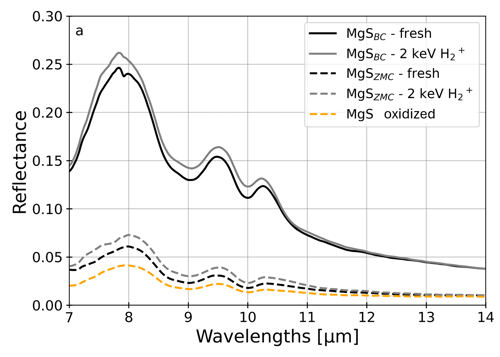
Yasuhito Narita, Uwe Motschmann, Daniel Schmid, Daniel Heyner, Horia Comisel, Shuichi Matsukiyo, and Tohru Hada

The Mercury shock-upstream region is the ideal, natural laboratory for studying the beam instabilities in-situ in collisionless space plasma, since (1) a smaller Parker spiral angle of about 20 degree (the mean magnetic field is nearly parallel or anti-parallel to the flow direction) is conveniently suited to testing for the beam instabilities against one-dimensional instability study using the analytic and numerical methods, and (2) the magnetic field data are accessible not only by the earlier MESSENGER mission but also by the upcoming BepiColombo MPO-MAG and MGF instruments. Here we develop the polynomial dispersion solver to theoretically and systematically derive the wave and instability properties for the ion-beam plasmas. It is found that the beam instability undergoes a smooth transition from the right-hand resonant instability into the non-resonant firehose-type instability at higher beam velocities. The right-hand resonant instability represents the coupling between the beam-resonant mode and the whistler mode, and is commonly found in the Earth shock-upstream region. The non-resonant instability, in contrast to the right-hand resonant case, represents primarily the coupling between the whistler and ion-cyclotron modes in backward direction to the bam and is mediated by the high-speed beam. The non-resonant instability may be regarded as a kinetic extension of the magnetohydrodynamic firehose instability for a higher pressure in the mean magnetic field direction. Our picture of the beam instabilities serves as a useful diagnostic tool of the beam plasma using the magnetic field data, e.g., reading the beam density from the frequency-broadening in the wave spectrum, and giving a constraint between the flow speed and the beam velocity from the spacecraft-frame of wave frequency. Moreover, the Mercury shock-upstream region exhibits the double beam instability driven by the shock-reflected ions and the pick-up ions hit by the solar wind, which is unique in the solar system plasmas. The double beam scenario raises the fundamental question as to the nonlinear wave evolution in the plasma such as the evolution through the double parametric decay or that through the forced wave-wave coupling.

How to cite: Narita, Y., Motschmann, U., Schmid, D., Heyner, D., Comisel, H., Matsukiyo, S., and Hada, T.: Magnetic diagnosis of ion-beam instabilities in the Mercury shock-upstream region, EGU General Assembly 2026, Vienna, Austria, 3–8 May 2026, EGU26-5014, https://doi.org/10.5194/egusphere-egu26-5014, 2026.

EGU26-5030 | Posters on site | PS1.1

Mercury's Mirror Modes? 

Martin Volwerk, Tomas Karlsson, Charlotte Goetz, Daniel Heyner, Ferdinand Plaschke, Daniel Schmid, Cyril Simon Wedlund, Rumi Nakamura, Francesco Califano, Maria Hamrin, Francesco Pucci, Adriana Settino, and Diana Rojas-Castillo

The MESSENGER magnetometer data for the years 2012 through 2015 are used to study the presence of mirror modes in Mercury's environment. Using magnetic field only detection of these structures, 10715 intervals of 20 s and longer are found in the solar wind, and in the magnetosheath and magnetosphere of Mercury. The distribution of mirror modes around the planet is similar to that found at Venus and Mars, however, the occurrence rate of 1.0E-4 per second is up to 2 orders of magnitude smaller than at the other two planets. The mirror modes are more prone to be excited near Mercury's aphelion. A comparison shows that mirror modes and magnetic holes have a similar behaviour around Mercury, and that about 40% of the mirror modes can also be identified as magnetic holes. Ion cyclotron waves show a lesser dependence on the true anomaly angle.

How to cite: Volwerk, M., Karlsson, T., Goetz, C., Heyner, D., Plaschke, F., Schmid, D., Simon Wedlund, C., Nakamura, R., Califano, F., Hamrin, M., Pucci, F., Settino, A., and Rojas-Castillo, D.: Mercury's Mirror Modes?, EGU General Assembly 2026, Vienna, Austria, 3–8 May 2026, EGU26-5030, https://doi.org/10.5194/egusphere-egu26-5030, 2026.

EGU26-5210 | ECS | Posters on site | PS1.1

Self-cleaning Sulfides as Mercury Hollow Bright Material 

Noah Jäggi, Océane Barraud, and Catherine Dukes

The development of hollows on Mercury—small depressions with spectrally bright interiors and halos—may have resulted from the selective loss of volatile components in these regions. Proposed mechanisms driving elemental or molecular volatility include intense solar radiation, micrometeoroid impacts, and repeated thermal cycling, which leave behind a refractory layer with distinct spectral properties. We investigate solar wind ions as a potential darkening agent and demonstrate that Mercury-relevant sulfides preserve their high reflectivity.

Experimental ion-irradiation studies on sulfides such as NiS, CuS, CoS, FeS, and MoS have shown that metallic surface layers can form through cation segregation and preferential sulfur depletion [1–5]. Laboratory work has further revealed iron enrichment at the surface, accompanied by visible darkening, in troilite (FeS) and more recently in pentlandite [(Fe,Ni)₉S₈] subjected to ion and laser irradiation [e.g., 6, 7]. Unlike lunar, meteoritic, and asteroidal materials, which contain significant iron and nickel sulfide minerals, Mercury’s surface appears depleted in iron. Instead, sulfides are expected to be dominated by Mn, Ti, Cr, Mg, and Ca cations, based on correlations with sulfur detected by MESSENGER’s spectrometer suite [8–10].

We have previously shown that the sulfides: niningerite (MgS) and oldhamite (CaS), two phases proposed as likely hollow-forming material based on visible-to-near-infrared (VNIR) spectral analysis [11], are radiation-hard [12]. These sulfides thereby resist the formation of a metallic top layer, observed in ion-irradiated Fe-sulfides, when exposed to solar wind-speed protons and helium ions.

Subsequent spectral analysis of the irradiated CaS and MgS showed brightening in parts of the visible range (0.4-0.7 µm) of the VNIR (Fig. 1) and an overall brightening in the mid-infrared (MIR) range observed by BepiColombo (7-14 µm, Fig. 2). The sample labeled as oxidized was exposed to air for months after the experiments, which led to an overall darkening in both VNIR and MIR, erasing the effect of irradiation. On Mercury, there is no immediate oxidation of the top layer; instead, re-deposition of thermal and ion desorbed material introduces surface contaminants, which over geological timespans could form a layer. The radiation-hard nature of sulfides could thereby act as a cleaning mechanism, where contaminants are removed continuously under solar wind exposure without damaging the bulk, preserving the reflectivity of the sample. This process provides a new framework for understanding the formation of bright hollow materials, highlighting the importance of non-transition-metal sulfides in Mercury’s surface evolution.


Figure 1: Visual-to-near infrared measurement of fresh MgS (black line) compared to 2 keV protons (salmon) and an old, oxidized sample (yellow). Two unirradiated MgS samples are shown, whereas one is fresh (syn) and one is old and oxidized (old).


Figure 2: Mid-infrared measurements of two MgS samples sourced from BenchChem (BC, solid lines) and Zegen Metals & Chemicals (ZMC, dashed lines). The irradiated samples (light gray) have a consistently higher reflectivity than the unirradiated (fresh) samples. The heavily oxidized sample (yellow) is the darkest.


How to cite: Jäggi, N., Barraud, O., and Dukes, C.: Self-cleaning Sulfides as Mercury Hollow Bright Material, EGU General Assembly 2026, Vienna, Austria, 3–8 May 2026, EGU26-5210, https://doi.org/10.5194/egusphere-egu26-5210, 2026.

EGU26-7327 | ECS | Posters on site | PS1.1

Energetic Particle Observations with SIXS During BepiColombo’s Sixth Mercury Flyby 

Liam Edwards, Manuel Grande, David Lawrence, Rami Vainio, Sae Aizawa, Lina Hadid, Jim Raines, Arto Lehtolainen, Eero Esko, and Emilia Kilpua

Mercury hosts a small global magnetic field, approximately 1% of Earth’s magnetic field strength, capable of standing off the solar wind, resulting in a magnetosphere that is qualitatively similar in structure to Earth’s. However, due to its closer proximity to the Sun, Mercury’s magnetosphere experiences much stronger solar wind pressure than that at Earth, resulting in dynamic magnetospheric processes that occur on much shorter timescales. These extreme conditions can result in processes such as particle energization, transport and precipitation onto the planetary surface, which are strongly influenced by the external solar wind conditions. Here, we present observations of energetic protons (> ~ 1 MeV) and electrons (> ~ 70 keV) from the Solar Intensity X-Ray and Particle Spectrometer (SIXS) onboard the BepiColombo spacecraft during its sixth and final Mercury flyby on 8 January 2025. Similar to the spacecraft’s fourth Mercury flyby in 2024, a solar energetic particle event occurred a few days before closest approach, resulting in elevated fluxes of energetic particles both outside and within the Hermean magnetosphere. Furthermore, the KTH22 Mercury magnetic field model was used to help interpret these energetic particle observations and to evaluate whether features in the data were consistent with the aforementioned magnetospheric processes.

How to cite: Edwards, L., Grande, M., Lawrence, D., Vainio, R., Aizawa, S., Hadid, L., Raines, J., Lehtolainen, A., Esko, E., and Kilpua, E.: Energetic Particle Observations with SIXS During BepiColombo’s Sixth Mercury Flyby, EGU General Assembly 2026, Vienna, Austria, 3–8 May 2026, EGU26-7327, https://doi.org/10.5194/egusphere-egu26-7327, 2026.

EGU26-8562 | ECS | Orals | PS1.1

Do Mercury's Dipolarization Fronts Originate From Flux Ropes? MHD-AEPIC Simulations and Observations of Mercury's Magnetosphere 

Alexander Cushen, Xianzhe Jia, James Slavin, Weijie Sun, Gabor Toth, and Yuxi Chen

Mercury’s small magnetosphere and strong solar wind driving results in short-lived, highly dynamic substorms where large amounts of magnetic flux is processed in the magnetotail through nightside reconnection. This processing is realized through the rapid formation of planetward and tailward-moving flux ropes and dipolarization fronts, which lead to plasma heating and flux transport in the low-altitude plasma sheet. The MESSENGER spacecraft observed dipolarization fronts and flux ropes during its orbital campaign from 2011-2015, but open questions about their dynamics, relationship to each other, and role in broader magnetospheric processes persist. To contextualize these observations, we present coupled fluid-kinetic simulations of Mercury's magnetosphere using the MHD-AEPIC code, implemented through the Space Weather Modeling Framework. This model utilizes a Hall-MHD solver for the global magnetosphere coupled to an embedded particle-in-cell code, which simulates the magnetotail dynamics. By tracking the 3D, time-resolved propagation of dipolarization fronts, we find that only ~60 of events originate directly through single x-line reconnection, while the remainder originate from flux ropes that undergo secondary reconnection closer to the planet to create DF-like signatures. We present case studies of both event types, finding that the secondary reconnection process leads to localized heating of the electron fluid along the reconnecting flux tube to temperatures of >4 keV. We compare these characteristics to dipolarization fronts detected by MESSENGER, finding that this model may help account for some of the observed magnetic signatures, associated electron injections, and dawn-dusk distribution asymmetries. Future observations by BepiColombo will be important for further characterizing the frequency and impact of this process within Mercury's magnetotail.

How to cite: Cushen, A., Jia, X., Slavin, J., Sun, W., Toth, G., and Chen, Y.: Do Mercury's Dipolarization Fronts Originate From Flux Ropes? MHD-AEPIC Simulations and Observations of Mercury's Magnetosphere, EGU General Assembly 2026, Vienna, Austria, 3–8 May 2026, EGU26-8562, https://doi.org/10.5194/egusphere-egu26-8562, 2026.

EGU26-11061 | Posters on site | PS1.1

On the Linearity of Mercury's Nightside Magnetosphere 

Willi Exner and Norberto Romanelli

Planetary magnetospheres are elaborate systems of internal and external factors, ranging from the internal planetary magnetic moment and currents in the magnetospheric boundaries to exosper-ionosphere-surface interaction, and variation in solar wind properties.
In general, these flows and fields are usually interacting non-linearly.
However, there are regions in the magnetosphere where properties may be understood in terms of a linear superposition.
Here, we investigate the far downtail regions of the nightside magnetotail, where two key factors are the compressed but decreasing planetary magnetic field and the surrounding interplanetary magnetic field (IMF).

Thus, we conduct 12 global model runs of Mercury's magnetosphere with 6 IMF directions in Cardinal and Parker Spiral directions each.
We then superimpose 3 Cardinal IMF runs to emulate linear combined Parker Spiral (LC) IMF cases and compare these to the real Parker Spiral IMF case runs along the downtail passages of the MPO and Mio spacecraft of the BepiColombo mission.
It is found that most LC cases share a surprising level of similarity with the real IMF cases for features such as the general tail twist, suggesting that some physical processes within the magnetotail may be described as linear, despite the overall interaction is non-linear.
Finally, we further investigate approaches to the definition of a threshold of linearity.

How to cite: Exner, W. and Romanelli, N.: On the Linearity of Mercury's Nightside Magnetosphere, EGU General Assembly 2026, Vienna, Austria, 3–8 May 2026, EGU26-11061, https://doi.org/10.5194/egusphere-egu26-11061, 2026.

EGU26-14037 | ECS | Orals | PS1.1

Magnetization signatures of craters on Mercury and the contribution of impact-delivered iron. 

Filippo Cicchetti and Catherine L. Johnson

Magnetic field data from the MESSENGER mission have revealed the presence of crustal magnetization on Mercury, at least some of which is thought to have been acquired in an ancient field. Magnetic fields over craters are particularly interesting because they can elucidate the magnetic history of the planet (i.e., of its dynamo). If the magnetization is remanent, crater signatures, together with information on the relative age of the craters, can be used to constrain the history of the dynamo. At Mercury, craters with an enhanced interior magnetization compared with their surroundings can provide a record of an ancient global field that was stronger than the present-day field.

We show that the crater record at Mercury provides only limited information about the relative timing of magnetization acquisition. For Mercury, magnetic field signatures at craters have previously been examined for only the largest impact basins. Here, we use a crustal magnetization model and examine 202 craters over Mercury’s Northern Hemisphere with diameters 70 km < D < 400 km and center locations between 40° and 75° N, to investigate the presence (or absence) of clear magnetic signatures associated with them. The craters considered have a range of degradation states and hence relative ages: we investigate whether there are correlations between crater magnetic signatures and their degradation class. Although some individual craters suggest the existence of an ancient, stronger field, the results do not provide a clear picture of temporal evolution in strength of the dynamo field.

We also analyze craters in the two main geographical units in the Northern Hemisphere separately, the Inter-Crater Plains (ICP) and the Smooth Plains (SP), characterized by a different iron content. Overall, we find that 59/202 craters have an enhanced interior magnetization. We find that craters in the SP are more likely to have an enhanced magnetization. An alternative explanation to a strong ancient dynamo for strong magnetizations is local enhancements in iron content of the crust, of either endogenic or exogenic (impact-delivered) origin. Accordingly, we use impact scaling relationships to calculate magnetizations that can be acquired in the present-day field by impact-delivered iron.

We find that the magnetization at 66% of the enhanced craters can be explained by a local increase in crustal iron content delivered by a fully iron impactor. Furthermore 39% of enhanced craters do not require an iron-rich impactor: their magnetization can be explained by extra iron delivered by an impactor with 50% iron by mass. 

These results suggest that most of the enhanced magnetization can be acquired in the present-day field, and the overall low iron content of Mercury’s crust makes the effects of impact-delivered iron magnetically detectable especially in the SP.

How to cite: Cicchetti, F. and Johnson, C. L.: Magnetization signatures of craters on Mercury and the contribution of impact-delivered iron., EGU General Assembly 2026, Vienna, Austria, 3–8 May 2026, EGU26-14037, https://doi.org/10.5194/egusphere-egu26-14037, 2026.

EGU26-14265 | Posters on site | PS1.1

The Exosphere of Mercury during BepiColombo's Flybys 2, 3, and 4 

Valeria Mangano, Francois Leblanc, Dario Del Moro, Anna Milillo, Martina Moroni, Bernard Gelly, Richard Douet, Didier Laforge, and Joe Zender

Mercury’s exosphere has been extensively investigated through ground-based observations. Since 2007, the THEMIS solar telescope was used to conduct a long-term monitoring campaign of the sodium (Na) exosphere, enabling detailed studies of its morphology and variability at different timescales driven by interactions between Mercury’s surface, intrinsic magnetic field, neutral and ionized environment, and the solar wind and radiation. They allowed to investigate the contribution of the different source processes as well as the statistical frequency of the different morphological patterns, and the rapid change from one to another at the sudden change of interplanetary magnetic field conditions.

In 2022, 2023, and 2024, we carried out targeted observations of Mercury’s sodium exosphere in the days surrounding three of the six flybys performed by the ESA–JAXA BepiColombo spacecraft around the planet. The objective was to provide a global view of the exospheric morphology and dynamics during the spacecraft’s close-approach phase, when also several in-situ instruments were simultaneously operating. These measurements offered crucial information on the planetary environment, including magnetic fields, as well as ion, electron, and neutral populations across a wide range of energies, and radiation.

We present and compare the three exospheric configurations observed in the days around these three flybys, highlighting their morphological and dynamical similarities and differences.

How to cite: Mangano, V., Leblanc, F., Del Moro, D., Milillo, A., Moroni, M., Gelly, B., Douet, R., Laforge, D., and Zender, J.: The Exosphere of Mercury during BepiColombo's Flybys 2, 3, and 4, EGU General Assembly 2026, Vienna, Austria, 3–8 May 2026, EGU26-14265, https://doi.org/10.5194/egusphere-egu26-14265, 2026.

The chemical and physical properties of Mercury's metallic core are fundamental to understanding the thermal and magnetic history of the planet. For instance, the sustainability of the dynamo depends on the core chemistry, the growth of the inner core, and the physical properties of the liquid outer core. Here, we report results from high-pressure, high-temperature experiments on analogs of Mercury's deep interior. The composition of the outer core was investigated by focusing on chemical transport between core and mantle analogs, specifically, reduced silicates and metals containing varying amounts of Fe, Si, Ni, C, and S (Pommier, GRL, 2025). These experiments employed samples with a layered structure in a multi-anvil press at 5 GPa and up to 1973 K, and were monitored using impedance spectroscopy. Electrical results and chemical (electron microscopy) analyses of the retrieved metal+silicate couples support an outer core that incorporates significant amounts of alloying agents (>20 at.% Si, Ni, C, S). Electrical measurements were then performed on relevant Fe-Ni-Si-C/S liquids at 5 GPa and up to 2123 K. The electrical resistivity values were used to estimate the thermal conductivity of the outer core, ranging from 17 to 31 W.m-1.K-1. These low values in comparison with the thermal conductivities of Fe-Si liquids could increase the power available to the dynamo during core cooling. More recently, chemical constraints determined from the preceding experiments were used to synthesize new core analogs. These materials are used in phase equilibria experiments to probe partitioning of light elements between the outer and inner core, performed in the multi-anvil press at 5–15 GPa and up to 1973 K. Taken together, these results provide new constraints on the compositional and density differences between the outer and inner core, as well as the power available to the dynamo. The connection of the findings with various scenarios for planetary cooling will be discussed.

How to cite: Pommier, A., Yin, Y., and Fei, Y.:  Constraints on Mercury's Si, C, S-bearing Core from Impedance Spectroscopy and Partitioning Experiments at High Pressure , EGU General Assembly 2026, Vienna, Austria, 3–8 May 2026, EGU26-15342, https://doi.org/10.5194/egusphere-egu26-15342, 2026.

EGU26-15951 | Posters on site | PS1.1

Laboratory Measurement of Na Diffusion Through Hermean Regolith Analogs 

Catherine Dukes, Adam Woodson, and Leo Lin

Without continuous diffusion from the Hermean subsurface to the planetary epiregolith, Mercury’s Na exosphere cannot be sustained [1-4]. Meteoritic impacts and solar wind sputtering excavate Na from regolith minerals and replenish the supply, redepositing it across the planetary surface. These excavated, adsorbed Na atoms may be subsequently re-ejected into the exosphere by lower energy (< 10 eV) release processes such as thermal desorption and photodesorption. However, this “surface reservoir” appears unsustainable, with theoretical sublimation fluxes via thermal desorption surpassing the expected available atomic concentrations on Mercury’s sunlit hemisphere [3, 5-6]. With no additional source of Na diffusing from the subsurface, exospheric Na would be depleted, inconsistent with current observation [e.g., 7-8]. Therefore, sustained diffusion of Na from the subsurface is necessary to maintain the observed exospheric abundances, and the rate at which this subsurface Na migrates to the surface is critically important.

We have measured the rate of Na diffusion through a porous regolith analog using X-ray photoelectron spectroscopy (XPS). For each measurement, Na vapor was deposited onto the underside of a puck-shaped quartz glass frit, after which the Na concentration on the top side was monitored over time while the bottom of the frit was held at a constant temperature between 300 and 700 K. The high-purity quartz frits used in these experiments are commercial porous filters composed of sintered quartz-glass beads, with puck thickness ranging from 2 to 3 mm and pore sizes ranging from 16 to 40 microns. (Fig. 1). For an initial Na surface concentration of 3.1 at-% on the underside of the frit, we found the rate of diffusion through the frit at 700 K to be 6.4 x 10⁻⁷ at-% s-1, or roughly 1.3 x 10⁹ Na cm-2 s-1.


Fig 1. Front face of disc-shaped frit, where sintered glass particles form irregular channels of 16-40 microns. Image field width is 519 microns; irregular particles create channels. Na is deposited at RT on the bottom face of the frit, diffusing through the channels to reach the front face. The frit front Na concentration is monitored as a function of time, at constant temperature.


Fig. 2. (Left) Elemental concentrations vs. time on the top surface of the porous 16-40 um pore dia. quartz frit at 700 K after Na vapor deposition onto the bottom surface. The profiles show adventitious carbon and minor N, in addition to SiO2. (Right) Zoomed region of the left-hand plot showing a steady increase in Na on the frit top over time. During ~1900 thru ~2400 minutes, the temperature was maintained but XPS spectra were not acquired.


References:

[1] Sprague 1990, Icarus, 84, 1, 93-105.

[2] Killen and Morgan 1993, J. Geophys. Res., 98, E12, 23589–23601.

[3] Gamborino et al. 2019, Ann. Geophys., 37, 455–470.

[4] Verkercke et al. 2024, Geophys. Res. Lett., 51, e2024GL109393.

[5] Killen et al. 2007, Space Sci Rev 132, 433–509.

[6] Leblanc & Johnson 2003, Icarus, 164, 261-281.

[7] Schmidt et al. 2020, Planet. Sci. Journal, 1, 14.

[8] Millano et al. 2021, Icarus, 355, 114179.  

How to cite: Dukes, C., Woodson, A., and Lin, L.: Laboratory Measurement of Na Diffusion Through Hermean Regolith Analogs, EGU General Assembly 2026, Vienna, Austria, 3–8 May 2026, EGU26-15951, https://doi.org/10.5194/egusphere-egu26-15951, 2026.

EGU26-16269 | Posters on site | PS1.1

Updates and upcoming operation plans of BepiColombo/Mio 

Go Murakami, Geraint Jones, and Sébastien Besse

The ESA-JAXA joint mission BepiColombo is still on the track to Mercury and will be inserted into Mercury orbit in November 2026. It completed all flybys by January 2025 and conducted numerous scientific observations. The Mercury Transfer Module will be first separated in September 2026, followed by insertion into Mercury's orbit in November 2026. Subsequently, the Mercury Magnetospheric Orbiter (Mio) will separate in December 2026, deploying its wire antennas and magnetometer masts. Following initial checkout of the spacecraft bus and scientific instruments, along with test observations, the nominal science phase will start in April 2027. The baseline observation plans for Mio faces thermal constraints during the perihelion season and power constraints during the aphelion season, respectively. Operation planning and updating is progressing to address these limitations. This presentation will report on the latest status of BepiColombo/Mio and its upcoming operation and observation plans.

How to cite: Murakami, G., Jones, G., and Besse, S.: Updates and upcoming operation plans of BepiColombo/Mio, EGU General Assembly 2026, Vienna, Austria, 3–8 May 2026, EGU26-16269, https://doi.org/10.5194/egusphere-egu26-16269, 2026.

EGU26-17940 | ECS | Posters on site | PS1.1

The dynamic response of Mercury’s magnetosphere to solarwind forcing: consequences for the acceleration of chargedparticles in a telluric planetary environment 

Inès Mertz, Léa Griton, Filippo Pantellini, Ahmed Houeibib, Karine Issautier, Baptiste Verkampt, and Kirolosse Girgis

Most global simulations of Mercury’s magnetosphere assume a steady solar wind. However, the planet's extremely small magnetosphere responds on characteristic timescales of only a few minutes, making it inherently sensitive to solar-wind variability. Such rapid temporal forcing is expected to generate a highly dynamic magnetospheric environment, favorable to the development of plasma instabilities. These processes can facilitate electron entry into the magnetosphere, their subsequent trapping and acceleration and, in some cases, their direct interaction with Mercury’s exosphere and surface.

To investigate these effects, we perform global magnetohydrodynamic (MHD) simulations of Mercury’s magnetospheric response to both steady and time-dependent solar-wind conditions using the spherical code PLANET_MAG_AMRVAC. These simulations are designed to support the upcoming science phase of the BepiColombo mission, scheduled to begin in less than a year, by predicting magnetospheric and exospheric observables accessible to instruments onboard both Mio and MPO under a broad range of solar-wind conditions.

As a first step, the model was tested through comparisons with electron density measurements obtained by the MEA1 instrument onboard Mio during Mercury’s three firsts flybys. The simulations include a planetary plasma source driven by the photoionization of exospheric neutrals, allowing for a more realistic representation of plasma populations in Mercury’s near-planet environment. In parallel, the code was used to predict the quasi-thermal noise spectra measurable by the SORBET instrument during flybys, when the antennas cannot be fully deployed during the cruise phase.

Building on this foundation, the focus of this work is the impact of transient solar wind structures -- for now magnetic holes or vortices -- on Mercury’s magnetosphere. Particular attention is paid to their transmission through the bow shock, their evolution within the magnetosheath, and the conditions under which they can penetrate into the magnetosphere.

To address these questions, we first adopt a global MHD approach to capture the large-scale dynamics and overall morphology of these events. We then aim to confront these results with kinetic or particle-in-cell (PIC) simulations in order to explore the associated small-scale physics beyond the MHD framework. Finally, we outline ongoing and future work involving the injection of test particles, treated within the guiding-center approximation, in selected regions of interest. This approach will allow us to investigate particle transport, acceleration, and loss processes in Mercury’s magnetosphere under different solar-wind disturbance scenarios.

How to cite: Mertz, I., Griton, L., Pantellini, F., Houeibib, A., Issautier, K., Verkampt, B., and Girgis, K.: The dynamic response of Mercury’s magnetosphere to solarwind forcing: consequences for the acceleration of chargedparticles in a telluric planetary environment, EGU General Assembly 2026, Vienna, Austria, 3–8 May 2026, EGU26-17940, https://doi.org/10.5194/egusphere-egu26-17940, 2026.

EGU26-18224 | Orals | PS1.1

Mercury’s Environment Observed by BepiColombo during the Second Mercury’s Swing-by 

Anna Milillo, Valeria Mangano, Mirko Stumpo, Ali Varsani, Daniel Heyner, Daniel Schmid, Stas Barabash, Lina Hadid, Nicolas Andrè, Emilia, K.J. Kilpua, Rami Vainio, Stefano Massetti, Sae Aizawa, and Willi Exner and the MPO/SERENA, MPO-MAG, Mio-MGF, Mio/MPPE-MEA and MSA, SIXS teams

Thanks to MESSENGER observations, we know that Mercury’s magnetosphere is highly dynamic, and it can be fully reconfigured in a few minutes, with strong influences of external conditions.

BepiColombo mission includes a comprehensive payload for the investigation of the environment. During the swing-bys the magnetic field and particles in Mercury’s magnetosphere were successfully measured by the MPO and Mio payloads. In this presentation, we will focus on Mercury’s swing-by 2 (MSB2) on 23 June 2022 showing a good example of highly dynamic magnetosphere.

During this swing by, BepiColombo passed from dusk in the far tail toward dawn in the dayside. The trajectory was in the southern hemisphere in a nearly equatorial path. Simultaneous Na ground-based observations have been obtained by the THEMIS solar telescope during the whole day. Solar Orbiter was at about 90° est of BepiColombo observing the Sun remotely.

These two simultaneous observations allowed to observe the magnetosphere in situ while the Na global exosphere was imaged.

According to the magnetic field data (MPO-MAG and MGF) before and after the flyby, the IMF z component was around 0 nT varying between northward to southward. The solar wind observed by SERENA-PICAM before and after the swing-by shows a high variability in the energy. Ion and electron populations in the plasma sheet and close to the planet at dawn have been observed.

When the spacecraft was entering in the far tail at about 9 UT, an abrupt increase in dayside exospheric intensity has been registered by THEMIS. This intensity slowly recovered to the previous values in about 3 hours. When the spacecraft exited from the planetary shadow, at 9:50 UT, SIXS-P observed an electron population at energy between 70-280 keV.

The magnetopause boundary was clearly identifiable together with a weak low latitude boundary layer. While the bow shock crossing was not clearly distinguishable, showing energy-dispersion signatures and a flapping boundary. Upstream the bow shock, foreshock ions have been observed by SERENA-PICAM and MPPE-MSA in agreement with a quasi-parallel IMF configuration.

On the same day, Solar Orbiter/FSI observed a M2 and long-lasting flare from 9:00 UT to 12:UT in the southern solar hemisphere toward Mercury quadrant.

While the Na exospheric variability is clearly linked to solar conditions, it is still difficult to describe the exact mechanism responsible of the Na release without two vantage-point measurements providing information of external conditions and magnetospheric dynamic and exosphere.

How to cite: Milillo, A., Mangano, V., Stumpo, M., Varsani, A., Heyner, D., Schmid, D., Barabash, S., Hadid, L., Andrè, N., Kilpua, E. K. J., Vainio, R., Massetti, S., Aizawa, S., and Exner, W. and the MPO/SERENA, MPO-MAG, Mio-MGF, Mio/MPPE-MEA and MSA, SIXS teams: Mercury’s Environment Observed by BepiColombo during the Second Mercury’s Swing-by, EGU General Assembly 2026, Vienna, Austria, 3–8 May 2026, EGU26-18224, https://doi.org/10.5194/egusphere-egu26-18224, 2026.

EGU26-18424 | ECS | Posters on site | PS1.1

 Unveiling Mercury’s interior with dynamical Love numbers 

Anastasia Consorzi, Giuseppe Mitri, Daniele Durante, Fabrizio De Marchi, Pasquale Tartaglia, Ariele Zurria, and Luciano Iess

Mercury will soon be visited by the BepiColombo mission, whose scientific objectives span a wide range of topics in physics and planetary science. Investigating its interior and origin is crucial for understanding the formation and evolution of the Solar System. To this aim, the Mercury Orbiter Radio science Experiment (MORE) will enable the determination of the static gravity field and Mercury’s potential Love number k2, which quantifies the response of a planetary body’s gravity potential to tidal forcing.

In many studies, a static tide approximation is adopted, leading to the determination of a single k2 value. This approach is appropriate when the planet is treated as purely elastic, so that the tidal response is instantaneous and in phase with the tidal forcing. A more physically consistent description of the interior, however, requires viscoelastic rheologies, which induce a lag in the tidal response. Under these conditions, the static tide approximation is more adequate when the orbit is circular and the planet is in synchronous rotation (tidally locked). Mercury, however, is in a 3:2 spin-orbit resonance and has an eccentric orbit (e = 0.2056), making a dynamical tide description required. To implement it, the tidal potential is expanded as a Fourier series over multiple tidal modes. The main consequence of this approach is the emergence of a frequency-dependent Love number, k2(Ιω2mpqΙ) , evaluated at the specific forcing frequencies Ιω2mpqΙ.

The aim of this work is to investigate the scientific insights that could be gained from measuring k2(Ιω2mpqΙ). Since not all tidal modes contribute equally, we focus on those expected to account for the largest fraction to the tidal signal. We then consider different internal models of Mercury and compute the Love numbers associated to the selected modes using ALMA3 and assess their sensitivity to various parameters of the planet’s interior. The main variables examined are the thickness and rigidity of the elastic lithosphere, the size of the liquid outer core, and the viscosity and rheology of the mantle. We demonstrate that the measurement of the dynamical Love number could significantly improve our understanding of Mercury’s mantle relaxation timescales, providing new and essential constraints on its internal structure.

Finally, we performed accurate numerical simulations to verify the feasibility of these measurements with MORE, showing that its sensitivity is adequate to explore the admissible region of the parameter space considered in our models.

How to cite: Consorzi, A., Mitri, G., Durante, D., De Marchi, F., Tartaglia, P., Zurria, A., and Iess, L.:  Unveiling Mercury’s interior with dynamical Love numbers, EGU General Assembly 2026, Vienna, Austria, 3–8 May 2026, EGU26-18424, https://doi.org/10.5194/egusphere-egu26-18424, 2026.

EGU26-18606 | Orals | PS1.1

Approaching Mercury – Preparation for Geodesy Studies by the BepiColombo Laser Altimeter (BELA) 

Oliver Stenzel, Haifeng Xiao, William Desprats, Tim Van Hoolst, Gregor Steinbrügge, Alexander Stark, Gaku Nishiyama, Ariele Zurria, Luciano Iess, and Hauke Hussmann

As BepiColombo gets closer to its target Mercury, the BepiColombo Laser Altimeter (BELA) and the Mercury Orbiter Radio-Science Experiment (MORE) teams prepare for operation, scientific measurements, and analysis. For that purpose, both teams simulate the future measurements: altimetric range measurements by BELA and orbit determination product from MORE radio science measurements. These simulated measurements provide a test bed for the different analysis algorithms and applications.

We report on three different approaches to derive Mercury’s Love number h2, that were developed and are being optimized within the BELA team: co-registration [1, 2]; cross-over analysis [2, 3]; global grid approach [4, 5]. All of these approaches were already validated in applications to existing laser altimetry data from the Moon and Mercury. In this study we are challenging these approaches by utilizing simulated BELA data and estimate their individual performance in terms of estimation biases and uncertainty assessment. For the simulation of BELA data, we performed an iterative approach. We started with an idealized BELA range measurement simulation, assuming error-free measurements without false detections up to 1400 km. A tidal signal with a defined h2 value was incorporated into the simulated measurements (dataset v1). Next, we added a simple performance model that includes false detections but keeps range measurements perfect (v2). The third version employed a full BELA performance model [6], which also accounts for slope and roughness at the observation site (v3). For all simulations, the spacecraft’s orbit, attitude, and Mercury’s rotation were assumed to be perfectly known. This assumption changed in the next iteration, where we utilized spacecraft orbits reconstructed by the MORE team from simulated radio-science data (v4). Because the accuracy of h2 and other geodetic parameters depends on orbit reconstruction quality, careful modelling of the orbit is mandatory.

The MORE simulation consists of an orbit-determination process: first, synthetic radiometric observables are generated by numerically integrating the spacecraft trajectory; second, a least-squares estimation compares these synthetic observables with predictions to reconstruct the trajectory.

In a blind test, all three h2 inversion approaches received different versions of the simulated observations and were tasked with retrieving the assumed h2. All tidal models successfully derived the unknown Love number, though differences in estimation accuracy were observed, reflecting each method’s strengths, weaknesses, and the specific parameters used.


References

[1] Xiao H.,et al. (2024), GRL., vol. 52, no. 7, 2025, doi:10.1029/2024GL112266.

[2] Xiao H., et al. (2022). JGR: Planets, 127(7), https://doi.org/10.1029/2022je007196.

[2] Desprats W., et al. (2025). Acta Astronautica, 226, 585–600. doi:10.1016/j.actaastro.2024.10.045.

[3] Bertone, S., et al. (2021). JGR: Planets, 126(4), doi:10.1029/2020JE006683

[4] Thor R.N., et al., (2020), A&A, vol. 633, doi:10.1051/0004-6361/201936517.

[5] Thor R.N., et al. (2021), J. Geod., vol. 95, no. 1, doi:10.1007/s00190-020-01455-8.

[6] Steinbrügge G., et al. (2018). PSS, 159, 84–92. doi:10.1016/j.pss.2018.04.017.


How to cite: Stenzel, O., Xiao, H., Desprats, W., Van Hoolst, T., Steinbrügge, G., Stark, A., Nishiyama, G., Zurria, A., Iess, L., and Hussmann, H.: Approaching Mercury – Preparation for Geodesy Studies by the BepiColombo Laser Altimeter (BELA), EGU General Assembly 2026, Vienna, Austria, 3–8 May 2026, EGU26-18606, https://doi.org/10.5194/egusphere-egu26-18606, 2026.

EGU26-18943 | Posters on site | PS1.1

The role of meteoritic delivery to Mercury’s surface-exosphere environment 

Helmut Lammer, Fabian Weichbold, Manuel Scherf, Daniel Schmid, Alexey Berezhnoy, Ali Varsani, and Martin Volwerk

Because of Mercury’s close orbital position to the Sun and its low mass, the planet cannot retain a dense atmosphere and instead possesses an exosphere. The gaseous species detected so far - such as H, (Mariner 10, MESSENGER), He (Mariner 10, MESSENGER, BepiColombo flyby), (possibly) O (Mariner 10), Na, K, Ca (ground-based and MESSENGER), Mg (MESSENGER), and Li and H2 (inferred from MESSENGER magnetic field data) - yield a column content in the order of about 1012 cm−2, which is lower than the expected column content of an exosphere which is in the order of about 1014 cm−2. In addition to these elements, MESSENGER’s FIPS instrument also detected C, OH, H2O, Ne, Al, Si, O2, Ar, CO2, Ti, and Fe ions at the downstream of Mercury. Atmospheric measurements from the Mariner 10 occultation experiment indicate that the electron density near the planet's surface is less than 103 cm-3 on both sides of the planet, implying an upper limit to the dayside surface gas number density of about 106 cm-3. The observed elements are expected to represent only a small fraction of Mercury’s exosphere,  as the total surface pressure contributed by these known species is far lower than the upper limit for the exospheric surface pressure of 10-11 - 10-12 bar. While H and He appear to originate from the solar wind (i.e., thermal release of implanted solar wind ions), heavier elements are sourced from the planet’s regolith and may be delivered by meteoroids of various sizes. In this study, we investigate the role of meteoroids and their contribution to the elemental input on Mercury's surface and exosphere. We also discuss the potential effects of meteoritic material on the volatile components of the planet's surface composition and examine which currently undetected elements, potentially delivered from meteoroids, may contribute to the still-unknown surface pressure.

How to cite: Lammer, H., Weichbold, F., Scherf, M., Schmid, D., Berezhnoy, A., Varsani, A., and Volwerk, M.: The role of meteoritic delivery to Mercury’s surface-exosphere environment, EGU General Assembly 2026, Vienna, Austria, 3–8 May 2026, EGU26-18943, https://doi.org/10.5194/egusphere-egu26-18943, 2026.

EGU26-19073 | Posters on site | PS1.1

Interpreting BepiColombo's observations of Mercury's solar wind interaction with global hybrid-particle simulations 

Riku Jarvinen, Ilja Honkonen, Esa Kallio, David Phillips, Stepan Dubyagin, Samuel Grant, and Mikko Borg

We present global modelling of Mercury’s solar wind interaction with the open-source 3D hybrid-particle code framework RHybrid (paRallel Hybrid) in light of BepiColombo's flybys and forthcoming orbital science observations. In the hybrid-particle model, ions are treated kinetically as macroscopic particle clouds (macroparticles) moving under the Lorentz force, while electrons are described implicitly as a charge-neutralising, inertialess fluid governed by Ohm’s law. The kinetic ion dynamics are coupled to the evolution of the magnetic field through Faraday’s law, and the system is closed using Ampère’s law. This approach allows ion velocity distributions to evolve self-consistently, capturing wave-particle interactions, finite Larmor radius effects, and other ion-kinetic processes. The code is highly parallelised using message passing between compute nodes, enabling efficient use of large high-performance computing resources. This allows us to simulate spatial structures and ion velocity distributions in the Hermean plasma environment with high resolution, resolving the coupling between ion scales and global magnetospheric scales.

In the model, Mercury’s surface is represented as a particle-absorbing boundary, with the underlying crust–mantle region modelled as a resistive spherical shell overlying an ideally conducting core. The intrinsic planetary magnetic field is prescribed as a dipole offset northward from the planet’s centre, or alternatively by any other 3D planetary magnetic field model. The production of exospheric ion species is described through photoionisation of arbitrary 3D neutral density profiles.

Here we discuss the application of global hybrid modelling to study the formation, structure, and dynamics of different regions in the Hermean plasma environment, as well as ongoing development of the RHybrid code, including adaptive mesh refinement, temporal substepping, and improved electron physics. Mercury’s environment is characterised by strong couplings and feedbacks between the solar wind, magnetosphere, exosphere, surface, mantle, and core. Global hybrid modelling provides essential context for interpreting in situ observations, enables controlled numerical experiments under varying conditions, and supports systematic and flexible investigations of the scaling of solar wind interaction processes.

How to cite: Jarvinen, R., Honkonen, I., Kallio, E., Phillips, D., Dubyagin, S., Grant, S., and Borg, M.: Interpreting BepiColombo's observations of Mercury's solar wind interaction with global hybrid-particle simulations, EGU General Assembly 2026, Vienna, Austria, 3–8 May 2026, EGU26-19073, https://doi.org/10.5194/egusphere-egu26-19073, 2026.

EGU26-19710 | Posters on site | PS1.1

Magnetometric Resistivity Inversion of Region 1 Field-Aligned Currents in Mercury’s Interior 

Daniel Heyner, Kristin Pump, Patrick Kolhey, Ferdinand Plaschke, Anne Pommier, and Catherine Johnson

Mercury hosts a highly dynamic magnetosphere in which energy and momentum can be transported between different regions by field-aligned currents (FACs). The region 1 FAC are generated near the dawnside magnetopause, propagate along magnetic field lines toward the planet, and return toward the dusk magnetospheric flank. In-situ observations have established FACs as a ubiquitous feature of the Hermean magnetosphere. However, in the absence of a substantial ionosphere, the mechanisms by which these currents close remain poorly understood. In this study, we present the analysis results from in-situ MESSENGER magnetic field observations and apply the magnetometric resistivity inversion technique to infer FAC closure pathways above and within the planetary surface and within Mercury’s interior without any pre-assumptions about the conductivity structure. We further show the influence of different inversion side constraints, including solenoidal current continuity and minimum-norm regularization, on the inferred current systems.

How to cite: Heyner, D., Pump, K., Kolhey, P., Plaschke, F., Pommier, A., and Johnson, C.: Magnetometric Resistivity Inversion of Region 1 Field-Aligned Currents in Mercury’s Interior, EGU General Assembly 2026, Vienna, Austria, 3–8 May 2026, EGU26-19710, https://doi.org/10.5194/egusphere-egu26-19710, 2026.

EGU26-19883 * | Orals | PS1.1 | Highlight

BepiColombo Approaches Mercury: A Mission Update 

Geraint Jones, Go Murakami, and Sébastien Besse

BepiColombo is a joint mission to Mercury between the European Space Agency (ESA) and the Japanese Aerospace Exploration Agency (JAXA), launched in October 2018. It is now nearing the end of its eight-year-long cruise to the planet, during which it encountered the Earth and Venus, and performed six flybys of Mercury. In September 2026, the Mercury Transfer Module will detach from the mission’s two orbiters. The Mercury Planetary Orbiter (MPO) and the Mercury Magnetospheric Orbiter (Mio) will together enter Mercury orbit in late November, and these two orbiters will separate from each other in December. MPO will adjust its orbit until reaching its final science orbit in March 2027. Less then a year from now, in April 2027, both orbiters will begin their joint comprehensive exploration of planet Mercury and its environment with their extremely capable payload suites. We shall provide an overview of the two orbiters and their instruments, a summary of the mission status, a preview of the remaining plans for the mission up to and after arrival in orbit around Mercury, and a broad overview of scientific results to date.

How to cite: Jones, G., Murakami, G., and Besse, S.: BepiColombo Approaches Mercury: A Mission Update, EGU General Assembly 2026, Vienna, Austria, 3–8 May 2026, EGU26-19883, https://doi.org/10.5194/egusphere-egu26-19883, 2026.

EGU26-20040 | ECS | Posters on site | PS1.1

A Laboratory Imaging Emulator for the MERTIS Instrument in preparation for BepiColombo Mission: MIMIC 

Akin Domac, Solmaz Adeli, Joern Helbert, Christian Althaus, Alessandro Maturilli, Mario D'Amore, Oceane Barraud, Stephen Garland, Joerg Knollenberg, Ingo Walter, Nimisha Verma, Aurelie Van der Neucker, Giulia Alemanno, Andreas Lorek, Christopher Hamann, Kai Wünnemann, and Harald Hiesinger

The MERTIS (Mercury Radiometer and Thermal Infrared Spectrometer) instrument aboard the ESA–JAXA BepiColombo mission is designed to characterize Mercury’s surface mineralogy using thermal infrared spectroscopy in the 7-14 µm range [1,2]. During BepiColombo’s fifth Mercury flyby on 1 December 2024, MERTIS acquired the first spatially resolved mid-infrared spectra of Mercury’s surface, collecting more than 1.4 million spectra at spatial resolutions of approximately 26–30 km per pixel [3,4]. These observations revealed spectral variations associated with impact craters, bright and dark deposits, and other geological features, providing an important preview of the global dataset that will be obtained after Mercury orbit insertion in late 2026.

However, interpreting thermal infrared spectra of Mercury is challenging due to the planet’s extreme surface temperatures (~100–700 K) and strong thermal gradients, which produce non-isothermal conditions within individual MERTIS pixels. These conditions obscure mineralogical features by blending them with multiple temperature-dependent Planck radiation, making accurate determination of the emissivity a central challenge [1,5,6]. In addition, thermal infrared spectral features are influenced by physical surface properties such as grain size, porosity and surface roughness, further increasing interpretation uncertainties [7,8,9]. Robust analysis of the upcoming global MERTIS dataset therefore requires laboratory reference measurements under comparable conditions.

To support ongoing laboratory studies, we developed the MERTIS Imaging Model for Instrument Characterization (MIMIC), a dedicated laboratory emulator that reproduces the imaging geometry and spectral behavior of MERTIS. MIMIC is designed as a complementary approach to established bulk emissivity measurements acquired with Fourier-transform infrared (FTIR) spectroscopy, extending these methods by enabling spatially resolved thermal infrared imaging under Mercury-like thermal conditions at DLR’s Planetary Spectroscopy Laboratory (PSL). Through a mid-infrared transparent window mounted on a high-temperature, evacuated emissivity chamber, MIMIC produces imaging data that are comparable to MERTIS observations. This capability allows systematic investigation of how surface physical properties, such as grain size, grain shape (angularity and sphericity), porosity, and surface roughness, affect thermal emission at the pixel scale. By bridging laboratory spectroscopy with orbital observations, MIMIC offers a unique platform to improve the interpretation of MERTIS data and our understanding of mid-IR emission processes on airless planetary bodies.

[1] Hiesinger, H., et al., 2010, Planetary and Space Science [2] Helbert, J., et al., 2013, SPIE [3] Hiesinger, H., et al., 2025, LPSC [4] Adeli, S., et al., 2025, EPSC-DPS [5] Wohlfarth, K., et al., 2023, Astronomy & Astrophysics [6] Tenthoff, M., et al., 2025, EPSC-DPS [7] Maturilli, A., et al., 2006, Planetary and Space Science [8] Morlok, A., et al., 2016, Icarus [9] Martin, A.C., et al., 2025, JGR Planets

How to cite: Domac, A., Adeli, S., Helbert, J., Althaus, C., Maturilli, A., D'Amore, M., Barraud, O., Garland, S., Knollenberg, J., Walter, I., Verma, N., Van der Neucker, A., Alemanno, G., Lorek, A., Hamann, C., Wünnemann, K., and Hiesinger, H.: A Laboratory Imaging Emulator for the MERTIS Instrument in preparation for BepiColombo Mission: MIMIC, EGU General Assembly 2026, Vienna, Austria, 3–8 May 2026, EGU26-20040, https://doi.org/10.5194/egusphere-egu26-20040, 2026.

Mercury’s northern magnetospheric cusp is a primary pathway for solar wind plasma to the surface, exosphere, and magnetosphere. Using the full MESSENGER orbital data set, we investigate how cusp magnetic variability responds to global magnetospheric activity. We quantify high-frequency magnetic field variability with the scalar metric σb(B) derived from filtered MAG measurements and relate it to the magnetic disturbance index (DI) derived from MESSENGER magnetometer data Anderson et al. (2013).


We find that DI exerts a strong, control on σb(B) the cusp. The high-DI intervals show an enhanced and spatially expanded magnetic variability within the northern cusp region. This enhancement is consistent with the increases in planetary heavy-ion signatures, particularly Na+ and He2+, attributed to intensified cusp driven ion sputtering from incoming H+ at the surface. The resulting ions are distributed within the magnetosphere by e.g. E × B drift, providing a feedback between cusp precipitation, planetary ion supply, and enhanced magnetospheric disturbance Raines et al. (2022).

How to cite: Zywczok, R. and Heyner, D.: Disturbance-Dependent Expansion of Magnetic Field Variability in Mercury's Northern Magnetospheric Cusp, EGU General Assembly 2026, Vienna, Austria, 3–8 May 2026, EGU26-20478, https://doi.org/10.5194/egusphere-egu26-20478, 2026.

EGU26-21371 | Posters on site | PS1.1

Don’t call it b56: geology and geophysics of a Caloris-size impact basin and implications for Mercury’s global tectonics 

Gaetano Di Achille, Piero D'Incecco, and Yelena Caddeo

The knowledge of Mercury's crater record has significantly evolved during the last decade thanks to the MESSENGER mission, which enabled the implementation of updated global crater catalogs by allowing the identification of a wealth of previously unknown impact structures. Particularly, recent re-examination of MESSENGER data led to the identification of tens of previously unreported large (D>150 km) impact basins. These large basins have not yet been studied in detail despite their significant geological and geophysical importance. Here, we present geological, topographical, structural, compositional, and geophysical investigations of one (maybe the largest) of these basins. The basin has not yet an International Astronomical Union (IAU) name but it has been reported as b56 or Lennon-Picasso basin in the published literature. The basin has an approximate diameter of more than 1500 kilometers and is centered at about 15S, 50E, located north-westward of Rembrandt basin. However, the most external structures associated to this basin extend fairly more than 1500-km form its center, suggesting a diameter closer if not higher than 2000 km, thus equivalent if not bigger than Caloris basin, known as the largest Mercury’s basin. Geology, tectonics, and composition of this basin have been investigated by using photointerpretation and remote sensing techniques applied to all the available data. Visible imagery from MDIS camera has been integrated with Digital Elevation Models (DEM), spectral data (color mosaics and data from MASCS), and gravity data from the Radio Science (RS) experiment onboard of MESSENGER into Geographic Information System (GIS) environment. DEM and slope maps highlight the annular terraced floor of the basin, suggesting that this may have formed as a peak ring or multiring structure. The basin is defined by several major lineaments (up to thousands of km long) consisting of a series of tectonic structures encompassing a broadly circular topographic low corresponding to the internal floor of the basin. This central region shows a gravity anomaly and a low crustal thickness with respect to the surrounding areas. The impact triggered volcanic activity since the floor presents the typical characteristics of other volcanic infilled Mercury’s basins: a smoother texture and lower albedo with respect to the surroundings regions, radial faults, wrinkle ridges and concentric circular lobate scarps, and spectral signatures from MASCS data. Most importantly, our results show that the tectonics associated to this basin, along as that of many other recently discovered large basins, might have had a regional and global significance, which has been so far overlooked. Indeed, these impact-related structures have been so far included in current estimates of Mercury’s contraction, most likely leading to its overestimation. After presenting the above mentioned lines of evidence we will discuss the implications of the tectonics of Mercury’s large basins for the planet global tectonics and contraction estimates.

How to cite: Di Achille, G., D'Incecco, P., and Caddeo, Y.: Don’t call it b56: geology and geophysics of a Caloris-size impact basin and implications for Mercury’s global tectonics, EGU General Assembly 2026, Vienna, Austria, 3–8 May 2026, EGU26-21371, https://doi.org/10.5194/egusphere-egu26-21371, 2026.

EGU26-499 | ECS | Posters on site | PS1.2

Regios as a manifestation of upper-mantle dynamics 

Alexandr Dizov, Ondřej Čadek, Petra Maierová, Caroline Dumoulin, Gaël Choblet, and Gabriel Tobie

Venus’ regios are large surface structures characterized by both elevated topography and geoid, as well as presence of extensive lava flows that overlie the surrounding terrains. These regios are the youngest surface features observed on Venus, and are interpreted as the manifestations of mantle plumes and related melting. Our goal is to infer the subsurface structure of Venus that is consistent with the observation of these structures. Using the finite-element open-source code ASPECT, we set up a 3D thermochemical incompressible model with melting to calculate the convection in the upper mantle and related lithospheric evolution. The assumed material rheology includes thermal and melt-induced chemical buoyancy, as well as diffusion creep with water-dependent stiffening. We perform a parametric study independently varying rheological properties, plume size, and plume temperature. For each set of parameters, we analyze the melting distribution, surface topography, and the generated geoid, and compare these predictions with available observations of Venus’ regios. Our results demonstrate that the plume models are mostly consistent with the geophysical signature of Venus’ regios. Additionally, we provide constraints on the upper-mantle structure beneath the regios, and show the diversity of the melting patterns that may explain various systems of tectonic features observed on Venus.

How to cite: Dizov, A., Čadek, O., Maierová, P., Dumoulin, C., Choblet, G., and Tobie, G.: Regios as a manifestation of upper-mantle dynamics, EGU General Assembly 2026, Vienna, Austria, 3–8 May 2026, EGU26-499, https://doi.org/10.5194/egusphere-egu26-499, 2026.

EGU26-804 | ECS | Orals | PS1.2

Infrasound waveguides on Venus enable exploration of explosive volcanism using balloons 

Sophus Bredesen Gullbekk, Quentin Brissaud, Marouchka Froment, and Sven Peter Näsholm

On Earth, infrasound can travel vast distances through waveguides formed by changes in the sound speed and wind structure. While propagating, these waves retain valuable information about the source and the propagation medium, making infrasound suitable to monitor explosive events, including from volcanic sources.  

In contrast to Earth, extreme conditions on the surface rule out conventional ground-based sensors for infrasound recording on Venus. A more practical alternative is to use atmospheric balloons equipped with acoustic sensors. Such balloons can be deployed in the middle atmosphere, where conditions allow for longer mission durations.  

However, to explore the existence of prospective explosive volcanism on Venus, such deployments will only be valuable if there exist waveguides to duct the infrasound from these sources to the balloons. But do such waveguides exist? To address this question, we performed an extensive set of wave-propagation simulations to map the global morphology of infrasound ducting on Venus, with the Venus Climate Database as the atmospheric model. We considered volcanic sources and assessed how effectively infrasound is guided to balloon altitudes.  

We find persistent waveguides in both zonal and meridional directions, driven by the strong superrotational and subsolar-to-antisolar winds in the middle and upper atmosphere. We find that these waveguides enable ground-to-balloon propagation, indicating that the conditions are suitable for detecting long-range infrasound. Our discovery strengthens the case for future balloon-based missions to Venus.  

How to cite: Gullbekk, S. B., Brissaud, Q., Froment, M., and Näsholm, S. P.: Infrasound waveguides on Venus enable exploration of explosive volcanism using balloons, EGU General Assembly 2026, Vienna, Austria, 3–8 May 2026, EGU26-804, https://doi.org/10.5194/egusphere-egu26-804, 2026.

EGU26-1018 | ECS | Posters on site | PS1.2

Surface temperature and mantle viscosity influence the cooling efficiency of magmatic styles on Venus 

Carianna Herrera, Ana-Catalina Plesa, Julia Maia, and Doris Breuer

Reconstructing Venus’s early evolution and determining whether it once had Earth-like, temperate conditions remain challenging because its surface is geologically young. Climate models suggest that Venus may have maintained mild temperatures and even liquid water until <1 Ga (Way et al., 2016), while other work suggests that Venus might have had high surface temperature over most of its history, with values possibly even higher than today (Noack et al., 2012). At the same time, the surface temperature is strongly linked to the volcanic and outgassing history, and thus to the presence of volatiles in the interior. Some studies suggest that the interior is intrinsically dry (Constantinou et al., 2024), while others indicate that at least the lower mantle might still contain volatiles (Smrekar & Sotin, 2012). The presence of volatiles can substantially affect the mantle viscosity that, in turn, affects the thermal, magmatic, and outgassing history.   

Venus’s geodynamic regime is heavily debated (Rolf et al., 2022), but recent evidence of ongoing volcanic activity (Herrick & Hensley, 2023) indicates that magmatic processes could still play a key role today. Early geodynamic models that included magmatism considered only extrusive magmatism, known as heat-pipe regime (Moore & Webb, 2013). Recent studies investigated scenarios where magmatic intrusions dominate, known as plutonic-squishy regime (Lourenco et al., 2020). Although current surface and lithospheric conditions suggest a highly intrusive magmatic style (Maia et al., 2025), the relative roles of intrusive and extrusive magmatism in regulating mantle cooling for different surface temperature scenarios and rheological conditions remain unexplored.

We test different surface temperature and mantle viscosity values and model their effect on the long-term cooling on Venus and Venus-like planets, using the geodynamic code GAIA in a 2D spherical annulus geometry (Hüttig et al., 2013; Fleury et al., 2024). We assume a temperature- and depth-dependent viscosity following an Arrhenius law (Hirth & Kohlstedt, 2003), and pressure- and temperature-dependent thermal conductivity and expansivity (Tosi et al., 2013). We model the decay of radioactive heat-producing elements and cooling of the core. Melting occurs when mantle temperatures exceed the solidus (Stixrude et al., 2009).

Our results show that surface temperature and mantle viscosity are key factors in determining the efficiency of planetary cooling for different magmatic styles (intrusive or extrusive). A high surface temperature, like Venus’s current 737 K, shows a more efficient cooling when intrusive magmatism is considered, while cooler surfaces (~500 K) lead to stronger mantle cooling for an extrusive magmatism scenario, for cases assuming a reference viscosity of ~1021 Pa s. Mantle viscosity modulates this behavior: lower viscosities (~1020 Pa s) allow planets with cold surfaces to cool more efficiently if intrusions are present, while higher viscosities (~1022 Pa s) with hot surfaces cool more efficiently if extrusive magmatism dominates. These findings suggest that Venus’s surface conditions and mantle properties over time play a crucial role in its thermal and magmatic evolution, offering insights into the potential habitability of Venus-like exoplanets, where the balance between intrusive and extrusive magmatism likely governs long-term surface-mantle interactions and volatile cycling.

How to cite: Herrera, C., Plesa, A.-C., Maia, J., and Breuer, D.: Surface temperature and mantle viscosity influence the cooling efficiency of magmatic styles on Venus, EGU General Assembly 2026, Vienna, Austria, 3–8 May 2026, EGU26-1018, https://doi.org/10.5194/egusphere-egu26-1018, 2026.

EGU26-1048 | ECS | Orals | PS1.2

Venus's Polar Drift as a Probe of its Interior Structure 

Pierre-Louis Phan and Nicolas Rambaux

Gravity data from Magellan revealed Venus's excited spin state: the planet does not rotate around its axis of symmetry (principal axis of inertia), but instead, the spin axis is offset from this principal axis by 0.48° [1]. As a consequence, Venus's spin pole is expected to move across the planet's surface (polar motion), but this motion has not yet been detected, since currently available images of Venus's surface lack the resolution necessary to resolve it.

Anticipating the exploration of Venus by ESA's EnVision and NASA's VERITAS, we show in this study how a future measurement of polar motion, combined with a refined measurement of the precession (the spin axis's motion in inertial space), could improve our knowledge of Venus's interior structure by helping to reveal essential properties such as the state and size of its core.

We used a distribution of plausible interior density profiles[2] and GCM-simulated atmospheric dynamics[3] to derive Venus's expected polar motion. At a timescale of a few years, the spin pole is expected to drift across the surface at a rate of 21.7 (±2.6) meters per year[4]. This rate depends largely on the moment of inertia of Venus (for models with a fully solidified core) or that of the mantle only (for models with a liquid core).

This polar drift is the short-term expression of a slow wobble (called the Chandler wobble) of the spin axis around the principal axis, with a period of 13,000-19,000 years. We characterized the wobble's damping, caused by dissipation in Venus's solid tides (pole tide and solar tide). From a range of plausible tidal responses[5], the damping timescale ranges from 0.8 to 13 million years. Combined with the Chandler frequency acting here as a resonant frequency, we derived the transfer function characterizing how Venus's polar motion responds to an excitation, thus providing a basis for further investigations of long-term excitation processes that could explain the currently observed excited spin state.

[1] Konopliv et al. (1999), Icarus, doi:10.1006/icar.1999.6086
[2] Shah et al. (2022), The Astrophysical Journal, doi:10.3847/1538-4357/ac410d
[3] Lai et al. (2024), JGR Planets, doi:10.1029/2023je008253
[4] Phan and Rambaux (2025), Astronomy & Astrophysics, doi:10.1051/0004-6361/202553658
[5] Musseau et al. (2024), Icarus, doi:10.1016/j.icarus.2024.116245

How to cite: Phan, P.-L. and Rambaux, N.: Venus's Polar Drift as a Probe of its Interior Structure, EGU General Assembly 2026, Vienna, Austria, 3–8 May 2026, EGU26-1048, https://doi.org/10.5194/egusphere-egu26-1048, 2026.

EGU26-1157 | ECS | Posters on site | PS1.2

Exploring the variability of the meteoric metal layers in the Venusian atmosphere 

Bianca Ceragioli, John Plane, Daniel Marsh, Wuhu Feng, Joanna Egan, Juan Diego Carrillo-Sánchez, Diego Janches, Apostolos Christou, Aurélien Stolzenbach, Sébastien Lebonnois, and Franck Lefèvre

The rate of injection of cosmic dust into the Earth’s atmosphere is estimated to be 28 ± 16 tonnes per day. As this dust ablates between altitudes of 80 and 105 km, it generates neutral and ionized metal layers. These layers have been characterized through space-based spectroscopy, ground-based lidar observations, and rocket-borne mass spectrometry. A cosmic dust input rate of 31 ± 18 t d−1 is estimated for Venus [Carrillo-Sanchez et al., 2020]; this material should ablate and form metal layers between 105 and 120 km. However, these layers have not yet been observed on Venus.   

In this study, we model the latitudinal and diurnal variability of the Venusian metal layers (mainly Na, Mg, Fe and SiO), and assess the probability of their spectroscopic detection. For the simulations, the whole atmosphere Venus Planetary Climate (PCM) Model was used, with the metals being injected into the upper atmosphere through an orbitally varying Meteoric Input Function (MIF). The model also incorporates detailed neural and ion-molecule atmospheric chemistry networks for Fe, Mg, Na and Si, and was run for over two Venus years.   

A pronounced diurnal variability in the Venusian metal layers is predicted: the neutral metal atom layers peak on the night side, with maxima occurring around the morning terminator, when neutral metals have had the longest time to build up through the neutralization of their corresponding metal ions. Latitudinal variability in metal column density is highly correlated with Venusian circulation, driven by strong meridional and zonal winds. The Fe, Na, Mg and SiO layers peak at different altitudes, which results in species-dependant latitudinal distributions shaped by the horizontal winds.  

The metal layers are potentially observable in the atmosphere of Venus. In particular, the predicted Na layer should be detectable from terrestrial telescopes, either via solar-pumped resonance fluorescence or via occultation at 589 nm. Venusian Na should produce a particularly strong signal at the morning terminator in the northern hemisphere, consistent with the variability highlighted above. Different observational techniques will be discussed.    

Finally, we emphasize the significance of detecting metal layers in Venus’s CO2-rich atmosphere, in contrast to Earth’s O2–rich atmosphere. Knowledge of the metal layers on Venus should provide a useful framework for probing the atmospheres of Venus-like exoplanets. In general, the distribution and behaviour of meteoric sodium in exoplanetary atmospheres merits further exploration, as indicated by the growing number of sodium detections in the atmospheres of Hot Jupiters and Hot Neptunes.  

How to cite: Ceragioli, B., Plane, J., Marsh, D., Feng, W., Egan, J., Carrillo-Sánchez, J. D., Janches, D., Christou, A., Stolzenbach, A., Lebonnois, S., and Lefèvre, F.: Exploring the variability of the meteoric metal layers in the Venusian atmosphere, EGU General Assembly 2026, Vienna, Austria, 3–8 May 2026, EGU26-1157, https://doi.org/10.5194/egusphere-egu26-1157, 2026.

EGU26-1286 | ECS | Orals | PS1.2

An Exploration of Polysulfur Chemistry in a Simulated Venus Atmosphere  

Griffin Katrivesis Brown, Franklin Mills, and Barry Croke

Venus at ultraviolet (UV) wavelengths exhibits distinct light and dark markings (Rossow et al., JAS ,1980). The discovery of sulfur dioxide (SO2) using a ground-based high resolution spectrometer explained Venus’ albedo at wavelengths < 320 nm but not these dark markings at 320-500 nm (Esposito et al. GRL, 1979; Pollack et al., JGR , 1980; Pérez-Hoyos et al., JGR , 2018). So at least one other absorber must be important at these wavelengths. Radiative balance simulations suggest this unidentifed absorber is responsible for absorbing about half of the solar energy absorbed by Venus’ atmosphere (Titov et al., Space Sci Rev, 2018). Polysulfur species (Sx) have been suggested but a sufficiently fast pathway to form these polysulfur species hasn’t been identified (Mills et al., Planet Space Sci, 2007). One pathway that has received minimal attention since it was proposed by Halstead and Thrush (Proc. R. Soc. Lond. A Math. Phys. Sci., 1966) is the reaction SO+OCS→CO2+S2. This reaction was proposed by Halstead and Thrush (1966) to explain the disagreement between their inferred upper limit rate for 2SO{+M} →SO2+S {or (SO)2}  and the rate inferred by Sullivan and Warneck (Ber. Bunsenges. Phys. Chem., 1965). Baulch et al. (Butterworths, 1976) included the Halstead and Thrush (1966) rate for SO+OCS→CO2+S2 in their assessment of high temperature gas kinetic data but noted it should be used with caution. This reaction potentially enhances the rates of formation of both CO2 and Sx, and, thus, it potentially contributes to two long-standing issues in Venus atmospheric chemistry: the overprediction of mesospheric column O2 and the requirement for faster production of S2 (if Sx contributes significantly to the unidentified UV absorption). When included in a 1-D photochemical model with the Halstead and Thrush (1966) rate coefficient, this reaction dominates production of S2 in the upper cloud layer. This occurs for both the Pinto et al. (Nature Comm., 2021) and Francés-Monerris et al. (Nature Comm., 2022) schemes for enhanced S2 production. The resultant SO2 profile differs significantly from previous simulations (Zhang et al., Icarus, 2012) but remains marginally compatible with existing observations (Jessup et al., Icarus, 2015). Similar behaviour is found when the volume mixing ratio for OCS at 58 km is increased to 4x10⁻⁶ and SO2 is reduced to 1.2x10⁻⁶, even if the SO+OCS reaction rate is set to zero. The results from a suite of simulations exploring this new region of parameter space and the potential implications for the Venus upper cloud will be discussed. 


How to cite: Katrivesis Brown, G., Mills, F., and Croke, B.: An Exploration of Polysulfur Chemistry in a Simulated Venus Atmosphere , EGU General Assembly 2026, Vienna, Austria, 3–8 May 2026, EGU26-1286, https://doi.org/10.5194/egusphere-egu26-1286, 2026.

EGU26-2276 | Orals | PS1.2

First N2 Profile for Venus’ Deep Lower Atmosphere 

Rakesh Mogul, Sanjay Limaye, and Michael Way

We present the first N2 profile for Venus’ deep lower atmosphere (<15 km) and a constrained isotopic composition for cloud N2 [1]. This work directly addresses unresolved questions for Venus using legacy observations. Prior to this work, there were no reported measurements for N2 abundances at <15 km and the isotopic composition remained unconstrained [2]. The N2 parameters are critical to understanding the evolution and thermal properties of the atmosphere [3-7]. Our N2 results were obtained by re-analysis of data acquired in 1978 by the Pioneer Venus Large Probe Neutral Mass Spectrometer (LNMS) [8]. The archived mass spectra from 64.2 to 0.2 km were treated using the analytical procedures specifically developed for the LNMS [9-11]. Judicious peak fitting permitted disambiguation of (A) N2+ and CO+ at 28 u and (B) 14N15N+, 13CO+, and C2H5+ at 29 u. Quality controls included comparing the (A) LNMS CO+/CO2+ ratios to the NIST database and literature and (B) fitted counts for CO+ to the expected counts of CO+ calculated from C18O+ and 13CO+ using the LNMS 16O/18O and 12C/13C ratios (obtained from CO2). Our results show that N2 is uniformly mixed across the deep lower atmosphere between ~0.2 and 15 km (2.49 ± 0.10 v%). In contrast, N2 is non-uniformly mixed across the sub-cloud atmosphere and clouds (~15–59 km), where N2 abundances increase by ~ 2-fold between ~15 km (2.45 ± 0.32 v%) and ~59-51 km (5.21 ± 0.18 v%). Using the cloud data, we also obtained a constrained 15N/14N ratio (2.93×10⁻³ ± 0.13×10⁻³) and δ15N value (-204 ± 35‰). Thus, the LNMS results [1] suggest that (A) the atmosphere is unstable at <15 km, (B) N2 is not well-mixed >15 km, and (C) the cloud δ15N falls between Earth and the solar wind [12, 13]. Comparisons of the N2 abundances and isotopic compositions for nitrogen, carbon, and oxygen to other Venus measurements will be discussed.

References:

[1] Mogul R. et al. (2025) GRL 52.

[2] Hoffman J. H. et al. (1979) Science 205.

[3] Moroz V. et al. (1997) Adv. Space Res. 19.

[4] Avice G. et al. (2022) Space Sci. Rev. 218.

[5] Vandaele A. C. et al. (2016) Adv. Space Res. 57.

[6] Morellina S. et al. (2020) Icarus 350.

[7] Limaye S. S. et al. (2017) Icarus 294.

[8] Hoffman J. H. et al. (1980) JGR Space Sci. 85.

[9] Mogul R. et al. (2023) Icarus 392.

[10] Mogul R. et al. (2023) MethodsX 11.

[11] Mogul R. et al. (2025) JGR Planets 130.

[12] Marty B. et al. (2011) Science 332.

[13] Füri E. et al. (2015) Nature Geosci. 8.

How to cite: Mogul, R., Limaye, S., and Way, M.: First N2 Profile for Venus’ Deep Lower Atmosphere, EGU General Assembly 2026, Vienna, Austria, 3–8 May 2026, EGU26-2276, https://doi.org/10.5194/egusphere-egu26-2276, 2026.

EGU26-3313 | ECS | Orals | PS1.2

Simulation Study on Passive Microwave Remote Sensing of the Venusian Lower Atmosphere 

Zijin Zhang and Xiaolong Dong

 The existing measurements of the lower atmosphere provided little information about the spatiotemporal distributions and variations of temperature and sulfur compounds profiles. An improved understanding of temperature and sulfur compounds in the Venusian lower atmosphere is required to investigate the mechanisms which maintain the atmospheric super-rotation, the surface-atmosphere interactions, and the origin and evolution of the Venusian atmosphere and climate. In the present study, we demonstrate that a passive microwave sounder placed in low Venus orbit could provide the required high-precision, high-resolution and vertically-resolved observations of temperature, sulfur dioxide (SO2) and gaseous sulfuric acid (H2SO4(g)). By model simulations, the frequency channel selection and performance simulation for the sounder are completed. The simulation results show that temperature can be measured from the Venus surface to ~61 km with a precision of 1-3.5 K and a vertical resolution of 6-15 km. Precision of 10-35% is expected for SO2 in the ~12-64 km altitude range and with a vertical resolution of 8-19 km. H2SO4(g) can be measured in the altitude range ~36-54 km with a precision of 10-30% and a vertical resolution of 6-13 km.

How to cite: Zhang, Z. and Dong, X.: Simulation Study on Passive Microwave Remote Sensing of the Venusian Lower Atmosphere, EGU General Assembly 2026, Vienna, Austria, 3–8 May 2026, EGU26-3313, https://doi.org/10.5194/egusphere-egu26-3313, 2026.

EGU26-4511 | Orals | PS1.2

Objectives and status of the Envision Venus mission 

Anne Grete Straume-Lindner and Anne Pacros and the Envision Science Working Team (SWT)

EnVision is ESA’s next mission to Venus in partnership with NASA, where NASA provides the VenSAR instrument and mission support to critical phases. ASI, DLR, BelSPO, and CNES lead the procurements of the SRS, VenSpec-M, VenSpec-H and VenSpec-U instruments and the Radio Science Experiment (RSE), respectively. The mission was adopted in January 2024, and Thales Alenia Space (TAS) was awarded the contract to build the spacecraft in January 2025. The launch is scheduled for 2031, and the start of the science operations at Venus is expected in mid-2034, following the mission cruise and aerobraking phase around Venus to achieve a low Venus polar orbit.

The scientific objective of EnVision is to provide a holistic view of the planet from its inner core to its upper atmosphere, studying the planets history, activity and climate. EnVision aims to establish the nature and current state of Venus’ geological evolution and its relationship with the atmosphere. EnVision’s overall science objectives are to: (i) characterize the sequence of events that formed the regional and global surface features of Venus, as well as the geodynamic framework that has controlled the release of internal heat over Venus history; (ii) determine how geologically active the planet is today; (iii) establish the interactions between the planet and its atmosphere at present and through time. Furthermore, EnVision will look for evidence of past liquid water on its surface.

The nominal science phase of the mission will last six Venus cycles (~four Earth years), and ~210 Tbits of science data will be downlinked using a Ka-/X-band communication system. The VenSAR S-band radar will perform targeted surface imaging as well as polarimetric and stereo imaging, radiometry, and altimetry. The high-frequency Subsurface Radar Sounder (SRS) will perform novel sounding of the upper crust in search of material boundaries. The three spectrometers, VenSpec-U, VenSpec-H and VenSpec-M, operating in the UV and Near-IR, will map trace gases, search for volcanic gas plumes above and below the clouds, and map surface emissivity and composition. The Radio Science Experiment (RSE) will exploit the spacecraft Telemetry Tracking and Command (TT&C in Ka-/X bands) system to determine the planet’s gravity field and to sound the structure and composition of the middle atmosphere and cloud layer in radio occultation. All instruments have Venus heritage and robust margins relative to the requirements, allowing the mission to meet its scientific objectives. The EnVision science teams will adopt an open data policy, with public release of the scientific data after validation and verification. Public calibrated data availability is <6 months after data downlink.

The Envision Science Working Team (SWT) have recently compiled a list of prioritized Venus targets used to create the Regions of Interest (ROIs) to be observed by the mission. The missions scientific objectives, instrumentation, and status will be presented together with a first version of the ROIs, on-going scientific and technical maturity activities, and the next steps in the mission preparation.

How to cite: Straume-Lindner, A. G. and Pacros, A. and the Envision Science Working Team (SWT): Objectives and status of the Envision Venus mission, EGU General Assembly 2026, Vienna, Austria, 3–8 May 2026, EGU26-4511, https://doi.org/10.5194/egusphere-egu26-4511, 2026.

The atmospheres of Venus and Mars are primarily CO2 which photolyses at wavelengths ∼<200 nm to CO and O. Direct recombination via CO+O+M → CO2+M is very slow so the rate of production of CO2 to balance its loss via photolysis is controlled by the abundances of trace radicals that catalyse production of CO2 (e.g., Yung and DeMore, Icarus 51, 199, 1982). These trace radicals, such as OH and ClCO, are derived directly or indirectly from photolysis of H2O and HCl. Previous large uncertainties in the rates of some of the key reactions that comprise these catalytic processes have been significantly reduced (eg., Mills and Allen, PSS 55, 2007; Marcq et al., Space Sci Rev 214, 10, 2018; Chao et al., AGU Fall Mtg Abst P11B-2985, 2024). In addition, several studies in the past 15 years have refined our understanding of the UV cross sections of CO2 and H2O (e.g., Archer et al., JQSRT 117, 88, 2013; Schmidt et al., PNAS 110, 17691, 2013; Ranjan et al., Astrobio 17, 687, 2017; Venot et al., A & A 609, A34, 2018; Ranjan et al., Ap J 896, 148, 2020). Consequently, it is appropriate to examine again the impact on mesospheric simulations of the remaining uncertainties in the photolysis and extinction cross sections for CO2, HCl, and H2O. 

How to cite: Mills, F.: Impact of uncertainties in CO2, HCl, and H2O cross sections on simulations of Venus mesospheric chemistry, EGU General Assembly 2026, Vienna, Austria, 3–8 May 2026, EGU26-4927, https://doi.org/10.5194/egusphere-egu26-4927, 2026.

EGU26-5892 | Posters on site | PS1.2

Constraining the evolution of Venusian rifts: an integrated observation and modelling approach 

Cedric Thieulot, Alessandro Regorda, Iris van Zelst, Julia Maia, and Zoltán Erdős

Increasing observational evidence and recent geodynamical modelling indicate that Venus may have experienced or may still experience tectonic-like processes (Sulcanese et al., 2024; Gülcher et al., 2025). In fact, surface deformation is believed to be driven primarily by mantle convection and plume-lithosphere interactions, producing a wide range of tectono-volcanic features (Smrekar et al., 2023). A key expression of this deep dynamics is the global network of rifts (chasmata), which extends for thousands of kilometres (Graff et al., 2018; Brossier et al., 2022). However, their driving mechanisms, temporal evolution, and lithospheric structure remain poorly constrained as a result of limited observational data. Therefore, constraining the evolution of Venusian chasmata is essential to understanding the interior dynamics of the planet and its evolution.

In this study, we used forward 2D numerical models to constrain the rates, durations, and lithospheric structures of extensional processes, integrating observational evidence from topography and gravity anomalies to improve our understanding of Venusian rifting. In particular, we tested different extensional velocities and lithospheric and crustal thicknesses.

For comparison with topographic and gravity observation, we extracted 12 topographic cross-sections along 28 Venusian rift axis. To minimize 3D effects when compared with our 2D numerical models, we evaluated the longitudinal variability of topography by grouping three or more adjacent cross-sections and computing their mean profiles. Only portions of the rifts that did not show statistically significant variations in topography were considered for our comparison. We then compared the mean topography of these rift portions with the topography predicted by the models. Finally, we compared the gravity anomalies derived from the selected rift portions with the gravity anomalies extracted by the models.

We observed that extensional velocities between 0.5 and 2 cm/yr reproduce the observed topography well, while lower velocities often do not allow for the development of rifting structures. In addition, models with a lithospheric thickness of 100 km and a crustal thickness of 15 km show the best topographic fit with observations. Finally, comparing the observations with the evolution of the models at different times allows us to recognize an asynchronous evolution in the Diana chasma, with differences of approximately 1 Myr along its axis. 

J. Brossier, M. S. Gilmore, and J. W. Head. Extended rift-associated volcanism in ganis chasma, venus detected from magellan radar emissivity. Geophysical Research Letters, 49 (15):e2022GL099765, 2022. doi:10.1029/2022GL099765.

J. Graff, R. Ernst, and C. Samson. Evidence for triple-junction rifting focussed on local magmatic centres along parga chasma, venus. Icarus, 306:122–138, 2018. doi:10.1016/j.icarus.2018.02.010.

A. J. Gülcher, M. Gurnis, and S. E. Smrekar. Dynamics of venusian rifts and their interactions with plumes and intrusions. Earth and Planetary Science Letters, 667:119514, 2025. doi:10.1016/j.epsl.2025.119514.

S. E. Smrekar, C. Ostberg, and J. G. O’Rourke. Earth-like lithospheric thickness and heat flow on Venus consistent with active rifting. Nature Geoscience, 16:13–18, 2023. doi:10.1038/s41561-022-01068-0.

D. Sulcanese, G. Mitri, and M. Mastrogiuseppe. Evidence of ongoing volcanic activity on Venus revealed by Magellan radar. Nature Astronomy, 8:973–982, 2024. doi:10.1038/s41550-024-02272-1.


How to cite: Thieulot, C., Regorda, A., van Zelst, I., Maia, J., and Erdős, Z.: Constraining the evolution of Venusian rifts: an integrated observation and modelling approach, EGU General Assembly 2026, Vienna, Austria, 3–8 May 2026, EGU26-5892, https://doi.org/10.5194/egusphere-egu26-5892, 2026.

EGU26-6985 | ECS | Orals | PS1.2

Non-thermal Escape in Venus Atmosphere 

Anuja Raorane, Kristina Kislyakova, Gwenaëlle Van Looveren, Manuel Guedel, Louis Mueller, and Evelyn Macdonald

The three rocky planets of our Solar System, Earth, Venus, and Mars, each once had the potential to sustain habitable conditions, yet today only Earth remains habitable. A key factor governing planetary habitability is the ability to retain an atmosphere. At present, atmospheric loss from all three terrestrial planets is dominated by non-thermal escape processes driven by interactions between planetary atmospheres and the solar wind. In the absence of a strong intrinsic magnetic field, Venus is particularly vulnerable to such interactions.

In this presentation, I will focus on the role of non-thermal escape processes on present-day and early Venus, with particular emphasis on ion pickup. Neutral atmospheric species ionized by solar UV radiation and charge exchange are continually picked up by the magnetized solar wind, resulting in the loss of planetary volatiles. While present-day escape rates are too low to substantially cause thinning of atmosphere, these processes were likely far more efficient under the enhanced solar activity conditions of the early Solar System. I aim to explore how non-thermal escape drives the long-term evolution of Venus and contributed to the development of its present CO₂-dominated atmosphere. The possible existence of an early Venusian magnetic dynamo and its implications on non-thermal escape may also provide context for Venus as an analogue for early Earth and rocky exoplanets.

How to cite: Raorane, A., Kislyakova, K., Van Looveren, G., Guedel, M., Mueller, L., and Macdonald, E.: Non-thermal Escape in Venus Atmosphere, EGU General Assembly 2026, Vienna, Austria, 3–8 May 2026, EGU26-6985, https://doi.org/10.5194/egusphere-egu26-6985, 2026.

EGU26-8132 | ECS | Orals | PS1.2

Multi-wavelength Polarimetric Radar Analysis of Lava Flows at Askja, Iceland: A Venus Analogue Study 

Nikol Davidova, Alberto Moreira, Richard Ghail, Gerard Gallardo i Peres, and Philippa Mason

Venus' dense atmosphere prevents optical surface observation, making radar the only geological analysis method. Without ground truth on Venus, terrestrial analogues provide the only means to validate radar interpretation techniques.

Venus' surface is dominated by volcanic terrain [2] and understanding what changes the new missions may ‘see’ requires analysis of radar signatures at barren, volcanic terrains on Earth. The Askja volcanic area provides an ideal natural laboratory [1] basaltic composition, diverse flows (historical to >6100 years), minimal vegetation cover, and accessibility for validation [5,6]. Key questions include: (1) Can we differentiate volcanic surfaces using radar backscatter? (2) Can we date flows based on radar characteristics? (3) Can we identify flow emplacement and modification processes?


Methodology and Data Acquisition

This research analyses ten lava flow units from the 1961 Vikrahraun eruption to >6100-year-old flows using multi-scale radar data: high-resolution F-SAR (2m), which was collected by the DLR for the VERITAS mission in Aug 2023, at X-band (3.1 cm), S-band (9.4 cm), and L-band (23.8 cm) with full polarimetry [3,4], and Sentinel-1 C-band (30m) [7]. Flow units are mapped using radar imagery, stratigraphic relationships, and field data.


Key Findings

Backscatter curves as a function of incidence angle for individual lava flows show a strong decrease in backscatter with increasing incidence angle (10-15 dB decrease from 10° to 80°), consistent with typical radar scattering behaviour from rough surfaces.

S-band HH analysis reveals systematic changes in backscatter with increasing age: youngest flows (1961) show highest mean backscatter (-7.9 dB), and the oldest flows (>6100 years) show lowest (-16.8 dB); ca 10 dB backscatter decrease over 6000 years. This marked decrease with flow age is caused by post-emplacement weathering, smoothing and mantling.

The age-backscatter correlations across X, C, S, and L bands reflect systematic changes in lava flow surface characteristics over time. Young flows with original emplacement textures produce high backscatter, while older flows develop smoother surfaces through weathering, resulting in lower backscatter. Surface roughness and backscatter decrease with age, enabling relative dating using multi-parameter radar data.

Wavelength comparison reveals progressive decrease in contrast and dynamic range from L-band through S-band to X-band, with enhanced discrimination at longer wavelengths. L-band with cross-polarized (HV) channel provides the highest dynamic range, optimal for flow differentiation.

Polarimetric analysis successfully differentiates surface scattering mechanisms and flow morphologies. High HH and HH/HV ratios indicate smooth pāhoehoe flows and mantled surfaces, while high HV backscatter indicates rough a'ā flows and steep terrain slopes. Decomposition analysis further enhances morphological discrimination capabilities.


Implications and Conclusions

This study demonstrates that multi-parameter radar data enables discrimination of flow morphologies and ages through wavelength-scale roughness analysis. Age-backscatter correlations provide quantitative dating frameworks, while polarimetric analysis enables morphological and textural discrimination. These findings provide ground truth for interpreting radar signatures of volcanic terrains on Venus, supporting upcoming VERITAS and EnVision missions.


References: [1] Adeli et al., 2023; [2] Brossier et al., 2020; [3] Horn et al., 2017; [4] Keller et al., 2024; [5] Mason et al., 2024; [6] Raguso et al., 2025; [7] Torres et al., 2012.


How to cite: Davidova, N., Moreira, A., Ghail, R., Gallardo i Peres, G., and Mason, P.: Multi-wavelength Polarimetric Radar Analysis of Lava Flows at Askja, Iceland: A Venus Analogue Study, EGU General Assembly 2026, Vienna, Austria, 3–8 May 2026, EGU26-8132, https://doi.org/10.5194/egusphere-egu26-8132, 2026.

EGU26-9253 | ECS | Orals | PS1.2

The Importance of Atmospheric Modeling for Next-Generation Venus Mapping Missions 

Tobias Köhne, Christoph Gisinger, Xueyang Duan, Scott Hensley, and Eva Peral

Upcoming Venus missions will feature a range of radar and multispectral instruments to image and map the surface, which is inaccessible to optical sensors due to the thick Venus atmosphere. Of these missions, the X-band VISAR synthetic aperture radar (SAR) instrument on the VERITAS spacecraft will be used to create a global, high-resolution Digital Elevation Map (DEM) with a posting of less than 250 m and a vertical accuracy of better than 10 m. How can the VERITAS mission achieve such performance if the Venus atmosphere, with its high pressure and temperature, introduces consequent apparent range delays to the radar measurements of several hundreds of meters, and only limited in-situ measurements of the deep atmosphere from earlier missions are available?
Our answer to this problem is a Venus atmospheric model that combines available data on the atmospheric constituents with wave propagation physics of X-band signals under such conditions. Based on previous work by Duan et al. (2010), we have built a Python-based toolkit to compute the signal delay and attenuation for given atmospheric composition, refraction and absorption models, and instrument viewing geometries. We investigate using simulations how the mismodeling of the atmospheric parameters can lead to an inaccurate georegistration of the SAR imagery (based on work by Gisinger et al., 2015, 2017), which in turn would significantly degrade the quality of the derived DEMs.
We perform our investigations on a global scale and over the entire VERITAS science phase of approx. 3 years, and compare our results with analytical expressions. We also show that the expected variability of temperature, pressure, and ionospheric density with latitude and solar time only plays a negligible role in the performance degradation. Finally, we aim to share our atmospheric modeling code with the community, such that we may incorporate improvements to the model, and to help sensitize future users of radar (or multispectral) data from the VERITAS, EnVision, or other missions, to the importance of atmospheric corrections.

How to cite: Köhne, T., Gisinger, C., Duan, X., Hensley, S., and Peral, E.: The Importance of Atmospheric Modeling for Next-Generation Venus Mapping Missions, EGU General Assembly 2026, Vienna, Austria, 3–8 May 2026, EGU26-9253, https://doi.org/10.5194/egusphere-egu26-9253, 2026.

EGU26-9887 | ECS | Orals | PS1.2

Comparison of General Circulation Models of the Venus upper atmosphere 

Antoine Martinez, Hiroki Karyu, Amanda Brecht, Gabriella Gilli, Sébastien Lebonnois, Takeshi Kuroda, Aurélien Stolzenbach, Francisco Gonzalez-Galindo, Stephen Bougher, Hitoshi Fujiwara, and Luisa M. Lara

In the context of future Venusian missions, it is crucial to improve our understanding of Venus upper atmosphere through 3D modelling, notably for spacecraft orbit computation. This study compares three General Circulation Models (GCMs) of the Venusian atmosphere up to the exosphere: The Venus Planetary Climate Model (Venus PCM; Lebonnois et al., 2010; Martinez et al. 2024), the Venus Thermospheric Global Model (VTGCM; Brecht et al., 2021) and the Tohoku University GCM (TUGCM; Hoshino et al., 2013), focusing on their nominal simulations (e.g. composition, thermal & dynamic structures and heating/cooling rates).

Similarities and discrepancies among them are deeply discussed in Martinez et al. (2026), together with data-models comparison. Despite similar large-scale features, significant differences are identified among the models (see Figure 1). All three GCMs reproduce a warm dayside thermosphere and a cold nightside cryosphere, driven by a balance between solar extreme ultraviolet heating, near-infrared heating, radiative cooling by CO2 at 15-μm, thermal conduction, and dynamical effects. However, the magnitude and vertical distribution of temperatures differ substantially, particularly in the upper thermosphere. Comparisons with Pioneer Venus, Venus Express, and Magellan observations reveal that the nominal simulations systematically overestimate daytime exospheric temperatures. This bias is consistently linked to an underestimation of atomic oxygen densities, which reduces radiative cooling efficiency at high altitudes.


Figure 1: Diurnal structure of the temperatures for equatorial latitude (30°S–30°N) for Venus PCM, VTGCM and TUGCM at high solar activity (leftside) and at low solar activity (rightside). The approximate altitude of each model for each solar period is marked in white for pressure levels of 10, 1, 0.1, 10−2, 10−3, 10−4 and 10−5 Pa.

Based on the findings of the article, a list of recommendations is proposed aiming at improving the modelling of Venus’ upper atmosphere, among them: 1. Standardize the EUV-UV solar spectrum input. 2. Update the near-infrared heating scheme with Venus Express-Era data. 3. Reassess Radiative cooling schemes. 4. Investigate the underestimated atomic Oxygen abundance.

References:

Brecht, A. S., Bougher, S. W., Shields, D., Liu, H.‐L., & Lee, C. (2021). Planetary‐Scale Wave Impacts on the Venusian Upper Mesosphere and Lower Thermosphere. In Journal of Geophysical Research: Planets (Vol. 126, Issue 1). American Geophysical Union (AGU). https://doi.org/10.1029/2020je006587

Lebonnois, S., Hourdin, F., Eymet, V., Crespin, A., Fournier, R., Forget, F., 2010. Superrotation of Venus’ atmosphere analyzed with a full general circulation model. J. Geophys. Res. (Planets) 115, 6006. https://doi.org/10.1029/2009JE003458.

Martinez, A., Chaufray, J.-Y., Lebonnois, S., Gonzàlez-Galindo, F., Lefèvre, F., & Gilli, G. (2024). Three-dimensional Venusian ionosphere model. In Icarus (Vol. 415, p. 116035). Elsevier BV. https://doi.org/10.1016/j.icarus.2024.116035

Martinez A., Karyu H., Brecht A., Gilli G., Lebonnois S., Kuroda T., Stolzenbach A., Gonzalez-Galindo F., Bougher S. and Fujiwara H. (2026). Comparison of General Circulation Models of Venus upper atmosphere. Icarus, 116901, 0019-1035, https://doi.org/10.1016/j.icarus.2025.116901

Hoshino, N., Fujiwara, H., Takagi, M., Kasaba, Y., (2013), Effects of gravity waves on the day-night difference of the general circulation in the Venusian lower thermosphere, J. Geophys. Res. (Planets), 118, pp. 2004-2015, doi:10.1002/jgre.20154

How to cite: Martinez, A., Karyu, H., Brecht, A., Gilli, G., Lebonnois, S., Kuroda, T., Stolzenbach, A., Gonzalez-Galindo, F., Bougher, S., Fujiwara, H., and M. Lara, L.: Comparison of General Circulation Models of the Venus upper atmosphere, EGU General Assembly 2026, Vienna, Austria, 3–8 May 2026, EGU26-9887, https://doi.org/10.5194/egusphere-egu26-9887, 2026.

EGU26-10551 | Posters on site | PS1.2

Giant impacts on Venus: lasting consequences on interior dynamics and volcanism, or the lack thereof. 

Cédric Gillmann, Paul Tackley, Mirco Bussmann, Diogo Lourenço, Christian Reinhardt, Thomas Meier, Joachim Stadel, and Ravit Helled

Giant impacts were common in the early evolution of the Solar System. Such an impact has been suggested to have affected the rotation of Venus and possibly its thermal evolution, causing long-lived volcanic activity.

Here, we explore a range of possible giant impacts using smoothed particle hydrodynamics (SPH). We analyse the post-impact rotation and debris disc masses to identify scenarios that can reproduce Venus’ present-day characteristics. We model post-impact interior dynamics evolution using the StagYY convection code, by transferring the thermal field obtained through SPH simulations into a 2D spherical annulus geometry. We account for the low viscosity of molten volumes of the mantle above 35% melt fraction by using an effective "eddy" thermal conductivity of 1010 W/(m.K) following Lourenço et al. (2020), and the heat flux is parametrized following Abe (1993, 1997). The evolution of the core uses a 1D parameterized model to track the temperature profile and the growth of the inner core.

We observe that a wide range of impact scenarios are consistent with Venus’ current rotation for both head-on collisions on a non-rotating Venus and oblique, hit-and-run impacts on a rotating Venus. Collisions that match consistent rotation rates typically produce minimal debris discs residing within Venus’ synchronous orbit (Bussmann et al., 2025). We select these favourable scenarios to model their long-term interior evolution.

In the simulations, giant impacts expectedly produce surface magma oceans. Their relative depths vary between different simulations depending on impact properties: from a shallow melt layer in the order of 100 km thick to a fully molten mantle from surface to core-mantle boundary for the most energetic impacts (high impactor mass and velocity). If the surface is able to radiate heat to space efficiently, the magma ocean cools down quickly and first reaches the rheological transition (35% melt fraction) in a few 100-1000 yrs. Full solidification (0% melt fraction) can take longer because of the effects of the impact on the deep interior.

Indeed, as highlighted by Marchi et al. (2023), giant impacts also deposit a considerable amount of energy in the upper layers of the core, which translates into temperatures reaching up to 104 K. This causes the base of the mantle to fully melt. The resulting liquid layers (in the core and the mantle) convect vigorously and cool the core rapidly (~104 years). The very hot mantle melt is buoyant and rises toward the surface through the solid mantle on timescales of 104-105 yrs. Plumes formed in such a way persist until the excess of heat is extracted from the core and the lower mantle reaches the rheological transition. Solidification of the surface can be delayed by plumes, but models indicate that a fully solid state is reached in a few 1-10 Myr.

After a few hundred million years, the thermal evolution of a Venus-like planet that experienced a giant impact becomes similar to that of cases devoid of impacts. The characteristics of the convection regime in both cases do not substantially differ at present-day (after 4.5 Gyr).

How to cite: Gillmann, C., Tackley, P., Bussmann, M., Lourenço, D., Reinhardt, C., Meier, T., Stadel, J., and Helled, R.: Giant impacts on Venus: lasting consequences on interior dynamics and volcanism, or the lack thereof., EGU General Assembly 2026, Vienna, Austria, 3–8 May 2026, EGU26-10551, https://doi.org/10.5194/egusphere-egu26-10551, 2026.

EGU26-10668 | ECS | Posters on site | PS1.2

Mapping Tectonic Lineaments in Venus 

Inês Fandinga, João C. Duarte, Pedro Machado, Diogo Quirino, and Filipe M. Rosas

When we look at Earth’s surface, we can identify a wide range of crustal deformation patterns associated with the planet’s underlying geodynamic processes. This approach can be adapted to the surfaces of other planetary bodies, enabling the understanding of the origin and evolution of the structures they host.

Venus is considered Earth’s sister planet due to their similarities in size and composition; however, they exhibit different tectonic regimes, resulting in distinct surface features. The deformation of the surface of Venus is characterized by numerous patterns of lineaments that are notably distinct from those on Earth, but with some similarities that allow for establishing parallelisms.

In this work, we map tectonic lineaments across key areas of Venus's surface using Magellan Synthetic Aperture Radar (SAR) imagery in ArcGIS Pro. We selected a few areas that host fault systems with some degree of analogy to those found on Earth. These faults are divided into different families based on their orientation, spatial distribution and cross-cutting relationships. The objective is to establish a relative chronology of tectonic events and to gain insights into the stress regimes responsible for their formation.

The analysis of these deformation patterns aims to better understand the geodynamic processes that shape the Venusian surface and to explain why and how these structures differ from those observed on Earth. Such results will be important when preparing for future space missions to Venus.

This work is supported by FCT, I.P./MCTES through national funds (PIDDAC): LA/P/0068/2020 - https://doi.org/10.54499/LA/P/0068/2020 , UID/50019/2025,  https://doi.org/10.54499/UID/PRR/50019/2025, UID/PRR2/50019/2025

How to cite: Fandinga, I., Duarte, J. C., Machado, P., Quirino, D., and Rosas, F. M.: Mapping Tectonic Lineaments in Venus, EGU General Assembly 2026, Vienna, Austria, 3–8 May 2026, EGU26-10668, https://doi.org/10.5194/egusphere-egu26-10668, 2026.

EGU26-12049 | ECS | Posters on site | PS1.2

EVA – Towards a Comprehensive Inventory of Small Volcanic Features on Venus 

Valentin T. Bickel, Catherine L. Johnson, Megan B. Russell, and Francis M. Rossmann

Current models of Venus’ volcanic activity and evolution largely rely on maps of volcanic edifices and features, most notably on an extensive human survey of Magellan data that produced a catalog of ~85,000 volcanic features with sizes ranging from ~1 km (~7 SAR pixels) to ~100 km [1]. Our goal is to use a supervised deep learning-driven approach to address some of the limitations of the catalog provided by [1], specifically by 1) suppressing or removing (human) observer expectancy and fatigue effects, 2) complementing the catalog with edifices smaller than ~5 km (making up 99 % of the [1] catalog), and 3) adding accurate morphometric information for all volcanic features. Ultimately, we seek to create a reference catalog of volcanic features on Venus that can enable investigations of volcanic activity and evolution at an unprecedented level of scale as well as form the backbone for the systematic identification of surface change using new data returned by upcoming Venus missions.

We previously trained EVA, the Extractor Vulcanis Aedificiis (Volcanic Edifice Extractor) [2]. The current version of EVA identifies ~200,000 shield volcanoes (shields) and calderas across Venus, scanning through both left-look (LL) and right-look (RL) SAR data in only ~4 hours. EVA detects ~90 % of all surface-visible edifices in a small, dedicated testset, where ~90 % of all testset detections are correct.  Globally, we find that the number of detected shields increases by up to ~5x in regions mapped as shield plains [3] and more than 10x in more heavily tectonized regions. Qualitative inspection suggests that in tectonized regions, false detections are more prevalent. To further scrutinize EVA’s performance, we examine 22 regions across the planet covered by LL data, each with at least ~50 EVA detections, that span all major geologic units. Nine regions are also covered by RL images.  For each region we manually map shields and calderas to provide a second “ground truth” data set (in addition to that of [1]) against which EVA detections can be compared. Preliminary results indicate that in regions of higher shield density [1], the two ground truth data sets differ in number of detections by a factor of 1.5-2, with excellent overlap (i.e. most features in the smaller data set are contained in the larger one), and EVA results in another ~2x as many detections. There is also very good agreement between the two ground-truth data sets in more tectonized areas, and we are currently using results from these areas to understand and refine EVA performance.  

We will present EVA’s current performance and solicit community feedback, to ensure that EVA can be a reliable, well-understood, and comprehensive inventory of volcanic features on Venus.


[1] Hahn & Byrne (2023). A Morphological and Spatial Analysis of Volcanoes on Venus. JGR Planets 128 (4).
[2] Bickel et al. (2025). Revisiting Volcanism on Venus with Deep Learning. Lunar and Planetary Science Conference 2025, Abstract ID #1387.
[3] Ivanov & Head (2011). Global Geological Map of Venus. Planetary and Space Science 59 (1559–1600).

How to cite: Bickel, V. T., Johnson, C. L., Russell, M. B., and Rossmann, F. M.: EVA – Towards a Comprehensive Inventory of Small Volcanic Features on Venus, EGU General Assembly 2026, Vienna, Austria, 3–8 May 2026, EGU26-12049, https://doi.org/10.5194/egusphere-egu26-12049, 2026.

EGU26-12411 | Orals | PS1.2

The Diversity of Venus-like Atmospheres on Exoplanets 

Sean Jordan, Gian Rungger, Daniel Bower, and Paolo Sossi

Geochemical models of atmospheric formation and evolution predict that Venus-like atmospheres, dominated by CO2 and thicker than a few bars pressure, are among the most common secondary volcanic atmospheres to be produced on rocky exoplanets. Meanwhile, astronomical detection biases toward short period planets ensure than rocky exoplanets are commonly found orbiting their host stars within the hypothetical 'Venus Zone' - a zone bounded by the cosmic shoreline at its inner edge and the CO2-condensation line at its outer edge. In this talk, I will present the chemical diversity of Venus-like atmospheres from both of these perspectives: the diversity of Venus-like atmospheres predicted via geochemistry, and the diversity of photochemical disequilibrium processes reshaping these atmospheres across the range of planet-hosting stars that we observe via astronomy.

How to cite: Jordan, S., Rungger, G., Bower, D., and Sossi, P.: The Diversity of Venus-like Atmospheres on Exoplanets, EGU General Assembly 2026, Vienna, Austria, 3–8 May 2026, EGU26-12411, https://doi.org/10.5194/egusphere-egu26-12411, 2026.

EGU26-14324 | Posters on site | PS1.2

The thermal state and interior structure of Venus 

Ana-Catalina Plesa, Julia Maia, Michaela Walterova, and Doris Breuer

Often referred to as the Earth’s twin, Venus represents today one of the most extreme places in the Solar System, with a dense atmosphere and a young surface dominated by volcanic features at all spatial scales (Hahn & Byrne, 2023). While the present-day interior structure and geodynamic regime is still debated, models agree that magmatism played a major role during the entire thermal history (Rolf et al., 2022).

Limited constraints for the deep interior of Venus are available from measurements of the tidal Love number k2 = 0.295±0.066 (Konopliv & Yoder, 1996), which is sensitive to the size and state of the core, and moment of inertia factor (MoIF), which describes the distribution of mass in the interior suggesting a core radius of 3500±500 km (Margot et al., 2021). The phase lag of the deformation, whose value is particularly sensitive to the thermal state of the interior, has not yet been measured but will be constrained by future missions.

Venus has a higher correlation of gravity and topography for long wavelengths and a globally large apparent depth of compensation (Sjogren et al., 1980). Recently, Maia et al. (2023)  showed that a viscosity jump at 700 km depth (corresponding to ringwoodite-bridgmanite phase transition) is inconsistent with the observations, while a 250-km-thick low-viscosity layer at the base of the lithosphere is favored by the data.

In this study, we use the mantle convection code GAIA (Hüttig et al., 2013) to compute the thermal evolution of Venus. We use a pressure- and temperature-dependent viscosity, and allow for surface mobilization. Our models are compatible with the so-called plutonic squishy lid regime (Lourenco et al., 2020), in which magmatic intrusions can considerably affect the thermal state of the lithosphere (Herrera et al., this meeting). The thermal expansivity and conductivity are pressure- and temperature-dependent (Tosi et al., 2013), and we consider core cooling and radioactive decay as appropriate for thermal evolution modeling. We vary the core radius (3025–4000 km), mantle viscosity (1020–1022 Pa s), and the viscosity increases with depth (up to three orders of magnitude). Based on the assumed core size and on the thermal state, temperature variations, and viscosity structure obtained from our models we calculate the tidal deformation, the MoIF, and evaluate the dynamic topography and geoid signatures.

We find that models with a core radius ≥4000km are incompatible with current estimates of the tidal Love number k2. Our models also show a lower tidal quality factor for Venus compared to solid Earth, which suggests a hotter interior. The increase of viscosity with depth needs to be lower than two orders of magnitude to avoid a significant decrease of the spectral correlation and admittance, at odds with observations.

Future measurements of the NASA VERITAS (Smrekar et al., 2022) and ESA EnVision (Straume-Lindner et al., 2022) missions will provide unprecedented information to address the interior structure and thermal history of Venus, and will help refine models of the interior evolution.

How to cite: Plesa, A.-C., Maia, J., Walterova, M., and Breuer, D.: The thermal state and interior structure of Venus, EGU General Assembly 2026, Vienna, Austria, 3–8 May 2026, EGU26-14324, https://doi.org/10.5194/egusphere-egu26-14324, 2026.

EGU26-15629 | Orals | PS1.2

Radiative Transfer Analysis of Gigantic Discontinuity in Venus Cloud Layer and ItsLifecycle 

Takehiko Satoh, Takao Sato, Takeshi Imamura, and Takeshi Kuroda

Observations of Venus' night-side disc in the transparency windows of the CO2 atmosphere (spectacular at 1.74 and 2.3 μm near-infrared wavelengths) allow us to study various morphology and dynamics in the middle to lower cloud layers of Venus. For such studies, Akatsuki, Japan's Venus Orbiter was equipped with the IR2 2-μm camera (Satoh, et al., 2017). A sharp and large discontinuity of cloud opacities was imaged in the night-side of Venus by IR2 (Peralta et al., 2020). This feature was best observed by IR2 in 4 occasions, 9 August, 18 August, 27August, and 5 September in 2016. Since the faint night-side emission features receive contamination from intense light from the day crescent, we have developed image restoration techniques which successfully recovered the "true" contrast between this enormous cloud cover (ECC) and the adjacent background cloud (BC) regions. From such restored images, the radiance from pixels in BC and ECC from each image were extracted. By conducting a series of radiative transfer computations, we compare the observed brightness changes (from BC to ECC) in two filters of IR2 (1.735 and 2.26 μm). It is found that an increase of Mode 3 particles near the cloud base (∼48 km altitude) can reproduce the decreasing radiance from BC to ECC for 9 August and 27 August data. On the other hand, the 18 August data require both the increase of Mode 3 particles AND decrease of smaller particles at the same time to explain the observation. Finally, the 5 September data do not need the increase of Mode 3 particles but slight increase of smaller particles explains the data. Although these are not a unique explanation of how the cloud structure changes from BC to ECC region, this seems to be a favorable characterization of its lifecycle. Implications to the possible mechanism will also be discussed.

How to cite: Satoh, T., Sato, T., Imamura, T., and Kuroda, T.: Radiative Transfer Analysis of Gigantic Discontinuity in Venus Cloud Layer and ItsLifecycle, EGU General Assembly 2026, Vienna, Austria, 3–8 May 2026, EGU26-15629, https://doi.org/10.5194/egusphere-egu26-15629, 2026.

EGU26-15675 | ECS | Orals | PS1.2

Modeling Cryptic Degassing From Intrusive Magmatism on Venus 

Allyson Trussell, Joseph O'Rourke, Benjamin Black, and Sujoy Mukhopadhyay

Cryptic degassing is the release of volatiles from a magmatic intrusion independent of extrusive volcanic activity. On Earth, rheological transitions within the crust can throttle magma ascent, leading to the cryptic release of volatiles and the decoupling of the CO2 flux from the rate of extrusive volcanism (Black et al., 2024). This process is particularly significant for large igneous province (LIP) events, where high magma influx rates may sustain CO2 release and lead to greenhouse warming for > 1 Myr after eruption ceases (Black et al., 2024).

On Venus, higher surface temperatures and lower eruption efficiencies (Lourenço et al., 2020) suggest that this rheologic transition can occur for even lower magmatic influx rates than on Earth. Venus’s surface exhibits numerous volcanic features associated with intrusive magmatism, including coronae and steep-sided domes, where shallow intrusions may continuously outgas volatiles to the atmosphere. However, the role of cryptic degassing on Venus and its potential for influencing the atmosphere has not been previously explored.

We will present a model of rheologic throttling of magmas within Venus’s crust and assess the potential for cryptic degassing of CO2 and other volatiles. Our results will have implications for understanding how outgassing has contributed to Venus’s atmosphere and the interpretation of noble gas signatures such as argon and helium isotopes (Namiki & Solomon, 1998).

References

Black, B. A., Karlstrom, L., Mills, B. J. W., Mather, T. A., Rudolph, M. L., Longman, J., & Merdith, A. (2024). Cryptic degassing and protracted greenhouse climates after flood basalt events. Nature Geoscience, 17(11), 1162–1168. https://doi.org/10.1038/s41561-024-01574-3

Lourenço, D. L., Rozel, A. B., Ballmer, M. D., & Tackley, P. J. (2020). Plutonic-Squishy Lid: A New Global Tectonic Regime Generated by Intrusive Magmatism on Earth-Like Planets. Geochemistry, Geophysics, Geosystems, 21(4), e2019GC008756. https://doi.org/10.1029/2019GC008756

Namiki, N., & Solomon, S. C. (1998). Volcanic degassing of argon and helium and the history of crustal production on Venus. Journal of Geophysical Research: Planets, 103(E2), 3655–3677. https://doi.org/10.1029/97JE03032

How to cite: Trussell, A., O'Rourke, J., Black, B., and Mukhopadhyay, S.: Modeling Cryptic Degassing From Intrusive Magmatism on Venus, EGU General Assembly 2026, Vienna, Austria, 3–8 May 2026, EGU26-15675, https://doi.org/10.5194/egusphere-egu26-15675, 2026.

EGU26-16911 | ECS | Orals | PS1.2

The latitudinal and vertical structure of Venus’ thermal tides as inferred from radio occultations 

Rachel Navon, Eli Galanti, Takeshi Imamura, Silvia Tellmann, Hiroki Ando, and Yohai Kaspi

Thermal tides dominate Venus’ middle atmosphere, exhibiting a semidiurnal signature at low latitudes and a diurnal one at mid-to-high latitudes. However, their full three-dimensional structure and dynamical influence remain only partially characterized. Past studies have primarily relied on cloud-level temperatures from radio occultation and horizontal winds from cloud tracking. Recent analyses of Akatsuki radio-occultation profiles at low latitudes revealed both upward and downward propagation of the semidiurnal component, pointing to an excitation region within the cloud deck (50–65 km). It remains unclear whether this mechanism extends to higher latitudes or how it couples to the broader three-dimensional flow.

Here, we present a new analysis of over 1,000 radio-occultation soundings from Akatsuki (2016–2024) and Venus Express (2006–2014), spanning 90°S to 90°N and altitudes from 40 to 95 km. This combined dataset enables a detailed reconstruction of Venus' thermal structure across the solar day cycle, capturing the transition from semidiurnal to diurnal tides, their evolving vertical propagation, and how the altitude of peak tidal signatures varies with latitude. We also derive the zonal flow field via cyclostrophic balance, both in the time-mean state and over the solar day. Compared with cloud-level measurements, our results provide new insight into the tidal modulation of zonal winds and associated energy transport.

How to cite: Navon, R., Galanti, E., Imamura, T., Tellmann, S., Ando, H., and Kaspi, Y.: The latitudinal and vertical structure of Venus’ thermal tides as inferred from radio occultations, EGU General Assembly 2026, Vienna, Austria, 3–8 May 2026, EGU26-16911, https://doi.org/10.5194/egusphere-egu26-16911, 2026.

EGU26-17869 | Orals | PS1.2

Probing Venus’ Extended Exosphere through Deuterium and Hydrogen generated Pick-Up Ion Cyclotron Waves 

Fabian Weichbold, Helmut Lammer, Manuel Scherf, Daniel Schmid, Cyril Simon-Wedlund, Christian Mazelle, Martin Volwerk, Tereza Constantinou, Peter Woitke, Petr Emminger, Martin Ferrus, and Paul Rimmer

Despite decades of exploration by multiple space missions, the history of water on Venus remains uncertain, limiting our understanding of the planet’s evolution and its potential for habitability. The atmospheric deuterium-to-hydrogen (D/H) ratio is a key tracer of past water loss and atmospheric escape processes. To date, measurements of this ratio have been largely confined to altitudes at or below the exobase level, derived from remote sensing and in situ observations of water vapor. In this work, we revisit magnetic field observations from Venus Express to analyze pick-up ion cyclotron waves generated by freshly ionized hydrogen, so called proton cyclotron waves (PCWs). We further extend this approach to investigate pick-up ion cyclotron waves associated with deuterium ion pick-up, providing the first altitude-resolved density profile of deuterium in Venus’ extended exosphere. We find that the hydrogen escape rate is consistent with previous observations, while the inferred deuterium escape rates are higher than expected, indicating a limited Venusian water inventory with implications for the planet’s atmospheric and planetary evolution (see EGU Abstract from Scherf+).

How to cite: Weichbold, F., Lammer, H., Scherf, M., Schmid, D., Simon-Wedlund, C., Mazelle, C., Volwerk, M., Constantinou, T., Woitke, P., Emminger, P., Ferrus, M., and Rimmer, P.: Probing Venus’ Extended Exosphere through Deuterium and Hydrogen generated Pick-Up Ion Cyclotron Waves, EGU General Assembly 2026, Vienna, Austria, 3–8 May 2026, EGU26-17869, https://doi.org/10.5194/egusphere-egu26-17869, 2026.

EGU26-19152 | ECS | Orals | PS1.2

A new look at Venus gravity and rotation from a reanalysis of Magellan Doppler tracking 

Gael Cascioli, Sander Goossens, and Erwan Mazarico

Most of the current knowledge regarding the interior of Venus is derived from Magellan gravity and topography datasets collected three decades ago. While this mission provided the first high-resolution global gravity field, the computational limitations of the 1990s necessitated compromises that impacted the accuracy of the gravity solutions. We report on a reanalysis of the Magellan Doppler tracking data, leveraging modern computational capabilities to improve the Venus gravity field, orientation, and rotational dynamics.

Most significantly, modern computing power allows us to achieve a spherical harmonic degree-and-order 180 solution via a single inversion, eliminating the need for the multi-step approach that previously affected the solution.  We observe a reduction in high-frequency noise (ringing) in the solution, leading to more coherent spatial structures in the solution which is beneficial for localized analyses of near-subsurface features. The single-step solution, additionally, removes the discontinuities in the uncertainty estimates of the gravity field coefficients, enabling more coherent and robust uncertainty quantification on derived products.

Using this new field, we investigate the elastic properties of the lithosphere taking advantage of improved polar resolution and robust uncertainty quantification. Additionally, we assess the sensitivity of the dataset to length-of-day variations which were previously not explicitly solved-for, but whose magnitudes as observed from Earth would have had a measurable influence on the probe.

How to cite: Cascioli, G., Goossens, S., and Mazarico, E.: A new look at Venus gravity and rotation from a reanalysis of Magellan Doppler tracking, EGU General Assembly 2026, Vienna, Austria, 3–8 May 2026, EGU26-19152, https://doi.org/10.5194/egusphere-egu26-19152, 2026.

EGU26-19284 | Orals | PS1.2

What does the unexpectedly high D/H ratio in Venus’ upper atmosphere imply for the existence of a late ocean? 

Manuel Scherf, Fabian Weichbold, Nikolai Erkaev, Helmut Lammer, Tereza Constantinou, Peter Woitke, Cyril Simon-Wedlund, Martin Ferus, Petr Eminger, Paul Rimmer, Jaroslav Kačina, and Kateřina Němečková

Today, Venus is a dry planet with an atmosphere that contains very little water. The bulk D/H ratio in its atmosphere is enriched by a factor of ~120 compared to the Earth. This suggests that more of the lighter hydrogen escaped into space over time compared to the heavier deuterium, leading to the conclusion that the planet once hosted a much larger water reservoir than today. Recent climate studies even suggest that Venus could have hosted a temperate period with a liquid water ocean and habitable conditions up to ~0.7 Gyr ago [1]. If so, (i) the ocean must have evaporated afterwards with H and D being lost into space and O being either lost into space or sequestered into the surface, and (ii) the D/H ratio likely needed to fractionate from its initially low, Earth-like value toward its present bulk value since the time of ocean evaporation. Recent analysis of Venus Express data, however, suggest that the D/H ratio in Venus’ atmosphere increases with altitude, reaching values of D/H~0.2 in the mesosphere [2] and even ~0.4 in the exosphere [3]. Photochemical escape rates for D and H based on the analysis of exospheric ion cyclotron waves (see EGU abstract by Weichbold et al.) further suggest lower loss rates for H but higher ones for D, as expected before Venus’ unexpectedly high upper atmosphere D/H ratio was revealed. Based on these novel results, we re-evaluate the evolution of Venus’ water inventory and D/H ratio over time. Our study indicates that only a comparatively small amount of H and D could have been lost since the last resurfacing event (contributing to less than 1 m global equivalent layer of water) and that the D/H ratio likely has been fractionated toward high values already relatively early in Venus’ history, potentially during an early phase when the atmospheric escape of H transitioned from hydrodynamic toward Jeans escape indicating an early loss of most of Venus’ water reservoir. A habitable ocean, as late as 0.7 Gyr ago, can therefore hardly be compatible with the new findings on Venus’ upper atmosphere D/H ratio and the therewith connected escape rates of H and D. This supports recent findings that Venus has never been liquid-water habitable [4].

References:

[1] Way, M. J. and Del Genio, Anthony D., Venusian Habitable Climate Scenarios: Modeling Venus Through Time and Applications to Slowly Rotating Venus-Like Exoplanets, Journal of Geophysical Research (Planets), 125, 5, e06276, 2020, doi:10.1029/2019JE00627610.1002/essoar.10501118.3.

[2] Mahieux, A., Viscardy, S., Yelle, R.V. et al., Unexpected increase of the deuterium to hydrogen ratio in the Venus mesosphere, Proceedings of the National Academy of Science, 121, 34, e2401638121, 2024, doi:10.1073/pnas.2401638121.

[3] Weichbold, F., Lammer, H., Scherf, M. et al., First Detection of Deuterium in Venus's Extended Exosphere, 2025, preprint (Version 1) available at Research Square [https://doi.org/10.21203/rs.3.rs-7720153/v1]

[4] Constantinou, T., Shorttle, O., and Rimmer, P. B., A dry Venusian interior constrained by atmospheric chemistry, Nature Astronomy, 9, 189, 2025, doi:10.1038/s41550-024-02414-5.

How to cite: Scherf, M., Weichbold, F., Erkaev, N., Lammer, H., Constantinou, T., Woitke, P., Simon-Wedlund, C., Ferus, M., Eminger, P., Rimmer, P., Kačina, J., and Němečková, K.: What does the unexpectedly high D/H ratio in Venus’ upper atmosphere imply for the existence of a late ocean?, EGU General Assembly 2026, Vienna, Austria, 3–8 May 2026, EGU26-19284, https://doi.org/10.5194/egusphere-egu26-19284, 2026.

EGU26-19506 | ECS | Posters on site | PS1.2

Atmospheric stability and its implication on prebiotic chemistry on early Venus, Earth, and Mars 

Manuel Scherf, Fabian Weichbold, Helmut Lammer, Peter Woitke, Tereza Constantinou, Paul Rimmer, and Martin Ferus

The early evolution of the atmospheres of Venus, Earth, and Mars, and hence their potential habitability, is strongly linked to the early evolution of the Sun, which was significantly more active during the first ~1 billion years than it is at present. The high solar X-ray and extreme ultraviolet (XUV) surface flux received by the three planets during this time heated their upper atmospheres, inducing thermal and non-thermal atmospheric escape rates that are assumed to be significantly higher than at present. However, whether an atmosphere is stable against escape into space depends not only on the incident solar/stellar XUV surface flux but also on planetary size and atmospheric composition. CO2 and other infrared coolants, for instance, cool the thermosphere, making atmospheres with larger CO2 mixing ratios less susceptible to atmospheric erosion. This implies that atmospheres with certain compositions (e.g., CO2-dominated atmospheres) were more likely to survive the harsh conditions of the early Solar System than others (e.g., N2-dominated atmospheres). This, in turn, has implications for prebiotic chemistry and the origin of life since different atmospheric compositions, but also the therewith connected tropospheric temperature and the hydrology of a planet, further affect the photochemical production and rainout of prebiotic molecules into ancient oceans or shallow ponds. This highlights the importance of considering both the upper atmosphere/thermosphere to evaluate atmospheric stability and the lower atmosphere/homosphere to evaluate prebiotic chemistry and climatic conditions if we want to better understand the habitability and evolution of the rocky planets in the Solar System and beyond. We first discuss atmospheric stability on early Venus, Earth, and Mars and investigate the atmospheric compositions needed for the three planets to host stable atmospheres. By investigating the photochemical production and rainout of prebiotic molecules (with a focus on formaldehyde) within thermally stable atmospheres, we finally assess the prebiotic potential and early habitability of the three planets.


How to cite: Scherf, M., Weichbold, F., Lammer, H., Woitke, P., Constantinou, T., Rimmer, P., and Ferus, M.: Atmospheric stability and its implication on prebiotic chemistry on early Venus, Earth, and Mars, EGU General Assembly 2026, Vienna, Austria, 3–8 May 2026, EGU26-19506, https://doi.org/10.5194/egusphere-egu26-19506, 2026.

EGU26-20571 | ECS | Orals | PS1.2

Venus as an analogue for exoplanet observations 

Evelyn Macdonald, Kristina Kislyakova, Gwenaëlle Van Looveren, Louis Müller, and Anuja Raorane

Next-generation instruments will provide the first opportunity to characterize temperate rocky exoplanets orbiting Sun-like stars. Because the surface conditions of rocky exoplanets are much more difficult to constrain than their bulk parameters, these observations will be very challenging. Furthermore, there is a broad range of possible climates for such exoplanets due to difficult-to-constrain parameters like atmosphere mass and composition, surface composition, water abundance, rotation, and obliquity. For example, Venus and Earth have similar bulk parameters but very different climate regimes. Therefore, characterizing a temperate rocky exoplanet means being able to distinguish between Venus-like and Earth-like climates from the planet’s spectrum. I will compare synthetic reflected light spectra of Venus constructed from climate simulations and empirical data. I will discuss the sensitivity of these spectra to model, instrument, and observation parameters, and the conditions required to identify an exoplanet as Venus-like or Earth-like. 

How to cite: Macdonald, E., Kislyakova, K., Van Looveren, G., Müller, L., and Raorane, A.: Venus as an analogue for exoplanet observations, EGU General Assembly 2026, Vienna, Austria, 3–8 May 2026, EGU26-20571, https://doi.org/10.5194/egusphere-egu26-20571, 2026.

EGU26-20754 | ECS | Posters on site | PS1.2

 Pressure-Dependent Mantle Outgassing and the Evolution of Venus’ atmosphere​​ 

Laura Murzakhmetov, Cédric Gillmann, Daniel Bower, Anna Gülcher, Paolo Sossi, and Paul Tackley

Venus and Earth exemplify two divergent evolutionary pathways of rocky planets despite their similar sizes, bulk densities and orbital distances. Today, Earth maintains a thin N2- and O2-dominated atmosphere, regulated by efficient volatile and crustal recycling, while Venus hosts a CO2-dominated, 92 bar atmosphere that results in extreme surface temperatures. The origin of Venus’ massive atmosphere is likely a combination of processes including early magma ocean degassing, impact delivery and long-term mantle outgassing, with possibly one or more catastrophic outgassing events (Gillmann et al., 2022). The efficiency and composition of long-term mantle outgassing is still poorly constrained for Venus. Previous studies have shown that pressure is the primary control on volatile solubility, regulating whether degassing occurs at all and the elemental sequence of volatility e.g. C-bearing species degass predominantely at higher pressures, while the redox state of the mantle controls primary the chemical speciation of outgassed volatiles e.g. wheather CH4 or CO or CO2 is degassed (Gaillard and Scaillet, 2014, Gaillard et al. 2020).  
 
In contrast to Ortenzi et al. (2020), who have focused on the redox-dependence of volatile partitioning and gas speciation for various planetary masses, this study investigates the pressure-dependence of volcanic outgassing for varying redox states and its implications for Venus’ atmospheric evolution. First, Atmodeller (Bower et al., 2025) is used to calculate the pressure-dependent volatile solubility and gas speciation for erupted lava. Then, the findings are linked to 2D mantle convection models of Venus with varying surface temperatures and rheological parameters. These models use the numerical mantle convection code StagYY (Tackley, 2008) including partial melting with prescribed intrusion efficiencies to quantify melt production, lithospheric thickness as well as the tectonic regime. By explicitly accounting for volatile degassing as a function of surface pressure, our study aims to constrain total outgassing and the role of pressure-buffered volatile retention in shaping Venus’ atmosphere.

How to cite: Murzakhmetov, L., Gillmann, C., Bower, D., Gülcher, A., Sossi, P., and Tackley, P.:  Pressure-Dependent Mantle Outgassing and the Evolution of Venus’ atmosphere​​, EGU General Assembly 2026, Vienna, Austria, 3–8 May 2026, EGU26-20754, https://doi.org/10.5194/egusphere-egu26-20754, 2026.

EGU26-20866 | ECS | Posters on site | PS1.2

Exploring Rift Tectonovolcanism in Venus 

Diogo Quirino, João C. Duarte, Pedro Machado, Mattias Green, Filipe M. Rosas, and Inês Fandinga

One of the biggest open questions about Venus is the degree and extent of present-day volcanism [1]. Despite having a similar size and density to Earth, Venus underwent distinct geodynamic evolution. The planet hosts a wide diversity of tectonic and volcanic landforms, as revealed by NASA/Magellan global imagery (1990 – 1994) [2].

One prominent feature is the extensive, widespread rifts on Venus (e.g., [3]), covering about 8% of the planetary surface [4]. These are extensional structures [5], among the youngest geological features on the planet according to stratigraphic interpretation [6]. Evidence of recent rift volcanism has been suggested for Olapa Chasma [7 – 9] and Ganis Chasma [10 – 11]. However, the mechanisms of rift formation, age, and relationships with other structural features remain poorly understood, yet crucial for supporting modelling studies [12].

In this study, we analyse the tectonovolcanic activity of a few selected rifts on Venus using microwave emissivity as a proxy to constrain the weathering degree, relative age, and composition [11, 13 – 14], assuming the presence of ferroelectric minerals [13, 15 – 16]. We use Synthetic Aperture Radar (SAR), microwave emissivity, and elevation datasets collected from NASA/Magellan. Site selection, radar emissivity, and elevation extraction are performed in ArcGIS Pro to examine emissivity excursion with altitude. Complementary analyses based on stratigraphic relationships with structural features, such as lava flows, rift structures, and lineaments, provide relative chrono-stratigraphy and conceptual interpretation of tectonovolcanic activation processes. Thus, the objective is to provide a conceptual model for tectonovolcanic rift activation by combining microwave emissivity excursions, stratigraphic relationships, and stress patterns. These results are relevant to upcoming accepted and potential missions to Venus in the coming decade, which will yield extensive new data.

References: [1] Filiberto, J., et al., 2025. Geochemistry, 85; [2] Saunders, R. S., & Pettengill, G. H., 1991. Science, 252, 247; [3] Masursky, H., et al., 1980, J. Geophys. Res., 85, A13; [4] Price, M., & Suppe, J., 1995. EM&P, 71, 99; [5] Magee, K. P., & Head, J. W., 1995. J. Geophys. Res., 103, B1; [6] Ivanov, M. A., & Head, J. W., 2011. P&SS, 59, 1559; [7] D’Incecco, P., et al., 2020. EPSL, 546, 116410; [8] D’Incecco, P., et al., 2021. PSJ, 2, 5; [9] López, I., et al., 2022. J. Volcanol. Geotherm. Res., 421, 107428; [10] Shalygin, E. V., et al., 2015. GRL, 42, 12; [11] Brossier, J., et al., 2022. GRL, 49, e2022GL099765; [12] Regorda, A., et al., 2023. JGR: Planets. 128, e2022JE007588; [13] Brossier, J. F., et al. 2020. Icarus. 343. 113693; [14] Brossier, J., et al., 2021. JGR: Planets. 126, e2020JE006722; [15] Shepard, M. K., et al., 1994. GRL, 21, 6; [16] Treiman, A. H., et al., 2016. Icarus, 280, 172.

Funding: DQ acknowledges this work to be supported by FCT - Fundação para a Ciência e Tecnologia, I.P. by project reference and DOI identifier 10.54499/2023.05220.BD. This work is supported by FCT, I.P./MCTES through national funds (PIDDAC): LA/P/0068/2020 - https://doi.org/10.54499/LA/P/0068/2020 , UID/50019/2025,  https://doi.org/10.54499/UID/PRR/50019/2025, UID/PRR2/50019/2025

How to cite: Quirino, D., Duarte, J. C., Machado, P., Green, M., Rosas, F. M., and Fandinga, I.: Exploring Rift Tectonovolcanism in Venus, EGU General Assembly 2026, Vienna, Austria, 3–8 May 2026, EGU26-20866, https://doi.org/10.5194/egusphere-egu26-20866, 2026.

EGU26-21046 | ECS | Orals | PS1.2

Detecting Surface Changes on Venus: A GB2KI Thresholding Approach for Inter-mission SAR Images 

Yao Gao, Gerard Gallardo i Peres, Shubham Awasthi, Richard Ghail, and Philippa J. Mason

The detection of surface changes on Venus is fundamental to understanding its ongoing volcanic activity and geological evolution. The upcoming EnVision and VERITAS missions, equipped with advanced SAR systems (VenSAR and VISAR), will image Venus more than 40 years after Magellan. This presents an unprecedented opportunity to detect active surface processes by comparing future high-resolution images with Magellan data. However, reliable inter-mission SAR change detection faces significant challenges due to differences in spatial resolution, wavelength, polarization, and viewing geometry.

A critical issue is the difference in spatial resolution between SAR images, which invalidates classical statistical models that assume identical equivalent number of looks (ENL) and leads to unreliable change detection results. In this work, we propose a novel change detection method by integrating the generalized beta prime (GB2) distribution into the Kittler-Illingworth (KI) minimum error thresholding framework, termed GB2KI. A modified criterion function is derived for optimal threshold selection. To address the class imbalance problem, we introduce an entropy-weighted maximum likelihood estimation method for robust parameter estimation. Additionally, a multiscale post-processing technique is developed to suppress noise patches and reduce false alarms in the final change detection map.

The proposed method is validated using both simulated and real SAR datasets. Simulations are conducted on Magellan Cycle 1 and Cycle 3 images by adding artificial changes with varying intensities, extents, and types to test the algorithm’s robustness. Further validation is performed using Earth observation data from the Holuhraun lava flow-field in Iceland. Two distinct datasets are analyzed, including Sentinel-1 images from different imaging modes (1-year interval) and Radarsat-1/Sentinel-1 images (15-year interval). Results demonstrate that our method achieves higher overall accuracy with significantly reduced false alarm rates compared to existing approaches.

This work provides a robust framework for inter-mission SAR change detection applicable to future Venus missions, enabling reliable identification of volcanic activity and other surface processes.

How to cite: Gao, Y., Gallardo i Peres, G., Awasthi, S., Ghail, R., and Mason, P. J.: Detecting Surface Changes on Venus: A GB2KI Thresholding Approach for Inter-mission SAR Images, EGU General Assembly 2026, Vienna, Austria, 3–8 May 2026, EGU26-21046, https://doi.org/10.5194/egusphere-egu26-21046, 2026.

EGU26-22501 | Orals | PS1.2

Comparative analysis of Venera 11, 13, and 14 spectrophotometric data: implications for the near-surface particulate layer 

Shubham Kulkarni, Patrick Irwin, Colin Wilson, and Nikolay Ignatie

The extreme conditions in Venus’s lower atmosphere make robust calibration of in situ observations challenging. Consequently, measurements from past entry probes provided mixed evidence regarding the existence of a near-surface particulate layer (NSPL). Although the Venera 11 (1978) and Venera 13 and 14 (1982) landers performed in situ spectrophotometric observations during descent, the original datasets were later lost. However, a subset has been reconstructed by digitising graphical outputs produced during the missions’ initial data-processing phase [1]. Following careful analysis to identify and mitigate errors and other artefacts, the reconstructed dataset retains the reliable downward-looking spectra acquired by the three landers from ~62 km altitude to the surface.

Previous retrievals from the reconstructed Venera 13 indicated an NSPL centred at ~3.5–5 km, with particulate optical properties consistent with a basaltic composition [2]. Following the methodology of [2], we use NEMESIS, a radiative transfer and retrieval code [3], to perform near-surface retrievals from the reconstructed Venera 11 and Venera 14 datasets. The results from Venera 11, 13, and 14 retrievals are compared with reported detections and non-detections from other instruments on earlier in situ missions, to explore potential formation pathways for the NSPL in light of the combined observational record.

References:

[1] Ignatiev, N. I., Moroz, V. I., Moshkin, B. E., Ekonomov, A. P., Gnedykh, V. I., Grigor’ev, A. V., and Khatuntsev, I. V. Cosmic Research 35(1), 1–14 (1997).

[2] Kulkarni, S. V., Irwin, P. G. J., Wilson, C. F., & Ignatiev, N. I. Journal of Geophysical Research: Planets, 130, e2024JE008728, (2025).

[3] Irwin, P. G., Teanby, N. A., de Kok, R., Fletcher, L. N., Howett, C. J., Tsang, C. C., Wilson, C. F., Calcutt, S. B., Nixon, C. A., and Parrish, P. D. Journal of Quantitative Spectroscopy and Radiative Transfer 109(6), 1136–1150 (2008). 

How to cite: Kulkarni, S., Irwin, P., Wilson, C., and Ignatie, N.: Comparative analysis of Venera 11, 13, and 14 spectrophotometric data: implications for the near-surface particulate layer, EGU General Assembly 2026, Vienna, Austria, 3–8 May 2026, EGU26-22501, https://doi.org/10.5194/egusphere-egu26-22501, 2026.

EGU26-22898 | Posters on site | PS1.2

Could felsic crustal plateaus have formed on a Water-Poor Venus? 

Max Collinet, Julia Maia, Ana-Catalina Plesa, Stephan Klemme, and Mark Wieczorek

Although several lines of evidence suggest that substantial water was lost from the atmosphere of Venus, it remains unclear whether surface oceans ever existed. One possible proxy for past water–basalt interactions, which are most easily accomplished within oceans, is the occurrence of abundant felsic rocks. Venus’s crustal plateaus share some characteristics with Earth’s continental crust and have been suggested to be composed of granitoids or other felsic rocks based on infrared emissivity anomalies. Future missions will continue to investigate this possibility, which is considered critical for assessing the planet’s past habitability.


The growth of Earth’s continental crust is associated with the hydrous alteration of basalts, which can either melt directly to produce felsic melts (e.g., Archean TTGs) or generate modern calc-alkaline granitoids through extensive differentiation of hydrous silicate melts at subduction zones. Anhydrous
igneous processes, on the other hand, are generally thought to produce only minute amounts of felsic material (<10%) and only under very specific conditions, such as extreme fractional crystallization.


We performed thermodynamic calculations showing that, while anhydrous processes are indeed inefficient at producing felsic melts at low pressure, abundant felsic melts (≈25%) can be generated by melting dry metabasalts at sufficiently high pressures (>1.5 GPa; depths >60 km). Such conditions were likely met on Venus, either within the roots of several crustal plateaus or during resurfacing events accompanied by crustal recycling. Although these melts are felsic (dacitic) in composition, their viscosity should be low enough to allow them to rise to the surface, implying that extensive felsic crust on Venus could be compatible with a water-poor planet that never experienced oceans.

How to cite: Collinet, M., Maia, J., Plesa, A.-C., Klemme, S., and Wieczorek, M.: Could felsic crustal plateaus have formed on a Water-Poor Venus?, EGU General Assembly 2026, Vienna, Austria, 3–8 May 2026, EGU26-22898, https://doi.org/10.5194/egusphere-egu26-22898, 2026.

EGU26-3113 | Posters on site | PS1.3

Plate tectonics is crucial for habitability of terrestrial planets 

Yakiv Khazan and Olga Aryasova

We argue that the habitability of terrestrial planets is linked to plate tectonics. We base our proposal on two premises.

First, in the absence of a robust magnetic field, a planet’s atmosphere is vulnerable to stripping by the solar wind, leading to catastrophic water loss and, ultimately, sterilization, as exemplified by modern Mars and Venus.

Second, a strong intrinsic planetary magnetic dipole must be generated by vigorous convection in the liquid core, which in turn requires efficient removal of heat from the core. On Earth, this heat removal occurs through the operation of plate tectonics.

The contrasting evolutionary paths of Earth, Venus, and Mars provide a natural laboratory for examining these relationships. Unlike Earth, both Mars and Venus lack plate tectonics and simultaneously lack a strong magnetic field. Venus currently operates in a stagnant-lid regime, in which heat loss occurs primarily by conduction across a thick lithosphere. This mode of heat transfer appears insufficient to sustain a core dynamo, resulting in the absence of a magnetic field and, consequently, in the loss of water and the development of an uninhabitable environment.

Another key “experiment” is recorded in Earth’s own history at the end of the Ediacaran period. This interval was preceded by approximately 1.5 billion years of a gradual decline in Earth’s dipole moment, from values comparable to the present field to a minimum that was roughly 30 times weaker. This minimum field strength persisted between 591 and 565 Ma, followed by a rapid threefold strengthening by about 532 Ma. Concurrently, atmospheric and oceanic oxygen levels began to rise, supporting an increase in the abundance and size of living organisms. These developments are commonly attributed to the formation of the inner core around ~550 Ma. However, both inner core growth and the associated intensification of the magnetic field would have been impossible without the simultaneous onset of plate tectonics. Thus, it was this tectonic regime change that enabled the rapid expansion of habitability at the Precambrian–Phanerozoic boundary.

We conclude that, although direct evidence remains limited, current scientific understanding strongly supports the notion that Earth’s long-term habitability is linked to the operation of plate tectonics, which sustains the geodynamo and protects the atmosphere from erosion by the solar wind. Nevertheless, the fundamental question of why Earth retained a functioning dynamo through plate tectonics, whereas Mars and Venus did not, remains an open problem for future investigation.

How to cite: Khazan, Y. and Aryasova, O.: Plate tectonics is crucial for habitability of terrestrial planets, EGU General Assembly 2026, Vienna, Austria, 3–8 May 2026, EGU26-3113, https://doi.org/10.5194/egusphere-egu26-3113, 2026.

EGU26-5763 * | Posters on site | PS1.3 | Highlight

JANUS observations of the Earth during and shortly after JUICE’s Lunar and Earth Gravity Assist (LEGA) on August 2024 

Ricardo Hueso, Pasquale Palumbo, Cecilia Tubiana, Ganna Portyankina, Luisa María Lara, Katrin Stephan, Angelo Zinzi, Alice Luchetti, Livio Agostini, Luca Penasa, Athena Coustenis, Junichi Haruyama, Elke Kersten, Klaus-Dieter Matz, Romolo Politti, Manish Patel, Mitsuteru Sato, Amy Simon, Yukihiro Takahashi, and Yoav Yair and the JANUS Earth flyby team

JUICE (JUpiter ICy moons Explorer) is the first Large ESA mission in the Cosmic Vision Science program. JUICE was launched in 2023 and is aimed to study the Jupiter system in 2031-2035 where it will answer major science goals of the Jovian atmosphere and the Galilean satellites (Grasset et al., 2013). JANUS (Jovis, Amorum ac Natorum Undique Scrutator) is the high-resolution camera on JUICE and operates in the spectral range 340-1080 nm. The instrument is equipped with 13 filters and a detector of 1,504x2,000 pixels with a pixel FOV of 15 microrad and a total FOV of 1.29ºx1.72º (Palumbo et al. 2025).

JANUS imaged the Earth during and shortly after a Lunar and Earth Gravitational Assist maneuver (LEGA) on 19-20 August 2024. Earth observations offer a real testbed scenario to the science investigation of the Jovian atmosphere (Fletcher et al. 2023). Close approach observations were acquired at spatial resolutions of 126-256 m/pix and covered a narrow strip of the planet in which the spacecraft flew from the night-side over Madagascar, moved over the Indian Ocean, Cambodia and Vietnam and observed the terminator and dawn over Luzon Island. Later observations were acquired over morning to noon hours flying above tropical latitudes over the Western Pacific. Additional observations acquired on September 9, 2024 provided a low-resolution multi-filter portrait of the Earth and the Moon.

The high-resolution images contain atmospheric airglow, convective clouds illuminated by a full Moon, fires in rural areas, lights over the ocean from maritime traffic, city lights over Cambodia and Vietnam, and bright pixels compatible with meteoroids of 1-30 g entering Earth's atmosphere. Images over the terminator and dawn show crepuscular rays under extreme incidence angles with highly convective clouds projecting elongated shadows. Day-time observations show gravity waves on elevated cirrus clouds, sun glint on multi-filter images of the tropical Western Pacific, convective storms over tropical latitudes over the Northwest Pacific and internal waves in the ocean. We compared multi-filter images of the ocean and cloud systems over 12 filters through the JANUS spectral range with spectra obtained by the EnMAP and PRISMA instruments on Earth observing satellites showing good agreement.

These Earth images confirm the expected instrument performance and the ensemble of observations contains a large variety of atmospheric features that are good analogs to multiple systems in Jupiter's atmosphere (Hueso et al. 2026). Additional observations of the Earth will be acquired during the next two Earth flybys on September 2026 and January 2029 providing new data at a wider variety of spatial resolutions.


References

  • Fletcher et al. Jupiter Science Enabled by ESA’s Jupiter Icy Moons Explorer, Space Science Reviews (2023).
  • Grasset et al. JUpiter ICy moons Explorer (JUICE): An ESA mission to orbit Ganymede and to characterise the Jupiter system, Planet. and Space Sci. (2013).
  • Hueso et al., JANUS observations of Earth in preparation for its investigation of Jupiter’s atmosphere, Annales Geophysicae, in preparation (2026).
  • Palumbo et al. The JANUS (Jovis Amorum ac Natorum Undique Scrutator) VIS-NIR Multi-Band Imager for the JUICE Mission, Space Science Reviews (2025).

How to cite: Hueso, R., Palumbo, P., Tubiana, C., Portyankina, G., Lara, L. M., Stephan, K., Zinzi, A., Luchetti, A., Agostini, L., Penasa, L., Coustenis, A., Haruyama, J., Kersten, E., Matz, K.-D., Politti, R., Patel, M., Sato, M., Simon, A., Takahashi, Y., and Yair, Y. and the JANUS Earth flyby team: JANUS observations of the Earth during and shortly after JUICE’s Lunar and Earth Gravity Assist (LEGA) on August 2024, EGU General Assembly 2026, Vienna, Austria, 3–8 May 2026, EGU26-5763, https://doi.org/10.5194/egusphere-egu26-5763, 2026.

EGU26-6124 | Posters on site | PS1.3

The Climate Evolution of Earth's Distant Future and implications for eta Earth 

Michael Way and Rory Barnes

Earth's climate has changed in many ways over the past 4+ gigayears (Gyr), while mostly sustaining temperate conditions via volatile cycling.  This is remarkable given that the Sun's luminosity has changed by almost 30% in 4 Gyr.  The Earth's rotation rate has also changed by a factor of nearly 2 due to the receeding of the moon from Earth and changing bathymetry affecting tidal dissipation.  The climate of deep time future Earth (+1-3 Gyr) has seldom been explored, but one can use Earth's distant past to help inform us. The Sun's luminosity will continue to increase, while the moon's orbit will continue to grow affecting tidal dissipation in whatever bathymetry the Earth has in the future.  Using the ROCKE-3D climate model and VPlanet orbital dynamics components we attempt to model the future climate of Earth and how it might inform us about similar worlds orbiting nearby stars. For example, in one modeled dynamical scenario 1.9Gyr into the future the Earth's length of day (LoD) will increase to 46 days, while it's obliquity will approach zero. The global mean surface temperature (GMST) will only be 7.6C. If we choose a less dissipative scenario we find a LoD=1.5 days, an obliquity of 27.5, and a GMST=40C!  Will Earth eventually enter a moist and then a runaway greenhouse, or will it remain a temperate world until the Sun's red giant phase engulfs it in another 5 gigayears?  We will attempt to provide some answers to these questions.

How to cite: Way, M. and Barnes, R.: The Climate Evolution of Earth's Distant Future and implications for eta Earth, EGU General Assembly 2026, Vienna, Austria, 3–8 May 2026, EGU26-6124, https://doi.org/10.5194/egusphere-egu26-6124, 2026.

EGU26-12339 | ECS | Posters on site | PS1.3

Thermodynamic predictions of redox metabolisms within Mars analogue hot springs 

Toni Galloway, Eva Stüeken, Sophie Nixon, Jon Telling, Grace Nielson, Christopher Stead, Carla Greco, and Claire Cousins

The toolkit of methods used in the search for life on other planets is growing vaster as research pushes new ways to examine the habitability of other planetary bodies. One method which can highlight the bioenergetic potential of our solar system involves thermodynamic calculations to estimate the Gibbs free energy produced by redox reactions. This method allows for predictions of the dominant biological reactions within environments such as Noachian-age martian hot springs and could be a useful indicator of habitability based on simple geochemical measurements capable by future Mars missions.

We utilise aqueous, gas and mineral measurements of key redox species within modern hot spring systems to predict the thermodynamic feasibility of chemolithoautotrophic metabolisms. These predictions are then compared to metagenomic and metatranscriptomic sequencing of these analogous microbial communities, to test the accuracy of Gibbs free energy calculations in predicting dominant redox metabolisms within primitive ecosystems. In addition, we model the outflow of these springs within a Noachian atmosphere to examine the differences in free energy availability and therefore dominant metabolisms compared to modern Earth systems.

Results reveal thermodynamically feasible carbon, iron and sulfur metabolisms and a ubiquitous reliance on biological fixation of inorganic N2 and carbon within the hot spring communities. We find that the proportion of reduced and oxidised mineral iron in models impacts the feasibility of many redox reactions, including those which do not use iron species, suggesting that redox conditions are impacted by mineralogy. In addition, the free energy yield of redox reactions varies before and after equilibrating with mineral and atmospheric species, encompassing the natural chemical gradients within both modern hot springs and ancient systems on Mars.

Combining geochemical methods with genomic sequencing in this way allows for a true interdisciplinary assessment of free energy predictions and habitability of early Earth and Mars hot spring habitats.

How to cite: Galloway, T., Stüeken, E., Nixon, S., Telling, J., Nielson, G., Stead, C., Greco, C., and Cousins, C.: Thermodynamic predictions of redox metabolisms within Mars analogue hot springs, EGU General Assembly 2026, Vienna, Austria, 3–8 May 2026, EGU26-12339, https://doi.org/10.5194/egusphere-egu26-12339, 2026.

EGU26-14723 | Posters on site | PS1.3

Validated temporal gradient-driven gas migration on Earth as the primary mechanism for repeatable methane fluctuations on Mars. 

Dr. HOVAV Zafrir, Yuval Reuveni, Ayelet Benkovitz, Zeev Zalevsky, Elad Levintal, Noam Weisbrod, and Danielle Ilzycer

 Validated temporal gradient-driven gas migration on Earth as the primary mechanism for repeatable methane fluctuations on Mars.

By

Hovav Zafrir1, Yuval Reuveni2, Ayelet Benkovitz2, Zeev Zalevsky1, Elad Levintal3, Noam Weisbrod3,Danielle Ilzycer4


1 Faculty of Engineering, Bar Ilan University, Ramat-Gan 5290002, Israel

2Department of Physics, Ariel University, Ariel 4070000, Israel

3The Jacob Blaustein Institutes for Desert Research, BGU University, of the Negev, Sede Boker, Israel

4Soreq NRC, Yavne, Israel


ABSTRACT

A significant observation by Curiosity’s Tunable Laser Spectrometer in Mars' Gale Crater involves repeatable methane fluctuations with distinct seasonal and sub-diurnal variability. After a decade of data, these methane emissions clearly require robust geophysical explanations rooted in thermodynamics.

On Earth, extensive field and laboratory research have demonstrated that surface temperature gradients primarily drive subsurface gas flows, particularly those of Radon-222. This thermally induced transport exhibits an exponential dependence, verified through long-term field measurements (4 years (*)) and also in controlled laboratory conditions, where oscillating vertical gas flow closely matches surface heating cycles, from the natural one per day to one per eight days. The field monitoring has shown that radon gas flows downward throughout all daylight hours within the bedrock to a measured depth of 100 meters and responds inversely to atmospheric temperatures at night, creating an inverted surface temperature gradient that drives nocturnal exhalation.

While gases on Earth's ground also respond linearly to semi-diurnal barometric pressure changes (barometric pumping), within cracks, voids, or fractures between geological layers and structures, our experience indicates that such effects become negligible when the pressure gradient is less than 2 millibars. Specifically, on Mars, where barometric pressure is two orders of magnitude lower than Earth's, the resulting pressure gradient is insufficient to drive significant gas transport, even through sand on Earth's surface.

(*) Benkovitz et al., 2023, https://doi.org/10.3390/rs15164094. Zafrir, et al., 2016, https://doi. org/10.1002/2016JB013033.

How to cite: Zafrir, Dr. H., Reuveni, Y., Benkovitz, A., Zalevsky, Z., Levintal, E., Weisbrod, N., and Ilzycer, D.: Validated temporal gradient-driven gas migration on Earth as the primary mechanism for repeatable methane fluctuations on Mars., EGU General Assembly 2026, Vienna, Austria, 3–8 May 2026, EGU26-14723, https://doi.org/10.5194/egusphere-egu26-14723, 2026.

EGU26-16133 | ECS | Posters on site | PS1.3

N-body simulations to track the long-term fate of impact–induced debris 

Rongwei Duan

Impact events represent the most energetic processes during late-stage terrestrial planet accretion and generate large amounts of debris that can be redistributed throughout the inner Solar System. The long-term dynamical fate of this impact-generated material plays a key role in regulating planetary growth, cross-planet mass exchange, and material loss from the system. However, most N-body accretion models still rely on simplified collision prescriptions that neglect the detailed structure and dynamics of impact remnants.

In this study, we investigate the long-term evolution and final fate of impact-induced debris by coupling high-resolution Smoothed Particle Hydrodynamics (SPH) simulations with GPU-accelerated N-body integrations. We perform a systematic suite of SPH simulations spanning a broad parameter space in impactor mass, impact velocity, and impact angle. Gravitationally bound clumps (GBCs) formed in the impact aftermath are identified using an energy-based clustering algorithm and mapped self-consistently into N-body initial conditions, which are then evolved for 15 Myr using the GENGA integrator in a realistic inner Solar System configuration.

Our simulations reveal a two-stage debris clearance process. More than 80% of the ultimately accreted mass is reaccreted within the first 105 years after impact, followed by a prolonged phase of dynamical depletion dominated by planetary perturbations. Earth is the primary sink of impact debris, reaccreting on average ∼40% of the total fragment mass, while Venus acts as a significant secondary reservoir, capturing ∼18-27%. In contrast, Mercury and Mars contribute only marginally to debris accretion. Approximately 25-30% of the debris is ultimately ejected from the Solar System, primarily through gravitational scattering by Jupiter.

Statistical analysis demonstrates that impact angle and velocity are the dominant parameters controlling debris fate, with high-velocity and grazing impacts strongly enhancing mass loss via ejection. Initial orbital phase also modulates debris survival and reaccretion efficiency. These results provide quantitative constraints on post-impact mass redistribution and highlight the importance of explicitly resolving impact remnants when modeling late-stage terrestrial planet formation.

How to cite: Duan, R.: N-body simulations to track the long-term fate of impact–induced debris, EGU General Assembly 2026, Vienna, Austria, 3–8 May 2026, EGU26-16133, https://doi.org/10.5194/egusphere-egu26-16133, 2026.

EGU26-20005 | Posters on site | PS1.3

Education as a transfer mechanism: translating planetary remote sensing methodologies into operational Earth Observation for Earth-system applications 

Monica Pondrelli, Francesco Salese, Alessandro Coletta, Enrico Flamini, Francesca Mancini, Bruno Pace, Gianluca Iezzi, Sara Satolli, Giovanna Vessia, Paolo Boncio, and Gian Gabriele Ori

Earth is the best-constrained planetary body, yet many Earth-system challenges still require remote-sensing workflows that remain robust under incomplete ground truth, multi-sensor heterogeneity, and complex observation geometries. Planetary science has long operated under these constraints, developing interpretation strategies and processing practices that are increasingly relevant for Earth Observation (EO) applications in hazard monitoring, environmental change, and geological process understanding. In line with the PS1.3 scope of transferring planetary-science methodologies to advance Earth-system knowledge, we present an education-driven framework designed to operationalise this methodological transfer at MSc level.
We describe the structure and rationale of a new Earth Observation curriculum embedded within an MSc in Planetary Sciences, conceived as an “educational pipeline” that trains students to move from sensor-aware analysis to geology-driven interpretation and application-ready products. The curriculum integrates core modules on Earth Observation analysis, satellite multi/hyperspectral data analysis, and geospatial technologies, followed by geology-centred Earth-system applications (e.g., sedimentary environments, marine geology, global changes) and applied EO modules targeting volcanic monitoring and tectonic deformation. A distinctive component is digital field mapping with emerging technologies, designed to explicitly link remote-sensing products to validation strategies and field-based geological reasoning. The training pathway is reinforced through institutional collaboration with national agencies and research bodies, enabling exposure to operational practices and real-world constraints.
We argue that the key innovation lies in implementing a reproducible planetary-to-Earth methodological transfer framework based on: (i) observation-geometry and uncertainty-aware processing, (ii) scalable multi-sensor analytics, (iii) process-based geological interpretation, and (iv) field-connected validation and mapping. By framing education as a mechanism for transferring robust planetary methodologies into EO practice, this approach contributes to bridging planetary and Earth-system sciences while producing graduates capable of translating EO data into reliable, decision-relevant geoscience knowledge.

Keywords: comparative planetology; Earth Observation; remote sensing; hyperspectral; GIS/geoprocessing; hazards; digital field mapping. 

How to cite: Pondrelli, M., Salese, F., Coletta, A., Flamini, E., Mancini, F., Pace, B., Iezzi, G., Satolli, S., Vessia, G., Boncio, P., and Ori, G. G.: Education as a transfer mechanism: translating planetary remote sensing methodologies into operational Earth Observation for Earth-system applications, EGU General Assembly 2026, Vienna, Austria, 3–8 May 2026, EGU26-20005, https://doi.org/10.5194/egusphere-egu26-20005, 2026.

EGU26-20108 | ECS | Posters on site | PS1.3

Venus: The Coronae Enigma and Lessons for Earth 

Anna Gülcher

Venus hosts hundreds of enigmatic circular tectono-magmatic features known as coronae, whose origins, activity state, and role in planetary heat loss remain among the most persistent open questions in Earth and planetary sciences. Coronae display extraordinary diversity in size, morphology, topography, gravity signatures, and tectonic setting, indicating that they do not represent a single formation mechanism, but instead reflect a spectrum of dynamic processes. Understanding these structures is critical not only for deciphering Venus’ geodynamic regime, but also for assessing whether similar processes may have operated on the early Earth before, or during, the onset of sustained plate tectonics.

Here, we present new insights into the coronae enigma by integrating results from a newly compiled global corona database with joint analysis of topography and gravity observations, complemented by recent three-dimensional thermo-chemical geodynamic modeling. The updated database includes 741 coronae, substantially more than previously catalogued features, enabling a more accurate global-scale statistical assessment of coronae morphology, geological setting, and spatial distribution. The expanded dataset reveals numerous corona(-like) structures not previously recognized and highlights systematic variations in corona expression across different tectonic environments.

We investigate the topography and gravity signatures of the largest coronae using Magellan datasets. By analyzing free-air gravity anomalies together with key topographic characteristics, we identify distinct classes of coronae that exhibit signatures consistent with buoyant mantle support and different styles of plume–lithosphere interaction, including scenarios in which crust is recycled back into the mantle through lithospheric delamination or subduction-like processes. Importantly, our analysis further reveals that the limited spatial resolution of the Magellan gravity field can obscure or suppress positive gravity anomalies beneath some coronae, particularly where deep annular troughs surround an uplifted interior. This suggests that a subset of potentially active coronae could be effectively “hidden” in current geophysical datasets. These coronae therefore represent key observables for forthcoming missions such as ESA's EnVision and NASA's VERITAS.

Finally, we explore how corona-formation models are relevant to early Earth evolution.  These results provide a framework for evaluating plume-induced lithospheric weakening and transient subduction-like behavior as key mechanisms for the onset of plate tectonics on our planet.


How to cite: Gülcher, A.: Venus: The Coronae Enigma and Lessons for Earth, EGU General Assembly 2026, Vienna, Austria, 3–8 May 2026, EGU26-20108, https://doi.org/10.5194/egusphere-egu26-20108, 2026.

EGU26-20877 | Posters on site | PS1.3

Polarimetric Characterisation of Volcanic Surfaces Using Dual and Full Polarimetric Spaceborne SAR Datasets: Analogue Studies for the Venus’s EnVision Mission 

Shubham Awasthi, Yao Gao, Gerard Gallardo i Peres, Nikol Davidova, Richard C. Ghail, and Philippa J. Mason

Radar remote sensing is essential for investigating Venus’ surface due to its dense CO₂-rich atmosphere and permanent cloud cover. The forthcoming ESA EnVision mission, equipped with the S-band VenSAR instrument operating in dual polarimetric HH and HV modes, will provide high-resolution observations to characterise surface scattering mechanisms, surface roughness, and dielectric properties. These observations are expected to enable the identification of signatures associated with active volcanic processes, including recent lava flow emplacement and surface alteration driven by thermal and chemical weathering. However, interpretation of polarimetric SAR observations over volcanic terrains remains challenging due to strong surface roughness, structural anisotropy, and orientation angle-induced depolarisation effects. Terrestrial volcanic analogues therefore provide a suitable framework for the development and validation of physically consistent polarimetric models prior to the availability of VenSAR data. This study presents a technical analysis of polarimetric scattering mechanisms at the Sundhnúksgígar and Holuhraun volcanic sites in Iceland using dual and full polarimetric ALOS-PALSAR-2 L-band SAR datasets. Fully polarimetric observations are used to quantify dominant scattering contributions and to evaluate the performance of conventional model-based decomposition approaches, including Freeman-Durden and Yamaguchi decomposition, over rough and structurally complex lava surfaces. To address the systematic overestimation of volume scattering, which can cause rough aa lava flows to be misclassified as vegetation, a modified model-based decomposition technique is introduced. By redistributing cross-polarised backscatter as a function of surface roughness, the proposed approach improves the separation of scattering mechanisms and enables more accurate discrimination of lava flow units and volcanic surface textures across both study areas. In addition, a dual polarimetric analogue of the proposed model-based decomposition technique is developed to enable volcanic surface characterisation using reduced polarimetric configurations consistent with the EnVision VenSAR acquisition mode. Multi-temporal ALOS PALSAR 2 dual polarimetric acquisitions are analysed to investigate surface evolution and volcanic dynamics associated with lava emplacement, flow cooling, and post-eruptive surface modification at the Sundhnúksgígar volcano site. The dual polarimetric formulation demonstrates strong correspondence with full polarimetric results in terms of dominant scattering behaviour and spatial variability, supporting the applicability of the proposed framework for future Venus observations. These results provide a validated polarimetric approach for characterising volcanic surfaces and contribute directly to the scientific preparation and exploitation of EnVision VenSAR data.

Keywords: Volcanos; SAR Polarimetry; Polarimetric SAR Decomposition; EnVision; ALOS-PALSAR-2; VenSAR

How to cite: Awasthi, S., Gao, Y., Gallardo i Peres, G., Davidova, N., C. Ghail, R., and Mason, P. J.: Polarimetric Characterisation of Volcanic Surfaces Using Dual and Full Polarimetric Spaceborne SAR Datasets: Analogue Studies for the Venus’s EnVision Mission, EGU General Assembly 2026, Vienna, Austria, 3–8 May 2026, EGU26-20877, https://doi.org/10.5194/egusphere-egu26-20877, 2026.

EGU26-21129 | ECS | Posters on site | PS1.3

From Iceland to Mars: Fault Scaling and Tectonic Insights from an Earth Analogue 

Işık Su Yazıcı, Thomas Kenkmann, Sebastian Sturm, Oguzcan Karagoz, Ernst Hauber, and Daniela Tirsch

Faults provide key evidence for a planet’s tectonic history, especially where direct geophysical data are scarce. Fault geometry analysis is essential for understanding tectonic deformation [1] and seismic potential [2]. Thorough fault geometry analysis constraints fault evolution mechanical response [3,4]. Marsquakes at Cerberus Fossae, Mars [5] which were detected by InSight mission’s seismometer renewed interest in Martian tectonics, and underscored the significance of extensional fault systems. Memnonia Fossae is a region hosting prominent extensional structures similar to Cerberus Fossae. Yet, these structures in Memnonia Fossae are much older than the ones in Cerberus Fossae, which provides a valuable opportunity to explore the long-term evolution of fault systems on Mars. However, due to the challenges in obtaining high-resolution topographic data [6], fault geometry studies on Mars are still limited. Therefore, to address this limitation, we use the Reykjanes Peninsula in Iceland as a terrestrial analogue, where active tectonic processes in basaltic terrains reflects those believed to occur on Mars. The objective of this study is to evaluate and compare the geometric properties and scaling relationships of normal faults in Memnonia Fossae region on Mars and Reykjanes Peninsula in Iceland, providing insights into fault growth mechanisms at a planetary scale.

Previously, we obtained a maximum displacement-to-length (Dmax/L) ratio of 0.007 by analyzing fault scaling in Memnonia Fossae using remote sensing data from 100 faults. In this study, we focused on the Reykjanes Peninsula, and we collected structural measurements from 74 faults and fractures across 180 locations, recording parameters such as strike, dip, opening throw, shear, and extension vectors. Alongside field measurements, the Arctic DEM and drone imagery were employed also for less accessible faults.  The integration of field measurements, remote sensing, and drone imagery enabled a detailed characterization of fault geometry and displacement. The Dmax/L ratio derived from Reykjanes peninsula was 0.006, closely corresponding to values derived for Memnonia Fossae and aligning with fault scaling observation in volcanic terrains on Earth. The observed similarities between faults in Reykjanes and Memnonia Fossae indicate that comparable fault growth processes may operate in both regions despite differences in age and origin. Reykjanes faults are part of an active plate-boundary rift zone on Earth, whereas Memnonia faults formed in the ancient crust of a single-plate planet. Comparing older and younger faults offer insights into the tectonic evolution of Mars and demonstrates the value of Earth-based multi-source datasets in planetary studies.

Figure 1: Dmax/L ratio comparisons of Memnonia Fossae, Reykjanes, and volcanic rocks on Earth [7].


[1] Schultz, R.A. et al. (2010) J. Struct. Geol., 32, 855-875. [2] Wells, D.L. and Coppersmith, K.J. (1994) Bull. Seismol. Soc. Amer., 84, 974-1002. [3] Cartwright, J. A., et al., (1995) J. Struct. Geol. 17, 1319-1326. [4] Cowie, P.A. and Scholz, C.H., (1992) J. Struct. Geol. 14, 1133-1148. [5] Drilleau, M., et al., (2021) EGU General Assembly. Conf. 14998. [6] Gwinner, K. et al., (2010) Earth Planet. Sci. Lett. 294, 506-519. [7] Lathrop, B. A., et al., (2022) Frontiers in Earth Science, 10, 907543.

How to cite: Yazıcı, I. S., Kenkmann, T., Sturm, S., Karagoz, O., Hauber, E., and Tirsch, D.: From Iceland to Mars: Fault Scaling and Tectonic Insights from an Earth Analogue, EGU General Assembly 2026, Vienna, Austria, 3–8 May 2026, EGU26-21129, https://doi.org/10.5194/egusphere-egu26-21129, 2026.

EGU26-21130 | ECS | Posters on site | PS1.3

From terrestrial volcanic ashes to planetary surfaces:FTIR spectral constraints on eruption style from surge deposits from Vulcano Island (Italy) 

Camilla Gentili, Carla Tiraboschi, Alessandro Pisello, Marco Baroni, Gianluigi Ortenzi, Mickael Baqué, Tobias Bohnhardt, and Diego Perugini

The physical behaviour of silicate magmas and their eruptive style are strongly controlled by melt structure, volatile content, and cooling conditions, reflected in spectral properties. Magma rheology and eruptive style are primarily controlled by volatile-driven modifications of melt structure (especially due to H₂O), which govern fragmentation during magma–water interactions, producing fine, lithic-rich tephra. Spectroscopic techniques provide a powerful means to investigate melt structure and pre-eruptive volatile contents, offering insights into eruption dynamics.
We analysed tephra samples from two phreatomagmatic successions on Vulcano Island (Aeolian Arc, Italy), a natural laboratory to investigate relationships among magma composition, volatile content, and eruption style (Keller, 1980; De Astis et al., 1997). Eleven ash-rich layers were sampled. Field measurements included VNIR reflectance spectra acquired with an ASD FieldSpec spectroradiometer and portable Raman spectroscopy. Diffuse reflectance FTIR spectra were collected using a Bruker Invenio X spectrometer on natural and oven-dried samples (105 °C, 48 h) to evaluate adsorbed water. Quantitative spectral parameters were extracted, including band center, full width at half maximum, and area under the curve in the 300–25000 nm domain. We investigate whether VNIR reflectance spectroscopy and laboratory FTIR measurements can identify spectral criteria diagnostic of eruption style in surge-dominated pyroclastic deposits. Preliminary analyses reveal systematic spectral variations related to volatile content and silicate melt structure. The spectra display absorption features attributed to Fe³⁺, molecular H₂O, OH⁻, Al–OH, and Fe–OH vibrations, enabling extraction of band parameters sensitive to hydration state and polymerization degree. Thermal treatment experiments show reduced band areas and spectral slope associated with H₂O and OH⁻ absorptions after heating, indicating that most water in natural samples is weakly bound or adsorbed. However, water loss varies among stratigraphic levels, reflecting differences in glass content, porosity, and hydration history. Variations in Si–O and Al–O band positions and widths indicate differences in silicate network polymerization, with narrower bands and shifts toward higher wavenumbers consistent with evolved compositions. Overall, the spectral signatures are consistent with highly explosive eruptions involving water-rich, evolved magmas and record internal heterogeneity within the eruptive column, marked by progressive degassing during the eruptive event.
This study contributes to the development of spectral reference datasets of terrestrial volcanic materials, essential for interpreting remote sensing data. By linking spectral features to the physical and chemical characteristics of volcanic deposits and their eruptive context, we constrain the nature of volcanic activity on other planetary bodies.

De Astis, G.F. et al., 1997. Volcanological and petrological evolution of the Vulcano Is land Aeolian arc, southern Tyrrhenian Sea. J. Geophys. Res. 102, 8021–8050.
Keller, J., The island of Vulcano, Rend. Soc. Ital. Mineral. Petrogr., 36, 369–414, 1980

How to cite: Gentili, C., Tiraboschi, C., Pisello, A., Baroni, M., Ortenzi, G., Baqué, M., Bohnhardt, T., and Perugini, D.: From terrestrial volcanic ashes to planetary surfaces:FTIR spectral constraints on eruption style from surge deposits from Vulcano Island (Italy), EGU General Assembly 2026, Vienna, Austria, 3–8 May 2026, EGU26-21130, https://doi.org/10.5194/egusphere-egu26-21130, 2026.

EGU26-620 | ECS | Posters on site | PS1.4

Thermal moonquakes at the lunar south pole: New evidence from Chandrayaan-3 ILSA observations 

Arghya Kusum Dey, Rahul Biswas, Kusham Sandhu, and Prakash Kumar

Thermal moonquakes are a series of repetitive seismic signals exhibiting nearly identical waveform patterns and amplitudes that occur periodically with the lunar diurnal cycle. India’s Chandrayaan-3 mission, which successfully landed in the south polar region of the Moon, deployed the Instrument for Lunar Seismic Activity (ILSA) to record ground accelerations at the landing site (69.37°S, 32.32°E) between August 24, 2023, and September 4, 2024. The instrument also monitored local surface temperatures, revealing extreme variations ranging from –20 °C to +60 °C.

After preliminary data processing, distinct thermal moonquakes were identified. The objective of this study is to analyze their frequency-dependent characteristics and investigate temperature-driven signatures. Based on waveform morphology, the thermal moonquakes are classified into three types: impulsive, intermediate, and emergent. Among these, emergent events are natural and occur due to the extension and contraction of lunar rocks, whereas the impulsive and intermediate events are caused by rover movement and other experiments conducted during the mission.

An additional focus of this research is to estimate the source locations of the thermal moonquakes using a chi-squared iterative single-station event-location algorithm. Assuming that seismic energy propagates along a one-dimensional path through a near-surface velocity model, we perform a grid search over latitude and longitude to identify the most probable source regions. Our results suggest that natural thermal moonquakes may originate from thermally induced stresses caused by large diurnal temperature variations in the lunar regolith, which reduce rock elasticity and lead to cracking and micro-fracturing.

The lunar south polar region remains one of the most intriguing yet least explored areas on the Moon. This study provides new insights into its near-surface mechanical behavior, offering a significant contribution toward understanding thermal stress-induced seismicity and the geophysical environment of the lunar south pole.

Keywords: Thermal moonquakes; Chandrayaan-3; ILSA; Lunar south pole; Thermal stress-induced seismicity; Single-station event location; Lunar regolith; Diurnal temperature variation.

How to cite: Dey, A. K., Biswas, R., Sandhu, K., and Kumar, P.: Thermal moonquakes at the lunar south pole: New evidence from Chandrayaan-3 ILSA observations, EGU General Assembly 2026, Vienna, Austria, 3–8 May 2026, EGU26-620, https://doi.org/10.5194/egusphere-egu26-620, 2026.

EGU26-630 | ECS | Posters on site | PS1.4

Stable Sr Variations in Impactites of Lonar Impact Crater, India: A Terrestrial Analogue for Lunar Crustal Evolution  

Gaurav Singh Papola and Ramananda Chakrabarti

Impact craters are ubiquitous features on surfaces of planetary bodies in the inner Solar System. Impact cratering exposes subsurface materials, making them valuable for studying subsurface compositions of planetary bodies. The ~1.88 km diameter Lonar crater in India is a simple crater that formed by the impact of a chondritic impactor ~570 ka ago [1,2]. This is a well-preserved crater hosted entirely within the ~66 My old Deccan continental flood basalts, making it an ideal terrestrial analogue for craters on the basaltic surfaces of other planetary bodies like the Moon. We report geochemical and stable (δ88Sr) and radiogenic (87Sr/86Sr) Sr isotopic compositions of six target basalts and nine impact melt breccias sampled from the upper crater wall and the distal ejecta blanket [2,3]. Geochemical measurements were performed using an ICP-MS (Thermo Scientific iCAP RQ), while Sr isotopic compositions were measured using TIMS (Thermo Scientific Triton Plus) at the Centre for Earth Sciences, IISc, Bengaluru. The external reproducibility for δ88Sr measurements using an 84Sr-87Sr double-spike technique [4] was better than 0.033‰ (2SD) based on repeated analyses of NIST SRM-987 Sr standard (n=6).

The δ88Sr values of the Lonar crater rocks are the first such values reported for any impact crater; the δ88Sr values range from 0.256‰ to 0.305‰ for the target basalts (average = 0.278 ± 0.04‰ (2SD), n = 6) and from 0.113‰ to 0.288‰ for the impact melt breccias. The impactites are categorized into two groups: Group 1 (n=4) with δ88Sr values overlapping those of target basalts, and Group 2 (n=5), which exhibits lower δ88Sr values relative to the target basalts. The 87Sr/86Sr ratios of the impactites (0.707519-0.708139) are more radiogenic than the target basalt average of 0.706600 and are consistent with a 3-5 wt% contribution from the underlying granitic basement of Deccan lavas to the impact melt breccias [2,3]. After correcting for the contribution of the basement, the δ88Sr values of the impactites were used to model the extent and nature of kinetic isotope fractionation, employing the standard Rayleigh fractionation model using a Monte Carlo simulation. The absence of heavier δ⁸⁸Sr values in the impact melt breccias suggests that Lonar impactites predominantly reflect origin from vapour condensates. The primary vapour originated from complete volatilization of Sr from the target and projectile, yielding a δ⁸⁸Sr similar to Lonar basalts. Group 2 impact melt breccias likely contain a component formed through nearly complete (>99%) Sr condensation within the impact vapour plume. In contrast, Group 1 impact melt breccias may have originated from the impact ejecta blanket, reflecting no evidence of significant evaporative loss.

[1] Fredriksson, K., et al. (1973), Science 180.4088.

[2] Gupta, R. D., et al. (2017), GCA, 215.

[3] Chakrabarti, R., & Basu, A.R. (2006), EPSL 247.3-4.

[4] Ganguly, S., & Chakrabarti, R. (2022), JAAS, 37(10).

How to cite: Papola, G. S. and Chakrabarti, R.: Stable Sr Variations in Impactites of Lonar Impact Crater, India: A Terrestrial Analogue for Lunar Crustal Evolution , EGU General Assembly 2026, Vienna, Austria, 3–8 May 2026, EGU26-630, https://doi.org/10.5194/egusphere-egu26-630, 2026.

EGU26-737 | ECS | Orals | PS1.4

 LUNAIRE - LUNAr Ionising Radiation Environment  

Bruna Lima, Tiago Neves, Luísa Arruda, Patrícia Gonçalves, António Gomes, and Marco Pinto

Characterizing the radiation environment on the lunar surface is essential for a safe human and robotic exploration. Having a negligible atmosphere, the Moon is exposed to galactic cosmic rays (GCRs), a continuous high flux of very energetic particles, and solar energetic particles (SEPs), which are accelerated in the solar corona or in coronal mass ejections. These particles can damage biological, electronic systems and other materials and thus hinder or even terminate space missions.

To aid future mission planning and habitat design, we developed a Geant4 based model, LUNAIRE, that simulates GCR and SEP propagation through the lunar surface. The model accounts for secondary particle generation on the sub-surface and derives physical quantities such as absorbed dose and Linear Energy Transfer (LET) spectrum at the surface and underground. This model was adapted from the detailed Mars Energetic Radiation Environment (dMEREM) developed by LIP (Laboratory of Instrumentation and Experimental Particle Physics) for ESA (European Space Agency), and includes location dependent surface composition, as well as user custom particle spectra as inputs.

We validated the model by comparing the LET (Linear Energy Transfer) spectrum obtained with LUNAIRE to measurements of the Cosmic Ray Telescope for the Effects of Radiation (CRaTER) aboard the Lunar Reconnaissance Orbiter (LRO). Additionally, we compared the spectrum of secondary particles production with those of the HZETRN (High Charge and Energy Transport) code available through OLTARIS (On-Line Tool for the Assessment of Radiation in Space).

 The results allow for a reconstructed GCR spectra that matches BadhwarO'Neill (BON) Galactic Cosmic Ray Model reference curves across species. We found the LET spectrum to be in good agreement with CRaTER data for both July 2009 (solar minimum available) and July 2015 (solar maximum available). Secondary particle fluxes also match HZETRN results for neutrons and protons but are not so according for electrons and gamma particles. This was attributed to differences in the physics processes of HZETRN comparing to Geant4.

 These results show that LUNAIRE accurately characterizes the lunar radiation environment that can lead to better forecasts of, and safer missions. Ongoing work includes the evaluation against SEP events, the incorporation of complex topography geometries and validation against other mission results.

How to cite: Lima, B., Neves, T., Arruda, L., Gonçalves, P., Gomes, A., and Pinto, M.:  LUNAIRE - LUNAr Ionising Radiation Environment , EGU General Assembly 2026, Vienna, Austria, 3–8 May 2026, EGU26-737, https://doi.org/10.5194/egusphere-egu26-737, 2026.

EGU26-860 | ECS | Posters on site | PS1.4

Hemispheric Thermal Dichotomy in the Lunar Mantle 

Prachi Kar and Mingming Li

The Moon is thought to have solidified from a global lunar magma ocean (LMO) through fractional crystallization. Well-documented hemispheric asymmetries in topography, crustal thickness, surface abundances of radiogenic elements, and volcanic history suggest that the nearside and farside underwent distinct evolutionary pathways. These differences likely reflect variations in the deep interior, particularly in the distribution of radiogenic heat-producing elements (HPEs) capable of sustaining long-lived temperature contrasts. However, direct geophysical evidence for such a dichotomy has been limited. A recent study based on tidal response by Park et al. (2025) reveals a 2-3% difference in shear modulus between the nearside and farside mantle, implying that the nearside mantle remains ~200 K warmer today. Similarly, He et al. (2025), using Chang’e-6 farside basalt samples combined with remote-sensing-based geochemical modeling, report farside mantle temperatures at least ~100°C cooler than those of the nearside. In this study, we employ numerical modeling to investigate whether a hemispheric thermal contrast of several hundred kelvins in the lunar mantle can persist throughout lunar history and to assess how degree-1 mantle convection and HPE distributions influence the maintenance of this dichotomy. We further explore the role of dense ilmenite-bearing cumulates (IBCs), initially crystallized beneath the crust during the final stages of LMO solidification, and later overturned and settled near the core-mantle boundary due to gravitational instability, to shape the Moon’s long-term thermochemical and dynamical evolution.

How to cite: Kar, P. and Li, M.: Hemispheric Thermal Dichotomy in the Lunar Mantle, EGU General Assembly 2026, Vienna, Austria, 3–8 May 2026, EGU26-860, https://doi.org/10.5194/egusphere-egu26-860, 2026.

EGU26-956 | Posters on site | PS1.4

Spectral Investigation of the Mare Australe Basalts: A Fresh look at the Atypical Volcanism on the Moon 

Neha Panwar, Tvisha Kapadia, and Neeraj Srivastava

Mare Australe (47.77°S, 91.99°E) is a distinctive volcanic province (diameter ~1000km) at the eastern nearside and farside boundary of the Moon. The basalts of the region were considered a part of mare filling volcanism inside an ‘Australe Basin’ due to the circular arrangement of its 248 basaltic patches [1]. The proposed Australe Basin, however, lacks any discernible topographic signatures, a ring morphology, and a central positive Bouguer anomaly typically associated with the lunar impact basins. The results from the GRAIL mission and geological investigations revealed the presence of a ~880 km diameter impact structure in the northern part of Mare Australe, naming it the Australe North Basin (35.5°S, 96°E) [2, 3]. The Mare Australe basalts are dominantly emplaced outside this newly discovered Australe North Basin, which is perplexing. In this study, we carry out an extensive compositional investigation of the previously uncharacterized Australe region using hyperspectral data from the Moon Mineralogical Mapper (M3) onboard Chandrayaan-1. We investigate both mare and non-mare units in the region to understand their mineralogy in the given geological context. The spectral investigation reveals that despite widespread volcanism, the region lacks the presence of high-Ca pyroxene. Instead, the basalts are primarily composed of low to intermediate Ca-pyroxene in comparison to the rest of the lunar basalts, displaying their unique mineralogical signature. These findings provide new insights into the nature and origin of the atypical volcanism on the Moon in the Australe Region and highlight the distinct geological environment of Mare Australe responsible for the same. This study offers important implications for understanding lunar volcanic evolution and its relationship with impact processes.

[1] Whitford-Stark, J. L. (1979) LPSC X, 2975- 2994. [2] Neumann G. A. et al. (2015) Sci Adv. 1(9), e1500852. [3] Panwar N. and Srivastava N. (2024) Icarus, 408, 115841

How to cite: Panwar, N., Kapadia, T., and Srivastava, N.: Spectral Investigation of the Mare Australe Basalts: A Fresh look at the Atypical Volcanism on the Moon, EGU General Assembly 2026, Vienna, Austria, 3–8 May 2026, EGU26-956, https://doi.org/10.5194/egusphere-egu26-956, 2026.

EGU26-2285 | ECS | Orals | PS1.4

Magmatic origin of the Dewar magnetic anomaly: Implications for an early lunar dynamo 

Xi Yang, Anna Mittelholz, Adrien Broquet, and Max Moorkamp

The Moon’s ancient magnetic field provides critical insights into its thermal and magnetic evolution, yet the lifetime of its dynamo remains debated. Returned samples yield complex and contradictory paleomagnetic records, while orbital data reveal crustal magnetic anomalies of uncertain origin from either a core dynamo or transient impact-generated fields. Here we jointly invert gravity and magnetic observations in the region around the Dewar swirl, a high-albedo feature associated with the Dewar magnetic anomaly. We identify a shallow, magnetized, high-density body consistent with buried mare basalt. Its formation requires paleointensity exceeding 11 μT, suggesting a lunar dynamo was active at about 4.2 Ga, as constrained by the superposed basin ejecta. Results also show that swirl formation requires horizontal magnetization and iron oxide enrichment. These findings link a magnetic anomaly to its geologic source and the state of the lunar dynamo, providing new constraints on the lunar magnetic and volcanic history.

How to cite: Yang, X., Mittelholz, A., Broquet, A., and Moorkamp, M.: Magmatic origin of the Dewar magnetic anomaly: Implications for an early lunar dynamo, EGU General Assembly 2026, Vienna, Austria, 3–8 May 2026, EGU26-2285, https://doi.org/10.5194/egusphere-egu26-2285, 2026.

Reliable assessment of lunar surface engineering behavior requires regolith simulants that realistically capture both the mechanical response and impact-derived characteristics of natural lunar regolith. Although numerous lunar regolith simulants have been developed for geotechnical testing, most remain insufficient in reproducing the structure and mechanical role of impact products such as agglutinates and impact breccias, which dominate the load-bearing framework of lunar regolith. In this study, we establish a fabrication route for lunar regolith simulants that combines thermal processing of basalt-derived materials with glass-phase incorporation and subsequent mechanical crushing. Using this method, two simulant series, THIP-5 and THIP-6, are designed to represent regolith conditions at the Chang’e-5 nearside and Chang’e-6 farside landing regions, respectively. Systematic laboratory characterization demonstrates that the impact product simulant generated with 25 wt.% hollow glass beads reproduce key morphological and micromechanical features of natural lunar impact products. Comparisons of bulk scale properties further reveal that the synthesized simulants closely match their corresponding target soils across multiple physical and compositional metrics, including mineralogy, chemistry, grain-size characteristics, and density-related parameters. Furthermore, static angle of repose tests show that THIP-5 exhibits behavior comparable to established Chang’e-5 simulants, while experimental results from THIP-6 enable an estimation of the static angle of repose of the Chang’e-6 regolith at approximately 52.8°. The THIP simulant framework provides a physically grounded experimental basis for investigating lunar regolith mechanics, supporting the design of surface infrastructure, mobility systems, and future astronaut operations on the Moon.

How to cite: Luo, A., Cui, Y., and Nie, J.: Lunar regolith simulants incorporating impact product simulants for surface engineering and exploration applications, EGU General Assembly 2026, Vienna, Austria, 3–8 May 2026, EGU26-2442, https://doi.org/10.5194/egusphere-egu26-2442, 2026.

EGU26-3498 | ECS | Posters on site | PS1.4

Mineralogical Diversity and Crustal Composition of Selected Lunar Regions Based on M³ Hyperspectral Analysis: Implications for ISRU and Future Exploration 

Clara Guth, Francesca Mancini, Pascal Allemand, Francesco Salese, and Gian Gabriele Ori

Characterizing lunar surface mineralogy is essential for understanding crustal evolution, magma ocean differentiation, impact excavation processes, and identifying In-Situ Resource Utilization (ISRU) targets for future exploration. This study determines the mineralogical composition and crustal stratigraphy across four geologically distinct lunar terrains using Moon Mineralogy Mapper (M³) hyperspectral data: the Aristarchus plateau (volcanically complex), Dionysius crater (a pristine impact structure), the Malapert region (ancient highlands of the South Pole), and Leibnitz R (primordial anorthositic crust).

Level-2 M³ hyperspectral cubes (430-3000 nm, 140 m/pixel) [1] were processed through systematic workflows: destriping, photometric normalization, Minimum Noise Fraction (MNF) transform, Pixel Purity Index (PPI) endmember extraction, continuum removal, and Spectral Angle Mapper (SAM) classification. Spectral signatures were validated against RELAB laboratory spectra resampled to M³ resolution. Key mineral phases identified include anorthite, low-calcium pyroxene (LCP), high-calcium pyroxene (HCP), olivine, spinel-bearing assemblages, and ilmenite.

Aristarchus exhibits the highest mineralogical diversity [2], with anorthositic highland material, HCP- and LCP-bearing mafic units, and localized olivine signatures. Anorthosite absorption features (1.25 µm band depth) dominate the crater floor, pyroxene signatures characterize the ejecta blanket, and olivine (1 µm band depth) appears along crater rims. This heterogeneity reflects volcanic emplacement and deep impact excavation, offering diverse oxygen-rich and iron-bearing ISRU targets.

Dionysius (Mare Tranquillitatis) reveals systematic radial mineralogical zonation from HCP-dominated rim materials to LCP-enriched central exposures, indicating excavation through compositionally stratified crust. This vertical gradient constrains upper crustal HCP overlying lower crustal LCP layers [3,4], consistent with magma ocean crystallization models. Olivine and ilmenite detections suggest penetration to mafic lithologies, constraining crust-mantle differentiation.

Malapert (South Pole) is predominantly anorthositic, with isolated spinel-bearing outcrops (5% band depth at 2 µm) associated with uplifted crustal blocks. These exposures constrain deep crustal composition and early magma ocean differentiation. The area's abundant anorthosite and its location near permanently shadowed regions make it key site for oxygen extraction and the establishment of polar exploration facilities.

Leibnitz R (far side) displays spectrally pure anorthositic composition, representing primordial crust formed during lunar magma ocean plagioclase flotation. Its compositional homogeneity provides a reference for early lunar differentiation and high-purity feedstock for ISRU oxygen production.

This study integrates hyperspectral mineralogy with surface morphology to constrain crustal architecture and geological evolution across diverse lunar environments. The methodology establishes a replicable framework for hyperspectral analysis applicable to future mission planning, linking fundamental crustal processes to ISRU resource assessment and advancing sustainable lunar exploration strategies.

References: [1] Green et al. (2011) JGR: Planets, 10.1029/2011JE003797; [2] Chevrel et al. (2009) Icarus, 10.1016/j.icarus.2008.08.005; [3] Moriarty & Pieters (2018) JGR, 10.1002/2017JE005364; [4] Wieczorek et al. (2013) Science, 10.1126/science.1231530

Acknowledgement: EU HORIZON-MSCA-2023-SE-01, Grant 101183089

How to cite: Guth, C., Mancini, F., Allemand, P., Salese, F., and Ori, G. G.: Mineralogical Diversity and Crustal Composition of Selected Lunar Regions Based on M³ Hyperspectral Analysis: Implications for ISRU and Future Exploration, EGU General Assembly 2026, Vienna, Austria, 3–8 May 2026, EGU26-3498, https://doi.org/10.5194/egusphere-egu26-3498, 2026.

With the advancement of deep space exploration, conducting electromagnetic (EM) sounding on the Moon is of great significance for investigating the lunar internal structure and the surface EM environment. Since the Moon lacks a global dipole magnetic field and is directly exposed to complex solar wind and Earth's magnetotail environments, clarifying its time-domain response mechanisms to external magnetic perturbations is a prerequisite for lunar surface EM exploration.

This study establishes a homogeneous spherical model to simulate the lunar electromagnetic response to disturbances in the interplanetary magnetic field. By deriving analytical solutions for electromagnetic fields under step excitation (simulating a 10 nT abrupt change in the solar wind), the transient response characteristics for lunar internal electrical conductivities in the range of 10-5 ~10-7S/m are quantitatively analyzed.

The simulation results reveal distinct induction mechanisms:(1) The penetration of the magnetic field is governed by the skin effect. Higher conductivity leads to a stronger shielding effect and a longer rise time to reach the steady state, whereas lower conductivity allows for faster magnetic propagation. (2) The induced electric field exhibits a transient response, with its magnitude inversely proportional to conductivity. Lower conductivity results in a higher instantaneous peak electric field but a faster decay, while higher conductivity suppresses the peak amplitude but extends the signal duration. (3) The induced electric field displays a toroidal symmetry along the latitudes, reaching its maximum at the lunar equator and zero at the poles, with no vertical component.

These findings indicate that electric field detection is particularly suitable for capturing high-frequency transient variations. The derived relationships between signal bandwidth, field intensity, and conductivity provide a theoretical reference for future lunar electromagnetic exploration.

How to cite: Zhang, W., Wang, Z., and Liu, Z.: Time-Domain Simulation and Transient Characteristics of Induced Electromagnetic Fields for Lunar Deep Interior Sounding, EGU General Assembly 2026, Vienna, Austria, 3–8 May 2026, EGU26-3527, https://doi.org/10.5194/egusphere-egu26-3527, 2026.

EGU26-3637 | Orals | PS1.4

L-MAG: A Temperature-Stabilized Fluxgate Magnetometer System for Long-Term Lunar Surface Observatories 

Hao Cao, Robert Strangeway, Krishan Khurana, Ryan Caron, Emil McDowell, David Pierce, David Hinkley, and Natalie Walsh

Lunar magnetic field investigation connects the interior, the surface, and the space environment of the Moon. Measuring and understanding the lunar magnetic field at different length-scales and time-scales is of critical importance to understand the bulk water content and temperature profile in the lunar mantle, the existence and properties of a partial melt layer above the lunar core, the size of the lunar core, the origin of volatiles on the lunar surface, and the origin and properties of the past lunar dynamo, all of which are intimately connected to the origin of the Earth-Moon system and the subsequent thermal-chemical-environmental evolution of the Moon. The surface of the Moon, however, is a challenging environment, including contrasting temperatures between lunar day and lunar night, dust, and surface charging.


Here we report our progress in the designing, building, and testing of a temperature-stabilized fluxgate magnetometer (FGM) system for long-term operations on the surface of the Moon. We refer to this FGM system configuration as L-MAG. The sensor design draws heritage from those onboard the NASA Magnetospheric Multiscale (MMS) mission, InSight Mars Lander, the Europa Clipper mission, and most recently the TRACERS mission. One of the key improvements is a magnetically clean AC heater that directly surrounds the FGM sensor, improving power efficiency and responsiveness compared to Europa Clipper Magnetometer’s distant heater pod. Thermal losses are reduced with a low-emissivity enclosure and lightweight Kapton flex harness. The heater system is designed to yield a temperature stability of ± 0.1 degrees °C around two set-point temperatures (day and night) to further reduce long-term drift, allowing the inference of lunar induction responses at periods of  105 seconds and longer, necessary to probe the lower lunar mantle and core. This power efficient FGM design will be compatible with installation onto a lunar lander or placed on the surface of the moon by an astronaut. Our L-MAG system will significantly improve measurement capabilities for upcoming lunar science missions including those via the Commercial Lunar Payload Services (CLPS) and via Artemis astronaut deployments.

How to cite: Cao, H., Strangeway, R., Khurana, K., Caron, R., McDowell, E., Pierce, D., Hinkley, D., and Walsh, N.: L-MAG: A Temperature-Stabilized Fluxgate Magnetometer System for Long-Term Lunar Surface Observatories, EGU General Assembly 2026, Vienna, Austria, 3–8 May 2026, EGU26-3637, https://doi.org/10.5194/egusphere-egu26-3637, 2026.

EGU26-5115 | Posters on site | PS1.4

LUNINA: In‑situ Navigation and Communication Infrastructure for Lunar Science 

Harri Haukka, Antti Kestilä, Ari-Matti Harri, Maria Genzer, Leo Nyman, Petri Koskimaa, and Jarmo Kivekäs

Introduction and heritage

LUNINA is a compact, durable, and location‑independent node that provides accurate navigation and communication services on the Moon. Based on the FMI led ESA’s MiniPINS/LINS project heritage, each LUNINA unit operates autonomously nominally with RHU‑assisted thermal control, solar power, and batteries. RTG-unit option is also available. Deployed individually or as a network, LUNINA nodes enables precise positioning, robust data relay, and continuous operations, enabling and supporting the scientific missions on Moon surface and orbital missions. 

Future Lunar science and missions requires dependable surface infrastructure for positioning and communication (data etc.). While future Lunar constellations will provide space segment navigation, surface users will face line‑of‑sight constraints, topographic shadowing etc. obstacles, and Lunar thermal extremes. LUNINA addresses these challenges with a drop‑and‑forget node that include navigation aid option and provides local data relay for science operations.

Figure: LUNINA nodes on the Lunar surface. Network of LUNINA's form an Earth-like mobile communication grid that supports both human and robotic Lunar exploration.

Surface operations that support the Lunar science

Accurate positioning supports the scientific operations, and it is required to achieve requirements posed by each Lunar mission goals. Nodes establish a resilient, low‑latency link between e.g. sensors/instruments, rovers, habitats, and orbiters. This LUNINA link capability and feature supports high efficiency measurements (e.g. done by multiple individual dust/plasma, thermal, environmental monitoring stations) and provides a 24/7 operating safety and communication channel for EVA operations as well. RHU‑assisted LUNINA thermal control maintains electronics safe through the Lunar night, reducing data loss and enabling long time‑series measurements and observations essential for understanding e.g. Lunar regolith thermophysics, exosphere variability, and electrostatic dust rising practically in all possible locations on Moon where at least some Sun light is present for solar panels. If node is equiped with optional RTG-unit providing the required power, then node is location-independent. In addition to this, strategic placement on hills or crater rims extends line‑of‑sight coverage into otherwise inaccessible terrain, complementing the Lunar Communications and Navigation Services (LCNS) space segment when available. We have identified following main science use cases for LUNINA:

  • Geophysics: seismic science instrumentation as a piggy-back of LUNINA node. Delivery of the observation telemetry for crustal structure science and impact monitoring.
  • Regolith and environment: LUNINA node assisting the thermal probes and permittivity sensors with nighttime power/thermal survivability in heat flow and volatile behaviour research.
  • Dust–plasma interactions: electric field, plasma, and dust sensors included as a piggy-back at multiple LUNINA nodes to resolve charging and dust rising dynamics.
  • Resources search and identification: navigation and data relay assist for mapping of the terrain that are in shadowed regions from Moon base and/or main lander.

Conclusions

LUNINA provides practically the nonstop navigation and communications base infrastructure that Lunar science needs and it is easy to scale with additional nodes. By enabling precise positioning, robust data relay, and night‑survivable operations, LUNINA contributes to the achieving of Lunar scientific benefits and results and supports both robotic and human Lunar exploration.

How to cite: Haukka, H., Kestilä, A., Harri, A.-M., Genzer, M., Nyman, L., Koskimaa, P., and Kivekäs, J.: LUNINA: In‑situ Navigation and Communication Infrastructure for Lunar Science, EGU General Assembly 2026, Vienna, Austria, 3–8 May 2026, EGU26-5115, https://doi.org/10.5194/egusphere-egu26-5115, 2026.

EGU26-5708 | Posters on site | PS1.4

Mineralogical, Geochemical and Chronological Study of the lunar fragmental breccia Pakepake_005 

Cheng Yue, Xiaochao Che, Tao Long, Ziyao Wang, Ming Jin, Xiaozhong Ding, Qian Ma, and Dunyi Liu

Pakepake_005 is a lunar fragmental breccia recovered from the Taklamakan Desert, Xinjiang, China. It exhibits a clastic breccia texture, in which mineral fragments and subordinate lithic clasts are cemented by matrix and impact glass. The dominant phases are plagioclase and pyroxene, whereas olivine is less abundant but widely distributed. Minor to accessory phases include ilmenite, chromite, troilite, phosphates, silica, baddeleyite, armalcolite, and Fe–Ni metal. Lithic clasts comprise impact-melt, plutonic, and basaltic components, as well as symplectites produced by breakdown of pyroxene.

Pyroxene clasts are predominantly subhedral to anhedral and range from ~0.1 to 1 mm in size. A subset exhibits fine clinopyroxene–orthopyroxene exsolution lamellae, with Mg# spanning 15.3–71.4 and locally well-developed Fe–Mg zoning. In contrast, some Fe-rich pyroxenes lack exsolution, are compositionally homogeneous, commonly fractured, and have Mg# values of 6.6–45.2. Some Fe-rich pyroxenes underwent breakdown reactions to form symplectites consisting of augite (Mg# = 30.7–35.5), fayalitic olivine, and quartz, accompanied by minor ilmenite and phosphate minerals. Mg-rich pyroxenes also lack exsolution, are comparatively homogeneous, and have Mg# values of 50.7–74.8.

Pyroxene compositions define two distinct populations on the Fe/(Fe+Mg)–Ti/(Ti+Cr) diagram, indicating multiple sources. The first group shows a positive correlation between Fe/(Fe+Mg) and Ti/(Ti+Cr), consistent with pyroxenes from very low-Ti (VLT) lunar basalts [1]. The second group is characterized by higher Mg# together with relatively elevated Ti/(Ti+Cr), consistent with magnesian pyroxenes crystallized from a more primitive melt. CI-chondrite-normalized REE patterns [2] further indicate that those pyroxenes record at least two sources.

In situ SHRIMP U–Pb geochronology of phosphates and baddeleyite from different components constrains two major events recorded by Pakepake_005. Phosphates hosted in the matrix and impact-derived lithic clasts yield an impact age of 3923 Ma, consistent with the Imbrium basin forming event around ~3.9 Ga[3]. In contrast, phosphates in symplectites and baddeleyite from a VLT clast yield an age of 3486 Ma, documenting a VLT magmatic episode. Taken together, these petrographic, mineral-chemical, and chronological constraints suggest that Pakepake_005 was sourced from an Imbrium-ejecta–related VLT basaltic unit, broadly analogous to basaltic materials exposed in the northern Mare Imbrium region (e.g., east of the Chang’e-3 landing site), where remote-sensing data indicate VLT compositions and yield model eruption ages of ~3.5 Ga for the associated basaltic unit [4].

Acknowledgments: This study was financially supported by National Key R&D Program of China from Ministry of Science and Technology of the People’s Republic of China grant no. 2022YFF0704905, the National Natural Science Foundation of China (NSFC) grant no. 42241107 and the Open Project for Innovative Platform of Meteoritical Research, Shanghai Science and Technology Museum.

[1] Robinson K. L. et al. (2012). Meteoritics & Planetary Science 47: 387–399.[2] Anders E. and Grevesse N. (1989). Geochimica et Cosmochimica Acta 53: 197–214.[3] Nemchin A. A. et al. (2021). Geochemistry 81: 125683.[4] Ji J. et al. (2022). Science Bulletin 67: 1544–1548.

How to cite: Yue, C., Che, X., Long, T., Wang, Z., Jin, M., Ding, X., Ma, Q., and Liu, D.: Mineralogical, Geochemical and Chronological Study of the lunar fragmental breccia Pakepake_005, EGU General Assembly 2026, Vienna, Austria, 3–8 May 2026, EGU26-5708, https://doi.org/10.5194/egusphere-egu26-5708, 2026.

EGU26-6066 | Orals | PS1.4 | Highlight

First robotic attempt to measure heat flow of the Moon: Deployment of LISTER on Blue Ghost Mission One to Mare Crisium 

Seiichi Nagihara, Kris Zacny, Peter Ngo, Luke Sanasarian, Roshan Misra, Matthias Grott, Joerg Knollenberg, Suzanne Smrekar, Matthew Siegler, and Clive Neal

On March 2, 2025, Firefly Aerospace became the first United States-based company to successfully soft-land a robotic spacecraft on the Moon. The Blue Ghost lander deployed all 10 NASA-supported payloads under the Commercial Lunar Payload Services. The Lunar Instrumentation for Subsurface Thermal Exploration with Rapidity (LISTER) was one of them. LISTER measured temperature and thermal conductivity of the lunar regolith of the landing site at 8 depths down to 1 m for the purpose of quantifying the endogenic heat flow of the Moon. To penetrate to the subsurface, LISTER used the pneumatic excavation technique in which the deployment mechanism spooled out a 6.4-mm diameter stainless steel tube and blew pressurized nitrogen gas through a nozzle attached to the leading end of the tube.  The gas jet, rapidly expanding in the lunar vacuum, removed the regolith ahead of the nozzle, while the spooling motor applied weight to advance deeper into the subsurface. The thermal sensors were encased in a stainless-steel needle, 28-mm long and 2.8-mm diameter, attached to the gas nozzle. When the needle sensor reached a depth targeted for thermal measurements, LISTER stopped the gas jet and inserted the needle into the bottom-hole regolith. Each thermal measurement sequence took 2 hours. During the first hour, the needle thermally equilibrated with the regolith. Then, the needle was electrically heated with a constant power of 50 mW for 30 minutes, followed by a 30-minute cool-off period. Thermal conductivity of the regolith was determined by modeling the rise and fall of the needle temperature during the 2nd hour using a finite-element heat transfer model.

Prior to the mission, it was hoped that LISTER would reach greater than 1-m depth into the subsurface, where temperature of the regolith is not significantly affected by the insolation cycles.  Then, the endogenic heat flow would have been obtained simply as the product of the thermal gradient and the thermal conductivity of the regolith depth interval penetrated. Because LISTER did not reach that depth, the heat flow is being determined as the lower boundary condition for a one-dimensional (vertical) finite-element heat transport model that simulates the interaction between the upward flow of the endogenic heat and the downward propagation of the insolation-induced thermal waves. The history of the insolation-induced surface temperature swings at the landing site, which is the surface boundary condition for the heat transport model, has been reconstructed from the ephemeris of the landing site and surface temperatures determined from flyovers by the Diviner radiometer onboard the Lunar Reconnaissance Orbiter. The equilibrium temperature and thermal conductivity of the regolith determined at 8 depths by LISTER provide key constraints to the model. Our early results suggest endogenic heat flow values of 13 to 14 mW/m2, comparable to what was observed at the Apollo 17 site (16 mW/m2). A more thorough inversion is now being carried out to optimize the heat flow determination and estimate its uncertainty.

How to cite: Nagihara, S., Zacny, K., Ngo, P., Sanasarian, L., Misra, R., Grott, M., Knollenberg, J., Smrekar, S., Siegler, M., and Neal, C.: First robotic attempt to measure heat flow of the Moon: Deployment of LISTER on Blue Ghost Mission One to Mare Crisium, EGU General Assembly 2026, Vienna, Austria, 3–8 May 2026, EGU26-6066, https://doi.org/10.5194/egusphere-egu26-6066, 2026.

Accurate knowledge of the lunar gravitational field is essential for lunar exploration, for instance, for gravity predictions at prospective landing sites, for inertial navigation or to establish a physically meaningful height system. This contribution presents a new suite of Lunar Gravitational Maps 2026 (LGM2026). LGM2026 is sampled at the resolution of 128 pixels per degree (~250 m at the equator) and surpasses LGM2011, the most detailed lunar surface gravitational model to date, by a factor of ~6. The 250-m resolution was reached by combining long-wavelength gravity observed by the GRAIL satellites (scales up to 11 km at the equator) with short-scale gravity inferred from LRO and Kaguya topography (scales from 11 km to 250 m). To make the modelling of short-scale signals realistic, LGM2026 relies on a 3D crustal density model as opposed to the constant-density assumption of LGM2011. LGM2026 depicts (i) the gravitational potential (useful for studying gravity-driven mass movements or flow direction of fluids), (ii) the full gravitational vector (gravity predictions at landing sites, inertial navigation, verification of accelerometer readings) and (iii) the full gravitational tensor (upward/downward continuation of the potential and vector data, spacecraft navigation). The maps shows the gravitational field at the lunar surface and on a sphere of the radius 1749 km passing outside of all masses. As a by-product, LGM2026 was converted into a series of external spherical harmonics up to degree 11,519. The purpose of LGM2026 is to provide a high-resolution gravitational model for applications that are sensitive to the variations of the lunar gravitational field such as gravity predictions at landing sites or inertial navigation. Given that the short-scale signals are derived from the topography instead of gravity observations, LGM2026 must not be geophysically or geologically interpreted at scales smaller than 11 km. The accuracy of LGM2026 is estimated to 2 mGal in terms of the gravitational vector. All LGM2026 maps use the principal axes coordinate system. The release of LGM2026 is scheduled to mid-2026. This work was funded by the EU NextGenerationEU through the Recovery and Resilience Plan for Slovakia under the project No. 09I03-03-V04-00273.

How to cite: Bucha, B.: 250-m resolution lunar gravitational maps from gravity observed by satellites and gravity modelled from topography and 3D crustal density, EGU General Assembly 2026, Vienna, Austria, 3–8 May 2026, EGU26-6331, https://doi.org/10.5194/egusphere-egu26-6331, 2026.

EGU26-6654 | ECS | Orals | PS1.4

In situ Rb–Sr geochronology and geochemistry to constrain lunar volcanism 

Rico Fausch, F. Scott Anderson, Audrey E. Aebi, Amanda M. Alexander, Edward B. Bierhaus, Sarah E. Braden, Amy L. Fagan, Sierra N. Ferguson, James W. Head III, Alex M. Iseli, Katherine H. Joy, Julie M. Korsmeyer, Jonathan Levine, Steven Osterman, John F. Pernet-Fisher, Vishaal Singh, Romain Tartèse, Tina L. Teichmann, Peter Wurz, and Marcella A. Yant

The Chemistry, Organics and Dating Experiment (CODEX) is a compact, dual-mode laser-ablation time-of-flight mass spectrometer developed for the DIMPLE payload (CLPS CP-32) to provide co-registered geochemical context and in situ Rb–Sr chronometry on the lunar surface. DIMPLE targets Ina, among the largest irregular mare patches (IMPs), to test whether IMPs record geologically recent volcanism or instead reflect ancient, highly vesicular basaltic deposits with poor small-crater preservation. Absolute ages tied to measured composition are required because morphology and crater statistics alone are ambiguous for these terrains. The CODEX architecture couples 266 nm UV laser-ablation mass spectrometry (LAMS) for major and trace-element mapping (m/z 1–250) with laser-ablation resonance-ionization mass spectrometry (LARIMS) for selective, interference-free Rb and Sr isotope measurements that mitigate the 87Rb/87Sr isobar without relying on extreme mass resolving power. We are currently commissioning the CODEX Engineering Development Unit (EDU). First LAMS measurements on calibration samples show m/Δm ≈ 300–400 (FWHM) across the targeted range and clear isotopic structure (e.g., resolved Fe and Pb isotopes), indicating robust transmission and margin for compositional mapping. Ongoing work is extending these EDU results toward resonance-ionization operation to validate the end-to-end Rb–Sr measurement chain and quantify isotope performance under representative conditions.

How to cite: Fausch, R., Anderson, F. S., Aebi, A. E., Alexander, A. M., Bierhaus, E. B., Braden, S. E., Fagan, A. L., Ferguson, S. N., Head III, J. W., Iseli, A. M., Joy, K. H., Korsmeyer, J. M., Levine, J., Osterman, S., Pernet-Fisher, J. F., Singh, V., Tartèse, R., Teichmann, T. L., Wurz, P., and Yant, M. A.: In situ Rb–Sr geochronology and geochemistry to constrain lunar volcanism, EGU General Assembly 2026, Vienna, Austria, 3–8 May 2026, EGU26-6654, https://doi.org/10.5194/egusphere-egu26-6654, 2026.

EGU26-7444 | Posters on site | PS1.4

The Twin Impact Lunar Telescope network 

Marco Delbo, Philippe Lognonne, Paul Girard, Nicolas Mauclert, Daniel Sheward, Chrysa Avdellidou, Laurent Herrier, Thierry Parra, Jean-Pierre Rivet, Bruno Mongellaz, Nicolas Anfosso, Enguerrand Maeght, Didier Grimaldi, Pierre-Yves Froissart, Christelle Saliby, Andrea Ferrero, and Marco Angelini
Lunar impact flashes (LIFs) provide direct constraints on the flux and physical properties of meteoroids impacting the Earth–Moon system. Conventional LIF monitoring, performed mainly in the visible wavelength range, is strongly limited by lunar phase, sky brightness, and observing geometry, resulting in sparse temporal coverage and a low probability of detecting rare, high-energy events.
 
The Twin Impact Lunar Telescope (TILT) has been developed to overcome these limitations through a dedicated instrumental concept combined with a global observing strategy. Three telescopes will be deployed worldwide in the frame of the LISTEN FLASH ERC project. Each TILT node consists of two co-aligned telescopes optimized for high-cadence lunar observations in the near-infrared (NIR), where typical LIF thermal emission (∼2500–3000 K) peaks. Observations in the J band (~1.2 μm) benefit from increased photon flux and reduced atmospheric scattering compared to visible bands, enabling effective monitoring under bright sky conditions, including twilight and daytime. Simultaneous observations with twin telescopes allow robust discrimination between real lunar impact flashes and false positives, while a geographically distributed network of TILT stations provides near-continuous lunar coverage and redundancy against local observing constraints.
 
We present the TILT system design, observational strategy, and expected performance in terms of detection rates and impact energy thresholds. We also highlight the synergy of the TILT network with the lunar seismic experiments scheduled between 2026 and 2030. The TILT well-timed and located impacts will indeed provide known sources, enabling a direct computation of the seismic travel times for each pair of TILT LIF records and seismic records. This data set will  constraints on the thickness of the lunar crust and its early evolution.


The TILT-1, installed at the Observatory of Calern (Observatoire de la Côte d'Azur) was sucesfully tested during the Geminids meteor shower in December 2025. Recording of some tens of potential LIF, several of which being confrimed, was achieved. 

How to cite: Delbo, M., Lognonne, P., Girard, P., Mauclert, N., Sheward, D., Avdellidou, C., Herrier, L., Parra, T., Rivet, J.-P., Mongellaz, B., Anfosso, N., Maeght, E., Grimaldi, D., Froissart, P.-Y., Saliby, C., Ferrero, A., and Angelini, M.: The Twin Impact Lunar Telescope network, EGU General Assembly 2026, Vienna, Austria, 3–8 May 2026, EGU26-7444, https://doi.org/10.5194/egusphere-egu26-7444, 2026.

EGU26-8051 | ECS | Orals | PS1.4

Electrostatic-driven method for lunar regolith sampling 

Serena R. M. Pirrone, Trunal Patil, Jarrett Dillenburger, Abhimanyu Shanbhag, and Kathryn Hadler

In Situ Resource Utilization (ISRU) is being proposed as the strategy to establish long-term presence on the Moon and to facilitate future crewed missions farther, e.g., Mars, thanks to the creation of products by using local resources [1]. Due to its composition and physical characteristics, lunar regolith represents a key resource for human life support, propellant production, and the construction of infrastructures [2-4]. The development of efficient regolith sampling technologies hence represents a crucial first step to increase our understanding of lunar resources. Within the previous exploration missions on the Moon and recent technology developments, several approached have been proposed for the collection of regolith [5]. There has been great attention in optimizing technology performance, however developing systems capable of acquiring regolith samples that are representative of the sampled region is still a necessity [5].

The present work proposes the design, development and testing of a system employing electrostatic and vibration forces to execute a precise and representative sampling of surface lunar regolith. The sampling system was tested at controlled relative humidity conditions at the European Space Resources Innovation Centre (ESRIC) in Luxembourg. Samples of LHS-1 lunar regolith simulant with changing compaction levels were created using air pluviation technique as previously done in [6]. Our findings showed greater regolith collection for LHS-1 samples with lower initial porosity. Sampling performance was also evaluated with changing environment relative humidity (RH) conditions showing greater regolith collection with decreasing RH for values below 18 %, after which it was constant. In addition, how sampling performance is affected by the process duration was investigated resulting in greater mass collected during longer operations for processes up to 360 s, after which saturation was observed. Finally, for the first time, the Particle Size Distributions of collected and original regolith samples were measured and the mean values of particle size diameters did not show important relative differences, demonstrating the representativity of the proposed sampling system.


 [1] G. B. Sanders, “Advancing In Situ Resource Utilization Capabilities To Achieve a New Paradigm in Space Exploration,” in 2018 AIAA SPACE and Astronautics Forum and Exposition, Orlando, FL: American Institute of Aeronautics and Astronautics, Sep. 2018. doi: 10.2514/6.2018-5124.

[2] I. A. Crawford, “Lunar resources: A review,” Prog. Phys. Geogr. Earth Environ., vol. 39, no. 2, pp. 137–167, Apr. 2015, doi: 10.1177/0309133314567585.

[3] M. B. Duke, “Development of the Moon,” Rev. Mineral. Geochem., vol. 60, no. 1, pp. 597–655, Jan. 2006, doi: 10.2138/rmg.2006.60.6.

[4] M. Anand et al., “A brief review of chemical and mineralogical resources on the Moon and likely initial in situ resource utilization (ISRU) applications,” Planet. Space Sci., vol. 74, no. 1, pp. 42–48, Dec. 2012, doi: 10.1016/j.pss.2012.08.012.

[5] S.R.M. Pirrone et al., “Lunar Regolith Sampling Technologies: A Critical Review“, Space Sci Rev 221, 111, Nov. 2025, doi: 10.1007/s11214-025-01239-6.

[6] S.R.M. Pirrone et al., “The Effect of Tip Design on Technological Performance During the Exploration of Earth, Lunar, and Martian Soil Environments,” J. Field Robot., p. rob.70043, Aug. 2025, doi: 10.1002/rob.70043.

How to cite: Pirrone, S. R. M., Patil, T., Dillenburger, J., Shanbhag, A., and Hadler, K.: Electrostatic-driven method for lunar regolith sampling, EGU General Assembly 2026, Vienna, Austria, 3–8 May 2026, EGU26-8051, https://doi.org/10.5194/egusphere-egu26-8051, 2026.

EGU26-8506 | ECS | Orals | PS1.4

Statistical Study of Moon-originating Ions in the Solar Wind 

Jaehee Lee, Khan-Hyuk Kim, Yewon Hong, Seul-Min Baek, Ho Jin, and Junhyun Lee

When the Moon was in the solar wind, Kaguya frequently observed ions originating from the Moon. To examine their statistical properties, we analyzed Kaguya low-energy particle data obtained from January 2008 to June 2009. These Moon-originating ions were mainly detected on the lunar far side, with energies ranging from 20 to 300 eV. At the time of their creation at or near the lunar surface, the ions are expected to have energies of only a few eV or less. Consequently, the ions observed by Kaguya are energized by a factor of 10 to 100. Time-of-flight (TOF) analyses indicate that these ions consist of C+, O+, Na+, Al+, K+, and Ar+. We found a pronounced asymmetry between the Northern and Southern Hemispheres in the detection rate of Moon-originating ions. These ions are concentrated mainly at high northern latitudes. To investigate the energization and asymmetric spatial distribution of Moon-originating ions, we perform test-particle simulations and discuss where and how the ions are energized and what produces the asymmetry.

How to cite: Lee, J., Kim, K.-H., Hong, Y., Baek, S.-M., Jin, H., and Lee, J.: Statistical Study of Moon-originating Ions in the Solar Wind, EGU General Assembly 2026, Vienna, Austria, 3–8 May 2026, EGU26-8506, https://doi.org/10.5194/egusphere-egu26-8506, 2026.

EGU26-8526 | Orals | PS1.4

Results from the Lunar Magnetotelluric Sounder on Blue Ghost Mission 1 

Catherine L. Johnson, Robert E. Grimm, Jared Espley, Ian Garrick-Bethel, Stephanie K. Howard, Rachel E. Maxwell, Clive R. Neal, and David E. Stillman

Blue Ghost Mission 1 (BGM1) landed on the Moon in Mare Crisium (18.562 °N, 61.810 °E) on March 3, 2025.  It deployed the lunar magnetotelluric sounder (LMS), the first extraterrestrial MT experiment, designed to investigate upper mantle electrical conductivity and temperature, outside the Moon’s Procellarum KREEP Terrane (PKT).  The PKT exhibits extensive mare volcanism and surficial heat-producing elements (HPE), but their causal relationship remains unclear.  Specificially, the amount and depth distribution of HPE elements beneath the PKT is unknown and various models have different implications for mantle temperature.  Mantle electrical conductivity has previously been investigated at the Apollo 12 (A12) site, and new data acquired from BGM1 provide the opportunity to compare electrical conductivity profiles and inferred mantle temperatures beneath sites inside (A12) and outside (BGM1) the PKT.

LMS operated until March 12, 2025. Comparison of vector magnetic field data from LMS and the ARTEMIS THEMIS-B orbiting spacecraft show the transit through the solar wind, the magnetosheath and the magnetotail, with bow shock crossings and the magnetotail current sheet crossing clearly observed in LMS data.

A landing site with small crustal fields was desirable for the electrical conductivity experiment to minimize plasma interactions.  Satellite-based models predict surface fields of less than 10 nT at BGM1.  Although measurement of crustal fields was not a science requirement or objective, determination of the static field has been possible and it can be demonstrated to be of primarily crustal (not spacecraft) origin.  The resulting surface field of ~65 nT reflects only modest additional contributions from magnetizations not observable from orbit.

The magnetotelluric (MT) method uses orthogonal horizontal components of local time-varying electric and magnetic fields to determine subsurface electrical conductivity. However, a combination of plasma conductivity 10x higher than expected and magnetometer placement relatively far from the surface resulted in a frequency-dependent attenuation of the induction signal. Although MT produces plausible results, we focus on electrical conductivity results obtained using the magnetic Transfer Function (TF) approach, that compares fields measured at the surface to those measured at distance from the Moon.  We compare LMS measurements at BGM1 with reference magnetic fields measured by THEMIS-B to obtain TF at BGM1, and invert these for electrical conductivity.  We also reinvert TFs computed using A12 surface fields and those measured simultaneously by the distant Explorer 35 orbiter. We find that the temperature difference between A12 and BGM1 derived from electrical conductivity is <100 K (+1-sigma level) at 200-km depth. This is incompatible with excess HPE abundances required for PKT-centric partial melting throughout lunar history. We suggest that the thin crust at PKT led to preferential eruption of mare basalts, and preferential excavation of globally distributed urKREEP. We conclude that regional volcanism and surficial incompatible elements in PKT are not genetically related.

LMS Team: R. Grimm (PI), G. Delory, J. Espley, I. Garrick-Bethel, J. Gruesbeck, S. Howard, C. Johnson, R. Maxwell, C. Neal, T. Nguyen, R. Nolan, M. Phillips, M. Purucker, D. Sheppard, F. Simpson, C. Smith, T. Smith, D. Stillman, T. Taylor, P. Turin.

How to cite: Johnson, C. L., Grimm, R. E., Espley, J., Garrick-Bethel, I., Howard, S. K., Maxwell, R. E., Neal, C. R., and Stillman, D. E.: Results from the Lunar Magnetotelluric Sounder on Blue Ghost Mission 1, EGU General Assembly 2026, Vienna, Austria, 3–8 May 2026, EGU26-8526, https://doi.org/10.5194/egusphere-egu26-8526, 2026.

EGU26-8775 | ECS | Posters on site | PS1.4

Interaction Between Solar Wind Particles and the Reiner Gamma Magnetic Anomaly: Observations and Test-Particle Simulations 

Yewon Hong, Khan-Hyuk Kim, Jaehee Lee, Ho Jin, and Seul-Min Baek

Some lunar crustal magnetic anomalies are associated with albedo markings known as swirls; however, the processes governing their formation remain unclear. In this study, we focus on Reiner Gamma, a well-studied lunar anomaly and a key site for investigating the relationship between albedo patterns and magnetic anomalies. We perform test-particle simulations to examine how the Reiner Gamma swirl interacts with the local magnetic field, employing incident solar wind particles with energies of 0.5–1.0 keV and both line and disk magnetization models. The simulated magnetic fields are comparable to observations from previous lunar orbiters at altitudes of approximately 20 km and 40 km. Their maximum and minimum intensities, corresponding respectively to bright lobes and dark cusps on the lunar surface, align with the optical albedo patterns observed at Reiner Gamma. Our simulations show that the reflection area of solar wind particles above Reiner Gamma increases as the incident solar wind energy decreases. In the bright lobes, solar wind particle reflection exhibits a clear dependence on strong horizontal magnetic fields and dominant perpendicular energies. In contrast, reflection in the cusps is less definitive, being additionally governed by the interplay between relative perpendicular energy and magnetic configuration. We discuss the necessary conditions under which incident solar wind particles are absorbed at the surface or reflected above Reiner Gamma.

How to cite: Hong, Y., Kim, K.-H., Lee, J., Jin, H., and Baek, S.-M.: Interaction Between Solar Wind Particles and the Reiner Gamma Magnetic Anomaly: Observations and Test-Particle Simulations, EGU General Assembly 2026, Vienna, Austria, 3–8 May 2026, EGU26-8775, https://doi.org/10.5194/egusphere-egu26-8775, 2026.

EGU26-8778 | Orals | PS1.4

Tidally driven remelting of the Moon around 4.35 billion years ago 

Alessandro Morbidelli, Francis Nimmo, and Thorsten Kleine

The last giant impact on Earth is thought to have formed the Moon. The timing of this event can be determined by dating the different rocks assumed to have crystallized from the lunar magma ocean (LMO). This has led to a wide range of estimates for the age of the Moon between 4.35 and 4.51 billion years ago (Ga), depending on whether ages for lunar whole-rock samples or individual zircon grains are used. Here we argue that the frequent occurrence of approximately 4.35-Ga ages among lunar rocks and a spike in zircon ages at about the same time is indicative of a remelting event driven by the Moon's orbital evolution rather than the original crystallization of the LMO. We show that during passage through the Laplace plane transition, the Moon experienced sufficient tidal heating and melting to reset the formation ages of most lunar samples, while retaining an earlier frozen-in shape and rare, earlier-formed zircons. This paradigm reconciles existing discrepancies in estimates for the crystallization time of the LMO, and permits formation of the Moon within a few tens of million years of Solar System formation, consistent with dynamical models of terrestrial planet formation. Remelting of the Moon also explains the lower number of lunar impact basins than expected, and allows metal from planetesimals accreted to the Moon after its formation to be removed to the lunar core, explaining the apparent deficit of such materials in the Moon compared with Earth. We will also discuss how the Moon could have reached the Laplace Plane Transition so late during its tidal evolution.  

How to cite: Morbidelli, A., Nimmo, F., and Kleine, T.: Tidally driven remelting of the Moon around 4.35 billion years ago, EGU General Assembly 2026, Vienna, Austria, 3–8 May 2026, EGU26-8778, https://doi.org/10.5194/egusphere-egu26-8778, 2026.

Lunar magnetic anomalies are abundant near the south pole, where several moderate-strength anomalies spatially overlap permanently shadowed regions. This environment provides a unique setting to assess how crustal magnetic fields and complex topography regulate plasma–surface interactions and, in turn, the stability and distribution of surface water ice.

A global fully kinetic electromagnetic particle-in-cell numerical model is used to simulate proton and electron surface fluxes near the south pole, averaged over a full lunar rotation. The simulations incorporate a regional crustal magnetic field model based on Kaguya and Lunar Prospector magnetometer measurements, together with high-resolution surface topography from the Lunar Reconnaissance Orbiter Laser Altimeter. This approach enables a self-consistent evaluation of how terrain and crustal magnetic fields jointly influence plasma access to the surface.

The simulations show that topography strongly structures the surface plasma environment, enhancing fluxes on crater walls while partially shielding crater floors. The inclusion of crustal magnetic fields further modulates plasma access, producing relatively modest proton and electron flux variations relative to simulations without magnetic anomalies.

Using the modelled fluxes, plasma-driven production, sputtering, and electron-stimulated desorption rates are evaluated alongside thermally driven sublimation. While the absolute balance depends on laboratory-derived yield assumptions, the results indicate that permanently shadowed regions consistently exhibit a positive net surface water ice balance rate, which closely coincides with inferred surface water ice exposures and highlights the importance of including realistic crustal magnetic fields and topography when assessing plasma-surface interactions and volatile evolution at the lunar poles.

How to cite: Deca, J., Hood, L., and Li, S.: The Role of Crustal Magnetic Anomalies and Topography in Shaping Lunar South Polar Water Ice, EGU General Assembly 2026, Vienna, Austria, 3–8 May 2026, EGU26-8795, https://doi.org/10.5194/egusphere-egu26-8795, 2026.

EGU26-9059 | ECS | Posters on site | PS1.4

MEMS short-period chip-level seismometer for the next generation Lunar/Mars seismograph 

xingyu wei, chenhao du, qi wang, tiange wei, hao ouyang, qiu wang, and huafeng liu

China's Lunar Exploration Program aims to deploy advanced seismometers on the lunar surface for detecting and characterizing moonquakes, essential for understanding the Moon's internal structure. Compared to conventional seismic geophones, nano‑g‑resolution MEMS accelerometers offer superior sensitivity, compact size, and low power consumption—key attributes for space instrumentation. This paper presents a capacitive MEMS accelerometer designed for next‑generation lunar seismometry. Its sensing element consists of a movable silicon proof mass suspended by micromachined beams, with distributed capacitive electrodes detecting minute displacements.

Innovating beyond traditional parallel‑plate designs, a corrugated electrode structure reduces the second‑order nonlinear coefficient by half and the third‑order coefficient by two‑thirds, improving linearity without compromising footprint or sensitivity. Furthermore, the device incorporates an electrostatic negative stiffness mechanism, successfully reducing the intrinsic resonant frequency to 122 Hz. The decrease in resonant frequency improves the mechanical gain of the seismometer, thereby enhancing the instrument's sensitivity. The design also improves pull‑in stability, extending the operational measurement range.

Comprehensive experimental characterization validates the device's performance:

  • The fabricated short-period (SP) seismometer achieves a low noise floor of 7 ng/√Hz within the 0.5–3.5 Hz band, which is crucial for detecting faint seismic signals.
  • It exhibits a broad linear measurement range of ±34 mg and a high open-loop dynamic range of 134 dB. 
  • The device provides a –3 dB bandwidth of 180 Hz, supporting a wide frequency response.
  • Notably, its extreme miniaturization—with a MEMS die measuring only 5.2 mm × 6.5 mm and a mass under 20 milli-gram—makes it particularly suitable for weight-sensitive lunar missions.

This research has not only developed a high‑sensitivity MEMS sensor suitable for lunar seismology, but also holds significant potential for terrestrial geophysical applications such as precision seismic monitoring and oil‑gas exploration. The design provides a promising and robust technical pathway for the future development of high‑performance closed‑loop MEMS accelerometers.

Fig 1 The schematic view of the proposed MEMS accelerometer system

Fig 2 Noise performance of the proposed MEMS accelerometer in an open-loop configuration, in which the self-noise is the actual noise floor of the proposed device, with the elimination of the influence of Earth tremors.

How to cite: wei, X., du, C., wang, Q., wei, T., ouyang, H., wang, Q., and liu, H.: MEMS short-period chip-level seismometer for the next generation Lunar/Mars seismograph, EGU General Assembly 2026, Vienna, Austria, 3–8 May 2026, EGU26-9059, https://doi.org/10.5194/egusphere-egu26-9059, 2026.

EGU26-11341 | ECS | Posters on site | PS1.4

Seismic, magnetic and gravity investigations of Lunar lava tubes: An Earth-analogue case study from Lanzarote island (Spain) 

Alessandro Ghirotto, Ilaria Barone, Francesco Santoro De Vico, Giacomo Melchiori, Andrea Zunino, Egidio Armadillo, Anna Mittelholz, Francesco Sauro, and Matteo Massironi

Lava tubes are subsurface volcanic conduits formed during effusive basaltic eruptions and are increasingly recognized as key targets for planetary exploration. On the Moon, orbital remote sensing imagery has revealed numerous collapse pits suggesting the presence of subsurface lava tube systems. These structures are of high scientific and exploration interest, as they may provide stable thermal environments, effective radiation shielding, and protection from impact hazards. However, the geophysical characterization of lunar lava tubes remains challenging, as current low-resolution orbital remote sensing techniques offer limited insight into their three-dimensional geometry, internal structure, spatial continuity and, in most cases, even their existence.

As future missions plan to deploy surface-based geophysical instruments, there is a growing need for robust and transferable integrated strategies to characterize subsurface lava tubes. Terrestrial lava tubes provide essential analogues for developing and validating such approaches, yet most existing studies rely on single geophysical techniques, limiting the completeness of subsurface interpretations.

Here, we present a comprehensive multi-method geophysical investigation of the lava tube “Cueva de Los Naturalistas” in the UNESCO Geopark of Lanzarote (Canary Islands), a well-established analogue for lunar volcanic terrains due to its basaltic composition, recent volcanic history and well-preserved lava tube system. We have conducted high-resolution, profile-based, active and passive seismic surveys coupled with magnetic and gravity investigations to image and characterize the subsurface geometry of the lava tube. Both passive and active seismic analyses reveal anomalous behaviour above the cavity, which strongly correlates with a negative magnetic and gravity anomaly. Joint 2D magnetic & gravity inverse modelling and 3D structural modal analysis of the roof of the lava tube allow us to constrain the tube’s location, dimensions and internal structure, highlighting the complementarity and suitability of the methods used and reducing ambiguities inherent in single-technique approaches.

Our results demonstrate the effectiveness of integrated seismic, magnetic and gravity surveying for lava tube characterization and provide a methodological strategy that can be adapted to future robotic and human missions on our natural satellite. This study contributes to closing a critical gap in our ability to assess subsurface cavities on the Moon and other planetary bodies.

How to cite: Ghirotto, A., Barone, I., Santoro De Vico, F., Melchiori, G., Zunino, A., Armadillo, E., Mittelholz, A., Sauro, F., and Massironi, M.: Seismic, magnetic and gravity investigations of Lunar lava tubes: An Earth-analogue case study from Lanzarote island (Spain), EGU General Assembly 2026, Vienna, Austria, 3–8 May 2026, EGU26-11341, https://doi.org/10.5194/egusphere-egu26-11341, 2026.

EGU26-11531 | Posters on site | PS1.4

LunarLeaper - Exploring Lunar Lava Tubes  

Simon C. Stähler, Anna Mittelholz, Valentin T. Bickel, Aurélie Cocheril, Adrian Fuhrer, Alessandro Ghirotto, Matthias Grott, Svein-Erik Hamran, Natanael Hirzel, Jonas Isler, Ozgur Karatekin, Yara Luginbühl, and Birgit Ritter


LunarLeaper is a robotic mission concept aimed at advancing our understanding of the Moon’s subsurface structure and geological evolution through the exploration of volcanic pits—steep-walled collapse features on the lunar surface. Orbital observations indicate that some of these pits may provide access to extensive subsurface lava tube systems. However, such interpretations are limited by spatial resolution and viewing geometry, and only an in-situ surface mission can unambiguously confirm and characterize the relationship between pits and underlying caves. We propose the use of a legged robotic platform to deploy geophysical instrumentation to the rim of a lunar pit on the near side of the Moon. From this vantage point, the mission will confirm the presence of a lava tube, constrain its geometry, and employ imaging and spectrometric measurements to reconstruct the volcanic history of the pit and its surrounding terrain.

The baseline payload for LunarLeaper consists of a camera system, a ground-penetrating radar, a gravimeter, and a spectrometer. We report the current status of payload accommodation on the robotic platform:

  • The camera requirements for the mission can be met by an COTS camera system previously used as engineering cameras for ESA spacecraft, such as BepiColombo.
  • We have developed a compact, PCB-based antenna system for the ground-penetrating radar that can be fully integrated beneath the robot body.
  • Forward modelling of the expected gravimetric signal, combined with a preliminary noise budget that accounts for instrument tilt, shows that the sensitivity of the HERA-heritage gravimeter exceeds mission requirements by approximately an order of magnitude.
  • Measurements with the Fabry-Perot spectrometer have been demonstrated against several mineralogical compositions.
  • A preliminary concept of operations demonstrates that payload operation and data acquisition are compatible with overall mission constraints, specifically the mission duration of less than one lunar day.

Together, these results demonstrate that the combined geophysical and imaging payload suite can be accommodated on a small robotic platform, as currently being developed by the Robotic Systems Lab at ETH Zürich.

How to cite: Stähler, S. C., Mittelholz, A., Bickel, V. T., Cocheril, A., Fuhrer, A., Ghirotto, A., Grott, M., Hamran, S.-E., Hirzel, N., Isler, J., Karatekin, O., Luginbühl, Y., and Ritter, B.: LunarLeaper - Exploring Lunar Lava Tubes , EGU General Assembly 2026, Vienna, Austria, 3–8 May 2026, EGU26-11531, https://doi.org/10.5194/egusphere-egu26-11531, 2026.

EGU26-12566 | Posters on site | PS1.4

Observations of the 2025 Geminid Lunar Impact Flashes with TILT 

Daniel Sheward, Marco Delbo, Piere-Yves Froissart, Christelle Saliby, Jean-Pierre Rivet, Philippe Lognonné, and Chrysa Avdellidou

During the 2025 Geminids, which peaked between 2025-12-13 and 2025-12-14, the Moon was between 30-40% illuminated, with the radiant of the Geminid meteoroid stream on the unilluminated hemisphere of the Moon. This orbital geometry, coupled with the favourable observation conditions, prompted a global campaign to observe Lunar Impact Flashes (LIFs). As part of the commissioning phase of the TILT instrument (a dual 40 cm Newtonian telescope system based in Calern, France, built for coordinated LIF observations alongside lunar-based seismometers, see abstract EGU26-7444 for more detail), we took part in this observation campaign.

TILT operated for the totality of the observable period over these two nights, obtaining a total of 8.5 hours of LIF observations. Five hours of observation were performed on 2025-12-13, using two visible cameras (one ASI183MM, and one ASI174MM), and a further three and a half hours were performed on 2025-12-14, using one visible camera (ASI183MM) and one short-wave infrared camera (Ninox 640SU). From this data, we detected 56 events which could not be immediately rejected as false positives and were so far able to confirm nine of these events as true LIFs, through the LIF lasting more than one frame (4 events), and by observing the flashes in multiple simultaneous observations (5 events). While we are unable to confirm with certainty that these events were belonging to the Geminids (due to the constant presence of the sporadic background population), all the confirmed LIFs exhibited impact geometry compatible with the Geminid meteoroid stream. After performing photometric calibration of these events using stars observed at a similar airmass throughout the observations, we found that the confirmed events have magnitudes ranging between +7.5 and +10.4. These impacts are estimated to have formed craters ranging between 0.7 m and 1.7 m rim-to-rim diameter.

Preliminary results suggest a rate of impacts of 1.1 hr-1 for confirmed events, and 6.6 hr-1 events for all events. For the purposes of multi-messenger observations with lunar seismometers, confirmation of the events can be performed using the seismic signal of the impact, and therefore confirming the impacts occurrence based solely on LIF observations is not required. Hence, this observation campaign has demonstrated the importance of observing during high impact-rate streams, such as the Geminids, for the future operations of TILT.

How to cite: Sheward, D., Delbo, M., Froissart, P.-Y., Saliby, C., Rivet, J.-P., Lognonné, P., and Avdellidou, C.: Observations of the 2025 Geminid Lunar Impact Flashes with TILT, EGU General Assembly 2026, Vienna, Austria, 3–8 May 2026, EGU26-12566, https://doi.org/10.5194/egusphere-egu26-12566, 2026.

EGU26-12596 | Orals | PS1.4

Magnetic Anomalies Near the Lunar South Pole and Their Consequences  

Lon Hood, Jan Deca, Shuai Li, and Daniel Moriarty

We report improved mapping of crustal magnetic anomalies near the lunar poles using a combination of Lunar Prospector and Kaguya orbital magnetometer data.  In agreement with previous results, a concentration of moderately strong magnetic anomalies is centered approximately on the south polar region.  In contrast, only a single verified anomaly is present in the north polar region.  Published analyses of Kaguya spectral profiler and LOLA albedo data have shown that an area of relatively low optical maturity and high surface albedo is present in the south polar region whereas the north polar region is mostly optically mature. Comparing our magnetic field maps to published albedo maps (D. Moriarty and N. Petro, JGR, 2024), possible curvilinear albedo markings (“swirls”) of the Reiner Gamma class are present where the strongest anomalies near the south pole are found. In the north polar region, a single albedo anomaly is present just poleward of the single magnetic anomaly. In view of previous work showing that solar wind ion deflection associated with crustal magnetic fields can lead to surface optical immaturity, higher surface albedo, and swirl formation, the empirical evidence reported here supports the hypothesis that the magnetic anomalies near the south pole are capable of significant solar wind ion flux reductions. 

Previous analyses of Moon Mineralogy Mapper (M3) data have also found that more inferred water ice exposures are present near the south pole than near the north pole (S. Li et al., PNAS, 2018).  We have previously reported particle-in-cell simulations of the surface plasma flux and water ice lifetimes against solar wind ion sputtering in this region, taking into account crustal magnetic fields as well as topography (J. Deca et al., 2025 LPSC; 2026 LPSC).  These simulations demonstrate a correlation between areas of long sputtering lifetimes and areas with more numerous water ice exposures.  Further simulations using the improved crustal field maps are in progress and will be presented at the meeting.

How to cite: Hood, L., Deca, J., Li, S., and Moriarty, D.: Magnetic Anomalies Near the Lunar South Pole and Their Consequences , EGU General Assembly 2026, Vienna, Austria, 3–8 May 2026, EGU26-12596, https://doi.org/10.5194/egusphere-egu26-12596, 2026.

EGU26-13113 | Posters on site | PS1.4

PGEs and Re-Os in CE-5 Lunar Soil: Implications for Late Accretion to the Moon 

Guiqin Wang, Yuling Zeng, Yangting Lin, and Jifeng Xu

The late accretion of exotic materials is significant in the study of the formation and evolution of the Earth and the Moon. The importance of platinum-group elements (PGEs) in tracking the late accretion stages of planetary formation has long been recognized. In previous studies, estimates of the flux of exotic materials added to the Moon have primarily been based on measurements of siderophile element concentrations in lunar regolith samples returned by the Apollo or Lunar missions. However, due to the analytical limitations at that time, only a few individual siderophile elements, such as Ni, Ir, Ge, Re, and Au, could be quantified. Among these elements, Ni is moderately siderophile, while Ge is moderately volatile, which means neither is the most ideal tracer for identifying the exotic materials in the moon. Advances in analytical techniques have significantly enhanced both the precision and accuracy of measurements for PGEs and Os isotopes. High-precision analytical techniques have established characteristic of PGEs patterns and Os isotope ratios in different meteorite types by ICPMS and TIMS. However, to date, no detailed study has been conducted on PGEs and Os isotopes in mature lunar soil.

The CE-5 lunar soil (CE-5LS) collection site is located in an area far from the Apollo and Luna mission regions, and previous studies have confirmed that the surface basalts in the CE-5 sampling area are more than 1 billion years younger than those in the Apollo and Lunar mission regions[1, 2]. This implies that the exotic material flux and composition within the CE-5LS may differ significantly from those in the Apollo lunar soil.

In this study, 1100 mg of CE-5LS samples were magnetically separated. And PGEs and Os isotopes were analyzed on the magnetic and non-magnetic fractions, respectively. The results indicate that the influx of exotic material at the CE-5 landing site amounted to approximately 0.8%, markedly lower than estimates based on the accumulation of exotic material in Apollo soil samples (1%–5%)[3-7]. Given that the accumulation of extraterrestrial material on the Moon correlates positively with the Moon's age, this conclusion is reasonable. The PGE patterns and Os isotope ratios in CE-5LS are consistent with those analysed in chondrites. Consequently, the exotic material accrated onto the Moon is predominantly chondrites.


Acknowledgment

The authors had the great honour of applying for and receiving approval to carry out studies on the CE-5 lunar samples allocated by the CNSA. This work was financially supported by the National Key Research and Development Project of China (2020YFA0714804).


Reference

[1] Che X. C., et al. (2021). Science 374:887.

[2] Li Q. L., et al. (2021). Nature 600:54.

[3] Ganapathy R., et al. (1970). Geochimica et Cosmochimica Acta Supplement 1:1117.

[4] Baedecker P. A., et al. (1974). Lunar and Planetary Science Conference Proceedings 2:1625-1643.

[5] Laul J. C., et al. (1974). Lunar and Planetary Science Conference Proceedings 2:1047-1066.

[6] Boynton W. V., et al. (1975). Lunar and Planetary Science Conference Proceedings 2:2241-2259.

[7] Higuchi H. and Morgan J. W. (1975). Lunar and Planetary Science Conference Proceedings 2:1625-1651.

How to cite: Wang, G., Zeng, Y., Lin, Y., and Xu, J.: PGEs and Re-Os in CE-5 Lunar Soil: Implications for Late Accretion to the Moon, EGU General Assembly 2026, Vienna, Austria, 3–8 May 2026, EGU26-13113, https://doi.org/10.5194/egusphere-egu26-13113, 2026.

EGU26-14643 | ECS | Orals | PS1.4

Biomining of Lunar-Relevant Materials under Simulated Lunar Gravity on the International Space Station 

Andrew Acciardo, Rosa Santomartino, Charles Cockell, Cara Magnabosco, Henner Busemann, Ingo Leya, Cyprien Verseux, and Audrey Vorburger

With near-future manned space exploration expanding beyond low Earth orbit out toward the Moon and beyond, there is a critical need to understand how a sustained human lunar presence can be supported through in-situ resource utilization (ISRU), as transporting supplies to the lunar surface remains technically challenging and costly(Y. Gumulya et al., Minerals Engineering, 2022; R. Santomartino et al., Nature Communications, 2023). Biomining, a terrestrial biotechnology that employs microorganisms to mobilize useful elements from rock, represents a promising approach for space-based ISRU. Recent biomining experiments aboard the International Space Station (ISS), including BioRock using Martian rock analogs and BioAsteroid using meteoritic material, have demonstrated that microbial mobilization of economically and ISRU-relevant elements is feasible in space(C. S. Cockell et al., Nature Communications, 2020; R. Santomartino et al., in review). However, biomining of lunar(-like) material, particularly under lunar-like gravitational conditions, has not yet been explored. For lunar-specific biomining, heterotrophic organisms might be more suitable than chemolithotroph ones, due to their capacity to bioleach silicon-rich minerals. The use of cyanobacterial biomass as a reusable “nutrient cartridge” to support their organics requirement in space represents a key but untested component of closed-loop ISRU systems (R. Santomartino et al., Nature Communications, 2023; C. Verseux et al., Frontiers in Microbiology, 2021).

Here, we propose an ISS experiment to investigate biomining of lunar KREEP-like material under multiple gravity regimes. The primary objectives are to (1) quantify biomining performance on lunar(-like) substrates under simulated lunar gravity, (2) compare biomining efficiency across multiple gravitational conditions, (3) test whether cyanobacterial biomass enhances biomining performance, and (4) demonstrate metabolic coupling between autotrophic biomass and heterotrophic microorganisms under lunar-relevant gravity. The experiment will employ flight-proven bioreactor hardware containing Sphingomonas desiccabilis, a microorganism previously shown to biomine rock under spaceflight conditions, partially supplied with stable isotope-labelled biomass derived from Anabaena cylindrica. Biomass from this cyanobacterium, which is being studied for its ability to grow from resources available on the Moon or Mars, has previously been demonstrated to support the heterotrophic growth of other organisms.

Incubations will be conducted within the existing KUBIK facility aboard the ISS, which provides controlled temperature conditions and simulated gravity environments. Following sample return to Earth, a combination of microbiological, chemical, isotopic, and geological analyses will be performed to assess microbial activity, element mobilization, and metabolic coupling. Multiple gravity regimes, along with Earth-based ground controls, will allow direct evaluation of gravitational effects on biomining efficiency and microbial physiology.

We expect to observe measurable mobilization of rare earth and other ISRU-relevant elements from the mineral substrate, as well as isotopic signatures indicating utilization of cyanobacterial biomass by S. desiccabilis. Differences in metal-leaching efficiency and microbial responses across gravity conditions are anticipated. This experiment will provide the first proof-of-concept demonstration of biologically mediated loop-closure relevant to lunar ISRU, informing future strategies for sustainable lunar exploration and advancing our understanding of microbe-mineral interactions beyond Earth.

How to cite: Acciardo, A., Santomartino, R., Cockell, C., Magnabosco, C., Busemann, H., Leya, I., Verseux, C., and Vorburger, A.: Biomining of Lunar-Relevant Materials under Simulated Lunar Gravity on the International Space Station, EGU General Assembly 2026, Vienna, Austria, 3–8 May 2026, EGU26-14643, https://doi.org/10.5194/egusphere-egu26-14643, 2026.

EGU26-15457 | ECS | Orals | PS1.4

Global Sub-Decameter-Scale Roughness of the Moon’s Surface 

Hephzibah Christopher and Indujaa Ganesh

Surface roughness is an effective parameter for mapping geomorphological units and for quantifying the topographic evolution of the Moon’s surface, as it records the effects of impact cratering, regolith processes, and geological modification [1,2]. It highlights surface features that are often difficult to detect in optical images and conventional digital elevation models (DEMs). Additionally, roughness at small spatial scales is valuable for assessing landing site hazards and for interpreting radar remote sensing observations. However, existing global lunar roughness maps are largely limited to ~10 m and longer baselines, thereby hindering spatially detailed studies of surface geology.

We present novel estimates of global surface roughness for the Moon at ~5 m length scales, determined from Lunar Orbiter Laser Altimeter (LOLA) echo pulse width measurements. In addition to measuring surface elevations from time-of-flight ranging, LOLA recorded the width of reflected laser pulses, which is sensitive to vertical variations within the illuminated footprint of ~5 m diameter. LOLA pulses reflected from the Moon’s surface are broadened relative to the transmitted pulses due to surface slopes and small-scale roughness. We determine small-scale roughness from the amount of pulse broadening, after correcting for factors such as beam divergence and curvature, observation geometry, the temporal decline in transmitted power, and receiver misalignment during polar and nightside crossings [3,4].  

Roughness at sub-decameter scales (~5 m) reveals signatures of recent and ongoing surface processes on the Moon. The youngest impact craters, formed in the Copernican period, are distinctly rough, with interiors rougher than their ejecta blankets. The high-albedo swirl Reiner Gamma also appears unusually rough at these scales, despite lacking evident topographic expression, with on-swirl areas rougher than off-swirl. In the polar regions, permanently shadowed regions are smoother than nearby sunlit areas even on gentle slopes (<20°), suggesting potential for volatile preservation [5]. Among Artemis III candidate sites in the south pole, the Mons Mouton Plateau and Haworth are the smoothest and most favorable sites for rover navigation and extravehicular activities. Thus, our small-scale roughness map complements existing longer-baseline roughness products, captures topographic variability at spatial scales most relevant to upcoming surface missions, and provides new insight into recent modification of the lunar surface.


References: [1] Shepard M. K. et al. (2001) JGR, 106, 32777–32795. [2] Kreslavsky M. et al. (2013) Icarus, 226, 52-66. [3] Gardner C. S. (1992) IEEE Trans. Geosci. Remote Sens., 30, 1061–1072. [4] Neumann G. A. et al. (2003) GRL, 30(11). [5] Magaña L. O. et al. (2024) Planet. Sci. J., 5(2), 30.

How to cite: Christopher, H. and Ganesh, I.: Global Sub-Decameter-Scale Roughness of the Moon’s Surface, EGU General Assembly 2026, Vienna, Austria, 3–8 May 2026, EGU26-15457, https://doi.org/10.5194/egusphere-egu26-15457, 2026.

EGU26-15644 | ECS | Posters on site | PS1.4

Subscale Experiment for Investigating Lunar Magnetospheres 

Patrick Rae, Arvindh Sharma, and Justin Little

Lunar magnetic anomalies (LMAs) show a curious ability to reflect the high velocity ions (~400 km/s) of the solar wind, an effect of interest for manned missions. As it stands, current work in this area has focused primarily on simulation efforts supported by spacecraft data. There is a pressing need to better understand the structure of the miniature-magnetosphere system over a wide range of solar wind parameters if human missions come to rely on this shielding effect. To better target the fundamental physics of the miniature-magnetosphere, we propose an approach using a subscale experiment.

To investigate the basic physics and scaling parameters of the miniature-magnetosphere in a controlled setting, we constructed an experiment capable of recreating this plasma interaction at the laboratory scale. Specifically, we wish to investigate the magnitude, location, and thickness of the repelling electric field and how these parameters are influenced by the simulated solar wind.

A picture of the experiment in operation can be seen in [FIG. 1]. The simulated solar wind is created using an RF discharge and a DC voltage across two molybdenum grids. The resulting ion beam is neutralized by a hollow cathode mounted in the test chamber. The solar wind impacts the experiment assembly consisting of a Garolite (G-10) sheet acting as the lunar surface, a neodymium magnet beneath the surface mimicking the LMA, and a 3-axis translation stage actuating the probes. The entire platform can rotate ≤30° to simulate different solar wind incidence angles.

Emissive and Langmuir probes were chosen as diagnostics. The first measures plasma potential while operating in half-wave AC heating mode. The second measures ion density, electron temperature, and plasma potential. Initial results only report the ion saturation current which scales linearly with density and the root of the electron temperature. The  scaling is important because spacecraft data shows elevated electron temperatures produced in the mini-magnetosphere.

The experiment is supported by 3D particle in cell (PIC) simulations to bridge the gap between experimental and lunar length scales. The two work in tandem to inform one another to better isolate the driving principles of the system.

Initial results from the emissive probe [FIG. 2] show a peak plasma potential of ~200 V directly above the magnet. This value monotonically decreases with distance to the magnet which is consistent with an outward electric field being established. The map of ion saturation current [FIG. 3] is not fully complete at the time of submission but does further corroborate the formation of an ion cavity surrounded by a higher density barrier region.

Visual observations of the plasma show an asymmetry across the magnetic axis that is consistent with the 3D PIC model. This “stretching” of the magnetosphere in one direction is consistent with an  drift.

Complete 3-D maps of the density, potential, and temperature of the plasma will be ready by the conference date. A parametric investigation of various solar wind input conditions will also be conducted.

How to cite: Rae, P., Sharma, A., and Little, J.: Subscale Experiment for Investigating Lunar Magnetospheres, EGU General Assembly 2026, Vienna, Austria, 3–8 May 2026, EGU26-15644, https://doi.org/10.5194/egusphere-egu26-15644, 2026.

EGU26-15867 | Orals | PS1.4

South Pole-Aitken basin sample Return and eXploration (SPARX) Science Definition Team Report: Findings and Recommendations for a Future Lunar Mission 

Lauren Jozwiak and the South Pole Aitken basin sample Return and eXploration (SPARX) Science Definition Team

Sample return from the Moon’s South Pole-Aitken Basin (SPA) has long been recognized as a high priority destination for lunar science, appearing as a recommended medium-class NASA mission in multiple United States National Academies of Sciences Planetary Science decadal surveys. The primacy of the site arises from the unique combination of its size, antiquity, and location on the lunar farside. The South Pole-Aitken basin presents the ideal target destination to test nearly 60 years of lunar science hypotheses. Despite the recognized importance of the science, mission proposals for sample return have previously been hampered by a combination of costs and technology. During the development of the 2023-2032 Origins, Worlds, and Life (OWL) decadal survey, a mission concept named “Endurance” demonstrated the feasibility of a long-duration, long-traverse mission that could accomplish the majority of defined priority lunar science investigations at a cost cap that was commensurate with New Frontiers scale missions. This mission concept leveraged new developments in rover technology, autonomous systems development, and concepts of operations developed by the Intrepid Pre-decadal Mission Concept Study, in conjunction with the advent of technological advances in the commercial exploration marketplace. Using the Endurance point design, the OWL advocated for the development of an SPA Sample Return mission as the highest priority mission for the Lunar Discovery and Exploration Program (LDEP). In response to this recommendation, NASA convened the South Pole Aitken basin sample Return and eXploration (SPARX) Science Definition Team (SDT) to provide analysis on prioritized science objectives and implementation architectures for a South Pole-Aitken Basin sample return mission.

The SPARX SDT report will be released to the community in Spring 2026, following review by NASA. The report will include descriptions of prioritized science goals and objectives and the associated requirements for both in-situ and terrestrial laboratory measurements. The report will provide a description of a baseline implementation architecture that demonstrates a notional traverse and mission architecture for accomplishing all of the listed science objectives. Additionally, the report will include a discussion of multiple mission implementation profiles, with recommendations for their future selection criteria. Finally, the report will contain a discussion of future technologic and programmatic factors that could affect the future implementation of the mission, including the role of astronauts, commercial exploration, and international participation. This presentation will provide an overview of the newly released SPARX report, focusing on the overarching recommendations for implementation architectures, measurement requirements, and high-priority items for the next phases of mission development.

How to cite: Jozwiak, L. and the South Pole Aitken basin sample Return and eXploration (SPARX) Science Definition Team: South Pole-Aitken basin sample Return and eXploration (SPARX) Science Definition Team Report: Findings and Recommendations for a Future Lunar Mission, EGU General Assembly 2026, Vienna, Austria, 3–8 May 2026, EGU26-15867, https://doi.org/10.5194/egusphere-egu26-15867, 2026.

EGU26-16079 | ECS | Orals | PS1.4

Particle-In-Cell and Experimental Study of Lunar Mini-Magnetospheres for Power Extraction 

Arvindh Sharma, Patrick Rae, Vignesh Krishna Kumar, Jan Deca, and Justin Little

Lunar magnetic anomalies (LMAs) are small regions (on the order of 100 km) of crustal magnetic fields on the lunar surface with field strengths of about 100 nT [1, 2]. Spacecraft measurements and numerical modeling of the interaction between the solar wind and the LMAs predict the formation of mini-magnetospheres [3], where the field strength magnetizes electrons but not ions. The separation between the electrons tied to the field lines and the less restrained ions produces strong electric fields (≈ 0.150 V m−1) near the lunar surface [1]. At SPACE Laboratory, we are studying if this polarization electric field and the solar wind particle flux can be used for power extraction on the lunar surface using 3D particle-in-cell (PIC) modeling [4] and a subscale experiment. The figure shows key aspects employed to simulate mini-magnetosphere physics in the PIC code (left) and the experiment (right): (1) a plasma representing the solar wind, (2) a magnetic dipole field representing the LMA, (3) the lunar surface plane, (4) a current emitting cathode that enhances and allows power draw into an external load, and (5) an anode where electron precipitation balances the load current. The simulation imposes sheath electric field conditions at the electrodes [5, 6] to model the interaction with the plasma.

This work presents results from a study of mini-magnetosphere structure under various solar wind conditions, such as varying incidence angle, density, and speed, and discusses how the changing plasma dynamics would affect power extraction. Results show that net positive power in the sub-kilowatt range can be extracted from the mini-magnetosphere under favorable conditions with the injection of an electron current from the cathode and the collection of sufficient charged particles at the anode. PIC simulations show that the stability of the power generation scheme depends on the stability of the mini-magnetosphere structure, which is sensitive to the cathode electron injection. Moreover, the solar wind incidence angle is found to be a major factor in determining the power that could be generated with fixed electrodes since the mini-magnetosphere structure stretches in the direction of the wind. The subscale experiment corroborates many of the physical phenomena predicted by the simulations, lending credence to the findings. Based on the physical insights, we propose engineering solutions that could enable this technology to provide power for lunar exploration missions.

References: [1] Deca J. et al. In: Journal of Geophysical Research: Space Physics 120.8 (2015), pp. 6443–6463. [2] Bamford R. A. et al. In: The Astrophysical Journal 830.2 (2016), p. 146. [3] Deca J. et al. In: Physical Review Letters 112.15 (2014), p. 151102. [4] Markidis S. et al. In: Mathematics and Computers in Simulation 80.7 (2010), pp. 1509–1519. [5] Skolar C. R. et al. In: Physics of Plasmas 30.1 (2023), p. 012504. [6] Baalrud S. D. et al. In: Plasma Sources Science and Technology 29.5 (2020), p. 053001.

How to cite: Sharma, A., Rae, P., Krishna Kumar, V., Deca, J., and Little, J.: Particle-In-Cell and Experimental Study of Lunar Mini-Magnetospheres for Power Extraction, EGU General Assembly 2026, Vienna, Austria, 3–8 May 2026, EGU26-16079, https://doi.org/10.5194/egusphere-egu26-16079, 2026.

Apollo seismic data have greatly advanced our understanding of the Moon’s internal structure and seismic activity, but they also contain many glitches produced by the harsh lunar environment. For example, around lunar sunrise and sunset, hundreds of anomalous signals are typically recorded within a few hours. Characterizing the waveforms, distribution patterns, and causes of these glitches is essential, as it can provide important references for reducing the occurrence of anomalous signals during the observation and suppressing their interference during the analysis, thereby offering useful guidance for the implementation and data processing of seismic observations in upcoming lunar missions. In this study, we combined deep learning with template matching to detect and catalog acceleration-related glitches in the Apollo seismic records. The resulting catalogs reveal clear temporal patterns that correlate with lunar diurnal and seasonal cycles. Glitches around lunar sunrise and sunset are likely driven by rapid temperature changes, while daytime glitches are linked to shading by nearby objects or to lunar eclipses. Notably, we also found eclipse-related glitches. Because the instrument temperature changes induced by lunar eclipses are more abrupt than those at sunrise and sunset, this issue should be taken into account in future lunar seismic observations. We also identify elliptically polarized glitches, which differ from the predominantly linear polarization reported for Martian glitches and merit further investigation. The glitch catalogs show substantially fewer glitches during the lunar night than during the day, offering practical guidance for optimizing observation windows. In addition, station-to-station differences in daytime glitch patterns underscore the strong influence of site location and instrument deployment on data quality, which is an important consideration for future lunar missions. In summary, this work compiles acceleration-related glitch catalogs from Apollo seismic data, clarifies how the lunar environment affects seismic observations, and provides useful references for optimizing observing strategies and instrument deployment in upcoming missions.

How to cite: Liu, X., Xiao, Z., and Li, J.: Acceleration-Related Glitch Patterns in Apollo Seismic Data and Implications for Future Lunar Seismic Observation, EGU General Assembly 2026, Vienna, Austria, 3–8 May 2026, EGU26-16218, https://doi.org/10.5194/egusphere-egu26-16218, 2026.

EGU26-17808 | ECS | Posters on site | PS1.4

Consequences of a volatile-rich bulk silicate Moon for its core and transient atmosphere 

Cordula P. Haupt, Francis M. McCubbin, and Fabrice Gaillard

It is widely accepted that the Moon lost most of its volatiles during formation by a catastrophic impact and subsequent accretion from a hot debris disk.[1] However, analyses of primitive lunar samples (e.g., olivine-hosted melt inclusions) indicate that portions of the lunar silicate mantle (bulk silicate Moon; BSM) may retain significant amounts of volatiles.[2] A recent compilation [3] provides best estimates for BSM volatile abundances, including S, H, O, and C, with hydrogen showing the greatest variability. In parallel, remote sensing data reveal water ice deposits in permanently shadowed polar regions of the Moon, implying the presence of water reservoirs today.[4]

Despite these observations, the implications of a volatile-rich BSM for the Moon’s differentiation and resulting reservoirs (core-mantle-atmosphere) remain poorly explored. Here, we apply a state-of-the-art differentiation model developed in our lab [5] inspired by recent work [6, 7] that tracks volatile partitioning using experimental volatile solubility laws for silicate melt, metal, and gas. The model is benchmarked against proposed BSM volatile inventories.[3] We assess the impact of a range of mantle volatile contents on the composition of the Fe-dominated lunar core. We deduce plausible volatile abundances (in wt% of the core) of S = 0.4–1.1, H < 10-4; O ≈ 0.1, and C = 0.05–0.16. We further evaluate composition and mass of an atmosphere generated during lunar magma ocean degassing. Such an atmosphere is CO and H2-dominated, with total pressures of 0.5–6 bar, PH2O/PH2 ≈ 0.05 and PCO/PCO2 = 63.7–64.6. Our results provide new constraints on volatile redistribution during lunar differentiation and support a magmatic contribution to the formation of lunar polar ice.


1 Kato et al. 2015 Nature Communications (6) 7617, 2 Saal et al. 2008 Nature (454) 192-195, 3 McCubbin et al. 2023 Reviews in Mineralogy and Petrology (89) 729-786, 4 Li et al. 2018 PNAS (115) 8907-8912, 5 https://calcul-isto.cnrs-orleans.fr/apps/magworld_III/, 6 Gaillard et al., 2021 Space Science Reviews (217), 7 Gaillard et al., 2022 Earth and Planetary Science Letters (577) 117255

How to cite: Haupt, C. P., McCubbin, F. M., and Gaillard, F.: Consequences of a volatile-rich bulk silicate Moon for its core and transient atmosphere, EGU General Assembly 2026, Vienna, Austria, 3–8 May 2026, EGU26-17808, https://doi.org/10.5194/egusphere-egu26-17808, 2026.

EGU26-18513 | Posters on site | PS1.4

Design and Development of an All-Sky Electrostatic Analyzer 

Tzu-Fang Chang, Chih-Yu Chiang, Yu-Rong Cheng, Tzu-En Yen, Sheng-Cheng Tsai, Cheng-Tien Chen, Ping-Ju Liu, and Yung-Tsung Cheng

The All-Sky Electrostatic Analyzer (A-ESA) is a scientific payload designed for installation on a lunar rover, which will observe variations of the plasma environment on the Moon. Since the launch of the science payload project, the team from National Cheng Kung University (NCKU) have successfully completed the PDR, CDR, TRR, and PAR reviews. By the end of 2024, the team from NCKU delivered the A-ESA to the Taiwan Space Agency (TASA). In early 2025, the A-ESA was sent to the Lunar Outpost for integration testing. A-ESA consists of an electrostatic analyzer on top, while an MCP assembly, power supply units, and electronics are located underneath. A-ESA features entrance scanning deflectors and inner scanning deflectors. The entrance of A-ESA is electrically scanned within approximately 90° in the vertical direction, resulting in a hemispherical field of view (FOV). When A-ESA operates in observation mode, it divides the collection of scientific data into 8 sections horizontally and 6 sections vertically. By sweeping high voltage, it generates 16 different energy levels. As a result, A-ESA can measure the plasma distribution function and the energy of charged particles in a hemispherical space on the lunar surface.

How to cite: Chang, T.-F., Chiang, C.-Y., Cheng, Y.-R., Yen, T.-E., Tsai, S.-C., Chen, C.-T., Liu, P.-J., and Cheng, Y.-T.: Design and Development of an All-Sky Electrostatic Analyzer, EGU General Assembly 2026, Vienna, Austria, 3–8 May 2026, EGU26-18513, https://doi.org/10.5194/egusphere-egu26-18513, 2026.

EGU26-18687 | ECS | Posters on site | PS1.4

Projected Environmental Impacts of Helium-3 Mining on the Lunar Surface 

Miles Timpe

As commercial and governmental interest in lunar resource utilization intensifies, helium-3 mining has re-emerged as a frequently cited motivation for sustained human and robotic activity on the Moon. Helium-3 is a rare isotope with applications in neutron detection (e.g., national security, medical imaging), quantum computing, and as a proposed fuel for advanced nuclear fusion concepts. However, the expected low concentrations of helium-3 in the lunar regolith raises significant questions regarding the environmental consequences of its extraction at any meaningful scale.

Analyses of samples returned by the Apollo and Chang’e missions indicate that helium-3 is present in the lunar regolith at concentrations of only a few parts per billion. Because it is implanted by the solar wind, helium-3 is concentrated primarily in the uppermost centimeters of the regolith, with abundances decreasing exponentially with depth. As a result, any plausible extraction architecture must process extremely large volumes of regolith to recover modest quantities of helium-3. Proposed concepts range from shallow surface scraping to excavation of regolith to depths of up to several meters, implying disturbance over vast surface areas.

In this work, I model the spatial extent of helium-3 mining required to meet a range of plausible future helium-3 demand scenarios. These scenarios encompass continued use in neutron detection technologies, emerging quantum computing architectures, and speculative deuterium–helium-3 (D-He3) fusion energy systems.

The results demonstrate that while neutron detection and other low-demand applications require comparatively limited surface disturbance, demand from quantum computing already implies mining areas extending over tens to hundreds of square kilometers. Although substantially smaller than fusion-driven scenarios—which imply surface areas several orders of magnitude larger—quantum computing demand alone would generate surface disturbances which could be detectable by Earth-based observers using mass-market telescopes, binoculars, or consumer-grade imaging systems. Fusion demand would therefore overwhelmingly dominate the ultimate spatial footprint of helium-3 extraction, but non-fusion applications cannot be considered environmentally negligible.

Beyond the scale of disturbance, the environmental consequences of proposed extraction methods remain poorly constrained. Many concepts rely on mechanical agitation, excavation, or high-temperature processing of regolith, all of which may alter grain size distributions, maturity, and optical properties of the lunar surface. If mining activities produce a persistent change in surface albedo or spectral reflectance, large helium-3 mining fields could become visible from Earth. Under fusion-driven demand scenarios, such alterations could plausibly render mining regions visible to the naked eye, raising scientific, cultural, and policy concerns.

Given the extremely slow rates of natural weathering and regolith gardening on the Moon, any anthropogenic surface modification associated with helium-3 mining would persist for timescales well beyond humans. I conclude that targeted laboratory experiments, modeling studies, in situ measurements, and independent monitoring of proposed helium-3 extraction attempts are urgently needed to constrain the environmental impacts of helium-3 mining. Until such impacts are better understood, a precautionary approach to large-scale lunar helium-3 mining is warranted.

How to cite: Timpe, M.: Projected Environmental Impacts of Helium-3 Mining on the Lunar Surface, EGU General Assembly 2026, Vienna, Austria, 3–8 May 2026, EGU26-18687, https://doi.org/10.5194/egusphere-egu26-18687, 2026.

EGU26-19727 | Posters on site | PS1.4

Interdisciplinary exploration science enabled by lunar landers: AstroLEAP sciences 

Yoshifumi Futaana, Iannis Dandouras, Patrick Fröhlich, Maria Genzer, Benjamin Grison, Antti Kestilä, Angèle Pontoni, Sylvain Ranvier, Jan Leo Loewe, Leo Nyman, Audrey Vorburger, Laurentiu Nicolae Daniel, Philipp Hager, Francesca McDonald, and Fabrice Cipriani and the AstroLEAP Facility Definition Team and AstroLEAP Study Team

The Moon is a unique and accessible target that hosts a distinctive space environment. It provides an opportunity to investigate fundamental physics associated with interactions with the undisturbed solar wind, magnetosheath, and magnetosphere. During disturbed space weather events, the lunar environment is influenced by hot plasma within the coronal mass ejections or high-energy particles such as solar energetic particles or cosmic rays. In the absence of an intrinsic magnetic field and a collisional atmosphere, the solar wind directly impacts the lunar surface, resulting in a plasma–regolith interaction, the physics of which remains poorly explored.


The interaction also sputters surface volatiles, producing the exosphere, a fragile gaseous environment surrounding the Moon. Space plasma may also contribute to the formation of surficial water, which can subsequently be released into the exosphere or space by meteoroid impacts. However, direct observational evidence for the production, circulation, and accumulation of such species remains highly limited. In addition, the Moon has localized magnetic anomalies that modify the incident plasma flow and, consequently, the near-surface environment. These disturbances are known as mini-magnetospheres, the smallest magnetospheres known. Local disturbances from environmental changes (electromagnetic fields, illumination, and their temporal variations) can induce significant dust lofting. Lunar dust poses a major hazard to human and robotic explorers. It is adhesive, potentially toxic, and easily mobilized. Dust particles can easily infiltrate electronics systems and spacesuits, and are significantly influenced by near-surface electric and magnetic fields. Furthermore, since the beginning of the space age, the lunar environment has been increasingly altered by human activities. Planned or ongoing exploration is expected to accelerate this anthropogenic modification. Quantifying the lunar environment is therefore urgently required to distinguish between its (near-)pristine state and its altered conditions on a decadal time scale.


In this presentation, we provide an overview of the multidomain physical processes—both natural and anthropogenic— that occur at the lunar surface in the context of future lunar surface missions.  We identify key open scientific questions concerning the lunar space environment and outline the measurements required to address them. These measurements are considered within the framework of the European scientific payload package concept, AstroLEAP (Lunar Environment Analysis Package), which is under study by ESA and the science community.

How to cite: Futaana, Y., Dandouras, I., Fröhlich, P., Genzer, M., Grison, B., Kestilä, A., Pontoni, A., Ranvier, S., Loewe, J. L., Nyman, L., Vorburger, A., Daniel, L. N., Hager, P., McDonald, F., and Cipriani, F. and the AstroLEAP Facility Definition Team and AstroLEAP Study Team: Interdisciplinary exploration science enabled by lunar landers: AstroLEAP sciences, EGU General Assembly 2026, Vienna, Austria, 3–8 May 2026, EGU26-19727, https://doi.org/10.5194/egusphere-egu26-19727, 2026.

EGU26-19748 | Posters on site | PS1.4

First seismic in-situ characterization of regolith simulants in LUNA 

Brigitte Knapmeyer-Endrun

DLR and ESA are jointly operating the Moon analogue facility LUNA in Cologne, Germany, to provide a venue for end-to-end testing of instruments, experiments, procedures and operations in a controlled, standardized environment. The facility consists of a large-scale testbed filled with mare regolith simulant EAC-1A, nominally to a depth of 60 cm, but extending to 3 m in the so-called deep-floor area (DFA), as well as a smaller dust lab filled to about 60 cm depth with the Lumina250 highland simulant. Both simulants have been characterized with a focus on mineralogical and geological properties, but for EAC-1A, lab data on shear-wave velocities as well as electric properties are also available. For both of these properties, compaction, which is in-situ unknown, plays an important role.

Here, we report on the first attempts of in-situ characterization of the elastic properties of EAC-1A in LUNA by 12 single-station ambient vibration measurements that were analysed in terms of the H/V spectral ratios. In addition to a peak at 0.76 Hz consistently observed at all locations that is related to local geology (sediment-bedrock interface at about 150 m depth), measurements in areas covered by the regolith simulants show additional high-frequency peaks between 12 and 55 Hz, dependent on regolith thickness. As the regolith thickness at each measurement location is known, the common trade-off between layer velocity and thickness in the inversion of the H/V peak frequency is resolved and measurements at different regolith thicknesses can be used to constrain the vertical velocity profile of EAC-1A. However, the task is complicated by strong surface topography as well as the structure of the DFA and buried exploration targets within, which could potentially result in 2D and 3D site effects for some measurement locations. Hence, careful data selection based on the directivity of the observed H/V peaks is performed. First results indicate very similar velocities for both mare and highland simulants, pointing to the dominant effect of granular texture as compared to chemical composition.

We compare fits to the data for different types of velocity laws and also discuss our results in light of the laboratory measurements as well as in comparison to in-situ data from the Moon.

How to cite: Knapmeyer-Endrun, B.: First seismic in-situ characterization of regolith simulants in LUNA, EGU General Assembly 2026, Vienna, Austria, 3–8 May 2026, EGU26-19748, https://doi.org/10.5194/egusphere-egu26-19748, 2026.

EGU26-20616 | ECS | Orals | PS1.4

An Experimental 2D–3D Dynamic Image Analysis Framework for Particle Shape Characterization and Morphological Analysis of Lunar Regolith Simulants in Multi-Dimensional Morphospaces 

Benedikt Müller, Mohammadhossein Shahsavari, Jonathan Kollmer, Ourania Kounadi, and Matthias Sperl

As human lunar exploration advances through NASA’s Artemis mission and ambitions for a permanent lunar presence grow, understanding lunar regolith is increasingly important. Particle shape plays a pivotal role in governing the behaviour of granular materials, affecting regolith strength, angle of repose, packing density, and interactions with landing spacecraft. Quantitative characterization of lunar regolith particles is therefore essential for mission planning and for the development and validation of adequate simulants used in engineering studies and equipment testing.             

Previous studies have therefore investigated various shape properties of lunar regolith samples and their corresponding simulants using both 2D and 3D techniques. While 2D approaches such as  dynamic (DIA) and static image analysis (SIA) are simple and effective, they do not capture the full 3D geometry of particles and are sensitive to viewing orientation. In contrast, 3D approaches such as laser scanning or X-ray microcomputed tomography (µCT) provide high geometric accuracy but are time-intensive, laborious, and computationally demanding, resulting in a limited number of studies performing 3D shape characterization of lunar regolith simulants. More recently, 3D dynamic image analysis (3D-DIA) has emerged as an intermediate approach, approximating 3D particle geometry from multiple projections. However, only a few setups currently exist, and most rely on proprietary software, limiting transparency, reproducibility, and accessibility.             
Furthermore, extracted shape properties are often analysed individually, overlooking the inherently multi-dimensional nature of particle morphology. Emerging quantitative frameworks, such as morphospaces, are therefore needed to comprehensively capture particle shape and enable systematic, holistic comparison across simulants.

To address the challenge of transparent and reproducible 3D shape characterization of granular particles, we present a novel, low-cost 3D-DIA setup paired with an open-source processing pipeline, which incorporates deep learning–based particle detection and a custom tracking algorithm. The accuracy of derived 3D particle shape descriptors is evaluated against high-resolution µCT scans. Building on the recent introduction of bivariate morphospaces for comprehensive particle shape characterization, we extend this framework by including intermediate-scale particle roundness, thereby establishing a trivariate morphospace that captures all shape properties of powder materials obtainable from imaging data. Distributional patterns within these morphospaces are captured using multi-dimensional Gaussian kernel density estimation (KDE), facilitating quantitative comparison between particle populations via density difference mapping. To further support quantitative assessment across simulants, we introduce the morphological richness (MRic) metric, which condenses the overall morphological diversity of a given simulant into a single scalar value.

To evaluate the proposed framework, 3D particle shape descriptors derived from the 3D-DIA setup were compared with reference µCT measurements. The results show strong agreement and substantial improvement over approximations obtained from single-projection approaches using 2D-DIA and 2D-SIA. Multi-dimensional KDE-based morphospace analysis of EAC-1A, JSC-2A, and NUW-LHT-5M reveals distinct differences in particle shape distributions, further quantified by the MRic metric. These findings demonstrate that the proposed approach provides a robust, reproducible, and scalable method for comprehensive characterization of lunar regolith simulant morphology, supporting the design of more representative simulants and enabling improved understanding of material behaviour in future lunar missions and surface operations.

How to cite: Müller, B., Shahsavari, M., Kollmer, J., Kounadi, O., and Sperl, M.: An Experimental 2D–3D Dynamic Image Analysis Framework for Particle Shape Characterization and Morphological Analysis of Lunar Regolith Simulants in Multi-Dimensional Morphospaces, EGU General Assembly 2026, Vienna, Austria, 3–8 May 2026, EGU26-20616, https://doi.org/10.5194/egusphere-egu26-20616, 2026.

EGU26-20636 | Orals | PS1.4

Plant-based life support systems: priming plants’ adaptation to the Moon through ionizing radiation within the PRIMO project  

Veronica De Micco, Chiara Amitrano, Sara De Francesco, Antonio Pannico, Marco Durante, Mariagabriella Pugliese, Carmen Arena, Rosanna Caputo, Stefania De Pascale, Serena Perilli, and Marta Del Bianco

Human space exploration is progressively moving toward long-duration missions and permanent human presence on the Moon and Mars. Achieving these ambitious goals requires overcoming major scientific and technological challenges. Among these, habitability requires the development of Bioregenerative Life Support Systems (BLSS), capable of regenerating essential resources and reducing resupply from Earth. Within BLSS, higher plants play a central role, contributing to oxygen production, carbon dioxide removal, water purification, waste recycling, and fresh food supply. The cultivation of plants in space also supports human well-being by alleviating psychological and physiological stress of prolonged isolation and confinement. In fact, the green environments, apart from filtering airborne contaminants, improve psychological relief, emotional stability, and enhance cognitive functions while reducing pain perception. Moreover, the introduction of fresh food in astronauts’ diet contributes to a more balanced diet rich in active compounds, including vitamins, antioxidants, and polyphenols, with both physiological and psychological benefits.

Therefore, plant cultivation in space is increasingly recognized as a key element for crew support by the International Space Exploration Coordination Group (ISECG) within the priority areas, “Life Support and Habitability” and “Crew Health and Performance”.

One of the most critical constraints in extraterrestrial environments is exposure to high levels of ionizing radiation (IR) that significantly influences organism growth and development through molecular alterations, disrupted morphogenesis, and physiological stress responses

Although it is well documented that plants are much more resistant to IR compared to animals, IR can still compromise the efficiency of plants as resource regenerators in BLSS and alter the balance of inputs and outputs among the sub-compartments. Therefore, a thorough understanding of plant responses to radiation is essential for the design and optimization of space greenhouses. However, the exposure to IR at specific doses can enhance plant defense mechanisms, inducing a pre-acclimation response that increases tolerance to subsequent stresses. The PRIMO Project (Priming Radiation-Induced plants’ adaptation to MOon: make an enemy your friend), selected by the European Space Agency (ESA) within the ESA SciSpacE AO - Reserve Pool Of Science Activities for the Moon aims to investigate whether the pre-irradiation of seeds on Earth can enhance plant resistance to the Moon’s environment. The Italian Space Agency (ASI) has funded the preparation of the pre-flight phase of the project, in which seeds of different plant species will be pre-irradiated on Earth using different types and doses of ionizing radiation. Both treated and non-treated (control) seeds will be exposed to the Lunar radiation conditions and reduced gravity throughout the mission duration. After sample recovery, cultivation trials will be conducted under controlled conditions on Earth. Plant performance will be evaluated through growth analysis, transcriptomic profiling, physiological and anatomical assessments, and nutritional quality measurements, providing insights into the feasibility of radiation-based strategies to support sustainable plant cultivation in future lunar BLSS. The approach of PRIMO will allow exploiting the beneficial effects of low-dose radiation to enhance plant tolerance to abiotic stresses, transforming IR from a limiting factor into a potential tool to improve plant resilience to space-related stressors.

How to cite: De Micco, V., Amitrano, C., De Francesco, S., Pannico, A., Durante, M., Pugliese, M., Arena, C., Caputo, R., De Pascale, S., Perilli, S., and Del Bianco, M.: Plant-based life support systems: priming plants’ adaptation to the Moon through ionizing radiation within the PRIMO project , EGU General Assembly 2026, Vienna, Austria, 3–8 May 2026, EGU26-20636, https://doi.org/10.5194/egusphere-egu26-20636, 2026.

EGU26-22192 | Posters on site | PS1.4

Nanoscale Mid-IR to UV of Lunar Regolith Constituents Through Vibrational Electron Energy Loss Spectroscopy (vibEELS) 

Kenneth Livi, Quentin Ramasse, Demi Kepaptsoglou, Tarunika Ramprasad, Joshua Cahill, Molly McCanta, and Darby Dyar

The anorthite-dominated highlands and the basalt-dominated mare have been bombarded by solar radiation, cosmic rays, charged particles, comets, meteorites, and micrometeorites for over 4.5 billion years, resulting in space weathering at many scales and the collection of interplanetary matter. A majority of the finest fraction (<75 microns) of lunar regolith are endogenous materials: micro- to nano-sized crystalline fragments of the original materials, minerals shocked and amorphized by solar and cosmic radiation, vapor-deposited glass, impact splash, volcanic glass spheres. The exogenous materials include: micro- and nano-scale meteorites and extraterrestrial particles. Despite this conventional microscopy-derived knowledge of the nanoscale, the components of finest fractions of lunar regolith have always been challenging to study with IR and UV spectroscopy due to small grain size, and thermal and space weathering effects that often confound bulk spectra. In fact, until recently, spectroscopy on the individual components at scales of causality (nanometer level) was intractable.


We have applied vibrational electron energy-loss spectroscopy to six Apollo samples (three from highlands, three from mare) from four missions, each with differing space weathering maturities (Is/FeO). For highland samples: Apollo 62231 is mature (Is/FeO=91), 61141 sub-mature (56), 61221 immature (8.2). All mare samples are mature: 14259 (85), 15041 (95), and 79221 (80). Identified components in the regoliths include crystalline anorthite, amorphous CaAl2Si2O8(maskelynite) rims with/without iron nanoparticles (FeNPs), olivine, pyroxene, ilmenite, micrometeorites, and glass spheres. This method is employed by a special dedicated scanning transmission electron microscope that generates a monochromated ultrahigh energy resolution electron beam allowing Mid/near IR (MNIR) ‘aloof’ spectral analysis, akin to IR, albeit with a slightly poorer energy resolution, but a much higher spatial localization thanks to the sub-nm electron probe used here. Crystalline anorthite spectra reproduce positions of the five clusters of MNIR absorption peaks (217, 363, 548, 750, 976-1049 cm-1) at slightly lower resolution than FTIR. Loss of crystalline structure causes a split peak at ~1100 cm-1 to broaden, merge, and decrease in intensity. Also, the peak at ~550 cm-1 drops dramatically in intensity in more highly weathered samples. The addition of FeNPs within the amorphous material flattens, or attenuates, the spectra, leaving only the 1100 cm-1 peak. The MIR Christiansen Feature position appears to be affected by crystallinity, glass composition, and abundance of FeNPs at this scale. In the Visible and UV range, "impact" vibEELS collects spectra that document the color absorption changes associated with space weathering as the amount of FeNPs and vitrification increases. The shift towards a reddened slope observed in remote near-IR and UV of bulk samples, is also observed in individual particles that have more FeNPs. The vibEELS data also allows for the determination of the band gap, and therefore, the estimation of the dielectric constant of the weathered surface of regolith particles, which can be used to calculate lunar regolith properties relevant to interpretation of radar wavelengths. 

VibEELS is exquisitely well suited for examination of lunar finest fraction and brings planetary events and materials mixed into this fraction into new focus and perspective. 

How to cite: Livi, K., Ramasse, Q., Kepaptsoglou, D., Ramprasad, T., Cahill, J., McCanta, M., and Dyar, D.: Nanoscale Mid-IR to UV of Lunar Regolith Constituents Through Vibrational Electron Energy Loss Spectroscopy (vibEELS), EGU General Assembly 2026, Vienna, Austria, 3–8 May 2026, EGU26-22192, https://doi.org/10.5194/egusphere-egu26-22192, 2026.

EGU26-22462 | Posters on site | PS1.4

Mineralogical diversity and soil maturity in the MAJIS/JUICE lunar spectral data  

Maria Cristina De Sanctis, Francesca Altieri, Francesca Zambon, Giuseppe Massa, Stéphane Le Mouélic, Giuseppe Piccioni, François Poulet, Yves Langevin, Clément Royer, Federico Tosi, Ozgur Karatekin, and Alessandro Mura

MAJIS is the Moons and Jupiter Imaging Spectrometer onboard ESA’s Jupiter Icy Moons Explorer (JUICE) mission. It covers the spectral range from 0.5 to 5.56 µm through two spectral channels: the VIS-NIR channel (0.495–2.35 µm) and the IR channel (2.28–5.56 µm), with up to 640 spectral samples per channel. The main scientific goals of MAJIS are to investigate the surface composition and physical properties of the Jovian icy satellites by detecting ices, salts, organics, and rocky materials [1].

The JUICE mission was launched in April 2023 and will arrive at Jupiter in July 2031. During the cruise phase, JUICE performed observations of the Moon and Earth thanks to a double flyby (Lunar-Earth Gravitational Assist, LEGA) in August 2024, reaching a minimum altitude of 750 km for the Moon and 6100 km for Earth. This provided a unique opportunity to validate MAJIS’s technical and scientific performance after launch [2, 3].

On the Moon, MAJIS observed equatorial regions in Mare Tranquillitatis, Mare Fecunditatis, and neighbouring highland terrains, confirming its capability to detect and map lunar mineralogical diversity and soil maturity [2, 4]. Here, we focus on regions including Duke Island and the Ruin Basin in Mare Tranquillitatis, and the Messier Crater rays in Mare Fecunditatis. Detections of glass, pyroxene and olivine in other locations are also discussed.


This work has been developed under the ASI-INAF agreement n. 2023-6-HH.0.


[1] Poulet et al., 2024, SSR. [2] Poulet et al., 2026, Ann. Geo., submitted. [3] Langevin et al., 2026, Ann. Geo., submitted. [4] Zambon et al., 2026, Ann. Geo., submitted.

How to cite: De Sanctis, M. C., Altieri, F., Zambon, F., Massa, G., Le Mouélic, S., Piccioni, G., Poulet, F., Langevin, Y., Royer, C., Tosi, F., Karatekin, O., and Mura, A.: Mineralogical diversity and soil maturity in the MAJIS/JUICE lunar spectral data , EGU General Assembly 2026, Vienna, Austria, 3–8 May 2026, EGU26-22462, https://doi.org/10.5194/egusphere-egu26-22462, 2026.

EGU26-22820 | Orals | PS1.4

Overview of the NASA instruments onboard Blue Ghost Mission 1 

Maria Banks and the EDS team, LEXI team, LISTER team, LMS team, LPV team, LuGRE team, NGLR team, RadPC team, RAC team, SCALPSS team

Blue Ghost Mission 1 (BGM1), or NASA CLPS (Commercial Lunar Payload Services) Task Order (TO) 19D, delivered ten NASA science and technology instruments to the lunar surface (18.5623°N, 61.8103°E) in 2025. All NASA payloads successfully activated and performed operations on the Moon:

LuGRE (Lunar GNSS Receiver Experiment) acquired and tracked Global Navigation Satellite System (GNSS) signals from GPS and Galileo constellations and calculated instantaneous navigation “fixes” enroute to and on the Moon’s surface for the first time. LuGRE demonstrated that GNSS signals can be used to support navigation in cislunar space and at the Moon.

RadPC (Radiation Tolerant Computer System) successfully operated through Earth’s Van Allen belts, in transit to and in lunar orbit, and on the lunar surface. RadPC verified solutions to mitigate radiation effects on computers that could make future missions safer for equipment and more cost effective.

EDS (Electrodynamic Dust Shield) successfully lifted and removed lunar regolith from surfaces using electrodynamic forces demonstrating a promising solution for dust mitigation on future lunar and interplanetary surface operations.

SCALPSS (Stereo Cameras for Lunar Plume-Surface Studies) captured more than 9,000 images including during the spacecraft’s descent to the surface, providing insights into the effects engine plumes have on the surface. The payload also operated on the surface during the lunar day, during the lunar sunset, and into the lunar night.

LISTER (Lunar Instrumentation for Subsurface Thermal Exploration with Rapidity) is now the deepest robotic planetary subsurface thermal probe, drilling and acquiring thermal measurements at eight depths down to ~1-m depth. LISTER provided a first-time demonstration of robotic thermal measurements at varying depths.

LMS (Lunar Magnetotelluric Sounder) determined that the subsurface electrical conductivity profile beneath the Blue Ghost lunar lander is very similar to that below the Apollo 12 site. This implies that the widespread basaltic volcanism of the western nearside was not powered by regional enhancement of heat-producing elements, but was likely a consequence of easier eruption through thinner crust.

LEXI (Lunar Environment heliospheric X-ray Imager) captured X-ray images to study the interaction of the solar wind and Earth’s magnetic field to provide insights into how space weather and other cosmic forces surrounding Earth affect the planet. LEXI also observed density profiles of the lunar exosphere through solar wind charge-exchange emission.

NGLR (Next Generation Lunar Retroreflector) has successfully reflected and returned laser light for thousands of individual range measurements from multiple Lunar Laser Ranging Observatories (LLROs) on Earth. Measurements utilizing NGLR will enable precise measurements of the Moon’s shape and distance from Earth, expanding our understanding of the Moon’s inner structure. 

LPV (Lunar PlanetVac) was deployed on the lander’s surface access arm and collected, transferred, and sorted lunar regolith particles using pressurized nitrogen gas, including acquiring regolith without physically touching the lunar surface. LPV successfully demonstrated a low-cost, low-mass solution for future robotic sample collection.

RAC (Regolith Adherence Characterization) examined how regolith sticks to a range of materials exposed to the lunar environment. Results can help test, improve, and protect spacecraft, spacesuits, and habitats from abrasive lunar dust.

How to cite: Banks, M. and the EDS team, LEXI team, LISTER team, LMS team, LPV team, LuGRE team, NGLR team, RadPC team, RAC team, SCALPSS team: Overview of the NASA instruments onboard Blue Ghost Mission 1, EGU General Assembly 2026, Vienna, Austria, 3–8 May 2026, EGU26-22820, https://doi.org/10.5194/egusphere-egu26-22820, 2026.

Stable isotopes of oxygen and hydrogen are a powerful multipurpose tool widely used across multiple disciplines in Earth and Planetary sciences. In hydrology, δ18O and δ2H in the water molecule are commonly used in stream water source apportionment and transit time analyses. In paleoclimate research, ice core water isotope records are used as a temperature proxy, documenting past climate variability over hundreds of thousands of years. Oxygen and hydrogen isotopes are also versatile fingerprints for retracing the formation of planets and other celestial bodies.

These examples should not obscure the fact that many unknowns and uncertainties remain inherent to the use of stable isotopes of O and H as tracers and fingerprints of processes in terrestrial and extra-terrestrial environments. To this date, only a few experimental studies have investigated water ice sublimation rates and the effect of isotopic fractionation processes – notably on water ice under lunar environmental conditions.

Here we present results from a combined experimental and modelling approach. With an instrumental set-up developed at LIST, we simulate the sublimation of water ice under extreme environmental conditions (very high vacuum and/or very low temperatures) with the goal of exploring O-H isotopic fractionation processes in both (extreme) terrestrial and extraterrestrial environments. An understanding of these processes is necessary for interpreting the isotope signatures of water in planetary exploration missions, such as ESA’s PROSPECT project for lunar exploration, and in terrestrial hydrology of cold regions.

The current experimental setup consists of a sublimation chamber capable of operating at pressures down to 10⁻⁶ Pa and temperatures as low as 110 K, with high stability and control over sublimation conditions. The system can simulate controlled environments for the phase transition of water (ice-vapor), isotopic fractionation, and the movement of water vapor across different phases of the experimental run. This includes transferring gas to a series of parallel cold traps, analyzing isotopic content using laser spectroscopy.

We have developed a stochastic lagrangian numerical model to verify the existing theories of phase transition, diffusion, and O-H isotopic fractionation based on the Langevin equation. The model allows for sublimation, diffusive transport, and condensation of water and its isotopes through an isothermal domain representing the volume of the experimental prototype. Lagrangian models are highly adaptive for handling complex boundary conditions and well-suited for solving fluid mechanics problems with various types of particles.

A sensitivity analysis of the model using different sublimation temperatures shows consistent results with our experimental data. Results obtained from the dual isotope analysis (δ¹⁸O and δ²H) of ice samples obtained from Greenland Summit Precipitation (GRESP) and Antarctica snow show trends consistent with theoretical predictions and meteoric water line, suggesting that the setup is operating reliably. Observed deviations in the isotopic compositions indicate influences from environmental variables such as humidity, pointing towards the need for tighter control and validation. Our experimental set-up lays a foundation for further investigations into the problems of fast diffusion, non-equilibrium thermodynamics, and the isotopic signature of water.

How to cite: Kumawat, M., Barnich, F., Pfister, L., Zehe, E., and Hadler, K.: Water ice sublimation and O-H isotopic fractionation in terrestrial and extraterrestrial environments: new insights gained from numerical modelling and laboratory experiments, EGU General Assembly 2026, Vienna, Austria, 3–8 May 2026, EGU26-23186, https://doi.org/10.5194/egusphere-egu26-23186, 2026.

EGU26-311 | ECS | Posters on site | PS1.5

Integration of Spectral Datasets and Radargrams in Mawrth Vallis, Mars 

Daniel Larrota, Wim Bakker, and Frank van Ruitenbeek

This study developed and applied an integrated framework to analyse surface mineralogical variability and radar backscatter response in Mawrth Vallis, Mars. The primary goals were to evaluate the lateral extent and potential subsurface continuity of phyllosilicate-bearing layers, and discussing the benefits, limitations and improvements for this approach. The methodology combined HRSC imagery, both color mosaics and digital terrain models to map four distinct surface units (S1, S2, S3, and DT) based on hue, brightness patterns, and topographic context. This was complemented by OMEGA and CRISM HSP hyperspectral data to characterize the regional distribution and composition of hydrated mineral phases, specifically Fe/Mg- and Al-phyllosilicates. Finally, SHARAD radargrams were used to identify clutter patterns, possible subsurface reflectors, and to analyse radar backscatter variations across the mapped surface units.

Spectral analysis confirmed that surface units mostly but not completely match the compositional boundaries, with S2 consistently shows dominant Fe/Mg-smectite absorptions, S1 exhibits Al-smectite features in a mixed spectrum, and S3 is characterized by dominant kaolinite absorptions. While these mineralogical variations generally align with the mapped surface units, small-scale heterogeneities suggest a finer stratification that is not fully resolved at the current data resolution.

SHARAD radargrams revealed variations in radar backscatter that are dependent on surface unit type. The DT unit consistently produces strong surface echoes, even in areas with similar terrain characteristics, which points to variations in the dielectric properties of the materials. In contrast, S2 returns weaker radar signals, consistent with the relatively lower dielectric constant of Fe-smectite. S1 exhibit intermediate radar responses. Additionally, potential subsurface reflectors were identified beneath the DT-S3 interface along Mawrth Vallis' southern flank, which may represent preserved stratigraphic interfaces, likely due to dielectric contrasts between the regolith-like DT material and the kaolinite-rich S3 unit.

This integrated approach highlights both the synergies and challenges of using multiple datasets for interpretation. Spectral data are effective for constraining surface composition but lack the ability to probe depth, while radar instruments can detect subsurface structures but struggle with thin layering and strong clutter patterns.


How to cite: Larrota, D., Bakker, W., and van Ruitenbeek, F.: Integration of Spectral Datasets and Radargrams in Mawrth Vallis, Mars, EGU General Assembly 2026, Vienna, Austria, 3–8 May 2026, EGU26-311, https://doi.org/10.5194/egusphere-egu26-311, 2026.

EGU26-656 | ECS | Orals | PS1.5

Mudflow rheology under disequilibrium conditions: implications for the interpretation of Martian flow deposits 

Jodie Whorton, Thomas J. Jones, Lionel Wilson, and Bartosz Pieterek

The presence of sedimentary volcanism on Mars has been proposed as an explanation for many characteristic features in areas such as Chryse, Acidalia, and Utopia Planitia. Orbital investigations and rovers have identified the presence of clay minerals including smectite, kaolinite, and chlorite on the Martian surface. However, the specific composition (lava vs. mud) of most flow deposits cannot be confidently described due to the scarcity of data. Interpreting the past behaviour of flow deposits on terrestrial or planetary bodies requires a comprehensive knowledge of the flow rheology. As such, constraining the composition of remotely observed flows relies on the use of rheological models. However, the rheological behaviour of sedimentary flows is not well constrained, especially under Martian conditions. The lower pressure, temperature, and gravity on Mars have been shown to produce different propagation conditions of sediment-water mixtures compared with those on Earth, highlighting the importance of investigating mudflow behaviour under Martian conditions through analogue experiments. Here, we choose a non-swelling kaolinite clay to firstly investigate the rheological behaviour of a clay-water suspension under different shear-rates and solid volume fractions. We analyse the relationship between yield stress, τy , and solid volume fraction, φ, to select realistic input values for modelling remote sedimentary flows on both Earth and Mars. We find the Herschel-Bulkley model provides the best fit to laboratory rheological data, but the Bingham model provides more utility with remotely sensed datasets. We then investigate the effects of simultaneous external cooling and internal frictional heating of our kaolinite clay-water mixtures, assessing the balance between the two processes. We find that the control of these disequilibrium conditions varies with both φ and the shear-rate, γ̇, (i.e., the flow velocity). For all values of φ, at high γ̇, we find that complete freezing/jamming is delayed compared with lower values of γ̇. We assess the morphology of inferred sedimentary flow deposits in Chryse Planitia by quantifying their flow length, local slope angle, flow thickness, and surface textures. Alongside our experimental data, these remotely sensed parameters serve as inputs for a non-Newtonian plug model designed to estimate realistic flow properties. This integrated approach allows us to better constrain the origin and composition of the Martian deposits.

How to cite: Whorton, J., Jones, T. J., Wilson, L., and Pieterek, B.: Mudflow rheology under disequilibrium conditions: implications for the interpretation of Martian flow deposits, EGU General Assembly 2026, Vienna, Austria, 3–8 May 2026, EGU26-656, https://doi.org/10.5194/egusphere-egu26-656, 2026.

EGU26-912 | ECS | Orals | PS1.5

Martian Meteoric Metals: An intercomparison of MAVEN Observations and PCM-Mars Simulations 

Caitlin Gough, Daniel Marsh, John Plane, Wuhu Feng, Juan Diego Carrillo-Sánchez, Diego Janches, Matteo Crismani, Andrew Poppe, Nicholas Schneider, Mehdi Benna, Francisco González-Galindo, Jean-Yves Chaufray, and Francois Forget

Before NASA’s Mars Atmosphere and Volatile Evolution (MAVEN) spacecraft entered Mars’ orbit in 2014, meteoric metals had not been directly measured in a planetary atmosphere beyond Earth. MAVEN’s Imaging Ultraviolet Spectrograph (IUVS) has since measured a persistent layer of Mg+ in the Martian upper atmosphere. Metal species are injected into the atmosphere via ablation at altitudes where the pressure is ~1 μbar; the peak of the Mg+ layer varies over the Martian year due to changes in atmospheric density caused by the deposition and sublimation of CO2 at the poles. During Mars’ close encounter with the Oort cloud comet, Siding Spring, in October 2014, the IUVS instrument could also observe Mg, Fe, and Fe+. Neutral Mg was observed to decay at rates much faster than predicted and global models simulate nominal densities above the detection limit of the IUVS instrument, suggesting an incomplete understanding of Mg chemistry. The MAVEN mission included nine ‘Deep Dip’ campaigns, during which the nominal altitude range of the spacecraft was extended to include altitudes as low as 125 km. These week-long campaigns were designed to sample a variety of locations, local times, and solar longitudes, and offered the unique opportunity to measure Mg+, Fe+, and Na+ in-situ with the Neutral Gas and Ion Mass Spectrometer (NGIMS).


This study investigates the variability of Mars’ meteoric metal layers by comparing MAVEN IUVS and NGIMS observations with PCM-Mars simulations of the deep dip campaigns and the passing of Siding Spring. The PCM-Mars is a 3D numerical model of the Martian atmosphere, simulating atmospheric chemistry, circulation, temperature, and dust from the surface to the exobase. For the deep dip simulations, the Leeds Chemical Ablation Model (CABMOD) and the Meteoric Input Function (MIF) of Carrillo-Sánchez et al. (2022) were used to model the injection of MgO, Mg+, Fe, Fe+, Na, Na+, SiO, and Si+; we implemented a Siding Spring MIF to investigate the missing neutral Mg. For all simulations we have implemented a 4-metal chemistry scheme modelling Mg, Fe, Na, and Si reactions. This intercomparison of MAVEN observations and PCM-Mars simulations is vital to constraining global models and understanding the key drivers controlling the variability of Mars’ metal layers.


References

Crismani, M.M.J., Schneider, N.M., Plane, J.M.C., Evans, J.S., Jain, S.K., Chaffin, M.S., Carrillo- Sánchez, J. D., Deighan, J.I., Yelle, R.V., Stewart, A.I.F., McClintock, W., Clarke, J., Holsclaw, G.M., Stiepen, A., Montmessin, F., and Jakosky, B.M. Detection of a persistent meteoric metal layer in the Martian atmosphere, Nat. Geosci., 10(6): 401-405, doi:10.1038/ngeo2958, 2017.

Crismani, M.M.J., Schneider, N.M., Evans, J.S., Plane, J.M.C, Carrillo-Sánchez, J. D, Jain, S.K., Deighan, J.I., and Yelle, R.V. The Impact of Comet Siding Spring’s Meteors on the Martian Atmosphere and Ionosphere, JGR. Planets., 123(10): 2613-2627, doi:10.1029/2018JE005750, 2018.

Carrillo-Sánchez, J. D., Janches, D., Plane, J.M.C., Pokorný, P., Sarantos, M., Crismani, M.M.J., Feng, W., and Marsh, D.R. A Modeling Study of the Seasonal, Latitudinal, and Temporal Distribution of the Meteoroid Mass Input at Mars: Constraining the Deposition of Meteoric Ablated Metals in the Upper Atmosphere, Planet. Sci. J., 3(10), art. no. 239, doi:10.3847/PSJ/ac8540, 2022.

How to cite: Gough, C., Marsh, D., Plane, J., Feng, W., Carrillo-Sánchez, J. D., Janches, D., Crismani, M., Poppe, A., Schneider, N., Benna, M., González-Galindo, F., Chaufray, J.-Y., and Forget, F.: Martian Meteoric Metals: An intercomparison of MAVEN Observations and PCM-Mars Simulations, EGU General Assembly 2026, Vienna, Austria, 3–8 May 2026, EGU26-912, https://doi.org/10.5194/egusphere-egu26-912, 2026.

EGU26-1024 | ECS | Posters on site | PS1.5

A comprehensive morphometric and mineralogical assessment of Ma’adim Vallis, Mars 

Shabana Ebrahim, Alok Porwal, and Nithya Mullassery

Early Mars exhibited terrestrial-like hydrologic activity, with extensive fluvial networks and lacustrine deposits preserved due to the lack of plate tectonism. Ma’adim Vallis (≈22°S, 177.3°E) in Terra Cimmeria extends ~900 km, is 10–15 km in width, and reaches depths of ~2 km, linking the Eridania basin system to Gusev crater on the northern plain. The competing formation hypothesis involves surface runoff, paleolake overflow, and dry volcanic megafloods. This work employs high-resolution orbital imageries like CTX, HiRISE, CRISM, and Digital Elevation Models to quantify more than 50 morphometric parameters, including length-area scaling, sinuosity indices, dissection indices, and junction angles for channels, etc. Mineralogical mapping identifies key minerals, including Mg-smectite, Fe/Mg phyllosilicates, and olivine from the study area. Even though the integrated morphometric and mineralogical evidence points to a dominantly catastrophic water outflow event that carved the valley, implying a transient but intense hydrologic regime in Mars’ early climate history; evidence suggests that the evolution of Ma’adim Vallis may not be derived from a single process, indicating the involvement of multiple, distinct formative mechanisms.

How to cite: Ebrahim, S., Porwal, A., and Mullassery, N.: A comprehensive morphometric and mineralogical assessment of Ma’adim Vallis, Mars, EGU General Assembly 2026, Vienna, Austria, 3–8 May 2026, EGU26-1024, https://doi.org/10.5194/egusphere-egu26-1024, 2026.

EGU26-1160 | Posters on site | PS1.5

Deciphering Water and Climate History in Lyot Crater, Mars: A Morphological and Mineralogical Perspective 

Nithya Mullassery and Shabana Ebrahim

Lyot (50.8°N, 330.7°W), the largest and deepest impact structure on the northern plains of Mars, with an approximate diameter of 220 km, is a prominent peak-ring crater situated near the hemispheric dichotomy within the Vastitas Borealis region. This Amazonian-aged crater has long fascinated due to its potential association with past hydrologic activity. Previous studies have suggested that the Lyot impact may have breached the cryosphere, enabling the release or exposure of subsurface groundwater. As a result, the crater interior and its surroundings preserve geomorphic signatures of both ancient and relatively recent water-related processes, including groundwater upwelling as well as atmospheric precipitation.

The primary objective of this study is to systematically map and characterize the major morphological features and mineral assemblages within Lyot Crater to better understand its hydrologic and climatic evolution. For this purpose, we employ a multi-instrument dataset comprising MOLA blended DEM for topographic analysis, Context Camera (CTX) imagery (5–6 m/pixel) for regional geomorphologic mapping, and select high-resolution HiRISE images (25–30 cm/pixel) for detailed surface feature interpretation. Mineralogical information is derived from CRISM observations (18 m/pixel), enabling the detection of key alteration minerals. Our geomorphic analysis identifies a diverse suite of features including fluvial channels, distal ridges, glacial and periglacial landforms, and multiple dune fields. Spectral analysis reveals the presence of Fe/Mg-smectites, chlorites, illite/muscovite, prehnite, and other hydrated minerals distributed across the central peak ring, crater floor, and rim. Together, these features and mineral signatures highlight the complex interplay of fluvial, glacial-periglacial, and aeolian processes that have shaped Lyot over time. While hydrous minerals and water-related landforms provide important clues to subsurface water activity and Mars’ broader hydrologic evolution, the aeolian deposits record more recent atmospheric dynamics and ongoing topographic changes. Overall, this integrated investigation enhances our understanding of Lyot Crater as a key site for reconstructing Amazonian-era water activity and climate transitions on Mars.

How to cite: Mullassery, N. and Ebrahim, S.: Deciphering Water and Climate History in Lyot Crater, Mars: A Morphological and Mineralogical Perspective, EGU General Assembly 2026, Vienna, Austria, 3–8 May 2026, EGU26-1160, https://doi.org/10.5194/egusphere-egu26-1160, 2026.

EGU26-1716 | Orals | PS1.5

Magnetic survey in Rio Tinto area: a Mars analogue. 

Marina Díaz-Michelena, Esther Velasco Domínguez, Ángel Melguizo Baena, Azahara Cortés Mañanes, Miguel Ángel Rivero Rodríguez, Alberto López Escolano, and Sergio Fernández Romero

Rio Tinto and Odiel are part of the fluvial system of the Iberian Pyritic Belt (IPB), so far the largest massive sulfide deposits found on continental crust on Earth. The extreme geochemical characteristics of Rio Tinto revealed this area as one of the most important geochemical Mars analogues on Earth. Its exotic mineralogy provides a good environmental analog for Hesperian/Teiikian mineral deposits on Mars, [1, 2, 3], and thanks to that, it is a unique place for developing and testing instruments for future planetary missions. Robotic vehicles and the recent technological demonstration of Ingenuity on Mars open up the possibility of using the powerful and non-destructive geophysical tool of magnetic surveys at different heights, for the investigation of surfaces and subsurfaces of planetary bodies. We explore IPB area Odiel-San Platón, were both jarosite (a key mineral from the Teiikian era of Mars) and important outcrops of Manganiferous Formation of the IPB are accessible. Manganese is a key element to support a putative microbial metabolism on Mars, but both acidic alteration of the rocks in this area and the low magnetic signal of manganese rich minerals, make the magnetic signature of the rocks, a challenge to be detected. We identify manganese-rich areas and minerals thanks to its magnetic signal, both in the field and with a detailed magnetic characterization of rock samples using a Vibrating Sample Magnetometer. In this research, we have done a magnetic survey and taken geological samples in field campaigns in 2018 and 2025. We propose a methodology which comprises an analysis of the morphology using images, magnetic field surveys, rock sample magnetic characterization, and simplified models for the interpretation of geological structures on the field. This methodology is applied successfully to the study of different areas of the Iberian Pyritic Belt, representative of the Martian landing sites mineralogy, as a preparatory action prior to the exploration of the planetary bodies’ surfaces.

How to cite: Díaz-Michelena, M., Velasco Domínguez, E., Melguizo Baena, Á., Cortés Mañanes, A., Rivero Rodríguez, M. Á., López Escolano, A., and Fernández Romero, S.: Magnetic survey in Rio Tinto area: a Mars analogue., EGU General Assembly 2026, Vienna, Austria, 3–8 May 2026, EGU26-1716, https://doi.org/10.5194/egusphere-egu26-1716, 2026.

EGU26-3633 | ECS | Posters on site | PS1.5

A Model of the Martian Crustal Magnetic Field Using Data from MGS, MAVEN, and Tianwen-1 

Feng Wanqiu, Cheng Long, Wang Yuming, Huang Zhenguang, and Lin Rentong

Mars lacks a global dipole magnetic field but hosts localized magnetic anomalies from magnetized crustal rocks. Accurate descriptions of the crustal magnetic field are crucial for understanding the magnetic environment and geology of Mars. In this study, We construct a Martian crustal magnetic field model using the Equivalent Source Dipole (ESD) approach, integrating data from three missions: Mars Global Surveyor (MGS), Mars Atmosphere and Volatile EvolutioN (MAVEN), and Tianwen-1. To mitigate contamination from solar wind-ionosphere interactions, we use satellite-measured upstream solar wind parameters, including the average values of IMF strength, IMF fluctuation levels, solar wind pressure, and electron density, as indicators of external field interference. The resulting model is then converted to a spherical harmonic (SH) model up to degree 130, achieving a spatial resolution of approximately 165 km at the Martian surface. Compared to previous studies, it exhibits reduced fitting residuals for the horizontal components of MAVEN dataset, confirming the effectiveness of our data selection methodology. Validation with rover measurements reveals that while the model’s predictions are significantly weaker at the InSight landing site, they show better agreement with observations at the Zhurong site than those of previous models. This work could assist in further research on the Martian magnetic environment and its interaction with the solar wind.

How to cite: Wanqiu, F., Long, C., Yuming, W., Zhenguang, H., and Rentong, L.: A Model of the Martian Crustal Magnetic Field Using Data from MGS, MAVEN, and Tianwen-1, EGU General Assembly 2026, Vienna, Austria, 3–8 May 2026, EGU26-3633, https://doi.org/10.5194/egusphere-egu26-3633, 2026.

EGU26-4041 | Orals | PS1.5

Aerosols and clouds in the limb of Mars: A study with the VMC camera onboard Mars Express 

Teresa del Río-Gaztelurrutia, Telmo Sanz Hernández, Agustín Sánchez-Lavega, and Jorge Hernandez-Bernal

The Visual Monitoring Camera on board Mars Express provides images of varied resolutions, covering a wide range of locations and seasons, and has been taking images for several Martian Years. Some of these images show clear instances of aerosols layers in the limb of the planet, which allow studying their height and extension. Images close to pericenter display varying morphologies, and the extensive coverage by VMC allows determining inter-annual and areographicaI variations in occurrence.

The first years of the database were explored in Sánchez-Lavega (2018a), but this study was conditioned by the fact that there was no scientific programming of the observations until 2016. Nowadays, after several years of planning, a much more complete set of observations is available, covering four Martian years, with the added interest that a global dust storm developed in one of them (Sanchez-Lavega et al, 2018b). In this work, we will present results of a systematic analysis that aims to extend this study to MYs 33-37, measuring the extension and height of aerosols, their aerographic distribution and dependence on season and local time. We also contextualize our results using values of dust and water opacity retrieved by the Mars Climate Sounder onboard the Mars Reconnaissnce Orbiter and the estimates of the Mars Climate Database of the Laboratoire de Météorologie Dynamique.

References:

  • Sánchez-Lavega, A. et al. “Limb clouds and dust on Mars from images obtained by the Visual Monitoring Camera (VMC) onboard Mars Express” ICARUS 299, 194-205 (2018a)
  • Sánchez-Lavega, et al. “The Onset and Growth of the 2018 Martian Global Dust Storm” Geophysical Research Letters, 46, 6101-6108 (2018b)

How to cite: del Río-Gaztelurrutia, T., Sanz Hernández, T., Sánchez-Lavega, A., and Hernandez-Bernal, J.: Aerosols and clouds in the limb of Mars: A study with the VMC camera onboard Mars Express, EGU General Assembly 2026, Vienna, Austria, 3–8 May 2026, EGU26-4041, https://doi.org/10.5194/egusphere-egu26-4041, 2026.

EGU26-4366 | Orals | PS1.5

Ocean worlds and Mars: A cosmochemical perspective on the liquid brines "problem" 

Graziella Caprarelli, Franklin P. Mills, and Roberto Orosei

Bright basal reflections detected on Mars by radar sounder MARSIS (Mars Advanced Radar for Subsurface and Ionospheric Sounding) have been interpreted to indicate the presence of liquid perchlorate brines [1-2] in Ultimi Scopuli (193°E; 81°S) a marginal area of the South Polar Layered Deposits (SPLD). This is the first (and only) report of extant bodies of liquid water on Mars, although this interpretation is not universally accepted. Other authors have suggested that the bright reflections may be caused by clays [3], hydrated salts [4], basalt [5], or that they are produced by constructive interference of radar waves [6-7]. These alternatives to the liquid brine interpretation have been investigated and found to be implausible [8-11].

We are not yet close to a definitive explanation of the mechanisms of formation and persistence of liquid brines in the Martian south polar regions, however. Even though basal temperatures could conservatively be estimated to be as high as 193 K [12], a value close to the eutectic temperature of Ca-perchlorate (198.5 K; [13]), the commonly accepted tenet that the south polar region of Mars is too cold for the presence of large bodies of liquid water [14] has not shifted. Liquid brines could form metastably at sub-eutectic temperatures, but it is not clear whether they could persist over geologically significant timescales [15]. Recent geophysical and petrological evidence points to a heterogeneous Martian interior and suggests the possibility of higher heat flows than previous estimates [16-17], but these results have not translated into recalculations of SPLD basal temperatures. The presence of chemical species that could act as antifreeze (such as ammonia or methanol; [18]) or of clathrate hydrates [19] has been proposed, but not yet adequately modeled because of lack of data.

Stimulated by the complexity and current paucity of geophysical evidence to progress further, we reframe the problem from a cosmochemical perspective: if briny oceans exist beneath the frozen crust of small planetary bodies in the outer solar system, under what circumstances could small and contained bodies of subglacial liquid water exist on Mars? Here, we consider data and models of:  solar system formation;  element condensation temperatures;  relationship between planetary noon temperature, gravity, and atmospheric composition; Mars’s volatile budget; chemical reaction cycles in the Martian atmosphere; atmosphere-lithosphere processes. We identify current gaps in data, and highlight future work to fill the gaps.

References. [1]10.1126/science.aar7268. [2]10.1038/s41550-020-1200-6. [3]10.1029/2021GL093618. [4]10.1029/2021GL093880. [5]10.1029/2021GL096518. [6]10.1038/s41550-022-01775-z. [7]10.1126/sciadv.adj9546. [8]10.1016/j.epsl.2022.117370. [9]10.1016/j.icarus.2022.115163. [10]10.1029/2022JE007398. [11]10.1029/2022JE007513. [12]10.1038/s41467-022-33389-4. [13]10.1007/s11167-005-0306-z. [14]10.1029/2020GL091409. [15]10.1073/pnas.2321067121. [16]10.1016/bs.agph.2022.07.005. [17]10.1029/2023GL103537. [18]10.1089/ast.2024.0075. [19]10.1002/2014RG000463.

How to cite: Caprarelli, G., Mills, F. P., and Orosei, R.: Ocean worlds and Mars: A cosmochemical perspective on the liquid brines "problem", EGU General Assembly 2026, Vienna, Austria, 3–8 May 2026, EGU26-4366, https://doi.org/10.5194/egusphere-egu26-4366, 2026.

Valley networks and wrinkle ridges are commonly observed in the Martian highlands. Geologic cross-cutting relationships between fluvial and tectonic features provide constraints on their formation sequences and the spatiotemporal evolution of these processes. For example, in central Terra Sabaea, a valley network appears to be affected by a wrinkle ridge. Tributaries are diverted along the ridge front and converge into a single, elevated channel across the ridge, suggesting coevolution between fluvial erosion and wrinkle ridge development. In this work, we systematically examine all intersections between valley networks and wrinkle ridges across the Martian highlands, assessing the relative timing and activity of tectonics and fluvial erosion. We identify 70 intersection sites from previously mapped valley networks and wrinkle ridges. Among them, ~60% exhibit syn- to post-fluvial tectonic modification, as indicated by drainage reorganization and valley profile changes; ~30% record pre-fluvial tectonic activity, and only ~7% show purely post-fluvial tectonic activity. Longitudinal profiles from six syn- to post-fluvial tectonic sites indicate that tectonic uplift produced comparable amounts of deformation during syn-fluvial and post-fluvial periods, with one exception. Erosion efficiency coefficients estimated from the incised valley profiles are similar to those observed in arid climates or in regions underlain by resistant bedrocks on Earth. Our results suggest that the widespread tectonic modification of existing valley networks in the intersection sites may reflect a dynamic coevolution of tectonic and fluvial systems during Mars’ hydrologically active past.

How to cite: Chen, H., Moon, S., Kim, E., and Paige, D.: Dynamic coevolution of valley networks and wrinkle ridges in the Martian highlands: Implications for geologic evolution and paleoclimate, EGU General Assembly 2026, Vienna, Austria, 3–8 May 2026, EGU26-4576, https://doi.org/10.5194/egusphere-egu26-4576, 2026.

EGU26-4855 | Posters on site | PS1.5

MarsSI: Martian surface data processing service 

Matthieu Volat, Cathy Quantin-Nataf, Emile Brighi, Erwin Dehouck, Cédric Millot, Maxime Pineau, Ines Torres, Yves Rogez, Alain Herique, and Sonia Zine

Geological investigations of planetary surfaces require combination of orbital datasets. Multiple-instruments platforms operated by space agencies made the quantity of data available increase quickly. MarsSI [1] is a platform to facilitate exploring and processing those datasets.

As of 2026, MarsSI indexes and provide access to optical data (visible, multi and hyper-spectral) and derived products from the most recent missions. Our emphasis was to provide ”ready-to-use” products. MarsSI do not provide analysis or visualization tool, users will be able to use GIS or remote sensing software to run the analysis suited to their research.

MarsSI provides access to multiple optical datasets for visible, multi/hyper-spectral data. Optical imagery will follow a correction & projection piprline using ISIS (https://isis.astrogeology.usgs.gov/). Post-calibration, hyperspectral data is corrected with the volcano-scan method [2] and spectral parameter maps are produced.

MarsSI produces Digital Elevation Model (DEM) products from the CTX and HiRISE datasets (finding image pairs with a 60% minimum overlapping and 10° deviation in emission angle). DEM generation workflow was updated in 2020 with a completely new version[3].

MarsSI is accessed through a web browser portal. As shown on figure 1, the user can explore the datasets using a map interface. Data can be selected and sent to a workspace. The workspace view, shown on figure 2, allow to review products in detail, and request data processing. More Workspaces can be created to organize datasets.

When processing are finished, the user can order a copy operation, that make the requested data available in a SFTP directory. The platform now aims to complete its datasets, expanding on radar data (observation and simulation). Expanding non-martian datasets is also in our targets.

MarsSI offers the scientific communities a way to explore space agencies catalogs and automatically process them to high value products.

Acknowledgments

MarsSI is part of national Research Infrastructure PSUP, recognized as such by the French Ministry of Higher Education and Research under the ANO5 label. It was supported by the Programme National de Planétologie (PNP) of CNRS/INSU, co-funded by CNES. This application is part of the ERC project OCEANID funded by the Horizon Europe Program (ERC Grant Agreement No. 101045260).

References

[1]  C. Quantin-Nataf et al. In: Planetary and Space Science 150 (2018).

[2] P. C. McGuire et al. In: Planetary and Space Science 57.7 (2009).

[3] M. Volat, C. Quantin-Nataf, and A. Dehecq. In: Planetary and Space Science 222 (2022).

How to cite: Volat, M., Quantin-Nataf, C., Brighi, E., Dehouck, E., Millot, C., Pineau, M., Torres, I., Rogez, Y., Herique, A., and Zine, S.: MarsSI: Martian surface data processing service, EGU General Assembly 2026, Vienna, Austria, 3–8 May 2026, EGU26-4855, https://doi.org/10.5194/egusphere-egu26-4855, 2026.

EGU26-5731 | Posters on site | PS1.5

Effect of depositional mode on the detectability of microbial fossils in Mars-analog clay-rich sediments 

Isis Criouet, Lucas Demaret, David Boulesteix, Alexandre Fadel, Arnaud Buch, Yannick Lara, Cédric Malherbe, Bénédicte Vertruyen, Alexandre Lambion, and Emmanuelle Javaux

The astrobiological exploration of Mars is ongoing, with multiple missions investigating whether ancient environments could have supported life (Grotzinger et al., 2012) and whether traces of that life could still be preserved in the geological record (Farley et al., 2020). Clay-bearing terrains are regarded as prime targets for these missions because of the strong capacity of some phyllosilicates to adsorb, concentrate, and preserve organic carbon (Hedges and Keil, 1995; Kennedy et al., 2002). Early Earth clay-rich mudstones are also well known for exquisitely preserving delicate morphologies, including cells, filaments and microbial mats (Javaux, 2019). However, Martian surface radiation and oxidizing processes may alter such materials (cf. Fornaro et al., 2018). ESA’s ExoMars mission will therefore extend the search to the subsurface to access materials expected to be less altered (Vago et al., 2017). The selected landing site, Oxia Planum, is a Noachian region dominated by Fe/Mg phyllosilicates (Mandon et al., 2021) that has experienced at least two aqueous episodes, as evidenced by a clay-bearing unit overlain by fan-shaped sedimentary deposits (Quantin-Nataf et al., 2021).

If life ever existed on Mars, potential biomass sources at Oxia Planum could include (i) subsurface communities associated with clay-rich regolith, as observed in hyperarid Earth analogues (e.g., Azua-Bustos et al., 2020), later exhumed and physically reworked, and/or (ii) organisms living in surface or near-surface aqueous settings and locally incorporated into basin-floor clay-rich muds. On Earth, clay-rich sediments can physically shield labile organic matter, reducing its accessibility to microbial degradation within micro- to nano-porosity (McMahon et al., 2016), and low-oxygen bottom waters can further enhance organic carbon preservation in fine-grained deposits (Ritzer et al., 2024). Assuming anoxic conditions in Noachian depositional settings, biosignatures could be well preserved at Oxia. Yet, Oxia’s contrasting sedimentary contexts raise the following question: at constant bulk organic content and under identical diagenetic conditions, to what extent can different pre-diagenetic textures and microstructures bias the morphological and chemical signals, and thus the detectability of fossil biosignatures by vibrational spectroscopy and mass spectrometry in clay-rich sediments?

Here, we investigate this question by conducting laboratory fossilization experiments using saponite (a Mg-rich smectite, synthesized following the protocol of Criouet et al., 2023) and cells from the cyanobacterial strain Synechocystis sp. (PCC6803). Samples were prepared to represent two experimental end-members that differ in their initial texture (wet embedding within a clay-rich mud versus dry physical reworking) while maintaining the same organic content (TOC= 5 wt.%). All samples were then remoistened at the same water-to-rock ratio (W:R=3) and subsequently subjected to accelerated early diagenesis (100 °C, autogenous pressure ~2 bar, 30 days) in a closed system under an early Mars-like (CO2-rich) atmosphere.

Experimental residues were characterized by SEM-EDS to document fossil morphologies and organo-mineral interactions from micro- to nano-scale, and by complementary spectroscopic (i.e., µRaman, FTIR) and mass spectrometric (i.e., GC-Orbitrap, EA-IRMS) analyses to evaluate associated chemical signals. Altogether, this work aims to provide well-constrained analogs for anticipating how biosignatures may be expressed across Oxia’s contrasting sedimentary contexts and to help validate space instrumentation and protocols.

How to cite: Criouet, I., Demaret, L., Boulesteix, D., Fadel, A., Buch, A., Lara, Y., Malherbe, C., Vertruyen, B., Lambion, A., and Javaux, E.: Effect of depositional mode on the detectability of microbial fossils in Mars-analog clay-rich sediments, EGU General Assembly 2026, Vienna, Austria, 3–8 May 2026, EGU26-5731, https://doi.org/10.5194/egusphere-egu26-5731, 2026.

EGU26-5787 | Orals | PS1.5

Magmatic pathways for subsurface habitability on Mars 

Daniel Garcia-Castellanos, Andrea Butturini, Samuel Rivas-Dorado, Sara Palomino, Martin Schimmel, Ivone Jiménez-Munt, and Mateu Esteban

Terrestrial microbial life is documented in micrometer-scale rock pores in boreholes and mines as deep as 5 km.  If life ever emerged in Mars, it may still survive actively at similar depths in the Martian crust, where temperatures are above zero Celsius. Since such Martian depths are out of reach for present technology, we set off to conceive Martian settings where putative life could be active closer to the surface.

One possible way for microbial life to approach the Martian surface is by using the warmth of eruptions to migrate parallel to magma vents, at distances where temperature is above 0 C. Magmatic activity creates dikes and surface lava flows with basalt at about 1250 C, transitorily increasing the temperature of the surrounding crust. We hypothesize that the cooling rates may be slow enough for Earth-like microbial-life to migrate through these warm corridors and approach the surface.

Bacteria and Archea swim at velocities faster than 250 m/yr and migrate through rock pores with highly variable motilities of 28 m/yr and higher (Horvath et al., 2021; Jin and Sengupta, 2024; Nishiyama and Kojima, 2012), depending on porosity types and fracturing. InSight data suggests a weakened Martian crust compatible with intense fracturing and high porosity infilled with water (Li et al., 2023), probably caused by the multi-billion-year long exposure to meteoritic impacts. Open fractures are hypothesized to be particularly prominent around and above magmatic dikes in Martian conditions due to stresses related to magma injection and later cooling (Rivas-Dorado et al., 2023). The lower Martian gravity should minimize mechanical and chemical pore compaction, contributing to make the Martian underground more passable than in Earth’s. We therefore test whether bacterial-like migration velocities can defeat post-magmatic underground cooling in Mars following a magmatic event and actively approach the surface. 

To this purpose, we perform diffusive thermal relaxation modeling of the subsurface inspired by the Elysium and Cerberus Fossae region, where 53,000 to 210,000 years old eruptions have been identified (Horvath et al., 2021). We constrain the magmatic intrusion’s geometry based on dike modeling (Rivas-Dorado et al., 2022) and on observed lava flows (Cataldo et al., 2015), supported by published interpretations of InSight seismic data. The results suggest that dike sizes are consistent with a passable pathway above freezing temperature propagating slower than Earth-like microbial motility. We constrain minimum depths reachable by hypothetical bacterial-like underground organisms as a function of realistic Martian magmatic intrusion parameters.

How to cite: Garcia-Castellanos, D., Butturini, A., Rivas-Dorado, S., Palomino, S., Schimmel, M., Jiménez-Munt, I., and Esteban, M.: Magmatic pathways for subsurface habitability on Mars, EGU General Assembly 2026, Vienna, Austria, 3–8 May 2026, EGU26-5787, https://doi.org/10.5194/egusphere-egu26-5787, 2026.

EGU26-5974 | ECS | Posters on site | PS1.5

Preservation of clay-bearing geochemical biosignatures in Mars analogue sedimentary rocks over billion-year timescales  

Grace C. Nielson, Claire R. Cousins, Eva E. Stüeken, and Sally Law

Oxia Planum, the landing site for ESA’s ExoMars Rover, Rosalind Franklin, hosts widespread layered Fe/Mg phyllosilicate-bearing deposits of Noachian age, evidence of a potentially long-lived aqueous paleoenvironment in a deltaic to fluvio-lacustrine setting. Fluvio-lacustrine environments have moderate to high preservation potential for organic matter, due to rapid sedimentation and subsequent burial. As a result, these are also some of the environments that, over the course of Earth history, have preserved biosignatures on billion-year timescales. Microbial activity and capture within sediments can result in geochemical and mineralogical anomalies, including localised elemental enrichments. These provide a means of detecting evidence of past life in concert with molecular biosignatures. Microbial mats especially can alter the geochemistry of surrounding sediments, producing spatially constrained variations that persist over geological timescales. Investigating such biosignatures in sedimentary environments analogous to those recorded at Oxia Planum is essential for informing future rover observations and measurement strategies.

We examine clay-bearing sedimentary facies with well-preserved microbially induced sedimentary structures (MISS), including (1) the 1.0 - 1.1 Ga Clachtoll and Diabaig formations in northwest Scotland— a  package of fluviolacustrine and estuarine sedimentary rocks deposited under fluctuating redox conditions; and (2) the 2.7 Ga Tumbiana Formation (Pilbara Craton, Western Australia), which records deposition in a shallow lacustrine environment that received input from basaltic volcanism. We present elemental distributions, redox sensitive trace element behaviour, and mineralogical variations in preserved microbial mat structures and compare these to neighbouring sediments with no microbial influence. Using a combination of raman spectroscopy and elemental mapping, we show elemental enrichments linked to biology, such as iron, manganese, and potassium, coincide with clay-rich organic matter bearing areas within the sediment, indicating that ~1 – 2.7 Ga microbial mats can preserve distinct geochemical biosignatures in association with clay-bearing lithologies. The spatial association between centimetre-millimetre sized sedimentary structures observable at outcrop scale and sub-millimetre geochemical anomalies highlights the importance of integrating imaging and geochemical datasets to support biosignature interpretations.

How to cite: Nielson, G. C., Cousins, C. R., Stüeken, E. E., and Law, S.: Preservation of clay-bearing geochemical biosignatures in Mars analogue sedimentary rocks over billion-year timescales , EGU General Assembly 2026, Vienna, Austria, 3–8 May 2026, EGU26-5974, https://doi.org/10.5194/egusphere-egu26-5974, 2026.

Landslides on Mars are abundant and far more mobile than terrestrial landslides. Their exceptional scale and mobility provide key constraints on Martian surface processes, tectonic activity, and the environmental conditions that govern landslide mechanics. However, existing global inventories remain incomplete as small, overlapping, or morphologically ambiguous deposits are difficult to capture through manual mapping alone, leaving uncertainty in understanding their spatial distribution. Automated Martian landslide detection remains challenging due to the data scarcity with only a few thousand labeled samples and the natural morphological complexity of landslides. Therefore, we propose Mars-DiSVM, a landslide identification framework based on multi-modal imagery, which fuses features extracted from CTX, MOLA-HRSC DEM, and THEMIS night-time imagery using a DINOv2 backbone, followed by a downstream SVM classifier. The classification using fused feature representations achieves the top accuracy, up to 97.5%, with precision, recall, and MCC consistently exceeding 90%. Mars-DiSVM was further assessed within four areas of interest (AOIs), including the area with mapped landslides in the existing global inventory [1] and areas without mapped landslides in Noachian/Hesperian highlands.
Our framework identified 25 previously unmapped landslides across four AOIs, where the features are predominantly located on slopes within impact craters and along valley slopes, and are classified as rock avalanches and slump/flow types. These features are generally small, with approximately
half exhibiting runout lengths shorter than 5 km, sizes which are often underrepresented in manual mapping due to limited visibility or morphological degradation. The newly mapped landslides display diagnostic morphological characteristics, including lateral levees, tongue-shaped deposits, and longitudinal ridges within the deposits. Notably, three of the detected landslides occur adjacent to impact craters, implying impact events as the possible trigger. These findings highlight the importance of improving the completeness of global inventory, providing clues to their potential triggering mechanism.
Mars-DiSVM is implemented at the global scale to generate a preliminary expanded global inventory of Martian landslides. The resulting dataset will provide new constraints on the spatial distribution of landslides, thereby improving our understanding of their relationship with key controlling factors, such as the presence of ice or water and seismic activity [2]. In addition, we plan to monitor recent Martian landslide activity by incorporating newly acquired CTX imagery, thereby gaining insights into Martian recent geological activity and triggering mechanisms.

[1] Crosta, G. B., Frattini, P., Valbuzzi, E., & De Blasio, F. V. 2018, Earth and Space Science, 5, 89, doi: 10.1002/2017EA000324

[2] Roback, K. P., & Ehlmann, B. L. 2021, Journal of Geophysical Research: Planets, 126, e2020JE006675, doi: 10.1029/2020JE006675

How to cite: Tao, Y., Pan, L., and Liu, Z.: Expanding the Global Martian Landslide Inventory with Multi-modal DINOv2 Feature Fusion and SVM Classification, EGU General Assembly 2026, Vienna, Austria, 3–8 May 2026, EGU26-6146, https://doi.org/10.5194/egusphere-egu26-6146, 2026.

EGU26-6455 | Orals | PS1.5

Four-billion years old spherule beds revealed by Perseverance on the outer rim of Jezero crater 

Nicolas Mangold and the Mars 2020 Perseverance Crater Rim spherule beds analysis team

Jezero crater is a 45-km diameter impact crater, formed during the Early-Middle Noachian period, ~3.9 Ga, on the northwest rim of the Isidis Planitia within the highland crust of Mars of the Nili Fossae region. Rocks excavated by the impact, thus pre-dating Jezero crater, potentially >4.0Ga, were investigated by the Perseverance rover on the rim of the crater. The outer Jezero rim displays a light-toned, layered unit informally named Witch Hazel Hill, which has been analyzed by Perseverance in locations named Broom Point and Sallys Cove. There, the SuperCam Remote Micro-Imager (RMI) and Mastcam-Z cameras revealed rocks with spherical granules, which hereafter we refer to as “spherules”, a term used here as purely descriptive. At Broom Point, we analyzed the largest number of spherule-bearing targets, among which two clasts and two bedrock targets have been analyzed thoroughly. The spherules are ~2-mm of mean diameter in all targets, are closely packed, and represent >90% of the granules. In one of the targets, they are partly broken and piled up by an energetic process. The elemental composition derived SuperCam is basaltic, close to that of the surrounding bedrock. However, the featureless infrared reflectance spectra lack signatures of hydration, and are interpreted as glasses, in agreement with their shiny surface on images. In contrast, the surrounding rocks display hydration features linked to the presence of sulphates and phyllosilicates. At Sally’s Cove, 50 m away to the north, spherules are scattered along laminae of the bedrock. They display a mean diameter (<0.5 mm) too small for SuperCam individual analysis. While no proximity science was possible at Broom Point, Sallys Cove was favourable for a chemical analysis by the PIXL instrument. The composition of the eight spherules analysed there show rims distinct from the interior, and diverse compositions ranging from plagioclase-rich to pyroxene-rich. On Earth, spherule-bearing rocks can be found in impact, volcanic or sedimentary rocks. The chemical characteristics of Jezero rim’s spherules do not favour sedimentary concretions such as those observed at Meridiani Planum. A volcanic context would reasonably explain the presence of spherical clasts such as accretionary lapilli produced by explosive volcanism. Nevertheless, the homogeneity of the spherule size and their well-defined sphericity is frequent for impact spherules observed on Earth at the K-Pg boundary for which spherules were created by droplets of melt ejected to several thousands of km. The basaltic, anhydrous composition is consistent with such a hypothesis, although it does not fully rule out volcanic fire fountains. Yet, at Sallys Cove, the variable compositions of spherules measured by PIXL are difficult to explain in a volcanic context, which assumes homogeneous compositions. Hence, we currently favour the presence of these spherules from impact ejecta. If this hypothesis was confirmed, the sample collected at this location could represent a unique opportunity to analyse impact processes at the surface of a terrestrial planet in the early history of the solar system.

How to cite: Mangold, N. and the Mars 2020 Perseverance Crater Rim spherule beds analysis team: Four-billion years old spherule beds revealed by Perseverance on the outer rim of Jezero crater, EGU General Assembly 2026, Vienna, Austria, 3–8 May 2026, EGU26-6455, https://doi.org/10.5194/egusphere-egu26-6455, 2026.

EGU26-6618 | Posters on site | PS1.5

A revised chronological formation of fretted terrains on Mars 

Francois Costard, Antoine Séjourné, Sylvain Bouley, and Frederic Schmidt

Fretted terrains are among the most striking geomorphological features on Mars. Predominantly developed in a 500-km-wide zone located along the dichotomy boundary especially between 270°W and 360°W in regions such as Deuteronilus Mensae, these landscapes are characterized by parallel ridges, troughs, and mesas separated by broad valleys. Understanding their formation provides critic insights into the geological and climatic evolution of Mars. Here we suggest that the development of fretted terrains occurred in several major stages, beginning with tectonic activity in relation with the formation of Tharsis, contemporaneous with fluvial erosion, and ending with glacial processes that further modified the landscape.

During the Late Noachian to Early Hesperian periods, Mars experienced significant crustal stress associated with the formation of Tharsis and the resulting true polar wander, leading to regional uplift along the fretted terrains. This stress generated extensional fractures and fault systems with the formation of kilometer scale U-shaped valleys. The resulting landscape consisted of plateaus and isolated mesas delineated by steep scarps.

The Mars’s climate is thought to have undergone a period of relative warm and wetter regime during the Hesperian period. During this time, heavy rainfall or snowmelt events likely led to widespread fluvial erosion. Water flowed through the pre-existing tectonic valleys, widening them into large troughs or “fretted” corridors. Fluvial processes removed material from the highlands and transported sediments northward, to the low-lying basins of the northern plains with the formation of a large sedimentary accumulation north of the fretted terrains.

The final phase in the evolution of fretted terrains was dominated by recent glacial activity. As Mars cooled during the Late Hesperian to Amazonian periods, the climate became colder and drier, leading to the accumulation of ice within the valleys.
Evidence for this glacial phase mostly includes lineated valley fills. The glaciers likely originated from snow accumulation on the plateau surfaces, which then flowed down into the valley postdating the fluvial episod.

How to cite: Costard, F., Séjourné, A., Bouley, S., and Schmidt, F.: A revised chronological formation of fretted terrains on Mars, EGU General Assembly 2026, Vienna, Austria, 3–8 May 2026, EGU26-6618, https://doi.org/10.5194/egusphere-egu26-6618, 2026.

EGU26-6805 | ECS | Orals | PS1.5

Retrieving the Properties of Martian Aerosols at Jezero Crater using SuperCam PassiveSky Observations 

Aurélien Stcherbinine, Tanguy Bertrand, Michael Wolff, Jérémie Lasue, Timothy McConnochie, Franck Montmessin, Thierry Fouchet, Elise Knutsen, Gaetan Lacombe, Agnes Cousin, Olivier Gasnault, Sylvestre Maurice, and Roger Wiens

The SuperCam instrument onboard the Mars2020 Perseverance rover is a suite of remote sensing instruments that is operating on the Martian surface since February 2021 (Maurice et al., 2021 ; Wiens et al., 2021). It notably includes a Visible-InfraRed (VISIR) spectrometer covering the 385–465 nm, 536–853 nm, and 1.3–2.6 μm spectral ranges (Fouchet et al., 2022), which regularly performs observations of the Martian atmosphere using the passive sky geometry (Bertrand et al., 2022). At these wavelengths, scattering by aerosols is strongly sensitive to the particle size. The ability of the passive sky technique to retrieve the atmospheric dust content has been demonstrated in the VIS spectral range with MSL/ChemCam (McConnochie et al., 2018), and SuperCam is now able to probe for the first time the Martian atmosphere from the ground for both the VIS and near-IR domains, which provides further information on the aerosol properties.

Dust and water ice aerosols play an important role in the current Martian climate: they affect the thermal structure of the atmosphere as they absorb and scatter the incoming sunlight, and contribute to the global water cycle of the planet (Haberle et al., 2017). Thus, monitoring the properties of these aerosols is of importance to better understand and model the current Martian climate. On Perseverance, the optical depth of the aerosols above the rover is monitored on a seasonal and local time basis by the MEDA and ZCAM instruments (Toledo et al., 2024 ; Smith et al., 2025 ; Moya-Blanco et al., this conference).

By measuring the spectra of the sky luminosity at two different elevation angles, and by comparing the measurement with the results of a multiple scattering radiative transfer model, we are able to retrieve the aerosol properties for both the dust and water ice. Here we use the DIScrete Ordinate Radiative Transfer (DISORT) code in version 4 (Stamnes et al., 2017) through the pyRT_DISORT (Connour & Wolff, 2024) Python module to retrieve the respective optical depth of dust and water ice from the VISIR passive sky measurements of SuperCam performed since the beginning of the mission in 2021, and constrain their particle size. We assume asymmetric hexahydra dust particles and droxtals shapes for the water ice crystals, and we use vertical atmospheric profile from the Mars Climate Database version 6.1 (Forget et al., 1999 ; Millour et al., 2024). These retrievals complement the ones performed by the rover’s other instruments, notably ZCAM. While it is highly challenging with their measurements to distinguish between dust and water ice contributions in the total optical depth, their results can be directly compared with those from SuperCam, as the wavelength ranges of the two instruments overlap in the visible.

How to cite: Stcherbinine, A., Bertrand, T., Wolff, M., Lasue, J., McConnochie, T., Montmessin, F., Fouchet, T., Knutsen, E., Lacombe, G., Cousin, A., Gasnault, O., Maurice, S., and Wiens, R.: Retrieving the Properties of Martian Aerosols at Jezero Crater using SuperCam PassiveSky Observations, EGU General Assembly 2026, Vienna, Austria, 3–8 May 2026, EGU26-6805, https://doi.org/10.5194/egusphere-egu26-6805, 2026.

EGU26-6830 | ECS | Posters on site | PS1.5

Improved Constraints on Martian Crustal Velocity Structure of InSight lander 

Lifei Tian and Huajian Yao

Impact-generated marsquakes with accurate positions are important to Mars seismic investigations. To better constrain the Martian crustal velocity structure, we repicked first-arrival P- and S-wave of three impacts (S0981c, S0986c and S1034a) near InSight lander and analyzed their possible ray paths. We significantly reduced body-wave arrival uncertainties by applying polarization filters and filter-bank methods. To verify that the detected energy originates from the corresponding events, the azimuth of each candidate arrival was calculated and compared with the true event azimuth. Then we derived the incidence angles from particle motion to constrain the ray path.

We find that for events at shorter epicentral distances (S0986c and S1034a), the first-arrival ray paths are typically confined to the uppermost crust. In contrast, first-arrival ray path from more distant event (S0981c) usually sample the mid-lower crust or the crust-mantle boundary. Furthermore, we detected later-arrival P-waves from S0981c. By combining these body-wave arrivals with incidence angles from three impacts, we inverted for the one-dimensional Martian crustal velocity structure beneath the InSight lander using a Markov Chain Monte Carlo (MCMC) method.

More refined processing techniques enable us to extract more information from marsquake signals, helping us understand Martian inner velocity structure better. In this study, we simultaneously incorporated body-wave travel times and incident angles into the inversion. This approach can lead to better constraints on the Martian crustal velocity structure and even constrict the Vp/Vs ratio at each crustal layer. 

How to cite: Tian, L. and Yao, H.: Improved Constraints on Martian Crustal Velocity Structure of InSight lander, EGU General Assembly 2026, Vienna, Austria, 3–8 May 2026, EGU26-6830, https://doi.org/10.5194/egusphere-egu26-6830, 2026.

EGU26-7280 | ECS | Orals | PS1.5

Rebuilding the Noachian paleo-surface of Mars 

Cédric Millot, Cathy Quantin-Nataf, and Tristan Salles

In its past, Mars experienced a warmer and wetter climate than on present days. Many uncertainties remain about the early climate of Mars, for instance on the nature of gas species included in the greenhouse warming or the duration of the warm episodes. Most existing reconstructions of Martian paleo-topography either rely on idealised assumptions, large-scale isostatic corrections, or limited regional reconstructions, and therefore do not explicitly integrate stratigraphic information on buried Noachian terrains. As a result, it is uncertain how paleo-topography impacted the early climate, and the development of the valley network.

For the first time, we present a global reconstruction of the Noachian paleo-surface using constraints from geological mapping, and craters central peaks mineralogy and morphology. Starting from the present-day Mars Orbiter Laser Altimeter topography, we removed all the terrains younger than Noachian, based on the geological map from Tanaka et al., 2014. That includes the large areas from the lowlands in the northern hemisphere, the Tharsis bulge, recent impact basins, craters with inner sedimentary deposits, and the Noachian surfaces extensively affected by post-Noachian tectonic activity such as Valles Marineris and outflow channels. We used the mineral detections in the central peaks of impact craters and the central peak morphologies to describe the buried terrains and find the boundary between Noachian (lowest layer) and post-Noachian terrains (shallower layer). Phyllosilicates-bearing central peaks and massive morphologies are considered as evidence for excavated Noachian material, while mafic detections without hydrated minerals associated to layers morphologies are interpreted as post-Noachian units. We estimated the stratigraphic uplift for each impact to infer the original depth of the excavation, allowing us to define upper and lower bounds of the Noachian surface. The points are interpolated using a kriging interpolation technique to produce global envelopes, and the Noachian paleo-surface is defined taking the spatial mean of the lower and upper envelopes.

Unlike previous products, this reconstruction directly links surface elevation to independently derived stratigraphic and mineralogical constraints, providing a physically grounded estimate of Noachian topography rather than a purely geometric or isostatic correction of present-day relief. Future refinements of the paleo-surface will include the effects of the true polar wander and lithospheric flexure effects due to the surface loading, particularly for the Tharsis region. This resulting dataset is designed to be used as a common boundary condition for climate, hydrological, erosional, and thermal models. We expect the paleo-surface to allow more realistic simulations of early Mars and a reassessment of the environmental conditions under which valley networks formed.


Tanaka, K. L. et al. (2014). The digital global geologic map of Mars: Chronostratigraphic ages, topographic and crater morphologic characteristics, and updated resurfacing history. Planetary and Space Science95, 11-24.

How to cite: Millot, C., Quantin-Nataf, C., and Salles, T.: Rebuilding the Noachian paleo-surface of Mars, EGU General Assembly 2026, Vienna, Austria, 3–8 May 2026, EGU26-7280, https://doi.org/10.5194/egusphere-egu26-7280, 2026.

EGU26-7319 | ECS | Posters on site | PS1.5

Model-observation discrepancies in protonated species in Mars’ ionosphere from MAVEN/NGIMS 

Long Cheng and Erik Vigren

The Neutral Gas and Ion Mass Spectrometer (NGIMS) onboard the Mars Atmosphere and Volatile EvolutioN (MAVEN) mission has measured ions with mass-to-charge ratios between 2 and 150 in the Martian ionosphere. Among these observations, protonated species at 31, 33, and 41 atomic mass units (amu) exhibit densities substantially higher than those predicted by existing photochemical models. In this study, we investigate these model-observation discrepancies using a combination of photochemical modeling and NGIMS measurements from the dayside ionosphere.

Photochemical models predict ArH+ densities at 41 amu that are more than an order of magnitude lower than NGIMS observations, while modeled densities of HNO+ and HO2+ at 31 and 33 amu are underestimated by approximately three orders of magnitude. Analysis of vertical density profiles reveals strong similarities among the 31, 32, and 33 amu channels, as well as among the 41, 42, 43, and 44 amu channels. These similarities cannot be fully accounted for by known chemical pathways or contributions from oxygen isotopes. Instead, our results indicate that instrumental effects, specifically mass channel cross-talk from the dominant 32 and 44 amu species, provide a plausible explanation for the anomalously high densities reported at 31, 33, and 41 amu. These findings highlight the importance of carefully accounting for instrumental artifacts when interpreting ion composition measurements in the Martian ionosphere.

How to cite: Cheng, L. and Vigren, E.: Model-observation discrepancies in protonated species in Mars’ ionosphere from MAVEN/NGIMS, EGU General Assembly 2026, Vienna, Austria, 3–8 May 2026, EGU26-7319, https://doi.org/10.5194/egusphere-egu26-7319, 2026.

EGU26-7467 | ECS | Posters on site | PS1.5

High-Resolution Geological Mapping of the Mojave Crater: A Window into Martian Impact and post-impact Processes. 

Mayssa daldoul, sylvain bouley, david baratoux, anthony lagain, and Feyda Srarfi

Superficial processes on Mars are responsible for the erosion and degradation of impact craters Primary crater morphologies are generally not preserved and affected by a complex and multi-stage degradation history. Under present cold and dry climate, Moste cent Martian impact craters offer valuable insights into impact processes and emplacement of various impact-related units. 19 recent craters younger than ~10 Ma old were identified by Lagain et al. (2021) and are considered as potential sources of Martian meteorites recovered on Earth. Among this particular set, the Mojave crater stands out due to its complex morphology and large diameter (D~58 km). Mojave is located in Xanthe Terra (7°N, 33°W), a Noachian-aged region, between Simud Vallis and Tiu Vallis (Williams & Malin, 2008). It lies within highly dissected plateaus shaped by catastrophic flood events associated with outflow channels mainly sourced from Valles Marineris and draining toward Chryse Planitia during the early Hesperian (Nelson & Greeley, 1999).

This study has combined very high-resolution imagery data (e.g., HiRISE images (≈ 0.25–0.5 m/pixel) and CTX images (≈ 6 m/pixel) to analyze fine morphological details. In addition, digital elevation models derived from MOLA (≈ 463 m/pixel) and CTX data were used to establish a detailed geological map of Mojave crater. Our preliminary map reveals several original features, that open new perspectives for understanding impact-related processes. These include the spatial distribution of secondary craters associated with Mojave, a discontinuous and asymmetric rim, and the presence of two superposed lobate ejecta layers (Williams & Malin, 2008) terminating in distal ramparts. The ejecta blanket displays a significant asymmetry, showing a typical long run-out in the northern and northeastern sectors, but appearing more chaotic in the southern region. One proposed explanation for this asymmetry is the presence of topographic obstacles in the southern part of the crater, modifying ground-hugging ejecta trajectories leading to localized accumulation of ejected material and therefore higher ejecta thicknesses. Our mapping also revealed a significant offset in the northwest direction of the central peak with respect to the center of the crater. Such an offset may result from an oblique impact and/or pre-existing structures and may be also enhanced by post-impact erosion (Wulf et al., 2011). To elucidate the cause of this offset, we plan to achieve a new survey of central peak offsets in recent impact craters

These observations highlight the complexity of the formation a complex crater in a target with pre-existing structural heterogeneities, with consequences on both the crater morphology and structure and on the ejecta deposits

How to cite: daldoul, M., bouley, S., baratoux, D., lagain, A., and Srarfi, F.: High-Resolution Geological Mapping of the Mojave Crater: A Window into Martian Impact and post-impact Processes., EGU General Assembly 2026, Vienna, Austria, 3–8 May 2026, EGU26-7467, https://doi.org/10.5194/egusphere-egu26-7467, 2026.

EGU26-7728 | ECS | Orals | PS1.5

Evidence for Sedimentary Hiatuses on Early Mars 

Inès Torres Auré, Cathy Quantin-Nataf, John Carter, Peter Fawdon, Cédric Millot, Erwin Dehouck, Maxime Pineau, and Matthieu Volat

The ancient Martian sedimentary cycle remains poorly constrained because sedimentary deposits older than ~3.7 Gy are rare and sparsely exposed. In this study, we investigate rare ancient sedimentary exposures, where “sediments” are defined as accumulations of material formed by depositional processes, including volcanoclastic deposits.

We focus on deposits dated between ~4.0 and 3.7 Gy, specifically the Oxia Planum stratigraphic sequence (selected as the future landing site of the ExoMars 2028 Rover mission) and the basal sequence of Mawrth Vallis. Both sites are characterized by Fe/Mg-rich clay-bearing deposits, but exhibit distinct spectral types (vermiculite/saponite-bearing at Oxia Planum vs nontronite-bearing at Mawrth Vallis). Access to these stratigraphic records provides key insights into sedimentary processes during the Noachian period.

At both locations, we identified paleosurfaces, defined as remnants of ancient surfaces that were buried by younger deposits and later re-exposed by erosion. These paleosurfaces are recognized by flat-lying, cratered surfaces in which craters are infilled by overlying, younger, material. Some of these paleosurfaces extend over several thousand square kilometers and expose hundreds of preserved paleocraters, indicating prolonged sedimentary hiatuses.

We identified two major paleosurfaces. The older one, likely dated at ~4.0 Gy, is located between two sets of strata within the Oxia Planum sequence. The younger one, dated between ~4.0 and 3.7 Gy, occurs at the boundary between the Oxia Planum and Mawrth Vallis sequences. These paleosurfaces indicate time intervals during which the Noachian Martian sedimentary cycle was effectively halted: sedimentation ceased, as evidenced by crater accumulation, and erosion was minimal, allowing the preservation of paleocraters.

Using statistical analysis of preserved paleocraters observed at stratigraphic boundaries, we estimate the duration of these sedimentary hiatuses as a function of surface age. These results have significant implications for our understanding of the early Martian sedimentary cycle and planetary habitability, as they indicate very ancient periods of major climatic and environmental change embedded within this stratigraphic record, during which sedimentation ceased.

How to cite: Torres Auré, I., Quantin-Nataf, C., Carter, J., Fawdon, P., Millot, C., Dehouck, E., Pineau, M., and Volat, M.: Evidence for Sedimentary Hiatuses on Early Mars, EGU General Assembly 2026, Vienna, Austria, 3–8 May 2026, EGU26-7728, https://doi.org/10.5194/egusphere-egu26-7728, 2026.

EGU26-8137 | ECS | Orals | PS1.5

A Standalone MEDA-TIRS Algorithm for Continuous Aerosol Optical Depth Retrieval on Jezero Crater, Mars 

Teresa Moya-Blanco, Eduardo Sebastián, Álvaro Vicente-Retortillo, Michael D. Smith, Germán Martínez, Luis Mora, and José A. Rodríguez-Manfredi

We present a standalone and fast algorithm for retrieving aerosol optical depth using data from the Mars Environmental Dynamics Analyzer Thermal-InfraRed Sensor (MEDA-TIRS) onboard NASA’s Mars 2020 Perseverance rover. MEDA-TIRS provides thermal infrared measurements during both daytime and nighttime, supplying a continuous and comprehensive dataset that captures variability across diurnal, seasonal and inter-annual timescales. This capability enables the retrieval of a nearly complete record of aerosol optical depth at the rover’s location since the beginning of the mission. Aerosol optical depth at the Perseverance site has previously been reported using onboard instruments, including MEDA, ZCAM and SCAM (Smith et al., 2024; Lemmon et al. 2025; Stcherbinine et al., this conference).
The algorithm operates independently of external datasets and is designed to be integrated directly into the MEDA data processing pipeline, allowing for systematic and autonomous retrievals. We describe the algorithm in detail and present results covering two full Martian years (MY 36 and MY 37) and the first half of MY 38. This temporal coverage allows for inter-annual and seasonal comparisons, the identification of local atmospheric events such as dust storms and the analysis of diurnal variability. The results also distinguish between two major periods: the aphelion season, dominated by water ice clouds, and the perihelion season, where dust is the dominant aerosol. In addition, the algorithm provides opacity data in near real time, enabling the early detection of dust events, which is of vital importance for the human exploration of Mars.

How to cite: Moya-Blanco, T., Sebastián, E., Vicente-Retortillo, Á., Smith, M. D., Martínez, G., Mora, L., and Rodríguez-Manfredi, J. A.: A Standalone MEDA-TIRS Algorithm for Continuous Aerosol Optical Depth Retrieval on Jezero Crater, Mars, EGU General Assembly 2026, Vienna, Austria, 3–8 May 2026, EGU26-8137, https://doi.org/10.5194/egusphere-egu26-8137, 2026.

EGU26-8145 | Orals | PS1.5

Tracking Down Carbonates Lurking in Martian Clay-Rich Rocks 

Jeremy Brossier, Maria Cristina De Sanctis, Francesca Altieri, Andrea Raponi, Vito Saggese, Marco Ferrari, Enrico Bruschini, and Simone De Angelis

Carbonates on Mars provide key insights into the planet’s past environmental conditions, as their formation typically results from interaction between CO2-bearing alkaline waters and ultramafic rocks commonly associated with a dense, CO2-rich atmosphere. While ferromagnesian (Fe,Mg-rich) clays are particularly widespread across the Martian surface [1,2], carbonates remain comparatively rare in orbital observations. This scarcity suggests that carbonates may be buried, altered, or spectrally obscured within clay-bearing rocks [3]. Here, we examine the presence of possible carbonates, along with clays, by analyzing approximately 517 near-infrared (1–4 µm) spectral cubes acquired by the Compact Reconnaissance Imaging Spectrometer for Mars (CRISM). Our results reveal new carbonate-rich deposits and confirm earlier detections. A detailed investigation of the absorption bands near 2.3, 2.5 µm and around 3.4–3.5 µm indicates that carbonates on Mars are best represented as Fe–Mg solid solutions spanning the siderite–magnesite series, rather than pure endmembers [4]. Such compositions are geochemically plausible on Mars; they likely formed under reducing conditions and may have persisted despite later exposure to the more acidic, oxidizing surface environment [5]. Spectral mixing models better clarify the influence of clays on carbonate signatures and provide important constraints for further laboratory analog studies [6,7]. The recurring spatial asso-ciation of carbonates and clays across multiple outcrops implies either coprecipitation or closely related formation pathways within neutral to alkaline aqueous environments during the Noachian (3.7–4.0 Gyr ago), offering strong evidence for sustained liquid water and conditions potentially favorable to microbial life. Our results expand the known distribution of carbonates on Mars, emphasize their astrobiological relevance, and provide strategic guidance for future rover operations and sample-return site selection targeting preserved biomarkers (organic compounds). Overall, this work advances our understanding of early Martian habitability and the role of carbonates in recording ancient CO2-water interactions.

This study closely aligns with the objectives of ESA’s “Rosalind Franklin” mission [8], whose rover will explore Oxia Planum and investigate clay-bearing terrains and possible carbonates in the search for well-preserved biosignatures throughout subsurface rocks and soils [9-11]. This work is thereby financially supported by the Italian Space Agency (ASI) [Grant ASI-INAF n. 2023–3–HH.0].

References: [1] Carter et al. (2013) JGR Planets 118, 831–858. [2] Brossier et al. (2026) JGR Planets 131, e2025JE009393. [3] Ehlmann et al. (2008) Science 322, 1828–1832. [4] Beck et al. (2024) Earth and Space Science 11, e2024EA003666. [5] Niles et al. (2013) Space and Science Reviews 174, 301–328. [6] Bishop et al. (2013) JGR Planets 118, 635–650. [7] Bishop et al. (2021) Earth and Space Science 8, e2021EA001844. [8] Vago et al. (2017) Astrobiology 17, 471–510. [9] Quantin-Nataf et al. (2021) Astrobiology 21, 345–366. [10] Mandon et al. (2021) Astrobiology 21, 464–480. [11] Brossier et al. (2022) Icarus 386, 115114.

How to cite: Brossier, J., De Sanctis, M. C., Altieri, F., Raponi, A., Saggese, V., Ferrari, M., Bruschini, E., and De Angelis, S.: Tracking Down Carbonates Lurking in Martian Clay-Rich Rocks, EGU General Assembly 2026, Vienna, Austria, 3–8 May 2026, EGU26-8145, https://doi.org/10.5194/egusphere-egu26-8145, 2026.

EGU26-8238 | Posters on site | PS1.5

Mars climate trends simulated by M-GITM during MY24, 25, and 30 

David Pawlowski, Stephen Bougher, and Melinda Kahre

The Mars Global Ionosphere-Thermosphere Model (M-GITM) (Bougher et al., 2015) has typically been used to perform shorter term simulations (~2 hours - 1 month) of the Mars upper atmosphere. Given that recent studies have demonstrated broad understanding of the longer term variability of the upper atmosphere (e.g. Jain et al., 2023, Gonzalez-Galindo et al., 2015), we have been working on using the model to perform annual simulations in order to 1) see how the model reproduces long-term variability and 2) provide a set of upper atmospheric data products for use in an updated version of Mars-GRAM (Justh et al., 2011). We present results from this suite of 4 annual simulations that span a range of solar and dust conditions and identify conditions and regions when the model compares well with previous studies and observations as well as conditions when the model demonstrates missing physics. For example, M-GITM is able to capture observed average long term seasonal variability in the middle and upper thermopshere. However, the model struggles to capture similar trends near the mesopause.

How to cite: Pawlowski, D., Bougher, S., and Kahre, M.: Mars climate trends simulated by M-GITM during MY24, 25, and 30, EGU General Assembly 2026, Vienna, Austria, 3–8 May 2026, EGU26-8238, https://doi.org/10.5194/egusphere-egu26-8238, 2026.

EGU26-9472 | Orals | PS1.5

Perseverance at Krokodillen: first in situ observations of the clay-bearing Noachian basement of the Nili Fossae region, Mars.  

Elise Clavé, Erwin Dehouck, Cathy Quantin-Nataf, Lucia Mandon, Nicolas Mangold, Olivier Gasnault, Pierre Beck, Candice Bedford, Jeff Johnson, Athanasios Klidaras, Justin Simon, Roger Wiens, and Agnès Cousin

Multiple orbital studies have highlighted the importance of Fe/Mg phyllosilicate minerals on Mars, especially in Noachian terrains (e.g. Poulet et al., 2006; Mangold et al., 2007;), even showing that they are the dominant hydrous mineral family on Mars (Carter et al., 2013). Although widespread in exposures of the oldest terrains on Mars, it is hard to constrain either their composition  or formation process based on orbital data only (Ehlmann et al., 2011; Carter et al., 2015). The best matches for the orbital spectra were proposed to be smectite (nontronite, saponite) and/or vermiculite (Carter et al., 2013). In the Nili Fossae region specifically, the Noachian basement was shown to be bear widespread signatures of Fe/Mg smectites (Goudge et al., 2015).

After exploring diverse geological units inside Jezero Crater (Nili Fossae, Mars), and going over the rim of the crater, the Perseverance rover has reached a unit informally called Krokodillen, at the base of the outer part of the rim. It is thought to be part of the Noachian crust that was locally uplifted by the emplacement of Jezero Crater (Sun & Stack et al., 2020). Dark looking from orbit, it is surrounded on the North, West and South by ridges and an exposure of the regional olivine-rich unit, understood to be younger.

We will present the data acquired on rocks of the Krokodillen area with the SuperCam instrument (ref Maurice et al., SSR 2021; Wiens et al., SSR 2021). Overall structureless, the rocks of Krokodillen are generally fine grained, with locally some millimetric granules. The chemical composition characterized with LIBS shows a relatively homogeneous composition intermediate between the average basaltic crust of Mars and orthopyroxene. This is likely an average, close to the bulk composition, due to the mixing of multiple fine-grain mineral phases within the footprint of the LIBS analysis. Visible and near infrared (VISIR) reflectance spectroscopy data show strong and ubiquitous signatures of Fe-Mg phyllosilicates, closely matching those observed from orbit in the broader Nili Fossae region.

We propose that the rocks of Krokodillen are representative of the Noachian clay-bearing rocks characterized from orbit, specifically the (ridged) Altered Basement mapped by Goudge et al., (2015) in the Jezero watershed. In that case, the in situ measurements from the Mars 2020 mission provide the first in situ constraints on the composition, aqueous alteration and emplacement mechanism of these rocks.

How to cite: Clavé, E., Dehouck, E., Quantin-Nataf, C., Mandon, L., Mangold, N., Gasnault, O., Beck, P., Bedford, C., Johnson, J., Klidaras, A., Simon, J., Wiens, R., and Cousin, A.: Perseverance at Krokodillen: first in situ observations of the clay-bearing Noachian basement of the Nili Fossae region, Mars. , EGU General Assembly 2026, Vienna, Austria, 3–8 May 2026, EGU26-9472, https://doi.org/10.5194/egusphere-egu26-9472, 2026.

EGU26-9515 | ECS | Orals | PS1.5

Shedding Light on Local Martian Dust Storms with OMEGA/Mars Express 

Yann Leseigneur, Thomas Gautier, Tanguy Bertrand, Aymeric Spiga, Michael Battalio, Timote Lombard, and Luca Montabone

          Dust, composed of mineral micrometre-size particles, is omnipresent on Mars and has its own cycle: uplift from the surface and injection into the atmosphere, transport and formation of dust storms, and dissipation (grain sedimentation). Atmospheric dust, and thus dust storms, absorbs and diffuses incoming sunlight, strongly affecting the atmosphere by modifying its thermal structure [1] and enhancing global atmospheric circulation [2]. The intensity of these impacts depends on storm sizes, which are usually classified as local or regional storms (≥ 1.6×10⁶ km2, [3]). Regional storms have been well studied (e.g., [4,5,6]) and characterised in opposition to local ones.  This work focuses on local dust storms to better understand the storm evolution mechanisms (local to regional) that are still not well constrained.

          We developed a method to detect dust storms [a] in the OMEGA IR dataset (2004-2010, Martian Years 26-30), the visible and near-IR imaging spectrometer of Mars Express (ESA). This method is based on a pixel clustering algorithm that is applied to the dust optical depth map [7] of each OMEGA observation. Then, we generate a mask that corresponds to the storm, from which we extract information, after confirming the presence of the storm, such as its size, position, local time, etc. We compiled about 440 new detections into the OMEGA/Mars Express Dust Storm Catalogue (ODSC), mainly composed of local storms (~81%).


          We identified a peak of local storms, notably in MY 27, during the northern “solstitial pause” (solar longitude, Ls~240-270°), which corresponds to a period of lower regional storm activity due to lower wave activity (e.g., [8,9]). Therefore, this decrease in regional storm detections is not due to a strong decrease in local storm formation, but to a decrease in the growth process efficiency to regional size [a]. Local storms are also very active during the “C-regional storm season” (Ls~305-330°) and widespread on Mars. We found some privileged areas: high southern latitudes (polar cap edges) and close to strong topographic gradients, as inside topographic channels (e.g., Chryse, Acidalia, Arcadia; [4]), Hellas, Valles Marineris, Olympus and Elysium Mons [a]. This suggests that topographic winds contribute to the formation of dust storms during this period. We also noticed a similar diurnal pattern between local storms detected with OMEGA (MY 26-30) and regional ones detected with EXI/EMM (MY 36, [5]).

References:
[a] Leseigneur, Y., et al. (in revision), JGR:Planets, “OMEGA/MEx Dust Storm Catalogue”.
[1] Kass, D. M., et al. (2016), GRL, 43, 6111-6118.
[2] Barnes, J. R., et al. (2017), Cambridge Univ. Press, The atmosphere and Climate of Mars, 229-294.
[3] Cantor, B. A., et al. (2001), JGR:Planets, 106, 23653-23687.
[4] Battalio, M. J., Wang., H. (2021), Icarus, 354, 114059.
[5] Guha, B. K., et al. (2024), JGR:Planets, 129, e2023JE008156.
[6] Lombard, T., Montabone, L. (2024), EPSC2024, abs.#1334.
[7] Leseigneur, Y., Vincendon, M. (2023), Icarus, 392, 115366.
[8] Lewis, S. R., et al. (2016), Icarus, 264, 456-464.
[9] Battalio, M. J. (2022), JAS, 79, 361-382.

How to cite: Leseigneur, Y., Gautier, T., Bertrand, T., Spiga, A., Battalio, M., Lombard, T., and Montabone, L.: Shedding Light on Local Martian Dust Storms with OMEGA/Mars Express, EGU General Assembly 2026, Vienna, Austria, 3–8 May 2026, EGU26-9515, https://doi.org/10.5194/egusphere-egu26-9515, 2026.

EGU26-10017 | Orals | PS1.5

Singular Clouds in Mars Southern Hemisphere around solstice and aphelion season  

Agustin Sanchez-Lavega, Ethan Larsen, Teresa del Río-Gaztelurrutia, Jorge Hernández-Bernal, Daniela Tirsch, Anni Maätänen, Aymeric Spiga, and Beatriz Sánchez-Cano

We present a study of singular systems of clouds seen as single “dot” clouds, clusters of dot clouds and ring-shaped clouds that form every Martian Year (MY) around solstice and aphelion period (from solar longitudes Ls ~ 40° to ~ 120°) in the Southern Hemisphere of Mars. The study is based on images taken with the VMC and HRSC cameras onboard Mars Express from 2008 (MY29) to 2025 (MY38). These clouds mainly concentrate in a sector between longitudes ~ 120°E to 180°E and latitudes ~ 35°S to 50°S in Terra Cimmeria (around Kepler and Cruls craters), with a second much less dense concentration west of the Argyre basin (280°E - 310°E). The isolated bright and compact clouds (dot-shaped clouds) occur in early morning hours (~ 8-11 hr LTST) and have sizes of ~ 100 km. An analysis of their projected shadows indicates cloud bases at heights of ~ 49 km and tops at ~ 55 km. The spots have maximum optical depths of ~ 0.5 (at visual wavelengths) and lifetimes of ~ 1 hr. At the same location and season, but a few hours earlier (LTST ~ 6-7 hr), clusters of bright dots are observed at dawn in twilight, and in some cases projected onto the sky above the Martian limb. They consist of ~ 15 bright spots each with a size of ~ 125 km, separated by ~ 200 km and tops at 65-70 km height. On some cases, the clusters appear to be organized in a ring-like morphology, with projected size of ~ 700-1000 km and tops in twilight at ~ 75-80 km. These clouds are most likely made of H2O ice and probably form when the dominant eastward winds flow on the craters walls and force a vigorous ascent. However, the mechanism leading to the formation of clusters and the ring-like organization, and the possible role of the magnetic crust anomaly at the region of their occurrence, remain to be explored.

How to cite: Sanchez-Lavega, A., Larsen, E., del Río-Gaztelurrutia, T., Hernández-Bernal, J., Tirsch, D., Maätänen, A., Spiga, A., and Sánchez-Cano, B.: Singular Clouds in Mars Southern Hemisphere around solstice and aphelion season , EGU General Assembly 2026, Vienna, Austria, 3–8 May 2026, EGU26-10017, https://doi.org/10.5194/egusphere-egu26-10017, 2026.

EGU26-10203 | Orals | PS1.5

Can High-altitude Water-ice Clouds Sustain Dry–wet Cycles in Early Mars Climate? 

Feng Ding, Zhixiang Wan, and Robin Wordsworth

Geological evidence indicates that Mars experienced multiple lake-forming climates lasting longer than 100 years around 3–4 billion years ago. These early warm climates cannot be explained solely by the greenhouse effect of carbon dioxide and water vapor. Recently, a warming mechanism driven by high-altitude water-ice clouds has been proposed for early Mars under surface water-limited climatic conditions. Here, we develop a general circulation model for terrestrial planetary atmospheres capable of simulating both early and modern climates of Earth and Mars. Simulation results show that the radiative effect of clouds can lead to two distinct climate states: when low-latitude surface regions are relatively arid, cloud radiative effects are dominated by warming, which can sustain dry–wet cycles in early Mars climate; however, when surface meltwater in low-latitude regions exceeds a critical threshold, cloud radiative effects shift to cooling, maintaining the climate in a cold, stable state. This work provides a new perspective for studying the climate evolution of early Mars.

How to cite: Ding, F., Wan, Z., and Wordsworth, R.: Can High-altitude Water-ice Clouds Sustain Dry–wet Cycles in Early Mars Climate?, EGU General Assembly 2026, Vienna, Austria, 3–8 May 2026, EGU26-10203, https://doi.org/10.5194/egusphere-egu26-10203, 2026.

EGU26-10419 | Orals | PS1.5

Martian Proton Albedo as Signature of Near-Surface Water 

Jan Leo Löwe, Robert Wimmer-Schweingruber, Salman Khaksari, Sven Löffler, Sergey Nikiforov, Jingnan Guo, Gabin Charpentier, Bent Ehresmann, Don Hassler, Daniel Matthiä, Thomas Berger, Günther Reitz, and Cary Zeitlin

Understanding the Martian soil water budget is crucial not only for in situ resource utilization in future human missions to Mars, but also for reconstructing the geological and climatic history of the planet, as well as to assess the potential of ancient or even present microbial life. Here, we present a methodology to study near-surface water using albedo protons, based on measurements from the Radiation Assessment Detector (RAD) onboard the Mars Science Laboratory (MSL). With this approach, water can be investigated beneath dust layers at approximately 3–7 cm, representing a new observational depth range compared to existing methods. In combination with data from the Dynamic Albedo of Neutrons (DAN) experiment, also part of MSL, we show that MSL/RAD has so far been unable to resolve small variations in regolith water of 2–7 %. However, supporting simulations suggest that larger water reservoirs, such as those at higher latitudes or locally near the equator, may be detected by MSL/RAD with measurement times of approximately one to two months. We demonstrate that a future Mars detector, specifically redesigned to measure albedo protons, could detect changes in near-surface water content of about 20 % within roughly 5–17 days, and variations exceeding 40 % within only a few days, with statistical significance. We therefore propose including albedo proton measurements in future missions to Mars or other extraterrestrial bodies, as they represent a promising complement to existing methods for probing near-surface water.

How to cite: Löwe, J. L., Wimmer-Schweingruber, R., Khaksari, S., Löffler, S., Nikiforov, S., Guo, J., Charpentier, G., Ehresmann, B., Hassler, D., Matthiä, D., Berger, T., Reitz, G., and Zeitlin, C.: Martian Proton Albedo as Signature of Near-Surface Water, EGU General Assembly 2026, Vienna, Austria, 3–8 May 2026, EGU26-10419, https://doi.org/10.5194/egusphere-egu26-10419, 2026.

EGU26-10624 | Orals | PS1.5

Dust escape from Mars 

Martin Bødker Bonde Enghoff, Peter Siegbjørn Jørgensen, Mathias Benn, John Leif Jørgensen, and John E.P. Connerney

Martian dust can be lifted to about 100 kilometres by known processes such as dust storms (e.g. Heavens et al, J. Atmos. Sci. 76, 2019). Dust has been observed at higher altitudes, but this is attributed to capture of interplanetary dust (Andersson et al, Science 250, 2015).

During its flight from Earth to Jupiter, a star camera on the Juno spacecraft observed dust in the size range of 1-100 um, contributing to the Zodiacal light and sharing orbital elements with Mars (Jørgensen et al, JGR: Planets 126, 2020). The origin of this dust was speculated to be Mars itself but a mechanism that allows the dust to reach escape velocity (~5 km/s) has not yet been identified. While dust can theoretically be lofted to hundreds of kilometres by electric forces on, for instance, the Moon (Wang et al, Planet. Space Sci. 184, 2020), the Martian atmosphere (thin as it is) makes this more difficult.

In this work we investigate the possibility of dust escaping Mars by electric forces. In order to reach the escape velocity a dust particle must overcome the forces of gravity and atmospheric drag. Beyond altitudes reached by meteorological phenomena, only electric forces can accelerate the particles. Recently observations by the Perseverance rover (Chide et al, Nature 647, 2025) showed discharges during dust events, indicating that the Martian atmosphere can have breakdown fields (about 15 kV/m at ground level).

In our model a dust particle of a prescribed size, charge, and updraft velocity is released at a given altitude into an atmosphere with an altitude dependent electric field. The resulting electric, drag, and gravity forces are calculated to find the particle’s velocity and altitude as a function of time. We test limit cases of electric charge and fields for relevant particle sizes to see what velocity is reached and how far a particle can be lifted.

How to cite: Enghoff, M. B. B., Jørgensen, P. S., Benn, M., Jørgensen, J. L., and Connerney, J. E. P.: Dust escape from Mars, EGU General Assembly 2026, Vienna, Austria, 3–8 May 2026, EGU26-10624, https://doi.org/10.5194/egusphere-egu26-10624, 2026.

EGU26-10791 | Posters on site | PS1.5

 Assessing the Role of Water–Rock Interactions in Martian Crustal Magnetization 

Anna Mittelholz, Gaia Stucky de Quay, Adrien Broquet, Timothee Delcourt, Catherine Johnson, Max Moorkamp, and Luju Ojha

Mars exhibits strongly magnetized crust, interpreted as a remanent signature acquired during the operation of the ancient martian dynamo. Several mechanisms can produce crustal magnetization, including thermal, shock, and chemical remanent processes. Thermal remanent magnetization can produce relatively clear and coherent signatures, shock-related magnetization associated with impact craters often yields more ambiguous or spatially complex magnetic patterns.Chemical remanent magnetization (CRM) can be acquired when water interacts with specific rock types, particularly olivine-rich lithologies, leading to the formation of secondary magnetic minerals such as magnetite. Geological and mineralogical evidence for past water activity on Mars, together with the widespread presence of suitable precursor minerals, suggests that this process may have been an important contributor to the martian crustal magnetic field.

Here, we evaluate magnetic field signatures in regions where water was likely present, at or beneath the surface. In areas where hydrothermal circulation is thought to have been active, such as impact-related hydrothermal systems, we identify magnetization signatures in regions that were active early in Mars’ history, including areas surrounding Ladon crater. In contrast, other regions such as Eridania basin, exhibit distinct demagnetization signatures, which may indicate that hydrothermal circulation persisted beyond the cessation of the martian dynamo. By further comparing magnetic anomalies with morphological indicators of aqueous alteration on the surface, we assess whether chemical remanent magnetization associated with water–rock interactions can explain observed crustal magnetic signatures and contribute significantly to the magnetization of the martian crust.


How to cite: Mittelholz, A., Stucky de Quay, G., Broquet, A., Delcourt, T., Johnson, C., Moorkamp, M., and Ojha, L.:  Assessing the Role of Water–Rock Interactions in Martian Crustal Magnetization, EGU General Assembly 2026, Vienna, Austria, 3–8 May 2026, EGU26-10791, https://doi.org/10.5194/egusphere-egu26-10791, 2026.

EGU26-10871 | ECS | Orals | PS1.5

Biosignatures in Terrestrial Altered Volcanic Rocks — Focus on Nitrogen as a Key Biogeochemical Tracer 

Juan Felipe Bustos-Moreno, Gray E. Bebout, Tobias B. Weisenberger, Katsura Kobayashi, Christian Potiszil, Ryoji Tanaka, Tsutomu Ota, Matthew P. Nikitczuk, Tak Kunihiro, Hiroshi Kitagawa, John F. Mustard, and Eizo Nakamura

Here we synthesize work conducted at Lehigh University and the Pheasant Memorial Laboratory in Misasa, Japan (Institute for Planetary Materials, Okayama University), focusing on nitrogen (N) behavior in altered basaltic glasses and related secondary minerals that serve as terrestrial analogs for Martian surface/subsurface alteration. Initial proof of concept work demonstrated N enrichment in aqueously altered seafloor volcanic glasses with biotic influence suggested by δ15N signatures and microtubular textures (Bebout et al., 2018). Recently, this approach has been applied to study of hyaloclastites from Antarctica and Iceland that serve as better analogs for Martian hydrothermal alteration processes. This pursuit, employing advanced microanalytical and microscopic techniques, has extended knowledge of the modes of incorporation and isotopic signatures of N as a valuable tracer of biogeochemical processes in such materials (Nikitczuk et al., 2022a,b).


In new studies, we have investigated Icelandic amygdules in altered basalts that are mineralogical and geochemical analogs for those on the Noachian Mars surface (Ehlmann et al., 2012; Weisenberger and Selbekk, 2009). In addition, we examined erupted basaltic tephra from Surtsey Island, Iceland which, together with the amygdules, provide records of the alteration of very young erupted mafic volcanics (for Surtsey, <50 years; Jackson et al., 2019). These studies combine N concentrations and isotope compositions with microscopic and microanalytical techniques (SEM, SIMS, XRD, XRF), other isotopic tracers (δ13C, δD, δ18O) and organic geochemistry (GC-MS and Orbitrap work ongoing).


Collectively, our work demonstrates ubiquitous N enrichment of one to two orders of magnitude beyond initial concentrations of unaltered equivalents (MORB and OIB), during aqueous alteration of basaltic glass and associated secondary phases. Alteration phases include palagonite and clay, composed mainly of phyllosilicates (e.g., celadonite, illite, chlorite, smectite, saponite, nontronite among others) and zeolites (e.g., analcime, phillipsite, mesolite/scolecite, heulandite, stilbite, thomsonite and chabazite), amorphous silica (e.g., opal) and sulfates (e.g., jarosite and alunite), with enrichment most likely occurring during very early stages of aqueous alteration. Furthermore, their textural features (granular and tubular), trace element abundance, isotopic signatures (δ15N and δ13C) and organic chemistry (presence of n-alkanes and fatty acids with short C chains) indicate the likelihood of past microbial activity and incorporation of bioprocessed N.


Through this comprehensive approach, we highlight aqueously altered basaltic rocks and their associated phases, as high-priority targets for biosignature exploration, with a specific focus on N, in alignment with Mars Exploration Program Analysis Group (MEPAG) science goals.  


References: Bebout et al. (2018) Astrobiology; Nikitczuk et al. (2022a) Astrobiology; Nikitczuk et al. (2022b) Journal of Geophysical Research: Planets; Ehlmann et al. (2012) Journal of Geophysical Research: Planets; Weisenberger and Selbekk (2009) International Journal of Earth Sciences; Jackson et al. (2019) Scientific Drilling.

How to cite: Bustos-Moreno, J. F., Bebout, G. E., Weisenberger, T. B., Kobayashi, K., Potiszil, C., Tanaka, R., Ota, T., Nikitczuk, M. P., Kunihiro, T., Kitagawa, H., Mustard, J. F., and Nakamura, E.: Biosignatures in Terrestrial Altered Volcanic Rocks — Focus on Nitrogen as a Key Biogeochemical Tracer, EGU General Assembly 2026, Vienna, Austria, 3–8 May 2026, EGU26-10871, https://doi.org/10.5194/egusphere-egu26-10871, 2026.

EGU26-11217 | ECS | Orals | PS1.5

Beyond a Point Source: Realistic Modelling of the RIMFAX Ground Penetrating Radar at Jezero Crater 

Zach Wilson, Craig Warren, Svein-Erik Hamran, Iraklis Giannakis, and Antonis Giannopoulos

The exploration of Mars and the Moon has been a primary focus of planetary science for decades. The prospects of resource surveying and extraction, searching for water ice, and finding potential evidence of past life have resulted in multiple missions being sent to uncover what lies within the Martian and Lunar subsurfaces. Ground Penetrating Radar (GPR) is a critical, non-destructive instrument for planetary subsurface exploration, emitting electromagnetic waves to study and reveal structures in the subsurface. The RIMFAX (Radar Imager for Mars' Subsurface Experiment) GPR antenna, aboard the NASA 2020 mission Perseverance rover, has generated approximately 40km of data since February 2021, mapping the complex sedimentary history of the Jezero crater subsurface. The Jezero crater has been an area of fervent study as it preserves a clear paleolake and river delta system. This has also made it a high-priority target for detecting biosignatures within the ancient sedimentary deposits. RIMFAX has been instrumental in this effort, mapping the dielectric properties of the crater floor to depths of tens of meters.

However, interpreting this data is challenged by an absence of readily available, high-fidelity 3D numerical models of the RIMFAX antenna and its interaction with the rover structure. Accurately modelling the geometry and properties of RIMFAX and the local Perseverance rover structure better simulates how the antenna pulse interacts with its complex environment. Approximating RIMFAX to a simple point-source can cause deviations in the waveforms, as well as fail to model the electromagnetic coupling with the rover structure; leading to flawed interpretations of the subsurface.

To address this problem, we present robust and geometrically accurate numerical models of the RIMFAX antenna and the Perseverance rover for use in gprMax, an open source finite-difference time domain (FDTD) solver. Our workflow adapts existing surface mesh models, voxelating them so that they are compatible in an FDTD environment. Material properties and excitation sources are derived from available technical specifications, or constrained through optimization processes, where proprietary data is unavailable. Validation of the models show highly consistent results with both laboratory measurements and in-situ planetary data. These freely available models enable the community to produce more realistic radargrams, leading to more accurate characterisations of the mechanical and mineralogical properties of the Martian subsurface. Furthermore, this modelling workflow provides a scalable framework for future rover-mounted GPR systems across the solar system.

How to cite: Wilson, Z., Warren, C., Hamran, S.-E., Giannakis, I., and Giannopoulos, A.: Beyond a Point Source: Realistic Modelling of the RIMFAX Ground Penetrating Radar at Jezero Crater, EGU General Assembly 2026, Vienna, Austria, 3–8 May 2026, EGU26-11217, https://doi.org/10.5194/egusphere-egu26-11217, 2026.

EGU26-11725 | Orals | PS1.5

Consolidated Aeolian Streaks in Oxia Planum: Evidence for Differential Erosion and Topographic Shielding 

Simone Silvestro, David Alegre Vaz, Fabio Massimo Grasso, Daniela Tirsch, Elena A. Favaro, Umberto Rizza, Francesco Salese, Ciprian Ionut Popa, Gabriele Franzese, Giuseppe Mongelluzzo, Carmen Porto, Maurizio Pajola, and Francesca Esposito

The ESA ExoMars mission will land at Oxia Planum to search for signs of life on Mars [1, 2]. In this study, we analyze aeolian linear features in the landing ellipse using CTX (6 m/pixel), CaSSIS (5 m/pixel), and HiRISE (25 cm/pixel) imagery.

We identified bright wind streaks oriented towards the S-SSW (mean azimuth 189°), consistent with formative winds blowing from the N-NNE. Their orientation reveals slight variations, allowing us to distinguish distinct sub-populations that appear controlled by the local topography.

In contrast, dark-toned stripes form a 'streaky' pattern with a main NE-SW trend. In the western sector, they consist of elongated dark patches covering the bright, clay-enriched unit (the mission’s main target [2]). Crucially, the presence of small scarps suggests a degree of material consolidation or cementation. These stripes are preferentially preserved in the lee of impact craters (~600 m diameter), suggesting formative winds from the NE, thus differing substantially from the orientation of the nearby bright streaks.

In the SE sector, SSE-oriented dark stripes are associated with a ~2 km diameter impact crater. Both CaSSIS and HiRISE data confirm that these features consist of a dark ejecta blanket preferentially preserved along the crater's southern rim, directly overlying the bright clay-enriched bedrock. Their orientation is slightly divergent but comparable to the bright wind streaks in this area, suggesting control by the current regional wind regime.

We propose that these findings indicate a new class of Martian aeolian feature. Unlike typically described wind streaks, the features presented here appear composed of consolidated material. Specifically, the dark ejecta stripes can be interpreted as 'aeolian preservation streaks'. This feature arises from the differential erosion of a consolidated unit (e.g., crater ejecta blanket) by winds from the N-NNW; the crater rim creates a wind shadow that preserves the ejecta downwind while the surrounding area is removed, exposing the underlying Noachian bedrock.

The orientation of these preservation streaks suggests that a N-NNW wind regime has been dominant in shaping the landscape over geological timescales. Even the dark stripes in the western sector, particularly where clustered behind topographic obstacles, may share this origin. Although their degree of consolidation remains to be definitively determined, their divergence from bright streaks suggests either a different formation timeline or strong local topographic control. These hypotheses regarding consolidated aeolian features and paleo-wind regimes will require crucial in-situ validation by the ESA Rosalind Franklin rover.

[1] Vago J. et al. (2017). Astrobiology, 17. [2] Quantin et al. (2021), Astrobiology, 21.

How to cite: Silvestro, S., Vaz, D. A., Grasso, F. M., Tirsch, D., Favaro, E. A., Rizza, U., Salese, F., Popa, C. I., Franzese, G., Mongelluzzo, G., Porto, C., Pajola, M., and Esposito, F.: Consolidated Aeolian Streaks in Oxia Planum: Evidence for Differential Erosion and Topographic Shielding, EGU General Assembly 2026, Vienna, Austria, 3–8 May 2026, EGU26-11725, https://doi.org/10.5194/egusphere-egu26-11725, 2026.

EGU26-11920 | Posters on site | PS1.5

The Enfys Spectrometer for the ExoMars Rosalind Franklin rover 

Claire Rachel Cousins, Matthew Gunn, Peter Grindrod, Grace Nielson, Harry Marsh, and Jack Langston

A main goal of the ExoMars Rosalind Franklin Rover (EMRF) mission is to search for past life on Mars, preserved within phyllosilicate-bearing geological deposits at its landing site in Oxia Planum. Enfys is a new infrared spectrometer added to the mission payload in 2023 and is currently under development for Flight Model delivery in 2026 and launch in 2028 for landing in 2030. Enfys will provide remote sensing spectroscopic capabilities for exploration, target selection, and geological contextualisation through the measurement of point infrared reflectance spectra. Enfys will play a major role not only in mission operations, but also in linking orbital and in situ spectroscopic observations and mineralogical interpretations. As a replacement for the former Roscosmos ISEM instrument, Enfys has been developed at pace to meet the revised mission schedule, drawing heritage from the Panoramic Camera (PanCam), an instrument Enfys will work in concert with. In a little under 3 years since inception, the first Enfys prototype has now been assembled, characterised and calibrated, for installation on the Amalia Ground Test Model rover.

Enfys utilises two near-infrared Linear Variable Filters (LVFs), each with a dedicated InGaAs detector. Together, these cover the wavelength range 0.9 – 2.5 mm. Both LVFs are translated simultaneously on a mechanical stage. Enfys sits on top of the EMRF mast, co-aligned with and directly underneath the High Resolution Camera (HRC) element of the PanCam instrument. Embedded within the design is an overlap in wavelength range with PanCam covering 0.9 and 1 mm, allowing spectral continuity between VIS-NIR multispectral imaging and point IR spectroscopy. Enfys data will also be complementary to the other near-infrared spectrometers on EMRF, including Ma-MISS, which will collect data from within the drill hole, and MicrOmega, which will analyze the drill core once collected, prepared and delivered into the analytical suite inside EMRF. To maximise the scientific return from Enfys, a variety of geological analogue testing is currently underway with Enfys emulators. This has focused on sedimentary deposits, ranging from mudstones to sandstones of compositions ranging from mafic to felsic, and ages from 2.7Ga to 10Ka. An overview of the Enfys project will be presented, along with instrument design and performance figures and analogue study results.

How to cite: Cousins, C. R., Gunn, M., Grindrod, P., Nielson, G., Marsh, H., and Langston, J.: The Enfys Spectrometer for the ExoMars Rosalind Franklin rover, EGU General Assembly 2026, Vienna, Austria, 3–8 May 2026, EGU26-11920, https://doi.org/10.5194/egusphere-egu26-11920, 2026.

EGU26-12037 | ECS | Posters on site | PS1.5

Developing Flexible Algorithms to Optimize Drive Paths for the ExoMars Rosalind Franklin Rover 

Elena A. Favaro, Lucas Fernandez, Sam Fayolle, Alexander Barrett, Matthew R. Balme, Peter Fawdon, Jack Wright, and Luc Joudrier

In 2030, the ExoMars Rosalind Franklin Mission Rover (RFM) is scheduled to land at Oxia Planum, Mars, to search for the chemical building blocks of life [1]. The mission’s success depends not only on the rover’s scientific payload, but also on RFM’s ability to safely and efficiently traverse the Martian terrain: what terrains are safe to drive across; what terrains or features on the landscape are potential mobility hazards; and how efficiently can the rover make it from one point to another?

Extensive work has gone into characterizing the landing site at Oxia Planum including the creation of high-resolution digital elevation models [DEMs; e.g. 2], high fidelity geologic [3] and mineralogic mapping [e.g. 4], and machine-learning assisted landscape classifications [5,6]. Additionally, many studies have characterized the wider Oxia region, identifying widespread evidence for ancient fluvial [e.g. 7, 8] alteration, as well as modern aeolian reworking of the surface [9]. RFM engineers and mission scientists will use this scholarship, as well as in situ images and DEMs to get the rover from one location in Oxia Planum to another.

During this pre-launch phase of the mission, we were curious to test whether we could automate the creation of rover traversability paths between two arbitrary points at Oxia Planum in a geographic information system (GIS). Specifically, we wanted to answer three simple questions: (1) what is the safest path from point A to point B, (2) how quickly can we traverse that distance, and (3) therefore, how many driving sols are needed?  

First, we compared NOAH-H (The Novelty and Anomaly Hunter – HiRISE [5]) deep learning terrain classifications at Jezero Crater [10] to Oxia Planum [5, 6] with in situ images from NASA’s Perseverance rover. We then developed Python-based algorithms in a GIS environment which considered factors such as topography (derived from HiRISE DEMs), geomorphology (from NOAH-H), and solar radiation balances at a test site within the nominal landing area. These data, and combinations thereof, were assigned weighting values that were passed to the algorithm and then used to compute individually optimized drive paths for different objective prioritizations.  

Using multivariate terrain analysis, our route-generation algorithms produced over thirty possible drive paths with associated statistics. The algorithm’s adjustable weighting parameters allow prioritization of variables, which will be critical when in situ data becomes available. We continue to iterate on our approach and will present current findings at this conference. Our work demonstrates that lightweight, flexible Python-based drive paths can be generated from existing data, supporting strategic planning and operational readiness across mission phases.


[1] Vago et al. (2017), Astrobiology, 17(6-7); [2] Volat et al. (2022), PSS222; [3] Fawdon et al. (2024), Journal of Maps20(1); [4] Bowen et al. (2022), PSS214; [5] Barrett et al. (2022), Icarus371; [6] Barrett et al. (2023),  Journal of Maps19(1); [7] Fawdon et al. (2021), Journal of Maps, 17(2); [8] Davis et al. (2023), EPSL, 601; [9] Favaro et al. (2021), JGR:P126(4); [10] Wright et al. (2022), Journal of Maps18(2).

How to cite: Favaro, E. A., Fernandez, L., Fayolle, S., Barrett, A., Balme, M. R., Fawdon, P., Wright, J., and Joudrier, L.: Developing Flexible Algorithms to Optimize Drive Paths for the ExoMars Rosalind Franklin Rover, EGU General Assembly 2026, Vienna, Austria, 3–8 May 2026, EGU26-12037, https://doi.org/10.5194/egusphere-egu26-12037, 2026.

EGU26-12307 | ECS | Posters on site | PS1.5

Multi-scale Morphology of Fluidized Ejecta Blankets and their Spectral Counterpart 

Janko Trisic Ponce, Alessandro Frigeri, Monica Rasmussen, Jérémy Brossier, Francesca Altieri, and Maria Cristina De Sanctis

Studying the geomorphology of crater ejecta at Martian mid- to high-latitudes is essential for understanding how impact-generated flows and debris patterns indicate subsurface ice or water at the time of impact. By analyzing ejecta morphologies, such as rampart structures, lobate flows, and layered deposits, we can reconstruct the distribution and abundance of volatiles in the Martian subsurface. These morphological observations provide the basis for stratigraphic correlations and spectroscopic analyses, enabling more precise quantification of past and present water-ice concentrations in the upper crust.  Our study focuses on a fresh crater (43.81N, 301.53E) located roughly 225km NE of Timoshenko crater, in Tempe Terra. By using Digital Terrain Models (DTMs) at different scales (CTX at 6m ppx and HiRISE at 0.3m ppx) we map the different ejecta blankets that comprise this crater and classify it based on their topography and shape. 

We created DTMs using the Ames Stereo Pipeline (ASP, [1]) and two stereopairs per instrument (CTX J14_050126_2236_XN_43N058W and P12_005807_2238_XI_43N058W, HiRISE ESP_059370_22401 and ESP_077029_2240), aligned to overlying MOLA data from PDS ([2]), and then projected within a GIS software (QGIS, v3.40.5), which helps in DTM manipulation, visualization, and topographic studies of the ejecta layers and their subsequent plotting, while using different data formats. 

From CTX imagery, we recognize 2 ejecta layers: one proximal to the crater (500m from crater rim), with a slope of 20˚ and smoother topography, which ends in a small (~10m) edge step; and a second more distal, showing a radial lobate pattern exuding from the crater, composed of rougher materials, with little to no slope (~3˚).

Following [3]’s classification, we classify this as a type 2 (double ejecta facies) or type 3 (multiple facies) crater. This uncertainty is related to the resolution limits of  CTX; it is difficult to determine whether the second ejecta layer is further subdivided into more layers, as the contacts become diffuse, and the more distal parts of it appear as isolated ejecta clusters, disconnected from the main facies, especially in the NW and SE margins. 

Our multi-scale morphological analysis of the crater will place it into context with its surroundings [4] and prepare for specific studies, such as the spectroscopic analysis of specific areas [5]. Using CTX DTMs as a basemap will provide a robust and smooth topography, which can be better interpreted and used for mapping; HiRISE will offer very high resolution, allowing a more robust identification of smaller features. The accurate development of DTMs at appropriate resolution is key and we will concentrate efforts on uncertainty analyses of these higher-level data products. We are applying these techniques into operational mission-driven scenarios like the Oxia Planum landing site of the ESA/ExoMars Rosalind Franklin Rover [5].

This work is funded by the Italian Space Agency (ASI) [Grant ASI-INAF n. 2023–3–HH.0].

References: [1] Beyer et al. (2018) ESS 5(9), 537-548; [2] Smith et al. (2001) JGR Journal of Geophysical Research: Planets 106.(E10); 2156-2202. [3] Mouginis-Mark (1979) JGR Solid Earth 84(B14), 8011-8022. [4] Rasmussen et al., (2025) GSA A&Ps 57(6), p. 4976. [5] Altieri et al. (2026), this conference.

How to cite: Trisic Ponce, J., Frigeri, A., Rasmussen, M., Brossier, J., Altieri, F., and De Sanctis, M. C.: Multi-scale Morphology of Fluidized Ejecta Blankets and their Spectral Counterpart, EGU General Assembly 2026, Vienna, Austria, 3–8 May 2026, EGU26-12307, https://doi.org/10.5194/egusphere-egu26-12307, 2026.

EGU26-12327 | ECS | Posters on site | PS1.5

Impact-Induced Sulfur Melting on Mars: A Potential Source of Native Sulfur Detected by the NASA’s Curiosity Rover 

Luca Maggioni, William Rapin, Olivier Forni, David Baratoux, Michelangelo Formisano, Maria Cristina De Sanctis, Gianfranco Magni, and Francesca Altieri

NASA’s Curiosity rover recently discovered decimeter-sized clasts of nearly pure native sulfur within the Gediz Vallis channel in Gale crater, representing the first detection of elemental sulfur on Mars. The origin of this material remains uncertain, as native sulfur on Earth typically forms in volcanic, hydrothermal, or evaporitic environments. Here, we investigate a formation mechanism in which sulfur-rich material is melted by a meteoritic impact, producing molten sulfur that subsequently flows and solidifies at the surface. Geological mapping of the Gediz Vallis region reveals a partially breached crater (~390 m in diameter) located upstream of the sulfur-bearing deposits, within a light-toned yardangs unit. We interpret this structure as a candidate source crater, where impact-generated melt may have escaped through the breach and flowed a few kilometers downslope before solidifying. Production of melt in the context of such a small impact crater is qualitatively supported by the observations of impact melt pools associated with small craters on Lunar basaltic surfaces.

To assess whether the volume of melt produced could be comparable to the native sulfur deposit at Geidz Vallis, we performed numerical simulations using the iSALE shock-physics code. We modeled vertical impacts of dunite projectiles into a basaltic target at velocities of 5, 7, 10 km/s, the size of the asteroid being empirically adjusted to reproduce  the observed crater size. Because a dedicated high-pressure equation of state for sulfur is unavailable, sulfur was treated as a minor component of the target, and shock propagation was assumed to be controlled by the basaltic matrix. Sulfur melting was then evaluated a posteriori using reconstructed thermodynamic properties derived from experimental shock data and melting curves.

From tracer-based shock pressure histories, we estimated the total mass of sulfur melted (liquid plus vapor), the fraction retained within the crater as a melt pool, and the amount potentially lost to vaporization. Our results show that total melt production increases with impact velocity, while only about 20–25% of the melted sulfur is retained within the crater after excavation. For sulfur concentrations typical of minor components, the retained melt mass is insufficient to explain the volume inferred from Curiosity observations. However, extrapolation to sulfur-rich substrates (≥ 50% sulfur fraction) would yield melt pool masses comparable in order of magnitude to Curiosity’s inferred mass, even under conservative assumptions regarding vaporization and ejected melt.

These results suggest that impact-induced melting of sulfur-rich materials is a possible mechanism for producing native sulfur deposits on Mars, provided that the light-toned yardangs unit is significantly enriched in sulfur. However,  a model  incorporating a dedicated sulfur equation of state is critical to further test this hypothesis, whereas in situ rover observations as Curiosity approaches the yardangs unit shall reveal its nature and composition.


How to cite: Maggioni, L., Rapin, W., Forni, O., Baratoux, D., Formisano, M., De Sanctis, M. C., Magni, G., and Altieri, F.: Impact-Induced Sulfur Melting on Mars: A Potential Source of Native Sulfur Detected by the NASA’s Curiosity Rover, EGU General Assembly 2026, Vienna, Austria, 3–8 May 2026, EGU26-12327, https://doi.org/10.5194/egusphere-egu26-12327, 2026.

EGU26-12417 | ECS | Posters on site | PS1.5

The Role of Asteroid Impacts in Surface-Water Loss on Early Mars 

Cem Berk Senel, Robert Luther, Özgür Karatekin, Yuhui Tang, Kaiyi Dai, Gareth S. Collins, Steven Goderis, Kai Wünnemann, and Philippe Claeys

During the Late Noachian-Early Hesperian, geological evidence shows that the Mars surface had shallow seas, lakes, and possibly a northern ocean. This transition period, around 3.8 - 3.0 Ga, is characterised by a high rate of asteroid impacts, following which Mars gradually became colder and arid as surface water was lost. However, the relative importance of different mechanisms responsible for the loss of liquid surface water remains unclear. Here we investigate the role of asteroid impacts in vaporising and removing shallow surface-water layers on Early Mars. Using iSALE-2D shock physics code, we quantify water vaporisation, escape-capable vapour production, and liquid water survival for a range of impactor sizes, water depths, and projectile-target compositions. The results provide constraints on impact-generated hydrological loss mechanisms and inform scenarios for Early Mars climate evolution and surface habitability.

How to cite: Senel, C. B., Luther, R., Karatekin, Ö., Tang, Y., Dai, K., Collins, G. S., Goderis, S., Wünnemann, K., and Claeys, P.: The Role of Asteroid Impacts in Surface-Water Loss on Early Mars, EGU General Assembly 2026, Vienna, Austria, 3–8 May 2026, EGU26-12417, https://doi.org/10.5194/egusphere-egu26-12417, 2026.

EGU26-12476 | ECS | Posters on site | PS1.5

Fracture geometry and topology and their spectral signatures at OxiaPlanum, Mars 

Monica Rasmussen, Francesca Altieri, Alessandro Frigeri, Jeremy Brossier, Janko Trisic Ponce, Sophie Silver, Douglas J. Jerolmack, Lorenzo Rossi, and Maria Cristina De Sanctis

The European Space Agency (ESA) Rosalind Franklin rover Mission (RFM) is expected to land at Oxia Planum, Mars in 2030. Orbital spectral data and imagery reveal layered, clay-rich sedimentary deposits, often overlain by or interbedded with a dark, more resistant rock rich in mafic minerals [e.g., 1, 2]. The 1:30k scale geologic map of the landing site [1] associates two geologic units to their VNIR color and fracture spacing; Apuzzo et al. [3] studied directional statistics of fractures in selected regions of interest. However, complete quantitative fracture metrics over the RFM landing area are not yet available. Since at least 35% of the landing site is covered by fractures [3], a comprehensive study of fractures, and the composition of their hosting bedrock, is critical for elucidating whether formation mechanism, alteration history, and/or mineralogy vary across the Oxia Planum site.

Here, we present fracture density (number of fractures/m^2) and topological connectivity of fractures within an unbiased collection of 33 approximately 500x500 m square windows spaced along transects over the center of the predicted landing footprint of the RFM. Multiple windows overlap with Compact Reconnaissance Imaging Spectrometer for Mars (CRISM) spectral cubes for which Fe,Mg-clay abundance has been qualitatively estimated [2]. Fractures are mapped manually as linear segments in QGIS software, using visual interpretation of High Resolution Imaging Science Experiment (HiRISE) images (0.3 m/px) in the red spectral range. We map at 1:1250 scale resulting in a minimum resolvable fracture length of about five pixels, or 1.5 m. The NetworkGT QGIS software plugin [4] is used to extract node connectivity, fracture orientations, and fracture lengths.

Topological analysis of node types and fracture-bounded polygon shapes is then leveraged to aid in interpreting (1) changes in fracture behavior across previously mapped unit boundaries, and (2) formation mechanisms of the fracture networks, following [5]. We also compare fracture mapping within and outside specific clay-rich areas of interest [2, 6] to determine if they have unique mechanical or formation characteristics. Preliminary analysis
indicates that fracture density is often higher within more clay-rich areas, and that the majority of mapped fractures are “I-node”, meaning they terminate without connecting to another fracture. Where fractures do connect, three- and four-sided polygon shapes dominate. We compare these findings with previous topological network characterization [e.g., 5] to enhance our interpretation of the possible scenarios of formation and current unit composition at Oxia Planum, considering topological characteristics will better constrain our understanding of past aqueous activity. Our results will support the better selection of analog materials for terrestrial drill testing before mission launch, and help inform drill site selection when the rover reaches Mars’ surface.

References: [1] Fawdon et al. (2024) Journal of Maps 20, 2302361. [2] Brossier et al. (2022) Icarus 386, 115114. [3] Apuzzo et al. (2025) PSS 267, 106169. [4] Nyberg et al. (2018) Geosphere 14(4) 10.1130/GES01595.1. [5] Silver et al. (2025) PNAS 22 (10) e2411738122. [6] Altieri et al. (2026), this conference.

Acknowledgements: This work is funded by the Italian Space Agency (ASI) [Grant ASI-INAF n. 2023–3–HH.0].

How to cite: Rasmussen, M., Altieri, F., Frigeri, A., Brossier, J., Trisic Ponce, J., Silver, S., Jerolmack, D. J., Rossi, L., and De Sanctis, M. C.: Fracture geometry and topology and their spectral signatures at OxiaPlanum, Mars, EGU General Assembly 2026, Vienna, Austria, 3–8 May 2026, EGU26-12476, https://doi.org/10.5194/egusphere-egu26-12476, 2026.

EGU26-12820 | ECS | Orals | PS1.5

A Glimpse into Basalt Weathering on Mars: Geochemical Modeling Study of Lyot Crater 

Sneha Bhowmik, Anik Mukherjee, and Saibal Gupta

To reconstruct the past climate and assess the potential habitability of Mars, it is essential to understand its geological processes and environmental evolution. Till now, observations from orbital spectroscopy and in-situ rover missions have revealed the widespread presence of phyllosilicates, such as smectites, on the martian surface, indicating extensive past water-rock interactions and a prolonged aqueous history (Ehlmann & Edwards, 2014; Sheppard et al, 2021). Therefore, understanding basalt weathering processes is essential for constraining the formation history of these minerals and the climate evolution of Mars. However, given the limited direct access to Martian samples, geochemical modeling has become an essential tool for reconstructing these ancient processes. In our study, we apply such an approach to investigate basaltic weathering conditions and the formation of secondary alteration minerals within Lyot Crater, located in the northern lowlands of Mars. Lyot Crater formed during the Amazonian period and previous observations indicate the presence of significant amounts of Fe/Mg Phyllosilicates, chlorite, illite/ muscovite, prehnite and some other unidentified hydrated minerals within the region (Pan & Ehlmann, 2018). Because the Amazonian period is considered a dry phase in Martian history (Kolkas, 2026), investigating the origin of secondary minerals in Lyot Crater can provide important insights into the possibility of aqueous activity during this arid period.  To examine this, geochemical simulations were performed using the REACT Module of Geochemist’s Workbench (GWB) software, adopting initial basaltic rock compositions derived from in situ analyses at the Zhurong rover landing site (Zhao et al, 2023) and a groundwater composition representative of the Gale Crater region (Kikuchi & Shibuya, 2021). The simulations are performed under closed system condition, which means the system is unbuffered and does not remain in constant equilibrium with the atmosphere. The modeling results reproduce secondary mineral assemblages observed in Lyot Crater, supporting previously proposed hydrothermal formation scenarios for the region (Pan & Ehlmann, 2018). These results constrain Amazonian-age aqueous alteration processes and highlight Lyot Crater as a potential target for future habitability-focused exploration.

References:

Ehlmann, B.L. and Edwards, C.S., 2014. Annual Review of Earth and Planetary Sciences42(1), pp.291-315.

Kikuchi, S. and Shibuya, T., 2021. Minerals11(4), p.341.

Kolkas, M.M., 2026. The Professional Geologist (TPG), Jan–Feb–Mar, pp. 7–15.

Pan, L. and Ehlmann, B.L., 2018. Journal of Geophysical Research: Planets123(7), pp.1618-1648.

Sheppard, R.Y., Thorpe, M.T., Fraeman, A.A., Fox, V.K. and Milliken, R.E., 2021. Minerals11(9), p.986.

Zhao, Y.Y.S., Yu, J., Wei, G., Pan, L., Liu, X., Lin, Y., Liu, Y., Sun, C., Wang, X., Wang, J. and Xu, W., 2023. National Science Review10(6), p.nwad056.

How to cite: Bhowmik, S., Mukherjee, A., and Gupta, S.: A Glimpse into Basalt Weathering on Mars: Geochemical Modeling Study of Lyot Crater, EGU General Assembly 2026, Vienna, Austria, 3–8 May 2026, EGU26-12820, https://doi.org/10.5194/egusphere-egu26-12820, 2026.

EGU26-13295 * | Orals | PS1.5 | Highlight

Europe's Mars orbiters: status & highlights 

Colin Wilson

Mars Express (MEX), launched in 2003, remains a highly productive mission in its third decade of operation at Mars. Recent science highlights include (1) discovery of englacial (internal) folding of the South Polar Layered Deposits, providing evidence of ice flow; (2) study of large-scale ionospheric ‘holes’ (plasma depletion events); (3) continuing development of digital elevation models and mosaics from the HRSC imager. Many of the key outcomes of two decades of Mars Express have been summarised in an article collection in Space Science Reviews titled “Mars Express: Pioneering Two Decades of European Science and Exploration of Mars”.

ExoMars Trace Gas Orbiter (TGO), launched in 2016, has now completed over four complete Mars years of science observations since reaching its nominal Mars orbit in April 2018. Recent science highlights include (1) detailed characterisation of the spatial and temporal variation of atmospheric hydrogen chloride (HCl), and modelling to understand its sources and sinks; (2) study of Mars’ water cycle, in particular relating to the transport of water to high altitudes and subsequent escape; (3) Repeated imaging of dust devils, allowing determination of near-surface wind velocities; (4) continued monitoring of radiation doses throughout the mission, including the most energetic event recorded yet in May 2024.

Acknowledgments: This abstract represents the work of hundreds of researchers and engineers across the MEX and TGO science and operations teams. MEX and TGO data are freely and publically available at ESA’s Planetary Science Archive (https://psa.esa.int/).

How to cite: Wilson, C.: Europe's Mars orbiters: status & highlights, EGU General Assembly 2026, Vienna, Austria, 3–8 May 2026, EGU26-13295, https://doi.org/10.5194/egusphere-egu26-13295, 2026.

EGU26-13609 | ECS | Orals | PS1.5

Mineralogical, Sedimentological, and Geomorphic Distinction of Fan-Delta and Alluvial Fan Deposits in Southeast Coprates Chasma: Observations from CaSSIS and OMEGA 

Ignatius Argadestya, Antoine Pommerol, Fritz Schlunegger, Flavio Anselmetti, and Nicolas Thomas

Fan-shaped deposits (FSDs) on Mars are key geomorphic indicators of past surface water activity and provide important constraints on sedimentary processes, hydrology, and paleoenvironments [1]. These landforms have been widely detected across the planet using orbital imagery, particularly at the margins of basins, craters, and valley networks, recording the sediment transport and water availability [2]. Within Coprates Chasma, fan-shaped deposits offer an opportunity to investigate localized depositional processes in Valles Marineris, where fluvial, lacustrine, and mass-wasting processes have been documented [3].

Using high-resolution imagery from the Colour and Stereo Surface Imaging System (CaSSIS) [4] aboard the ExoMars Trace Gas Orbiter, we identify two fan-shaped deposits in Southeast Coprates Chasma. In CTX basemap imagery, both deposits display similar geomorphic characteristics, including (1) branched channel networks in their source regions, (2) evidence for sediment transport along a ~35 km thalweg toward their apices, and (3) radially convex sedimentary bodies with comparable dimensions, approximately ~5 km in width and ~3 km in length at the downstream end of the source areas. Despite these geomorphic similarities, CaSSIS near-infrared, panchromatic, and blue (NPB) composites reveal distinct colour differences between the two FSDs. FSD A exhibits a light purple tone, whereas FSD B appears to be dark blue. Observations from Observatoire pour la Minéralogie, l'Eau, les Glaces et l'Activité (OMEGA) [5] spectra hint that the light purple signature has an absorption band in 0.91 µm, while the dark blue signature in 1.04 µm.

We interpret these combined geomorphic and spectral observations as evidence for differing depositional environments. FSD A is interpreted as a fan-delta [6], formed where sediment-laden flows entered a standing body of water, promoting finer-grained deposition and the relative enrichment of Low-Calcium Pyroxene (LCP) bearing materials. In contrast, FSD B is interpreted as an alluvial fan, deposited under subaerial conditions dominated by episodic fluvial activity and limited aqueous alteration, preserving High-Calcium Pyroxene (HCP) rich compositions. These findings highlight the importance of integrating high-resolution morphology with spectral data to distinguish between superficially similar fan-shaped landforms and to better constrain the hydrological history of Coprates Chasma.


References:

  • Morgan et al., (2022). Icarus 385, https://doi.org/10.1016/j.icarus.2022.115137
  • Vaz et al., (2020). EPSL 533, https://doi.org/10.1016/j.epsl.2019.116049
  • Chojnacki et al., (2008). JGR Planets 116, https://doi.org/10.1029/2007JE003070
  • Thomas et al., (2017). Space Science Reviews 212, https://doi.org/10.1007/s11214-017-0421-1
  • Bibring et al., (2006). Science 312, https://doi.org/10.1126/science.1108806
  • Argadestya et al., (2026). Npj Space Exploration 2, https://doi.org/10.1038/s44453-025-00015-8

How to cite: Argadestya, I., Pommerol, A., Schlunegger, F., Anselmetti, F., and Thomas, N.: Mineralogical, Sedimentological, and Geomorphic Distinction of Fan-Delta and Alluvial Fan Deposits in Southeast Coprates Chasma: Observations from CaSSIS and OMEGA, EGU General Assembly 2026, Vienna, Austria, 3–8 May 2026, EGU26-13609, https://doi.org/10.5194/egusphere-egu26-13609, 2026.

EGU26-14022 | ECS | Posters on site | PS1.5

Investigation of Ancient Volcanism in Valles Marineris: Evidence for Effusive Activity and Possible Plutonic Intrusions 

Aris Xanthoudakis, Sean Peters, Heather Meyer, Alexandra Matiella Novak, Patrick Whelley, and Jacob Richardson

The ratio of effusive to explosive volcanism from the late Noachian to the early Amazonian remains a knowledge gap in understanding the volcanic evolution of Mars. Valles Marineris, a 4000 km canyon system in the Tharsis region, exposes up to 7 km of stratigraphy that records billions of years of geologic history, allowing for the investigation of the changes in volcanic styles over a large swath of martian geologic history. In this work, we performed a morphologic investigation to identify and characterize stacks of exposed lava flows in order to quantify the relative contribution of effusive volcanism.


We initially selected four sites across Valles Marineris:  Candor, Ophir, West Ius, and East Melas ta, located at [-5.95679, 282.70], [-3.00, -287.50], [-7.34, 273.11], and [-10.98, 293.63], respectively.  All sites exhibited clear exposures of at least 1 - 2 km of stratigraphic section and sufficient data coverage.  We performed analysis using high resolution visible image data from the High-Resolution Imaging Science Experiment (HiRISE) (~0.3 m/px) and the Context Camera (CTX) (~6 m/px); moderate and high-resolution digital terrain models High Resolution Stereo Camera (HRSC) DTM (~60 m/px) and CTX DTM (~15 m/px).  Data analysis was conducted in the Java Mission-planning and Remote Sensing (JMARS) GIS.  To quantitatively assess morphology, we measured the lateral extent of exposed marker beds and estimated bed thickness by measuring the distance between marker beds.  We also measured cliff slopes by producing transects at multiple locations within each study site.


Preliminary observations in Candor Chasma show a clearly defined transition between upper competent units and the lower talus-rich zone. In Ophir Chasma, we observed deposits consistent with mass-wasting events that have exposed lower competent and layered units.  Whereas in Ius and Melas , while exposed competent rock is present, the competent cliffs are mostly obscured by talus. In West Candor Chasma, marker beds (i.e., competent rock layers) exhibit a mean vertical spacing of 8.4 m and a mean lateral extent of 22.3 m, in Northern Ophir Chasma (Site 2) layers show a mean vertical spacing of 5.81 m and a mean lateral extent of 15.8 m, while in West Ius Chasma the mean vertical spacing is 6 m. Assuming the distance between marker beds represent individual flow units, we interpret this sequence of layers as massive thick (~6 – 8 m) lava flows.


Our preliminary results are consistent with previous literature that the upper and middle walls of Valles Marineris preserve horizontal lava stacks, which suggests that effusive volcanism has dominated in the region in recent martian geologic history.  Deeper layered deposits observed in Ophir Chasma may belong to magmatic intrusions, consistent with previous literature that subsurface magmatism occurs under extensional tectonic regimes and has played an active role either before or during the formation of Valles Marineris.

How to cite: Xanthoudakis, A., Peters, S., Meyer, H., Matiella Novak, A., Whelley, P., and Richardson, J.: Investigation of Ancient Volcanism in Valles Marineris: Evidence for Effusive Activity and Possible Plutonic Intrusions, EGU General Assembly 2026, Vienna, Austria, 3–8 May 2026, EGU26-14022, https://doi.org/10.5194/egusphere-egu26-14022, 2026.

EGU26-14066 | Posters on site | PS1.5

A Catalog of Sinuous Rilles on the Tharsis Montes Rift Aprons, Mars 

Sean Peters and Kijani Derenoncourt

Sinuous rilles observed on Venus, the Moon, and Mars, with lengths ranging from 10s to 1000s of kilometers, have been interpreted as either erosional or constructional features formed by flowing lava. Exotic lava compositions and high effusion rates have been proposed to explain these landforms. On Mars, the spatial distribution, morphology, and emplacement conditions of these channels are key to understanding its volcanic history, interior and surface evolution. The Tharsis volcanic province covers approximately a third of the planet’s surface and presents the largest volcanic region.  Numerous sinuous rilles are observed in the flanks of the Tharsis Montes, three large shield volcanoes trending NE-SW.  Specifically, each volcano displays a rift apron, a large wedge of effusive deposits postdating the formation of the main shield edifice. The aprons represent an understudied region with relatively young deposits.  We mapped and characterized sinuous rilles on the Tharsis Montes (Arsia, Pavonis, and Ascraeus) rift aprons.

We delineated rift apron subregions using previously published geologic maps and boundaries (e.g. Plescia 2004, Skinner et al. 2006). Using the Thermal Emission Imaging System (THEMIS) infrared [100m/px] and the Context Camera (CTX) a [~6 m/px], we have identified, to date, 162 sinuous rilles on the 6 rift aprons of the Tharsis Montes. On the Arsia Mons rift apron, we have identified 74 sinuous rilles, with lengths ranging from ~2 - 90 km with a mean length of ~19 km and a median length of ~13 km.  On Pavonis Mons, we have identified 27 sinuous rilles. Channels range in length from ~3 - 72 km with a mean and median of ~16 km and ~9 km, respectively. On Ascraeus Mons, we have identified 76 sinuous rilles, with lengths ranging from ~2 - 235 km, a with a mean length of ~27 km, and a median length of ~17 km.  The rilles are emplaced on regional slopes ranging from ~0.1 – 3°.  To date, we have calculated 76 of 169 (45%) rille widths with a mean width of 0.21 km.

These preliminary observations suggest that long-lived effusive eruptions capable of eroding the substrate were part of the later evolution of the Tharsis Montes.  Furthermore, the sinuous rilles formed contemporaneous with widespread tectonic and collapse features evident in crosscutting relationships.  Measured rille depths and sinuosity will provide further constraints on their formation.

How to cite: Peters, S. and Derenoncourt, K.: A Catalog of Sinuous Rilles on the Tharsis Montes Rift Aprons, Mars, EGU General Assembly 2026, Vienna, Austria, 3–8 May 2026, EGU26-14066, https://doi.org/10.5194/egusphere-egu26-14066, 2026.

EGU26-14203 | Orals | PS1.5

 Constraining the stratigraphic fill of Mars’ northern lowlands from buried-crater statistics: implications for resurfacing history and volatile budgets 

Francesco Salese, Eric Hiatt, Monica Pondrelli, Marc Hesse, Matilda Soldano, and Alberto Fairén

Mars’ northern lowlands record some of the most extensive resurfacing events on the planet, yet the cumulative thickness and volume of their stratigraphic fill remain poorly constrained. This uncertainty directly affects estimates of volcanic resurfacing rates, the timing and magnitude of major emplacement phases, and the integrated volatile release potentially influencing Noachian–Hesperian environments. Here we reassess the minimum stratigraphic volume of the northern lowlands by combining crater-based reconstruction of buried topography with regional geologic constraints.

We quantify fill volumes through an approach that leverages crater size–frequency distributions and morphometric relationships calibrated on reference terrains, coupled with MOLA topography and CTX imagery to characterize present-day crater geometries and preservation states. Pristine crater shapes are reconstructed to approximate pre-burial morphologies, enabling estimation of the material volume required to bury crater interiors and to raise intercrater plains. We explore conservative end-member scenarios that explicitly bound uncertainty, including (i) present-day vs. reconstructed crater geometries and (ii) plausible intercrater-plain thickness ranges (1–2 km), consistent with independent stratigraphic and geologic considerations.

The resulting bounds indicate a substantially larger cumulative stratigraphic volume for the northern lowlands than many commonly adopted estimates, yielding ~0.8–1.7 × 10^8 km^3 of fill. When interpreted in terms of volcanic emplacement, this implies proportionally larger time-integrated volatile outgassing, with CO₂, H₂O, and SO₂ totals of order 10^21–10^20 g. These revised constraints provide a quantitative basis to (i) refine volcanic resurfacing histories of the northern plains, (ii) reassess the magnitude of volatile contributions to ancient atmospheric budgets, and (iii) improve the geological context for interpreting orbital observations and future exploration of lowland stratigraphy and its interfaces with highland terrains.

How to cite: Salese, F., Hiatt, E., Pondrelli, M., Hesse, M., Soldano, M., and Fairén, A.:  Constraining the stratigraphic fill of Mars’ northern lowlands from buried-crater statistics: implications for resurfacing history and volatile budgets, EGU General Assembly 2026, Vienna, Austria, 3–8 May 2026, EGU26-14203, https://doi.org/10.5194/egusphere-egu26-14203, 2026.

EGU26-14981 | Orals | PS1.5

Advances in the Mineralogy and Potential Formation Processes of Sulfates and Cl-Salts in the North Polar Dunes at Olympia Undae on Mars 

Janice L. Bishop, Markus R. D. Gruendler, Yuki Itoh, Katya L. Yanez, Mario Parente, Anna Szynkiewicz, Lori K. Fenton, Arun M. Saranathan, Wilhelm Zuschneid, Christoph Gross, and Tatiana Gibson

The Olympia Undae Sand Sea of the North Polar region contains unique gypsum-rich dunes that provide insights into modern polar processes. Detailed characterization of gypsum and associated minerals is now feasible at the tens of meters scale due to advances in CRISM image processing and is revealing compositional variations across the dunes and interdune regions. Dunes with the strongest gypsum signatures are present in the eastern part of Olympia Undae and contain spectral features at 1.75, 1.94, 2.22, 2.27 and 2.48 μm as well as a triplet at 1.45, 1.49, and 1.54 μm. The bright interdune patches in the east are filled with ripples (as seen in HiRISE images) and have spectra consistent with gypsum but are brighter, indicating the presence of an additional spectrally bright material as well (likely a sulfate or chloride salt).

Traveling west, the dunes have slightly weaker gypsum-like spectral bands that are shifted slightly and could be resulting from dehydration of the gypsum or the presence of additional alteration minerals. Specifically, the band at 1.75 µm in the eastern dunes is shifted to 1.78 µm, which is observed in spectra of bassanite and some hydrated Ca chlorides. Continuing from central to western Olympia Undae the ~1.94 µm band becomes substantially weaker, indicating a much lower abundance of gypsum. Polygonal cracks can be seen in HiRISE images of the interdune regions that are reminiscent of evaporitic-type formations accompanied by secondary salt precipitation. The interdune regions also have weak spectral signatures consistent with a mixture of hydrated Ca and Mg sulfates and possibly hydrated Ca chlorides. These interdune regions in central to western Olympia Undae may be providing glimpses of the Planum Boreum basal unit below the dunes.

We are also investigating CRISM and HiRISE images bordering the Cavi region in order to gain insights into formation of the evaporitic-type salts under the Olympia Undae dunes. Surface materials at the Cavi region are hydrated but exhibit spectral properties different from those of gypsum and bassanite. Instead, spectra of dunes and regolith at the Cavi region have features similar to the spectra of hydrated ferric sulfates and perchlorates. Some hydrated chlorides may also be present. Ice and ice-regolith mixtures are also observed there.

MOLA maps reveal a lower elevation in eastern Olympia Undae where the gypsum is strongest. Thus, if more water pooled here at the time of alteration of the basal unit, then more gypsum may have formed in this depression. This area also contains the highest abundance of bright gypsum-bearing ripples, suggesting wind reworking of bright polygonal surfaces as a mechanism for extracting gypsum from the basal unit. Additionally, wind patterns from east to west could be spreading gypsum westward and at the same time dehydrating the gypsum. Additionally, frost is frequently observed on the dunes and interdune regions in winter and spring and could be altering the mineralogy and morphology.

How to cite: Bishop, J. L., Gruendler, M. R. D., Itoh, Y., Yanez, K. L., Parente, M., Szynkiewicz, A., Fenton, L. K., Saranathan, A. M., Zuschneid, W., Gross, C., and Gibson, T.: Advances in the Mineralogy and Potential Formation Processes of Sulfates and Cl-Salts in the North Polar Dunes at Olympia Undae on Mars, EGU General Assembly 2026, Vienna, Austria, 3–8 May 2026, EGU26-14981, https://doi.org/10.5194/egusphere-egu26-14981, 2026.

EGU26-14982 | ECS | Orals | PS1.5

Perseverance-Exposed Broken Rock Interiors and Subsurface Regolith in Jezero Crater, Mars. 

Grady Robbins, Jim Bell, Jeff Johnson, Melissa Rice, and Olivier Gasnault

From the first 1700+ sols and over 40 km of total odometry of the NASA Mars 2020 mission’s Perseverance Rover traverse, many Mastcam-Z observations exist for rocks that have been scuffed/broken by the rover wheels. Broken/scuffed rock surfaces provide clearer insight into rock interior mineralogies compared to natural surfaces, which are often further eroded or covered with a layer of dust that can mask many spectroscopic signatures (Rice et al., JGR–P, 128, 2023). Broken surfaces provide a look into the deeper interiors of rocks compared to abrasion patches, and could reveal mineral heterogeneity of the whole rock for cleaved massive rock types. In addition to broken rocks, we are investigating subsurface regolith overturned by Perseverance’s wheels via Mastcam-Z and SuperCam. Disturbed regolith in particular provides an opportunity to investigate material that contains significantly less airfall dust and could have undergone less recent transport than the surface layer from saltation creep (e.g., Sullivan & Kok, JGR–P, 122, 2017), allowing more reliable investigations into long-term historical sediment sources.

Here, we present a Mastcam-Z multispectral analysis of multiple cleaved rock interiors and crushed rocks spanning Jezero crater floor to the crater rim. We compare broken rock interiors with dusty surfaces and verify the effectiveness of previous studies in creating a ‘dust metric’ to evaluate the extensiveness of Martian dust on a surface using Mastcam-Z. Within a potential crater rim impact ejecta ‘megablock’ observed from mission Sol 1624, we identify differing mineral classes, some of which are consistent with laboratory spectra of serpentinized minerals. We also observe mineral heterogeneity on the cm- to dm-scale within this megablock. Many rock interior multispectral observations across the rover traverse are consistent with low-calcium pyroxene spectral signatures based on band ratio metrics and laboratory comparisons, with some crushed rocks (e.g., Sol 1238 in the crater rim) showing a strong agreement with crystalline iron oxide lab spectra, suggesting regional alteration. These interpretations reflect local rock units where observations occurred, and provide supportive results for inferring the origin and evolution of rock units throughout Jezero crater.

How to cite: Robbins, G., Bell, J., Johnson, J., Rice, M., and Gasnault, O.: Perseverance-Exposed Broken Rock Interiors and Subsurface Regolith in Jezero Crater, Mars., EGU General Assembly 2026, Vienna, Austria, 3–8 May 2026, EGU26-14982, https://doi.org/10.5194/egusphere-egu26-14982, 2026.

Recent remote sensing studies of Mars have revealed an exceptionally large (~4,000 km diameter) regional domal uplift in the Eastern hemisphere near Elysium Planitia, which is hypothesized to be supported by an actively upwelling giant mantle plume. Given its size, that plume head appears to be nearly three times larger than the Afar superplume on Earth, despite Mars' small size (i.e., Mars’ diameter is smaller than Earth’s core). The Elysium dome is intersected by a rift zone through which very young lavas (~2 Myrs to ~60 Kyrs old) erupted in large volumes and traveled long distances, indicating that the dome is an active geodynamic feature. Another recent discovery about Mars, based on data from NASA’s InSight lander, is an exceptionally thick (~400 km) Mantle Transition Zone (MTZ) located 1100 km below the surface, in direct contact with the core at a depth of ~1500 km. Therefore, Mars likely lacks a refractory and dense lower mantle, unlike Earth. This suggests that the 400 km thick Martian MTZ is the only zone from which mantle plumes can originate.

Along with majorite and pyroxenes, the MTZ contains wadsleyite and ringwoodite (i.e., high-pressure polymorphs of olivine), which have unique crystallographic and compositional features because their crystal structures can potentially trap water up to 2 to 3 wt.% and halogens, as well as some noble gases (e.g., neon). Although present in small amounts, these volatile elements may impart unusual flow properties to the MTZ by significantly reducing its viscosity and density, promoting upwelling. Once a part of the Martian MTZ begins to upwell, it is theoretically subjected to mineral phase transformations: ringwoodite and wadsleyite convert into wet olivine at depths shallower than about 1000 km, and wet olivine transforms into two hydrous minerals—amphibole and phlogopite—which are stable at pressures shallower than approximately 300 km in Mars.

Petrological evaluation of meteorite and Rover data compiled from the literature in this study indicates the presence of amphibole and phlogopite in the source of nearly half of Martian lavas, thereby confirming theoretical considerations presented above. Results from petrological melting models in this study indicate that primitive Martian lavas may have formed through the mixing of magmas with contrasting compositions from two sources: (i) a depleted mantle, possibly representing plume material from the MTZ, and (ii) a metasomatized lithosphere highly enriched in incompatible elements. Both sources contain hydrous minerals such as phlogopite and amphibole, as well as anhydrous minerals like olivine, pyroxenes, garnet, and spinel. These findings suggest the volatile-rich nature of this small planet's mantle. The higher halogen levels in Martian lavas relative to terrestrial lavas support this interpretation. In summary, the rheological, mineralogical, and compositional characteristics of the Martian mantle explain why plumes rising within Mars’ mantle are rich in volatiles and why they can grow much larger than those on Earth, disproportionate to Mars’ size. Based on these findings, this study proposes that Martian mega-mantle plumes may be low-viscosity, hydrous upwellings originating from its MTZ, driven by heat from the underlying core, which increases their fluidity.

How to cite: Keskin, M.: Insights into the Martian Interior: Geochemical Constraints on Mantle Dynamics and Magma Source Compositions, EGU General Assembly 2026, Vienna, Austria, 3–8 May 2026, EGU26-15132, https://doi.org/10.5194/egusphere-egu26-15132, 2026.

EGU26-15557 | ECS | Orals | PS1.5

Mastcam-Z Spectrophotometric Properties of Materials at the Van Zyl Overlook, Jezero Crater, Mars 

Bianca Margara, Jeff Johnson, Alex Hayes, Mark Lemmon, Will Grundy, Jim Bell, and Megan Barrington

Multispectral imaging from the Mars 2020 Perseverance rover provides key constraints on how dust cover and small-scale surface texture influence the photometric behavior of Martian materials. During Sols 63–65, the Mastcam-Z camera acquired multispectral stereo mosaics from Van Zyl Overlook in Jezero crater at five wavelengths between 442 and 1022 nm. These observations span phase angles from near opposition to ~150°, allowing detailed characterization of surface scattering properties across a diverse set of geological units near the landing site.

Radiance and reflectance products were derived using onboard calibration targets. Stereo disparity maps were used to compute incidence, emission, and phase angles at the pixel scale and to incorporate topographic information into the analysis. Regions of interest were selected for seven surface units, including dark and dusty soils, regolith, dust-poor “blue” rocks, dustier “red” rocks, intermediate-toned rocks, and rover wheel tracks. Hapke photometric models employing both one-term and two-term Henyey–Greenstein phase functions were applied to retrieve single-scattering albedo, macroscopic roughness, and phase-function parameters describing the angular distribution of scattered light.

The modeling results show that rocks and soils at Van Zyl Overlook are variably modified by differences in dust coverage and surface texture. Blue rocks are consistently the darkest and most strongly backscattering units across wavelengths, with relatively low single-scattering albedos (w ≈ 0.30–0.40), consistent with minimally dust-coated, rough surfaces. Red rocks are brighter, less backscattering, and exhibit trends toward more forward scattering, particularly at shorter wavelengths, with w values approaching ~0.8 at longer wavelengths. Their photometric behavior, together with their visual appearance, is consistent with relatively thick dust mantles that brighten and smooth the surface at small scales. Intermediate rocks follow the scattering behavior of blue rocks but at slightly higher albedo, suggesting similar substrates with modest additional dust contributions.

Regolith and soils span a continuum of scattering behaviors that broadly track their spectral appearance. Regolith tends to be more backscattering, while red soils show more forward-scattering trends, with blue soils occupying an intermediate regime. Rover wheel tracks represent the most atypical unit: despite relatively flat bidirectional reflectance curves, two-term phase-function solutions indicate backscattering trends. Tracks also exhibit the lowest macroscopic roughness values among all units, consistent with surface compaction and smoothing caused by wheel interaction. This behavior differs from some previous rover track observations, suggesting that wheel-induced modification of porosity or grain arrangement may vary between sites.

Overall, variations in single-scattering albedo, phase-function shape, and macroscopic roughness indicate that dust cover and small-scale surface texture play key roles in controlling photometric differences at Jezero crater. While the observed trends are broadly consistent with early Gale crater results, contrasts with Mars Exploration Rover findings highlight the influence of local surface conditions. Extending similar analyses to additional Mars 2020 and Mars Science Laboratory observations will help further isolate the roles of dust, texture, and physical modification in shaping Martian surface scattering properties.

How to cite: Margara, B., Johnson, J., Hayes, A., Lemmon, M., Grundy, W., Bell, J., and Barrington, M.: Mastcam-Z Spectrophotometric Properties of Materials at the Van Zyl Overlook, Jezero Crater, Mars, EGU General Assembly 2026, Vienna, Austria, 3–8 May 2026, EGU26-15557, https://doi.org/10.5194/egusphere-egu26-15557, 2026.

EGU26-15625 | ECS | Orals | PS1.5

Beyond Brines: Iron-Based Ionic Liquids as Persistent Non-Aqueous Solvents on Mars 

Iaroslav Iakubivskyi, Sara Seager, and Janusz Pętkowski

Perchlorate and chloride brines, while capable of transient liquid stability on Mars, rapidly lose their aqueous component under Martian pressure. Ionic liquids' negligible vapor pressures enable indefinite persistence, and they function without water activity constraints or chaotropic stress. Here we present the novel concept of iron-based ionic liquids as a complementary class of Mars-relevant solvent systems.

We synthesized iron-based imidazolium ionic liquids and we showed that (i) month-long exposure to simulated Mars surface conditions (600 Pa, CO₂) produces negligible mass loss (<0.1%), and (ii) they exhibit glass transitions near −65°C, bulk melting points of 7–19°C, and thermal stability exceeding 300°C. Notably, both CO₂ dissolution and confinement within nanoporous matrices, conditions directly relevant to Mars, are known to substantially depress melting points in imidazolium-based ionic liquids. We will present results from ongoing experiments examining how these factors influence the phase behavior of our iron-based compounds, with implications for their liquid stability range under Martian surface conditions. We performed Raman spectroscopy at 532 nm and confirmed tetrahedral iron-halide anion formation. Based on Raman data, we established diagnostic fingerprints for in situ detection.

The geochemical precursors required for iron-based ionic liquid formation (i.e., iron oxides, chlorides, bromides, sulfates, and organic molecules including chloromethane) have all been detected on Mars. Whether iron-based ionic liquids can support biochemical processes or preserve biosignatures remains unexplored, but their capacity for solvating polar molecules, negligible volatility, and potentially extended liquid range under Mars-relevant conditions motivate systematic investigation. We propose that ionic liquids represent an underexplored component of Mars solvent chemistry detectable by current instrumentation (i.e., SuperCam instrument aboard Perseverance).

How to cite: Iakubivskyi, I., Seager, S., and Pętkowski, J.: Beyond Brines: Iron-Based Ionic Liquids as Persistent Non-Aqueous Solvents on Mars, EGU General Assembly 2026, Vienna, Austria, 3–8 May 2026, EGU26-15625, https://doi.org/10.5194/egusphere-egu26-15625, 2026.

The present study employs self-consistent three-dimensional global hybrid simulations of Mars–solar wind interactions to investigate how intrinsic magnetic fields regulate the escape of planetary ions with different masses, with escaping ion trajectories traced. Present-day Martian crustal magnetic fields modify ionospheric ion escape primarily by restructuring local electric and magnetic field configurations. First, they alter the magnetic topology (closed, open, or draped), inclination and intensity of magnetic field lines, thereby increasing local ion density and facilitating outward transport along open field channels. Second, they reduce the radial component of the local electric field, which directly influences ion acceleration.

The combined effects preferentially enhance the escape of heavy oxygen ions while suppressing the escape of light hydrogen ions, mainly because light ions are more effectively trapped within strong closed crustal magnetic loops. Finally, we extend our investigation to ancient Mars conditions and compare how intrinsic magnetic fields in early and present epochs differently regulate planetary ion escape, providing insight into the long-term evolution of the Martian atmosphere.

How to cite: Zhou, J., Su, Z., and Liu, K.: Hybrid Simulations of the Intrinsic Magnetic Fields Effect on Planetary Oxygen and Hydrogen Ion Escape at Mars: Ancient-to-Present Evolution, EGU General Assembly 2026, Vienna, Austria, 3–8 May 2026, EGU26-16831, https://doi.org/10.5194/egusphere-egu26-16831, 2026.

EGU26-17268 | ECS | Posters on site | PS1.5

Mapping Stepped Scalloped Terrain in the Utopia Planitia at Meter Scale: Implications for Amazonian Climate and Habitability of the Mars 

Miaosen Xia, Jiannan Zhao, Yiran Wang, Yuan Zhao, and Long Xiao

Surface and subsurface ice in the mid-latitudes of Mars is a vital water reservoir, and its distribution and volume are controlled by obliquity-driven climate change. Periglacial landforms, formed in areas where ice thaws on a seasonal timescale, can indicate the distribution and evolution of ice on Mars. Among these landforms, scalloped depressions, which are characterized by rimless, shallow depressions with asymmetric shape, have attracted high attention owing to their thermokarst-like origin and asymmetric morphology.  This study mapped scalloped terrain in the Martian northern lowlands at meter scale and explored its implications for Amazonian climate and habitability. We used CTX mosaics to generate a meter-scale map of scalloped terrain, and found that scalloped depressions are mainly distributed in the Utopia Planitia. These depressions in Utopia Planitia exhibit unique stepped lineae within the depressions compared to those in the southern hemisphere.  Detailed geological investigation of 926 large depressions (>20 km²) revealed that 218 contain stepped lineae, forming staircase profiles that point to multiple episodes of equatorward degradation. Bisides, expanded craters with thermokarst modifications were also observed, providing another trigger for the formation of scalloped depressions and supporting sublimation-driven ice degradation. These landforms are sensitive records of recent high-obliquity events on Mars and provide crucial clues to the planet’s climatic changes, water resource distribution, and potential habitability during the Amazonian period.

How to cite: Xia, M., Zhao, J., Wang, Y., Zhao, Y., and Xiao, L.: Mapping Stepped Scalloped Terrain in the Utopia Planitia at Meter Scale: Implications for Amazonian Climate and Habitability of the Mars, EGU General Assembly 2026, Vienna, Austria, 3–8 May 2026, EGU26-17268, https://doi.org/10.5194/egusphere-egu26-17268, 2026.

EGU26-17330 | Orals | PS1.5

Clay-rich deposits at Oxia Planum: from orbital spectroscopic evidence to their geology 

Francesca Altieri, Monica Rasmussen, Jeremy Brossier, Alessandro Frigeri, Janko Trisic Ponce, M. Cristina De Sanctis, Enrico Bruschini, Simone De Angelis, Marco Ferrari, Michelangelo Formisano, Lorenzo Rossi, and Eleonora Ammannito

Oxia Planum, the landing site of the Rosalind Franklin Mission (RFM), is located between the ancient highlands of Arabia Terra and the younger plains of Chryse Planitia [1]. The region preserves clear evidence of past water-rock interactions, particularly layered clay-rich deposits that are considered prime targets for astrobiological investigation [2, 3]. This study focuses on a selection of Regions of Interest (ROIs), areas with the highest concentrations of ferromagnesian clays as identified through remote sensing analyses. We derive local digital terrain models from stereo photogrammetry and quantify horizontal and vertical accuracy [4], a key requirement for interpreting water-related processes and stratigraphic relationships in the low-relief Oxia Planum. Our objective is to examine how clay distribution relates to other geologic elements, in particular fractures [5, 6],  to better constrain their geologic interpretation and stratigraphic context [7], contributing to strategies for guiding the selection of drilling sites once the rover arrives on Mars.


This work is funded by the Italian Space Agency (ASI) [Grant ASI-INAF n. 2023–3–HH.0].

 References: [1] Quantin-Nataf et al. (2021) Astrobiology 21, 345–366. [2] Mandon et al. (2021) Astrobiology 21, 464–480. [3] Brossier et al. (2022) Icarus 386, 115114. [4] Trisic Ponce et al. (2026), this conference. [5] Apuzzo et al. (2025) PSS 267, 106169. [6] Rasmussen et al. (2026), this conference. [7] Fawdon et al. (2024) Journal of Maps 20, 2302361. 

How to cite: Altieri, F., Rasmussen, M., Brossier, J., Frigeri, A., Trisic Ponce, J., De Sanctis, M. C., Bruschini, E., De Angelis, S., Ferrari, M., Formisano, M., Rossi, L., and Ammannito, E.: Clay-rich deposits at Oxia Planum: from orbital spectroscopic evidence to their geology, EGU General Assembly 2026, Vienna, Austria, 3–8 May 2026, EGU26-17330, https://doi.org/10.5194/egusphere-egu26-17330, 2026.

EGU26-18187 | Posters on site | PS1.5

A multi-mission climatology of gravity waves in the Martian mesosphere and thermosphere 

Lori Neary, Loïc Trompet, Ekaterina Starichenko, Sumedha Gupta, Denis Belyaev, Edward Thiemann, and Frank Daerden

Gravity waves in the Martian atmosphere are generated by wind flow over topography, convection or shear instabilities. They propagate upward, transporting momentum and energy from the lower atmosphere into the mesosphere and thermosphere. While the waves are relatively small, ranging in wavelength from tens to hundreds of kilometres, their impact through thermal and dynamical forcing on the climate can be quite large.

The Mars Atmosphere and Volatile EvolutioN (MAVEN) mission started operations in 2014 and was joined in orbit by the ExoMars Trace Gas Orbiter (TGO) in 2018. Together, they have been observing the Martian atmosphere contemporaneously, allowing for an unprecedented opportunity to produce a global view of gravity wave activity over several Mars years.

For this work, we use temperatures derived from the Nadir Occultation for MArs Discovery (NOMAD) Solar Occultation (SO) channel (Trompet et al., 2023), the Middle IR (MIR) channel of the Atmospheric Chemistry Suite (ACS) experiment (Belyaev et al., 2022), both onboard TGO, along with temperature retrievals from stellar occultation measurements from the Imaging UltraViolet Spectrograph (IUVS) (Gupta et al., 2022) on the MAVEN spacecraft.

The NOMAD/SO and ACS/MIR observations are performed using solar occultation, so they are limited in local time to the morning and evening terminators, with the majority of observations taking place around mid-latitudes (between 50-75° N/S) due to the orbit of TGO. The addition to the study of stellar occultation observations from MAVEN/IUVS fills in some of the gaps in terms of local time and latitude. Figure 1 provides a comparison of coverage by the three instruments in terms of Mars years, season, latitude and local time.

In altitude, the ACS/MIR profiles range from ~20 km to 150 km. For NOMAD, we use two different wavelength regions (diffraction orders 132 and 148) to view the atmosphere from ~20 km to 100 km. The MAVEN/IUVS stellar occultations provide temperature profiles between ~100 km to 150 km. This provides some overlap between the three instruments to compare temperature profiles, their perturbations and potential gravity wave activity.

We build on the work of Starichenko et al. (2021; 2024; 2025),who performed an analysis of gravity waves using ACS observations.

Figure 1: Data coverage for the three instruments used in this study, number of profiles per Mars Year (top left), Solar Longitude (top right), latitude (bottom left), and local time (bottom right). ACS/MIR profiles in blue, IUVS/stellar occultation in orange, and NOMAD in green.

References :

Belyaev et al. (2022), JGR: Planets, 127 (10), https://doi.org/10.1029/2022JE007286

Gupta et al. (2022), JGR: Planets, 127 (11), https://doi.org/10.1029/2022JE007534

Trompet et al. (2023), JGR: Planets, 128 (3), https://doi. org/10.1029/2022JE007277

Starichenko et al. (2021), JGR: Planets, 126 (8), https://doi.org/10.1029/2021JE006899

Starichenko et al. (2024), A&A, 683, A206, https://doi.org/10.1051/0004-6361/202348685

Starichenko et al. (2025), Front. Astron. Space Sci., 12:1672283, https://doi.org/10.3389/fspas.2025.1672283

How to cite: Neary, L., Trompet, L., Starichenko, E., Gupta, S., Belyaev, D., Thiemann, E., and Daerden, F.: A multi-mission climatology of gravity waves in the Martian mesosphere and thermosphere, EGU General Assembly 2026, Vienna, Austria, 3–8 May 2026, EGU26-18187, https://doi.org/10.5194/egusphere-egu26-18187, 2026.

EGU26-18403 | Orals | PS1.5

Gravity-rate signature of mantle flow on Mars 

Riva Alkahal, Bart Root, Cedric Thieulot, Dominc Dirkx, Sam Fayolle, and Sander Goossens

Recent Mars orbiters and landers have yielded valuable insights into the planet’s surface and interior. Radio tracking of Mars Global Surveyor, Mars Reconnaissance Orbiter, and Mars Odyssey has provided detailed knowledge on Mars’ gravity field, revealing subsurface structure in the crust and mantle. Seismic observations from the InSight mission indicate that marsquakes occur more frequently than previously expected, implying ongoing interior activity. InSight data also constrain the viscosity and density structure of the interior. New interpretations of the static gravity field and seismic observations suggest large negative mass anomalies in the mantle that may be associated with a mantle plume beneath the Tharsis Rise or Elysium Region.

In this study, we investigate whether mantle flow related to such a plume produces a detectable gravity-rate signal. Using currently available viscosity and density models of Mars’ interior, we perform a parameter search over plume depth, radius, thickness, and viscosity and density contrasts relative to the surrounding mantle. For each configuration, we compute the induced long-term gravity field variations and compare them with observed static and time-varying gravity models and surface topography. We use a fast axi-symmetric Stokes mantle flow code, coupled with a Spherical Harmonics code (GSH package) that can model 3D density distributions.

Plumes with low viscosity (1021 Pa s), deeper presence (1300 km), and high-density contrast with the surrounding mantle (-150 kg/m3) provide the highest gravity anomaly rate (of around 20 nGal/year). Furthermore, we see that smaller mass anomalies can in certain circumstances produce stronger gravity-rate signals than large anomalies. This is contrary to the static geoid signals. Our results assess the detectability of active mantle flow with present-day data and place constraints on the physical properties of possible Martian mantle plumes. These findings provide new insight into the thermal and geodynamic evolution of Mars and other terrestrial planets.

How to cite: Alkahal, R., Root, B., Thieulot, C., Dirkx, D., Fayolle, S., and Goossens, S.: Gravity-rate signature of mantle flow on Mars, EGU General Assembly 2026, Vienna, Austria, 3–8 May 2026, EGU26-18403, https://doi.org/10.5194/egusphere-egu26-18403, 2026.

EGU26-18589 | ECS | Posters on site | PS1.5

 Modelling and Parameter Optimization for Balloon Missions on Mars  

Felix Nöding, Ramona Ziese, and Jürgen Oberst

In our studies, we deal with the numerical modelling of the trajectories of planetary balloons on Mars and the optimisation of the balloon parameters using different machine learning approaches. The balloon’s horizontal and vertical motion is computed by solving a system of differential equations (Palumbo, 2008) numerically. In an earlier study (Nöding et al., 2025), we used atmospheric data (temperature, wind speed) from the Mars Climate Database (Millour et al., 2022) and computed the balloon’s path for several starting points and start dates. In our current studies, two types of balloons, zero-pressure and super-pressure balloons, are tested with different envelope materials, carrier gases, and payload configurations. We use atmospheric data provided by two different data sets, the Mars Climate Database and EMARS (Greybush et al., 2019). Our aim is to model the balloon’s properties and dynamic behaviour as physically accurately as possible.  We discuss the permeability of the balloon envelope, the effects of temperature fluctuations on the carrier gas, the air resistance of the balloon and different payload masses. Moreover, we work on optimising those parameters for various missions by using different machine learning approaches.

References:

Greybush, S. J., Kalnay, E., Wilson, R. J. et al. (2019). The ensemble Mars atmosphere reanalysis system (EMARS) version 1.0. Geoscience Data Journal, 6(2), 137-150. https://doi.org/10.18113/D3W375

Millour, E., Forget, F., Spiga et al. & MCD Team. (2022, September 23). The Mars Climate Database (Version 6.1). https://doi.org/10.5194/epsc2022-786

Nöding, F., Ziese, R., & Oberst, J. (2025, März 18). Analysis of Balloon Missions and Flight Trajectories on Mars.
https://doi.org/10.5194/egusphere-egu25-17677

Palumbo, R. (2008). A simulation model for trajectory forecast, performance analysis and aerospace mission planning with high altitude zero pressure balloons [Doctoral dissertation, Università Degli Studi di Napoli]. https://doi.org/10.6092/UNINA/FEDOA/1839

How to cite: Nöding, F., Ziese, R., and Oberst, J.:  Modelling and Parameter Optimization for Balloon Missions on Mars , EGU General Assembly 2026, Vienna, Austria, 3–8 May 2026, EGU26-18589, https://doi.org/10.5194/egusphere-egu26-18589, 2026.

EGU26-18692 | Posters on site | PS1.5

CO2 density and temperature derived from NOMAD/TGO in the upper thermosphere of Mars 

Loïc Trompet, Lori Neary, Ian Thomas, Arnaud Mahieux, Séverine Robert, Shohei Aoki, Adrián Brines, Miguel Ángel López-Valverde, Manish Patel, Giancarlo Bellucci, and Ann Carine Vandaele

The SO channel of the NOMAD instrument on board ESA’s Trace Gas Orbiter (TGO) has a spectral range extending from 2.2 to 4.2 µm (2400 cm-1 to 4600 cm-1). By solar occultation, the intense ν13 band of CO2 (around 2.7 µm or 3710 cm-1) is suitable for deriving CO2 density and temperature in the upper thermosphere of Mars at altitudes around 140 to 190 km. The lower altitude limit is due to the saturation of the CO2 molecular lines in that band. The retrieval algorithm is identical to the one described in Trompet et al. (2023) and relies on the calibration method outlined in Liuzzi et al. (2019), which was further improved in Villanueva et al. (2022). The CO2 density profiles are regularized using a Tikhonov method, and the temperature profiles are derived assuming hydrostatic equilibrium. A total of 5700 profiles were derived from April 21, 2018 (MY 34, LS 163°) to June 30, 2025 (MY 38, LS 104°).

Datasets of the Martian upper thermosphere at the terminator are rather sparse, being limited to observations from the Extreme UV monitor (EUVM - Thiemann et al., 2018) on board NASA’s MAVEN orbiter and the MIR channel of the Atmospheric Chemistry Suite (ACS-Belyaev et al., 2022) also on board TGO, which uses the same CO2 band at 2.7 µm. Despite this limited coverage, some collocated profiles suitable for comparisons are found amongst the datasets of EUVM, ACS-MIR, and NOMAD-SO.

Kumar et al. (2024) already derived characteristics of thermal tides for six sets of EUVM measurements. However, extending those measurements helps to confirm those characteristics and infer further information on thermal tides through comparison with the Mars Climate Database (MCD - Gonzalez-Galindo et al., 2015). The tides simulated by the MCD are in good agreement with those derived from TGO and MAVEN, with a still weaker amplitude likely due to the averaging performed within the MCD dataset. The datasets of both EUVM and NOMAD show the presence of a thermospheric polar warming at aphelion (Thiemann et al., 2024). In addition, the averaged profiles of NOMAD are compared to those of the Venus thermosphere derived from the SOIR instrument (Mahieux et al., 2023).

References:

Belyaev et al. (2022), JGR: Planets, 127 (10), https://doi.org/10.1029/2022JE007286

Gonzalez-Galindo et al. (2015), 120 (11), https://doi.org/10.1002/2015JE004925

Kumar et al. (2024), JGR: Planets, 129 (4), https://doi.org/10.1029/2023JE007887

Liuzzi et al. (2019), Icarus (321), https://doi.org/10.1016/j.icarus.2018.09.021

Mahieux et al. (2023), Icarus, 405, https://doi.org/10.1016/j.icarus.2023.115713

Thiemann et al. (2018), JGR: Planets, 123 (9), https://doi.org/10.1029/ 2018JE005550

Thiemann et al. (2024), GRL, 51 (5), https://doi.org/10.1029/2023GL107140

Trompet et al. (2023), JGR: Planets, 128 (3), https://doi. org/10.1029/2022JE007277

Villanueva et al. (2022), JRL, 49 (12), https://doi. org/10.1029/2022GL098161

How to cite: Trompet, L., Neary, L., Thomas, I., Mahieux, A., Robert, S., Aoki, S., Brines, A., López-Valverde, M. Á., Patel, M., Bellucci, G., and Vandaele, A. C.: CO2 density and temperature derived from NOMAD/TGO in the upper thermosphere of Mars, EGU General Assembly 2026, Vienna, Austria, 3–8 May 2026, EGU26-18692, https://doi.org/10.5194/egusphere-egu26-18692, 2026.

EGU26-18786 | ECS | Orals | PS1.5

Modelling the Variation of HCl in the Martian Atmosphere 

Bethan Gregory, Kevin Olsen, Ehouarn Millour, Megan Brown, Paul Streeter, Kylash Rajendran, and Manish Patel

The ExoMars Trace Gas Orbiter (TGO) has characterised trace gases in the Martian atmosphere over several Mars years, improving the accuracy of species concentration measurements and observing temporal, vertical and spatial variations. Hydrogen chloride—detected for the first time with TGO [1,2]—has been investigated recently using the mid-infrared channel on the Atmospheric Chemistry Suite (ACS MIR). HCl observations show a strong seasonal variation, with almost all of the detections occurring during the latter half of the year (solar longitudes 180-360°) in the dusty season, when water vapour is present in the Martian atmosphere and ozone concentrations are low. Chlorine-bearing species such as HCl are important to understand in Mars’ atmosphere because on Earth they are involved in numerous processes throughout the planetary system, including volcanism, and they play a key role in atmospheric chemistry, e.g., by influencing concentrations of oxidative species such as oxygen (O2) and ozone (O3).

Here, we use the Mars Planetary Climate Model—a 3-D global climate model that includes a photochemical network—to explore the atmospheric HCl observations. We build on existing chlorine photochemical networks [3,4] to investigate potential source and sink mechanisms, focusing in particular on heterogeneous chemistry involving ice aerosols, and exploring the possibility of its role in direct release of HCl to the atmosphere. We also explore how chlorine species are affected indirectly by changes in the abundances of oxidative species (e.g., OH and HO2,and by extension, O and O3),driven by heterogeneous chemistry. Understanding the role of oxidative chemistry on HCl and other trace gases is key to achieving a more complete picture of processes occurring in the present-day Mars atmosphere, as well as processes that have shaped its evolution and habitability.

[1] Korablev O. I. et al. (2021). Sci. Adv., 7, eabe4386. [2] Olsen K. S. et al. (2021). Astron. Astrophys., 647, A161. [3] Rajendran, K. et al. (2025). JGR: Planets 130(3), p.e2024JE008537. [4] Streeter, P. M. et al. (2025). GRL 52(6), p.e2024GL111059.

How to cite: Gregory, B., Olsen, K., Millour, E., Brown, M., Streeter, P., Rajendran, K., and Patel, M.: Modelling the Variation of HCl in the Martian Atmosphere, EGU General Assembly 2026, Vienna, Austria, 3–8 May 2026, EGU26-18786, https://doi.org/10.5194/egusphere-egu26-18786, 2026.

EGU26-18861 | ECS | Posters on site | PS1.5

σ4Mars, a new fast radiative transfer code for the analysis of the Martian atmosphere 

Lorenzo Buriola, Enzo Papandrea, Tiziano Maestri, and Giuliano Liuzzi

In the framework of the project “Earth Moon Mars” (EMM), we present a novel forward model designed for the fast and accurate production of Martian radiance spectra in the longwave infrared region (100-3000 cm-1) under nadir geometry. Building upon the flexibility and capabilities of the recently developed forward model σ-FORUM (also referred to as σ-IASI/F2N), this project seeks to extend its application, by now limited to Earth study, to the Martian atmosphere. The new model, σ4Mars, generates high-resolution spectra (with a default spectral resolution of 10-2 cm-1) while maintaining computational efficiency through the use of precomputed lookup tables for the computation of gas and clouds/aerosol optical depths. Multiple scattering effects are treated using scaling methods, specifically the Chou scaling approximation and the Chou adjustment (Tang correction). In addition, the code allows the computation of fast analytical derivatives of the radiance with respect to atmospheric and cloud properties, thus being suitable for the application in fast retrieval of spectrally resolved infrared observations.

We present the choices made for the parametrization of the optical depths tailored to Martian atmosphere conditions. Gas optical depths parametrizations are obtained employing the Planetary Spectrum Generator (PSG) line-by-line radiative transfer suite by NASA, using HITRAN2020 as spectroscopic database for line parameters and the Martian Climate Database version 5.3 as atmospheric database. Clouds and aerosol optical depths are parametrized as a function of the particle size distribution effective radii. The performance of the model has been evaluated using PSG as reference code by comparing gas transmittances and high-resolution radiance spectra. Preliminary tests were conducted to compare the forward model results with observed spectral radiances from the ACS TIRVIM instrument on board the ExoMars TGO, and from EMIRS on board the Emirate Mars Mission.

Part of the research activities described in this paper were carried out with contribution of the Next Generation EU funds within the National Recovery and Resilience Plan (PNRR), Mission 4 - Education and Research, Component 2 - From Research to Business (M4C2), Investment Line 3.1 - Strengthening and creation of Research Infrastructures, Project IR0000038 – “Earth Moon Mars (EMM)”. EMM is led by INAF in partnership with ASI and CNR.

How to cite: Buriola, L., Papandrea, E., Maestri, T., and Liuzzi, G.: σ4Mars, a new fast radiative transfer code for the analysis of the Martian atmosphere, EGU General Assembly 2026, Vienna, Austria, 3–8 May 2026, EGU26-18861, https://doi.org/10.5194/egusphere-egu26-18861, 2026.

EGU26-19032 | ECS | Orals | PS1.5

Martian CO2 cloud formation as observed by MCS  

Ananya Krishnan and Özgür Karatekin

The presence of carbon dioxide (CO₂) clouds in the Martian atmosphere requires extremely low temperatures for their formation. These clouds were first observed at low altitudes during the polar night. Subsequent observations identified similar clouds at higher altitudes near the equator, especially during spring and summer [1]. Further evidence has shown their occurrence at northern mid-latitudes and in the southern hemisphere during late autumn. Unlike water vapour clouds, which form from a minor atmospheric component, CO₂ clouds are composed of a major atmospheric constituent. The polar CO₂ clouds are convective in nature. Data from multiple missions indicate that the temperature profiles in the polar regions often align with the CO₂ saturation curve up to 30 km, implying that CO₂ condensation helps regulate these temperatures. Significant cloud opacity between 0 and 25 km altitude also supports the presence of CO₂ clouds.

Figure 1: Formation of CO2 clouds in the Martian atmosphere [2].

Data from the Pathfinder mission indicate that CO₂ exceeded saturation levels during equatorial descent phases at altitudes near 80 km, implying that CO₂ cloud formation in equatorial regions may occur at significantly higher altitudes compared to polar regions [3]. The genesis of these high-altitude equatorial CO₂ clouds is modulated by conditions in the Martian mesosphere. Notably, mesospheric temperatures can drop well below the CO₂ condensation threshold, particularly near aphelion, when diurnal atmospheric tides promote additional cooling conducive to cloud formation. Furthermore, high-altitude CO₂ cloud formations were detected at solar longitudes between 264° and 330°, located above 90 km in altitude [4]. These clouds exhibit limited horizontal extent, spanning approximately 500 to 700 km.

In this study, we investigate the formation and persistence of Martian CO2 clouds during the Northern Hemisphere winter and dust season. Open – access observations from the Mars Climate Sounder (MCS) on board the Mars Reconnaissance Orbiter (MRO) are used to identify atmospheric cloud occurrences. In addition, inter-annual variability is analysed to assess the influence of dust storms on CO2 cloud formation.

Figure 2: Examples of MCS temperature profiles (blue) with the CO2 saturation curve [5].

References:

[1] Määttänen A. et al. (2010), Icarus, 209(2) :452–469.

[2] Mars Climate Modeling Center. GCM overview: Lecture, November 2021.

[3] Schofield J. T. et al. (1997), Science, 278(5344) :1752–1758.

[4] Jiang F. Y. et al. (2019), GRL, 46(14) :7962–7971.

[5] Mathilde V. (2024), Master Thesis, Université Catholique de Louvain, Belgium.

How to cite: Krishnan, A. and Karatekin, Ö.: Martian CO2 cloud formation as observed by MCS , EGU General Assembly 2026, Vienna, Austria, 3–8 May 2026, EGU26-19032, https://doi.org/10.5194/egusphere-egu26-19032, 2026.

EGU26-19483 | ECS | Orals | PS1.5

Oscillations in the Composition and Oxidizing Capacity of the Martian Atmosphere Driven by Obliquity Variations 

Yangcheng Luo, Franck Lefèvre, and François Forget

Owing to gravitational perturbations from the giant planets, the absence of a large stabilizing moon, and its non-spherical shape, Mars could have experienced large obliquity variations over its history. Numerical simulations suggest that over the past 10 Myr, Mars’s obliquity has spanned a range of ~30°, varying between ~15° and ~45°, with the long-term mean shifting from ~35° to ~25° around 5 Myr ago and superimposed rapid oscillations of up to ~20° on ~100-kyr timescales.

High obliquity increases polar insolation, accelerating the sublimation of surface ice and thereby raising atmospheric water vapor, whereas low obliquity favors cold trapping at the poles and a much drier atmosphere. Because the photolysis products of water vapor act as key catalysts in Martian photochemistry, variations in Mars’s obliquity can strongly influence atmospheric chemistry by modulating the atmospheric water content.

We use a fully coupled 3D photochemistry–radiation–dynamics model, the Mars Planetary Climate Model (PCM), to test this hypothesis and to quantify how Martian atmospheric composition and chemistry respond to obliquity variations over the recent past. A key strength of this class of models is its ability to self-consistently simulate the spatiotemporal distribution of atmospheric water vapor through polar sublimation–condensation and 3D atmospheric transport, as well as the atmospheric CO2 abundance through the seasonal exchange of CO2 with the polar caps.

We first evaluate the capability of the model to reproduce the present-day composition of the Martian atmosphere. One-dimensional photochemical models underestimated CO by up to ~85%, a discrepancy that has persisted for more than three decades. The Mars PCM reproduces a much more realistic CO abundance, yielding a global annual mean of ~750 ppmv, close to observed values of 800–960 ppmv. We find that tuning key reaction rates or including heterogeneous chemistry on airborne dust particles can further improve agreement with observations. However, the model simultaneously predicts H2 abundances more than an order of magnitude higher than observed, transforming the long-standing CO deficit problem into an H2 surplus problem.

We then simulate the Martian atmosphere across obliquities from 5° to 45°. The results confirm the expected obliquity control on atmospheric water vapor. Near the present-day obliquity, increasing obliquity—and hence atmospheric water vapor—enhances the production of OH, a photolytic product of water vapor and a key atmospheric oxidant, thereby increasing the oxidizing capacity of the atmosphere and reducing the abundance of reduced species such as CO.

At obliquities below ~15°, extremely low polar temperatures lead to the formation of a massive CO2 polar ice cap, substantially reducing the atmospheric CO2 column. The weakened UV shielding enhances H2O photolysis, resulting in a further decline in CO as obliquity decreases.

At high obliquity, rapid H2O photolysis increases odd-hydrogen radicals by orders of magnitude, but the abundance of H2O2, which is derived from odd-hydrogen radicals, remains relatively stable, only modestly higher than present-day levels. This limits the likelihood that extremely elevated H2O2 concentrations at high obliquity would have sterilized organic matter produced by ancient life at the surface or in the shallow subsurface.

How to cite: Luo, Y., Lefèvre, F., and Forget, F.: Oscillations in the Composition and Oxidizing Capacity of the Martian Atmosphere Driven by Obliquity Variations, EGU General Assembly 2026, Vienna, Austria, 3–8 May 2026, EGU26-19483, https://doi.org/10.5194/egusphere-egu26-19483, 2026.

EGU26-19523 | Posters on site | PS1.5

First Earth-based observations of the Arsia Mons Elongated Cloud (AMEC) on Mars 

Maximilian Teodorescu

We report on the first known ground-based observations of a relatively recently discovered feature on Mars: the Arsia Mons Elongated Cloud (AMEC). This is the longest such structure in the Solar System, and it was first reported in 2020 using spacecraft data (J. Hernández-Bernal et al.). It was also found in archive images from different space probes, but not detected in Earth based images.

During the 2020 Mars Opposition, we obtain ground-based data at the Institute of Space Science in Romania, using a 35 cm telescope. The images clearly show this feature during two different nights, and the evolution of the feature could be observed for several hours.

We present the results that include an analysis of the images using specialized software, including position on the Martian globe and measurements of the cloud structure.


  • Hernández-Bernal, A. Sánchez-Lavega, T. del Río-Gaztelurrutia, et al. (2020), JGR Planets, Volume126, 3, https://doi.org/10.1029/2022JE007352.

How to cite: Teodorescu, M.: First Earth-based observations of the Arsia Mons Elongated Cloud (AMEC) on Mars, EGU General Assembly 2026, Vienna, Austria, 3–8 May 2026, EGU26-19523, https://doi.org/10.5194/egusphere-egu26-19523, 2026.

EGU26-20832 | Orals | PS1.5

Planet Four: Inter- and Intra-annual Variability of Dark Regolith on Ice Coverage at the Martian South Polar Region 

Michael Aye, Tom Ihro, Ganna Portyankina, Timothy Michaels, Megan E. Schwamb, and Candice J. Hansen
The seasonal deposition of dark regolith material on Mars' south polar ice cap through CO2 gas jet eruptions significantly influences the regional albedo and consequently affects the surface-atmosphere energy budget.
Understanding the spatial and temporal evolution of this dark material coverage is crucial for accurately modeling the thermal balance and sublimation dynamics of the polar regions during spring and summer seasons.
Previous studies have estimated a surface coverage of approximately 20%, and our Planet Four dataset allows us to update these estimates.

We present a comprehensive analysis of dark regolith coverage derived from HiRISE observations spanning six Mars-years (MY 28-33), utilizing citizen scientist classifications from the Planet Four project.
Our dataset comprises 463 HiRISE observations analyzed using tile-based statistical methods, revealing coverage fractions ranging from less than 1% to over 30%, with a mean coverage of 6.89% ± 6.13% across all observations.

The multi-year dataset enables both interannual comparisons, revealing year-to-year variations in coverage extent and distribution, and intra-annual analysis tracking the seasonal progression of regolith deposition throughout individual Mars-years.
By binning observations according to solar longitude that span a range of Ls = 160-340°, we characterize the temporal evolution of surface coverage as CO2 ice sublimation proceeds and jet activity deposits material onto the seasonal ice cap.
Our analysis reveals remarkable repeatability between different martian years, with interesting variations for MY 33.

The statistical characterization includes measures of coverage heterogeneity and homogeneity across observed tiles (i.e., HiRISE observation subframes that are identified as one Planet Four study tile).
Note that each of these HiRISE observations cover a surface area sufficiently large enough to observe a highly varying CO2 gas jet activity within many of the HiRISE images (so, across all subframe tiles for the whole image).
Our introduced measures for surface coverage homogeneity allows us to quantify if the coverage is more or less uniform across one large HiRISE observation or highly heterogeneous.
These differences reflect the complex interplay between jet eruption dynamics, local topography, and prevailing wind conditions during deposition.

We will show that this kind of analysis drastically benefits from improved image coregistration of existing datasets, as that would enable automated, large-scale surface change detection studies at the precise locations of individual eruption sites, facilitating detailed investigations of multi-year surface evolution and time-series analysis of the surface changes caused by the deposited regolith.

How to cite: Aye, M., Ihro, T., Portyankina, G., Michaels, T., Schwamb, M. E., and Hansen, C. J.: Planet Four: Inter- and Intra-annual Variability of Dark Regolith on Ice Coverage at the Martian South Polar Region, EGU General Assembly 2026, Vienna, Austria, 3–8 May 2026, EGU26-20832, https://doi.org/10.5194/egusphere-egu26-20832, 2026.

EGU26-20861 | Posters on site | PS1.5

Mineralogical characterization of the Makgadikgadi Salt Pans in Botswana as a Martian analog for ancient lacustrine environments  

Katrin Stephan, Ernst Hauber, Jenna Meyers, Kristin Rammelkamp, Mickael Baque, Marco Baroni, Michael Fernandes, Fulvio Franchi, and Aobakwe J. Motlhasedi

The Makgadikgadi Salt Pans (MSPs) in northern Botswana offer to study the mineralogy of evaporates and clays derived from fluvio-lacustrine sediments in their geological context. A field campaign taking place in August 2022, funded by Europlanet 2024 RI (grant agreement No 871149) was performed to investigate variations in the mineralogical composition of the pan materials with respect to neighboring and/or underlying (bedrock) units. Spectral measurements were performed directly in the field with a portable spectroradiometer (PSR) that samples the surface in the visible and near-infrared (VNIR) wavelength range between 0.35 and 2.5µm. In addition to VNIR spectroscopy, samples collected in the field were analyzed in the laboratory using laser-induced breakdown spectroscopy (LIBS) and Raman spectroscopy, a triple combination, which has proven to significantly enhance the scientific potential for studying the mineralogy of planetary analog materials (Stephan et al., 2025). Even more, VNIR spectra acquired in the field provide spectral endmembers, which are now used to classify the currently available data of the MSPs provided by the Environmental Mapping and Analysis Program (EnMAP) of the German hyperspectral satellite mission. EnMAP data cover the same wavelength range in the VNIR as the field instrument and covered major portions of the pans at the same seasonal period of the year.

The acquired spectral data reveal that salts dominate a more or less fresh, white to light brown, several mm-thick uppermost crust throughout the pans. They are particularly prominent where the salts themselves or at least the clays underneath this layer are still wet from the rainy season. The special shape of the water-related feature at 2 µm implies that sodium hydrogen carbonates such as trona dominate the salt layer. Although halite should be also present, its spectral signature might be masked by the signature of trona. In the wettest location, a thin greenish layer of organic material has been found, which causes a characteristic feature near 0.7 µm. In regions that have been dry for a prolonged period, clays such as montmorillonite dominate over salts. Bed rocks that are in direct contact with the pan deposits often show a distinct greenish color. Spectra of these rocks are dominated by glauconite (sometimes in combination with illite), which are known to develop as a consequence of slow sedimentation in a marine environment associated with low-oxygen conditions.

Intriguingly, lacustrine glauconitic clays could also be confirmed to exist in an ancient lake on Mars (Losa-Adams et al., 2021). Therefore, the collected spectra in combination with the knowledge of their geologic context will be extremely useful for identifying similar environments on Mars by spectrometers working in the visible-near infrared (VNIR) wavelength range (Mars Express OMEGA, MRO CRISM) and providing key parameters for characterizing aqueous Martian palaeoenvironments.


References:

Stephan et al. (2025). Multi-spectral field study of planetary analog material in extreme environments—alteration products of volcanic deposits of Vulcano/Italy. Earth and Space Science, 12, e2024EA004036. https://doi.org/10.1029/2024EA004036.

Losa-Adams et al. Long-lasting habitable periods in Gale crater constrained by glauconitic clays. Nat Astron 5, 936–942 (2021). https://doi.org/10.1038/s41550-021-01397-x.

How to cite: Stephan, K., Hauber, E., Meyers, J., Rammelkamp, K., Baque, M., Baroni, M., Fernandes, M., Franchi, F., and Motlhasedi, A. J.: Mineralogical characterization of the Makgadikgadi Salt Pans in Botswana as a Martian analog for ancient lacustrine environments , EGU General Assembly 2026, Vienna, Austria, 3–8 May 2026, EGU26-20861, https://doi.org/10.5194/egusphere-egu26-20861, 2026.

The increasing availability of high-resolution orbital imagery, particularly from the Context Camera (CTX), provides the potential to resolve Martian surface features with unprecedented detail. However, existing crater catalogs are predominantly complete only for diameters larger than 1 km, leaving a critical knowledge gap regarding the distribution of sub-kilometer craters. This study addresses the challenge of mapping these small-scale features (down to ~50 m) by introducing a semi-automated framework that synergizes Generative AI benchmarks with feature space cleaning.

To establish a robust methodology, we systematically benchmarked various automated annotation strategies. We compared emerging unsupervised Foundation Models (including pure vision segmentation models like SAM and Multimodal Large Language Models like Gemini 3, GPT-5, and Qwen-Image) against traditional transfer learning baselines pre-trained on existing Lunar or large-scale Martian catalogs. Our analysis reveals that while transfer learning suffers from domain shifts and resolution mismatches when applied to fine-grained CTX targets, multimodal models demonstrate superior zero-shot generalization capabilities. Through extensive prompt engineering experiments, we found that identifying 50m-scale targets requires geologically contextualized prompts rather than simple geometric descriptions, although this comes with increased label noise.

To mitigate this noise, we developed a "Feature Prototype" cleaning mechanism. Utilizing a self-supervised vision transformer (DINOv2), we mapped candidate detections into a feature space defined by positive prototypes of diverse small-scale crater morphologies and negative prototypes of typical generative errors. By filtering samples based on feature distance, we achieved robust noise reduction.

The resulting dataset comprises 16,000 image tiles sampled from the Mars equatorial region (±30°). Notably, this workflow extends reliable detection capabilities down to the ~50-meter scale, demonstrating a distinct advantage over transfer learning baselines and traditional unsupervised methods in resolving fine-grained topography. This study not only fills a significant gap in small-scale crater records but also establishes a rigorous benchmark for leveraging foundation model knowledge in precision planetary cartography.

How to cite: He, F., Liu, S., and Tong, X.: Generative Paradigms in Planetary Cartography: Benchmarking Foundation Models and Feature Prototype Filtering for Detecting 50m-Scale Martian Craters, EGU General Assembly 2026, Vienna, Austria, 3–8 May 2026, EGU26-21347, https://doi.org/10.5194/egusphere-egu26-21347, 2026.

EGU26-21944 | ECS | Orals | PS1.5

 Constraining Water Volume in the Gypsum Sands of the Martian North Polar Erg 

Jordan Bretzfelder, Frances Rivera-Hernandez, and Mackenzie Day

The Martian geologic record contains abundant evidence for the presence of surface liquid water in the past, however, the fate of this liquid water is not well constrained. One mechanism to sequester this water is within the crystal structure of minerals, such as gypsum (CaSO4*2H2O), which both contains structurally bound water and requires liquid water to form.  Olympia Undae, also known as the North Polar Erg, is the largest dune field on Mars, and is known to contain gypsum sands. These gypsum dunes are a reservoir for water that has not been accounted for in Mars' water budget. As the amount of water stored in the gypsum dunes is currently unknown, the water budget for Mars' northern polar region is not well constrained.

Our study combines orbital data from several instruments onboard the Mars Reconnaissance Orbiter, specifically visible near-infrared (VNIR) data from the Compact Reconnaissance Imaging Spectrometer for Mars (CRISM), images from the Context Camera (CTX), and digital terrain models (DTMs) from the High-Resolution Imaging Science Experiment (HiRISE), to help constrain the amount of water bound in the Olympia Undae gypsum dunes. These remote-sensing data sets are supplemented by ground truth results  from White Sands National Park, New Mexico, USA, which contains the largest gypsum dune field on Earth. By combining these different data sets and leveraging in-situ measurements from a terrestrial analog, the water content of the entire north polar erg will be quantitatively estimated and contextualized. This investigation will improve our constraints on the Martian volatile budget, and the processes that have contributed to the sequestration of water on Mars.

How to cite: Bretzfelder, J., Rivera-Hernandez, F., and Day, M.:  Constraining Water Volume in the Gypsum Sands of the Martian North Polar Erg, EGU General Assembly 2026, Vienna, Austria, 3–8 May 2026, EGU26-21944, https://doi.org/10.5194/egusphere-egu26-21944, 2026.

EGU26-22162 | Orals | PS1.5

An impact melt flow scenario to form the pure native sulfur deposit at Gale crater 

William Rapin, David Baratoux, Nicolas Mangold, Luca Maggioni, Emilie Dupuis, Olivier Forni, Pierre Beck, Olivier Gasnault, Laetitia Le Deit, Stéphane Le Mouélic, and Gilles Dromart

The Curiosity rover recently discovered a deposit of native sulfur (S0) in Gediz Vallis, Gale crater, composed of decimetric light-toned blocks forming a 60 m wide talus. Such accumulations are rare on Earth and typically require volcanic, hydrothermal, or bio-mediated processes, yet the Martian deposit challenges direct terrestrial analogies. While previous studies proposed subsurface clathrate decomposition as a source, we propose an alternative scenario involving a sulfur flow produced by meteoritic impact melting of the light-toned yardangs unit upstream, hypothesized to be enriched in volcanic native sulfur. A 390 m-diameter, 80 m-deep breached crater is identified as the possible source of the melt flow that traveled 4 km down Gediz Vallis. Considering the low viscosity of sulfur, thermal modeling of the flow confirms that the travel time would be shorter than its crystallization time. The molten sulfur would then pool, crystallize, and exsolve the remaining gases, including H2S, forming subspherical cavities as observed in the blocks. The sulfur outcrop is also laterally wedged with a near-horizontal upper contact, consistent with a low viscosity melt filling the channel. The high purity and rhombic crystal habit of the sulfur blocks, along with an apparent increase of the number of gas bubbles from bottom to top, further support in-situ crystallization from a single melt pool. In-situ reflectance spectroscopy reveals that dust obscures the native sulfur signal on naturally exposed blocks, explaining why its presence could not be detected from the orbit.

This scenario implies that the light-toned yardangs unit, previously interpreted as eolian deposits and possibly linked to the Medusae Fossae formation, may represent a new type of distal volcanic deposit enriched in native sulfur. Such deposits could provide new insights into Hesperian atmospheric and volcanic processes, as well as Mars’ magmatic evolution. The Curiosity rover is planned to investigate this unit during its fifth extended mission, offering an opportunity to test this hypothesis and refine our understanding of sulfur cycling on early Mars.

How to cite: Rapin, W., Baratoux, D., Mangold, N., Maggioni, L., Dupuis, E., Forni, O., Beck, P., Gasnault, O., Le Deit, L., Le Mouélic, S., and Dromart, G.: An impact melt flow scenario to form the pure native sulfur deposit at Gale crater, EGU General Assembly 2026, Vienna, Austria, 3–8 May 2026, EGU26-22162, https://doi.org/10.5194/egusphere-egu26-22162, 2026.

EGU26-2125 | ECS | Posters on site | PS1.6

In-situ Detection and Quantitative Analysis Methods for Lunar Water Ice in PSRs 

Xiang Li, Nailiang Cao, and Ruifeng Kan

Remote sensing has identified water-ice in the Moon’s polar regions; however, it cannot directly verify the existence and origin of lunar water in the permanently shadowed regions. The LUnar soil Water molecular Analyzer (LUWA) is a key payload on the mini-flying probe of China’s forthcoming Chang’E-7 mission, scheduled for launch in 2026. The mission aims to perform the first in-situ detection of water ice and volatiles of the lunar south pole. LUWA comprises a tunable laser spectrometer (TLS) for in situ analysis of H₂O and HDO, as well as a time-of-flight mass spectrometer (TOF-MS) for the analysis of gas molecules with mass numbers under 200 amu, including H₂O, CO2 and CH₄. A differential absorption spectrometer (DAS) will be mounted on the leg of the probe to pre-detect the existence of water-ice and monitor its content during drilling. Ground testing demonstrates LUWA’s capability to detect water ice at concentrations as low as 0.01 wt% in evolved gas analysis mode and ≥0.5 wt% through DAS, with water content quantification achievable within the 0.1–4.5 wt% range and δD precision of ±50‰. Key challenges include correcting sublimation losses, adsorption effects, and isotopic fractionation during sample handling. LUWA will provide critical data on the abundance, origin, and distribution of lunar water, supporting future in-situ resource utilization and enhancing our comprehension of volatile dynamics on the Moon.

How to cite: Li, X., Cao, N., and Kan, R.: In-situ Detection and Quantitative Analysis Methods for Lunar Water Ice in PSRs, EGU General Assembly 2026, Vienna, Austria, 3–8 May 2026, EGU26-2125, https://doi.org/10.5194/egusphere-egu26-2125, 2026.

EGU26-2127 | Orals | PS1.6

In-situ detection of water ice and volatiles in lunar permanently shadowed regions 

Nailiang Cao, Xiang Li, and Ruifeng Kan

 The LUnar soil Water molecular Analyzer (LUWA) is a payload aboard China's Chang'E-7 mission (to be launched in 2026), which will conduct first in-situ detection of water ice and volatiles within the permanently shadowed regions (PSRs) at the lunar south pole. As the cornerstone of the fourth phase of the Chinese Lunar Exploration Program, Chang'E-7 employs a novel multi-probe architecture of an orbiter, lander, rover, and mini-flying probe to explore the rim of Shackleton crater.

Mount on the mini-flying probe, LUWA will analyze volatile components in the lunar soil extracted from both the sunlit area and PSRs. Its primary objectives include: (1) verifying the presence of water molecular and determining its abundance in the lunar regolith, (2) performing elemental and isotopic analyses (e.g., D/H) to determine the origin of lunar volatiles, and (3) investigating distribution, and evolution of water ice in the PSRs.

How to cite: Cao, N., Li, X., and Kan, R.: In-situ detection of water ice and volatiles in lunar permanently shadowed regions, EGU General Assembly 2026, Vienna, Austria, 3–8 May 2026, EGU26-2127, https://doi.org/10.5194/egusphere-egu26-2127, 2026.

The Chang’e-7 mission targets the lunar south pole, where complex stratigraphy and potential ice–regolith interfaces impose significant challenges for radar interpretation. To enhance detection depth and dynamic range, the mission’s Lunar Penetrating Radar (LPR) employs a pseudo-random coded transmission scheme with pulse compression, representing a significant departure from the carrier-free impulse systems of Chang’e-3 and Chang’e-4 . However, this transition introduces substantial simulation challenges: unlike simple impulses, the Chang’e-7 waveforms consist of extended Manchester-encoded Golay complementary sequences designed to shift spectral energy and suppress sidelobes . Simulating the transmission of these long-duration coded trains directly in time-domain solvers is computationally prohibitive, as the expanded time window drastically increases the required iteration steps. Moreover, standard approximations using simple wavelets fail to capture the specific spectral shaping and decoding characteristics inherent to the new hardware design.

To address these issues, this study proposed an efficient simulation framework based on the finite-difference time-domain (FDTD) method in gprMax. By treating the radar–subsurface interaction as a linear time-invariant (LTI) system, the proposed approach separated the electromagnetic propagation from the signal modulation. First, the system impulse response was extracted using a short-duration excitation. Subsequently, a software-defined signal processing module synthesized Manchester-encoded Golay complementary sequences to replicate the specific spectral shifting characteristics observed in the instrument’s design. These sequences were convolved with the impulse response and processed via the instrument's hybrid sampling logic to reconstruct wideband echoes . Finally, matched filtering and coherent accumulation were applied to achieve pulse compression. This strategy substantially reduced computational costs while maintaining high temporal–spectral fidelity and physical interpretability. Validation using a 2D numerical model with layered media and subsurface targets confirmed that weak reflections, initially masked by strong direct waves, became distinguishable after decoding. These findings demonstrated that the impulse-response synthesis approach captured the essential operating characteristics of the Chang’e-7 LPR, providing a practical numerical tool for data interpretation and parameter optimization in the complex lunar polar environment.

How to cite: Huang, J., Ma, T., and Wang, S.: Numerical Simulation of the Chang’E-7 Pseudo-Random Coded Lunar Penetrating Radar Data Using gprMax, EGU General Assembly 2026, Vienna, Austria, 3–8 May 2026, EGU26-3799, https://doi.org/10.5194/egusphere-egu26-3799, 2026.

China’s Tianwen-1 mission successfully landed the Zhurong rover in southern Utopia Planitia on Mars on 15 May 2021, where it conducted in situ investigations of the shallow subsurface between Sol 11 and Sol 333 while traversing a total distance of 1.9 km. During this period, Zhurong deployed, for the first time on Mars, a high-frequency (450–2,150 MHz) quad-polarized ground-penetrating radar system. The high-frequency radar investigations were carried out by the Zhurong radar research team at the Institute of Geology and Geophysics, Chinese Academy of Sciences, in collaboration with the State Key Laboratory of Space Weather, National Space Science Center, State Key Laboratory of Remote Sensing Science, Aerospace Information Research Institute, Chinese Academy of Sciences.

The Martian subsurface preserves geological and climatic records that are largely inaccessible to surface observations alone. These surveys produced ultra-shallow subsurface images spanning depths from 0 to 7 m with a vertical resolution of up to ~5 cm across four polarization channels, enabling unprecedented characterization of the near-surface structure. The high-resolution radar images reveal centimeter-scale layered sediments, buried impact craters, three distinct shallow subsurface units, and regionally extensive northward-dipping structures in southern Utopia Planitia. In addition, the data provided the first measurements of polarization-dependent anisotropy in Martian subsurface materials, along with dielectric permittivity profiles derived from the HV and HH polarization modes. The stratigraphic architectures and geometries of these features are consistent with deposition and modification in aqueous environments during the middle to late Amazonian period (~750 Ma). Together, these observations indicate that liquid-water-related processes persisted in this region later than previously recognized, extending constraints on the duration of middle-late Amazonian aqueous activity and providing new insights into the recent geological and climatic evolution of Mars.

How to cite: Liu, Y., Yan, T., and Qin, X.: Polarimetric radar evidence for middle–late Amazonian aqueous activity in Utopia Planitia, Mars, EGU General Assembly 2026, Vienna, Austria, 3–8 May 2026, EGU26-4703, https://doi.org/10.5194/egusphere-egu26-4703, 2026.

EGU26-6043 | Posters on site | PS1.6

Mapping the Lunar Volcanic Stratigraphy in the Chang'E-4 Landing Site: Evidence for Episodic Ilmenite-Rich Magmatism 

Iraklis Giannakis, Yi Xu, Yan Su, Feng Zhou, and Chunyu Ding

The Chang'E-4 mission, the first soft-landing on the lunar far side, provides an unprecedented opportunity to probe the subsurface structure of the Von Kármán crater within the South Pole-Aitken basin. The Yutu-2 rover carries a ground-penetrating radar (GPR) instrument, operating at central frequencies of 60 MHz (Channel-1) and 500 MHz (Channels-2A & 2B). The GPR antennas actively probe the shallow lunar stratigraphy, retrieving information on the dielectric properties of subsurface materials. These properties are intrinsically linked to lithology and geochemical composition, offering a direct window into lunar geological evolution.

A key to interpreting these radar reflections is the influence of ilmenite (FeTiO₃), a prevalent mineral in both lunar soils and mare basalts. Unlike most lunar minerals, ilmenite exhibits strong frequency-dependent dielectric behaviour, acting as an electromagnetic dispersive medium. Laboratory measurements demonstrate that signals propagating through ilmenite-bearing materials experience a frequency-downshift effect, where the central frequency of the radar pulse is attenuated in proportion to the ilmenite abundance. This physical relationship transforms the GPR’s frequency attributes into a quantitative proxy for ilmenite content.

In this study we analyse data from both GPR antennas. By applying time-frequency analysis to the radargrams, we extract the spectral characteristics of reflected signals to construct a vertical profile of inferred ilmenite content. Our results reveal a clear stratigraphic sequence of multiple basalt layers, delineated by distinct shifts in central frequency.

We identify three principal volcanic episodes within the probed stratigraphy. The deepest detected units correspond to an initial phase of high-ilmenite magmatism. This is overlain by a substantial sequence characterized by formations with significantly lower ilmenite content, indicative of a distinct geochemical source or evolving magmatic conditions. The uppermost major unit marks a return to higher ilmenite content, signifying a final phase of volcanism enriched in titanium and iron.

This resolved stratigraphy i.e. high, followed by low, followed by high ilmenite abundance, provides critical in-situ constraints for models of lunar volcanic history. The Chang'E-4 GPR data thus offer the first continuous, deep subsurface geochemical profile from the lunar far side, directly linking geophysical remote sensing with the magmatic evolution of the Moon.


How to cite: Giannakis, I., Xu, Y., Su, Y., Zhou, F., and Ding, C.: Mapping the Lunar Volcanic Stratigraphy in the Chang'E-4 Landing Site: Evidence for Episodic Ilmenite-Rich Magmatism, EGU General Assembly 2026, Vienna, Austria, 3–8 May 2026, EGU26-6043, https://doi.org/10.5194/egusphere-egu26-6043, 2026.

Mars presently has no significant global-scale or dipole-like magnetic field from a source in the deep interior, e.g., a Martian dynamo. However, a strong remnant magnetic field was unambiguously detected above the ancient Martian crust in the southern highlands which indicating an active dynamo in past. Magnetic fields detected by orbiting satellites provided abundant crustal remnant magnetization information with a usual scale larger than ~100 km as magnetic field signals with a smaller wavelength attenuate significantly with increasing altitude. Measurements from the Martian surface (e.g., Zhurong rover and InSight lander) can provide remanent magnetic field information at smaller scales, such as the hundred meter scale. Here in this study, we investigate the crustal magnetic fields at different scales from both satellites and surface observations. The findings cover the potential formation mechanisms of large-scale magnetic stripes on Mars, the magnetic signatures of intermediate- and small-scale impact craters, and the processes of surface small-scale magnetic anomalies. The research outcomes offer supports for advancing our understanding of the evolution of the Martian magnetic fields and its habitability.

How to cite: Du, A., Luo, H., Zhang, K., and Qin, J.: Investigation of multi-scale crustal magnetic fields and their implications for the evolution of Martian dynamo, EGU General Assembly 2026, Vienna, Austria, 3–8 May 2026, EGU26-6088, https://doi.org/10.5194/egusphere-egu26-6088, 2026.

EGU26-6118 | Orals | PS1.6

Dust Activities of the Utopia Planitia 

Zhibin Li, Jianjun Liu, Renhao Tian, Qing Zhang, Zhaopeng Chen, Wei Yan, Yuhang Liu, Zongyu Zhang, Dawei Liu, Hongbo Zhang, and Chunlai Li

As a core component of the Martian climate system, dust activity not only profoundly shapes the Martian surface morphology but also influences key processes such as atmospheric mass exchange on Mars. Due to the low atmospheric pressure on Mars, sand and dust on its surface are easily lifted by wind, forming dust events of varying scales. Remote sensing observations of Mars before and after dust activity reveal that some surface areas become covered by fine-grained dust, weakening surface textures or leaving traces of wind-driven dust transport. Long-term dynamic monitoring of Martian remote sensing images helps characterize the Martian dust activity.

On July 23, 2020, China's Tianwen-1 Mars probe was successfully launched. It performed a Mars orbit insertion maneuver on February 10, 2021, and successfully landed in the southern part of the Utopia Planitia in the northern hemisphere of Mars on May 15 of the same year. After landing, the area was affected by the retropropulsion rocket, exposing dark rocks buried under the surface dust. The multi-temporal remote sensing image dataset provides valuable materials for analyzing the fresh surface of the Utopia Planitia region, facilitating a deeper understanding of the dust activity characteristics in this area.

This presentation will elaborate on the latest advancements derived from remote sensing observations and delve into the distinctive features of dust activity in the Utopia Planitia region.

How to cite: Li, Z., Liu, J., Tian, R., Zhang, Q., Chen, Z., Yan, W., Liu, Y., Zhang, Z., Liu, D., Zhang, H., and Li, C.: Dust Activities of the Utopia Planitia, EGU General Assembly 2026, Vienna, Austria, 3–8 May 2026, EGU26-6118, https://doi.org/10.5194/egusphere-egu26-6118, 2026.

EGU26-6142 | ECS | Orals | PS1.6

The asteroid surface clutter simulation and separation based on the Asteroid Core Scan Radar of the Tianwen-2 mission 

Zongyu Zhang, Yan Su, Wei Guan, Zhibin Li, Dawei Liu, Hongbo Zhang, and Chunlai Li

In 2026, China's Tianwen-2 mission is scheduled to arrive at the near-Earth asteroid 469219 Kamoʻoalewa (also known as 2016 HO3) to conduct close-range detection and sample return operations. The Tianwen-2 spacecraft carries the Asteroid Core Scan Radar (ACSR), a dual-frequency radar capable of both penetration and imaging. During the hovering phase, the ACSR will utilize Inverse Synthetic Aperture Radar observations to characterize the dielectric properties and internal structure of the asteroid.

In contrast to other planetary orbiting radars, such as the MARSIS on Mars, the operational environment of the ACSR differs. Firstly, Kamoʻoalewa features a small radius (~40-100 m) and a short rotation period (~0.467 h) compared to Mars. Thus, unlike an orbital observation of a large-scale target such as Mars, the ACSR continuously illuminates a rotating asteroid, resulting in more complex, time-varying scattering conditions. Secondly, due to the ACSR's close-range observation altitude (~600 m), the spherical nature of the antenna's radiated field cannot be ignored. Finally, given the small size of the target, the strong surface clutter may overlap the weaker subsurface echoes from the asteroid’s subsurface. Therefore, an effective and precise surface clutter suppression is essential for revealing the internal structure of Kamo'oalewa.

In this study, we will present the simulation, separation, and analysis based on the working circumstances of the ACSR. To address the complex surface conditions, the proposed surface clutter simulation is based on a physical optics method and considers the curvature of the spherical wavefront. Besides, a joint cross-correlation and moment-matching procedure is deployed to calibrate the potential orbital fluctuations. Our result shows that this approach works well in separating internal signals from radar observations. It will provide essential support for the radar data processing and scientific interpretation of the upcoming Tianwen-2 mission.

How to cite: Zhang, Z., Su, Y., Guan, W., Li, Z., Liu, D., Zhang, H., and Li, C.: The asteroid surface clutter simulation and separation based on the Asteroid Core Scan Radar of the Tianwen-2 mission, EGU General Assembly 2026, Vienna, Austria, 3–8 May 2026, EGU26-6142, https://doi.org/10.5194/egusphere-egu26-6142, 2026.

EGU26-6197 | Orals | PS1.6

The life of the Moon 

Qiuli Li, Qian W.L. Zhang, Mu-Han Yang, and Bi-Wen Wang

The fundamental questions of when the Moon formed and how long its internal geological activity persisted remain central to planetary science. Recent analyses of returned lunar samples and lunar meteorites have dramatically extended the record of lunar volcanism. Key findings include young mare basalts on the lunar nearside (~2.0 Ga)1, farside basalts (~2.8 Ga)2, a ~2.2 Ga basaltic lunar meteorite3, and crucially, volcanic glass beads indicative of volcanic activity as recent as ~1.2 Ga4. These discoveries collectively point to a Moon with sustained endogenic geological vigor far longer than previously recognized.

To constrain the earliest lunar history, we employ a two-stage Pb isotope evolution model on four precisely dated mare basalt samples with well-defined initial Pb isotopic compositions. Our modeling calculates the timing of mantle source homogenization for these mare basalts to be ~4377 +57/-27 Ma. Extrapolating this model further back in time allows us to estimate the age of the Moon's primary differentiation, which we interpret as the lunar formation time, at ~4516 +21/-18 Ma5.

This study provides chronological constraints from the Moon's late-stage volcanic products to its very origin. The results reconcile a formation time of the Moon within the context of the Giant Impact hypothesis with newly recognized evidence for its extraordinarily prolonged volcanic history.

  • Qiu-Li Li, Qin Zhou, Yu Liu et al. 2021. Two-billion-year-old volcanism on the Moon from Chang’E-5 basalts. Nature 600, 54-58.
  • Qian W.L. Zhang, Mu-Han Yang, Qiu-Li Li* et al., 2025. Lunar farside volcanism 2.8 billion years ago from Chang’e-6 basalts. Nature, 643:356-360.
  • Muhan Yang, Qian W.L. Zhang, Qiu-Li Li* et al. 2025. 2.2-billion-year-old KREEP-rich volcanism on the Moon. Science Bulletin, 70: 3265-3271
  • Biwen Wang, Qian W.L. Zhang.. Qiu-Li Li*. 2024. Returned samples indicate volcanism on the Moon 120 million years ago. Science 385, 1077-1080.
  • Muhan Yang, Qian W.L. Zhang…Qiu-Li Li*. The Moon’s formation time recorded in lunar mare basalts. Icarus, 447: 116889.

How to cite: Li, Q., Zhang, Q. W. L., Yang, M.-H., and Wang, B.-W.: The life of the Moon, EGU General Assembly 2026, Vienna, Austria, 3–8 May 2026, EGU26-6197, https://doi.org/10.5194/egusphere-egu26-6197, 2026.

The origin, distribution, and isotopic fractionation of lunar volatiles remain debated. Lunar soils, lacking a substantial atmosphere and long-term global magnetic field, preserve volatiles mainly from solar wind implantation and exogenous meteorites and comets. Analyses of Chang’e-5 (nearside) and Chang’e-6 (farside) lunar soils offer a unique opportunity to compare these processes across hemispheres. Comprehensive measurements of noble gases (He, Ne, Ar, Kr, Xe) in Chang’e-5 and Chang’e-6 soils both show that the regolith cannot be explained as a simple binary mixture of solar wind and cosmogenic components. Kr and Xe isotopes indicate admixtures from cometary and meteoritic sources. Correlations between Kr and Xe isotopes distinguish Chang’e-5 samples from Apollo soils affected by atmospheric contamination, suggesting early Xe escape from Earth and underscoring the interconnected Earth–Moon system. In Chang’e-6 farside soils, Ne isotopes reflect highly fractionated solar wind compositions, while solar wind-derived Kr and Xe distinguish from meteoritic and cometary components. Compared with Chang’e-5 results, these data indicate deeper solar wind implantation on the farside, likely due to nearside deceleration by Earth’s magnetosphere. This hemispheric difference highlights the role of Earth’s magnetosphere in modulating solar wind velocity and shaping the distribution and isotopic diversity of lunar volatiles. Together, Chang’e-5 and Chang’e-6 findings provide new insights into the temporal and spatial evolution of lunar volatiles, mechanisms of Kr and Xe fractionation, and broader Sun–Earth–Moon interactions, with important implications for early Xe escape from Earth, the origin of lunar volatiles, and volatile redistribution in the inner solar system.

How to cite: Zhang, X., Su, F., Li, Y., and He, H.: Hemispheric Variations and Isotopic Signatures of Lunar Noble Gases: Insights from Chang’e-5 and Chang’e-6 Soils, EGU General Assembly 2026, Vienna, Austria, 3–8 May 2026, EGU26-6295, https://doi.org/10.5194/egusphere-egu26-6295, 2026.

EGU26-6299 | Orals | PS1.6

⁴⁰Ar/³⁹Ar Geochronology of Chang’E-5 and Chang’E-6 Basalts 

Fei Su, Xuhang Zhang, Youjuan Li, and Huaiyu He

Understanding the history of lunar volcanism is fundamental to reconstructing the Moon's thermal and chemical evolution. Although lunar mare basalts cover only ~17% of the surface, they archive extensive magmatic activity. Precise eruption ages and durations, coupled with geochemical data, are critical for modeling the flux, scale, and mantle sources of lunar volcanism. China's lunar exploration program has recently returned samples from the nearside (Chang’E-5, CE-5, 2021) and farside (Chang’E-6, CE-6, 2024). High-precision dating of these basalts can define volcanic episodes at each site and test for possible asymmetries in volcanic history between the two hemispheres. While in-situ U–Pb dating offers high precision, its high closure temperature limits its sensitivity to later isotopic resetting by impacts. The ⁴⁰Ar/³⁹Ar system, with its lower closure temperature and greater thermal sensitivity, is better suited for resolving fine-scale thermal histories. We present comprehensive ⁴⁰Ar/³⁹Ar geochronology on basaltic clasts from CE-5 and CE-6 samples. Therefore, we conducted comprehensive ⁴⁰Ar/³⁹Ar geochronological analyses on basaltic clasts from the CE-5 and CE-6 samples. Our preliminary results, integrated with petrography and μCT data, yield eruption ages of ~2021 Ma for CE-5 basalts and ~2792 Ma for CE-6 Low Ti basalt. These ages refine the volcanic timeline at each landing site.

How to cite: Su, F., Zhang, X., Li, Y., and He, H.: ⁴⁰Ar/³⁹Ar Geochronology of Chang’E-5 and Chang’E-6 Basalts, EGU General Assembly 2026, Vienna, Austria, 3–8 May 2026, EGU26-6299, https://doi.org/10.5194/egusphere-egu26-6299, 2026.

EGU26-6470 | Posters on site | PS1.6 | Highlight

Scientific Questions and Detection Methods of Water Ice at the Lunar Polar Regions 

Changbin Xue, Jie Zhang, Yang Liu, Nailiang Cao, Huaiyu He, Zongcheng Ling, Tao Ma, Zhiping He, Yu Wang, Yongliao Zou, and Chi Wang

The abundance, distribution, and provenance of lunar water and volatiles represent fundamental scientific questions in contemporary lunar research. Investigating these factors is essential for understanding the complex processes of the Moon's formation and its subsequent evolutionary history. Furthermore, water ice within Permanently Shadowed Regions constitutes a strategic resource with considerable potential for future lunar exploration and in-situ resource utilization. The scientific objectives of the Chang’e-7 (CE-7) mission encompass the comprehensive detection and characterization of regolith-bound water ice and associated volatile components. Accordingly, this paper systematically presents the planned payload configurations and the corresponding exploration methodologies designed to achieve the scientific objective.

How to cite: Xue, C., Zhang, J., Liu, Y., Cao, N., He, H., Ling, Z., Ma, T., He, Z., Wang, Y., Zou, Y., and Wang, C.: Scientific Questions and Detection Methods of Water Ice at the Lunar Polar Regions, EGU General Assembly 2026, Vienna, Austria, 3–8 May 2026, EGU26-6470, https://doi.org/10.5194/egusphere-egu26-6470, 2026.

EGU26-7267 | ECS | Posters on site | PS1.6

In the wake of DORN: a comprehensive lunar sample analysis for radon outgassing 

Íñigo de Loyola Chacartegui Rojo, Benoit Sabot, Frédéric Girault, Pierre-Yves Meslin, Jean Duprat, Te Jiang, and Jiannan Li

The successful return of samples by the Chang’E 5 and Chang’E 6 missions of the China National Space Administration (CNSA) marks an important milestone for lunar science, offering unprecedented access to a new set of samples from young mare basalts and far-side regolith. This study builds upon the scientific legacy of the DORN (Detection of Outgassing RadoN) instrument onboard Chang’E 6, which performed the first in-situ radon measurements on the Moon. It aims to connect orbital and in-situ measurements with laboratory analysis of lunar regolith.

We present a study investigating the mechanisms governing radon dynamics in the regolith and at the regolith-exosphere interface, including production (emanation) and transport (adsorption). Conducted at the Laboratoire National Henri Becquerel (LNE-LNHB), our approach uses a custom-developed suite of high-sensitivity techniques, including low-level gamma-ray spectrometry, liquid scintillation counting, and a purpose-built gas bench. This methodology is designed to characterise quantities of extraterrestrial material on the order of 1 gram.

Having validated our protocols using lunar analogues, we are currently applying this framework to a returned Chang’E 5 sample. We will present our methodology and discuss preliminary findings on the radioactive content and radon emanation fraction of this sample.

How to cite: Chacartegui Rojo, Í. D. L., Sabot, B., Girault, F., Meslin, P.-Y., Duprat, J., Jiang, T., and Li, J.: In the wake of DORN: a comprehensive lunar sample analysis for radon outgassing, EGU General Assembly 2026, Vienna, Austria, 3–8 May 2026, EGU26-7267, https://doi.org/10.5194/egusphere-egu26-7267, 2026.

EGU26-8416 | Orals | PS1.6

KREEP metasomatism directly evidenced by mantle relicts in a 4.1-Ga Chang’e 6 basalt 

Kai Zhao, Yongli Xue, Hejiu Hui, Yuantao Gu, Wenxin Ouyang, Ziyan Han, Yue Zhang, Yutao Lin, Kexin Xu, Huan Hu, Junying Ding, Qiuli Li, Tao Yang, Gang Zeng, Xiancai Lu, and Rucheng Wang

The lunar mantle remains enigmatical due to the absence of unequivocally identified mantle materials. The South Pole-Aitken (SPA) basin, as the largest impact structure on the Moon, holds great potential to have excavated lunar mantle materials. The samples returned from the SPA basin by Chang’e 6 (CE6) mission, thus, provide an unprecedented opportunity to search for mantle materials. We report lunar mantle olivine and orthopyroxene hosted in a 4.1-Ga high-alumina CE6 basalt. These mantle crystals with reaction rims are highly magnesian and are in equilibrium with the bulk melt, indicating that they are residues of mantle partial melting occurring at depths of 170–190 km below the Moon's surface. The extreme enrichment of rare earth elements (REEs) in the residual orthopyroxene coupled with a high μ value in the mantle source provides compelling evidence that this farside mantle was metasomatized by potassium, REEs, and phosphorus (KREEP) melt. These mantle mineral residues thus directly demonstrate the presence of KREEP melt on the Moon’s farside. Moreover, the KREEP melt must have migrated downward into the deep mantle before partial melting. This finding suggests that KREEP was likely distributed globally, supporting the existence of a magma ocean on the early Moon.

How to cite: Zhao, K., Xue, Y., Hui, H., Gu, Y., Ouyang, W., Han, Z., Zhang, Y., Lin, Y., Xu, K., Hu, H., Ding, J., Li, Q., Yang, T., Zeng, G., Lu, X., and Wang, R.: KREEP metasomatism directly evidenced by mantle relicts in a 4.1-Ga Chang’e 6 basalt, EGU General Assembly 2026, Vienna, Austria, 3–8 May 2026, EGU26-8416, https://doi.org/10.5194/egusphere-egu26-8416, 2026.

EGU26-9046 | Orals | PS1.6

Volatile nitrogen study of Chang’e-5 and Chang’e-6 soils 

Youjuan Li, Fei Su, Xuhang Zhang, Ziheng Liu, and Huaiyu He

Lunar soils, formed in the absence of a long-lived atmosphere and a global magnetic field, record volatile inputs from both solar-wind implantation and planetary impacts. For most species, including water and noble gases, solar-wind implantation dominates. Nitrogen, however, behaves fundamentally differently. We present stepwise-heating nitrogen measurements of Chang’e-5 and Chang’e-6 lunar soils, providing the first paired mid-latitude samples from the lunar near side and far side. The Chang’e soils show that most trapped nitrogen is supplied by micro-impactor delivery rather than solar-wind implantation. However, when integrated with low-latitude Apollo and Luna datasets, the combined results reveal that spatial variations in nitrogen isotopic compositions across the Moon are primarily controlled by variations in solar-wind flux.

How to cite: Li, Y., Su, F., Zhang, X., Liu, Z., and He, H.: Volatile nitrogen study of Chang’e-5 and Chang’e-6 soils, EGU General Assembly 2026, Vienna, Austria, 3–8 May 2026, EGU26-9046, https://doi.org/10.5194/egusphere-egu26-9046, 2026.

Ferroan anorthosites (FANs) reflect the nature of the Moon’s crust formed during the late-stage lunar magma ocean (LMO). Remote sensing suggests a hemispheric dichotomy in crustal composition, with the farside anorthositic highlands being more magnesian than the nearside. Lacking direct compositional and chronological constraints from farside anorthosites, whether this crustal dichotomy reflects asynchronous LMO solidification or post-LMO crustal reworking remains uncertain. Here we present the first integrated petrological, geochemical, and geochronological study of farside anorthosite clasts returned by the Chang'e-6 mission. These clasts exhibit both mineralogical and compositional similarity with nearside Apollo FANs, supporting a globally homogeneous LMO-derived primary crust. A zircon-bearing anorthosite domain contains recrystallised plagioclase enriched in rare earth elements (REE), thorium, and phosphorus, suggesting thermal reworking and metasomatism by a KREEP (potassium, REE, and phosphorus)-rich Mg-suite intrusion. High-precision lead-lead dating of zircon constrains this reworking event to 4,410 ± 8 Ma, establishing the first lower bound for farside LMO solidification. These findings reveal a near-synchronous LMO solidification prior to 4.41 Ga and help to further understand the origin of the crustal dichotomy and the Moon’s early differentiation history.

How to cite: Wang, Z.: Chang’e-6 farside anorthosites reveal globally homogeneous lunar magma ocean solidification, EGU General Assembly 2026, Vienna, Austria, 3–8 May 2026, EGU26-10132, https://doi.org/10.5194/egusphere-egu26-10132, 2026.

Surface coatings and weathering textures on Martian rocks offer critical insights into recent surface-atmosphere interactions, transient water activity, and the potential for habitable microenvironments. As part of China’s Tianwen-1 mission, the Zhurong rover landed in southern Utopia Planitia (25.1°N, 109.9°E). This study investigates the spectral and morphological properties of surface rocks observed along Zhurong’s traverse, with the aim of constraining the formation mechanisms responsible for observed features. Although in situ reflectance spectra exhibit limited compositional diversity, Zhurong identified distinctive surface textures, including shallow surface-confined pits, exfoliated flakes, and thin coatings. These features point to the role of salt weathering processes during post modification under present day Martian conditions. We propose a multi-stage alteration model involving aeolian dust deposition and electrostatic aggregation, followed by hydration-driven processes such as salt deliquescence, brine formation, and cementation. Environmental conditions derived from the Mars Climate Database support the possibility of transient relative humidity peaks sufficient for salt activation and brine cycling. Comparative observations from Jezero crater reinforce the broader relevance of these mechanisms across Mars. These features not only reflect ongoing surface alteration processes but also represent promising targets for biosignature preservation and astrobiological investigation.

How to cite: Liu, Y. and Wu, X.: Zhurong Rover Reveals Salt Weathering-Driven Surface Modification by Transient Brine Activity on Mars, EGU General Assembly 2026, Vienna, Austria, 3–8 May 2026, EGU26-12166, https://doi.org/10.5194/egusphere-egu26-12166, 2026.

EGU26-14511 | Orals | PS1.6

Why does the Moon emit so little radon ? New constraints from the DORN experiment aboard the Chang’E 6 spacecraft 

Pierre-Yves Meslin, Huaiyu He, Jiannan Li, Íñigo de Loyola Chacartegui Rojo, Olivier Gasnault, Gabin Charpentier, Frédéric Girault, Benoit Sabot, and Zhizhong Kang

The Moon has a tenuous atmosphere. This exosphere is short-lived due to its interactions with UV radiations and the solar wind, but it is also constantly regenerated. Several sources have been identified (solar wind, bombardment by meteorites). Some gases may also originate from the outgassing of the Moon, as evidenced by the detection of radon by the Apollo missions.  

Radon-222 is a radioactive gas produced in the soil by the decay of Ra-226. On Earth, a fraction of radon atoms is released from grains and migrates through soils into the atmosphere. This produces a series of decay products (Pb-210, Po-210, etc.) in the surface environment. Similarly, radon can be released from the lunar soil and diffuse or be advected to the surface. Due to their different mobilities and half-lives, radon and its progeny provide powerful tools for tracing the transport of gases, fluids, and aerosols in the lithosphere, hydrosphere and atmosphere. Since the early stages of the lunar exploration, they have thus been considered as key tracers of the lunar venting and potentially seismic activity. Measurements performed from the orbit (by Apollo 15-16, Lunar Prospector and Kaguya) and on returned samples and equipments have revealed temporal variations and significant differences in their spatial distribution. These variations have been attributed to the presence of degassing spots with variable outgassing intensities.

However, the DORN instrument, which was embarked on the Chang’E 6 spacecraft that landed in the Apollo Crater on the farside of the Moon in June 2024, and which performed the first in situ measurements of these radionuclides on the lunar surface, could not detect any radon, and only traces of polonium, at levels much lower than the “hot spots” detected by Apollo 15-16 and by Lunar Prospector (with activities > 100 Bq.m-2), and much lower than the average values of 15 Bq.m-2 for Po-210 and ~10 Bq.m-2 for Rn-222 measured by the Apollo orbiters. Furthermore, models of radon transport predict average diffusive fluxes that are much larger than those measured by DORN. Finally, the DORN experiment confirms that the Moon — with its significantly lower radon exhalation rate — stands out in comparison to Earth, Mars, and even Mercury, despite the latter's presumed resemblance to the Moon. These results impose new, severe constraints on the diffusive component of radon flux and, consequently, on the physical properties of the regolith. At the conference, we will discuss several hypotheses to explain these discrepancies.

How to cite: Meslin, P.-Y., He, H., Li, J., Chacartegui Rojo, Í. D. L., Gasnault, O., Charpentier, G., Girault, F., Sabot, B., and Kang, Z.: Why does the Moon emit so little radon ? New constraints from the DORN experiment aboard the Chang’E 6 spacecraft, EGU General Assembly 2026, Vienna, Austria, 3–8 May 2026, EGU26-14511, https://doi.org/10.5194/egusphere-egu26-14511, 2026.

EGU26-15381 | Orals | PS1.6

Constraints on Shallow Subsurface Water Ice in Southern Utopia Planitia from Mars Rover Penetrating Radar 

Yi Xu, Iraklis Giannakis, Xindong Meng, Ling Zhang, Roberto Bugiolacchi, and Jiannan Zhao

The global distribution and stratigraphy of Martian near-surface water ice are critical for understanding the planet’s hydrological evolution and for planning future in-situ resource utilization. While ice is well-documented in polar and high-latitude regions, its presence and stability at lower latitudes remain a key open question. China’s Tianwen-1 mission, which landed the Zhurong rover in southern Utopia Planitia, provides a unique opportunity to investigate this. The landing site lies within a region bearing extensive geomorphological evidence (e.g., lobate debris aprons, polygons) suggestive of a complex aqueous and glacial past, making it a prime candidate for detecting preserved subsurface volatiles.
The Zhurong rover is equipped with the Mars Rover Penetrating Radar (RoPeR), a low-frequency ground-penetrating radar operating in the 15-95 MHz range. By analyzing the propagation delay, amplitude, and frequency dispersion of reflected signals, RoPeR can reconstruct subsurface stratigraphy and constrain the electromagnetic properties of buried materials. During its traverse, Zhurong’s RoPeR detected a distinct, laterally continuous layer at a depth of several meters. This layer is approximately 7 meters thick and is characterized by remarkably low electromagnetic signal attenuation, bounded above and below by materials exhibiting higher losses.
Quantitative analysis of the radar signals yields a low loss tangent of 0.0030 ± 0.0018 and a dielectric constant of ~3.86 for this discrete layer. These values are inconsistent with dry, porous regolith or typical basaltic rocks but align closely with the expected properties of low-loss, low-density water ice or ice-rich regolith at Martian conditions. To test this interpretation, we performed extensive forward modeling to simulate radar wave propagation through various plausible subsurface scenarios. We constructed models with differing lithologies (dry sediments, porous rocks), stone abundances, bulk densities, and volumetric ice contents.
Our simulations demonstrate that models of a layer composed of "dirty ice", a mixture of water ice (estimated at 30-70% by volume) with dispersed lithic fragments and regolith, best reproduce the observed radar signal’s amplitude, two-way travel time, and low attenuation characteristics. Alternative models involving very dry, highly porous materials or layered fractured rock fail to simultaneously match the derived electromagnetic parameters and layer geometry.
The identification of this potential ice-bearing layer at low-to-mid latitudes (~25°N) in Utopia Planitia has significant implications. It suggests that remnant ice from past climatic obliquity cycles may be preserved at shallow depths in specific, protected geological settings. If confirmed, such a reservoir would represent a highly accessible resource for future crewed exploration, potentially simplifying mission architectures. This finding from RoPeR provides the first direct geophysical evidence pointing at substantial, localized subsurface ice reserves outside Mars’s classical high-latitude ice stability zones, offering a new target for understanding the planet’s water inventory and stability history.

How to cite: Xu, Y., Giannakis, I., Meng, X., Zhang, L., Bugiolacchi, R., and Zhao, J.: Constraints on Shallow Subsurface Water Ice in Southern Utopia Planitia from Mars Rover Penetrating Radar, EGU General Assembly 2026, Vienna, Austria, 3–8 May 2026, EGU26-15381, https://doi.org/10.5194/egusphere-egu26-15381, 2026.

EGU26-15474 | Orals | PS1.6

Tianwen-1/MINPA operations and ENA science results 

Wenya Li, Jijie Ma, and Linggao Kong

The Mars Ion and Neutral Particle Analyzer (MINPA), one of the seven scientific payloads aboard the Tianwen-1 orbiter, was specifically designed to investigate the interaction between the solar wind and Mars by measuring ions and energetic neutral atoms (ENAs). This presentation provides a comprehensive overview of MINPA's in-flight operations and its ENA observations from 2021 to 2025. MINPA successfully collected ENA data during observations of the solar wind, magnetosheath, and magnetotail. The in-flight performance was carefully analyzed, including energy and angular response, seasonal variations in the ENA counts, and secondary ENA caused by ion-neutralization on the spacecraft surface. Statistical analysis of solar wind H-ENAs revealed a neutralization rate at the flanks of the Martian magnetosphere, which was used to derive the coincident Jeans escape rate and pick-up ion generation rate. Preliminary results also include the asymmetry of the ENA scattering associated with the crustal magnetic field and the intense enhancement of the ENA signal during CMEs.

How to cite: Li, W., Ma, J., and Kong, L.: Tianwen-1/MINPA operations and ENA science results, EGU General Assembly 2026, Vienna, Austria, 3–8 May 2026, EGU26-15474, https://doi.org/10.5194/egusphere-egu26-15474, 2026.

EGU26-15858 | Posters on site | PS1.6

Lunar volatiles exploration 

Huaiyu He, Ziheng Liu, and Jiannan Li

Volatiles refer to low-boiling-point elements and compounds, such as noble gases, N2, H2O, H2S, NH3, CO2, etc. It is widely accepted that the lunar interior contains very few volatiles. However, due to billions of years of asteroid/comet impacts and solar wind implantation, volatiles exist on the lunar surface, though their abundance remains unknown. The volatiles in lunar regolith can not only indicate the distribution and migration of volatiles in the solar system but also provide information on the composition and content of exogenous volatiles acquired by the Earth after the formation of the Earth-Moon system. This serves as a crucial parameter for studying early Earth evolution and the development of Earth’s habitability. Furthermore, volatiles are potential future resources. For example, water can not only sustain life-support systems in deep space exploration but can also be electrolyzed into hydrogen and oxygen, serving as energy and fuel for such missions. Therefore, volatiles have become a key focus in deep space exploration. The "Lunar Regolith Volatiles Analyzer" in the Chang‘e-7 mission will be installed on the rover. Scheduled for launch in 2026, it will work in coordination with the rover’s robotic arm to quantitatively collect and perform heating measurements on lunar regolith samples. It aims to detect and quantify volatiles and water ice in small cold traps within the illuminated regions of the lunar south pole.

How to cite: He, H., Liu, Z., and Li, J.: Lunar volatiles exploration, EGU General Assembly 2026, Vienna, Austria, 3–8 May 2026, EGU26-15858, https://doi.org/10.5194/egusphere-egu26-15858, 2026.

EGU26-16202 | Posters on site | PS1.6

Ancient age of the South Pole-Aitken basin evidenced by the oldest returned lunar basalt 

Hejiu Hui, Kao Zhao, Yue Zhang, Yuantao Gu, Yongli Xue, Rui Xu, Ziyan Han, Wenxin Ouyang, Yuxin Chen, Zhuqi Yang, Yue Guan, Huan Hu, Zhiyong Xiao, Tao Yang, Qiuli Li, Xiaolei Wang, and Xiancai Lu

The absolute age of the Moon’s largest impact basin, the South Pole-Aitken (SPA) basin, remains unconfidently constrained due to the absence of datable materials directly linked to its formation. Basaltic magma can erupt on the Moons surface only after an impact event has sufficiently thinned the thick lunar crust. Therefore, identifying the oldest basalts in the SPA basin could provide key constraints on the its formation age. We report the oldest basalt yet returned, dated at 4.341±0.003 Ga, from the SPA basin sampled by the Chang’e 6 mission. Eruption of this high-alumina basaltic magma requires an extremely thin crust, which must have occurred within an impact basin exceeding 800 km in diameter. Only the SPA basin satisfies both crater scale and basaltic eruption age. Consequently, this basalt age yields a tight lower age limit for the SPA basin. Accounting for impact melt solidification timescale, the SPA basin formed at 4.37±0.03 Ga. Furthermore, trace element and Pb isotopic compositions of this basalt suggest a relatively fertile mantle source barely melted by the SPA-forming impact. This fertile source indicates that lunar interior may have remained partially molten before impact, thereby preventing it from extensive impact-induced melting, a mechanism supported by numerical simulations. Our results suggest that the SPA-forming impact may have limited effects on mantle structure and composition in the Moon.

How to cite: Hui, H., Zhao, K., Zhang, Y., Gu, Y., Xue, Y., Xu, R., Han, Z., Ouyang, W., Chen, Y., Yang, Z., Guan, Y., Hu, H., Xiao, Z., Yang, T., Li, Q., Wang, X., and Lu, X.: Ancient age of the South Pole-Aitken basin evidenced by the oldest returned lunar basalt, EGU General Assembly 2026, Vienna, Austria, 3–8 May 2026, EGU26-16202, https://doi.org/10.5194/egusphere-egu26-16202, 2026.

Water plays an important role in understanding the origin and evolution of the Moon, and is currently deemed as a potential in-situ resource for future lunar explorations. The newly returned samples collected by the Chang’e-5 (CE5) and -6 (CE6) missions provide precious opportunities to deepen the knowledge about the water of the Moon, from the interior to the surface and from the near side to the far side. The new return samples, CE5 and CE6 lunar soils, have an average grain size of ~50 μm with various components. The physical characteristics of these soil samples require an extremely high spatial-resolution analytical protocol for measuring the water content and hydrogen isotopes. NanoSIMS 50L is the best choice to carry out water and hydrogen isotope analyses for the tiny targets facilitated by the design of multi-collectors, nanometer beam sizes, and high vacuum quality. In this talk, we are going to present the novel soil sample preparation for NanoSIMS analysis, and the new knowledge of the Moon’s water learned from the new lunar return samples.

How to cite: Hu, S.: Knowledge of the Moon's water unraveled by the Chang'e lunar soils, EGU General Assembly 2026, Vienna, Austria, 3–8 May 2026, EGU26-16382, https://doi.org/10.5194/egusphere-egu26-16382, 2026.

EGU26-16580 | Orals | PS1.6

Crustal Structural Layering and Regional Stratigraphic Variations on Mars 

Ling Chen, Xu Wang, Xin Wang, Yike Liu, Jinhai Zhang, and Yongxin Pan

The layered architecture of the Martian crust, a central theme in exploration, holds crucial clues to the planet’s geological evolution and environmental history. Our current understanding of this layered structure and its properties stem primarily from in situ geophysical experiments—seismic investigations by NASA’s InSight mission and ground-penetrating radar (GPR) surveys by the Perseverance (NASA) and Zhurong (CNSA) rovers. Seismic data from InSight indicate that the crust at the landing site is approximately 40 km thick, with prominent velocity discontinuities at depths of around 10 km and 20 km, dividing it into distinct upper, middle, and lower layers. The upper crust exhibits finer-scale stratification, including detectable interfaces at about 2 km, 750 m, and within the top 100 m. These features likely record a complex history of alternating magmatic and sedimentary resurfacing processes in the region. At shallower depths, GPR observations highlight pronounced regional variability. In a landmark achievement, the Zhurong rover’s dual-frequency GPR has revealed multiscale layering—from centimeters to tens of meters—within the top 80 m. The smooth gradient in physical properties, together with the dielectric permittivity and attenuation characteristics of these strata, suggests prolonged yet episodic water-assisted sedimentation in the Zhurong landing area from about 3.5–3.2 Ga until as recently as a few hundred million years ago. In contrast, subsurface profiles at other sites bear a stronger signature of magmatic activity: Perseverance’s GPR detected coherent reflective interfaces within the top ~15 m, while a similar shallow structure is observed within the top 100 m at the InSight landing site. These contrasts underscore substantial regional heterogeneity in Martian stratigraphy and geological evolution. Marsquake relocation studies further indicate spatially variable tectonic activity across different regions of present-day Mars. Despite these advances, fundamental questions remain regarding the lateral variability of crustal structure, the relationship between layering and water distribution, deep interior (mantle and core) stratification, and the origin of the hemispheric dichotomy. Addressing these issues will help prioritize objectives for future Mars exploration.

How to cite: Chen, L., Wang, X., Wang, X., Liu, Y., Zhang, J., and Pan, Y.: Crustal Structural Layering and Regional Stratigraphic Variations on Mars, EGU General Assembly 2026, Vienna, Austria, 3–8 May 2026, EGU26-16580, https://doi.org/10.5194/egusphere-egu26-16580, 2026.

EGU26-16617 | Orals | PS1.6

Exploring Fe-bearing Amorphous Materials in Mars-Analog Samples: Implications for Future Returned Sample Interpretation 

Yu-Yan Sara Zhao, Fengke Cao, Tingyao Luo, and Xiaowen Yu

Martian sedimentary rocks, sediments, and surface soils contain abundant amorphous and poorly crystalline materials. The formation, preservation, subsequent modification, and stability of these amorphous phases are widely regarded as sensitive indicators of past climatic conditions and near-surface geological environments on Mars. Among the various candidates proposed to account for the amorphous components, Fe-bearing materials represent a particularly important yet underexplored class. Secondary Fe-rich alteration products (e.g., sulfates, phyllosilicates, hydroxides, and carbonates) are prone to strong hydrolysis, resistance to evaporation-driven crystallization, and nanophase formation, all of which favor the development and retention of amorphous or weakly ordered states.

Here, we present results from recent simulation experiments and natural analogue samples from Mars-analog systems. Our investigation integrates three representative systems. (1) Experiments on Fe-rich olivine serpentinization reveal the precipitation of low-crystallinity Fe-Si-rich phyllosilicate materials from derived solutions, highlighting a coupled Fe oxidation and Si redistribution pathway during low-temperature hydrothermal water-rock interaction. Nanophase magnetite is observed to nucleate on the surfaces of these Fe-Si phases. (2) Evaporation and photooxidation of Fe-sulfate solutions produce Fe-sulfate gels and associated assemblages of Fe sulfates and Fe(III) oxides with elevated amorphous components, reflecting redox transformation under acidic, highly oxidizing, and low-water-activity conditions analogous to Martian sulfate-rich environments. (3) Recent work on diagenetically modified jarosite-bearing materials from terrestrial acid-sulfate settings documents distinctive patchy and crustal microtextures, associations with abundant amorphous or poorly crystalline phases. These textures potentially record microscale co-precipitation, dissolution-reprecipitation, and late-stage diagenetic overprinting within acidic sulfate systems.

Across all systems, microstructural, mineralogical, and spectroscopic observations indicate that Fe-bearing amorphous materials are not incidental by-products but integral components of Mars-like alteration pathways, sensitive to fluid chemistry, redox state, and water availability. We propose that such materials represent transient yet information-rich phases on Mars, capable of preserving signatures of aqueous conditions and oxidative processes that may remain cryptic in crystalline assemblages alone.

How to cite: Zhao, Y.-Y. S., Cao, F., Luo, T., and Yu, X.: Exploring Fe-bearing Amorphous Materials in Mars-Analog Samples: Implications for Future Returned Sample Interpretation, EGU General Assembly 2026, Vienna, Austria, 3–8 May 2026, EGU26-16617, https://doi.org/10.5194/egusphere-egu26-16617, 2026.

EGU26-16923 | ECS | Posters on site | PS1.6

Cosmogenic isotopic evidence for multi-stage accumulation history of the Chang’e 5 regolith 

Yingnan Zhang, Justin Hu, Mi Zhou, Bailiang Liu, Siyu Li, Ziwei Wang, and Liping Qin

The Chang’e-5 (CE-5) mission returned the youngest known lunar mare materials (~2.0 Ga), providing critical constraints on late-stage lunar volcanism and enabling recalibration of lunar crater chronology. However, the returned samples from regolith and lithic fragments recorded the combined effects of impact gardening, cosmic-ray exposure, and multi-stage ejecta deposition. Thus, we investigate the stratigraphy, exposure history, and material sources of the CE-5 regolith core using cosmogenic isotopic signatures of Sm, Hf, and Cr. These isotope systems respond to distinct cosmic-ray processes, including neutron-capture and spallation, and thus provide complementary constraints on burial depth, regolith reworking, and exposure duration. Measurements of ε149Sm–ε150Sm, ε178Hf–ε180Hf, and ε53Cr–ε54Cr reveal that mass-independent Sm and Hf isotopic variations are dominated by neutron capture processes, whereas mass-independent Cr isotopic variations primarily reflect spallation reactions from Fe. The regolith core does not exhibit monotonic depth-dependent trends expected for static irradiation, indicating substantial post-depositional reworking. The rapid decrease of cosmogenic 53Cr in the subsurface of the CE-5 drill core, together with elevated cosmogenic 150Sm and 178Hf in both surface and subsurface samples, indicates that the CE-5 regolith comprises two distinct intervals: an surface layer dominated by reworked, previously irradiated ejecta derived from older regolith, and a subsurface layer largely sourced from relatively fresh Eratosthenian mare basalts excavated by an ancient impact. Numerical modeling incorporating cosmic-ray production rates and regolith gardening further constrains the formation of the subsurface regolith to an impact event at ~250 Ma. Our results reveal a complex, multi-stage accumulation history at the CE-5 landing site and underscore the need to integrate multiple cosmogenic isotope systems to constrain the material sources of the CE-5 basalts.

How to cite: Zhang, Y., Hu, J., Zhou, M., Liu, B., Li, S., Wang, Z., and Qin, L.: Cosmogenic isotopic evidence for multi-stage accumulation history of the Chang’e 5 regolith, EGU General Assembly 2026, Vienna, Austria, 3–8 May 2026, EGU26-16923, https://doi.org/10.5194/egusphere-egu26-16923, 2026.

Mars is the core target for humans to achieve long-term extraterrestrial residence, and in-situ oxygen production technology, as the lifeline of material-life support for Martian bases, is a key variable determining the success or failure of Mars exploration missions.

Existing mainstream solutions, such as the electrochemical method (MOXIE device), high-temperature electrolysis method (solid oxide electrolyzer), and biological method, are all confronted with the dilemmas of efficiency limitations and poor environmental adaptability. Taking the currently most mature MOXIE device as an example, its oxygen production process requires additional consumption of a large amount of energy to maintain a pressurized and heated environment, with the heating and pressurizing power exceeding 200 W. Therefore, the characteristics of current Martian in-situ oxygen production equipment, such as high energy consumption and low energy utilization efficiency, still pose a huge challenge for future large-scale deep space exploration applications.

At present, mainstream oxygen production technologies share common bottlenecks in extraterrestrial scenarios, including low efficiency, high energy consumption, large volume, and stringent requirements for environmental conditions. These technical bottlenecks have severely restricted the scale and sustainability of deep space exploration.

To address the demand for efficient in-situ oxygen production from Martian CO₂, this study proposes a novel conversion technical route of "ECR low-temperature plasma + synergistic catalysis". We utilized a microwave source to generate 2.45 GHz microwaves, which were transmitted to a vacuum reaction chamber through a BJ-26 waveguide and a ceramic window, forming ECR plasma under the confinement of an 875 G magnetic field. Multi-component gas injection was adopted to synergize with CO₂ for atomic oxygen dissociation, and a high-efficiency microwave excitation system was applied to realize and maintain ultra-low-power CO₂ dissociation. A spectrometer was used to monitor characteristic spectral lines in real time, including atomic oxygen (777.2 nm) and carbon monoxide molecules (483.5 nm), and clear characteristic spectral lines of atomic oxygen were detected. In particular, we estimated the total energy consumed for oxygen generation via CO₂ dissociation and found that it accounted for more than half of the total microwave energy injected into the vacuum chamber, which verified the efficient conversion of carbon dioxide into oxygen. In addition, to improve the dissociation efficiency, Martian trace gases (Ar and N₂) were added. The results showed that trace amounts of Ar and N₂ were conducive to the dissociation and conversion of carbon dioxide.

How to cite: Sang, L. and Zhang, X.:  Research on In-situ Oxygen Production Technology from Martian CO₂ Based on Microwave Plasma Discharge, EGU General Assembly 2026, Vienna, Austria, 3–8 May 2026, EGU26-16954, https://doi.org/10.5194/egusphere-egu26-16954, 2026.

EGU26-17572 | Orals | PS1.6

Lunar Surface Magnetic Field Investigation of the Chang'e-7 Mission: Scientific Objectives and Instrumentation 

Yasong Ge, Aimin Du, Shuquan Sun, Yiing Zhang, Hao Luo, Lin Zhao, Zhi Li, Can Huang, Lican Shan, Lei Wang, Kuixiang Zhang, Jinqiao Fan, Tong Liu, Lei Wang, Hao Geng, Yuesong Chen, Changbin Xue, Yongliao Zou, Yongxin Pan, and Qinyun Di

The upcoming Chang'e-7 (CE-7) mission, targeting a launch in 2026, will perform unprecedented exploration of the lunar south pole. A key scientific objective is to investigate the origin and characteristics of lunar surface magnetic anomalies, which hold critical information about the Moon's internal thermal evolution and past dynamo activity.

To achieve high-precision measurements, a dual-sensor tri-axial fluxgate magnetometer has been developed for this mission. This instrument will be deployed on the CE-7 rover to conduct in-situ surveys. Its design focuses on achieving an ultra-low noise level, enabling the detection of weak magnetic fields with high sensitivity. This capability is essential for mapping the fine-scale structure of magnetic anomalies and distinguishing between remnant crustal magnetization and fields induced by other mechanisms.

The primary scientific goals are to: 1) map the spatial distribution of magnetic fields at the south pole with high resolution, constrain the intensity and temporal evolution of the Moon's paleomagnetic field by analyzing the remanent magnetism of surface materials; 2) probe the lunar internal structure by analyzing the induced magnetic field response generated by the changing interplanetary magnetic field penetrating the Moon, which can reveal the electrical conductivity distribution of the lunar crust and mantle; 3) study how local magnetic fields modulate the surface space environment, potentially forming "mini-magnetospheres" that influence solar wind bombardment and volatile preservation through jointed space-Moon observations by combining surface magnetic field data from the rover with measurements from the orbiter’s magnetometer.

The findings from this investigation are expected to provide groundbreaking insights into the lunar internal structure and the history of the core dynamo, directly addressing fundamental questions in planetary science.

How to cite: Ge, Y., Du, A., Sun, S., Zhang, Y., Luo, H., Zhao, L., Li, Z., Huang, C., Shan, L., Wang, L., Zhang, K., Fan, J., Liu, T., Wang, L., Geng, H., Chen, Y., Xue, C., Zou, Y., Pan, Y., and Di, Q.: Lunar Surface Magnetic Field Investigation of the Chang'e-7 Mission: Scientific Objectives and Instrumentation, EGU General Assembly 2026, Vienna, Austria, 3–8 May 2026, EGU26-17572, https://doi.org/10.5194/egusphere-egu26-17572, 2026.

EGU26-17701 | Orals | PS1.6

Metallic stable isotopic insights into the magmatic evolution of Chang’e-5 samples 

Liping Qin, Yingnan Zhang, Ji Shen, Ziwei Wang, Yiyang Hu, Kecheng Liu, Haolan Tang, Huimin Yu, Fang Huang, and Richard W. Carlson

The Chang’e-5 (CE-5) mission returned 2.0 Ga old mare basalts from Oceanus Procellarum, providing critical constraints on late-stage lunar volcanism in the Procellarum KREEP Terrane. However, the genesis mechanism of this relatively late volcanism remain highly debated. Metallic stable isotope systems are sensitive to lunar magma ocean (LMO) solidification, magma differentiation and degassing. Thus, we integrate multiple metal isotope systems, including Fe, Mg, Si, Sr, Cr, Ni, Cu, and Zn, to investigate the nature and evolution of the mantle source feeding young lunar volcanism. The CE-5 basalts exhibit significantly lower Mg# (approximately 35 to 14.5) than Apollo basalts and most lunar meteorites, reflecting extensive fractional crystallization. Correspondingly, isotopic fractionation has been observed in the Cr and Fe isotope systems, with the largest effect recorded in the redox-sensitive element Cr (δ53Cr variations of up to ~0.4 ‰ between the least and most evolved basalts). In contrast, isotope systems primarily influenced by olivine crystallization (Mg, Ni), melt polymerization (Si), or plagioclase fractionation (Sr) display little to no isotopic variation, indicating limited sensitivity to late-stage magma evolution. Combined metal isotope constraints indicate that the CE-5 basalts originated from a mantle source isotopically similar to Apollo low-Ti basalts, but their low Mg# and near-source isotopic compositions on the least evolved basalts require lower degrees of partial melting of an “Apollo-like” low-Ti mantle, except for a deeper depth. Incompatible Moderately Volatile Elements (MVEs) exhibit relatively high abundances with isotopic compositions intermediate to, or slightly lighter than, those of typical lunar basalts, indicating limited volatile loss. Together, these observations indicate that young volcanism in Oceanus Procellarum originated from a mantle reservoir that preserved incompatible elements, particularly MVEs, suggesting that the source experienced little prior melting or melt extraction.

How to cite: Qin, L., Zhang, Y., Shen, J., Wang, Z., Hu, Y., Liu, K., Tang, H., Yu, H., Huang, F., and Carlson, R. W.: Metallic stable isotopic insights into the magmatic evolution of Chang’e-5 samples, EGU General Assembly 2026, Vienna, Austria, 3–8 May 2026, EGU26-17701, https://doi.org/10.5194/egusphere-egu26-17701, 2026.

EGU26-18254 | Orals | PS1.6

Raman spectroscopic studies on lunar samples returned by Chang'e 5/6 missions 

Zongcheng Ling, Yiheng Liu, Xuejin Lu, Haijun Cao, Jian Chen, and Changqing Liu

Raman spectroscopy is a powerful technique that offers rapid, non-destructive mineralogical and chemical analysis of lunar and planetary surface materials. Raman spectroscopy relies on the inelastic scattering of incident laser light by mineral structures, providing unique vibrational "fingerprints" based on energy shifts in the scattered photons. We conducted a systematic laboratory analysis of the returned Chang’e 5/6 lunar soils by utilizing Raman spectroscopy. We acquired thousands pieces of Raman spectra on lunar soils. In general, we found more than 20 mineral species in the Chang’e 5/6 lunar soils. We demonstrated the mineral chemistries and mineral modes of Chang’e 5/6 lunar soils. More importantly, we discovered the evidence of new minerals (hematite and maghemite) in the Chang’e-6 lunar soils from South Pole-Aitken basin. Those laboratory studies of lunar soils by Raman spectroscopy provide valuable information and solid basis for the forthcoming lunar missions like Chang’e-7, which will conduct the first in-situ Raman spectroscopic survey and geologic studies on the Moon.

How to cite: Ling, Z., Liu, Y., Lu, X., Cao, H., Chen, J., and Liu, C.: Raman spectroscopic studies on lunar samples returned by Chang'e 5/6 missions, EGU General Assembly 2026, Vienna, Austria, 3–8 May 2026, EGU26-18254, https://doi.org/10.5194/egusphere-egu26-18254, 2026.

EGU26-19795 | ECS | Orals | PS1.6

Recent volatile processes in Martian low-latitudes revealed by pitted-wall craters in the Zhurong landing region 

Yuan Zhao, Jiannan Zhao, Miaosen Xia, and Long Xiao

Multiple lines of evidence have confirmed that volatile activity during the Amazonian period of Mars was driven by obliquity oscillates, but supporting geomorphological evidence is lacking in the Martian low-latitude regions. Pitted-wall craters (PWCs), which are a set of craters whose interior walls host single or clusters of pits that share raised rims, comparable sizes (hundred meters) and equator-facing aspects, could be related to volatile activity and may fill the evidence gap. Based on the images acquired by Tianwen-1 High Resolution Imaging Camera (HiRIC) and HiRIC-derived DEMs, this study conducted quantitative characterization of 473 PWCs and 827 pits in the region, and constrained the formation age of the structures by combining crater size-frequency distribution (CSFD) analysis of degraded impact craters. The results show that the pits exhibit complex morphology, gentle slopes, a strict equator-facing orientation and uniform depth, suggesting a formation mechanism related to late-Amazonian volatile activity. Considering the regional geological background, we infer that water was likely the volatile responsible for forming the PWCs. This finding implies that during the Late Amazonian, the Zhurong landing region still had the materials and conditions needed to form large-scale, volatile-related landforms.

How to cite: Zhao, Y., Zhao, J., Xia, M., and Xiao, L.: Recent volatile processes in Martian low-latitudes revealed by pitted-wall craters in the Zhurong landing region, EGU General Assembly 2026, Vienna, Austria, 3–8 May 2026, EGU26-19795, https://doi.org/10.5194/egusphere-egu26-19795, 2026.

EGU26-21350 | Orals | PS1.6

Re-exploring Apollo Lunar Seismic Data: New Insights for the Chang’e-7 Mission 

Juan Li, Xin Liu, Zhuowei Xiao, and Zhiyuan Shi

Global interest in lunar exploration has seen a notable resurgence, as reflected in upcoming missions such as NASA's Farside Seismic Suite, the Lunar Geophysical Network, China's Chang’e-7 and Chang’e-8 missions. These missions are expected to provide key observational data to advance our understanding of the Moon's internal structure. In anticipation of this new era, we have re-explored the Apollo seismic records using advanced analysis techniques and provided valuable insights for interpreting future lunar seismic datasets. We first report the discovery of a new type of long-period lunar seismic signal (LPS), which existed every lunar night from 1969 to 1976 with periods ~470-580 s. Analysis suggests that this signal might not be a natural physical phenomenon but related to a cyclic heater within the instrument. The harsh environmental conditions and instrument/spacecraft operations generate diverse “glitches” that hinder robust seismic data processing and interpretation. We then develop a series of AI-enabled methods for glitch detection, removal, and long-term time-frequency analysis. We have mapped the occurrence patterns of acceleration-related glitches, revealed the optimal windows for lunar seismic observation, and discovered glitches associated with lunar eclipses as well as shadows from nearby instruments. These findings provide practical guidance for instrument deployment and seismic observation strategies in upcoming lunar missions. To further address data quality challenges, we have developed an automated algorithm for the detection and removal of glitch signals in lunar seismic data, which successfully recovered LPS in Apollo records that were previously obscured by contamination, and characterized a kind of short-period signal with varying periods from 6 to 12 seconds. Our results demonstrate strong capability for retrieving weak, low-frequency signals, highlighting the potential for future lunar seismic experiments targeting valuable low-frequency phenomena such as free oscillations and even gravitational waves. This suite of studies and methodological developments is broadly applicable to future lunar and other planetary seismic observations, facilitating efficient analysis and interpretation.

How to cite: Li, J., Liu, X., Xiao, Z., and Shi, Z.: Re-exploring Apollo Lunar Seismic Data: New Insights for the Chang’e-7 Mission, EGU General Assembly 2026, Vienna, Austria, 3–8 May 2026, EGU26-21350, https://doi.org/10.5194/egusphere-egu26-21350, 2026.

EGU26-21841 | Posters on site | PS1.6

From extreme terrestrial analogues to returned samples: Implications of organic carbon evolution for China’s Tianwen-2 and Tianwen-3 missions 

Huiyuan (Ian) Xu, Wei Lin, Wang Zhang, Quanyou Liu, and Zhijun Jin

China’s upcoming deep-space sample return missions, Tianwen-2 and Tianwen-3, will provide unprecedented opportunities to investigate the origin, evolution and preservation of organic matter beyond Earth. A critical challenge for these missions is not only the detection of organics, but also the interpretation of their molecular signatures under complex thermal and geological histories. Here we present how recent advances in molecular-scale characterization of organic carbon in extreme terrestrial and extraterrestrial analogues can inform scientific strategies for these future missions.

We integrate results from three complementary research directions: (1) abyssal hydrothermal systems on Earth, (2) Martian meteorite Tissint, and (3) terrestrial hot-spring sinters as Mars analogues. Using metabolomics-inspired molecular networking , we show that hydrothermal alteration drives a systematic molecular evolution from simple reduced carbon to increasingly functionalized, heteroatom-rich compounds. Stepwise pyrolysis GC–MS and algorithmic spectral deconvolution applied to the Tissint meteorite reveal strong thermal–spatial heterogeneity of indigenous insoluble organic matter, indicating high-temperature synthesis linked to impact-related hydrothermalism and magmatism on Mars. Parallel studies of siliceous hot spring sinters further demonstrate how distance from hydrothermal centers controls the preservation state of recalcitrant organic molecules under Mars-like extreme conditions.

Together, these findings provide a framework for interpreting organic signals in returned samples: (i) distinguishing indigenous organics from contamination through molecular-network fingerprints, (ii) reconstructing thermal histories using molecular structural distributions, and (iii) identifying sampling contexts most favorable for preserving primitive or prebiotic compounds. These insights are directly relevant to the scientific planning of Tianwen-2 asteroid samples and the forthcoming Tianwen-3 Mars sample return mission, particularly for strategies targeting life-marker detection, sample triage, and laboratory analytical protocols after return.

Our work demonstrates how Earth-based extreme analogues and meteorite studies can serve as a methodological and conceptual bridge between current remote/in-situ observations and the next era of Chinese deep-space sample science.

How to cite: Xu, H. (., Lin, W., Zhang, W., Liu, Q., and Jin, Z.: From extreme terrestrial analogues to returned samples: Implications of organic carbon evolution for China’s Tianwen-2 and Tianwen-3 missions, EGU General Assembly 2026, Vienna, Austria, 3–8 May 2026, EGU26-21841, https://doi.org/10.5194/egusphere-egu26-21841, 2026.

EGU26-83 | ECS | PICO | GD1.2

Sagduction: Could This Explain Early Earth Tectonics? A Modeling Perspective 

Poulami Roy, Jeroen van Hunen, and Michael Pons

Sagduction, the downward movement of dense crustal material into the underlying mantle, is considered one of the plausible tectonic mechanisms operating during the Archean time, when the lithosphere was hotter and weaker than today (Bedard, 2006; Johnson et al., 2014; Sizova et al., 2015; Sizova et al., 2018; Piccolo et al., 2019). Understanding the physical conditions that enable sagduction is key to deciphering the early evolution of Earth’s crust and mantle lithosphere.

In this study, we employ a suite of 2D numerical models using ASPECT code, to systematically investigate the dynamics of sagduction under varying rheological and thermal conditions. We vary the viscosity structure and the depth at which lower crustal metamorphism initiates, to test how mantle’s viscosity and metamorphic density changes influence the style and efficiency of sagduction. Our results reveal how the interplay between viscosity layering and metamorphic phase transitions controls the timing and extent of downward crustal recycling.

We further examine how these parameters influence the long-term evolution of the lower crust and the mantle lithosphere beneath it. Our findings provide new insight into the dynamics of Archean lithosphere and the mechanisms that may have governed early continental differentiation.


References

Bedard, J.H., 2006. A catalytic delamination-driven model for coupled genesis of Archaean crust and sub-continental lithospheric mantle. Geochim. Cosmochim. Acta 70, 1188–1214. https://doi.org/10.1016/j.gca.2005.11.008.


Johnson, T., Brown, M., Kaus, B., van Tongeren, J., 2014. Delamination and recycling of Archaean crust caused by gravitational instabilities. Nat. Geosci. 7, 47–52. https:// doi.org/10.1038/ngeo2019.


Sizova, E., Gerya, T., Stüwea, K., Brown, M., 2015. Generation of felsic crust in the Archean: A geodynamic modeling perspective. Precambr. Res. 271, 198–224. https://doi.org/10.1016/j.precamres.2015.10.005.


Sizova, E., Gerya, T., Brown, M., Stüwea, K., 2018. What drives metamorphism in early Archean greenstone belts? Insights from numerical modeling, Tectonophysics 746, 587–601. https://doi.org/10.1016/j.tecto.2017.07.020.


Piccolo, A., Palin, R., & B.J.P. Kaus, R.W. (2019), Generation of Earth’s Early Continents From a Relatively Cool Archean Mantle, Geochemistry, Geophysics, Geosystems, 20, 1679–1697, doi:https://doi.org/10.1029/2018GC008079.


How to cite: Roy, P., van Hunen, J., and Pons, M.: Sagduction: Could This Explain Early Earth Tectonics? A Modeling Perspective, EGU General Assembly 2026, Vienna, Austria, 3–8 May 2026, EGU26-83, https://doi.org/10.5194/egusphere-egu26-83, 2026.

EGU26-416 | ECS | PICO | GD1.2

Flexure Modeling of Plume Ascension on Mars 

Allie North, Adrien Broquet, and Ana-Catalina Plesa

Near the equator of Mars, between the branched valleys of Noctis Labyrinthus and Valles Marineris, a large rift system, lies a heavily fractured and eroded region, whose tectonic history is poorly constrained. In this region, an eroded shield volcano, named ‘Noctis Mons’, was recently identified through satellite imaging (Lee & Shubham, 2024). Its complex topography makes it difficult to provide a clear chronology of events that led to its formation and erosion. Processes such as plume uplift, fracturing and interaction with the Valles Marineris rift system, gravitational collapse, and the contact of hot volcanic materials with shallow subsurface ice likely played an important role for shaping this volcanic construct. 

In this work, we test the hypothesis that an ascending mantle plume is responsible for the unique features of Noctis Mons.  We first model a rising plume using the geodynamic code GAIA (Hüttig et al., 2013). The Tharsis province represents a large-scale and thick regional crustal thickness anomaly that we incorporate into our plume model by adding a step-like function to evaluate the influence of varying crustal thickness on an ascending plume. We further test several parameters that control the plume dynamics and morphology, including the distribution of heat sources between the mantle and crust, the thermal conductivity of the crust and mantle, the depth-dependence of the viscosity, as well as the consideration of partial melting and melt extraction. Once the plume reaches the base of the lithosphere, we use the GAIA-generated plume temperature distribution to compute crustal deformation. We evaluate flexural uplift and strains in response to this plume to identify regions of extension using a methodology similar to (Broquet & Andrews-Hanna, 2023). The density variations of the plume generated by our geodynamical models is used to solve a system of flexure equations for dynamic uplift, accounting for horizontal and vertical loading as well as self-gravity effects. We iterate both the plume characteristics produced by the geodynamical model and its induced crustal deformation until we find an optimal scenario that reproduces Noctis Mons’ topography and predicts extensional features similar to Noctis-related graben systems seen in satellite images and topography. We also analyze present-day gravity and topography to characterize the rigidity of the lithosphere and the density of the materials composing Noctis Mons.

With our computational framework we aim to constrain the magmatic behavior as well as thermophysical and rheological parameters for the crust and mantle that led to the complexity of tectonic features observed at Noctis Mons, informing our understanding of the formation and evolution of volcanic constructs on Mars.  

Studying plume ascent near Noctis Mons further informs our understanding of volcanism on Mars in its early history. Recent seismic recordings from the InSight lander reported activity in Elysium Planitia, indicating a potential upturn in tectonic activity. We will apply our ascending mantle plume model to Elysium Planitia, a region near Mars’ equator, that potentially hosts a giant and presently active mantle plume (Broquet & Andrews-Hanna, 2023).

How to cite: North, A., Broquet, A., and Plesa, A.-C.: Flexure Modeling of Plume Ascension on Mars, EGU General Assembly 2026, Vienna, Austria, 3–8 May 2026, EGU26-416, https://doi.org/10.5194/egusphere-egu26-416, 2026.

EGU26-720 | ECS | PICO | GD1.2

New Scaling between Plume Buoyancy Fluxes and Dynamic Topography from Numerical Modelling 

Ziqi Ma, Maxim Ballmer, and Antonio Manjón-Cabeza Córdoba

Mantle plumes are hot upwellings that transport heat from the core to the base of the lithosphere, and sample lowermost-mantle chemical structure. Plume buoyancy flux QB measures the vigor of upwellings, which relates to the mass and heat fluxes that mantle plumes convey to sub-lithospheric depths. Hotspot swells are broad regions of anomalous topography generated by the interaction between mantle plumes and the overlying lithosphere, yet the links between plume properties and swell morphology remain poorly understood.

Traditional approaches to measure QB are based on two assumptions: (1) the asthenosphere moves at the same speed as the overriding plate; (2) hotspot swells are fully isostatically compensated, in other words, the seafloor is uplifted due to the isostatic effect of replacing ”normal” asthenosphere with hot plume material. However, at least some plumes (e.g., Iceland) can spread laterally faster at the base of the lithosphere than the corresponding plate motion. Also, hotspot swells are partly dynamically compensated. With increasingly accurate observational constraints on dynamic seafloor topography, it is the time to update plume buoyancy fluxes globally and build a scaling law between the surface dynamic topography and plume buoyancy flux.

Here, we conduct thermomechanical models to study plume-lithosphere interaction and hotspot swell support. We use the finite-element code ASPECT in a high-resolution, regional, 3D Cartesian framework. We consider composite diffusion-dislocation creep rheology, and a free-surface boundary at the top. We systematically investigate the effects of plume excess temperature (∆T), plume radius (rp), plate velocity (vp), plate age, and mantle rheological parameters. From these results, we develop a scaling law that relates swell geometry to plume parameters. We find that swell height and cross-sectional area (Aswell) have a robust power-law relationship with QB. Aswell shows an almost linear dependence and provides the most reliable geometric indicator of QB. Empirical fitting further reveals that rp has a dominantly positive correlation with swell height, width, and Aswell, while ∆T contributes secondarily. On the contrary, vp has a relatively small (and mostly negative) effect on swell parameters. Higher viscosities in the asthenosphere lead to wider swells, higher Aswell andQswell. Applying these empirical fits to Hawaii indicates a minimum QB of ~3,860 kg/s.

Figure 1. Results of example cases at 300 Myr. Each row represents the cases A2, A7, and C7. The left column displays the potential temperature isosurface (contours at 1500K and 1700K), while the right column presents the dynamic topography.

We demonstrate that previous swell-geometry-based estimates underestimate the true buoyancy fluxes of the underlying upwelling, partly because plumes spread faster than plate motion for high QB and low vp. The empirical fits developed here highlight the need for future models to incorporate melting, compositional effects, and variable lithospheric structure.

As a final step, we invert these predictive fittings and apply them to intraplate hotspot swells in all ocean basins to quantify the heat and material fluxes carried by plumes on Earth. This effort will help to inform the Core-Mantle Boundary heat flux.

How to cite: Ma, Z., Ballmer, M., and Manjón-Cabeza Córdoba, A.: New Scaling between Plume Buoyancy Fluxes and Dynamic Topography from Numerical Modelling, EGU General Assembly 2026, Vienna, Austria, 3–8 May 2026, EGU26-720, https://doi.org/10.5194/egusphere-egu26-720, 2026.

EGU26-2256 | PICO | GD1.2

Seismic signatures: mixing with a tomographic filter and identifying with cluster analysis 

Sheng-An Shih, Frederic Deschamps, and Jun Su

During the past 2 decades, data coverage and methodological developments have considerably improved the resolution of seismic tomography maps, refining our mapping of the deep Earth’s mantle structure. Nevertheless, the uneven distributions in sources (the earthquakes) and receptors (the seismic stations) leads to non-uniqueness of the solution and requires the prescription of a priori information (mostly damping and smoothing), the effect of which is to smear out seismic images and degrade their effective resolution. Alternatively, statistical quantities have been used to investigate the nature, purely thermal or thermo-chemical, of the structures observed by seismic tomography. In particular, it has long been recognized that the statistical distribution of shear-velocity anomalies (dlnVS) in the lowermost mantle shows some degree of asymmetry in the form of a slow velocity tail, and that this slow tail is associated with the large low shear-wave velocity provinces (LLSVPs), the prominent feature on lowermost mantle tomographic maps. This bimodal distribution appears from around 2200 km and persists towards the deeper mantle. Yet, the phase transition to post-perovskite (PPv) at depth ~2700 km, if not happens globally, implies a trimodal distribution for dlnVS. Here, we bring new insights on these questions. First, we investigate the effect of the seismic tomography ‘operator’ on seismic velocity anomalies triggered by different possible lowermost mantle thermo-chemical structures. For this, we first run simulations of thermal and thermo-chemical convection including or not the post-perovskite phase, and we calculate synthetic velocity anomalies predicted by these simulations. We then apply to these synthetic velocity anomalies a tomographic filter built for the tomographic model HMSL-SP06. We show that seismic signatures corresponding to different materials (regular mantle, thermo-chemical piles and PPv) are clearly distinct on statistical distribution of unfiltered shear-and compressional velocity anomalies, dlnVS and dlnVP, but get mixed or partially mixed after applying the filter. Interestingly, for synthetic velocity anomalies built from thermo-chemical simulations, a low velocity tail clearly appears on dlnVS histograms, but not on dlnVP histograms, similar to what is observed in real seismic tomography maps. For synthetic velocity anomalies built from purely thermal simulations, dlnVS histograms do not feature any low velocity tail, and distribution histograms for both dlnVS and dlnVP are fairly Gaussian. Overall, our results therefore support the hypothesis that the LLSVPs observed at the bottom of the mantle are composed of hot, chemically differentiated material. They further show that the mixing of seismic signatures due to tomographic filter, implying the statistical distribution of dlnVS and dlnVP may be richer and more complex than it appears to be from seismic tomography models. Acknowledging the mixing of seismic signatures inherent to tomography models, we then apply cluster analysis with trimodal distribution to four recent tomographic models: GLAD-M35, REVEAL, SPiRaL-1.4, and TX2019slab.  We identify three velocity clusters, slow, neutral, and fast, which we associate with thermo-chemical piles, regular mantle, and PPv. Based on this analysis, we provide a probability map of the three clusters, which may be used to better understand the lowermost mantle structure and facilitate future geodynamic studies. 

How to cite: Shih, S.-A., Deschamps, F., and Su, J.: Seismic signatures: mixing with a tomographic filter and identifying with cluster analysis, EGU General Assembly 2026, Vienna, Austria, 3–8 May 2026, EGU26-2256, https://doi.org/10.5194/egusphere-egu26-2256, 2026.

EGU26-2345 | PICO | GD1.2

Research progress with Thermal Lattice Boltzmann Method to study early Earth 

Peter Mora, Gabriele Morra, Leila Honarbakh, Colin Jackson, and Biyaya Karki

The Thermal Lattice Boltzmann Method (TLBM) models finite Prandtl number thermal convection and multiphase flow at high Rayleigh numbers in the turbulent regime. As such, it offers a powerful means to study early earth which was shaped by magma oceans (MOs) where turbulent convection governed the transport of heat, silicates and volatiles. Ab-initio molecular dynamics shows that pressure and temperature dependent viscosity of silicates can vary by many orders of magnitude resulting in stratified Prandtl numbers ranging from much lower to much higher than unity spanning up to 3 – 5 orders of magnitude. We incorporated such P-T dependent viscosity into the Thermal LBM to explore the impact of stratified Pr on the convective dynamics of turbulent magma oceans. We find that the Pr stratification has a dramatic influence on turbulent flow, with strong vorticity only occurring at shallower depths above 1000 km for colder adiabats which implies greater chemical equilibration. We also combined the TLBM and multiphase LBM to model iron-silicate segregation due to large iron-rich impactors in a 3000 km thick magma ocean with a Prandtl number of unity. These studies indicate that thermal convection exerts only a modest influence on the spatial distribution of iron in MOs. Our results reveal that the time for iron droplets to fully settle lies in the range 15 – 30 days, and that vigorous thermal convection tends to confine fragments of smaller impactors to deeper regions of the MO, whereas, fragments of larger impactors disperse throughout all depths of the MO.

How to cite: Mora, P., Morra, G., Honarbakh, L., Jackson, C., and Karki, B.: Research progress with Thermal Lattice Boltzmann Method to study early Earth, EGU General Assembly 2026, Vienna, Austria, 3–8 May 2026, EGU26-2345, https://doi.org/10.5194/egusphere-egu26-2345, 2026.

EGU26-2595 | ECS | PICO | GD1.2

The Mantle Fe3+/ΣFe Ratio Has Doubled Since the Early Archean 

Wenyong Duan, Xiaoxi Zhu, Taras Gerya, Xin Zhou, and Jiacheng Tian

The mantle’s redox properties play a pivotal role in regulating the exchange of redox budget between Earth’s deep interior and surface, ultimately influencing the accumulation of atmospheric oxygen and the evolution of life. However, how mantle redox state developed, particularly the mantle source associated with mid-ocean ridge-like settings, remains a subject of ongoing debate. Here, we employed thermodynamic-thermomechanical numerical simulations to explore the redox properties of melts formed under mid-ocean ridge-like settings in both Archean and modern conditions. The results of these simulations were systematically compared with an extensive database of mid-ocean ridge-like rocks, dating back as far as 3.8 Ga, to reconstruct the mantle’s redox evolution since the early Archean. This reconstruction utilized a novel and reliable redox proxy, the whole-rock Fe3+/ΣFe ratio, by integrating forward numerical modeling with thermodynamic inversion based on natural observations. This ratio is defined as the primary proxy for redox budget variations under mantle reference conditions, especially when the influence of other minor redox-sensitive elements (e.g., carbon, sulfur) is negligible. Our findings demonstrate that the mantle’s average Fe3+/ΣFe ratio has approximately doubled since the early Archean. Moreover, our calculations suggest that the ancient ultra-low-oxygen-fugacity mantle found in modern oceanic lithosphere results from an initially reduced origin, rather than deep and hot partial melting. By linking the non-monotonic evolution to geological evidence of tectonic activity, we suggest that the mantle’s redox history may reflect significant tectonic reorganization events. Our findings highlight the intrinsic coupling between Earth’s oxygen-rich environment and tectono-magmatic processes.

How to cite: Duan, W., Zhu, X., Gerya, T., Zhou, X., and Tian, J.: The Mantle Fe3+/ΣFe Ratio Has Doubled Since the Early Archean, EGU General Assembly 2026, Vienna, Austria, 3–8 May 2026, EGU26-2595, https://doi.org/10.5194/egusphere-egu26-2595, 2026.

EGU26-2708 | PICO | GD1.2

Stability of thermochemical piles of different origins 

Claudia Stein, Henry W. Sitte, Carolin Weber, and Ulrich Hansen

As the origin of the stable large low shear velocity provinces (LLSVPs) beneath Africa and the Pacific is still unclear, we numerically consider two possible scenarios. Structures can form either from a primordial layer or a growing layer above the core-mantle boundary (CMB). The primordial layer is considered as a remnant of the early magma ocean phase, while the growing layer results from core-mantle interaction. In our 2D Cartesian study we analyze a diffusive influx of iron-rich core material.

We investigate the temporal and spatial stability of thermochemical piles under the influence of rheological parameters. Our model rheology is given by a viscosity depending on temperature, stress, depth and composition. Furthermore, we also investigate the effect of a depth-dependent thermal expansion coefficient. As all these parameters affect the strength of convection, they ultimately also have an impact on the stability of piles. Increasing the ratio between the top and bottom viscosity or expansivity leads to longer pile lifetimes and more stable piles. Therefore, piles can have formed in the Archean mantle but will have broadened and stabilized in time with the cooling of the mantle.

Typically, we find that these piles anchor thermochemical plumes, so that long-lived plumes exist in the center of piles. Less stable plumes occur at the edges of piles for a few million years as piles move and merge. The movement of piles results is a consequence of slabs pushing them around or of thermal plumes attracting dense piles.

How to cite: Stein, C., Sitte, H. W., Weber, C., and Hansen, U.: Stability of thermochemical piles of different origins, EGU General Assembly 2026, Vienna, Austria, 3–8 May 2026, EGU26-2708, https://doi.org/10.5194/egusphere-egu26-2708, 2026.

EGU26-2842 | ECS | PICO | GD1.2

Thermal Lattice Boltzmann Modeling of Archean Continent Formation Using a Rothman–Keller Multiphase Framework 

Amen Bargees, Simone Pilia, Peter Mora, Gabriele Morra, Jian Kuang, and Leila Honarbakh

The formation and stabilization of continental crust during the Archean remains a fundamental problem in Earth sciences, requiring numerical models that can self-consistently capture multiphase flow, melt segregation, and thermochemical buoyancy within a convecting mantle. Here, we employ a thermal Lattice Boltzmann Method (TLBM) based on the Rothman–Keller multiphase formulation to investigate continent formation in a dynamically evolving Archean mantle. The model resolves two interacting lithological components representing basaltic crust and peridotitic mantle, coupled to a thermal field through the Boussinesq approximation. Melt generation, extraction, and retention are explicitly incorporated, allowing density and viscosity to evolve continuously as functions of temperature, melt fraction, and composition. Melt extracted from basalt is treated as an immiscible, low-density phase representing Tonalite–Trondhjemite–Granodiorite (TTG) crust. Unlike traditional marker-based or fixed-density approaches, this framework enables self-consistent tracking of compositional evolution without prescribing rigid phase boundaries. Simulations are conducted in annular geometry to approximate spherical curvature while retaining computational efficiency, with spatial resolution ranging from ∼15 km near the surface to ∼8 km at the core–mantle boundary (CMB). Results show that thermally driven melt production and compositional differentiation naturally generate buoyant, long-lived TTG crust that thickens and stabilizes against recycling. Residual basalt forms a denser layer beneath the TTG crust, contributing to lithospheric stabilization while remaining susceptible to recycling under cold, dense conditions.

How to cite: Bargees, A., Pilia, S., Mora, P., Morra, G., Kuang, J., and Honarbakh, L.: Thermal Lattice Boltzmann Modeling of Archean Continent Formation Using a Rothman–Keller Multiphase Framework, EGU General Assembly 2026, Vienna, Austria, 3–8 May 2026, EGU26-2842, https://doi.org/10.5194/egusphere-egu26-2842, 2026.

The existence and eruptibility of mantle plumes in the Hadean-early Archean mantle are fundamental to interpreting the scarcity and timing of komatiites and other ultramafic magmas. Existing approaches often rely on parameterized thermal evolution or idealized forced-plume setups, so they rarely test plume eruptibility in fully convecting, high-Rayleigh whole-mantle dynamics. We use a thermal lattice-Boltzmann mantle convection approach with a multiphase formulation to test whether thermochemical plumes in a hot, vigorous, post-magma-ocean mantle can dynamically reach the surface, and under which conditions they are expected to erupt rather than stall and pond.

We simulate whole-mantle convection in annular geometry, solving Boussinesq Stokes flow coupled to heat advection-diffusion, and explore Hadean-like thermal structures at high Rayleigh numbers. Deformation is governed by nonlinear, visco-plastic rheology with Reynolds temperature-dependent viscosity, allowing transitions between weak- and strong-lid regimes via depth-dependent yield stress. Thermochemical plumes are represented by introducing a dense (e.g., eclogite-rich) component in the deep mantle that can be entrained into rising hot material, enabling us to quantify how compositional loading modifies plume ascent, head-tail structure, and interaction with the lithosphere. Melting is implemented within the simulations: melt generation, extraction, and retention are explicitly coupled so that density and viscosity evolve continuously as function of temperature, melt fraction, and composition.

Across the parameter suite, we track plume head trajectories, maximum ascent depth, and the spatiotemporal distribution of melt production/extraction to map an “eruption window” in Rayleigh-rheology-composition space. We compare this dynamical window with the observed timing and abundance of komatiites, and infer how thermochemical structure near the core-mantle boundary may have regulated the longevity and eruptibility of early Earth plumes.


How to cite: Pilia, S., Bargees, A., Mora, P., and Morra, G.: Can Hadean thermochemical plumes erupt? Insights from a high-Rayleigh number thermal lattice-Boltzmann mantle convection model, EGU General Assembly 2026, Vienna, Austria, 3–8 May 2026, EGU26-4360, https://doi.org/10.5194/egusphere-egu26-4360, 2026.

EGU26-4522 | PICO | GD1.2

Dynamical layering in planetary mantles 

Ulrich Hansen and Sabine Dude

The thermal history of the Earth, it’s chemical differentiation and also the reaction of the interior with the

atmosphere is largely determined by convective processes within the Earth’s mantle. A simple physical model,

resembling the situation,shortly after core formation, consists of a compositionally stable stratified mantle, as

resulting from fractional crystallization of the magma ocean. The early mantle is subject to heating from below

by the Earth’s core and cooling from the top through the atmosphere. Additionally internal heat sources will

serve to power the mantle dynamics. Under such circumstances double diffusive convection will eventually lead

to self organized layer formation, even without the preexisting jumps is material properties. We have conducted

2D and 3D numerical experiments in Cartesian and spherical geometry, taking into account mantle realistic

values, especially a strong temperature dependent viscosity and a pressure dependent thermal expansivity . The

experiments show that in a wide parameter range. distinct convective layers evolve in this scenario. The layering

strongly controls the heat loss from the core and decouples the dynamics in the lower mantle from the upper

part. With time, individual layers grow on the expense of others and merging of layers does occur. We observe

several events of intermittent breakdown of individual layers. Altogether an evolution emerges, characterized by

continuous but also spontaneous changes in the mantle structure, ranging from multiple to single layer flow. Such

an evolutionary path of mantle convection allows to interpret phenomena ranging from stagnation of slabs at

various depth to variations in the chemical signature of mantle upwellings in a new framework

How to cite: Hansen, U. and Dude, S.: Dynamical layering in planetary mantles, EGU General Assembly 2026, Vienna, Austria, 3–8 May 2026, EGU26-4522, https://doi.org/10.5194/egusphere-egu26-4522, 2026.

EGU26-4906 | PICO | GD1.2

Whence the Missing Hadean Rock Record? 

Stephen J. Mojzsis

Do the various continental crustal growth curves formulated from disparate geochemical models robustly inform us as to why the Hadean (pre-4 Ga) rock record is basically non-existent? Is its absence due to extrinsic effects (bombardment)? Or, could it be that little or no continental crust existed at first? On the other hand, was this record essentially lost over time by recycling processes? For instance, the biggest problem with searching for any information about the history of plate tectonics is that the process erases evidence of its own existence. The age of oceanic crust averages about 70 Ma and is not older than 200 Ma because plate tectonics keeps recycling it (except for some old ophiolites). Most of the crust by surface area is oceanic, whereas most crust by volume is continental. The mean age of continental crust (ca. 2 Ga) is 36× greater than that of oceanic crust because its buoyancy prevents it from subducting except for loss to subduction via erosion. The overall decline in preserved continental crust based simply on the detrital zircon record shows a roughly 1.4 Gyr e-folding time. The residence time of the lithosphere is the average length of time that it will remain as a geochemical entity; this is estimated to be about 500-750 Myr. The value is about half of the observed e-folding time for the pre-Phanerozoic (>542 Ma) continental crust, but is close to the average mixing timescale since the Archean of about 420-440 Myr for primitive mantle, recycled continental crust and mantle residue. Assuming the residence time of 750 Myr is a good estimate for the half-life of continental crust, then the e-folding time is in broad agreement with both the zircon record and model calculations of crustal reworking. The zircon record is strongly biased to continental crust, because zircon is most commonly found in granites and granitoids, which constitute the major rock fraction of the continents.  The trends in the detrital zircon data can be interpreted to represent decreasing preservation rather than increasing production, of continental crust. 

How to cite: Mojzsis, S. J.: Whence the Missing Hadean Rock Record?, EGU General Assembly 2026, Vienna, Austria, 3–8 May 2026, EGU26-4906, https://doi.org/10.5194/egusphere-egu26-4906, 2026.

EGU26-5529 | ECS | PICO | GD1.2

Formation of calcium silicate perovskite above the core-mantle boundary during solidification of Earth’s magma ocean 

Tianhua Wang, James Badro, Razvan Caracas, Héloïse Gendre, and Cécile Hébert

Calcium silicate perovskite (CaPv) is the host for many large ion lithophile elements including the heat-producing elements in the lower mantle. Whether, when, and where it forms during the solidification of the magma ocean is fundamental to understanding the geochemical and geodynamical evolution of the early Earth and the trace element distribution in the lower mantle. In this study, we performed first-principles molecular dynamics simulations to investigate the partitioning behavior of Ca (alongside other alkali-earth elements, Sr and Ba) between bridgmanite and molten pyrolite. Our results show that the bridgmanite-melt partition coefficient of Ca remains smaller than 1 along the liquidus across the lower mantle, and decreases further between the magma ocean liquidus and solidus, indicating that Ca is incompatible in bridgmanite at all relevant crystallization conditions in the lower mantle. This results in a progressive enrichment of Ca in the magma ocean as it solidifies, leading unavoidably to the crystallization of CaPv during the final stages of solidification in the deep mantle. Laser-heated diamond anvil cell experiments performed to replicate the crystallization of pyrolitic melt in the same conditions as our simulations confirm the crystallization of CaPv in the last stages of solidification. From Ca to Sr to Ba, the bridgmanite-melt partition coefficients decrease by orders of magnitude, indicating a significant enrichment of these large ion lithophile trace elements in the residual melt. Combined with previous experimental studies at lower P-T conditions, our findings infer that both large ion lithophile elements and their host, CaPv, will be concentrated in the deep mantle at the end of magma ocean solidification.

How to cite: Wang, T., Badro, J., Caracas, R., Gendre, H., and Hébert, C.: Formation of calcium silicate perovskite above the core-mantle boundary during solidification of Earth’s magma ocean, EGU General Assembly 2026, Vienna, Austria, 3–8 May 2026, EGU26-5529, https://doi.org/10.5194/egusphere-egu26-5529, 2026.

EGU26-5569 | ECS | PICO | GD1.2

Redox Controls on Sulfur Degassing in the Magma Ocean 

Dong Wang, Wenzhong Wang, Zhongqing Wu, and Razvan Caracas

Degassing of the magma ocean shaped the Earth’s early atmosphere and volatile budget. Despite its fundamental importance, the oxidation conditions of the magma ocean and the associated degassing processes remain poorly constrained. Sulfur, an abundant volatile element with multiple valence states, provides a sensitive tracer of redox-dependent degassing, making it an ideal probe for these processes.

Here, we present the first systematic investigation of sulfur degassing under realistic magma ocean conditions typical of the beginning of the Haden, using ab initio molecular dynamics simulations. Our results reveal that sulfur volatility and its speciation in the gas phase are strongly controlled by redox conditions: oxidizing conditions make sulfur highly volatile as sulfur oxides, reducing conditions keep it bound to the silicate melt. In view of our results, the observations of sulfur depletion in the Earth today, can be explained if degassing of the early magmas from planetesimals during accretion occurred under relatively reducing conditions. Sulfur degassing at the magma ocean stage of the early Earth brought reducing species to the early atmosphere, with the sulfur vapor phases being favorable for the prebiotic synthesis of amino acids. Our sulfur degassing results establish a direct link between the depletion of volatile elements, the redox state of the magma ocean, and the composition of the early atmosphere, providing new insights into the evolution of early Earth.

How to cite: Wang, D., Wang, W., Wu, Z., and Caracas, R.: Redox Controls on Sulfur Degassing in the Magma Ocean, EGU General Assembly 2026, Vienna, Austria, 3–8 May 2026, EGU26-5569, https://doi.org/10.5194/egusphere-egu26-5569, 2026.

Cooling of the core provides a substantial part of the mantle heat budget, while mantle convection determines the heat flux across the core-mantle boundary, hence the existence or not of a planetary dynamo. Thus, the thermal evolutions of core and mantle should be treated in a coupled manner. To accomplish this, the core has normally been coupled into mantle convection simulations assuming that it has an adiabatic temperature profile and can thus be characterized by single temperature (e.g. the CMB temperature) (e.g. Nakagawa & Tackley, 2014 GCubed), allowing a simple 0-dimensional parameterization such as a uniform "heat bath" or one including inner core growth (e.g. Buffett et al, 1996 JGR).

However, when the CMB heat flux FCMB becomes lower than adiabatic, core convection no longer occurs (as evidenced by no magnetic field on Venus and Mars) and thus the core temperature profile is not adiabatic. FCMB can even become negative in models with a layer of dense heat-producing-element (HPE)-enriched material above the CMB: assuming this heats the entire core uniformly is unrealistic as heating from above is a very inefficient way of heating a layer. Another end-member approximation is to decouple the core and mantle temperatures in the latter case (Cheng et al, 2025 JGR).

To treat cases where FCMB is sub-adiabatic or negative, a 1-D conductive core model is presented. When the temperature profile is adiabatic to super-adiabatic, an eddy diffusivity acting on the super-adiabatic temperature parameterizes heat transport by turbulent convection and keeps the temperature profile very close to adiabatic (see Abe, 1997 PEPI). When the temperature profile is sub-adiabatic, normal thermal diffusion is the dominant heat transport process. Compressibility, crystallization of an inner core and the presence of light elements are included.

A MATLAB implementation is presented. Then, results from coupling this 1-D core model to 2-D thermo-chemical mantle evolution models using StagYY (Tackley, 2008 PEPI) are presented. When FCMB is always super-adiabatic, similar results are obtained for 1-D and 0-D models, but:

(i) Results for a post-giant-impact core superadiabatic temperature profile with the outermost core extremely hot were presented by Tackley (2025 AGU Meeting; https://agu.confex.com/agu/agu25/meetingapp.cgi/Paper/1909859). A thin, convecting layer forms at the top of the core and rapidly thickens until the whole core becomes adiabatic again.

(ii) For an HPE-enriched dense layer above the core-mantle boundary the layer and CMB temperatures to rise quickly if the core is decoupled from the mantle, slowly for a 0-D coupled core model, and at an intermediate rate with this 1-D core model. The layer temperature has implications for the formation of plumes, as well as other thermal evolution characteristics.

In conclusion, the new 1-D core model facilitates more realistic core-mantle coupled evolution simulations in the case that CMB heat flux is lower than that conducted down the core adiabat or even into the core.

How to cite: Tackley, P. J.: A one-dimensional core model for coupling to mantle convection simulations: Equations and results, EGU General Assembly 2026, Vienna, Austria, 3–8 May 2026, EGU26-5829, https://doi.org/10.5194/egusphere-egu26-5829, 2026.

EGU26-5902 | PICO | GD1.2

The shaping of the terrestrial planet’s interiors by late accretions 

Simone Marchi and Jun Korenaga

Terrestrial planets—Mercury, Venus, Earth and Mars—formed by the accretion of smaller objects, each planet with their own timescale. The Earth was probably the latest terrestrial planet to form and reached about 99% of its final mass within about 60–100 Myr after condensation of the first solids in the Solar System. This contribution examines the disproportionate role of the last approximately 1% of Earth’s growth, or late accretion, in controlling its long-term interior evolution, and in particular metal-silicate mixing and bulk volatile budget. 

The coupling of impact and geodynamical simulations reveals underappreciated consequences of Earth’s late accretion with implications for a correct interpretation of the geochemical and geodynamical properties of the present Earth’s mantle. Similar implications are expected for Venus and Mars, and are also likely to occur and modulate the interior evolution of rocky exoplanets.

How to cite: Marchi, S. and Korenaga, J.: The shaping of the terrestrial planet’s interiors by late accretions, EGU General Assembly 2026, Vienna, Austria, 3–8 May 2026, EGU26-5902, https://doi.org/10.5194/egusphere-egu26-5902, 2026.

EGU26-7052 | ECS | PICO | GD1.2

Fate of primordial noble gases during core-mantle differentiation from ab initio simulations 

Yajie Zhao, Tianhua Wang, Razvan Caracas, Wenzhong Wang, and Zhongqing Wu

Early planetary accretion and giant impacts likely generated a global magma ocean on the proto-Earth, enabling extensive dissolution of primordial volatiles from the solar nebula into silicate melts. During subsequent core-mantle differentiation, the partitioning of noble gases between pyrolitic silicate melts and iron-sulfur (Fe-S) melts would have controlled their redistribution and long-term preservation in Earth’s deep interior. The contrasting noble gas signatures observed in mid-ocean ridge basalts and mantle plume sources, particularly in He/Ne ratios, motivated the existence of a deep primitive reservoir potentially linked to early core-mantle differentiation. Here, we use ab initio molecular dynamics simulations combined with thermodynamic integration to quantify the partition coefficients of He, Ne, Ar, Kr, and Xe between pyrolitic silicate melts and Fe-S melts. We further assess the effects of melt composition by comparing pyrolite with MgSiO3 melts and Fe-S with metallic iron melts. Our results reveal systematic variations in noble gas partitioning with atomic size and melt chemistry. Based on these partitioning coefficients, we estimate the potential noble gas inventories preserved in the mantle and core. These results provide new quantitative constraints on the fate of primordial noble gases and the origin of deep-mantle volatile reservoirs.

How to cite: Zhao, Y., Wang, T., Caracas, R., Wang, W., and Wu, Z.: Fate of primordial noble gases during core-mantle differentiation from ab initio simulations, EGU General Assembly 2026, Vienna, Austria, 3–8 May 2026, EGU26-7052, https://doi.org/10.5194/egusphere-egu26-7052, 2026.

Geodynamic models require constraints from phase equilibria to infer how changes in phase abundance and composition affect physical properties. When applying such models on a planetary scale, performance becomes especially crucial. Therefore, computationally costly methods, such as Gibbs free energy minimisation, are no longer a viable option for predicting phase equilibria directly. We present a machine learning (ML) surrogate that can approximate phase equilibrium predictions for silicate mantles of rocky planets. ML surrogates have proven to be useful tools for approximating complex physics-based simulations in various fields, as they are computationally efficient, highly scalable, and fully compliant with GPU-based computation in high-performance computing clusters and automatic differentiation.

We calibrated a neural network surrogate on a large synthetic dataset (n = 2.0×10⁶) generated using MAGEMin (Riel et al., 2022) and the thermodynamic dataset from Stixrude and Lithgow-Bertelloni (2022). The training dataset ranges over typical upper to transition-zone mantle conditions in terms of pressure, temperature, and bulk rock composition. The model architecture and calibration strategy presented can accurately predict the molar proportions and molar oxide composition of multicomponent solid solutions from pressure, temperature, and bulk rock composition. Constraints on mass balance and closure of compositional variables are actively enforced during calibration through additional physics-informed misfits, in addition to the data-driven convergence. Evaluation of the model indicates uncertainties of less than ±0.02 molmol-1 for the prediction of phase fractions and less than ±0.005 molmol-1 for most compositional variables within solid solutions for the phases considered. The performance assessment shows a systematic increase in computational speed of two orders of magnitude when comparing the prediction between the ML surrogate and MAGEMin. Moving the computation to a GPU can improve performance by up to 5 orders of magnitude, <100ns per point, for large data sets of 10⁵ points, compared to the Gibbs free energy minimiser.

In this presentation, the ML surrogate will be used to map the stability of wadsleyite, ringwoodite and akimotoite within the Martian mantle. This ultra-fast prediction method enables the incorporation of poorly constrained minor components (e.g. Na₂O) using a Monte Carlo approach. Our results demonstrate the significant influence of these minor components on phase stability. This, in turn, determines seismic velocities and can be associated with water storage in nominally anhydrous minerals.


[1] Riel, N., Kaus, B. J. P., Green, E. C. R., & Berlie, N. (2022). MAGEMin, an efficient Gibbs energy minimizer: Application to igneous systems. Geochemistry, Geophysics, Geosystems, 23.

[2] Stixrude, L. & Lithgow-Bertelloni, C. (2022), Thermal expansivity, heat capacity and bulk modulus of the mantle, Geophysical Journal International, 228 (2), 1119–1149. 

How to cite: Hartmeier, P. and Lanari, P.: Machine learning is all you need: A surrogate model for phase equilibrium prediction for planetary-scale models, EGU General Assembly 2026, Vienna, Austria, 3–8 May 2026, EGU26-7087, https://doi.org/10.5194/egusphere-egu26-7087, 2026.

EGU26-7098 | ECS | PICO | GD1.2

Efficient volatile exchange between atmosphere and magma ocean 

Xuecheng Yang, Cédric Gillmann, and Paul Tackley

The formation and earliest evolution of a secondary atmosphere is tightly linked to its underlying magma ocean. Our current understanding of this coupled evolution is mainly built on thermal evolution coupled to chemical equilibrium models, which inherently assumes instant chemical exchange between the atmosphere and magma ocean. However, some recent numerical models [1,2] have challenged this assumption.  In this work, we address the issue both theoretically and numerically.

Volatile transport within the bulk of the magma ocean can, to a certain extent, be approximated as a passive particle diffusion process. Even when the buoyancy of volatiles is neglected, we demonstrate through two complementary approaches that the bulk transport is rapid. First, we extend a theoretical model for turbulent diffusion whose predictions align well with numerical simulations, which enables to replace empirical constants with more fundamental parameters. When extrapolated to magma ocean conditions, the characteristic diffusion timescale is found to be significantly shorter than the expected lifetime of the magma ocean. Second, we perform numerical experiments by initializing a passive scalar field at mid-depth in a statistically steady-state turbulent convection simulation. The evolution of its distribution, governed by an advection-diffusion equation, shows that the initial central peak flattens within just a few free-fall time units, which is a direct indicator of vigorous turbulent mixing.

The seemingly inefficient transport observed in some recent studies may be attributed to the behavior of a compositional boundary layer, which forms in conjunction with a laminar velocity boundary layer near the top surface. We analytically derive the composition flux across a no-slip boundary layer, which is supposed to scale with the chemical diffusivity and the square root of a characteristic Reynolds number. Numerical simulations show good agreement with this prediction. Nonetheless, this boundary-layer bottleneck is unlikely to significantly limit vertical volatile transport under realistic magma ocean conditions, for several reasons:
- Volatile parcels could grow in size as they approach the boundary layer, when buoyancy becomes significant and  the "passive particles" assumption no longer holds
- Even a no-slip boundary layer can be turbulent at the relevant extremely high Rayleigh number, where vertical transport is much more efficient than in a low-Ra laminar boundary layer
- The atmosphere-magma ocean interface is a free-surface, instead of a no-slip or free-slip wall

Building on recent findings that rotation significantly alters magma ocean dynamics (e.g., [3]), our future research will incorporate rotational effects to develop a more comprehensive understanding of volatile transport efficiency.

References:
[1] Salvador, A. & Samuel, H.  Icarus 390, 115265 (2023).
[2] Walbecq, A., Samuel, H. & Limare, A. Icarus 434, 116513 (2025).
[3] Maas, C. & Hansen, U. EPSL 513, 81–94 (2019).

How to cite: Yang, X., Gillmann, C., and Tackley, P.: Efficient volatile exchange between atmosphere and magma ocean, EGU General Assembly 2026, Vienna, Austria, 3–8 May 2026, EGU26-7098, https://doi.org/10.5194/egusphere-egu26-7098, 2026.

EGU26-7328 | ECS | PICO | GD1.2

The Formation of Mars' Basal Melt Layer 

Kang Wei Lim, Charles-Édouard Boukaré, Henri Samuel, and James Badro

Recent analyses of seismic data recorded on Mars suggests a heterogeneous mantle where a global molten silicate layer lies above the core, followed by a partially crystallized layer (Samuel et al., 2023). The formation of such mantle structure is inherently link to the planet's early evolution when a global magma ocean was present and its crystallization process. Previous studies have shown that mantle overturn events during/after crystallization can produce a silicate layer enriched in iron and heat-producing elements that resides above the core-mantle boundary (CMB) (e.g., Tosi et al., 2013; Plesa et al., 2014; Samuel et al., 2021). However, processes such as melt transport, phase change, and chemical fractionation are not accounted for which are important in the describing the mantle's long-term evolution. By accounting for the aforementioned processes (Boukaré et al., 2025), we show that for the first time, a stratified melt layer can be formed and preserved over geological timescales in a self-consistent model. We observe that during the early stages of solidification, iron-rich silicates produced by chemical fractionation at the shallow mantle are delivered to the CMB. The presence of iron-rich materials at the CMB not only reduces the melting temperature of the silicates, but also produces a stably stratified melt structure at the bottom of the mantle that is resistant to chemical and thermal erosion over long timescales.

How to cite: Lim, K. W., Boukaré, C.-É., Samuel, H., and Badro, J.: The Formation of Mars' Basal Melt Layer, EGU General Assembly 2026, Vienna, Austria, 3–8 May 2026, EGU26-7328, https://doi.org/10.5194/egusphere-egu26-7328, 2026.

EGU26-7578 | ECS | PICO | GD1.2

Evolution of deep mantle reservoirs after the magma ocean: the influence of melt extraction 

Laura Lark, Charles-Edouard Boukaré, James Badro, and Henri Samuel

Evolution of deep mantle reservoirs after the magma ocean: the influence of melt extraction

Laura Lark, ChEd Boukaré, James Badro, Henri Samuel


Earth’s magma ocean stage and aftermath likely produced a reservoir of iron and trace element enriched silicate melt at the base of the mantle, termed a “basal magma ocean” (BMO) (Boukaré et al., 2025; Labrosse et al., 2007). As the BMO crystallized, its cumulates would likely be buoyant both because iron would behave somewhat incompatibly and because melt under extreme pressure is compressed to similar (or even higher) density than crystal of the same composition (Caracas et al., 2019). Consequentially, BMO crystallization would have been self-limiting, in that heat loss is necessary for crystallization to progress, but crystallization forms a layer of cumulates which insulate the BMO, reducing heat loss. Therefore, the evolution of the cumulates of the BMO interacting with convection in the overlying mantle is extremely important for the thermal evolution of the deep planet, with implications for BMO longevity and core dynamo generation.


We investigate the co-evolution of the BMO, its cumulates, and the overlying mantle with the fluid dynamics code Bambari (Boukaré, 2025) which incorporates melting, melt-crystal fractionation, and melt migration into a mantle convection model with coupled core (0-D heat reservoir). We are exploring the evolution of cumulates from the freezing BMO and how this affects BMO heat loss. For example, we vary the initial concentration of heat-producing elements in the BMO vs. solid mantle (γ) and observe that piles form preferentially in models with a more strongly heated basal magma ocean. At the base of piles, melting and drainage of iron-rich melts results in overall depletion of iron from piles. The lower density reinforces piling behavior, which strengthens melting and iron drainage (Figure 1). We are continuing to evaluate regimes of piling and implications for heat loss and interaction with the overlying mantle.

Figure 1. Snapshots of model mantle composition, cropped to show deep mantle only. Piles in convecting mantle overlie freezing basal magma ocean (white above melt fraction of 0.9). Model with more strongly heated BMO (higher ) shows more depleted upwellings within piles (yellow arrows).


References

Boukaré, C.-É., Badro, J., & Samuel, H. (2025). Solidification of Earth’s mantle led inevitably to a basal magma ocean. Nature, 640(8057), 114–119. https://doi.org/10.1038/s41586-025-08701-z

Caracas, R., Hirose, K., Nomura, R., & Ballmer, M. D. (2019). Melt–crystal density crossover in a deep magma ocean. Earth and Planetary Science Letters, 516, 202–211. https://doi.org/10.1016/j.epsl.2019.03.031

Labrosse, S., Hernlund, J. W., & Coltice, N. (2007). A crystallizing dense magma ocean at the base of the Earth’s mantle. Nature, 450(7171), 866–869. https://doi.org/10.1038/nature06355

How to cite: Lark, L., Boukaré, C.-E., Badro, J., and Samuel, H.: Evolution of deep mantle reservoirs after the magma ocean: the influence of melt extraction, EGU General Assembly 2026, Vienna, Austria, 3–8 May 2026, EGU26-7578, https://doi.org/10.5194/egusphere-egu26-7578, 2026.

EGU26-7700 | PICO | GD1.2 | Highlight

Tide-Driven Magma Ocean Convection as the Origin of the Lunar Crustal Dichotomy 

Daniel Astudillo, Paul Tackley, and Diogo Lourenço

The Lunar crustal dichotomy, expressed in farside-nearside differences in crustal thickness, volcanism and surface composition, does not yet have a well-established origin. Multiple mechanisms proposed in the literature can explain some aspects of the dichotomy; however no single model is able to fully explain the entirety of its observed features. We hypothesize that all aspects of the dichotomy are related and originate from the solidification of the Lunar Magma Ocean (LMO). Given that the dichotomy is aligned in reference to Earth, we investigate if Earth’s tidal influence on the LMO, when the Moon was in proximity to the Roche limit, can explain this dichotomy.

We investigate this hypothesis with numerical models of lunar evolution, using a modified version of StagYY (Tackley, 2008) that includes three-dimensional gravity accounting for tidal effects. We model the LMO solidification starting from a fully molten Moon, followed by the onset of solid-state mantle convection.  

Our models show that an asymmetric degree-two convection pattern can emerge during the early stages of the LMO solidification. This tide-driven magma ocean convection is characterized by two large plumes on the nearside and farside, with downwelling in the perpendicular plane at the poles. The nearside plume upwells faster than the farside plume given the asymmetries in the tidal forces between each side of the Moon. This convection pattern inhibits both the solidification of the LMO, and the compaction of the solid fraction, resulting in a convecting mush. Melt segregates towards the sides of the plume heads, where velocities are lowest, forming a low crystallinity magma ocean that is continuously replenished by decompression melting of the mostly solidified mantle that rises through the plumes. The LMO solidifies near the surface as material travels towards the perpendicular plane and subducts, creating a barrier that isolates the two hemispheres. Differences in the timing of melt segregation and the rate of decompressive melting eventually create significant hemispheric chemical contrasts, which ultimately can lead to all observed aspects of the crustal dichotomy of the Moon.

Reference

Tackley, P. J. (2008). Modelling compressible mantle convection with large viscosity contrasts in a three-dimensional spherical shell using the yin-yang grid. Physics of the Earth and Planetary Interiors, 171(1-4), 7-18.

How to cite: Astudillo, D., Tackley, P., and Lourenço, D.: Tide-Driven Magma Ocean Convection as the Origin of the Lunar Crustal Dichotomy, EGU General Assembly 2026, Vienna, Austria, 3–8 May 2026, EGU26-7700, https://doi.org/10.5194/egusphere-egu26-7700, 2026.

EGU26-7793 | PICO | GD1.2

The role of the mantle decompaction layer in Hadean volcanism 

Yusuke Kubota, John Rudge, and Bradford Foley

How the very early Earth lost its internal heat remains a subject of debate. Early Earth may have been characterized by extensive magmatism due to a hot mantle, which then acted as the primary heat loss mechanism, or been more volcanically quiescent, where heat conduction through the lithosphere served as the primary heat loss mechanism. The primary mode of early Earth heat loss would then strongly influence tectonics and crust formation, the long-term thermal evolution of the interior, and surface environments where life could originate in the Hadean or Eoarchean.

Our recent crustal evolution model suggests that mantle melt production and mafic extrusive volcanism must have been limited prior to 3.6 Ga to remain consistent with Hf isotope data. We hypothesized that these geochemical constraints require a 'quiescent Earth' with a low melt production rate (<0.6 mm/yr). However, the actual magma supply is governed by complex geodynamic factors: specifically, the mechanics of melt generation, ascent, and accumulation at the mantle-crust boundary. Understanding these physical mechanisms is critical, particularly when evaluating high-flux regimes such as heat-pipe tectonics, which may be incompatible with the low rates inferred from the geochemical record.

A critical phenomenon affecting this supply is the formation of a decompaction layer beneath the mantle-crust interface (Sparks and Parmentier, 1991). Since the crust acts as a rigid thermal boundary, temperatures drop rapidly near this interface. Consequently, ascending melt encounters a freezing horizon that acts as a permeability barrier, causing it to accumulate. Within this zone, the decompaction layer and accumulated magma generate significant melt overpressure relative to the solid matrix, driving magma into the plumbing system and initiating ascent. Therefore, characterizing the dynamics of the decompaction layer is crucial for understanding the physical controls on melt supply.

Recent numerical modeling of Io, an active heat-pipe body (OReilly and Davies, 1981), demonstrates that crustal thermal structure is controlled by the physics of two-phase melt transport (Spencer et al., 2020). This model suggests that magma transport is driven by mantle overpressure at the decompaction layer but limited by solidification within the plumbing system. Applying this physical framework to the Hadean, we tested which mantle dynamics and temperature ranges are compatible with the restricted melt fluxes required by the geochemical record. Preliminary results demonstrate the existence of a decompaction layer, where both effective pressure and extraction rates increase significantly with porosity. By systematically exploring the parameter space, we identify the specific mantle geodynamic conditions required to align plateau melting tectonics with the Hf isotope constraints.

How to cite: Kubota, Y., Rudge, J., and Foley, B.: The role of the mantle decompaction layer in Hadean volcanism, EGU General Assembly 2026, Vienna, Austria, 3–8 May 2026, EGU26-7793, https://doi.org/10.5194/egusphere-egu26-7793, 2026.

EGU26-8347 | PICO | GD1.2

Effects of Surface Mobility on Relevant Mantle H2O - C Fluxes and Distribution 

Nickolas Moccetti Bardi and Paul Tackley

Through Gibbs free energy solvers combined with published experimental data, we assess the structurally bound water capacity (sH2O) of nominally anhydrous minerals, together with low and high pressure hydrous phases. These maps are implemented into a global mantle convection model to investigate the long-term evolution of the mantle water content (cH2O). A parameter study spanning a range of yield stresses is performed, with particular emphasis on the role of surface mobility in controlling volatile exchange fluxes between the mantle and the atmosphere. Across multiple simulation ensembles, surface mobility emerges as the primary control on the intensity of ingassing between the two reservoirs. Time-series autocorrelation analysis of reservoir H2O mass indicates that the mantle transition zone (MTZ) behaves as a transient, high-sH2O layer that is unable to sustain long-lived hydrated states in the absence of frequent water-rich slabs penetrating beyond 410 km depth. Principal component analysis reveals divergence in simulation evolution as a function of surface yield stress, leading to distinct H2O partitioning regimes between the MTZ and the lower mantle, with coupled increase in upper mantle cH2O dominance. This highlights the tendency of episodic or stagnant-lid regimes to sequester water at greater mantle depths relative to tectonically active planets. Bottom-up integration of our model profiles suggests a total stored mantle H2O in the order of 1–1.5 ocean masses, an amount significantly lower than previous estimates, resulting from the rapid decrease of sH2O beyond 660 km depth and subsequent ease of outgassing. Because supercriticality-enhanced extraction processes are not included and a depth-dependent background permeability restricts vertical transport, this estimate should be regarded as an upper bound. We further find that the sH2O associated with the perovskite phase is of first-order importance in determining total mantle water storage. Low convective velocities maintain relative water enrichment within the perovskite-dominated region, implying that deviations from the commonly assumed dry-perovskite composition may increase estimated storage by non-negligible amounts.

In addition, recent advances in high-pressure thermodynamic databases enable the assessment of oxygen fugacity profiles down to core–mantle boundary depths. Building on this framework, a separate suite of simulations explores a new carbon-tracking scheme that accounts for solid and molten reservoirs, redox-dependent melting interactions, and enhanced shallow magmatism, with the ultimate objective of coupling the deep carbon and water cycles.

How to cite: Moccetti Bardi, N. and Tackley, P.: Effects of Surface Mobility on Relevant Mantle H2O - C Fluxes and Distribution, EGU General Assembly 2026, Vienna, Austria, 3–8 May 2026, EGU26-8347, https://doi.org/10.5194/egusphere-egu26-8347, 2026.

EGU26-8865 | ECS | PICO | GD1.2

Assessing the effects of heat-producing element enrichment and mantle thermal conductivity on the stability of primordial reservoirs 

Joshua Guerrero, Frederic Deschamps, Wen-Pin Hsieh, and Paul Tackley

Thermo-chemical mantle convection models featuring heterogeneous thermal conductivity indicate that heat-producing element (HPE) enrichment in large low shear velocity provinces (LLSVPs) significantly impacts the long-term stability of these regions. Because the rate of internal heating was more significant in the past, thermal conductivity's influence on thermal buoyancy (and bulk erosion) must have also been more substantial. Consequently, their initial volume may have been significantly larger than their present-day volume. Energy balance calculations suggest that a smaller initial mantle volume fraction of LLSVPs material supports more HPE enrichment than a larger mantle volume fraction to maintain the mantle's internal heat budget. For example, an initial layer thickness of 160km (~3% mantle volume) implies present-day HPE enrichment factors greater than ~45 times the ambient mantle heating rate (compared with more conservative factors of 10 to 20 for similar initial conditions employed in previous studies of thermo-chemical pile stability). Thus, HPE enrichment may have been significantly underestimated in earlier models of LLSVPs evolution. Conversely, and assuming that LLSVPs formed from a much larger reservoir, HPE enrichment may be overestimated based on the present-day LLSVPs volume. Our study considers LLSVPs with a primordial geochemical reservoir composition (consistent with an undegassed 4He/3He signature and HPE enrichment). We present thermo-chemical mantle convection models that feature time-dependent internal heating rates and HPE enrichment (implied by initial mantle volume fraction). In this new context, we re-examine, in particular, the impact of a fully heterogeneous thermal conductivity, including a radiative conductivity, on the stability of LLSVPs. We then calculate synthetic seismic shear-wave velocity anomalies from the final distributions in temperature and composition tomographic of our simulations, filter these anomalies with a tomographic filter built from tomographic model HMSL-SPP06, and examine their distribution together with the heat-flux patterns at the core-mantle boundary. Using LLSVPs' present-day volume and core-mantle boundary coverage as a constraint, we finally discuss potential initial conditions, heating scenarios, and thermal conductivity for an Earth-like model.

How to cite: Guerrero, J., Deschamps, F., Hsieh, W.-P., and Tackley, P.: Assessing the effects of heat-producing element enrichment and mantle thermal conductivity on the stability of primordial reservoirs, EGU General Assembly 2026, Vienna, Austria, 3–8 May 2026, EGU26-8865, https://doi.org/10.5194/egusphere-egu26-8865, 2026.

EGU26-9605 | ECS | PICO | GD1.2

Tectonic Reorganizations and Multistability of the Mantle-Plate System 

Ilyas Jaah, Nicolas Coltice, Alexandre Janin, and Nicolas Flament

The geological record indicates that Earth has experienced rapid and drastic tectonic reorganizations, such as the breakup of Pangea and the global event at ∼50 Ma marked by the Hawaiian–Emperor bend and synchronous kinematic shifts across all major plates (Whittaker et al., 2007). The mantle lithosphere system is a complex nonlinear dynamical system (Coltice, 2023) that can produce such tectonic transitions (Janin et al., 2025; Guerrero et al., 2025). By analogy with the climate system, which alternates between icehouse and hothouse states, a fundamental question arises: can plate tectonics exhibit multistability, and if so, does the whole mantle-lithosphere system as well?

Here we investigate dynamical transitions in mantle convection with self-consistent plate tectonics using tools from dynamical systems theory. We analyze outputs from 3D spherical mantle convection model of Coltice et al. (2019), which reproduces major tectonic features of Earth. From a 850 Myr long simulation, we construct a database of tectonic and physical variables, including plate-boundary lengths, number of plates, proportion of deforming lithosphere, global and surface root-mean-square velocities, surface and core–mantle boundary heat fluxes, mean mantle temperature, number of mantle plumes, and lithospheric net rotation rate.

We apply two complementary methods to detect dynamical transitions: (1) sample-based tests using Maximum Mean Discrepancy (MMD; Gretton et al., 2012), which identify statistical discontinuities in multidimensional distributions, and (2) Recurrence Quantification Analysis (RQA; Eckmann et al., 1987), which characterizes changes in recurrence patterns within the system’s phase space. We perform analyses separately on surface variables, mantle variables, and the combined dataset.

We identify four statistically significant transitions. Some coincide with major tectonic reorganizations, such as supercontinent assembly and breakup or global kinematic shifts, while others reflect intrinsic changes in convective or tectonic regimes. Certain transitions affect both mantle and surface dynamics synchronously, whereas others are confined to either the lithosphere or mantle flow. To interpret these transitions, we combine Principal Component Analysis (PCA) with spectral analyses of mantle thermal heterogeneity. In this framework, detected transitions correspond to shifts in one or more principal components representing distinct tectonic, thermal, and kinematic states of the system, providing quantitative evidence for multistability in mantle-plate dynamics.

How to cite: Jaah, I., Coltice, N., Janin, A., and Flament, N.: Tectonic Reorganizations and Multistability of the Mantle-Plate System, EGU General Assembly 2026, Vienna, Austria, 3–8 May 2026, EGU26-9605, https://doi.org/10.5194/egusphere-egu26-9605, 2026.

EGU26-9998 | PICO | GD1.2

Influence of composite rheology on planetary dynamics 

Charitra Jain and Stephan Sobolev

Rock-deformation laboratory experiments have shown that upper mantle flows with a combination of different creep mechanisms making its rheology composite (Karato & Wu, 1993; Hirth & Kohlstedt, 2003). At low stress levels in the cold and deep upper mantle, deformation occurs by diffusion creep where diffusive mass transport happens between grain boundaries. Whereas at relatively high stress levels in the hot regions of the uppermost mantle, deformation occurs by dislocation creep where crystalline dislocations move between grains. Although composite rheology has been considered in some recent global-scale geodynamical studies of rocky planets (e.g., Dannberg et al., 2017; Schierjott et al., 2020; Tian et al., 2023; Arnould et al., 2023), its influence on the thermo-compositional evolution and tectonic regime of early Earth remains unexplored.

In this study, the code StagYY (Tackley, 2008) is used to model the thermochemical evolution of solid Earth with three different rheological setups. In the first rheological setup, viscous deformation includes only diffusion creep. In the second setup, deformation is accommodated by a combination of diffusion creep and stress-dependent dislocation creep. In the third setup, a proxy for dislocation creep viscosity is used, which resembles temperature- and pressure-dependent Newtonian flow viscosity, where activation energy and activation volume relate to laboratory-estimated dislocation activation parameters divided by the stress exponent, representing dislocation creep with a constant strain rate. Such an approximation has been demonstrated to be a reasonable proxy of power-law viscosity in the classical modelling work by U. Christensen (1983, 1984).

These models self-consistently generate oceanic and continental crust, consider both plutonic and volcanic magmatism and incorporate pressure-, temperature-, and composition-dependent water solubility maps. Irrespective of the rheology considered, models exhibit mobile-lid regime with high mobility (ratio of rms surface velocity to rms velocity of mantle) with plume-induced lithospheric subduction for the initial 200-300 Myr. Afterwards, they transition to episodic-lid or ridge-only regime and are characterised by global resurfacing events. When compared to models with only diffusion creep rheology, models with composite rheology (either as stress dependent dislocation creep or dislocation creep proxy) have higher surface mobilities, experience resurfacings more frequently, produce more continental crust, and are more efficient at planetary cooling. These trends stay similar even in models that do not consider melting. In terms of code performance, computations with composite rheology take longer than just with diffusion creep. However, dislocation creep proxy models are faster than stress-dependent dislocation creep models by a factor of ~1.6x. In summary, a combination of diffusion and dislocation creep proxy is a viable formulation to realistically model long-term thermochemical planetary evolution with relatively low additional computational expense.

How to cite: Jain, C. and Sobolev, S.: Influence of composite rheology on planetary dynamics, EGU General Assembly 2026, Vienna, Austria, 3–8 May 2026, EGU26-9998, https://doi.org/10.5194/egusphere-egu26-9998, 2026.

EGU26-11141 | PICO | GD1.2

Sulfur-in-clinopyroxene: tracing potential volcanic winters in deep time from a within-magma perspective 

Sara Callegaro, Don R. Baker, Kalotina Geraki, Angelo De Min, Leone Melluso, Andrea Marzoli, Manfredo Capriolo, Frances M Deegan, Francesco Caraffini, Jean Bédard, Joshua H. F. L. Davies, Andrea Boscaini, and Paul R. Renne

Large Igneous Province (LIP) volcanism is a major driver of past global change via degassing of large volumes of climate-altering and poisonous gases (such as H₂O, CO₂, CH₄, SO2). These volatile species can produce contrasting effects on the atmosphere, from long-term global warming to short-lived volcanic winters. We know from historical cases (e.g., the 1783–84 Laki fires, the 1991 Pinatubo eruption) that sulfur-rich eruptions can produce global cooling with societal consequences. In deep time, repeated volcanic winters occurring during LIP emplacement, superimposed on long-term warming, could have stressed ecosystems and contributed to mass extinction, but their short duration makes them difficult to detect in the stratigraphic record (Callegaro et al., 2020; 2023; Kent et al., 2024). Sedimentary proxies of short-term cooling such as glendonite crystallization are being explored, but their signals remain ambiguous (Vickers et al., 2020). We propose a complementary, “within-magma” approach for tracing sulfur-rich magmatic pulses capable of generating volcanic winters. Using synchrotron X-ray microfluorescence, we measure sulfur concentrations in clinopyroxene from LIP magmas, and calculate equilibrium melt concentrations with established partition coefficients. Since clinopyroxene is an early and almost ubiquitous phase in LIPs magmas, this method allows the detection of variations in sulfur budgets throughout the stratigraphy of a lava pile, identifying intervals of sulfur-rich lavas as potential drivers of volcanic winters. We discuss future developments of the method, and results obtained for magmas of the Deccan Traps (Western Ghats lava pile, India), and Franklin large igneous province.


Callegaro, S., Geraki, K., Marzoli, A., De Min, A., Maneta, V. & Baker, D. R., 2020. The quintet completed: The partitioning of sulfur between nominally volatile-free minerals and silicate melts. American Mineralogist 105, 697–707.

Callegaro, S., Baker, D. R., Renne, P. R., Melluso, L., Geraki, K., Whitehouse, M. J., De Min, A. & Marzoli, A., 2023. Recurring volcanic winters during the latest Cretaceous : Sulfur and fluorine budgets of Deccan Traps lavas. Science Advances 9, 1–12.

Kent D.V., Olsen, P.E., Wang, H., Schaller, M.F., Et-Touhami, M. 2024. Correlation of sub-centennial-scale pulses of initial Central Atlantic Magmatic Province lavas and the end-Triassic extinctions. Proceedings of the National Academy of Sciences U.S.A. 121, e2415486121.

Vickers M.L., Lengger, S.K., Bernasconi, S.M., et al., 2020. Cold spells in the Nordic Seas during the early Eocene Greenhouse. Nature Communications, 11, 4713.

How to cite: Callegaro, S., Baker, D. R., Geraki, K., De Min, A., Melluso, L., Marzoli, A., Capriolo, M., Deegan, F. M., Caraffini, F., Bédard, J., Davies, J. H. F. L., Boscaini, A., and Renne, P. R.: Sulfur-in-clinopyroxene: tracing potential volcanic winters in deep time from a within-magma perspective, EGU General Assembly 2026, Vienna, Austria, 3–8 May 2026, EGU26-11141, https://doi.org/10.5194/egusphere-egu26-11141, 2026.

The solubility of various volatiles in magma oceans plays a significant role in the formation and evolution of planetary atmospheres. Using ab initio molecular dynamics simulations, we investigate the dissolution of various volatiles in a magma ocean with bulk silicate Earth composition under conditions relevant to both early Earth and exoplanetary systems.

We find that hydrogen is highly soluble in silicate magma oceans, and its solubility increases dramatically with pressure and temperature. In particular for exoplanets, like sub-Neptunes, this solubility influences the structure and functioning of the entire planet. It significantly alters the redox state of the system and causes a massive outflux of oxygen. The results are large-scale formation of water vapor and the release of other complex chemical species. This process profoundly impacts the thermal and chemical evolution of exoplanets, particularly sub-Neptunes, whose atmospheres may show observable spectral signatures linked to magma ocean interactions. At conditions characteristic to the beginning of the Hadean, the Earth’s magma ocean could have easily dissolved large amounts of hydrogen. As a result, the amount of water present in the early atmosphere was determined by a fine balance between water degassing and hydrogen solubility. Changes in the redox state of the magma at shallow conditions would further influence this balance.

With regard to noble gases and CO/CO2, our simulations show that they are profoundly incompatible in silicate melts. They easily degas under lower pressure conditions, particularly when they are present jointly in the melt. The partial pressures of either of these gases need to reach at least a couple GPa to prevent degassing. These results suggest that the magma ocean contributed to the CO2-reach atmosphere of the Hadean, by both limited ingassing in the aftermath of the giant impact, and by massive outgassing, once the magma ocean was put in place.


How to cite: Caracas, R.: Outgassing of the Hadean magma ocean: a computational perspective , EGU General Assembly 2026, Vienna, Austria, 3–8 May 2026, EGU26-12545, https://doi.org/10.5194/egusphere-egu26-12545, 2026.

EGU26-12628 | ECS | PICO | GD1.2

Centrifugal force drives the formation of the antipodal basal mantle structures 

Zhidong Shi, Yang Li, and Rixiang Zhu

Large low shear-wave velocity provinces (LLSVPs) are degree-2, antipodal structures in Earth’s lowermost mantle that may play a key role in mantle convection and plate tectonics. However, the origin and timing of their degree-2 configuration remain poorly understood due to the lack of geological constraints (McNamara, 2019). Tidal evolution models predict that Earth’s length of day (L.O.D) increased from ~6 h to 24 h over geological time (Farhat et al., 2022), suggesting that centrifugal force could have significantly influenced early LLSVPs evolution. Here, we investigate this mechanism using 3D self-consistent thermochemical mantle convection models that incorporate centrifugal force, implemented with the code StagYY. In our models, L.O.D increases linearly from 6 h to 24 h over the full 4.56 Gyrs model time. We assume that LLSVPs originate from a uniform basal dense layer that are results of either magma ocean crystallization (Labrosse et al., 2007) or the Moon-forming giant impact (Yuan et al., 2023). We find that centrifugal force substantially accelerates the formation of degree-2 basal mantle structures. A subduction girdle centered at the equator and two basal mantle structures centered at the poles are observed in our models. These degree-2 structures emerge consistently across experiments with varying yield stresses and corresponding plate tectonic configurations. Thus, our simulations demonstrate that centrifugal force drives the formation of antipodal LLSVPs, further suggesting that the polar LLSVPs may subsequently migrate through true polar wander.


References:

Farhat, M., Auclair-Desrotour, P., Boué, G., Laskar, J., 2022. The resonant tidal evolution of the Earth-Moon distance. Astronomy & Astrophysics 665.

Labrosse, S., Hernlund, J.W., Coltice, N., 2007. A crystallizing dense magma ocean at the base of the Earth’s mantle. Nature 450, 866-869.

McNamara, A.K., 2019. A review of large low shear velocity provinces and ultra low velocity zones. Tectonophysics 760, 199-220.

Yuan, Q., Li, M., Desch, S.J., Ko, B., Deng, H., Garnero, E.J., Gabriel, T.S.J., Kegerreis, J.A., Miyazaki, Y., Eke, V., Asimow, P.D., 2023. Moon-forming impactor as a source of Earth’s basal mantle anomalies. Nature 623, 95-99.

How to cite: Shi, Z., Li, Y., and Zhu, R.: Centrifugal force drives the formation of the antipodal basal mantle structures, EGU General Assembly 2026, Vienna, Austria, 3–8 May 2026, EGU26-12628, https://doi.org/10.5194/egusphere-egu26-12628, 2026.

EGU26-14260 | PICO | GD1.2

Mixing of a passive heterogeneity by mantle convection 

Renaud Deguen

Accretion and early differentiation processes have left Earth's mantle in a chemically heterogeneous state at the end of the Hadean. Since then, these primordial heterogeneities have been progressively erased by mantle convection stirring. This is well-illustrated by short lived isotopic systems such as 146Sm-142Nd: mantle-derived rocks 2.7 to 4.0 Gy old have been found with measurable anomalies in 142Nd/144Nd, while younger rocks show no detectable deviations from the mantle average. This indicates that convective stirring within the mantle has reduced the level of heterogeneities below the instrumental detection limit in ~1.8 Gy since Earth's formation. These observations have the potential of giving constraints on the mantle stirring rate in the Archean, and therefore on the mantle's dynamical state. However, the survival time of an heterogeneity depends not only on the mixing rate, but also on the initial level of heterogeneity and instrumental detection limit. For these reasons, and also because of the relative scarcity of available data, the observed survival time cannot be simply translated into a mantle stirring time. A quantitative interpretation of the geochemical data in terms of stirring rate requires comparison with a model that can predict the evolution of the probability density function (PDF) of the abundance of a geochemical tracer (or, equivalently, histograms of concentration), as a function of the convective regime and characteristics of the initial heterogeneity. We present here an analytical model for the time evolution of the PDF of a chemical tracer that is initially heterogeneously distributed. The model predictions compare very well with results from numerical simulations. This provides a solid physical basis for interpreting 142Nd/144Nd variations in terms of mantle dynamical state.

How to cite: Deguen, R.: Mixing of a passive heterogeneity by mantle convection, EGU General Assembly 2026, Vienna, Austria, 3–8 May 2026, EGU26-14260, https://doi.org/10.5194/egusphere-egu26-14260, 2026.

EGU26-14754 | ECS | PICO | GD1.2

The Effect of Temperature-dependent Strength of Lithosphere on the Earth's Tectonic Evolution 

Po Wang Lam, Maxim Ballmer, and Aleksander Zarebski

Plate tectonics is a characteristic feature of Earth, but its initiation and early evolution remain debated. Geological and geochemical evidence suggests that plate tectonics was initiated from a stagnant-lid regime in the Archaean, however mechanisms associated with this transition are unclear. Previous geodynamic models, which typically assume fixed lithospheric strength, require a low effective yield-stress rheology to obtain plate-like behaviour, inconsistent with laboratory measurements. Here, we apply a global-scale mantle convection model that incorporates a temperature-dependent friction coefficient, representing thermodynamic weakening on fault planes during rapid slip (Brantut & Platt, 2017), to study the tectonic evolution of Earth-like planets. As the timescales of geodynamic models and fault motion differ by several orders of magnitude, a simplified step-function approach is adopted, where reduced friction coefficients of 0.01~0.1 are applied below the temperature threshold to mimic unstable fault motion (Karato & Barbot, 2018). Our results show that temperature-dependent weakening does not systematically promote stagnant-to-mobile lid transitions. Instead, plume-induced subduction serves as the dominant process to transition from an initial stagnant phase to plate-like lithospheric behaviour (mobile lid). We find that temperature-dependent friction coefficients can act as an additional weakening mechanism to promote subduction even at high lithospheric strengths. Unlike earlier models, which produced mobile-lid behaviour only under lithospheric strengths much lower than laboratory estimates, these findings demonstrate that more realistic rheological parameters can sustain mobile-lid behaviour when dynamic weakening is considered. We also find that subduction-zone locations are stabilised over time in cases with temperature-dependent friction coefficients. This behaviour is associated with localised lithospheric weakening in cold downwellings, and consistent with the stability of trench locations in plate reconstructions (Müller et al., 2019) as well as of seismically-observed lower-mantle structures (Torsvik et al., 2010). Our results provide a possible explanation for why plume-induced subduction on Venus, where high surface temperatures inhibit dynamic weakening, remains short-lived and localised, preventing plate tectonics.

References

Brantut, N., & Platt, J. D. (2017). https://doi.org/10.1002/9781119156895.ch9

Karato, S., & Barbot, S. (2018). https://doi.org/10.1038/s41598-018-30174-6

Müller, R. D., Zahirovic, S., Williams, S. E., Cannon, J., Seton, M., Bower, D. J., Tetley, M. G., Heine, C., Le Breton, E., Liu, S., Russell, S. H. J., Yang, T., Leonard, J., & Gurnis, M. (2019). https://doi.org/10.1029/2018TC005462

Torsvik, T. H., Burke, K., Steinberger, B., Webb, S. J., & Ashwal, L. D. (2010). https://doi.org/10.1038/nature09216

How to cite: Lam, P. W., Ballmer, M., and Zarebski, A.: The Effect of Temperature-dependent Strength of Lithosphere on the Earth's Tectonic Evolution, EGU General Assembly 2026, Vienna, Austria, 3–8 May 2026, EGU26-14754, https://doi.org/10.5194/egusphere-egu26-14754, 2026.

EGU26-18147 | PICO | GD1.2

Planetary controls on magma ocean crystallisation, re-melting and overturn 

Antonio Manjón-Cabeza Córdoba, Maxim D. Ballmer, and Oliver Shorttle

In their hot initial phase, rocky planetary bodies undergo a magma ocean (MO) stage. Crystallisation of this magma ocean sets the initial structure of planetary mantles, and thus determines the early stages, and long term evolution, of solid-state mantle convection, thus regulating the litrhospheric tectonic, core convection and associated magnetic field. This major planetary differentiation process also controls the outgassing of the primary atmosphere, and therefore the long-term surface evolution and habitability. While several studies have addressed this crystallisation process from a mass-balance or a dynamical point of view, few have studied remelting of the convecting solid mantle while a magma ocean was still present. We here present spherical annulus numerical calculations of mantle convection and melting under a magma ocean to address the role of heterogeneity and dynamic recrystallisation on remelting and differentiation. Results indicate that the parameters that typically impact mantle convection (viscosity, density anomaly, etc) also impact the differentiation of the magma ocean. In particular, dynamic topography has a great influence on the composition of the magma ocean and its differentiation, as it conditions both, excess melting above upwellings (e.g. Figure 1) and excess crystallisation above downwellings. These topography effects are greater the closest the system is to a magma ocean overturn. Our findings can help to understand the differences between solar system bodies, such as the presence or absence of basal magma oceans in terrestrial bodies, or to predict the convective evolution of rocky exoplanets.

Figure 1: Effects of different MO density on mantle upwellings, the greater topography due to higher density of the MO  causes increased excess melting.


How to cite: Manjón-Cabeza Córdoba, A., Ballmer, M. D., and Shorttle, O.: Planetary controls on magma ocean crystallisation, re-melting and overturn, EGU General Assembly 2026, Vienna, Austria, 3–8 May 2026, EGU26-18147, https://doi.org/10.5194/egusphere-egu26-18147, 2026.

EGU26-18572 | ECS | PICO | GD1.2

Rheological Controls on the Plate-Mantle System: Self-Consistent vs. Kinematically Constrained Models 

Marla Metternich, Paul Tackley, Maëlis Arnould, and Alexandre Janin

Earth’s interior plays a fundamental role in the long-term evolution of the surface, climate, and biosphere. However, Earth's mantle evolution remains largely ambiguous, as imaging techniques are limited to present-day observations and geochemical or geological constraints apply to a non-global scale. Plate tectonic reconstructions coupled with convection models could provide constraints on the evolution of mantle structure. In this study, we employ both fully self-consistent and kinematically constrained mantle convection models[1]. The mantle rheology is temperature-, pressure-, phase-, and stress-dependent, with the latter represented through pseudo-plasticity. The novelty of this work lies in employing a composite rheology with “realistic” rheological parameters[2] in a fully three-dimensional geometry. By using both fully self-consistent models and plate-driven models, we aim to address the discrepancies in terms of long-term convective and tectonic behaviour that arise when forcing plate velocities onto the surface. The latter is done by imposing time-dependent surface velocity boundary conditions provided by a plate tectonic reconstruction[3].

To evaluate the extent to which the models reproduce plate-like tectonics, we explore several independent constraints. In particular, we compute slab sinking rates and compare them to estimates inferred from seismic tomography[4]. Slab sinking rates in self-consistent models provide insight into the mantle’s rheology. For example, sinking rates that are lower than those based on tomographic and geological data may indicate an overly viscous mantle. Our results show that the slab sinking rate is generally higher in models with imposed plate velocities compared to fully self-consistent models. Furthermore, a tessellation algorithm[5] will be applied to the surface of the models to detect plates in the self-consistent models with plate-like behaviour. Based on these results, a plate-size frequency distribution can be calculated and compared to present-day Earth[6]. Results show that low yield stresses generate too many small plates, and too few large plates [Fig. 1]. In order to generate Earth-like plate tectonics, yield stress needs to be sufficiently high to reproduce the plate-size frequency distribution of present-day Earth, but also sufficiently low to facilitate a long-term mobile lid regime.

[1] Tackley, P. J. (2008). Phys. Earth Planet. Inter. 171, 1–4.

[2] Tackley, P. J., Ammann, M., Brodholt, J. P., Dobson, D. P., & Valencia, D. (2013). Icarus 225, 50–61.

[3] Merdith, A. S., Williams, S. E., Collins, A. S., et al. (2021). Earth-Sci. Rev. 214, 103477.

[4] Van der Meer, D. G., van Hinsbergen, D. J. J., & Spakman, W. (2018). Tectonophysics 723, 309–448.

[5] Janin, A., Coltice, N., Chamot-Rooke, N., & Tierny, J. (2025). Nat. Geosci. 18, 1041–1047.

[6] Bird, P. (2003). Geochem. Geophys. Geosyst. 4, 2001GC000252.

How to cite: Metternich, M., Tackley, P., Arnould, M., and Janin, A.: Rheological Controls on the Plate-Mantle System: Self-Consistent vs. Kinematically Constrained Models, EGU General Assembly 2026, Vienna, Austria, 3–8 May 2026, EGU26-18572, https://doi.org/10.5194/egusphere-egu26-18572, 2026.

EGU26-20916 | PICO | GD1.2

Impact of Heat-Producing Elements in the Core on Super-Earth Evolution and Dynamics 

Diogo Lourenço and Paul Tackley

Radiogenic heating plays a crucial role in shaping a planet’s evolution and dynamics. On Earth, ~50% of surface heat loss originates from the decay of three long-lived, heat-producing elements (HPEs): potassium, thorium, and uranium. These elements are strongly lithophile and preferentially concentrate in the silicate mantle of planets. However, a recent study by Luo et al. (Science Advances, 2024) suggests that under the high-pressure, high-temperature conditions of core formation in large rocky planets (so-called super-Earths), these HPEs may become siderophile, partitioning preferentially into the iron core. The presence of HPEs in the mantles of super-Earths plays a crucial role in their internal dynamics. A feedback loop between internal heating, temperature, and viscosity regulates mantle temperature, adjusting viscosity to the value needed to facilitate convective loss of the radiogenic heat (Tackley et al., Icarus 2013). However, if these sources of radiogenic heat partition into the core, mantle convection in super-Earths becomes dominated by heat flowing from the core rather than by a mix of internal heating and cooling from above (as in Earth). Using 1D, parameterized mantle evolution models, Luo et al. (Science Advances, 2024) show that this shift leads to a sharp rise in core-mantle boundary (CMB) temperatures and an increase in total CMB heat flow, with significant implications for volcanism and magnetic field generation.

In this study, we perform mantle convection simulations using the StagYY code (Tackley, PEPI 2008), extending the models of Tackley et al. (Icarus, 2013) to include HPEs in the core, as suggested by Luo et al. (Science Advances, 2024). Our models are run in a 2D spherical annulus geometry and allow for melting at all mantle depths. We test different planetary masses, from 1 to 10 Earth masses, as well as different post-perovskite rheologies, (upper- and lower-bound, following Tackley et al. 2013, and interstitial rheology following Karato 2011), two tectonic regimes (stagnant and mobile-lid), and three mantle-to-core partitioning ratios of HPEs (0.1, 1, and 10). This work contributes to the growing understanding of the interior dynamics of super-Earths, and their implications on surface and atmospheric conditions, the presence of a magnetic field, and habitability potential.

How to cite: Lourenço, D. and Tackley, P.: Impact of Heat-Producing Elements in the Core on Super-Earth Evolution and Dynamics, EGU General Assembly 2026, Vienna, Austria, 3–8 May 2026, EGU26-20916, https://doi.org/10.5194/egusphere-egu26-20916, 2026.

EGU26-22000 | ECS | PICO | GD1.2

Impact of out-of-equilibrium degassing of magma oceans on volatile trapping, solidification time and habitability 

Alexandre de Larminat, Henri Samuel, and Angela Limare

Rocky planets such as the Earth or Venus likely experienced at least one magma ocean (MO) episode, during which the silicate mantle was molten in part or in full due to the heat generated by accretion and radioactive heating. During this MO stage, volatile elements present in the magma degassed to form the secondary atmosphere. Better understanding this degassing process can help us constrain the duration of the MO stage, the volatile enrichment of the subsequent mantle and the conditions for habitability. 

The degassing process is typically assumed to be efficient, in equilibrium with the atmosphere: instant degassing of oversaturated fluid parcels in a well-mixed magma ocean. However, MO parcels may experience considerable delay in reaching the shallow pressures where bubbles can form and degas into the atmosphere.

We take into account this out-of-equilibrium degassing in a 1D interior model coupled to a radiative-convective CO2/H2O atmosphere. The model is parameterized using scaling laws derived from joint laboratory and numerical experiments. We explore a broad range of planet sizes, stellar radiation and CO2 and H2O initial concentrations, and examine the impact of rapid rotation akin to that of the early Earth.

Using this coupled model, we explore the impact of out-of-equilibrium degassing on atmospheric composition and habitability, the cooling time of the MO, and the volatiles trapped in the mantle.

How to cite: de Larminat, A., Samuel, H., and Limare, A.: Impact of out-of-equilibrium degassing of magma oceans on volatile trapping, solidification time and habitability, EGU General Assembly 2026, Vienna, Austria, 3–8 May 2026, EGU26-22000, https://doi.org/10.5194/egusphere-egu26-22000, 2026.

PS2 – Outer Planets Systems

EGU26-3 | Orals | PS2.1

Characterisation of Ganymede's ionosphere in the context of future JUICE in situ plasma observations 

Arnaud Beth, Marina Galand, Xianzhe Jia, François Leblanc, and Ronan Modolo

Previous flybys by NASA missions, namely Galileo and Juno, revealed that Ganymede, the largest moon of the Solar System, hosts a rather complex, dense ionosphere, more diverse than previously thought. Recent modelling work has [1] highlighted that ion-neutral chemistry (e.g. H2++H2 ->H3+ + H) occurs and was effective at producing new ion species such as H3O+ and H3+, the latter being detected during Juno flyby. However, these results raise more questions regarding the ability of Juice to characterise Ganymede's ionosphere: 

  • Can the different instruments onboard JUICE accurately probe these ion species?
  • Can ion species be distinguished and measured within the performance capability of the plasma instruments?

In addition, as ion-neutral collisions appear to be efficient, as evidenced by H3+ detection, another fundamental question arises. Collisions within a plasma affect its conductivity. Depending on its strength, it may affect our ability to characterise the internal structure of Ganymede if not properly constrained.

In this presentation, we propose characterising Ganymede's ionosphere for different configurations, exploring a range of conditions met during the JUICE mission. First, we simulate the ion number densities and ion energy spectra expected to be measured by instruments at JUICE’s location. Secondly, we will estimate Ganymede's ionosphere conductivity for different conditions and assess whether its contribution to the total system is critical.

[1] A Beth, M Galand, X Jia, F Leblanc, Ion-neutral chemistry at icy moons: the case of Ganymede, Monthly Notices of the Royal Astronomical Society, 2025;

How to cite: Beth, A., Galand, M., Jia, X., Leblanc, F., and Modolo, R.: Characterisation of Ganymede's ionosphere in the context of future JUICE in situ plasma observations, EGU General Assembly 2026, Vienna, Austria, 3–8 May 2026, EGU26-3, https://doi.org/10.5194/egusphere-egu26-3, 2026.

EGU26-454 | ECS | Orals | PS2.1

Signatures of ice shell heterogeneities on Europa from gravity and topography 
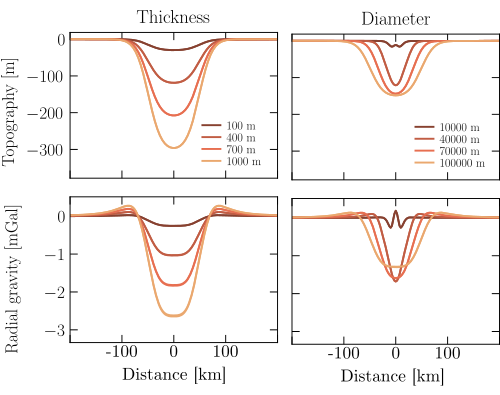
Julia Maia, Pietro Matteoni, Ana-Catalina Plesa, Tina Rückriemen-Bez, Frank Postberg, and Hauke Hussmann

Many surface tectonic features on Europa have been hypothesized to form in response to liquid and brine reservoirs within the ice shell [e.g., Schmidt et al., 2011; Steinbrugge et al., 2020; Matteoni et al., 2023]. Because these reservoirs have higher densities than the surrounding ice, they are negatively buoyant, producing surface deflection and generating topographic and gravity anomalies. Although the existence of such signatures has been proposed [e.g., Schmidt et al., 2011; Michaut and Manga, 2017; Lesage et al., 2025], their expected characteristics have not been systematically quantified.

Here we investigate the topographic and gravitational signals produced by subsurface high-density deposits within Europa’s ice shell. Using both elastic loading models [e.g., Turcotte et al., 1981; Maia and Wieczorek, 2022] and viscous loading models [e.g., Richards and Hager, 1984; James et al., 2013; Maia et al., 2023], we predict the observable signatures generated by such reservoirs. The reservoirs are treated purely as density anomalies; they do not modify the rheology of the surrounding ice. We explore four key reservoir properties: (i) diameters of 10–100 km, (ii) thicknesses of 100–1000 m, (iii) density contrasts of 80–680 kg/m³ relative to water ice, and (iv) depths ranging from 1 km to 80% of the total ice-shell thickness. Figure 1 illustrates how the reservoir thickness and diameter influence the predicted topography and gravity for a 20-km-thick ice shell with a viscous, conductive viscosity profile. In this case the feature has a density excess of 280 kg/m3 and is place at 10 km depth. We also tested alternative shell thicknesses and viscosity structures, but these variations produced only minor changes in the amplitudes and shapes of the modeled signatures.

We find that subsurface reservoirs can produce surface displacements of several hundred meters. These signals are potentially detectable by stereo topography and radar sounding from Europa Clipper, as well as by GALA, the laser altimeter onboard JUICE. On the other hand, the associated gravity anomalies are on the order of a few milligals, and the expected horizontal scales of the features (~100 km) fall below the ∼500 km resolution limit of Europa Clipper’s global gravity field recovery [Mazarico et al., 2023]. Such small-amplitude signals will also be difficult to detect using line-of-sight acceleration from individual flybys, though detectability depends strongly on spacecraft altitude [e.g., James, 2016; Mazarico et al., 2023].

How to cite: Maia, J., Matteoni, P., Plesa, A.-C., Rückriemen-Bez, T., Postberg, F., and Hussmann, H.: Signatures of ice shell heterogeneities on Europa from gravity and topography, EGU General Assembly 2026, Vienna, Austria, 3–8 May 2026, EGU26-454, https://doi.org/10.5194/egusphere-egu26-454, 2026.

EGU26-534 | ECS | Orals | PS2.1

Thermal evolution and dynamics of Ganymede’s rocky interior 

Emmanouela Konstantakopoulou, Ana-Catalina Plesa, Julia Maia, and Hauke Hußmann

The icy moons of Jupiter are the targets of future planetary missions such as JUICE and Europa Clipper due to their subsurface oceans that are thought to potentially represent habitable environments (Van Hoolst et al., 2024). Among these moons, Ganymede stands out, not just as the largest moon in the Solar System, but as the only moon that possesses an intrinsic magnetic field (Kivelson et al., 2004). JUICE will spend three years performing multiple flybys of the Galilean moons before entering the orbit around Ganymede in 2034. During this phase, the spacecraft will map Ganymede’s global topography using GALA (Hussmann et al., 2025) and measure its gravity field up to degree and order ~40 (De Marchi et al., 2021).


In this study we investigate the rocky interior of Ganymede using the geodynamical code GAIA (Hüttig et al., 2013). We vary the thickness of the silicate layer between 704 km and 1304 km (Rückriemen et al., 2018). Our models use a pressure- and temperature-dependent viscosity following an Arrhenius law (Hirth & Kohlstedt, 2003), core cooling, and the decay of radioactive heat sources. As radioactive heating and the rheology of the rocky interior are key parameters that control its dynamics and cooling behavior, we test different concentrations of radioactive isotopes of U, Th, and K. We vary the reference viscosity between 1018 Pa s and 1020 Pa s, representative of a hydrated or dry mantle. 


We test the effects of magmatism on the interior evolution by considering partial melting in the silicate layer and instantaneous melt extraction. Since magmatism affects the thermal evolution of the interior, we vary the extrusive to intrusive ratio. We investigate models where the entire amount of melt produced in the interior is extracted to the surface and models where the melt remains trapped in the subsurface beneath the ocean floor at depths between 30-200 km. 


We find that extrusive scenarios are more effective in cooling the moon’s interior during the early evolution, yet present-day average mantle temperatures converge to values between 1200-1250 K, depending on intrusion depth. In cases with efficient melt extraction, a thicker lithosphere is formed that insulates the deep interior and leads to higher core-mantle boundary temperatures. Nevertheless, across all scenarios the CMB heat fluxes remain sub-adiabatic, indicating that a purely thermal dynamo could sustain magnetic field generation only during the early stages of planetary evolution. 


The heat transport in the rocky mantle is critical for the core temperature and CMB heat flux, both important parameters for magnetic field generation. Thus, we select models with core temperature cold enough to allow core crystallization that was suggested to drive a present-day core dynamo (Rückriemen et al., 2018). Moreover, we compute the mass anomalies associated with density anomalies in our models and compare them to those inferred from Galileo’s Radio Doppler data (Palguta et al., 2006). Our models provide an important framework for understanding Ganymede’s internal evolution and will help to enhance the scientific return of JUICE by guiding data analysis and contextualizing future observations.

How to cite: Konstantakopoulou, E., Plesa, A.-C., Maia, J., and Hußmann, H.: Thermal evolution and dynamics of Ganymede’s rocky interior, EGU General Assembly 2026, Vienna, Austria, 3–8 May 2026, EGU26-534, https://doi.org/10.5194/egusphere-egu26-534, 2026.

EGU26-1722 | ECS | Posters on site | PS2.1

Constraining Ganymede’s hydrosphere structure and composition with magnetic induction and tidal Love numbers 

Dargilan Oliveira Amorim, Gabriel Tobie, Gael Choblet, and Livia Bove

ESA’s Jupiter Icy Moons Explorer (JUICE), equipped with a highly capable suite of geophysical instruments—including the J-MAG magnetometer, the 3GM radio-science instrument, and the GALA laser altimeter—will enable accurate measurements of Ganymede’s magnetic induction and its tidal Love numbers k2 and h2 (Van Hoolst et al., 2024). As part of a prospective study for this upcoming exploration of Ganymede, we compute the moon’s magnetic induction and tidal response across a wide range of interior structure models.


Ganymede’s hydrosphere is modeled using equations of state for pure water ice and NaCl aqueous solutions with varying concentrations, following the SeaFreeze formulation (Journaux et al., 2020). The ice shell is assumed to be either fully conductive or convective, depending on its thickness and the adopted viscosity assumptions. By modeling the heat flux through the ice shell, we determine the range of plausible shell thicknesses and thermal properties compatible with the estimated radiogenic power and tidal heating.


Using the magnetic induction efficiency recently re-estimated by Jia et al. (2025), we constrain the NaCl content of Ganymede’s ocean to values significantly lower than those explored in most previous studies. We also determine the maximum efficiency of NaCl transport from the silicate mantle to the ocean. Results could be adapted to any other salt for which conductivity measurements are available at the appropriate pressures and temperatures.


For each plausible hydrosphere configuration, we explore all possible structures of the silicate mantle and liquid core so that our models’ moment of inertia is within the acceptable range of values (Gomez Casajus et al. 2022). Anelasticity of Ganymede’s interior is modeled with the Andrade rheology following the approach of Amorim and Gudkova (2025) and the moon’s Love numbers and tidal heating are computed for hundreds of thousands of models.


The influence of each parameter on the magnetic induction response, tidal Love numbers, as well as on the phase lags of k2 and h2, is analyzed. This approach aims to determine how measurements of these quantities by Juice can provide constraints on Ganymede's interior structure and thermal state.

How to cite: Oliveira Amorim, D., Tobie, G., Choblet, G., and Bove, L.: Constraining Ganymede’s hydrosphere structure and composition with magnetic induction and tidal Love numbers, EGU General Assembly 2026, Vienna, Austria, 3–8 May 2026, EGU26-1722, https://doi.org/10.5194/egusphere-egu26-1722, 2026.

EGU26-3410 | Posters on site | PS2.1

Identifying priority cryovolcanic targets on Ganymede for ESA’s JUICE mission 

Anezina Solomonidou, Christos Ntinos, Katrin Stephan, Federico Tosi, Michael Malaska, Athena Coustenis, Sébastien Rodriguez, Rosaly Lopes, Alice Lucchetti, Giuseppe Mitri, Klara Kalousova, Martin Valenti, and Olivier Witasse

The characterization and identification of possible cryovolcanic activity on Ganymede is key to understanding the evolution and potential habitability of Jupiter’s largest moon. ESA’s JUpiter ICy moons Explorer (JUICE) mission, launched in 2023, will provide the first dedicated, high-resolution investigation of Ganymede’s surface and interior. Before JUICE reaches Jupiter’s system and obtains its first observations of Ganymede, it is essential to reassess previously proposed cryovolcanic regions using a consistent and comparative approach.

Based on Voyager and Galileo spectro-imaging, 20 paterae and morphologically distinctive features have been suggested as candidate cryovolcanic regions, yet their geological context and compositional diversity have not been systematically evaluated. In this work, we present a reanalysis of all candidate regions, combining regional geomorphological assessment with comparative near-infrared spectra. Reprocessed Galileo Near-Infrared Mapping Spectrometer (NIMS) data are examined using a uniform linear spectral unmixing framework, with emphasis on relative spectral trends and temperature-dependent behaviour rather than absolute compositional determinations.

This data reprocessing and spectral comparisons reveal distinct spectral categories among candidate regions, ranging from ice-dominated terrains to areas exhibiting enhanced non-ice components. When combined with morphological characteristics that are often similar to confirmed cryovolcanic features on other planetary bodies, these groupings suggest that multiple formation and modification processes may be represented, including end-member cases consistent with cryovolcanic resurfacing or brine-related processes.

Rather than providing definitive interpretations, this work establishes a pre-JUICE framework for target prioritization and observation planning. We discuss implications for high-resolution imaging and spectroscopy by the JANUS and MAJIS instruments, and how forthcoming JUICE data can discriminate between plausible geological scenarios.

How to cite: Solomonidou, A., Ntinos, C., Stephan, K., Tosi, F., Malaska, M., Coustenis, A., Rodriguez, S., Lopes, R., Lucchetti, A., Mitri, G., Kalousova, K., Valenti, M., and Witasse, O.: Identifying priority cryovolcanic targets on Ganymede for ESA’s JUICE mission, EGU General Assembly 2026, Vienna, Austria, 3–8 May 2026, EGU26-3410, https://doi.org/10.5194/egusphere-egu26-3410, 2026.

EGU26-5454 | Orals | PS2.1

Size-Dependent Fallout of Icy Grains in Europa’s Water Vapor Eruptions 

Wei-Ling Tseng, Ian-Lin Lai, Hsiang-Wen Hsu, Wing-Huen Ip, and Jong-Shinn Wu

Jupiter's moon Europa is a primary target for astrobiological investigation, exhibiting a complex surface potentially linked to its internal ocean through tidal activity and plume outgassing. While some astronomical observations and Galileo plasma data suggest the presence of active plumes, their specific dynamics remain poorly understood. This study characterizes the transport of icy dust entrained within water vapor plumes to better understand the exchange between Europa's subsurface and surface.

We employ the Direct Simulation Monte Carlo (DSMC) method to model plume structures across a range of initial eruption velocities and gas production rates. By integrating these gas-phase results with dust trajectory modeling, we quantify the influence of gas drag on particle distribution. Our results demonstrate a clear size-sorting mechanism: fine particles (0.001–0.1 μm) undergo wide-scale dispersion, whereas coarser grains (0.1–10 μm) settle preferentially near the vent (Tseng et al., 2025). Notably, at a high outgassing rate (~10²⁹ molecules/s), gas drag becomes the primary driver of dust motion, effectively decoupling the final deposition pattern from initial ejection velocity. These findings provide a framework for interpreting surface morphology and offer predictive constraints for upcoming observations by the JUICE and Europa Clipper missions.

How to cite: Tseng, W.-L., Lai, I.-L., Hsu, H.-W., Ip, W.-H., and Wu, J.-S.: Size-Dependent Fallout of Icy Grains in Europa’s Water Vapor Eruptions, EGU General Assembly 2026, Vienna, Austria, 3–8 May 2026, EGU26-5454, https://doi.org/10.5194/egusphere-egu26-5454, 2026.

EGU26-6813 | ECS | Orals | PS2.1

Breaching the Ice: The Role of Impact Cratering in Facilitating Surface-Ocean Exchange on Europa 

Kaiyi Dai, Kai Wünnemann, Ana-Catalina Plesa, Davide Izzo, Robert Luther, Randolph Röhlen, Thomas Davison, and Hauke Hussmann

Europa is one of the prime targets for astrobiological exploration in upcoming years. Beneath its ice shell, Europa harbors a global subsurface ocean. Habilibility on the icy moons depends critically on the exchange of material between the oxidant-rich surface and the subsurface ocean. Impact cratering represents a primary mechanism for facilitating this ocean-surface exchange, either by directly breaching the ice shell to create transient water pathways or by fracturing and weakening the crust to facilitate surface material transport.

Full impact penetration events and subsequent impact-induced weak zones are strongly dependent on the ice shell structure and thickness. Europa’s ice shell thickness remains controversial, with estimates ranging from 1 to 47 km [1-2]. Recent numerical modeling of Callanish and Tyre multiring impact basins [3] has suggested an ice shell thickness exceeding 20 km, with a conductive lid of 6 to 8 km.

We employ the iSALE-3D shock physics codes [4-6] to simulate crater formation and determine the criteria for full ice shell penetration. We use the tabular 5-phase Equation of State (EOS) for water-ice [7] to describe physical changes under expanding temperature and pressure,  and compare these results with the derived analytical EOS which was adopted by most of previous research. We cover a wide parameter space, ranging from vertical (90°) to highly oblique (15°) impacts, with undifferentiated stony and icy impactors (1000 - 2700kg/m3) ranging from 50 m to 6 km in diameter. The mean impactor velocity at Europa is 26 km/s, and we include a broader impactor velocity range (5 - 40km/s). Furthermore, we also vary the ice shell thickness (up to 50km) to cover various geophysical scenarios. To accurately quantify material fragmentation and to trace impactor material, we utilize a newly developed disruption tracking module by [8].

Our results demonstrate that the threshold for full penetration, and thus the direct exchange,  is heavily dependent on the impactor-to-target size ratio and impact velocity. We find that impact angle governs total amount of  melt generation and highly oblique impacts cause shear heating and frictional melting. Additionally, we quantify the amount of subsurface ocean material transported to the surface and map the distribution of resulting thermal anomalies. 

In future work, we will couple geophysical modeling with our impact-induced thermal anomaly. We will also characterize the shear failure zones and fracture networks generated by impacts. These results can provide constraints for geophysical investigations and identify local gravity anomalies which are potentially detectable by the ESA’s JUICE and NASA’s Europa Clipper missions.

References:

[1] Bray V. J. et al. (2014) Icarus, 231, 394–406.

[2] Howell S. M. (2021) Planet. Sci. J., 2, 129.

[3] Wakita S. et al. (2024) Sci. Adv., 10, eadj8455.

[4] Amsden A. A. et al. (1980) LANL Report LA-8095, 101 pp.

[5] Collins G. S. et al. (2004) Meteorit. Planet. Sci., 39, 217–231.

[6] Wünnemann K. et al. (2006) Icarus, 180, 514–527.

[7] Senft L. E. and Stewart S. T. (2008) Meteorit. Planet. Sci., 43, 1993–2013.

[8] Röhlen R. et al. (2025) Icarus, 431, 116464.

How to cite: Dai, K., Wünnemann, K., Plesa, A.-C., Izzo, D., Luther, R., Röhlen, R., Davison, T., and Hussmann, H.: Breaching the Ice: The Role of Impact Cratering in Facilitating Surface-Ocean Exchange on Europa, EGU General Assembly 2026, Vienna, Austria, 3–8 May 2026, EGU26-6813, https://doi.org/10.5194/egusphere-egu26-6813, 2026.

EGU26-6904 | Orals | PS2.1

Thermo chemical models for organic-rich icy moons: Applications to Europa, Ganymede, and Callisto 

Christophe Sotin, Giorgia Confortini, Camille Delarue, Mathilde Kervazo, Mathis Pinceloup, and Bruno Reynard

Using Equation of state for ices, silicates, and organics, the value of the moment of inertia (MoI) of icy moons and dwarf planet Ceres suggest that organic molecules are a major compound of their refractory core (Reynard & Sotin, 2023; Delarue et al., 2026). During the thermal evolution of the refractory core, the composition evolves and the density of the remaining carbonaceous compound increases as H and heteroatoms are released. It eventually reaches the density of graphite. The space observations provide the present state of the refractory core, suggesting that the organic fraction could be a larger fraction of the initial body. In an effort to retrieve the initial fractions of ice, silicates, and organics, two models were developed. First a kinetic model (KINCAM-E) was developed to describe the transformation of the carbonaceous compound with time and temperature. This model is based on experimental data with long duration pyrolysis. Second, a thermo-chemical model was developed to describe the feedback of the carbonaceous compound evolution on the thermal evolution. This model includes the migration of volatiles produced by the degradation of the organic compound to the hydrosphere. It also includes the dehydration of the hydrated silicates as the temperature increases. In these models, the mass of the body is fixed and partitioned between silicates, ice, and organics. The evolution of the radius and other parameters is followed. Only models consistent with the present value of the radius and the MoI are retained. First applied to Titan, this thermo-chemical evolution model shows that the initial fraction of organics composing Titan is similar to cometary amount (Delarue et al., 2026). It is now applied to the icy Galilean satellites. Implications for future observations by JUICE and Europa Clipper will be discussed.

How to cite: Sotin, C., Confortini, G., Delarue, C., Kervazo, M., Pinceloup, M., and Reynard, B.: Thermo chemical models for organic-rich icy moons: Applications to Europa, Ganymede, and Callisto, EGU General Assembly 2026, Vienna, Austria, 3–8 May 2026, EGU26-6904, https://doi.org/10.5194/egusphere-egu26-6904, 2026.

EGU26-7780 | Orals | PS2.1

Slingshot Prep: Europa Clipper Gets Ready to Borrow a Little Speed from Earth 

Haje Korth, Robert Pappalardo, and Bonnie Buratti

The arrival of NASA's Europa Clipper at the Jovian system in the coming years marks a pivotal moment for ocean world science. While the mission is designed to transform our understanding of Europa's habitability, cruise phase operations are already delivering important progress toward maturing operations concepts, validating instrument performance, and enabling early synergistic measurements that will strengthen the eventual science return.

The Europa Clipper spacecraft was launched on 14 October 2024 and executed a gravity assist maneuver at Mars on 1 March 2025, which enabled early tests of three key investigations. E-THEMIS observed Mars to validate a nonlinearity correction algorithm. REASON conducted its first complete end-to-end test at closest approach, which had not been possible before launch due to system integration constraints. G/RS evaluated flyby tracking procedures using open-loop receivers from NASA's Deep Space Network. Following successful completion of all Mars activities, the Europa-UVS instrument observed interstellar comet C/2025 N1 ATLAS near its Earth closest approach on 6 November 2025, from a distance of about one astronomical unit. The acquired data served to calibrate the instrument and provided information on the comet’s composition.

Before entering the Jovian system in 2030, the spacecraft will perform a second and final gravity assists at Earth on 3 December 2026 to target Jupiter. The Earth flyby will allow the only post-launch absolute calibration of the Europa Clipper Magnetometer (ECM) using Earth’s magnetic field. It will also support cross-calibration of PIMS through comparison with data from other near-Earth spacecraft. Under consideration are additional activities, which would be valuable to test operations of multiple instruments and spacecraft system in parallel. Throughout cruise, periodic checkouts verify functionality and, in some cases, enable unique scientific measurements in the heliosphere.

Coordination with ESA's JUICE mission has created potential for synergistic science that could enhance our understanding of solar wind dynamics and Jovian system interactions. Together, these activities lay the foundation for fully calibrated payload, which is essential to achieving Europa Clipper's overarching goal of evaluating Europa’s habitability.

How to cite: Korth, H., Pappalardo, R., and Buratti, B.: Slingshot Prep: Europa Clipper Gets Ready to Borrow a Little Speed from Earth, EGU General Assembly 2026, Vienna, Austria, 3–8 May 2026, EGU26-7780, https://doi.org/10.5194/egusphere-egu26-7780, 2026.

EGU26-9165 | ECS | Orals | PS2.1

Thermal Modeling of Europa’s Interior Using Finite Element Method  

Parvathi Harikumar, Alok Porwal, and Deepak Singh

Europa’s interior structure and geological evolution are governed by its thermal state, which controls phase stability, rheology, and heat transport from the core to the surface. Assuming a cold accretion model proposed by Trinh et al (2023),we present a one dimensional spherical finite element thermal model that resolves Europa’s metallic  Fe - FeS core, silicate mantle with composition consistent with peridotite, convecting subsurface ocean, and outer ice shell. The model assumes radial symmetry, homogeneous layer compositions and constant material properties within each region.The model enforces spherical symmetry via a zero - flux Neumann boundary at the core center and imposes a fixed surface temperature of -160 °C to represent radiative equilibrium. Heat transfer is treated as conductive in the core and ice shell, while mantle and ocean convection are parameterized through effective thermal conductivity enhancements. Radiogenic heating within the silicate mantle and tidal dissipation uniformly distributed in the ice shell provide the primary internal heat sources. Monte Carlo sampling of ice shell thickness captures uncertainty in the near - surface thermal structure. Notably, the model excludes retained primordial heat from accretion, adopting present-day thermal boundary conditions. Resulting temperature profiles reveal a peak core temperature near 1660 °C, consistent with solid or near-solid Fe - FeS alloy at Europa’s core pressures (3-6 GPa). The mantle temperature decreases smoothly from ~1600 °C at the core - mantle boundary to ~400 °C at the mantle - ocean interface, indicating a solid, sluggishly convecting silicate mantle without evidence of wholesale melting. Temperatures near the mantle - ocean boundary could promote sustained water-rock interactions and potential hydrothermal circulation, leading to serpentinization along the ocean floor. The ocean exhibits a near - isothermal temperature profile, remaining fully liquid in all realizations due to sufficient internal heat flux. The ice shell shows a steep thermal gradient, with temperatures declining from near - melting at its base to ~-160 °C at the surface, consistent with a mechanically stratified ice shell.

How to cite: Harikumar, P., Porwal, A., and Singh, D.: Thermal Modeling of Europa’s Interior Using Finite Element Method , EGU General Assembly 2026, Vienna, Austria, 3–8 May 2026, EGU26-9165, https://doi.org/10.5194/egusphere-egu26-9165, 2026.

EGU26-9463 | ECS | Orals | PS2.1

Ozone production by electron irradiation of regolith ice 

Lorenzo Obersnel, André Galli, Rico G. Fausch, Rafael Ottersberg, and Peter Wurz

Due to the lack of a dense atmosphere, the icy moons of Jupiter are directly exposed to a harsh radiation environment. Precipitating energetic particles contribute to the formation of the thin atmospheres of the moons and process the upper layer of their surfaces[1]. Radiolytically produced molecules can remain trapped in the ice. In particular, molecular oxygen and ozone have been observed in the surfaces of Ganymede[2] and other icy moons. We conducted laboratory experiments irradiating regolith pure water ice samples with electrons, simulating the processing of the icy moons’ surfaces. The ice regolith[3] was produced to closely emulate the physical properties expected on the surface of the Galilean icy moons, in terms of grain size (~67 μm) and temperature (90±5 K). Using a time-of-flight mass spectrometer similar to the Neutral and Ion Mass Spectrometer on board Jupiter Icy Moons Explorer, we analysed the species radiolytically produced and sputtered from the ice.

We observed that ozone is produced in the ice regolith during 10 keV irradiations. Part of the produced ozone is stored in the ice. We give an estimate of the production of O3, with respect to the radiolytically produced O2. Preliminary results appear to show that ozone production depends on the grain size of the regolith ice.

[1] Vorburger, Audrey, and Peter Wurz. "Europa’s ice-related atmosphere: the sputter contribution." Icarus 311 (2018): 135-145.

[2] Noll, Keith S., et al. "Detection of ozone on Ganymede." Science 273.5273 (1996): 341-343.

[3] Pommerol, Antoine, et al. "Experimenting with mixtures of water ice and dust as analogues for icy planetary material: recipes from the ice laboratory at the University of Bern." Space science reviews 215 (2019): 1-68.

How to cite: Obersnel, L., Galli, A., Fausch, R. G., Ottersberg, R., and Wurz, P.: Ozone production by electron irradiation of regolith ice, EGU General Assembly 2026, Vienna, Austria, 3–8 May 2026, EGU26-9463, https://doi.org/10.5194/egusphere-egu26-9463, 2026.

EGU26-10799 | ECS | Posters on site | PS2.1

Ganymede’s tidal response to moon-moon tides: A 3D time-domain approach 

Burak Aygün, Hamish Hay, Gabriel Tobie, Gaël Choblet, and Ondřej Čadek

Although Ganymede's tidal response is primarily governed by the eccentricity tides, it is also affected by additional forcing from its neighbouring moons. The compact Galilean system, locked in 4:2:1 orbital resonance, results in complex gravitational interactions between Io, Europa, and Ganymede. Consequently, Ganymede experiences additional tidal forces at frequencies different from its orbital frequency. This forcing is particularly important for a moon with a subsurface ocean, as prior studies have shown that moon-moon tides may excite oceanic flows that could be visible in the gravity field1,2. These studies on moon-moon tides relied on 2D models based on the Laplace tidal equations (LTE), which are typically solved in the frequency domain3,4.   

Building on the work of Hay et al. (2022), we present an approach to simulate Ganymede’s tidal response by solving the 3D equations of motion in the time domain5. The 3D method enables us to avoid biases associated with 2D approximations, while the time domain captures variations in gravity over a tidal cycle. We explore a range of internal structures with ocean thicknesses between 1 and 300 km, corresponding to ice shell thicknesses from 152 to 10 km. For each internal structure, we solve the system forced by both eccentricity and moon-moon tides and obtain the tidal response in terms of time-dependent degree-2 potential Love numbers.  

In the case of only eccentricity tides, the Love numbers remain constant over a tidal cycle, while the addition of moon-moon tides results in significant variations of the Love numbers over a full tidal cycle. Due to these variations, we separate the Love numbers into time-averaged and oscillatory components. Our results show that the oscillatory part of the Love numbers exhibits variations from the time-averaged Love number of approximately 1% for thick oceans (>6 km) and up to 10% for thin oceans. The thin oceans strongly alter the gravity signal and can be readily constrained by Juice. For the thick oceans, although the variations are small, they remain detectable by Juice6. For all the ocean thicknesses, the time-averaged Love numbers are similar to one from the eccentricity tides, and the tidal response is dominated by tides due to Jupiter. The small variations can provide additional constraints for the thickness and composition of the ocean. Finally, in addition to tides due to Io and Europa, we aim to include the eccentricity modulations of Ganymede expected during Juice's lifetime. 

Acknowledgments 

This project is supported by the Czech Science Foundation (project No. 25-16801S), by the Agence Nationale de Recherche (France; project COLOSSe, ANR-2020-CE49-0010), the Czech-French exchange Barrande programme, and by CNES for the preparation of the ESA Juice mission. 

References 

[1] Hay et al., 2022, J. Geophys. Res.: Planets 127, e2021JE007064 

[2] De Marchi et al. 2022, Icarus 386, 115150 

[3] Matsuyama et al. 2018, Icarus 312, 208–230 

[4] Buthe et al. 2016, Icarus 280, 278–299 

[5] Aygün & Čadek, 2023, J. Geophys. Res.: Planets 128, e2023JE007907 

[6] Cappuccio et al. 2020, Plane. & Spa. Sci. 187, 104902 

How to cite: Aygün, B., Hay, H., Tobie, G., Choblet, G., and Čadek, O.: Ganymede’s tidal response to moon-moon tides: A 3D time-domain approach, EGU General Assembly 2026, Vienna, Austria, 3–8 May 2026, EGU26-10799, https://doi.org/10.5194/egusphere-egu26-10799, 2026.

EGU26-12684 | Posters on site | PS2.1

Comparative study of the Galilean moon atmospheres using the DSMC method 

Leander Schlarmann, Audrey Vorburger, Tim Mosimann, Shahab Fatemi, Nicolas Thomas, and Peter Wurz

Jupiter's Galilean satellites, Io, Europa, Ganymede, and Callisto, are similar in size and mass. Io, the innermost Galilean moon, is subject to extreme tidal forces, making it the most volcanically active body in the Solar System. This causes Io's tenuous atmosphere to be dominated by SO2. On the contrary, the main atmospheric species of the icy Galilean moons are expected to be water-related products, such as H2O, O2, and H2. Furthermore, non-water-related species, such as CO2, have been detected. In this study, we use the Direct Simulation Monte Carlo (DSMC) model ultraSPARTS (ultrafast Statistical PARTicle Simulation package) [1, 2] to compare the atmospheres of the Galilean satellites. For this purpose, we investigate the influence and interaction of various processes, including the sublimation of surface materials, the interaction with the Jovian magnetic field through sputtering and radiolysis, and the outgassing from (cryo-)volcanic plumes. To model the sublimation of SO2 and H2O, we apply a thermal model (THERMPROJRS [3]) to constrain the surface temperature on the satellites. The DSMC method enables us to model the transition from regions dominated by intermolecular collisions to free molecular flow. The atmospheres of the Galilean moons will be studied extensively in the 2030s by the Juice and Europa Clipper missions using high-resolution mass spectrometry, providing an unprecedented opportunity to compare and verify our results with in-situ data.

Acknowledgements:

This work has been carried out within the framework of the National Centre of Competence in Research PlanetS supported by the Swiss National Science Foundation under grant 51NF40_205606. The authors acknowledge the use of ultraSPARTS from Plasma T.I., Taiwan.

References:

[1] http://www.plasmati.com.tw/
[2] Klaiber, L. M. (2024). Three-dimensional DSMC modelling of the dynamics of Io’s atmosphere. PhD thesis, University of Bern.
[3] Spencer, J. R. (1989). Icarus 78, 337-354.

How to cite: Schlarmann, L., Vorburger, A., Mosimann, T., Fatemi, S., Thomas, N., and Wurz, P.: Comparative study of the Galilean moon atmospheres using the DSMC method, EGU General Assembly 2026, Vienna, Austria, 3–8 May 2026, EGU26-12684, https://doi.org/10.5194/egusphere-egu26-12684, 2026.

EGU26-13465 | ECS | Orals | PS2.1

Updated Interior Structure of Callisto from a Reanalysis of Galileo Data 

Flavio Petricca, Gael Cascioli, Erwan Mazarico, Dustin Buccino, Corey Cochrane, and Castillo-Rogez Julie

The internal structure of Callisto has remained a significant open question since the Galileo mission, particularly its degree of differentiation compared to its neighbor Ganymede. Previous analyses of Galileo gravity data suggested a normalized Moment of Inertia (MOI) of approximately 0.35, implying a largely undifferentiated interior composed of a mixture of ice and rock. In this work, we present a comprehensive reanalysis of Galileo’s Doppler tracking data, including the previously unanalyzed C30 flyby, using modern orbit determination and signal processing techniques.

We provide two solutions for Callisto's gravity field. While our first solution assumes hydrostatic equilibrium and aligns with previous results, our favored solution also accounts for non-hydrostatic contributions arising from mass concentrations (mascons) associated with the Asgard and Valhalla impact basins. This improved model yields a normalized MOI of 0.345 ± 0.005, a value lower than previously reported canonical figures.

When combined with magnetic induction data, this lower MOI indicates that Callisto is more differentiated than previously believed. Our MCMC inversion indicates an interior structure consisting of a 10–120 km thick ice shell, a deep subsurface ocean approximately 300 km thick, and a large rocky core. Notably, the inferred density of the core is low, inconsistent with a pure rock composition. We propose that the core contains a significant mass fraction of organic material mixed with rock, similar to the interior configuration proposed for Saturn’s moon Titan. These findings challenge the traditional view of Callisto as a simple mixture of ice and rock and offer new constraints on the formation of giant icy moons in the outer solar system.

How to cite: Petricca, F., Cascioli, G., Mazarico, E., Buccino, D., Cochrane, C., and Julie, C.-R.: Updated Interior Structure of Callisto from a Reanalysis of Galileo Data, EGU General Assembly 2026, Vienna, Austria, 3–8 May 2026, EGU26-13465, https://doi.org/10.5194/egusphere-egu26-13465, 2026.

EGU26-13638 | ECS | Posters on site | PS2.1

Ganymede Surface UV Reflectance Derived from Juno/UVS Measurements 

Bilal Benmahi, Vincent Hue, Philippa Molyneux, Audrey Vorburger, Jack H. Waite, Guillaume Gronoff, Alexis Bouquet, Randall G. Gladstone, François Leblanc, Benjamin Benne, Bertrand Bonfond, Mathieu Barthelemy, Michel Blanc, Denis C. Grodent, and Thomas K. Greathouse

Ganymede, the only satellite in the Solar System possessing an intrinsic magnetic field, is continuously immersed in Jupiter’s magnetosphere. The relative motion of this conducting body through the jovian magnetic field, together with the presence of closed magnetic field regions around Ganymede, leads to the precipitation of energetic electrons along these closed field lines, producing ultraviolet auroral emissions.

In sunlit auroral regions, these emissions are superimposed on the solar radiation reflected by the surface, making an accurate knowledge of the surface spectral reflectance essential for a proper interpretation of the observed UV spectra.

We used Juno/UVS observations obtained during the 34th perijove to derive the spectral reflectance of Ganymede’s surface in the 140-205 nm range. The analysis was performed with a non-local thermodynamic equilibrium radiative transfer model initially developed for auroral emission studies, which self-consistently includes the reflection of the incident solar flux by the surface. By fitting the UVS spectra in illuminated auroral regions, we retrieved spatially resolved reflectance values.

The inferred reflectance exhibits strong spatial and spectral variability, ranging from about 0.1% to 8% over the [140-205] nm interval, revealing a highly heterogeneous surface. This variability is likely the signature of long-term irradiation by energetic particles, which modifies the physical structure, crystallinity, and chemical composition of surface ice. The resulting UV reflectance maps show no clear correlation with visible-wavelength surface morphology, indicating that irradiation-driven processes dominate over geological features in controlling the UV albedo.

These new reflectance constraints constitute a key input for future modeling of Ganymede’s ultraviolet aurora and will be particularly valuable for the interpretation of upcoming observations by the JUICE/UVS instrument.

How to cite: Benmahi, B., Hue, V., Molyneux, P., Vorburger, A., Waite, J. H., Gronoff, G., Bouquet, A., Gladstone, R. G., Leblanc, F., Benne, B., Bonfond, B., Barthelemy, M., Blanc, M., Grodent, D. C., and Greathouse, T. K.: Ganymede Surface UV Reflectance Derived from Juno/UVS Measurements, EGU General Assembly 2026, Vienna, Austria, 3–8 May 2026, EGU26-13638, https://doi.org/10.5194/egusphere-egu26-13638, 2026.

EGU26-13860 | Orals | PS2.1

Motional induction in Ganymede's ocean 

Simon Cabanes, Thomas Gastine, and Alexandre Fournier

We investigate the magnetic signature of oceanic circulation in Ganymede's subsurface ocean using kinematic induction modeling. Our approach couples zonal jet flows from rotating thermal convection simulations with magnetic field models incorporating Ganymede's internal dynamo and external contributions from Jupiter.  We solve the induction equation in spherical geometry for deep-ocean (493~km) and shallow-ocean (287~km) scenarios with varying magnetic Reynolds numbers.  Ocean flows generate a predominantly toroidal magnetic field through the omega-effect,
with a weaker poloidal component pervading beyond the conductive ocean layer.  For some, but not all, induction configurations,  analysis  \rv{of the time-averaged Lowes-Mauersberger} spectra  reveals that ocean-induced signals dominate at spherical harmonic degrees $\ell \geq 4$. Deep ocean scenarios with magnetic Reynolds numbers above unity produce surface magnetic signals up to 9~nT. Our results demonstrate that Ganymede's intrinsic magnetic field creates favorable conditions for detecting subsurface ocean dynamics, thus emphasizing the need for low-altitude
orbits for the Juice probe.

How to cite: Cabanes, S., Gastine, T., and Fournier, A.: Motional induction in Ganymede's ocean, EGU General Assembly 2026, Vienna, Austria, 3–8 May 2026, EGU26-13860, https://doi.org/10.5194/egusphere-egu26-13860, 2026.

EGU26-14922 | Orals | PS2.1

Thermal Redistribution and Recrystallization of Ice on Europa's Surface 

Paul Hayne, Kya Sorli, and Richard Cartwright
The bulk of Europa's crust is dominated by water ice. Emplacement of internally derived hydrated salt minerals and production of sulfuric acid hydrates through the action of the jovian magnetosphere result in spatial variations in the non-ice surface composition. Recent observations from the James Webb Space Telescope (JWST) suggested the presence of H2O ice in both crystalline and amorphous form, with evidence for rapid (~10 day) recrystallization of ice in some regions and the dominance of amorphization via plasma sputtering in others (Cartwright et al., 2025, PSJ). Sublimation and sputtering may also supply water to the exosphere, through which it is transported ballistically to other regions on Europa. Here, we use a 3D thermophysical model with coupled sputtering and exosphere transport models to examine the redistribution of water and its effect on Europa's surface composition.
 
Our results indicate that for a surface with initial non-ice concentrations of a few percent, sublimation dominates ice ablation at the low- to mid-latitudes, with net accumulation at the poles. Sputtering (also a temperature-dependent process) accounts for a few percent of net ice ablation. On diurnal to annual timescales, a prominent spatial pattern of ice concentration develops: 1) depletion of ice (enrichment in non-ice) at the equator relative to both the mid-latitudes and the polar regions, and 2) a longitudinal variation with higher ice concentrations (less ablation) at the subjovian hemisphere. The latter effect is due to the daily solar eclipse of Europa by Jupiter, which suppresses local noontime peak temperatures along with sublimation and sputtering rates. In addition to the thermophysical and ice transport results, we will present rates and spatial patterns of amorphization and thermal recrystallization to better understand the JWST observations.

How to cite: Hayne, P., Sorli, K., and Cartwright, R.: Thermal Redistribution and Recrystallization of Ice on Europa's Surface, EGU General Assembly 2026, Vienna, Austria, 3–8 May 2026, EGU26-14922, https://doi.org/10.5194/egusphere-egu26-14922, 2026.

EGU26-15286 | ECS | Posters on site | PS2.1

Mapping the Composition of Europa's Surface with the Europa Clipper Surface Dust Analyzer (SUDA) 

Marshall Seaton, Sascha Kempf, and Hsiang-Wen Hsu

Introduction: Europa’s surface is a dynamic interface where subsurface materials, radiation-processed surface chemistry, and exogenic inputs converge and are cycled back into the subsurface. Direct sampling of that material is central to assessing Europa’s habitability and evaluating the potential delivery of organic and geochemical species from the interior ocean to the surface1. The Surface Dust Analyzer (SUDA) onboard Europa Clipper provides a uniquely powerful means of accessing this material through the compositional analysis of individual ice grains lofted from Europa’s surface during flyby using time-of-flight mass spectrometry (TOF-MS). Each particle to be analyzed by SUDA will carry a chemical fingerprint of the surface unit from which it originated, offering a window into the chemical composition of surface regions that cannot currently be directly sampled in situ, including evidence for salts, organics, and other chemical indicators of habitability.

Methods: Successfully interpreting these measurements requires understanding how each detection maps back to its surface provenance. We employ a dynamical modeling framework developed by Goode et al.2,3 which couples an ejecta cloud model with Monte Carlo simulations of Europa Clipper flybys. For a specified flyby geometry, the local number density of ejecta along the trajectory are computed as a function of time, where SUDA detections are stochastic and are described by a Poisson distribution. At each simulated detection event, particle velocities are drawn from the probability density of the ejecta cloud at the spacecraft location. The resulting vector is then propagated backward under Europa’s gravity to determine the corresponding surface launch point. Repeating this procedure over many Monte Carlo simulations yields a statistical distribution of launch sites for a given flyby, enabling the fraction of detections whose origin lies within a predefined surface region to be computed. Associating features within SUDA’s mass spectra with these launch locations allows chemical compositions determined for individual ice grains to be probabilistically linked to compositionally distinct surface features. This framework provides quantitative measures of both the expected number of detections for a given surface feature as a function of feature size and flyby altitude, and the confidence with which a given chemical composition can be attributed to a particular geological feature.

Acknowledgements: This work was supported by NASA through the Europa Clipper project. 

References: 1. Vance, S. et al. (2023). Space Sci. Rev. 219, 81. 2. Goode, W. et al. (2021). Planet. Space Sci. 208, 105343. 3. Goode, W. et al. (2023). Planet. Space Sci. 227, 105633.     

How to cite: Seaton, M., Kempf, S., and Hsu, H.-W.: Mapping the Composition of Europa's Surface with the Europa Clipper Surface Dust Analyzer (SUDA), EGU General Assembly 2026, Vienna, Austria, 3–8 May 2026, EGU26-15286, https://doi.org/10.5194/egusphere-egu26-15286, 2026.

EGU26-15367 | Orals | PS2.1

How to Detect Ammonia Ice Deposits on Europa's Surface with SUDA on Europa Clipper. 

Sascha Kempf, Jordy Bouwman, John Fontanese, Hsian-Wen Hsu, Marshall Seaton, and Camille Yoke

Impact mass spectrometers such as the Cosmic Dust Analyser (CDA) on board the Cassini spacecraft have proven invaluable in determining the composition of the surfaces from which detected particles originate. However, connecting impact mass spectra with the composition of the striking particle is not straightforward and requires laboratory impact spectra of particles of known composition and speed. Such data has so far been acquired for minerals, some organic materials and water ice. In this study, we present cation and anion impact mass spectra of aluminum and iron particles striking ammonia ice, a possible surface component of outer solar system bodies such as Europa, Ariel, and Pluto. To reduce ambiguity in the mass lines appearing in the spectra, we performed impact experiments with 14NH3 and 15NH3 ice.

The resulting impact mass spectra demonstrate only a slight dependence on impact speed. The cation impact spectra are dominated by protonated ammonia cluster ions, (NH3)NH4, the abundance of which decreases monotonically with cluster size. Consistent with data obtained from gas-phase mass spectrometry experiments involving ammonia clusters, (NH3)4NH4 clusters are overabundant in impact mass spectra at all impact speeds, suggesting that these clusters possess a particularly stable geometric configuration. This finding implies that cluster formation in hypervelocity experiments is well described by gas-phase chemistry. Unlike water ice, well-formed ammonia cluster impact mass spectra can be obtained at impact speeds as low as 1 km/s. This suggests that ammonia deposits could be detected even by instruments in low orbits around icy moons such as Ganymede.

We performed Monte Carlo simulations to verify whether the potential ammonia deposits on Europa, as identified in Galileo IR data by Emran (2026), can be detected by the Surface Dust Analyzer (SUDA) impact mass spectrometer on board the Europa Clipper spacecraft [6]. This spacecraft will conduct 49 low altitude Europa flybys starting in 2030. Our simulations clearly demonstrate that, if present, such deposits will be unambiguously identified.

How to cite: Kempf, S., Bouwman, J., Fontanese, J., Hsu, H.-W., Seaton, M., and Yoke, C.: How to Detect Ammonia Ice Deposits on Europa's Surface with SUDA on Europa Clipper., EGU General Assembly 2026, Vienna, Austria, 3–8 May 2026, EGU26-15367, https://doi.org/10.5194/egusphere-egu26-15367, 2026.

EGU26-15965 | ECS | Posters on site | PS2.1

Ion Pickup and Velocity Space Thermalization at Outer Planet Moons: Wave-Particle Interactions 

Miranda Chang, Xin An, Hao Cao, Hanying Wei, Xianzhe Jia, and Krishan Khurana

Ion pickup at the active moons of the outer planets is a fundamental process in which newly created ions from moon exospheres interact with the ambient corotating plasma and are accelerated to co-move with the background flow. Recent spacecraft observations reveal strong electromagnetic wave activity likely generated by this pickup process. In this study, we investigate the ion pickup process at Europa and Io using the hybrid VPIC code, in which ions are treated kinetically while electrons are modeled as a massless fluid. In the moon’s rest frame, ambient ions initially stream at the corotating velocity perpendicular to the background magnetic field relative to stationary pickup ions, resulting in the two populations being clustered at opposite gyro-phases. This configuration simultaneously excites transverse electromagnetic ion cyclotron waves and compressional magnetic fluctuations associated with mirror and ion-Bernstein modes, with amplitudes reaching a few percent of the background field. Using field–particle correlation analysis, we demonstrate how these waves scatter ions in velocity space, enabling newly created ions to be efficiently picked up and leading to isotropization of the distribution function in both gyro-phase and pitch angle. We identify three key parameters that control the instability threshold: the Alfvén Mach number and plasma beta of the ambient corotating ions, and the ambient-to-pickup ion density ratio. A comprehensive parameter survey is performed to determine the instability threshold. This study advances a kinetic understanding of ion pickup and provides a framework for interpreting spacecraft observations at the moons of the outer planets.

How to cite: Chang, M., An, X., Cao, H., Wei, H., Jia, X., and Khurana, K.: Ion Pickup and Velocity Space Thermalization at Outer Planet Moons: Wave-Particle Interactions, EGU General Assembly 2026, Vienna, Austria, 3–8 May 2026, EGU26-15965, https://doi.org/10.5194/egusphere-egu26-15965, 2026.

EGU26-16053 | ECS | Orals | PS2.1

Interpreting Impact Ionization Spectra From Icy Worlds 

Camille Yoke, Jordy Bouwman, John Fontanese, Sean Hsu, Marshall Seaton, Grace Owens, Tobin Munsat, and Sascha Kempf

Impact ionization time-of-flight (TOF) mass spectrometry has been shown to be a powerful in situ technique for analyzing the composition of icy bodies in the outer Solar System, providing information inaccessible to remote sensing alone. Instruments such as the SUrface Dust Analyzer (SUDA) aboard Europa Clipper will sample ice grains in Europa’s exosphere, enabling compositional mapping of Europa's surface. Interpretation of these measurements is complicated by the physics of hypervelocity impacts, as fragmentation pathways, ion clustering, and relative ion yields depend strongly on both impact velocity and target composition. Reliable interpretation of spacecraft data, including measurements from Cassini’s Cosmic Dust Analyzer, therefore requires high-fidelity laboratory analogue experiments.

Here we present laboratory TOF mass spectra generated from hypervelocity dust impacts into cryogenic ice targets using the dust accelerator facility at the University of Colorado Boulder. These experiments produce reference spectra from known ice compositions that serve as analogue datasets for spaceborne measurements. The materials investigated include ammonia ices, carbon dioxide ices, and salt-rich water ices, all of which have been proposed as relevant to Europa’s icy shell.

A central advancement of this work is the use of isotopically labeled ice compositions to reduce ambiguity in spectral interpretation. By generating spectra from 15NH3 and 13CO2 ices, predictable mass shifts are observed in diagnostic ion and cluster peaks originating from the impacted material. These shifts provide direct confirmation of molecular contributions within complex spectra and significantly improve confidence in peak assignments.

The experiments were conducted by accelerating micron-scale dust particles to velocities of 1-50 km s-1 and impacting them into thin ice films grown under ultra-high vacuum on cryogenically cooled substrates. Volatile ices were deposited from high-purity gases. And salt-rich water ices were produced from aerosolized liquid particles using novel operating conditions. Impact-generated plasmas were analyzed using TOF mass spectrometry. Isotopically labeled datasets were used to confirm molecular assignments via predictable mass shifts.

These results demonstrate that laboratory analogue measurements can reproducibly capture composition-dependent features in impact ionization spectra across a wide range of relevant velocities. Ammonia-bearing ices provide a useful test case for isotopic validation. Our early results indicate that this approach is broadly applicable to diverse icy-world compositions. Ongoing and future work will expand this reference database to additional salts and isotopically marked water ice, chemical compositions relevant to Europa and other ocean worlds.

How to cite: Yoke, C., Bouwman, J., Fontanese, J., Hsu, S., Seaton, M., Owens, G., Munsat, T., and Kempf, S.: Interpreting Impact Ionization Spectra From Icy Worlds, EGU General Assembly 2026, Vienna, Austria, 3–8 May 2026, EGU26-16053, https://doi.org/10.5194/egusphere-egu26-16053, 2026.

EGU26-17027 | Orals | PS2.1

Surface ages of the icy Galilean satellites of Jupiter using an updated impact cratering chronology model 

Roland J. Wagner, Katrin Stephan, Thomas Kenkmann, Namitha Rose Baby, Thomas Roatsch, Elke Kersten, and Pasquale Palumbo

Two spacecraft were launched recently to reach Jupiter and its satellites: (1) ESA’s JUICE Mission (Apr. 14, 2023) and (2) NASA’s Europa Clipper (Oct. 14, 2024). The latter spacecraft is planned to be inserted into Jupiter orbit Apr. 11, 2030 [1]. JUICE will be inserted into Jupiter orbit in 2031 [2], and in 2034 in orbit about the largest satellite Ganymede [2]. While Europa Clipper will focus on intensely studying Europa, JUICE will concentrate on the two largest satellites Ganymede and Callisto. These three satellites are characterized by a wide range of geologic units: Callisto is dominated by old, dark densely cratered plains [3], whereas the surface of Europa is comparably young and dominated by intensely tectonized regions [4]. Ganymede shows both older dark cratered plains and younger light tectonically altered terrains [5]. The true ages of these surface features are still unknown, but age estimations have been carried out, based on measuring crater distributions since the late 1970ies, in Voyager and Galileo SSI imaging data [e.g., 6]. In this study, we continue our work on cratering model age estimations by applying an updated impact chronology scenario [7][8]. The dominant impactors on the surfaces of the Jovian satellites are short-period comets from the Kuiper Belt in the Outer Solar System, termed ecliptic comets (ECs) [7]. In the updated impact chronology, two scenarios, although with high degrees of uncertainties, are discussed [7]: (a) impacts preferentially without disruption of the impactors, and (b) impacts predominantly with disruption. Applying these two scenarios, cratering model ages are obtained from crater distributions on specific geologic terrains. For Ganymede, significantly higher surface ages for specific terrain types – model ages several 100 Myr older – can be derived from the disrupted comet impact scenario compared to a previous version of the chronology [8][9], while changes in model ages are minor for the scenario without comet disruption. Similarily, crater model ages were also found to be higher for geologic units on Callisto in this study, taking into account disrupted comets. The disrupted comet scenario also infers higher model ages for terrains on Europa compared to previous estimates [9]. We will use these model chronology and future updates for geologic studies based on the images returned by the JANUS Camera aboard the JUICE spacecraft. REFERENCES: [1] Pappalardo, R. T. et al.: EGU25-7629 (abstr.), 2025. [2] Vallat, C. et al.: EGU25-21485 (abstr.), 2025. [3] Moore, J. M. et al., in: Bagenal, F. et al. (Eds.), Jupiter, Cambridge Univ. Press, p. 397-426, 2004. [4]. Dogget, T. et al., in: Pappalardo, R. T. et al. (Eds.), Europa, Univ. of Arizona Press, Tucson/Az, p. 137-159, 2009. [5] Jaumann, R. et al., in: Volwerk, M. et al. (Eds.), Ganymede, Cambridge Univ. Press, p. 59-74, 2025. [6] Kirchoff, M. R. et al., in: Volwerk, M. et al. (Eds.), Ganymede, Cambridge Univ. Press, p. 104-125, 2025. [7]. Nesvorný, D. et al., Planet. Sci. J. 4:139, 2023. [8] Wagner, R. J. et al., EPSC-DPS abstr. EPSC-DPS2025-2086, 2025. [9] Zahnle, K. et al., Icarus 163, 263-289, 2003.

How to cite: Wagner, R. J., Stephan, K., Kenkmann, T., Rose Baby, N., Roatsch, T., Kersten, E., and Palumbo, P.: Surface ages of the icy Galilean satellites of Jupiter using an updated impact cratering chronology model, EGU General Assembly 2026, Vienna, Austria, 3–8 May 2026, EGU26-17027, https://doi.org/10.5194/egusphere-egu26-17027, 2026.

EGU26-17988 | ECS | Orals | PS2.1

Assessing the role of tidal heating and insolation on lateral heterogeneity in Europa’s ice shell 

Hyunseong Kim, Antoniette Greta Grima, and Luke Daly

Observations from past missions, including NASA’s Galileo, reveal active ice tectonics and a subsurface ocean on Europa, implying material recycling within the ice shell, possible exchange with the underlying ocean, and thus the potential conditions for habitability. Constraining the structure of Europa’s ice shell is therefore a primary objective of NASA’s Europa Clipper mission, as it controls the efficacy and efficiency of the material exchanged between the surface and the ocean. However, the mechanisms that govern the mass exchange and shape the internal structure of Europa’s ice shell remain uncertain. These are likely influenced by the spatial distribution of heat sources on Europa, with insolation raising surface temperatures near the equator while tidal heating is strongest toward the poles. Because insolation and tidal heating produce opposing latitudinal temperature patterns, their combined effects may either suppress or enhance lateral variations within the ice shell. To investigate the combined effects of insolation and tidal heating, we present numerical models of Europa’s ice shell that include heterogeneous tidal heating and surface temperature, coupled with visco-elasto-plastic deformation and composite ice rheology. We investigate how these heat sources influence convection within the possible range of ice shell thickness, and explore their effects on the global distribution of heat flow, stress accumulation, and topography at the ice surface of Europa. Our results provide new insights into lateral variations in internal structure and the evolution of surface deformation in Europa’s ice shell, with implications for ice shell tectonics and surface–interior coupling.

How to cite: Kim, H., Grima, A. G., and Daly, L.: Assessing the role of tidal heating and insolation on lateral heterogeneity in Europa’s ice shell, EGU General Assembly 2026, Vienna, Austria, 3–8 May 2026, EGU26-17988, https://doi.org/10.5194/egusphere-egu26-17988, 2026.

EGU26-18610 | ECS | Posters on site | PS2.1

2024 Earth Gravity Assist: Finding the Surface Charging of the Juice Spacecraft 

Maryam Zeroual, Mika Holmberg, Francois Gutierrez, Fredrik Johansson, Pierre Henri, and Xavier Vallieres

We use the Spacecraft Plasma Interaction Software (SPIS) to simulate the interaction between the JUICE spacecraft and its environment during the Earth gravity assist performed on the 20th August 2024. A world first was achieved by the JUICE spacecraft through its execution of a double gravity assist with both the Moon and the Earth. During this encounter, JUICE crossed various regions of the magnetosphere, approaching from the magnetotail after the lunar assist, before exiting into the magnetosheath and then the solar wind.
We focus on the plasmasphere and magnetosheath regions, looking at how the interaction between JUICE and these environments affects the surface charging on the spacecraft and the effect on the local particle environment. This work is essential in understanding the effect on the particle and field measurements made by JUICE, so is crucial for the data analysis.
Here we present surface potentials and local electron, photoelectron and ion populations for two plasma regimes in the plasmasphere and magnetosheath. The effect of the fixed positive potentials of the solar array busbars on the final surface potential in the dense plasmasphere environment is also simulated. These fixed potentials are likely to play a critical role in future measurements of the ionospheres of Jupiter’s icy moons, as they are cold plasma environments where spacecraft surface charging can substantially impact observations. The impact of the spacecraft-environment interactions on the JUICE RPWI and PEP particle and field measurements is then discussed. Large differential charging was observed on the spacecraft due to the presence of dielectric material on the high-gain antenna and covering the radiators.

How to cite: Zeroual, M., Holmberg, M., Gutierrez, F., Johansson, F., Henri, P., and Vallieres, X.: 2024 Earth Gravity Assist: Finding the Surface Charging of the Juice Spacecraft, EGU General Assembly 2026, Vienna, Austria, 3–8 May 2026, EGU26-18610, https://doi.org/10.5194/egusphere-egu26-18610, 2026.

EGU26-18641 | ECS | Posters on site | PS2.1

How well can we separate magnetic field contributions at Ganymede? 

Stefan Duling and Joachim Saur

Among the icy satellites, Ganymede is unique in likely harboring a subsurface ocean while also possessing an intrinsic magnetic field strong enough to generate its own magnetosphere. Magnetic field measurements offer the potential to constrain ocean properties through electromagnetic induction studies. However, this requires an accurate separation of the various magnetic field contributions in Ganymede's environment, as well as a reliable model of its intrinsic field.

Using magnetic field data from the Galileo and Juno flybys, we investigate the challenges and uncertainties associated with modeling and disentangling variable external magnetic field contributions. We assess uncertainties in estimating Jupiter's large-scale magnetospheric field during the flybys and examine limitations of current MHD models of Ganymede's magnetosphere and their impact on inversions of Ganymede's intrinsic magnetic field. Our results highlight significant uncertainties in the external field and magnetospheric modeling, leading to non-negligible ambiguities in inferred intrinsic field parameters and in the interpretation of future magnetic field observations with JUICE.

How to cite: Duling, S. and Saur, J.: How well can we separate magnetic field contributions at Ganymede?, EGU General Assembly 2026, Vienna, Austria, 3–8 May 2026, EGU26-18641, https://doi.org/10.5194/egusphere-egu26-18641, 2026.

EGU26-19462 | ECS | Posters on site | PS2.1

Can we use the ocean-induced magnetic field to reconstruct the flow in subsurface oceans on icy moons? 

Libor Šachl, Jakub Velímský, and Jakub Kvorka

The electromagnetic induction was one of the key methods that were used to detect global subsurface oceans in icy moons, such as Ganymede (Kivelson et al., 2002) and Europa (Khurana et al., 1998), which are satellites of Jupiter. It is expected that heat coming from the moons interior drives convective flow within the ocean. To better understand the dynamics of subsurface oceans, the flows within them have been studied in detail over the last decade (e.g., Soderlund et al., 2014; Soderlund, 2019; Cabanes et al., 2024; Kvorka et al., 2025). Possible flow regimes and characteristic flow speeds were estimated using numerical simulations.


A conductive fluid that is flowing in the presence of an ambient magnetic field generates a secondary magnetic field. On Earth, this ocean-induced magnetic field (OIMF) is a small signal but it (its tidal part) can be extracted from the satellite measurements. From this perspective, the Juice and Europa Clipper space missions are very promising as they are supposed to provide such data. That were the key motivations for Šachl et al. (2025) and Šachl et al. (2026) to calculate the OIMF generated in the subsurface oceans of Europa and Ganymede, respectively. In this contribution, we present the next step in the outlined hierarchy for exploitation of magnetic field measurements by the interplanetary probes: the synthetic inverse problem. Specifically, we focus on reconstructing the ocean flow using synthetic OIMF data in two test cases. The first test case corresponds to Ganymede, where the OIMF signal may be strong enough to be detected by the Juice spacecraft (Šachl et al., 2026). The second test case corresponds to Europa, although Europa’s OIMF is weak and most likely on the edge of detectability of both the Europa Clipper and the Juice spacecraft (Šachl et al., 2025). In the presented test cases, we successfully reconstructed the ocean flow. However, we also demonstrate that there exist limitations arising from either the fundamental principles of physics or measurement inaccuracies.  For example, we can reconstruct the vertically averaged flow on Ganymede, but we cannot recover the vertical structure of the flow since Ganymede's OIMF is a static signal.


Cabanes, S., Gastine, T., Fournier, A. (2024). Icarus 415, 116047. doi: 10.1016/j.icarus.2024.116047.

Soderlund, K. M., Schmidt, B. E., Wicht, J., Blankenship, D. D. (2014). Nature Geoscience 7, 16-19. doi: 10.1038/ngeo2021.

Kivelson, M. G., Khurana, K. K., Volwerk, M. (2002). Icarus, 157 (2), 507–522. doi: 10.1006/517 icar.2002.6834.

Khurana, K. K., Kivelson, M. G., Stevenson, D. J., Schubert, G., Russell, C. T., Walker, R. J.,Polanskey, C. (1998). Nature, 395, 777–780. doi: 10.1038/27394.

Kvorka, J., Čadek, O., Šachl, L., Velímský, J. (2025). Icarus, 444, 116807. doi: 10.1016/j.icarus.2025.116807.

Soderlund, K.M. (2019). Geophys. Res. Lett. 46, 8700–8710. doi: 10.1029/2018GL081880.

Šachl, L., Kvorka, J., Čadek, O.,Velímský, J. (2025). Icarus, 429, 116375, doi:10.1016/j.icarus.2024.116375.

Šachl, L., Kvorka, J., Čadek, O.,Velímský, J.. Manuscript submitted to JGR: Planets.

How to cite: Šachl, L., Velímský, J., and Kvorka, J.: Can we use the ocean-induced magnetic field to reconstruct the flow in subsurface oceans on icy moons?, EGU General Assembly 2026, Vienna, Austria, 3–8 May 2026, EGU26-19462, https://doi.org/10.5194/egusphere-egu26-19462, 2026.

EGU26-20758 | Posters on site | PS2.1

The JMC and NAVCAM cameras on the ESA JUICE spacecraft 

Thomas Cornet, Antoine Tissot-Favre, Ines Belgacem, Fran Vallejo, Alfredo Escalante Lopez, Rafael Andres, Olivier Witasse, Claire Vallat, and Nicolas Altobelli

Launched in April 2023, the JUICE spacecraft is currently on its journey to Jupiter, with a scheduled arrival in 2031. During the Cruise phase, the scientific payload is periodically switched-on during checkouts and planetary flybysIn addition to the payload, two cameras are part of the so-called facility instruments onboard the spacecraft: the JUICE Monitoring Camera (JMC) and the JUICE Navigation Camera (NAVCAM). The JMC very wide angle cameras (JMC1 and JMC2) acquire colour images using a RGYB custom Colour Filter Array (CFA)The JMC is designed to monitor the spacecraft appendices deployment and the arrival at Jupiter. The NAVCAM narrower angle cameras (NAVCAM1 and NAVCAM2) acquire panchromatic images and are designed to support the navigation of the spacecraftThe two instruments have been acquiring images in-flight since 2023, including during the Near-Earth Commissioning Phase (NECP, 2023) and the Lunar-Earth Gravity Assist (LEGA, 2024) featuring the Earth and the Moon. Those images are processed from the telemetry data received on ground into PDS4 raw data products archived in the Planetary Science Archive (PSA) by the JUICE Science Operations Centre (SOC). Currently in development, we will present the status of the data products beyond the raw data processing level.  

How to cite: Cornet, T., Tissot-Favre, A., Belgacem, I., Vallejo, F., Escalante Lopez, A., Andres, R., Witasse, O., Vallat, C., and Altobelli, N.: The JMC and NAVCAM cameras on the ESA JUICE spacecraft, EGU General Assembly 2026, Vienna, Austria, 3–8 May 2026, EGU26-20758, https://doi.org/10.5194/egusphere-egu26-20758, 2026.

EGU26-21114 | Orals | PS2.1 | Highlight

The ESA Jupiter Icy moons Explorer (JUICE): mission status and upcoming activities  

Claire Vallat, Nicolas Altobelli, and Olivier witasse

The JUpiter ICy moons Explorer (JUICE) is the European Space Agency’s first large-class mission under the Cosmic Vision 2015–2025 program. The spacecraft was launched in April 2023 and is currently travelling toward Jupiter, where it is expected to arrive in July 2031 following an eight-year cruise through interplanetary space. JUICE is equipped with ten advanced scientific instruments dedicated to geophysical, in-situ, and remote-sensing investigations, along with the Planetary Radio Interferometer and Doppler Experiment (PRIDE) and a radiation monitor.

The mission is designed to assess the potential for habitable conditions on the Jupiter’s icy moons Europa, Callisto, and Ganymede, while also examining the Jovian system as a whole and the complex interactions that occur within it. Ganymede, the largest moon in the Solar System, is the primary focus of JUICE because of its suitability as a natural laboratory for the study of icy bodies and ocean worlds as well as the presence of its intrinsic magnetic field. Observations of Europa and Callisto will also enable comparative studies across the Galilean satellite system. At the time of writing, JUICE has completed approximately one third of its journey to Jupiter. During that time, the payload has already been activated several times and acquired many scientific data, notably during the double Earth-Moon gravity assist in Summer 2024 but also more recently during the flyby of comet 3I/ATLAS in November 2025, while the comet was close to its perihelion. After less than 3 years in space, the scientific relevance of the JUICE data expands well above the mission objectives and already provides important contributions to heliophysics, Earth, Moon and (interstellar) cometary science. 

This presentation will outline the mission’s scientific goals, summarize key activities and results carried out during the cruise to date, describe the current mission status, and highlight the planned activities for the remainder of the cruise phase, in particular the upcoming second Earth Gravity Assist.  

How to cite: Vallat, C., Altobelli, N., and witasse, O.: The ESA Jupiter Icy moons Explorer (JUICE): mission status and upcoming activities , EGU General Assembly 2026, Vienna, Austria, 3–8 May 2026, EGU26-21114, https://doi.org/10.5194/egusphere-egu26-21114, 2026.

EGU26-21119 | Posters on site | PS2.1

Spacecraft surface charging and outgassing during the JUICE lunar gravity assist 

Mika Holmberg, Francois Gutierrez, Fredrik Leffe Johansson, Hans Huybrighs, Sebastian Cervantes, Xin Cao, Caitriona Jackman, Matthew Taylor, Olivier Witasse, Jan-Erik Wahlund, Stas Barabash, Michiko Morooka, Charlie Bowers, Gregoire Deprez, Fabrice Cipriani, and Christian Imhof

We use Spacecraft Plasma Interaction Software (SPIS) simulations to study surface charging of and outgassing from the Jupiter Icy Moons Explorer (JUICE) spacecraft during the JUICE lunar gravity assist (LGA). The results of this study will be of great importance for future observations of the plasma environments of Jupiter and its icy moons.

On August 19, 2024, JUICE performed its first gravity assist maneuver at the Moon, which was located in Earth’s south magnetotail lobe region. During LGA, the two ARTEMIS spacecraft, P1 and P2, were orbiting the Moon. Despite being separated by approximately 14,000 km, the ARTEMIS P1 and P2 observations of the magnetic field and plasma parameters (density, velocity, and temperature) are in excellent agreement. As JUICE was only 4,000 to 7,000 km from ARTEMIS P2, these observations are considered representative of the space environment encountered by JUICE during the LGA. The ARTEMIS P1 and P2 observations are therefore used as input for the surface charging and outgassing simulations.

SPIS is used to simulate the interaction between the JUICE spacecraft and its environment during the LGA (excluding the lunar wake crossing). Our simulation results show that the spacecraft bus reaches a potential of approximately 11 V, while non-conductive surfaces, such as the radiators and the high-gain antenna, reach potentials ranging from - 2 to 14 V. These surface potentials affect both cold plasma and electric field measurements. Due to the tenuous plasma environment in the magnetotail lobe and the spacecraft being located at 1 AU, hence relatively close to the Sun, the surface charging is predominantly driven by the emission of photoelectrons from the spacecraft. 

During LGA, shortly after JUICE crossed the lunar terminator, a suspected outgassing event occurred. Several independent JUICE observations are consistent with an outgassing event, including the detection of water molecules moving away from the spacecraft, a sudden increase in the local plasma density accompanied by a decrease in the spacecraft potential, and an unforeseen excess torque acting on the spacecraft. SPIS is also used to simulate the suspected outgassing event and to assess its impact on the spacecraft charging and the JUICE particle and field measurements.

How to cite: Holmberg, M., Gutierrez, F., Johansson, F. L., Huybrighs, H., Cervantes, S., Cao, X., Jackman, C., Taylor, M., Witasse, O., Wahlund, J.-E., Barabash, S., Morooka, M., Bowers, C., Deprez, G., Cipriani, F., and Imhof, C.: Spacecraft surface charging and outgassing during the JUICE lunar gravity assist, EGU General Assembly 2026, Vienna, Austria, 3–8 May 2026, EGU26-21119, https://doi.org/10.5194/egusphere-egu26-21119, 2026.

EGU26-21140 | ECS | Posters on site | PS2.1

In-flight performance and first scientific observations of the Search-Coil Magnetometer (SCM) of the Radio and Plasma Waves Investigation (RPWI) onboard the ESA JUICE mission 

Thi Ngoc Khanh Le, Alessandro Retino, Olivier Le Contel, Malik Mansour, Thomas Chust, Theo Stassen, Laurent Mirioni, Rodrigue Piberne, Ondrej Santolik, Jan Soucek, David Pisa, Yuri Khotyaintsev, Baptiste Cecconi, Jan Bergman, and Jan-Erik Wahlund

The JUpiter ICy moons Explorer (JUICE) mission is the first large-class (L1) mission of ESA Cosmic Vision. JUICE has been launched in April 2023 with an arrival at Jupiter in 2031 and at least four years making detailed plasma observations of Jupiter's magnetosphere and of three of its largest moons (Ganymede, Callisto and Europa). The Radio and Plasma Wave Investigation (RPWI) consortium will carry the most advanced set of electric and magnetic fields sensors ever flown in Jupiter's magnetosphere, which will allow to characterize the radio emission and plasma wave environment of Jupiter and its icy moons. The Search Coil Magnetometer (SCM) of RPWI, combined with the RPWI Low-Frequency receiver (LF), will provide for the first time three-dimensional measurements of magnetic field fluctuations within Jupiter's magnetosphere, with high sensitivity (~10 fT / √Hz at 1 kHz) in the frequency range 0.1 Hz - 20 kHz. Here we present SCM in-flight performance and first scientific observations obtained during its cruise phase, including those from the Lunar-Earth Gravity Assist (LEGA) in August 2024. These observations show a nominal functioning and performance of SCM, in agreement with ground calibrations, together with a rather good magnetic cleanliness of the JUICE spacecraft. Observations during LEGA have also allowed to properly identify a number of plasma boundaries in the Earth’s magnetosphere, such as the magnetopause and the magnetotail current sheet, successfully testing the SCM capability to study such boundaries at Jupiter’s and of Ganymede's magnetosphere.

How to cite: Le, T. N. K., Retino, A., Le Contel, O., Mansour, M., Chust, T., Stassen, T., Mirioni, L., Piberne, R., Santolik, O., Soucek, J., Pisa, D., Khotyaintsev, Y., Cecconi, B., Bergman, J., and Wahlund, J.-E.: In-flight performance and first scientific observations of the Search-Coil Magnetometer (SCM) of the Radio and Plasma Waves Investigation (RPWI) onboard the ESA JUICE mission, EGU General Assembly 2026, Vienna, Austria, 3–8 May 2026, EGU26-21140, https://doi.org/10.5194/egusphere-egu26-21140, 2026.

EGU26-21237 | Orals | PS2.1

 Results from ESA’s JUICE Cruise: ENA Imaging and In-Situ Charged Particle Measurements During Lunar-Earth Gravity Assist and the 3i/ATLAS Observation Window 

Pontus Brandt, George Clark, Peter Kollmann, Don Mitchell, Leonardo Regoli, Matina Gkioulidou, Stas Barabash, Frederic Allegrini, Peter Wurz, Norbert Krupp, Elias Roussos, Carol Paty, Xianzhe Jia, Krishan Khurana, Nicolas Andre, and Drew Turner

ESA’s JUpiter ICy moons Explorer (JUICE) mission performed the world’s first Lunar-Earth flyby on the 19-20 of August 2024, successfully rerouting the spacecraft toward Venus for another gravity assist. In October and November 2025 the JUICE payload also attempted observations of the interstellar comet 3i/ATLAS. In this presentation, we focus on observations obtained from the Jupiter Energetic Neutrals and Ions (JENI) camera and the Jovian Energetic Electron (JoEE) magnetic spectrometer, which are a part of the comprehensive JUICE Particle Environment Package (PEP).            

The Lunar-Earth flyby brought JUICE to within ~750 km of the Moon’s surface and ~6,840 km over Earth. JUICE flew through Earth’s magnetotail visiting the plasma sheet, ring current, and radiation belt regions, before exiting the magnetosphere along the flank bringing the spacecraft back into the solar wind. JENI and JoEE made direct measurements of the energetic ions (~1 keV to several MeV) and electrons (~30 keV to 2 MeV) in those magnetospheric regions. During its outbound leg of the trajectory, JENI captures high-resolution images of Earth’s dynamical ring current. Several substorm injections of hot plasma were observed in Earth’s nightside.

In the period 8-19 November was allowed to be on attempting ENA imaging of 3i/ATLAS and data will be downlinked by February 2026. In this presentation, we report on these exciting observations captured by JUICE discuss the instrument performance of JENI and JoEE.

How to cite: Brandt, P., Clark, G., Kollmann, P., Mitchell, D., Regoli, L., Gkioulidou, M., Barabash, S., Allegrini, F., Wurz, P., Krupp, N., Roussos, E., Paty, C., Jia, X., Khurana, K., Andre, N., and Turner, D.:  Results from ESA’s JUICE Cruise: ENA Imaging and In-Situ Charged Particle Measurements During Lunar-Earth Gravity Assist and the 3i/ATLAS Observation Window, EGU General Assembly 2026, Vienna, Austria, 3–8 May 2026, EGU26-21237, https://doi.org/10.5194/egusphere-egu26-21237, 2026.

EGU26-21258 | Posters on site | PS2.1

Archiving JUICE data in the European Space Agency (ESA) Planetary Science Archive (PSA) 

Joana S. Oliveira, Thomas Cornet, Mark S. Bentley, Claire Vallat, Olivier Witasse, and Nicolas Altobelli

ESA’s JUpiter Icy Moons Explorer (JUICE) mission is on its way to Jupiter and its icy moons, arriving in 2031. After a Jupiter Touring phase of about 3.3 years, JUICE will change its orbiting body, starting the Ganymede orbit phase in November 2034. The goal of JUICE is to characterize the giant gas planet and its three large moons – Ganymede, Europa and Callisto - using observations from a variety of remote sensing, geophysical and in-situ instruments. All science and support data acquired from the JUICE launch (April 14th, 2023) until the end of operations will be archived in ESA’s Planetary Science Archive (PSA) allowing the long-term preservation of an exceptional data set. In detail, the raw data are processed after each ground-station (downlink) pass and archived following the PDS4 standard, whilst the calibrated data are sent by the instrument teams to the PSA. Science data will be subject to a 6-month proprietary period before being made public.

The JUICE Archive is already providing auxiliary (spacecraft monitoring) data and the RADiation–hard Electron Monitor (RADEM) data to the community. Since the Lunar-Earth Gravity Assist (LEGA) in August 2024, the non-peer reviewed JUICE Monitoring Camera (JMC) images are publicly available in the PSA (https://psa.esa.int/). The other facility instrument data will also become public after successfully passing their archive peer review, i.e. the High Accuracy Accelerometer (HAA) and the Navigation Camera (NavCam). Simultaneously, iterations between the JUICE Archive Scientists and the Instrument Teams are taking place to define the data products for several JUICE science instruments. The first public release of the science data acquired during the cruise phase is planned for mid 2029.

How to cite: Oliveira, J. S., Cornet, T., Bentley, M. S., Vallat, C., Witasse, O., and Altobelli, N.: Archiving JUICE data in the European Space Agency (ESA) Planetary Science Archive (PSA), EGU General Assembly 2026, Vienna, Austria, 3–8 May 2026, EGU26-21258, https://doi.org/10.5194/egusphere-egu26-21258, 2026.

EGU26-21393 | ECS | Orals | PS2.1

The Electromagnetic Response of a 3D Heterogeneous Europan Ocean 

Patrick Rogan, Joachim Saur, and Alexander Grayver

A central objective of the Europa Clipper is to constrain the geometry and physical properties of the Europan ocean. The campaign of close flybys by Clipper allows for an extensive survey of how electromagnetic (EM) fields induced within the ocean vary across the surface of Europa, a dramatic improvement on the data currently available from the Juno and Galileo missions.

We developed a solver to model the full induced EM response of a Europan ocean heterogeneous in composition (e.g. salinity and temperature) and geometry (heterogeneous ice thickness scenario) to a realistic external field constructed from multiple time harmonics at the significant inducing frequencies of the Jupiter-Europa system. The method is extensible to arbitrarily complex ocean and external field structures. Our focus is on equatorial zonal conductivity structures, which drive additional higher-order field anomalies together with the classical dipolar response field of a homogeneous ocean. We use these models to assess the capability of Europa Clipper to survey the spatial structure of the ocean and search for ocean homogeneities and current structures. We report significant changes in field strength and morphology close to anomaly regions, which could propagate far enough from the surface to be detectable by the Clipper magnetometer."


How to cite: Rogan, P., Saur, J., and Grayver, A.: The Electromagnetic Response of a 3D Heterogeneous Europan Ocean, EGU General Assembly 2026, Vienna, Austria, 3–8 May 2026, EGU26-21393, https://doi.org/10.5194/egusphere-egu26-21393, 2026.

EGU26-21684 | ECS | Orals | PS2.1

Ice-Shell Dynamics of Ganymede and Europa and Their Impact on Heat Flux, Brines, and Lithospheric Strength 

Tina Rückriemen-Bez and Ana-Catalina Plesa

Icy moons and their cryo- and hydrospheres are central to the search for subsurface habitable environments in the Solar System (e.g., [1]). Their outer ice shells are of particular importance because they are the most accessible targets for exploration, act as a conduit between the surface and the subsurface ocean, and may themselves host potential niches for life. Understanding the thermal, dynamic, and mechanical state of these ice shells is therefore essential for interpreting spacecraft observations and assessing astrobiological potential.

In this work, we investigate solid-state convection in ice shells spanning a wide range of thicknesses, focusing on thin shells (10–50 km) representative of Europa and thicker shells (50–170 km) characteristic of Ganymede. Ice shell dynamics are modeled using the GAIA convection code [2]. Building on recent studies [3,4], we incorporate temperature-dependent thermal conductivity, temperature- and pressure-dependent thermal expansivity (α), and a composite flow law for ice that accounts for multiple deformation mechanisms [5]. For Europa-like scenarios, we additionally include tidal heating, which constitutes a major internal heat source [6].

Our analysis systematically explores the influence of constant ice grain size, which directly controls viscosity and is a key parameter governing ice shell dynamics. For each combination of shell thickness and grain size, we assess the convective regime and characterize the resulting thermal structure. We find that Europa-like ice shells remain convective for grain sizes up to approximately 1 mm, whereas Ganymede-like ice shells can sustain convection for grain sizes on the order of several centimeters. In the case of Europa, however, this threshold strongly depends on the magnitude of tidal heating: enhanced tidal dissipation significantly promotes convection and allows convective behavior to persist even for larger grain sizes.

For moderately convecting ice shells, the stagnant lid thickness is typically on the order of 30% of the total ice shell thickness. Heat fluxes at both the surface and the ice–ocean interface increase with decreasing shell thickness, while basal heat fluxes show pronounced lateral variability linked to convective flow patterns. We further investigate the stability of brines within the ice shell and find that NaCl- and NH₃-rich brines can persist throughout the convective domain, with NH₃-bearing brines potentially remaining stable even within the stagnant lid, depending on the convective regime.

Finally, we evaluate the lithospheric strength of the ice shell, which is relevant for future exploration concepts such as ice-penetrating melt probes [7]. Overall, our results provide constraints on the dynamic, thermal, and mechanical state of Europa’s and Ganymede’s ice shells and support the interpretation of data from current and upcoming missions.

References:

[1] Coustenis & Encrenaz et al., 2013. [2] Hüttig et al., 2013. [3] Carnahan et al. 2021. [4] Harel et al. 2020. [5] Goldsby and Kohlstedt, 2001. [6] Tobie et al., 2003. [7] Rhoden et al. 2026.

How to cite: Rückriemen-Bez, T. and Plesa, A.-C.: Ice-Shell Dynamics of Ganymede and Europa and Their Impact on Heat Flux, Brines, and Lithospheric Strength, EGU General Assembly 2026, Vienna, Austria, 3–8 May 2026, EGU26-21684, https://doi.org/10.5194/egusphere-egu26-21684, 2026.

EGU26-491 | ECS | Posters on site | PS2.2

Cloud resolving models of Jupiter ammonia storms applied to Junocam observations of small-scale convection 

Paula Avalle-Gràcia, Joseba Ullibarri-Lombraña, Ricardo Hueso, Peio Iñurrigarro, Naiara Barrado-Izagirre, and Agustín Sánchez-Lavega

The high-resolution images of Jupiter obtained by the Junocam instrument on the Juno mission show a wide range of small-scale compact clouds suggestive of active convection. These features have horizontal sizes of 10-50 km and have been named in the recent literature as pop-up clouds because of their morphological characteristics [1]. The pop-up clouds appear as elevated towers projecting shadows over different meteorological systems [2, 3], and their appearance seems linked to the type of atmospheric region where they develop (in zones such as the South Tropical Zone, in anticyclones including the Great Red Spot, or in cyclones, and Folded Filamentary Regions and polar regions) [4]. Their shadows indicate cloud tops 5-20 km above their environments, although some observations have found more extreme altitudes for some specific pop-up clouds [2, 3]. Although the vertical structure and overall morphology of pop-up clouds suggest they are analogous to Altocumulus Castellanus [1], the lack of evidences of strong divergence at their cloud tops has also led to comparisons with Cumulus Humilis [4].  

Compared with strong Jovian convective disturbances [5, 6], pop-up clouds seem to represent less energetic convective storms compatible with ammonia powered moist convection [1, 3-4]. To investigate these clouds we run simulations of moist convective storms using a three-dimensional cloud resolving model at a spatial resolution of 0.5 km. We run several experiments to investigate cloud top altitudes for ammonia moist convection under a variety of ammonia abundances and environmental conditions and we also explore the energetics of these storms. We show that ascending ammonia cumulus clouds over a surrounding homogenous cloud cannot develop large vertical structures compatible with the lengths of the shadows observed. We explore under which conditions ammonia convective storms can ascend to higher levels when forced from below. We also explore the atmospheric conditions in which ammonia pop-up clouds develop isolated over a deeper homogenous NH4SH cloud [3]. 

References 

[1] Hansen et al. (2019). JunoCam Images of Castellanus Clouds on Jupiter. AGU Fall Meeting Abstracts, 2019, P44A-05. https://ui.adsabs.harvard.edu/abs/2019AGUFM.P44A..05H  

[2] Orton et al. (2022). Investigating Relative Cloud Heights in Jupiter Using Juno's JunoCam Imager. AAS/Division for Planetary Sciences Meeting Abstracts #54, 54, 306.06. https://ui.adsabs.harvard.edu/abs/2022DPS....5430606O  

[3] Guillot et al. (2024). How high are Jupiter's clouds? From high-resolution JunoCam images to a multi-wavelength analysis. EGU24. doi:10.5194/egusphere-egu24-17351       

[4] Palotai et al. (2023). Moist Convection in the Giant Planet Atmospheres. Remote Sens. 2023, 15, 219. doi:10.3390/rs15010219  

[5] Sánchez-Lavega et al. (2008). Depth of a strong jovian jet from a planetary-scale disturbance driven by storms. Nature, 451(7177), 437–440. doi:10.1038/nature06533  

[6] Sánchez-Lavega et al. (2017). A planetary-scale disturbance in the most intense Jovian atmospheric jet from JunoCam and ground-based observations, Geophysical Research Letters, 44, 4679–4686. doi:10.1002/2017GL073421. 

How to cite: Avalle-Gràcia, P., Ullibarri-Lombraña, J., Hueso, R., Iñurrigarro, P., Barrado-Izagirre, N., and Sánchez-Lavega, A.: Cloud resolving models of Jupiter ammonia storms applied to Junocam observations of small-scale convection, EGU General Assembly 2026, Vienna, Austria, 3–8 May 2026, EGU26-491, https://doi.org/10.5194/egusphere-egu26-491, 2026.

EGU26-8287 | Orals | PS2.2

An unprecedented view of Jupiter’s upper atmosphere and aurorae at visible wavelengths 

Heidi Becker, Martin Brennan, J. Hunter Waite, Thomas Greathouse, Joshua Kammer, Domenique Freund, Sushil Atreya, Meghan Florence, Scott Bolton, and James Alexander

Juno’s Extended Mission trajectory enables unprecedented high-resolution (~6-35 km scale) Stellar Reference Unit (SRU) limb imaging and aurora observations on Jupiter’s night side. The SRU is a low-light, broadband visible wavelength (450-1000 nm) star tracker, with a peak sensitivity from ~570-800 nm, that Juno utilizes as a multi-disciplinary science instrument. High altitude views of the atmosphere on Jupiter’s limb have been acquired in equatorial and high northern latitude regions, including within the auroral region. Our presentation will discuss Juno’s findings from this unique data set, including structural features observed from a few hundred to over a thousand km above the 1 bar level and their place within the interconnected inner Jovian system.

How to cite: Becker, H., Brennan, M., Waite, J. H., Greathouse, T., Kammer, J., Freund, D., Atreya, S., Florence, M., Bolton, S., and Alexander, J.: An unprecedented view of Jupiter’s upper atmosphere and aurorae at visible wavelengths, EGU General Assembly 2026, Vienna, Austria, 3–8 May 2026, EGU26-8287, https://doi.org/10.5194/egusphere-egu26-8287, 2026.

EGU26-8470 | Orals | PS2.2

Europa’s Sub-Surface Ice Observed With The Juno Microwave Radiometer 

Steve Levin, Zhimeng Zhang, Scott Bolton, Shannon Brown, Anton Ermakov, Jianqing Feng, Kevin Hand, Sidharth Misra, Matt Siegler, David Stevenson, William McKinnon, and Ryu Akiba

Observations with Juno’s Microwave Radiometer (MWR), taken in late 2022 and covering a longitude range from 70oW to 50oE and a latitude range from ~20oS to ~50oN at frequencies of 0.6, 1.2, 2.5, 5.2, 10, and 22 GHz, allow us to constrain the depth and subsurface structure of Europa’s ice shell.  The observed temperature gradient constrains the thickness of the thermally conductive part of the ice shell, and pores or cracks beneath the surface scatter microwaves, enabling us to characterize the size and distribution of the scatterers.  Assuming pure water ice, our best-fit model has conductive ice shell thickness 29±10 km, negligible surface reflectivity, volume fraction of scatterers 0.045, scale height of scatterers 219 m, and scatterer size distribution power law index -3.96.  The size, depth, and volume fraction of the scatterers suggest that they alone are likely not capable of carrying nutrients between the ocean and the surface.  Ice salinity of 15 mg/kg would reduce our estimate of the thickness by about 5 km.  A thermally convective layer would increase the total ice shell thickness but only slightly decrease our estimate of the conductive layer.  We will discuss these and other complications, as well as next steps. 

How to cite: Levin, S., Zhang, Z., Bolton, S., Brown, S., Ermakov, A., Feng, J., Hand, K., Misra, S., Siegler, M., Stevenson, D., McKinnon, W., and Akiba, R.: Europa’s Sub-Surface Ice Observed With The Juno Microwave Radiometer, EGU General Assembly 2026, Vienna, Austria, 3–8 May 2026, EGU26-8470, https://doi.org/10.5194/egusphere-egu26-8470, 2026.

EGU26-8735 | Orals | PS2.2

Juno Results: Implications on the Origin and Evolution of Jupiter and Exoplanets 

Scott Bolton, David Stevenson, Sushil Atreya, Tristan Guillot, Eli Galanti, Ravit Helled, Saburo Howard, Ben Idini, Luciano Iess, Andy Ingersoll, Yohai Kaspi, Steve Levin, Cheng Li, Jonathan Lunine, Yamila Miguel, Burkhard Militzer, Ryan Park, and Maayan Ziv

Results from the Juno investigation of Jupiter have challenged our understanding of Jupiter origin and evolution.  As the archetype of giant planets, the study of Jupiter provides knowledge needed to understand the origin of our own solar system and the planetary systems being discovered around other stars. Jupiter uniquely informs us about the origin of our own planetary system. The mass of Jupiter’s heavy element core and the abundance of heavy elements in the atmosphere discriminate among models for giant planet formation. Measurements by Juno of Jupiter’s gravity field suggest Jupiter’s core is diffuse, extended and contains compositional gradients.  These new results require new models of Jupiter’s formation and evolution.  The gravity science results on the measurement of J4 coupled to current estimates on the hydrogen and helium equation of state suggests Jupiter’s interior composition has low metallicity, potentially solar or even sub-solar.   This is inconsistent with measurements of the atmosphere by both Juno and the Galileo probe which indicate the atmospheric composition is of higher metallicity (2-4x solar).

The combined results from Juno provide new constraints on theories of Jupiter’s formation and evolution and giant planets in general.   A summary of Juno’s results relevant to Jupiter’s formation and evolution will be presented along with a discussion of theoretical implications on Jupiter, and giant planets both within our solar system and beyond. 

How to cite: Bolton, S., Stevenson, D., Atreya, S., Guillot, T., Galanti, E., Helled, R., Howard, S., Idini, B., Iess, L., Ingersoll, A., Kaspi, Y., Levin, S., Li, C., Lunine, J., Miguel, Y., Militzer, B., Park, R., and Ziv, M.: Juno Results: Implications on the Origin and Evolution of Jupiter and Exoplanets, EGU General Assembly 2026, Vienna, Austria, 3–8 May 2026, EGU26-8735, https://doi.org/10.5194/egusphere-egu26-8735, 2026.

EGU26-8820 | Posters on site | PS2.2

Juno Microwave Radiometer Measurements of the Depths of Spatial and Temporal Variability in Jupiter  

Glenn Orton, Zhimeng Zhang, Cheng Li, Leigh Fletcher, Steven Levin, Fabiano Oyafuso, Shawn Brueshaber, Michael H. Wong, Thomas Momary, Scott Bolton, Kevin Baines, Emma Dahl, and James Sinclair

Juno’s Microwave Radiometer (MWR) has provided an unprecedented opportunity to explore the dynamical properties and composition of Jupiter’s deep atmosphere. Its visible atmosphere is arguably the most heterogeneous and time-variable in the solar system. Since Juno’s arrival on 2016 August 27, the MWR has observed microwave emission at wavelengths between 1.3 and 50 cm, sensing from 0.7 bar to over 100 bars of pressure, at over 75 close approaches to the atmosphere. A concerted effort has collected MWR-supporting contextual information from other Juno instruments, as well as ground- and space-based observations, sensing the upper atmosphere at complementary wavelengths.

     We report here observations of long-term variability in Jupiter over 2016-2025, limited to data with spatial resolutions no worse than 2° in latitude, which have been subject to careful corrections to the calibration drift for all MWR’s channels with an improved relative calibration uncertainty of 0.5% or better over the zonal mean for the entire mission to date. This has allowed us to evaluate long-term variability with confidence that observed variability is not an artifact of receiver drift. The North Equatorial Belt, (NEB: 12°N-16°N) shows the greatest variability with a standard deviation of 2% of the time-averaged mean at all levels sensed by the MWR except for the 50-cm channel that senses variability in temperature and ammonia and water composition at pressures in excess of 100 bars of pressure. Among the strongest variability associated with discrete features in the atmosphere is a major upwelling and subsequent clearing of cloud cover in the North Temperate Belt (NTB: 20°N-26°N) in August-September of 2020.  In general, the microwave brightness temperature variability often but not always correlates with visible or near- to mid-infrared variability. In some regions, such as the Equatorial Zone (EZ: 3°S-6°N), substantial variability is detected not only in regions above the level of the water-condensate cloud (~10 bars) but also at great depth (>100 bars). Because the radiances emitted by Jupiter in the 5-µm spectral region are largely modulated by cloud cover in the 0.7- to 5-bar region, we use such observations as a reference to the variability of cloud-top weather. These observations were made by Juno’s JIRAM instrument and ground-based observations.  In general, 5-µm brightness temperatures are anticorrelated with MWR brightness temperatures, explained by an upward motion in a stably stratified atmosphere decreasing NH3 vapor as a function of altitude. The NEB/NTrZ and NTB disturbances are most likely to be caused by baroclinic instabilities that grow fast, return to their initial unperturbed state more slowly and require a lateral density contrast. They do not affect the atmosphere significantly below the 9-bar H2O condensation level. In contrast, the EZ disturbances extend deeper in the atmosphere and are likely to be caused by convective instability, which is more symmetric between its growth and decaying phases and requires a vertical entropy contrast. Current work includes convolving the MWR fields of view over maps of 5-µm radiances to assess whether the measured microwave variability is associated with spatial rather than temporal variability.

How to cite: Orton, G., Zhang, Z., Li, C., Fletcher, L., Levin, S., Oyafuso, F., Brueshaber, S., Wong, M. H., Momary, T., Bolton, S., Baines, K., Dahl, E., and Sinclair, J.: Juno Microwave Radiometer Measurements of the Depths of Spatial and Temporal Variability in Jupiter , EGU General Assembly 2026, Vienna, Austria, 3–8 May 2026, EGU26-8820, https://doi.org/10.5194/egusphere-egu26-8820, 2026.

EGU26-11026 | ECS | Orals | PS2.2

Characteristic Interior Structures of Jupiter and Saturn Revealed with Machine Learning 

Maayan Ziv, Eli Galanti, and Yohai Kaspi
Jupiter and Saturn provide complementary observational windows into giant-planet interiors, Jupiter through in situ atmospheric measurements and Juno gravity measurements, and Saturn through Cassini gravity data together with ring seismology, offering a critical Solar-System benchmark for exoplanet studies. Yet, even with these recent highly precise data, inferring interior structures remains a fundamental degenerate inverse problem.
 
To address this, we develop a unified framework that retains the accuracy of the concentric Maclaurin spheroid (CMS) method for computing hydrostatic interior models of rapidly rotating planets, while dramatically improving efficiency using NeuralCMS, a machine-learning surrogate trained on CMS solutions. NeuralCMS enables rapid exploration of broad interior parameter spaces and is coupled to a self-consistent wind model that links the atmosphere and deep interior via wind-induced gravity, allowing atmosphere–interior interactions to be treated consistently.
 
We apply this approach to Jupiter and Saturn under the same modeling assumptions, enabling a like-to-like comparison between the planets. Using clustering analysis on the multidimensional model ensembles, we identify four characteristic classes of interior structures for each planet, reflecting differences in envelope properties and core configuration. We further show that the diversity of solutions can be captured by two effective parameters: one describing the envelope and one describing the deep planetary core. With tighter observational constraints, solutions collapse to one class in each planet, revealing similar architectures yet distinct most-plausible interiors.
 
This work shows that machine learning can accelerate comprehensive accurate interior modeling and distill it into representative structures and effective parameters, especially valuable for exoplanets, where interior inference is more degenerate given the wider parameter space and fewer measurements.
 

How to cite: Ziv, M., Galanti, E., and Kaspi, Y.: Characteristic Interior Structures of Jupiter and Saturn Revealed with Machine Learning, EGU General Assembly 2026, Vienna, Austria, 3–8 May 2026, EGU26-11026, https://doi.org/10.5194/egusphere-egu26-11026, 2026.

EGU26-12732 | Orals | PS2.2

Lava Lakes on Io: crust age and implications for thermal output 

Alessandro Mura, Rosaly Lopes, Jani Radebaugh, Pete Mouginis-Mark, Federico Tosi, Francesca Zambon, and Scott Bolton

Recent observations by NASA’s Juno mission have revealed
that many of Io’s volcanic hot spots are in fact lava lakes,
characterized by a colder central crust surrounded by a hotter
peripheral ring. In this study, we investigate the thermal properties
of about twenty such lava lakes, providing new constraints on their
structure and energy budget. Our analysis shows that these features
contribute a much larger fraction of Io’s total thermal emission than
previously estimated. We also explore the relationship between the
average temperature of the crust and the evolutionary state of each
lake, offering insights into the frequency of resurfacing processes.
Finally, we propose an improved assessment of Io’s global thermal
output, but we emphasize that only observations that cover the full
surface with sufficient spatial resolution can yield realistic values
for the planet’s volcanic total heat flux.

How to cite: Mura, A., Lopes, R., Radebaugh, J., Mouginis-Mark, P., Tosi, F., Zambon, F., and Bolton, S.: Lava Lakes on Io: crust age and implications for thermal output, EGU General Assembly 2026, Vienna, Austria, 3–8 May 2026, EGU26-12732, https://doi.org/10.5194/egusphere-egu26-12732, 2026.

EGU26-13475 | Posters on site | PS2.2

Jupiter’s Atmosphere Observed by the Juno Microwave Radiometer 

Cheng Li, Levin Steven, Scott Bolton, and Andy Ingersoll and the Juno MWR Team

Since 2016, the Juno Microwave Radiometer (MWR), has been observing Jupiter’s atmosphere at frequencies of 0.6, 1.2, 2.6, 5.2, 10.0, and 22 GHz.  The resulting data set has dramatically altered our understanding of giant planet atmospheres.  MWR measurements of Jupiter’s atmosphere have yielded surprising conclusions about Jupiter’s temperature and composition vs depth and latitude, characterized multiple storms in 3 dimensions, and shed light on the global circulation.  We will summarize some of the most important findings from MWR, with an emphasis on the most recent results, and describe work in progress as well as future plans.  We will also briefly describe how to make use of this valuable data set.

How to cite: Li, C., Steven, L., Bolton, S., and Ingersoll, A. and the Juno MWR Team: Jupiter’s Atmosphere Observed by the Juno Microwave Radiometer, EGU General Assembly 2026, Vienna, Austria, 3–8 May 2026, EGU26-13475, https://doi.org/10.5194/egusphere-egu26-13475, 2026.

EGU26-14124 | Posters on site | PS2.2

Distribution of Sub-surface Heating on Io 

Shannon Brown, Virgil Adumitroaie, Scott Bolton, Anton Ermakov, Jianqing Feng, Steven Levin, Matthew Siegler, and Zhimeng Zhang

We report on new results analyzing Io’s upwelling thermal emission over the range of 0.6 to 22 GHz acquired with the Juno Microwave Radiometer (MWR) in December 2023 and February 2024.  The microwave emission spectrum from the surface of Io is retrieved from the MWR calibrated brightness temperatures and represents the vertical temperature gradient in the upper 10s of meters of Io.  A large spectral slope (>20K) is observed at all latitudes in the lowest frequency MWR channels suggesting significant endogenic near-surface heating. The spectral slope increases toward the north pole. We compare two end-member model fits to the MWR spectra; a conductive model and a model comprising cooling lava flows.  The conductive model implies heat flows ranging from 1-3 W/m2.  The alternative model of relatively fresh lava flows or heat vents covered by a cold, highly insulating crusts fits the MWR spectra with flows covering about 10% of the surface with a 3-8m thick crust.  We show the regional distribution of sub-surface temperature anomalies with depth, comparing to previously catalogued hot spots, flow units and volcanic centers. We will discuss how model assumptions, such as the microwave loss tangent of the crust material and magma temperature, impact the results.     

How to cite: Brown, S., Adumitroaie, V., Bolton, S., Ermakov, A., Feng, J., Levin, S., Siegler, M., and Zhang, Z.: Distribution of Sub-surface Heating on Io, EGU General Assembly 2026, Vienna, Austria, 3–8 May 2026, EGU26-14124, https://doi.org/10.5194/egusphere-egu26-14124, 2026.

EGU26-14518 | ECS | Orals | PS2.2

A Systematic Exploration of Nested Dynamos 

Paula Wulff, Hao Cao, and Jonathan Aurnou

Planetary magnetic fields are traditionally modelled as the result of convective dynamo action within a single, well-defined electrically conducting region (e.g., the liquid iron core inside a terrestrial planet or the metallic hydrogen layer inside a gas giant). However, recent theoretical and observational developments suggest that many planetary bodies may host nested dynamo regions, where multiple layers of convection in electrically conducting fluids can support dynamo action. In particular, Juno revealed that in Jupiter there is likely a deep dynamo region in its dilute core as well as a secondary dynamo region, sitting atop a compositionally stable, stratified layer. In this study, we present a suite of three-dimensional magnetohydrodynamic (MHD) numerical models exploring the behaviour and evolution of such nested dynamos.

Our MHD dynamo simulations explore the fundamental differences between nested and single-layer dynamos in a systematic way. These nested dynamos represent the next frontier of planetary dynamo investigations. They are crucial for understanding the dynamics and evolution of these multi-layered bodies and their space environments, which are characterised by their internal magnetic fields.

How to cite: Wulff, P., Cao, H., and Aurnou, J.: A Systematic Exploration of Nested Dynamos, EGU General Assembly 2026, Vienna, Austria, 3–8 May 2026, EGU26-14518, https://doi.org/10.5194/egusphere-egu26-14518, 2026.

EGU26-14571 | ECS | Posters on site | PS2.2

New Constraints on Jupiter’s Ionosphere from Juno Radio Occultations 

Andrea Caruso, Matteo Fonsetti, Drew Coffin, Dustin Buccino, Maria Smirnova, Luis Gomez Casajus, Marco Zannoni, Eli Galanti, Paul Withers, Paolo Tortora, Ryan S. Park, Yohai Kaspi, Marzia Parisi, William Hubbard, Glenn Orton, Paul Steffes, and Scott Bolton

Radio occultation experiments constitute a powerful tool for probing the vertical structure of planetary atmospheres and ionospheres. Recently, the Juno mission has enabled a new generation of radio science investigations of Jupiter, allowing the characterization of its ionospheric electron density with a spatial resolution and latitudinal coverage not previously achievable. In this contribution, we present recent results from Juno radio occultation experiments conducted during the spacecraft’s extended mission, with a focus on their implications for the morphology and variability of Jupiter’s ionosphere.

As Juno passes behind Jupiter’s limb relative to Earth-based antennas, its radio signal propagates through the planet’s neutral atmosphere and ionized layers, undergoing refraction. This effect is observed as a deviation in the signal frequency received by NASA Deep Space Network antennas, compared to propagation through free space. The ionospheric contribution is inherently frequency-dependent and can be separated from non-dispersive effects associated with neutral refractivity and spacecraft motion by exploiting Juno’s dual-frequency radio links. In particular, this analysis is based on simultaneous X-band and Ka-band observations. Vertical electron density profiles are subsequently retrieved through an inversion procedure based on the ray-tracing technique, which accounts for Jupiter’s oblateness and assumes local axial symmetry of the ionosphere. A rigorous uncertainty assessment is performed using Monte Carlo simulations, allowing the propagation of measurement noise into confidence intervals for the retrieved profiles.

The data set considered here includes multiple occultation events acquired since mid-2023, at an approximate monthly cadence near perijove. Some of these events sample high-latitude regions in the northern hemisphere, providing new constraints on the ionospheric structure in proximity to the main auroral oval. The new results add to the occultations previously conducted by Pioneer, Voyager, and Galileo, providing us with a large data set. All these measurements reveal significant variability in peak electron density and vertical layering with latitude, longitude, and solar illumination conditions, and also point to a potential influence of magnetic field variations on ionospheric dynamics.

These observations provide new insights into Jupiter’s ionosphere and place important constraints on physical and empirical models. This work demonstrates the continued scientific return of Juno radio occultations and their relevance for the interpretation of future measurements from upcoming missions such as JUICE and Europa Clipper.

How to cite: Caruso, A., Fonsetti, M., Coffin, D., Buccino, D., Smirnova, M., Gomez Casajus, L., Zannoni, M., Galanti, E., Withers, P., Tortora, P., Park, R. S., Kaspi, Y., Parisi, M., Hubbard, W., Orton, G., Steffes, P., and Bolton, S.: New Constraints on Jupiter’s Ionosphere from Juno Radio Occultations, EGU General Assembly 2026, Vienna, Austria, 3–8 May 2026, EGU26-14571, https://doi.org/10.5194/egusphere-egu26-14571, 2026.

EGU26-15803 | Posters on site | PS2.2

Peering into the Sub-surface of Jovian Moons with Microwave Radiometry: Latest Findings from the Juno Extended Mission 

Shannon Brown, Scott Bolton, Steven Levin, and Zhimeng Zhang

The Juno Extended Mission (EM) included close fly-bys of Jupiter’s moons Ganymede, Europa and Io between 2021 – 2024. Juno carries a 6-channel microwave radiometer (MWR) operating between 0.6-22 GHz. The broad frequency range of the MWR probes successively deeper into the sub-surface of these bodies with the 0.6GHz channel probing the deepest.  For Ganymede and Europa, the MWR is sensitive to the temperature from the surface to 10s of km into the ice shell over the six frequencies.  For Io, the penetration is much shallower, on the order of 10s of meters maximum depth.  The sub-surface temperature, dielectric and surface roughness properties are encoded in the spectra obtained by the MWR. We will provide an overview of the latest analysis of data from each moon, focusing on the new information gained from this unique planetary instrument.  This includes ice shell thickness, surface/sub-surface composition and heat flow for the icy moons.  For Io, the MWR data provide the latitudinal dependence of the temperature below the diurnal layer and the spectra indicate significant endogenic heating in the upper 10-20 meters that increases with latitude.  The MWR was designed for observing the deep atmosphere of Jupiter but has now demonstrated unique capability for observing the sub-surface of terrestrial planets and planetary moons.  From lessons learned analyzing Juno MWR data, we will discuss how future instruments could be configured specifically for targeting icy or rocky solar system bodies.

How to cite: Brown, S., Bolton, S., Levin, S., and Zhang, Z.: Peering into the Sub-surface of Jovian Moons with Microwave Radiometry: Latest Findings from the Juno Extended Mission, EGU General Assembly 2026, Vienna, Austria, 3–8 May 2026, EGU26-15803, https://doi.org/10.5194/egusphere-egu26-15803, 2026.

EGU26-15808 | Posters on site | PS2.2

Global Distribution of Saturn’s Cusp 

Yan Xu, Zhonghua Yao, Chris Arridge, Binzheng Zhang, Junjie Chen, Sarah Badman, Licia Ray, Andrew Coates, Shengyi Ye, Tianshu Qin, Zhiqi Zheng, William Dunn, and Yong Wei

Saturn's magnetosphere, shaped by solar wind interaction with its dipole field, differs from Earth's due to faster rotation and Enceladus's internal plasma sources. An ongoing focus of investigation is how the internal plasma sources and rapid rotation result in a different global magnetospheric picture. The magnetospheric cusp, a crucial interaction region between solar wind and planetary magnetic field, serves as an indicator of global magnetic configuration. Here we utilize Cassini observations from 2004 to 2010 to study dawn-dusk asymmetry in Saturn's cusp distribution with peak occurrence in the post-noon sector and signatures extending to post-dusk, resembling recent observations of Jupiter's post-dusk cusp. We further examine magnetic topology using high-resolution magnetohydrodynamic simulations to visualize the cusp asymmetry, providing a global view of Saturn’s magnetic topology near the magnetopause. This asymmetry of cusp distribution demonstrates how rapid rotation and internal plasma sources fundamentally alter magnetospheric configuration, offering insights for understanding other rotating planetary systems within and beyond the solar system.

How to cite: Xu, Y., Yao, Z., Arridge, C., Zhang, B., Chen, J., Badman, S., Ray, L., Coates, A., Ye, S., Qin, T., Zheng, Z., Dunn, W., and Wei, Y.: Global Distribution of Saturn’s Cusp, EGU General Assembly 2026, Vienna, Austria, 3–8 May 2026, EGU26-15808, https://doi.org/10.5194/egusphere-egu26-15808, 2026.

EGU26-16092 | Orals | PS2.2

An Overview of the Juno Radio Occultations at Jupiter 

Yohai Kaspi, Maria Smirnova, Eli Galanti, Andrea Caruso, Leigh Fletcher, Dustin Buccino, Matteo Fonsetti, Luis Gomez-Casajus, William Hubbard, Glenn Orton, Marzia Parisi, Ryan Park, Marco Zannoni, Paul Steffes, Steven Levin, Paolo Tortora, and Scott Bolton

Radio occultation experiments provide one of the most direct probes of the shallow atmosphere of Jupiter, the only region of the gas giant accessible to in-situ measurements and a key interface between the deep interior and the observable cloud layer. By measuring the refraction of radio signals as they pass through the atmosphere, radio occultations yield high-vertical-resolution profiles of temperature, pressure, and composition, offering unique constraints on the thermal and dynamical structure of the stratosphere and upper troposphere. During its extended mission, beginning in July 2023, the Juno spacecraft has conducted the first radio occultations of Jupiter since the Voyager era, significantly expanding both the spatial coverage and scientific scope of these measurements. Using coherent two-way, multi-frequency radio links and detailed ray-tracing techniques, Juno’s occultations provide precise vertical profiles up to pressures of ~0.5 bar across a wide range of latitudes. When combined with contemporary ground-based observations, these profiles place new constraints on the variability and circulation of Jupiter’s shallow atmosphere. In this talk, I will present an overview of results from two years of Juno radio occultations, highlighting what they reveal about Jupiter’s stratospheric and upper-tropospheric structure and how they compare with earlier infrared measurements from Voyager and Cassini, as well as modern ground-based datasets. Particular attention will be given to recent occultations sampling Jupiter’s polar regions, which offer new insights into the thermal structure and dynamics of the polar stratospheric vortex. Together, these observations illustrate the renewed power of radio occultations as a tool for understanding Jupiter’s atmospheric dynamics and its coupling across vertical and latitudinal scales.

How to cite: Kaspi, Y., Smirnova, M., Galanti, E., Caruso, A., Fletcher, L., Buccino, D., Fonsetti, M., Gomez-Casajus, L., Hubbard, W., Orton, G., Parisi, M., Park, R., Zannoni, M., Steffes, P., Levin, S., Tortora, P., and Bolton, S.: An Overview of the Juno Radio Occultations at Jupiter, EGU General Assembly 2026, Vienna, Austria, 3–8 May 2026, EGU26-16092, https://doi.org/10.5194/egusphere-egu26-16092, 2026.

EGU26-19371 | ECS | Orals | PS2.2

From Gas to Ice Giants: A Unified Mechanism for Equatorial Jets 

Keren Duer-Milner, Nimrod Gavriel, Eli Galanti, Eli Tziperman, and Yohai Kaspi

The equatorial jets observed on the Jovian planets—Jupiter, Saturn, Uranus, and Neptune—exhibit extreme zonal flow patterns, manifesting as either strongly prograde (in the gas giants) or strongly retrograde (in the ice giants). Existing theories have often treated gas giants and ice giants separately, primarily focusing on the differences between deep and shallow dynamics. However, gravity measurements from the Juno spacecraft have revealed that Jupiter's convective envelope may share similarities with those of the ice giants, challenging traditional distinctions between these planetary types and highlighting the potential for a unified explanation.

We present results from a convection-driven anelastic General Circulation Model that introduces a unifying mechanism to explain the equatorial jets on all four Jovian planets. In these simulations, the convective dynamics and planetary rotation drive the formation of tilted convection columns that extend cylindrically from the deep interior to the outer atmospheric layers. These columns play a crucial role in shaping zonal wind patterns, with the tilting of the convection columns introducing asymmetries in momentum transport that lead to the bifurcation of the flow into either superrotation (prograde jets) or subrotation (retrograde jets) in the equatorial region.

Through a detailed analysis of the convection-driven columnar structures, we demonstrate that the equatorial wave properties and the leading-order momentum balance share remarkable similarities across different planetary types. Our findings comprehensively explain the potential for both equatorial superrotation and subrotation under constant physical conditions, thereby elucidating the diverse zonal wind patterns observed on the Jovian planets and providing deeper insight into the mechanisms driving equatorial jet formation. Furthermore, the Juno Microwave Radiometer (MWR) may provide evidence for such tilted convection structures, underscoring the necessity of a thorough understanding of their dynamical contributions.

How to cite: Duer-Milner, K., Gavriel, N., Galanti, E., Tziperman, E., and Kaspi, Y.: From Gas to Ice Giants: A Unified Mechanism for Equatorial Jets, EGU General Assembly 2026, Vienna, Austria, 3–8 May 2026, EGU26-19371, https://doi.org/10.5194/egusphere-egu26-19371, 2026.

EGU26-20744 | ECS | Orals | PS2.2

Potential Gravity-Wave Signatures in Jupiter’s Atmosphere from Juno Radio Occultations 

Matteo Fonsetti, Andrea Caruso, Marco Zannoni, Paolo Tortora, Paul Steffes, and Scott Bolton

Radio occultation experiments represent one of the main tools available to sound the atmospheres of celestial bodies, providing vertically resolved information on refractivity and thermal properties with high altitude resolution. In these experiments, a spacecraft’s radio signal is tracked as it propagates through the atmospheric limb, and the resulting changes in its frequency are used to retrieve refractivity profiles and infer temperature and density as a function of altitude.

Over the last two years, Juno has performed numerous radio occultation experiments, significantly expanding the latitudinal and longitudinal coverage of Jupiter’s atmosphere with respect to the Pioneer and Voyager era, and enabling the first close‐up investigations of the planet’s polar regions. These measurements provide a unique opportunity to explore the vertical structure of Jupiter’s atmosphere across a wide range of dynamical regimes. In a subset of the available data, the retrieved temperature–pressure profiles exhibit oscillatory features superimposed on the background stratification, which may be consistent with the presence of wave‐like structures in Jupiter’s atmosphere.

We explore the working hypothesis that such oscillations could arise from gravity‐wave‐induced perturbations of refractivity along the occultation path, which may be preserved in the retrieved vertical profiles. Identifying gravity‐wave signatures in radio occultation data is inherently challenging, as it relies on high‐precision background characterisation and because the expected signals can be comparable in amplitude to background variability and retrieval noise.

To investigate this possibility, we apply a dedicated analysis to the occultation‐derived vertical profiles, aimed at separating large‐scale background structures from smaller‐scale perturbations and testing whether the residuals exhibit coherent, wave‐like properties. The analysis combines diagnostics in both spectral and physical space, allowing candidate signals to be evaluated in terms of their characteristic vertical scales, phase behaviour, and amplitude structure. A conservative approach is adopted throughout, with the objective of minimising false detections in the presence of strong background variability and measurement noise. We will present representative case studies from Juno radio occultations and discuss their implications for the detection and interpretation of potential gravity‐wave signatures in Jupiter’s atmosphere.

How to cite: Fonsetti, M., Caruso, A., Zannoni, M., Tortora, P., Steffes, P., and Bolton, S.: Potential Gravity-Wave Signatures in Jupiter’s Atmosphere from Juno Radio Occultations, EGU General Assembly 2026, Vienna, Austria, 3–8 May 2026, EGU26-20744, https://doi.org/10.5194/egusphere-egu26-20744, 2026.

EGU26-22848 | Orals | PS2.2 | Highlight

Science from Juno’s Continuing Extended Mission 

Steve Levin and the Juno Science Team

Juno has transformed our view of Jupiter through major discoveries about its interior structure, origin, and evolution; atmospheric dynamics and composition; magnetic dynamo; and polar magnetosphere. The natural evolution of Juno’s polar orbit brings new regions within reach with every close passage to Jupiter, as the inbound equator crossing marches ever closer to the giant planet. The 1st extended mission began in August 2021 and provided the first close flybys of Io, Europa and Ganymede since the Galileo mission.  The second extended mission (EM2) began in October 2025, providing opportunities for Juno to probe previously unexplored regions, and to follow up on Juno’s discoveries made during its prime and 1st extended missions.  During EM2, Juno dvies deep into Jupiter's inner radiation belts, where the rings and inner moons reside, providing an opportunity to investigate these components and their complex interaction, yielding a unique data set to compare with other giant planet ring systems, including the ice giants. Juno’s polar perijoves provide the opportunity to continue the exploration of Jupiter’s circumpolar cyclones over a wide range of altitudes/depths via imagery, occultations and microwave sounding. Radio science occultations will characterize the upper atmosphere to levels as deep as 0.5 bar. Gravity passes over the north polar region will constrain the depth and mass of the polar cyclones and will also be compared to MWR's sounding of the same.  An overview of the major results from Juno including new results obtained during EM2 will be presented. 

How to cite: Levin, S. and the Juno Science Team: Science from Juno’s Continuing Extended Mission, EGU General Assembly 2026, Vienna, Austria, 3–8 May 2026, EGU26-22848, https://doi.org/10.5194/egusphere-egu26-22848, 2026.

Based on a kinetic model, we reveal the important role of modified electron acoustic waves (MEAWs) in auroral electron acceleration. In the transition region between the magnetosphere and ionosphere, parallel electric fields are generated through mode coupling between kinetic Alfvén waves (KAWs) and MEAWs. These fields are subsequently sustained by continuous energy input from Alfvén waves originating in the magnetosphere, along with the thermal pressure of hot electrons that replace colder populations. Under the incidence of long-period Alfvén waves carrying upward field-aligned currents, a parallel potential drop forms in the transition region, leading to quasi-static electron acceleration. This mechanism provides a plausible link between shear Alfvén waves and quasi-static auroral electron acceleration. Our results further demonstrate that the lower boundary of the auroral acceleration region (AAR) descends as the potential drop increases, the hot electron density rises, or the hot electron temperature decreases. Moreover, the altitude of the AAR is modulated by ionospheric plasma density and temperature, which define the structure of the transition region. Specifically, lower ionospheric plasma temperature and density lead to a decrease in the lower boundary of the AAR. These findings contribute to explaining the formation of aurorae on Jupiter.

How to cite: Shi, R.: Altitude Dependence of Quasi-Static Parallel Electric Field Generation, EGU General Assembly 2026, Vienna, Austria, 3–8 May 2026, EGU26-2470, https://doi.org/10.5194/egusphere-egu26-2470, 2026.

EGU26-4091 | Orals | PS2.3

Particle acceleration in Jupiter’s polar region 

Robert Lysak, Ali Sulaiman, Sadie Elliott, and Wondwossen Eshetu

Observations from Juno have indicated that Jupiter’s polar cap is a unique plasma environment, with plasma density as low as 10−3 cm−3, precipitating heavy ions at megavolt energies, broadband upgoing energetic electrons and strong wave emissions.  Low plasma densities suggest that the ionospheric plasma in this region is held down by ambipolar potentials due to the large gravitational potentials that limit the ability of thermal plasma to escape the ionosphere.  Despite this barrier, Juno observes upward, energetic electron beams, requiring a low-altitude acceleration of these electrons.  The low plasma density favors the formation of parallel electric fields that could accelerate these electrons, even in the presence of weak downward field-aligned currents associated with co-rotation.  However, observations of precipitating heavy ions (Oxygen, Sulfur) suggest that these field lines are closed in the Jovian plasma sheet.  These ions may be scattered into the loss cone by electromagnetic cyclotron waves that propagate as kinetic Alfvén waves toward the ionosphere, enhancing the field-aligned current.  These processes will be investigated using a combination of fluid and kinetic modeling of polar field lines at Jupiter. 

How to cite: Lysak, R., Sulaiman, A., Elliott, S., and Eshetu, W.: Particle acceleration in Jupiter’s polar region, EGU General Assembly 2026, Vienna, Austria, 3–8 May 2026, EGU26-4091, https://doi.org/10.5194/egusphere-egu26-4091, 2026.

Discrete energy bands of ion fluxes, typically organized in velocity with equal separations, have been frequently observed in Jupiter’s magnetosphere either in association with Galilean moons or in regions far from their influence. Here, we focus on the latter and propose that these bands are manifestations of bounce-phase structuring, analogous to drift-phase structuring responsible for the well-known zebra-stripe patterns. In our proposed framework, latitude-dependent electric-field perturbations interact with ions at different bounce phases, producing phase-dependent energy modulations. As the ions continue to bounce at their respective bounce frequencies, which scale with ion velocity, these modulations naturally evolve into discrete, velocity-ordered banded structures. We examine several potential sources of latitude-dependent electric fields, including impulsive disturbances and wave-related processes. Test-particle simulations reproduce the key observational features. These results support bounce-phase structuring as a unifying interpretation of both non-moon and moon-associated discrete bands, and provide a new diagnostic perspective on Jovian magnetospheric dynamics.

How to cite: wu, Y.-Z., Zhou, X.-Z., and Zong, Q.-G.: Discrete Energy Bands Beyond Galilean Moons: Bounce-Phase Structuring of Jovian Magnetospheric Particles, EGU General Assembly 2026, Vienna, Austria, 3–8 May 2026, EGU26-4492, https://doi.org/10.5194/egusphere-egu26-4492, 2026.

EGU26-9313 | Orals | PS2.3

 A Juno radio-occultation view of Jupiter's ionosphere with implications for magnetosphere-ionosphere coupling 

Eli Galanti, Maria Smirnova, Andrea Caruso, Dustin Buccino, Scott Bolton, Matteo Fonsetti, Luis Gomez Casajus, William Hubbard, Marzia Parisi, Ryan Park, Paul Steffes, Paolo Tortora, Marco Zannoni, and Yohai Kaspi

Jupiter's ionosphere provides the electrodynamic boundary for magnetosphere–ionosphere (M-I) coupling, shaping how field-aligned currents close, how momentum is exchanged through ion-neutral drag, and how magnetospheric energy input is distributed in the upper atmosphere. Despite its central role, the vertical structure and variability of Jupiter’s electron density remain incompletely characterized, particularly at high latitudes associated with auroral processes.

We present an overview of electron density profiles derived from the full set of Juno radio occultations processed to date, complemented by neutral atmospheric profiles retrieved along the same limb geometries. This dataset enables a systematic assessment of how key ionospheric characteristics - peak electron density, peak altitude, and vertically integrated content - vary with local time, latitude, and illumination. By examining ionospheric structure in the context of the co-retrieved neutral atmosphere, we investigate how variations in scale height and background state may shape conductivity profiles relevant to current closure and the efficiency of M-I coupling.

We place particular emphasis on occultations sampling auroral and high-latitude regions, where changes in electron density are expected to modulate the coupling between magnetospheric forcing and thermospheric response. Overall, these profiles provide an observational basis for ionosphere-thermosphere modeling and for the conductivity and boundary assumptions commonly used in M-I coupling studies.

How to cite: Galanti, E., Smirnova, M., Caruso, A., Buccino, D., Bolton, S., Fonsetti, M., Gomez Casajus, L., Hubbard, W., Parisi, M., Park, R., Steffes, P., Tortora, P., Zannoni, M., and Kaspi, Y.:  A Juno radio-occultation view of Jupiter's ionosphere with implications for magnetosphere-ionosphere coupling, EGU General Assembly 2026, Vienna, Austria, 3–8 May 2026, EGU26-9313, https://doi.org/10.5194/egusphere-egu26-9313, 2026.

EGU26-9596 | ECS | Orals | PS2.3

Whistler-Mode Waves and Associated Electron Distributions in Jupiter’s Middle and Outer Magnetosphere 

Zhi-Yang Liu, Nicolas Andre, Michel Blanc, Li Li, Jonas Rabia, Frederic Allegrini, Robert W. Ebert, William, S. Kurth, John E. P. Connerney, and Scott J. Bolton

Whistler-mode waves are a wave mode in plasma occurring near and below the electron cyclotron frequency. They are commonly observed in planetary magnetospheres and play a crucial role in accelerating and precipitating magnetospheric electrons. Using Juno’s observations, we investigate these waves in Jupiter’s magnetosphere, focusing on the region between 20 and 80 Jupiter radii on the post-midnight-to-dawn side. Observations from the Waves instrument show that these waves primarily occur in the lobes, where the magnetic field is strong and plasma density is low, rather than in the central magnetodisk, where the field is weaker and plasma is denser. Simultaneous electron measurements from JADE-E, combined with dispersion relation analysis, indicate that these waves are likely driven by a mono-directional electron population between ∼0.1 and 10 keV propagating anti-Jupiter-ward. Further controlled studies show that a local flux minimum at ∼0.3 keV in the electron energy spectrum, commonly observed during whistler-mode waves, is critical for wave growth. Based on their direction of motion, we suggest that these mono-directional electrons and the whistler-mode waves they generate are related to magnetosphere-ionosphere coupling. Our findings offer new insights into the interplay between whistler-mode waves and electrons in Jupiter’s magnetosphere.

How to cite: Liu, Z.-Y., Andre, N., Blanc, M., Li, L., Rabia, J., Allegrini, F., Ebert, R. W., Kurth, W. S., Connerney, J. E. P., and Bolton, S. J.: Whistler-Mode Waves and Associated Electron Distributions in Jupiter’s Middle and Outer Magnetosphere, EGU General Assembly 2026, Vienna, Austria, 3–8 May 2026, EGU26-9596, https://doi.org/10.5194/egusphere-egu26-9596, 2026.

EGU26-9755 | Posters on site | PS2.3

Survey of H3+ and CH4 Emissions in Jupiter's Aurorae from Juno/JIRAM Observations 

Chiara Castagnoli, Bianca Maria Dinelli, Francesca Altieri, Alessandra Migliorini, Alessandro Mura, Roberto Sordini, Federico Tosi, Raffaella Noschese, Alberto Adriani, Andrea Cicchetti, Davide Grassi, Alessandro Moirano, Giuseppe Piccioni, Christina Plainaki, and Giuseppe Sindoni

The Jovian InfraRed Auroral Mapper (JIRAM) aboard NASA’s Juno spacecraft has significantly advanced our understanding of Jupiter’s aurorae by providing infrared observations with unprecedented spatial resolution. These measurements reveal fine-scale structures associated with H3+ emissions and enhanced CH4 concentrations over the polar caps, offering new insights into the coupling between Jupiter’s magnetosphere, thermosphere, and ionosphere. Leveraging Juno’s elliptical polar trajectory, the JIRAM imager and spectrometer have conducted repeated close-range observations of Jupiter’s auroral regions throughout the mission. This unique vantage point enables investigation of the morphology and temporal evolution of H3+ and CH4 emissions, particularly in the less-studied southern hemisphere, which remains largely inaccessible to Earth-based instruments. Extending beyond earlier analyses of Juno’s first perijove (PJ), we examine JIRAM observations from PJ1 (27 August 2016) to PJ40 (25 February 2022), restricting our study to orbits that provide the most complete spectroscopic coverage of the auroral regions, thereby enabling large-scale quantitative analysis and inter-orbit comparison. We derive the temperature and column density of H3+ in Jupiter's auroral regions in the 3.2–3.8 mm range to generate detailed distribution maps. These reveal significant variability in auroral emissions, including a longitudinal displacement of the southern aurora over time, also evident in JIRAM L-band (3.3–3.6 mm) imagery. We further find that 3.3-mm methane bright spots are primarily confined within the auroral oval, with occasional indications of emission extending beyond the main boundary. Together, these results highlight the dynamic nature of Jupiter’s infrared aurora, consistent with variable atmospheric response to time-varying magnetospheric forcing.

Acknowledgments:

The authors acknowledge the Agenzia Spaziale Italiana (ASI) for supporting of the JIRAM contribution to the Juno mission, including this work, under the ASI contract 2016-23-H.0.

How to cite: Castagnoli, C., Dinelli, B. M., Altieri, F., Migliorini, A., Mura, A., Sordini, R., Tosi, F., Noschese, R., Adriani, A., Cicchetti, A., Grassi, D., Moirano, A., Piccioni, G., Plainaki, C., and Sindoni, G.: Survey of H3+ and CH4 Emissions in Jupiter's Aurorae from Juno/JIRAM Observations, EGU General Assembly 2026, Vienna, Austria, 3–8 May 2026, EGU26-9755, https://doi.org/10.5194/egusphere-egu26-9755, 2026.

EGU26-11080 | Posters on site | PS2.3

Investigating the composition of Jupiter’s energetic heavy ion environment 

Christina Plainaki, Elias Roussos, Norbert Krupp, Davide Grassi, Peter Kollmann, Alessandro Mura, and Catia Grimani

Jupiter’s radiation belts are the most energetic, intense and ion-rich in the entire solar system. To constrain source, acceleration, and loss mechanisms, across an ion mass and energy range not typically accessible in other planetary magnetospheres, the composition and distribution of heavy ions within the Jovian magnetosphere should be first resolved. Relatively little is known about their global distribution and dynamics in the jovian magnetosphere, particularly  above several MeV/nucleon or for species different than sulfur or oxygen. In this work, we survey the full Heavy Ion Counter (HIC) dataset from the Galileo mission in order to characterize the composition of Jupiter’s >5 MeV/nucleon ions (Z>6), with an extra focus on minor species. We unambiguously resolve 10 different ion species, and provide estimates of their energy and distance dependent relative abundances. At least five new species are resolved (N, Ne, Si, K and possibly Ca and Fe), each likely mapping to different magnetospheric and/or weathering processes. A key finding is that abundances of species like Carbon, Neon and Silicon are reminiscent of those in solar energetic particles comparable to magnetospheric sulfur, indicating a considerable solar input into Jupiter’s heavy ion radiation belts. The same may apply for more abundant species like oxygen: its trapping region extends out to Ganymede’s distance, which would only be possible if oxygen is multiply charged, as it is the case for oxygen in solar energetic particle population.

How to cite: Plainaki, C., Roussos, E., Krupp, N., Grassi, D., Kollmann, P., Mura, A., and Grimani, C.: Investigating the composition of Jupiter’s energetic heavy ion environment, EGU General Assembly 2026, Vienna, Austria, 3–8 May 2026, EGU26-11080, https://doi.org/10.5194/egusphere-egu26-11080, 2026.

EGU26-13325 | Orals | PS2.3

Deep Auroral Ionization and High-Energy Electron Precipitation in Jupiter’s North Polar Region from Juno MWR 

Zhimeng Zhang, Jack Waite, Ananyo Bhattacharya, Steve Levin, Paul Steffes, Virgil Adumitroaie, and Fabiano Oyafuso

During Juno’s extended mission, the spacecraft’s periapsis migrated toward Jupiter’s north pole, enabling high-resolution observations of auroral regions. At microwave wavelengths, these auroral features appear as localized reductions in brightness temperature (“cold spots”). Here we present observations from Juno Perijoves 56–72 using the Microwave Radiometer (MWR). MWR measures thermal emission from Jupiter’s deep atmosphere, which is partially absorbed by ionization produced by precipitating energetic electrons in the ionosphere. By exploiting MWR’s multi-frequency observations, we use the frequency dependence of electron–neutral collisional absorption to probe the vertical extent of auroral ionization at depths well below those accessible to ultraviolet measurements.

We find systematic differences among auroral regions. The deepest ionization occurs at the Io footprint, is moderate along the main auroral oval, and is shallowest in the polar cap. Modeling of the multi-frequency absorption indicates that the Io footprint requires a substantial population of precipitating electrons with energies in the tens-of-MeV range, whereas the main oval can be explained without invoking such high-energy electrons. These results place new constraints on the energy and depth of electron precipitation in Jupiter’s aurora and demonstrate the unique capability of MWR multi-frequency measurements to diagnose deep ionospheric structure, complementing ultraviolet, infrared, and radio occultation observations.

How to cite: Zhang, Z., Waite, J., Bhattacharya, A., Levin, S., Steffes, P., Adumitroaie, V., and Oyafuso, F.: Deep Auroral Ionization and High-Energy Electron Precipitation in Jupiter’s North Polar Region from Juno MWR, EGU General Assembly 2026, Vienna, Austria, 3–8 May 2026, EGU26-13325, https://doi.org/10.5194/egusphere-egu26-13325, 2026.

EGU26-14115 | Orals | PS2.3

 Juno Measurements of Jupiter’s Magnetic Field and Innermost Radiation Belts 

Jack Connerney, Sidey Timmins, John Jorgensen, scott Bolton, and Steven Levin

The Juno spacecraft continues to map the gas giant’s complex magnetic field and particle environment, taking advantage of the natural evolution of Juno’s polar orbit. Juno’s first orbits had perijoves just northward of the equator. With each subsequent orbit, Juno’s perijove marches northward by ∼1°, owing to the apsidal precession of the orbit caused by Jupiter’s tidal bulge. As Juno’s periJove migrated further northward in EM1 (through orbit 76) and EM2, the spacecraft began sampling (via particle counts in the MAG investigation camera head units, or CHUs) a population of very energetic (>20 Mev) particles with pitch angles greater than 50 degrees both inbound and outbound from perijove at a particular M-shell defined by an equatorial magnetic field minimum ~ 0.35 Gauss. It is the most challenging radiation environment encountered thus far by the Juno spacecraft, with implications for spacecraft and instrument operations as well as magnetospheric dynamics and electromagnetic radiation. This population crosses the Jovigraphic equator at radii between 2.15 and 2.39 Rj, a region of space occupied by the Thebe Gossamer ring (~1.8 – 3.1 Rj), motivating speculation regarding pitch angle scattering of inward diffusing particles by electrically charged dust.

How to cite: Connerney, J., Timmins, S., Jorgensen, J., Bolton, S., and Levin, S.:  Juno Measurements of Jupiter’s Magnetic Field and Innermost Radiation Belts, EGU General Assembly 2026, Vienna, Austria, 3–8 May 2026, EGU26-14115, https://doi.org/10.5194/egusphere-egu26-14115, 2026.

EGU26-14661 | Posters on site | PS2.3

Understanding Jupiter’s polar Atmosphere & the Fate of the AeRosols (JAFAR) 

Vincent Hue, Thibault Cavalié, Isabelle Couturier-Tamburelli, Thierry Fouchet, Thomas Gautier, Raphael Moreno, Jennifer A. Noble, James A. Sinclair, Benjamin Benne, Bilal Benmahi, Sandrine Guerlet, and Pablo Rodríguez-Ovalle

Jupiter’s polar stratosphere exhibits unique chemical and dynamical processes that shape its atmospheric composition and structure. Hydrocarbon observations from multiple instruments (e.g., Voyager/IRIS, Cassini/CIRS, IRTF/TEXES, Juno/UVS, and JWST/MIRI) reveal abundance enhancements and strong latitudinal variations of C2 hydrocarbon species within the auroral regions. These enhancements are attributed to the influence of auroral energy deposition and possibly enhanced vertical mixing. IRTF/TEXES and JWST/MIRI observations also provide new constraints on the vertical structure of the polar atmosphere, suggesting that the methane homopause is located at higher altitudes in auroral regions than at lower latitudes. In addition, some observations indicate that Jupiter’s previously known aerosol layer is situated at higher altitudes in the polar regions (above about 20 mbar) compared to lower latitudes (around about 50 mbar). Magnetosphere–ionosphere–thermosphere coupling in Jupiter’s polar regions generates ionospheric winds with velocities of several km/s, which may propagate downward to the 0.1 mbar level, where neutral winds appear to be co-located with those measured at higher altitudes. Jupiter’s polar atmosphere thus constitutes a highly complex system in which magnetospheric forcing is strongly coupled with chemistry and dynamics from the ionosphere down to the tropopause. Understanding the distribution of hydrocarbons at high latitudes, and the extent to which they control the atmospheric radiative balance, is crucial for constraining upper-atmospheric dynamics. In this contribution, we provide a general overview of the physical and chemical processes governing Jupiter’s polar regions and present preliminary results from the JAFAR project, designed to investigate Jupiter’s polar atmosphere and the fate of aerosols, in preparation for the JUICE arrival in 2031.

How to cite: Hue, V., Cavalié, T., Couturier-Tamburelli, I., Fouchet, T., Gautier, T., Moreno, R., Noble, J. A., Sinclair, J. A., Benne, B., Benmahi, B., Guerlet, S., and Rodríguez-Ovalle, P.: Understanding Jupiter’s polar Atmosphere & the Fate of the AeRosols (JAFAR), EGU General Assembly 2026, Vienna, Austria, 3–8 May 2026, EGU26-14661, https://doi.org/10.5194/egusphere-egu26-14661, 2026.

EGU26-15616 | ECS | Orals | PS2.3

Machine-learning-based detection of dust impacts with Juno Waves: Evidence for a new (transient) dusty ring?  

Wenyu Zhang, Hao Cao, Donglai Ma, William S. Kurth, Darrelle Wilkinson, Mitchell Shen, George Hospodarsky, and Scott Bolton

Dust dynamics in Jupiter’s inner ring system are effectively shaped by electromagnetic forces arising from the planet’s rapid rotation and intense magnetic field. Previous studies of Jupiter’s rings have relied primarily on optical imaging, which provides initial constraints on the three-dimensional dust distribution and in-situ dynamical processes. The Juno mission offers a unique opportunity to probe the Jovian ring system, as the Waves instrument enables in-situ detection of dust impacts within Jupiter’s innermost magnetosphere.

In this study, we focus on dust impact detections from Juno Waves burst-mode electric field measurements. A convolutional neural network (CNN) is applied to identify dust impact signals and distinguish them from plasma waves and instrumental noise, allowing us to derive dust impact rates and infer dust number densities along the Juno trajectory. These measurements provide new observational constraints on the spatial distribution of dust in Jupiter’s inner ring system.

The inferred dust impact rates and number densities are broadly consistent with previous optical observations of Jupiter’s ring system and with earlier Juno-based dust detections reported by Ye et al. (2020). We find that dust impacts are strongly concentrated near the equatorial plane, with peak impact rates reaching ~8 s⁻¹ and maximum dust number densities of ~3 × 10⁻⁶ m⁻³. These results support the picture of a dense, equatorially confined dust population associated with Jupiter’s inner rings.

In addition to these previously reported features, the Juno observations reveal new characteristics of the dust distribution. In particular, we observe a pronounced north–south asymmetry in the inferred dust number density, as well as a localized density enhancement near ~1.1 RJ along the spacecraft trajectory during a limited number of Juno orbits. Due to the monotonic evolution of the location of the Juno equatorial crossing in the local-time radial distance space, whether this density enhancement represents a transient ring or a spatially confined ring arc remains to be elucidated.

How to cite: Zhang, W., Cao, H., Ma, D., Kurth, W. S., Wilkinson, D., Shen, M., Hospodarsky, G., and Bolton, S.: Machine-learning-based detection of dust impacts with Juno Waves: Evidence for a new (transient) dusty ring? , EGU General Assembly 2026, Vienna, Austria, 3–8 May 2026, EGU26-15616, https://doi.org/10.5194/egusphere-egu26-15616, 2026.

EGU26-19922 | Orals | PS2.3

Observation of high energy particles in Jupiter’s magnethospere within the Io region 

Jose Merayo, John Jørgensen, Troelz Denver, Mathias Benn, Peter Siegbjørn Jørgensen, Jack Connerney, and Scott Bolton

Since 2016, the Juno spacecraft has been orbiting Jupiter. Recently unique insights in the regions within Io’s orbit has been accessible by the evolution of Juno's orbit. The Advanced Star Compass (ASC) primarily serves to determine the orientation of the magnetometer. However, the ASC detector is also sensitive to high-energy particles, enabling it to measure the Jovian radiation environment. Specifically, the ASC can detect electrons with energies greater than 15 MeV and protons with energies exceeding 120 MeV.

Juno has performed 80 orbits since its arrival at Jupiter system, traverses longitudinal regions of the Jovian system and it scans effectively the entire Jovian radiation belts with its orbit evolution drift of the line of apsides south. The ASC has consistently recorded variations in radiation levels when Juno crosses magnetic field regions. In the region within the Io orbit, the shape of the radiation belts is confirmed where particles are trapped in the magnetic field and they bounce between the mirror points. Closer to the planet particles are lost due to the extremely inhomogeneity structure of the Jovian magnetic field in these regions, where there is not a minimum of the magnetic field and thus a particle consequently are lost when reaching the planet’ atmosphere. This extremely dynamic region offers insight into both charged particle transport and energization of these, hitherto unexplored.

We present the observations and a possible transport mechanism for these particles in this region, which will allow us to estimate the particle flux and their energy levels

How to cite: Merayo, J., Jørgensen, J., Denver, T., Benn, M., Jørgensen, P. S., Connerney, J., and Bolton, S.: Observation of high energy particles in Jupiter’s magnethospere within the Io region, EGU General Assembly 2026, Vienna, Austria, 3–8 May 2026, EGU26-19922, https://doi.org/10.5194/egusphere-egu26-19922, 2026.

EGU26-22853 | Orals | PS2.3 | Highlight

Survey of Bow Shock and Magnetopause Boundaries Observed by Juno 

Grace Fuller, Fran Bagenal, Rob wilson, Frederic Allegrini, Michael Collier, Robert Ebert, George Hospodarsky, William Kurth, and Corentin Louis

Characterizing the relationship between the solar wind and Jupiter’s magnetosphere is crucial for understanding its role in the variability of the bow shock and magnetospheric standoff distances and boundaries. Although the magnetosphere is predominantly supported by internal plasma pressure, the solar wind nevertheless plays a significant role in the shape, location, and size of the overall magnetosphere structure. Since Juno arrived at Jupiter in June of 2016, it has completed over 1600 crossings through the magnetopause and bow shock, which have been identified by examining particle and wave measurements from the Juno instruments. We compare these crossings with data from previous missions (e.g., Pioneer, Voyager, and Galileo) to compile an extensive database of crossings, allowing for thorough investigation of the magnetopause and bow shock boundaries. Previous models of the Jovian system do not account for extremely high solar wind dynamic pressures that cause strong compressions of the magnetosphere, such as the event observed in October of 2024, when the magnetopause boundary—usually located between 60-100 Rj upstream of Jupiter—was found as close as 35 Rj. We derive scaling factors of these models at various solar wind dynamic pressures, such as the Joy et al. 2002 model, in order to explore a correlation between such compressed standoff distances and the solar wind. 

How to cite: Fuller, G., Bagenal, F., wilson, R., Allegrini, F., Collier, M., Ebert, R., Hospodarsky, G., Kurth, W., and Louis, C.: Survey of Bow Shock and Magnetopause Boundaries Observed by Juno, EGU General Assembly 2026, Vienna, Austria, 3–8 May 2026, EGU26-22853, https://doi.org/10.5194/egusphere-egu26-22853, 2026.

EGU26-23210 | Orals | PS2.3

Locally generated low-altitude Alfvén waves deliver Jupiter’s brightest auroras 

Ali Sulaiman, Barry Mauk, Robert Lysak, Nicholas Kruegler, Yash Sarkango, Jamie Szalay, Scott Bolton, George Clark, Peter Damiano, Wondwossen Eshetu, Sadie Elliott, William Kurth, and Evan Skinner

Auroral acceleration by inertial Alfvén waves is commonly invoked to explain the preponderance of broadband electron energy distributions observed above Jupiter’s main auroral zones. These distributions extend to 100s keV and MeV energies and are associated with the brightest auroras. Jupiter’s low-altitude auroral zones represent a highly-magnetized, density-depleted plasma regime that is conducive to inertial Alfvén wave acceleration. However, despite the robust theoretical foundation, observational evidence remains lacking. Here, we perform a detailed analysis of auroral electron distributions above Jupiter’s auroral zones. We demonstrate the two types of distributions – monoenergetic and broadband – are separated by length scales where the perpendicular wave number is respectively less than or comparable to the inverse of the electron inertial length. Furthermore, in contrast to the longstanding acceptance that Alfvén waves exclusively originate remotely from Jupiter’s equatorial plasma sheet, we demonstrate they can be locally generated at Jupiter’s low altitudes via a beam-plasma instability. From this new understanding, we find locally-generated Alfvén waves are directly responsible for accelerating the most intense auroral electrons at Jupiter.

How to cite: Sulaiman, A., Mauk, B., Lysak, R., Kruegler, N., Sarkango, Y., Szalay, J., Bolton, S., Clark, G., Damiano, P., Eshetu, W., Elliott, S., Kurth, W., and Skinner, E.: Locally generated low-altitude Alfvén waves deliver Jupiter’s brightest auroras, EGU General Assembly 2026, Vienna, Austria, 3–8 May 2026, EGU26-23210, https://doi.org/10.5194/egusphere-egu26-23210, 2026.

EGU26-23218 | Posters on site | PS2.3

Exploring the variability of Io and its torus via observations and modelling 

Michel Blanc and Scott Bolton

Io and its torus, the “Io System” for short, play a key role in the global dynamics of the Jupiter System. While Io’s interior is heated by tides, its extended gas and plasma tori, driven by Io’s volcanic activity, feed mass, momentum and energy into the magnetosphere and its fast-spinning magnetodisk. The complex interplay between these different elements results in a highly dynamic system, whose variability spans a broad range of timescales, from hours to decades and more, and remains poorly understood. Despite the current limitations in our knowledge of the Io system, progress in understanding its variability will directly translate into a better understanding of the mechanisms driving this variability, and as a direct consequence, into a much better grasp of the drivers and variabilities of the Jupiter System as an integrated whole. 

How to cite: Blanc, M. and Bolton, S.: Exploring the variability of Io and its torus via observations and modelling, EGU General Assembly 2026, Vienna, Austria, 3–8 May 2026, EGU26-23218, https://doi.org/10.5194/egusphere-egu26-23218, 2026.

EGU26-536 | ECS | Posters on site | PS2.6

The Effects of Impacts on Europa’s Ice Shell Dynamics 

Davide Izzo, Ana-Catalina Plesa, Kaiyi Dai, Kai Wuennemann, and Hauke Hussmann

Jupiter’s moon Europa is one of the prime targets for planetary exploration due to its high astrobiological potential. Its young surface age, on average between ∼40 – 90 Myr old (Bierhaus et al., 2009) suggests that some form of resurfacing has occurred in the past, with impacts being one of several possible triggering mechanisms. Moreover, impacts onto the ice shell of Europa likely have affected the ice shell dynamics leading to a convective state. 


Europa’s ice shell thickness is poorly known with literature values ranging from <1 km (Billings et al., 2005) to 90 km (Villela et al., 2020), with recent studies favoring a range of 23 - 47 km (Howell, 2021). Basin and crater shapes provide important information about the ice shell’s thermal state, thickness, and dynamics (conductive vs. convective). A transition in crater morphology for diameters larger than ∼8 km indicates a weak layer at ~7–8 km depth, as inferred from numerical modelling and observational crater-depth studies (Bray et al., 2014; Schenk, 2002). This layer could potentially represent warm convecting ice or the presence of the liquid ocean (e.g., Silber and Johnson, 2017). A recent study about multiring basins on Europa suggests an ice shell thickness larger than 20 km consisting of a 6-8 km conductive layer overlying a warm convecting region (Wakita et al., 2024).


Here, we investigate how impacts affect the dynamics of Europa’s ice shell using the geodynamic code GAIA (Hüttig et al., 2013). Impact thermal-induced and compositional anomalies are parameterized using scaling laws (Melosh, 1989). We assume that the water produced as a consequence of the impact process rapidly recrystallizes, but leaves behind a chemical and thermal anomaly in the shallow layers of the ice shell. Our models include a composite rheology (Goldsby & Kohlstedt, 2001), pressure- and temperature-dependent thermal expansivity and thermal conductivity (Feistel & Wagner; Wolfenbarger et al., 2021), and the effects of tidal heating (Tobie et al., 2003). We test scenarios with different impactor sizes (0.5 km - 1.8 km), thermal states at the time of the impact (i.e. cold conductive or warm convective ice shell), and ice shell rheology (via changing the grain size). We vary the chemical density anomalies due to impactor material assuming mixtures of ice, salts, and dust. To this end, we consider the presence of salts in concentrations ranging between that of the Earth's ocean and twice as high. 


Our models show that impacts can initiate thermal convection in an otherwise conductive ice shell. The material introduced by impacts may remain trapped in the cold conductive upper layer if no surface mobilization occurs. For large impacts, the impactor material can reach the convective ice layer and become mixed into the ice shell, reaching the ice-ocean boundary.


In a future step, we will consider the impact-induced thermal anomalies based on shock physics models instead of scaling laws. We will use the modelled density anomalies associated with thermal and compositional anomalies introduced by impacts to determine their gravity signature that could be potentially detected by Europa Clipper and JUICE.

How to cite: Izzo, D., Plesa, A.-C., Dai, K., Wuennemann, K., and Hussmann, H.: The Effects of Impacts on Europa’s Ice Shell Dynamics, EGU General Assembly 2026, Vienna, Austria, 3–8 May 2026, EGU26-536, https://doi.org/10.5194/egusphere-egu26-536, 2026.

EGU26-538 | ECS | Orals | PS2.6

Geodynamics of the High Pressure Ice Layer on Ganymede 

Nora van den Heuvel, Ana-Catalina Plesa, Hauke Hussmann, and Christophe Sotin

Jupiter’s moon Ganymede, the largest moon in the Solar System, is the main focus of the JUICE mission, which will observe its surface and measure its interior with unprecedented detail (Van Hoolst et al., 2024). In contrast with smaller moons such as Europa or Enceladus where an ocean is in contact with the silicate interior, Ganymede contains a high pressure (HP) ice layer between its ocean and the rocky core. Thus, on Ganymede, the dynamics in the high pressure ice layer control the exchange of heat and chemical species between the ocean and rocky interior.


The thickness of the HP ice layer is not well constrained, and interior structure models suggest thicknesses around 400 km, with values as low as 100 km (Kalousova et al., 2018) and as high as 700 km (Vance et al., 2018). Depending on the thickness of this layer, various polymorphs of HP ice might appear (Hussmann et al., 2015), such as ice V and ice VI, and for a sufficiently cold ocean also ice III (Journaux et al., 2020). Here we focus on ice V and ice VI, as they might exhibit different viscosities that in turn can substantially affect the convective behavior of the HP ice layer. Rheological experiments of ice V and ice VI are rare, but existing studies (Sotin & Poirier, 1987) indicate that ice V can be harder to deform than ice VI, and the viscosity ratio can reach up to three orders of magnitude.


We investigate the dynamics of Ganymede’s HP ice layer using the geodynamical code GAIA (Hüttig et al., 2013). Our models use the viscosity formulation of Kalousová et al. (2018) that has been derived from rheological experiments (Sotin et al., 1985; Durham et al., 1996). We test models where the HP ice layer of Ganymede is subdivided into ice V and ice VI layers. Our models vary the reference viscosity of the ice VI layer between 1015 and 1018 Pa s and apply a viscosity contrast between the ice V and ice VI layers of up to 1000. Similar to Choblet et al. (2017), we limit the temperature to the melting temperature of the HP ice layers and compute the amount of melt produced throughout the evolution. Our models consider a decaying heat flow boundary condition at the ice-rock boundary using values from Choblet et al. (2017), and assuming that the heat flow exponentially decreases from 40, 20 or 10 mW/m2 at 4.5 Gyr ago to a present-day value of 5 mW/m2.


Our models show that the ice shell dynamics substantially change with the increase of viscosity contrast between ice V and ice VI, leading eventually to a two layered convection structure. Heat and material transport from the ice-rock interface to the ocean occurs in pulses, when convective plumes can penetrate through the upper, high-viscosity ice V layer. Future models will include the effects of tidal heating and track the redistribution of impurities, i.e., salts, through the high pressure ice layers of Ganymede.

How to cite: van den Heuvel, N., Plesa, A.-C., Hussmann, H., and Sotin, C.: Geodynamics of the High Pressure Ice Layer on Ganymede, EGU General Assembly 2026, Vienna, Austria, 3–8 May 2026, EGU26-538, https://doi.org/10.5194/egusphere-egu26-538, 2026.

EGU26-2724 * | Orals | PS2.6 | Highlight

The Mission to Enceladus – The ESA L4 mission 

Jörn Helbert, Martin Haag, Tara-Maria Bründl, Bjorn Ordoubadian, Sven Wittig, and Martin Linder and the The L4 Expert Committee and the L4 Payload Working Group

The ESA Voyage 2050 Senior Committee recommended a mission to the “Moons of the Giant Planets” as ESA’s fourth Large-class mission (L4), building on the legacy of Cassini-Huygens and JUICE. ESA’s leadership in planetary science is reaffirmed through this bold initiative to explore ocean worlds and search for biosignatures.

Following this recommendation, ESA convened an Expert Committee to define the mission’s scope. Enceladus emerged as the prime target due to its active plumes and potential for in-situ ocean sampling. Cassini’s 2005 flybys revealed water vapour jets and ice particles erupting from Enceladus’ south pole, with magnetometer data confirming subsurface activity. Surface temperatures around the “tiger stripes” reached −163°C, indicating geological heat sources and active cryovolcanism.

Enceladus meets all three criteria for habitability: liquid water, energy, and essential chemical elements. ESA’s L4 mission will advance this legacy by deploying both an orbiter and a lander—marking the first landing attempt on Enceladus. The lander will analyse icy particles precipitating from the subsurface ocean, potentially rich in salts, organics, and biosignatures.

Since March 2025, ESA’s study team, in collaboration with the Payload Working Group and Expert Committee, has been refining science requirements and identifying enabling technologies. This mission will push European capabilities in in-orbit assembly, extreme environment operations, landing systems, and novel instrumentation—reinforcing ESA’s role as a global leader in space exploration and innovation.

How to cite: Helbert, J., Haag, M., Bründl, T.-M., Ordoubadian, B., Wittig, S., and Linder, M. and the The L4 Expert Committee and the L4 Payload Working Group: The Mission to Enceladus – The ESA L4 mission, EGU General Assembly 2026, Vienna, Austria, 3–8 May 2026, EGU26-2724, https://doi.org/10.5194/egusphere-egu26-2724, 2026.

EGU26-3442 | ECS | Posters on site | PS2.6

Onset of Convection affected by Internal Heating - Implications for Europa and Enceladus 

Henry W. Sitte, Teresa Wong, Claudia Stein, and Ulrich Hansen

Europa and Enceladus present two bodies in our Solar System that, besides Earth, contain liquid water and therefore the chance of extraterrestrial life. Regarding the state and evolution of their H2O-layer there are still many open questions. One important mechanism is the heat transport through the outer solid ice shell. It is still unclear whether the ice shells are in a conductive state or if convection takes place. One significant parameter determining if its possible that convection can set in is the ice shell thickness which is unknown for both icy moons. Since both celestial bodies are in the vicinity of enormous planets, namely Jupiter and Saturn, they are subjected to significant tidal forces. These forces can result in additional heating of the ice shell. Due to this further energy source convection might be possible for ice shell thicknesses smaller than predicted by Rayleigh-Bénard convection.
We numerically investigate how an additional uniform internal heating affects the point for the onset of convection in a two-dimensional Cartesian system that is also heated from below. The point for the onset of convection is characterized by the critical Rayleigh number that describes the strength of convection. With an increasing internal heat production rate, the critical Rayleigh number decreases, meaning that less force is required to initiate convection compared to a purely basally heated system. Furthermore, we use these results to derive corresponding minimum ice shell thicknesses. Depending on the viscosity of the ice, we find values between 8 km and 83 km for a system without internal heating that are reduced to 1.5 km to 15 km for the largest investigated heating rate for Europa. For Enceladus, our results yield thicknesses of 22 km to 223 km (no heating) down to 3 km to 30 km (largest heating). Comparing these values to actual estimations of the ice shell thickness for the moons exhibit a realistic chance for Europa’s ice shell to convect but only a small likelihood for Enceladus’ ice shell.

How to cite: Sitte, H. W., Wong, T., Stein, C., and Hansen, U.: Onset of Convection affected by Internal Heating - Implications for Europa and Enceladus, EGU General Assembly 2026, Vienna, Austria, 3–8 May 2026, EGU26-3442, https://doi.org/10.5194/egusphere-egu26-3442, 2026.

EGU26-3549 | ECS | Posters on site | PS2.6

Protonation-induced chemical transformations of complex organics in mass spectrometry: implications for the exploration of icy moons 

Lucía Hortal Sánchez, Maryse Napoleoni, Ernesto Brunet, Fabian Klenner, Thomas R. O'Sullivan, Mirandah Ackley, Gregoire Danger, Bernd Abel, Nozair Khawaja, and Frank Postberg

Impact ionisation mass spectrometers, such as the Cosmic Dust Analyser (CDA) onboard Cassini and the SUrface Dust Analyzer (SUDA) onboard Europa Clipper, are key instruments to investigate the composition of icy ocean moons1. They are capable of detecting organics in ice grains ejected from cryovolcanic processes (e.g. Enceladus’ plume) and micrometeoritic bombardment of the icy surface. Laboratory analogue experiments that replicate ice grain impact ionisation mass spectra are crucial in order to reliably identify chemical features of organics in spacecraft data. The laser-induced liquid beam ion desorption (LILBID) technique allows the accurate simulation of impact ionisation mass spectra at a range of impact velocities, by desorbing ionic and neutral molecules and fragments from a μm-sized liquid beam containing water and dissolved analytes2. This work investigates amygdalin (C20H27NO11) and its mass spectral fingerprint with LILBID, aiming to assist in the analysis of organic molecules with impact ionisation mass spectrometry. Upon measurement, amygdalin undergoes protonation-induced chemical transformations (PICTs), enabled by the high laser energy input and proton-rich environment created upon disintegration of the water matrix. The observed reactivity is a distinct phenomenon that can be set apart from other well-characterised processes that analytes can be subject to upon measurement with LILBID and impact ionisation mass spectrometry (e.g. fragmentation). PICTs observed in amygdalin feature its initial nitrile group as well as other functional groups obtained after the first transformation (e.g. carboxylic acid), resulting in multiple reactions products identified by their characteristic molecular ions. Complementary measurements with nuclear magnetic resonance spectroscopy confirmed that reactivity does not occur in solution prior to desorption, and must therefore occur under LILBID measurement. In principle, functional groups similar to nitrile (e.g., amide or ketone) in other compounds could also be subject to PICTs. PICTs may also occur with spaceborne impact ionisation, potentially complicating the identification of organics contained in ice grains. This work builds towards a better understanding of PICTs and their effect(s) on the detection of organic compounds using impact ionisation mass spectrometry, and has key implications for the interpretation of Cassini’s CDA data and for investigations of the composition of icy ocean moons with upcoming space missions (e.g. Europa Clipper or ESA’s large-class mission to Enceladus).

[1] S. Kempf et al., Space Sci. Rev. 221, 10 (2025)

[2] F. Klenner et al., Rapid Comm. Mass Spectrometry 33 (22), 1751–1760 (2019)

How to cite: Hortal Sánchez, L., Napoleoni, M., Brunet, E., Klenner, F., O'Sullivan, T. R., Ackley, M., Danger, G., Abel, B., Khawaja, N., and Postberg, F.: Protonation-induced chemical transformations of complex organics in mass spectrometry: implications for the exploration of icy moons, EGU General Assembly 2026, Vienna, Austria, 3–8 May 2026, EGU26-3549, https://doi.org/10.5194/egusphere-egu26-3549, 2026.

EGU26-3571 | ECS | Posters on site | PS2.6

The modulation effect of ice thickness variations on convection in icy ocean worlds 

Wanying Kang and Shuang Wang

It has been long puzzling whether the ice thickness variations observed on Enceladus can be sustained solely by a polar-amplified bottom heating. The key to this question is to understand how the upward heat transport by convective plumes would be interfered by the temperature and salinity variations beneath the ice due to the ice thickness variations, which however, has yet to be explored. Here, we find that the horizontal temperature variation induced by the ice topography can easily be orders of magnitude greater than the vertical temperature variation induced by bottom heating using scaling analysis. Due to the dominance of horizontal temperature gradient, convective plumes are completely shut off by a stratified layer under the thin ice formed out of baroclinic adjustment, largely slowing down the vertical tracer transport. The stratified layer will also deflect almost all of the core-generated heating toward the regions with thicker ice shell, destroying the ice thickness gradient. These results allow us to put an upper bound on the core-generated heating on Enceladus, which is crucial for the estimate of habitability. Scaling laws for the bottom heat flux to penetrate the stratification is derived and examined. This scaling can be used to constrain the maximum ice thickness variations induced by heterogeneous bottom heating on icy satellites in general, which can be used to differentiate icy satellites that generate the majority of heat in the ice shell from those that generate the majority of heat in the silicate core.

How to cite: Kang, W. and Wang, S.: The modulation effect of ice thickness variations on convection in icy ocean worlds, EGU General Assembly 2026, Vienna, Austria, 3–8 May 2026, EGU26-3571, https://doi.org/10.5194/egusphere-egu26-3571, 2026.

EGU26-3594 | Posters on site | PS2.6

Comparative Planetology of Earth and Titan through Analog Research 

Conor Nixon and the Titan Analog Study Team

Saturn’s moon Titan exhibits remarkable parallels with Earth in a range of geophysical and geological processes not found elsewhere in the solar system at the present day. These include a nitrogen-rich atmosphere with a condensable gas - methane replacing water - leading to an active meteorological cycle with rainfall and surface expressions including rivers, lakes and seas, and the dissolution of karstic terrain. Other phenomena such as craters, dunes, and tectonic features are found elsewhere - e.g. on Mars and Venus - but their continuing alteration by pluvial, fluvial, and lacustrine processes can be studied only on Earth and Titan. Titan also hosts a subsurface liquid water ocean with similarities to the Earth as well as ocean worlds such as Europa and Enceladus. Here, we describe the geophysical and geological parallels between Earth and Titan and suggest yet-underexploited possibilities for field analog research to gain new knowledge about these processes. To date, Titan’s much colder temperature and distinct atmospheric and surface compositions have led to a skepticism with regard to usefulness of terrestrial analogs. Our conclusion, however, is that a much larger range of useful field analog work is possible and this work will substantially enhance our knowledge of both worlds. Such investigation will supplement the existing sparse data for Titan returned by space missions, will greatly enhance our understanding of such datasets, and will help to provide science impetus and goals for future missions.

How to cite: Nixon, C. and the Titan Analog Study Team: Comparative Planetology of Earth and Titan through Analog Research, EGU General Assembly 2026, Vienna, Austria, 3–8 May 2026, EGU26-3594, https://doi.org/10.5194/egusphere-egu26-3594, 2026.

Assembly and test of the DraGMet Flight Model (FM) hardware for Dragonfly’s July 2028 launch has begun. The Flight Model seismometer was delivered from JAXA in October 2025 and has been integrated with the APL winch assembly and has undergone vibration and other tests. The flight lot of wind sensors have been performance-tested in the Titan Pressure Environment Chamber at APL, and the best-performing units selected as FMs and spares. An opportunity also arose to test the wind sensor design in a heavy gas (1,1,1,2-tetrafluoroethane, R-134a) atmosphere in the Transonic Dynamics Tunnel (TDT) at NASA Langley Research Center during aerodynamic tests on the Dragonfly vehicle. I will review these and other progress highlights of DraGMet which comprises 12 different sensor types with a common DPU to explore the atmosphere, surface and interior of Titan less than 9 years from now.

How to cite: Lorenz, R.: Development of Geophysics and Meteorology Sensors for Titan : Update on Dragonfly’s DraGMet package, EGU General Assembly 2026, Vienna, Austria, 3–8 May 2026, EGU26-5947, https://doi.org/10.5194/egusphere-egu26-5947, 2026.

EGU26-6551 | ECS | Posters on site | PS2.6

Elastic Plastic Flexure on Icy Moons: Implications for heat flux 

Adrien Broquet

Investigations of ice-shell flexure, as observed from stereo-derived topographic profiles, have been commonly used to provide information on the interior structure and evolution of icy moons (e.g., Nimmo et al., 2002, Peterson et al., 2015). The most commonly used approach is to fit the observed flexure to an elastic plate model to infer the local elastic thickness of the body’s ice shell at the time of deformation. The widespread use of this approach lies in its quick analytical expression, allowing to test various parameters at multiple locations (e.g., Turcotte & Schubert, 2002). However, it remains unclear whether elastic plate models can be used to reliably predict the flexure of an elastic-plastic ice shell.

For geologic interpretations, the elastic thickness parameter can be converted to a heat flux using several approaches. First, by setting the bending moment of the elastic plate equal to the bending moment of a more realistic plate with a rheology that considers fracturing and viscous flow (e.g., McNutt, 1984). One critical issue during this approach is related to the selection of the input curvature of the plate, which affects the calculation of the bending moment. Alternative approaches have assumed the base of the elastic lithosphere to be defined by a rheology-dependent isotherm in combination with a specific Deborah number (e.g., Nimmo et al., 2002). However, it remains unclear what Deborah number should be assumed when the plate is elasto-plastic and whether both the equal-bending moment and the Deborah number approaches lead to similar results.

In this work, we follow the framework developed in Mueller & Phillips (1995), to test the applicability of elastic plate models to icy satellites. We show that the maximum curvature of the synthetic elastic flexural profile should be used when relating elastic thickness to heat flux and discuss that purely elastic models predict unrealistic oscillations near and in the flexural bulge region. Finally, we reveal that previous work that used the Deborah number approach substantially overestimated the heat flux of Ganymede (Nimmo et al., 2002) and Ariel (Peterson et al., 2015), with implications for the geologic history of these icy worlds.


McNutt, M. K. (1984). Lithospheric flexure and thermal anomalies. J. Geophys. Res.: Solid Earth, 89. doi: 10.1029/jb089ib13p11180.

Mueller, S. and R. J. Phillips (1995). On the reliability of lithospheric constraints derived from models of outer-rise flexure. Geophys. J. Int., 123. doi:10.1111/j.1365- 246x.1995.tb06896.x

Nimmo, F.,  Pappalardo, R.T., & Giese, B. (2002). Effective elastic thickness and heat flux estimates on Ganymede, Geophys. Res. Lett., 29(7), doi:10.1029/2001GL013976.

Peterson, G., F. Nimmo, and P. M. Schenk (2015). Elastic thickness and heat flux estimates for the Uranian satellite Ariel, Icarus 250, doi: 10.1016/j.icarus.2014.11.007.

Turcotte, D. L. and G. Schubert (2002). Geodynamics. Cambridge University Press. doi: 10.1017/cbo9780511807442.

How to cite: Broquet, A.: Elastic Plastic Flexure on Icy Moons: Implications for heat flux, EGU General Assembly 2026, Vienna, Austria, 3–8 May 2026, EGU26-6551, https://doi.org/10.5194/egusphere-egu26-6551, 2026.

EGU26-7016 | Orals | PS2.6

Layered bubble-rich structures on icy worlds: experiments with large volumes of low-salinity water in near-vacuum environment. 

Vojtěch Patočka, Petr Brož, Kristian Chan, Priyanka Biju Sindhu, Mark Fox-Powell, Matthew Sylvest, Zoe Emerland, and Manish Patel

While the geysers on Enceladus are a spectacular example of explosive cryovolcanic eruptions, active cryovolcanic effusions have not been observed in the Solar System. Signs of former cryoeffusions are only indirect, including smooth terrains with morphological resemblance to volcanic flows on Earth (Fagents, 2003; Lesage et al., 2020), thermal anomalies (Abramov and Spencer, 2009), or excess atmospheric volatiles (Quick et al., 2017). As a result, our ability to investigate the processes involved in their emplacement remains limited.

Several theoretical models have been proposed to explain and describe the origin and behavior of effusive cryovolcanism, that is, the ascent and release of subsurface water onto the surface (Allison and Clifford, 1987; Quick et al., 2017; Lesage et al., 2020). In general, water exposed to the cold, near-vacuum surface environments of icy bodies is expected to freeze with a porous skin (Bargery et al., 2010). A vast uncertainty remains, however, regarding how long it takes, how much material is lost due to vaporization and sublimation, and how porous the resulting ice is (Morrison et al., 2023; Brož et al., 2025).

In the presented work (Patočka et al., 2026), we expose 40 kg of low-salinity water in a specialist chamber at The Open University, UK, and show that freezing under near-vacuum conditions is a complex, dynamic process during which vapor puffs through the growing ice sheets, building previously unobserved ice structures. Millimeter-thin, sheet-like ice layers form, separated by centimeter-thick, large-aspect-ratio pockets of vapor. The overall height of this layered, bubble-rich ice is controlled by a balance between its weight and the equilibrium vapor pressure. In the laboratory, the height reaches approximately ten centimeters, which could plausibly extend to tens of meters in the low-gravity environments of icy bodies. The high porosity of such ice has significant implications for the interpretation of remote sensing observations, and its fragile character makes terrains created by effusive cryovolcanism hazardous for spacecraft landing. 

This work was funded by the Czech Grant Agency grant No. 25- 15473S. VP has been supported by the Charles University Research Centre program No.~UNCE/24/SCI/005. MRP acknowledges support from the UK Space Agency/STFC through grants UKRI2545, ST/X006549/1, ST/Y005929/1, ST/Y000234/1 and ST/X001180/1.

References:

Abramov, O., Spencer, J.R., 2009, doi:10.1016/j.icarus.2008.07.016.
Allison, M., Clifford, S., 1987, doi.org/10.1029/JB092iB08p07865
Bargery, A.S., Lane, S.J., Barrett, A., Wilson, L., Gilbert, J.S., 2010, doi:10.1016/j.icarus.2010.06.019.
Brož, P., Patočka, V., Butcher, F., Sylvest, M., Patel, M., 2025, doi:10.1016/j.epsl.2025.119531.
Fagents, S.A., 2003, doi:10.1029/2003JE002128.
Lesage, E., Massol, H., Schmidt, F., 2020, doi:10.1016/j.icarus.2019.07.003.
Morrison, A.A., Whittington, A.G., Mitchell, K.L., 2023, doi:10.1029/2022JE007383.
Patočka, V., Brož, P., Chan, K., Sindhu, P., Fox-Powell, M., Sylvest, M., Emerland, Z., Patel, M., 2026, submitted

How to cite: Patočka, V., Brož, P., Chan, K., Sindhu, P. B., Fox-Powell, M., Sylvest, M., Emerland, Z., and Patel, M.: Layered bubble-rich structures on icy worlds: experiments with large volumes of low-salinity water in near-vacuum environment., EGU General Assembly 2026, Vienna, Austria, 3–8 May 2026, EGU26-7016, https://doi.org/10.5194/egusphere-egu26-7016, 2026.

EGU26-7511 | Orals | PS2.6

Indication of an unusual atmospheric loss event at Titan  

howard smith and Robert Johnson

Observations from the Cassini mission revealed cryogenic water plumes from the small moon Enceladus are the dominant source of heavy material in Saturn’s magnetosphere. This fascinating insight indicates that a relatively small body dominates the entire giant planet magnetosphere. However, no evidence of magnetospheric impact was observed from Titan, despite this moon being much large with a very dense, unprotected (nitrogen dominated) atmosphere.  Interestingly, more recent data analysis of the entire Cassini dataset indicates Titan can experience previously unknown brief active periods. In particular, global magnetospheric energetic ion composition modifications were observed originating from an abrupt increase in Titan atmospheric loss. We characterize this event and discuss the possible causes as: (1) a methane cycle interruption; (2) an impact event; (3) enhanced surface activity; and/or (4) transiently enhanced solar wind exposure. Our results indicate that such activity can impact the entire magnetosphere and opens up the possibility for similar atmospheric loss events on other bodies.

How to cite: smith, H. and Johnson, R.: Indication of an unusual atmospheric loss event at Titan , EGU General Assembly 2026, Vienna, Austria, 3–8 May 2026, EGU26-7511, https://doi.org/10.5194/egusphere-egu26-7511, 2026.

EGU26-7582 | ECS | Posters on site | PS2.6

Horizontal Convection in Icy Satellite Oceans with Melting and Freezing  

Hamish Hay, David Rees Jones, Eric Hester, and Daphné Lemasquerier

Thermal buoyancy is a primary driver of icy-satellite ocean dynamics, caused by mantle heating at the seafloor and cooling at the ice–ocean interface. A significant driver of mantle heating is dissipation by cyclic tidal deformation. When this buoyancy forcing is spatially uniform, laboratory and numerical experiments have shown that it can create overturning circulation, melting and freezing of the overlying ice, and alternating east–west jets of rapid circulation. Tidal dissipation, however, naturally varies in space, causing differential heating of the ocean bottom. These temperature variations will drive horizontal convection, a large-scale overturning circulation with a zonal structure. Here, we investigate the mechanics of this horizontal convection, its interaction with Rayleigh-Bénard (vertical) convection, and dynamic feedback with ice-shell thickness, melting, and freezing. 

We perform non-rotating simulations of convection in a 2D Cartesian geometry with a mobile ice–ocean interface using the pseudo-spectral code, Dedalus. A sinusoidal temperature profile is imposed on the bottom of the ocean as well as a vertical (average) temperature difference. The relative amplitude of horizontal to Rayleigh-Bénard convection is varied by changing the ratio of the vertical to horizontal temperature differences, as well as the aspect ratio of the domain. The phase change between pure water and ice is captured using the phase field method. We perform sensitivity tests to determine the optimum phase field parameters that best approximate stagnation-point flow solutions in the vicinity of the ice–ocean interface. These optimum parameters vary as a function of vertical Rayleigh number. We then investigate the competition between Rayleigh-Bénard and horizontal convection without phase change, before including melting and freezing to study the dynamic feedback of ice topology on this competition. Finally, we seek to place our simulations in the context of icy-satellite oceans by determining scaling relationships between the horizontal Rayleigh and Nusselt numbers.  

How to cite: Hay, H., Rees Jones, D., Hester, E., and Lemasquerier, D.: Horizontal Convection in Icy Satellite Oceans with Melting and Freezing , EGU General Assembly 2026, Vienna, Austria, 3–8 May 2026, EGU26-7582, https://doi.org/10.5194/egusphere-egu26-7582, 2026.

EGU26-7604 | ECS | Posters on site | PS2.6

Ice–ocean interactions as a driver of basal ice roughness and ice shell evolution on Europa 

Christian Maas, Antoniette Greta Grima, and Ulrich Hansen

Europa’s ice shell is thought to overlie a global liquid water ocean, with exchange of heat and momentum across the ice–ocean boundary playing a fundamental role in shaping the shell’s structure and dynamics. Previous studies have shown that heterogeneous ocean circulation and tidal heating can imprint spatially variable heat flux and thus melting and freezing at the ice–ocean interface. However, how the ocean’s thermal state and convective vigour influence the morphology of the ice–ocean interface itself remains poorly understood. Here, we investigate coupled ice–ocean dynamics relevant to Europa in a two-dimensional annulus geometry, with the phase transition between the liquid water ocean and the solid ice layer treated self-consistently through a phase-field approach. Spatially variable temperature anomalies are imposed following Lemasquerier et al. (2023), allowing us to explore the effects of heterogeneous tidal heating under different ocean thermal regimes. We find that colder oceans lead to thicker ice shells and systematically rougher ice–ocean interfaces, characterised by enhanced basal ice topography, which may lead to stronger lateral variability in melting and freezing rates. We also note that as the temperature anomaly between the poles and equator increases, heat transport becomes strongly asymmetric. This results in hemispheric-scale contrasts in ice thickness and the formation of two distinct ice hemispheres separated by a global ocean band confined to low latitudes. These conditions promote the development and persistence of basal roughness on spatial scales comparable to large-scale ice shell heterogeneity. Basal ice roughness and associated thickness variations are expected to strongly influence ice shell dynamics by driving lateral ice flow, promoting ice fabric development, and enhancing lateral stress focusing. On Europa, such mechanically heterogeneous ice shells may play a key role in localising deformation, modulating fracture patterns, and controlling pathways for ocean–ice exchange. Our results highlight the ice–ocean interface morphology as a critical, yet often overlooked, outcome of ice–ocean coupling, with important implications for the evolution and dynamics of Europa’s ice shell.

How to cite: Maas, C., Grima, A. G., and Hansen, U.: Ice–ocean interactions as a driver of basal ice roughness and ice shell evolution on Europa, EGU General Assembly 2026, Vienna, Austria, 3–8 May 2026, EGU26-7604, https://doi.org/10.5194/egusphere-egu26-7604, 2026.

EGU26-7633 | Orals | PS2.6

Self-consistent modelling of Titan's upper atmosphere: energy balance, photochemistry, and Jeans escape 

Sudeshna Boro Saikia, Jonathan Tennyson, Shuchen Ji, Nils-Martin Robeling, Ivan Stanković, Gwenaëlle Van Looveren, Simon Schleich, Colin Johnstone, Kristina Kislyakova, and Manuel Güdel

Titan’s atmosphere provides a unique laboratory to study how photochemistry, photoionisation, radiative and escape processes shape the atmospheric properties of a nitrogen-rich atmosphere very different from Earth’s. We present a new extension of the 1D first principles upper atmospheric code Kompot, and benchmark it against Titan’s thermosphere. The code self-consistently calculates the thermal and chemical structure of Titan’s upper atmosphere by solving the coupled hydrodynamic, photochemical kinetic, and energy balance equations. The energy balance equation is primarily set by heating due to stellar X-ray and ultraviolet (XUV) and infrared radiation, chemical heating, radiative cooling by methane(CH4) and hydrogen cyanide (HCN), and thermal conduction. We calculate XUV heating from first principles and do not use any efficiency factor. Our model results are in good agreement with Cassini-Huygens and ALMA observations of Titan. The simulated abundances of the key molecular species, including CH4, also show strong agreement with Cassini-Huygens results. Molecular hydrogen has the strongest thermal Jeans escape in our model, where as the thermal escape of CH4 is negligible. Our results suggest that present-day Titan’s CH4 abundance at the upper thermosphere can be explained by a self-consistent model without invoking strong atmospheric escape.

How to cite: Boro Saikia, S., Tennyson, J., Ji, S., Robeling, N.-M., Stanković, I., Van Looveren, G., Schleich, S., Johnstone, C., Kislyakova, K., and Güdel, M.: Self-consistent modelling of Titan's upper atmosphere: energy balance, photochemistry, and Jeans escape, EGU General Assembly 2026, Vienna, Austria, 3–8 May 2026, EGU26-7633, https://doi.org/10.5194/egusphere-egu26-7633, 2026.

EGU26-7799 | Posters on site | PS2.6

Contributions of saline meltwater to ice flow and its remote sensing signatures 

Cassandra Seltzer, Hatsuki Yamauchi, Caitlin Huntsman, Christine McCarthy, Andrew Cross, and Benjamin Hills

Icy moon interiors and terrestrial glacier environments often contain a degree of saltwater melt. This liquid phase can modify the flow of ice, creating preferred directions for deformation through a melt preferred orientation (MPO) that may form in response to stress. Ice crystals adjust on the microscale to drive flow, imparting a crystallographic orientation fabric (COF) that can also be measured to infer the subsurface stress and strain conditions. We show results from laboratory experiments on compressive flow, characterizing the response of both ice crystals and saltwater melt as they together define the geophysical properties of multiphase, partially melted ice. We observe conclusively that an MPO forms parallel to the compressive stress direction, enhancing and possibly tracking material flow, and note that the extent of solid material deformation may decrease with increasing melt fraction. Finally, we combine evolving COF and MPO to define potential radar sounding returns as indicators of subsurface flow, finding that MPO imparts distinct signatures that may be useful in decoding the stress and strain state of icy settings from remote sensing observations. 

How to cite: Seltzer, C., Yamauchi, H., Huntsman, C., McCarthy, C., Cross, A., and Hills, B.: Contributions of saline meltwater to ice flow and its remote sensing signatures, EGU General Assembly 2026, Vienna, Austria, 3–8 May 2026, EGU26-7799, https://doi.org/10.5194/egusphere-egu26-7799, 2026.

EGU26-10209 | Posters on site | PS2.6

Toward an appropriate flow law to model icy moons tidal and convective deformation 

Maurine Montagnat, Maria-Gema Llorens, Soroush Motahari, Ana-Catalina Plesa, Christophe Sotin, and Gabriel Tobie

Flow laws describe how ice deforms as a function of a number of parameters, such as strain, stress, grain-size, temperature, anisotropy or pressure. They are critical to describe the flow of terrestrial glaciers and the tidal and convective deformation taking place in icy moons. 
However, whereas Glen’s law is used in the cryosphere science community, the so-called Goldsby and Kohlstedt flow law is used in the icy moon community. 
How different are these two types of law? What are their limitations and domain of applicability? 
In this work, we first remind the origin and the assumptions behind these two types of law. We then get back to the physics of the deformation processes of concern, in the case of tidal forcing (very low cumulated strain) or convective deformation (very low stresses) to highlight the limits of applicability of the laws. 
Using existing laboratory experiments and field measurements we investigate and help inferring the best law to use and provide some illustrations of the impact on the convective response.

How to cite: Montagnat, M., Llorens, M.-G., Motahari, S., Plesa, A.-C., Sotin, C., and Tobie, G.: Toward an appropriate flow law to model icy moons tidal and convective deformation, EGU General Assembly 2026, Vienna, Austria, 3–8 May 2026, EGU26-10209, https://doi.org/10.5194/egusphere-egu26-10209, 2026.

EGU26-11450 | Orals | PS2.6

Identification of Molecular Biosignatures in Antarctic Ices: Implications for Icy Moons Exploration 

Maryse Napoleoni, Lucía Hortal Sánchez, Pablo L. Finkel, Daniel Carrizo, Laura Sánchez-García, David Burr, Florence Hofmann, Mercedes Moreno Paz, Nozair Khawaja, Victor Parro, and Frank Postberg

Enceladus and Europa are key targets for planetary exploration due to their subsurface water oceans, making them some of the most habitable places in the solar system. Onboard the Europa Clipper spacecraft, the SUrface Dust Analyzer (SUDA [1]) will provide the chemical composition of ice grains ejected by plumes and/or micrometeorite bombardment of the surface. As shown by laboratory experiments [e.g., 2,3], molecular biosignatures can be detected by SUDA or an alternative advanced mass spectrometer on an Enceladus mission [4]. Lipids in particular can provide characteristic spectral fingerprints and are considered universal biomarkers of life [5] owing to their effective membrane-forming properties even under geochemically hostile conditions and their ubiquity in all known forms of life.

The performance and calibration of SUDA-type instruments strongly relies on analogue experiments using Laser Induced Liquid Beam Ion Desorption (LILBID) - a well-established method allowing the simulation of ice grains’ impact ionization mass spectra. Many LILBID spectra have already been recorded to complement an expanding reference database [6] for e.g., Europa Clipper.Environmental samples allow for a more realistic assessment of the detection capabilities of spaceborne instruments (as compared to experiments with prepared synthetic samples of well-defined compositions). Specifically, natural ice analogues from polar locations offer some of the most realistic representations of icy moons. However, polar samples have never before been analyzed with LILBID.

Here we present the first analysis of natural ice analogues with LILBID combined with a detailed characterization of lipid biomarkers. With support from the Instituto Antártico Uruguayo, ice samples were collected from key locations in the Collins (a.k.a. Bellingshausen) glacier on King George Island, Antarctica, where several environmental conditions (including intense UV radiation, saline aerosols, low temperature) are analogous to specific processes on ocean worlds.

LILBID analysis, providing SUDA-type analogue mass spectra, were combined to data obtained from Gas Chromatography linked to Mass Spectrometry (GC-MS), Raman and IR spectroscopy. Results on icy samples containing pink microalgae revealed key fingerprints of lipids adapted to cold temperatures, and highlight a novel assessment of the detectability of lipid biomarkers from icy moon analogues with spaceborne instrumentation.

[1] S. Kempf et al., Space Sci. Rev. 221, 10 (2025); [2] M. Dannenmann et al. Astrobiology 23(1):60–75 (2023); [3] F. Klenner et al., Science Advances, 10(12), eadl0849 (2024); [4] O. Mousis et al., The Planetary Science Journal, 3(12), 268 (2022); [5] C.D. Georgiou & D.W. Deamer. Astrobiology 14(6):541–549 2014); [6] F. Klenner et al., Earth Space Sci., 9, e2022EA002313 (2022)

How to cite: Napoleoni, M., Hortal Sánchez, L., Finkel, P. L., Carrizo, D., Sánchez-García, L., Burr, D., Hofmann, F., Moreno Paz, M., Khawaja, N., Parro, V., and Postberg, F.: Identification of Molecular Biosignatures in Antarctic Ices: Implications for Icy Moons Exploration, EGU General Assembly 2026, Vienna, Austria, 3–8 May 2026, EGU26-11450, https://doi.org/10.5194/egusphere-egu26-11450, 2026.

EGU26-11571 | ECS | Orals | PS2.6

Turbulent zonal jets interacting with isolated topography: an experimental study 

Daphné Lemasquerier, Cy David, Rémy Monville, and Jonathan Aurnou

Zonal jets are coherent east-west winds or currents observed –or expected to emerge– in many planetary fluid layers, from the Earth’s oceans and atmosphere, to the atmospheres of gas giants, the subsurface oceans of icy moons and the liquid metallic cores of telluric planets. In many of these systems, zonal jets interact with a solid boundary with topography: the bathymetry in Earth’s oceans is known to influence the dynamics of the Antarctic Circumpolar Current, flows in liquid cores interact with the topography at the Core-Mantle boundary, and icy moon oceans are in direct contact with a global ice crust of spatially varying thickness.

In this talk, I will present laboratory experiments to study the interaction between self-sustained turbulent zonal jets and an isolated topography. We use the Coreaboloid device at UCLA (Lonner et al., 2022, doi:10.1029/2022JE007356) to robustly produce turbulent zonal jets. The setup is a 75cm-diameter water tank rotating at speeds up to 72 revolutions per minute. The deflection of the free surface due to the fast rotation provides a strong topographic β-effect. The flow is forced by thermal convection, driven by starting the experiment with hot water, and cooling the inner cylinder with a block of ice. To simulate a localised topography, we attach acrylic disks of different radii and heights on the bottom plate. We visualise the flow using 1) a thermal infrared camera to image the temperature field at the free surface 2) particle image velocimetry (PIV) on a horizontal laser plane and 3) ultrasonic doppler velocimetry (UDV) along three chords. We find that stationary Rossby waves develop downstream of the topography in prograde jets and influence the amplitude, number, and position of the zonal jets. The observed zonal wavelength of stationary lee Rossby waves agrees with theoretical predictions for plane Rossby waves, provided that the feedback of the zonal flow amplitude and curvature is taken into account. Remarkably, the topography leaves a visible imprint on the flow even for heights as small as h=3 mm, corresponding to just 1.2% of the total fluid depth H. For larger topography (h/H=5.9% to 17.5%), upstream blocking is observed, and a cyclonic circulation forms above the topography.

How to cite: Lemasquerier, D., David, C., Monville, R., and Aurnou, J.: Turbulent zonal jets interacting with isolated topography: an experimental study, EGU General Assembly 2026, Vienna, Austria, 3–8 May 2026, EGU26-11571, https://doi.org/10.5194/egusphere-egu26-11571, 2026.

EGU26-11843 | Posters on site | PS2.6

Radar Observations of Titan's Hydrocarbon Seas and Lakes: Refining Liquid Composition and Seafloor Properties 

Marco Mastrogiuseppe, Giada Vallecoccia, Maria Carmela Raguso, and Daniele Durante

Introduction: The Cassini RADAR altimeter enabled the first direct bathymetric measurements of an extraterrestrial sea by sounding liquid hydrocarbon bodies on Titan. These observations revealed that Titan’s seas are remarkably transparent at Ku-band frequencies with depths that can reach several hundreds of meters. Measurements of the electromagnetic properties of the liquids further indicated a methane-dominated composition, with minor contributions from ethane and nitrogen [1]. Together, these results provided robust quantitative constraints on Titan’s hydrocarbon inventory and on the dielectric properties of its surface liquids.

More recently, re-analyses of Cassini Synthetic Aperture Radar (SAR) observations using multi-angular scattering models have independently characterized the dielectric and roughness properties of solid terrains in Titan’s north polar region. This study revealed systematic differences between radar-bright and radar-dark surface units, providing new insights into compositional and morphological heterogeneity across Titan’s polar regions [2].

Seafloor–Surface Scattering Comparison and Liquid Loss Tangent Refinement: In this work, we directly compare the radar backscattering properties of Titan’s seafloors, inferred from combined Cassini RADAR altimetry and SAR observations, with those of exposed solid surfaces characterized through multi-angular scattering analyses. This combined approach enables improved isolation of attenuation effects associated with the overlying liquid column, allowing refinement estimates of the liquid loss tangent, and improved constraints on the dielectric properties of the underlying seafloor. Particular emphasis is placed on Ligeia Mare, for which we derive an independent estimate of the liquid loss tangent using SAR data, yielding to a more accurate electromagnetic characterization of Titan’s second-largest hydrocarbon sea.

Figure 1. Synthetic Aperture Radar (SAR) mosaic of Titan’s northern polar region showing the distribution and morphology of liquid-filled basins and channels. Yellow lines highlight the major liquid bodies, Figure adapted from [3].


Acknowledgements: This work was supported by Italian Space Agency (ASI), contract 2025-4-U.0

References:

[1] Mastrogiuseppe, M., Poggiali, V., Hayes, A., Lorenz, R., Lunine, J., Picardi, G., ... & Zebker, H. (2014). The bathymetry of a Titan sea. Geophysical Research Letters, 41(5), 1432-1437.

[2] M. Mastrogiuseppe et al., "Characterization of Titan’s Northern Polar Terrains From Inversion of Cassini RADAR Data," in IEEE Transactions on Geoscience and Remote Sensing, vol. 64, pp. 1-17, 2026, Art no. 4500117, doi: 10.1109/TGRS.2025.3647365.

[3] Mastrogiuseppe, M., Poggiali, V., Hayes, A.G. et al. Deep and methane-rich lakes on Titan. Nat Astron 3, 535–542 (2019). https://doi.org/10.1038/s41550-019-0714-2

How to cite: Mastrogiuseppe, M., Vallecoccia, G., Raguso, M. C., and Durante, D.: Radar Observations of Titan's Hydrocarbon Seas and Lakes: Refining Liquid Composition and Seafloor Properties, EGU General Assembly 2026, Vienna, Austria, 3–8 May 2026, EGU26-11843, https://doi.org/10.5194/egusphere-egu26-11843, 2026.

Subsurface oceans hosted by icy bodies in the outer Solar System—such as Europa, Ganymede, Enceladus, Titan, and even dwarf planets like Ceres and Pluto—are prime targets for astrobiological exploration due to their potential to sustain habitable environments. Accordingly, numerous space missions, including JUICE, Europa Clipper, Dragonfly, Dawn, and New Horizons, are designed to investigate the internal structures, thermal states, and chemical environments of these worlds. Recent studies have highlighted the critical role of clathrate hydrates, which exhibit lower thermal conductivity and higher viscosity than water ice, thereby significantly influencing heat transport (convection and conduction), rheological properties, and long-term ocean stability.
Building on the hydrate–ice mixing model (Miller et al., 2025), we aim to systematically incorporate the dynamic integration of clathrate hydrates into a time-dependent thermal evolution framework across a broad parameter space. Our model improvements focus on several key aspects. First, we will consider multiple scenarios for radioactive element abundances, including both long-lived and short-lived radionuclides, and examine how accretion and differentiation time affect internal heating histories. Second, the release and redistribution of methane and other volatile gases are dynamically coupled to core temperature evolution. Third, to extend the model to large icy moons such as Europa, Ganymede, and Titan, we will explicitly include tidal heating and account for high-pressure phases of ice and clathrate hydrates. Fourth, porosity evolution and radius changes are incorporated to explore potential implications for internal structure and surface morphology.
We will first apply the optimized model to Ceres as a benchmark case, exploring how different hydrate–ice mixing states affect its internal structure and the evolution of a potential subsurface ocean. Preliminary expectations suggest that clathrate hydrates may facilitate ocean formation and prolong ocean stability. The refined model will then be applied to Europa, Ganymede, and Titan, where the inclusion of hydrate layers is expected to reduce the energetic requirements for sustaining subsurface oceans, resulting in more physically consistent thermal and structural evolution scenarios.
These results can provide new insights into the chemical and physical controls on the evolution of icy ocean worlds and support the interpretation of forthcoming mission data.

How to cite: zhang, M.: Dynamic Integration of Clathrate Hydrates in the Thermal Evolution of Subsurface Oceans on Icy Moons, EGU General Assembly 2026, Vienna, Austria, 3–8 May 2026, EGU26-12901, https://doi.org/10.5194/egusphere-egu26-12901, 2026.

Acetylene (C2H2) is the most abundant solid product of methane photochemistry in Titan’s stratosphere. Unlike ethane (C2H6), it does not form a liquid under surface conditions. It should be widespread across Titan’s surface, and yet it hardly, if at all, appears in VIMS spectroscopic data. Where is the acetylene? Both chemical and physical processes are at play on the surface. Preliminary results from a production-loss-transport model of acetylene showing substantial depletion of pure acetylene on the equatorial and mid-latitude regions of Titan are presented. Production is by atmospheric photochemistry and sedimentation in aerosols to the surface. Solid acetylene is metastable and so physical disturbances (see below) can induce cyclization to benzene (C6H6) or polymerization to various forms of polyacetylene (with interesting physical properties).  Reaction with surface HCN (produced by atmospheric chemistry in somewhat lesser amounts) or other nitriles or imines at first glance would be thermally inhibited, but recent calculations of quantum tunneling under Titan conditions suggests acceleration of reaction rates by many orders of magnitude, and so that chemistry is included here. Physical transport is latitudinal, by sublimation/condensation (acetylene is volatile enough to be moved from equator to pole on timescales of 105 years), and from highlands to lowlands by mechanical transport during the intense methane rainfall events observed by Cassini. Aeolian processes, including particle growth (to the sand-sized material in the dunes) and triboelectric charging are included. Static discharge and mechanical disturbance due to aeolian and fluvial processes provide the disturbances to include cyclization or polymerization.   The variation of sunlight through axial precession is relevant on the timescale of sublimation.  Surface gardening by micrometeoroids is unimportant because of the thick atmosphere. Localized processes around lakes and seas, such as dissolution and co-crystal formation, will have a small effect on the overall global budget of acetylene. The predicted abundances and geographic distribution of the acetylene and its products will inform JWST spectroscopic observations and the in-situ investigations by Dragonfly.

Part of this work was performed at the Jet Propulsion Laboratory, California Institute of Technology, under contract with NASA.

How to cite: Lunine, J. I.: The Physical and Chemical Life Cycle of Acetylene on Titan’s Surface, EGU General Assembly 2026, Vienna, Austria, 3–8 May 2026, EGU26-13920, https://doi.org/10.5194/egusphere-egu26-13920, 2026.

We ask what may drive Europa’s putative intermittent plumes. We test whether shallow pockets of liquid water (i.e., sills) freezing within Europa's ice shell can power activity. We build a numerical model that couples heat flow, phase change, and pressure evolution, including the drop in melting temperature under pressure. As a sill freezes, the expansion of ice raises pressure; when a fracture opens, pressure falls and any supercooled liquid crystallizes quickly, producing bursts of solidification, pressure release, and re-pressurization. This cycle can yield sporadic venting and seismic events without a sustained conduit. Pressure-dependent melting shortens the total freezing time at depth and produces rarer but larger events, while elastic flexing of the ice roof reduces the event rate. For reasonable sill sizes and numbers, our model predicts late-stage spikes consistent with sporadic plumes and low-magnitude quakes. These results identify freezing sills as a self-contained engine for Europa’s activity and provide testable signatures for upcoming missions to seek Europaquakes and plumes.

How to cite: Ojha, L.: Europaquakes and Plumes Powered by Freezing-Driven Overpressure, EGU General Assembly 2026, Vienna, Austria, 3–8 May 2026, EGU26-14210, https://doi.org/10.5194/egusphere-egu26-14210, 2026.

EGU26-14572 | ECS | Orals | PS2.6

Exploring Exogenic Sources of Plume H2 at Enceladus 

Robert W. Grayson and Tom A. Nordheim

Cassini’s exploration of Enceladus’ plume provided tantalizing glimpses into the chemistry of the moon’s interior ocean. The abundance of H2 in the plume, for instance, seems to suggest hydrothermal processes operating within Enceladus’ ocean that could support its habitability. But some caution is warranted when drawing conclusions about the ocean composition from the plume, since space weathering can alter plume material as it transits from the source to the spacecraft. We quantitatively evaluate the extent of this modification in terms of the H2 generated by radiolysis of plume ice grains, using a Monte Carlo model that captures both production and transport. We find that plume photoelectrons are the dominant drivers for radiolysis despite depletion of electron density by nanograin charging. Under nominal conditions, radiolytic H2 production appears to be insufficient to account for the reported H2 mixing ratio of ~1%, so the hypothesis of a hydrothermal source still stands. However, we note that our estimates are acutely sensitive to the assumed size distribution of emitted plume grains, which is not well constrained by Cassini observations. We show that, for example, a relatively high power-law exponent of 5 for the grain size distribution, which is consistent with some Cassini-based estimates, makes a radiolytic source for the reported H2 much more plausible. This demonstrates that further in-situ measurements are needed to support reliable inferences about the Enceladus ocean from observations of the exterior.

How to cite: Grayson, R. W. and Nordheim, T. A.: Exploring Exogenic Sources of Plume H2 at Enceladus, EGU General Assembly 2026, Vienna, Austria, 3–8 May 2026, EGU26-14572, https://doi.org/10.5194/egusphere-egu26-14572, 2026.

EGU26-14742 | ECS | Orals | PS2.6

Constraining the thermophysical structure and composition of Europa’s ice shell through radar detection of eutectic interfaces 

Annie Cheng, Natalie Wolfenbarger, and Dustin Schroeder
Recently launched missions, NASA’s Europa Clipper and ESA’s JUpiter ICy moons Explorer (JUICE), are equipped with ice-penetrating radar sounders for the purpose of studying Europa’s subsurface ice shell and global ocean. Detection of a eutectic interface within Europa’s ice shell may offer a direct measurement on the amount and distribution of brine at its lowest thermodynamically stable temperature. We explore how a potential radar detection of a eutectic interface may help constrain ice shell thickness, thermal structure, and compositional chemistry. We find that the role of bulk ice shell salinity in eutectic detection differs significantly across different binary endmember compositions, NaCl and MgSO4, as well as multi-ion compositions of ice shell chemistry. We additionally find that the geometric distribution of eutectic brine impacts radar detectability, and we further discuss the prospects of detecting vertically and laterally extended hydrological features such as dikes, sills, or perched lakes.

How to cite: Cheng, A., Wolfenbarger, N., and Schroeder, D.: Constraining the thermophysical structure and composition of Europa’s ice shell through radar detection of eutectic interfaces, EGU General Assembly 2026, Vienna, Austria, 3–8 May 2026, EGU26-14742, https://doi.org/10.5194/egusphere-egu26-14742, 2026.

EGU26-15159 | ECS | Orals | PS2.6

Inertial waves in a convecting ocean 

Daniel Abdulah and Wanying Kang

Inertia waves are considered a potential source of oceanic dissipation in deep fluid interiors such as the oceans icy satellites or the convective envelopes of stars. The geometry of a finite ocean, together with the reflecting properties of inertia waves, allows periodic paths called attractors to accumulate large amounts of energy eventually balanced by viscous dissipation. The interaction of these wave attractors with convective plumes at the pole and mid-latitudes is studied with 3D MITgcm simulations. Strong convection is found to inhibit energy accumulation along wave attractors as the inertia wave beam is decohered. A range of temperature gradients and wave beam properties is explored to approach a scaling law for the critical Rayleigh number below which inertia wave beams may be sustained.

How to cite: Abdulah, D. and Kang, W.: Inertial waves in a convecting ocean, EGU General Assembly 2026, Vienna, Austria, 3–8 May 2026, EGU26-15159, https://doi.org/10.5194/egusphere-egu26-15159, 2026.

EGU26-17296 | ECS | Orals | PS2.6

Serpentinisation-driven liberation of bioessential phosphite (P(III)) in Europa-relevant lithologies. 

Leanne G. Staddon, Claire R. Cousins, Abu S. Baidya, Joanna Kalita, Eva E. Stüeken, and Nick Mappin

As a plausibly habitable Solar System “ocean world”, Jupiter’s moon Europa is a key target for ongoing and future exploration [1]. A fundamental habitability requirement is the provision of bioavailable Phosphorus (P), one of six elements (CHNOPS) essential for all known life that is vital for the formation of phospholipids, the structural framework of DNA and RNA, and energy production and transfer. However, the delivery, abundance, and speciation of P into Europa’s subsurface ocean is currently entirely unconstrained.

Phosphorus is a limiting nutrient on Earth [2], as P is less abundant than other CHNOPS elements and P reservoirs are dominated by the poorly soluble phosphate (P(V) as PO43-) mineral apatite. While present at lower abundances, reduced P species phosphite (P(III)) has significantly greater solubility and reactivity, and hence bioavailability, than phosphate [2-3]. As such, phosphite has been argued to represent an important P source in early Earth and extraterrestrial aqueous environments [3-5]. Several geological pathways exist to produce and liberate phosphite. Most pertinent to Europa is serpentinisation [5], where water-rock reaction of ultramafic and mafic lithologies at the mantle-ocean interface may i) reduce lattice-bound phosphate substituting for SiO4 in olivine to phosphite and/or ii) liberate magmatic phosphite lattice-bound in Mg-Fe silicates. Though ultramafic and mafic rocks possess low bulk P contents, their likely lithological dominance in differentiated icy moons means serpentinisation is a viable mechanism for bioavailable P delivery to subsurface oceans [5].

Following the methods of [3] and using loss of ignition (LOI) as a proxy for water/rock ratios and degree of serpentinisation, we constrain P speciation in variably serpentinised ultramafic to mafic lithologies from the Troodos ophiolite, Cyprus. Preliminary data reveal variable but ubiquitous phosphite in mantle and crustal samples (P(III)/P(V) ≤0.01 to 0.45). In variably serpentinised harzburgites, increasing P(III)/P(V) correlates with LOI, supporting serpeninisation-driven liberation of phosphite, via either reduction of phosphate or preferential release of magmatic phosphite. Furthermore, an observed decrease in P(III)/P(V) above 15 % LOI supports the thermodynamic models of [5], which imply an upper limit to the water/rock ratios permissive for these reactions. These data indicate serpentinisation-driven reduction of phosphate and/or liberation of magmatic phosphite is a resolvable and ubiquitous process in natural materials analogous to Europa’s rocky ocean floor, providing further constraints on the habitability of Europa’s subsurface ocean.

[1] Vance et al. (2023), Space Science Reviews 219, 81. [2] Duhamel (2024) Nature Reviews Microbiology 23, 239-255. [3] Baidya et al. (2024), Communications Earth & Environment 5(1), 491. [4] Baidya et al. (2025) Nature Communications 16, 4825. [5] Pasek et al. (2022), GCA 336, 332-340.

How to cite: Staddon, L. G., Cousins, C. R., Baidya, A. S., Kalita, J., Stüeken, E. E., and Mappin, N.: Serpentinisation-driven liberation of bioessential phosphite (P(III)) in Europa-relevant lithologies., EGU General Assembly 2026, Vienna, Austria, 3–8 May 2026, EGU26-17296, https://doi.org/10.5194/egusphere-egu26-17296, 2026.

EGU26-17345 | Orals | PS2.6

Inducing Fields and Lorentz force driven flows in the subsurface oceans of icy moons 

Johannes Wicht and Ilse De Langen

Because of Jupiter’s rotation and the orbital motion of the Galilean moons, the subsurface oceans experience a time varying magnetic field. This gives rise to magnetic induction of electric currents, and the measurement of the related magnetic fields lead to the discovery of the subsurface oceans. The complex orbital motions yield magnetic field variations of different frequencies, with different amplitudes and phases that both change over time. Analyzing the orbital evolution, we provide a catalogue of these important parameters, which are crucial for interpreting the measured induced magnetic fields.

The interaction of the electric currents with the magnetic field results in Lorentz forces, which drive flows in the oceans. We perform numerical simulations of this process and identify two types of induced flows: 1) persistent axisymmetric westward flows and 2) flows reminiscent of inertial modes, which are typical for the dynamics of rotating systems. An attempt to scale our simulations to the ocean properties suggests that the flow amplitudes remain much slower than convective driven flows.

How to cite: Wicht, J. and De Langen, I.: Inducing Fields and Lorentz force driven flows in the subsurface oceans of icy moons, EGU General Assembly 2026, Vienna, Austria, 3–8 May 2026, EGU26-17345, https://doi.org/10.5194/egusphere-egu26-17345, 2026.

EGU26-18256 | ECS | Posters on site | PS2.6

Cassini Bistatic Radar Experiments on Titan’s Solid Surfaces: Progress Update on Flybys T14, T27, T34 and T124 

Giancorrado Brighi, Valerio Poggiali, Daniel Lalich, Marco Zannoni, Marco Mastrogiuseppe, Alexander Hayes, and Paolo Tortora

Between 2006 and 2016, the Cassini mission has conducted 13 downlink bistatic radar (BSR) radio science experiments of Titan’s surface. These experiments employ the High-Gain Antenna (HGA) onboard the Cassini spacecraft as transmitter and NASA’s Deep Space Network (DSN) antennas on Earth as receivers to establish a bistatic radio link bouncing off the surface of Titan. The distinct detection of X-band (λ=3.6 cm) returns from some of the observed Titan regions across different latitudes and longitudes allows to constrain surface roughness and near-surface composition based on the investigation of waveforms’ amplitude, frequency and polarization.

Solid terrains probed by Cassini BSR experiments produce heterogeneous reflections ranging from broad and weak returns to narrower and more powerful echoes or a combination of both. This is indicative of different dominant scattering mechanisms. For purely specular returns, RMS slopes and dielectric constant values—connected to near-surface structure and composition—are retrieved using a Gaussian fit applied to echo spectra, as previously done in BSR data analysis. For weaker returns, contaminated or dominated by diffuse scattering, a full scattering-model-informed fitting approach that combines specular and diffuse reflection components is applied to decuple the two contributions and more accurately characterize surface properties.

Herein, we present a progress update on the analysis of BSR experiments from flybys T14, T27, T34 and T124, highlighting regional variations in forward scattering and providing preliminary findings on surface roughness and near-surface dielectric constant of various regions on Titan. When possible, we exploit echo recordings from different, independently calibrated DSN antennas and discuss and compare BSR results with surface properties inferred from both Earth-based and Cassini (monostatic) RADAR observations.

How to cite: Brighi, G., Poggiali, V., Lalich, D., Zannoni, M., Mastrogiuseppe, M., Hayes, A., and Tortora, P.: Cassini Bistatic Radar Experiments on Titan’s Solid Surfaces: Progress Update on Flybys T14, T27, T34 and T124, EGU General Assembly 2026, Vienna, Austria, 3–8 May 2026, EGU26-18256, https://doi.org/10.5194/egusphere-egu26-18256, 2026.

In the near future two space missions will aim to study the Galilean satellites to assess the internal structure of the icy crusts and to detect subglacial liquid water, using radar sounders. To properly interpret the radar data, it is necessary to understand the dielectric properties of the icy shells of these bodies, as they control radar signal penetration and anomaly (i.e., water) detection. The current knowledge of these properties for the types of water ices believed to be present in those moons is limited, which would potentially produce incorrect interpretations of the radar data, thus risking the scientific goals of these missions. Thanks to funded ERC Advanced grant SWIM (Surfing radio waves to detect liquid water in the solar system), we start developing new methodologies and protocols to create a groundbreaking knowledgebase that fills this critical gap. To reach this goal, we started to apply a novel methodology for conducting dielectric measurements across a wide range of frequencies (including the challenging interval used by these radar systems) and temperatures representative of the different ice-forming environments. Such measurements will be integrated with CT microtomography imaging, Raman spectra and molecular dynamic modelling, to address several unresolved questions regarding the dielectric properties of pure and doped ice.  Such pioneering research will create a wide-ranging dataset of the dielectric properties of non-terrestrial ices and will allow to obtain the maximum benefit from missions such as JUICE and Europa CLIPPER.

How to cite: Pettinelli, E.: Understanding ice dielectric properties through the SWIM project, EGU General Assembly 2026, Vienna, Austria, 3–8 May 2026, EGU26-18709, https://doi.org/10.5194/egusphere-egu26-18709, 2026.

EGU26-18896 | ECS | Posters on site | PS2.6

TRIPLE Project: From Antarctic Subglacial Lake Exploration to Icy Moon Missions 

Mia Do, Fabian Becker, Dipankul Bhattacharya, Oliver Funke, Daniel Gregorek, Dirk Heinen, Julia Kowalski, Jean-Pierre de Vera, Christoph Waldmann, and Christopher Wiebusch

In search of extraterrestrial life within our Solar System, icy moons emerge as promising candidates. Previous observations of Jupiter’s moon Europa indicate the existence of a global ocean beneath the moon’s icy shell. As there are only rare, weakly constrained plume activities on Europa compared to the Saturnian moon Enceladus, any future mission will have to penetrate the kilometer-thick ice layer in order to investigate the properties and constituents of the water in the ocean below.

Within the TRIPLE project, initiated by the German Space Agency at DLR, an advanced semi-autonomous exploration system for subglacial lakes and ocean environments is developed. The project aims to contribute to future space missions by demonstrating the following integrated system in an analogue terrestrial test. This includes a melting probe for penetrating the ice layer with a launch and recovery system to deploy a miniaturized underwater vehicle for autonomous investigation of the subsurface water reservoir. The integrated science payload is tailored to allow for detecting complex organics and assessing the potential habitability of both the ice and liquid water environments.

The operational capability of the TRIPLE system will be validated in a test campaign in Antarctica’s Dome C region. This area is of great interest due to the existence of subglacial lakes beneath a layer of ice several kilometers thick. Testing in a terrestrial analogue allows to exploit synergies with polar research, including studies of microbial communities in isolated ecosystems, interactions between ice-sheet and subglacial hydrology, and climate developments. As an intermediate step towards Dome C, the upcoming test campaign of TRIPLE is scheduled for the Antarctic Summer Season 2026/27 on the Ekström Shelf Ice near Neumayer-Station III.

In this contribution, we will present the scientific objectives and the current exploration system of this campaign, and provide an outlook on the following Dome C mission. In view of the primary scientific objectives of a future space mission to Jupiter's moon Europa, we will also comment on challenges and potentials regarding transferability of our sensors and engineering solutions to a planetary mission.

How to cite: Do, M., Becker, F., Bhattacharya, D., Funke, O., Gregorek, D., Heinen, D., Kowalski, J., de Vera, J.-P., Waldmann, C., and Wiebusch, C.: TRIPLE Project: From Antarctic Subglacial Lake Exploration to Icy Moon Missions, EGU General Assembly 2026, Vienna, Austria, 3–8 May 2026, EGU26-18896, https://doi.org/10.5194/egusphere-egu26-18896, 2026.

EGU26-19674 | Orals | PS2.6

New constraints on the composition and physical properties of the icy surface on Enceladus’ South Polar Terrain 

Gabriel Tobie, Victoria Iglesias-Munoz, Léo Scordia, Benoit Seignovert, Erwan Le Menn, Stéphane Le Mouélic, Nicolas Modé, Riccardo Artoni, Olivier Bollengier, and Gaël Choblet

The observation of active jets of ice grain and vapour emanating from four warm faults (called tiger stripes) at Enceladus’s South Pole was one of the major discoveries of the Cassini-Huygens mission (Porco et al. 2006, Spencer et al. 2006, Waite et al. 2006, Spahn et al. 2006).  Infrared mapping carried out by the Visual and Infrared Imaging Spectrometer (VIMS) on board the Cassini spacecraft provided information on surface composition, but also on the physical state (grain size and degree of crystallinity) near active faults (Brown et al. 2006, Jaumann et al., 2008; Taffin et al., 2012; Filacchione et al., 2016, Combes et al. 2018, Robidel et al. 2020). However, many spectral characteristics were not fully exploited by previous studies. Here, by acquiring laboratory infrared spectra of ice powder analogues, we identified several salt compounds, and potentially CO2 clathrate, at the surface, with a higher concentration along active faults. Our analysis shows that the spectral signatures in the inter-stripe regions are consistent with fresh, cold, fine-grained ice deposits, while ice near the tiger stripes has been thermally processed. The higher concentration of salts observed along the tiger stripes, as well as the main spectral features of water ice, imply significant sublimation and sintering processes in the vicinity of active jet sources. These new results provide essential constraints for identifying the best landing site for a future mission to Enceladus and for anticipating the mechanical properties of the icy regolith.

How to cite: Tobie, G., Iglesias-Munoz, V., Scordia, L., Seignovert, B., Le Menn, E., Le Mouélic, S., Modé, N., Artoni, R., Bollengier, O., and Choblet, G.: New constraints on the composition and physical properties of the icy surface on Enceladus’ South Polar Terrain, EGU General Assembly 2026, Vienna, Austria, 3–8 May 2026, EGU26-19674, https://doi.org/10.5194/egusphere-egu26-19674, 2026.

EGU26-19686 | ECS | Posters on site | PS2.6

Deciphering surface properties of the Jovian moons using radiative transfer modelling and NIR data 

Guillaume Cruz Mermy, Frédéric Schmidt, François Andrieu, Thomas Cornet, and Inès Belgacem

The Galilean moons are witnesses to unique physical processes and exhibit active phenomena over a wide range of timescales. They are therefore central targets of upcoming exploration missions, notably Europa through NASA’s Europa Clipper mission and Ganymede through ESA’s JUICE mission. These moons are strongly influenced by the intense electromagnetic environment generated by Jupiter and display strong coupling between their surfaces, exospheres, and the Jovian magnetosphere. The surface morphologies observed appear to result from a competition between external processes, such as space weathering [1] and micrometeorite bombardment, and internal processes, such as the upwelling of deep material [2]. The presence of subsurface water reservoirs may enable material exchange between the interiors of these moons and their external environments. This also reinforces their strong exobiological potential and raises important questions regarding their habitability. An improved understanding of the physicochemical properties of their surfaces is therefore a key step in characterising the endogenic and exogenic processes that have governed the evolution of these moons over geological timescales.


The study of surface properties is facilitated by the large volume of data obtained from both ground-based observations and spacecraft missions that have explored the Jovian system. In particular, near-infrared data (1–5 µm) are available at a range of spatial and spectral resolutions. In this study, we focus on observations acquired by JWST/NIRSpec and Galileo/NIMS. Many compounds have already been detected and mapped on these moons [3,4,5], but little is known regarding other properties, such as their grain size and porosity. To robustly estimate the microphysical surface properties, realistic radiative transfer models are required to account for the highly nonlinear scattering interactions occurring within complex surfaces. Here, we present results obtained using the Hapke model [6], considering two distinct cases: (i) a semi-infinite, single-layer granular mixture with a fixed porosity of 50%, and (ii) a two-layer model consisting of a granular medium of variable thickness and porosity overlying a semi-infinite granular substrate. To retrieve volumetric abundances, grain sizes, porosity, and the thickness of the upper layer, we employ a Bayesian inversion approach that has demonstrated its effectiveness in previous surface characterisation studies [7,8].


We present results obtained from several distinct observations of Europa’s trailing hemisphere, as well as multiple spectroscopic inversions performed on JWST observations of Europa and Ganymede. The derived results enable the production of maps of surface microphysical properties. 


[1] Carlson et al., 2005; [2] Pappalardo et al., 1999; [3] Ligier et al., 2016; [4] King et al., 2022; [5] Villanueva et al., 2023; [6] Hapke et al., 2012; [7] Cruz-Mermy et al., 2022; [8] Cruz-Mermy et al., 2025.

How to cite: Cruz Mermy, G., Schmidt, F., Andrieu, F., Cornet, T., and Belgacem, I.: Deciphering surface properties of the Jovian moons using radiative transfer modelling and NIR data, EGU General Assembly 2026, Vienna, Austria, 3–8 May 2026, EGU26-19686, https://doi.org/10.5194/egusphere-egu26-19686, 2026.

Surface properties like porosity and grain sizes on icy moons remain poorly understood, despite decades of remote sensing observations. Spaceborne instruments do not measure the ice microstructure directly: instead, they record proxy measurements (such as thermal flux or reflectance spectra) which are then interpreted through modeling to estimate thermal inertia, porosity, grain size, etc... However, from data acquisition to parameter inversion, these models rely on various assumptions and simplifications. As a result, different studies using the same raw data but distinct modeling approaches can give different estimates for the same physical parameters, making it difficult to place a robust constraint on the true surface characteristics of the ice.

This study takes a different approach by exploring the parameter space of values that are physically incompatible with icy moon conditions. Notably, the consistently low thermal inertia (<20 SI from Howett et al. 2010) measured at the very top surface of all icy moons is far below that of bulk crystalline water ice (~2000 SI). While a lower thermal conductivity could be attributed to the mix of insulating materials (e.g., dust or amorphous ice phases) regions of pure crystalline ice also exist on these bodies and yet they still present such low thermal inertia near the surface.

Through physics-based reasoning on this data, we demonstrate that pure crystalline water ice can only achieve such low thermal inertia through a combination of very high porosity (>80%), small grain sizes (<1 mm) and an unconsolidated regolith (minimal bond sizes).Tighter or looser constraints can be derived depending on the assumptions underlying the various models found in the literature, which are also discussed. By defining the range of allowed porosities and grain sizes, these constraints will help Bayesian inversion modeling in spectroscopy (Cruz-Mermy et al. 2025) including for future MAJIS (JUICE) and MISE (Europa Clipper) spectrometers, as well as for the planning of rover operations and landing site selection on such highly porous surfaces (e.g., Voyager2050, ESA’s L4 mission).

How to cite: Mergny, C.: The Low Thermal Inertia of Icy Moons: Implications on Surface Porosity, Grain Size, and Regolith Structure, EGU General Assembly 2026, Vienna, Austria, 3–8 May 2026, EGU26-21185, https://doi.org/10.5194/egusphere-egu26-21185, 2026.

EGU26-21408 | Posters on site | PS2.6

Large volumes of eutectic brines resistant to freezing at low pressures: implications for effusive flows on icy worlds 

Mark Fox-Powell, Petr Broz, Vojtěch Patočka, Priyanka Sindhu, Rachael Hamp, Matthew Sylvest, Zoe Emerland, and Manish Patel

Icy worlds such as Europa, Enceladus and Ceres show evidence for subsurface liquids reaching the surface, either as plumes or effusive flows. Regions where this has occurred serve as potential archives of subsurface chemistry and habitability, making them prime targets for future missions. Subsurface fluids on these bodies may range in salinity from dilute to eutectic compositions, with brines approaching eutectic concentrations expected to be more common in the shallow subsurface due to their longevity at low temperatures. Despite their importance, little is understood about how highly saline fluids evolve if exposed to surface conditions.

We exposed large quantities (~50 kg) of NaCl and MgSO4 brines at eutectic concentrations to pressures below their triple points and observed their physical behavior and thermal evolution. We found that eutectic brines, if emplaced into low-pressure environments, resist evaporatively driven freezing through the formation of salts at their surface which acts to strongly decrease evaporation rate. Furthermore, instead of evolving towards the eutectic point and thus complete solidification, the salinity and temperature of the brines instead asymptotically approached their hydrate liquidus at a concentration approximately 3% above the eutectic concentration. After 120-300 minutes, both brines approached steady-state whereby salts precipitated at the surface and sank, to be replaced by fresh surficial salts. Our findings indicate that eutectic liquids could be relatively long-lived in low-pressure environments. Furthermore, although emplaced brines at icy worlds may freeze conductively from below, ice formation should not be expected in the upper 10s of cm simulated by these experiments. Instead, we predict the systems should continue to evaporate and precipitate hydrates until dryness, meaning that regions where eutectic brines have been emplaced could be indicated by salt lags rather than salt-bearing ices. Our findings provide a new perspective on surface processes involving the extrusion of high-salinity liquids into low-pressure environments and the possible longevity of liquid water under non-equilibrium scenarios on planetary surfaces.

How to cite: Fox-Powell, M., Broz, P., Patočka, V., Sindhu, P., Hamp, R., Sylvest, M., Emerland, Z., and Patel, M.: Large volumes of eutectic brines resistant to freezing at low pressures: implications for effusive flows on icy worlds, EGU General Assembly 2026, Vienna, Austria, 3–8 May 2026, EGU26-21408, https://doi.org/10.5194/egusphere-egu26-21408, 2026.

EGU26-22787 | ECS | Orals | PS2.6

Infrared Search for Vinyl Cyanide in Cassini/CIRS Polar Winter Observations 

Zachary McQueen, Conor Nixon, and Keeyoon Sung

Titan’s atmosphere is a dense and active chemical reactor forming complex organic and nitrile species relevant to prebiotic chemistry. Molecular nitrogen (N2) and methane (CH4) undergo photolysis and subsequently react to form more complex molecules that then continue this photochemical process creating a vast chemical network leading to the formation of organic hazes that give Titan its characteristic glow. Nitriles in Titan’s atmosphere, specifically, are of astrobiological interest as they make up the necessary precursors to more complex molecules, such as amino acids, necessary for the formation of life.  One nitrile species, vinyl cyanide (C2H3CN), previously detected in ALMA (Atacama Large Millimeter Array, Palmer et al. 2018) observations of Titan’s atmosphere bears significant astrobiological relevance.  Stevenson et al. (2015) reported that vinyl cyanide had the capability to form self-assembled structures that resembled cell membranes in oxygen poor environments such as Titan. Furthermore, Mayer and Nixon (2025) recently proposed a mechanical mechanism for the formation of vesicles through precipitation induced spray droplets from the surface of Titan’s methane lakes when a thin monolayer of amphiphiles such as vinyl cyanide are present. Here, we present the search for vinyl cyanide in infrared observations of Titan’s south polar limb from Cassini’s Composite InfraRed Spectrometer (CIRS). We make use of a newly obtained pseudo line list from a high-resolution measurement of the vinyl cyanide mid-infrared spectrum. Using this new spectroscopic information, we search for the  vibrational mode, centered at 682 cm-1, in CIRS observations from Cassini’s T110 flyby of Titan’s south polar limb (89 S) during the southern polar winter in March of 2015. Vinatier et al. (2018) used these observations previously to detect the infrared spectral signature of benzene ice at 680 cm-1; however, at that time, the infrared spectrum of vinyl cyanide was not well characterized. Even following the inclusion of benzene ice into the spectrum, there is still a significant residual remaining in the CIRS spectrum near 682 cm-1, indicating a missing gas in the radiative transfer model of these observations. With this detection, we can also show how vinyl cyanide is enriched at Titan’s winter pole and assess the astrobiological relevance of this key nitrile species.

References:

Palmer, M. Y. et al. ALMA detection and astrobiological potential of vinyl cyanide on Titan. Sci. Adv. 3, e1700022 (2017).

Stevenson, J., Lunine, J. & Clancy, P. Membrane alternatives in worlds without oxygen: Creation of an azotosome. Sci. Adv. 1, e1400067 (2015).

Mayer, C. & Nixon, C. A. A proposed mechanism for the formation of protocell-like structures on Titan. Int. J. Astrobiol. 24, e7 (2025).

Vinatier, S. et al. Study of Titan’s fall southern stratospheric polar cloud composition with Cassini/CIRS: Detection of benzene ice. Icarus310, 89–104 (2018).

Acknowledgement:

Portions of this research were performed at the Jet Propulsion Laboratory, California Institute of Technology, under contract with the National Aeronautics and Space Administration and California Institute of Technology.

How to cite: McQueen, Z., Nixon, C., and Sung, K.: Infrared Search for Vinyl Cyanide in Cassini/CIRS Polar Winter Observations, EGU General Assembly 2026, Vienna, Austria, 3–8 May 2026, EGU26-22787, https://doi.org/10.5194/egusphere-egu26-22787, 2026.

EGU26-22822 | Posters on site | PS2.6

Predicting the intrusion depth of a lander on the surface of Enceladus using a regolith stratification model 

Bastian Gundlach, Ben Aussel, Tina Rückriemen-Bez, Carsten Güttler, Jürgen Blum, Riccardo Atoni, Tara-Marie Bruendl, Francois Gutierrez, Martin Haag, Axel Hagermann, Jörn Helbert, Fredrik Leffe Johansson, Niels Ligterink, and Gabriel Tobie

Saturn’s icy moon Enceladus is the prime target for ESA’s fourth large-class mission (L4) [1]. In addition to placing an orbiter around Enceladus, the mission would involve deploying a lander to the South Polar Terrain of the moon. A crucial parameter to ensure safe landing is the intrusion depth of the lander on Enceladus’ icy surface. In this study, our main goal is to calculate this intrusion depth considering the structure of the ice shell of Enceladus. For this, we use an existing stratification model for granular matter [2,3], where the density of the surface layers increases with depth due to the gravity of Enceladus. We use parameters derived from compression curves of granular ice from laboratory experiments [e.g., 4], such as the turnover pressure and logarithmic transition width from loose to dense packing, as input parameters for the stratification model. Once the stratification of Enceladus’ icy surface is calculated, we predict the intrusion depth of an object (i.e., ESA’s L4 lander) resting on the surface, which compacts the porous, granular ice due to its weight. We will analyze the sensitivity of the calculated intrusion depth on the input parameters and define worst-case scenarios. Moreover, we will consider additional physical processes such as sintering [5] and will discuss next steps involving dynamic compaction.

References:

[1] Helbert et al. (2025) EPSC-DPS2025-1307. [2] Blum et al. (in revision), submitted to A&A. [3] Bürger et al. (2024), JGR: Planets, 129, e2023JE008152. [4] Lorek et al. (2016), A&A 587, A128. [5] Gundlach et al. (2018), MNRAS 479, 5272–5287.

How to cite: Gundlach, B., Aussel, B., Rückriemen-Bez, T., Güttler, C., Blum, J., Atoni, R., Bruendl, T.-M., Gutierrez, F., Haag, M., Hagermann, A., Helbert, J., Johansson, F. L., Ligterink, N., and Tobie, G.: Predicting the intrusion depth of a lander on the surface of Enceladus using a regolith stratification model, EGU General Assembly 2026, Vienna, Austria, 3–8 May 2026, EGU26-22822, https://doi.org/10.5194/egusphere-egu26-22822, 2026.

The cryospheres of ice-covered ocean worlds (i.e., their surfaces and solid ice layers) represent a new frontier in our understanding of the functioning and evolution of planetary systems. Cryospheres govern ocean-surface interaction and play active roles in the evolution and habitability of icy worlds. Furthermore, icy world cryospheres show evidence for a fascinating spectrum of geological activity that is unique to this class of world. Dynamic processes such as ‘cryovolcanic’ plumes or brine extrusions offer immense promise for exploration, as they may transport liquids from the subsurface to the surface environment where they can be studied by spacecraft. Indeed, salts and other endogenic materials have been detected at the surfaces of Enceladus, Europa, Ganymede and Ceres, indicating that some ocean to surface transport takes place. However, interpreting the archive of ocean chemistry recorded at icy world surfaces requires accounting for how the composition of ocean materials is influenced by cryosphere processes. Many of these processes have no direct analogy in silicate rocky planetary systems, meaning new frameworks are required. This challenge can be met by integrating studies of Earth’s cryosphere with laboratory simulations.

I will present results from studies of experimental and natural analogues that provide insight into the potential chemical diversity generated by dynamic processes in icy world cryospheres. I will show how permafrost-hosted brine seeps in the High Arctic can help us understand how ocean composition and evidence of habitability could be transported and altered by ice-hosted brines. I will describe laboratory investigations into how salts emplaced from subsurface fluids can influence long-term evolution of icy world surface features. Finally, I will highlight recent laboratory discoveries of novel hydrates that show how the thermal history of frozen fluids can be recorded in their mineralogical composition. Together, this work provides new frameworks for interpreting surface composition of icy worlds that can be used by upcoming missions such as NASA's Europa Clipper and ESA's JUICE to identify regions of recent fluid delivery to the surfaces of icy worlds.

How to cite: Fox-Powell, M. G.: Liquid processes within icy world cryospheres: Insights from experimental and natural analogues, EGU General Assembly 2026, Vienna, Austria, 3–8 May 2026, EGU26-22901, https://doi.org/10.5194/egusphere-egu26-22901, 2026.

PS3 – Small bodies: asteroids, comets, TNOs, meteors, and interplanetary dust

EGU26-1208 | ECS | Posters on site | PS3.1

Spectroscopic Characterization of Terrestrial Rocksand Meteorites 

Daniēls Gutniks, Ervīns Karavackis, Kārlis Bērziņš, Harijs Tekutis, Arjun Dabas, Matīss Čakss, and Bernard Foing

This research explores the concept of a spectroscopic study deriving a comparative analysis between seven non meteorites and two meteorites such as analysing a Martian, Moon and asteroid meteorites, volcanic rocks and other samples. The goal of this research is to understand differences/similarities between different Space/Earth rock samples and determine whether reflectance spectroscopy method is sustainable to identify terrestrial and extraterrestrial origin rocks. Meteorite samples were provided by Meteorite Museum - Meteoriti.LV. Some of the terrestrial origin samples were provided by authors of the paper, additional data about terrestrial rocks from the ROMA database was used to account for larger quantities of meteorite samples. The main method of data gathering was reflectance spectroscopy in infrared-ultraviolet spectra in the range of 178-880nm. To perform reflectance spectroscopy spectra measurements Ocean Optics USB4000 spectrometer, in the interval of 400-880nm to reduce noise, were used. Measurements were performed on the surface of the samples, and additionally on the points of interest, using sunlight as reflectance light, however, an additional light source was introduced to minimise noise in the IR region. Data was analysed using Python script with matplotlib and pandas libraries. Analysed data was summarized in four graphs with the x axis representing wavelengths in nanometers and y axis reflectance in percentages. Preliminary results reveal observable spectral distinctions between the Earth samples and their Martian, Lunar and meteorite counterparts. Similarities such as curvature and structure of graphs are seen in the same classification samples of meteorites. Furthermore, some of the samples had peaks in the IR region, meaning, presence of organic matter in their composition. This comparative methodology strongly affirms the effectiveness of field-based spectroscopy as a powerful tool for rapidly identifying diagnostic mineral signatures. The resulting findings contribute significantly to broader planetary science objectives by supporting the remote detection and reliable classification of extraterrestrial rocks.

How to cite: Gutniks, D., Karavackis, E., Bērziņš, K., Tekutis, H., Dabas, A., Čakss, M., and Foing, B.: Spectroscopic Characterization of Terrestrial Rocksand Meteorites, EGU General Assembly 2026, Vienna, Austria, 3–8 May 2026, EGU26-1208, https://doi.org/10.5194/egusphere-egu26-1208, 2026.

Advancing Small-Body Detection and Spectral Classification with Wide-Field Schmidt Imaging and Synthetic Tracking at Baldone Observatory

  • Zariņš, E. Dovgaļuka, M. Kogane, J. Blahins, V. Silamiķelis, I. Eglītis, K. Nagainis

Asteroids hold a dual significance for modern astronomy and planetary science. On one hand, near Earth asteroids (NEAs) pose a measurable impact hazard that requires continuous monitoring, orbit refinement, and early detection to mitigate potential threats to Earth. On the other hand, small bodies are increasingly recognized as reservoirs of metals, water, and rare-earth elements, making them attractive targets for industrial utilization and in-situ resource extraction. Reliable physical and orbital characterization is therefore essential not only for planetary defense but also for understanding the evolutionary processes of the Solar System and supporting future space-resource strategies.

Baldone Observatory (MPC code 069) operates with the 1.2-m class Schmidt telescope, used historically for wide-field photographic surveys and now adapted for CCD-based astrometry, photometry, and slitless spectroscopy. Many asteroid discoveries and a substantial number of astrometric follow-ups have been made using this instrument and its archival plate collection.

The telescope’s optical system features an 0.83-m entrance aperture and an approximately 2.5-m focal length (f/3). The wide field of view makes it particularly well suited to survey work and small-body detection. Additionally, the telescope can be equipped with a 4-degree objective prism, enabling slitless spectral dispersal across the entire field and allowing simultaneous low-resolution spectroscopy of multiple objects.

To improve faint-object detection, especially for fast-moving NEAs, Baldone Observatory conducted initial tests of the Tycho Tracker software suite, which implements modern synthetic tracking algorithms. Unlike traditional long exposures - where moving objects appear smeared - synthetic tracking aligns and stacks sequences of short images along trial motion vectors. This process suppresses sky noise, preserves the signal of moving targets, and effectively increases limiting magnitude.

Test sequences obtained with the Schmidt telescope demonstrate that synthetic tracking enables reliable identification of moving objects fainter than magnitude 21, surpassing the conventional detection threshold previously achievable at Baldone. These results show that synthetic tracking, combined with the telescope’s wide-field capability, meaningfully enhances the observatory’s contribution to NEA surveys and faint object astrometry.

In addition to detection efforts, we obtained a slitless spectrum of the main-belt asteroid (471) Papagena using the Schmidt telescope equipped with the 4° objective prism. Although originally optimised for stellar spectroscopy, the system proved sufficiently sensitive for bright asteroid targets. The resulting reflectance spectrum, after extraction and calibration, agrees well with published datasets and aligns with the Bus-DeMeo taxonomic classification for Papagena. This confirms that objective-prism spectroscopy is feasible for asteroid mineralogical studies at Baldone and suggests a pathway for expanding the observatory’s role in spectral classification.

The combined success of synthetic tracking and slitless spectroscopy demonstrates that the Baldone Schmidt telescope remains a competitive wide-field instrument for asteroid research. Future improvements in detector sensitivity, spectral calibration, and automation of data pipelines are expected to enhance both the depth and the scientific value of observations conducted at MPC 069.

How to cite: Zarins, A.: Advancing Small-Body Detection and Spectral Classification with Wide-Field Schmidt Imaging and Synthetic Tracking at Baldone Observatory, EGU General Assembly 2026, Vienna, Austria, 3–8 May 2026, EGU26-1251, https://doi.org/10.5194/egusphere-egu26-1251, 2026.

EGU26-1395 | ECS | Orals | PS3.1

Out-of-the-Ecliptic Dust Investigation via Solar Orbiter RPW Observations 

Mitchell Shen, David Malaspina, David Píša, Petr Pokorný, Jamey Szalay, Jan Souček, Arnaud Zaslavsky, Milan Maksimovic, and Stuart Bale

The complex makeup of interplanetary dust undergoes a continuous cycle of production, transport, and diminishment through various physical processes. The zodiacal cloud, a vast structure within the Solar System originating from particles released by comets and asteroids, undergoes erosion through collisional grinding, fragmentation, sputtering, and sublimation when it is near the Sun. The primary driver of the inner zodiacal cloud evolution is collisional erosion; however, collision rates and the associated fragmentation in the most frequent collision areas have not been well quantified. Solar Orbiter (SolO) is gradually increasing its inclination, enabling measurements to be taken beyond the ecliptic plane (~17° latitude in 2025-2026). This latitudinal tilt allows SolO to sample regions above and below the ecliptic plane. Our work aims to provide two scientific insights through a comprehensive data-model comparison: (1) What are the spatial and temporal variabilities of the inner heliospheric dust environment? (2) To what extent does collisional fragmentation contribute to the mass loss of the zodiacal cloud with latitudinal dependence?

How to cite: Shen, M., Malaspina, D., Píša, D., Pokorný, P., Szalay, J., Souček, J., Zaslavsky, A., Maksimovic, M., and Bale, S.: Out-of-the-Ecliptic Dust Investigation via Solar Orbiter RPW Observations, EGU General Assembly 2026, Vienna, Austria, 3–8 May 2026, EGU26-1395, https://doi.org/10.5194/egusphere-egu26-1395, 2026.

EGU26-1864 | ECS | Orals | PS3.1

How the mass beneath Stickney affects Phobos geophysical properties 

Benjamin Haser and Thomas Andert

Despite extensive study, the origin of the Martian moon Phobos remains still an unresolved question. Linking its orbital configuration, spectral features and geodetic observables to one formation mechanism remains a challenging task. Determining and understanding Phobos’s gravitational field is a fundamental step toward constraining its interior and, consequently, its origin. Current estimates suggest a porous interior with possible water-ice content and a denser mass concentration in its equatorial region.

This study investigates Phobos’s geophysical observables under different impact scenarios at the Stickney crater to assess whether such events could account for the observed offset in its degree-two gravity coefficients relative to the homogeneous case. We model two impact geometries, representing different mass distributions along Stickney and assume that the impact produced one of two types of molten rock, each tested for three volume fractions. Each scenario is tested on layered, rubble-pile and Perlin-Noise-based interior,  with and without impact. All interiors contain the same volume of water-ice and porosities, and we normalize the mass of its rocky component to conserve Phobos total mass.

Our results indicate that if Phobos is a based on one of the proposed interior, the offset in the degree-two coefficients is caused by the compressed mass beneath Stickney. This provides a more straightforward explanation than the suggestion that Phobos consists of a light core and dense crust.

How to cite: Haser, B. and Andert, T.: How the mass beneath Stickney affects Phobos geophysical properties, EGU General Assembly 2026, Vienna, Austria, 3–8 May 2026, EGU26-1864, https://doi.org/10.5194/egusphere-egu26-1864, 2026.

EGU26-1957 | ECS | Posters on site | PS3.1

An inventory of dust charging in the heliosphere 

Tim Arnet and Veerle Sterken

Cosmic dust grains in the Solar System acquire a charge through several processes of which the main are plasma collection, secondary electron emission and photoionisation. The equilibrium charge attained depends on the local space environment, which varies both temporally and spatially, as well as on the size and composition of the dust grain. Consequently, the charging time determines whether the equilibrium charge can be achieved. Dust grain charging is relevant because it influences the trajectories of dust grains moving through the time-dependent solar magnetic field. This talk briefly reviews the charging mechanisms, assumptions of the charging simulations and gives an overview of plasma and charging properties in the heliosphere, and its variations in space and in time.

How to cite: Arnet, T. and Sterken, V.: An inventory of dust charging in the heliosphere, EGU General Assembly 2026, Vienna, Austria, 3–8 May 2026, EGU26-1957, https://doi.org/10.5194/egusphere-egu26-1957, 2026.

EGU26-2539 | Orals | PS3.1

JWST characterization of fragmenting Oort cloud comet C/2025 K1 ATLAS 

Bryce Bolin, Ludmilla Kolokolova, Oleksandra Ivanova, Ian Wong, Matthew Belyakov, and Laura-May Abron

Oort cloud comet C/2025 K1 (hereafter K1) was discovered in 2025 May [1] and was observed to fragment on 2025 November 10, when it was ~1 au from the Sun [2,3]. Multiple fragments have been observed since its fragmentation [4, 5], denoted as K1, K1-B, and K1-C, were observed to be located 6 arcsec apart and 13 arcsec apart in mid-November 2025 [6]. A fourth fragment, called D, was observed in late November-early December [7,8]. Additionally, the comet is depleted in carbon-chain molecules such as C2 and CN [9]. Thus, the comet provides an ideal test of volatile heterogeneity within fragments of a recently disrupted comet, which may indicate the extent to which its parent body underwent differentiation through various evolutionary processes in the TND [10,11]. We present JWST observations taken in late 2025 December/early 2026 January when the comet was ~2 au from the Sun, well inside the H2O and CO2 ice lines. We observed the comet during multiple epochs using the NIRCam, MIRI, and NIRspec instruments covering wavelengths 0.7-18 microns. We present imaging and spectroscopy of the comet and its fragments. Our observations indicate multiple epochs of fragmentation that persist as the comet leaves perihelion. We will discuss the physical properties of the fragments, constraints on their volatile contents, and the potential for volatile heterogeneity in the comet.


References: 

[1] Denneau et al. 2025, MPEC, K110, [2] Noonan et al. 2025, ATel, 17488, [3] Hale et al. 2025, MPEC, K110, [4] Kostov et al 2025, ATel,17495, [5] Guzik et al 2025, ATel, 17501, [6] Serra-Ricart et al. 2025, ATel 17487, [7] Romanov et al. 2025, MPEC X108, [8] Bolin et al. 2025, ATel, 17529, [9] Ganesh et al. 2025, ATel, 17500, [10] Bottke et al. 2023, PSJ, 4, 9, 168, 42 pp., [11] Prialnik et al. 2008, SSR, 138, 147-164

How to cite: Bolin, B., Kolokolova, L., Ivanova, O., Wong, I., Belyakov, M., and Abron, L.-M.: JWST characterization of fragmenting Oort cloud comet C/2025 K1 ATLAS, EGU General Assembly 2026, Vienna, Austria, 3–8 May 2026, EGU26-2539, https://doi.org/10.5194/egusphere-egu26-2539, 2026.

Iron meteorites provide key constraints on early Solar System differentiation and core formation processes [1, and refs. therein]. They furthermore convey insights into genetic relationships and accretionary environments of their parent bodies inferred from oxygen [2] and nucleosynthetic isotope anomalies [e.g., 3,4]. The hitherto ungrouped iron meteorite Washington County is particularly unique, as it is, so far, the only known specimen hosting volume-correlated, solar-wind derived He and Ne within its metal [5], implying an intense solar irradiation history preceding its formation. Despite the significance of Washington County, a genetic link with other meteorite groups as well as an association with non-carbonaceous (NC) or carbonaceous (CC) meteorites remain ambiguous.

Here, we report the discovery of previously undocumented chromite inclusions of ≤13 µm in size, occurring as isolated, angular to subangular grains, which are erratically distributed throughout the metal of Washington County, and use their chemical and oxygen isotopic signatures to trace its origin. Combined SEM–EDS, micro-Raman spectroscopy and electron microprobe analyses identify the mineral inclusions as Mn-bearing chromites (FeCr₂O₄) and manganochromites ((Mn,Fe)(Cr,V)₂O₄), with MnO contents reaching up to ~27 wt%, representing the most Mn-rich natural chromites reported to date. Secondary Ion Mass Spectrometry (SIMS) of 15 chromite inclusions, which are separated by only a few millimeters, reveal a huge δ¹⁸O spread with values ranging from –3.52‰ to +20.38‰, defining an isotopic variability unprecedented among differentiated meteorites. Despite this extreme mass-dependent isotope fractionation, the mean Δ¹⁷O of -0.07 ± 0.13‰ (2σ) tallies with the terrestrial fractionation line (TFL) and overlaps with enstatite chondrites, aubrites and other NC meteorites. The oxygen isotopic data appear uncorrelated with the chromite chemistry ruling out analytical artifacts and instead indicate kinetic isotope fractionation during oxygen diffusion associated with solid-state exsolution of chromite from cooling Fe–Ni metal.

Comparative oxygen isotope systematics of NC and CC iron meteorites [2,3,4] strongly support classification of Washington County as non-carbonaceous iron and infer a common formation region in the inner Solar System. Together with literature evidence for solar-type noble gases in several other NC iron meteorites [5], our results suggest that incorporation of solar signatures into metallic cores preferentially occurred in NC parent bodies, placing new constraints on early Solar System accretion and core segregation.

[1] Scott, E.R.D. (2020), Iron Meteorites: Composition, Age, and Origin, Oxford University Press, 75 pp. [2] Clayton, R.N. and Mayeda, T.K. (1996), Geochim. Cosmochim. Ac. 60, 1999-2017. [3] Worsham, E.A. et al. (2019), Earth Planet. Sci. Lett. 521, 103-112. [4] Kleine, T. et al. (2020), Space Sci. Rev. 216, 55. [5] Vogt, M. et al. (2021), Commun. Earth Environ. 2, 92.

How to cite: Vogt, M., Mahr, D., Ludwig, T., Pack, A., and Trieloff, M.: Oxygen isotope and chemical composition of chromites in the unique iron meteorite Washington County constrain derivation from the inner Solar System non-carbonaceous (NC) reservoir, EGU General Assembly 2026, Vienna, Austria, 3–8 May 2026, EGU26-6559, https://doi.org/10.5194/egusphere-egu26-6559, 2026.

EGU26-7027 | Posters on site | PS3.1

Impact studies on Phobos simulant materials 

Chrysa Avdellidou and Vassi Spathis and the Kent Impact Lab team

JAXA's Martian Moon eXploration (MMX) sample return mission aims to solve the long-debated origin of Martian moons Phobos and Deimos [1].This will be the first attempt to sample an object that either formed in the outer solar system and implanted [2,3,4] into the terrestrial planet region by a major dynamical process (the first origin scenario); or formed from a large impact and subsequently accumulated material from two, very possibly compositionally different, bodies, i.e. Mars and the impactor (the second scenario). In either scenario, impact processes by asteroids, meteoroids as well as Martian eject have altered the surfaces of the Martian moons and require investigation to study several aspects such as the crater formation and exposure of fresh sub-surface material, the comminution of surface boulders and regolith production, and the delivery of exogenous materials. To provide a frame for the MMX data interpretation, a laboratory experimental campaign is proposed simulating the impact processes on Phobos. We will present the results of our laboratory investigation of impact experiments using Phobos simulant materials at the Impact Lab of the University of Kent.


Acknowledgements: We acknowledge CNES and STFC funding for initiating this work. 

References:

  • Usui et al. Space Science Reviews 216, Issue 4, article id.49 (2020). 
  • Levison et al. Nature 460, Issue 7253, pp. 364-366 (2009). 
  • Vokrouhlicky, Bottke, Nesvorny. The Astronomical Journal 152, Issue 2, article id. 39, 20 pp. (2016).
  • Kegerreis et al. Icarus, Volume 425, id.116337 (2025).

How to cite: Avdellidou, C. and Spathis, V. and the Kent Impact Lab team: Impact studies on Phobos simulant materials, EGU General Assembly 2026, Vienna, Austria, 3–8 May 2026, EGU26-7027, https://doi.org/10.5194/egusphere-egu26-7027, 2026.

EGU26-7205 | Posters on site | PS3.1

Small Linear Accelerators for Charged Microparticles 

Yanwei Li, Marcel Bauer, Ralf Srama, Florian Behrens, Felix Schäfer, Anna Mocker, Jonas Simolka, and Heiko Strack

Researching cosmic dust requires terrestrial facilities for accelerating analogues of different sizes and masses. To address the area of very lightweight particles, electrostatic accelerators like Van-de-Graaf accelerators or Linear Accelerators (LINACs) have proven adequate. A new variable frequency switched 6-stage LINAC of 120 kilovolts (kV) potential was built at the Institute of Space Systems, University of Stuttgart. It utilizes negative voltages, no storage-capacitors, isometric drift tubes, one semiconductor-based high-voltage switch per stage and there is no voltage drop during acceleration. The electronics limit the particle rate at 33 particles per second. By setting a target speed window, the control software and circuitry autonomously chooses the right amount of acceleration-stages to meet that requirement, if possible. Micron-sized iron particles were accelerated successfully achieving speed increase rates of up to 3-times the pre-LINAC speed and a total speed of up to 1300 meters per second (m/s). This platform provides a new tool for dust sensor calibration, impact physics and material surface processing due to its ability to bring particles of different charge-to-mass ratios to a defined target speed. To further increase the speed, mass and ratio of accelerated microparticles, a new setup is under construction. It will utilize 20 stages with up to 25 kV potential each, resulting in a total acceleration potential of 500 kV. The theoretically achievable particle rate for particles between 500 m/s and 2 km/s will be 1000 particles per second.


How to cite: Li, Y., Bauer, M., Srama, R., Behrens, F., Schäfer, F., Mocker, A., Simolka, J., and Strack, H.: Small Linear Accelerators for Charged Microparticles, EGU General Assembly 2026, Vienna, Austria, 3–8 May 2026, EGU26-7205, https://doi.org/10.5194/egusphere-egu26-7205, 2026.

EGU26-7991 | Posters on site | PS3.1

Quantum dots coated dust as a main source of molecular clouds abnormal reddening? 

Libor Nouzak, Kai Albert, Jiri Pavlu, Mikhail Pustylnik, Jan Wild, Jana Safrankova, and Zdenek Nemecek

Silica dust particles are naturally present in dusty environments such as interstellar clouds, protoplanetary disks and comets. Quantum dots in form of nanometer-scale semiconductor crystals can be formed on surfaces of these dust particles due to supernova explosions, shock waves, low-temperature condensation or cosmic radiation alteration. An abnormal extended red emission with a color shift dependent on the size of the dust particles in dominant UV light regions are usually observed by astronomers for nebulas or interstellar clouds.

In this study, we present a laboratory investigation of the light re-emission by 6.5 nm CdSe/ZnS core-shell quantum dots present on the surface of micrometer-sized silica dust particle. The dust particle captured in an electrodynamic trap is irradiated by a blue laser at a specific wavelength of 405 nm. The re-emitted light produced by quantum dots with main wavelength of 650 nm is collected by optical lens attached to the trap and guided by optical fiber to wavelength spectrometer. The macroscopic charge of the dust particle is determined from its motion in the trap. This charge can be controlled by 1 keV protons within a range of up to 6 C/kg.

Initial tests indicate that the measured spectrum of the emitted light shifts towards the red end of spectra as the amount of charge on the surface of grain increases.  

How to cite: Nouzak, L., Albert, K., Pavlu, J., Pustylnik, M., Wild, J., Safrankova, J., and Nemecek, Z.: Quantum dots coated dust as a main source of molecular clouds abnormal reddening?, EGU General Assembly 2026, Vienna, Austria, 3–8 May 2026, EGU26-7991, https://doi.org/10.5194/egusphere-egu26-7991, 2026.

EGU26-8011 | ECS | Orals | PS3.1

NEOPOPS – Ground based observations in support of the planetary defense 

Jules Bourdelle de Micas, Simone Ieva, Elisabetta Dotto, Petr Pravec, Monica Lazzarin, Andrea Farina, Stefano Bagnulo, Davide Perna, Elena Mazzotta Epifani, Antonella Barucci, Francesca Ferri, Fiorangela La Forgia, Alessandra Mura, Petr Fatka, and Maxime Devogèle

The NEO Physical Observations and Properties Simulations (NEOPOPS) project, funded by the European Space Agency (ESA) and led by INAF – OAR (Observatory of Rome) is dedicated to the physical characterization of Near-Earth Objects (NEOs). The study of these objects is essential for several reasons. From a science perspective, NEOs may have played a role in delivering organic material and water to Earth (Morbidelli et al., 2000; Marty et al., 2016), and thus preserve key information about their origin and evolution from the early Solar System. From a planetary defense standpoint, NEOs can also pose a significant threat to Earth. Several events in the Earth’s history (K-Pg impact, the Chelyabinsk fall in 2013 and more recently the alert triggered by 2024 YR4 in early 2025) demonstrate that this population can cause substantial material damage and, in extreme cases, mass extinctions.

To mitigate the risk posed by potentially hazardous objects, it is crucial to characterize them shortly after their discovery. The NEOPOPS project therefore conducts spectroscopic, photometric, and polarimetric observations using multiple telescopes, including the 3.58m TNG (La Palma, Spain), the 8.2m VLT (Cerro Paranal, Chile), the 1.54m Danish telescope (La Silla, Chile) and the 1.82m Copernico Telescopio (Asiago, Italy). Our goal is to constrain key physical parameters that may inform potential mitigation strategies in the event of a future impact threat.

This presentation focuses on the characterization of NEOs by spectroscopy, photometry, polarimetry and rapid response. We aim to obtain monthly observations of NEOs selected according to three prioritized criteria: (1) objects that pose a potential impact risk, identified in collaboration with the NEO Coordination Center (NEOCC, ESA-ESRIN), which issues alerts when a threat is detected; (2) NEOs that are targets of upcoming space missions; and (3) recently discovered NEOs, which are particularly challenging to observe because their visibility window may last only few weeks, after which they can remain unobservable for decades. The spectra obtained provide constraints on surface composition, possible surface heterogeneity, and other physical properties, and are shared across NEOPOPS observer team to enable a comprehensive characterization of each object.

For the rapid-response observations, the goal is to provide rapid, multi-technique observations to derive critical parameters relevant to impact mitigation planning. In the event of an alert, all the observing teams are mobilized to observe the object as quickly as possible. Triggered-alert objects may become unobservable shortly after discovery, often well before their predicted virtual impact date. In 2025, four alerts were issued, 2024 YR4, 2025 FA22, 2025 SC5, and 2025 VP2, with Torino Scale (Binzel et al., 2000) values ranging from 1 to 3. These real-case scenarios allowed us to test and validate our rapid response procedures and to derive key parameters, such as albedo, rotational period estimates, and surface composition.

How to cite: Bourdelle de Micas, J., Ieva, S., Dotto, E., Pravec, P., Lazzarin, M., Farina, A., Bagnulo, S., Perna, D., Mazzotta Epifani, E., Barucci, A., Ferri, F., La Forgia, F., Mura, A., Fatka, P., and Devogèle, M.: NEOPOPS – Ground based observations in support of the planetary defense, EGU General Assembly 2026, Vienna, Austria, 3–8 May 2026, EGU26-8011, https://doi.org/10.5194/egusphere-egu26-8011, 2026.

EGU26-8917 | ECS | Orals | PS3.1

Mesospheric dust studies with sample analysis and in-situ measurement from Maxidusty-2 

Yoshihiro Yokoyama, Sveinung Viggo Olsen, Yngve Eilertsen, Andres Spicher, Jean-Claude Tinguely, Ursula Ludacka, Jonas Hedin, Yuki Kimura, Kyoko Tanaka, and Adrien Pineau

Dust particles play an important role in the physics and chemistry of the mesosphere. Nanometer-scaled particles, denoted as meteoric smoke particles (MSPs) and formed on the course of the ablation process of a meteoroid, are one of the most plausible candidates for contributing to forming ice particles by acting as condensation nuclei.  Because of measurement difficulties, very little is known about the MSPs composition which is yet of crucial importance to model their charge and radius distribution. Accordingly, the Maxidusty-2 rocket was launched into a noctilucent cloud on 5th July 2025. The success of this campaign enables to perform different in-situ measurement with multiple dust detectors including the collection of dust samples.

Preliminary analysis of the samples using transmission electron microscopy (TEM) at the NTNU TEM Gemini Centre indicates the presence of metals, notably phosphorus and magnesium. Three different types of dust detectors measured signals as the rocket passed through the altitude of the noctilucent cloud.

In this presentation, we will discuss the first results of sample analysis based on the first measurement at the NTNU TEM Gemini Centre and compare them with in-situ measurements. We also address the challenges in the analytical methods associated with these unique samples and present initial findings on the size distribution of nm-scale particles.

How to cite: Yokoyama, Y., Olsen, S. V., Eilertsen, Y., Spicher, A., Tinguely, J.-C., Ludacka, U., Hedin, J., Kimura, Y., Tanaka, K., and Pineau, A.: Mesospheric dust studies with sample analysis and in-situ measurement from Maxidusty-2, EGU General Assembly 2026, Vienna, Austria, 3–8 May 2026, EGU26-8917, https://doi.org/10.5194/egusphere-egu26-8917, 2026.

EGU26-10484 | Posters on site | PS3.1

Next Generation Small-body Sample Return (NGSR): A Future Japanese Mission to a Comet 

Tatsuaki Okada and the NGSR Science Working Group

The Next Generation small-body Sample Return (NGSR) mission is under study for a Japanese strategic large-class science mission in the 2030s. Following Hayabusa, Hayabusa2, and upcoming Martian Moons eXploration (MMX), NGSR aims to return samples from a Solar System primitive body. The samples returned by Hayabsua2 from the C-type asteroid Ryugu indicated the evolution process from its parent body and the transport of materials in the early Solar System [1]. However, the ultimate origin of the Solar System material and the formation of the first-generation planetesimals still remain unsolved. Thus, the science goals of NGSR include (1) unveiling the origin of the Solar System materials in galactic evolution and (2) unveiling the origin of the Solar System bodies to form planetesimals. To achieve these goals, a comet is the candidate target of NGSR. Since the surface materials of comets should have been processed by cyclic solar heating, space weathering, and cometary activity, NGSR will explore and sample not only the surface but also the subsurface materials, which should preserve the clues to primordial composition and formation process of the body. The nominal target of NGSR is Jupiter-family comet 289P/Blanpain, and the backup (short-term) targets are the E-type asteroid Nereus and the D-type asteroid 2001 SK162.

The NGSR spacecraft system consists of a Deep Space Orbital Transfer Vehicle (DS-OTV) to transport between Earth and the target body and a lander to sample the materials from there [2]. A concept study assumes its launch in early 2034, arrival at the target in 2040, and return of samples to Earth in late 2046. During the proximity phase, the global shape and geologic features of the target body will be observed using an optical navigation camera (ONC), and the size and volume will be determined using the ONC and a laser altimeter (LIDAR). The gravity or mass measurement will be performed by the LIDAR and radio tracking from ground. The surface thermophysical properties and composition will be derived using a thermal infrared imager (TIRI). Sampling sites will be determined using these data. A bullet/pneumatic type sampler on the lander will collect samples from the surface and the subsurface excavated by the impactor SCI, and a mass spectrometer on the lander will analyze volatile and organic matter from part of the samples. Most of the collected samples will be transferred to the reentry capsule on the DS-OTV every time after sampling. Probing the internal structure is another scope of this mission. Bistatic radar will probe the dielectric constant distribution of the interior. Small landing seismometer units deployed onto the surface will measure seismic waves activated by cometary activity or by the SCI impact. Furthermore, international collaboration is considered to improve the scientific significance of this mission, such as a near-infrared spectrometer with IAS, a dust detector with INAF, and a MASCOT-like small lander with DLR.

[1] e.g., Nakamura T. et al. (2022) Science, 90, eabn8671.

[2] Saiki T. et al., (2025) Acta Astronaut., 235, 120-128.

How to cite: Okada, T. and the NGSR Science Working Group: Next Generation Small-body Sample Return (NGSR): A Future Japanese Mission to a Comet, EGU General Assembly 2026, Vienna, Austria, 3–8 May 2026, EGU26-10484, https://doi.org/10.5194/egusphere-egu26-10484, 2026.

EGU26-10988 | ECS | Posters on site | PS3.1

Searching for primitive, dark, spectrally red asteroid families in the main belt with Gaia 

Ullas Bhat, Chrysa Avdellidou, Marco Delbo, and Thomas Dyer

Dark asteroids with featureless neutral to red spectra in the main asteroid belt are of particular interest due to their ability to potentially harbour primitive hydrated, and possibly organic-rich material. These asteroids belong to the spectroscopic C-complex, to the X-types with low geometric visible albedo values as well as to the T- and D-type end members of the Bus─DeMeo spectroscopic taxonomy, and most likely originate from heliocentric distances beyond Jupiter's orbit. Though there are previously identified asteroid families belonging to the C- and X-complex in the main asteroid belt, there are none belonging to T- or D-type. We used Gaia Data Release 3 visible reflectance spectra to study the average spectral profiles of the C- and X-complex asteroid families in the central and outer main belt (orbital semimajor axis between 2.5-3.7 au). We found that eight of these families, namely 96 Aegle, 627 Charis, 1484 Postrema and 5438 Lorre, previously classified as C-complex families, and 322 Phaeo, 1303 Luthera, 5567 Durisen and 53546 2000BY6 previously classified as X-complex families, have redder slopes than implied by their previous classification and could be better classified as T-/D-type families. Some of these families may also feed the near-Earth asteroid population, being responsible for the observed T-/D-type excess. However, the analysis of their principal components of Gaia Data Release 3 spectra suggest that further near-infrared observations are needed in order to verify this identification.

How to cite: Bhat, U., Avdellidou, C., Delbo, M., and Dyer, T.: Searching for primitive, dark, spectrally red asteroid families in the main belt with Gaia, EGU General Assembly 2026, Vienna, Austria, 3–8 May 2026, EGU26-10988, https://doi.org/10.5194/egusphere-egu26-10988, 2026.

EGU26-11047 | ECS | Posters on site | PS3.1

New noble gas measurements of samples from asteroid Ryugu 

Felix Vayrac, Guillaume Avice, and Yves Marrocchi

Terrestrial planets are located in the inner region of the solar system, where the temperature was too high for water and highly volatile elements to condense. Nevertheless, the Earth contains a sufficient amount to harbor life, but the origin is still debated (carbon-rich meteorites, comets, enstatite chondrites [1-4]). The Hayabusa2 spacecraft (JAXA) collected samples from the C-type asteroid (162173) Ryugu, providing a unique opportunity to improve our knowledge on the origin and distribution of volatile elements. Recent studies on Ryugu and Bennu samples (OSIRIS-REx, NASA) revealed strong similarities with CI-type chondrites [5-9]. A recent study by [7] reported noble gas measurements on three Ryugu samples and revealed, for the C0209 sample, an extreme enrichment in Xe compared to other cosmochemical components accompanied by a strong mass-dependent fractionation of unprecedented magnitude (39.2 ‰/amu) in favor of the heavy isotopes relative to the light ones (Xe-X (P7)).

            We measured the elemental and isotopic composition of noble gases, released by laser heating steps, of two among the six attributed samples of asteroid Ryugu from Chamber A : A0527 (0.8 mg) and A0532 (0.7 mg), with the aim to check the presence of the new Xe component [7], in order to understand if it is unique to sample C0209 or common in pristine C-rich material.

          The xenon isotopic composition displays a mixture dominated by Xe-Q [10] plus solar wind and Xe-HL, with no evidence for the presence of Xe-X [7]. Xe-HL typically displays a balanced excess (from the p- and r-process) in light and heavy xenon isotopes relative to the Q phase. Interestingly, in these samples, there is a depletion in light xenon isotopes and an excess in heavy isotopes relative to Q. The excess cannot be purely attributed to fission, requiring contribution from the r-process. The depletion in light Xe isotopes cannot be explained by an atmospheric contamination. Such results induce an imbalance of p- and r-process in primitive asteroid material [5-9] and a heterogeneity in the spatial distribution of presolar component in the solar system or that the light xenon isotopic composition of the phase Q was overestimated in the past. The fact that the results do not show evidence for a contribution from the Xe-X  component indicates a possible heterogeneity in terms of noble gas abundance and isotopic composition. Measurements of four other samples from Chamber A are ongoing.

[1] Marty 2012. EPSL 313-314:56-66. [2] Marty et al. 2016. EPSL 441:91–102. [3] Marty et al. 2017. Science 356:1069-1072. [4] Piani et al. 2020. Science. 369:1110-1113. [5] Okazaki et al. 2022. Science 379, eabo0431. [6] Broadley et al. 2023. GCA. 345:62-74. [7] Verchovsky et al. 2024. Nat. Comm. 15:8075. [8] Barnes et al. 2025. Nat. Astro. [9] Marty et al. 2025. MAPS. [10] Busemann et al. 2000. MAPS 35:949-973

This work was financially supported by CNES (project Hayabugaz) and received funding received funding from the European Research Council (ERC) under the European Union’s Horizon Europe Research and Innovation Program (Grant Agreement 101041122 to Guillaume Avice).

How to cite: Vayrac, F., Avice, G., and Marrocchi, Y.: New noble gas measurements of samples from asteroid Ryugu, EGU General Assembly 2026, Vienna, Austria, 3–8 May 2026, EGU26-11047, https://doi.org/10.5194/egusphere-egu26-11047, 2026.

EGU26-13349 | ECS | Orals | PS3.1

Mapping and tracking meteoroid streams with a 20-year European meteor radar network 

Maolin Lu, Gunter Stober, Wen Yi, Xianghui Xue, Johan Kero, Alexander Kozlovsky, Mark Lester, Satonori Nozawa, Masaki Tsutsumi, Njal Gulbrandson, Christoph Jacobi, and Nicholas Mitchell

Meteoroid streams and their associated meteor showers provide useful constraints on the small-body and dust environment near Earth, but many weak, high-latitude, and daytime showers are still not well documented. We introduce a framework to use almost two decades of observations from six European VHF meteor radars—Collm (Germany), Tromsø, Alta and Svalbard (Norway), Esrange/Kiruna (Sweden), and Sodankylä (Finland)—to map, track, and classify meteoroid streams in a consistent way. Starting from monostatic echo detections that provide location and velocity information, we combine thousands of individual meteors into daily radiant intensity maps in ecliptic coordinates as a function of solar longitude. For each radar, we then construct composite radiant maps with 1° resolution in solar longitude, yielding 360 maps per composite year. Image-processing methods (background removal, local-maximum detection, and clustering in both (λ, β) and sun-centred (λ−λ, β) coordinates) are applied to automatically identify candidate shower radiants and to follow their motion with solar longitude. A simple tracking algorithm connects radiants between consecutive solar-longitude slices and produces radiant tracks that can be compared with IAU shower lists and video-network solutions for stream identification and preliminary source attribution. In this contribution we will describe the methodology, show initial examples of radiant maps and tracked streams, and discuss how radar-based statistics of meteor radiants from these six stations can be combined with optical observations and meteoroid-stream modelling to improve our picture of the near-Earth meteoroid environment.

How to cite: Lu, M., Stober, G., Yi, W., Xue, X., Kero, J., Kozlovsky, A., Lester, M., Nozawa, S., Tsutsumi, M., Gulbrandson, N., Jacobi, C., and Mitchell, N.: Mapping and tracking meteoroid streams with a 20-year European meteor radar network, EGU General Assembly 2026, Vienna, Austria, 3–8 May 2026, EGU26-13349, https://doi.org/10.5194/egusphere-egu26-13349, 2026.

EGU26-14182 | ECS | Posters on site | PS3.1

The Volumetric Emission Structure of Meteor Trails 

Andreas Kvammen, Ingrid Mann, Björn Gustasson, Urban Brändström, Tima Sergienko, Johan Kero, Devin Huyghebaert, Yoshihiro Yokoyama, and Andrea Løkkeandrea.d.lokke@uit.no

Every day, ∼104 kg of planetary and interplanetary material ablates in Earth’s atmosphere, producing meteor trails and depositing metal atoms, ions, and meteoric smoke particles that influence the chemistry and dynamics of the mesosphere–lower thermosphere (MLT) region (80–105 km altitude). These meteoric inputs are linked to interesting phenomena, including noctilucent (polar mesospheric) clouds, polar mesospheric summer echoes (PMSE), and ozone perturbations.

In this work, we present volumetric reconstructions of meteor-trail emissions using a regularized, tomography-like inversion applied to multi-station optical observations. The method follows a parameterized forward-model framework previously developed for auroral tomography. The reconstructions are based on simultaneous observations from up to six stations of the ALIS-4D camera network, employing narrow-band filters centered at 427.8 nm, 557.7 nm, and 670.0 nm.

To our knowledge, this represents the first application of multi-filter optical tomography to meteoric trails. The resulting three-dimensional emission distributions provide new constraints for meteor ablation simulations and a quantitative reference for studies of excitation, transport, and trail evolution during meteoric events.

How to cite: Kvammen, A., Mann, I., Gustasson, B., Brändström, U., Sergienko, T., Kero, J., Huyghebaert, D., Yokoyama, Y., and Løkkeandrea.d.lokke@uit.no, A.: The Volumetric Emission Structure of Meteor Trails, EGU General Assembly 2026, Vienna, Austria, 3–8 May 2026, EGU26-14182, https://doi.org/10.5194/egusphere-egu26-14182, 2026.

Saturn’s narrow, clumpy F ring is in a region disturbed by chaotic orbital dynamics. The ring appears dominated by dust in camera images, but the main mass of this ring resides in a core of elongated clumps called kittens, observed by Cassini UVIS and RSS ring occultations. Approximating this chaos as a random process, I model the F ring core as a finite Markov chain of transient aggregates [20m < dr < 3 km]. The model includes perturbations due to Prometheus encounters, resonance confinement, and mutual collisions. The best description for the current ring is the stationary state of this stochastic process. In this model, the persistence of the F ring is due to negative diffusion [described by Sickafoose and Lewis 2024, to explain the persistence of Chariklo’s rings], where the ring is confined by Prometheus aligning particles when they are driven to collide when their streamlines cross. The F ring is thus shepherded by a combination of a Prometheus corotation and a Lindblad resonance.  Whenever the center of mass of the material in the F ring is located at the Lindblad resonance with Prometheus, perturbations will drive negative diffusion to maintain that location. Likewise, negative diffusion can maintain apse alignment and thus ring eccentricity. If the F ring originated from the destruction of a small moon on an elliptical orbit, negative diffusion preserves the original orbital elements of the moon against differential precession and collisional spreading.

The stages in F ring history are as follows. A progenitor moon, say ‘Festus’, accretes from viscous spreading of Saturn’s rings material that crosses the Roche limit. Later, Prometheus accretes. Prometheus, being larger, moves out faster, with a tidal evolution time scale of 10-100 million years… and captures Festus in a mean motion resonance. After that, the two evolve together with the exact resonance evolving chaotically with Prometheus own history of jumps and glitches. If Festus is thus ever out of resonance it is soon re-captured. The mean motion resonance excites Festus eccentricity. Festus (in an eccentric orbit, caught in or near resonance) is shattered by an impact (the estimated lifetime is of the order of 100 million years); the debris mass would be dominated the largest objects (kittens); they would experience anisotropic collisions at streamline crossing that would maintain the moon’s original [a, e, φ] via the negative diffusion. Fragments trapped in nearby resonances have lower optical depth, negative diffusion is weaker and the fragments gradually diffuse away; or they leak into capture within the resonance site with the most original mass. The evaporation of ring material where regular diffusion dominates leaves behind the confined eccentric F ring. Caught in resonance with Prometheus, it will evolve further from Saturn and may eventually re-accrete into a small moon like Anthe.

How to cite: Esposito, L. W.: Origin and Evolution of Saturn’s F Ring with Negative Diffusion, EGU General Assembly 2026, Vienna, Austria, 3–8 May 2026, EGU26-14925, https://doi.org/10.5194/egusphere-egu26-14925, 2026.

EGU26-15016 | ECS | Orals | PS3.1

Origin of Mars’s moons by disruptive partial capture of an asteroid 

Jacob Kegerreis, Jack Lissauer, Vincent Eke, Thomas Sandnes, and Richard Elphic

The origin of Phobos and Deimos remains uncertain. Most active hypotheses for the formation of Mars’s small moons fall into two categories: direct capture and a giant impact. The moons’ spectral oddities suggest that they might be asteroids caught by the planet. However, their near-circular and near-equatorial orbits more naturally align with accretion from a disk around Mars, typically assumed to have arisen from a large impact. Distinguishing between these two scenarios is the primary goal of the imminent JAXA Martian Moons eXploration (MMX) mission.

We present a new alternative scenario wherein fragments of a tidally disrupted asteroid are captured and evolve into a collisional proto-satellite disk. We model both the initial disruption and the fragments’ subsequent evolution, using a combination of high-resolution smoothed particle hydrodynamics (SPH) simulations and orbit integrations.

We find that tens of percent of an unbound asteroid’s mass can be captured and survive beyond collisional timescales, across a broad range of periapsis distances, speeds, masses, spins, and orientations in the Sun–Mars frame. Furthermore, more than one percent of the asteroid’s mass could evolve to circularise in the moons’ accretion region in the outer disk, compared with a far lower fraction for a post-impact disk. The resulting lower mass requirement for the parent body than that for a giant impact could open up a greater population of potential parents in the early Solar System, contributing to a higher likelihood route to forming a proto-satellite disk that, unlike direct capture, could also naturally explain the moons’ orbits.

The satellites that would arise from this new scenario of disruptive partial capture or from each of the two established origin hypotheses would have different bulk compositions, volatile contents, and other properties that will soon be tested by MMX to constrain the origin of Mars’s moons.

How to cite: Kegerreis, J., Lissauer, J., Eke, V., Sandnes, T., and Elphic, R.: Origin of Mars’s moons by disruptive partial capture of an asteroid, EGU General Assembly 2026, Vienna, Austria, 3–8 May 2026, EGU26-15016, https://doi.org/10.5194/egusphere-egu26-15016, 2026.

Enstatite chondrites (ECs) exhibit isotopic compositions closely align with the Earth, rendering them indispensable reference for deciphering the building blocks of our planet. Impactors with ECs-like compositions, key contributors to proto-Earth, were proposed to have underwent differentiation. However, such differentiation poses a formidable challenge given the small size of these impactors and the lack of gravity-driven permeable flow, and the high melting temperature of enstatite. Here, we present high-pressure melting experiments on EH3 chondrite, complemented by three-dimensional X-ray computerized tomography analyses of metal segregation under various conditions. Thermodynamic simulations on the temperature evolution of EH chondrite-like embryos reveal that heat produced by radioactive decay systems (26Al, 60Fe and 40K) is sufficient to melt more than 20% of the silicate components, thus driving metal-silicate segregation only if these embryos accreted early (within 1.1 Myr post-CAI). Such embryos could have attained sizes comparable to the Moon. In contrast, the parent bodies of EH chondrites formed relatively late (1.88–2.0 Myr post-CAI), with radii between 125 and 170 km. Our findings provide pivotal insights into the accretion timing, differentiation mechanisms, and structural characteristics of EH chondrite-like embryos in the early Solar System, addressing a long-standing gap in our understanding of terrestrial planet formation. 

How to cite: Du, W. and Li, Q.: Rapid accretion of enstatite chondrite (EH)-like embryo as impactors for the proto-Earth, EGU General Assembly 2026, Vienna, Austria, 3–8 May 2026, EGU26-15339, https://doi.org/10.5194/egusphere-egu26-15339, 2026.

EGU26-18138 | ECS | Posters on site | PS3.1

Towards Representative Infrared Phobos Simulants: Design, Iteration, and Evaluation 

Danielle Vosper, May Martin, and Kamini Manick

The upcoming JAXA Martian Moons eXploration (MMX) mission aims to clarify key unknows about Phobos and Deimos and reveal the long-debated origin of Mars’ moons. The MMX Infra-Red Spectrometer (MIRS) will help to determine the surface structure, composition and mineralogy of Phobos. Through these and other observations, MMX represents the valuable opportunity to increase knowledge on small bodies, Mars and the early Solar System.

The aim of the European Space Agency’s Vulcan Analogue Sample Facility is to support and de-risk exploratory missions through simulant research and testing, and is the driving force for this project. The incorporation of several European instruments onboard MMX, including the CNES-led MIRS, provides further motivation.

Several Phobos simulants produced by academic and commercial groups have been utilized throughout the preparatory stages of the mission, including UTPS, OPPS and PCA/PGA [1,2,3]. However, gaps remain in the properties represented and there is yet to be a simulant which represents the spectral profile of the moon in full. Phobos is a spectrally dark and largely featureless body, although it has regions which differ in the spectral slope. Most of the surface is the steeply sloped red unit, except for the area around Stickney Crater, which is a flatter blue unit [4]. As most existing Phobos simulants are global, they also do not demonstrate the slope variation on the surface.

At the Vulcan Facility, six preliminary simulants were created to assess the available candidate materials in their suitability in representing Phobos regolith in the near infrared, compared to observational data from orbiters. The core aim with these simulants was to display the spectral features present (~0.65µm and 2.7µm) and represent the mineralogy. The results from these are being used to develop an improved, more representative simulant following the initial design. Beyond this more general simulant, the goal of this work is to produce individual simulants for the red and blue units of Phobos’ surface.


References: [1] Miyamoto et al., 2021. Earth Planets and Space, 73:1 [2] Wargnier et al., 2023. Monthly Notices of the Royal Astronomical Society, 524:3 [3] Landsman et al., 2021. Advances in Space Research 67:10. [4] Fraeman et al., 2014. Icarus, 229.

How to cite: Vosper, D., Martin, M., and Manick, K.: Towards Representative Infrared Phobos Simulants: Design, Iteration, and Evaluation, EGU General Assembly 2026, Vienna, Austria, 3–8 May 2026, EGU26-18138, https://doi.org/10.5194/egusphere-egu26-18138, 2026.

EGU26-20537 | ECS | Posters on site | PS3.1

Optical Navigation Image Processing and Orbit Determination for Hera’s Mars Flyby  

Davide Banzi, Riccardo Lasagni Manghi, Marco Zannoni, Edoardo Gramigna, Paolo Tortora, and Valery Lainey

Hera is the ESA’s contribution to an international collaboration project named Asteroid Impact and Deflection Assessment (AIDA). Last 26th September 2022, NASA’s DART mission performed a kinetic impact on Dimorphos, the Didymos secondary asteroid. At the end of 2026, Hera will arrive at the binary system, following up for a detailed post-impact survey, to fully characterize this planetary defense technique. In addition, Hera will deploy two CubeSats, Juventas and Milani, which will contribute to asteroid science. In March 2025, Hera performed a Mars flyby, during which Earth-based radiometric data and optical images of the planet and its moons, Phobos and Deimos, were acquired. This flyby provided a valuable opportunity to test and validate Optical Navigation (OPNAV) image-processing pipelines and orbit determination algorithms and tools developed within the Hera mission.

In this context, optical measurements derived from Hera Asteroid Framing Camera (AFC) images of Deimos and Phobos allow the extraction of surface normal points, which can be used to refine the moons’ ephemerides. Images of Mars, on the other hand, are primarily exploited for optical navigation purposes: limb and center-of-figure measurements provide angular constraints on the spacecraft–planet geometry, contributing to the improvement of the spacecraft’s trajectory estimation during the flyby.

This work presents an OPNAV image-processing pipeline developed for the Hera mission. The pipeline begins with the calibration of the Hera’s AFCs using star-field images, allowing the estimation of the optical distortion parameters of both cameras. The subsequent processing focuses on the extraction of Phobos and Deimos center-of-figure from the acquired images of the Mars flyby. For both calibration and centroid extraction, we use the ARAGO software, developed at the Observatoire de Paris, to find star centroids and then determine the moons’ astrometric points. Finally, these OPNAV measurements are then incorporated into the orbit determination process to assess their impact on the spacecraft trajectory estimation. Preliminary results are presented to demonstrate the performance of the proposed approach.

How to cite: Banzi, D., Lasagni Manghi, R., Zannoni, M., Gramigna, E., Tortora, P., and Lainey, V.: Optical Navigation Image Processing and Orbit Determination for Hera’s Mars Flyby , EGU General Assembly 2026, Vienna, Austria, 3–8 May 2026, EGU26-20537, https://doi.org/10.5194/egusphere-egu26-20537, 2026.

EGU26-20540 | Posters on site | PS3.1

Analysis of Dust and Gas emission at 67P/Churyumov-Gerasimenko 

Giovanna Rinaldi, John Noonan, Matteo Teodori, Luca Maggioni, and Michelangelo Formisano

The primary goal of this work is to investigate the properties of the inner coma of comets and establish connections between the processes occurring within it and specific locations on the surface and subsurface of the comet. The analysis of gas and dust in the inner coma and their connection with the surface of comets is crucial to understand the context of cometary activity and represents an important reference for the ESA and JAXA missions as Comet Interceptor and for small bodies showing ''cometary activity''. Those efforts rely on the capability to model and forecast the activity of comets, which in turn relies on connecting observed activity to surface properties and regions.The work is developed in two parts:

  • Our first focus is the analysis of the dust and gas coma of comet 67P using data acquired by the ESA Rosetta mission during the period between July and November 2015, when activity was near its peak postperihelion.
  • The second focus is the development of a Lagrangian code based on the Smoothed Particle Hydrodynamics (SPH) method to investigate transient phenomena, such as volatile and refractory emissions from the surface (M. Teodori et al. 2024, 2025).

The Visible InfraRed the Thermal Imaging Spectrometer (VIRTIS) and the ALICE ultraviolet spectrograph, observed and detected a series of outbursts and jets (Rinaldi et al. 2018, Noonan et al. 2021). H2O, CO2, and O2 were all indirectly observed by ALICE within outbursts via emission fingerprints of dissociative electron impact from the daughter products H, C, and O, identified in the spectra as the first two members of the H I Lyman series, OI multiplets at 1152, 1304, and 1356 Å, and weak multiplets of C I at 1561 and 1657 Å . VIRTIS detected and characterized the dust properties of the jets and outburst in terms of radial profile, light curve, color, and dust mass loss in the VIS and IR wavelength range. The outburst observations show that mixed gas and dust outbursts can have different spectral signatures representative of their initiating mechanisms, with outburst showing indicators of a cliff collapse origin or showing fresh volatiles being exposed via a deepening fracture. Preliminary analysis shows the cometary activity observed after some outburst events has a moderate CO2/H2O ratio, while others show only a large increase in reflected light due to dust. When connected to specific surface regions and provided with the proper spectral signal, this analysis opens up the possibility of remote spectral classification of cometary activities with future work.The second focus of this work is to consider the physical processes driving the comet activity. We aim at simulating gas and dust emission from a surface fracture, by introducing an advanced numerical model that adopts the Smoothed Particle Hydrodynamics (SPH) approach. The code accounts for multiple components and incorporates several physical mechanisms. Among them, phase transitions (mainly sublimation and deposition), viscous dynamical interaction between gas and solid components (dust and eventually icy grains), solar radiation, and volatile-surface dynamical and thermal interactions. Preliminary results will be presented during this session.

How to cite: Rinaldi, G., Noonan, J., Teodori, M., Maggioni, L., and Formisano, M.: Analysis of Dust and Gas emission at 67P/Churyumov-Gerasimenko, EGU General Assembly 2026, Vienna, Austria, 3–8 May 2026, EGU26-20540, https://doi.org/10.5194/egusphere-egu26-20540, 2026.

EGU26-20635 | ECS | Posters on site | PS3.1

Small bodies interior characterization through gravity inversion in preparation for ESA’s RAMSES mission to asteroid Apophis 

Federico Scalera, Marco Zannoni, Riccardo Lasagni Manghi, Edoardo Gramigna, and Paolo Tortora

The Rapid Apophis Mission for Space Safety (RAMSES) is an ESA’s mission to study the near-Earth asteroid 99942 Apophis before, during and after its close encounter with the Earth on April 13, 2029. Given the very small closest approach distance, strong tidal forces may induce significant changes in Apophis’s rotational state, surface morphology, and internal structure. This event offers a unique opportunity to observe and quantify these effects, advancing our understanding of rubble-pile asteroids’ formation and evolution.

In this regard, a detailed reconstruction of Apophis’ internal structure will be crucial to characterize the internal alterations induced by Earth’s strong gravitational pull during the flyby, giving important information about the asteroid’s internal cohesion and evolution history.

Among the different payloads and experiments currently foreseen, the Radio Science Experiment (RSE) will allow to estimate the asteroid’s gravity field, rotational state, and heliocentric orbit through the precise orbit determination of the RAMSES spacecraft and two CubeSats that will be released before the Apophis closest approach. The gravity field can be employed in the so-called Gravity Inversion (GI) problem, i.e. the process aimed at inferring the internal structure of the body starting from its gravitational field. A wide variety of techniques have been proposed and employed to address the GI problem. For example, global GI relies on the inversion of the direct problem, which links the density distributions with the generalized moments of inertia. This approach yields continuous density distributions that exactly reproduce the observed gravitational field, but suffers from an infinite number of possible solutions. Alternatively, the Markov Chain Monte Carlo (MCMC) algorithm is a novel approach that allows to estimate the size and density of pre-defined regions within the body’s volume starting from its gravitational field. This technique proved to be very versatile since it has been used for large, differentiated bodies, such as Vesta, and smaller rubble piles like Bennu.

This work describes the gravity inversion methodologies currently under development in preparation for the RAMSES mission. Particular focus is placed on the MCMC techniques, given their flexibility and capability of integrating multiple data types beyond gravity, leading to a more comprehensive analysis.

How to cite: Scalera, F., Zannoni, M., Lasagni Manghi, R., Gramigna, E., and Tortora, P.: Small bodies interior characterization through gravity inversion in preparation for ESA’s RAMSES mission to asteroid Apophis, EGU General Assembly 2026, Vienna, Austria, 3–8 May 2026, EGU26-20635, https://doi.org/10.5194/egusphere-egu26-20635, 2026.

EGU26-21022 | ECS | Posters on site | PS3.1

Interstellar dust predictions for the Destiny+ mission 

Timour Jestin, Silvan Hunziker, Peter Strubb, Harald Krüger, Georg Moragas-Klostermeyer, Ralf Srama, Tranquillo Janisch, and Veerle Sterken

Destiny+ is a Japanese-German space mission to be launched in 2028, first flying by the near Earth Asteroid Apophis in 2029 after which it will continue on its route to the active asteroid Phaeton for a flyby in 2030. The period around 2029-2030 is in the phase of the solar cycle in which small interstellar dust and cometary dust is focused near the ecliptic plane. This presents unique and ideal conditions for in situ measurements of interstellar dust in the solar system, close to the Earth. We present predictions for the interstellar dust flux and flow direction that Desiny+ will be able to measure for different assumed material properties. We use two prediction methods of which one is designed to take into account the filtering in the heliosheath using previous in situ measurements.

How to cite: Jestin, T., Hunziker, S., Strubb, P., Krüger, H., Moragas-Klostermeyer, G., Srama, R., Janisch, T., and Sterken, V.: Interstellar dust predictions for the Destiny+ mission, EGU General Assembly 2026, Vienna, Austria, 3–8 May 2026, EGU26-21022, https://doi.org/10.5194/egusphere-egu26-21022, 2026.

EGU26-21692 | Orals | PS3.1

The Dust Analyser for DESTINY+ : Development Status and Performance 

Ralf Srama, Arai Tomoko, Carsten Henselowsky, Hiroshi Kimura, Masanori Kobayashi, Nozair Khawaja, Harald Krüger, Jonas Simolka, Heiko Strack, Veerle Sterken, and Carsten Wagner

The DESTINY+ is a mission led by JAXA which will launch in 2028. Its main destination is the small body Phaethon, and a fast flyby two years after launch will allow for a sensitive detection of submicron ejecta from its surface in order to study its surface composition. The mission will also look for any surface activity. Furthermore, the interplanetary and interstellar dust background is continuously monitored by the Destiny Dust Analyser DDA with high sensitivity. The dust analyser has a sensitive area of 0.03 m2 and uses charge sensing grids and impact ionisation combined with a time-of-flight mass spectrometer. A two-axis pointing platform allows for dust RAM tracking of different dust populations. The reflectron-based spectrometer has demonstrated a mass resolution greater than 100, recording positive ions from an individual particle impact. Organic molecule clusters can be analysed up to masses as high as 1000 amu. Sensitive charge sensing grids provide trajectory information even of submicron grains.

The Flight Unit of DDA was built and qualified. Functional tests at the Stuttgart dust accelerator facility demonstrate the performance of the instrument in mass resolution and dynamic range. The instrument has a mass of 12 kg and a power consumption of 25 W. The instrument is funded by the German Space Agency DLR, and it was developed at the University of Stuttgart with major contributions by the company von Hoerner & Sulger GmbH.

How to cite: Srama, R., Tomoko, A., Henselowsky, C., Kimura, H., Kobayashi, M., Khawaja, N., Krüger, H., Simolka, J., Strack, H., Sterken, V., and Wagner, C.: The Dust Analyser for DESTINY+ : Development Status and Performance, EGU General Assembly 2026, Vienna, Austria, 3–8 May 2026, EGU26-21692, https://doi.org/10.5194/egusphere-egu26-21692, 2026.

Introduction: The bright deposits of Cerealia Facula within Occator Crater on Ceres are key indicators of recent endogenic activity, most likely linked to cryovolcanic and hydrothermal processes and the presence of subsurface brines. Constraining the absolute model age of these deposits is essential for understanding the geologic evolution of Occator and the thermal history of Ceres. Previous crater size–frequency distribution (CSFD) studies suggested Cerealia Facula is significantly younger than the Occator impact, but these were limited by small counting areas, low crater statistics, and challenges in crater detection due to complex geomorphology and significant albedo variations. The Dawn mission’s seventh, final Extended Mission Orbit (XMO7) provided the highest-resolution images of Occator, but their full scientific potential required accurate co-registration and orthorectification.

Objectives and Data: This work presents (1) a statistically robust model age for Cerealia Facula based on improved CSFD measurements, and (2) a suite of high-resolution, co-registered geospatial data products publicly available via Zenodo (doi: 10.5281/zenodo.17615400, doi: 10.5281/zenodo.14531595). Our analysis uses Dawn Framing Camera data from multiple mission phases, including XMO7 (resolutions down to ~2.7 m) and LAMO (~34 m). We combined LAMO multispectral RGB data with XMO7 clear-filter imagery, incorporating data from both FC1 and FC2 cameras to maximize spatial coverage. The resulting orthomosaics, including a pan-sharpened RGB product at 8.5 m ground sample distance, provide unprecedented spatial and spectral detail.

Methodology: Accurate image co-registration and orthorectification were achieved using a hierarchical approach, anchoring XMO7 data to a stable geodetic reference frame based on a high-resolution DTM we published early 2025. CSFD measurements were conducted across the entire facula, focusing on craters >50 m to minimize detection bias. Independent counts by multiple analysts assessed variability and robustness. Model ages were derived using both lunar-derived and asteroid-flux-derived chronology models.

Results and Implications: The new orthomosaics and DTM reveal a surface more complex than previously observed, with steep slopes, fractures, and albedo variations complicating crater identification. CSFD results confirm Cerealia Facula postdates the Occator impact, with model ages ranging from 0.4 to 39.5 Ma (most likely in the single-digit Ma range), depending on used scaling parameters during the modelling of the chronology models. These findings are supported by improved statistics and reduced detection variability. Beyond age determination, the principal outcome is the creation of a high-resolution, controlled, publicly accessible geospatial dataset (clear-filter-, pan-sharpened RGB orthomosaic and DTM) for Occator Crater, enabling future studies of cryovolcanic processes and surface modification. Furthermore, the published datasets will allow to perform detailed studies and assessments of potential future landing sites

Conclusion: This work advances our understanding of Ceres’ recent geologic activity and provides a critical baseline for future investigations, extending the scientific legacy of the Dawn mission.

How to cite: Neesemann, A., van Gasselt, S., and Riedel, C.: Revisiting the crater-based age of Cerealia Facula: High-resolution XMO7 data, measurement uncertainties, and chronological frameworks  , EGU General Assembly 2026, Vienna, Austria, 3–8 May 2026, EGU26-22111, https://doi.org/10.5194/egusphere-egu26-22111, 2026.

PS4 – Space weather and space weathering

EGU26-6325 | Posters on site | PS4.1

Analysis of elliptical polarization of Saturn kilometric radiation throughout the Cassini mission 

Georg Fischer, Dorian Jost, Ulrich Taubenschuss, David Pisa, Baptiste Cecconi, Laurent Lamy, and William Kurth

Saturn kilometric radiation (SKR) is mostly a fully circularly polarized radio emission from Saturn's auroral region. However, Fischer et al. (2009, doi:10.1029/2009JA014176) found that SKR can show a linear component and be elliptically polarized, and this SKR property is typically found above observational latitudes of about 30 degrees (in both hemispheres). Using all available RPWS (Radio and Plasma Wave Science) data throughout the Cassini mission, we calculated mean polarization properties (linear, circular, total) of SKR for each hour in the frequency range from 100 to 1200 kHz. This revealed transitional latitudes from 20 to 40 degrees in which the linear polarization degree of SKR rises from around 0.1 (which is the usual error for the polarization measurement) up to 0.6. Furthermore, we found that SKR shows a lower total polarization degree at the transitional latitudes. 
We will try to give a reason for this unexpected behavior. We will also show comprehensive meridional plots of SKR circular, linear, and total polarization to understand the polarization properties of this important Saturnian radio emission.


How to cite: Fischer, G., Jost, D., Taubenschuss, U., Pisa, D., Cecconi, B., Lamy, L., and Kurth, W.: Analysis of elliptical polarization of Saturn kilometric radiation throughout the Cassini mission, EGU General Assembly 2026, Vienna, Austria, 3–8 May 2026, EGU26-6325, https://doi.org/10.5194/egusphere-egu26-6325, 2026.

An one-dimensional fluid model is presented which describes the generation of  type III radiation as an antenna problem at which the triggering current pulse imitates the temporal evolution of the beam instability. The mechanism works without the involvement of the classical plasma emission via the parametric processes and the coalescence of waves. After linearization of the Maxwell-fluid equations and Fourier transform in space, the system of nine differential equations describing the temporal evolution of the fluid and electromagnetic quantities is solved numerically. It is shown that the commonly observed beating structure of the electromagnetic radiation in form of a double-peak in their spectra, commonly explained by parametric decay of the beam-excited Langmuir wave, is caused by the superposition of two wave modes of mixed polarisation (Langmuir/z wave) which belong the wave number of optimum mode coupling. Within in the same formalism the generation of the second harmonic of the electromagnetic radiation is calculated by taking into account the nonlinear currents as product of the first-order terms. Satellite observations of beam-excited Langmuir waves and solar type III radiation are discussed in the light of the presented antenna model.

How to cite: Sauer, K. and Liu, K.: Solar type III radiation as antenna problem - Electromagnetic wave generation by the beam-driven electron current, EGU General Assembly 2026, Vienna, Austria, 3–8 May 2026, EGU26-13785, https://doi.org/10.5194/egusphere-egu26-13785, 2026.

EGU26-13922 | Posters on site | PS4.1

Contribution of JRM33 model to the study of emission cone of Jovian decameter radiation 

Patrick Galopeau and Mohammed Boudjada

The study presented here is a continuation of a series of works where the angular distribution of the Jovian decameter radiation occurrence probability, relatively to the local magnetic field B and its gradient B in the source region is investigated, using the recent magnetic field model for Jupiter, based on Juno’s first 33 polar orbits observations, Jupiter Refence Model JRM33, proposed by Connerney et al. [Journal of Geophysical Research: Planets, 127, 1-15, 2022]. Our results are compared to those obtained earlier using the JRM09 model derived from the first nine orbits of the Juno spacecraft by Connerney et al. [Geophysical Research Letters, 45, 2590-2596, 2018]. The JRM33 model confirms the former findings where the radio emission is beamed in a hollow cone exhibiting a flattening in a specific direction. The Jovian decameter radiation is supposed to be produced by the cyclotron maser instability (CMI). We interpret this flattening by the fact that the magnetic field in the radio source does not have any axial symmetry because B and B are not parallel. This assumption is confirmed by the amplitude of the flattening of the cone which appears to be more important for the northern emission (31.8%) than for the southern one (11.4%) probably due to the fact that the angle between the directions of B and B is greater in the North (~10°) than in the South (~5°). We propose a theoretical study of the propagation and amplification of the waves by the CMI in the radio source in the plane (B, B) as well as in the perpendicular plane aiming to evaluate the emergence angle of the radiation.

How to cite: Galopeau, P. and Boudjada, M.: Contribution of JRM33 model to the study of emission cone of Jovian decameter radiation, EGU General Assembly 2026, Vienna, Austria, 3–8 May 2026, EGU26-13922, https://doi.org/10.5194/egusphere-egu26-13922, 2026.

EGU26-17286 | Posters on site | PS4.1

Study of the Jovian Decameter Narrow- and Wideband Emission: Fine Time–Frequency Structures and Temporal Evolution 

Galina Litvinenko, Volodymyr Ryabov, Hanna Rothkaehl, and Vyacheslav Zakharenko

We present a study of fine time–frequency structures and their complex temporal evolution in the narrowband (NB) and wideband (WB) components of Jupiter’s sporadic decametric (DAM) emission, including cases where both components appear simultaneously in dynamic spectra. High-resolution observations of a Jovian radio storm on 26 November 2009, featuring emission from Io-C and Io-A″ sources, were recorded with the UTR-2 telescope (8–32 MHz) using a baseband digital receiver, enabling waveform acquisition suitable for offline multi-scale analysis. Spectral images were produced with a custom multi-scale algorithm incorporating high-pass filtering to suppress narrowband radio frequency interference (RFI) while preserving intrinsic Jovian signals. Windowed Fourier transforms traced the formation, temporal evolution, and internal structure of NB events and their relation to classical S- and L-bursts. Some NB events exhibit complex patterns requiring interpretations beyond standard classifications. Combined with spacecraft observations from Juno and the forthcoming JUICE mission, these data allow disentangling intrinsic emission physics from propagation effects. In particular, the analysis demonstrates the potential to study emissions arriving simultaneously from two spatially separated sources with different polarization. Future studies, combining high-resolution spectra from UTR-2, GURT, LOFAR, NenuFAR, NDA, LWA, and other instruments with spacecraft measurements, will further enable identification and characterization of modulation patterns in Jupiter’s DAM waves. These results provide constraints for DAM generation models, emphasize the value of polarization-resolved, high-resolution studies, and support the identification of emission sources and plasma media along the propagation path.

How to cite: Litvinenko, G., Ryabov, V., Rothkaehl, H., and Zakharenko, V.: Study of the Jovian Decameter Narrow- and Wideband Emission: Fine Time–Frequency Structures and Temporal Evolution, EGU General Assembly 2026, Vienna, Austria, 3–8 May 2026, EGU26-17286, https://doi.org/10.5194/egusphere-egu26-17286, 2026.

The Solar Radio Monitoring website (secchirh.obspm.fr) serves as a hub for the combined visualisation of solar radio data, specifically designed to support multi-wavelength analysis of solar activity and its complex solar-terrestrial relationships. Through the integration of high-resolution ground-based observations from the Nançay Radio Heliograph (NRH) with dynamic spectra from a wide range of instruments operating across the globe (ORFEES, NDA, HUMAIN, Gauribidanur, Culgoora, learmonth, Yunan and Arthemis), as well as hectometric and kilometric measurements from space missions such as WIND, and STEREO, the website provides a continuous and global view of the solar environment, from the low corona to the interplanetary medium. This multi-instrument synergy is further strengthened by the integration of Solar Orbiter’s instruments. In particular, STIX delivers quantitative X-ray measurements that trace accelerated electrons in active regions, EPD characterizes ions and suprathermal particles up to several hundred MeV per nucleon, while RPW (Radio & Plasma Waves) provides measurements of the surrounding radio and plasma wave environment. These measurements enable researchers to track the propagation of these particles through the solar corona and interplanetary space. By integrating these diverse datasets, the website facilitates fast visualization of particle acceleration and transport processes and provides indispensable tools to both experts and the broader scientific community for fundamental heliophysics research and the improvement of space weather forecasting models. This contribution presents the latest developments of the Solar Radio Monitoring website, with a particular focus on recent enhancements in multi-instrument data integration and visualization tools.

How to cite: Hamini, A. and Romagnan, R.: Radio Monitoring and Solar Radio Orbiter Instruments: tools for fast access to space and ground-based radio observations, EGU General Assembly 2026, Vienna, Austria, 3–8 May 2026, EGU26-19375, https://doi.org/10.5194/egusphere-egu26-19375, 2026.

EGU26-20595 | Posters on site | PS4.1

Solar activity at Saturn’s magnetosphere environment: Case study of Type III radio bursts 

Mohammed Y. Boudjada, Patrick H.M. Galopeau, Helmut Lammer, Alain Lecacheux, and Helmut Rucker

We investigate Type III solar radio bursts observed by the radio and plasma wave experiment (RPWS) onboard Cassini spacecraft (Galopeau et al., 2007) in the period from January 2004 to September 2017. In this time interval of about thirteen years an important number of solar Type III bursts has been recorded. We consider in this work the remote sensing of the Saturn’s magnetosphere environment using the daily RPWS dynamic spectra in the frequency range from 1 Hz to 16 MHz. In spite of the enormous distance between the Sun and Saturn, in the order of ~ 1.5 109 km, this instrument detected Type III bursts superposed to magnetospheric auroral activity emitted by Saturn (Boudjada et al., 2023). We underline in this analysis on particular solar radio bursts which exhibit saturated intensity levels, like the Saturnian kilometric radiation (SKR). We attempt to discuss the origin of the saturated and boosted Type III bursts, drifting rapidly from high to low frequencies, and considered to be generated in the solar corona following Archimedean spiral linked to the solar magnetic field expansion in the interplanetary medium.


References:
Boudjada et al., Statistical analysis of Solar Type III radio bursts observed by RPWS experiment in 2004-2017 during the Solar cycles 23-24. In Proceedings Kleinheubach Conference, Ed. U.R.S.I. Landesausschuss in Deutschland e.V., IEEE, Miltenberg, 2023. 

Galopeau et al., Spectral features of SKR observed by Cassini/RPWS: Frequency bandwidth, flux density and  polarization. Journal of Geophysical Research, 112, A11, 2007.

How to cite: Boudjada, M. Y., Galopeau, P. H. M., Lammer, H., Lecacheux, A., and Rucker, H.: Solar activity at Saturn’s magnetosphere environment: Case study of Type III radio bursts, EGU General Assembly 2026, Vienna, Austria, 3–8 May 2026, EGU26-20595, https://doi.org/10.5194/egusphere-egu26-20595, 2026.

EGU26-2521 | ECS | Posters on site | PS4.2

Observations and hybrid simulation of Mars’ induced magnetosphere under radial interplanetary magnetic field 

Rentong Lin, Jingyi Zhou, Shiyong Huang, Yuming Wang, Eduard Dubinin, and Markus Fränz

The interaction between planetary atmosphere and stellar winds governs atmospheric evolution in unmagnetized planets. Generally, interplanetary magnetic field (IMF) drapes around the planetary ionosphere, creating a magnetic barrier that deflects stellar winds and leads to the formation of an induced magnetosphere. However, whether an induced magnetosphere can form under radial IMF conditions where the IMF aligns with solar wind flow in our solar system remains controversial. By analyzing joint observations from the Tianwen-1 orbiter and the Mars Atmosphere and Volatile Evolution mission combined with hybrid numerical simulations, we clearly demonstrate the formation of Mars’ induced magnetosphere during the radial IMF for the first time. This induced magnetosphere comprises draped magnetic field and induced magnetic field. Magnetic pressure buildup above the ionosphere surpasses incident solar wind pressure, which establishes a stable magnetic barrier. This finding indicates that the draped magnetic field still forms under radial IMF. The formation of Mars’ induced magnetosphere under the radial IMF could be a general pattern for the interaction between the IMF and planetary atmosphere, which can be referred to terrestrial exoplanets within the close-in habitable zone of dwarf stars. This work clarifies the fundamental understanding of solar wind interactions with unmagnetized planets across diverse solar wind conditions.

How to cite: Lin, R., Zhou, J., Huang, S., Wang, Y., Dubinin, E., and Fränz, M.: Observations and hybrid simulation of Mars’ induced magnetosphere under radial interplanetary magnetic field, EGU General Assembly 2026, Vienna, Austria, 3–8 May 2026, EGU26-2521, https://doi.org/10.5194/egusphere-egu26-2521, 2026.

EGU26-3809 | ECS | Orals | PS4.2

Global Circulation of Martian Ionospheric Currents Revealed by Magnetometer Data 

Timothée Delcourt and Anna Mittelholz

In the Dynamo Region of the Martian ionosphere a large-scale current is generated by collision of ions with the neutral wind while photoelectrons preferentially gyrate around local magnetic field lines. The direction and intensity of this current is locally determined by both the neutral wind velocity and ambient magnetic field. Using MAVEN magnetometer data, and a physics-informed neural network constrained by Ampere’s law of induction and Gauss's law for magnetism (the Neural-Curlometer technique), we compute a continuous high-resolution model of this current. We find that the ionospheric dynamo is located at altitudes of 125-200 km, is controlled by the interior magnetic field, and exhibits a clear seasonal variability. The currents coincide with the wind patterns theoretically estimated by global atmospheric circulation models and thus have the potential to significantly improve them.

How to cite: Delcourt, T. and Mittelholz, A.: Global Circulation of Martian Ionospheric Currents Revealed by Magnetometer Data, EGU General Assembly 2026, Vienna, Austria, 3–8 May 2026, EGU26-3809, https://doi.org/10.5194/egusphere-egu26-3809, 2026.

EGU26-4995 | ECS | Orals | PS4.2

Do Solar Energetic Particle events impact lower-atmospheric temperatures on Mars?  

Lana Williams, James A. Wild, Beatriz Sanchez-Cano, Miguel-Angel Lopez Valverde, and Francisco Gonzalez-Galindo

The martian atmosphere is sensitive to disturbances in interplanetary space due to the absence of a strong planetary magnetic field. Solar energetic particle (SEP) events comprise high-energy, electrically-charged sub-atomic particles and are produced during solar flares and coronal mass ejections. Previous work has shown that SEPs result in diffuse aurorae, disruption of radio propagation, the dispersion of atmospheric compounds, and the ionisation of atmospheric layers. In this study, we explore the relationship between SEP events and lower-atmospheric heating at Mars. Five SEP events with durations of four days or longer were identified in the years 2020-2021. Measurements from the Mars Atmosphere And Volatile EvolutioN (MAVEN) mission and the Trace Gas Orbiter (TGO) spacecraft are compared to atmospheric temperature profiles derived from the Mars Climate Database. Specifically, Mars’ lower-atmospheric temperature profiles before, during and after the SEP events are analysed. No strong evidence is found that indicates SEP events lead to the heating of Mars’ atmosphere. However, ithe one case, a SEP event occurred concurrently with an expanding global dust storm. In this case, a clear heating effect is observed, but further research is required to attribute atmospheric temperature variations as a result of the global dust storms and SEP events where the two occur simultaneously. 

How to cite: Williams, L., Wild, J. A., Sanchez-Cano, B., Lopez Valverde, M.-A., and Gonzalez-Galindo, F.: Do Solar Energetic Particle events impact lower-atmospheric temperatures on Mars? , EGU General Assembly 2026, Vienna, Austria, 3–8 May 2026, EGU26-4995, https://doi.org/10.5194/egusphere-egu26-4995, 2026.

EGU26-5088 | Orals | PS4.2

Measurements of Venus' plasma environment during the 4th Solar Orbiter flyby 

Niklas J. T Edberg, Jordi Boldu, Anders I. Eriksson, Konstantin Kim, Moa Persson, David J. Andews, Yuri V. Khotyaintsev, Antonio Vecchio, Milan Maksomovic, Thomas Chust, Lina Z. Hadid, Timothy S. Horbury, Marina I. F. Galand, Lorenzo Matteini, David Pisa, Jan Soucek, Matthieu Kretzschmar, Chris J. Owen, and Stuart D. Bale

During its fourth Venus flyby on 18 February 2025, Solar Orbiter reached an altitude of 378 km, significantly deeper than during previous encounters, allowing the spacecraft to enter the Venusian ionosphere for the first time. The Magnetometer (MAG) and Radio and Plasma Wave (RPW) instruments operated in burst mode during most of the flyby, providing high-time-resolution measurements of the entire induced magnetosphere. The peak electron density reached approximately 2x104 cm-3, derived from a spacecraft potential of about –45 V and calibrated using the plasma frequency line.

Solar Orbiter approached Venus from the tail region and entered the plasma environment without detecting a clear inbound bow shock. The upstream solar wind was steady and calm, as observed a few hours before and after the flyby and inferred from stable magnetosheath conditions, resulting in a structured and relatively steady plasma environment. High-cadence electron density measurements resolved fine-scale structures within plasma regions and boundaries, particularly at the ionopause, on spatial scales of 1–10 km, comparable to the local H+ and O+ ion length scales (2 and 8 km, respectively). Assuming an electron temperature of 0.5 eV, pressure balance was found across the ionopause, while quasi-periodic density and magnetic field variations suggest boundary oscillations on ion length scales during the pass. Near closest approach, magnetic flux ropes were observed. These features were generally not in full pressure balance with the surrounding plasma and exhibited small-scale perturbations in both magnetic field strength and density, consistent with a dynamically evolving rather than stationary state.

How to cite: Edberg, N. J. T., Boldu, J., Eriksson, A. I., Kim, K., Persson, M., Andews, D. J., Khotyaintsev, Y. V., Vecchio, A., Maksomovic, M., Chust, T., Hadid, L. Z., Horbury, T. S., Galand, M. I. F., Matteini, L., Pisa, D., Soucek, J., Kretzschmar, M., Owen, C. J., and Bale, S. D.: Measurements of Venus' plasma environment during the 4th Solar Orbiter flyby, EGU General Assembly 2026, Vienna, Austria, 3–8 May 2026, EGU26-5088, https://doi.org/10.5194/egusphere-egu26-5088, 2026.

EGU26-5705 | Posters on site | PS4.2

Cometary ion dynamics under weakly outgassing conditions 

Victor Steinwand, Peter Stephenson, Zoë Lewis, Esa Kallio, Arnaud Beth, and Marina Galand

Plasma density observations from the Rosetta Plasma Consortium reveal two distinct physical regimes for the ion dynamics in the coma of comet 67P/Churyumov-Gerasimenko. At lower rates of outgassing when the Rosetta spacecraft was close to the cometary nucleus, ions moved with the neutral gas background; at higher rates of outgassing, a diamagnetic cavity formed, and the observed plasma density attested to ion acceleration with respect to the background neutral gas. The diamagnetic cavity was detected around perihelion from April 2024 to February 2016. The end of this period corresponds to the transition between the two regimes, as the comet moved away from the Sun, outgassing decreased and Rosetta got closer to the cometary nucleus.

Current global 3D plasma models of the cometary ionosphere underestimate observed ion number densities during the low outgassing regime. A simple radial model lacking acceleration better explains Rosetta plasma observations. In order to identify the cause of the underestimation by the current global plasma model, we assess the sensitivity of the cometary ion dynamics to several parameters during the transition. For that purpose, we use our in-house 3D ion test particle model driven by the fields generated by a hybrid model. First, we assess the sensitivity of the ion dynamics to collisions between the ions and the neutral background. This process is not sufficient to explain the discrepancy. Next, we evaluate the sensitivity of the ion dynamics with electron temperature through the ambipolar electric field. Current models assume adiabatic electron behavior; however, electrons trapped close to the cometary nucleus by the ambipolar field are collisional, not adiabatic, and the resultant cooling feeds back to weaken the ambipolar electric field. We show that the resulting simulated plasma density is affected by the use of a more realistic electron temperature profile derived from electron test particle modelling, bringing it closer to the Rosetta plasma density.

How to cite: Steinwand, V., Stephenson, P., Lewis, Z., Kallio, E., Beth, A., and Galand, M.: Cometary ion dynamics under weakly outgassing conditions, EGU General Assembly 2026, Vienna, Austria, 3–8 May 2026, EGU26-5705, https://doi.org/10.5194/egusphere-egu26-5705, 2026.

EGU26-5797 | Posters on site | PS4.2

 Possible detection of magnetosheath jets in the environment of comet 67P/Churyumov-Gerasimenko 

Charlotte Götz, Ruben Doyle-Morgan, Herbert Gunell, Eva Krämer, Tomas Karlsson, Anja Möslinger, Cyril Simon-Wedlund, and Martin Volwerk

As comets journey through the solar system, ices on the surface sublimate and the released neutral gas is ionized. Thus, the comet nucleus is surrounded by a cloud of heavy ions and electrons that interact with the solar wind. Their environment therefore is a unique laboratory to study plasma pick-up processes and multi-ion plasmas. In turn, remote observations of comets with imaging telescopes on ground and in space provide information about the solar wind properties at the comet. Comets are therefore laboratory and measurement at the same time. Studying the impact of solar wind structures like corotating interaction regions and interplanetary coronal mass ejections can therefore inform our knowledge of the processes in a collisional plasma. Active comets have a highly disturbed bow shock that can give rise to a number of cometosheath structures, one of which are magnetospheric jets: regions of enhanced dynamic pressure in the magnetosheath. They are usually associated to the region behind a quasi-parallel shock and have been well documented at Earth.

However, in recent years there have been efforts to identify these structures in other magnetosheaths as well. For example, recently it has been shown that they exist in the Martian magnetosheath. As the cometary plasma environment has very similar characteristics as the Martian one, it stands to reason that these structures also exist at Comets.

We present a study that uses Rosetta magnetic field, density and ion measurements to identify possible jet structures.

We find that they are ubiquitous especially in the plasma environment where Rosetta is probably in the cometosheath. Their occurrence matches what was found for similar events at Mars. The magnetic field can correlate or anti-correlate with the density enhancement, just like it is observed at Earth and Mars. Although velocity data is limited, at least some of the events show a velocity increase in the cometary ion population. This could be the first detection of a magnetosheath structure in the non-solar wind component of the plasma.

How to cite: Götz, C., Doyle-Morgan, R., Gunell, H., Krämer, E., Karlsson, T., Möslinger, A., Simon-Wedlund, C., and Volwerk, M.:  Possible detection of magnetosheath jets in the environment of comet 67P/Churyumov-Gerasimenko, EGU General Assembly 2026, Vienna, Austria, 3–8 May 2026, EGU26-5797, https://doi.org/10.5194/egusphere-egu26-5797, 2026.

EGU26-6204 | Posters on site | PS4.2

The ion escape rate in the Martian magnetotail 

Mingyu Wu, Qi Lv, and Tielong Zhang

Ion escape constitutes one of the key processes driving Martian atmospheric evolution, and the magnetotail serves as a crucial channel for ion escape from Mars. Based on 10-years in-situ magnetic field and particle data obtained by the MVAEN satellite, we selected 220 Martian magnetotail current sheet crossing events that satisfy the 1-D Harris current sheet model. Through systematic statistical analysis of ion flux and density in the current sheet and tail lobe regions, we clarified the ion distribution characteristics in these two regions. Furthermore, combined with the induced magnetosphere boundary model, we calculated the escape rates of various ion species in the current sheet and tail lobe regions, and investigated the effect of solar wind conditions on the magnetotail ion escape process.

How to cite: Wu, M., Lv, Q., and Zhang, T.: The ion escape rate in the Martian magnetotail, EGU General Assembly 2026, Vienna, Austria, 3–8 May 2026, EGU26-6204, https://doi.org/10.5194/egusphere-egu26-6204, 2026.

EGU26-6266 | ECS | Orals | PS4.2

The Evolution of Hot Flow Anomalies in Martian Space Environment 

Heyin Wang, Mingyu Wu, and Tielong Zhang

Hot Flow Anomalies (HFAs) are common transient structures in the foreshock region, generated by interactions between solar wind discontinuities and planetary bow shocks. Owing to the scarcity of multi-spacecraft observations at other planets, the evolution of HFAs has only been confirmed near Earth. Using joint observations from the Mars Atmosphere and Volatile EvolutioN (MAVEN) and Tianwen-1 missions, we investigate the evolution of a Martian HFA. This HFA was detected first by MAVEN on the dayside, and later observed by Tianwen-1 on the nightside. The HFA’s core region exhibits negligible magnetic fluctuations, with little change in thickness during propagation, while the peak magnetic field magnitude at its trailing edge decreases a lot. Notably, this HFA remains a young-type HFA and does not evolve from the ‘young’ to ‘mature’ type. This indicates that due to the small size of Martian bow shock, HFAs formed upstream of the quasi-parallel shock can rapidly propagate to the quasi-perpendicular shock region, precluding continuous injection of shock-reflected ions.

How to cite: Wang, H., Wu, M., and Zhang, T.: The Evolution of Hot Flow Anomalies in Martian Space Environment, EGU General Assembly 2026, Vienna, Austria, 3–8 May 2026, EGU26-6266, https://doi.org/10.5194/egusphere-egu26-6266, 2026.

EGU26-6282 | ECS | Posters on site | PS4.2

Electron Heating Associated with Spontaneous Hot Flow Anomaly at Mars 

Yangjun Chen, Mingyu Wu, and Tielong Zhang

The Mars foreshock is populated by backstreaming particles that can generate a variety of foreshock transients and plasma waves. Using observations from Mars Atmosphere and Volatile EvolutioN (MAVEN) mission on 4 March 2018, we report a clear electron heating associated with a spontaneous hot flow anomalies (SHFAs) at Mars, accompanied by lower hybrid waves in the core region and a 1 Hz wave at the compression region. In the SHFA core region, the observed electron heating involves both adiabatic and non-adiabatic acceleration processes. In addition, the LHWs likely contribute to electron heating along the magnetic field and modulate both the electron energy flux and density. Within the compression region, the 1 Hz wave can efficiently scatter electrons, resulting in electron pitch angle distributions that become more isotropic. These results provide new insights into electron heating and the kinetic-scale wave-particle interactions associated with the SHFAs at Mars.

How to cite: Chen, Y., Wu, M., and Zhang, T.: Electron Heating Associated with Spontaneous Hot Flow Anomaly at Mars, EGU General Assembly 2026, Vienna, Austria, 3–8 May 2026, EGU26-6282, https://doi.org/10.5194/egusphere-egu26-6282, 2026.

EGU26-6606 | Posters on site | PS4.2

Solar energetic particle instrument SP@M for ESA M7 mission candidate M-MATISSE 

Quentin Nenon, Pierre Devoto, Nicolas André, Vincent Thomas, Lubomir Prech, and Frantisek Nemec

M-MATISSE is one of the three mission candidates for the ESA M7 science mission call, all currently in Phase A with selection of the mission planned in the middle of 2026 and a possible launch at 2037. The M-MATISSE mission involves two spacecraft (Henri and Marguerite) with almost identical scientific payload to investigate the Mars plasma environment, its response to space weather, and its link with the atmosphere of the red planet. The proposed M-MATISSE configuration involves six scientific instruments on both spacecraft, two of them being consortia of several scientific sensors with common data processing units.

The Solar Particle at Mars (SP@M) experiment is a part of the Mars Ensemble of Particle Instruments (M-EPI) suite of three particle sensors. SP@M will study the energy and angular distributions of 30 keV to 1 MeV electrons and 30 keV to 10 MeV ions with 4 electron and 4 ion telescopes per spacecraft. This presentation will describe the design of SP@M as achieved at the end of Phase A, ongoing development activities including digital signal processing, electron-ion discrimination, and analysis of the performances of a prototype with numerical simulations and irradiation campaigns. The scientific objectives of SP@M will also be presented, including the added value of having for the first time at Mars two observatories of suprathermal and energetic particles.

How to cite: Nenon, Q., Devoto, P., André, N., Thomas, V., Prech, L., and Nemec, F.: Solar energetic particle instrument SP@M for ESA M7 mission candidate M-MATISSE, EGU General Assembly 2026, Vienna, Austria, 3–8 May 2026, EGU26-6606, https://doi.org/10.5194/egusphere-egu26-6606, 2026.

EGU26-6875 | Posters on site | PS4.2

Langmuir Waves at Comet 67P: Rosetta Observations 

Herbert Gunell, Gabriella Stenberg Wieser, Anja Möslinger, Charlotte Götz, Romain Canu-Blot, and Pierre Henri

Many different kinds of waves occur in the ionised coma of a comet, and these waves span a wide range of temporal and spatial scales. For example, ESA's Rosetta spacecraft, which spent to years near comet 67P/Churyumov-Gerasimenko from 2014 to 2016, detected singing comet waves, steepened magnetosonic waves, ion Bernstein waves, ion acoustic waves, and lower hybrid waves.

Using data from the Rosetta Plasma Consortium of the Rosetta mission, we present a study of waves near the electron plasma frequency that we identify as Langmuir waves (Gunell et al. 2025, doi:10.1051/0004-6361/202555043). These Langmuir waves were observed when the comet was near perihelion. During this period a diamagnetic cavity had developed around the nucleus, and outside this cavity steepened magnetosonic waves were observed. Significant Langmuir wave activity was detected only in the environment outside the diamagnetic cavity, where simultaneously the steepened magnetosonic waves were observed. We suggest a possible generation mechanism for the Langmuir waves and a scenario through which energy can be transferred from the large and slow scale of the steepened waves to the small and fast scales of the Langmuir waves.


How to cite: Gunell, H., Stenberg Wieser, G., Möslinger, A., Götz, C., Canu-Blot, R., and Henri, P.: Langmuir Waves at Comet 67P: Rosetta Observations, EGU General Assembly 2026, Vienna, Austria, 3–8 May 2026, EGU26-6875, https://doi.org/10.5194/egusphere-egu26-6875, 2026.

EGU26-7882 | Posters on site | PS4.2

Assessing the effects of coronal mass ejections on the sputtered lunar exosphere: the role of solar wind minor ions 

Andrew R. Poppe, Quentin Nénon, Paul S. Szabo, Shane R. Carberry Mogan, and Christina O. Lee

As a body without a thick atmosphere or global magnetic field, the Moon is directly exposed to incident ion fluxes from the solar wind and the terrestrial magnetosphere. As ions strike the lunar surface, they sputter individual regolith atoms, thereby contributing one component of the lunar exosphere. Previous work has studied the lunar sputtered exosphere during both nominal solar wind conditions and extreme space-weather activity such as coronal mass ejections (CMEs). These studies have suggested greater-than-tenfold increases in the lunar exospheric density during CME events due to elevated sputtering rates. Here, we analyze the effects that CMEs may have on the production and equilibrium of the sputtered neutral exosphere at the Moon via the use of in-situ solar wind measurements during CMEs. In particular, we investigate the role that heavy, highly charged minor ions in the solar wind may play during CME impacts at the Moon.

For this purpose, we use measurements of the plasma moments and heavy ion composition during CMEs observed by the ACE/SWICS instrument at Sun-Earth L1 over the period of 1998–2011. We extract the solar wind flux and heavy ion composition during the event intervals listed in the publicly available “Richardson and Cane CME list” and convolve the heavy ion fluxes with appropriate sputtering yields for the lunar regolith. Generally, we find that solar wind heavy ions nominally contribute ~5% of the total sputtering yield while extreme events can reach contributions of ~20%. In no cases, however, do solar wind minor ions dominate the sputtering rates at the Moon. Finally, we discuss the implications of this work for our understanding of the full variability of the Moon’s exosphere.

How to cite: Poppe, A. R., Nénon, Q., Szabo, P. S., Carberry Mogan, S. R., and Lee, C. O.: Assessing the effects of coronal mass ejections on the sputtered lunar exosphere: the role of solar wind minor ions, EGU General Assembly 2026, Vienna, Austria, 3–8 May 2026, EGU26-7882, https://doi.org/10.5194/egusphere-egu26-7882, 2026.

EGU26-8155 | Posters on site | PS4.2

Foreshock Electrons Impact Ionization Effect on the Amplitude of Pickup Proton Generated Waves:  Consequence on Exosphere Density Determination 

Christian Mazelle, Karim Meziane, Cyril Simon-Wedlund, Cesar Bertucci, Norberto Romanelli, Chi Zhang, Jacob Frutchman, Jasper Halekas, David Mitchell, Jared Espley, and Shannon Curry

Electromagnetic waves at the local proton cyclotron frequency are frequently observed upstream from the Martian bow shock. They are excited by unstable velocity distributions of newborn protons continuously produced locally by ionization of exospheric hydrogen atoms (pickup protons).  The analysis of MAVEN magnetic field data demonstrates for the first time that the amplitude of these waves undergoes a sharp gradient when crossing the electron foreshock boundary. Moreover, a decrease of the amplitude with the increasing distance from the shock along the ambient magnetic field is observed inside the foreshock. Both signatures are correlated with the variations of the energetic electron fluxes. These two properties connecting the wave growth to electron physics raise an issue since the waves are excited purely through an ion-ion instability. We propose that the extra free energy necessary to increase the wave amplitude be due to additional ionization of hydrogen atoms by electron impact ionization inside the foreshock. These results imply that extreme caution is needed when directly deriving the exospheric densities at Mars and other similar environments from the local pickup ion wave amplitude, especially in the foreshock region.

How to cite: Mazelle, C., Meziane, K., Simon-Wedlund, C., Bertucci, C., Romanelli, N., Zhang, C., Frutchman, J., Halekas, J., Mitchell, D., Espley, J., and Curry, S.: Foreshock Electrons Impact Ionization Effect on the Amplitude of Pickup Proton Generated Waves:  Consequence on Exosphere Density Determination, EGU General Assembly 2026, Vienna, Austria, 3–8 May 2026, EGU26-8155, https://doi.org/10.5194/egusphere-egu26-8155, 2026.

EGU26-9878 | Posters on site | PS4.2

Martian upper atmospheric variability observed by MAVEN/NGIMS in response to space weather events in view of M-MATISSE mission 

Vrinda Mukundan, Anna Millio, Valeria Mangano, François Leblanc, Marianna Felici, Mirko Stumpo, and Mehdi Benna

Observations of the Martian upper atmosphere over the past several decades, from both Earth-based telescopes and Mars-orbiting spacecraft, have revealed a highly dynamic system strongly influenced by solar forcing. Variability driven by space weather events such as solar flares, solar energetic particle (SEP) events, and coronal mass ejections (CMEs) plays a crucial role in controlling the structure, composition, and escape of the Martian atmosphere. However, important uncertainties remain regarding the magnitude, altitude extent, and temporal evolution of these responses.

A major advance in our understanding of the Martian upper atmosphere and its plasma environment is expected from M-MATISSE, an ESA Medium-class mission candidate currently in Phase A. The M-INEA instrument, a neutral and ion mass spectrometer within the M-EPI plasma suite onboard M-MATISSE, is designed to investigate the coupling between neutrals, ions, and the solar wind, and to quantify processes leading to atmospheric escape.

In support of defining the scientific requirements of M-INEA, we use the observations from the Neutral Gas and Ion Mass Spectrometer (NGIMS) onboard the MAVEN spacecraft. We characterize the response of the Martian upper atmosphere and ionosphere on short- and long-term variations during selected space weather events. The analysis focuses on identifying typical variability levels, event-driven enhancements, altitude dependence, and orbit-to-orbit variability, providing constraints on sensitivity, dynamic range, and temporal resolution required for future measurements.

How to cite: Mukundan, V., Millio, A., Mangano, V., Leblanc, F., Felici, M., Stumpo, M., and Benna, M.: Martian upper atmospheric variability observed by MAVEN/NGIMS in response to space weather events in view of M-MATISSE mission, EGU General Assembly 2026, Vienna, Austria, 3–8 May 2026, EGU26-9878, https://doi.org/10.5194/egusphere-egu26-9878, 2026.

Venus and Mars, lacking global intrinsic magnetic fields, form induced magnetotails through their interactions with the solar wind. These regions exhibit dynamic magnetic field structures and turbulent fluctuations that play a key role in mediating energy dissipation and ion escape. While both planets form induced magnetospheres via the draping of interplanetary magnetic field lines around their ionospheres, differences in planetary parameters such as ionospheric conductivity, planetary size, and the presence of crustal magnetic fields on Mars may lead to distinct turbulence characteristics in their magnetotails. Using in situ observations from multiple spacecraft missions, we perform a systematic comparison of magnetic turbulence, magnetic field topologies, and associated current systems in the induced magnetotails of Venus and Mars. We characterize the spectral properties of magnetic fluctuations and examine their correlations with large-scale magnetic configurations. Our analysis reveals how turbulence modulates energy and mass transport in the magnetotails of Venus and Mars, providing insights into the comparative evolution of their space environments and atmospheric loss processes.

How to cite: Xiao, S.: Turbulent Magnetic Field Environments in the Induced Magnetotails of Venus and Mars, EGU General Assembly 2026, Vienna, Austria, 3–8 May 2026, EGU26-9923, https://doi.org/10.5194/egusphere-egu26-9923, 2026.

EGU26-10803 | Orals | PS4.2

An analytic hybrid model of cometary plasma 

Anders Eriksson and Erik Vigren

The plasma environment of a comet is a very structured and dynamic environment, involving complex interactions between the gas from the comet,  the solar wind and the interplanetary magnetic field. Reasonably realistic models aiming to catch the global structure of this environment therefore become equally complex, requiring large numerical simulations which provide detailed output for which extensive analysis is needed to disentangle the various processes. We present something much simpler, in effect a self-consistent analytic hybrid model with kinetic treatment of ions and fluid description of electrons. The model is stationary in time, spherically symmetric and (presently) collisionless, includes only plasma originating from the gas emanating from the comet nucleus, and (in common with most models) neglects direct plasma interaction with the nucleus itself. Any applicability is thus restricted to the inner part of the coma outside of the immediate vicinity of the nucleus of a moderately active comet. Ion distribution functions and their moments as well as the electron temperature are analytically calculated at any point within this region. A particularly interesting feature of the model is the energetics, describing the transfer of energy from the electron gas to the ions and thus relating the ion flow speed and the ion and electron temperatures to the mean energy an electron obtains when released from its parent molecule.

How to cite: Eriksson, A. and Vigren, E.: An analytic hybrid model of cometary plasma, EGU General Assembly 2026, Vienna, Austria, 3–8 May 2026, EGU26-10803, https://doi.org/10.5194/egusphere-egu26-10803, 2026.

EGU26-10821 | Orals | PS4.2

Electrodynamic currents in near-Mars space  

David Andrews and Apostolis Kolokotronis

The solar wind interaction with Mars, lacking a global magnetic field, directly impacts its ionosphere, inducing currents to deflect the interplanetary magnetic field (IMF). These currents ultimately drive part of the atmospheric ion loss to space. This study estimates and characterizes these currents using MAVEN data over a long period, examining the influence of crustal magnetism and solar wind activity. Spherical polar magnetic field maps and Ampère's law are used to calculate current densities. Our analysis also considers both the absence of the south pole's crustal fields in order to obtain the “pure” ionospheric current system.  Separately, we also study the effects of varying solar wind dynamic pressure. Results show current structures at the induced magnetosphere boundaries, closing in the ionosphere with hemispheric and dawn-dusk asymmetries, as in previous related studies. In areas where crustal magnetic fields are weaker, the IMF generally penetrates deeper. For the first time, we estimate variations in the induced current system due to solar wind pressure changes, showing that when the dynamic pressure rises the magnetosphere contracts and intensifies the currents closer to Mars. Finally, we comment on these results in the context of the potential future exploration of Mars.

How to cite: Andrews, D. and Kolokotronis, A.: Electrodynamic currents in near-Mars space , EGU General Assembly 2026, Vienna, Austria, 3–8 May 2026, EGU26-10821, https://doi.org/10.5194/egusphere-egu26-10821, 2026.

EGU26-11760 | Posters on site | PS4.2

The Martian Ion Foreshock Boundary 

Karim Meziane, Christian Mazelle, Abdelhaq Hamza, Cyril Simon-Wedlund, Cesar Bertucci, Jasper Halekas, David Mitchell, Jared Espley, and Shannon Curry

Planetary bow shocks are sites where a fraction of the solar wind is accelerated to suprathermal energies. In the terrestrial foreshock, sunward propagating ion beams of several keV collimated along the interplanetary field lines (Field-Aligned Beams) are usually observed within a region upstream from the quasi-perpendicular shock. Numerous observations indicate that these beams are not seen along IMF lines that make an angle larger than 70o with the local shock normal (θBn), thereby marking the spatial location of the ion foreshock boundary. The ion foreshock boundary reflects the maximum level of energization that solar wind ions can reach via coherent interaction with a planetary shock. In the present study, the Martian ion foreshock boundary is investigated for the first time using MAVEN particle and magnetic field data. More than fifty spacecraft orbit segments were scrutinized to identify the presence of FAB events. The shock geometry associated with each FAB event was determined using a bow shock model. The obtained results clearly indicate that no FAB is observed for a shock-θBn larger than 51o. Our results indicate that the Martian ion foreshock boundary is located downstream of the expected location based on the terrestrial case. This finding is in good agreement with a recent report showing that FABs observed in the Martian foreshock have noticeably lower speeds than those observed at Earth. The characteristics of both the terrestrial and Martian ion foreshock boundaries provide new and relevant insights into the mechanisms responsible for FAB formation at planetary bow shocks. Furthermore, the present results point to a spatial boundary where ultra-low frequency waves excited by the beams are found.

How to cite: Meziane, K., Mazelle, C., Hamza, A., Simon-Wedlund, C., Bertucci, C., Halekas, J., Mitchell, D., Espley, J., and Curry, S.: The Martian Ion Foreshock Boundary, EGU General Assembly 2026, Vienna, Austria, 3–8 May 2026, EGU26-11760, https://doi.org/10.5194/egusphere-egu26-11760, 2026.

EGU26-11863 | Posters on site | PS4.2

Unveiling the fine structures of Venusian space environment: Kelvin-Helmholtz Instability and Turbulence 

Tong Dang, Jiuhou Lei, Binzheng Zhang, Tielong Zhang, Sudong Xiao, and Junjie Chen

Venus is a terrestrial planet comparable to Earth in size and orbit, but it lacks a global magnetic field and has a markedly different atmosphere. Due to relatively sparse observations and limited modeling capabilities, the fine meso-scale structures have not received enough attention, despite their key roles in cross-scale momentum and energy coupling as well as atmospheric escape. In this study, we present the development of a high-resolution MHD model of the magnetosphere–ionosphere system for unmagnetized planets. Using both simulations with observations, we investigate fine structures in the space environments of Venus, including Kelvin–Helmholtz instability, turbulence, and ion escape. The results provide new insights into multiscale coupling and the evolution of the unmagnetized planetary environments.

How to cite: Dang, T., Lei, J., Zhang, B., Zhang, T., Xiao, S., and Chen, J.: Unveiling the fine structures of Venusian space environment: Kelvin-Helmholtz Instability and Turbulence, EGU General Assembly 2026, Vienna, Austria, 3–8 May 2026, EGU26-11863, https://doi.org/10.5194/egusphere-egu26-11863, 2026.

EGU26-12090 | Posters on site | PS4.2

Requirements on grain fragmentation to explain extensive solar EUV attenuation in the coma of comet 67P/Churyumov-Gerasimenko near perihelion 

Erik Vigren, Fredrik L. Johansson, Niklas j. T. Edberg, and Anders I. Eriksson

Measurements by the Langmuir Probe (LAP) onboard Rosetta around the perihelion passage of comet 67P/Churyumov–Gerasimenko showed an approximately 50% attenuation of the solar extreme-ultraviolet (EUV) radiation. This has been suggested as indicative of grain fragmentation in the cometary coma. Using simple analytical models we examine requirements on the fragmentation behavior to explain the observationally inferred level of EUV attenuation. Our results are in line with [1]; suggesting that in order to match the LAP observations, a significant fraction of the dayside dust population must disintegrate to fragments of sizes of several tens of nanometers within a few thousand kilometers from the nucleus.

[1] F. L. Johansson et al. 2017, MNRAS, 469, 626

How to cite: Vigren, E., Johansson, F. L., Edberg, N. j. T., and Eriksson, A. I.: Requirements on grain fragmentation to explain extensive solar EUV attenuation in the coma of comet 67P/Churyumov-Gerasimenko near perihelion, EGU General Assembly 2026, Vienna, Austria, 3–8 May 2026, EGU26-12090, https://doi.org/10.5194/egusphere-egu26-12090, 2026.

EGU26-12859 | ECS | Orals | PS4.2

Examining the Ballistic Transport of Sulfur-Bearing Volatile Species in the Lunar Exosphere 

Diana Hayes, Sébastien Verkercke, Liam Morrissey, and John Moores

Although Earth’s Moon lacks a collisional atmosphere, it is known to possess a surface-bounded collisionless exosphere populated by volatile species undergoing thermally-driven ballistic jumps across the surface. Previous models of the lunar exosphere have focused primarily on atomic species (e.g. H, Ar, etc.), with water, hydroxyl (OH), and H2 being the only molecular species that have received significant attention.

However, these are not the only volatile molecular species that exist on the Moon. The LCROSS impactor uncovered a diverse population of volatile species within one of the Moon’s polar permanently-shadowed regions, of which water was the most abundant. Here, we model the exospheric ballistic transport of two sulfur bearing species (H2S and SO2), that were measured in the LCROSS impact plume at abundances of 16.75% and 3.17% relative to water, respectively. As a key component in our model, we use molecular dynamics simulations to determine the surface binding energy distributions of these two species on lunar-like surfaces.

How to cite: Hayes, D., Verkercke, S., Morrissey, L., and Moores, J.: Examining the Ballistic Transport of Sulfur-Bearing Volatile Species in the Lunar Exosphere, EGU General Assembly 2026, Vienna, Austria, 3–8 May 2026, EGU26-12859, https://doi.org/10.5194/egusphere-egu26-12859, 2026.

EGU26-12934 | Posters on site | PS4.2

Characterising Mars’ extended hydrogen exosphere from waves at the local ion cyclotron frequency 

Cyril Simon Wedlund, Fabian Weichbold, Christian Mazelle, Daniel Schmid, Helmut Lammer, Manuel Scherf, Martin Volwerk, Karim Meziane, Cesar Bertucci, Jasper Halekas, Jared Espley, Shannon Curry, and Manuela Temmer

Ultra-low frequency plasma waves at a local ion gyrofrequency have been detected upstream of the bow shock at every planet with an extended atmosphere. These waves are observed as left-hand elliptically polarised, propagating mostly parallel to the ambient interplanetary magnetic field. They originate from solar wind pickup of ionised exospheric neutrals, especially H+, for which they are called Proton Cyclotron Waves (PCWs), and depend on the cone angle between the solar wind flow and the magnetic field. Excluding the foreshock, the wave analysis provides constraints for the exospheric species density at the origin of the waves. Using 10 years of magnetometer measurements from MAVEN, we show at Mars how the wave occurrence rate and inferred neutral densities evolve with solar longitude and solar wind cone angle. This method is used to extend to other masses than hydrogen, such as mass 2 (D, H2), and we discuss the consequences of our results on Mars’ planetary atmospheric evolution.

How to cite: Simon Wedlund, C., Weichbold, F., Mazelle, C., Schmid, D., Lammer, H., Scherf, M., Volwerk, M., Meziane, K., Bertucci, C., Halekas, J., Espley, J., Curry, S., and Temmer, M.: Characterising Mars’ extended hydrogen exosphere from waves at the local ion cyclotron frequency, EGU General Assembly 2026, Vienna, Austria, 3–8 May 2026, EGU26-12934, https://doi.org/10.5194/egusphere-egu26-12934, 2026.

EGU26-15406 | ECS | Orals | PS4.2

Shock-induced magnetic reconnection in the Venusian magnetotail 

Zhang Meng, Dang Tong, Lei Jiuhou, Zhang Binzheng, Wang Rongsheng, Xiao Sudong, Zhang Tielong, Chen Junjie, and Yan Maodong

Venus lacks an intrinsic magnetic field, and its induced magnetosphere differs significantly from Earth's stable dipolar magnetic field. Although magnetic reconnection was detected in the near Venusian magnetotail, the drivers and impacts of magnetic reconnection at Venus remain poorly understood. In this study, we present the global magnetohydrodynamic simulation of Venusian magnetotail reconnection. The results reproduce characteristic reconnection signatures in the Venusian magnetotail and delineate the formation of three-dimensional magnetic structures consistent with reconnection topologies. We demonstrate that reconnection is triggered by the compression of the draped interplanetary magnetic field following an interplanetary shock, a mechanism previously associated with terrestrial dynamics. We further explore the roles of velocity, density and magnetic field of the solar wind in this process. This work highlights new insights into magnetic reconnection in unmagnetized plasma environments.

How to cite: Meng, Z., Tong, D., Jiuhou, L., Binzheng, Z., Rongsheng, W., Sudong, X., Tielong, Z., Junjie, C., and Maodong, Y.: Shock-induced magnetic reconnection in the Venusian magnetotail, EGU General Assembly 2026, Vienna, Austria, 3–8 May 2026, EGU26-15406, https://doi.org/10.5194/egusphere-egu26-15406, 2026.

EGU26-17523 | Orals | PS4.2

Statistical Distribution of Magnetosonic Waves in the Martian Space 

Shuyue Pang, Song Fu, Binbin Ni, Xiaotong Yun, Taifeng Jin, and Hengle Du

Martian space is rich in plasma waves generated by plasma instabilities in both the solar wind and the Martian environment. These waves interact with charged particles through wave–particle interactions, leading to the acceleration, heating, and scattering of particles. Such processes further influence the kinetic evolution of charged particles and cause variations in their spatial and energy distributions. Magnetosonic (MS) waves, a type of electromagnetic wave driven by proton ring-beam distributions, propagate nearly perpendicular to the background magnetic field with frequencies ranging from the proton gyrofrequency to the lower hybrid frequency. Based on their distinct origins, MS waves in Martian space can be categorized into two types: solar wind-originated MS waves and magnetosphere-generated MS waves, which can be distinguished by their frequency characteristics due to differences in the ambient magnetic field.


Using data from NASA’s MAVEN spacecraft collected between October 2014 and May 2023, we statistically analyze the occurrence rates and wave properties of both types of MS waves in Martian space. The results reveal that solar wind–originated MS waves exhibit higher occurrence rates (~27.6%) downstream of the dayside magnetic pileup boundary, with enhanced occurrence on the dusk side compared to the dawn side. These waves show larger amplitudes on the dayside, reaching maximum average values of ~2.5 nT. In contrast, magnetosphere-generated MS waves are preferentially observed in the nightside magnetic pileup region and particularly in the magnetotail (~8%), with a tendency toward the dawn side. Waves located within the Martian magnetosheath show amplitudes of approximately 0.5 nT. Further analysis indicates that increasing solar wind dynamic pressure significantly enhances the occurrence of solar wind-originated MS waves near the bow shock, in the magnetosheath, and in the magnetotail, while also increasing the occurrence of magnetosphere-generated MS waves in the magnetotail. With increasing solar EUV flux, the occurrence of solar wind-originated MS waves slightly increases in the magnetotail, whereas magnetosphere-generated MS waves increase markedly. Both types of MS waves are rarely observed in regions strongly affected by crustal magnetic fields, and their spatial distributions expand with altitude.


In summary, solar wind-originated MS waves exhibit higher occurrence rates and larger amplitudes overall. The spatiotemporal distribution characteristics of MS waves in Martian space provide important insights into their generation mechanisms, propagation behaviors, and wave-particle interaction processes. Moreover, an interesting case of simultaneous observation of solar wind-originated and magnetosphere-generated MS waves was identified. In this event, proton motions seem to be influenced and possibly modulated by solar wind-originated MS waves, and preliminary analyses of this wave event reveal additional intriguing features.

How to cite: Pang, S., Fu, S., Ni, B., Yun, X., Jin, T., and Du, H.: Statistical Distribution of Magnetosonic Waves in the Martian Space, EGU General Assembly 2026, Vienna, Austria, 3–8 May 2026, EGU26-17523, https://doi.org/10.5194/egusphere-egu26-17523, 2026.

EGU26-18530 | ECS | Orals | PS4.2

Hybrid simulations of large-scale plasma waves at comets and their connection to magnetosheath jets 

Anja Moeslinger, Herbert Gunell, Shahab Fatemi, and Charlotte Götz

Wave activity in the cometary plasma environment occurs across various levels of cometary activity, from large heliocentric distances to perihelion. These waves play a key role in the thermalisation of cometary pick-up ions and energy redistribution. Starting thousands of kilometres upstream of the nucleus, the gyrating motion of solar wind and cometary ions produces highly anisotropic velocity distributions, which can drive various wave phenomena.
In this study, we employ the 3D hybrid particle simulation code Amitis to model a cometary magnetosphere at approximately Mars’ distance in the solar wind, assuming an outgassing rate of Q ≈ 1027 s-1. The simulations reveal large-scale wave structures extending from far upstream of the comet nucleus to downstream of the bow shock. Wave signatures are most pronounced in the +E hemisphere and near the quasi-parallel bow shock, while the −E hemisphere is dominated by magnetic field pile-up. In the inner magnetosphere, where cometary ions dominate, waves are absent. Magnetic field peaks and solar wind density enhancements are out of phase—characteristics consistent with slow magnetosonic waves.
These waves amplify solar wind density, increasing dynamic pressure and potentially contributing to the formation of magnetosheath jets. Our simulations indicate that magnetosheath jets—similar to those observed at Earth—can also occur at comets. We explore the role of waves for the generation of magnetosheath jets within cometary magnetospheres.

How to cite: Moeslinger, A., Gunell, H., Fatemi, S., and Götz, C.: Hybrid simulations of large-scale plasma waves at comets and their connection to magnetosheath jets, EGU General Assembly 2026, Vienna, Austria, 3–8 May 2026, EGU26-18530, https://doi.org/10.5194/egusphere-egu26-18530, 2026.

EGU26-270 | Posters on site | NP6.4

Decoding Deep Ocean Turbulence: Bottom Mixed Layer Dynamics in the South China Sea and Western Pacific 

Joanna Zhou, Pengqi Huang, Yukfo Lai, and Shuangxi Guo

Turbulence in deep ocean environments, particularly bottom mixing, plays a critical role in multiple disciplines such as regulating energy transport, sediment resuspension, and biogeochemical exchanges. Despite its importance, bottom turbulence remains one of the least understood components of oceanography, largely due to observational challenges and the inherent complexity of seabed environments. Meanwhile, the Luzon Strait, which connects the northern South China Sea and the western Pacific Ocean, is recognized as a global hotspot for internal wave generation to the South China Sea from the Pacific Ocean. Therefore, this study investigates the structure and variability of the bottom mixed layer (BML) and its associated turbulence mechanisms across the Luzon Strait. Specifically, we aim to characterize the height of the bottom mixed layer (HBML), identify dominant physical drivers of bottom turbulence mixing, and compare mixing regimes between the northen South China Sea and the western Pacific Ocean.

Between July 27 and August 22, 2022, an oceanographic survey was conducted along both sides of the Luzon Strait. A total of 23 temperature profiles were successfully collected from two sections, 10 from the western Pacific Ocean and 13 from the northern South China Sea. The results reveal significant spatial inhomogeneity in BML characteristics across the strait. Preliminary analysis reveals that HBML is modified by a distinct mechanism on either side of the strait. In the western Pacific Ocean, HBML is positively correlated with ocean depth, suggesting that deeper regions support thicker BMLs due to weaker stratification. In the norther South China Sea, HBML appears more sensitive to seabed roughness, with thicker layers observed over complex topography. A more detailed examination of turbulence intensity and mixing efficiency is planned to further investigate these mechanisms.

In summary, by comparing mixing behavior across the norther South China Sea and western Pacific Ocean, this study advances our understanding of bottom mixed layer dynamics and contributes to the development of more accurate models for ocean circulation, which is important to improve the understanding of turbulent mixing in the deep ocean.

How to cite: Zhou, J., Huang, P., Lai, Y., and Guo, S.: Decoding Deep Ocean Turbulence: Bottom Mixed Layer Dynamics in the South China Sea and Western Pacific, EGU General Assembly 2026, Vienna, Austria, 3–8 May 2026, EGU26-270, https://doi.org/10.5194/egusphere-egu26-270, 2026.

EGU26-290 | Orals | NP6.4

In situ observations of density currents in a small submarine canyon in the eastern mediterranean    

Roy Jaijel, Eli Biton, Yishai Weinstein, Tal Ozer, and Timor Katz

Submarine canyons are major conduits for density currents that transport water and sediment to the deep sea. To date, most in-situ studies and observations of these currents have been conducted in large submarine canyons that either incise the shelf, are adjacent to major perennial rivers, or a combination of both features. Little, if any, observational data exist from the more globally common small submarine canyons, that may be confined to the continental slope (headless) and located far offshore from smaller, ephemeral streams. In Israel- Eastern Mediterranean, submarine canyons are found only along the northern shore. These canyons are generally small (5–20 km long) and are not connected to major coastal rivers. Whether and how these canyons serve as pathways for density currents that transport sediment to the deep Levantine Basin was unknown. To address these questions, two moored stations (landers) equipped with instrument arrays were deployed at depths of 350 m and 710m along the thalweg of the “Bat-Galim” submarine canyon, offshore Haifa. The landers operated from October 2019 to June 2020 and from September 2020 to May 2021. In both deployments, winter density currents were recorded, characterized by turbid water moving rapidly down the canyon near the seabed, with velocities comparable to those reported in larger submarine canyons. During these events, sediment-laden warm and saline shelf water plunged beneath the colder, denser canyon water, leading to temperature inversions. This inversion may cause sediment lofting and upward convection through the water column once sediment settling relieves the otherwise buoyant warm water of its ballast. Mean sediment fluxes in the canyon during these deployments were extraordinarily high compared to both the adjacent shelf and the deep sea, suggesting substantial sediment transport. These results demonstrate that the Bat-Galim canyon, and likely other submarine canyons in northern Israel, serve as active pathways for annually occurring density flows. Additionally, the findings suggest a novel turbidity flow-driven mechanism for water column convection. These unique observations highlight the need for further investigation into the possibly significant role of small submarine canyons worldwide as key conduits for water and sediment transport to the deep sea, via density currents.

How to cite: Jaijel, R., Biton, E., Weinstein, Y., Ozer, T., and Katz, T.: In situ observations of density currents in a small submarine canyon in the eastern mediterranean   , EGU General Assembly 2026, Vienna, Austria, 3–8 May 2026, EGU26-290, https://doi.org/10.5194/egusphere-egu26-290, 2026.

Fluctuation-dissipation relation (FDR)—a well-known theorem in statistical mechanics—comes in various versions. In an early version  (Nyquist 1928, Callen and Welton, 1951), a FDR is thought to be responsible for  the emergence of dynamical equilibrium, characterized by well-defined statistics such as variances and spectra.  A later version, proposed by Kubo (1957) and  introduced to climate research by Leith (1975) and further extended by Lucarini et al. (2017),  focuses on the response of a system to an external forcing perturbation and relates this response to the system’s restoring behavior found in the absence of perturbation.  Geophysical turbulence—generated by   dissipative systems under constant external forcing  and characterized by variances and spectra conform with the given external forcing—represents fluctuations in a dynamical equilibrium. As such, it should be governed by Nyquist’s FDR. 


However, it is not clear how such a FDR  is related to the differential equations that govern the evolution of  turbulent flows, not mentioning the way dissipation operates and controls the statistics of turbulent flows.  The integral fluctuation-dissipation relation (IFDR) (von Storch 2026) generalizes and extends Nyquist’s FDR.  It postulates that the IFDR resides in integrals of  differential forcings that define the governing differential equations, and represents a principle that is complementary to but  distinct from these differential equations. It is complementary in the sense that turbulent flows are described not only by solutions of the differential  equations but also by statistics, such as variance and spectra, which only emerge due to  the IFDR. It is distinct in the sense that IFDR does not exist as a time rate of change and hence cannot be included in the governing differential equations. This situation is a manifestation of the fact that in a dynamical equilibrium, the differential forcing of a component x of the full state vector is effectively non-dissipative and acts as a driver of x, while dissipation of x arises from dissipative processes implemented in equations of all components that interact with x. Such a dissipation only unfolds  when the system is integrated forward in time and reaches its maximum strength for sufficiently long integration period. The IFDR is exemplified using the Lorenz 1963 model. The identification of IFDR opens a new perspective for understanding the macroscopic behaviors of turbulent flows characterized by well-defined variances and spectra.


von Storch 2026: https://doi.org/10.1016/j.physa.2025.131218

How to cite: von Storch, J.-S.: Integral fluctuation-dissipation relation and  turbulence as equilibrium fluctuations, EGU General Assembly 2026, Vienna, Austria, 3–8 May 2026, EGU26-2832, https://doi.org/10.5194/egusphere-egu26-2832, 2026.

EGU26-3006 | Orals | NP6.4

Wave–Mean Flow Interactions and QBO-Like Modulations in Strato-Rotational Instabilities 

Gabriel Meletti, Jezabel Curbelo, Stéphane Adibe, Stéphane Viazzo, and Uwe Harlander

The Strato-Rotational Instability (SRI) is a hydrodynamic instability, proposed as a possible mechanism for angular-momentum transport in stratified astrophysical accretion disks. It is also a laboratory analogue for rotating stratified shear flows relevant to geophysical and planetary systems, such as  atmospheric dynamics. In Taylor–Couette flows with stable density stratification in the axial direction, the SRI generates spiral patterns that propagate alternately upward and downward along the rotation axis. While such axial reversals have been observed in experiments and numerical simulations in [1, 2], their physical origin and connection to mean-flow dynamics remain to be investigated. Here, we combine numerical simulations consistent with laboratory measurements and reduced (toy) models to investigate the mechanisms driving axial spiral propagation and low-frequency modulation in SRI. Using a Radon Transform decomposition, we isolate upward- and downward-traveling spiral components and show that each exhibits a distinct, slowly varying amplitude modulation. These modulations are phase-shifted and interact through the mean flow, leading to transitions in the direction of the axial spiral propagation. The changes also lead to changes in the axial mean flow velocity. Motivated by these observations, we introduce a reduced toy model consisting of two counter-propagating, modulated wave-like spirals. Despite its simplicity, the model clearly reproduces the observed pattern transitions, demonstrating that linear superposition of individually modulated spirals is sufficient to explain the dynamics. To interpret the simultaneous occurrence of low-frequency spiral and axial mean flow modulations, we propose a quasi-biennial oscillation (QBO)–like mechanism, inspired by several dynamical similarities of the SRI reversals with the atmospheric QBO, where the wave–mean flow interactions drive periodic reversals of the zonal flow [3, 4]. Adapting this framework to rotating stratified shear flows, we derive a reduced inertial-wave model for the axial mean flow. The model predicts periodic reversals and amplitude modulation consistent with SRI observations. Our results suggest that SRI spiral reversals arise from a weak nonlinear coupling between counter-propagating inertial waves and the mean flow, providing an interpretation linking laboratory SRI to the geophysical wave–mean flow interactions.

References [1] Meletti, G., Abide, S., Viazzo, S., Krebs, A., and Harlander, U., Experiments and long-term high-performance computations on amplitude modulations of Strato-Rotational flows, Geophysical & Astro-physical Fluid Dynamics, pp. 1–25, 2020. [2] Meletti, G., Abide, S., Viazzo, S., and Harlander, U., A parameter study of strato-rotational low-frequency modulations: impacts on momentum transfer and energy distribution, Philosophical  transactions of the Royal Society A, 381, pp. 20220297, 2023. [3] Holton, J. R. & Lindzen, R. S. An updated theory for the quasi-biennial cycle of the tropical stratosphere, Journal of Atmospheric Sciences, 29(6), pp. 1076–1080, 1972. [4] Plumb, R. A. The interaction of two internal waves with the mean flow: Implications for the theory of the quasi-biennial oscillation, Journal of Atmospheric Sciences, 34(12), pp. 1847–1858, 1977.

How to cite: Meletti, G., Curbelo, J., Adibe, S., Viazzo, S., and Harlander, U.: Wave–Mean Flow Interactions and QBO-Like Modulations in Strato-Rotational Instabilities, EGU General Assembly 2026, Vienna, Austria, 3–8 May 2026, EGU26-3006, https://doi.org/10.5194/egusphere-egu26-3006, 2026.

EGU26-3468 | Posters on site | NP6.4

Reconstructing 4D Wind Fields from Radar Observations using Machine Learning 

Vincent Joel Peterhans, Juan Miguel Urco, Devin Huyghebaert, Jorge Chau, and Victor Avsarkisov

One of the main factors characterizing the dynamics in the atmosphere is its vertical density stratification. Gravity waves propagation upwards and breaking in the middle atmosphere play an essential role in large-scale energy transport, planetary-scale circulation and the generation of stratified turbulence, manifesting in phenomena such as the cold summer mesopause in the mesosphere. Direct observation or numerical simulation of these processes with high resolution proves difficult however due to the remoteness of the region combined with horizontal scales of 10-100km and vertical scales of 10-100m that have to be resolved for a detailed analysis of the underlying stratified turbulence.

To tackle these limitations and further our knowledge on turbulence activity in the middle atmosphere, we combine the physics-informed machine learning method HYPER (Hydrodynamic Point‐wise Environment Reconstructor) with state-of-the-art radar observations from MAARSY (Middle Atmosphere Alomar Radar System) and SIMONe (Spread-spectrum Interferometric Multistatic Meteor Radar Observing Network). The method allows reconstruction of complete 4D wind fields (spatial+temporal) based on line-of-sight measurements while adhering to Navier-Stokes-based physics constraints and has been successfully deployed previously to extract winds on 10km-scales from inputs of SIMONe. 

In our work we extend the procedure to combine the input of MAARSY and SIMONe and predict complete 4D wind fields at unprecedented horizontal and vertical resolution. Using DNS of stratified turbulence with virtual radars as a validation case, we show that our improved method is able to produce accurate results in the entire prediction domain beyond the provided measurement points, while respecting the given physics constraints. Building on this, we aim to provide a first machine learning supported analysis of stratified turbulence in the mesopause region based on radar observations.

How to cite: Peterhans, V. J., Urco, J. M., Huyghebaert, D., Chau, J., and Avsarkisov, V.: Reconstructing 4D Wind Fields from Radar Observations using Machine Learning, EGU General Assembly 2026, Vienna, Austria, 3–8 May 2026, EGU26-3468, https://doi.org/10.5194/egusphere-egu26-3468, 2026.

EGU26-4493 | ECS | Posters on site | NP6.4

Roughness- and buoyancy-triggered secondary flows in gravity currents  

Dongrui Han, Zhiguo He, Yakun Guo, and Ying-tien Lin

This study uses large eddy simulations with a mixture model to investigate how secondary flows (SFs) in gravity currents (GCs), which are triggered by spanwise heterogeneous roughness or unstable buoyancy convection, influence their layer structures. These processes are analogous to those governing density-driven flows in stratified river and estuary systems. We introduce a double-averaged methodology to separate the contributions of SFs and bed roughness to the spatial fluctuations within GCs. Our results show that the spanwise locations of low and high momentum paths for GCs are locked at the crests and valleys of a rough impermeable bed, respectively, while a rough permeable boundary reverses these locations. Strong Rayleigh-Taylor instabilities developing in bed pores can eliminate the roughness-triggered SFs within GCs and generate new buoyancy-driven ones with an opposite rotation. Asymmetric boundary shear creates a barrier layer of GCs that prevents the SFs from penetrating their jet region, which continuously intensifies the rolls but restricts their vertical growth. On rough impermeable beds, these SFs sustain as a coexistence of the first and second kinds, with the first kind generated by streamwise vortex stretching. On rough permeable beds, the second kind dominates as unsteady buoyancy convection breaks the skewing of the mean shear induced by the spanwise pressure gradient. In the mean flow field, energy-transfer terms related to the SFs and bed roughness alleviate and exacerbate the uneven distribution of mean kinetic energy, respectively. In the dispersive field, the SFs-related component transfers dispersive kinetic energy from the lower part of SFs to their upper part, while the bed-roughness-related one makes an inverted transfer with a relatively small contribution. In the turbulent field, transfer terms related to the SFs and bed roughness both tend to suppress the homogenization of turbulent distribution within GCs. These findings provide insight into complex flow-bed interactions relevant to component transport and mixing processes in estuaries and oceans.

How to cite: Han, D., He, Z., Guo, Y., and Lin, Y.: Roughness- and buoyancy-triggered secondary flows in gravity currents , EGU General Assembly 2026, Vienna, Austria, 3–8 May 2026, EGU26-4493, https://doi.org/10.5194/egusphere-egu26-4493, 2026.

EGU26-5598 | ECS | Posters on site | NP6.4

Numerical investigation of the turbulent gravity wave break-up near a critical level 

Thomas Vandamme, Juan Pedro Mellado, and Victor Avsarkisov

In stratified fluids, turbulent patches can arise due to breaking internal gravity waves (GWs). One important breaking mechanism is associated with the presence of a critical level, which occurs when the phase speed of the GW matches the background flow velocity in the direction of propagation. Linear theory predicts a diverging amplitude and energy density as the wave approaches the critical level, ultimately leading to wave breaking and the eventual onset of turbulence. However, the precise physics of the turbulent state after the wave breaking and during GW dissipation have received limited attention in the past and remains less understood. This lack in research renders a challenge for the physical representation of GW breaking in contemporary weather and climate models.

To address this issue, we perform idealized direct numerical simulations (DNS) of a GW approaching its critical level and analyze the resulting turbulent flow. We present our simulation framework and investigation results regarding different background flow configurations and obtain the scaling of the turbulent kinetic energy (TKE) dissipation with the wavelength and the background buoyancy frequency. Furthermore, Reynolds number similarity as well as the generation of secondary GWs is observed. Numerical results regarding TKE dissipation are also compared to atmospheric observations. This comparison suggests that the DNS are able to represent the physics we want to address despite their idealized nature. Additionally, the observation of secondary emissions by the turbulent layer indicates that turbulent wave breaking enables tunneling of energy across the critical level, which is a phenomenon not permitted in linear theory.

How to cite: Vandamme, T., Mellado, J. P., and Avsarkisov, V.: Numerical investigation of the turbulent gravity wave break-up near a critical level, EGU General Assembly 2026, Vienna, Austria, 3–8 May 2026, EGU26-5598, https://doi.org/10.5194/egusphere-egu26-5598, 2026.

EGU26-5778 | Posters on site | NP6.4

The structure and lifecycle of stratified mixing by shear instability in continuously forced shear flows 

Adrien Lefauve, Christopher Bassett, Daniel Plotnick, Andone Lavery, and Rocky Geyer

The energy cascade in ocean mixing caused by stratified turbulence remains poorly understood due to the wide separation of scales at very high Reynolds numbers Re. We present a new conceptual model for this cascade, grounded in high-resolution multibeam echo-sounding observations from the mouth of the Connecticut River, a shallow salt-wedge estuary with intense interfacial mixing. During flood tide, large-scale topography and hydraulics slope the pycnocline, generating interfacial shear and Kelvin-Helmholtz billows on a vertical scale of ~1-2 m. The multibeam captures instantaneous two-dimensional images that resolve the true slopes and geometry of these instabilities, revealing the structure and evolution of turbulent mixing using acoustic backscatter as a proxy for salinity microstructure dissipation. At Re ~ 10^6, we find that mixing is dominated not by the slowly evolving billow cores, which rarely overturn, but by fast, sustained turbulence within the braids that connect them, energized by baroclinic shear within their slopes. Secondary shear instabilities within the braid are predicted by two-dimensional direct numerical simulation with parameters matching the field values. Braid dissipation and mixing is quantified by scaling arguments derived from laboratory experiments in an inclined channel, and may explain why the primary billows do not overturn. This braid-dominated mixing contrasts with the core-dominated mixing seen in transient simulations at Re ~ 10^3-10^4. We conclude that high-Re mixing hotspots continuously driven by large-scale shear – including in estuaries, wind-driven surface currents, and deep overflows – operate through fundamentally different cascade physics than implied by existing low-Re paradigms.

How to cite: Lefauve, A., Bassett, C., Plotnick, D., Lavery, A., and Geyer, R.: The structure and lifecycle of stratified mixing by shear instability in continuously forced shear flows, EGU General Assembly 2026, Vienna, Austria, 3–8 May 2026, EGU26-5778, https://doi.org/10.5194/egusphere-egu26-5778, 2026.

EGU26-6915 | Posters on site | NP6.4

Laboratory experiments of turbulent density currents and implications for near-surface CO2 rivers dispersion 

Frédéric Girault, Marie-Margot Robert, Guillaume Carazzo, Fátima Viveiros, and Catarina Silva

Highly concentrated geogenic CO2 emissions are frequently observed in volcanic and tectonic areas. Specific topographic and meteorological conditions can lead to surface accumulation in the form of buoyancy-driven “CO2 rivers.” While history records catastrophic events, such as the deadly limnic eruption of Lake Nyos in 1986, the dynamics of these CO2 rivers are not well understood. Current modeling efforts are often limited by a lack of controlled empirical data, hindering the development of robust hazard assessment and mitigation strategies. To address this issue, we simulate CO2 rivers in scaled analog laboratory experiments by turbulently injecting high-density saline water into a tank of lower-density fresh water over a rough, inclined surface. We vary the volume flow rate, slope angle, and surface roughness between experiments. We characterize the flow dynamics by measuring the front and lateral spreading velocities as a function of time. The acquired experimental datasets are then used to calibrate TWODEE, a depth-averaged, shallow-layer numerical model for buoyancy-driven flows that relies on several empirical parameters to describe entrainment. To test the new range of parameters, we apply the calibrated model to our field data on airborne concentration and surface flux of CO2 collected at the Ribeira Grande CO2 degassing zone on São Miguel, Azores, Portugal. The results validate the experimentally calibrated model and demonstrate that our refined set of model parameters significantly improves the modeling of turbulent dense-gas flows, enabling more robust predictions of the behavior of hazardous CO2 rivers in volcanically and tectonically active regions.

How to cite: Girault, F., Robert, M.-M., Carazzo, G., Viveiros, F., and Silva, C.: Laboratory experiments of turbulent density currents and implications for near-surface CO2 rivers dispersion, EGU General Assembly 2026, Vienna, Austria, 3–8 May 2026, EGU26-6915, https://doi.org/10.5194/egusphere-egu26-6915, 2026.

EGU26-7804 | ECS | Posters on site | NP6.4

Scale-by-scale analysis of stratified turbulence using DNS and WRF simulations 

Florencia Rodriguez, Kazim Sayeed, Manuel Fossa, Nicolas Massei, and Luminita Danaila

The increase in greenhouse gas emissions from human activities are driving a continuous rise in Earth’s temperature. The atmosphere is a highly complex system: it is vertically stratified, composed of layers with distinct flow characteristics, involves energy exchanges in both horizontal and vertical directions, exhibits heterogeneous composition, and is turbulent over a wide range of spatial and temporal scales. A detailed understanding of stratified turbulence and its role in climate dynamics is therefore essential.

Climate models necessarily rely on assumptions, either by explicitly resolving large-scale dynamics while parameterizing small-scale processes, or by focusing on small-scale turbulence with simplified representations of large-scale flows. To better understand the interactions across scales, we perform a scale-by-scale analysis based on structure functions for idealized Direct Numerical Simulation (DNS) and for Weather Research and Forecasting (WRF) model outputs.

While deriving the governing equations from both DNS and WRF datasets, second-, third- and fourth-order structure functions are computed in two-dimensions. Firstly, along the z-axis for DNS and WRF, in the direction of stratification, and secondly, in the plain perpendicular to z-axis (perpendicular to the surface). Despite differences in model complexity and scales, both datasets exhibit similar statistical behavior across orders.

The two-dimensional structure functions shows: a 90° reflection symmetry when averaging over space and time, while a 180° rotational symmetry is observed when averaging over space at each time step. Furthermore, the third-order structure function reveals a direct energy cascade aligned with the mean flow direction and an inverse energy cascade in the direction perpendicular to the mean flow. These features are consistent across both datasets and are in agreement with previous experimental observations from academic flows.

Future work will focus on separating wave-like motions, such as gravity waves, from the turbulent component in DNS and WRF outputs. This decomposition will give a clearer assessment of the respective roles of waves and turbulence in scale-by-scale energy transfers, and will help the interpretation of structure function analyses in stratified atmospheric flows.

How to cite: Rodriguez, F., Sayeed, K., Fossa, M., Massei, N., and Danaila, L.: Scale-by-scale analysis of stratified turbulence using DNS and WRF simulations, EGU General Assembly 2026, Vienna, Austria, 3–8 May 2026, EGU26-7804, https://doi.org/10.5194/egusphere-egu26-7804, 2026.

EGU26-9841 | ECS | Posters on site | NP6.4

Optimizing a luminescence lifetime measurement technique for non-intrusive temperature imaging in laboratory flows  

Marianne Pons, Gauthier Rousseau, Bastien Carde, Sergey Borisov, Benoit Fond, and Koen Blanckaert

Gravity-driven flows are controlled by density contrasts that can be induced, among other factors, by temperature variations. In laboratory experiments, accurately measuring temperature fields is therefore helpful to better understand the mixing mechanisms governing such flows. Optical, non-intrusive techniques are particularly valuable in this context, as they allow spatially and temporally resolved measurements without disturbing the flow.

In this study, we focus on optimizing thermal field imaging obtained using temperature-sensitive lifetime of luminescent materials. The method relies on multi-exposure accumulation within a single frame using a CMOS camera on a custom-built platform that we previously demonstrated to be significantly lower in cost while maintaining precision and sampling rates compared to specialized systems [1]. Measurements can be performed directly in the fluid, using a laser sheet to illuminate dispersed luminescent particles, or at solid boundaries when the sensing materials are coated on the container walls. Despite its proven capabilities, the method has significant optimization potential through independent refinement of both exposure and illumination durations. The main purpose of this investigation is to optimize the technique by minimizing uncertainty. To achieve this, we model uncertainty to predict a theoretically optimized timing scheme and compare it to an empirically optimized scheme. Preliminary results will be presented to assess the correspondence between theoretical and empirical uncertainty minimization, with implications for practical implementation of optimized measurement protocols. The optimized method presented here was developed using YAl3(BO3)4:Cr3+, Y3Al5O12:Cr3+ or ruby but can be applied to different luminescent material with lifetime sensitive to temperature or other quantities (i.e. pH, Oxygen, CO2, etc.).

References:

[1] Rousseau, G., Pons, M., Adelerhof, H., Pellerin, N., Giesbergen, M., Carde, B., Wolf M., Blanckaert K., Borisov S. M., & Fond, B. (2025). Low-cost CMOS-based luminescence lifetime imaging with oxygen, temperature and pH sensors. Sensors and Actuators B: Chemical, 138849, https://doi.org/10.1016/j.snb.2025.138849

How to cite: Pons, M., Rousseau, G., Carde, B., Borisov, S., Fond, B., and Blanckaert, K.: Optimizing a luminescence lifetime measurement technique for non-intrusive temperature imaging in laboratory flows , EGU General Assembly 2026, Vienna, Austria, 3–8 May 2026, EGU26-9841, https://doi.org/10.5194/egusphere-egu26-9841, 2026.

EGU26-9959 | ECS | Posters on site | NP6.4

Mesoscale Energy Transfers in Regional domains: Spectral and Physical Space diagnostics. 

Bharath Krishnan, Yanmichel Morfa Avalos, Christoph Zülicke, and Claudia Stephan

Observations and numerical simulations consistently show that the horizontal kinetic energy spectrum follows a -5/3 slope at mesoscales from the troposphere to the lower stratosphere. Various fundamentally different theories have been proposed to explain this mesoscale spectral slope, including gravity waves, stratified turbulence, and wave-vortex interactions. To investigate the underlying mesoscale mechanism, we implement a combined diagnostic framework consisting of two complementary approaches: a non-hydrostatic, Fourier-based spectral energy budget and a scale-dependent energy transfer in physical space, used to diagnose the instantaneous, local structure of energy transfers in regional atmospheric domains, with particular emphasis on the mesosphere and lower thermosphere (MLT).

The methodology is validated using idealized mountain-wave simulations, where the dominant dynamical mechanisms are well understood. The framework is then applied to high-resolution nested UA-ICON simulations from the NASA Vorticity Experiment (VortEx) over Andøya, Norway, a dynamically active region. The results reveal pronounced spatial and scale-dependent variability in energy transfers that is not captured by domain-averaged spectral diagnostics alone. The scale-dependent energy transfers are consistent with independent turbulence indicators, including the Richardson number and parameterized turbulent kinetic energy (TKE). Regions characterized by low Richardson numbers and elevated TKE exhibit significantly stronger downscale energy cascades than those in more stable, high Richardson number regimes. This study provides insight into mesoscale dynamics by extending energy transfer analyses into the MLT and offers a robust framework for investigating energy transfer across different atmospheric regimes.

How to cite: Krishnan, B., Morfa Avalos, Y., Zülicke, C., and Stephan, C.: Mesoscale Energy Transfers in Regional domains: Spectral and Physical Space diagnostics., EGU General Assembly 2026, Vienna, Austria, 3–8 May 2026, EGU26-9959, https://doi.org/10.5194/egusphere-egu26-9959, 2026.

EGU26-13310 | Posters on site | NP6.4

Mixing in gravity currents over an array of cylindrical obstacles 

Claudia Adduce, Maria Maggi, and Giovanni Di Lollo

Gravity currents, driven by density variations caused by gradients in temperature, salinity, or sediment concentration, arise due to hydrostatic imbalances between adjacent fluids. These flows play a pivotal role in a wide range of geophysical and engineering applications, shaping atmospheric, terrestrial, and subaqueous environments. In natural settings, the propagation of gravity currents often encounters uneven topographies, where the dynamics of the dense flow are significantly influenced by topographic features. Recent research has increasingly focused on understanding gravity currents moving through channels obstructed by finite-size patches of obstacles, which adds complexity to their behavior and mixing processes. This experimental study investigates the interaction mechanisms between gravity currents and such obstructions, providing insights into their dynamics and mixing implications through a non-intrusive image analysis technique based on light reflection to evaluate instantaneous density fields.

Laboratory experiments were conducted in a Perspex tank with dimensions of 3 m in length, 0.3 m in height, and 0.2 m in width. An array of rigid plastic cylinders, each with a diameter of 2.5 cm, was placed at the bottom of the tank spanning its entire width. The gravity current was reproduced using the lock-release technique with a density difference ∆ρ=6 kg/m³. A total of 15 full-depth lock-exchange experiments were performed to analyze the submergence ratio, i.e. the ratio between the initial current depth and the obstacle height, and the gap-spacing ratio, i.e. the ratio between the spacing of the bottom obstacles and the obstacle height.

The analysis of instantaneous density fields provides valuable insights into the complex dynamics of gravity currents. During the initial slumping phase, the front of the dense current advances at a constant velocity. However, upon reaching the obstacles, the gravity current slows down, leading to the emergence of distinct flow regimes. High-resolution density measurements reveal that the submergence ratio plays a critical role in controlling current diversion, while obstacle spacing governs the flow pathway. An increase in the submergence ratio enhances the interactions between the current and the roughness elements, resulting in marked fluctuations in potential energy and mixing intensity that significantly affect the current evolution. Although bottom roughness generally reduces the front velocity and alters entrainment behavior, the effect of obstacle spacing is less important, particularly for low submergence ratio. For large submergence ratio, the current exhibits a shift in mixing dynamics, deviating from the near-linear growth of background potential energy observed in smoother cases.

How to cite: Adduce, C., Maggi, M., and Di Lollo, G.: Mixing in gravity currents over an array of cylindrical obstacles, EGU General Assembly 2026, Vienna, Austria, 3–8 May 2026, EGU26-13310, https://doi.org/10.5194/egusphere-egu26-13310, 2026.

EGU26-13374 | ECS | Posters on site | NP6.4

A GPU based model for multi-layer scalar transport in open channels 

Laure Sicard, Pilar Garcia Navarro, Sergio Martinez Aranda, and Borja Latorre

Scalar transport models derived from the two-dimensional depth averaged shallow water equations are frequently applied to a wide range of environmental flow conditions. A scalar may represent a dissolved solute, a pollutant, or fine sediment transported in river channels, estuaries, or ocean waters. However, these depth-averaged scalar transport models do not provide detailed information about the vertical distribution of the solute. The vertical distribution of a scalar could be computed from the 3D shallow water equations but is complex to compute numerically. One possible approach is to implement a multi-layer transport system, in which exchanges between layers determine the vertical concentration distribution of the transported scalar depending on the velocity of deposition, vertical eddy viscosity, and flow velocity.

The model presented is a GPU-based multi-layer scalar transport model implemented in C++/CUDA and coupled with an existing two-dimensional shallow water (SWE-2D) model. The SWE-2D framework is designed to handle three types of mesh topology: structured quadrilateral meshes, structured triangular meshes, and unstructured triangular meshes. The multi-layer system is implemented using an implicit scheme that accounts for interlayer exchanges. The layers are uniformly distributed in the vertical direction, with the total water depth divided by the number of layers, however, layer thickness varies in time and space with the water depth. Flux exchanges between layers depend on the vertical eddy viscosity, flow velocity, and the scalar deposition (settling) velocity. Different types of vertical eddy viscosity models have been developed (linear and constant), and the vertical flow velocity model implemented is a simple logarithmic wall low model.

To assess the viability of the multi-layer model, a series of synthetic channel test cases are implemented, in which the vertical eddy viscosity and the settling velocity are systematically varied but the vertical velocity considered as constant in depth. In addition, an experimental study by García J.A, Latorre B. et al., investigating the vertical concentration distribution of a passive solute in unsteady laboratory channel flow, is reproduced using the multi-layer framework. Results from the laboratory experiments and the numerical model are first compared using depth-averaged concentrations and, secondly, using the multi-layer system with a depth-varying vertical velocity profile. The model demonstrates a good representation of the horizontal solute distribution. Vertically, when the flow velocity varies with depth, the multi-layer system captures the solute global distribution, however , the lack of precision is due to the flow velocity and eddy viscosity vertical models that must be adapted to the specific flow conditions and environmental context.

How to cite: Sicard, L., Garcia Navarro, P., Martinez Aranda, S., and Latorre, B.: A GPU based model for multi-layer scalar transport in open channels, EGU General Assembly 2026, Vienna, Austria, 3–8 May 2026, EGU26-13374, https://doi.org/10.5194/egusphere-egu26-13374, 2026.

EGU26-13923 | Orals | NP6.4

Backscatter in stratified turbulence 

Michael Waite and Jensen Lawrence

Kinetic energy exchanges between resolved and sub-grid motions in geophysical turbulence simulations can act in both directions: downscale transfer contributes to dissipation of the resolved kinetic energy, while upscale transfer, known as backscatter, can energize the resolved scales. Backscatter can be significant in real turbulence but is not included in many sub-grid models. This talk will discuss properties and modelling of backscatter in numerical simulations of decaying homogeneous stratified turbulence. In direct numerical simulations (DNS), we measure backscatter by filtering the solution and explicitly calculating the sub-filter energy transfers. In large eddy simulations, we include backscatter following the Leith stochastic backscatter model along with Smagorinsky eddy viscosity. Different values of the Leith coefficient are considered, and the modelled backscatter is compared to that measured in the DNS. Overall, the Leith model is capable of generating realistic levels of backscatter if the Leith coefficient is not too large. Strong backscatter forcing also changes the resolved turbulent energy transfer and leads to a reduction of kinetic energy in the inertial range. Dependence on stratification will also be discussed.

How to cite: Waite, M. and Lawrence, J.: Backscatter in stratified turbulence, EGU General Assembly 2026, Vienna, Austria, 3–8 May 2026, EGU26-13923, https://doi.org/10.5194/egusphere-egu26-13923, 2026.

EGU26-14489 | Orals | NP6.4

The three-dimensional turbulent structure of steady state gravity currents 

Gareth Keevil, Caroline Marshall, Ed Keavney, Jeff Peakall, and Dave Hodgson

The structure of gravity currents has been extensively studied using both laboratory and numerical methods. Much of the previous work has focused on lock-exchange type flows that typically result in an exaggerated current head and a distorted turbulence distribution. The work presented herein investigates steady state gravity currents; in most natural flows the body of the flow forms the majority of the current. This study aims to quantify the three-dimensional turbulent structure of steady state gravity currents.


A combination of planar particle imaging velocity (PIV), shake-the-box particle tracking (StB) and acoustic measurements were used to investigate the body of pseudo-steady gravity currents, focusing on the turbulence structure and formation of coherent turbulent structures. These structures are of interest due to their ability to control the distribution of mass, momentum and temperature, as well as their potential impact on erosion and deposition in particle laden flows. PIV was used to investigate a range of Reynolds numbers by considering various slopes with a constant influx, as well as a constant slope with varying influx. StB was used to provide 3D characterisation of single Reynolds number flow in the same geometry as the PIV study. Acoustic measurements were used to quantify a number of unconfined gravity currents with a range of topographical controls.


The StB data describes experimentally the three-dimensional turbulent structure of the body of pseudo-steady gravity current flow for the first time. The data reveals the complex three-dimensional flow and internal waves present within gravity currents from a simple ducted domain. The results show that cross-stream and vertical flow velocities within these currents are of very similar magnitude. The unconfined study reveals the presence of significant complexity within gravity currents partially bounded by topography providing insights into the formation and spatial distribution of distinctive bedforms, such as hummock-like and sigmoidal bedforms, sediment dispersal pattern, and process controls on onlap termination styles.

How to cite: Keevil, G., Marshall, C., Keavney, E., Peakall, J., and Hodgson, D.: The three-dimensional turbulent structure of steady state gravity currents, EGU General Assembly 2026, Vienna, Austria, 3–8 May 2026, EGU26-14489, https://doi.org/10.5194/egusphere-egu26-14489, 2026.

EGU26-15439 | ECS | Posters on site | NP6.4

Dynamics of Subglacial Plumes and Seawater Intrusion at the Ice-Ocean Interface 

Tim Redel, María Magdalena Barros, and Cristian Escauriaza

Accurate quantification of melt rates of marine-terminating glaciers is one of the most critical challenges in contemporary glaciology (Straneo & Cenedese, 2015), where small-scale ice-ocean interactions play an important role (Mamer et al., 2024). However, large-scale coupled models often misrepresent the processes that mediate these interactions, which increases uncertainty in future projections. These systems discharge substantial volumes of cold freshwater into the open ocean through subglacial plumes. The dynamics of these buoyant plumes are crucial for heat transfer, mixing, and melting processes at the ice-ocean boundary.  Previous studies have demonstrated that, under specific conditions influenced by discharge, system density, and ambient turbulence, seawater may enter the subglacial cavity as a wedge-shaped density front (Wilson et al., 2020). The mechanisms that promote or inhibit seawater intrusion and mixing remain poorly understood. To address this, we carried out direct numerical simulations (DNS) of a subglacial channel discharging into the open ocean, following the laboratory experiments of Wilson et al. (2020), and evaluated the impact of different densimetric Froude numbers on seawater intrusion and the resulting buoyant plume. Our findings provide new insights into the role of subglacial plumes in heat and salt transport, thereby clarifying the mechanisms that drive melting at the ice-ocean interface.

How to cite: Redel, T., Barros, M. M., and Escauriaza, C.: Dynamics of Subglacial Plumes and Seawater Intrusion at the Ice-Ocean Interface, EGU General Assembly 2026, Vienna, Austria, 3–8 May 2026, EGU26-15439, https://doi.org/10.5194/egusphere-egu26-15439, 2026.

EGU26-15874 | Orals | NP6.4

Dynamics, Mixing, and Sediment Transport in the Near -Field of Freshwater Plumes 

Cristian Escauriaza, Megan Williams, and Oliver Fringer

Freshwater plumes generated by small rivers play a signficant role in coastal processes. In glacially fed systems, such as those found in Patagonia, strong buoyancy forcing and  turbulence produce sharp density interfaces and complex flow structures that regulate plume spreading and vertical exchange. Understanding the physical mechanisms controlling mixing and sediment transport in these environments is essential for linking small-scale turbulence to larger-scale coastal processes.
We present results from direct numerical simulations (DNS) of freshwater plumes discharging into denser ambient fluid under subcritical and supercritical conditions. The simulations resolve the 3D coherent structures, capturing the development of interfacial instabilities and vortical motions that control entrainment and mixing efficiency. We show that plume dynamics transition between regimes dominated by shear-driven instabilities and large-scale overturning, with distinct implications for vertical density fluxes and plume thickness.
We also explore the influence of suspended sediment on plume dynamics, focusing on how particle settling modifies turbulence, alters effective vertical transport, and feeds back on interfacial structure. The interactions of sediment transport with stratified turbulence significantly affect near-field plume evolution. These results provide new physical insights into mixing and transport in buoyancy-driven flows and help bridge idealized turbulence studies with the behavior of natural glacial river plumes in coastal environments.

This work has been supported by ONR-Global grant N62909-23-1-2004.

How to cite: Escauriaza, C., Williams, M., and Fringer, O.: Dynamics, Mixing, and Sediment Transport in the Near -Field of Freshwater Plumes, EGU General Assembly 2026, Vienna, Austria, 3–8 May 2026, EGU26-15874, https://doi.org/10.5194/egusphere-egu26-15874, 2026.

EGU26-16697 | ECS | Posters on site | NP6.4

A Multi-Scale Theory for Gravity-Wave Interaction with Turbulence 

Devadharsini Suresh, Irmgard Knop, Stamen Dolaptchiev, Rupert Klein, and Ulrich Achatz

The interaction between small-scale waves and a larger-scale flow can be described by a multi-scale theory that forms the basis for parameterizations of subgrid-scale gravity waves (GWs) in weather and climate models (e.g., Achatz et al., 2023). These parameterizations have recently been extended to include transient GW–mean-flow interactions and oblique GW propagation. Existing gravity-wave parameterizations include only rudimentary descriptions of the coupling between the dynamics of unresolved GWs and turbulence, but recent studies (Banerjee et al., 2025) have shown that this interaction is non-negligible. Energetic consistency therefore necessitates an extension of the multi-scale theory to include a more accurate representation of this interaction.

We propose an extension of this multi-scale theory that incorporates an additional turbulence formulation, allowing for a more robust bidirectional coupling between GWs and turbulence. Key results include a well-defined organization of turbulence along the phase structure of individual GWs and a correspondingly structured feedback on turbulent GW damping. We plan to present initial results from the validation of this extended theory by comparing idealized simulations with parameterized GWs to wave-resolving reference simulations.

How to cite: Suresh, D., Knop, I., Dolaptchiev, S., Klein, R., and Achatz, U.: A Multi-Scale Theory for Gravity-Wave Interaction with Turbulence, EGU General Assembly 2026, Vienna, Austria, 3–8 May 2026, EGU26-16697, https://doi.org/10.5194/egusphere-egu26-16697, 2026.

EGU26-18700 | Orals | NP6.4

A Stratification-Dependent, Enstrophy-Controlled Regime in Baroclinic Turbulence Experiments in the Laboratory 

Peter Read, Shanshan Ding, Hadrien Bobas, Hélène Scolan, and Roland Young

The circulation of the Earth’s atmosphere and those of many other planets is dominated by turbulent interactions in a baroclinically unstable, rotating, stratified flow. Even for the Earth, which has been well observed for many years, the energy spectrum and complex properties of the anisotropic and inhomogeneous turbulent cascades of energy and enstrophy remain poorly understood and difficult to model accurately. Here we measure geostrophic turbulence energised by baroclinic instability in a rotating, differentially heated fluid annulus in the laboratory, which is bounded by convectively-driven warm and cold flows at the outer and inner boundaries, respectively (see Fig. 1a). Horizontal velocity fields (Fig. 1b-c) are obtained via particle image velocimetry of neutrally buoyant particles suspended in the flow, while the temperature structure is sampled using a vertical array of thermocouples located in the middle of the channel. The horizontal kinetic energy spectra exhibit a wavenumber range at relatively large length scales which scales as k−3, where k denotes the horizontal wavenumber (see Fig. 1d-e). Moreover, the spectral amplitude is found to correlate with the square of the Brunt–Vaisala frequency N at the same heights as the velocity measurements. The observed turbulent state exhibits a net forward enstrophy cascade across all scales, along with bidirectional kinetic energy transfer, which is indicated by a reversal in the sign of the spectral energy flux. The change of sign of the kinetic energy cascade occurs at a scale proportional to the internal Rossby radius of deformation Ld. These findings highlight the role of baroclinic instability in shaping the distribution of energy across scales with implications for synoptic- and meso-scale turbulent flows in the atmospheres of the Earth and other terrestrial planet atmospheres and oceans.

FIG. 1. (a) Schematic plot of the convective tank. Snapshots of vorticity ζ for thermal Rossby number RoT = 5.41 (b) and RoT = 0.03 (c). On the scale bar, Lid = 2.4 cm and Liid = 22.6 cm are the Rossby radius of deformation for (c) and (b), respectively. (d) Kinetic energy spectra, E(k), for various values of RoT. The arrow indicates the wave number kp corresponding to the peak of E(k) when RoT = 0.03. Inset: radial profiles of temporal- and zonal-averaged azimuthal velocity, Uθ. (e) Kinetic energy spectra compensated by k−3 and normalised by N2 versus LRk. The dashed line indicates the plateau segment for LRk ∈ [2, 10] and has a magnitude of ∼ 0.5. Data are for height h = 0.18 m.


How to cite: Read, P., Ding, S., Bobas, H., Scolan, H., and Young, R.: A Stratification-Dependent, Enstrophy-Controlled Regime in Baroclinic Turbulence Experiments in the Laboratory, EGU General Assembly 2026, Vienna, Austria, 3–8 May 2026, EGU26-18700, https://doi.org/10.5194/egusphere-egu26-18700, 2026.

EGU26-19406 | ECS | Posters on site | NP6.4

Emergence of Robust Zonal Jets in a Differentially Heated Rotating Annulus 

Shanshan Ding and Peter Read

The midlatitude atmospheres of gas giant planets are characteristic of strong and persistent zonal jets; however, the processes governing their formation and the associated energy pathways remain less understood. To investigate these mechanisms, we conducted a laboratory study of zonal jets driven by thermal forcing in an annular cylindrical tank partially filled with distilled water as the working fluid. Heating is applied at the outer boundary, cooling at the inner boundary, the bottom is thermally insulated, and the top is a free surface. An array of laser diodes embedded in the inner cylinder generates an annular laser sheet, enabling the measurement of velocity fields at a fixed height using particle image velocimetry. By systematically varying the rotation rate and the imposed temperature contrast, we adjusted the steepness of the free surface, thus the topographic β effect, and the thermal forcing strength, respectively. The non-dimensional controlling parameter, thermal Rossby number, RoT, ranges from 0.0012 to 0.01 and Taylor number, Ta, from 2.3 × 10¹⁰ to1.7 × 1011. We discerned the emergence of robust zonal jets, of which the zonal-mean kinetic energy accounts for up to 70% of the total kinetic energy, corresponding to a zonostrophic index of 2.7. In this regime, two coherent and persistent prograde jets form near the inner and outer boundaries. The radial profile of the potential vorticity develops toward a pronounced staircase-like structure, consistent with previous numerical studies (Scott and Dritschel, J. Fluid Mech., 2012). Analysis of the inter-scale energy transfer reveals a dominant interaction between the zonal-mean flow and eddies, while the kinetic energy spectrum of the zonal-mean component exhibits k−5 (where k denotes the wavenumber), in agreement with the theory of zonostrophic turbulence (Sukoriansky and Galperin, PRL, 2002).  


 Figure 1: A snapshot of azimuthal velocity contour for RoT = 7.1 × 10⁻³, Ta = 1.44 × 10¹¹ and β =49.7 m−1 s−1.


How to cite: Ding, S. and Read, P.: Emergence of Robust Zonal Jets in a Differentially Heated Rotating Annulus, EGU General Assembly 2026, Vienna, Austria, 3–8 May 2026, EGU26-19406, https://doi.org/10.5194/egusphere-egu26-19406, 2026.

We investigate a laboratory analogue of the Atlantic thermohaline circulation, which is driven by horizontal gradients of thermal and haline forcing at the water surface. The system can exhibit different stable configurations, with a thermally driven overturning flow and a weakened or reversed flow with enhanced stratification driven by the salinity gradient.

A regime transition from the thermally driven to the weak state serves as analogue of a potential future collapse of the Atlantic meridional overturning circulation, and is likely also related to climate changes in paleoclimate history. By change of the surface salinity forcing (emulating increases in polar meltwater input) the system is moved towards and beyond the transition, and changes in the velocity field and tracers are monitored.

It is analyzed whether prior to the stability loss there are statistical early-warning signals in the variability of the turbulent up- and downwelling plumes, and it is determined what are the best observables to detect these. This helps shed light on whether such a regime transition can be viewed as a tipping point in the sense of a saddle-node bifurcation preceded by critical slowing down.

How to cite: Lohmann, J.: Exploring stability, variability, and regime transitions in a laboratory analogue of the ocean's thermohaline circulation, EGU General Assembly 2026, Vienna, Austria, 3–8 May 2026, EGU26-20418, https://doi.org/10.5194/egusphere-egu26-20418, 2026.

EGU26-21329 | ECS | Posters on site | NP6.4

Fast Gravity Waves and Slow Manifolds 

Manita Chouksey and Amjad Hasan Peringampurath

High-frequency internal gravity waves are ubiquitous features in rotating stratified flows, and interact nonlinearly with balanced vortices as well as other waves, resulting in energy transfers across multiple scales. Understanding these multiscale exchanges rests on a precise disentangling of internal waves from the balanced flow in a fully nonlinear flow system. This is the focus of this work, which facilitates the understanding of complex nonlinear mechanisms of internal gravity wave generation, such as spontaneous loss of balance, associated with the notion of the 'slow manifold'.

Here I discuss the generation of internal waves by nonlinear processes: spontaneous emission, symmetric instability, and stimulated emission; through different nonlinear flow decomposition methods: nonlinear normal-mode initialization and nonlinear decomposition at higher orders with asymptotic expansion in Rossby number. Wave generation diagnosed with a different approach, namely optimal balance with and without time-averaging is also compared and discussed. An important result is that wave generation by spontaneous emission is generally weak to negligible, becoming significant only at higher orders and high Rossby numbers. Symmetric instability is more effective in wave generation, also at moderate Rossby numbers. Stimulated emission represents a more realistic scenario of wave emission that might be at play in the real ocean conditions, and is expected to be effective even at low Rossby numbers. The results present a new perspective on internal wave energetics in geophysical flows, and call for reevaluation of the energy transfers in and out of the internal gravity wave compartment. 

How to cite: Chouksey, M. and Peringampurath, A. H.: Fast Gravity Waves and Slow Manifolds, EGU General Assembly 2026, Vienna, Austria, 3–8 May 2026, EGU26-21329, https://doi.org/10.5194/egusphere-egu26-21329, 2026.

EGU26-21559 | ECS | Orals | NP6.4

Boundaries behaviour of gravity currents 

Antonio Ammendola, Michele Rebesco, Stefano Salon, Federico Falcini, and Federico Roman

Gravity currents are buoyancy-driven flows generated by horizontal density gradients and govern the transport of mass, momentum, and scalars in both natural and engineered systems. A detailed understanding of their near-wall behavior is essential for accurately describing the turbulent mechanisms developing in this region, which is characterized by strong spatial variability, particularly at increasing Reynolds numbers (Re=UbH/ν, with H the initial height of the dense fluid, ν the cinematic viscosity, Ub=(g’H)0.5 a velocity scale related to the reduced gravity g’=g(ρ1- ρ0)/ ρ0, where g is the gravitational acceleration,  ρ1 the density of the heavier fluid and ρ0 the ambient density).  

 Several numerical simulations were performed in straight channels under a lock-exchange configuration using a wall-resolved Large Eddy Simulation. The analyzed cases differ in terms of Reynolds number (in the range 34000-136000), both by increasing the height of the domain and by modifying the density difference. 

The analysis of the near-wall behavior focused on the head of the current, identified through mean density values. Subsequently, streamwise velocity profiles in the wall-normal direction were extracted, first averaged in the spanwise direction and then also along the streamwise direction. Although the latter direction is not homogeneous, this procedure provides an overall view of the behavior of the current head during its temporal evolution. 

The gradient of the streamwise velocity in the wall-normal direction was used to define the boundary-layer thickness δ. It was observed that the temporal evolution of the normalized thickness δ* = δ/H is similar for all the cases analyzed; moreover, after an initial increase, it tends to approach an asymptotic value during the self-similar phase. In accordance with the characteristics of this phase, it is also observed that the mean velocity profile tends to remain invariant over time during the evolution of the current. Moreover, the presence of a logarithmic region is identified, of the form u+=a(lny+)+bu+=aln⁡y++b (where u+=u/u𝜏, and y+=yu𝜏/νy+=yu𝜏/𝜈u𝜏 denoting the friction velocity), with an increase in the slope A (in a logarithmic plot) relative to the canonical value (A=2.44), consistent with the local presence of stable stratification. 

The results obtained may have important implications for the parameterization of simplified large-scale circulation models, particularly with regard to the definition of appropriate boundary conditions. 

How to cite: Ammendola, A., Rebesco, M., Salon, S., Falcini, F., and Roman, F.: Boundaries behaviour of gravity currents, EGU General Assembly 2026, Vienna, Austria, 3–8 May 2026, EGU26-21559, https://doi.org/10.5194/egusphere-egu26-21559, 2026.

Numerical simulations are performed to investigate the propagation, flow structure, and runout of turbidity currents in regimes where buoyancy-driven dynamics interact with finite settling effects. A Lagrangian particle-tracking framework is used to represent the evolving density field and its coupling with the carrier flow, enabling detailed analysis of current dynamics across multiple flow regimes. 

We first examine the temporal evolution of turbidity currents, which exhibit distinct slumping, propagation, and dissipation stages. The role of finite settling is shown to modulate density stratification and, in turn, the efficiency of momentum transfer within the current. We then analyse flow structure and deposition-induced feedbacks on the current dynamics. Transverse variations in the flow and deposition pattern are associated with lobe-and-cleft structures, while longitudinal variations arise from vortex detachment and decay. Finally, we propose a new scaling law for turbidity-current propagation speed and runout length that incorporates the combined effects of buoyancy forcing and settling-induced density evolution. The numerical results show close agreement with the proposed scaling, supporting its applicability to a wide class of particle-laden density currents. These results provide new insight into the dynamics of turbidity currents as geophysical density currents and contribute to improved predictive frameworks for buoyancy-driven flows in natural environments.

How to cite: Chou, Y.-J. and Yeh, Y.-C.: Propagation and flow structure of turbidity currents in settling regimes: A Lagrangian particle-tracking study, EGU General Assembly 2026, Vienna, Austria, 3–8 May 2026, EGU26-21650, https://doi.org/10.5194/egusphere-egu26-21650, 2026.

Turbulence in the stably stratified boundary layer is generated by shear, while its development is inhibited by buoyant forces. Due to this interplay, flow regimes with different physical and dynamical characteristics exist. Fully turbulent stable boundary layers, also coined as weakly stable boundary layers, are rather well described by turbulence theory, but the very stable boundary layer is home to unsteady and intermittent turbulence that is less well understood. At high stability in the atmospheric boundary layer, non-turbulent processes on sub-mesoscales (such as dirty waves, drainage flows, etc) become more important, and the flow becomes highly non-stationary. Multiscale data analyses based on different field measurement campaigns show signs of direct energy transfers between sub-mesoscales and turbulent scales, with impacts on the turbulence characteristics. On the one hand, the scale interactions are linked to anisotropic turbulence; on the other hand, turbulence intermittency becomes important when the energy content of the sub-mesoscales becomes an important percentage of the mean kinetic energy.

How to cite: Vercauteren, N., Gucci, F., and Kuttikulangara, A.: Scale interactions in the stably stratified atmospheric boundary layer and impacts on the anisotropy and intermittency of turbulence, EGU General Assembly 2026, Vienna, Austria, 3–8 May 2026, EGU26-22015, https://doi.org/10.5194/egusphere-egu26-22015, 2026.

EGU26-22097 | ECS | Posters on site | NP6.4

Anisotropic turbulence in the Ekman boundary Layer 

Federica Gucci, Nikki Vercauteren, and Abhishek Paraswarar Harikrishnan

The Ekman boundary layer is driven by the triadic balance of pressure gradient, Coriolis, and friction force. Under strongly stable stratification, the flow can become globally intermittent, with large-scale motions controlling the spatial organisation of quasi-laminar patches of fluid that extend from the outer layer down to the surface layer. Stable stratification additionally affects the Ekman spiral, making it shallower and characterized by a faster veering of the wind vector compared to neutral stratification, resulting in stronger directional wind shear.

In the present contribution, a dataset from direct numerical simulations (DNS) of a turbulent Ekman flow over a smooth and flat wall is used to investigate how the spatial organization of a globally intermittent flow and the modified Ekman spiral shape the anisotropy of the stress tensor. Multiple studies have shown that small-scale turbulence becomes more anisotropic with increasing stratification, with frequent occurrence of one-component anisotropic stress tensors (i.e. kinetic energy distributed along one dominant direction) that also characterizes the large scales. Previous analyses of small-scale coherent vortical structures in these DNS revealed that hairpin vortices within a turbulent patch of a globally intermittent flow are aligned along the same direction, which may contribute to shaping the anisotropy of the stress tensor at the large and small scales.

Scale-wise analyses of the flow and its stress anisotropy under strongly stable stratification and neutral stratification are performed to investigate these features. Results show that large-scale motions found in the outer layer are associated with a dominant energy-containing length scale that extends down to the inner layer. As a result, the energy spectrum in the inner layer has two dominant length scales, with shear-driven turbulence associated with the smaller length scale. Directional wind shear contributes to large-scale anisotropy as the surface is approached. Due to the strong coupling arising from global intermittency, information on anisotropy is transferred from the outer layer down to the surface layer.

How to cite: Gucci, F., Vercauteren, N., and Harikrishnan, A. P.: Anisotropic turbulence in the Ekman boundary Layer, EGU General Assembly 2026, Vienna, Austria, 3–8 May 2026, EGU26-22097, https://doi.org/10.5194/egusphere-egu26-22097, 2026.

EGU26-2476 | ECS | Posters on site | NP6.3

Collision coalescence and mutual penetration of electron phase space holes 

Yue Dong and Zhigang Yuan

As a universal nonlinear structure in space plasma, electron phase space holes, also named as electrostatic solitary waves (ESWs), have a 60-year research history. An important challenge has been to reveal the microscopic evolutionary process of ESWs. Previous simulations have shown that collision coalescences determine whether several weak ESWs can evolve into a strong one. However, the simulated collision coalescence has not yet been demonstrated in observations. Here, we employ coordinated observations from the MMS multi-satellite mission to unveil two distinct evolutionary processes: collision coalescence and mutual penetration of ESWs in space plasmas. Subsequently, collision simulations reveal that the conditions for coalescence are closely linked to the ratio of the maximum capture velocity of the trapped electrons to the hole velocity, consistent with the findings of energy balance analysis based on the virial theorem and successfully explaining the observed collision coalescence and mutual penetration of ESWs. Therefore, we provide a direct observational evidence to collision coalescence and mutual penetration of ESWs for the first time.

How to cite: Dong, Y. and Yuan, Z.: Collision coalescence and mutual penetration of electron phase space holes, EGU General Assembly 2026, Vienna, Austria, 3–8 May 2026, EGU26-2476, https://doi.org/10.5194/egusphere-egu26-2476, 2026.

Alpha particles constitute the most energetic ion population in the solar wind and play an important role in turbulent energy conversion and ion-scale heating. Yet, the physical processes governing their temperature evolution, anisotropy development, and differential streaming remain incompletely understood. Using Parker Solar Probe observations and 2.5D particle-in-cell simulations, we investigate how the alpha–proton temperature ratio regulates the subsequent alpha heating efficiency and associated kinetic signatures. The observations reveal that alpha heating and anisotropy are strongly modulated by the local value of temperature ratio. The simulations reproduce these trends, showing that increasing temperature ratio lowers the growth of alpha thermal energy, anisotropy, and differential drift. These results demonstrate that the alpha heating pathway could be self-regulated by its initial thermodynamic state, with hotter alphas remaining farther from the instability threshold and experiencing less resonant energization. Our findings provide new constraints on ion-scale dissipation in the near-Sun solar wind and offer a unified interpretation of alpha-proton heating.

How to cite: Xiong, Q. and Huang, S.: Alpha Particle Heating and Anisotropy in the Solar Wind Turbulence: Insights from PSP Observations and PIC Simulations, EGU General Assembly 2026, Vienna, Austria, 3–8 May 2026, EGU26-4789, https://doi.org/10.5194/egusphere-egu26-4789, 2026.

EGU26-7356 | ECS | Orals | NP6.3

Influence of upstream turbulence on plasma stability at a perpendicular shock: hybrid simulations 

Laura Vuorinen, David Burgess, Domenico Trotta, and Florian Koller

Collisionless shock waves and plasma turbulence play fundamental roles in particle acceleration and energy dissipation in space plasmas. In the heliosphere, the inherently turbulent solar wind continuously interacts with planetary bow shocks and interplanetary shocks. Such pre-existing turbulence can modulate the shock front, influence particle acceleration and transport, and modify the plasma conditions and plasma stability in the vicinity of the shock. We present a novel modelling setup in which we use MHD simulations to generate turbulent fields that are dynamically input to our hybrid shock simulations. This allows us to study the interaction between realistic plasma turbulence and a shock wave. Here we report results on the influence of upstream turbulence on plasma stability against ion kinetic instabilities downstream of a perpendicular shock. We find that while turbulence can locally drive plasma towards an unstable configuration, it generally makes the downstream plasma more stable against proton cyclotron and mirror mode instabilities. We also find that a sharp low limit in βparallelTperp/Tparallel “Brazil plots”, sometimes also seen in observations, can be caused by tracks representing adiabatic evolution of plasma in magnetic islands.

How to cite: Vuorinen, L., Burgess, D., Trotta, D., and Koller, F.: Influence of upstream turbulence on plasma stability at a perpendicular shock: hybrid simulations, EGU General Assembly 2026, Vienna, Austria, 3–8 May 2026, EGU26-7356, https://doi.org/10.5194/egusphere-egu26-7356, 2026.

EGU26-7873 | Orals | NP6.3

Angular dependence of third-order law in anisotropic MHD  

Yan Yang, Bin Jiang, Zhuoran Gao, Francesco Pecora, Kai Gao, Cheng Li, Sean Oughton, William Matthaeus, and Minping Wan

In solar wind turbulence, the energy transfer/dissipation rate is typically estimated using MHD third-order structure functions calculated using spacecraft observations. However, the inherent anisotropy of solar wind turbulence leads to significant variations in structure functions along different observational directions, thereby affecting the accuracy of energy-dissipation rate estimation. An unresolved issue is how to optimise the selection of observation angles under limited directional sampling to improve estimation precision. We conduct a series of MHD turbulence simulations with different mean magnetic field strengths, B0. Our analysis of the third-order structure functions reveals that the global energy dissipation rate estimated around a polar angle of θ = 60 agrees reasonably with the exact one. The speciality of 60 polar angle can be understood by the Mean Value Theorem of Integrals, since the spherical integral of the polar-angle component of the divergence of Yaglom flux is zero, and this polar-angle component changes sign around 60. Existing theory on the energy flux vector as a function of the polar angle is assessed, and supports the speciality of 60 polar angle. The angular dependence of the third-order structure functions is further assessed with virtual spacecraft data analysis. The present results can be applied to measure the turbulent dissipation rates of energy in the solar wind, which are of potential importance to other areas in which turbulence takes place, such as laboratory plasmas and astrophysics.

How to cite: Yang, Y., Jiang, B., Gao, Z., Pecora, F., Gao, K., Li, C., Oughton, S., Matthaeus, W., and Wan, M.: Angular dependence of third-order law in anisotropic MHD , EGU General Assembly 2026, Vienna, Austria, 3–8 May 2026, EGU26-7873, https://doi.org/10.5194/egusphere-egu26-7873, 2026.

EGU26-7974 | ECS | Posters on site | NP6.3

Current sheet stress balance models of bifurcated current sheet reconnection in the solar wind 

Gabriel Ho Hin Suen, Christopher Owen, and Daniel Verscharen

The current sheet stress balance conditions describe the equilibrium between magnetic stresses and plasma pressure across a thin current sheet. We build upon existing work developed in the context of magnetotail reconnection to derive a set of stress balance conditions for reconnection outflows in the solar wind, which are typically characterised by a bifurcated reconnection current sheet (RCS). Applying our framework to a symmetric bifurcated RCS model, we determine the outflow region opening angle and beam population properties, obtaining values consistent with observations of reconnection in the solar wind. We then validate our framework against observations of solar wind reconnection outflows from Solar Orbiter, highlighting one event with properties compatible with our simple symmetric model. For this event, we estimate an outflow region opening angle ranging from 3.4°-8.2°, in line with values reported in previous studies. We also reconstruct the outflow beam distribution functions and find that the predicted beam velocities and temperatures match observations well, although the densities are underestimated. Overall, our stress balance framework captures some of the key features of solar wind reconnection outflow, including current sheet bifurcation and counter-streaming beams. Future work will extend the framework to asymmetric reconnection geometries.

How to cite: Suen, G. H. H., Owen, C., and Verscharen, D.: Current sheet stress balance models of bifurcated current sheet reconnection in the solar wind, EGU General Assembly 2026, Vienna, Austria, 3–8 May 2026, EGU26-7974, https://doi.org/10.5194/egusphere-egu26-7974, 2026.

EGU26-8006 | ECS | Orals | NP6.3

Electron Kelvin-Helmholtz Instability at Quasi-perpendicular Shocks 

Ao Guo, Quanming Lu, San Lu, Shutao Yao, Zhongwei Yang, and Xinliang Gao

Electron-scale instabilities at collisionless shocks are central to plasma dissipation and particle energization, yet their physical origin and nonlinear consequences remain poorly constrained. In this presentation, we investigate the development and impact of electron Kelvin–Helmholtz instability (EKHI) at quasi-perpendicular shocks, which reveals a new pathway for electron acceleration and electron-scale structure formation.

High-resolution particle-in-cell simulations show that intense electron velocity shear naturally forms along the shock surface due to drift motion. When the shear layer thickness approaches electron kinetic scales, it becomes unstable to EKHI. This instability is localized within the shock transition, evolves on electron timescales, and is fundamentally distinct from ion-scale KH modes commonly observed at planetary boundaries.

In the nonlinear stage, the EKHI generates coherent electron vortices embedded within the shock ramp. These vortices are accompanied by strong bipolar parallel electric fields and pronounced charge separation, which effectively generate field-aligned electron beams therein. Interestingly, we further demonstrate that EKHI between the reforming shock fronts can produce electron vortex magnetic holes, which are electron-scale coherent structures frequently observed in turbulent plasma. This indicates a possible generation mechanism for electron-scale magnetic holes in Earth's magnetosheath.

These results identify EKHI as a key mechanism linking shock-surface shear flows, electron vortices, magnetic holes, and electron energization at quasi-perpendicular shocks. This process provides a viable pre-acceleration channel for electrons and has broad implications for kinetic-scale energy conversion at collisionless shocks.

How to cite: Guo, A., Lu, Q., Lu, S., Yao, S., Yang, Z., and Gao, X.: Electron Kelvin-Helmholtz Instability at Quasi-perpendicular Shocks, EGU General Assembly 2026, Vienna, Austria, 3–8 May 2026, EGU26-8006, https://doi.org/10.5194/egusphere-egu26-8006, 2026.

The transport of energetic particles is intimately related to the properties of plasma turbulence, a ubiquitous dynamical process that transfers energy across a broad range of spatial and temporal scales. However, the mechanisms governing the interactions between plasma turbulence and energetic particles remain incompletely understood. Here we present comprehensive observations from the upstream region of a quasi-perpendicular interplanetary (IP) shock on 2004 January 22, using data from four Cluster spacecraft to investigate the interplay between turbulence dynamics and energetic particle transport. Our observations reveal a transition in energetic proton fluxes from exponential to power-law decay with increasing distance from the IP shock. This result provides possible observational evidence of a shift in transport behavior from normal diffusion to superdiffusion. This transition correlates with an increase in the time ratio from $\tau_s/\tau_{c}<1$ to $\tau_s/\tau_{c}\gg1$, where $\tau_s$ is the proton isotropization time, and $\tau_{c}$ is the turbulence correlation time. Additionally, the frequency-wavenumber distributions of magnetic energy in the power-law decay zone indicate that energetic particles excite linear Alfvén-like harmonic waves through gyroresonance, thereby modulating the original turbulence structure. These findings provide valuable insights for future studies on the propagation and acceleration of energetic particles in turbulent astrophysical and space plasma systems.

How to cite: Zhao, S., Yan, H., and Liu, T. Z.: Observations of Turbulence and Particle Transport at Interplanetary Shocks: Transition of Transport Regimes, EGU General Assembly 2026, Vienna, Austria, 3–8 May 2026, EGU26-11082, https://doi.org/10.5194/egusphere-egu26-11082, 2026.

EGU26-11350 | ECS | Orals | NP6.3

Formation of Suprathermal Electron Tails in an Expanding, Turbulent Solar Wind: Insights from Fully Kinetic Particle-in-Cell Simulations 

Maximilien Péters de Bonhome, Fabio Bacchini, and Viviane Pierrard

As the solar wind propagates through interplanetary space, adiabatic expansion preferentially cools the plasma in the direction perpendicular to the mean magnetic field, while leaving the temperature parallel to the field largely unaffected. The combined effect of the growing temperature anisotropy and the more rapid decrease of magnetic energy relative to the parallel pressure naturally drives the plasma toward the firehose instability threshold. Concurrently, the turbulent cascade from large to small scales leads to kinetic-scale dissipation, resulting in plasma heating and the potential development of suprathermal tails in velocity distribution functions. A central open question is how turbulence-driven heating competes with expansion-induced temperature anisotropies to regulate the onset and nonlinear evolution of kinetic instabilities. In this work, we present the first fully kinetic three-dimensional particle-in-cell (PIC) simulations of an expanding-box system that includes large-scale turbulent forcing, mimicking Alfvénic fluctuations. Our simulations reveal the emergence of suprathermal tails in the electron velocity distribution functions driven by expansion, suggesting an origin in the interplay between turbulence and the firehose instability. This work aims to bridge solar wind observations and theoretical models by providing a unified, fully kinetic framework that captures the coupled effects of expansion, turbulence-driven heating, and kinetic instabilities at electron scales.

How to cite: Péters de Bonhome, M., Bacchini, F., and Pierrard, V.: Formation of Suprathermal Electron Tails in an Expanding, Turbulent Solar Wind: Insights from Fully Kinetic Particle-in-Cell Simulations, EGU General Assembly 2026, Vienna, Austria, 3–8 May 2026, EGU26-11350, https://doi.org/10.5194/egusphere-egu26-11350, 2026.

EGU26-11406 | Posters on site | NP6.3

Quasilinear approach of bi-Kappa distributed electrons with dynamic κ parameter. EMEC instability 

Pablo S Moya, Roberto Navarro, Marian Lazar, Peter Yoon, Rodrigo López, and Stefaan Poedts

 In recent years, significant progress has been made in the velocity-moment-based quasilinear (QL) theory of waves and instabilities in plasmas with non-equilibrium velocity distributions (VDs) of the Kappa (or κ-) type. However, the temporal variation of the parameter κ, which quantifies the presence of suprathermal particles, is not fully captured by such a QL analysis, and typically κ remains constant during plasma dynamics. We propose a new QL modeling that goes beyond the limits of a previous approach (Moya et al. 2021), realistically assuming that the quasithermal core cannot evolve independently of energetic suprathermals. The case study is done on the electron-cyclotron (EMEC) instability generated by anisotropic bi-Kappa electrons with A = T⊥/T∥ > 1 (∥, ⊥ denoting directions with respect to the background magnetic field). The parameter κ self-consistently varies through the QL equation of kurtosis (fourth-order moment) coupled with temporal variations of the temperature components, relaxing the constraint on the independence of the low-energy (core) electrons and suprathermal high-energy tails of VDs. The results refine and extend previous approaches. A clear distinction is made between regimes that lead to a decrease or an increase in the κ parameter with saturation of the instability. What predominates is a decrease in κ, i.e., an excess of suprathermalization, which energizes suprathermal electrons due to self-generated wave fluctuations. Additionally, we found that VDs can evolve towards a quasi-Maxwellian shape (as κ increases) primarily in regimes with low beta and initial kappa values ≳ 5. The relaxation of bi-Kappa electron VDs under the action of instability is only partial by reducing the temperature anisotropy, whereas the contribution of wave fluctuations generally enhances suprathermal electrons. The present results show preliminary agreement with in-situ observations in the solar wind, suggesting that the new QL model could provide a sufficiently explanatory theoretical basis for the kinetic instabilities in natural plasmas with Kappa-like distributions.

How to cite: Moya, P. S., Navarro, R., Lazar, M., Yoon, P., López, R., and Poedts, S.: Quasilinear approach of bi-Kappa distributed electrons with dynamic κ parameter. EMEC instability, EGU General Assembly 2026, Vienna, Austria, 3–8 May 2026, EGU26-11406, https://doi.org/10.5194/egusphere-egu26-11406, 2026.

EGU26-11844 | ECS | Orals | NP6.3

Characterising Small-Scale Structures in the Turbulent Magnetosheath Using Unsupervised Machine Learning 

Paulina Quijia Pilapaña, Julia Stawarz, and Andy Smith

In collisionless plasmas, turbulence generates intermittent small-scale structures such as intense, thin current sheets, within which magnetic reconnection can occur. These structures, and reconnection in particular, are thought to play a key role in turbulence dynamics, energy dissipation, and particle energisation. The Earth’s magnetosheath, a highly turbulent region downstream of the bow shock, provides a natural laboratory for studying these nonlinear plasma processes. The Magnetospheric MultiScale (MMS) mission offers high-resolution, multi-point observations that are ideally suited to resolving small-scale structures in this environment. However, identifying and characterising such structures in spacecraft observations remains challenging due to their localised nature, complex magnetic topology, and the wide range scales involved.

We propose an unsupervised machine learning approach to systematically identify and characterise these structures, with specific emphasis on magnetic reconnection sites within turbulent plasma observations. Our method uses the Toeplitz Inverse-Covariance Clustering (TICC) algorithm, which models each cluster as a time-invariant correlation network, enabling the detection of complex patterns in turbulence. We evaluate TICC’s ability to identify reconnection events against existing datasets and interpret its clusters using the network-based feature scores. Finally, we assess the turbulence properties associated with the identified structures and the prevalence of magnetic reconnection across multiple intervals. This study aims to provide key insight into how the role of turbulent plasmas may vary across different turbulent environments.

How to cite: Quijia Pilapaña, P., Stawarz, J., and Smith, A.: Characterising Small-Scale Structures in the Turbulent Magnetosheath Using Unsupervised Machine Learning, EGU General Assembly 2026, Vienna, Austria, 3–8 May 2026, EGU26-11844, https://doi.org/10.5194/egusphere-egu26-11844, 2026.

EGU26-12428 | Orals | NP6.3

Electron Neural Closure for Turbulent Magnetosheath Simulations 

George Miloshevich, Luka Vranckx, Felipe Nathan de Oliveira Lopes, Pietro Dazzi, Giuseppe Arrò, and Pierre Henri

Modelling turbulence kinetically in space remains challenging due to the multiscale nature of plasma. An alternative approach is to adopt a fluid model hierarchy and close it using a phenomenological expression or law derived from local kinetic simulations. We address this challenge by examining decaying turbulence in the near-Earth magnetosheath using fully kinetic particle-in-cell (PIC) simulations [1]. We apply machine learning techniques to extract a non-local five-moment electron-pressure-tensor closure trained on these simulations. The data are carefully split across simulations initialized with different initial conditions, while maintaining the same turbulence and temperature levels. We evaluate the learned “equation of state” using energy-channel diagnostics, with emphasis on the pressure–strain interaction (a key mediator of turbulence heating). The new global closure outperforms common local approaches (e.g., double-adiabatic [2] and MLP-type closures [3]) in reconstructing key statistics. An equation of state trained on simulations with fewer particles per cell generalises to more accurate simulations with a higher number of particles per cell and different turbulent initialisations, while using the same physical parameters. Off-diagonal terms are more challenging to predict, but performance improves with the quantity of training data.

Finally, we couple this data-driven electron closure with kinetic ion dynamics, advancing toward hybrid kinetic simulations in which electrons are represented by a neural network-based equation of state. This hybrid physics-informed machine learning framework offers a pathway to computationally efficient models with improved physical realism, potentially enabling both predictive simulations and parameter inference in heliospheric and magnetospheric applications.

[1] G. Miloshevich, L. Vranckx, F.N. de Oliveira Lopes, P. Dazzi, G. Arrò, G. Lapenta, Phys. Plasmas 33 (2026) 012901.
[2] A. Le, J. Egedal, W. Daughton, W. Fox, N. Katz, Phys. Rev. Lett. 102 (2009) 085001.
[3] B. Laperre, J. Amaya, S. Jamal, G. Lapenta, Physics of Plasmas 29 (2022) 032706.


How to cite: Miloshevich, G., Vranckx, L., de Oliveira Lopes, F. N., Dazzi, P., Arrò, G., and Henri, P.: Electron Neural Closure for Turbulent Magnetosheath Simulations, EGU General Assembly 2026, Vienna, Austria, 3–8 May 2026, EGU26-12428, https://doi.org/10.5194/egusphere-egu26-12428, 2026.

EGU26-12574 | Posters on site | NP6.3

Magnetic depressions in a kinetic turbulence simulation 

Francesco Pucci, Thomas Karlsson, Giuseppe Arrò, Cyril Simon-Wedlund, Luis Preisser, Giulio Ballerini, Pierre Henri, Francesco Califano, and Martin Volwerk

We present a particle-in-cell (PIC) simulation of decaying turbulence with initial conditions representative of the solar wind, in which magnetic depressions form during the nonlinear phase. We analyse the statistical properties of these structures, including size and intensity. We analyse a few of them in detail, looking at the properties of ions and electrons inside and outside them. Using virtual spacecraft, we simulate how these structures would be observed in situ by real spacecraft. We also analyse the trajectories of a few macroparticles entering these structures and undergoing trapping. We compare our simulation results with recent Solar Orbiter observations in the solar wind.

How to cite: Pucci, F., Karlsson, T., Arrò, G., Simon-Wedlund, C., Preisser, L., Ballerini, G., Henri, P., Califano, F., and Volwerk, M.: Magnetic depressions in a kinetic turbulence simulation, EGU General Assembly 2026, Vienna, Austria, 3–8 May 2026, EGU26-12574, https://doi.org/10.5194/egusphere-egu26-12574, 2026.

EGU26-14700 | Posters on site | NP6.3

Estimating errors in energy transport terms during magnetic reconnection 

Sohom Roy, Zoltán Vörös, Adriana Settino, Rumi Nakamura, Owen Roberts, Yan Yang, Riddhi Bandyopadhyay, and William H. Matthaeus

One of the key questions about magnetic reconnection is to understand how energy is partitioned between ions and electrons, especially inside the EDR and in the outflow regions. This requires studying the energy transport terms corresponding to kinetic, thermal and electromagnetic energies respectively, along with the energy conversion terms. Previous studies have shown that ion energy flux dominates close to the EDR in magnetopause reconnection, while the electron energy flux is dominant inside it. However, one must be careful while computing the energy transport terms using MMS data, since the results can be dominated by uncertainty. This is particularly true for magnetotail reconnection, where the plasma is tenuous. Here, we present a detailed analysis of the errors in these energy transport terms, and perform a comparative study between reconnection events observed in the magnetopause, magnetosheath and magnetotail regions.

How to cite: Roy, S., Vörös, Z., Settino, A., Nakamura, R., Roberts, O., Yang, Y., Bandyopadhyay, R., and Matthaeus, W. H.: Estimating errors in energy transport terms during magnetic reconnection, EGU General Assembly 2026, Vienna, Austria, 3–8 May 2026, EGU26-14700, https://doi.org/10.5194/egusphere-egu26-14700, 2026.

EGU26-15269 | ECS | Orals | NP6.3 | Highlight

Magnetic mirroring and curvature scattering cause anomalous cosmic-ray transport 

Jeremiah Lübke, Frederic Effenberger, Mike Wilbert, Horst Fichtner, and Rainer Grauer
We study the transport of test particles in anisotropic magnetohydrodynamic turbulence. In the regime of large fluctuations, the turbulence develops coherent structures and intermittency. Coherent field line bundles can act as magnetic mirrors and localized patches with sharp field line curvature can intermittently break magnetization of test particles. We record magnetic moment variations and experienced field line curvature around pitch-angle reversals. We find that both mechanisms (magnetic mirroring and curvature scattering) govern parallel transport via pitch-angle reversals, which occur with power-law distributed waiting times and can be modeled as a Lévy walk, while classical gyro-resonance only plays a minor role. Further, perpendicular transport is either enhanced by curvature scattering in synergy with chaotically separating field lines or diminished by magnetic mirroring due to confinement in coherent field line bundles. For strongly magnetized particles, most reversal events are caused by magnetic mirroring, while curvature scattering additionally acts on particles with small pitch angles that fall in the loss cones of most magnetic mirrors. Finally, we discuss how energy-independent transport coefficients may arise in structured intermittent turbulence.

How to cite: Lübke, J., Effenberger, F., Wilbert, M., Fichtner, H., and Grauer, R.: Magnetic mirroring and curvature scattering cause anomalous cosmic-ray transport, EGU General Assembly 2026, Vienna, Austria, 3–8 May 2026, EGU26-15269, https://doi.org/10.5194/egusphere-egu26-15269, 2026.

EGU26-19281 | ECS | Posters on site | NP6.3

On the Anomalous Contribution to the Electric Field in Turbulent Collisionless Plasmas 

Jeffersson A. Agudelo Rueda, Julia E. Stawarz, Luca Franci, Camille Granier, and Nobumitsu Yokoi

In plasma physics, one of the main obstacles to unravelling the mechanisms responsible for energy transfer between electromagnetic fields and plasma particles is the multiscale nature of plasma phenomena. In this context, plasma turbulence plays a fundamental role because it transports energy across spatial scales from the energy injection scales (large-scales) down to small-scales at which energy is dissipated. One of the key open challenges in plasma turbulence research is understanding how the small-scale turbulent dynamics couple into and influences the large-scale behaviour of the system and how that influences the energy budget and energy transport at system scales. One approach to address this challenge is to employ so-called Large Eddy Simulations, where the large scales of the system are directly simulated, and the small-scale anomalous dynamics are parameterized using Sub-Grid-Scale (SGS) models for the anomalous contributions. However, the appropriate SGS models for describing collisionless plasma systems with large scale separations remain poorly constrained.

In this work, we employ a series of Vlasov-Hybrid simulations modelling conditions similar to turbulence in Earth’s magnetosheath to characterize the anomalous contributions to the total electric field from each term in the generalized Ohm’s law for different plasma conditions. We discuss the role of anomalous (turbulent) resistivity and anomalous viscosity on the total electric field, and we show that the most relevant anomalous contribution comes from the Hall term for plasmas with low plasma beta. We provide insight on how to model SGS terms in collisionless plasmas at scales within the kinetic range where terms associated with sub-ion physics are not necessarily negligible. To do this we establish the dependence of the anomalous terms on resolved quantities such as the magnetic field, electric current density and plasma vorticity and we evaluate their contribution to the magnetic field generation. Since electric fields strongly contribute to plasma particle energization, our results are relevant for better understanding the cross-scale energy transfer and the anomalous contribution to the energy budget.

How to cite: Agudelo Rueda, J. A., Stawarz, J. E., Franci, L., Granier, C., and Yokoi, N.: On the Anomalous Contribution to the Electric Field in Turbulent Collisionless Plasmas, EGU General Assembly 2026, Vienna, Austria, 3–8 May 2026, EGU26-19281, https://doi.org/10.5194/egusphere-egu26-19281, 2026.

EGU26-20991 | Posters on site | NP6.3

Modelling the heliospheric magnetic field through wavelet-based synthetic turbulence 

Francesco Malara, Andrea Larosa, Francesco Pucci, Oreste Pezzi, Luca Sorriso-Valvo, Federica Chiappetta, Massimo Chimenti, Giuseppe Nisticò, Silvia Perri, and Gaetano Zimbardo

We present a model of the heliospheric magnetic field that combines a large-scale Parker Spiral component with a small-scale turbulent contribution generated using a wavelet-based approach. The turbulent fluctuations are constructed to reproduce key properties of magnetic turbulence observed in the expanding solar wind, including a radially decreasing amplitude and a spatially varying correlation length. The wavelet-based method is adapted from a previously developed Cartesian model through the introduction of a new coordinate system, which ensures the correct radial scaling of the turbulence correlation length. This approach allows us to model a wider spectral range of fluctuations than is typically achievable with magnetohydrodynamic simulations, a crucial requirement for accurately describing gyroresonant scattering of energetic particles. The model is designed for future applications in studies of energetic particle transport in the heliosphere.

How to cite: Malara, F., Larosa, A., Pucci, F., Pezzi, O., Sorriso-Valvo, L., Chiappetta, F., Chimenti, M., Nisticò, G., Perri, S., and Zimbardo, G.: Modelling the heliospheric magnetic field through wavelet-based synthetic turbulence, EGU General Assembly 2026, Vienna, Austria, 3–8 May 2026, EGU26-20991, https://doi.org/10.5194/egusphere-egu26-20991, 2026.

EGU26-21072 | ECS | Posters on site | NP6.3

Data-Driven Identification of Region-Dependent Pressure Tensor Closures in Turbulent Space Plasmas 

Felipe Nathan de Oliveira Lopes, Pietro Dazzi, George Miloshevich, and Rony Keppens

Understanding and modelling turbulence in space plasmas requires capturing kinetic effects that go beyond standard fluid closures. In the present work, we present a data-driven framework that combines unsupervised clustering and sparse equation discovery to identify effective closures in turbulent plasmas. Our primary focus is on solar-wind observations, but with possible applications to magnetospheric environments.

We use unsupervised clustering methods, more specifically k-means, to identify dynamically similar regions in both in situ spacecraft data and numerical simulations. The first part of the project is focused on numerical simulations. Clustering is performed on multidimensional feature spaces constructed from plasma moments, fields, and other pressure-tensor-related quantities, applied to either 3D or 2D simulations. The resulting clusters define coherent regions characterized by comparable kinetic activity, anisotropy, and turbulence properties.

These clustered regions serve as domains for sparse identification of nonlinear dynamics (SINDy). Particular emphasis is placed on exploring data-driven closures involving the pressure tensor, including anisotropic and nongyrotropic contributions, and understanding their role in momentum and other dynamical equations.

The framework is designed to function consistently across both in situ measurements, such as Magnetospheric Multiscale (MMS) observations, and PIC simulations, enabling direct validation and comparison. This combined approach provides a structured method for discovering interpretable, region-specific closures in turbulent space plasmas and supports the development of reduced models directly informed by observations.

How to cite: de Oliveira Lopes, F. N., Dazzi, P., Miloshevich, G., and Keppens, R.: Data-Driven Identification of Region-Dependent Pressure Tensor Closures in Turbulent Space Plasmas, EGU General Assembly 2026, Vienna, Austria, 3–8 May 2026, EGU26-21072, https://doi.org/10.5194/egusphere-egu26-21072, 2026.

EGU26-21383 | Posters on site | NP6.3

Magnetic field fluctuations in Jupiter's middle magnetosphere on auroral field lines 

June Piasecki, Joachim Saur, Jamey Szalay, and George Clark

Jupiter has the most powerful aurora in the solar system, which is currently studied by NASA's Juno spacecraft. Observations above Jupiter's poles have shown that electrons accelerated toward Jupiter, which contribute to auroral emissions, are frequently accompanied by electrons accelerated in the opposite direction, deep into Jupiter's large magnetosphere. These energetic, bidirectional electrons often exhibit broadband energy distributions consistent with a stochastic particle acceleration mechanism. Alfvén waves, which are observed as magnetic field fluctuations, are being discussed to play an important role in the acceleration process. These waves are belived to be generated by the discontinuous radial plasma transport from Jupiter's plasma source Io to the outer magnetosphere.  We investigate magnetic field and plasma measurements in Jupiter's middle magnetosphere, where Alfvénic fluctuations have been observed, to analyze if a correlation between magnetic field fluctuations and plasma velocity fluctuations can be observed.

How to cite: Piasecki, J., Saur, J., Szalay, J., and Clark, G.: Magnetic field fluctuations in Jupiter's middle magnetosphere on auroral field lines, EGU General Assembly 2026, Vienna, Austria, 3–8 May 2026, EGU26-21383, https://doi.org/10.5194/egusphere-egu26-21383, 2026.

EGU26-22923 | ECS | Orals | NP6.3

Turbulent fluctuations at the Correlation Scale as the Driver of Magnetic Reconnection 

Muhammad Bilal Khan, Michael A. Shay, Sean Oughton, William H. Matthaeus, Colby Haggerty, Subash Adhikari, Paul A. Cassak, Yan Yang, Riddhi Bandyopadhyay, Sohom Roy, Daniel O’Donnell, and Samuel Fordin

Magnetic reconnection plays an important role in the turbulent relaxation of space and astrophysical plasmas, such as the solar corona, solar wind, and Earth’s magnetosheath. Recent studies have shed light on the role of magnetic reconnection as an efficient energy dissipation mechanism in these large-scale turbulent systems. However, the relative role of magnetic reconnection in dissipating turbulent energy in these macroscopic systems is still not fully understood. To investigate these issues, we simulate a turbulent plasma system using magnetohydrodynamic (MHD) simulations. A large number of reconnection sites are found, and their statistical properties are quantified. The study reveals, for the first time, that the distribution of upstream reconnecting fields is strongly correlated with the distribution of global fields at the energy-containing scales. To further explore these relations in weakly collisional systems, we perform a similar analysis on kinetic Particle-in-Cell (PIC) simulations of plasma turbulence and on in situ observations of the terrestrial magnetosheath using the Magnetospheric Multiscale Mission (MMS). Notably, the key conclusions drawn from MHD simulations remain valid in both the kinetic simulations and MMS observations. These findings are expected to significantly refine theoretical estimates of reconnection rates and heating rates resulting from magnetic reconnection.

How to cite: Khan, M. B., Shay, M. A., Oughton, S., Matthaeus, W. H., Haggerty, C., Adhikari, S., Cassak, P. A., Yang, Y., Bandyopadhyay, R., Roy, S., O’Donnell, D., and Fordin, S.: Turbulent fluctuations at the Correlation Scale as the Driver of Magnetic Reconnection, EGU General Assembly 2026, Vienna, Austria, 3–8 May 2026, EGU26-22923, https://doi.org/10.5194/egusphere-egu26-22923, 2026.

EGU26-2463 | Orals | NP6.1

Relativistic MHD turbulence in hot plasmas and synchrotron polarization properties 

Luca Del Zanna, Simone Landi, and Niccolò Bucciantini

Relativistically hot plasmas are well known astrophysical sources of synchrotron emission, and the degree of linear polarization is affected by the level of turbulence in the source. Here we show, by means of a series of 3D numerical simulations, how the properties of decaying turbulence in hot plasmas depend on the magnetization of both the initial guide field and fluctuations, and how the turbulent Kolmogorov-type cascade proceeds in time. Dissipation occurs in thin, intermittent current sheets, variance anysotropy and non-Gaussian deviations appear at small scales. The computed synthetic polarization maps and degree depend on the plasma dynamics and on the angle of the line-of-sight direction with respect to the guide field. We describe how observations of these quantities may be used to infer the turbulence properties in the source.

How to cite: Del Zanna, L., Landi, S., and Bucciantini, N.: Relativistic MHD turbulence in hot plasmas and synchrotron polarization properties, EGU General Assembly 2026, Vienna, Austria, 3–8 May 2026, EGU26-2463, https://doi.org/10.5194/egusphere-egu26-2463, 2026.

EGU26-3454 | ECS | Orals | NP6.1

Solar Wind Turbulence Spectra and Energy Injection Upstream of Mars 

Zhuxuan Zou, Yuming Wang, Zhiyong Wu, Zhenpeng Su, and Zhenguang Huang

We statistically study the power spectral density (PSD) of the magnetic field turbulence in the upstream solar wind of the Martian bow shock by investigating the data from Tianwen-1 and MAVEN during November 13 and December 31 in 2021. Their spectral indices and break frequencies are automatically identified. According to the profiles of the PSDs, we find that they could be divided into three types A, B and C. Only less than a quarter of the events exhibit characteristics similar to the 1 AU PSDs (Type A). We observe the energy injection in more than one-third of the events (Type B), and find the disappearance of the dissipation range in over one third of the PSDs (Type C), which is likely due to the dissipation occurring at higher frequencies rather than proton cyclotron resonant frequencies.

We present an in-depth study of energy injection processes associated with Type-B spectra. Singular Value Decomposition analysis reveals that the gain regions are predominantly composed of compressive wave modes. Notably, a subset of these modes is identified as relatively pure, broadband ion cyclotron waves, a feature not recognized in prior statistical surveys of proton cyclotron waves. Statistical analysis of Type-B events observed by two spacecraft reveals spatial differences: events detected by MAVEN at the quasi-parallel bow shock nose are strongly influenced by the foreshock and correlate with reflected pickup ions. In contrast, concurrent events observed by Tianwen-1 on the flank show no clear connection to the foreshock or the ambient electric field direction, suggesting a potential link to upstream processes in the southern hemisphere.

The statistical study demonstrates the complicated turbulent environment of the solar wind upstream of the Martian bow shock.

How to cite: Zou, Z., Wang, Y., Wu, Z., Su, Z., and Huang, Z.: Solar Wind Turbulence Spectra and Energy Injection Upstream of Mars, EGU General Assembly 2026, Vienna, Austria, 3–8 May 2026, EGU26-3454, https://doi.org/10.5194/egusphere-egu26-3454, 2026.

EGU26-3808 | ECS | Orals | NP6.1

Turbulence in the terrestrial magnetosheath: space-time correlation using MMS 

Francesco Pecora, William H Matthaeus, Antonella Greco, Pablo Dmitruk, Yan Yang, Vincenzo Carbone, and Sergio Servidio

Spatiotemporal correlation of magnetic field fluctuations is investigated using the
Magnetospheric Multiscale mission in the terrestrial magnetosheath. The first observation of
the turbulence propagator emerges through analysis of more than a thousand intervals.
Results show clear features of spatial and spectral anisotropy, leading to a distinct behavior of
relaxation times in the directions parallel and perpendicular to the mean field.
The full space-time investigation of the Taylor hypothesis presents a scale-dependent
anisotropy of the magnetosheath when compared to characteristic flow propagation time and
with Eulerian estimates.
The turbulence propagator reveals that the amplitudes of the perpendicular modes decorrelate
according to sweeping or Alfvénic mechanisms. The decorrelation time of parallel modes
instead does not depend on the parallel wavenumber which could be due to resonant
interactions.
This study provides unprecedented observations into the space-time structure of turbulent
space plasmas, also giving critical constraints for theoretical and numerical models.

How to cite: Pecora, F., Matthaeus, W. H., Greco, A., Dmitruk, P., Yang, Y., Carbone, V., and Servidio, S.: Turbulence in the terrestrial magnetosheath: space-time correlation using MMS, EGU General Assembly 2026, Vienna, Austria, 3–8 May 2026, EGU26-3808, https://doi.org/10.5194/egusphere-egu26-3808, 2026.

EGU26-3865 | ECS | Orals | NP6.1

The Nature of Turbulence at Sub-Electron Scales in the Solar Wind 

Shiladittya Mondal, Christopher Chen, and Davide Manzini

Turbulence plays an important role in the processes responsible for solar wind heating and acceleration by transferring energy to small scales where it is ultimately dissipated. Understanding turbulence dynamics at kinetic scales is therefore essential for determining how heating occurs in a weakly-collisional plasma. While much progress has been made at magnetohydrodynamic and ion scales, sub-electron scale turbulence remains poorly understood due to limited measurements beyond magnetic field fluctuations. However, Parker Solar Probe (PSP), equipped with its high-resolution instruments and unique near-Sun orbit, provides an excellent opportunity to study turbulence at such scales. In addition to the magnetic field (B), we obtain for the first time, the density (n) spectra (using spacecraft potential measurements) extending to scales smaller than the electron gyro-radius (ρe). At scales larger than ρen and B spectra exhibit similar slopes (-2.62, -2.56), indicative of Kinetic Alfvén turbulence. Below ρe, both spectra steepen, with B steepening more than n (-3.84 vs -3.28). This difference between the slopes of the two fields is consistent with turbulence becoming electrostatic in nature and the presence of an electron entropy cascade. While the n spectra has a slope close to the -10/3 prediction, the B spectra is much shallower than the expected -16/3 slope of entropy cascade. We speculate that this apparent shallowing may be due to the finite frequency resolution of the instrument and the presence of weakly damped electromagnetic fluctuations near ρe.

How to cite: Mondal, S., Chen, C., and Manzini, D.: The Nature of Turbulence at Sub-Electron Scales in the Solar Wind, EGU General Assembly 2026, Vienna, Austria, 3–8 May 2026, EGU26-3865, https://doi.org/10.5194/egusphere-egu26-3865, 2026.

EGU26-3992 | Orals | NP6.1

Solar wind turbulence from fluid to kinetic scales: observations at 0.053 and 1 au.  

Olga Alexandrova, Amelie Fournier, Petr Hellinger, Milan Maksimovic, Andre Mangeney, and Stuart Bale

We study Cluster Guest Investigator data when 2 satellites were at 7 km distance, that corresponds to few electron Larmor radius. We find a typical spectral shape within the kinetic range and signatures of intermittency up to electron scales. Local analysis of magnetic fluctuations at electron scales indicates presence of vortex-like coherent structures. We show that these electron scale events are embedded in coherent structures at ion and fluid scales. The results at 1 au are compared with spectral properties and coherent structures at kinetic scales observed by Parker Solar Probe at 11.4 solar radii distance from the Sun during Encounter 19.

How to cite: Alexandrova, O., Fournier, A., Hellinger, P., Maksimovic, M., Mangeney, A., and Bale, S.: Solar wind turbulence from fluid to kinetic scales: observations at 0.053 and 1 au. , EGU General Assembly 2026, Vienna, Austria, 3–8 May 2026, EGU26-3992, https://doi.org/10.5194/egusphere-egu26-3992, 2026.

EGU26-4983 | ECS | Orals | NP6.1 | Highlight

Direct Observations of Solar Wind Proton Energization via Nonlinear Cyclotron Resonance 

Jinghuan Li, Yuri V. Khotyaintsev, Daniel B. Graham, and Philippe Louarn

The heating of corona and solar wind remains a fundamental but unresolved problem in space and astrophysical plasma physics. Ion cyclotron waves (ICWs) have long been proposed as a potential mechanism, energizing solar wind ions through cyclotron resonance. The wave-particle energy transfer is typically evaluated using quasilinear diffusion theory, which assumes gyrotropic ion distributions and may underestimate the actual efficiency. Therefore, high-resolution measurements of three-dimensional ion velocity distribution functions are essential to capture agyrotropic signatures arising from kinetic or nonlinear effects. Here, we report Solar Orbiter observations showing that falling-tone ICWs can efficiently energize agyrotropic protons via nonlinear cyclotron resonance. These phase-bunched ions generate resonant currents that mediate substantial energy transfer, with efficiencies up to two orders of magnitude higher than previous quasilinear estimates. These findings highlight the critical role of nonlinear wave–particle interactions in solar wind heating and acceleration, which may operate more broadly across diverse plasma environments.

How to cite: Li, J., Khotyaintsev, Y. V., Graham, D. B., and Louarn, P.: Direct Observations of Solar Wind Proton Energization via Nonlinear Cyclotron Resonance, EGU General Assembly 2026, Vienna, Austria, 3–8 May 2026, EGU26-4983, https://doi.org/10.5194/egusphere-egu26-4983, 2026.

EGU26-5000 | ECS | Orals | NP6.1

From Large-Scale Structures to Turbulence: Advancing Virtual Spacecraft Diagnostics for Space Weather Forecasting 

Giuseppe Prete, Poedts Stefaan, Zimbardo Gatetano, and Servidio Sergio

Coronal mass ejections (CMEs) are one of the main drivers of strong space weather disturbances. The interaction between CMEs and the Earth’s magnetic field can cause a wide range of phenomena and the magnetic configuration and orientation are key factors in determining the geo-effectiveness of this type of events. Modeling these events accurately is an ongoing challenge, and data-driven simulations are a valuable operational and research tool, widely used by the community.

Using the 3D data-driven MagnetoHydroDynamical (MHD) heliospheric solar wind and CME evolution model EUHFORIA (European Heliospheric FORecasting Information Asset), our aim is to model CME events that can impact the Earth. Forthcoming missions, developed by ASI (Italian Space Agency), aims to improve space weather forecasting capabilities, particularly for CMEs, solar energetic particles (SEPs), and other interplanetary disturbances.

In particular SEPs events are of huge importance for Space Weather risks. It is well established that particle acceleration at shocks is linked to the turbulence characterizing the environment in which particles are propagating. Consequently, understanding the role of turbulence is of fundamental importance for the propagation, acceleration and characterization of SEP events. To account for these processes, we aim to integrate the effects of both large-scale structures and turbulence in the simulations, either by using 3D EUHFORIA outputs or thorough 2.5 MHD simulation performed with MPI-ArmVAC, thereby enhancing the diagnostic capabilities of virtual spacecraft.

As a case study, we analyse the event of 3 November 2021, observed by both ACE and Solar Orbiter (SolO), which were nearly co-located in latitude and longitude, with a radial separation of ~22 million km. Comparing EUHFORIA simulations with in situ data from both spacecraft provides valuable insight into the new mission’s potential performance once operational.     

This study was carried out within the Space It Up project funded by the Italian Space Agency, ASI, and the Ministry of University and Research, MUR, under Contract Grant Nos. 2024-5-E.0-CUP and I53D24000060005.                                                                                                                          

How to cite: Prete, G., Stefaan, P., Gatetano, Z., and Sergio, S.: From Large-Scale Structures to Turbulence: Advancing Virtual Spacecraft Diagnostics for Space Weather Forecasting, EGU General Assembly 2026, Vienna, Austria, 3–8 May 2026, EGU26-5000, https://doi.org/10.5194/egusphere-egu26-5000, 2026.

EGU26-5056 | Posters on site | NP6.1

Relation of the magnetic field spectral indices with plasma properties within the heliosphere 

Jana Safrankova, Zdenek Nemecek, Frantisek Nemec, and Tereza Durovcova

The power spectral densities (PSDs) of solar wind ion moments and magnetic field turbulence in the MHD range of frequencies can be fitted by a power law with the index of -5/3 and with the power index ranging from 2 to 4 at frequencies exceeding the proton gyroscale. However, this general statement has many exceptions. As examples, (i) the density spectra exhibit a clear flattening at the high-frequency part in the MHD range but a similar effect was not reported for any other quantity, (ii) the -5/3 index is a good approximation for the magnetic field at the Earth orbit but -3/2 fits the velocity spectra better, (iii) the magnetic field spectral index evolves trough the inner heliosphere, reaching -5/3 value at 0.3 AU.  


For this reason, the paper analyzes the power spectra of solar wind and magnetic field fluctuations computed in the frequency range around the break between MHD and kinetic scales. We use Spektr-R proton moments and Wind magnetic field at 1 AU, combine them with Parker Solar Probe and Solar Orbiter observations in the inner heliosphere and concentrate on the overall PSD profiles of the density, thermal speed, parallel and perpendicular components of magnetic field and velocity fluctuations and investigate statistically the role of parameters like the fluctuation amplitude, collisional age, temperature anisotropy, ion and/or electron beta and cross-helicity.

How to cite: Safrankova, J., Nemecek, Z., Nemec, F., and Durovcova, T.: Relation of the magnetic field spectral indices with plasma properties within the heliosphere, EGU General Assembly 2026, Vienna, Austria, 3–8 May 2026, EGU26-5056, https://doi.org/10.5194/egusphere-egu26-5056, 2026.

EGU26-7595 | Orals | NP6.1

Sub‑ion‑scale energy‑conversion pathways in magnetosheath turbulence 

Zoltán Vörös, Owen W. Roberts, Emiliya Yordanova, Adriana Settino, Aditi Upadhyay, Sohom Roy, Rumi Nakamura, Daniel Schmid, Martin Volwerk, and Yasuhito Narita

Turbulent small‑scale dynamo action, magnetic reconnection, and kinetic instabilities in fully three‑dimensional magnetosheath turbulence must be investigated together to understand how energy is exchanged, redistributed, and dissipated in a collisionless plasma. Clarifying how these processes coexist and how they may sequence in time is essential for understanding turbulent energy transfer at sub‑ion scales. Using high‑resolution tetrahedral MMS observations in the magnetosheath, we compute a suite of diagnostics that characterize the dynamical role of velocity‑gradient structures, including field‑aligned stretching of the magnetic field, compressive motions, pressure–strain interactions, field–particle energy conversions, and pressure‑anisotropy instability measures. All quantities are derived directly from MMS time series. The measurements errors in the considered quantities are evaluated through Monte‑Carlo–based uncertainty analysis. As a working hypothesis, we examine whether regions with strong field‑aligned stretching or compression tend to coincide with magnetic‑field amplification associated with pressure‑anisotropy instabilities, conditions that may be favorable for turbulent dynamo‑like behavior. Conversely, we test whether intervals containing potentially reconnecting thin current sheets exhibit enhanced current density, elevated field particle and pressure-strain interactions and anisotropy relaxation. To explore the temporal relationships between these processes, we apply cross‑correlation analysis to the above diagnostic measures. This approach allows us to assess whether dynamo‑like amplification statistically precedes current‑sheet formation and dissipation, or whether these processes tend to overlap. Early results suggest that both ordered sequences and simultaneous occurrences are possible, reflecting the intermittent and multi‑scale nature of collisionless turbulence. The combined diagnostic and uncertainty‑quantification framework offers a possibility to evaluate the occurrence rates of magnetic‑field amplification, reconnection, and dissipation processes in collisionless space plasmas.

How to cite: Vörös, Z., Roberts, O. W., Yordanova, E., Settino, A., Upadhyay, A., Roy, S., Nakamura, R., Schmid, D., Volwerk, M., and Narita, Y.: Sub‑ion‑scale energy‑conversion pathways in magnetosheath turbulence, EGU General Assembly 2026, Vienna, Austria, 3–8 May 2026, EGU26-7595, https://doi.org/10.5194/egusphere-egu26-7595, 2026.

Solar Orbiter observations of homogeneous turbulence at various solar wind conditions are used to estimate the power that is carried by coherent structures above a threshold across the turbulent cascade [1]. Turbulence is a potential mechanism heating the solar wind. Both wave-wave interactions and coherent structures are mechanisms that may mediate the turbulent cascade. Coherent structures have been found to be sites of dissipation.

Following the method first proposed by Bendt & Chapman (2025) [2] a threshold is determined above which fluctuations may be coherent structures. We find that the percentage of power carried by coherent structures (LIM-P) is significant, increasing with increasing frequency and maximising at ~50% just below the scale break where the inertial range transitions to the kinetic range. At distances <0.4 AU the increase of this percentage follows a roughly linear trend. Beyond 0.4 AU, there are two subranges in the inertial range. In the kinetic range, the LIM-P decreases approximately linearly with increasing frequency. We generally find more power in coherent structures in parallel than perpendicular fluctuations. Within 0.4 AU this degree of anisotropy does not vary across inertial and kinetic ranges. Beyond 0.4 AU, there is successively more power in coherent structures perpendicular than parallel fluctuations.

If coherent structures do indeed dissipate to heat the solar wind, our results, that there is significant power in coherent structures support the idea that coherent structures are important for dissipating energy of the turbulent cascade and thus solar wind heating. The trend of the LIM-P across frequencies suggests that wave-wave interactions at larger scales are systematically supplanted by coherent structures on smaller scales.

[1] Bendt & Chapman (submitted to ApJLett) Fraction of energy carried by coherent structures in the turbulent cascade in the solar wind.

[2] Bendt & Chapman (2025) Ubiquitous threshold for coherent structures in solar wind turbulence. Phys. Rev. Research doi:10.1103/PhysRevResearch.7.023176

How to cite: Bendt, A. and Chapman, S.: Evolution of power in coherent structures across scales and heliocentric distance in solar wind turbulence, EGU General Assembly 2026, Vienna, Austria, 3–8 May 2026, EGU26-7619, https://doi.org/10.5194/egusphere-egu26-7619, 2026.

EGU26-7817 | ECS | Orals | NP6.1

Multi-channel energy conversions and heat flux transport associated with pressure-anisotropy driven instabilities for electrons in magnetosheath turbulence 

Aditi Upadhyay, Zoltán Vörös, Sohom Roy, Ida Svenningsson, Adriana Settino, Owen W. Roberts, Emiliya Yordanova, and Rumi Nakamura

Turbulence in the terrestrial magnetosheath drives rapid energy exchanges between electromagnetic fields and flows through strong intermittent compressions, shear layers, and velocity gradient structures. These concurrent and competing processes can generate temperature anisotropies and drive plasma instabilities. Yet the dynamical pathways linking velocity-gradient processes to anisotropy evolution in compressible collisionless plasmas remain poorly understood. We combine high cadence multi-point MMS measurements to quantify the pressure–strain interaction Π: ∇u (decomposed into compressible and incompressible parts), the non-ideal work J·E, and the electron heat flux q (and ∇·q, where the signal-to-noise ratio is sufficiently large) for selected turbulent magnetosheath intervals. Physically motivated thresholds (percentile-based and background relative) identify episodes of enhanced Π: ∇u, J·E, and heat flux activity. Then, the electron temperature anisotropy Te/Te, versus parallel electron plasma βe(“Brazil”) plots are obtained from the time series under investigation, with added theoretical thresholds corresponding to whistler and firehose instabilities. In this parameter space, the trajectories of the plasma, associated with the various enhanced energy conversion and transport terms, are visualized. Case studies and ensemble statistics reveal that a dominance of different channels occurs in overlapping but non-identical regions: Π: ∇u peaks are associated with rapid anisotropy excursions and compressive structures, J·E, with localized current and electromagnetic activity, and heat flux events with directed heat-transport toward whistler and firehose thresholds. This approach offers a practical pathway to quantify how turbulence and localized structures push plasma toward or beyond linear instability thresholds, with implications for modeling dissipation and wave generation in collisionless plasmas.

How to cite: Upadhyay, A., Vörös, Z., Roy, S., Svenningsson, I., Settino, A., Roberts, O. W., Yordanova, E., and Nakamura, R.: Multi-channel energy conversions and heat flux transport associated with pressure-anisotropy driven instabilities for electrons in magnetosheath turbulence, EGU General Assembly 2026, Vienna, Austria, 3–8 May 2026, EGU26-7817, https://doi.org/10.5194/egusphere-egu26-7817, 2026.

EGU26-7850 | ECS | Orals | NP6.1

Pressure–Strain Interaction in Collisionless Plasma Turbulence: Statistics and Scale Dependence 

Yuchen Ye, Yan Yang, Shan Wang, Tulasi Parashar, Yanwen Wang, Minping Wan, and Yipeng Shi

The Pressure--Strain interaction,  - (Pα ∇ )•uα , is a fundamental diagnostic for energy conversion in collisionless space plasmas, facilitating the exchange between bulk kinetic and internal energy for both electrons (α=e) and ions (α=i) without collisional dissipation. This interaction is traditionally decomposed into two distinct physical processes: the isotropic component , associated with dilatation, and the anisotropic component Pi-D, related to deviatoric deformation.

In this study, we perform a synchronized statistical analysis of these components by integrating Particle-In-Cell (PIC) simulations with in-situ observations from the Magnetospheric Multiscale (MMS) mission. By examining probability distribution functions (PDFs) and employing coarse-graining techniques, we identify contrasting statistical signatures for and Pi-D. Our results indicate that  exhibits nearly Gaussian PDFs with kurtosis values close to a normal distribution, suggesting relatively homogeneous fluctuations across the plasma. In contrast, Pi-D displays sharply peaked, heavy-tailed PDFs, with these tails persisting even at large scales. Notably, the extreme events within the Pi-D tails are spatially correlated with coherent structures, such as current sheets and vortices.

Furthermore, scale-dependent filtering reveals that both and Pi-D are highly sensitive to the analysis scale. However, a significant divergence is observed between PIC simulations and MMS data regarding their scale-dependent behaviors, highlighting potential differences between numerical modeling and high-resolution observations. We conclude that   serves as a distributed background channel for energy exchange, while Pi-D acts as a localized, intermittent channel. These findings clarify the statistical nature of the Pressure--Strain interaction and offer critical insights into the dissipation pathways and heating mechanisms within turbulent space environments.

How to cite: Ye, Y., Yang, Y., Wang, S., Parashar, T., Wang, Y., Wan, M., and Shi, Y.: Pressure–Strain Interaction in Collisionless Plasma Turbulence: Statistics and Scale Dependence, EGU General Assembly 2026, Vienna, Austria, 3–8 May 2026, EGU26-7850, https://doi.org/10.5194/egusphere-egu26-7850, 2026.

EGU26-7861 | Posters on site | NP6.1

Positive residual energy of magnetohydrodynamic fast-mode shocks 

Simon Good, Kalle Palmunen, Christopher Chen, Emilia Kilpua, Timo Mäkelä, Julia Ruohotie, Chaitanya Sishtla, and Juska Soljento

The difference in energy between velocity and magnetic field fluctuations in a plasma is quantified by the residual energy.  In the solar wind, residual energy is typically negative at magnetohydrodynamic (MHD) inertial scales, indicating an excess of magnetic fluctuation energy that arises from the presence of magnetically dominated structures and a turbulent cascade.  Recent observations have shown that fast-mode shock waves, in contrast, have a conspicuous positive signature – i.e. an excess of velocity fluctuation energy – in spectrograms of residual energy.  We show how the positive residual energy of super-Alfvénic (i.e. fast-mode) MHD shocks is a natural consequence of the Rankine-Hugoniot jump conditions.  The jump conditions have been used to derive an equation for the residual energy in terms of the shock angle, density compression ratio and upstream Alfvén Mach number.  Values obtained from this equation agree well with the observed residual energies of 141 interplanetary shocks.  The potential use of positive residual energy as a fast-mode shock identification signature in spacecraft data is considered, and the significance of these findings for understanding compressive fluctuations more generally in the solar wind is briefly discussed.

How to cite: Good, S., Palmunen, K., Chen, C., Kilpua, E., Mäkelä, T., Ruohotie, J., Sishtla, C., and Soljento, J.: Positive residual energy of magnetohydrodynamic fast-mode shocks, EGU General Assembly 2026, Vienna, Austria, 3–8 May 2026, EGU26-7861, https://doi.org/10.5194/egusphere-egu26-7861, 2026.

EGU26-8023 | Posters on site | NP6.1

Anisotropies of density and magnetic field fluctuations from inertial to kinetic scales in solar wind turbulence 

Alexander Pitna, Zdenek Nemecek, Jana Safrankova, Gary Zank, Eduard Kontar, Du Toit Strauss, and Owen Wyn Roberts

Magnetic- and density-field fluctuations in the solar wind extend over a broad range of spatial and temporal scales. At inertial (MHD) scales, magnetic-field fluctuations are dominated by Alfvénic and/or 2D turbulence, while compressive magnetic fluctuations are associated with slow and fast MHD modes. Density fluctuations at these scales arise primarily from a mixture of entropic, slow-mode, and fast-mode contributions in the transition range near ion characteristic scales, the nature of these fluctuations changes as MHD descriptions break down and kinetic effects become important. At sub-ion scales, both magnetic-field and density fluctuations are governed by fully kinetic processes. Their coupling reflects the dominance of kinetic Alfvén wave like fluctuations, leading to enhanced compressibility and altered phase relationships between density and magnetic fields. Across all these regimes, density fluctuations—tightly linked to magnetic-field variability—play a key role in the scattering of radio waves from astrophysical sources both within and beyond the heliosphere, providing a powerful diagnostic of solar-wind turbulence across scales.

In this paper, we describe observations from two long solar wind intervals measured by the BMSW instrument onboard the Spektr-R spacecraft, which provides ion density measurements at a cadence of 32 ms. Because the Spektr-R magnetometer was not operational, we analyze magnetic-field measurements from the THEMIS-C and Wind spacecraft. The analysis of density fluctuations shows that at large (inertial) scales the fluctuations are nearly isotropic, while in the kinetic range they become strongly anisotropic. In contrast, magnetic-field fluctuations display pronounced anisotropy in both the inertial and kinetic ranges. We discuss the differing anisotropic properties of density and magnetic-field fluctuations and the complications they introduce in interpreting multi-spacecraft measurements.

How to cite: Pitna, A., Nemecek, Z., Safrankova, J., Zank, G., Kontar, E., Strauss, D. T., and Roberts, O. W.: Anisotropies of density and magnetic field fluctuations from inertial to kinetic scales in solar wind turbulence, EGU General Assembly 2026, Vienna, Austria, 3–8 May 2026, EGU26-8023, https://doi.org/10.5194/egusphere-egu26-8023, 2026.

EGU26-9415 | Orals | NP6.1

Turbulence and kinetic signatures around switchbacks in the inner heliosphere 

Silvia Perri, Denise Perrone, Adriana Settino, Federica Chiappetta, Raffaella D'Amicis, Rossana De Marco, Francesco Pecora, and Roberto Bruno

Magnetic switchbacks are large-amplitude magnetic field deflections of Alfvénic nature that are characterized by a high degree of correlation between the velocity and the magnetic fields. They are routinely detected in the inner heliosphere and are characterized by timescales that vary from hundreds of seconds up to a few hours. By means of high cadence Solar Orbiter measurements for the magnetic field vector from the fluxgate magnetometer MAG and for the reprocessed ion data sampled  from the Proton and Alpha particle sensor (PAS) of the Solar Wind Analyser (SWA) suite, we have investigated their turbulent properties in terms of Alfvénicity, structure functions, and intermittency, but also how their presence affect ion kinetic features. In particular, the analysis of a case-study switchback has shown that proton and alpha particle densities increase within it, suggesting ongoing wave activity. Very interestingly, we observe a clear correlation between the magnetic deflection and alpha particle temperature, while no correlation has been found with proton temperature. This is an indication of a possible role played by switchbacks in preferentially heating heavy ions. The shapes of the proton and alphas velocity distribution functions around switchbacks will also be presented and discussed.

How to cite: Perri, S., Perrone, D., Settino, A., Chiappetta, F., D'Amicis, R., De Marco, R., Pecora, F., and Bruno, R.: Turbulence and kinetic signatures around switchbacks in the inner heliosphere, EGU General Assembly 2026, Vienna, Austria, 3–8 May 2026, EGU26-9415, https://doi.org/10.5194/egusphere-egu26-9415, 2026.

EGU26-9840 | ECS | Posters on site | NP6.1

Comparison of intermittency in the solar wind, interplanetary coronal mass ejections and their sheath regions at 1 au 

Julia Ruohotie, Simon Good, and Emilia Kilpua

Interplanetary coronal mass ejections (ICMEs) and their sheath regions represent large-scale solar wind transients with distinct plasma properties compared to the solar wind. ICMEs are characterized by the presence of a large-scale flux rope, while sheaths are known for their turbulent and variable nature. At small scales, however, ICMEs, their sheaths, and the solar wind all show signs of magnetohydrodynamic turbulence. As a common property of turbulence, intermittency has been studied extensively in the solar wind and more recently also in ICMEs and their sheaths. Since intermittency manifests as non-Gaussian distributions of fluctuations, scale-dependent kurtosis is a commonly used measure for intermittency. Kurtosis is applied in different ways, with some studies using absolute or mean values of kurtosis to quantify the non-Gaussianity of the distributions at certain scales, while others use the slope of kurtosis to characterize how distributions evolve across scales. However, the interpretation of results can depend on the chosen kurtosis measure. We use data from the Wind spacecraft to study intermittency in the slow and fast solar wind, ICMEs, and ICME sheath regions. Kurtosis is computed from the local intermittency measure through wavelet analysis. Intermittency is measured both with mean values and slopes of kurtosis in the inertial range. Both measures indicate the least amount of intermittency in the fast solar wind, while some variation is observed in the case of the most intermittent plasma environment. In addition, we examine relationships between both intermittency measures and common plasma and turbulence properties.

How to cite: Ruohotie, J., Good, S., and Kilpua, E.: Comparison of intermittency in the solar wind, interplanetary coronal mass ejections and their sheath regions at 1 au, EGU General Assembly 2026, Vienna, Austria, 3–8 May 2026, EGU26-9840, https://doi.org/10.5194/egusphere-egu26-9840, 2026.

EGU26-11085 | ECS | Posters on site | NP6.1

Characterization of Multiple Alfvénic Solar Wind Regimes Observed by Solar Orbiter at the October 2022 Perihelion 

Omkar Sadanand Dhamane, Raffaella D'amicis, Simone Benella, Steph Yardley, rossana De marco, Roberto Bruno, Luca Sorriso-Valvo, Daniele Telloni, Denise Perrone, Christ Owen, Philip Louarn, Stefano Livi, Anil Raghav, Kishor Kumbhar, Utkarsh Sharma, Shubham Kadam, and Urvi naik

Alfvénic fluctuations are a ubiquitous, particularly in fast streams, whereas the slow wind is typically characterized by reduced Alfvénicity and enhanced variability. However, the slow wind can display strongly Alfvénic behavior as well, with fluctuation properties comparable to those of fast streams, challenging the traditional fast–slow wind dichotomy.

In this study, we perform a comparative analysis of fast solar wind and Alfvénic slow wind during the October 2022 perihelion. In particular, we investigate the solar source and the turbulent properties of the different solar wind regimes, using plasma and magnetic field measurements from the Solar Wind Analyser (SWA) and Magnetometer (MAG) instruments onboard Solar Orbiter. We further investigate possible connections between large-scale turbulence properties and small-scale dissipation by examining the relationship between inertial-range fluctuations and magnetic-field polarization at ion scales across the spectral break. By combining in situ observations with remote-sensing data and two-step ballistic backmapping, we show that Solar Orbiter was magnetically connected to the coronal hole has a bright structure within it, indicating that the observed solar wind variability is driven by spatio-temporal changes in magnetic connectivity to coronal source. Our results show that Alfvénic slow-wind interval preserve a high degree of Alfvénicity, as evidenced by large normalized cross helicity, near kinetic–magnetic energy equipartition, low magnetic compressibility, and large-amplitude magnetic and velocity fluctuations comparable to those observed in fast Alfvénic streams, despite their lower bulk speeds and higher Coulomb collisional age. These findings pose significant challenges for solar-wind models, which must account for the persistence of strong Alfvénic turbulence in slow wind originating from nearby and evolving coronal source regions while exhibiting markedly different bulk plasma properties.

How to cite: Dhamane, O. S., D'amicis, R., Benella, S., Yardley, S., De marco, R., Bruno, R., Sorriso-Valvo, L., Telloni, D., Perrone, D., Owen, C., Louarn, P., Livi, S., Raghav, A., Kumbhar, K., Sharma, U., Kadam, S., and naik, U.: Characterization of Multiple Alfvénic Solar Wind Regimes Observed by Solar Orbiter at the October 2022 Perihelion, EGU General Assembly 2026, Vienna, Austria, 3–8 May 2026, EGU26-11085, https://doi.org/10.5194/egusphere-egu26-11085, 2026.

EGU26-11490 | ECS | Orals | NP6.1

Correlation Between Field Rotation–Strain Balance and Turbulent Cascade Processes in 3D MHD Simulations 

Conan Liptrott, Sandra Chapman, Bogdan Hnat, and Nick Watkins

Magnetohydrodynamic (MHD) turbulence is a fundamental process in astrophysical plasmas and plays a central role in energy dissipation and particle acceleration. In this work, we use high-resolution three-dimensional MHD simulations to investigate the relationship between turbulent cascade processes and the underlying structure of the magnetic and velocity fields. We determine whether regions of enhanced energy transfer and/or dissipation correlate with regions of enhanced strain- or rotation-dominated velocity and magnetic fields.

First, we apply the filtering approach [1] to coarse-grain simulation snapshots on a given scale, obtaining spatial fields of energy transfer and dissipation. We then characterise each field as strain- or rotation-dominated using the coarse-grained tensor invariants [2,3,4], with velocity and magnetic fields treated separately. Regions of intense dissipation and energy transfer are then characterised as either strain- or rotation-dominated.  This analysis is repeated across scales from the inertial range to dissipation scales to explore the relative importance of strain- and rotation-dominated features in the turbulent cascade.

The results provide insight into the phenomenology of MHD turbulence, which will be discussed in the context of recent in situ observations.

[1] M. Germano, Turbulence: the filtering approach. Journal of Fluid Mechanics. (1992) doi:10.1017/S0022112092001733

[2] V. Quattrociocchi, G. Consolini, M. F. Marcucci, and M. Materassi, On geometrical invariants of the magnetic field gradient tensor in turbulent space plasmas: Scale variability in the inertial range, Astrophys. J. (2019) doi: 10.3847/1538-4357/ab1e47

[3] B, Hnat, S. C. Chapman, C. M. Liptrott, N. W. Watkins, Solar wind magnetohydrodynamic turbulence energy transfer rate ordered by magnetic field topology Phys. Rev. Res. (2025) doi:10.1103/9wb2-r437

[4] B, Hnat, S. C. Chapman, C. M. Liptrott, N. W. Watkins, Magnetic Topology of Actively Evolving and Passively Convecting Structures in the Turbulent Solar Wind Phys. Rev. Lett. (2021) doi:10.1103/PhysRevLett.126.125101

How to cite: Liptrott, C., Chapman, S., Hnat, B., and Watkins, N.: Correlation Between Field Rotation–Strain Balance and Turbulent Cascade Processes in 3D MHD Simulations, EGU General Assembly 2026, Vienna, Austria, 3–8 May 2026, EGU26-11490, https://doi.org/10.5194/egusphere-egu26-11490, 2026.

EGU26-12070 | Posters on site | NP6.1

Non-Maxwellianity of ion velocity distributions in the Earth's magnetosheath 

Louis Richard, Sergio Servidio, Ida Svenningsson, Anton V. Artemyev, Kristopher G. Klein, Emiliya Yordanova, Alexandros Chasapis, Oreste Pezzi, and Yuri V. Khotyaintsev

Collisions are nearly negligible in many space and astrophysical plasmas, allowing charged-particle velocity distribution functions (VDFs) to depart from local thermodynamic equilibrium (LTE). How collisionless plasmas relax these non-LTE distributions and convert turbulent energy into particle heating remains an open question. We investigate deviations from LTE in ion velocity distribution functions (iVDFs) within collisionless plasma turbulence using high-resolution measurements from the Magnetospheric Multiscale (MMS) mission. We find that the iVDFs' non-bi-Maxwellian features are widespread and can be significant. Their complexity increases with ion plasma beta and turbulence intensity, with pronounced high-order non-LTE features emerging during intervals of large-amplitude magnetic field fluctuations. In addition, we show that turbulence-induced magnetic curvature plays a significant role in ion scattering and contributes to the isotropization of the iVDF. These results highlight the complex interaction between turbulence and the velocity distribution of charged particles, providing new insight into the kinetic processes responsible for energy conversion in collisionless plasmas.

How to cite: Richard, L., Servidio, S., Svenningsson, I., Artemyev, A. V., Klein, K. G., Yordanova, E., Chasapis, A., Pezzi, O., and Khotyaintsev, Y. V.: Non-Maxwellianity of ion velocity distributions in the Earth's magnetosheath, EGU General Assembly 2026, Vienna, Austria, 3–8 May 2026, EGU26-12070, https://doi.org/10.5194/egusphere-egu26-12070, 2026.

EGU26-13035 | Orals | NP6.1

Intermittency and Multifractality of Elsasser Variables in Turbulent Solar Wind 

Giuseppe Consolini, Daniele Belardinelli, Simone Benella, and Raffaella D'Amicis

A natural laboratory for studying turbulence in space plasmas is the Solar Wind. The existence of intermittency in the inertial range, where the plasma dynamics can be explained within the framework of the magnetohydrodynamic model, is one of the primary characteristics of the observed turbulence. The emergence of anomalous scaling characteristics and multifractality for both magnetic and velocity field variations is the evidence of intermittency. Here, we examine the multifractal nature of the Elsasser variables demonstrating the various intermittent degrees of z± variations using data from Solar Orbiter.  Additionally, by examining the joint-multi fractal spectrum, we investigate the relationship between the singularity spectra of z± fluctuations. In relation to the asymmetry of the observed singularity spectra, the significance of stochastic energy redistribution throughout the inertial cascade is also discussed.

This research is supported by the Space It Up! project funded by the Italian Space Agency, ASI, and the Ministry of University and Research, MUR, under contract n. 2024-5-E.0—CUP n. I53D24000060005.

How to cite: Consolini, G., Belardinelli, D., Benella, S., and D'Amicis, R.: Intermittency and Multifractality of Elsasser Variables in Turbulent Solar Wind, EGU General Assembly 2026, Vienna, Austria, 3–8 May 2026, EGU26-13035, https://doi.org/10.5194/egusphere-egu26-13035, 2026.

EGU26-13144 | Posters on site | NP6.1

Relaxation and Coherent Structures in Space Plasma Turbulence 

Sergio Servidio, Francesco Pecora, Elisa Maria Fortugno, Antonella Greco, Mario Imbrogno, and William H. Matthaeus

In space plasmas, turbulent relaxation processes lead to the spontaneous formation of long-lived, coherent structures. By combining solar wind observations, theoretical models, and numerical simulations, we demonstrate how the plasma locally evolves toward metastable, force-free equilibria. These persistent vortices, observed within the turbulent inertial range, act as sites for particle energization and trapping, directly influencing transport and acceleration — especially in reconnection regions between interacting magnetic islands. Recent high-resolution Magnetospheric Multiscale (MMS) measurements in the magnetosheath provide direct observational evidence of such structures, confirming their central role in mediating the turbulent cascade and dissipation. This study was carried out within the Space It Up project, funded by the Italian Space Agency (ASI) and the Ministry of University and Research (MUR), under Contract Grant Nos. 2024-5-E.0-CUP and I53D24000060005.

How to cite: Servidio, S., Pecora, F., Fortugno, E. M., Greco, A., Imbrogno, M., and Matthaeus, W. H.: Relaxation and Coherent Structures in Space Plasma Turbulence, EGU General Assembly 2026, Vienna, Austria, 3–8 May 2026, EGU26-13144, https://doi.org/10.5194/egusphere-egu26-13144, 2026.

EGU26-13712 | ECS | Orals | NP6.1

Phase-Space Dynamics of Electron Acoustic Turbulence in 2D-2V Inhomogeneous Plasmas 

Gabriele Celebre, Mario Imbrogno, Sergio Servidio, and Francesco Valentini

In weakly collisional plasmas, a complete understanding of the turbulent cascade at kinetic scales remains a fundamental and elusive problem. In this regime, spatial and velocity-space fluctuations are inherently coupled, giving rise to complex patterns in which electrostatic waves continuously interact with a network of nonlinear coherent structures. This complex interplay, potentially ubiquitous across turbulent plasma environments, is thought to play a central role in controlling energy transport and dissipation. In this research, we report the first direct investigation of the nonlinear interaction between electrostatic waves and density holes at Debye and sub-Debye scales, using high-resolution Vlasov–Poisson simulations to model the dynamics of a four-dimensional (2D–2V) plasma distribution. In particular, we construct an inhomogeneous equilibrium embedded in a proton background, consisting of a periodic lattice of electron density gaps, and perturb it with nonlinear plasma oscillations in the form of turbulent electron acoustic waves. The resulting dynamics reveal a distinctive regime in which wave–hole interaction redirects the originally one-directional, wave-driven cascade into the full phase space, uncovering a previously unexplored pathway for the emergence of phase-space structures and the transfer of energy across kinetic scales.

How to cite: Celebre, G., Imbrogno, M., Servidio, S., and Valentini, F.: Phase-Space Dynamics of Electron Acoustic Turbulence in 2D-2V Inhomogeneous Plasmas, EGU General Assembly 2026, Vienna, Austria, 3–8 May 2026, EGU26-13712, https://doi.org/10.5194/egusphere-egu26-13712, 2026.

EGU26-14375 | Posters on site | NP6.1

Expansion and shear effects on cross-scale energy transfer rate: the SEAT model 

Victor Montagud-Camps, Andrea Verdini, Petr Hellinger, and Jaume Terradas

The energy spectrum of magnetic field fluctuations in fast and alfvénic slow solar winds generally presents a spectral break at low frequencies that separates two distinct regions. In the high-frequency side of the break, the spectrum follows a power-law in frequency with exponents that vary about -3/2 and -5/3. In the lower-frequency side of the spectral break, corresponding to the largest physical scales, the spectrum is less steep and presents a power law as the inverse of the frequency. In the same range of scales, plasma fluctuations in the heliosphere are affected by deformations of the flow due to the expansion of the solar wind and velocity shear caused by wind stream interaction. We investigate the impact of these large-scale deformations of the plasma flow on turbulence properties, with our main focus being the rate at which energy of the fluctuations is transferred from large to small scales. In our study, the energy transfer rate is estimated from a Karman-Howarth-Monin (KHM) equation, a scale-dependent energy budget equation that allows to quantify the contributions of different terms to the energy transfer. We have derived a KHM equation that accounts for the combined contribution of expansion and shear in two particular cases: when the planes affected by Shear and Expansion are Aligned or Transverse (SEAT) to each other. We will present the plasma SEAT equations that model the large-scale deformation of the plasma flow, the KHM equations derived from it and preliminary numerical results from 3D single-fluid simulations that will show how both large-scale deformation of the flow intervene in the cross-scale energy transfer and affect turbulence properties.

How to cite: Montagud-Camps, V., Verdini, A., Hellinger, P., and Terradas, J.: Expansion and shear effects on cross-scale energy transfer rate: the SEAT model, EGU General Assembly 2026, Vienna, Austria, 3–8 May 2026, EGU26-14375, https://doi.org/10.5194/egusphere-egu26-14375, 2026.

EGU26-14395 | ECS | Orals | NP6.1

Statistics of Locally Averaged Energy Transfer Rate in Plasma Turbulence 

Zihang Cheng and Yan Yang

Energy transfer across scales is essential for understanding the dissipation and heating of plasma turbulence. In the energy cascade scenario, the energy transfer rate is generally quantified by the dissipation rate in the small dissipation range, along with the third-order law in the inertial range. To investigate the local properties of the energy transfer process, here we employ three main diagnostics: the locally averaged dissipation rate  εr at different scales r, the local energy transfer (LET) rate, and the scale-filtered energy flux. The direct numerical simulation of three-dimensional incompressible magnetohydrodynamic (MHD) turbulence is conducted. Preliminary results include: (i) the spatial distributions of these energy transfer diagnostics show scale dependence, which also suggests that these diagnostics dominate at different scales; and (ii) even though these diagnostics could not be pointwise correlated, they exhibit similar patterns. To further quantify their correlation, we calculated the correlation functions, which show that the energy dissipation rate, the LET, and the scale-filtered energy flux have regional correlation, that is, they occur in close proximity to each other. Further analyses shall be conducted from several aspects: (i) taking into account the anisotropic effect on the energy transfer process, and (ii) extending into kinetic systems, wherein kinetic particle-in-cell (PIC) simulations shall be used, and the energy conversion channels, such as pressure-strain interaction and electromagnetic work, will be employed. 

How to cite: Cheng, Z. and Yang, Y.: Statistics of Locally Averaged Energy Transfer Rate in Plasma Turbulence, EGU General Assembly 2026, Vienna, Austria, 3–8 May 2026, EGU26-14395, https://doi.org/10.5194/egusphere-egu26-14395, 2026.

EGU26-14406 | Posters on site | NP6.1

Energetic Particle Transport in Structured and Multiscale Plasma Turbulence: Bridging Observations, Theory, and Simulation 

Frederic Effenberger, Jeremiah Lübke, Horst Fichtner, and Rainer Grauer

Energetic particles in astrophysical plasmas, both in the heliosphere and in a variety of cosmic environments, interact with turbulence that is magnetised, intermittent, and inherently multiscale. Understanding how these turbulent structures govern particle transport and acceleration is key to interpreting cosmic ray propagation, space weather phenomena, and high-energy radiation signatures. Here, I report on intial results of our ISSI Team #24-608 that brings together experts in space plasma turbulence, particle transport modeling, and spacecraft data analysis to develop the next generation of physically realistic test-particle simulations. These models incorporate turbulence features constrained by heliospheric in-situ observations from Parker Solar Probe and Solar Orbiter, as well as numerical simulations resolving coherent structures like current sheets and flux ropes across broad dynamical ranges. We investigate the role of such intermittency and structure in modifying classical diffusion coefficients and enabling anomalous transport regimes. Our approach aims to move beyond idealised turbulence assumptions, providing testable predictions for particle fluxes and anisotropies in the heliosphere and beyond. These developments offer new perspectives on energetic particle dynamics across cosmic environments, with implications for galaxy-scale feedback processes and magnetised turbulence from star-forming regions to the intergalactic medium.

How to cite: Effenberger, F., Lübke, J., Fichtner, H., and Grauer, R.: Energetic Particle Transport in Structured and Multiscale Plasma Turbulence: Bridging Observations, Theory, and Simulation, EGU General Assembly 2026, Vienna, Austria, 3–8 May 2026, EGU26-14406, https://doi.org/10.5194/egusphere-egu26-14406, 2026.

We verify the level of multifractality of the solar wind magnetic field fluctuations (energy density and components) measured by the Parker Solar Probe (PSP) during its first perihelion (01-09.11.2018), recently reported in literature. Two different complementary fractal approaches, namely the Rank Ordered Multifractal Analysis (ROMA, Chang and Wu 2008) and the Partition Function Multifractal Analysis (PFMA, Halsey et al. 1986) are applied, for the first time, on the same data set. ROMA considers the raw fluctuations at all scales, grouped according to their rank; PFMA provides a multifractal spectrum from a measure extracted from data and assumed to be the result of a multiplicative process. The methodology provides new insights on the multifractality close to the Sun (at 0.17-0.23 au), and complements other studies of the same dataset, at close distances from the Sun, and at solar minimum.

At 0.17 au, a cross-over is identified at a narrow range of scales centered on ~4 s (corresponding to a spatial scale of ~1400 km) separating two sub-ranges of inertial scales, with different statistical and fractal properties. The cross-over is detected by four different approaches (1) flatness behavior, (2) structure functions power law scaling, (3) change of turbulence regime across the inertial range, (4) change of the ROMA spectra over the two inertial scale-ranges. Left-skewed asymmetry of PFMA multifractal spectra further supports the complexity of the underlying dynamics dominated by large fluctuations. Conversely, the lack of right-skewed multifractal spectra at 0.17 au, as detected in the outer heliosphere, underline the different state of fluctuations near the Sun. The results have been recently accepted for publication in the Astrophysical Journal (Teodorescu et al., 2026).


Chang, T., & Wu , C.C. 2008, PhRvE, 77, 045401. doi:10.1103/PhysRevE.77.045401

Halsey, T. C., Jensen, M. H., Kadanoff, L. P. et al. 1986, PhRvA, 33, 1141–1151. doi:10.1103/PhysRevA.33.1141

Teodorescu, E., Wawrzaszek, E., Echim, M., 2026, ApJ, DOI: 10.3847/1538-4357/ae3185

How to cite: Teodorescu, E., Wawrzaszek, A., and Echim, M.: Bifractality and Cross-over Behavior Observed in Solar Wind Intermittency by Parker Solar Probe: Rank Ordered Analysis and Partition Function Approach, EGU General Assembly 2026, Vienna, Austria, 3–8 May 2026, EGU26-14470, https://doi.org/10.5194/egusphere-egu26-14470, 2026.

EGU26-16141 | ECS | Orals | NP6.1

First Laboratory Observations of Residual Energy Generation in Strong Alfvén Wave Interactions 

Mel Abler, Seth Dorfman, and Christopher HK Chen

In the MHD inertial range (scales larger than ion-kinetic scales) turbulent fluctuations in the solar wind are often Alfvénic in character, meaning that their magnetic and flow velocity fluctuations are proportional to each other and predominantly perpendicular to the background magnetic field. However, observations of the solar wind have shown that there is a significant difference in the energy in velocity fluctuations and normalized magnetic fluctuations. This difference, called the residual energy, should be zero for linear Alfvén waves, but is consistently observed to be negative in the solar wind, with magnetic fluctuations dominating. This work investigates the energy partition in strong three-wave interactions through an experimental campaign on the LArge Plasma Device (LAPD) in an MHD-like regime. Primary (driven) modes are launched from antennas, and secondary modes generated by the strong three-wave interaction are observed. The primary modes are shown to have no residual energy, while the secondary modes have significant residual energy - negative in the “sum” mode and positive in the “difference” mode. These results constitute the first laboratory demonstration that residual energy can indeed be generated by nonlinear mode coupling.

How to cite: Abler, M., Dorfman, S., and Chen, C. H.: First Laboratory Observations of Residual Energy Generation in Strong Alfvén Wave Interactions, EGU General Assembly 2026, Vienna, Austria, 3–8 May 2026, EGU26-16141, https://doi.org/10.5194/egusphere-egu26-16141, 2026.

EGU26-19459 | ECS | Orals | NP6.1

Phase space cascade in the inner Heliosphere  

Andrea Larosa, Oreste Pezzi, Domenico Trotta, Hao Ran, and Luca Sorriso-Valvo

The velocity distribution functions (VDFs) of space plasma typically present non-Maxwellian shapes due to the very low level of collisisionality. The small scale gradients of the VDFs could be the key feature to explain heating and dissipation, inibiting the revesibility of the energy exchange between fields and particles once a significant level of complexity is achieved.
In this work, we investigate the solar wind protons VDFs fine features and their relation to different measures of the real space turbulent cascade. We explore different solar wind regimes and heliocentrice distances by using both Parker Solar Probe and Solar Orbiter data.
These results, suggestive of the presence of a dual velocity-real space cascade, contribute to a better understanding of turbulence in space plasmas.

How to cite: Larosa, A., Pezzi, O., Trotta, D., Ran, H., and Sorriso-Valvo, L.: Phase space cascade in the inner Heliosphere , EGU General Assembly 2026, Vienna, Austria, 3–8 May 2026, EGU26-19459, https://doi.org/10.5194/egusphere-egu26-19459, 2026.

EGU26-20512 | Orals | NP6.1

Effect of Turbulence Amplitude and Correlation Length on Magnetic Reconnection Dynamics in Hybrid Simulations of Collisionless Plasmas 

Luca Franci, Emanuele Papini, Daniele Del Sario, Devesh Dhole, Petr Hellinger, Simone Landi, Andrea Verdini, and Lorenzo Matteini

The interplay between turbulence and magnetic reconnection in collisionless plasmas is of great interest in many different space and astrophysical environments. Turbulence generates ion-scale current sheets (CSs) which reconnect, driving a turbulent cascade at sub-ion scales and thus providing a channel for energy dissipation. We present a collection of high-resolution 2D and 3D hybrid (kinetic ions, fluid electrons) simulations of plasma turbulence with different physical parameters to investigate how the macroscopic properties of the turbulent plasma background affect the dynamics and statistics of magnetic reconnection. We focus our analysis on the impact of two key parameters: the energy injection scale (i.e., the turbulence correlation length) and the amplitude of the initial fluctuations with respect to the ambient magnetic field (i.e., the turbulence strength). These two, combined, also determine the nonlinear time associated with the turbulent cascade. We first compare the similarity and differences in the properties and dynamics of the turbulence itself (shape and size of coherent structures in real space, spectral properties of the turbulent fluctuations, energy transfer rate) and then the changes in the properties and dynamics of the CSs undergoing reconnection (CS thickness and aspect ratio, reconnection rate). We discuss how the above properties rescale with respect to the two key parameters in the context of existing theories and models for turbulence and magnetic reconnection and the physical implications of our findings.

How to cite: Franci, L., Papini, E., Del Sario, D., Dhole, D., Hellinger, P., Landi, S., Verdini, A., and Matteini, L.: Effect of Turbulence Amplitude and Correlation Length on Magnetic Reconnection Dynamics in Hybrid Simulations of Collisionless Plasmas, EGU General Assembly 2026, Vienna, Austria, 3–8 May 2026, EGU26-20512, https://doi.org/10.5194/egusphere-egu26-20512, 2026.

EGU26-2447 | Orals | ST1.4

Multi-Diagnostic Investigation of Solar Prominence Oscillations from the Chromosphere to the Corona 

Aneta Wiśniewska, Julius Koza, Gabriel Muro, and Kiyoshi Ichimoto

We present an analysis of internal oscillations observed in a solar prominence located at the eastern limb on 26 September 2022. The prominence axis is oriented nearly parallel to the line of sight (approximately perpendicular to the limb), providing a particularly favorable geometry for the simultaneous detection of intensity variations and Doppler-shift signatures. Wavelet analysis was performed on ground-based H-α observations from the Solar Dynamics Doppler Imager (SDDI), complemented by space-based data from the SDO/AIA 304 Å and STEREO-A 304 Å channels. These chromospheric diagnostics of cool prominence plasma were further supplemented by coronal observations from UCoMP. The primary aim of this study is to compare oscillation periods detected within the prominence body with those present in the surrounding coronal environment, allowing us to investigate the coupling between cool chromospheric material and the overlying hot coronal plasma. The prominence is embedded within a well-developed coronal cavity, indicative of strong magnetic structure and a significant decrease of ambient coronal density.

How to cite: Wiśniewska, A., Koza, J., Muro, G., and Ichimoto, K.: Multi-Diagnostic Investigation of Solar Prominence Oscillations from the Chromosphere to the Corona, EGU General Assembly 2026, Vienna, Austria, 3–8 May 2026, EGU26-2447, https://doi.org/10.5194/egusphere-egu26-2447, 2026.

Recent advances in space-based solar instrumentation, from missions such as Parker Solar Probe, Solar Orbiter, Proba3, Aditya, and PUNCH, have significantly expanded our ability to observe the solar corona across a wide range of wavelengths, spatial scales, and observational geometries. By combining EUV imaging with white-light coronagraphic and heliospheric observations, both static and dynamic coronal structures can now be investigated in unprecedented detail. Recent advances in coronal polarimetry provide new opportunities to probe the coronal magnetic field, offering additional constraints on the 3D geometry of coronal mass ejections (CMEs) and on the dynamics of the expanding corona. Special focus lies on the onset of CMEs, which can be tracked continuously from their low-coronal onset through the early stages of their outward propagation. This contribution highlights the synergy between these complementary observations, demonstrating how multi-passband and multi-vantage-point measurements provide new insights into CME initiation, further evolution, and coronal structuring.

How to cite: Temmer, M.: Tracing CME Initiation from the Low Corona to the Inner Heliosphere, EGU General Assembly 2026, Vienna, Austria, 3–8 May 2026, EGU26-3392, https://doi.org/10.5194/egusphere-egu26-3392, 2026.

EGU26-3589 | Orals | ST1.4

Proton and Heavy Ion Acceleration by Magnetic Reconnection at the near-Sun Heliospheric Current Sheet 

Mihir Desai, James Drake, Marc Swisdak, Anna Fitzmaurice, David McComas, Stuart Bale, Tai Phan, Grant Berland, Don Mitchell, Christina Cohen, Matthew Hill, Eric Christian, Nathan Schwadron, Ralph McNutt, William Matthaeus, Ali Rahmati, Phyllis Whittlesey, Roberto Livi, and Davin Larson

Magnetic reconnection at the near-Sun heliospheric current sheet (HCS) dissipates the Parker spiral and converts magnetic energy into kinetic energy of the plasma constituents. Observations at a radial distance of ~16.25 Rs by Parker Solar Probe associated with the encounter 14 (E14)  HCS crossing have shown that reconnection-driven particle acceleration mechanisms, likely facilitated by the merging of large-scale flux tubes, are able to accelerate protons up to ~400 keV, which is ≈1000 times greater than the available magnetic energy per particle during this crossing (Desai et al. 2025; Phan et al. 2024). In this paper, we present a detailed analysis of the pitch-angle distributions, differential energy spectra, and maximum energies and spectra of protons and heavy ions (He, O, and Fe) in conjunction with observations of local wave activity during the E14 HCS crossing. Our results show the following: 1) First direct observations of the energization of protons and heavy ions during reconnection. 2) First direct observations that the power-law spectral slopes of heavy ions differ from that of protons, which contradicts previous simulation results where the spectral indices of all ion species are essentially identical. 3) First demonstration that the anisotropies and beams of ions produced during reconnection drive waves in the ion cyclotron range of frequencies. 4) First evidence that the pitch angle scattering of protons is stronger than that of the other ion species and that this might be responsible for the harder spectral slopes of the heavy ions compared with protons.  In summary, PSP observations during the E14 HCS crossing provide strong evidence for in-situ reconnection-driven acceleration of protons and heavy ions at the near-Sun HCS that will need to be fully accounted for by contemporary reconnection-driven energization models.

How to cite: Desai, M., Drake, J., Swisdak, M., Fitzmaurice, A., McComas, D., Bale, S., Phan, T., Berland, G., Mitchell, D., Cohen, C., Hill, M., Christian, E., Schwadron, N., McNutt, R., Matthaeus, W., Rahmati, A., Whittlesey, P., Livi, R., and Larson, D.: Proton and Heavy Ion Acceleration by Magnetic Reconnection at the near-Sun Heliospheric Current Sheet, EGU General Assembly 2026, Vienna, Austria, 3–8 May 2026, EGU26-3589, https://doi.org/10.5194/egusphere-egu26-3589, 2026.

EGU26-5277 | ECS | Posters on site | ST1.4

 Processing of ion VDFs from the SPAN-I measurement onboard Parker Solar Probe 

Sruti Satyasmita, Tereza Durovcova, Srijan Bharati Das, Michael Terres, Zdenek Nemecek, and Jana Safrankova

The origin of the proton beam, a secondary proton population observed in the solar wind, remains unclear. Measurements made by the Solar Probe Cup (SPC) instrument onboard Parker Solar Probe (PSP), together with earlier observations from the Helios mission, suggest that the relative proton beam abundance increases from the Sun to Earth. In addition to the SPC, the PSP is equipped with the SPAN-I instrument which measures ion velocity distribution functions (VDFs) during the PSP’s perihelia that are not covered by the SPC instrument. However, the limited field of view of the SPAN-I instrument prevents direct observation of the full ion VDFs. We apply the Gyrotropic Slepian Reconstruction method (Das and Terres, 2025b) to recover the full ion VDFs and perform bi-Maxwellian fitting to derive the parameters of the proton core and beam populations. We observe that the drift velocity of the proton beam remains close to the local Alfvén speed, even at small heliocentric distances. This finding suggests that the proton beam formation may be related to the reconnection processes near the Sun. Thus, we focus on variations of the proton beam parameters across switchbacks. In addition, we investigate the radial evolution of the proton beam parameters using combined observations from PSP and Solar Orbiter.

How to cite: Satyasmita, S., Durovcova, T., Das, S. B., Terres, M., Nemecek, Z., and Safrankova, J.:  Processing of ion VDFs from the SPAN-I measurement onboard Parker Solar Probe, EGU General Assembly 2026, Vienna, Austria, 3–8 May 2026, EGU26-5277, https://doi.org/10.5194/egusphere-egu26-5277, 2026.

Parker Solar Probe and Solar Orbiter are revolutionising our understanding of the Sun’s corona and wind by providing an unprecedented multi-scale view of the inner heliosphere. The Fast Wind Connection Science Solar Orbiter Observing Plan (Fast Wind SOOP) in Spring 2025 highlighted the complementary nature of these missions. Following a Venus gravity assist in February 2025, Solar Orbiter increased its orbital inclination to begin investigating the Sun’s polar regions. In March 2025, with the Sun near activity maximum, Parker Solar Probe, Solar Orbiter, and near-Earth satellites intercepted fast solar wind (600-800 km/s) originating from a large trans-equatorial coronal hole within a few days of one another. Parker Solar Probe’s 24th perihelion sampled pristine, sub-Alfvénic solar wind around 10 solar radii, while Solar Orbiter conducted a latitudinal scan at 60–70 solar radii. The variation in radial distance and latitude between the two spacecraft provided valuable insight into the structuring of the solar wind at large scales. While Solar Orbiter targeted high resolution imaging and spectroscopy of the solar wind source regions, supported by observations from Hinode and IRIS. These coordinated campaigns are allowing us to investigate the physical process that heat, accelerate and structure the solar wind at both large and small scales.

How to cite: Finley, A.: Results from the Spring 2025 Fast Wind Connection Science Campaign: Coordinated Sub-Alfvénic and Out-of-Ecliptic Observations, EGU General Assembly 2026, Vienna, Austria, 3–8 May 2026, EGU26-5633, https://doi.org/10.5194/egusphere-egu26-5633, 2026.

EGU26-8461 | Posters on site | ST1.4

Dominant occurrence of hammerhead velocity distributions close to the heliospheric current sheet 

Srijan Bharati Das, Jaye Verniero, Samuel Badman, Robert Alexander, Michael Terres, Kristoff Paulson, Niranjana Shankarappa, Federico Fraschetti, Yeimy Rivera, Fernando Carcaboso, Davin Larson, Roberto Livi, Ali Rahmati, and Michael Stevens

Parker Solar Probe (PSP) has observed strong perpendicularly diffused proton beams in velocity distribution functions. These were first reported by Verniero et al 2022 and termed as so-called hammerhead VDFs. Attempts to numerically simulate the formation of hammerheads have yet to produce results in alignment with spacecraft observations. This necessitates detailed statistical studies of the occurrence conditions and the associated plasma processes in order to better guide simulations. We developed a Python-based, open-source and fast hammerhead detector called hampy and investigated 20+ recent encounters of PSP data starting from E04. We also carry out detailed field-of-view (FOV) analysis to disqualify the hammerhead detection being a consequence of FOV-biased detection. Our results show that hammerheads dominantly occur around the heliospheric current sheet (HCS). As the HCS goes from being flat to vertical over the solar cycle (going from early to later PSP encounters), the occurrence of hammerheads are seen to pile up in narrow bounds around the HCS with progressively later encounters. We also characterize the hammerhead populations across encounters and heliospheric distance to study trends in the anisotropy of the proton beam and its connection to the density of proton beams as well as the drift speed of the beam to the core.

How to cite: Das, S. B., Verniero, J., Badman, S., Alexander, R., Terres, M., Paulson, K., Shankarappa, N., Fraschetti, F., Rivera, Y., Carcaboso, F., Larson, D., Livi, R., Rahmati, A., and Stevens, M.: Dominant occurrence of hammerhead velocity distributions close to the heliospheric current sheet, EGU General Assembly 2026, Vienna, Austria, 3–8 May 2026, EGU26-8461, https://doi.org/10.5194/egusphere-egu26-8461, 2026.

EGU26-9643 | ECS | Orals | ST1.4

Investigating the evolution of erupting prominences seamlessly using mosaics of EUI/FSI and Metis 

Yara De Leo, Leonardo Di Lorenzo, Giovanna Jerse, Bin Zhuang, Hebe Cremades, Manuela Temmer, and Marco Romoli

Understanding how erupting prominences evolve while propagating into the middle corona is essential for constraining the early phase of coronal mass ejections (CMEs).
This study aims to investigate the evolution of erupting prominences across the transition from the inner to the middle corona by Solar Orbiter EUI/FSI EUV observations with Metis coronagraph images. The unique characteristics of these instruments—notably the large field of view of the FSI imager, the overlap between their FOVs together with the high-cadence sequences acquired during Remote Sensing Windows—enable the construction of continuous mosaics. These mosaics trace prominence dynamics and morphology seamlessly from their onset in the low corona up to several solar radii. As part of this project, we are developing EUIMET, a dedicated tool that generates EUI/ FSI - Metis mosaics from calibrated data and provides configurable enhancement techniques and opacity level options to optimize the visibility of faint key coronal features.

We apply this method to the spectacular polar crown eruption of 20 October 2023, jointly observed by both instruments, and perform an in-depth morphological and kinematic characterization using triangulation and time–distance analyses. This case study serves as a proof of concept for future systematic investigations of eruptive prominences observed simultaneously in EUV, UV, and with-light regimes.

By providing a unified view of prominence evolution across the middle corona, this work aims to improve our understanding of CME initiation and propagation processes. The developed mosaic tool and data products will be made publicly available to support the solar physics community.

How to cite: De Leo, Y., Di Lorenzo, L., Jerse, G., Zhuang, B., Cremades, H., Temmer, M., and Romoli, M.: Investigating the evolution of erupting prominences seamlessly using mosaics of EUI/FSI and Metis, EGU General Assembly 2026, Vienna, Austria, 3–8 May 2026, EGU26-9643, https://doi.org/10.5194/egusphere-egu26-9643, 2026.

Understanding how energy is transferred in the solar wind is a fundamental problem in heliophysics. A primary source of energy in the solar corona and solar wind is the ubiquitous presence of both coherent and incoherent waves. In particular, recent observations from the Parker Solar Probe (PSP) have provided compelling evidence for the role these waves play in transferring energy to the plasma, offering new insights into the microphysical processes governing solar wind dynamics. Here, we propose a new method to identify coherent and incoherent waves using measurements from PSP. Using the resulting datasets, we investigate the distribution of magnetic helicity in two-dimensional wavenumber space and examine the evolution of turbulence imbalance at sub-ion scales. These results provide new observational constraints on the formation and evolution of turbulence in the near-Sun solar wind.

How to cite: Zhao, J.: Observations of Coherent and Incoherent Waves in the Near-Sun Solar Wind, EGU General Assembly 2026, Vienna, Austria, 3–8 May 2026, EGU26-10907, https://doi.org/10.5194/egusphere-egu26-10907, 2026.

The solar wind shows different electrons populations, namely, the core, a thermalized isotropic component, and the suprathermals, at energies larger than a few kT, which exhibit non-gaussian energy tails. The latter is divided among an isotropic halo and the strahl population which we can describe as an excess of electrons aligned with the magnetic field line direction.

For this study, we aim at characterizing the strahl electrons distributions and their radial evolution in the close neighborhood of the Sun. For this purpose we study their pitch angle width (PAW) and look for correlations between this quantity and other local plasma or magnetic field parameters. Using the data of the 17th first encounters from Parker Solar Probe plasma analyzers (SPAN-e and SPAN-i) and magnetometers (FIELDS-MAG).

We explore the repartition of the SPAW in a parameter space including distance to the Sun, plasma moments (n, T, v, ...) and magnetic fluctuations properties (alfvenicity, intensity of fluctuations, etc.). 
First, we show that Coulomb collisions are the main scattering process closer than 35 solar radii, a region where the SPAW decreases with distance to the Sun - this is a first unambiguous and quantitative observation of the effect of coulomb collisions on suprathermals.
Further away from the Sun, we identify two solar wind type of streams : one in which SPAW are very small, and one characterized by large SPAW. The characteristics of magnetic fluctuations and background plasma properties in these two type of streams are identified, and we discuss the possible reasons of the existence of these low and high scattering regimes.

How to cite: Cherier, E. and Zaslavsky, A.: Scattering of the suprathermal electrons in the solar wind : diagnostic with Parker Solar Probe data, EGU General Assembly 2026, Vienna, Austria, 3–8 May 2026, EGU26-10954, https://doi.org/10.5194/egusphere-egu26-10954, 2026.

EGU26-11653 | ECS | Posters on site | ST1.4

Automatic Detection of Blobs in WISPR/Parker Solar Probe Data Using a Machine Learning Approach 

Greta Cappello, Manuela Temmer, Yuncong Li, Robert Jarolim, Paulett C. Liewer, and Volker Bothmer

The WISPR instrument onboard Parker Solar Probe (PSP) has provided unprecedented observations of the solar corona, revealing fine-scale structures with exceptional spatial and temporal resolution. Among the most prominent features observed are circle or oval shaped transient density enhancements, commonly referred to as blobs. WISPR images are densely populated with these bright, quasi-circular features. We apply a machine learning (ML)–based approach for automatic blob detection, to handle variations in blob size, brightness, and image background complexity. When applied to multiple PSP encounters (E1-E24), this method reveals a clear increase in the number of detected blobs with decreasing heliocentric distance, in agreement with expectations from coronal dynamics and density dropoff. In addition, we find a significantly higher number of blobs in the aftermath of coronal mass ejections (CMEs). The structures can originate from different physical processes including tearing instabilities at the post–coronal mass ejection (CME) current sheets, interchange reconnection in the corona and magnetic reconnection between flux ropes and the ambient solar wind. This ML-based approach enables robust blob detection across varying observational conditions and provides new insights into the spatial distribution and evolution of coronal density structures in the near-Sun environment.

How to cite: Cappello, G., Temmer, M., Li, Y., Jarolim, R., Liewer, P. C., and Bothmer, V.: Automatic Detection of Blobs in WISPR/Parker Solar Probe Data Using a Machine Learning Approach, EGU General Assembly 2026, Vienna, Austria, 3–8 May 2026, EGU26-11653, https://doi.org/10.5194/egusphere-egu26-11653, 2026.

For the first time in the history of solar physics,  the solar corona can be observed in its entirety radial extent . This achievement is made possible by the combined capabilities of a new generation of spaceborne coronagraphs—ASPIICS/PROBA‑3 probing the inner corona, Metis aboard Solar Orbiter covering the mid‑corona, and LASCO on SoHO together with CCOR aboard GOES19  and PUNCH extending the view outward. Together, these instruments provide unprecedented multi‑passband coverage from approximately 1.1 up to 30 solar radii.

Within this emerging observational framework, Metis plays a pivotal role. Its simultaneous visible‑light and ultraviolet HI Lyman‑α imaging, when integrated with complementary measurements from other missions, enables detailed diagnostics of key coronal plasma properties and large‑scale dynamics across the 1.7–9 solar radii range. In this review, it will be outlined the major advances achieved to date, including constraints on solar wind outflows (2D maps and fluctuations) and the characterization of density fluctuations associated with waves and dynamic phenomena such as eruptive prominences, CMEs, and CME‑driven shocks.

How to cite: Frassati, F.: Observing the Solar Corona: How Metis advances our understanding of solar wind, waves, CMEs, and shocks, EGU General Assembly 2026, Vienna, Austria, 3–8 May 2026, EGU26-12665, https://doi.org/10.5194/egusphere-egu26-12665, 2026.

EGU26-12938 | ECS | Posters on site | ST1.4

Measured energy exchange in coronal hole solar wind from its solar origins to the heliosphere 

Yeimy Rivera and the 2024 Solar Eclipse Coordination Team

The 2024 total solar eclipse over North America provided a multi-perspective view of the Sun and solar wind through combined ground (DKIST, Mauna Loa Solar Observatory UCoMP and K-Cor) and space (Parker Solar Probe, Solar Orbiter, LASCO, Hinode) -based remote and in situ observations. Through a multi-mission coordinated effort, we examine near-contemporaneous and multi-wavelength observations of the corona to derive detailed plasma conditions and magnetic field properties used to compute an energy budget of an equatorial coronal hole. The remote properties of nascent coronal hole wind are connected to its heliospheric counterpart sampled by Parker Solar Probe and Solar Orbiter during a fortuitous spacecraft alignment. Together, the Alfvén wave, enthalpy, kinetic, and gravitational energy fluxes of a single solar wind stream can be traced from deep in the corona (subsonic regime), across the Alfvén surface and beyond, providing critical constraints to the mass and energy flow in the atmosphere of our star.  Our main results show that a hydrodynamic framework with added Alfvén wave forcing accurately describes radial solar wind observations. Comparisons between measured magnetic and velocity fluctuations and the radial scaling of the WKB approximation indicate significant dissipation below the Alfvén surface. 

How to cite: Rivera, Y. and the 2024 Solar Eclipse Coordination Team: Measured energy exchange in coronal hole solar wind from its solar origins to the heliosphere, EGU General Assembly 2026, Vienna, Austria, 3–8 May 2026, EGU26-12938, https://doi.org/10.5194/egusphere-egu26-12938, 2026.

EGU26-13364 | Orals | ST1.4

Detection of downflows with Metis and ASPIICS observations 

Lucia Abbo, Vincenzo Andretta, Andrei Zhukov, Marilena Mierla, Silvano Fineschi, Marco Romoli, Daniele Spadaro, and Roberto Susino

In order to investigate the sources and the physical mechanisms for the propagation of the Slow Solar Wind (SSW), it is essential to analyze and modeling solar data in the middle corona which determines the large scale structure and also the origin of the SSW (from 1.5 up to 6 solar radii). 

We have analysed high temporal frequency visible light observations acquired by Metis coronagraph on Solar Orbiter during the perihelia on October 2022, April 2023 and September 2024.

In particular, we focused on series of total and polarized Brightness observations lasting for 40 min up to few hours, acquired with a cadence of 20 s and 60 s. The field of view of the observations ranges from 1.7 to 3.5 solar radii.

We have found in these data sets several examples of inflows detected as collapsing loops and density inhomogeneities. We have noticed that this kind of features are observed mainly along the streamer axis and they are not observed in pseudo-streamers.

Similar features have been detected by ASPIICS on PROBA3 from the limb to few solar radia, allowing the study of the dynamics of the corona with a continuous coverage of the field of view.

How to cite: Abbo, L., Andretta, V., Zhukov, A., Mierla, M., Fineschi, S., Romoli, M., Spadaro, D., and Susino, R.: Detection of downflows with Metis and ASPIICS observations, EGU General Assembly 2026, Vienna, Austria, 3–8 May 2026, EGU26-13364, https://doi.org/10.5194/egusphere-egu26-13364, 2026.

EGU26-15657 | Posters on site | ST1.4

Ground-based, white-light imaging of the solar corona by the Dynamic Eclipse Broadcast (DEB) Initiative during the 2024 Total Solar Eclipse 

Corinne Brevik, Matthew Penn, Robert Baer, Christopher Mandrell, and Harvey Henson

The Dynamic Eclipse Broadcast (DEB) Initiative team developed projects for the 2023 annular and 2024 total solar eclipses, building on the group's success from the 2017 Citizen CATE Experiment. The DEB Initiative instrument captured the inner white-light corona at a roughly 5 second cadence and had slight overlap with the SOHO LASCO field-of-view. The DEB Initiative data imaged the inner 90 arcsec of the corona which is not visible with the new Proba-3 ASPIICS instrument. During the 08 Apr 2024 total solar eclipse, DEB citizen science teams operated 80 telescopes at sites both inside and outside the path of totality. Within the path of totality, more than 30 teams collected approximately 500 Gbytes of imagery at locations from Mazatlan, Mexico, to Moncton, Canada. Team positioning provided over 90 minutes in coverage from the first image to the last image, but cloudy weather, combined with geographical spacing, resulted in gaps with no data during about 37 minutes of that time. We discuss the image processing from single exposures to spatially-filtered HDR summed frames using several of the types of analysis produced by Druckmuller and co-workers with some changes for our particular instruments.  We also discuss spatial and intensity calibration among several of the telescopes which collected scientific data.

How to cite: Brevik, C., Penn, M., Baer, R., Mandrell, C., and Henson, H.: Ground-based, white-light imaging of the solar corona by the Dynamic Eclipse Broadcast (DEB) Initiative during the 2024 Total Solar Eclipse, EGU General Assembly 2026, Vienna, Austria, 3–8 May 2026, EGU26-15657, https://doi.org/10.5194/egusphere-egu26-15657, 2026.

Proba-3 is a mission dedicated to the in-flight demonstration of precise formation flying techniques and technologies, launched on 5 December 2024. The Proba-3 mission consists of two small satellites in a highly elliptical orbit around the Earth. During observation campaigns around the orbit apogee, the two satellites fly in a precise formation, producing a very long baseline solar coronagraph called ASPIICS (Association of Spacecraft for Polarimetric and Imaging Investigation of the Corona of the Sun). One spacecraft carries the optical telescope, and the second spacecraft carries the external occulter of the coronagraph. The inter-satellite distance of around 144 m allows observing the inner corona in eclipse-like conditions, i.e. close to the solar limb and with very low straylight, in different channels: white light (total brightness), Fe XIV (530.45 nm), He I (587.72 nm) and polarisation. The first results of ASPIICS will be presented, and synergies with other missions observing the corona will be discussed.

How to cite: Dolla, L.: Observing the solar corona with the PROBA-3/ASPIICS coronagraph from 1.1 to 3 solar radii, EGU General Assembly 2026, Vienna, Austria, 3–8 May 2026, EGU26-17258, https://doi.org/10.5194/egusphere-egu26-17258, 2026.

EGU26-19918 | ECS | Posters on site | ST1.4

Small-scale localized structures in sub-alfvenic regions of solar wind 

Rehab Abdulmajed, Andris Vaivads, Tomas Karlsson, Luca Sorriso-Valvo, and Stuart D. Bale

Starting from encounter 22, Parker Solar Probe is on orbits having the closest approach to the sun (perihelion of 9.9 Rs). We examine the encounter 22, the period from 22nd to 27th December 2024, during which there is roughly three continuous days of sub-alfvenic solar wind. Two heliospheric current sheet crossings are identified. A particular region of interest is also the region of strong fluctuations in the plasma parameters on the 24th of December, when the spacecraft is close to the perihelion. We study the dynamics of the solar wind and the formation of localized structures, such as switchbacks, current sheets, and magnetic flux ropes. We compare these to similar structures that form during periods of Aflvenic solar wind. This allows us to conclude on potential generation mechanisms of different localized structures. 

How to cite: Abdulmajed, R., Vaivads, A., Karlsson, T., Sorriso-Valvo, L., and D. Bale, S.: Small-scale localized structures in sub-alfvenic regions of solar wind, EGU General Assembly 2026, Vienna, Austria, 3–8 May 2026, EGU26-19918, https://doi.org/10.5194/egusphere-egu26-19918, 2026.

EGU26-20801 | ECS | Posters on site | ST1.4

Quasi-Thermal Noise Spectroscopy, a powerful tool for understanding the plasma in the Heliosphere. 

Baptiste Verkampt, Karine Issautier, Léa Griton, and Nicole Meyer-Vernet

The Quasi-Thermal Noise (QTN) spectroscopy is an efficient tool to study, in the radio frequency domaine, the electrostatic fluctuations due to the thermal motion of the charged particles in a plasma that surrounds a passive antenna. This noise is ubiquitous, and most of the time, is dominant around the electronic plasma frequency.

The voltage power spectrum of the electrostatic fluctuations depends on the velocity distribution of the electrons fe(v), in addition to the antenna response function. The shape of the QTN in a weakly magnetized plasma allows one to yield an accurate diagnostic of the electron properties such as the total electron density ne and core temperature Tc, which allows one to analyze the electronic populations in the solar wind with great precision.
We present a semi-automatic method to determine the density of the electrons.


It has been applied on the Parker Solar Probe (PSP) and on the WIND spacecraft, between late 2018 and early 2025.
Yielding a large-scale structure of the solar wind density, down to 10 Solar Radii, we discuss on its radial and temporal variations with the solar cycle.Finally, based on the above method, we discuss on the implementation of a full fitting to deduce a precise diagnostic of the thermal and non-thermal populations of the electrons, both in the solar wind and in the hermean magnetosphere, when the BepiColombo data will be available in early 2027.

How to cite: Verkampt, B., Issautier, K., Griton, L., and Meyer-Vernet, N.: Quasi-Thermal Noise Spectroscopy, a powerful tool for understanding the plasma in the Heliosphere., EGU General Assembly 2026, Vienna, Austria, 3–8 May 2026, EGU26-20801, https://doi.org/10.5194/egusphere-egu26-20801, 2026.

EGU26-22305 | Posters on site | ST1.4

Parker Solar Probe observations of magnetic flux ropes from within the solar corona 

Volker Bothmer, Stuart Bale, Greta Cappello, Iulia Chifu, Craig Deforest, Sarah Gibson, Phillip Hess, Mark Linton, Enno Müller, Erika Palmerio, Marc Pulupa, Shaheda Shaik, Guillermo Stenborg, Michael Stevens, Manuela Temmer, Psp Team, and Punch Team

Parker Solar Probe (PSP) is the first spacecraft deeply diving into the solar corona. By the EGU 2026, PSP will have completed 27 orbits, including 6 perihelia as close as 9.86 solar radii. PSP reached the ultimate perihelion of 9.86 solar radii first on 24 December 2024, and every 88 days afterwards. This presentation presents a summary of the white-light, plasma and magnetic field properties of magnetic flux rope CMEs and ICMEs observed remotely and in-situ within the solar corona by the WISPR camera and the SWEAP and FIELDS plasma and magnetic field instruments. The study includes events als observed by the imagers of the PUNCH mission. 

How to cite: Bothmer, V., Bale, S., Cappello, G., Chifu, I., Deforest, C., Gibson, S., Hess, P., Linton, M., Müller, E., Palmerio, E., Pulupa, M., Shaik, S., Stenborg, G., Stevens, M., Temmer, M., Team, P., and Team, P.: Parker Solar Probe observations of magnetic flux ropes from within the solar corona, EGU General Assembly 2026, Vienna, Austria, 3–8 May 2026, EGU26-22305, https://doi.org/10.5194/egusphere-egu26-22305, 2026.

EGU26-2371 | ECS | Posters on site | ST2.2

Plasma Observatory's Multi-Point and Advanced Data Analysis Methods Working Group 

Giulia Cozzani, Alexandros Chasapis, and Julia Stawarz and the The Plasma Observatory Multi-Point Working Group Members and Contributors

Plasma Observatory (PO) is one of the three candidate ESA M7-class missions currently in Phase A. Its primary goal is to investigate the fundamental multi-scale processes that govern plasma energization and energy transport within Earth's magnetospheric system. To address these objectives, PO will deploy a constellation of seven spacecraft in a double-nested tetrahedral configuration with a common vertex, enabling simultaneous measurements at both fluid and ion scales and, crucially, their coupling.
Compared to previous multi-spacecraft missions such as Cluster and MMS, PO's expanded constellation introduces unprecedented opportunities to resolve multi-scale dynamics in space plasmas. However, these opportunities come with significant challenges. Realizing PO's full scientific potential requires the development and application of novel multi-point and advanced data analysis methodologies capable of exploiting measurements from more than four spacecraft.
The Multi-Point and Advanced Data Analysis Methods Working Group has been established to support the mission's Science Study Team (SST) in evaluating how PO's science goals can be achieved through its unique configuration. The Working Group brings together expertise in multi-spacecraft diagnostics and the analysis of in situ plasma observations. We present the composition and ongoing activities of the Working Group, highlight the represented analysis methods (both established and under active development), and outline ongoing efforts to assess and enhance the scientific capabilities of the PO mission.

How to cite: Cozzani, G., Chasapis, A., and Stawarz, J. and the The Plasma Observatory Multi-Point Working Group Members and Contributors: Plasma Observatory's Multi-Point and Advanced Data Analysis Methods Working Group, EGU General Assembly 2026, Vienna, Austria, 3–8 May 2026, EGU26-2371, https://doi.org/10.5194/egusphere-egu26-2371, 2026.

EGU26-2467 | Posters on site | ST2.2

Loading non-Maxwellian velocity distributions in particle-in-cell (PIC) simulation 

Seiji Zenitani, Shunsuke Usami, and Shuichi Matsukiyo

Plasma velocity distribution functions (VDFs) exhibit many different profiles in the heliosphere. They are often loss-cone-shaped in the presence of a dipole field, they sometimes contain a power-law tail in the high-energy part, and they sometimes have ring- or shell-shaped pickup component. Particle-in-cell (PIC) simulations are useful for exploring kinetic processes, but it is not widely known how to generate such non-Maxwellian VDFs in these simulations.

In this contribution, we present Monte Carlo recipes for generating nine non-Maxwellian VDFs by using random variables. We first present two methods for the (r,q) flattop distribution. Next we present recipes for the regularized Kappa distribution. We then propose a simple procedure for the latest Kappa loss-cone model of the subtracted-Kappa distribution (Summers & Stone 2025 PoP). Properties and numerical recipes for the ring and shell distributions with a finite Gaussian width are discussed, followed by their new variants, the ring and shell Maxwellians. Finally, recipes for the super-Gaussian and the filled-shell distributions are presented.

See also: S. Zenitani, S. Usami, and S. Matsukiyo,  JGR Space Physics, in press, arXiv:2510.11890

How to cite: Zenitani, S., Usami, S., and Matsukiyo, S.: Loading non-Maxwellian velocity distributions in particle-in-cell (PIC) simulation, EGU General Assembly 2026, Vienna, Austria, 3–8 May 2026, EGU26-2467, https://doi.org/10.5194/egusphere-egu26-2467, 2026.

Non-equilibrium ionization (NEI) is a critical physical process in astrophysical environments where the plasma's thermodynamic timescales are shorter than the ionization or recombination timescales, such as in the solar wind and solar eruptions. In such rapidly evolving plasmas,  the charge states of ions are governed by time-dependent ionization equations. In this work, we report a package designed to perform fast NEI calculations using the eigenvalue method. A key feature of this package is that it can be applied in various plasma environments with arbitrary non-Maxwellian electron distributions. Furthermore, it supports both post-process analysis by tracking the movement of plasma deduced from MHD simulation and in-line calculation within MHD modeling. Finally, we show one application of this package in investigating solar wind evolution with various Kappa electron distributions. This code is freely available for download from the Web.

How to cite: Shen, C. and Ye, J.: A Package for Non-Equilibrium Ionization Simulations in Plasma with Arbitrary Electron Distributions, EGU General Assembly 2026, Vienna, Austria, 3–8 May 2026, EGU26-2866, https://doi.org/10.5194/egusphere-egu26-2866, 2026.

EGU26-3186 | Orals | ST2.2

Curlometer and gradient techniques: application to multiscale studies 

Malcolm Dunlop, Xiangcheng Dong, Huishan Fu, Xin Tan, Enze Zhao, Chao Shen, Philippe Escoubet, and Jinbin Cao

We revisit the use of multi-spacecraft techniques in range of applications applicable to close formation arrays of spacecraft, focusing on the curlometer, in particular, for both large and small-scale structures. The curlometer was originally applied to Cluster multi-spacecraft magnetic field data, but later was updated for different environments and measurement constraints such as the NASA MMS mission, with small-scale 4 spacecraft formations; the 3 spacecraft configurations of the NASA THEMIS magnetospheric mission, and derived 2-4-point measurements from the ESA Swarm mission. Spatial gradient-based methods are adaptable to a range of multi-point and multi-scale arrays and conjunctions of these, and other, missions can produce distributed, spatial coverage with large numbers of spacecraft. Four-point estimates of magnetic gradients are limited by uncertainties in spacecraft separations and the magnetic field, as well as the presence of non-linear gradients and temporal evolution (giving certain applicability limits which can be mitigated by supporting information on morphology. Many magnetospheric regions have been investigated directly (illustrated here by the magnetopause, ring current and field-aligned currents at high and low altitudes). In addition, the analysis can support investigations of transient and smaller-scale current structures (e.g. reconnected flux tubes, boundary layer sub-structure, or dipolarisation fronts) and energy transfer processes. We anticipate the use of complementary information from imminent missions such as SMILE and the new EISCAT-3D radar.

How to cite: Dunlop, M., Dong, X., Fu, H., Tan, X., Zhao, E., Shen, C., Escoubet, P., and Cao, J.: Curlometer and gradient techniques: application to multiscale studies, EGU General Assembly 2026, Vienna, Austria, 3–8 May 2026, EGU26-3186, https://doi.org/10.5194/egusphere-egu26-3186, 2026.

EGU26-3438 | Posters on site | ST2.2

Fluxgate Magnetic Field Instrument for Seven Small Plasma Observatory Spacecraft 

Evgeny V. Panov, Ferdinand Plaschke, Lorenzo Matteini, David Fischer, Gerlinde Timmermann, Patrick Brown, Hans Ulrich Auster, Emanuele Cupido, Werner Magnes, Rumi Nakamura, Yasuhito Narita, Ingo Richter, Adriana Settino, Zoltan Vörös, and Owen Roberts

The fluxgate magnetic field instrument (MAG) onboard seven small Plasma Observatory (PO) spacecraft is a collaborative effort between the Space Research Institute in Graz (AT), the Technical University of Braunschweig (DE) and the Imperial College London (UK). MAG is a dual-sensor fluxgate magnetometer that measures the vector of the magnetic field in space. The science objective of MAG is to provide the magnetic field measurements that are crucial for analyzing plasma processes in six key science regions of Plasma Observatory: foreshock, bowshock, magnetosheath, magnetopause, transition region and tail current sheet. MAG measures the background magnetic field in the near-Earth space in the range ± 10,000 nT with frequencies up to 256 Hz, a noise floor of less than 10 pT/√Hz at 1Hz and an error of less than ±0.5 nT.  The targeted value range in terms of static and variational field for PMO is in the order of 100 nT. The maximum sampling frequency of 256 Hz allows for a sufficient overlap with concurrent Search Coil Magnetometer measurements. The poster gives an overview over the magnetometer design as well as its scientific goals.

How to cite: Panov, E. V., Plaschke, F., Matteini, L., Fischer, D., Timmermann, G., Brown, P., Auster, H. U., Cupido, E., Magnes, W., Nakamura, R., Narita, Y., Richter, I., Settino, A., Vörös, Z., and Roberts, O.: Fluxgate Magnetic Field Instrument for Seven Small Plasma Observatory Spacecraft, EGU General Assembly 2026, Vienna, Austria, 3–8 May 2026, EGU26-3438, https://doi.org/10.5194/egusphere-egu26-3438, 2026.

EGU26-3463 | Posters on site | ST2.2

Science Study Team Working Groups of the ESA M7 Mission candidate Plasma Observatory  

Matthew Taylor and the Plasma Observatory Science Study Team Working Group Leads

We know that plasma energization and energy transport occur in large volumes of space and across large boundaries in space. However, in situ observations, theory and simulations indicate that the key physical processes driving energization and energy transport occur where plasma on fluid scales couple to the smaller kinetic scales, at which the largest amount of electromagnetic energy is converted into energized particles. Energization and energy transport involve non-planar and non-stationary plasma structures at these scales that have to be resolved experimentally. Remote observations currently cannot access these scales, and existing multi-point in situ observations do not have a sufficient number of observations points. 

The Plasma Observatory (PO) multi-scale mission concept is a candidate for the ESA Directorate of Science M7 mission call, currently in a Phase A study, with potential down selection to Phase B in Summer 2026. Plasma Observatory will be the first mission to have the capability to resolve scale coupling and non-planarity/non-stationarity in plasma energization and energy transport.

During the Phase A study, Scientific guidance of the mission is provided by the ESA nominated Science Study Team (SST). In support of this group is the Cross Disciplinary working group, who provide close support to the SST and study activities. To ensure a broad input and wide community involvement the SST has organised several working groups in order to expand the community and citizen science involvement. These working groups cover Ground-based coordination, Public outreach and Numerical Simulation, multipoint and advanced data analysis methods, plasma astrophysics and scientific synergies. In addition an Early Career Researcher network has been set up.

This paper provides an overview of these entites and how you can get involved in Plasma Observatory.

How to cite: Taylor, M. and the Plasma Observatory Science Study Team Working Group Leads: Science Study Team Working Groups of the ESA M7 Mission candidate Plasma Observatory , EGU General Assembly 2026, Vienna, Austria, 3–8 May 2026, EGU26-3463, https://doi.org/10.5194/egusphere-egu26-3463, 2026.

EGU26-3730 | ECS | Posters on site | ST2.2

Simulations of Plasma Observatory's Energetic Particle Experiment 

Hannes Ebeling, Svea Jürgensen, Christopher Liu, Patrick Kühl, Lars Berger, Robert F. Wimmer-Schweingruber, Vassilis Angelopoulos, Ethan Tsai, Ryan Caron, Colin Wilkins, Malcolm W. Dunlop, Demet Ulusen Aksoy, Mark Prydderch, Alex Steven, Rami Vainio, and Jussi Lehti

Plasma Observatory is a candidate for the European Space Agency's upcoming M7 science mission. It will investigate how particles are energized in space plasmas and how energy is transported across different scales and regions of the Earth’s magnetosphere. For this, the Energetic Particle Experiment (EPE) provides electron and ion measurements in the energy range from 30 to 600 keV, with an optional extension of measurements down to around 20 keV for electrons and ions and up to 1.5 MeV for ions. Both electron and ion measurements have an energy resolution of 20 % or better. The design of the EPE is based on the well-proven magnet-foil technique and features two geometrical factors for both electrons and ions in order to increase the dynamic range of observable fluxes.

To validate and demonstrate the EPE's capabilities, GEANT4 Monte Carlo simulations of the current instrument design were performed, which allowed to derive the geometrical factors and energy-dependent responses to electrons and protons. Based on these results, the instrument’s performance in the expected particle flux environments during the Plasma Observatory mission were investigated.

How to cite: Ebeling, H., Jürgensen, S., Liu, C., Kühl, P., Berger, L., Wimmer-Schweingruber, R. F., Angelopoulos, V., Tsai, E., Caron, R., Wilkins, C., Dunlop, M. W., Ulusen Aksoy, D., Prydderch, M., Steven, A., Vainio, R., and Lehti, J.: Simulations of Plasma Observatory's Energetic Particle Experiment, EGU General Assembly 2026, Vienna, Austria, 3–8 May 2026, EGU26-3730, https://doi.org/10.5194/egusphere-egu26-3730, 2026.

EGU26-3810 | ECS | Orals | ST2.2

The Lorentz Electron and Ion Analyser (LEIA) – An Instrument Prototype for Low-Contamination Particle Measurements 

Svea Jürgensen, Hannes Ebeling, Lars Berger, Patrick Kühl, Robert F. Wimmer-Schweingruber, Lars Seimetz, Stephan Böttcher, Björn Schuster, Malcolm Wray Dunlop, Rami O Vainio, Vassilis Angelopoulos, and Ethan Tsai

Plasma Observatory is a candidate mission of the European Space Agency (ESA), with a potential launch in 2037. It aims to investigate plasma coupling across multiple scales in the Earth’s magnetosphere.

Energetic ions and electrons are sensitive tracers of plasma acceleration and transport processes. This makes high-cadence in situ measurements essential for understanding magnetospheric dynamics. On Plasma Observatory, such measurements will be provided by the Energetic Particle Experiment (EPE). The instrument utilizes the well-proven foil–magnet technique to separate electrons from ions and covers an energy range from 30 keV to 600 keV.

In this contribution, we present a novel instrument prototype, the Lorentz Electron and Ion Analyser (LEIA). The concept is based on an earlier, alternative design developed in the context of Plasma Observatory, but is independent of the currently baselined EPE instrument and not intended for flight on Plasma Observatory. It uses a single-channel approach, separating particles by means of a finely tuned magnetic field as well as a modified dE/dx-E detector stack. No foil is used.

This design aims to enable advanced particle species discrimination while significantly reducing electron–ion cross-contamination. Although LEIA is presented as a concept study rather than a mission-specific instrument, it demonstrates a promising pathway for future energetic particle measurements in magnetospheric and heliospheric science missions.

How to cite: Jürgensen, S., Ebeling, H., Berger, L., Kühl, P., Wimmer-Schweingruber, R. F., Seimetz, L., Böttcher, S., Schuster, B., Dunlop, M. W., O Vainio, R., Angelopoulos, V., and Tsai, E.: The Lorentz Electron and Ion Analyser (LEIA) – An Instrument Prototype for Low-Contamination Particle Measurements, EGU General Assembly 2026, Vienna, Austria, 3–8 May 2026, EGU26-3810, https://doi.org/10.5194/egusphere-egu26-3810, 2026.

We propose and verify a new statistical topology framework to study the complex magnetic field evolution of Sun-like stars, and energy outbursts in power-law probability distributions. This new framework consider self-similar topological structures as a statistical ensemble, and derive new power-law scalings for fundamental quantities such as magnetic flux, helicity, and energy in outbursts. This new framework not only successfully predicts magnetic emergence on the Sun, but also shed light on the coronal heating problem by reconciling the nanoflare theory with previous challenging observations. Part of this presenatation is published as (Xiong et. al., ApJ, 2025), while part of the work is still under consideration by journal publication by the time of this abstract submission.

How to cite: Xiong, A. and Yang, S.: New Statistical Topology Theory Predicts Turbulent Magnetic Emergence and Energy Outburts, EGU General Assembly 2026, Vienna, Austria, 3–8 May 2026, EGU26-6240, https://doi.org/10.5194/egusphere-egu26-6240, 2026.

EGU26-6528 | ECS | Posters on site | ST2.2

Machine-learning-based closures for the 10-moment fluid model 

Sophia Köhne, Simon Lautenbach, Emanuel Jeß, Rainer Grauer, and Maria Elena Innocenti

Many plasma phenomena involve physical processes spanning a wide range of spatial and temporal scales. Accurately capturing such multi-scale dynamics with fully kinetic simulations quickly becomes computationally prohibitive. Fluid models therefore remain an essential tool, but their applicability depends critically on the order at which the hierarchy of moment equations derived from the Vlasov equation is truncated and on the assumptions used to approximate neglected higher-order moments. Extended fluid models such as the 10-moment system therefore require appropriate closures to account for kinetic effects encoded in higher-order moments, such as the heat flux.

In this work, we develop data-driven closures for the 10-moment fluid model based on machine learning (ML). Using supervised learning, the ML models learn to predict the six independent components of the divergence of the heat flux tensor from lower-order moments and the electromagnetic fields. The models are trained on data obtained from two-dimensional fully kinetic Vlasov simulations of magnetic reconnection in a Harris current sheet with varying guide field strength, performed with the muphy 2 code (Allmann-Rahn et al., 2023).

We compare different machine learning architectures, including classical multilayer perceptrons (MLPs), fully convolutional networks, and Fourier Neural Operators (FNOs), assessing their ability to capture spatially structured kinetic effects across different physical regimes. The models are evaluated in terms of accuracy, generalization across guide field conditions, and their suitability for incorporation into fluid simulations. Our results highlight the potential of operator-learning approaches for constructing robust, data-driven closures and provide insight into the strengths and limitations of different ML strategies for plasma fluid modeling.

How to cite: Köhne, S., Lautenbach, S., Jeß, E., Grauer, R., and Innocenti, M. E.: Machine-learning-based closures for the 10-moment fluid model, EGU General Assembly 2026, Vienna, Austria, 3–8 May 2026, EGU26-6528, https://doi.org/10.5194/egusphere-egu26-6528, 2026.

EGU26-7134 | ECS | Posters on site | ST2.2

Improved Design of Fluxgate Magnetometer Electronics for Geospace Observation 

Gerlinde Timmermann, David Fischer, Christoph Poetzsch, Olaf Hillenmaier, Evgeny Panov, Ingo Richter, Hans-Ulrich Auster, and Ferdinand Plaschke

In the last decades, magnetometers have been an important part of scientific space explorations, giving insights in the behavior of space plasmas and how they change throughout the solar system. We plan to contribute a fluxgate magnetometer for the Plasma Observatory Mission, which is an M7 candidate of ESA for making multi-point measurements in Earth's magnetosphere. This magnetometer builds on a heritage design that was already used on missions like Rosetta, BepiColombo, and JUICE. The next design iteration of the electronics introduces improvements in the feedback loop, making feedback faster and better adjusted to the currently measured values. This poster shows how the new design works and first measurements of the new electronics.

How to cite: Timmermann, G., Fischer, D., Poetzsch, C., Hillenmaier, O., Panov, E., Richter, I., Auster, H.-U., and Plaschke, F.: Improved Design of Fluxgate Magnetometer Electronics for Geospace Observation, EGU General Assembly 2026, Vienna, Austria, 3–8 May 2026, EGU26-7134, https://doi.org/10.5194/egusphere-egu26-7134, 2026.

EGU26-7791 | ECS | Posters on site | ST2.2

Exploring the response of planetary magnetospheres to intense space weather events 

Lorenzo Biasiotti and Stravro Ivanovski
Extreme Space Weather (SWE) events have a crucial role in shaping the dynamics of Earth's magnetospheric boundary layer. Under such conditions, several plasma processes can be triggered, including the Kelvin-Helmholtz instability (KHI). This instability arises from the velocity shear at the boundary of two regions: the nearly stagnant magnetosphere (MSP) and the anti-sunward streaming magnetosheath (MSH).

KHI can grow into finite-amplitude Kelvin–Helmholtz waves (KHWs), which may subsequently roll-up into large-scale vortices (KHVs). These vortices can twist magnetic field lines and trigger vortex-induced tearing mode instability (TMI). In the context of planetary magnetospheric dynamics, such instabilities are fundamental because they (i) drive substantial mass, energy, and momentum transport from the MSH into the MSP; (ii) generate ultra-low-frequency magnetospheric waves; and (iii) drive field-aligned currents coupling to the ionosphere.

In this work, we analyze two SWE events that occurred in January and November 2025, during which the Sun produced some of the strongest flares of Solar Cycle 25, associated with Earth-directed coronal mass ejections (CMEs). Our study combines in-situ magnetospheric observations from MMS and THEMIS with ionospheric measurements from Swarm. Furthermore, we employ our two-dimensional magnetohydrodynamic (MHD) model (Ivanovski et al. 2011; Biasiotti et al. 2024) to characterize the flow dynamics within the magnetopause mixing layer in the fluid limit.

Finally, we analyze predictions of solar activity for May 2039, the expected operational window of the proposed Plasma Observatory (PO) mission, to identify analogue intervals representative of the SWE conditions likely to be encountered by PO. We also examine the orbits of THEMIS, MMS, and Cluster to search for comparable magnetopause crossings. Our results indicate that the orbital configuration of PO would enable continuous monitoring of the dawnside magnetopause for 10-12 days, allowing the full evolution of KH vortices and their interaction with TMI to be captured. This represents a unique capability compared with current missions, which observe such processes only during brief and sporadic crossings.  

This research has been carried out within the framework of the Space It Up project funded by the Italian Space Agency, ASI, and the Ministry of University and Research, MUR, under contract n. 2024-5-E.0 - CUP n. I53D24000060005.

How to cite: Biasiotti, L. and Ivanovski, S.: Exploring the response of planetary magnetospheres to intense space weather events, EGU General Assembly 2026, Vienna, Austria, 3–8 May 2026, EGU26-7791, https://doi.org/10.5194/egusphere-egu26-7791, 2026.

Quasi-periodic pulsations (QPPs) at sub-second periods are frequently detected in the time series of X-rays and radio emissions during stellar flares, and they can be seen in solar radio emissions. However, such short-period QPPs are rarely reported in the hard X-ray (HXR) emission of solar flares. We explored the QPP patterns at short periods in HXRs, γ-ray continuum and radio emissions produced in two solar flare on 2024 October 03 (X9.0) and 2025 January 19 (C8.2). The short period at about 1 s is simultaneously observed in wavebands of HXR and γ-ray continuum during the X9.0 flare, and the restructured images show that the HXR sources move significantly during the short-period QPP, suggesting that the short-period QPP may be caused by the interaction of hot plasma loops that are rooted in double footpoints. The similar short-period QPP is also detected in wavebands of HXR and low-frequency radio emission during the impulsive phase of a C8.2 flare, which could be associated with non-thermal electrons that are periodically accelerated by the intermittent magnetic reconnection.

How to cite: Li, D.: Detection of short-period pulsations in solar hard X-ray and radio emissions, EGU General Assembly 2026, Vienna, Austria, 3–8 May 2026, EGU26-8951, https://doi.org/10.5194/egusphere-egu26-8951, 2026.

EGU26-9730 | ECS | Posters on site | ST2.2

Quantification of non-Maxwellian properties in plasma mixing during magnetopause reconnection 

Ivan Zaitsev, Konstantinos Papadakis, Markku Alho, Sanni Hoilijoki, Urs Ganse, Teemu Roos, and Minna Palmroth

We investigate ion velocity-space dynamics within the exhaust region of asymmetric magnetopause reconnection using global hybrid-Vlasov simulations. To quantify the complexity of velocity-space structures arising from the mixing of magnetospheric and magnetosheath ion populations, we employ the Hermite transform and Gaussian Mixture Model (GMM) analyses. In the Hermite representation, we use a fixed number of 22 harmonics to ensure computational feasibility. From this expansion, we compute a scalar measure of enstrophy—the total power contained in the non-zero Hermite modes—which characterizes the available free energy in the system. For the GMM approach, we test different numbers of ion populations and evaluate the corresponding multi-beam thermal energy for each decomposition. We further define the thermal energy drop as the relative difference between the thermal energy of an equivalent single-Maxwellian distribution and the total multi-beam thermal energy. Both enstrophy and thermal energy drop diagnostics (for any number of beams considered) exhibit consistent trends during the phase of plasma thermalization and anisotropic acceleration, demonstrating that the redistribution of thermal energy can be effectively captured even with a limited number of Hermite modes.

How to cite: Zaitsev, I., Papadakis, K., Alho, M., Hoilijoki, S., Ganse, U., Roos, T., and Palmroth, M.: Quantification of non-Maxwellian properties in plasma mixing during magnetopause reconnection, EGU General Assembly 2026, Vienna, Austria, 3–8 May 2026, EGU26-9730, https://doi.org/10.5194/egusphere-egu26-9730, 2026.

EGU26-10219 | ECS | Posters on site | ST2.2

Statistical Maps of Foreshock Waves Utilising 23 Years of Cluster Data 

Rose Atkinson, Heli Hietala, Davide Manzini, David Burgess, and Tomas Karlsson

Ultra-low frequency (ULF) magnetosonic waves arise from the backstreaming ion population in the quasi-parallel foreshock region, participating in several key foreshock processes such as particle acceleration and shock reformation both directly and by steepening into transient structures such as SLAMS (short, large-amplitude magnetic structures). To better understand the effects of upstream solar wind conditions on these multi-scale processes, we use the 23-year Cluster dataset to study ULF waves under a range of solar wind conditions, combining Cluster data with the upstream OMNI product to produce Geocentric Interplanetary Medium (GIPM) coordinate mappings of foreshock wave properties. This method enables us to compare foreshock observations across changing solar wind conditions, by accounting for the changes in foreshock location and scale with varying IMF direction and dynamic pressure. We present the first quantitative maps of compressive and transverse foreshock wave power as a function of cone angle and Mach number, and study the ULF wave power dependence on Mach number, solar wind speed, density and background magnetic field strength, finding a slight increase in normalised foreshock wave power with increasing Mach number. We find the magnetic field strength to be the strongest determinant of foreshock wave power: wave power increases with decreasing field strength. The solar wind speed and density play more minor roles. We find that the relative changes in ULF-band power in the pristine solar wind are larger than in the foreshock under changing solar wind conditions. In the magnetosheath, we find higher ULF-band wave power on the quasi-parallel side, compared to quasi-perpendicular. These results set the context for future missions investigating waves in the solar wind, foreshock, and the magnetosheath, such as HelioSWARM and Plasma Observatory.

How to cite: Atkinson, R., Hietala, H., Manzini, D., Burgess, D., and Karlsson, T.: Statistical Maps of Foreshock Waves Utilising 23 Years of Cluster Data, EGU General Assembly 2026, Vienna, Austria, 3–8 May 2026, EGU26-10219, https://doi.org/10.5194/egusphere-egu26-10219, 2026.

EGU26-10302 | Orals | ST2.2

Interlinked Spatiotemporal Patterns of Magnetospheric Lower-Band Whistler Mode Waves  

Ondrej Santolik, Ivana Kolmašová, Ulrich Taubenschuss, and Miroslav Hanzelka

Natural electromagnetic wave emissions of lower-band chorus and exohiss affect energetic electron populations in the Earth's outer radiation belt. Despite extensive studies, the spatiotemporal  characteristics of amplitude distributions of these whistler-mode waves remain incompletely characterized. We analyze nearly seven years of Van Allen Probes data combined with over nineteen years of Cluster spacecraft measurements to quantify these distributions. We find that distributions of wave amplitudes exhibit a wide and approximately log-normal core with a variable heavy tail, both dependent on geomagnetic activity and position, while time intervals between detections follow a power-law distribution indicative of temporal clustering. Intense waves occurring predominantly near the postmidnight equatorial region have average intervals of tens of minutes to hours between their detections. These findings suggest that the bursty nature of whistler-mode waves may not be fully captured by long-term averages, which are commonly used in models of radiation belt electron dynamics.

How to cite: Santolik, O., Kolmašová, I., Taubenschuss, U., and Hanzelka, M.: Interlinked Spatiotemporal Patterns of Magnetospheric Lower-Band Whistler Mode Waves , EGU General Assembly 2026, Vienna, Austria, 3–8 May 2026, EGU26-10302, https://doi.org/10.5194/egusphere-egu26-10302, 2026.

EGU26-10374 | Orals | ST2.2

Cluster mission: why do we still need to calibrate instruments after 25 years? 

Arnaud Masson and Philippe Escoubet

The Cluster mission holds a unique place in space science history: it was the first-ever fleet of four spacecraft flying together in the Earth’s magnetosphere. But its legacy goes far beyond that, it set a new benchmark for data calibration, a cornerstone of its scientific success.

Launched in 2000, each spacecraft carried 11 identical instruments. Remarkably, most of these instruments were still operating until the end of operations, late September 2024. Some showed almost no degradation after nearly 25 years in space, while others naturally experienced reduced sensitivity over time.

To achieve the highest possible data quality, Cluster PI teams employed advanced calibration methods, intertwined instrument calibration procedures, and even machine learning techniques. In this presentation, we will showcase a selection of examples drawn from the latest technical reports on these calibration efforts, gathered in a special issue of JGR Space Physics, to be published in 2026.

How to cite: Masson, A. and Escoubet, P.: Cluster mission: why do we still need to calibrate instruments after 25 years?, EGU General Assembly 2026, Vienna, Austria, 3–8 May 2026, EGU26-10374, https://doi.org/10.5194/egusphere-egu26-10374, 2026.

EGU26-10382 | ECS | Orals | ST2.2

Ion Energization and Acceleration Associated with Foreshock Bubbles: Results from a Hybrid-Vlasov Simulation and MMS Observations 

Souhail Dahani, Lucile Turc, Veera Lipsanen, Shi Tao, Jonas Suni, Yann Pfau-Kempf, Milla Kalliokoski, Minna Palmroth, Daniel Gershman, Roy Torbert, and James Burch

Foreshock Bubbles (FBs) are large-scale transient structures found in Earth's foreshock region and are associated with foreshock-discontinuity interaction. FBs play a significant role in accelerating and energizing plasma through various mechanisms. In this study, we investigate the contribution of FBs to ion acceleration and energization by analyzing the key energy terms found in the equations that describe the temporal evolution of the kinetic and internal energy densities, namely, the pressure gradient term, the electromagnetic term and the pressure-strain term. To carry out this study, we employ the global hybrid-Vlasov simulation Vlasiator and compare our results with in-situ observations from the Magnetospheric MultiScale (MMS) mission. We find that FBs exhibit distinct signatures in the energy terms throughout their life cycles, from formation to decay as they interact with the bow shock. We show that the evolution of FBs involves complex energy conversions between electromagnetic, kinetic, and thermal energies. Notably, the energy term magnitudes increase during the initial phase of the FB, reach a peak, and subsequently decline as the FB dissipates, in agreement with previous studies. We find also strong energy conversion at the interface between the FB core and compressed edge due to the presence of a current sheet highlighting the complex contributions of the FB in accelerating and energizing ions.

How to cite: Dahani, S., Turc, L., Lipsanen, V., Tao, S., Suni, J., Pfau-Kempf, Y., Kalliokoski, M., Palmroth, M., Gershman, D., Torbert, R., and Burch, J.: Ion Energization and Acceleration Associated with Foreshock Bubbles: Results from a Hybrid-Vlasov Simulation and MMS Observations, EGU General Assembly 2026, Vienna, Austria, 3–8 May 2026, EGU26-10382, https://doi.org/10.5194/egusphere-egu26-10382, 2026.

EGU26-10626 | Posters on site | ST2.2

The Plasma Observatory Ion and Mass Composition Analyzer [IMCA] 

Maria Federica Marcucci and the The Plasma Observatory IMCA Team

Plasma Observatory (PO) is the first multiscale mission tailored to study plasma energization and energy transport in the Earth's Magnetospheric System through simultaneous measurements at both ion and fluid scales. PO consists of seven identical small satellites (Sister SpaceCraft, SSC) that move on an equatorial elliptical orbit with an apogee of ~17 and a perigee of ~7 Earth radii in a two tetrahedra with a common vertex formation. The payload on board the SSCs give a full characterization of the plasma at the ion and fluid scales in the key science regions:  bow shock, magnetosheath, magnetopause, transition region and magnetotail current sheet. In particular, resolving ion composition in 3D is needed since energization mechanisms work differently for different ion species (e.g. heavy ion effects on reconnection rate). The Ion Mass Composition Analyser (IMCA) will be able to provide the three-dimensional (3D) distribution functions for the near-Earth main ion species (H+, He++ and O+) with an energy range covering the thermal and suprathermal energies and an energy and angular resolution permitting to study the non-Maxwellian features in the ions distribution functions. IMCA will be embarked on at least four of the seven Sister SpaceCraft (one SSC of the inner tetrahedron and the three outer SSCs) in order to provide mass resolved 3D distribution at the fluid scales. Embarking IMCA on all the seven SSCs is currently under consideration. Here we will report on the IMCA objectives, design and consortium.

How to cite: Marcucci, M. F. and the The Plasma Observatory IMCA Team: The Plasma Observatory Ion and Mass Composition Analyzer [IMCA], EGU General Assembly 2026, Vienna, Austria, 3–8 May 2026, EGU26-10626, https://doi.org/10.5194/egusphere-egu26-10626, 2026.

EGU26-10866 | ECS | Orals | ST2.2

Heat-flux instabilities of regularized Kappa distributed strahl electrons resolved with ALPS 

Dustin Lee Schröder, Marian Lazar, Rodrigo A. López, and Horst Fichtner

The fluid behavior of the solar wind is affected by the heat flux carried by the suprathermal electron populations, especially the electron strahl (or beam) that propagates along the magnetic field. 
In turn, the electron strahl cannot be stable, and in the absence of collisions, its properties are regulated mainly by self-generated instabilities.
This paper approaches the description of these heat-flux instabilities in a novel manner using regularized Kappa distributions (RKDs) to characterize the electron strahl. 
RKDs conform to the velocity distributions with suprathermal tails observed in-situ, and at the same time allow for consistent macromodeling, based on their singularity-free moments.
In contrast, the complexity of RKD models makes the analytical kinetic formalism complicated and still inaccessible, and therefore, here heat-flux instabilities are resolved using the advanced solver ALPS. 
Two primary types of instabilities emerge depending on plasma conditions: the whistler and firehose heat-flux instabilities.
The solver is successfully tested for the first time for such instabilities by comparison with previous results for standard distributions, such as Maxwellian and Kappa.
Moreover, the new RKD results show that idealized Maxwellian models can overrate or underestimate the effects of these instabilities, and also show differences from those obtained for the standard Kappa, which, for instance, underestimate the firehose heat-flux growth rates.

How to cite: Schröder, D. L., Lazar, M., López, R. A., and Fichtner, H.: Heat-flux instabilities of regularized Kappa distributed strahl electrons resolved with ALPS, EGU General Assembly 2026, Vienna, Austria, 3–8 May 2026, EGU26-10866, https://doi.org/10.5194/egusphere-egu26-10866, 2026.

EGU26-10898 | Posters on site | ST2.2

Rado imaging of the interaction bewteen an coronal mass ejection  and nearby coronal structures 

Lei Lu, Li Feng, Jingye Yan, Xin Cheng, Yang Su, and Li Deng

Type II solar radio bursts are key tracers of shock waves driven by coronal mass ejections (CMEs), but identifying the precise location of the radio emission source along the extended shock front remains a major challenge. In the presented work, we investigate the origin of two successive, multi-lane metric Type II bursts observed on 16 February 2024. We utilize the novel radio imaging capabilities of the DAocheng Solar Radio Telescope (DART) in conjunction with white-light and EUV coronal observations from the Advanced Space-based Solar Observatory (ASO-S) and the Solar Dynamics Observatory (SDO). The initial Type II burst is imaged ahead of the erupting hot flux rope that develops into the CME. As the CME expands, a second, stronger Type II burst with two distinct emission lanes is detected. Our radio imaging analysis with DART unambiguously pinpoints the sources of these two lanes to the northern and southern flanks of the CME. Crucially, these sources correspond spatially and temporally to the interaction regions between the CME-driven shock and adjacent, dense coronal streamers. The significant enhancement of the radio emission at these locations provides direct evidence that shock-streamer interactions amplify the efficiency of particle acceleration. These observations demonstrate that different lanes in a multi-lane burst can originate from physically distinct regions along a non-uniform, rippled shock front, offering vital constraints on theories of particle energization in the solar corona and inner heliosphere.


How to cite: Lu, L., Feng, L., Yan, J., Cheng, X., Su, Y., and Deng, L.: Rado imaging of the interaction bewteen an coronal mass ejection  and nearby coronal structures, EGU General Assembly 2026, Vienna, Austria, 3–8 May 2026, EGU26-10898, https://doi.org/10.5194/egusphere-egu26-10898, 2026.

EGU26-10927 | Posters on site | ST2.2

Improvements, extension and perspectives of the Cluster GRMB (Geospace Region and Magnetospheric Boundary identification) dataset 

Benjamin Grison, Matthew Taylor, Fabien Darrouzet, Romain Maggiolo, and Mychajlo Hajos

The purpose of the Geospace Region and Magnetospheric Boundary identification (GRMB) dataset is to provide information on the regions crossed by each of the 4 Cluster spacecraft during the entire mission. The dataset includes 15 labels, among which are: plasmasphere, plasmapause transition region (TR), plasmasheet TR, plasmasheet, lobes, polar regions, magnetopause TR, magnetopause, magnetosheath, bow shock TR, and solar wind and foreshock. The 4 remaining labels are: inside the magnetosphere, outside the magnetosphere, unknown, and no available data. This dataset has been delivered in 2024 to the Cluster Science Archive (CSA) covering the years 2001-2022: https://doi.org/10.57780/esa-85c563c.

We present updates and improvements made since this delivery. First, the available dataset publicly available at the CSA has been extended to the year 2023 and it will be extended to the end of the Cluster scientific mission (30 September 2024) by the end of 2026.

Second, a methodology update is addressing 2 aspects of the original dataset. The first one concerns IN/PLS and IN/PPTR labels following the update of the distance plots for C2, C3 and C4 completed during the first phase of the project. The second one concerns the descriptions of following inside labels: IN/PLS, IN/PPTR, IN/PSTR, IN/PSH, IN/LOB, and IN/POL to reduce the number of observations that could match 2 or more label definitions in the original methodology. The updated methodology is compatible with the original one, meaning that the updated dataset is more homogeneous. The outcome of these updates is illustrated with the years 2001-2002, which are reprocessed and delivered to the CSA in February 2026. Years 2001 to 2005 are not reprocessed to get a more precise dataset during the first years of the mission, when data availability and quality are the highest. This reprocessing shall be completed by the end of 2026.

Another important output of this dataset is to highlight the importance to identify the spacecraft location in term of Geospace environments. We therefore also discuss the possibility for the space plasma scientific community to have a normalized definition of the regions to ease multi-missions studies.

How to cite: Grison, B., Taylor, M., Darrouzet, F., Maggiolo, R., and Hajos, M.: Improvements, extension and perspectives of the Cluster GRMB (Geospace Region and Magnetospheric Boundary identification) dataset, EGU General Assembly 2026, Vienna, Austria, 3–8 May 2026, EGU26-10927, https://doi.org/10.5194/egusphere-egu26-10927, 2026.

EGU26-11936 | Posters on site | ST2.2

Multi-scale intermittency and energy transfer in the terrestrial foreshock 

Peter Kovacs and Akos Madar

We investigate the space–time variability of intermittent magnetic turbulence in the terrestrial foreshock using fluxgate magnetometer observations from the Magnetospheric Multiscale (MMS) mission. Intermittency is quantified through sliding-window probability density function analysis and scale-dependent flatness of temporal magnetic field increments, over a broad range (0.2–256 s) of scales. The analysis is complemented by spectral diagnostics of the magnetic time-series. By organizing the analysis in terms of the field-aligned distance from the bow shock and the angle between the interplanetary magnetic field and the shock normal, we resolve systematic differences between quasi-parallel and quasi-perpendicular foreshock regions. The multi-spacecraft character of MMS enables us to directly probe spatial intermittency at the scale of the inter-spacecraft separations (~20 km), and compare spatial and temporal statistics, providing insight into the applicability of the Taylor hypothesis in a highly dynamic foreshock environment. We find that intermittency persists both below and beyond ion temporal scales, with enhanced intermittency in the quasi-parallel foreshock at sub-second scales and a reversal of this trend at larger scales. The latter finding is likely resulted in by intense wave activity. We emphasize that the provisional Plasma Observatory mission would enable our analyses to be extended to a broader range of spatial scales, providing a decisive advance in disentangling spatial and temporal variability and in understanding energy transfer in collisionless space plasmas.

Our study is conducted in the framework of the ESA-supported SWIFT project, which aims to investigate how solar wind dynamics drive turbulence and large-scale current structures within the coupled terrestrial magnetosphere–ionosphere system.

How to cite: Kovacs, P. and Madar, A.: Multi-scale intermittency and energy transfer in the terrestrial foreshock, EGU General Assembly 2026, Vienna, Austria, 3–8 May 2026, EGU26-11936, https://doi.org/10.5194/egusphere-egu26-11936, 2026.

EGU26-12241 | Posters on site | ST2.2

The SCM instrument for the ESA Plasma Observatory mission 

Olivier Le Contel, Matthieu Kretzschmar, Alessandro Retino, Johann Gironnet, Guillaume Jannet, Fatima Mehrez, Dominique Alison, Claire Revillet, Laurent Mirioni, Clémence Agrapart, Nicolas Geyskens, Christophe Berthod, Gérard Sou, Thomas Chust, Clara Froment, Matthieu Berthomier, Cécile Fiachetti, Yuri Khotyaintsev, Vicki Crips, and Maria Federica Marcucci

The proposal of the Plasma Observatory mission was selected for a competitive phase A with two other missions in the framework of the seventh call for medium mission (M7) organized by ESA. The mission selection is planned in 2026 for a launch in 2037. Its main objectives are to unveil how are particles energized in space plasma and which processes dominate energy transport and drive coupling between the different regions of the terrestrial magnetospheric system? After the Mission Consolidation Review by ESA in February 2025 followed by reformulation discussions, the mission now consists of seven identical small satellites (Sister spacecraft, SSC) equipped by an updated payload, still evolving along an equatorial elliptical orbit with an apogee ~17 and a perigee ~8 Earth radii. The seven satellites will fly forming two tetraedra and allowing simultaneous measurements at both fluid and ion scales. The mission will include three key science regions: dayside (solar wind, bow shock, magnetosheath, magnetopause), nightside transition region (quasidipolar region, transient near-Earth current sheet, field-aligned currents, braking flow region) and the medium magnetotail. Plasma Observatory mission is the next logical step after the four satellite magnetospheric missions Cluster and MMS. The search-coil magnetometer (SCM), strongly inherited of the SCM designed for the ESA JUICE mission, is now required on the seven SSC. SCM will be delivered by LPP and LPC2E and will provide the three components of the magnetic field fluctuations in the [1Hz-8kHz] frequency range, after digitization by the wave analyser board (WAB) within the electric and magnetic electronics box (BOX-W), relevant for the three key science regions. Continuous waveforms and snapshots every 4 s, will be sampled at 512 Hz and 16 kHz respectively. SCM is planned to be mounted on a 1.5-2 m boom and will have the following sensitivity performances [10-3, 1.5x10⁻⁶, 5x10⁻⁹, 10-10, 5x10⁻¹⁰] nT2/Hz at [1, 10, 100, 1000, 8000] Hz. Associated with the electric field instrument (EFI) of the WAVES instrument suite, SCM will allow to fully characterize the wave polarization and estimate the direction of propagation of the wave energy. These measurements are crucial to understand the role of electromagnetic waves in the energy conversion and partitioning processes, the plasma and energy transport, the acceleration and the heating of the plasma.

How to cite: Le Contel, O., Kretzschmar, M., Retino, A., Gironnet, J., Jannet, G., Mehrez, F., Alison, D., Revillet, C., Mirioni, L., Agrapart, C., Geyskens, N., Berthod, C., Sou, G., Chust, T., Froment, C., Berthomier, M., Fiachetti, C., Khotyaintsev, Y., Crips, V., and Marcucci, M. F.: The SCM instrument for the ESA Plasma Observatory mission, EGU General Assembly 2026, Vienna, Austria, 3–8 May 2026, EGU26-12241, https://doi.org/10.5194/egusphere-egu26-12241, 2026.

EGU26-12594 | Orals | ST2.2

Multi-scale processes at the transition region of the Earth’s magnetotail 

Rumi Nakamura, Evgeny Panov, Martin Hosner, Markku Alho, Lauri Pänkäläinen, and Alessandro Retino

The interaction between localized fast plasma jets, called bursty bulk flows (BBF) or flow bursts and ambient magnetic field plays an important role in the complex chain of solar wind-magnetosphere-ionosphere coupling processes.  In particular the transition region, where the magnetic field configuration changes from dipolar-like configuration to tail-like configuration and where near-Earth flow braking/bouncing processes take place, is a key region of fundamental processes such as the particle energization and wave-particle interaction. These processes, associated with magnetic and pressure disturbances, drive enhanced energy and momentum transfer from the nightside outer magnetosphere along Earth’s magnetic field lines down to the ionosphere. Across the field lines, particle injections further affect the inner magnetosphere dynamics, constituting a source population for the radiation belt and the ring current.

In this presentation we stress the importance of observations of BBFs and dipolarization fronts by multi-point measurements in an extensive region covering both equatorial and off-equatorial  locations, and simultaneously at ion and fluid scales for understanding the energy transport processes. These allows us to monitor both the field-aligned and perpendicular evolution of the flux tube and enable to study the coupling with the ionosphere.  By showing several examples of observations from previous studies of different scales of disturbances and fortuitous multi-spacecraft configuration at different scales, the 3D nature of the interaction between the BBF and ambient plasma, and its relationship to ionosphere including field-aligned current and aurora will be discussed.


How to cite: Nakamura, R., Panov, E., Hosner, M., Alho, M., Pänkäläinen, L., and Retino, A.: Multi-scale processes at the transition region of the Earth’s magnetotail, EGU General Assembly 2026, Vienna, Austria, 3–8 May 2026, EGU26-12594, https://doi.org/10.5194/egusphere-egu26-12594, 2026.

EGU26-12667 | Posters on site | ST2.2

Are the tearing and the Weibel instabilities the same? 

Kevin Schoeffler, Harikrishnan Aravindakshan, and Maria Elena Innocenti

The tearing instability, which takes free energy from oppositely directed magnetic fields, and the Weibel instability, which takes free energy from temperature anisotropies, at first glance, appear to be entirely different instabilities. However, the opposing magnetic fields enforce a current between them, and the associated drift of the plasma leads to an effective thermal spread that is larger along the direction of the flow. This modified thermal spread acts as a temperature anisotropy that helps drive the instability. We investigate the connection between the two instabilities using 2D semi-implicit particle-in-cell simulations (with the code ECSIM), starting from a Harris equilibrium and no guide field. We find that for thin current sheets (thinner than the ion Larmor radius), where the assumptions of the kinetic tearing instability from Zelenyi & Krasnosel'skikh (1979) break down, the Weibel theory gives a better estimate for the growth of the instability.

How to cite: Schoeffler, K., Aravindakshan, H., and Innocenti, M. E.: Are the tearing and the Weibel instabilities the same?, EGU General Assembly 2026, Vienna, Austria, 3–8 May 2026, EGU26-12667, https://doi.org/10.5194/egusphere-egu26-12667, 2026.

EGU26-12854 | Posters on site | ST2.2

Waves instrument suite for the ESA Plasma Observatory mission 

Yuri Khotyaintsev, Olivier Le Contel, Matthieu Kretzschmar, Marek Morawski, Cecilia Norgren, Jan Soucek, Vicki Cripps, Walter Puccio, Gabriel Giono, Fabrice Colin, Guillaume Jannet, Konrad Aleksiejuk, Paweł Szewczyk, and Hanna Rothkaehl

The Waves instrument suite for the ESA Plasma Observatory mission provides coordinated measurements of electromagnetic fields in space plasmas to address key phenomena affecting particle energization, including plasma waves, turbulence, and wave-particle interactions. The suite consists of an Electric Field Instrument (EFI) and a Search Coil Magnetometer (SCM), enabling simultaneous observations of electric and magnetic field fluctuations and the spacecraft potential. Both electric and magnetic sensors are connected to a common electronics unit, BOX-W, which performs synchronized sampling and on-board processing. BOX-W supports both waveform capture and spectral products, enabling efficient use of telemetry while retaining scientifically relevant information. The combined EFI and SCM measurements enable full characterization of electromagnetic fluctuations, facilitating the determination of wave polarization, propagation properties, and energy flux.

How to cite: Khotyaintsev, Y., Le Contel, O., Kretzschmar, M., Morawski, M., Norgren, C., Soucek, J., Cripps, V., Puccio, W., Giono, G., Colin, F., Jannet, G., Aleksiejuk, K., Szewczyk, P., and Rothkaehl, H.: Waves instrument suite for the ESA Plasma Observatory mission, EGU General Assembly 2026, Vienna, Austria, 3–8 May 2026, EGU26-12854, https://doi.org/10.5194/egusphere-egu26-12854, 2026.

EGU26-12905 | Posters on site | ST2.2

Cessation and restart of reconnection -- observations from the exhaust 

Cecilia Norgren, Michael Hesse, Tai Phan, Yuri Khotyaintsev, and Louis Richard

Magnetic reconnection in Earth’s magnetotail is inherently intermittent, yet the physical processes governing its cessation and subsequent restart remain poorly understood, largely due to the multiscale nature of the system. In this study, we use high-resolution, multi-point observations from the Magnetospheric Multiscale (MMS) mission to investigate a three-phase event from the terrestrial magnetotail in which reconnection is initially active, subsequently absent for several minutes, and then reinitiates.

The event begins with an off-equatorial, field-aligned ion jet indicative of ongoing reconnection. This jet is replaced by a prolonged quiet interval characterized by a duskward ion flow carried by a hot population, negligible ExB drift, and the absence of conventional reconnection signatures. During this interval, the total plasma plus magnetic pressure increases, and the observations reveal evidence for current sheet thickening followed by thinning. 

The first indication of renewed activity is an injection of energetic field-aligned ions detected off-equatorially, followed by the gradual formation of an equatorial plasma jet and the subsequent arrival of dipolarization fronts. The first dipolarization front clearly separates ions originating from the pre-existing plasma sheet and the lobes, signalling the arrival of magnetic flux tubes that were among the first to reconnect during onset. At the onset of the emerging jet, prior to the arrival of the first dipolarization front, ions briefly become demagnetized and a northward electric field is observed, opposite in sign to the typical Hall electric field expected in the ion diffusion region. These signatures highlight the complex and transient nature of the plasma environment during the evolution of a reconnection outflow jet and point to processes that cannot be fully resolved with the MMS tetrahedron alone.

These observations demonstrate that to understand reconnection intermittency requires simultaneous measurements spanning electron, ion, and magnetohydrodynamic scales. Plasma Observatory, providing coordinated multi-point coverage across these scales, is essential for capturing the coupled evolution of particles, fields, and currents during reconnection cessation and onset—processes that cannot be resolved with present-day multi-spacecraft constellations.

How to cite: Norgren, C., Hesse, M., Phan, T., Khotyaintsev, Y., and Richard, L.: Cessation and restart of reconnection -- observations from the exhaust, EGU General Assembly 2026, Vienna, Austria, 3–8 May 2026, EGU26-12905, https://doi.org/10.5194/egusphere-egu26-12905, 2026.

Plasma energization and energy transport are ubiquitous in cosmic plasmas. The Earth’s Magnetospheric System is a key example of a highly structured and dynamic cosmic plasma environment where massive energy transport and plasma energization occur and can be directly studied through in situ spacecraft measurements. Despite the available in situ observations, however, we still do not fully understand how plasma energization and energy transport work. This is essential for assessing how our planet works, including space weather science, as well as for the comprehension of distant astrophysical plasma environments. In situ observations, theory and simulations suggest that the largest amount of  plasma energization and energy transport occur through the coupling between large, fluid scales and the smaller, ion kinetic scales. Remote observations currently cannot access these scales, and existing multi-point in situ observations do not have a sufficient number of observation points to resolve the fluid-ion scale coupling. Plasma Observatory will be the first mission having the capability to resolve scale coupling in the Earth’s Magnetospheric System through measurements at seven points in space, covering simultaneously the ion and the fluid scales in key regions where the strongest plasma energization and energy transport occur: the foreshock, bow shock, magnetosheath, magnetopause, magnetotail current sheet, and transition region. By resolving scale coupling in plasma processes such as shocks, magnetic reconnection, turbulence, plasma instabilities, plasma jets, field-aligned currents and their combination, these measurements will allow us to address the two Plasma Observatory Science Objectives (SO1) How are particles energized in space plasmas? and (SO2) Which processes dominate energy transport and drive coupling between the different regions of the Earth’s Magnetospheric System? Going beyond the limitations of Cluster, THEMIS and MMS multi-point missions, which can only resolve plasma processes at individual scales, Plasma Observatory will transform our understanding of the plasma environment of our planet with a major impact on the understanding of other planetary plasmas in the Solar System and of distant astrophysical plasmas. 

How to cite: Retinò, A. and Marcucci, M. F. and the Plasma Observatory Team: Unveiling plasma energization and energy transport in the Magnetospheric System through multi-scale observations: the science of the ESA M7 Plasma Observatory mission candidate, EGU General Assembly 2026, Vienna, Austria, 3–8 May 2026, EGU26-13019, https://doi.org/10.5194/egusphere-egu26-13019, 2026.

EGU26-13407 | Orals | ST2.2

Validation of Landau-Fluid Closures for Kinetic-Scale Plasma Turbulence: A Comparison with Fully Kinetic Simulations  

Simon Lautenbach, Jeremiah Lübke, Maria Elena Innocenti, Katharina Kormann, and Rainer Grauer

Understanding energy cascades across multiple scales remains challenging in magnetospheric physics, where processes span from large fluid scales down to kinetic scales. Two-fluid simulations employing local Landau-fluid closures offer a computationally efficient alternative to kinetic simulations for modeling the multiscale plasma dynamics. These closures, derived from linear kinetic theory, approximate kinetic effects while maintaining the computational advantages of fluid descriptions. However, their theoretical validity requires the plasma to remain close to local thermodynamic equilibrium (LTE), a condition frequently violated in magnetospheric phenomena such as turbulence in the magnetosheath and reconnection outflows.

We investigate the performance of two-fluid Landau-fluid models in regimes far from LTE through comparison against benchmark Vlasov simulations. Our results demonstrate that despite operating outside their formal regime of applicability, Landau-fluid closures can accurately reproduce kinetic-scale physics (with some limitations that we will highlight) when the local closure parameter is appropriately chosen. The agreement of energy spectra extends across the kinetic range, capturing the essential energy cascade and dissipation mechanisms.

These findings validate Landau-fluid approaches as a robust tool for large-scale magnetospheric simulations where computational constraints prohibit kinetic treatments. This is particularly relevant for interpreting multiscale observations and resolve scale coupling in key magnetospheric regions. 

How to cite: Lautenbach, S., Lübke, J., Innocenti, M. E., Kormann, K., and Grauer, R.: Validation of Landau-Fluid Closures for Kinetic-Scale Plasma Turbulence: A Comparison with Fully Kinetic Simulations , EGU General Assembly 2026, Vienna, Austria, 3–8 May 2026, EGU26-13407, https://doi.org/10.5194/egusphere-egu26-13407, 2026.

EGU26-13489 | Orals | ST2.2 | Highlight

The ESA M7 candidate mission Plasma Observatory: unveiling plasma energization and energy transport in the Magnetospheric System with multiscale observations 

Maria Federica Marcucci and Alessandro Retinò and the Plasma Observatory Team

Plasma energization and transport of energy are key open problems of space plasma physics. Their comprehension is a grand challenge of plasma physics that has implications on research fields that span from space weather to the understanding of the farthest astrophysical plasmas. The Earth’s Magnetospheric System is a  complex and highly dynamic plasma environment where strong energization and energy transport occurs and it is the best natural laboratory to study these processes through in situ measurements. Theory, numerical simulations and previous multi-point observations from missions such as ESA/Cluster and NASA/MMS evidenced that cross-scale coupling has a fundamental role in plasma energization and energy transport. Therefore, in order to ultimately understand these key processes, simultaneous in situ measurements at both large, fluid and small, kinetic scales are required. Such measurements are currently not available. Here we present the Plasma Observatory (PO) multi-scale mission concept tailored to study plasma energization and energy transport in the Earth’s Magnetospheric System through simultaneous measurements at both fluid and ion scales. These are the scales at which the largest amount of electromagnetic energy is converted into energized particles and energy is transported. PO has an HEO 7.2x17 RE orbit, covering all the key regions of the Magnetospheric System including the foreshock, the bow shock, the magnetosheath, the magnetopause, the transition region and the magnetotail current sheet. PO baseline mission includes seven identical smallsat Sister Space Craft (SSC) in two nested tetrahedra formation. The tetrahedra separation scales cover all typical ion and fluid scales of interest in the Key Science Regions  and vary between about 50 km and 5000 km. The SSC payload provides a complete characterization of electromagnetic fields and particles simultaneously at multiple locations with measurements tailored to ion and fluid scales. PO is the next logical step after Cluster and MMS and will allow us to resolve for the first time scale coupling in the Earth’s Magnetospheric System, leading to transformative advances in the field of space plasma physics. Plasma Observatory is one of the three ESA M7 candidates, which have been selected in November 2023 for a competitive Phase A with a mission selection planned in June 2026 and launch in 2037.

How to cite: Marcucci, M. F. and Retinò, A. and the Plasma Observatory Team: The ESA M7 candidate mission Plasma Observatory: unveiling plasma energization and energy transport in the Magnetospheric System with multiscale observations, EGU General Assembly 2026, Vienna, Austria, 3–8 May 2026, EGU26-13489, https://doi.org/10.5194/egusphere-egu26-13489, 2026.

EGU26-14170 | ECS | Posters on site | ST2.2

How do electrons shape the proton distribution functions near the Sun? 

Mahmoud Saad Afify Ali Ibrahim, Jürgen Dreher, Kristopher G. Klein, Stuart O'Neill, Mihailo M. Martinović, and Maria Elena Innocenti

Observations from the Parker Solar Probe (PSP) reveal that electrons play a crucial role in shaping coronal and solar wind dynamics (Halekas et al. 2021, 2022, 2025). We investigate how nonthermal ( κ ) and core/strahl electron distributions modify the onset threshold of the ion-ion acoustic instability (IIAI) observed by PSP between 15-25 solar radii (Mozer et al. 2021, 2023; Kellogg et al. 2024) and modeled by Afify et al. (2024). We find that (Afify et al. 2025):

  • lower κ values tend to stabilize IIAI due to higher electron phase space density at the resonance velocity, which leads to enhanced Landau damping in the electrons;
  • the presence of a strahl population shifts the resonance velocity with respect to that obtained with the core distribution alone, thus modifying the IIAI threshold. An effective temperature can be calculated from core and strahl parameters (Jones et al. 1975), which allows to map the core-strahl system to one with a single electron population and simplify threshold and growth rate calculations;
  • Applying the field-particle correlation technique (Klein & Howes 2016) to fully kinetic Vlasov simulations reveals detailed velocity-space energy transfer in the presence of the different electron distributions (Afify et al. 2026) and indicates that Landau damping plays a significant role in reducing free energy and contributing to heating.

Future work will address the interplay between electron and ion anisotropies in low-β regimes.

References

Afify, M. A., Dreher, J., Schoeffler, K., Micera, A., & Innocenti, M. E. 2024, APJ, 971, 93
Afify, M. S., Dreher, J., O'Neill, S., & Innocenti, M. E. 2025, A&A, 702, A277
Afify, M. S., Klein, K. G., Martinović, M. M., & Innocenti, M. E. 2026, arXiv:2601.08329.
Halekas, J., Berčič, L., Whittlesey, P., et al. 2021, ApJ, 916, 16.
Halekas, J., Whittlesey, P., Larson, D., et al. 2022, ApJ, 936, 53.
Halekas, J., Whittlesey, P., Larson, D., et al. 2025, ApJ, 993, 19., 993, 19
Jones, W., Lee, A., Gleman, S., & Doucet, H. 1975, Physical Review Letters, 35, 1349
Kellogg, P. J., Mozer, F. S., Moncuquet, M., et al. 2024, ApJ 964, 68.
Klein, K. G. & Howes, G. G. 2016, APJL, 826, L30
Mozer, F., Bale, S., Kellogg, P., et al. 2023, Phys. Plasmas, 062111, 30
Mozer, F. S., Vasko, I. Y., & Verniero, J. L. 2021, ApJL, 919, L2.

How to cite: Ibrahim, M. S. A. A., Dreher, J., Klein, K. G., O'Neill, S., Martinović, M. M., and Innocenti, M. E.: How do electrons shape the proton distribution functions near the Sun?, EGU General Assembly 2026, Vienna, Austria, 3–8 May 2026, EGU26-14170, https://doi.org/10.5194/egusphere-egu26-14170, 2026.

EGU26-15134 | Posters on site | ST2.2

Polish contribution to the PMO mission 

Hanna Rothkaehl, Marek Morawski, Konrad Aleksiejuk, Paweł Szewczyk, Grzegorz Ptasiński, Barabara Matyjasiak, Dorota Przepiórka Skup, and Tomasz Barciński

The general idea  for   instruments arcitecture for the PMO  mission is to have the identical  set of instruments located on the board of seven identical spacecraft,  via  the  two independent interface connections to the spacecraft managed by two electronic boxes: BOX-W and BOX-P

The Polish contribution to the PMO mission includes scientific,  instruments and management aspects for both BOX-P and BOX-W units.  CBK PAS leads the activity in the frame of BOX-P at management and system engineering.

The BOX-P instrument serves as a common electronics box, housing the front-end electronics for the flux gate magnetometer MAG and its sensors, a common power supply unit PSU, and a common Data Processing Unit DPU. The BOX-P electronics box also implements the common power and

data interface for the particle diagnostics instruments: iEPC, EPE and IMCA. BOX-P implements the single communication interface for the entire sisters spacecraft payload. All sets of instruments are dedicated to the in situ, multi-scale, multi-point study, through simultaneous measurements, of plasma energisation and energy transport in the Earth's Magnetospheric System.

CBK PAS  leads  the activity for EFI, the Electric Field Antenna and the manufacturing EFI-ADA sensor.  The Electric Field Dipole Antenna (EFI-ADA) is connected to the BOX-W suit instrument, which measures the AC electric field from DC to 100 kHz. The EFI-ADA sensor consists of a single dipole antenna. The sensor will be mounted near the end of the rigid magnetometer boom on which SCM is mounted and will feature an orthogonal-to-the-boom dipole antenna, approximately 4.0 meters from tip to tip.

CBK PAS will also design and manufacture the power supply unit, PSU unit for BOX-W .     


How to cite: Rothkaehl, H., Morawski, M., Aleksiejuk, K., Szewczyk, P., Ptasiński, G., Matyjasiak, B., Przepiórka Skup, D., and Barciński, T.: Polish contribution to the PMO mission, EGU General Assembly 2026, Vienna, Austria, 3–8 May 2026, EGU26-15134, https://doi.org/10.5194/egusphere-egu26-15134, 2026.

EGU26-15373 | Orals | ST2.2

Rigorous Calculation of the Energy Release in Solar Eruptions with the SCEPTER Model 

Spiro Antiochos, Bart Van Der Holst, Nishtha Sachdeva, Gabor Toth, Joel Dahlin, Tamas Gombosi, and Judit Szente

Magnetic reconnection in coronal current sheet(s) is widely believed to be the main energy release process powering solar eruptive events, such as flares, coronal mass ejections (CME), and coronal jets. Modeling this process and determining the channels for the energy release, mass motions and heating, has long been a major goal in space science. We present results from a two-fluid MHD simulation of an eruptive flare/CME using a newly developed Strategic Capability, SCEPTER, which is based on the well-validated and widely used Space Weather Modeling Framework. SCEPTER incorporates two major advances in numerical capability. First, we use the STITCH formalism for the energy buildup, so that we start with a potential-field minimum-energy state and slowly form a sheared filament channel over a polarity inversion line as is observed on the Sun. Second, we use a new formulation of the plasma energetics that is explicitly energy conserving while calculating separate electron and ion temperatures and separate parallel and perpendicular pressures, as desired. For this first simulation with our new model, we opted for the non-adiabatic heating to go solely into the protons and for an isotropic pressure. We discuss the resulting energetics of the reconnection and, in particular, the plasma heating in the reconnecting current sheets, mass acceleration, and shock formation. We also discuss the implications of our results for understanding solar eruptions, in general.


This work was supported by the NASA Living With a Star Program.


How to cite: Antiochos, S., Van Der Holst, B., Sachdeva, N., Toth, G., Dahlin, J., Gombosi, T., and Szente, J.: Rigorous Calculation of the Energy Release in Solar Eruptions with the SCEPTER Model, EGU General Assembly 2026, Vienna, Austria, 3–8 May 2026, EGU26-15373, https://doi.org/10.5194/egusphere-egu26-15373, 2026.

EGU26-15442 | Posters on site | ST2.2

The Energetic Particle Experiment on Plasma Observatory 

Vassilis Angelopoulos, Malcolm Dunlop, Rami Vainio, Robert Wimmer-Schweingruber, Demet Ulusen Aksoy, Ethan Tsai, Mark Prydderch, Lars Berger, Christopher Liu, Ryan Caron, Jussi Lehti, Alex Steven, William Grainger, Nicole Melzack, Murali Nalagatla, Svea Jürgensen, Patrick Kühl, Hannes Ebeling, and Colin Wilkins

Plasma Observatory is a candidate mission of the European Space Agency (ESA) with a possible mission selection foreseen in 2026 and possible mission adoption in 2029. The mission aims to investigate cross-scale coupling and plasma energization across key regions of the magnetosphere, including: the bow shock, magnetopause, magnetotail and transition regions. To achieve this aim, Plasma Observatory will investigate the rich range of interesting plasma phenomena in these regions in the Earth’s magnetosphere, using a constellation of seven sister spacecraft. This allows configuration of the spacecraft in two nested tetrahedra to probe coupling on both ion and fluid scales. Since energetic particles are sensitive tracers of energization processes, altering the energy (or velocity) of both ions and electrons, measuring these effects in situ and at high cadence is of high importance for the mission. Energetic electrons and ions will be measured by the Energetic Particle Experiment (EPE). Here we present the instrument, which is a compact, dual-particle telescope, solid state detector design originally based on ELFIN’s EPD instrument. Using three telescopes (sensor heads), it achieves near 3-D distributions for ions and electrons (135 x 360 deg). The development consists of deflecting magnets on the ion side (to screen out electrons) and Aluminized Kapton foil covers to screen out low energy ions on electron side. The baseline energy range (30-600 keV) for both species (with a goal for 20-600 keV at spin cadence) is targeted on low-end, suprathermal energies (minimising the effective gyro-scales for the computation of moments, PAD (e) and VDF determination). An extended energy range of up to 1.5 MeV at lower cadence is possible for ions.  This arrangement allows the potential for spatial differences to be resolved on at least ion to fluid scales and to sense plasma boundaries. Detector layering is based on expected dynamic energy range and allows coincident/anti-coincident logic to be applied to separate out the higher energy species.

How to cite: Angelopoulos, V., Dunlop, M., Vainio, R., Wimmer-Schweingruber, R., Ulusen Aksoy, D., Tsai, E., Prydderch, M., Berger, L., Liu, C., Caron, R., Lehti, J., Steven, A., Grainger, W., Melzack, N., Nalagatla, M., Jürgensen, S., Kühl, P., Ebeling, H., and Wilkins, C.: The Energetic Particle Experiment on Plasma Observatory, EGU General Assembly 2026, Vienna, Austria, 3–8 May 2026, EGU26-15442, https://doi.org/10.5194/egusphere-egu26-15442, 2026.

EGU26-15945 | Posters on site | ST2.2

Development of a Time of Flight section for a Mass Spectrometer for the future Plasma Observatory mission. 

Harald Kucharek, Lynn Kistler, Christoforos Mouikis, Elisabetta De Angelis, Yvon Alata, Markus Fraenz, Fedeica Marcucci, Alessandro Retino, and Alessandro Brin

In this presentation we report on the development of an Ion mass instrument onboard of small Sat as part of the Plasma Observatory mission. This new Ion Mass Spectrometer that will be developed for this mission is similar to the IES-D instrument successfully flown on the Cluster II mission. The IMS instrument developed for the THOR mission. The TOF (Time of Flight) section is similar but smaller than designed for the THOR mission. That clearly indicates a high level of heritage of this Mass Spectrometer. Hence this IMCA like instrument for Plasma Observatory this is a new instrument that will have a smaller TOF chamber we have redesigned the TOF section by using SIMION and TRIM simulations to evaluate the performance/geometric factor of this new instrument and the effect of thin carbon foils. The first results of this study indicated that we will be able to measure Hydrogen, Helium and Oxygen ions with sufficient high statistic in all science areas of this mission. covering the thermal and suprathermal energies, with a time resolution enabling to resolve ion scales and an energy and angular resolution permitting to study the non-Maxwellian features in distribution functions. Thus, the energy range will be 10eV - 30keV with a 20% resolution, a temporal resolution: 2s and an angular resolution: 22.5°. It is also planned to add a flux reducer to this sensor the handle a large dynamic range. In this presentation we will report on the current status of this development.

How to cite: Kucharek, H., Kistler, L., Mouikis, C., De Angelis, E., Alata, Y., Fraenz, M., Marcucci, F., Retino, A., and Brin, A.: Development of a Time of Flight section for a Mass Spectrometer for the future Plasma Observatory mission., EGU General Assembly 2026, Vienna, Austria, 3–8 May 2026, EGU26-15945, https://doi.org/10.5194/egusphere-egu26-15945, 2026.

High-energy charged particles are ubiquitous in astrophysical, space, and laboratory plasmas, and identifying underlying acceleration mechanisms remains a fundamental challenge. In Earth’s magnetotail, it has been proposed that particles in the mid-magnetotail are initially accelerated to tens to hundreds of keV by magnetic reconnection and subsequently transported to the near-Earth magnetotail, where they are further energized to MeV energies via wave–particle interactions. However, this paradigm hasn’t been verified and particle acceleration processes remain highly controversial. Here, we identify a previously unrecognized acceleration mechanism, dubbed Magnetic Rayleigh–Taylor (MRT) instability, which produces high energy particles up to ~1MeV in the magnetotail. Once the instability is triggered, numerous instability heads characterized by sharp magnetic field enhancements with surrounding flow vortices are generated. As these heads propagate earthward, electron Kelvin–Helmholtz (KH) instabilities are excited and generate super-intense localized electric fields that efficiently accelerates both electrons and ions trapped within the heads. This process results in electron power-law energy spectra with progressively harder indices closer to Earth. These findings demonstrate that the MRT instability is an efficient particle acceleration mechanism in the magnetotail and may significantly contribute to the high-energy particle populations in Earth’s outer radiation belt.

How to cite: Wang, R.: Particle acceleration by Magnetic Rayleigh–Taylor instability in the near-Earth magnetotail, EGU General Assembly 2026, Vienna, Austria, 3–8 May 2026, EGU26-16676, https://doi.org/10.5194/egusphere-egu26-16676, 2026.

EGU26-17034 | Posters on site | ST2.2

Modelling magnetic helicity flux through solar photosphere from ASO-S/FMG 

Shangbin Yang, Suo Liu, Jiangtao Su, and Yuanyong Deng

Magnetic helicity is a key geometrical parameter to describe the structure and evolution of
solar coronal magnetic fields. The accumulation of magnetic helicity is correlated with the
nonpotential magnetic field energy, which is released in the solar eruptions. Moreover, the
relative magnetic helicity fluxes can be estimated only relying on the line-of-sight magnetic
field (e.g. Démoulin and Berger 2003). The payload Full-disk MagnetoGraph (FMG) on the
Advanced Space-based Solar Observatory (ASO-S) currently has been supplying the con-
tinuous evolution of line-of-sight magnetograms for the solar active regions, which can be
used to estimate the magnetic helicity flux. In this study, we use eight-hour line-of-sight
magnetograms of NOAA 13273, at which the Sun–Earth direction speed of the satellite is
zero to avoid the oscillation of the magnetic field caused by the Doppler effect on polar-
ization measurements. We obtain the helicity flux by applying fast Fourier transform (FFT)
and local correlation tracking (LCT) methods to obtain the horizontal vector potential field
and the motions of the line-of-sight polarities. We also compare the helicity flux derived
using data from the Heliosesmic and Magnetic Imager (HMI) on board the Solar Dynamics
Observatory (SDO) and the same method. It is found that the flux has the same sign and the
correlation between measurements is 0.98. The difference of the absolute magnetic helicity
normalized to the magnetic flux is less than 4%. This comparison demonstrates the reliabil-
ity of ASO-S/FMG data and that it can be reliably used in future studies.

How to cite: Yang, S., Liu, S., Su, J., and Deng, Y.: Modelling magnetic helicity flux through solar photosphere from ASO-S/FMG, EGU General Assembly 2026, Vienna, Austria, 3–8 May 2026, EGU26-17034, https://doi.org/10.5194/egusphere-egu26-17034, 2026.

EGU26-17097 | Orals | ST2.2

Turbulence-Driven Magnetic Reconnection: From Cluster and Magnetospheric Multiscale to Plasma Observatory 

Julia E. Stawarz, Luca Franci, Paulina Quijia Pilapaña, Jeffersson Agudelo Rueda, Prayash S. Pyakurel, Michael A. Shay, Tai D. Phan, Naoki Bessho, and Imogen L. Gingell

Magnetic reconnection events generated by tangled magnetic fields produced in turbulent plasmas have long been thought to play an important role in turbulent dynamics. These events have traditionally been challenging to examine from either a numerical or observational perspective due to their small-scale nature and complex magnetic topologies. However, multi-spacecraft measurements have provided a step-change in understanding this complex phenomenon. Since the days of Cluster, evidence has been found for turbulence-driven magnetic reconnection embedded within the turbulent fluctuations of Earth's magnetosheath, making it an ideal location for studying the physics and importance of turbulence-driven magnetic reconnection. In this presentation, we will highlight the observational insights into turbulence-driven reconnection that have been enabled by the systematic identification and analysis of reconnection events in Earth's magnetosheath by missions such as NASA's Magnetospheric Multiscale (MMS) and ESA’s Cluster missions – including the importance of so-called electron-only reconnection and estimates that suggest magnetic reconnection can account for a significant fraction of the energy dissipated in turbulent plasmas. Using kinetic simulations of turbulence reminiscent of the plasmas found in Earth’s magnetosheath, we will further demonstrate and evaluate how multi-scale measurements from a mission such as ESA’s proposed Plasma Observatory will enable key observational constraints characterizing the 3D structure and distribution of turbulence-driven magnetic reconnection events that will usher in a new era of advancements on the subject.

How to cite: Stawarz, J. E., Franci, L., Quijia Pilapaña, P., Agudelo Rueda, J., Pyakurel, P. S., Shay, M. A., Phan, T. D., Bessho, N., and Gingell, I. L.: Turbulence-Driven Magnetic Reconnection: From Cluster and Magnetospheric Multiscale to Plasma Observatory, EGU General Assembly 2026, Vienna, Austria, 3–8 May 2026, EGU26-17097, https://doi.org/10.5194/egusphere-egu26-17097, 2026.

EGU26-18602 | Posters on site | ST2.2

Interchange Reconnection and ion kinetic instabilities in coronal plasma 

Vladimir Krasnosselskikh, Arnaud . Zaslavsky, Pierre-Louis Sulem, Immanuel Christopher Jebaraj, Thierry Dudok de Wit, Jaye Verniero, Vadim Roytershteyn, Oleksiy Agapitov, and Michael Balikhin

The magnetic field in the chromosphere and low corona near the boundaries of equatorial coronal holes in the quiet Sun is thought to reconfigure through interchange reconnection (IR). This process occurs in low-beta plasma with a strong guiding field and may produce an ion distributions known as “hammerhead.”  These distributions have been observed in coronal plasma associated with current sheets and in regions whose footpoints lie near equatorial coronal holes. They usually consist of a core plus a perpendicularly diffuse beam feature at a specific velocity relative to the core. The mechanism we propose involves the interpenetration of two plasmas with different properties—one on closed field lines and one on open field lines. In the chromosphere and low corona, these distributions can generate ion-sound and ion-cyclotron waves once the beam’s relative velocity exceeds a threshold. As such plasma distributions travel toward the solar wind through a funnel region where the magnetic field and plasma density rapidly drop, they may become unstable and produce Alfvén-type magnetic perturbations that can evolve nonlinearly into switchback structures. These threshold conditions are likely met near the transition from sub-Alfvénic to super-Alfvénic wind.

How to cite: Krasnosselskikh, V., . Zaslavsky, A., Sulem, P.-L., Jebaraj, I. C., Dudok de Wit, T., Verniero, J., Roytershteyn, V., Agapitov, O., and Balikhin, M.: Interchange Reconnection and ion kinetic instabilities in coronal plasma, EGU General Assembly 2026, Vienna, Austria, 3–8 May 2026, EGU26-18602, https://doi.org/10.5194/egusphere-egu26-18602, 2026.

EGU26-19090 | Orals | ST2.2

Multiscale Wave-Particle Interactions for Plasma Energization and Energy Transport: Open, Fundamental Questions that Plasma Observatory Can Solve 

Oliver Allanson, Clare Watt, Jonathan Rae, Adnane Osmane, Jean-Francois Ripoll, David Hartley, Miroslav Hanzelka, Anton Artemyev, Julia Stawarz, Daniel Ratliff, Ravindra Desai, Sarah Bentley, Colin Forsyth, Suman Chakraborty, Rachel Black, Samuel Hunter, Nigel Meredith, Xiaojia Zhang, and Leonid Olifer and the ISSI team 25-640: Beyond Diffusion - Advancing Earth’s Radiation Belt Models with Nonlinear Dynamics

Wave-particle interactions are a fundamental mechanism to control irreversible plasma energization and energy transport throughout the Heliosphere, and universally throughout astrophysical plasma domains. The most tractable paradigm to model the plasma response to perturbations by plasma waves is the 60 year old quasilinear diffusion theory. This paradigm predominates in our understanding, but within the last two decades there has been a sustained resurgence and emergence of fundamental new questions motivated by the discovery of highly variable, intense/energetic and structured electromagnetic plasma waves and wave-particle interaction plasma physics processes by single and multi-point missions. These interactions act and control plasma energization and energy transport from microscale (gyroradius/kinetic) through to the macroscale (system scale), and in addition crucially link these scales via complex coupled fluid/mesoscale plasma physics processes. We discuss recent advances, and highlight some open, fundamental questions for wave-particle interactions that the Plasma Observatory Mission can solve via multiscale observations.

How to cite: Allanson, O., Watt, C., Rae, J., Osmane, A., Ripoll, J.-F., Hartley, D., Hanzelka, M., Artemyev, A., Stawarz, J., Ratliff, D., Desai, R., Bentley, S., Forsyth, C., Chakraborty, S., Black, R., Hunter, S., Meredith, N., Zhang, X., and Olifer, L. and the ISSI team 25-640: Beyond Diffusion - Advancing Earth’s Radiation Belt Models with Nonlinear Dynamics: Multiscale Wave-Particle Interactions for Plasma Energization and Energy Transport: Open, Fundamental Questions that Plasma Observatory Can Solve, EGU General Assembly 2026, Vienna, Austria, 3–8 May 2026, EGU26-19090, https://doi.org/10.5194/egusphere-egu26-19090, 2026.

EGU26-19230 | ECS | Posters on site | ST2.2

Plasma Observatory’s Group on Simulation Numerical Support (GIANNI) 

Markku Alho, Domenico Trotta, and Francesco Valentini and the Plasma Observatory’s Group on Simulation Numerical Support (GIANNI)

The ESA M7 mission candidate Plasma Observatory (PO) proposal’s Group on Simulation Numerical Support (GIANNI) is tasked with supporting the proposal's Science Study Team with simulation data, to help evaluate the proposal's science impact, assess possible descoping options and their effects on science output, and provide constraints for the PO constellation parameters.

In this presentation, we summarize the composition and capabilities of the group and the represented simulation models. This includes collating a repository of tools and short manuals and tutorials for the sorts of simulation datasets available and their possible use cases, and how to work with us to set up virtual observatories in the varied numerical models. We present an overview of the group's science support activities.

How to cite: Alho, M., Trotta, D., and Valentini, F. and the Plasma Observatory’s Group on Simulation Numerical Support (GIANNI): Plasma Observatory’s Group on Simulation Numerical Support (GIANNI), EGU General Assembly 2026, Vienna, Austria, 3–8 May 2026, EGU26-19230, https://doi.org/10.5194/egusphere-egu26-19230, 2026.

EGU26-19304 | ECS | Posters on site | ST2.2

The Plasma Observatory Synergies and Additional Science Working Group 

Simone Benella, Jean-Francois Ripoll, Cecilia Norgren, Oliver Allanson, Lorenzo Biasiotti, Sara Gasparini, Matina Gkioulidou, Stavro Lambrov Ivanovski, Hantao Ji, Barbara Matyjasiak, Yoshi Miyoshi, Rumi Nakamura, Alexander Pitna, Dorota Przepiórka-Skup, Virgilio Quattrociocchi, Adriana Settino, Marina Stepanova, Sergio Toledo-Redondo, Drew Turner, and Emiliya Yordanova

The main aim of the ESA Class-M7 Plasma Observatory (PO) mission currently in Phase A, is to explore the multiscale physics governing energy transfer and particle energization in near-Earth space plasmas. Flying a constellation of seven spacecraft in a double nested tetrahedral configuration, PO will deliver simultaneous measurements of fields, waves, and particles across ion, sub-ion, and MHD scales in various regions of the near-Earth space, within 7 to 13 Earth radii. While the mission core science focuses on regions such as the bow shock, magnetosheath, magnetopause, and plasma sheet, the orbital design naturally enables extensive coverage of additional regions, including the inner magnetosphere, the flanks of the magnetopause, and the ambient solar wind. The Synergies and Additional Science Working Group investigates the scientific opportunities enabled by PO observations beyond the primary science regions and aims to broaden the mission scientific impact through cross-disciplinary synergies. The solar-wind-driven magnetosphere is a highly dynamic system in which key processes can only be resolved through multipoint, multiscale observations.

With seven-point measurements, PO will allow the multiscale characterization of M-I coupling and plasma sources of both solar wind and ionospheric origin under varying geomagnetic conditions. In the inner magnetosphere, PO will address fundamental questions on wave propagation and wave-particle interactions at the edge of the outer radiation belt. Multipoint observations of ULF, EMIC, chorus, and whistler-mode waves will enable direct in-situ identification of acceleration, transport, and loss processes of energetic particles. PO will also resolve the multiscale structure and evolution of plasmaspheric plumes of cold plasma and assess their role in wave generation and radiation belt dynamics. At the flank magnetopause and in the upstream solar wind, PO will probe the coupling between large-scale plasma dynamics, turbulence, and kinetic dissipation. Simultaneous measurements at multiple scales will allow detailed investigations of Kelvin-Helmholtz instability, reconnection, plasma mixing, and turbulent energy transfer, as well as accessing the fine structure of solar wind transients that control mass and energy input into the magnetosphere.

PO will further enable strong synergies with other heliophysics missions, laboratory plasma experiments, and space weather research. PO multiscale observations will improve constraints on M-I coupling currents, geomagnetically induced currents, and CME-driven disturbances, while providing a unique space-based counterpart to laboratory reconnection experiments. This contribution summarizes recent progress within the Synergies and Additional Science Working Group and outlines future perspectives supporting PO during Phase A.

How to cite: Benella, S., Ripoll, J.-F., Norgren, C., Allanson, O., Biasiotti, L., Gasparini, S., Gkioulidou, M., Ivanovski, S. L., Ji, H., Matyjasiak, B., Miyoshi, Y., Nakamura, R., Pitna, A., Przepiórka-Skup, D., Quattrociocchi, V., Settino, A., Stepanova, M., Toledo-Redondo, S., Turner, D., and Yordanova, E.: The Plasma Observatory Synergies and Additional Science Working Group, EGU General Assembly 2026, Vienna, Austria, 3–8 May 2026, EGU26-19304, https://doi.org/10.5194/egusphere-egu26-19304, 2026.

EGU26-19522 | ECS | Posters on site | ST2.2

Preliminary analyses of Surface Charging effects for the Plasma Observatory (PMO) mission 

Marianna Michelagnoli, Maria Federica Marcucci, Alessandro Retinò, Matthieu Berthomier, Yuri Khotyaintsev, Anders Eriksson, Jan Soucek, Fredrik Johansson, Fabrice Cipriani, Mauro Focardi, and Pierpaolo Merola

Plasma Observatory (PMO) is one of the three ESA M7 candidates, which have been selected in November 2023 for a competitive Phase A with a mission selection planned in June 2026 and launch in 2037. PO scientific theme is unveiling plasma energization and energy transport in the near-Earth plasma environment through multiscale observations. The baseline mission includes seven identical smallsat Sister Space Craft (SSC) embarking state of the art instruments for electromagnetic fields and particle measurements. This work presents the results of preliminary surface charging analyses performed for the PMO.

Surface charging phenomenon is induced by the interaction of the spacecraft with the surrounding plasma environment and can lead to several potentially harmful consequences, including interference with ground communications, on-board electronics and scientific instruments. Since PMO aims to investigate the plasma properties in the near-Earth environment with high precision, any perturbation to the instruments generated by surface charging represents a concern for science return. Moreover, the charging phenomenon can lead to the development of variable electric and magnetic fields and, in most extreme scenarios, the onset of electrostatic discharges that may cause temporary malfunctions or, in worst cases, mission loss. These discharges occur when the potential difference between near surfaces, exceeds a critical threshold. Such conditions are more likely to occur when the spacecraft structure includes both conductive and dielectric materials. For PMO this risk is expected to remain low, as per baseline the seven spacecrafts will be predominantly conductive, allowing fast charge redistribution. However, as the PMO spacecraft will traverse multiple plasma regions of the Earth’s magnetospheric system during the Key Science Phases (KSPs), evaluating the resulting charging effects is essential. These analyses are crucial not only for PMO but for all space missions, as they support the development of reliable spacecraft designs and ensure safe operation in diverse plasma conditions.

How to cite: Michelagnoli, M., Marcucci, M. F., Retinò, A., Berthomier, M., Khotyaintsev, Y., Eriksson, A., Soucek, J., Johansson, F., Cipriani, F., Focardi, M., and Merola, P.: Preliminary analyses of Surface Charging effects for the Plasma Observatory (PMO) mission, EGU General Assembly 2026, Vienna, Austria, 3–8 May 2026, EGU26-19522, https://doi.org/10.5194/egusphere-egu26-19522, 2026.

EGU26-20099 | ECS | Orals | ST2.2

In search of multi-scale plasma instabilities at the heart of substorm onset: implications for the Plasma Observatory mission 

Ishbel Carlyle, Jonathan Rae, Andy Smith, Matthew Townson, Clare Watt, Robert Michell, and Marilia Samara

The physical trigger of substorm onset remains one of the key unresolved problems in magnetospheric physics. Understanding how, when, and why stored energy in Earth’s magnetotail is explosively released is central to space-weather science. To identify the instability responsible for detonation, recent studies have focused on the earliest auroral signatures of onset—small-scale, quasi-periodic structures known as auroral beads. Previous work has linked these beads to plasma instabilities and to magnetotail dynamics through kinetic Alfvén waves.

To further understand the substorm onset mechanism, we use new measurements from a narrow-field, high-cadence auroral imager. By extending the Kalmoni et al. (2018) methodology, we track the temporal evolution and dispersion characteristics of “mini beads”, in effect beads-within-beads. Our analysis shows that all types of beads move in the same eastward direction but that mini beads precede the larger beads by at least one minute. However, in contrast to larger-scale beads, mini beads obey different dispersion relations, suggesting that mini beads arise from a distinct physical process and represent an earlier or new stage of the instability development leading to substorm onset.  This means that we need to understand the near-Earth transition region on multiple scales far earlier than currently thought, challenging all current substorm onset paradigms. 

We discuss the implications of this analysis for determining the role of multi-scale physical processes in substorm onset for multi-spacecraft missions such as Plasma Observatory.

How to cite: Carlyle, I., Rae, J., Smith, A., Townson, M., Watt, C., Michell, R., and Samara, M.: In search of multi-scale plasma instabilities at the heart of substorm onset: implications for the Plasma Observatory mission, EGU General Assembly 2026, Vienna, Austria, 3–8 May 2026, EGU26-20099, https://doi.org/10.5194/egusphere-egu26-20099, 2026.

EGU26-20284 | Orals | ST2.2

Energy exchanges between particles and ion-scale waves and structures in space plasmas with multi-scale explorations: insights from numerical simulations 

Lorenzo Matteini, Petr Hellinger, Luca Franci, Andrea Verdini, Simone Landi, Emanuele Papini, Victor Montagud Camps, Leos Pohl, and Devesh Dhole


The crossover between fluid and ion scales in space plasmas plays a crucial role in the overall energization of the system and it’s where most of the energy exchanges between fields and particles take place. At these scales, turbulent dynamics cascading from larger fluid scales and structures from local ion microphysics typically coexist, leading to still unexplored couplings. Multi-point/multi-scale measurements  are then required to fully capture this complex dynamics in situ. 7-point measurements by Plasma Observatory (PMO) in the Earth’s magnetosphere environment offer the opportunity to explore this dynamics and the fluid-ion scale coupling for the first time, in plasma environments with different typical characteristic parameters  and dynamical regimes: e.g. solar wind, magnetosheath, magnetotail.

In this presentation, we review numerical simulations of plasma turbulence focussing on the transition from fluid to ion scales and its coexistence with ion kinetic processes, in particular micro-instabilities (e.g. mirror, firehose, ion-drift). This include the role played by pressure-strain interactions in controlling the turbulent cascade rate and modulating energy exchanges in the plasma, and how these aspects could be captured for the first time by a constellation like PMO.

We address the interplay between these processes and highlight the different spatial and temporal scales involved. As waves and structures from these processes are typically anisotropic, different characteristic scales can be observed, depending on the direction of the sampling, thus making multi-point measurements essential to fully capture them.

How to cite: Matteini, L., Hellinger, P., Franci, L., Verdini, A., Landi, S., Papini, E., Montagud Camps, V., Pohl, L., and Dhole, D.: Energy exchanges between particles and ion-scale waves and structures in space plasmas with multi-scale explorations: insights from numerical simulations, EGU General Assembly 2026, Vienna, Austria, 3–8 May 2026, EGU26-20284, https://doi.org/10.5194/egusphere-egu26-20284, 2026.

EGU26-20405 | Posters on site | ST2.2

The ion and Electron Plasma Camera of the Plasma Observatory Mission 

Matthieu Berthomier, Gwendal Hénaff, Colin Forsyth, Benoit Lavraud, Vincent Génot, Frédéric Leblanc, Chris Brockley-Blatt, Jean-Denis Techer, Yvon Alata, Evan Seneret, Gabriel Poggia, Alessandro Retino, and Olivier Le Contel

The ion and Electron Plasma Camera (iEPC) onboard the Plasma Observatory mission will provide the 3D velocity distribution function of thermal and supra-thermal ions and electrons in the 10 eV to 25 keV energy range with 12% energy resolution, 22.5° angle resolution, and at 250 ms cadence. It will be deployed on all the 7 satellites of the mission, allowing the first characterization of multi-scale particle acceleration processes in space plasmas. We present the capability of the iEPC instrument concept, which is based on the donut analyser topology (Morel et al., 2017), further optimized for the Plasma Obervatory mission (Hénaff and Berthomier, jgr 2025), and tested at LPP (Hénaff et al, jgr 2025). The iEPC is the first plasma spectrometer with a 3D instantaneous field-of-view with 128 look directions in an energy range relevant for magnetospheric plasmas. Altough being a very compact sensor, the iEPC geometric factor reaches 10-3 cm2.sr.eV/eV per look direction, which will provide excellent counting statistics, even in the dilute magnetospheric plasmas.

How to cite: Berthomier, M., Hénaff, G., Forsyth, C., Lavraud, B., Génot, V., Leblanc, F., Brockley-Blatt, C., Techer, J.-D., Alata, Y., Seneret, E., Poggia, G., Retino, A., and Le Contel, O.: The ion and Electron Plasma Camera of the Plasma Observatory Mission, EGU General Assembly 2026, Vienna, Austria, 3–8 May 2026, EGU26-20405, https://doi.org/10.5194/egusphere-egu26-20405, 2026.

EGU26-20458 | Posters on site | ST2.2

Multipoint Measurements for Analysis of Physical Fields 

Marcin Grzesiak, Dorota Przepiórka-Skup, Barbara Matyjasiak, and Hanna Rothkaehl

Multipoint measurements offer a powerful framework for dissecting spatiotemporal dynamics in physical fields, particularly in plasma environments. This presentation, tailored to the Cluster-Plasma Observatory Workshop, emphasises applications in ionospheric and magnetospheric studies, with a focus on Cluster mission data.

Notable uses include characterising field structure size and orientation. Ionospheric irregularities have been mapped via GNSS total electron content and LOFAR radio observations . In the magnetosphere, Cluster measurements near the bow shock have revealed nonlinear magnetic structures, demonstrating transferability to vector field deformations.

Drift velocities are derived using correlation and spectral spaced-antenna methods . Drift dispersion follows from scintillation analysis, while Cluster configurations enable wave arrival direction estimation. These techniques also quantify inter-scale energy flows, advancing plasma turbulence models.

Multipoint analysis thus underpins Cluster's legacy in plasma physics, informing space weather and field modeling.

How to cite: Grzesiak, M., Przepiórka-Skup, D., Matyjasiak, B., and Rothkaehl, H.: Multipoint Measurements for Analysis of Physical Fields, EGU General Assembly 2026, Vienna, Austria, 3–8 May 2026, EGU26-20458, https://doi.org/10.5194/egusphere-egu26-20458, 2026.

EGU26-20725 | ECS | Orals | ST2.2 | Highlight

Numerical Simulations Supporting Plasma Observatory Proposal: Working Group GIANNI 

Markku Alho, Domenico Trotta, and Francesco Valentini and the Plasma Observatory’s Group on Simulation Numerical Support (GIANNI)

The ESA M7 mission candidate Plasma Observatory (PMO) proposes a seven-spacecraft constellation, to simultaneously measure plasma characteristics and gradients at both fluid and ion scales simultaneously, to investigate multi-scale cross-coupling processes in the Earth’s magnetosphere and around it. The proposal work is supported by several working groups, one of which is the Group on Simulation Numerical Support (GIANNI). The group is tasked with supporting the proposal's Science Study Team with simulation data, to help evaluate the proposal's science impact, assess possible descoping options and their effects on science output, and provide constraints for the PMO constellation parameters. This presentation introduces the group’s models and capabilities, including the wider collaborations with other working groups stemming from the tasks, such as evaluation of multipoint methods from simulation data. Plasma Observatory science objectives are reviewed with a focus towards numerical modelling avenues.

How to cite: Alho, M., Trotta, D., and Valentini, F. and the Plasma Observatory’s Group on Simulation Numerical Support (GIANNI): Numerical Simulations Supporting Plasma Observatory Proposal: Working Group GIANNI, EGU General Assembly 2026, Vienna, Austria, 3–8 May 2026, EGU26-20725, https://doi.org/10.5194/egusphere-egu26-20725, 2026.

EGU26-20732 | Posters on site | ST2.2

The DPU BOX-P flight software of Plasma Observatory, a LIRA contribution 

Léa Griton, Philippe Plasson, Karine Issautier, Milan Maksimovic, Thibault Peccoux, Pierre-Vincent Gouel, Matthieu Berthomier, Cécile Fiachetti, Hanna Rothkaehl, Grzegorz Ptasinski, Raffaella D'Amicis, Maria Marcucci, and Alessandro Retino

Plasma Observatory is one of the three candidates currently being evaluated by ESA as the future M7 mission. Its objectives are to determine how particles are energized, identify the main processes that transport energy in space plasma, and understand the interactions between the different regions of the Earth's magnetosphere with multi-scale measurements in situ. To achieve these scientific objectives, Plasma Observatory (PMO) is deseigned as seven identical sister spacecrafts (SSCs) in a two nested tetrahedra configuration.

The Laboratory for Instrumentation and Research in Astrophysics (LIRA) of the Observatory of Paris is responsible for the DPU-P application software for the BOX-P instrument. The LIRA contribution includes the specification, design, implementation and testing, verification and validation, product assurance, and development of the test platform. The DPU BOX-P flight software transforms the raw data produced by the instruments into scientific products of L0 level that can be used on the ground (precise dating, synchronisation, filtering, reduction, compression), which means that a significant part of the scientific value of each instrument is directly produced by the software. Responsibility for the flight software places LIRA at the heart of defining scientific products (content, format and cadence of L0s), optimizing on-board processing and science/resource trade-offs, in direct interaction with the instrument teams and mission constraints. The LIRA team has recognized expertise in complex scientific flight software, demonstrated on missions such as PLATO and Solar Orbiter.

Here we present the DPU-P software and we discuss its contribution to the science of Plasma Observatory.

How to cite: Griton, L., Plasson, P., Issautier, K., Maksimovic, M., Peccoux, T., Gouel, P.-V., Berthomier, M., Fiachetti, C., Rothkaehl, H., Ptasinski, G., D'Amicis, R., Marcucci, M., and Retino, A.: The DPU BOX-P flight software of Plasma Observatory, a LIRA contribution, EGU General Assembly 2026, Vienna, Austria, 3–8 May 2026, EGU26-20732, https://doi.org/10.5194/egusphere-egu26-20732, 2026.

EGU26-22057 | Posters on site | ST2.2

Impact of Turbulence on the Stability and Transport Processes of the Plasma Sheet 

Marina Stepanova, Victor Pinto, Cristóbal Espinoza, Joaquin Diaz Peña, and Elizaveta Antonova

Interaction between a turbulent plasma flow like solar o stellar wind and a magnetic field as an obstacle is very common for space and astrophysical plasmas. The magnetosphere of the Earth is formed precisely as a result of such interaction, and there is a vast amount of evidence suggesting that the geomagnetic tail is like a turbulent wake behind an obstacle. These solar wind turbulent fluctuations are strongly amplified after crossing the bow shock,
forming the plasma flows in the magnetosheath. At the same time, the geomagnetic tail contains the plasma sheet filled by dense and turbulent plasmas and tail lobes filled by a rare quasi-laminar plasmas. The Large-scale vortices in the wake are able to generate turbulent transport that takes place both along the plasma sheet, in the X and Y directions, and across the plasma sheet, in the Z direction. Thus, turbulent fluctuations in all directions should be taken into consideration when analyzing plasma transport in the plasma sheet, and stability of the plasma sheet itself. The interaction between the turbulent plasma sheet and the inner magnetosphere regions is important for understanding of the key magnetospheric processes such as geomagnetic storms and substorms. At the same time, the variations in the solar wind density, velocity, and interplanetary magnetic field consonantly change the plasma conditions both in the plasma sheet and the inner magnetosphere, but due to different and not fully understood mechanisms. Data from CLUSTER, and Themis satellites are used to analyse the stability of turbulent plasma sheet and turbulent transport for different solar wind conditions and geomagnetic activity.The results obtained show that the level of turbulence in the plasma sheet, characterized by the eddy diffusion, correlates with the dawn-dusk electric field, and depends of the solar wind and IMF parameters for both quiet and disturbed geomagnetic conditions.

How to cite: Stepanova, M., Pinto, V., Espinoza, C., Diaz Peña, J., and Antonova, E.: Impact of Turbulence on the Stability and Transport Processes of the Plasma Sheet, EGU General Assembly 2026, Vienna, Austria, 3–8 May 2026, EGU26-22057, https://doi.org/10.5194/egusphere-egu26-22057, 2026.

EGU26-22228 | Orals | ST2.2

Oblique Drift Instability in Low Beta Plasma 

Mihailo Martinović, Kristopher Klein, Leon Ofman, Yogesh Yogesh, Jaye Verniero, Peter Yoon, Gregory Howes, Daniel Verscharen, and Benjamin Alterman

Parameters of solar wind velocity distributions are well constrained by thresholds of ion-driven plasma instabilities derived from linear theory. Surpassing these thresholds results in the transfer of energy from particles to coherent electromagnetic waves as the system is altered toward a more stable configuration. We use linear Vlasov-Maxwell theory to describe an Oblique Drift Instability (ODI) that constrains the limits of stable parametric space for a low-beta plasma that contains a drifting proton beam or helium population. This instability decreases the relative drift of secondary populations and prevents beta from decreasing below a minimum value by heating both the core and drifting populations. Our predictions are of interest for Parker Solar Probe (PSP) observations, as they provide an additional mechanism for perpendicular heating of ions active in the vicinity of Alfven surface. The ODI may explain the discrepancy between long-standing expectations of measurements of very low-beta plasmas in the near-Sun environment and in situ observations, where beta is consistently measured above 1%. In parallel, it proposes an interpretation why the drift of the secondary ion populations with respect to the bulk of thermal protons is reduced to no more than approximately the local Alfven speed, as observed in earlier PSP encounters.

How to cite: Martinović, M., Klein, K., Ofman, L., Yogesh, Y., Verniero, J., Yoon, P., Howes, G., Verscharen, D., and Alterman, B.: Oblique Drift Instability in Low Beta Plasma, EGU General Assembly 2026, Vienna, Austria, 3–8 May 2026, EGU26-22228, https://doi.org/10.5194/egusphere-egu26-22228, 2026.

EGU26-973 * | ECS | Orals | ST2.9 | Highlight

Characterisation of the Newly Formed Proton Belt Following the May 2024 Geospace Magnetic Superstorm 

Evangelia Christodoulou, Hugh Evans, Marco Vuolo, Ioannis Α. Daglis, Giovanni Santin, and Petteri Nieminen

Accurate detector response modelling is essential for interpreting particle flux measurements in space radiation environments.  Consequently, it improves the characterisation of the low-Earth-orbit radiation environment and enhances our understanding of particle dynamics within the South Atlantic Anomaly (SAA). In this work, we develop a high-fidelity response function for the Next Generation Radiation Monitor (NGRM) using Monte Carlo simulations within ESA’s GEANT4 Radiation Analysis for Space (GRAS) toolkit. We also parametrize the pitch angle distribution (PAD) as a sinnα function, aiming to convert the proton measurements from the Sentinel-6 spacecraft to omnidirectional fluxes. For comparison, we also implement a smoothed top-hat response function to quantify the uncertainties introduced by using simplified functions. High-resolution maps of the PAD exponent and the derived omnidirectional fluxes are produced to examine the spatial gradients within and around the SAA and to assess temporal variability. Particular attention is given to the newly formed proton belt that was observed after the intense magnetic superstorm of May 2024, which resulted in significant changes to the inner magnetospheric proton population.

How to cite: Christodoulou, E., Evans, H., Vuolo, M., Daglis, I. Α., Santin, G., and Nieminen, P.: Characterisation of the Newly Formed Proton Belt Following the May 2024 Geospace Magnetic Superstorm, EGU General Assembly 2026, Vienna, Austria, 3–8 May 2026, EGU26-973, https://doi.org/10.5194/egusphere-egu26-973, 2026.

EGU26-2062 | Orals | ST2.9

Abrupt Disappearance of Plasmaspheric Hiss inside the Magnetic Dip 

Chao Yue and Yan Zhuang

Plasmaspheric hiss plays an important role in radiation belt electron dynamics, and its excitation and propagation have long attracted attention. During a substorm, Van Allen Probe B observed the disappearance of plasmaspheric hiss at the magnetic dip, which was driven by the injection of energetic protons. The perpendicular (to the magnetic field) components of both the wave vector and Poynting vector were directed radially outward. We analyzed the event from two perspectives: excitation and propagation. The growth rate of plasmaspheric hiss remained below the threshold both inside and outside the dip, indicating that the waves were not locally excited. Regarding propagation, theoretical calculations suggest that the observed whistler-mode hiss waves were reflected by the magnetic dip in a broad frequency range. Our results indicate the important role that the magnetic structures play in the propagation of plasmaspheric hiss.

How to cite: Yue, C. and Zhuang, Y.: Abrupt Disappearance of Plasmaspheric Hiss inside the Magnetic Dip, EGU General Assembly 2026, Vienna, Austria, 3–8 May 2026, EGU26-2062, https://doi.org/10.5194/egusphere-egu26-2062, 2026.

Electrons of several hundred keV in Saturn’s ring current are important seed components of the radiation belt. In this study, we statistically analyzed the spatial distribution of energetic electrons in the equatorial inner magnetosphere using Cassini in-situ observations. We found that, across all energy channels, the peak position of the energetic electron flux shifts from the midnight sector to the afternoon sector as the L shell increases. At specific L shells, the transitional energy (), which separates the peaks of energetic electron flux in azimuthal direction, decreases as L shell increases and is consistent with the theoretical prediction of corotation drift resonant energy (). Further analysis indicates that the day-night asymmetry of energetic electron flux is caused by the noon-to-midnight electric field, with its direction deviating from the noon-midnight line. These findings advance our understanding of the energization mechanism of inward radial transport.

How to cite: Yue, C. and Li, Y.: Local Time Asymmetry in Energetic Electron Distribution within Saturn's Inner Magnetosphere, EGU General Assembly 2026, Vienna, Austria, 3–8 May 2026, EGU26-2079, https://doi.org/10.5194/egusphere-egu26-2079, 2026.

Quasi‐periodic (QP) emissions, a type of whistler‐mode electromagnetic waves with QP intensity modulation, play a significant role in magnetospheric electron dynamics through wave‐particle interactions. While previous studies have identified QP events via manual spectrogram inspection, here we present an automated detection method leveraging coherence analysis of simultaneous measurements from the China Seismo‐Electromagnetic Satellite and Van Allen Probes to systematically characterize coherent QP emissions. From October 2017 to July 2019, 224 coherent QP events were identified across conjugate satellite combinations. These events exhibit frequencies spanning from ∼500 to 2,600 Hz, with majority concentrated between 600 and 2,200 Hz, and modulation periods ranging from 10 to 220 s (median: 47 s). Equatorial distribution reveals a duskside (12–18 magnetic local times (MLT)) dominance in occurrence rates, consistent with plasmaspheric density asymmetries. The spatial extents of the majority QP emissions are predominantly ∼3.5 RE in radial direction and ∼2 MLT in azimuthal direction. Events with shorter modulation periods (≤47 s) extend more broadly, reaching maximum observed extents of 6 RE radially and 6 MLT azimuthally. Our results are of interest for studying the origin and propagation of the QP emission.

How to cite: He, B.: Statistical Study on Coherent Quasi‐Periodic Emissions Based on Multi‐Satellite Measurements, EGU General Assembly 2026, Vienna, Austria, 3–8 May 2026, EGU26-4374, https://doi.org/10.5194/egusphere-egu26-4374, 2026.

EGU26-4885 | ECS | Posters on site | ST2.9

Characteristics of Field Aligned Poynting Flux of Pc5 ULF Wave Based on Arase Measurements 

Li Yan, Wenlong Liu, Dianjun Zhang, Ziyu Wang, Xu-Zhi Zhou, Theodore Sarris, Xinlin Li, Xin Tong, Ayako Matsuoka, Yasumasa Kasaba, Yoshiya Kasahara, Yoshizumi Miyoshi, Tomoaki Hori, Kazuhiro Yamamoto, Iku Shinohara, and Mariko Teramoto

Ultra-low frequency (ULF) waves play a critical role in energy transport within the magnetosphere-ionosphere (M-I) coupling system. Using approximately 7-years of Arase satellite observations, we perform a comprehensive statistical analysis of the field aligned Poynting flux (S//) in the Pc5 band in the inner magnetosphere. A pronounced enhancement in S// at higher latitudes is consistent with the trend inferred from the product of electric and magnetic wave amplitudes modeled by Cummings et al. (1969). Comparison between inward and outward fluxes reveals a net energy flux toward the ionosphere, indicating energy dissipation in the ionosphere. To understand the cause of this net energy flux, a simplified model illustrates how the phase difference between electric and magnetic fields (θEB) affect net S//, suggesting that phase shifts, likely induced by ionospheric dissipation, play a key role in modulating S//. Latitudinal profiles of S// and θEB for poloidal and toroidal modes at 6.82 mHz within L = 5.5 - 6.5 further demonstrate this effect of θEB on S//. The magnetic local time (MLT) dependence of S// shows pronounced day-night asymmetry at higher latitudes, with stronger fluxes on the nightside, consistent with variations in ionospheric conductance. Finally, the latitudinal distribution of S// under varying geomagnetic activity conditions exhibits systematic enhancements with increasing Kp, particularly at higher latitudes. These results provide offer insights into the dynamics of energy dissipation and transport within the M-I coupling system.

How to cite: Yan, L., Liu, W., Zhang, D., Wang, Z., Zhou, X.-Z., Sarris, T., Li, X., Tong, X., Matsuoka, A., Kasaba, Y., Kasahara, Y., Miyoshi, Y., Hori, T., Yamamoto, K., Shinohara, I., and Teramoto, M.: Characteristics of Field Aligned Poynting Flux of Pc5 ULF Wave Based on Arase Measurements, EGU General Assembly 2026, Vienna, Austria, 3–8 May 2026, EGU26-4885, https://doi.org/10.5194/egusphere-egu26-4885, 2026.

EGU26-5703 | Orals | ST2.9

On the north-south symmetry of the equatorial whistler-mode chorus source region 

Frantisek Nemec, Ondrej Santolik, and Jolene S. Pickett

Chorus waves are among the most important electromagnetic whistler-mode emissions in the Earth’s inner magnetosphere and are responsible for both the energization and loss of energetic electrons in the Van Allen radiation belts. The generation of chorus is inherently related to nonlinear wave-particle interactions around the min-B equator, which result in the formation of chorus fine structure composed of individual elements sweeping in frequency. However, the details of the formation mechanism and the explanation for the spectral gap typically observed at half of the electron cyclotron frequency are still missing. One of the open questions concerns the symmetry of the generated emissions with respect to the min-B equator. We address this issue using multipoint, high-resolution measurements performed by the Cluster spacecraft. These measurements allow us to analyze a unique event in which the Cluster spacecraft move along nearly the same magnetic field line, with one spacecraft located northward and the other southward of the equator. Wave analysis based on available multicomponent measurements reveals that the waves propagate away from the equator, consistent with an equatorial source location. The structure of the upper-band chorus north and south of the equator is found to be rather different. However, the lower-band chorus emissions detected by both spacecraft are very similar, indicating that the source radiates nearly symmetrically towards both the north and south.

How to cite: Nemec, F., Santolik, O., and Pickett, J. S.: On the north-south symmetry of the equatorial whistler-mode chorus source region, EGU General Assembly 2026, Vienna, Austria, 3–8 May 2026, EGU26-5703, https://doi.org/10.5194/egusphere-egu26-5703, 2026.

EGU26-5724 | Posters on site | ST2.9

Lightning whistlers in DEMETER Satellite Data: Identification and Properties 

Václav Linzmayer, Frantisek Nemec, Ondrej Santolik, and Ivana Kolmasova

Lightning whistlers play an important role in the loss of energetic electrons from the Van Allen radiation belts and their overall dynamics. Whistlers are generated by atmospheric lightning strokes and due to a few thousands of thunderstorms occurring simultaneously at any moment, they are very common in the satellite measurements. However, manual whistler identification is very time consuming and unfeasible on a large scale. In this work, we introduce an automatic whistler identification and analysis routine that identify individual whistlers and determine their dispersion from DEMETER satellite burst mode measurements. For this purpose, we use machine learning approach. Specifically, YOLOv11 and Faster R-CNN object detection techniques for whistler identification and genetic algorithm for analysis of their dispersion. We use a manually identified dataset of about 600 spectrogram images containing approximately 6,000 whistlers to train both models. Overall, we detect several millions of whistlers in DEMETER burst mode measurements. Comparing both models with whistler detection neural network onboard DEMETER we observe similar behavior between all three models. During the northern summer rich on thunderstorms, low-dispersion whistlers are observed more frequently in the Northern Hemisphere and high-dispersion whistlers are observed more frequently in the Southern Hemisphere. The results demonstrate that modern object detection techniques can be an eligible and robust approach for plasma wave identification and provide a valuable basis for future plasma wave studies.

How to cite: Linzmayer, V., Nemec, F., Santolik, O., and Kolmasova, I.: Lightning whistlers in DEMETER Satellite Data: Identification and Properties, EGU General Assembly 2026, Vienna, Austria, 3–8 May 2026, EGU26-5724, https://doi.org/10.5194/egusphere-egu26-5724, 2026.

EGU26-5749 | Posters on site | ST2.9

Ground-Based PWING Observations of Power Line Harmonic Radiation in Finland During Geomagnetic Disturbances: Initial Results 

Kristyna Drastichova, Frantisek Nemec, Kazuo Shiokawa, Claudia Martinez-Calderon, Jyrki Manninen, and Tero Raita

Power line harmonic radiation (PLHR) is an important anthropogenic source of electromagnetic waves generated by power networks. It appears at harmonic frequencies of the fundamental power grid frequency, and these harmonics can reach up to several thousand Hz. In this study, we analyse PLHR using wave measurements from the ground-based PWING network. This study primarily focuses on measurements conducted in northern Finland, specifically at Angeli (69.02°N, 25.82°E), Kannuslehto (67.74°N, 26.27°E), and Oulujarvi (64.51°N, 27.23°E). Wave intensity data with a high frequency resolution (1 Hz) are used to investigate the properties of PLHR from 50 Hz up to 1000 Hz, particularly its dependence on geomagnetically induced currents (GICs) associated with space weather events. The wave data are complemented by nearby 1 s magnetometer measurements from the Finnish IMAGE network stations, which are used to estimate GIC strength via the temporal variation of the horizontal magnetic field component (dB/dt). Preliminary results for geomagnetic storms of October 2024 and January 2025 indicate that the intensity of PLHR is significantly enhanced by an order of magnitude during geomagnetic active times, particularly for even harmonics at 300 Hz, 600 Hz, and 900 Hz, which are usually weak or absent in well-operating power systems and appear mostly when the current waveform gets distorted. We also investigate a possible delay between GIC events and the resulting distortion of the current waveforms, and discuss the implications for the required time resolution of magnetometer data.

How to cite: Drastichova, K., Nemec, F., Shiokawa, K., Martinez-Calderon, C., Manninen, J., and Raita, T.: Ground-Based PWING Observations of Power Line Harmonic Radiation in Finland During Geomagnetic Disturbances: Initial Results, EGU General Assembly 2026, Vienna, Austria, 3–8 May 2026, EGU26-5749, https://doi.org/10.5194/egusphere-egu26-5749, 2026.

EGU26-6164 | ECS | Posters on site | ST2.9

Spatial Distribution and Geomagnetic Dependence of Radiation Belt Electron Reversed Energy Spectrum 

Jiaming Li, Yuequn Lou, Xudong Gu, Binbin Ni, Qi Zhu, Xin Ma, and Shuqin Chen
Using high‐quality electron measurements from Van Allen Probes during October 2013 and March 2019, this study investigates the spatial distribution and geomagnetic dependence of the electron reversed energy spectrum in the Earth's radiation belts. The reversed energy spectrum is primarily observed within the L‐shell range of ∼2.6–5.2, with peak occurrence rates reaching ∼50% at L = ∼4. Occurrence rates are higher in the post‐noon to midnight sectors and lower on the pre‐dawn side. In terms of magnetic latitude (MLAT), the spectrum spans ∼− 20°–20°, exhibiting south‐north asymmetry, particularly in the noon and night regions. The characteristic energies defining the spectrum correspond to the flux minimum (Ev) and maximum (Ep), which typically range from ∼100 keV to ∼1 MeV and hundreds of keV–∼2 MeV, respectively, with both Ev and Ep decreasing as L increases. The spectrum is more frequently observed during geomagnetically quiet periods, with maximum occurrence rates exceeding 50%. However, as geomagnetic activity intensifies, the occurrence rates decrease significantly, and the favorable region contracts toward lower L‐shells. Analysis of geomagnetic indicesshowsthat the reversed energy spectrum is more strongly affected by the Dst index than the auroral electrojet (AE) index. This could suggest a more substantial influence of geomagnetic storms than the substorm activity on suppressing the electron reversed energy spectrum. These results improve our understanding of how radiation belt electron dynamics respond to geomagnetic disturbances, emphasizing the interplay between storms, substorms, and wave‐particle interactions in shaping the evolution of the reversed electron energy spectrum.

How to cite: Li, J., Lou, Y., Gu, X., Ni, B., Zhu, Q., Ma, X., and Chen, S.: Spatial Distribution and Geomagnetic Dependence of Radiation Belt Electron Reversed Energy Spectrum, EGU General Assembly 2026, Vienna, Austria, 3–8 May 2026, EGU26-6164, https://doi.org/10.5194/egusphere-egu26-6164, 2026.

EGU26-6326 | ECS | Posters on site | ST2.9

Multi-spacecraft observations of a fundamental toroidal ULF wave event 

Ziyu Wang, Wenlong Liu, and Dianjun Zhang

Field line resonance (FLR) is an important source of Ultra-low-frequency (ULF) waves observed in the inner magnetosphere. In this study, we present multi-spacecraft observations of a toroidal ULF wave, detected by the Arase, Van Allen Probe-A (VAP-A), and GOES-14. During the event, Arase and VAP-A were positioned on two magnetic field lines in close proximity, providing a rare opportunity to examine the latitudinal structure of FLR. The temporal profiles of these toroidal components exhibited distinct, separated wave packets, with each packet persisting for ~10 minutes and one-to-one correspondence in timing and amplitude across all three spacecraft. The observed waveforms resemble transient toroidal waves associated with impulsive disturbances in the near-Earth magnetotail. These toroidal waves are identified as fundamental waves based on phase differences and harmonic eigenfrequencies. The oscillations observed in the residual flux of protons, along with the bump-on-tail structure, suggest that the waves are likely generated by drift resonance.

How to cite: Wang, Z., Liu, W., and Zhang, D.: Multi-spacecraft observations of a fundamental toroidal ULF wave event, EGU General Assembly 2026, Vienna, Austria, 3–8 May 2026, EGU26-6326, https://doi.org/10.5194/egusphere-egu26-6326, 2026.

Saturn’s ring current, which regulates the global field configuration, exhibits dynamic variations due to the hot plasma injections. However, it’s difficult to quantify the transient magnetic field disturbance without local measurements on the surface of Saturn. Using a forward simulation method, we extracted the energetic ion distributions from energetic neutral atom (ENA) images, thereby estimating the energy content from the suprathermal ring current particles and corresponding magnetic field disturbance. We analyzed the ring current energy content and magnetic field perturbations during a dynamic event and show that suprathermal ring current energy tripled after injection, then rapidly decayed in the subsequent planetary rotation period. The magnetic field depression at the equator of planetary surface is ~21 nT after the injection, which is equivalent to a small geomagnetic storm in Earth's magnetosphere. The internal plasma sources and neutral gas environment result in the differences in ring current dynamics of Saturn and Earth, revealing the signatures of giant planet magnetosphere.

How to cite: Li, Y. and Yue, C.: Magnetic Field Disturbance Induced by the Enhanced Suprathermal Ring Current in the Magnetosphere of Saturn, EGU General Assembly 2026, Vienna, Austria, 3–8 May 2026, EGU26-6421, https://doi.org/10.5194/egusphere-egu26-6421, 2026.

EGU26-6741 | ECS | Posters on site | ST2.9

Role of Plasmaspheric Density in Reproducing Observed Ultra-Relativistic Electron Enhancements: A Statistical Analysis Using VERB Simulations  

Parvathy Santhini, Yuri Shprits, Bernhard Haas, Dedong Wang, Xingzhi Lyu, and Haobo Fu

Ultra-relativistic electrons in Earth’s radiation belts are strongly influenced by interactions with plasma waves and the surrounding cold plasma. Their enhancement poses a serious space-weather hazard, they can penetrate satellite shielding and damage onboard electronics.

The Van Allen Probes mission was able to observe most energetic electrons exceeding 7 MeV in the Earth’s outer radiation belt. The acceleration of these particles under cold-plasma density variations has been successfully simulated for single events, but comprehensive statistical validation has not yet been performed. This study evaluates, in a statistical framework, how cold plasma density influences density-dependent wave particle interactions and the dynamics of 7.7 MeV radiation-belt electrons. We conducted three  groups of density-driven VERB (Versatile near‐Earth environment of Radiation Belts and ring current) simulations in which cold plasma density was used to scale the wave-particle diffusion coefficients: one using static density from an empirical model, one using Van Allen Probes in-situ plasma density observations, and one using plasmaspheric densities predicted by the physics-based VERB-Convection Simplified (VERB-CS) model.

The study highlights the importance of coupling radiation belt models with more realistic plasmaspheric models and the need to improve plasmaspheric representations to better understand electron acceleration.

How to cite: Santhini, P., Shprits, Y., Haas, B., Wang, D., Lyu, X., and Fu, H.: Role of Plasmaspheric Density in Reproducing Observed Ultra-Relativistic Electron Enhancements: A Statistical Analysis Using VERB Simulations , EGU General Assembly 2026, Vienna, Austria, 3–8 May 2026, EGU26-6741, https://doi.org/10.5194/egusphere-egu26-6741, 2026.

EGU26-8533 | ECS | Posters on site | ST2.9

Dependence of Low-Frequency Plasmaspheric Hiss on Geomagnetic Activity and Solar Wind Dynamic Pressure and Its Electron Scattering Effects 

Xin Ma, Shuqin Chen, Binbin Ni, Yuequn Lou, Zheng Xiang, and Qi Zhu
Plasmaspheric hiss plays a crucial role in shaping the structure and dynamics of Earth's radiation belts. It's also recognized that low-frequency hiss has characteristics and excitation mechanisms quite different from those of typical normal-frequency hiss. Using high-quality data from Van Allen Probe A between September 2012 and March 2019, we conduct a comprehensive statistical analysis of the global distribution of low-frequency hiss. We investigate the global morphology of low-frequency hiss concerning different conditions of geomagnetic activity and solar wind dynamic pressure (Pdyn). The results reveal significant differences in the global distributions of wave amplitude and occurrence rate between low-frequency hiss and broad-band hiss, particularly in their L-shell distributions. Large-amplitude low-frequency hiss is primarily observed on the afternoon side with L > 5 shifting toward the noonside as the geomagnetic activity intensifies. Furthermore, both the amplitude and occurrence rate of low‐frequency hiss decrease with increasing Pdyn, and the occurrence rate exhibits a north‐south asymmetry with strong Pdyn. The spectral analysis indicates that the peak frequency of the low-frequency hiss is ∼50 Hz, remaining almost constant with increasing L‐shell. Evaluations of hiss-induced electron scattering effects show that the electron resonant energies and scattering rates by low-frequency hiss are significantly different from those by broad-band hiss. Low-frequency hiss has a higher minimum electron resonance energy and larger scattering rates over most of the pitch angle range. Our results are valuable in complementing the existing global distribution model of plasmaspheric hiss and providing an improved understanding of its essential contributions to the radiation belt electron dynamics.

How to cite: Ma, X., Chen, S., Ni, B., Lou, Y., Xiang, Z., and Zhu, Q.: Dependence of Low-Frequency Plasmaspheric Hiss on Geomagnetic Activity and Solar Wind Dynamic Pressure and Its Electron Scattering Effects, EGU General Assembly 2026, Vienna, Austria, 3–8 May 2026, EGU26-8533, https://doi.org/10.5194/egusphere-egu26-8533, 2026.

EGU26-10516 | Orals | ST2.9

 How Extreme Space Weather Impact Earth’s Atmosphere and Climate: Exploring N₂O and the Faint Young Sun Paradox  

Stavro Ivanovski, Lorenzo Biasiotti, Paolo Simonetti, Daniele Locci, Cesare Cecchi-Pestellini, Giovanni Vladilo, Lorenzo Calderone, Federico Dogo, and Sergio Monai

Space weather (SWE) strongly influences Earth’s atmospheric chemistry and climate. The young Sun, far more magnetically active than today, produced frequent and intense solar energetic particle (SEP) events that continuously bombarded Earth’s upper atmosphere. These high‑energy particles triggered chemical pathways capable of generating greenhouse gases such as CO, H₂, N₂O, and HCN [1–4].

Using a three‑model framework—a thermochemical–photochemical kinetics model [5,6], a radiative–convective model (EOS) [7], and an energy balance model (ESTM) [8,9]—we investigated how an extreme SWE event alters atmospheric composition and affects climate. Our goal was to test whether SEP‑driven chemistry could contribute to resolving the Faint Young Sun Paradox (FYSP), as suggested by Airapetian et al. [1].

SEP‑induced dissociation of N₂ produces N(²D), initiating chemical pathways that form N₂O, HCN, H₂, and CO. For Archean‑like atmospheres (90% N₂, 10% CO₂, with trace CH₄ or H₂), CO and H₂ are the dominant products, but the resulting surface warming does not exceed 0.3 K—insufficient to address the FYSP. Nitrogen‑bearing species contribute negligibly. Even enhancing SEP fluxes by an order of magnitude leaves atmospheric composition and climate response largely unchanged. Under modern atmospheric conditions, repeated Carrington‑like SEP events would instead cool Earth’s surface by ~4 K. These results indicate that although extreme space weather significantly alters atmospheric chemistry, its climatic impact remains too small to resolve the FYSP.

This work has recently been published in The Astrophysical Journal (ApJ) as Biasiotti et al. (2026), ApJ, 996, 93 [10].

References [1] Airapetian, V. S., Glocer, A., Gronoff, G., Hébrard, E., & Danchi, W. (2016). Nature Geoscience, 9, 452. [2] Solomon, S., Roble, R. G., & Crutzen, P. J. (1982). J. Geophys. Res., 87, 7206. [3] Solomon, S., Reid, G. C., Rusch, D. W., & Thomas, R. J. (1983). Geophys. Res. Lett., 10, 257. [4] Jackman, C. H., & McPeters, R. D. (2004). In Solar Variability and its Effects on Climate, Geophysical Monograph 141, 305. [5] Locci, D. et al. (2022). Planetary Science Journal, 3, 1. [6] Locci, D. et al. (2024). Planetary Science Journal, 5, 58. [7] Simonetti, P. et al. (2022). ApJ, 925, 105. [8] Vladilo, G. et al. (2015). ApJ, 804, 50. [9] Biasiotti, L. et al. (2022). MNRAS, 514, 5105–5125. [10] Biasiotti, L. et al. (2026). ApJ, 996, 93.


How to cite: Ivanovski, S., Biasiotti, L., Simonetti, P., Locci, D., Cecchi-Pestellini, C., Vladilo, G., Calderone, L., Dogo, F., and Monai, S.:  How Extreme Space Weather Impact Earth’s Atmosphere and Climate: Exploring N₂O and the Faint Young Sun Paradox , EGU General Assembly 2026, Vienna, Austria, 3–8 May 2026, EGU26-10516, https://doi.org/10.5194/egusphere-egu26-10516, 2026.

The acceleration mechanisms of relativistic electrons in the outer radiation belt have been widely investigated during geomagnetic storms. However, non-storm time acceleration of relativistic electrons attracts less attention and its underlying mechanism has yet well understood. Here we investigate a rapid acceleration event for > ~MeV relativistic electron at L* > 5 after moderate substorm during the non-storm period of 13-15 January, 2013. To clarify the roles of potential physical mechanisms, a 3D numerical simulation including two typical radial diffusion models and event-specific chorus waves is conducted. The simulation results are further compared with Van Allen Prboe observations. The comparison shows that the dominant mechanism for the relativistic electron acceleration during this non-storm event exhibit clear energy-dependence. Specifically, radial diffusion plays a dominant role in ~MeV electron acceleration whereas local diffusion driven by chorus waves primarily accelerate ~2 MeV electrons. In addition, the combination of both mechanisms facilitates the acceleration process more effectively than either alone and can well capture the enhanced magnitude of electron phase space densities, thus underscoring a robust cooperative role in relativistic electron acceleration. Our results suggest the competition and incorporation of radial diffusion and local acceleration driven by chorus in relativistic electron acceleration. Our study advances the understanding of relativistic electron acceleration mechanisms during non-storm periods, providing insights for optimizing radiation belt modeling and prediction.

How to cite: Wang, X., Cao, X., Ni, B., Wang, D., and Lu, J.: Roles of Radial Diffusion and Chorus-driven Diffusion in the Outer Belt Relativistic Electron Acceleration During the Non-Storm Period of 13–15 January 2013, EGU General Assembly 2026, Vienna, Austria, 3–8 May 2026, EGU26-11378, https://doi.org/10.5194/egusphere-egu26-11378, 2026.

EGU26-11643 | Orals | ST2.9

Predicting proton pressure in the outer part of the inner magnetosphere using machine learning 

Elena Kronberg, Songyan Li, Christopher Mouikis, Hao Luo, Yasong Ge, and Aimin Du

Information on plasma pressure in the outer part of the inner magnetosphere is important for simulating the ring current and improving our understanding of its dynamics. Using 17 years of Cluster mission observations, we developed machine learning models to predict proton plasma pressure at energies ranging from ~40 eV to 4 MeV for stably trapped particles at L* = 5–9. The L*, location in the magnetosphere, as well as parameters of solar and geomagnetic activity, were used as predictors. The results demonstrate that the Extra-Trees Regressor model performs best. The Spearman correlation between the observations and the model's predictions is ~70%. The most important parameter for predicting proton pressure is the L* value. The most important predictor related to solar and geomagnetic activity is the F10.7 index. We demonstrate how the model performs during geomagnetically quiet periods and during moderate magnetic storms. Our results have practical applications, such as providing inputs for ring current simulations or reconstructing the three-dimensional inner magnetospheric electric current system based on magnetostatic equilibrium.

How to cite: Kronberg, E., Li, S., Mouikis, C., Luo, H., Ge, Y., and Du, A.: Predicting proton pressure in the outer part of the inner magnetosphere using machine learning, EGU General Assembly 2026, Vienna, Austria, 3–8 May 2026, EGU26-11643, https://doi.org/10.5194/egusphere-egu26-11643, 2026.

EGU26-12762 | ECS | Posters on site | ST2.9

A Multi-Satellite Statistical Analysis and Empirical Model of Plasmaspheric Hiss Based on Van Allen Probes and Arase Observations 

Yijuan Liu, Dedong Wang, Haobo Fu, Yuri Y. Shprits, Yoshizumi Miyoshi, Yoshiya Kasahara, Atsushi Kumamoto, Shoya Matsuda, Ayako Matsuoka, Tomoaki Hori, Iku Shinohara, Fuminori Tsuchiya, Mariko Teramoto, Kazuhiro Yamamoto, and Atsuki Shinbori

Plasmaspheric hiss is a whistler-mode emission in the Earth’s plasmasphere and is a major contributor to the pitch-angle scattering and loss of radiation belt electrons. Previous statistical studies based on single-satellite observations have limited a systematic understanding of plasmaspheric hiss waves. In this study, we present a statistical analysis of plasmaspheric hiss using combined observations from the Van Allen Probes and the Arase spacecraft during 2012-2024. The use of two missions improves spatial coverage and enables a more comprehensive characterization of the hiss intensity distribution within magnetic latitudes up to 45°. The results show that hiss intensity is enhanced on the dayside and peaks at L ≈ 3-4. Based on these results, we develop an empirical regression model that parameterizes the dependence of the root-mean-square hiss magnetic field intensity on L-shell, magnetic local time (MLT) and magnetic latitude (MLAT). The influence of geomagnetic activity is further parameterized using polynomial fits to the Kp index. The model is applicable for L ≤ 6.5, Kp ≤ 6, all MLTs, and MLAT up to 45°, providing a practical representation of plasmaspheric hiss for radiation belt modeling applications.

How to cite: Liu, Y., Wang, D., Fu, H., Shprits, Y. Y., Miyoshi, Y., Kasahara, Y., Kumamoto, A., Matsuda, S., Matsuoka, A., Hori, T., Shinohara, I., Tsuchiya, F., Teramoto, M., Yamamoto, K., and Shinbori, A.: A Multi-Satellite Statistical Analysis and Empirical Model of Plasmaspheric Hiss Based on Van Allen Probes and Arase Observations, EGU General Assembly 2026, Vienna, Austria, 3–8 May 2026, EGU26-12762, https://doi.org/10.5194/egusphere-egu26-12762, 2026.

EGU26-12869 | ECS | Posters on site | ST2.9

Developing Analytical Chorus Wave Models Using the Data from Van Allen Probes and Arase Satellite 

Alwin Roy, Dedong Wang, Yoshizumi Miyoshi, Yuri Shprits, Miroslav Hanzelka, Huiting Feng, Xingzhi Lyu, Ondřej Santolík, Ting Feng, Thea Lepage, Geoffrey Reeves, Yoshiya Kasahara, Shoya Matsuda, Atsuki Shinbori, Fuminori Tsuchiya, Atsushi Kumamoto, Ayako Matsuoka, Mariko Teramoto, Kazuhiro Yamamoto, and Iku Shinohara


Chorus waves play a significant role in the dynamic evolution of energetic electrons in the inner magnetosphere. Therefore, understanding the spatial and temporal dynamics of these electrons requires global distributions of chorus waves, which in turn necessitates combining data products from multiple satellite missions to achieve sufficient spatial coverage. In this study, we use 11 years of data from both the Van Allen Probes and the Arase satellite to create a global model of the magnetic intensity of chorus waves. The agreement between the two satellite missions was assessed using observations during close conjunctions. The statistical model is based on data with good spatial coverage up to 40° magnetic latitude, across all magnetic local times (MLT), and at high L-shells, resulting in a model with excellent spatial continuity. The model is generated for both Upper-Band Chorus (UBC; 0.5 fce < f < fce) and Lower-Band Chorus (LBC; 0.05 fce< f < 0.5 fce) waves, where fce is the equatorial electron gyrofrequency. These models are parameterized by the Kp index of geomagnetic activity and expressed as functions of L-shell, magnetic latitude (λ), and MLT. Our model is well suited for inclusion in quasi-linear diffusion calculations of electron scattering rates and particle simulations in the inner magnetosphere.

How to cite: Roy, A., Wang, D., Miyoshi, Y., Shprits, Y., Hanzelka, M., Feng, H., Lyu, X., Santolík, O., Feng, T., Lepage, T., Reeves, G., Kasahara, Y., Matsuda, S., Shinbori, A., Tsuchiya, F., Kumamoto, A., Matsuoka, A., Teramoto, M., Yamamoto, K., and Shinohara, I.: Developing Analytical Chorus Wave Models Using the Data from Van Allen Probes and Arase Satellite, EGU General Assembly 2026, Vienna, Austria, 3–8 May 2026, EGU26-12869, https://doi.org/10.5194/egusphere-egu26-12869, 2026.

EGU26-13330 | ECS | Orals | ST2.9

Kinetic energy variations within drift orbits: a study in UBK space 

Tom Daggitt, Sarah Glauert, Aaron Hendry, Mervyn Freeman, and Gareth Chisham

Three dimensional radiation belt models like the BAS radiation belt model and the VERB code assume that trapped electrons within the model space remain at a fixed kinetic energy in the absence of wave-particle interactions. However, it is also accepted that at lower energies convection due to the electric field can significantly alter the trajectories and kinetic energy of trapped electrons. Using coordinates of electric potential, magnetic field strength, and the modified second invariant (UBK), we present a mathematically simple approach to describing the full phase space of possible particle trajectories within given magnetic and electric field models. We further demonstrate that it can be used to determine the change in kinetic energy around any particle orbit, and that changing trajectories and kinetic energies can have a significant effect on satellite measurements of energy spectra.

How to cite: Daggitt, T., Glauert, S., Hendry, A., Freeman, M., and Chisham, G.: Kinetic energy variations within drift orbits: a study in UBK space, EGU General Assembly 2026, Vienna, Austria, 3–8 May 2026, EGU26-13330, https://doi.org/10.5194/egusphere-egu26-13330, 2026.

EGU26-13894 | ECS | Posters on site | ST2.9

STEVE as an Extreme Ionospheric Plasma Environment 

Victor Borges

Much is still unknown about the auroral region. STEVE (Strong Thermal Emissions Velocity Enhancement), a mauve-white sub-auroral emission that gained scientific recognition in 2015, is one such case. High electron temperatures (over 6000 K) and fast ion drift speeds (over 10 km/s) have been reported within STEVE by the European Space Agency's Swarm satellites. If true, STEVE is embedded in an extreme plasma environment compared with typical high-latitude ionospheric conditions. The goal of this study is to investigate the extent that these reported environments can be corroborated. We report 28 new STEVE event conjunctions between Swarm satellites and ground-based observations previously not reported in the literature. One STEVE event found demonstrated ion drift speeds above 15 km/s, well outside of the instrument's functional range. By using the new reported STEVE values, thermal ion imaging (TII) Monte Carlo simulations for Swarm's electric field instrument detectors are used to substantiate or refute the most extreme STEVE events. These results are compared to the new Swarm TRACIS (TII Raw And Corrected Imagery/Spectra) dataset, demonstrating raw particle energy data to validate these reported ionospheric conditions. This project's results provide greater insight into STEVE as an extreme ionospheric plasma environment and inform future satellite measurement techniques aiming to study aurora.

How to cite: Borges, V.: STEVE as an Extreme Ionospheric Plasma Environment, EGU General Assembly 2026, Vienna, Austria, 3–8 May 2026, EGU26-13894, https://doi.org/10.5194/egusphere-egu26-13894, 2026.

NASA Reuven Ramaty High Energy Solar Spectroscopic Imager RHESSI and ESA PROBA-1 satellites, both flying the Low Earth Orbit, and equipped with small radiation monitors were used in this study. Proba-1 was launched on Oct 22nd, 2001 in the sun-synchronous orbit and is still in operation.  It is a small autonomous satellite developed for Technology Demonstration Program of ESA. Its primary goal was to test satellite autonomy. Its secondary objective was space environment investigation with Standard Radiation Environment Monitor SREM. Its three Si-diode detectors are optimized to measure electrons and protons encountered in the Earth Radiation Belts. Level 2 SREM data provide time resolved particle spectra along Proba-1 orbit. RHESSI was launched into space on February 5th, 2002 as NASA Small Explorer and operated until August 2018. Its Ge-spectrometer provided first ever permanent images of the Sun at wide range of X-ray energies. RHESSI small radiation monitor measured electrons with energies from about 65 keV and protons from above 28 MeV using well shielded Si-diode. The monitor, looking perpendicularly from the spacecraft rotation axis, allowed for sampling angular distribution of incoming particles. Inside the South Atlantic Anomaly SAA, the pointing direction of RHESSI nearly aligns with the geomagnetic field vector. This way angular distributions over the full range of pitch angles along the magnetic field line were measured. We discuss evolution of electron and proton pitch angles inside the SAA during the second half of solar cycle 23 and almost the whole solar cycle 24. Specific examples of observed features including anisotropies related to particle loss are provided. Impact of directionality distribution on radiation models is given, based on cross-comparison with Proba-1 observations.  

How to cite: Hajdas, W. and Zhang, P.: Mapping pitch angle distribution of electrons and protons in the South Atlantic Anomaly between 2002 and 2018, EGU General Assembly 2026, Vienna, Austria, 3–8 May 2026, EGU26-16138, https://doi.org/10.5194/egusphere-egu26-16138, 2026.

EGU26-16250 | Posters on site | ST2.9

A Statistical Study of Quasi-trapped Electron Energy Spectrum: DEMETER Measurements 

jianhang wang, zheng xiang, binbin ni, yangxizi liu, junhu dong, jingle hu, and haozhi guo

Quasi-trapped electrons (pitch angle in DLC) in Earth's inner radiation belt are an important particle population whose behaviors help reveal the scattering effects of trapped electrons and quantify the intensity of electron precipitation. However, a detailed systematic characterization of quasi-trapped electron energy spectra in inner belt has not yet been investigated. Here we present a statistical study of quasi-trapped electron energy spectra based on 8-year DEMETER measurements. The electron energy spectral are classified into three categories: CRAND-produced, ROH (Raise-On-Head), and exponential-type. More than 95% of the energy spectra can be categorized as one of these three energy spectrum types, while 10.12% are CRAND energy spectra, 75.78% are ROH energy spectra, and 9.19% are exponential energy spectra. Through event analysis and statistical analysis of distributions of spectral types and characteristic parameters, we analyze the spatiotemporal evolution of quasi-trapped electrons in the inner radiation belt and investigate the source mechanisms of quasi-trapped electrons. The CRAND energy spectrum is predominantly distributed at L<=1.2, which is very stable and remains unchanged during active geomagnetic activities. The ROH energy spectrum is the most dominant type of quasi-trapped electron in the inner radiation belt. The exponential energy spectrum occurs at L~3 during intense magnetic storms, with a tendency moving to lower L. Notably, exponential energy spectra are also observable at L ~ 2.5 with the longitude =240°-300° during geomagnetically quiet periods, which may be due to electron drift accumulation. These results provide new insights of inner belt electron dynamics.

How to cite: wang, J., xiang, Z., ni, B., liu, Y., dong, J., hu, J., and guo, H.: A Statistical Study of Quasi-trapped Electron Energy Spectrum: DEMETER Measurements, EGU General Assembly 2026, Vienna, Austria, 3–8 May 2026, EGU26-16250, https://doi.org/10.5194/egusphere-egu26-16250, 2026.

EGU26-17639 | ECS | Posters on site | ST2.9

A new composite of energetic electron precipitation and resulting atmospheric ionization based on combined POES and Proba-V data 

Jani Mantere, Timo Asikainen, and Antti Salminen

The long observational record of POES satellites (1979 to present) is often used to estimate the EEP and study its long-term evolution and atmospheric impacts. The unique POES record has been the basis for the CMIP6 and CMIP7 versions of the EEP forcing recommended as an input to chemistry-climate models. While the POES measurements provide a long and nearly continuous data series they suffer, among other things, from poor energy resolution. They measure the energetic electrons with 3 integral channels spanning from >30 keV, >100 keV to >300 keV.

There are strong indications that the relativistic part of the EEP spectrum, largely missed by the POES observations, is likely to be important because of the direct ionization it produces in the mesosphere. Typically, the high-energy part of the EEP spectrum is estimated by a power-law extrapolation from lower energies, but this might not be accurate.

Here we present preliminary results combining the recently homogenized record of POES observations to another record of energetic electron measurements made at low-Earth orbit by the Proba-V satellite during 2013-present. Together these measurements cover energies from 30 keV to 8 MeV. We describe here the construction of the dataset and the methods used to join the Proba-V measured spectra to the spectra measured by POES, and finally evaluate the resulting atmospheric ionization.

How to cite: Mantere, J., Asikainen, T., and Salminen, A.: A new composite of energetic electron precipitation and resulting atmospheric ionization based on combined POES and Proba-V data, EGU General Assembly 2026, Vienna, Austria, 3–8 May 2026, EGU26-17639, https://doi.org/10.5194/egusphere-egu26-17639, 2026.

EGU26-19180 | Posters on site | ST2.9

The new plasmapause dataset based on Cluster  

Mario Bandić, Giuliana Verbanac, Slaviša Živković, Ljiljana Ivanković, Arnaud Masson, and Iannis Dandouras

We present a new method with a Graphical User Interface (GUI), allowing to inspect 15 years of Cluster mission (2002-2017) to derive plasmapause positions (PP).
The PP are deduced from electron density data derived from WHISPER relaxation sounder wave measurements, which is limited up to around 150 cm-3.
It is important to note that our approach allows us to identify the PP during geomagnetically quiet periods, which is a challenging issue as during such periods plasmapause becomes diffused and its boundary can be hard to determine.
After reviewing and validating the PP, we obtained a dataset containing more than 4000 PP positions.
It is our objective that this dataset will eventually become available as a high-level data product in the Cluster Science Archive (CSA). 
The obtained PP dataset can be very valuable for future studies of plasmapause formation and evolution, as well as interaction with the radiation belts. This can contribute to improving understanding of space weather's impact on the Earth's magnetosphere. 

How to cite: Bandić, M., Verbanac, G., Živković, S., Ivanković, L., Masson, A., and Dandouras, I.: The new plasmapause dataset based on Cluster , EGU General Assembly 2026, Vienna, Austria, 3–8 May 2026, EGU26-19180, https://doi.org/10.5194/egusphere-egu26-19180, 2026.

EGU26-20472 | ECS | Orals | ST2.9

NBZ currents and their connection to polar cap aurora 

Maria Chloi Katrougkalou, Anita Kullen, Lei Cai, Lorenz Roth, and Yongliang Zhang
The magnetospheric cusp is one of the most important areas of the Earth's magnetosphere, as it is the boundary region between the interplanetary magnetic field (IMF) as well as Earth's closed and open magnetospheric field lines. Through this region, the solar wind can directly penetrate the magnetosphere and reach the ionosphere, creating there the so-called cusp aurora. Understanding the interaction between solar wind, cusp aurora and connected auroral regions allows to better understand the solar wind-magnetosphere-ionosphere interaction.
 
During northward interplanetary magnetic field (IMF) conditions, auroral structures such as cusp aurora, High latitude dayside aurora (HiLDA) and transpolar arcs (TPAs) can appear in the polar cap. At the same time, an additional pair of field aligned currents (FAC), called NBZ currents, is present in the polar cap. In this study, using DMPS imaging and particle data as well as AMPERE FAC data, we investigate the connection of polar cap aurora with the NBZ currents.  As expected, we find that the ion cusp aurora is located between the downward and upward NBZ currents. We additionally show that an area of electron precipitation is connected to the ion cusp region, appearing dawnward of it. This electron aurora can exhibit different characteristics, such as broadband aurora (signalling wave-particle interactions), monoenergetic electron precipitation (HiLDA), or inverted-V structures (TPAs). We demonstrate that the electron aurora appearing in connection with cusp aurora during northward IMF is the visible signature of the upgoing NBZ current region. We further investigate with three detailed cases studies, as well as statistically, how the IMF orientation and especially the IMF By component influences the location of the cusp aurora and this electron precipitation region.

How to cite: Katrougkalou, M. C., Kullen, A., Cai, L., Roth, L., and Zhang, Y.: NBZ currents and their connection to polar cap aurora, EGU General Assembly 2026, Vienna, Austria, 3–8 May 2026, EGU26-20472, https://doi.org/10.5194/egusphere-egu26-20472, 2026.

EGU26-21917 | Orals | ST2.9

Radial Evolution of Multi-MeV Relativistic Electrons during Enhancement Events at Geostationary Orbit 

Victor Pinto, Yulissa Espitía, Bea Zenteno-Quinteros, Marina Stepanova, and Pablo Moya

In this work, we utilized a dataset of 60 relativistic electron enhancement events measured at geostationary orbit (GEO) to compare against in situ
measurements from the Van Allen Probes mission and study the radial response of outer belt fluxes and the correlation between the fluxes at GEO
and those at lower L-shells closer to the Earth. The enhancement events occurred between 1 October 2012 and 31 December 2017 and were identified
using Geostationary Operational Environmental Satellite (GOES) 15 > 2 MeV.  We compare the events with fluxes measured by the Van Allen probes Energetic Particle, Composition and Thermal Plasma Suite Relativistic Electron-Proton Telescope (ECT-REPT) between 2.5 < L < 6.0 at the entire range of
energies between E = 1.8 MeV through E = 7.6 MeV. We found that the response of the radiation belts during enhancement events is very homogeneous for L > 4.0 and extremely similar for L > 5.0 at all studied energies. Post-enhancement maximum fluxes show a remarkable correlation for all L > 4.0 for all energy channels, with a maximum correlation at 4.2 MeV. We further studied the characteristic solar wind forcing leading to those relativistic electron enhancement events and characterized the L-dependent response according to the geomagnetic driver of the event.

How to cite: Pinto, V., Espitía, Y., Zenteno-Quinteros, B., Stepanova, M., and Moya, P.: Radial Evolution of Multi-MeV Relativistic Electrons during Enhancement Events at Geostationary Orbit, EGU General Assembly 2026, Vienna, Austria, 3–8 May 2026, EGU26-21917, https://doi.org/10.5194/egusphere-egu26-21917, 2026.

EGU26-22004 | Posters on site | ST2.9

Transient Distortions of the South Atlantic Anomaly Radiation Environments Driven by Large-Scale Electric Fields 

Xuzhi Zhou, Ze-Fan Yin, Yi-Xin Sun, Qiu-Gang Zong, Ying Liu, Ze-Jun Hu, Yoshiharu Omura, Robert Rankin, and Hong Zou

Energetic electrons in Earth's inner radiation belt pose significant hazards to spacecraft systems, with the strongest radiation in low-Earth orbit (LEO) mostly confined to the South Atlantic Anomaly (SAA) region. Once considered stable, the inner belt is now understood to exhibit significant variability. Using data from the low-Earth-orbit Macau Science Satellite-1 mission, we report transient distortions of the SAA radiation environments, observationally characterized by enhanced fluxes of energetic electrons either attached to or detached from the traditional SAA boundary. We show that these distortions are induced by large-scale electric-field perturbations that adiabatically alter the electron mirror heights, which can be further modulated by ultra-low-frequency waves. Test-particle simulations successfully reproduce the observational features and provide new constraints on the properties of the associated electric fields. These findings reveal a less recognized variability of the inner belt, extending the electron radiation risks beyond the expected SAA boundaries.

How to cite: Zhou, X., Yin, Z.-F., Sun, Y.-X., Zong, Q.-G., Liu, Y., Hu, Z.-J., Omura, Y., Rankin, R., and Zou, H.: Transient Distortions of the South Atlantic Anomaly Radiation Environments Driven by Large-Scale Electric Fields, EGU General Assembly 2026, Vienna, Austria, 3–8 May 2026, EGU26-22004, https://doi.org/10.5194/egusphere-egu26-22004, 2026.

EGU26-22060 | Orals | ST2.9

The role of  inductive electric fields in shaping and stabilizing the ring current  

Raluca Ilie, Jianghuai Liu, and Lunjin Chen

A comprehensive understanding of particle acceleration and transport throughout the terrestrial magnetosphere hinges on accurate characterization of the governing electromagnetic fields. While the configuration of the magnetic field controls particle drift motions, the electric field determines the large-scale transport, energization, and particle access to different magnetospheric regions.

Although a wide range of magnetic field models exists, from idealized analytical descriptions to empirical reconstructions and self-consistent numerical simulations, representations of the magnetospheric electric field remain comparatively underdeveloped. Most commonly used electric field models are empirical and assume quasi-static conditions, often derived by mapping the solar wind dawn–dusk electric field into the polar ionosphere. Such formulations, however, omit the inductive electric field produced by the omnipresent temporal variations in the magnetic field. These inductive fields are inherently dynamic and pervasive throughout the magnetosphere, and their omission from regional and global magnetospheric models limits the model performance and misrepresents the modeled particle dynamics.

In this study, we assess the influence of inductive electric fields on particle acceleration and transport using test-particle simulations within a global MHD framework that enables decomposition of the electric field into distinct source contributions (potential and inductive sources). Simulations excluding the inductive component exhibit enhanced inward penetration of energetic particles, deformation of the Alfvén layer, and efficient particle loss along open drift trajectories toward the dayside. Conversely, inclusion of both inductive and electrostatic electric fields results in stronger particle confinement and a more stable ring current. Together, these results underscore the essential role of inductive electric fields in shaping inner magnetospheric dynamics and sustaining energetic particle populations in the region.

How to cite: Ilie, R., Liu, J., and Chen, L.: The role of  inductive electric fields in shaping and stabilizing the ring current , EGU General Assembly 2026, Vienna, Austria, 3–8 May 2026, EGU26-22060, https://doi.org/10.5194/egusphere-egu26-22060, 2026.

EGU26-22589 | ECS | Posters on site | ST2.9

Imaging the D-Region Ionosphere Using VLF Network Observations and a Particle Filter 

Wenchen Ma, Wei Xu, Xudong Gu, Shiwei Wang, Binbin Ni, Wen Cheng, Jingyuan Feng, Haotian Xu, Yudi Pan, and Hanqin Shi

The electron density of the D-region ionosphere (60–100 km) plays a critical role in radio communications, navigation systems, and space environment monitoring. Despite its importance, this region remains difficult to observe. Traditional ground-based Very Low Frequency (VLF) monitoring typically relies on single propagation path measurements, yielding only path-averaged information. In this study, we image the D-region ionosphere using VLF network observations and a particle filter.


To address the non-linear and ill-posed problems inherent in D-region ionosphere inversion, we applied a particle filter algorithm to the reconstruction process. The numerical experiments demonstrate the efficacy of the particle filtering approach in D-region ionosphere imaging. Furthermore, we used this method to image the evolution of the D-region ionosphere during a solar eclipse and a solar flare. The results demonstrate the significant promise of the method for remote sensing the D-region ionosphere using VLF network observations, offering a new capability for monitoring the impacts of space weather events on the lower ionosphere.

How to cite: Ma, W., Xu, W., Gu, X., Wang, S., Ni, B., Cheng, W., Feng, J., Xu, H., Pan, Y., and Shi, H.: Imaging the D-Region Ionosphere Using VLF Network Observations and a Particle Filter, EGU General Assembly 2026, Vienna, Austria, 3–8 May 2026, EGU26-22589, https://doi.org/10.5194/egusphere-egu26-22589, 2026.

EGU26-227 | ECS | Posters on site | ST3.2

Chemical equilibria and characteristic times in the mesopause region during SSW events. 

Krystine Naranjo Villalón, Claudia Stephan, William Ward, and Mykhaylo Grygalashvyly

Atomic oxygen is a critical species in the mesosphere and lower thermosphere, governing the chemistry, airglow, and energy budget (taking part in exothermic chemical processes and microwave cooling processes). It participates in chemical reactions in that region. Hence, it is involved in the coupling between dynamics, chemistry and energetics. However, to date no satellite mission has measured atomic oxygen directly. It and related photochemically active species (atomic hydrogen, hydroxyl and hydroperoxyl) are deduced through indirect methods from airglow observations. Such techniques are based on the assumption of ozone photochemical equilibrium. In time of Sudden Stratospheric Warmings (SSWs) strong dynamical perturbations of the mesopause chemical system occur. With 3D modelling we find that ozone strongly deviates from photochemical equilibrium in the mesopause region during SSW events and nighttime conditions. The lower boundary of ozone equilibrium jumps up to a height of 90 km, implying that traditional techniques for retrieving atomic oxygen, atomic hydrogen, and chemical heat from airglow observations cannot be applied at times of SSWs below 90 km under nighttime conditions. We discuss and explain our results in terms of characteristic times. Additionally, to better understand the behavior of exothermic chemical heat, we calculate odd-hydrogens photochemical equilibria and characteristic times, which are involved into exothermic chemical reactions.

How to cite: Naranjo Villalón, K., Stephan, C., Ward, W., and Grygalashvyly, M.: Chemical equilibria and characteristic times in the mesopause region during SSW events., EGU General Assembly 2026, Vienna, Austria, 3–8 May 2026, EGU26-227, https://doi.org/10.5194/egusphere-egu26-227, 2026.

EGU26-2889 | Orals | ST3.2

Dust and ionospheric constituents measured in the MLT during noctilucent cloud conditions 

Ingrid Mann, Sveinung V. Olsen, Yngve Eilertsen, Yoshihiro Yokoyama, Jean-Claude Tinguely, Andres Spicher, Jonas Hedin, Joerg Gumbel, Boris Strelnikov, Kai Schueler, Gerd Baumgarten, Ralph Latteck, Devin Huyghebaert, Toralf Renkwitz, Espen Trondsen, Lasse Clausen, Johann Stamm, and Erik Varberg

The mesosphere – lower thermosphere (MLT) contains dust particles made of both ice and refractory materials. Since the MLT overlaps with the heights of meteor ablation, it contains small nanometric particles made of cosmic dust material known as meteor smoke. The smoke particles influence the charge balance and ion chemistry and may serve as condensation nuclei for the formation of the ice particles. The ice particles are observed in summer at mid and high latitudes near the mesopause as noctilucent clouds (NLC) or polar mesospheric clouds (PMC). The presence of ice particles in combination with charge interactions, neutral air turbulence and dynamics also leads to specific radar echoes, known as polar mesospheric summer echoes (PMSE). Radar observations of PMSE and PMC/NLC measurements with cameras or lidar are among the few long-term observations around the summer mesopause. PMC/NLC measurements with satellites, cameras or lidar and PMSE measurements with radar indicate there are changes over the last decades. Aside from the ice and the meteoric smoke, space debris is possibly a third source of dust in the MLT that increases over time.

The Maxidusty-2 (MXD2) allowed to measure dust, ions and neutrals from a rocket launched from Andoya, Norway (69.1° N, 16° E) on 5 July 2025 around 8:01 am local time. The MXD2 science payload included four dust in-situ detectors, a neutral gas instrument as well as a Faraday rotation experiment and Langmuir probes to measure electron density. Two independent and different instruments collected dust particles. NLC were observed at that time with the Alomar RMR lidar close by. PMSE were observed at the same time with the MAARSY radar close to the launch site and with the EISCAT radar in Ramfjord (69.6° N, 19.2° E) near Tromsoe at about 130 km distance. All in situ instruments recorded science data. The recovery was successful, and analysis of the collected refractory dust samples is ongoing. An overview of the campaign measurements is given. The initial analysis notably shows that the dust instruments measured a signal at the altitude of the NLC but only small signals at the altitude of higher PMSE layer. We discuss the results in terms of dust charging and the link between dust and the other parameters measured.

How to cite: Mann, I., Olsen, S. V., Eilertsen, Y., Yokoyama, Y., Tinguely, J.-C., Spicher, A., Hedin, J., Gumbel, J., Strelnikov, B., Schueler, K., Baumgarten, G., Latteck, R., Huyghebaert, D., Renkwitz, T., Trondsen, E., Clausen, L., Stamm, J., and Varberg, E.: Dust and ionospheric constituents measured in the MLT during noctilucent cloud conditions, EGU General Assembly 2026, Vienna, Austria, 3–8 May 2026, EGU26-2889, https://doi.org/10.5194/egusphere-egu26-2889, 2026.

EGU26-4892 | Orals | ST3.2

Inferring the variability and magnitude of the vertical winds and associated heating/cooling rates from multistatic meteor radar measurements and meteorological reanalysis induced by the residual circulation  

Gunter Stober, Alan Liu, Alexander Kozlovsky, Johan Kero, Loretta Pearl Poku, Witali Krochin, Diego Janches, Masaki Tsutsumi, Satonori Nozawa, Mark Lester, and Nicholas Mitchell

Vertical winds induced by the residual circulation are extremely challenging to retrieve from measurements. Multistatic meteor radar networks facilitate implementing more sophisticated tomographic wind retrievals, either based on Bayesian inversions such as the 3DVAR+DIV algorithm or the spherical volume velocity processing (SVVP). A vertical wind climatology obtained from the Nordic Meteor Radar Cluster (NORDIC) showed summer upwelling with vertical winds between 8-12 cm/s corresponding to a cooling rate of 80 K/d. During the winter season, the downwelling indicated values of -2 to -4 cm/s, resulting in a warming of 15-25 K/d. An analysis of the time series from 2022 to 2025 revealed a correlation between the vertical wind magnitude and the strength of the meridional wind during the summer months, as expected from the residual circulation. Furthermore, we compared winds observed with NORDIC to the meteorological reanalysis JAWARA.   

How to cite: Stober, G., Liu, A., Kozlovsky, A., Kero, J., Pearl Poku, L., Krochin, W., Janches, D., Tsutsumi, M., Nozawa, S., Lester, M., and Mitchell, N.: Inferring the variability and magnitude of the vertical winds and associated heating/cooling rates from multistatic meteor radar measurements and meteorological reanalysis induced by the residual circulation , EGU General Assembly 2026, Vienna, Austria, 3–8 May 2026, EGU26-4892, https://doi.org/10.5194/egusphere-egu26-4892, 2026.

EGU26-4904 | ECS | Posters on site | ST3.2

Bridging Observations, Chemistry, and AI: A Comprehensive Study of Gigantic Jets from Parent Thunderstorms to Mesospheric Chemical Impact 

Yiwei Zhao, Gaopeng Lu, Hailiang Huang, Xin Huang, Zhu Meng, and Mengwen Guo

This study presents an integrated investigation of Gigantic Jets (GJs), encompassing an analysis of parent thunderstorm conditions and a quantitative assessment of their chemical impact on the middle atmosphere via a novel modelling approach. We focus on a remarkable sequence of five GJs observed within 7 minutes from an isolated thunderstorm over South China on 18 August 2022. Analysis reveals the event was associated with a high-altitude -10 ℃ isotherm, substantial convective available potential energy (~2158 J/kg), pronounced upper-level wind shear (~14.5 m/s), and dominant intracloud lightning activity preceded by narrow bipolar events.

To quantify the chemical perturbations, we developed the first one-dimensional plasma-chemical model that couples time-dependent electron kinetics with a comprehensive atmospheric reaction scheme. Simulations indicate that GJ discharges induce transient yet significant perturbations, most notably ozone depletion and nitrogen oxide (NOx) enhancement within the 40–50 km altitude range, driven by electron-impact ionization and subsequent ion-molecule chemistry. The model also captures the characteristic blue-to-red spectral transition in optical emissions, linking it to the excitation dynamics of N2 states.

Addressing computational efficiency and parametric uncertainty in traditional models, this research innovatively integrates a Physics-Informed Neural Network (PINN) into the framework. The PINN, constrained by the underlying physicochemical equations, learns the mapping from background atmospheric parameters and electric fields to species concentrations. This hybrid approach enables rapid, physically consistent predictions of chemical perturbations and provides a robust tool for sensitivity analysis, highlighting the altitude-dependent sensitivity of key reaction pathways.

By synthesizing multi-platform observations, detailed plasma-chemical modelling, and advanced machine learning techniques, this work provides a comprehensive understanding of GJs, establishing a powerful and scalable framework for assessing the role of transient luminous events in middle atmospheric chemistry.

How to cite: Zhao, Y., Lu, G., Huang, H., Huang, X., Meng, Z., and Guo, M.: Bridging Observations, Chemistry, and AI: A Comprehensive Study of Gigantic Jets from Parent Thunderstorms to Mesospheric Chemical Impact, EGU General Assembly 2026, Vienna, Austria, 3–8 May 2026, EGU26-4904, https://doi.org/10.5194/egusphere-egu26-4904, 2026.

EGU26-5016 | ECS | Posters on site | ST3.2

Impact of Solar Proton Events on the Stratospheric Polar Vortex in the Northern Hemisphere: A Quantitative Analysis 

Yaxuan Li, Hui Li, Yuting Wang, Jingkang Sun, and Chi Wang

The stratospheric polar vortex (SPV) profoundly affects northern hemisphere weather and climate, with its dynamics influenced by terrestrial and solar factors. Despite established terrestrial influences, the quantitative effects of solar energetic particles have not yet been fully understood. This study presents a quantitative analysis of 27 intense solar proton events (SPEs) from 1986 to 2020, revealing a significant correlation between the integrated flux of SPEs and enhanced SPV wind speeds across altitudes. Notably, the wind speed enhancements, ranging from 1.8 m/s (15.1%) at 100 hPa to 3.0 m/s (7.3%) at 1 hPa, demonstrate an altitude‐dependent pattern, with the greatest impacts of 5.8 m/s (19.1%) at 5 hPa. A partial correlation analysis identifies SPEs as the dominant driver of SPV enhancement in the middle and lower stratosphere, while ultraviolet radiation dominates at the stratopause. We propose a mechanism involving the amplification of the meridional temperature gradient due to differential ozone responses, thereby linking solar activity to the modulation of the SPV. These findings enhance our understanding of solar‐terrestrial interactions and their implications for climate modeling.

How to cite: Li, Y., Li, H., Wang, Y., Sun, J., and Wang, C.: Impact of Solar Proton Events on the Stratospheric Polar Vortex in the Northern Hemisphere: A Quantitative Analysis, EGU General Assembly 2026, Vienna, Austria, 3–8 May 2026, EGU26-5016, https://doi.org/10.5194/egusphere-egu26-5016, 2026.

EGU26-5417 | Orals | ST3.2

Local and Global Drivers of the Mesopause 

Urs Schaefer-Rolffs and Christoph Zülicke

The drivers of the southern summer mesopause are investigated through a series of simulations using the Kühlungsborn Mechanistic General Circulation Model (KMCM) compared to lidar and radar observations from 2010 to 2013, which were presented in Lübken et al., JGR (2015). In general, the simulations before and during the breakdown of the polar jet agree quite well with the observations in terms of mesospheric winds and mesopause jumps, i.e., cooling and altitude changes. After the breakdown, the agreement is less good, as the mesopause response is more pronounced in the simulations than in the observations.

In my presentation, I will discuss the reason for the qualitative differences during the summer, namely the interaction between gravity wave activity and the two different mechanisms responsible for the jumps. These are 1)  the breakdown of the jet stream in November or December (allowing gravity waves from the lower atmosphere to propagate into the mesopause) and 2), the manifestation of interhemispheric coupling triggered by the warming of the northern winter stratosphere (which modifies the temperature gradient between the equatorial and polar regions). I will finish with an explanation for the differences between observations and simulations in the latter case due to a shift in the most cooled region relative to the mesopause.

How to cite: Schaefer-Rolffs, U. and Zülicke, C.: Local and Global Drivers of the Mesopause, EGU General Assembly 2026, Vienna, Austria, 3–8 May 2026, EGU26-5417, https://doi.org/10.5194/egusphere-egu26-5417, 2026.

EGU26-6323 | ECS | Posters on site | ST3.2

Evolutionary Structures of Kelvin–Helmholtz Instability in the Ionosphere Ca⁺ Layer Observed by Lidar 

Jixin Guo, Tao Yu, Lifang Du, Wenyu Hao, Jin Wang, Xiangxiang Yan, Yan Yu, Yifan Qi, Haoran Zheng, and Guotao Yang

Kelvin-Helmholtz (KH) instability driven by neutral wind shear is an important mechanism for the generation of sporadic-E (Es) layer irregularities. However, direct observational evidence describing the morphological evolution of these instabilities across different height regimes in the mesosphere and lower thermosphere (MLT) region, from collision-dominated to magnetized, remains rare. Here we present high-resolution lidar observations of the Ca⁺ layer at Beijing (40.5°N, 116.0°E), revealing structural morphology at different heights. In the lower E region (~110 km), we identify a cat's eye characteristic of KH turbulence, indicating that ions are effectively dragged by neutral motion due to high ion-neutral collision frequency. In addition to the cat's-eye features, the Ca⁺ ion layer also exhibits quasi-sinusoidal structures and streak-like features, demonstrating a pronounced periodicity. In contrast, at higher altitudes (>120 km) extending to 180 km, these layers evolve into isolated patches and streaks. Using numerical simulations with a coupled neutral ion fluid model, we successfully reproduce these height-dependent features. The model shows that although neutral wind waves at ~110 km altitude induce quasi sinusoidal modulation, the dominant role of the Lorentz force at high altitudes (~180 km) constrains ion motion along magnetic field lines, causing plasma to aggregate into dense clumps rather than overturning waves. These results provide observational verification of neutral turbulence modulating ionospheric plasma.

How to cite: Guo, J., Yu, T., Du, L., Hao, W., Wang, J., Yan, X., Yu, Y., Qi, Y., Zheng, H., and Yang, G.: Evolutionary Structures of Kelvin–Helmholtz Instability in the Ionosphere Ca⁺ Layer Observed by Lidar, EGU General Assembly 2026, Vienna, Austria, 3–8 May 2026, EGU26-6323, https://doi.org/10.5194/egusphere-egu26-6323, 2026.

EGU26-6500 | ECS | Posters on site | ST3.2

Influence of solar activity on the chemistry of the MLT-region modelled with ICON-ART 

Alexander Siebelts, Miriam Sinnhuber, and Markus Kunze

During times of high solar activity an increased amount of solar coronal mass ejections (CME) are observed and initiate geomagnetic storms. These solar wind particles are guided and accelerated by Earth's magnetic field and get redirected towards the polar region, where they precipitate into the atmosphere of Earth. In conjungtion with varying solar activity these SPEs and geomagnetic storms lead to increased ionization and dissociation of gases in the mesosphere and lower thermosphere of Earth. This leads to the photochemical creation of NOx and HOx species which influence the ozone chemistry of Earth's polar regions a short time after the CMEs.
To be able to study these events we use the ICOsahedral Non-hydrostatic model (ICON), a numerical weather and climate model developed by the German Weather Service (DWD), the Max-Planck Institute of Meteorology (MPI-M) and various codevelopers. Specifically we use the upper atmosphere extension (UA-ICON) and an external interactive chemistry model to study specific periods of high solar activity. This is a summary showcasing the different additions that have been made to the model to aid our studies, including an updated photolysis mechanism, fitting of geomagnetic data on the model grid, updated Lyman-α process and photoionization in the extreme UV and Schumann-Runge Continuum.

How to cite: Siebelts, A., Sinnhuber, M., and Kunze, M.: Influence of solar activity on the chemistry of the MLT-region modelled with ICON-ART, EGU General Assembly 2026, Vienna, Austria, 3–8 May 2026, EGU26-6500, https://doi.org/10.5194/egusphere-egu26-6500, 2026.

EGU26-6747 | ECS | Orals | ST3.2

Imaging Sub-minute Kilometer-Scale PMSE Dynamics and Layering Using a 5-Beam Multistatic Mode with the MAARSY Radar  

Mehrdad Vazifehkhah Hafteh, Devin Huyghebaert, Toralf Renkwitz, Ralph Latteck, and Jorge L. Chau

During the summer of 2025, the Middle Atmosphere Alomar Radar System (MAARSY) was operated to observe polar mesospheric summer echoes (PMSE) in a 5-beam multistatic configuration. The experiment combined 5 beam directions at the MAARSY transmitter with a newly established receiver array near Stø, located approximately 48 km southwest of MAARSY. Multi-beam coherent radar imaging (CRI) was applied for both the bistatic (MAARSY– Stø) link, and the monostatic (MAARSY–MAARSY) link, enabling for the first time, imaging of the same PMSE volume from different viewing geometries. Using CRI with high angular and temporal resolution, four-dimensional (space–time) observations of sub-minute, kilometer-scale dynamics in the mesosphere–lower thermosphere (MLT) region are achieved. The measurements resolve small-scale dynamical processes associated with turbulence, and gravity waves. The occurrence, evolution, and motion of PMSE structures, including layering, and sub-layers are investigated using radar signal strength, line of sight Doppler shift velocities, and spectral widths. In addition, the SIMONe meteor radar network around Andøya is used for providing continuous horizontally resolved background wind fields at PMSE altitudes. The presented case studies provide high resolution temporal and spatial information on kilometer-scale PMSE dynamics and demonstrate the advantage of multi-static imaging for advancing the understanding of MLT instabilities and turbulence.

How to cite: Vazifehkhah Hafteh, M., Huyghebaert, D., Renkwitz, T., Latteck, R., and L. Chau, J.: Imaging Sub-minute Kilometer-Scale PMSE Dynamics and Layering Using a 5-Beam Multistatic Mode with the MAARSY Radar , EGU General Assembly 2026, Vienna, Austria, 3–8 May 2026, EGU26-6747, https://doi.org/10.5194/egusphere-egu26-6747, 2026.

Sudden Stratospheric Warmings (SSWs) provide a direct route for dynamical and chemical coupling between the troposphere, stratosphere, mesosphere and lower thermosphere (MLT), but the vertical structure and event-to-event diversity of the associated ozone response are still not well quantified. We examine five Northern Hemisphere warmings (2009, 2011, 2013, 2019, and 2025) using Aura/MLS and TIMED/SABER temperature and ozone observations together with ERA5 reanalysis. Polar-cap (≥70°N) time–height temperature and ozone diagnostics are used to track anomalies from the lower stratosphere to the upper mesosphere (down to 0.001 hPa).

Major midwinter SSWs followed by elevated stratopause (ES) formation (2009, 2013, 2019) exhibit the strongest vertically coherent response: pronounced mesospheric cooling and a strong enhancement of the secondary ozone maximum near 0.01–0.003 hPa (≈80–90 km), with ozone nearly doubling shortly after onset. In contrast, the April 2011 final warming and the March 2025 major–final event show only weak mesospheric anomalies. In the lower–middle stratosphere (100–10 hPa), ozone increases persist for weeks after onset, while ES-type events are followed later by marked upper-stratospheric ozone decreases (10–1 hPa), consistent with the descent of NOx-rich MLT air during post-SSW recovery. Agreement across MLS, SABER, and ERA5 indicates that these coupled signals are robust and that SSW morphology controls the vertical reach of stratosphere–MLT coupling. We additionally present preliminary diagnostics of the 2026 SSW to place this event in the same framework.

How to cite: Shapiro, A. and Foelsche, U.: Vertical structure of upper-stratospheric and mesospheric ozone during polar stratospheric warmings, EGU General Assembly 2026, Vienna, Austria, 3–8 May 2026, EGU26-6868, https://doi.org/10.5194/egusphere-egu26-6868, 2026.

The sodium (Na) layer is a valuable tracer for mesosphere and lower thermosphere (MLT) dynamics. Integrating the observations from the instrument Optical Spectrograph and InfraRed Imaging System (OSIRIS) on the Odin satellite with simulation from the Specified Dynamics Whole Atmosphere Community Climate Model (SD-WACCM), we quantify high-latitude Na transport within a transformed Eulerian-mean framework. The mean residual circulation drives a seasonally reversing transport poleward of 60°: winter downdrafts deplete Na, while summer upwelling enhances it. This transport is modulated by gravity wave–driven mixing and molecular diffusion, with rapid chemistry limiting Na residence time. These coupled processes collectively regulate the Na layer's column abundance, peak density, and vertical extent, explaining observed hemispheric asymmetries and establishing Na as a sensitive diagnostic for MLT circulation-chemistry coupling.

How to cite: Wu, J.: Transport of the High-Latitude Sodium Layer in the Mesosphere and Lower Thermosphere, EGU General Assembly 2026, Vienna, Austria, 3–8 May 2026, EGU26-8673, https://doi.org/10.5194/egusphere-egu26-8673, 2026.

EGU26-10262 | Orals | ST3.2

The role of the electric field in formation of multilayered sporadic E(Es) in equatorial regions 

Giorgi Dalakishvili, Goderdzi G. Didebulidze, and Maya Todua

The multilayered structure of sporadic E(Es) is a well-known observable phenomenon in equatorial and mid-latitudes. This phenomenon can be caused by the presence of additional altitude regions, caused by electric field, with nodes of the vertical ion drift velocity, where near these nodes the maximum rate of their vertical convergence is achieved, which leads to the formation of Es layers.  In this case, regions with maximum ion convergence rate in the lower thermosphere (at an altitude of about 90-150 km) can be caused by an electric field, in addition with the propagation of atmospheric gravity waves and tidal wind.             

In this case, the combined effect of electric field, zonal wind velocity and wind shear can lead to the formation of additional Es layers, in contrast to the case where only zonal wind or/and its vertical shear factor dominates in the vertical convergence of ions.    

In the case of a combined effect of these factors, the disappearance of Es layers formed in the presence of only zonal wind velocity, its vertical shear or electric field is also possible.

In the equatorial region the factor of electric field in formation and dynamics of Es layers is significant.      

These processes of formation of multilayer sporadic E and/or its disappearance, using the horizontal wind model (HWM14) data and electric field (with constant vertical and zonal components in the cases of various polarizations), are considered numerically in equatorial regions.      

Evolution of sporadic E with Es-type two sub-layers sometimes could lead to the formation of the high density single Es layers.      

In the equatorial regions, electric field influences the ion drift velocity and therefore also can cause the displacement of layers. Here we will show the predominance of the downward motion of the Es sublayers, under influence of the electric field and the possibility of their merging into one high-density Es layer localizing in their most observable regions (about 95-105 km) of the lower thermosphere.      

Acknowledgements. This study is supported by the Shota Rustaveli National Science Foundation of Georgia Grant no. FR-21-22825.                

How to cite: Dalakishvili, G., Didebulidze, G. G., and Todua, M.: The role of the electric field in formation of multilayered sporadic E(Es) in equatorial regions, EGU General Assembly 2026, Vienna, Austria, 3–8 May 2026, EGU26-10262, https://doi.org/10.5194/egusphere-egu26-10262, 2026.

EGU26-10529 | Orals | ST3.2

Measurements of Atmospheric Dynamics from Space: SOVA-S, an ESA SCOUT mission candidate  

Sabine Wüst, Alexander Schall, Ulrike Stöffelmair, and Michael Bittner

For many decades, hydroxyl (OH) airglow has been used to study atmospheric dynamics on different scales from infrasound and gravity waves to tides and planetary waves. These measurements refer to the upper mesosphere/lower thermosphere; they are mostly ground-based and only performed at night. In recent years, equivalent space-based measurements, i.e. nadir and off-nadir measurements, have also been carried out by instruments such as Suomi/VIIRS (Visible Infrared Imaging Radiometer Suite) and AWE (Atmospheric Wave Experiment).

Unlike ground-based measurements, satellite-based instruments can provide global or nearly global information depending on the orbit. However, nadir and off-nadir space-based measurements are subject to additional unwanted background signals. The main sources of this background radiation are moonlight reflected by clouds and the Earth's surface, as well as emissions from artificial lights on the ground. Whether the background radiation omits the analysis of space-based OH-airglow data with respect to atmospheric waves depends on the strength of the background signal and of its spatial and temporal variations compared to the dynamically-induced variations of the OH airglow.

Suomi/VIIRS operates in a spectral range that is not ideal for OH-airglow observations and does not utilise a dedicated background channel; OH-airglow measurements are only possible on moonless nights against a dark background. This limitation could be reduced by measuring the strongest OH-airglow emissions in the infrared, and by using a background channel. SOVA-S is one such concept. It was selected as one of four projects for the consolidation phase in the second ESA SCOUT cycle in 2025, focusing on OH(3-1) Q-branch measurements.

The measurement concept of SOVA-S is briefly introduced, along with the differences to AWE — an OH airglow mission in the infrared with an onboard background channel on the ISS. The conditions, under which atmospheric wave analyses should be possible with SOVA-S with regard to cloud cover, moon phase and surface albedo, are outlined; the underlying analyses were performed using the radiative transfer model SCIATRAN. Potential applications of these data in the context of applied research (e.g. the influence of middle atmospheric dynamics on the GNSS signal integrity) are presented.

How to cite: Wüst, S., Schall, A., Stöffelmair, U., and Bittner, M.: Measurements of Atmospheric Dynamics from Space: SOVA-S, an ESA SCOUT mission candidate , EGU General Assembly 2026, Vienna, Austria, 3–8 May 2026, EGU26-10529, https://doi.org/10.5194/egusphere-egu26-10529, 2026.

EGU26-11654 | Orals | ST3.2

Comparisons of the meteoric input function derived from model-lidar data assimilation and Arecibo Observatory meteor measurements 

Tai-Yin Huang, Yanlin Li, Julio Urbina, Fabio Vargas, and Wuhu Feng

A new sodium chemistry model, NaChem, has been developed to study the sodium layer in the mesosphere and lower thermosphere. The NaChem model solves the continuity equation of all species with no steady-state assumption.  This work examines the Meteoric Input Function (MIF) using model data assimilation constrained by lidar observations, as well as the meteor measurements from the Arecibo Observatory (AO).  Sodium number density from the Colorado State University (CSU) Lidar and the Andes Lidar Observatory (ALO) are used as reference profiles in NaChem to infer the MIF, while the AO MIF is derived from micro-meteor radiant distributions.  Our results show that the CSU MIF agrees well with the AO MIF, but the ALO MIF exhibits significant differences.  The inferred meteoroid material input rates are 53+/-23 t/d from CSU and 83+/-28 t/d from ALO.  Our study also indicates that the sodium sink is mainly controlled by smoke uptake which is approximately three times more effective than the NaHCO3 dimerization process to remove sodium.  Lastly, our sensitivity study reveals that more NO+ will directly lead to fewer observable Na atoms in the atmosphere.  

How to cite: Huang, T.-Y., Li, Y., Urbina, J., Vargas, F., and Feng, W.: Comparisons of the meteoric input function derived from model-lidar data assimilation and Arecibo Observatory meteor measurements, EGU General Assembly 2026, Vienna, Austria, 3–8 May 2026, EGU26-11654, https://doi.org/10.5194/egusphere-egu26-11654, 2026.

EGU26-11983 | Orals | ST3.2

EPP-NOy Upper-Boundary Condition, validation and long-term trends 

Stefan Bender, Bernd Funke, Manuel Lopez Puertas, Gabriele Stiller, Peter Bernath, and Christopher Boone

Polar winter descent of NOy produced by energetic particle precipitation (EPP) in the mesosphere and lower thermosphere affects polar stratospheric ozone by catalytic reactions. This, in turn, may affect regional climate via radiative and dynamical feedbacks. NOy observations by MIPAS/Envisat during 2002--2012 have provided observational constraints on the solar-activity modulated variability of stratospheric EPP-NOy. These constraints have been used to formulate a chemical upper boundary condition (UBC) for climate models in the context of solar forcing recommendations. We have updated the UBC with the recently released, reprocessed MIPAS version~8 data. We compare this updated NOy UBC model to data from the ACE-FTS solar occultation instrument which has been providing measurements since 2004 and is still actively providing data today. This 20+-year, long-term dataset will enable us to assess the validity of the assumptions underlying the UBC model, such as its climatological approach, outside of the time period of the data it was derived from. Any deviation will enable us to assess the projected, climate-change induced changes in middle atmospheric chemistry and transport, e.g. via changes in the Brewer-Dobson circulation.

How to cite: Bender, S., Funke, B., Lopez Puertas, M., Stiller, G., Bernath, P., and Boone, C.: EPP-NOy Upper-Boundary Condition, validation and long-term trends, EGU General Assembly 2026, Vienna, Austria, 3–8 May 2026, EGU26-11983, https://doi.org/10.5194/egusphere-egu26-11983, 2026.

EGU26-13898 | Orals | ST3.2

Towards predicting the weather of the mesosphere and lower thermosphere 

Daniel Marsh, Felix Sainsbury-Martinez, and Tracy Moffat-Griffin

Our knowledge of the dynamics and chemistry of the mesosphere and lower thermosphere (MLT) has increased greatly over the last several decades, aided by extensive satellite and ground-based observations and advances in numerical models. Together they provide estimates of the climatology of the MLT and how it varies with season and over decadal timescales. However, we have limited capability in predicting MLT day-to-day variations, i.e., its weather. Empirical models that take as input the day of year and solar flux / geomagnetic activity indices remain the standard tool for predicting such things as the drag on space debris in low earth orbit.  Such models can disagree on the state of the atmosphere by a factor of two.  Using the specified dynamics version of the Whole Atmosphere Community Climate Model (SD-WACCM) we explore MLT weather variations in a simulation that covers the period 2005 to 2015. Here we focus on variations near the mesopause at representative equatorial and high-latitude sites. After removing seasonal variations, we find that the majority of day-to-day weather arises from changes in the amplitude and phase of atmospheric tides. Moreover, it is typical that at most 5 tidal modes are sufficient to capture most of the short-term variability. Using wavelet analysis, we show that tidal variations can be linked to both external forcing (e.g., solar flux) and variability that propagates from below. We confirm prior studies that have shown a link to sudden stratospheric warmings but also see variations correlated to the North Atlantic Oscillation, the El Niño-Southern Oscillation, and the Quasi-Biennial Oscillation. Additionally, we explore if persistence of tidal variability can be used to improve prediction of near term MLT dynamics and demonstrate improvements over climatological approaches. Taken together these finding provide a gateway to improved MLT weather prediction, with the potential to reduce uncertainty in targeted re-entry, collision avoidance and disruptions to radio communications and global positioning systems.

How to cite: Marsh, D., Sainsbury-Martinez, F., and Moffat-Griffin, T.: Towards predicting the weather of the mesosphere and lower thermosphere, EGU General Assembly 2026, Vienna, Austria, 3–8 May 2026, EGU26-13898, https://doi.org/10.5194/egusphere-egu26-13898, 2026.

EGU26-14768 | Orals | ST3.2

From mesosphere to regional climate variability: Mechanism for downward coupling of polar mesospheric ozone loss 

Annika Seppälä, Niilo Kalakoski, Pekka Verronen, Daniel Marsh, Alexey Karpechko, and Monika Szelag

Solar driven energetic particle precipitation (EPP) is an important factor in polar atmospheric ozone balance throughout mesosphere and stratosphere. EPP has previously been linked to ground-level regional climate variability, but the linking mechanism has remained ambiguous. Reported observed and simulated ground-level changes start well before the processes from the main candidate, the so-called EPP-indirect effect, would start. Here, we show that initial reduction of polar mesospheric ozone and the resulting change in atmospheric heating rapidly couples to dynamics, transferring the signal downwards through the mesosphere and stratosphere, resulting in shifting the tropospheric jet polewards. This pathway is not constrained to the polar vortex, rather, a subtropical route plays a key role. Our results show that the signal propagates downwards in timescales consistent with observed tropospheric level climatic changes linked to EPP. This pathway, from mesospheric ozone to regional climate, is independent of the EPP-indirect effect, and solves the long-standing mechanism problem for EPP effects on climate.

How to cite: Seppälä, A., Kalakoski, N., Verronen, P., Marsh, D., Karpechko, A., and Szelag, M.: From mesosphere to regional climate variability: Mechanism for downward coupling of polar mesospheric ozone loss, EGU General Assembly 2026, Vienna, Austria, 3–8 May 2026, EGU26-14768, https://doi.org/10.5194/egusphere-egu26-14768, 2026.

EGU26-14879 | ECS | Orals | ST3.2

A Novel Technique for Remote Sensing of Mesospheric Temperatures with the NASA EZIE Mission 

Rafael Luiz Araujo de Mesquita, Jeng-Hwa Yee, William Swartz, Viacheslav Merkin, Greg Starr, Jeff Garretson, Sidharth Misra, Frank Werner, and Michael Schwartz

The Electrojet Zeeman Imaging Explorer (EZIE) mission employs measurements of the Zeeman-split O2 118.75 GHz polarized microwave emission to remotely sense magnetic fields associated with ionospheric electrojet currents. In addition to its primary science objectives, EZIE measurements are also sensitive to the mesospheric temperature altitude structure and line-of-sight Doppler shifts, enabling new measurements of the mesosphere and lower thermosphere (MLT).

We describe the technique used to retrieve mesospheric temperature profiles from EZIE brightness temperature spectra. The retrieval exploits the dependence of the O2 118.75 GHz spectral line shape on atmospheric temperature and pressure, as well as its polarization properties, using an iterative inversion framework applied to multi-polarization radiance measurements. Temperature information is encoded in the spectral width and shape of the emission, with the highest sensitivity in upper stratosphere and mesosphere.

We present initial EZIE temperature retrievals that reveal coherent mesospheric temperature structures consistent with wave-like variability in the MLT region. We also briefly discuss the sensitivity of the measurements to line-of-sight Doppler shifts associated with neutral winds, noting that vertical wind shear and broad contribution functions complicate direct wind interpretation. These results demonstrate the high potential of EZIE measurements to provide new constraints on mesospheric thermal structure and dynamics, complementing existing observational techniques and contributing to studies of MLT coupling processes.

How to cite: Araujo de Mesquita, R. L., Yee, J.-H., Swartz, W., Merkin, V., Starr, G., Garretson, J., Misra, S., Werner, F., and Schwartz, M.: A Novel Technique for Remote Sensing of Mesospheric Temperatures with the NASA EZIE Mission, EGU General Assembly 2026, Vienna, Austria, 3–8 May 2026, EGU26-14879, https://doi.org/10.5194/egusphere-egu26-14879, 2026.

EGU26-15357 | Posters on site | ST3.2

Laboratory Studies of OH(v) Production from the H + O3 Reaction 

Konstantinos S. Kalogerakis and Robert M. Robertson

The hydroxyl radical is a key player in the chemistry and energy balance of the middle terrestrial atmosphere and numerous studies have investigated the relevant photochemical processes. Nevertheless, several gaps exist in the understanding of its photochemistry, including the details of its production by the H + O3 reaction. A detailed understanding of the sources for mesospheric OH is necessary for the interpretation of the prominent OH Meinel band emissions. This knowledge is also a prerequisite for estimates of the heating efficiency of the highly exothermic H + O3 reaction, a key factor included in photochemical models of the upper atmosphere.

We will report on our laboratory measurements to investigate the production pathways and yields of highly vibrationally excited hydroxyl radical, OH(v), produced from H + O3. This knowledge is critical for a reliable analysis and interpretation of data from ground- and space-based observations of the nightglow OH Meinel band emission.

Research supported by NASA Heliophysics (LNAPP) under Grant 80NSSC23K0694.

How to cite: Kalogerakis, K. S. and Robertson, R. M.: Laboratory Studies of OH(v) Production from the H + O3 Reaction, EGU General Assembly 2026, Vienna, Austria, 3–8 May 2026, EGU26-15357, https://doi.org/10.5194/egusphere-egu26-15357, 2026.

EGU26-15777 | ECS | Posters on site | ST3.2

Investigation of spatial distribution of equatorial plasma bubbles and the potential causing factors 

Weijia Zhan, Yun-ju Chen, and Maosheng He

The ICON and GOLD missions provide a unique opportunity to investigate equatorial ionospheric dynamics and their role in the formation and evolution of equatorial plasma bubbles (EPBs). In this study, we examine the seasonal and solar cycle dependences of different EPB types, focusing on their spatial distributions and the underlying mechanisms responsible for their variations. We aim to address two key science questions: (1) What are the statistical characteristics of different EPB types across seasons and solar activity levels, and what are the corresponding background equatorial ionospheric conditions?(2) What primary factors drive the observed seasonal and solar cycle dependencies of these EPB types? EPB types are classified based on the spatial structures observed by GOLD, while the associated background ionosphere–thermosphere state is primarily inferred from ICON measurements, supplemented by ground-based observations where available. This study aims to provide critical insights that will help identify the root causes of EPB formation and contribute to the development of predictive strategies based on specific spatial characteristics.

How to cite: Zhan, W., Chen, Y., and He, M.: Investigation of spatial distribution of equatorial plasma bubbles and the potential causing factors, EGU General Assembly 2026, Vienna, Austria, 3–8 May 2026, EGU26-15777, https://doi.org/10.5194/egusphere-egu26-15777, 2026.

EGU26-15839 | ECS | Posters on site | ST3.2

Formation and evolution of nighttime MSTID modulated by the atmospheric tides 

Longchang Sun, Jiyao Xu, Weiyuan Yuan, and Yajun Zhu

In this report, we utilize data from the multi-ground-based instruments of the Chinese Meridian Project (CMP) and public national websites, including red-line all-sky airglow imagers, digisondes, GNSS-TEC receivers, and so on, to conduct an in-depth investigation into the formation and evolution processes as well as the accompanying physical mechanisms of two nighttime MSTID events occurring over the mid- and low-latitude regions of China. Specifically, we focus on the impacts of the hourly tidal-induced atmospheric dynamo process and its modulation effect on ionospheric electron density (airglow), which in turn affect the formation and evolution of these nighttime MSTIDs. The specific physical processes associated with the nighttime MSTIDs are discussed.

How to cite: Sun, L., Xu, J., Yuan, W., and Zhu, Y.: Formation and evolution of nighttime MSTID modulated by the atmospheric tides, EGU General Assembly 2026, Vienna, Austria, 3–8 May 2026, EGU26-15839, https://doi.org/10.5194/egusphere-egu26-15839, 2026.

This study investigates the modulation of the Quasi-Two-Day Wave (Q2DW) by the Quasi-Biennial Oscillation (QBO) in the mesosphere and lower thermosphere during 2012–2019, building on the framework of He and Forbes et al. (2021, Geophysical Research Letters). Meteor radar observations are used to characterize Q2DW variability, and a multivariate phase-based representation of the QBO and seasonal cycle is employed to quantify their joint influence. A statistical coupling analysis is applied to identify dominant modes linking QBO variability to Q2DW activity and to reconstruct the Q2DW field from the derived drivers. The results show that inclusion of the QBO significantly improves the representation of Q2DW variability, demonstrating a clear QBO modulation.

How to cite: He, M.: Seasonal and Quasi-Biennial Oscillation Control of Quasi-Two-Day Wave Variability, EGU General Assembly 2026, Vienna, Austria, 3–8 May 2026, EGU26-15919, https://doi.org/10.5194/egusphere-egu26-15919, 2026.

EGU26-16559 | ECS | Posters on site | ST3.2

Short-Term Tidal Modal Variability in the MLT Revealed by Combined ICON/MIGHTI and Meteor Radar Chain Observations 

Han Ma, Maosheng He, Xu Zhou, and Libo Liu

Atmospheric tides propagating upward from the lower atmosphere undergo nonlinear interactions and modulate ionospheric plasma redistribution, leading to pronounced day-to-day variability in ionospheric parameters. This variability reflects the superposition of multiple tidal components with different periods, zonal wavenumbers, and mode structures, yet the dominant modes remain unclear. A hybrid method that combines space-based observations (ICON/MIGHTI), ground-based measurements (Chinese meteor radar chain), and empirical tidal modes (ETMs) is applied to extract the short-term tidal variability. The method is validated during the 2021 sudden stratospheric warming event, capturing the enhancement of the SW2 tidal amplitude, a strengthened first antisymmetric mode, and the phase advance in E-region neutral winds. Future work will extend this approach to assess the modal contributions of tides to the variability of ionospheric plasma drift.

How to cite: Ma, H., He, M., Zhou, X., and Liu, L.: Short-Term Tidal Modal Variability in the MLT Revealed by Combined ICON/MIGHTI and Meteor Radar Chain Observations, EGU General Assembly 2026, Vienna, Austria, 3–8 May 2026, EGU26-16559, https://doi.org/10.5194/egusphere-egu26-16559, 2026.

Typhoons are intense convective weather systems and a significant source of gravity waves. The gravity waves they excite can propagate upward into the middle atmosphere. This study primarily analyzes the characteristics of gravity waves generated by typhoons to understand their impact on the middle atmosphere. Analysis based on AIRS data reveals that a Typhoon also produced semi-circular arc-shaped disturbances at altitudes of 20–40 km, and these disturbances can propagate thousands of kilometers into the stratosphere. Analysis of atmospheric vertical wind from model simulation outputs indicates that while the typhoon possesses the energy to induce gravity waves in all directions within the troposphere, the wave disturbances at 20–40 km altitudes manifest as a semi-circular arc concentrated to the east of the typhoon center. The westward background wind field and wind shear at 20–40 km play a crucial modulating role in the vertical propagation of gravity waves, gradually filtering out westward-propagating waves during their upward journey. Consequently, at 20–40 km, the strongest energy propagation direction of the induced gravity waves is due east. The gravity wave parameters including horizontal wavelengths, vertical wavelengths and periods are estimated by  wave spectrum analysis.

How to cite: Yang, J.: Observational and Modeling Study of Stratospheric Gravity Waves Induced by a Typhoon, EGU General Assembly 2026, Vienna, Austria, 3–8 May 2026, EGU26-16690, https://doi.org/10.5194/egusphere-egu26-16690, 2026.

EGU26-16872 | ECS | Posters on site | ST3.2

Evaluating the precision of age of air derived from trace gas satellite observations   

Sarah Vervalcke, Quentin Errera, Florian Voet, Michael Höpfner, Bernd Funke, Björn-Martin Sinnhuber, Alex Hoffmann, Peter Preusse, Stefan Bender, and Jörn Ungermann

Following the increase of greenhouse gas emissions, atmospheric models predict a strengthening of the middle atmospheric Brewer-Dobson circulation (BDC). Changes in the BDC, inferred from age of air (AoA) trends, can influence UTLS exchange processes, including stratosphere–troposphere transport of ozone. While models predict an acceleration of the BDC (i.e. a decrease of AoA), in-situ balloon observations suggest the opposite, although not significantly, given the limited number of observations and the substantial uncertainties (Garny et al., 2024a). Additionally, meteorological reanalyses disagree on the sign and magnitude of AoA trends, despite providing an optimized estimate of atmospheric circulation constrained by observations.

The Changing Atmosphere Infrared Tomography explorer (CAIRT) was proposed for ESA’s Earth Explorer 11 to address these inconsistencies. CAIRT was foreseen to achieve a precision of 0.5 years on the age of air, a requirement to assess long-term trends. 

This contribution aims to evaluate the capability of CAIRT to achieve this precision. Synthetic CAIRT profiles of six long-lived species (SF6, CH4, N2O, CFC11, CFC12 and HCFC22) are simulated by the Belgian Assimilation System for Chemical ObsErvations (BASCOE) chemistry transport model, considering CAIRT’s expected measurement errors and spatial resolution. CAIRT AoA observations, derived from the six long-lived species using the method of Voet et al. (2025), are compared to clock tracer AoA, simulated by the BASCOE model, to evaluate the agreement. The analysis is repeated three times by driving the model with the meteorological reanalyses MERRA2, ERA5, and JRA-3Q, respectively, to check if CAIRT precision would be sufficient to evaluate meteorological reanalyses.

How to cite: Vervalcke, S., Errera, Q., Voet, F., Höpfner, M., Funke, B., Sinnhuber, B.-M., Hoffmann, A., Preusse, P., Bender, S., and Ungermann, J.: Evaluating the precision of age of air derived from trace gas satellite observations  , EGU General Assembly 2026, Vienna, Austria, 3–8 May 2026, EGU26-16872, https://doi.org/10.5194/egusphere-egu26-16872, 2026.

The important role of the magnitude, direction, and shear of the neutral wind in the formation and localization of sporadic ionospheric E(Es) layers, recently noted by the authors (Dalakishvili et al., JASTP, 2020; Didebulidze et al., Atmosphere, 2020; 2023; 2025; JASTP, 2025), allowed us to better understand the observed relationship between this phenomenon and the nightglow intensity of the oxygen green 557.7 nm line.

The predominantly descending tendency of the Es layers at mid-latitudes and their localization at it more observable height region (around 95-105km) of the lower thermosphere are close to the peak height (around 95km) of the volume emission rate (VER) of the 557.7nm line.

In these cases, the Es layers can be formed by neutral wind velocity with a northerly, westerly, or descending component. Such a neutral wind, can be tidal in origin or/and originate from atmospheric gravity waves (AGWs), which can also cause an increase in the green line intensity, due to increased oxygen reach downstream flux to the height of the green line luminous layer.     

Using the Barth two-step mechanism of O(1S) excitation and estimating corresponding VER of the 557.7nm line and its integral intensity, the downward flux of neutrals caused by the tidal wind, and the approximate speed of neutral wind, the possibility of formation of Es layers and their localization at an altitude close to the luminous layer is shown.  

The emphasizes will be on the formation of Es layers during tectonic events by the influence of AGWs, which sometimes are characterized by an increase in the 557.7nm line intensity. In this case, AGWs can form Es layers and also influence the downward flux of neutral particles as they dissipate above the green line emission layer.

Acknowledgements. This study is supported by the Shota Rustaveli National Science Foundation of Georgia Grant no. FR-21-22825.                


How to cite: Didebulidze, G. G., Dalakishvili, G., and Todua, M.: Relationship between formation and localization of the ionospheric sporadic E(Es) layers and the oxygen green 557.7nm line nightglow intensity  , EGU General Assembly 2026, Vienna, Austria, 3–8 May 2026, EGU26-17219, https://doi.org/10.5194/egusphere-egu26-17219, 2026.

EGU26-17434 | ECS | Posters on site | ST3.2

Sodium Layer Responses to the Sudden Stratospheric Warming 

Shuo Li, Hailun Ye, Jianfei Wu, and Xianghui Xue

This study investigates the response of the mesospheric and lower thermospheric (MLT) sodium (Na) layer to the 2002 Southern Hemisphere sudden stratospheric warming (SSW) event using model simulations. Simulations from the Whole Atmosphere Community Climate Model (WACCM) metal layer dataset reveal a marked decrease in sodium number density occurring during the SSW. The latitudinal evolution of sodium number density displays a distinct northward propagation toward near-equatorial regions. Furthermore, ground-based sodium lidar observations at 23°S in Brazil record a significant reduction in sodium number density approximately 10 days following the SSW onset. Planetary wave components derived from WACCM simulations of Na density and temperature are closely associated with the observed modulation in the Na layer. These findings indicate that SSWs can induce cross-hemispheric responses in the sodium layer, likely mediated by enhanced planetary wave activity.

How to cite: Li, S., Ye, H., Wu, J., and Xue, X.: Sodium Layer Responses to the Sudden Stratospheric Warming, EGU General Assembly 2026, Vienna, Austria, 3–8 May 2026, EGU26-17434, https://doi.org/10.5194/egusphere-egu26-17434, 2026.

EGU26-17606 | Orals | ST3.2

Ozone responses to the geomagnetic storms in 2024 and 2025 

Jia Jia, Yvan Orsolini, Antti Kero, Jiarong Zhang, Neethal Thomas, Maxime Grandin, Max Van de Kamp, and Patrick. J. Espy

Solar Cycle 25 has approached its maximum phase, bringing an elevated frequency of solar eruptive events and associated geomagnetic disturbances. During 2024 and 2025, several intense geomagnetic storms have provided rare opportunities to examine the short-term coupling between space‐weather forcing and the middle atmosphere. Previous studies have shown that energetic particle precipitation (EPP) during geomagnetic storms can substantially modify the chemical composition of the mesosphere and lower thermosphere (MLT), particularly through the production of odd nitrogen (NOx) and odd hydrogen (HOx), which catalytically destroy ozone. In this presentation, we investigate the MLT ozone responses to several large geomagnetic storms occurring in 2024–2025 using MLS satellite observation. We will also estimate the particle forcing associated with these events using the observed ozone chemical responses. This analysis provides a testbed for climate model inputs.

How to cite: Jia, J., Orsolini, Y., Kero, A., Zhang, J., Thomas, N., Grandin, M., Van de Kamp, M., and Espy, P. J.: Ozone responses to the geomagnetic storms in 2024 and 2025, EGU General Assembly 2026, Vienna, Austria, 3–8 May 2026, EGU26-17606, https://doi.org/10.5194/egusphere-egu26-17606, 2026.

EGU26-17676 | ECS | Posters on site | ST3.2

A New Hybrid PINN for High-Resolution Spatiotemporal Nowcasting of Stratospheric and Mesospheric States 

Zhengqing Liu and Junfeng Yang

High-precision prediction of atmospheric environmental parameters is vital for high-altitude balloon experiments, aerospace missions, and climate simulation research. While traditional numerical weather prediction (NWP) models solve atmospheric partial differential equations (PDEs), their high computational cost limits short-term forecast timeliness. Pure data-driven deep learning models improve efficiency but often violate physical laws, leading to overfitting and poor generalization.

To address these issues, Physics-Informed Neural Networks (PINNs) integrate data-driven learning with physical equations by incorporating PDEs as soft constraints in the loss function. However, standard PINNs struggle with high-dimensional spatiotemporal prediction due to training instability and convergence difficulties, especially in multi-scale, nonlinear atmospheric systems.

In response to the above issues, this study proposes a new PINN framework that combines hard constraints and soft constraints for high-resolution short-term and near-term prediction of wind, temperature, density and air pressure within an altitude range of 10 to 70 km. The core innovation lies in a novel network design that enforces symbolic constraints and the equation of state via hard constraints, while incorporating atmospheric dynamics equations through soft constraints, thereby creating a complementary optimization mechanism. Specifically, hard constraints strictly ensure the positivity of key variables (such as air pressure and temperature) by modifying the output structure of the network. Soft constraints are based on the Navier-Stokes equation in spherical coordinate form, introducing the residual terms of momentum conservation and mass conservation into the loss function as physical regularization terms. In addition, this study is the first to verify the model using actual stratospheric balloon flight test data. By comparing the observation results of the SENSORs project in the Qinghai region of China in 2019, the prediction accuracy and stability of the model in real scenarios are evaluated.

The experimental results show that the hybrid constrained PINN framework proposed in this study has achieved remarkable effects in the case of Qinghai region (90°-100°E, 30°-40°N). This method effectively suppresses non-physical oscillations while maintaining the physical consistency of the prediction results, reducing the root mean square error of short-term and near-term forecasts by approximately 28% compared to pure data-driven models. This method demonstrates superior generalization performance and stability in tasks ranging from sparse training data (0.5°×0.5°×2 km) to high-resolution predictions (0.25°×0.25°×1 km). Meanwhile, the collaborative mechanism of hard constraints and soft constraints significantly enhances the physical interpretability of the model, providing a new reliable approach for high-precision and high-efficiency numerical prediction in complex atmospheric environments.

How to cite: Liu, Z. and Yang, J.: A New Hybrid PINN for High-Resolution Spatiotemporal Nowcasting of Stratospheric and Mesospheric States, EGU General Assembly 2026, Vienna, Austria, 3–8 May 2026, EGU26-17676, https://doi.org/10.5194/egusphere-egu26-17676, 2026.

EGU26-18494 | ECS | Orals | ST3.2

First Observations of a Strong Solar Cycle in Middle Atmospheric Wind at Southern Midlatitudes 

Jian Li, Wen Yi, Xianghui Xue, Jianyuan Wang, Jianfei Wu, lain Reid, and Hailun Ye

Middle atmospheric wind observations long enough to resolve solar-cycle effects remain scarce, especially in the Southern Hemisphere. Using 15 years (2000–2014) of MF radar winds at Buckland Park (34.3°S, 138.3°E), we identify a pronounced zonal-wind annual oscillation (AO) centered at 50–80 km with peak amplitudes up to ~40 m s⁻¹. The AO amplitude weakens from 2000–2009 and recovers after 2011, broadly in phase with the 11-year solar cycle. SABER temperatures show solar-cycle–like mesospheric anomalies, consistent with thermally driven changes in the propagation and dissipation conditions for gravity waves. Together with diagnosed gravity-wave activity/forcing metrics, these results provide observational evidence that solar variability modulates southern midlatitude mesospheric winds through a thermally mediated gravity-wave pathway

How to cite: Li, J., Yi, W., Xue, X., Wang, J., Wu, J., Reid, L., and Ye, H.: First Observations of a Strong Solar Cycle in Middle Atmospheric Wind at Southern Midlatitudes, EGU General Assembly 2026, Vienna, Austria, 3–8 May 2026, EGU26-18494, https://doi.org/10.5194/egusphere-egu26-18494, 2026.

EGU26-18818 | ECS | Orals | ST3.2

Effect of energetic electron precipitation on ozone and the southern polar vortex: The role of chlorine deactivation 

Antti Salminen, Timo Asikainen, and Kalevi Mursula

The polar vortex is a system of strong westerly winds surrounding the cold polar region which forms in the middle atmosphere every winter. In the southern hemisphere the polar vortex is stronger and lasts longer than its northern counterpart. Consequently, the southern polar vortex provides sufficiently cold circumstances where massive ozone depletion by reactive chlorine oxides (ClOx) forms a large ozone hole after the polar night. Energetic electron precipitation (EEP) is an external driver which modifies ozone chemistry and, thereby, the thermal and dynamical balance in the wintertime middle atmosphere. Precipitating electrons originate from the near-Earth space and produce nitrogen (NOx) and hydrogen oxides (HOx) which catalytically destroy ozone. Earlier studies have shown that EEP-NOx both decreases ozone and deactivates chlorine oxides in the stratosphere in the southern hemisphere. Moreover, EEP is found to affect the strength of the polar vortex and even surface climate modes like the NAO (North Atlantic Oscillation) and the SAM (Southern Annular Mode), but the mechanisms causing these effects are still unclear. We study here the chemical and dynamical variability related to EEP and its seasonal evolution in the southern mesosphere and stratosphere using the POES and Aura satellite measurements and the ERA5 reanalysis data. We show that EEP increases NOx and decreases both ozone and ClO in the upper stratosphere in early winter. However, when EEP-NOx reaches the middle stratosphere during the spring, ClO is still decreased but ozone and temperature are increased, and the polar vortex becomes weaker. Moreover, we found that the correlation between EEP and the southern polar vortex has significantly changed during the last 80 years and is tightly related to the amount of chlorine in the stratosphere. These findings show that EEP weakens the southern springtime vortex and drives negative SAM at least partly via chlorine deactivation.

How to cite: Salminen, A., Asikainen, T., and Mursula, K.: Effect of energetic electron precipitation on ozone and the southern polar vortex: The role of chlorine deactivation, EGU General Assembly 2026, Vienna, Austria, 3–8 May 2026, EGU26-18818, https://doi.org/10.5194/egusphere-egu26-18818, 2026.

EGU26-19094 | ECS | Orals | ST3.2

Thermospheric Mass Density Observations and Empirical Modeling Using the Tianmu-1 Constellation 

Yujiao Jin, Maosheng He, Xianguo Zhang, Yongping Li, and Jiangzhao Ai

Thermospheric mass density is a major source of uncertainty in spacecraft orbit prediction, particularly in low earth orbit. Since 2023, the Tianmu-1 constellation has deployed 12 satellites in sun-synchronous orbits at ~500 km altitude, each equipped with the Orbital Neutral Atmospheric Detectors (OADs) to provide in-situ measurements of thermospheric mass density and composition. In this study, density data from five Tianmu-1 satellites (TM02, TM03, TM07, TM11, and TM15) are used to construct a preliminary empirical thermospheric mass density model. The OAD measurements are firstly compared against the independent GRACE-FO accelerometer-derived density data. The results show that the calibrated Tianmu-1 densities agree well with GRACE-FO observations, with correlation coefficients exceeding XX and mean biases below XX%. The calibrated densities are then analyzed to quantify their responses to solar EUV flux and geomagnetic activity. Finally, an empirical density model is developed using the Empirical Orthogonal Function (EOF) decomposition. The EOF-based model reproduces the major spatial-temporal variability of the thermosphere and achieves a modeling accuracy of XX%, demonstrating the potential of the Tianmu-1 constellation for operational thermospheric mass density specification.

How to cite: Jin, Y., He, M., Zhang, X., Li, Y., and Ai, J.: Thermospheric Mass Density Observations and Empirical Modeling Using the Tianmu-1 Constellation, EGU General Assembly 2026, Vienna, Austria, 3–8 May 2026, EGU26-19094, https://doi.org/10.5194/egusphere-egu26-19094, 2026.

EGU26-19824 | ECS | Posters on site | ST3.2

Long-term Observations of Gravity Wave Energy and Momentum Fluxes in the Middle Atmosphere from SABER/TIMED satellite 

Juliana Jaen, Corwin Wright, and Neil Hindley

Gravity waves are a fundamental component of middle-atmosphere dynamics, playing a key role in the redistribution of momentum and energy and thereby shaping the thermal structure and large-scale circulation of the stratosphere and mesosphere. Through their interaction with the mean flow, gravity waves contribute to processes such as the driving of the residual circulation, seasonal variability, and coupling between atmospheric layers. Despite their recognised importance, gravity wave activity remains highly variable in space and time and is still poorly represented in global circulation and climate models, highlighting the need for long-term observational constraints. This work aims to quantify gravity wave contributions in the stratosphere and lower mesosphere using temperature perturbations derived from the Sounding of the Atmosphere using Broadband Emission Radiometry (SABER) instrument over the period 2002–2025. Gravity wave potential energy, momentum fluxes, and wave amplitudes are used to construct climatologies describing the spatial structure and temporal variability of gravity wave activity. The analysis focuses on the Northern Hemisphere winter, when enhanced gravity wave potential energy is observed in the SABER seasonal climatology. Beyond seasonal variability, the ongoing analysis investigates interannual and long-term variations in gravity wave activity, with the aim of exploring potential links to changes in large-scale circulation and background conditions. To complement the satellite-based observations, wind perturbation variances derived from the Esrange meteor radar (68°N, 21°E) are used to characterise gravity wave signatures at high northern latitudes over the period 1999–2024. By combining long-term satellite and ground-based observations, this work seeks to improve the observational characterisation of gravity wave variability in the middle atmosphere.

How to cite: Jaen, J., Wright, C., and Hindley, N.: Long-term Observations of Gravity Wave Energy and Momentum Fluxes in the Middle Atmosphere from SABER/TIMED satellite, EGU General Assembly 2026, Vienna, Austria, 3–8 May 2026, EGU26-19824, https://doi.org/10.5194/egusphere-egu26-19824, 2026.

EGU26-19902 | Posters on site | ST3.2

Climatology of middle atmospheric conditions to support studies of future satellite middle atmospheric missions 

Quentin Errera, Jonathan Flunger, Bernd Funke, Alex Hoffmann, Michael Höpfner, Piera Raspollini, Jörn Ungermann, and Björn-Martin Sinnhuber

This contribution presents a climatology of the atmospheric conditions that was created to support feasibility studies for the Changing Atmosphere Infra-Red Tomography explorer (CAIRT) candidate mission to ESA Earth Explorer 11. This climatology provides the mean and standard deviation of 35 atmospheric parameters (BrONO2, C2H2, C2H6, CCl4, CF4, CFC11, CFC12, CH4, ClO, ClONO2, CO, CO2, H2O, H2SO4, HCFC22, HCN, HDO, HNO3, HO2NO2, N2O, N2O5, NH3, NO, NO2, O, O1D, O2, O3, OCS, PAN, SF6, SO2, temperature, pressure and surface pressure) on a vertical grid between 0 and 200 km with 1 km spacing, five latitude bands (90°S–70°S, 55°S–35°S, 20°S–20°N, 35°N–55°N and 70°N–90°N), four months corresponding to different seasons (January, April, July, and October) and two overpass local times (09:30 and 21:30).

Since no single atmospheric model or dataset provides all relevant trace gases across the required vertical domain, this climatology was created by blending outputs from multiple simulations of different models : WACCM-ACOM, WACCM-AMIP, WACCM-X and BASCOE. For two species (CF4 and HDO), no model simulation has been found and their climatology is based on ACE-FTS observations. This contribution will describe the input models and observations and how they have been merged vertically when necessary. This climatology, named CAIRT ERS (Extended Reference Scenario) can be downloaded here: https://doi.org/10.5281/zenodo.10022129.

How to cite: Errera, Q., Flunger, J., Funke, B., Hoffmann, A., Höpfner, M., Raspollini, P., Ungermann, J., and Sinnhuber, B.-M.: Climatology of middle atmospheric conditions to support studies of future satellite middle atmospheric missions, EGU General Assembly 2026, Vienna, Austria, 3–8 May 2026, EGU26-19902, https://doi.org/10.5194/egusphere-egu26-19902, 2026.

EGU26-20233 | Orals | ST3.2

Insights into Mesospheric Chemistry by Ionospheric Heating at HAARP  

Robert C. Moore, Harrison Burch, James Camp, R. William McCoy, and Joshua Santos

During three ionospheric heating campaigns in 2025, including the 2025 Polar Aeronomy and Radio Science (PARS) summer school held by the University of Alaska Fairbanks, the University of Florida’s Ionospheric Radio Lab (IRL) performed a variety of active ionospheric heating experiments using the High-frequency Active Auroral Research Program’s (HAARP) Ionospheric Research Instrument (IRI).  High frequency (HF) partial reflection and HF cross-modulation experiments were used to investigate the dynamic response of the mesosphere to short time-scale heating.  ELF/VLF wave generation experiments were designed to identify the location of the ELF/VLF source region and to quantify the spatial distribution of the auroral electrojet currents.  Additionally, VLF scattering experiments were designed to characterize mesospheric HF heating by moving the HAARP-generated scattering body in a proscribed manner.

UF made a concerted effort to detect the effects described above at seven widely spaced radio receiver locations, each of which was selected to be extremely radio quiet.  Noise at each site was mitigated at the receiver by operating using a sinusoidal power generator. The logistical effort required all UF graduate students’ effort, and we are especially grateful for the efforts of our colleagues at Auburn University and at the University of Alaska Fairbanks for their help operating these remote sites.

In this paper, we present observations and analysis for the experimental efforts studying HF propagation, ELF/VLF wave generation, and VLF scattering with a particular emphasis on insights provided into mesospheric dynamics.  We comment on the possible future impact of the (now-operational) HAARP Lidar on these analyses: a potentially important diagnostic for the mesospheric electron density and electron temperature, as well for as the spatial distribution of electrojet currents above HAARP.

How to cite: Moore, R. C., Burch, H., Camp, J., McCoy, R. W., and Santos, J.: Insights into Mesospheric Chemistry by Ionospheric Heating at HAARP , EGU General Assembly 2026, Vienna, Austria, 3–8 May 2026, EGU26-20233, https://doi.org/10.5194/egusphere-egu26-20233, 2026.

EGU26-21665 | Orals | ST3.2

Lower-thermospheric tidal variability as diagnosed by rotated empirical orthogonal function analysis 

Yosuke Yamazaki, Huixin Liu, Kaoru Sato, Dai Koshin, and Claudia Stolle

Understanding tidal variability in the lower thermosphere is essential for accurate prediction of ionospheric weather. In this study, we investigate lower-thermospheric tidal variability by applying rotated empirical orthogonal function (EOF) analysis to tides in temperature and wind fields at 80-110 km obtained from the JAWARA reanalysis over the past two decades. The rotated EOF analysis identifies the dominant modes of tidal variability as functions of latitude and altitude. The leading EOF modes exhibit latitudinal structures similar to the Hough modes predicted by classical tidal theory. Their principal component time series are compared with various meteorological indices (such as ENSO and QBO indices), allowing us to assess the relative importance of different meteorological processes for different tidal components (such as DE3 and SW2).

How to cite: Yamazaki, Y., Liu, H., Sato, K., Koshin, D., and Stolle, C.: Lower-thermospheric tidal variability as diagnosed by rotated empirical orthogonal function analysis, EGU General Assembly 2026, Vienna, Austria, 3–8 May 2026, EGU26-21665, https://doi.org/10.5194/egusphere-egu26-21665, 2026.

The longitudinal structures of EIA have been extensively studied by using satellite data. However, there are few observations and studies, due to the weak ionosphere near midnight. In this paper, we studied the longitudinal structures of EIA at 02:00 local time during geomagnetically quiet period, benefitted from the satellite orbits and high sensitivity of FY‐3D IPM. We found that the wavenumber 4 longitudinal structures of EIA still exist at 02:00 local time and are obvious at equinoxes. Compared with SSUSI F18 data, FY‐3D IPM data showed different characteristics of wavenumber 4 component of EIA longitudinal structures. Because of the different local time of data between SSUSI F18 and FY‐3D IPM, we consider that the longitudinal wavenumber 4 structures of EIA after midnight originated from the cross‐equatorial neutral wind rather than the electric field modulated by zonal neutral wind in daytime.

How to cite: Zhang, B., Fu, L., Mao, T., Jiang, F., and Wang, J.: Wavenumber 4 Longitudinal Structure of the Ionosphere after Midnight Based on the OI135.6 nm Night Airglow Using FY‐3D Ionospheric Photometer, EGU General Assembly 2026, Vienna, Austria, 3–8 May 2026, EGU26-21711, https://doi.org/10.5194/egusphere-egu26-21711, 2026.

EGU26-22391 | Orals | ST3.2

Keystone: a novel terahertz limb-sounding mission advancing chemistry, dynamics, and vertical coupling in the MLT 

Daniel Gerber, Heinz-Wilhelm Huebers, John Plane, Daniel Marsh, Christian von Savigny, Maya Garcia Comas, Patrick Espy, Claudia Stephan, Corwin Wright, Jörg Gumbel, Luca Spogli, William E Ward, Elisabetta Iorfida, and Ben Veihelmann

The Mesosphere and Lower Thermosphere (MLT, ~70–120 km) is a key transition region governing the coupling between the lower atmosphere and near-Earth space. Despite its central role in atmospheric chemistry and dynamics, the MLT remains one of the least observed domains, leading to large uncertainties in composition, temperature, density, and winds, particularly near the mesopause and below the turbopause. A long-standing “holy grail” of MLT research is the direct, global, and time-resolved measurement of atomic oxygen, the dominant energy carrier controlling the chemistry and thermal balance of the region, which has remained inaccessible until recent advances in terahertz (THz) receiver technology.

Keystone is one of the four ESA Earth Explorer 12 candidate missions and is currently undergoing Phase-0 science and system studies. Its primary scientific objective is to provide comprehensive, global, and time-resolved measurements of MLT chemistry, temperature, and dynamics, enabling improved understanding of vertical coupling and wave–mean flow interactions involving gravity waves, tides, and planetary waves from diurnal to seasonal timescales. The mission’s core payload is a high-spectral-resolution supra-THz (1–5 THz) radiometer, complemented by infrared and UV–visible limb instruments. Keystone will retrieve vertical profiles of key neutral species, including direct global measurements of atomic oxygen, together with temperature profiles and mesospheric winds derived from Doppler-shift spectroscopy. These simultaneous observations of neutral dynamics and composition also support improved understanding of the drivers of ionospheric variability, including the neutral wind dynamo governing electrodynamics in the E-region.

Beyond its fundamental science goals, Keystone addresses an important societal challenge. Improved constraints on MLT density and temperature provide physically consistent lower-boundary conditions for thermospheric density models used in satellite drag prediction. By reducing uncertainties propagated upward into the thermosphere, such constraints are expected to yield order-tens-of-percent improvements in residual drag and orbit propagation accuracy, supporting safer and more sustainable operation of the increasingly congested low and very-low-Earth-orbit environment.

How to cite: Gerber, D., Huebers, H.-W., Plane, J., Marsh, D., Savigny, C. V., Comas, M. G., Espy, P., Stephan, C., Wright, C., Gumbel, J., Spogli, L., Ward, W. E., Iorfida, E., and Veihelmann, B.: Keystone: a novel terahertz limb-sounding mission advancing chemistry, dynamics, and vertical coupling in the MLT, EGU General Assembly 2026, Vienna, Austria, 3–8 May 2026, EGU26-22391, https://doi.org/10.5194/egusphere-egu26-22391, 2026.


Muography is a rapidly evolving interdisciplinary field that uses cosmic-ray muons to image the internal structure of large objects. Muons are highly penetrating particles whose energy loss depends on the distance traveled in a medium (e.g., rock) and on the medium’s density. By detecting and analyzing muons that pass through an object, it is possible to reconstruct its internal density distribution. This emerging method offers new opportunities in areas such as mining, volcano monitoring, cave exploration, archaeology, and structural diagnostics.

The muography project portfolio of HUN-REN Wigner Research Centre for Physics is actively engaged in developing hardware and software for muography detectors, as well as in advancing data-processing techniques and exploring potential applications. We maintain several international collaborations, within which multiple successful measurements have been conducted in active European mines.

In this presentation, we focus on muograpic measurements conducted in the Jánossy Underground Laboratory. This lab is located on the KFKI Campus in Budapest, Hungary, provides a well-characterized environment ideally suited for testing our detectors and evaluating the various steps of muography data processing. The main objective of this measurement program is to build a comprehensive dataset that supports the refinement of data processing methods, the testing of different inversion techniques, and precision parameter analysis using well-defined artificial anomalies (tunnels). We will discuss the results of a series of measurements carried out at the laboratory and the developments derived from these studies: 

- validation of the direct problem

-inversion distortion analysis and sensitivity test

-precision parameter analysis (diameter, direction, position) using known tunnels 

How to cite: Stefán, B. A., Hamar, G., Balázs, L., and Surányi, G.: Development of muography data processing and procedures, inversion and precision parameter analysis based on measurements performed at the Jánossy Underground Laboratory, EGU General Assembly 2026, Vienna, Austria, 3–8 May 2026, EGU26-1255, https://doi.org/10.5194/egusphere-egu26-1255, 2026.

Cosmic-ray neutron sensing (CRNS) has emerged as a powerful tool for monitoring near-surface water across a wide range of spatial scales, from soil moisture and snowpack on Earth to hydrogen mapping on planetary surfaces. While most terrestrial CRNS applications focus on environments with appreciable liquid water, far less is known about neutron behavior in extremely dry systems where hydrogen is sparse and primarily bound in minerals. These conditions are directly relevant to planetary neutron spectroscopy and provide an opportunity to connect environmental CRNS research with space science.

Here we present results from portable CRNS deployments at ultra-dry terrestrial analog sites, including Alvord Desert, Oregon, and the Namib Desert, Namibia. These campaigns targeted sites spanning very dry to dry conditions, dune and interdune settings, and minimal vegetation, allowing us to examine local-scale variability in moderated and bare neutron measurements under low-moisture endmember conditions. We apply state-of-the-art corrections for atmospheric pressure, water vapor, and incoming cosmic-ray intensity, and propagate counting statistics to assess uncertainty at rover-scale and field-scale integration times.

A central motivation for this work is the interpretation of passive neutron data acquired by the Dynamic Albedo of Neutrons (DAN) instrument on the Curiosity rover following the loss of its active pulsed neutron generator. Unlike terrestrial CRNS studies, Mars lacks direct ground-truth soil moisture measurements, and near-surface liquid water or ice is unstable at equatorial latitudes. As a result, the neutron signal is dominated by mineral-bound hydrogen and bulk composition effects. The terrestrial analog sites presented here provide a controlled framework for understanding neutron sensitivity, spatial variability, and correction strategies in similarly dry environments, while leveraging active neutron measurements and in situ sensors on Earth as calibration anchors.

Our results demonstrate that even under extremely dry conditions, corrected neutron counts exhibit measurable spatial and temporal structure, and that uncertainties associated with environmental corrections can be comparable to or exceed those from counting statistics. These findings highlight the value of cross-disciplinary collaboration between planetary science and environmental CRNS communities, and suggest that dry terrestrial analogs can play a key role in improving neutron-based water detection and modeling across Earth and planetary applications.

How to cite: Hardgrove, C. and Franz, T.: Cosmic-Ray Neutron Sensing in Ultra-Dry Environments: Linking Terrestrial Mars Analogs and Planetary Neutron Spectroscopy, EGU General Assembly 2026, Vienna, Austria, 3–8 May 2026, EGU26-3177, https://doi.org/10.5194/egusphere-egu26-3177, 2026.

The need to measure soil moisture accurately and continuously and to monitor its climatic impact has moved into the public focus through the rising number of flood events and droughts in recent years. Currently the German Meteorological Service (DWD) operates a soil moisture viewer based on the soil-vegetation-atmosphere-model AMBAV and provides agrometeorological consultation. In addition to modelled soil moisture data, several institutions and some federal states started to set up their own soil moisture observations locally, but a nationwide observation network is still lacking in Germany.

The DWD’s internal project IsaBoM (“Integration of standardized and automatized soil moisture measurements in the DWD observation network”) aims to prepare the introduction of automized soil moisture measurements with two complementary measuring systems (in-situ sensors and Cosmic-Ray Neutron Sensing - CRNS), following the guidelines of the WMO (World Meteorological Organization) to permanently monitor this essential climate variable. The project’s tasks are, amongst other aspects, testing and selecting suitable sensors and calibration procedures, setting up data analysis methods, preparing the automatic dataflow and public data provisioning and ultimately providing solutions to integrate the soil moisture data into the existing operational models.

Here, we present the progress of the project IsaBoM for the preparation of a nationwide soil moisture network starting with 20 preliminary designated stations of the DWD’s operational network, where the chosen locations are representative of the soil properties and climatic conditions throughout Germany, while also being equally distributed geographically. We report on first results from our two test sites in Braunschweig and Dürnast (Freising), where the parallel measurements of multiple arrays of in-situ sensors and several CRNS sensors are tested on two operational DWD measurement sites differing in soil type and climate and providing additional meteorological measurements. We show first comparisons of soil moisture estimates from CRNS detectors with different sensitivities and the observed effects of precipitation, vegetation cover and irrigation on the signal.  The CRNS signals at both stations are calibrated using repeated soil sampling campaigns with varying equipment. Additionally, experimental sensor layouts (arrangement of in-situ profiles towards the CRNS) are used to further test the comparability and synergies between the two systems.

Feasible solutions and means for the optimal utilization of both soil moisture measuring systems, while adapting to the particular conditions when deployed on operational meteorological measurement sites, are discussed with regards to the chances and challenges from the perspective of a meteorological service.

How to cite: Albert, M., Herbst, M., Hufnagl, L., Kurtz, W., and Lenkeit, J.: Integration of in-situ and Cosmic-Ray Neutron Sensing derived soil moisture measurements into the observation network of the German Meteorological Service – progress of the project IsaBoM, EGU General Assembly 2026, Vienna, Austria, 3–8 May 2026, EGU26-4197, https://doi.org/10.5194/egusphere-egu26-4197, 2026.

EGU26-4249 | ECS | Posters on site | GI4.7

Characterizing Multi-Timescale Soil Moisture Memory across Australia's CosmOz Network 

Nagesh Mishra, Nikhil Rajdeep, Subbarao Pichuka, Robert Faggian, and David McJannet

Memory effects are ubiquitous in geophysical systems, arising from internal dynamics and interactions with external forcings across multiple timescales. Within land surface systems, soil moisture memory is a key factor governing land–atmosphere feedbacks, influencing the intensity, persistence, and predictability of hydro-climatic extremes such as droughts and floods. This study quantifies soil moisture memory across the CosmOz-Australia network using long-term Cosmic Ray Neutron Sensing (CRNS) observations and characterizes memory across land surface and meteorological timescales.

The CRNS technique offers a novel, field-scale measurement of soil moisture with high temporal resolution and a time-varying effective sensing depth, thereby overcoming the limitations of traditional point-scale observations and enabling the robust characterization of soil moisture memory across various timescales. Despite the widespread application of CRNS data for soil moisture monitoring and validation, their potential for systematic, multi-timescale soil moisture memory estimation has not yet been explored.

This study estimates the short-term energy-limited (τs) and long-term water-limited (τL) memory components applying a hybrid stochastic-deterministic modeling framework that represents rapid surface-layer responses and slower root-zone and subsurface controls at the land surface scale. In addition, to capture memory at the meteorological scale, we estimate a non-parametric, model-free entropy-based effective memory timescale that quantifies information persistence beyond linear correlations, and compute the e-folding memory timescale as a standard measure of decorrelation. Results reveal pronounced spatial heterogeneity in soil moisture memory across Australia. Short-term memory is consistently low (median τs ≈ 0.3–1.0 days), reflecting rapid drying over the effective sensing depth and low memory in drylands. Long-term memory (median τL ≈ 4–11 days) is highest over the humid eastern and south-eastern regions, consistent with a water-limited evapotranspiration regime where higher precipitation frequency, lower aridity, finer soils, and denser vegetation enhance root-zone storage and slow anomaly decay. Entropy-based effective memory ranges from approximately 19 to 36 days, indicating substantial information retention at monthly timescales, while e-folding timescales extend up to ~70 days in temperate and monsoon-influenced regions. The strong spatial agreement between entropy-based and correlation-based metrics suggests robust and consistent soil moisture memory regimes across Australia, highlighting their dependence on hydro-climate, soil texture, and vegetation. The results provide observation-based characterization of multi-timescale soil moisture memory using CRNS data, with important implications for land surface model evaluation, drought diagnostics, and sub-seasonal to seasonal climate forecasting.

How to cite: Mishra, N., Rajdeep, N., Pichuka, S., Faggian, R., and McJannet, D.: Characterizing Multi-Timescale Soil Moisture Memory across Australia's CosmOz Network, EGU General Assembly 2026, Vienna, Austria, 3–8 May 2026, EGU26-4249, https://doi.org/10.5194/egusphere-egu26-4249, 2026.

EGU26-7994 | ECS | Orals | GI4.7

Bridging Synthetic Modeling and Field Reality: Assessing Dry-Region Dominance in Cosmic-Ray Neutron Sensing via Geophysical Integration 

Viola Cioffi, Luca Peruzzo, Matteo Censini, Mirko Pavoni, Francesca Manca, Markus Köhli, Jannis Weimar, and Giorgio Cassiani

The accurate quantification of field-scale volumetric water content (VWC) is a critical requirement across multiple disciplines, from optimizing irrigation in precision agriculture to assessing slope stability and managing regional water resources. Cosmic-Ray Neutron Sensing (CRNS) is a pivotal non-invasive technology, providing integrated VWC estimates over large footprints (10–20 hectares) and significant depths (up to 80 cm). However, the interpretation of CRNS data in heterogeneous environments remains challenging. The inherently non-linear relationship between neutron intensity and hydrogen content, combined with a complex spatial weighting function, leads to "dry-region dominance," where the sensor response is disproportionately influenced by the drier portions of the soil. This research investigates these effects through a multidisciplinary workflow that integrates CRNS monitoring with preliminary geophysical spatial characterization. The first stage involved a purely synthetic investigation using the URANOS Monte Carlo neutron transport code to replicate the subsurface heterogeneity of the Borgo Grignanello site (Siena, Italy). To ensure a controlled and quantifiable comparison, the site was represented through a simplified two-region ground model characterized by distinct VWC values, constrained by several high-resolution Electrical Resistivity Tomography (ERT) transects and Electromagnetic Induction (EMI) data. This simplified framework provided a robust "forward model" and numerical proof of the dry-region bias: the derived VWC in the heterogeneous domain demonstrated an agreement with RMSE of 1.01% with the values of the drier region.

To provide empirical evidence for these synthetic findings, the second part of the research compares real CRNS time series with local TDR sensors during selected infiltration events. Given that the local sensors are positioned within the wetter units of the site, a significant incongruence between the two datasets is observed. This discrepancy serves as a direct experimental validation of the dry-region dominance predicted by the forward model, confirming that the CRNS signal is governed by the drier soil components, which effectively overshadow the moisture values of the wetter units in such heterogeneous contexts.

In conclusion, this work demonstrates that a multidisciplinary geophysical strategy is key to a more accurate interpretation of CRNS datasets. By integrating synthetic modeling with prior site characterization, this framework provides the reliable, spatially-aware insights necessary for effective hydrological modeling, natural hazard mitigation, and sustainable land management

How to cite: Cioffi, V., Peruzzo, L., Censini, M., Pavoni, M., Manca, F., Köhli, M., Weimar, J., and Cassiani, G.: Bridging Synthetic Modeling and Field Reality: Assessing Dry-Region Dominance in Cosmic-Ray Neutron Sensing via Geophysical Integration, EGU General Assembly 2026, Vienna, Austria, 3–8 May 2026, EGU26-7994, https://doi.org/10.5194/egusphere-egu26-7994, 2026.

EGU26-8396 | Posters on site | GI4.7

Recent developments in cosmic ray soil moisture observing system in Slovenia 

Rozalija Cvejić, Martina Bavec, Matjaž Glavan, Nejc Golob, Marija Klopčič, Tamara Korošec, Matjaž Mikoš, Boštjan Naglič, Matic Noč, Urša Pečan, Tatjana Pirman, Maja Podgornik, Denis Rusjan, Špela Srdoč, Denis Stajnko, Žiga Švegelj, and Vesna Zupanc

Reliable soil moisture observations are pivotal for informing sustainable agricultural decisions under an ongoing changing climate. A cosmic-ray soil moisture observing system (SI-COSMOS) network was established for the period 2025-2040 to enhance soil moisture monitoring in Slovenia. The rationale was based on extensive experience with point soil moisture sensors in operational decision-making at the farm level, where they proved highly vulnerable to damage from land operations and wildlife activity. At the same time, the information was limited to micro-local conditions. As an alternative, a less vulnerable, non-invasive, intermediate soil-moisture network was established. As of Jan 2026, the network consists of 14 cosmic ray neutron sensors (CRNS). In this contribution, we present the network architecture, current calibration experiences, and discuss the network's role in the national and international context.

SI-COSMOS locations spread across the Continental, Alpine, Karst, Mediterranean, and Pannonian regions. Installed are lithium fluoride and boron carbide-based CRNS. The network's elevation ranges from 10 m to 500 m above sea level. Land use at locations includes olive groves (3), grasslands and pastures (2), hop plantations (2), mixed land-use systems (6), and forest (1), mainly under rainfed, but also irrigated (drip, drum, and pivot) conditions. Soil moisture is captured in various soil types.

At the national scale, the vision of SI-COSMOS is to support investigating soil–water-plant–atmosphere interactions under diverse climate, land-use, and soil conditions, to support improved drought detection and management, as well as hydrological modelling and applications. Additionally, the network aims to further develop and validate surface soil moisture products based on remote sensing or modelled data, for improved large-scale soil moisture observations at the national and international scales. Products based on SI-COSMOS will support development of transferable real-time land management tools for enhanced water resilience.

Acknowledgements: This research was funded by the Slovenian Research Agency (ARRS) with a grant to the Ph.D. students Nejc Golob and Špela Srdoč, and partially supported by research programme P4-0085, national targeted research project (V4-2406), Interreg Alpine Space program, project Alpine Space Drought Prediction (A-DROP) (grant number 101147797), European Union – LIFE Programme (LIFE23-IPC-SI-LIFE4ADAPT), OPTAIN Horizon 2020 (grant number 862756), the NextGenerationEU project ULTRA 4. Sustainable Environment, and the Slovenian CAP Strategic Plan 2023–2027.

How to cite: Cvejić, R., Bavec, M., Glavan, M., Golob, N., Klopčič, M., Korošec, T., Mikoš, M., Naglič, B., Noč, M., Pečan, U., Pirman, T., Podgornik, M., Rusjan, D., Srdoč, Š., Stajnko, D., Švegelj, Ž., and Zupanc, V.: Recent developments in cosmic ray soil moisture observing system in Slovenia, EGU General Assembly 2026, Vienna, Austria, 3–8 May 2026, EGU26-8396, https://doi.org/10.5194/egusphere-egu26-8396, 2026.

EGU26-11143 | ECS | Posters on site | GI4.7

Estimation of Spatiotemporal Soil Moisture Dynamics in a Temperate Organic Alley Cropping System in Hessen, Germany 

Alvin John Felipe, Farimah Asadi, Lutz Breuer, and Suzanne Jacobs

The exponentially growing population drives the intensification of agricultural production, which contributes to land and water quality degradation, biodiversity loss, and climate change. In this regard, nature-based solutions like silvoarable agroforestry systems, which integrate trees on arable land, have taken a new dawn due to their potential multifaceted benefits derived from nature’s contributions to people. Among the limiting factors in sustainable agricultural production is water availability, which governs biogeochemical processes, such as the regulation of material fluxes, nutrient availability and movement, carbon sequestration, microbial activity, and modification of soil properties. In temperate agroforestry systems, soil moisture regimes are not well understood. Efforts in collecting long-term data are of high importance, particularly in determining how agroforestry systems in temperate climates affect water availability and, therefore, their potential to support food production under current and future climate conditions. Knowledge of soil moisture could help in understanding whether agroforestry systems improve water availability for crop growth, which would offer resilience against droughts, or, on the other hand, cause competition with trees that reduces soil moisture availability.

In this ongoing study, we investigate point- and field-scale soil moisture dynamics in a six-year-old organic alley cropping system in Hessen, Germany. The system consists of six strips of 3-meter-wide tree rows with apple, poplar, and timber trees, alternated with 18-meter-wide crop alleys. We instrumented three transects with Frequency Domain Reflectometry (FDR) soil moisture sensors at 1, 2.5, 6, and 10.5 meters perpendicular from the tree row (upslope and downslope) at 10, 40, and 60 cm depths, to study soil moisture dynamics along the tree-crop interface. We also employed three cosmic ray neutron sensors (CRNS) to assess the field-scale trend and dynamics of the soil moisture based on the inverse relationship of the amount of hydrogen (water) in the soil and the intensity of epithermal neutrons over its dynamic footprint. Here, we present our experimental setup to capture both the transect-point scale and field-scale spatiotemporal soil moisture patterns and show preliminary findings for a full cropping season. Such an approach has the potential to provide soil moisture data at different scales relevant to efficient system design, tree-crop species selection, and agricultural water management.

How to cite: Felipe, A. J., Asadi, F., Breuer, L., and Jacobs, S.: Estimation of Spatiotemporal Soil Moisture Dynamics in a Temperate Organic Alley Cropping System in Hessen, Germany, EGU General Assembly 2026, Vienna, Austria, 3–8 May 2026, EGU26-11143, https://doi.org/10.5194/egusphere-egu26-11143, 2026.

EGU26-11732 | Orals | GI4.7

Can Cosmic Rays Neutron Sensors provide valuable data about space weather events? 

Gianmarco Cracco, Enrico Gazzola, Martin Schrön, Roberto Salzano, Solveig Landmark, Tino Rödiger, and Andre Daccache

Cosmic Rays Neutron Sensing (CRNS) is a method to derive the amount of water in the environment by the measurement of neutron albedo in the proximity of the soil. The signal is strongly affected by the incoming cosmic rays modulation, requiring a continuous real-time correction that is typically achieved by taking as a reference the observations provided by the Neutron-Monitor DataBase (NMDB). Using the incoming flux of muons as a reference has been proposed as an alternative method of correction by Finapp, whose CRNS detector is capable of contextually measuring both neutrons and muons.

What is noise for some can be signal for others, which leads to increasing collaboration between the CRNS and the Space Weather communities. While CRNS devices cannot provide a level of accuracy and resolution comparable to dedicated neutron monitors, they would compensate with the number of deployed detectors. Being low-cost, easy to install and maintain, their use is spreading fast for various purposes, from agriculture to environmental monitoring. This can be seen as a low-cost world-wide diffuse observatory, potentially with a much higher spatial density than the NMDB and spontaneously growing.

Assessing how neutron and muon count rates measured by these devices are affected by space weather events, like Forbush decreases or Ground-Level Enhancements (GLE), could increase the understanding and monitoring of such events by providing a mapping of their impact on the Earth surface. If the CRNS station is equipped with a Finapp detector, the contextual detection of muons can provide additional information.

In this presentation we will analyze how a small set of Finapp CRNS probes, located in different locations of Earth, responded to some major events of Furbush decrease or GLE, in the neutron and muon count rate signals. The set includes, among others, two probes located in NMDB sites (OULU and JUNG) and a probe installed in Svalbard. This aims to be an example of the potential interest of CRNS for Space Weather investigation. A large database of collected data may be already available and underused.

Acknowledgement

We acknowledge the NMDB database (www.nmdb.eu), founded under the European Union's FP7 programme (contract no. 213007) for providing data. Jungfraujoch neutron monitor data were kindly provided by the Physikalisches Institut, University of Bern, Switzerland. Oulu neutron monitor data were kindly provided by the Sodankyla Geophysical Observatory (https://cosmicrays.oulu.fi). CaLMa neutron monitor data were kindly provided by the Space Research Group (SRG-UAH), University of Alcala, Spain.

How to cite: Cracco, G., Gazzola, E., Schrön, M., Salzano, R., Landmark, S., Rödiger, T., and Daccache, A.: Can Cosmic Rays Neutron Sensors provide valuable data about space weather events?, EGU General Assembly 2026, Vienna, Austria, 3–8 May 2026, EGU26-11732, https://doi.org/10.5194/egusphere-egu26-11732, 2026.

EGU26-12026 | Posters on site | GI4.7

Automated Contextual Pre-processing of Mobile Rail-CRNS Measurements for Large-Scale Soil Water Content Assessment  

Daniel Altdorff, Solveig Landmark, Steffen Zacharias, Sascha E. Oswald, Peter Dietrich, Attinger Attinger, and Martin Schrön

Soil water content (SWC) is a key variable in hydrology, agriculture, and climate research, but large-scale measurements remain challenging due to spatial heterogeneity and logistical limitations. Stationary Cosmic Ray Neutron Sensing (CRNS) provides intermediate-scale estimates (~200m footprint), yet covers only local areas. Mobile Rail-CRNS platforms overcome this by enabling continuous SWC mapping along hundreds of kilometers of railway networks. In 2024, the UFZ operated five such Rail-CRNS systems, collecting data up to hundredth of kilometer daily across diverse landscapes in Germany. However, rail roving multiplies exposure to dynamic environmental influences (e.g., tunnels, bridges, parallel tracks, urban areas, water bodies, roads, topography, biomass/forest types), which can systematically bias neutron signals. Further, inaccuracies in GPS positioning can cause the measurement positions to be several meters off the track. At this data volume, manual screening is infeasible, automated detection, flagging, and quantitative scoring of these influences are required for data quality control and correction.

Here we present a fully automated, Python-based pre-processing pipeline that evaluates measurements at both point and segment levels. GPS positions are first snapped to OSM railway tracks (nearest-points projection) to correct for localization errors. Each point is then queried for proximity to OSM features, tree species from the German Aerospace Center and DEM-derived topography, using configurable minimum feature sizes (e.g. length of a river, tunnel), influence radii, and weights (e.g., tunnel > bridge). These parameters can be flexibly adjusted and regionally adapted. To address the integral nature of mobile measurements, we introduce segment-based scoring: Intervals between consecutive points are subdivided into subsamples (minimum 3, additional every ~10 m for longer segments), incorporating direction (azimuth) for asymmetric effects (e.g., lateral slopes) guaranteeing its real length but its planar projection. Influences are evaluated proportionally. In addition, for segments above a defined length, a speed flag is added to indicate reduced data density and reliability.

An interactive map allows you to review the selected settings in relation to the potentially influencing features: Segment colors reflect its cumulative scores, flags as rings in relation to its cause, and geo-layers toggleable. Mouse-over tooltips provide instant score breakdowns for iterative parameter tuning.

The pipeline enables targeted filtering of uncertain segments, application of region- or forest-type-specific correction factors, and integrative comparison of land-use groups (point vs. segment scale). Initially tested on a pilot transect in the Harz Mountains (~ 8 km), ~60% were marked as having substantial impacts, demonstrating its necessity as well as its robustness and practical applicability. Fully transferable across Germany, it paves the way for consistent, large-scale Rail-CRNS SWC mapping. Future steps include machine-learning-based weight optimization.


How to cite: Altdorff, D., Landmark, S., Zacharias, S., Oswald, S. E., Dietrich, P., Attinger, A., and Schrön, M.: Automated Contextual Pre-processing of Mobile Rail-CRNS Measurements for Large-Scale Soil Water Content Assessment , EGU General Assembly 2026, Vienna, Austria, 3–8 May 2026, EGU26-12026, https://doi.org/10.5194/egusphere-egu26-12026, 2026.

EGU26-12686 | ECS | Posters on site | GI4.7

Cosmic Ray Neutron Sensing (CRNS) as a Space Weather Tool? 

Hanna Giese, Stephan Böttcher, Bernd Heber, Konstantin Herbst, Lasse Hertle, and Martin Schrön

Since mid 2024 a CRNS detector has been installed in Kiel close to the Kiel neutron monitor (NM). The latter is a measure of the incoming cosmic ray induced neutron environment and is used to correct the CRNS data in order to determine the soil moisture in the surrounding area of the system. 
The fact that the CRNS detector and the NM are at the same location allows a unique insight into the correlation of both measurements. Since both count rates are expected to decrease during Forbush Decreases (FDs) we can investigate their correlation during all FDs observed from mid 2024. In contrast, the correlation is far lower during the occurrence of rain events, which can lead to a similar shaped decrease in the count rate. The analysis has been repeated utilizing NMs at different locations (e.g. Jungfraujoch) in order to estimate the uncertainties of the above analysis. Furthermore, the count rates of different CRNS detectors have been compared for FDs as well as rain events to see if a distinction between both is possible without the use of a NM.

How to cite: Giese, H., Böttcher, S., Heber, B., Herbst, K., Hertle, L., and Schrön, M.: Cosmic Ray Neutron Sensing (CRNS) as a Space Weather Tool?, EGU General Assembly 2026, Vienna, Austria, 3–8 May 2026, EGU26-12686, https://doi.org/10.5194/egusphere-egu26-12686, 2026.

EGU26-13972 | Orals | GI4.7

Assessing an empirical approach to derive SWE from CRNS for pre‑alpine to high‑alpine locations 

Benjamin Fersch, Nora Krebs, and Paul Schattan

When high‑energy cosmic rays strike the upper atmosphere, they produce cascades of secondary particles, including fast neutrons that reach the Earth's surface. These neutrons are efficiently moderated by collisions with hydrogen atoms; consequently, the intensity of the neutron flux above ground decreases in proportion to the amount of water present—whether stored in the soil, in liquid form, or frozen as snow.

A stationary cosmic-ray neutron sensing (CRNS) detector records counts of these epithermal neutrons, and a single local water‑content reference is sufficient to convert the count rate into a quantitative estimate of soil moisture. The count‑versus‑moisture relationship has been shown to be remarkably consistent across diverse soils, climates, and geographic regions.

Because the calibration curve is essentially universal, typically only a single in‑situ reference measurement is required; thereafter, and retrospectively, the detector can continuously monitor spatially integrated changes in soil moisture. This simplicity has established CRNS as a valuable tool for agricultural water management, hydrological research, and field‑scale climate monitoring.

In contrast, converting neutron counts to snow water equivalent (SWE) for a sensor positioned above the snowpack has required extensive site‑specific calibration, which has hindered rapid network expansion. This difficulty arises from discrepancies between theoretical models and the limited empirical data available.

Based on a compilation of extensive in‑situ measurements at several montane locations within the Pre‑Alpine Terrestrial Environmental Observatory (TERENO Pre‑Alpine), we derived a set of empirical coefficients for the count–SWE relationship. Most locations in our dataset show good agreement with these empirical coefficients, although some outliers exist. Nevertheless, this empirical approach can reduce the effort required to establish new CRNS stations for SWE monitoring. We also evaluate transferability to alpine–nival sites—characterized by shallow soils, steep topography, and very high SWE—and analyze causes of deviations in the empirical approach’s performance due to site-specific environmental conditions.

How to cite: Fersch, B., Krebs, N., and Schattan, P.: Assessing an empirical approach to derive SWE from CRNS for pre‑alpine to high‑alpine locations, EGU General Assembly 2026, Vienna, Austria, 3–8 May 2026, EGU26-13972, https://doi.org/10.5194/egusphere-egu26-13972, 2026.

EGU26-16311 | ECS | Posters on site | GI4.7

Long Short-Term Memory model to predict root zone soil water content from neutron count measured by Cosmic Ray Neutron Sensing 

Atina Umi Kalsum, Pieter Janssens, Jan Vanderborght, and Jan Diels

Accurate estimation of soil water content in the root zone (e.g., 0 – 30 cm) is essential for designing irrigation schedules and requires measurements that represent the field scale. Cosmic Ray Neutron Sensing (CRNS) offers a non-invasive solution that provides integrated soil moisture measurements with a horizontal footprint of approximately 7 to14 hectares and depths ranging from 15 to 83 cm, making it suitable in an area with a homogenous land use, like agricultural fields. However, CRNS sensitivity varies with both distance and depth relative to the sensor, complicating its use for estimating soil moisture in specific layers. When soil moisture is known, it is feasible to perform a forward calculation to derive neutron counts from soil water content. In this study, such calculations were performed using COSMIC, integrated with the HYDRUS-1D model. However, backward calculations, deriving soil water content from neutron counts, are not straightforward. This is because wetting and drying processes start at the soil surface, where CRNS is most sensitive. Consequently, the integrated measurement disproportionately reflects changes in the upper layers, creating a non-unique or hysteretic relationship between neutron counts and soil moisture during wetting and drying cycles. This makes predicting the 0 – 30 cm water content from neutron counts particularly challenging.

To address these limitations, we explore the application of the Long Short-Term Memory (LSTM) model to predict the average soil water content in the 0 – 30 cm layer by training the model using time series of average 0 – 30 cm soil water content and neutron counts (simulated with HYDRUS-1D COSMIC) as well as meteorological data (precipitation and reference evapotranspiration). The LSTM model is well-suited because it can learn temporal dependencies and patterns of long sequence data. The initial simulations were based on three years record of synthetic data under bare soil conditions for a region in Flanders, Belgium. While initial findings indicate a potential, further research will focus on improving the model’s robustness by training the model with more diverse variables, expanding the dataset, and integrating field measurement soil moisture records to enhance its applicability across different scenarios. This research highlights the feasibility of combining CRNS measurement, physically based modelling, and data-driven techniques to improve soil moisture estimation for irrigation management.

How to cite: Kalsum, A. U., Janssens, P., Vanderborght, J., and Diels, J.: Long Short-Term Memory model to predict root zone soil water content from neutron count measured by Cosmic Ray Neutron Sensing, EGU General Assembly 2026, Vienna, Austria, 3–8 May 2026, EGU26-16311, https://doi.org/10.5194/egusphere-egu26-16311, 2026.

EGU26-18160 | Posters on site | GI4.7

The SoMMet characterization of a Finapp Cosmic-Ray Neutron Sensor and its first real-world application 

Enrico Gazzola, Zdenek Vykydal, Rudi Nadalet, Martin Pernter, Roberto Dinale, Stefano Gianessi, and Barbara Biasuzzi

Cosmic Ray Neutron Sensing (CRNS) has been established as a reliable method for measuring Soil Moisture (SM) at an intermediate spatial scale, bridging the gap between point-scale measurements and satellite observations. While CRNS stations are increasingly included in meteorological and environmental monitoring networks, integration and intercomparison between different methods remain tricky.

Different technologies not only explore different scales of observations, but they do that through different physical methods, with possibly different responses to the same event. CRNS relies on the correlation of SM with the count of environmental neutrons, generated by cosmic rays and absorbed by hydrogen in water. While a standard conversion formula is widely used, it’s known to significantly deviate from experimental validation under extreme conditions of either dryness or wetness. For this reason, new formulas have been proposed and are in a phase of validation.

The SoMMet (Soil Moisture Metrology) project, funded by EURAMET (European Partnership on Metrology), was set up to develop metrological tools to enhance traceability and harmonization across different methods of SM observation. As part of the SoMMet project activities, various commercial CRNS probes were tested in SI-traceable reference neutron fields at participating national metrology institutes. The understanding of detector performance under laboratory conditions and the validation of Monte Carlo (MC) neutron transport modelling can be used to predict the detector response under real field conditions.

The development and validation of the specific MC model for the CRNS detector manufactured by Finapp has been recently published by the SoMMet Collaboration [1] and it introduces a new conversion formula. We will here review the SoMMet activities on characterization and MC model validation of the Finapp CRNS probe, performed in the reference neutron fields of Czech Metrology Institute (CMI) and Slovak Institute of Metrology (SMU) and consequent model verification at the Physikalisch-Technische Bundesanstalt (PTB), Germany.

As a first application to real-world conditions, we apply the SoMMet conversion formula to the datasets of two automated snow stations managed by the Office for Hydrology and Dams of the Civil Protection Agency of the Autonomous Province of Bolzano, Italy, equipped with Finapp CRNS sensors. The two sites (Pian dei Cavalli and Malga Fadner) are mountain sites at elevations above 2000 m, characterized by a very low soil bulk density and a very high water content, with presence of peatland in the footprint. The CRNS measurement was calibrated by the standard gravimetric campaign, but the standard conversion formula provides physically unrealistic results. The formula proposed by SoMMet is successfully applied.

[1] Z. Vykydal et al. (2025), Monte Carlo Simulation and Experimental Validation of the Finapp Model 3 Cosmic-Ray Neutron Sensor. Meas. Sci. Technol., in press, DOI:10.1088/1361-6501/ae2649

Aknowledgments: The project 21GRD08 SoMMet received funding from the European Partnership on Metrology, co-financed from the European Union’s Horizon Europe Research and Innovation Programme and by the Participating States.

How to cite: Gazzola, E., Vykydal, Z., Nadalet, R., Pernter, M., Dinale, R., Gianessi, S., and Biasuzzi, B.: The SoMMet characterization of a Finapp Cosmic-Ray Neutron Sensor and its first real-world application, EGU General Assembly 2026, Vienna, Austria, 3–8 May 2026, EGU26-18160, https://doi.org/10.5194/egusphere-egu26-18160, 2026.

EGU26-18390 | ECS | Orals | GI4.7

Latitude Survey of Neutrons and Muons to Determine Cosmic Ray Neutron Sensing YieldFunction 

Lasse Hertle, Fraser Baird, Ulrich Schmidt, Bernd Heber, Michael Walter, Nora Krebs, Paul Schattan, Peter Dietrich, Steffen Zacharias, Solveig Landmark, Daniel Rasche, Marco Kossatz, Gary Womack, Steve Hamann, Enrico Gazzola, and Martin Schrön

Cosmic Ray Neutron Sensing (CRNS) is a ground based technique that utilises epithermal neutron measurements as a proxy for environmental hydrogen content. Similarly, to other ground based cosmic ray detectors (e.g. neutron monitors), CRNS detectors observe the solar cycle and space weather events. Typically, these effects must be corrected, but CRNS detectors have also been specifically used to observe space weather. The specific sensitivity of CRNS detectors to the primary spectrum and the relationship to other cosmic ray measurements is not fully understood. During the maximum of solar cycle 25 a latitude survey utilising a mini neutron monitor (MNM), two CRNS detectors of different design and a muon telescope was undertaken onboard the German Research Vessel Polarstern. The observations are used to derive differential response functions and yield functions for two neutron detectors. While the differential response, between neutron detectors is similar, it strongly deviates between muon and neutron detectors. The yield functions of CRNS and MNM are in good agreement with each other, indicating that CRNS detectors and MNM observe a comparable range of the primary cosmic ray spectrum.

How to cite: Hertle, L., Baird, F., Schmidt, U., Heber, B., Walter, M., Krebs, N., Schattan, P., Dietrich, P., Zacharias, S., Landmark, S., Rasche, D., Kossatz, M., Womack, G., Hamann, S., Gazzola, E., and Schrön, M.: Latitude Survey of Neutrons and Muons to Determine Cosmic Ray Neutron Sensing YieldFunction, EGU General Assembly 2026, Vienna, Austria, 3–8 May 2026, EGU26-18390, https://doi.org/10.5194/egusphere-egu26-18390, 2026.

EGU26-19012 | Orals | GI4.7

Exploring the inner structure of Esztramos Hill using cosmic rays 

Bence Rábóczki, Gergely Surányi, László Balázs, and Gergő Hamar

Cosmic-ray muography is a developing geophysical method that uses high energy cosmic muon particles to explore the inner structure of large objects, such as volcanoes, pyramids or mountains. Cosmic muons originate from upper atmosphere and have a known, steady, angle dependent flux on the surface. Muons are absorbed as they pass through matter, depending on the density of the material along their trajectories. By comparing the expected and the measured muon flux and using geoinformatic models of the observed area it is possible to calculate the density distribution inside these structures. Our research group at the HUN-REN Wigner Research Centre for Phyiscs has been conducting muographic measurements in the abandoned iron ore mine of Esztramos Hill (located in northeastern Hungary) for more than six years. Over the years we created muographic images of the hill from multiple drifts, resulting in a detailed understanding of its inner structure around the abandoned parts of the mine and the Rákóczi cave system, the main cave of which is part of the UNESCO World Heritage List. Based on a 3-D muographic inversion, our results were able to confirm the location of partially collapsed, inaccessible mined-out stopes and indicate the existence of a possible cave nearby, which was published in Scientific Reports last year.

How to cite: Rábóczki, B., Surányi, G., Balázs, L., and Hamar, G.: Exploring the inner structure of Esztramos Hill using cosmic rays, EGU General Assembly 2026, Vienna, Austria, 3–8 May 2026, EGU26-19012, https://doi.org/10.5194/egusphere-egu26-19012, 2026.

EGU26-19089 | Orals | GI4.7

Results from a newly established long-term cosmogenic neutron observatory at kilometer scale with focus on soil water dynamics and distribution 

Sascha E. Oswald, Lena Scheiffele, Peter M. Grosse, Merlin Schiel, Maik Heistermann, and Till Francke

Cosmic-ray neutron sensing (CRNS) has shown its capability for estimating soil water content by providing spatially integrated measurements at an intermediate scale between invasive in-situ and satellite remote sensing observations. This constitutes a major advantage over point-scale sensors, which are often sparsely installed and are affected by small-scale heterogeneity, leading to uncertain absolute values. CRNS thus serves as an important link between local and larger scales and is increasingly used as a reference for remote sensing products and hydrological or land-surface models and other applications related to soil water balance. However, to fully close the scale gap observations are needed that reach the km scale.

Within the DFG-research Cosmic Sense and the European project SoMMet (21GRD08), a multiscale soil moisture monitoring was implemented by establishing a cluster of CRNS integrated with a range of complementary in-situ observations. This Potsdam Soil Moisture Observatory (PoSMO) was established in 2023 and features an accumulated CRNS footprint size of close to one km2 in total, constituting the largest long-term observation of epithermal cosmic-ray neutrons so far as well as the highest accumulated count rate of stationary CRNS worldwide. It comprises 16 stationary CRNS sensors located at an agricultural research site in the northeast of Germany, with some of the CRNS stations operated since end of 2019. They provide estimates of root-zone soil moisture at daily resolution, that is soil water content within the first decimeters of soil, but also co-located point-scale soil moisture measurements from shallow depth in 5 cm down to one meter. Intensive manual sampling campaigns of soil water content, bulk density, organic matter, and soil texture complement the dataset and enable robust CRNS calibration.

We discuss the PoSMO field set up, challenges associated with its design and the long-term monitoring operation. And we present the results of two years of harmonized soil water content time series from the different sensor types, including the CRNS cluster, shallow soil water content measurements, and soil water content profile data. Beyond the large area covered, CRNS and point sensors deliver also spatially resolved observations that will be shown as interpolated time-series of soil moisture maps for the inner part of the cluster. A sparser installation at the periphery and more singular sensors in the vicinity provide potential to even derive a soil moisture estimate for an area of up to 3.4 km2. Also, the potential benefit of accompanying physical measurements of the neutron spectrum (via Bonner spheres), muon measurements with a scintillator-based CRNS or roving CRNS may be discussed as well as the link to the Brandenburg state CRNS network.

How to cite: Oswald, S. E., Scheiffele, L., Grosse, P. M., Schiel, M., Heistermann, M., and Francke, T.: Results from a newly established long-term cosmogenic neutron observatory at kilometer scale with focus on soil water dynamics and distribution, EGU General Assembly 2026, Vienna, Austria, 3–8 May 2026, EGU26-19089, https://doi.org/10.5194/egusphere-egu26-19089, 2026.

EGU26-19701 | ECS | Orals | GI4.7

Environmental Neutron Spectrometry: Continuous outdoor measurement with the PTB Bonner sphere spectrometer NEMUS-UMW 

Jonas Marach, Markus Köhli, Jannis Weimar, Peter Grosse, Marcel Reginatto, and Miroslav Zboril

After three years, the European research project SoMMet (Soil Moisture Metrology) has come to an end. One of PTB’s (Physikalisch-Technische Bundesanstalt) tasks within this collaboration with 17 other institutes was to develop the Bonner sphere spectrometer (BSS) system NEMUS-UMW, capable of performing continuous, automated neutron spectrometry under outdoor conditions. PTB now plans to continue these activities by identifying new scientifically interesting sites for such measurements.

The BSS NEMUS-UMW uses 11 proportional counters to detect the neutron component of secondary cosmic radiation. By varying the sizes (3" to 10" in diameter) of the polyethylene moderating spheres surrounding the counters, and by using copper or lead shells in the larger spheres, the system covers an energy range from 10⁻⁹ MeV to 10³ MeV. Using the known response functions of the individual spheres, the neutron energy spectrum can be unfolded. The system was calibrated in the PTB neutron reference fields and is therefore capable of determining outdoor neutron spectra and radiation levels in absolute units of neutron fluence rate.

During SoMMet, the BSS NEMUS-UMW was deployed at the test field site ATB Marquardt (Potsdam, Germany). In collaboration with the University of Potsdam and Heidelberg University, surrounding field and soil parameters were monitored, and the measured neutron-spectrum time series was used to benchmark URANOS-based neutron simulations.

In January 2026, the BSS NEMUS-UMW was installed on the PTB premises in Braunschweig (Germany), where it has also been used to study the impact of heavy snowfall on neutron radiation in early 2026.

This presentation introduces the BSS NEMUS-UMW setup and data analysis, including corrections for environmental influences, and compares measurement results with simulations.

How to cite: Marach, J., Köhli, M., Weimar, J., Grosse, P., Reginatto, M., and Zboril, M.: Environmental Neutron Spectrometry: Continuous outdoor measurement with the PTB Bonner sphere spectrometer NEMUS-UMW, EGU General Assembly 2026, Vienna, Austria, 3–8 May 2026, EGU26-19701, https://doi.org/10.5194/egusphere-egu26-19701, 2026.

EGU26-20428 | Posters on site | GI4.7

COSMOS-UK incoming neutron intensity correction case study for soil moisture monitoring using cosmic-ray neutron sensors 

Jonathan Evans, Magdalena Szczykulska, and Tim Howson and the COSMOS-UK Team

Cosmic-ray neutron sensors (CRNSs) provide state-of-the-art soil moisture measurements at a field scale. This sensing technique utilises cosmic-ray neutrons which need to be corrected for any temporal changes due to the external factors other than soil moisture. These typically include corrections for changes in humidity, pressure and the incoming flux of neutrons. The last correction is strongly linked with the changes in the solar activity and typically uses standardized neutron monitors (NMs), which are in operation around the world, as the reference signal. Different approaches have emerged for calculating the correction parameter, often referred to as ‘tau’, which accounts for location differences between the CRNS and NM stations. This work is a case study of the published incoming neutron flux correction parameters (taus) applied to the UK COsmic-ray Soil Moisture Observing System (COSMOS-UK) network. We investigate the impact of the different approaches on the resulting soil moisture and compare them against a correction parameter derived using the local CRNS data (gamma), and also against the available point sensor soil moisture measurements. We discuss the potential causes of discrepancies between the published (tau-based) methods and our insitu (gamma-based) method, especially in the context of soil moisture trends visible at some COSMOS-UK sites when using the tau-based methods.

How to cite: Evans, J., Szczykulska, M., and Howson, T. and the COSMOS-UK Team: COSMOS-UK incoming neutron intensity correction case study for soil moisture monitoring using cosmic-ray neutron sensors, EGU General Assembly 2026, Vienna, Austria, 3–8 May 2026, EGU26-20428, https://doi.org/10.5194/egusphere-egu26-20428, 2026.

EGU26-20506 | ECS | Posters on site | GI4.7

Observations of GLE 77 from the Ground, On Aircraft and Balloons 

Fraser Baird, Ben Clewer, Chris Davis, Keith Ryden, Clive Dyer, and Fan Lei

Cosmic rays generate an ever-present radiation field in Earth’s atmosphere, right down to the ground. On rare occasions, high energy particles accelerated at the Sun can increase this radiation field, in events known as Ground Level Enhancements (GLEs). November 11th 2025 saw the strongest GLE in nearly 25 years: GLE 77. The event resulted in the count rate of some sea level neutron monitors exceeding 100% of the pre-event mean. In this contribution, we present a comprehensive set of observations of the event made from the UK and the Netherlands. At ground level, we present data from the Compact Neutron Monitors in Guildford, in the south of the England, and Shetland, off the north coast of Scotland. Dose rate measurements are presented from SAIRA instruments onboard two trans-Atlantic flights during the event. In addition, the data from SAIRA instruments onboard weather balloons, launched from Shetland, Cornwall, and the Netherlands, are presented. Finally, modelling results derived from the MAIRE-S system will be shown briefly.

How to cite: Baird, F., Clewer, B., Davis, C., Ryden, K., Dyer, C., and Lei, F.: Observations of GLE 77 from the Ground, On Aircraft and Balloons, EGU General Assembly 2026, Vienna, Austria, 3–8 May 2026, EGU26-20506, https://doi.org/10.5194/egusphere-egu26-20506, 2026.

EGU26-20716 | Posters on site | GI4.7

Neptoon: An open-source and extensible software tool for data processing of cosmic-ray neutron sensors  

Martin Schrön, Daniel Power, Markus Köhli, Rafael Rosolem, Till Francke, Louis Trinkle, Fredo Erxleben, and Steffen Zacharias

The highly interdisciplinary method of Cosmic Ray Neutron Sensing (CRNS) has emerged as a key technology for monitoring root-zone soil moisture at the hectare scale. The technique bridges the spatial gap between traditional point-scale measurements and coarser remote sensing products. While CRNS is widely used in agriculture and weather services, processing of its data requires advanced knowledge about cosmic-ray physics. With the increasing adoption of CRNS across research infrastructures and observatories world-wide, standardised, flexible, and easy-to-use processing tools are essential for supporting data integration within these networks. Here we present neptoon, an open-source Python tool for neutron data processing that addresses these highly interdisciplinary challenges. It implements a modular, expandable framework to support both operational deployment of CRNS, as well as methodological innovation. Building from previous CRNS processing tools, we will present the overall architecture of neptoon and how it implements established processing methodologies while maintaining extensibility for emerging approaches. Through an intuitive configuration system and graphical user interface, neptoon streamlines data processing workflows and ensures reproducibility across research sites. As our understanding of the sensor signal continues to improve, the ability for research infrastructures to quickly implement the latest advancements becomes ever more important. We will demonstrate how neptoon facilitates rapid deployment of these latest processing methodologies, supports cross-site harmonisation, whilst also enabling robust testing of experimental correction methods. Through its support of multiple stakeholders, from researchers to sensor owners, the latest advancements can be pushed quickly back to the broader community. By providing a standardised yet flexible processing framework, neptoon aims to accelerate the integration of CRNS measurements into critical zone research and enhance our understanding of soil moisture dynamics across scales.

How to cite: Schrön, M., Power, D., Köhli, M., Rosolem, R., Francke, T., Trinkle, L., Erxleben, F., and Zacharias, S.: Neptoon: An open-source and extensible software tool for data processing of cosmic-ray neutron sensors , EGU General Assembly 2026, Vienna, Austria, 3–8 May 2026, EGU26-20716, https://doi.org/10.5194/egusphere-egu26-20716, 2026.

EGU26-21790 | ECS | Orals | GI4.7

Linking field-scale soil water regimes with vegetation response using CRNS and soil hydrophysical thresholds: a case study in Ireland 

Konstantin Shishkin, Owen Fenton, Paul Murphy, Klara Finkele, and Tamara Hochstrasser

Reliable assessment of soil water regime at the field scale is essential for understanding plant–soil interactions in managed grassland systems, yet remains challenging due to strong spatial heterogeneity and scale mismatches between soil moisture observations and vegetation response. Point-scale sensors provide detailed local measurements but often fail to represent field-scale conditions, while integrative approaches require independent validation to ensure their relevance for agrosystem functioning.

This study presents an integrated framework combining Cosmic-Ray Neutron Sensing (CRNS) with soil hydrophysical characterisation based on Soil Water Retention Curves (SWRC) to assess soil water regime dynamics and their relationship with vegetation response. CRNS-derived volumetric water content was interpreted relative to physically meaningful hydrophysical thresholds obtained from SWRC analysis, enabling continuous classification of soil moisture conditions across wet, optimal, and water-limited regimes.

Vegetation data were used as an independent indicator of soil water status to evaluate the consistency of CRNS–SWRC-derived regimes with observable plant responses. Field-scale grass growth dynamics were compared against classified soil moisture regimes to assess whether transitions in soil water availability were reflected in changes in vegetation productivity. This comparison allowed the identification of periods where vegetation response deviated from expected soil moisture conditions, highlighting potential anomalies related to root-zone decoupling, management interventions, or sub-footprint soil heterogeneity.

The results demonstrate that the combined CRNS–SWRC approach captures seasonal and event-scale variability in soil water regimes that correspond with observed grass growth patterns. At the same time, mismatches between soil moisture regimes and vegetation response provide valuable diagnostic information, enabling the detection of anomalous conditions not evident from soil moisture data alone.

The proposed framework extends beyond soil moisture monitoring by linking integrative hydrological measurements with biological response, offering a robust tool for field-scale assessment of soil–plant water interactions. This approach supports improved interpretation of soil water dynamics in heterogeneous agricultural landscapes and provides a foundation for anomaly detection and decision support in grassland management.

How to cite: Shishkin, K., Fenton, O., Murphy, P., Finkele, K., and Hochstrasser, T.: Linking field-scale soil water regimes with vegetation response using CRNS and soil hydrophysical thresholds: a case study in Ireland, EGU General Assembly 2026, Vienna, Austria, 3–8 May 2026, EGU26-21790, https://doi.org/10.5194/egusphere-egu26-21790, 2026.

PS5 – Exoplanets and Origins and evolution of Planetary Systems

EGU26-1175 | ECS | Posters on site | PS5.1

Sea ice stripes on CO2-rich aquaplanets with ROCKE-3D 

Jakob Snöink, Michael Joseph Way, Kostas Tsigaridis, and Nikos Daskalakis

The outer edge of the habitable zone (HZ) around M-dwarfs can host planets with atmospheres rich in CO2 (or other greenhouse gases), a prerequisite for liquid surface water to be present. This study investigates the climate state of such CO2-rich atmospheres on synchronously rotating Proxima Centauri b-like aquaplanets. 

We use the NASA GISS ROCKE-3D version 2 General Circulation Model (GCM). ROCKE-3D has been validated against other terrestrial exoplanetary GCMs in the THAI project, and is one of the few exoplanetary GCMs that includes a dynamic ocean component. This dynamic ocean allows for a physically-based calculation of the ocean heat transport, which is especially important in the outer HZ. We performed simulations for 3 configurations with 1 bar atmospheres ranging between 40% CO2 - 60% N2 to 99% CO2 - 1% N2. The importance of ocean heat transport in these configurations is demonstrated through surface energy budget considerations.

Our results reveal two main features:

At the permanent nightside, two persistent bands of sea ice stripes encompass the entire planetary nightside across all CO2 mixing ratios tested. These ice stripes modulate lower atmospheric climate and circulation which is separated from the upper atmosphere by a temperature inversion. An emphasis lies on their modulation of the hydrological cycle, both near the surface, through energy fluxes, and aloft, through cloud formation.

At the substellar region (global dayside) a “trident” pattern, which may be described as an extension to the commonly observed surface “lobster” pattern, emerges. Its spatial distribution is modulated by the sea ice stripes through “drying” and “blocking” effects sensitive to the partial pressure of CO2. We provide explanations of connections and influences between the two patterns.

These features are visible and different from N2-dominated aquaplanets in top-of-atmosphere radiative fluxes and may thereby be used to constrain surface features and planetary climate in future observations of CO2 -rich aquaplanets.

How to cite: Snöink, J., Way, M. J., Tsigaridis, K., and Daskalakis, N.: Sea ice stripes on CO2-rich aquaplanets with ROCKE-3D, EGU General Assembly 2026, Vienna, Austria, 3–8 May 2026, EGU26-1175, https://doi.org/10.5194/egusphere-egu26-1175, 2026.

EGU26-2969 | ECS | Posters on site | PS5.1

Clouds can induce variability of lava worlds 

Leoni Janssen, Yamila Miguel, Michiel Min, and Mantas Zilinskas

55 Cnc e is the first rocky exoplanet for which strong evidence of a thick, volatile atmosphere exists (Hu+2024). The  atmosphere of this hot super-Earth shows sub-weekly variability in emission (Demory+2016, Meier-Valdez+2023, Patel+2024). Among the multiple suggested  scenarios ausing this variability is an outgassing – cloud formation cycle (Loftus+2024).  We investigate, whether lava worlds could host such variable, cloudy atmospheres utilizing a 1D, time independent approach.  We constuct a pipeline which combines radiative transfer with equilibrium chemistry, a cloud formation model and outgassing of the magma. We run this setup for a selection of atmospheric compositions and surface pressures for the purpose of our investigation and estimate the duration of each stage in the cycle from the physical processes involved. In this poster I present the results of our study, focusing on the spectral variability on cloudy lava worlds and their timescales.

How to cite: Janssen, L., Miguel, Y., Min, M., and Zilinskas, M.: Clouds can induce variability of lava worlds, EGU General Assembly 2026, Vienna, Austria, 3–8 May 2026, EGU26-2969, https://doi.org/10.5194/egusphere-egu26-2969, 2026.

The inflated radii observed in hundreds of Hot Jupiters (HJs) represents a long-standing open issue, with Ohmic dissipation derived from atmospheric magnetic induction being one of the most promising mechanisms for a quantitative explanation. Using the evolutionary code MESA, we simulate the evolution of irradiated giant planets, spanning the observed range of masses and equilibrium temperatures. We incorporate Ohmic dissipation, accounting for atmospheric induction and realistic profiles of electrical conductivity, and, for the first time, we study how it couples with the dynamo-generated internal field, which is assumed to scale as the internal heat flux as in fully convective stars and Solar planets. We find that, contrarily to the widespread expectations of large magnetic fields in HJs, Ohmic dissipation can partially suppress convection and keep the dynamo-generated magnetic fields at Jovian-like values maximum (few gauss). This has consequence in terms of measurability of atmospheric wind velocities, which depend on the magnetic drag. This talk is based on Viganò et al. 2025, A&A. 

How to cite: Viganò, D.: Inflated Hot Jupiters have Jovian-like magnetic fields: predictions from long-term evolutionary models with atmospherically-induced Ohmic dissipation, EGU General Assembly 2026, Vienna, Austria, 3–8 May 2026, EGU26-3294, https://doi.org/10.5194/egusphere-egu26-3294, 2026.

EGU26-7790 | ECS | Orals | PS5.1

Tracing gas-giant global and local atmospheric processes through photo-kinetic chemistry 

Nidhi Rohit Bangera, Ludmila Carone, Helena Lecoq-Molinos, Vikas Soni, Peter Woitke, Paul Rimmer, and Christiane Helling
Recent JWST detections of SO2 and H2S in hydrogen-dominated exoplanet atmospheres have established sulphur as a powerful tracer of photochemistry and planetary evolution. Interpreting these detections often relies on one-dimensional (1D), limb-averaged models that neglect the strong three-dimensional (3D) thermal and radiative asymmetries predicted for tidally locked gas giants. Such asymmetries are expected to strongly influence the distribution of disequilibrium species, especially those produced photochemically.
 
We investigate how 3D atmospheric structure shapes gas-phase chemistry in warm gas-giant exoplanets by coupling photochemical kinetics calculations with the ARGO model to temperature–pressure profiles extracted from the ExoRad 3D global circulation model. Our study focuses on the warm Saturn WASP-69 b, a JWST target lying near the proposed SO2 “shoreline,” and uses WASP-39 b as a benchmark case. By performing column-by-column 1D chemistry calculations across latitude and longitude, we isolate the impact of 3D climate features, such as hotspot offsets and high-latitude Rossby gyres, on chemically active species.
 
We find that methane (CH4) is impacted at quench level (p=0.25 bar) at the morning terminator by particularly cold gyre structures at the poles and  by a hotspot offset at the equator. CH4 also exhibits strong day-night column density variations (of an order of magnitude) driven by photodissociation (p=10-3 -10-4 bar). SO2 forms photochemically at 10-3-10-5 bar, and traces the dayside hotspot shift such that production peaks westwards from the substellar point. SO2 is less sensitive to the off-equatorial cold gyres dominating over large parts of the morning limb. Ammonia (NH3) and carbon dioxide (CO2) show only weak spatial sensitivity. These 3D chemical contrasts are comparable to, or larger than, variations caused by changes in metallicity or C/O ratio.
 
Our results demonstrate that SO2 and CH4 provide sensitive tracers of exoplanet climate regimes and highlight the need to incorporate the effect of 3D atmospheric structure in the interpretation of JWST spectra, and future CHEOPS–PLATO synergies. This work directly supports ongoing efforts to link observations and theory in the characterization of gas-giant exoplanet atmospheres.


How to cite: Rohit Bangera, N., Carone, L., Lecoq-Molinos, H., Soni, V., Woitke, P., Rimmer, P., and Helling, C.: Tracing gas-giant global and local atmospheric processes through photo-kinetic chemistry, EGU General Assembly 2026, Vienna, Austria, 3–8 May 2026, EGU26-7790, https://doi.org/10.5194/egusphere-egu26-7790, 2026.

EGU26-7842 | ECS | Orals | PS5.1

Circulation models, interior evolution, and James Webb observations of the ultra-hot Jupiter WASP-76b 

John Allen, Thaddeus Komacek, Joost Wardenier, and Louis-Phillipe Coulombe

We present a suite of General Circulation Models (GCMs) and interior evolution models of the ultra-hot Jupiter WASP-76b using the SPARC framework of ADAM (formerly the SPARC/MITgcm) and compare the results to recently obtained JWST NIRSpec/G395H phase-curve and emission data. The emission spectra of the planet is obtained on the dayside, nightside, and morning and evening limbs.

We vary a spatially independent atmospheric drag term; this crudely represents effects such as Ohmic dissipation, turbulent mixing, shocks, and hydrodynamic instabilities, suppressing the atmospheric flow within the atmosphere. We present five scenarios, varying from strong atmospheric drag to essentially drag free cases. We run models with and without the cloud species enstatite and corundum, which are allowed to circulate through the atmosphere and feed back into the radiative transfer calculations. We also account for the effect of hydrogen dissociation on the hot dayside of WASP-76b.

We use a grid of MESA models to predict heating strengths required to match the present-day radius. We find which heating strengths and depths are suitable to match the present-day radius of WASP-76b and use the output temperature profiles to fix the bottom atmosphere temperature for the GCM runs. We compare the evolution and resulting profiles of models with no core, models with a simple constant density heavy-element core, and models with a self-consistent compressible core.

We post-process the GCM outputs using the gCMCRT radiative transfer code. We find that the atmospheres with moderately strong drag and clouds provide the best fit to the James Webb phase-curve data. The need for strong drag aligns with results for other ultra-hot Jupiters (WASP-18b, WASP-103b, WASP-121b), from both Spitzer and JWST phase-curves.

We find that our simple drag treatment doesn’t capture the complexity of the circulation around the limbs of the planet. East-west asymmetries are clear in the JWST emission data, with the morning limb being ~200 PPM ‘hotter’ than the evening limb (in units Fp/Fs). The requirement of relatively strong atmospheric drag to match the phase curve data results in near-identical simulated emission spectra in our model limbs. This motivates further research to physically motivate the mechanisms causing atmospheric drag, such as magnetohydrodynamic effects.

We also vary the metallicity and C/O ratio, to better fit the emission spectra. We find that producing fits to the emission spectra requires careful consideration of the atmospheric composition.

We find that interior heating has little effect on the observational properties of the planet, with the main observational effects being from the varying atmospheric drag.

These results showcase the current state-of-the-art emission and phase-curve observations of WASP-76b, with comparisons to careful modelling efforts utilising a GCM with a high level of physical complexity.

How to cite: Allen, J., Komacek, T., Wardenier, J., and Coulombe, L.-P.: Circulation models, interior evolution, and James Webb observations of the ultra-hot Jupiter WASP-76b, EGU General Assembly 2026, Vienna, Austria, 3–8 May 2026, EGU26-7842, https://doi.org/10.5194/egusphere-egu26-7842, 2026.

Grant et al (2023) recently detected an 8.6 micron absorption in the atmosphere of the exoplanet WASP-17b using the James Webb Space Telescope (JWST), an infrared feature proposed to be caused by the presence of ~10nm radius “Quartz Cloud” droplets. WASP-17b is a so-called “hot Jupiter” exoplanet: its upper atmosphere has a temperature of 1250 K and pressure of 10-3 bar. Such conditions are below the melting point of quartz but also within the region of the silica phase diagram where β-tridymite should be the most stable phase. 

In this work, the vibrational densities of states of silica nanoparticles (quartz, β-tridymite and amorphous silica) have been calculated using both traditional force field molecular dynamics (Heinz et al 2013) and extended tight binding (Bannwarth et al 2019) methods, showing generally good agreement with the JWST data. The degree of hydrogenation of dangling Si-O bonds is found to affect the absorption wavelength (and therefore the overlap with the planetary spectrum) more significantly than the phase of the nanoparticles, confirming solid Silica is likely present in the WASP-17b atmosphere, but is not necessarily quartz.

Under the assumption that such "droplets” form through a nucleation and growth mechanism akin to that of terrestrial aerosol, atomistic simulations were conducted using the new generation neural network potential MACE-MH-1 (Batatia et al 2025). Both molecular SiO2 nucleation and the proposed oxidation of silicon monoxide by water were studied. We report a novel exoplanetary aerosol formation mechanism, involving clusters that initially form as polymeric chains with tetrahedral arrangements of Silica units, before transitioning to larger interconnected rings as they grow.

References

David Grant et al, The Astrophysical Journal Letters, 2023, 956, L29

Hendrik Heinz et al, Langmuir, 2013, 29(6), 1754

Christoph Bannwarth et al , J. Chem. Theory Comput., 2019, 15(3), 1652

Ilyes Batatia et al, arXiv, 2025, 2510.25380

How to cite: Ingram, S., Chen, Y., and Vehkamaki, H.: Probing the Formation Mechanisms and Vibrational Spectra of Silicate Cloud Particles on WASP-17b using Molecular Simulation, EGU General Assembly 2026, Vienna, Austria, 3–8 May 2026, EGU26-9272, https://doi.org/10.5194/egusphere-egu26-9272, 2026.

EGU26-10042 | ECS | Orals | PS5.1

Unraveling the atmosphere of WASP-103b from its JWST/NIRSPec-Prism phasecurve 

Babatunde Akinsanmi, Monika Lendl, and Susana Barros

Ultra-hot Jupiters exhibit extreme day-to-night temperature contrasts exceeding 1000 K, driven by the competing effects of strong atmospheric winds, short radiative timescales, magnetic drag, and H dissociation and recombination. Spectroscopic phase curves provide a uniquely powerful tool to probe these processes by mapping longitudinal temperature distributions and constraining planetary energy budgets across a range of atmospheric pressures.

We present results from a full-orbit phase-curve observation of the iconic ultra-hot Jupiter WASP-103b, obtained with JWST/NIRSpec-PRISM optical to near-infrared wavelengths in a single continuous visit. This observation provides an unprecedented view of a strongly tidally influenced exoplanet, enabling simultaneous constraints on atmospheric structure, dynamics, and composition as a function of orbital phase.

From the phase-resolved spectra, we measure wavelength-dependent hotspot offsets and quantify the planet’s heat redistribution efficiency, revealing the combined impact of extreme irradiation and short radiative timescales on the longitudinal temperature gradients. We will present the planet's emission spectra, probing the dayside and nightside atmospheric chemistry, and also the transmission spectrum constraining the terminator composition. Together, the data tests the predictions of chemical equilibrium and thermal structure models for ultra-hot Jupiters, including the survival of key molecular species at different longitudes.

Beyond atmospheric characterization, the phase-curve morphology of WASP-103b carries signatures of tidal deformation, providing important context for understanding how intense star–planet interactions shape both atmospheric dynamics and planetary evolution. The talk will discuss the power of JWST full-orbit spectroscopy to connect atmospheric circulation, chemistry, and tidal physics in extreme exoplanets and establish WASP-103b as a benchmark target for studies at the intersection of exoplanet atmospheres and interiors.

How to cite: Akinsanmi, B., Lendl, M., and Barros, S.: Unraveling the atmosphere of WASP-103b from its JWST/NIRSPec-Prism phasecurve, EGU General Assembly 2026, Vienna, Austria, 3–8 May 2026, EGU26-10042, https://doi.org/10.5194/egusphere-egu26-10042, 2026.

EGU26-10046 | Orals | PS5.1

How Anisotropic Magnetic Drag Shapes the Atmospheric Circulation of WASP-18 b 

Aljona Blöcker, Ludmila Carone, and Christiane Helling

Magnetic coupling between weakly ionized atmospheres and planetary magnetic fields is expected to influence the circulation of ultra-hot Jupiters, where dayside thermal ionization becomes important. Similar coupling processes are well established in the upper atmospheres of the Solar System gas giants, where interactions between the charged particles and neutrals control momentum and energy exchange. WASP-18 b, one of the best-studied ultra-hot Jupiters, exhibits a highly ionized dayside atmosphere extending deep enough to be strongly influenced by magnetic forces, making it an ideal laboratory to study magnetic drag in exoplanet atmospheres. Previous studies have shown that magnetic fields can exert a drag on the neutral gas component, but their impact on the atmospheric circulation remains poorly constrained.

We investigate the effect of inhomogeneous ionization on atmospheric dynamics by implementing an analytically derived parametrization of anisotropic magnetic drag, including Pedersen and Hall drag components, together with the associated frictional heating, into the 3D General Circulation Model ExoRad. The drag coefficients are computed from the local ionization fraction, dipolar magnetic field geometry, and collisional coupling between charged particles and neutrals, following the framework used to describe collisional coupling in Solar System gas giant atmospheres and ionospheres.

Our simulations demonstrate that anisotropic magnetic drag significantly modifies wind strength and direction in the upper atmosphere, reshaping the day–night circulation and generating asymmetric temperature patterns. In particular, anisotropic drag enhances the morning–evening terminator temperature contrast near the 0.1 bar level and produces two off-equatorial hotspot regions with reduced eastward displacement. The terminator regions are especially sensitive to how magnetic drag is parametrized. These results emphasize the importance of anisotropic magnetic drag and frictional heating for interpreting phase-curve and high-resolution spectroscopic observations and for constraining planetary magnetic field strengths.

How to cite: Blöcker, A., Carone, L., and Helling, C.: How Anisotropic Magnetic Drag Shapes the Atmospheric Circulation of WASP-18 b, EGU General Assembly 2026, Vienna, Austria, 3–8 May 2026, EGU26-10046, https://doi.org/10.5194/egusphere-egu26-10046, 2026.

EGU26-10226 | ECS | Posters on site | PS5.1

Constraining the planetary surface by detections of distinct atmospheric types of rocky exoplanet atmospheres 

Oliver Herbort and Leon Sereinig

Future observations of rocky exoplanets are expected to enable the characterisation of their atmospheric compositions. This is expected to reveal a much larger diversity of atmospheric compositions than those known from our solar system. Although constraints on the abundances of atmospheric species might be possible, they will remain very challenging for rocky exoplanets. Therefore, the characterisation of exoplanetary atmospheres will rely on the theoretical understanding of potential atmospheric types and their observational differences. In addition to the implications on the atmosphere, these atmospheric types also function as a window into the surface conditions of the investigated planet.

During this presentation I will present our modelling approach on the connection between different atmospheric types, defined by their gas and cloud composition, and their corresponding surfaces. Our results are generated from a surface-atmosphere model which builds the atmosphere from bottom-to-top and includes cloud condensation.

Our investigations of various sets of elemental abundances based on different rock compositions reveal the diversity of atmospheric compositions, which form distinct atmospheric types. One of the most indicative links from the atmosphere to the surface conditions can be found in the chemistry of the sulphur species. While the sulphur cloud condensates of H2S and H2SO4 only form for planets with high surface pressures and/or temperatures, the sulphur-bearing condensates at the planetary surface (including especially FeS, FeS2, and CaSO4) are directly linked to the atmospheric types. 

I will present model transmission spectra based on these atmospheric compositions, which show that the atmospheric composition can be constrained to a specific atmospheric type. Although it will remain challenging to obtain sufficient observations, these could in principle constrain the planetary surface mineralogy.

How to cite: Herbort, O. and Sereinig, L.: Constraining the planetary surface by detections of distinct atmospheric types of rocky exoplanet atmospheres, EGU General Assembly 2026, Vienna, Austria, 3–8 May 2026, EGU26-10226, https://doi.org/10.5194/egusphere-egu26-10226, 2026.

EGU26-10442 | ECS | Posters on site | PS5.1

Linking Models to Observations: Unlocking the 3D Climate Structure of WASP-107b 

Kenneth Goodis Gordon, Vikas Soni, Ludmila Carone, Nidhi Bangera, and Christiane Helling

Current space missions including CHEOPS and JWST, as well as upcoming missions such as PLATO, will help diagnose cloud properties and global climate regimes on gas giant exoplanets with unprecedented detail and in 3D. One key target of interest is WASP-107b, a warm (~750 K) cloudy transiting planet with a Neptune-like mass but a Jupiter-like radius, suggesting an unusually large, inflated atmosphere. A wide range of observations (i.e., with HST and JWST, including limb transmission spectra) are available for this planet covering the optical to infrared wavelengths (~0.8 – 12 μm). With these observations, spectroscopic features due to H2O, CH4, CO, CO2, SO2, and NH3, as well as a 200 K temperature difference between the morning and evening terminators, have been detected. Understanding the chemistry and horizontal temperature variations on WASP-107b requires constraints on the kinetic gas-phase chemistry (e.g., CH4) and photochemistry (e.g., SO2) as well as the planet’s interior temperature. Thus, a full 3D cloudy atmosphere model is needed with coherent observational constraints.

In this work, an iterative coupling between the ExoRad 3D global circulation model (GCM), which produces 3D temperature and gas abundance profiles assuming chemical equilibrium, with a kinetic cloud formation model (DRIFT) is used. The latter takes into account nucleation, surface growth, gravitational settling, mixing, element conservation, and equilibrium gas-phase chemistry in the whole computational volume.

Our iterative 3D GCM-cloud framework required approximately 5 iterations to provide the best fit to the observations. The results suggest that the iterative modeling approach reproduces the observed evening to morning limb temperature differences of 200 K, highlighting how clouds shape the 3D thermodynamics of the planet and are thus vital to properly interpret the chemical abundances of planetary atmospheres. Further, iron-free clouds with a reduced cloud mass load in the upper atmosphere that contains small cloud condensation nuclei are inferred. Depleted levels of CH4 along with increased abundances of SO2 and NH3 compared to equilibrium chemistry provide evidence of disequilibrium chemical processes. Finally, detailed analysis of the 4.3 μm CO2 feature allowed us to place constraints on the atmospheric metallicity of WASP-107b, where current estimates range from 10 – 43x solar metallicity.

How to cite: Goodis Gordon, K., Soni, V., Carone, L., Bangera, N., and Helling, C.: Linking Models to Observations: Unlocking the 3D Climate Structure of WASP-107b, EGU General Assembly 2026, Vienna, Austria, 3–8 May 2026, EGU26-10442, https://doi.org/10.5194/egusphere-egu26-10442, 2026.

EGU26-11841 | Orals | PS5.1

MHD Models of Hot Jupiter atmospheres 

Wieland Dietrich and Johannes Wicht

The unique properties of Hot Jupiters (HJs) have motivated extensive research efforts focusing on their detection, characterization, and theoretical modeling. However, observations and models must develop hand in hand to unravel the complex interplay of physical processes such as atmospheric winds, radiative transfer, and chemistry. Those shape and constrain observable properties including radius inflation, hotspot offsets, day–night brightness contrasts, Doppler-shifted spectral lines, and potentially radio emission associated with magnetic fields.

Magnetic effects are expected to become increasingly important with rising equilibrium temperature, as electrical conductivity increases steeply due to alkali metal ionization. Under these conditions, magnetic coupling between atmospheric flows and the planetary magnetic field becomes unavoidable. However, most existing models of magnetized Hot Jupiter atmospheres are either tailored to individual benchmark planets or rely on simplified magnetic prescriptions, such as linear drag or kinematic induction, despite the inherently nonlinear nature of magnetic field generation and saturation. While such approaches may be adequate for weakly conducting atmospheres, they cannot capture magnetic field amplification, Lorentz-force feedback, or the transition to magnetically dominated regimes.

To test these expectations in a self-consistent framework, we exploit a fully nonlinear magnetohydrodynamic (MHD) model that treats Hot Jupiter atmospheres as an anelastic fluid with homogeneous electrical conductivity in a stably stratified spherical shell. The system is subject to rotation, permanent dayside irradiation, and an imposed deep-interior dipolar magnetic field. We systematically explore models spanning equilibrium temperatures from 1000 to 3000 K by increasing the electrical conductivity accordingly.

Our simulations confirm that for temperatures up to about 1400 K, electromagnetic effects are negligible and atmospheric dynamics are dominated by a strong, axisymmetric prograde equatorial jet with peak velocities of several km/s. In this hydrodynamic regime, the longitudinal position of the brightness maximum may lie either east or west of the substellar point. For temperatures between roughly 1400 and 1900 K -nearly half of the known Hot Jupiter population- magnetic induction becomes significant. Bending and stretching of the internal field generate a predominantly azimuthal atmospheric magnetic field that can exceed the internal field strength by up to an order of magnitude, leading to a substantial reduction of flow amplitudes, particularly in the zonal direction. At even higher temperatures, corresponding to the Ultra-Hot Jupiter regime, magnetic induction in the atmosphere becomes sufficiently efficient to even drive a self-sustained stratospheric dynamo. Under these conditions, the flow and magnetic field are small-scale and time-dependent. Moreover, the magnetic field becomes independent of both the internal magnetic field and the electrical conductivity.

By systematically exploring a wide range of temperatures and thus electrical conductivities, our results can be related to observable quantities, such as day-to-night side brightness difference, hot spot advection for IR photometry or Doppler shift and line broadening for transmission spectroscopy and might provide a physically sound basis for interpreting current and future observations.

How to cite: Dietrich, W. and Wicht, J.: MHD Models of Hot Jupiter atmospheres, EGU General Assembly 2026, Vienna, Austria, 3–8 May 2026, EGU26-11841, https://doi.org/10.5194/egusphere-egu26-11841, 2026.

EGU26-15705 | ECS | Orals | PS5.1

Coupled 3D climate and cloud microphysics model for WASP-107 b  

Vikas Soni, Ludmila Carone, Christiane Helling, Kenneth Goodis Gordon, and Nidhi Rohit Bangera

In the era of JWST and upcoming space- and ground-based observatories (PLATO, ARIEL, ELT, and TMT), we will see an unprecedented surge in data, including phase curves and morning–evening asymmetry measurements. To understand the physical processes that govern the 3D structure of the observed exoplanet atmosphere, a state-of-the-art 3D climate model and cloud microphysics are required. 

In this work, we couple ExoRad (a 3D climate model) with the DRIFT (cloud microphysics model), in which clouds (self-consistently generated) are used as a new non-grey opacity source in ExoRad, incorporating both heating and cooling effects. As cloud properties are intrinsically linked to the thermodynamic state and vice versa, we recalculate the cloud properties using the updated thermodynamic structure of the atmosphere and iterate between the DRIFT and the ExoRad, which quickly converges in a few iterations.

We apply this method to WASP-107b, an inflated warm gas giant with an equilibrium temperature of 770 K and an abnormally high interior temperature. WASP-107 b has been observed to host silicon clouds, morning–evening asymmetry, and disequilibrium chemical species (CH4 and SO2), linked to atmospheric dynamics. We run the model for several metallicity levels, ranging from solar to 40 times solar metallicity, based on the observed constraints.
We find that clouds have a significant impact on the overall thermal structure in all model runs. The presence of clouds makes the planet's atmosphere hotter in the infrared photosphere, producing a weak thermal inversion. The coupling among zonal wind jet, thermal structure and cloud microphysics processes is required to reproduce the observed 150–200 K temperature difference between the morning and evening terminators. We also observe the thermodynamic trends in the metallicity space, which includes the zonal wind jet, day-night and morning-evening temperature differences, and vertical wind structure. 

How to cite: Soni, V., Carone, L., Helling, C., Goodis Gordon, K., and Rohit Bangera, N.: Coupled 3D climate and cloud microphysics model for WASP-107 b , EGU General Assembly 2026, Vienna, Austria, 3–8 May 2026, EGU26-15705, https://doi.org/10.5194/egusphere-egu26-15705, 2026.

EGU26-18570 | ECS | Posters on site | PS5.1

Learning to Predict Clouds: A Neural Network Model for Predicting Exoplanetary Cloud Formation 

Amit Reza, Zlata Zalenska, Ludmila Carone, and Christiane Helling

Cloud formation modeling is a crucial frontier in understanding atmospheric compositions, dynamics, and potential habitability (i.e., biosignature) of exoplanets. It is pivotal in determining which gas species may be observable in exoplanet spectra. The formation of cloud particles is determined by the local gas temperature, gas density, and the local gas composition, and hence, traces the local thermodynamic conditions. The relevant cloud properties include mean particle size, cloud particle number density, material volume fractions, and depleted element abundances for the elements that participate in the cloud formation process, which are required for solving the radiative transfer. These cloud properties are computed along one-dimensional local gas pressure-temperature profiles obtained from a three-dimensional general circulation model (GCM). The computation of these cloud properties involves solving a complex time-dependent reaction-diffusion equation, which is computationally expensive. Additionally, increasing the vertical resolution of the one-dimensional profiles can add more computational burden while solving the reaction-diffusion equation. To overcome such computational expenses, we present an alternative approach based on machine learning (ML). This work develops a neural network regressor that learns the relationship between the input parameters, local gas pressure–temperature profiles, global planetary temperature, effective temperature, latitude, and longitude, and the output cloud properties (e.g., mean particle size and cloud particle number density) in a transformed latent space. Due to the inhomogeneous representation of cloud properties, the neural network regressor comprises multiple branches, each dedicated to a specific property. Each branch employs a specialized neural network to extract latent features for the corresponding output, while latent features are also created from the input parameters. A fully connected network then maps the latent input to latent output features. We apply this ML framework on a GCM grid comprising 60 inflated hot Jupiters orbiting A, F, G, K, and M-type host stars, modelled using ExoRad.The Preliminary results are promising, showing high prediction accuracy for cloud properties at lower global temperatures. At higher global temperatures, increased prediction errors are expected, reflecting the greater complexity of cloud formation in these regimes.

How to cite: Reza, A., Zalenska, Z., Carone, L., and Helling, C.: Learning to Predict Clouds: A Neural Network Model for Predicting Exoplanetary Cloud Formation, EGU General Assembly 2026, Vienna, Austria, 3–8 May 2026, EGU26-18570, https://doi.org/10.5194/egusphere-egu26-18570, 2026.

The Galaxy’s most common planetary systems consist of several Earth- to Neptune-sized planets on compact orbits, yet the young (10–30 Myr) star V1298 Tau hosts an unusual compact system of four large planets (≈5–10 Earth radii) arranged in a chain of near-mean-motion resonances that generate transit-timing variations of several hours. This system provides a rare opportunity to jointly investigate early dynamical, interior, and atmospheric evolution. We present new CHEOPS observations of the three innermost planets, delivering high-precision radius measurements that significantly improve constraints on their bulk densities and internal structures. Combined with recent mass estimates from transit-timing variations, we test whether the system formed in a resonant chain and subsequently evolved through tidal migration. We find that the planets are currently too far from exact commensurabilities for tidal dissipation to have driven them out of resonance, disfavouring a primordial full resonant chain. Accounting for post-formation planetary contraction further modifies the rate and direction of tidal migration, reducing the likelihood of resonance capture and suggesting formation with period ratios already below resonance. We also present complementary Hubble and JWST observations that reveal an extended hydrogen–rich atmosphere, with unexpectedly low metallicity for V1298 Tau b and a lack of methane, pointing to strong atmospheric mixing. Evolution models suggest substantial atmospheric loss over the next gigayear, potentially transforming the planet into a Neptune-sized world. V1298 Tau thus offers a benchmark for linking dynamical history with atmospheric and interior evolution, a synergy that will be greatly expanded by the large sample of young planets expected from ESA’s forthcoming PLATO mission.

How to cite: Shivkumar, H.: Tracing the dynamical, interior, and atmospheric evolution of the young V1298 Tau planetary system, EGU General Assembly 2026, Vienna, Austria, 3–8 May 2026, EGU26-18710, https://doi.org/10.5194/egusphere-egu26-18710, 2026.

EGU26-20536 | Orals | PS5.1

Silane/Methane Ratio as a Magma Ocean Signature of Sub-Neptunes 

Kaustubh Hakim, Dan J. Bower, Fabian Seidler, and Paolo Sossi

The James Webb Space Telescope is opening a new window into the atmospheres of sub‑Neptunes, a class of planets where magma oceans may play a central role in shaping their atmospheric composition. At the magma ocean-envelope boundary (MEB; pressures >10 kbar), gas behaviour departs strongly from ideality, yet the consequences of real‑gas effects for chemical equilibria remain poorly quantified.

We model coupled magma-gas and gas-gas equilibrium chemistry for TOI‑421b, a hot sub‑Neptune, using real‑gas equations of state in the H–He–C–N–O–Si system. Our results show that H and N are the most soluble species in magma, followed by He and C. Using new real gas fits to experimental SiH₄ data, we find that SiH₄ dominates the MEB composition for a fully molten mantle at solar metallicity, but CH₄ becomes favoured at 100× solar. Reducing the mantle melt fraction suppresses both Si transfer from the magma ocean and the solubility of H and He, producing more H₂‑ and He‑rich envelopes.

Extending equilibrium chemistry through the observable atmosphere (1 mbar-100 bar), we find that Si‑bearing condensate clouds efficiently remove Si‑bearing gases, though SiH₄ remains a key species when solar‑metallicity gas is accreted. Both the SiH₄/CH₄ ratio and the Si/C ratio increase with mantle melt fraction and decrease with gas metallicity.

These trends identify the competition between SiH₄ and CH₄ as a diagnostic of both metallicity and the presence of magma oceans on sub‑Neptunes with equilibrium temperatures below 1000 K. Conversely, H₂‑ and He‑rich atmospheres that are SiH₄‑poor yet CH₄‑bearing may suggest a limited or absent role for magma oceans.

How to cite: Hakim, K., Bower, D. J., Seidler, F., and Sossi, P.: Silane/Methane Ratio as a Magma Ocean Signature of Sub-Neptunes, EGU General Assembly 2026, Vienna, Austria, 3–8 May 2026, EGU26-20536, https://doi.org/10.5194/egusphere-egu26-20536, 2026.

EGU26-20810 | ECS | Posters on site | PS5.1

Redox processes of slightly-carbon-rich rocky planets 

Claire Marie Guimond, Oliver Shorttle, and Raymond Pierrehumbert

Whether a planet's volcanic gas is oxidising or reducing is inherited from redox conditions in the planet's mantle. It is often presumed that reactions between iron species control mantle oxygen fugacity. However, iron alone need not be the sole dictator of how oxidising the interior of a planet is. Carbon is a powerful redox element, with great potential to feed back upon the mantle redox state as it melts. Despite Earth being carbon-poor, it has been proposed that the oxygen fugacity of Earth's upper mantle is in part controlled by carbon (Holloway et al., 1992; Stagno et al., 2013); a slightly-higher volatile endowment could make carbon-powered geochemistry inescapable. Indeed, a number of known rocky exoplanets are predicted to have formed with carbon contents greater than Earth (Bergin et al., 2023). We offer a framework for how carbon is transported from solid planetary interior to atmosphere, tracking redox couplings between carbon and iron. We also incorporate a coupled 1D energy- and mass-balance model to provide first-order predictions of the rate of volcanism. We show that carbon-iron redox coupling would maintain interior oxygen fugacity in a narrow range: more reducing than Earth magma, but not reducing enough to prevent CO2 outgassing entirely.

Bergin, E. A., Kempton, E. M.-R., Hirschmann, M., Bastelberger, S. T., Teal, D. J., Blake, G. A., Ciesla, F. J., & Li, J. (2023). Exoplanet Volatile Carbon Content as a Natural Pathway for Haze Formation. The Astrophysical Journal, 949, L17. Holloway, J. R., Pan, V., & Gudmundsson, G. (1992). High-pressure fluid-absent melting experiments in the presence of graphite: Oxygen fugacity, ferric/ferrous ratio and dissolved CO2. European Journal of Mineralogy, 4(1), 105–114. Stagno, V., Ojwang, D. O., McCammon, C. A., & Frost, D. J. (2013). The oxidation state of the mantle and the extraction of carbon from Earth’s interior. Nature, 493(7430).

How to cite: Guimond, C. M., Shorttle, O., and Pierrehumbert, R.: Redox processes of slightly-carbon-rich rocky planets, EGU General Assembly 2026, Vienna, Austria, 3–8 May 2026, EGU26-20810, https://doi.org/10.5194/egusphere-egu26-20810, 2026.

EGU26-22092 | ECS | Posters on site | PS5.1

Time-Lapse of Exoplanets: Watching Sub-Neptunes Evolve with JWST 

Saugata Barat

Sub-Neptunes are the most common type of exoplanets in the Galaxy, yet our own solar system does not have one. These worlds sit between Earth and Neptune in size, and their diversity makes them prime targets for understanding planetary habitability with upcoming missions such as the Habitable Worlds Observatory (HWO).

Two competing formation pathways have been proposed. In the gas-dwarf scenario, sub-Neptunes form in-situ, accumulating puffy H/He atmospheres that subsequently evolve through intense mass loss, cooling, and contraction. Alternatively, they could form farther out as volatile-rich worlds that migrate inward. Distinguishing between these scenarios requires answering several fundamental questions:
 

    • What is the atmospheric composition of sub-Neptunes?
    • How do young and mature sub-Neptune atmospheres compare with each other? 
    • How diverse are sub-Neptunes immediately after formation?
    • What physical processes govern early evolution  and on what timescales?

    •  

For the first time, JWST allows us to unravel the atmospheric composition of these mysterious sub-Neptunes with unprecedented precision. In this talk, I will present new JWST results for both young (<100 Myr) and mature (~Gyr) sub-Neptunes, compare their atmospheric compositions across age, temperature, and stellar irradiation, and discuss emerging patterns that hint at their origins. I will connect these insights to formation pathways and early evolutionary mechanisms, and conclude with the key open questions that will define the next decade of observations and modeling as we work towards understanding the most common planets in our Galaxy.

How to cite: Barat, S.: Time-Lapse of Exoplanets: Watching Sub-Neptunes Evolve with JWST, EGU General Assembly 2026, Vienna, Austria, 3–8 May 2026, EGU26-22092, https://doi.org/10.5194/egusphere-egu26-22092, 2026.

EGU26-23031 | ECS | Orals | PS5.1

Variability of KELT-1b’s dayside as seen by CHEOPS and TESS 

Jana Baron, Adrien Deline, and Monika Lendl

Taking advantage of CHEOPS' precision and flexible pointing strategy, we explored the variability of the atmosphere of KELT-1b. KELT-1b is a transiting brown dwarf (MP= 27MJ)  orbiting very close to its host star (P=1.2 days), its orbit and high irradiation make it similar to an ultra-hot Jupiter. We combined occultation observations over 29 epochs with CHEOPS and three TESS sectors, together spanning over five years. We manage to obtain precise measurements of the brown dwarf's occultation depths over time. The individual occultations observed by CHEOPS reveal hints of atmospheric variability. In the TESS data, we also find a significant variation (>4  sifma) among the sectors. These results suggest time variability in the dayside of KELT-1b's atmosphere, potentially caused by a variability in cloud coverage."

How to cite: Baron, J., Deline, A., and Lendl, M.: Variability of KELT-1b’s dayside as seen by CHEOPS and TESS, EGU General Assembly 2026, Vienna, Austria, 3–8 May 2026, EGU26-23031, https://doi.org/10.5194/egusphere-egu26-23031, 2026.

Collisions between suprathermal hydrogen atoms and CO₂ are a controlling microphysical process in the upper atmospheres of CO₂-dominated planets, governing energy transfer, momentum loss, and ultimately atmospheric escape and isotopic evolution. Despite their importance, H/D-CO₂ collisional parameters used in planetary atmosphere models are still largely based on reduced-mass scaling, surrogate collision systems, or classical approximations developed decades ago.

We present new quantum-mechanical state-resolved, total, and momentum-transfer cross sections for H-CO₂ and D-CO₂ collisions at collision energies up to 5 eV, computed using coupled-states scattering calculations on a high-level ab initio potential energy surface. The results reveal strongly forward-peaked scattering, leading to momentum-transfer cross sections and rate coefficients that are an order of magnitude smaller than values commonly adopted in planetary escape models. Mass-scaling from heavier projectiles (O-CO₂, C-CO₂) is shown to overestimate H-CO₂ cross sections by factors of 30-45. Isotopic substitution (H/D) introduces energy-dependent differences of up to ~35% at low energies, invalidating uniform scaling approaches used in D/H fractionation studies.

Maxwellian-averaged momentum-transfer rate coefficients derived from the new cross sections imply significantly reduced collisional thermalization efficiency for hot hydrogen in CO₂-rich thermospheres. In simple escape formulations, these revisions correspond to shifts in the exobase altitude of order 10–20 km and order-unity changes in thermal escape rates. For non-thermal escape, where suprathermal atoms experience only a few collisions, the impact on escape probabilities and isotopic fractionation is expected to be even more direct.

We will demonstrate the implications of these new cross sections using basic photochemical and escape calculations for Mars, and discuss their relevance for Venus, early Earth, and other CO₂-dominated planetary and exoplanetary atmospheres. These results provide long-missing quantum-mechanical inputs for revisiting atmospheric evolution scenarios where hydrogen escape plays a central role.

How to cite: Gacesa, M. and Bop, C.: Quantum-mechanical H/D-CO₂ collisions and their impact on atmospheric escape and evolution of CO₂-rich planets, EGU General Assembly 2026, Vienna, Austria, 3–8 May 2026, EGU26-23082, https://doi.org/10.5194/egusphere-egu26-23082, 2026.

PS6 – Life in the Cosmos: Astrobiology and Planetary habitability

EGU26-13757 | ECS | Posters on site | PS6.2

More than meets the eye(ball) for tidally-locked habitability: dependence on atmospheric circulation regime 

Hannah Woodward, Andrew Rushby, Thaddeus Komacek, Denis Sergeev, and Nathan Mayne

Rocky planets hosted by M-dwarf stars represent the most abundant and accessible class of potentially habitable targets for atmospheric characterisation with current and planned observatories. Owing to the close proximity of the habitable zone around these cooler stars, such planets are expected to be tidally locked, giving rise to a set of atmospheric circulation regimes determined primarily by planetary rotation rate and incident stellar flux. Previous climate modelling studies have commonly identified a characteristic 'eyeball' habitable climate for these worlds, illustrative of the approximately circular area surrounding the sub-stellar point where surface temperatures rise above freezing. Using an ensemble of three general circulation models (ExoCAM, LFRic, and ROCKE-3D), we examine the influence of circulation regime on surface habitability across the inner edge of the M-dwarf habitable zone, simulating Earth-like aquaplanets with rotation periods spanning the ‘fast’, ‘Rhines’, and ‘slow’ regimes (4.25–44.33 days). We make use of a new metric of surface habitability which has been previously validated against past and present habitability on Earth, and extends beyond the traditionally-used 'liquid water' temperature condition to define two habitable temperature ranges for each microbial and complex life, as well as using surface water fluxes as a proxy for water and nutrient availability. This additional constraint produces spatial patterns of habitability that differ from those defined by temperature alone, whereby large areas surrounding the substellar point with habitable temperatures but negative net precipitation (P - E < 0) are now designated as ‘limited’ habitability. Furthermore, distinct spatial patterns of habitability emerge across the ensemble for each regime, indicating a dependence on the atmospheric circulation and associated transport of heat and moisture. For slower-rotators, habitable area is substantially reduced as surface moisture is largely confined to the day-side, while faster rotators show a more extensive habitable area but greater variation between the models in global habitable fraction.

How to cite: Woodward, H., Rushby, A., Komacek, T., Sergeev, D., and Mayne, N.: More than meets the eye(ball) for tidally-locked habitability: dependence on atmospheric circulation regime, EGU General Assembly 2026, Vienna, Austria, 3–8 May 2026, EGU26-13757, https://doi.org/10.5194/egusphere-egu26-13757, 2026.

EGU26-14528 | ECS | Posters on site | PS6.2

Biotic Factors in Long-Term Planetary Habitability 

Joseph Evans, Manasvi Lingam, and Jeremy Riousset

The probability of long-term survival of putative life on exoplanets has direct implications for the prevalence of extant life elsewhere.  Environmental stability can be greatly attributed to abiotic features of a planetary body. However, we know that Earth’s current state is largely the result of life. Untangling biotic and abiotic influence, though, from Earth's deep history is difficult. To study these phenomena, we turn to computer simulation.  We utilize, modify, and, in some cases, combine Planets Model Code (Tyrrell 2020), Tangled Nature Model (Christensen et al. 2002), and Daisy World (Watson & Lovelock 1983) to conduct a series of computer experiments.  First, we modify and utilize Planets Model Code (Tyrrell 2020) to investigate worlds that harbor passive biota, which can only affect the environment in a random and unchanging manner over time. In this model, findings from a moderate sample study suggest that the probability of survival ( ps ) of life grows considerably with the increase in life's viable temperature range ( ΔT ) and follows the power law: ps ΔT 4. Also, we find that the chances of survival of any life on a given planet decrease linearly with time.  Finally, we discern that the chances of survival of eukaryotic analogues remain low regardless of their emergence time in a planet's history. We complement these findings with two additional studies. Our current endeavor is to create a new model that adds an active set of evolving and competing species which can affect temperature only on a local scale and temporary basis. To build this adaptive ecology simulation, we modify and merge Planets Model Code (Tyrrell 2020) and Tangled Nature Model (Christensen et al. 2002). Planets Model Code (Tyrrell 2020) is utilized to simulate the climactic characteristics of the exoplanet.  Tangled Nature Model (Christensen et al. 2002), which is utilized to run the ecological evolutionary model, operates in the form as modified by Arthur and Nicholson (2023), but with a few additional modifications of our own.  Findings from this effort are soon forthcoming.  Finally, we comment on plans for a future study, in which we propose a separate model wherein an active ecosystem is the dominant driving force in the stability, or lack thereof, of its home planet.  By assessing ps in these limiting cases, we seek to understand if life can be a driver of planetary environmental stability.  

References: 

Arthur, Rudy and Arwen Nicholson (2023). “A Gaian Habitable Zone”. In: Monthly Notices of the Royal Astronomical Society 521.1. Publisher: Oxford University Press, pp. 690–707.

Christensen, Kim et al. (2002). “Tangled Nature: a Model of Evolutionary Ecology”. In: Journal of Theoretical Biology 216.1. Publisher: Elsevier, pp. 73–84.

Tyrrell, Toby (Oct. 2020). Planets Model code. DOI: 10.5281/zenodo.4081451.

Watson, Andrew J. and James E. Lovelock (Jan. 1983). “Biological Homeostasis of the Global Environment: the Parable of Daisyworld”. In: Tellus B: Chemical and Physical Meteorology 35.4, p. 284. ISSN: 1600-0889, 0280-6509.

How to cite: Evans, J., Lingam, M., and Riousset, J.: Biotic Factors in Long-Term Planetary Habitability, EGU General Assembly 2026, Vienna, Austria, 3–8 May 2026, EGU26-14528, https://doi.org/10.5194/egusphere-egu26-14528, 2026.

EGU26-16853 | ECS | Posters on site | PS6.2

Kilometer-scale Climate Modeling of TRAPPIST-1e Using ICON-Sapphire: Peering Through the High Clouds 

Zoé Lloret and Aiko Voigt
Recent advances in kilometer-scale modeling and exascale computing have made it possible to simulate Earth's climate with unprecedented detail. On the other hand, global climate simulations of exoplanets have largely relied on coarse-resolution models (grid spacings >100 km), which require parameterizations of convection and clouds. These parameters not only determine the general radiative balance of the planet but are also particularly important when the planet is tidally locked since we can then only observe vertical atmospheric profiles of the terminator: the boundary between the day and night side. The distribution of water vapor and the characteristics of high clouds in this location, shaped by the atmospheric circulation, can therefore determine our ability to observationally characterize a planet's atmosphere and climate.

In this work, we focus on one such tidally locked exoplanet, TRAPPIST-1e, a rocky planet slightly smaller than Earth orbiting in the habitable zone of an ultra-cool red dwarf star 40 light-years away from our solar system. We carry out global climate simulations of TRAPPIST-1e’s atmosphere at 5 km horizontal resolution using ICON-Sapphire, a kilometer-scale model previously applied only to Earth's climate. In order to do so, we adapted the model to reflect the planetary parameters of TRAPPIST‑1e, including its size, rotation rate, stellar irradiation, and an idealized atmospheric composition consistent with the THAI model intercomparison project.

We examine how these factors shape the simulated climate, with particular emphasis on the structure and prevalence of high clouds at the terminator. By comparing our convection-resolving simulation with lower-resolution simulations from the existing literature, we further assess how kilometer-scale modeling changes the representation of atmospheric circulation and cloud processes. This work highlights the potential of high-resolution exoplanet climate modeling to help refine the interpretation of future observational data.

How to cite: Lloret, Z. and Voigt, A.: Kilometer-scale Climate Modeling of TRAPPIST-1e Using ICON-Sapphire: Peering Through the High Clouds, EGU General Assembly 2026, Vienna, Austria, 3–8 May 2026, EGU26-16853, https://doi.org/10.5194/egusphere-egu26-16853, 2026.

EGU26-18746 | ECS | Posters on site | PS6.2

Climate multistability and the dynamical boundaries of planetary habitability 

Siddharth Bhatnagar, Emeline Bolmont, Maura Brunetti, and Jérôme Kasparian

Planetary habitability is often framed in terms of static boundaries such as the circumstellar habitable zone [1]. However, planetary climates are intrinsically nonlinear and may admit multiple coexisting climate stable states under identical stellar and atmospheric forcing due to feedbacks such as ice–albedo and greenhouse processes [2, 3]. This climate multistability implies that Earth-like planets can occupy fundamentally different climate regimes including temperate, globally glaciated (snowball), and post-runaway greenhouse states, and can undergo abrupt transitions between them at critical forcing thresholds. Such tipping points have profound implications for long-term habitability, as rapid transitions could outpace biological adaptation.

Here, we investigate the multistable climate structure of an Earth-like aquaplanet using a computationally efficient dynamical slab ocean model [4] coupled to the Generic-PCM global climate model (GCM; previously the LMD Generic GCM [5, 6]). The ocean model features sea-ice and snow evolution, wind-driven (Ekman) transport, horizontal eddy diffusion, Gent–McWilliams transport, and convection, while remaining much cheaper than a fully dynamic ocean model. In a modern-Earth configuration, the coupled system reproduces key observed climatic attributes, including the major oceanic heat flows, an annually averaged surface temperature of 13°C, a planetary albedo of 0.32, and sea ice coverage spanning 18 million sq. km [4].

We perform systematic parameter space exploration in stellar forcing to construct bifurcation diagrams and map the stable climate branches of an Earth-like aquaplanet. We identify at least five distinct stable climate regimes, including states previously inaccessible in the Generic-PCM but consistent with results obtained using fully dynamic ocean models [3, 7]. By selectively disabling ocean heat transport at the edge states, we demonstrate which branches are primarily sustained by atmospheric processes (e.g., the post-runaway states seen in [8, 9]), and which rely on ocean dynamics (this work). These results illustrate how climate multistability fundamentally reshapes the mapping between planetary and stellar parameters and the range of conditions under which worlds can be habitable.

Distinct stable climate states imply (radically) different observables, from high-albedo snowball planets to warm, water-rich post-runaway climates with enhanced water vapour columns and cloud cover. We therefore discuss the implications of climate multistability for the interpretation of exoplanet observations, with a particular focus on how combining complementary spectral regimes (reflected light + thermal emission; HWO + LIFE) can provide synergistic constraints on atmospheric and surface properties [e.g., [10]).

References:

[1] Kasting et al. (1993)

[2] Strogatz (2018)

[3] Brunetti et al. (2019)

[4] Bhatnagar et al. (in review)

[5] Hourdin et al. (2006)

[6] Forget et al. (in prep)

[7] Brunetti & Ragon (2023)

[8] Turbet et al. (2021)

[9] Chaverot et al. (2023)

[10] Alei et al. (2024)

How to cite: Bhatnagar, S., Bolmont, E., Brunetti, M., and Kasparian, J.: Climate multistability and the dynamical boundaries of planetary habitability, EGU General Assembly 2026, Vienna, Austria, 3–8 May 2026, EGU26-18746, https://doi.org/10.5194/egusphere-egu26-18746, 2026.

EGU26-20532 | ECS | Posters on site | PS6.2

From Earth-sized to Super-sized, the importance of planetary mass for atmospheric retention 

Gwenaëlle Van Looveren, Kristina Kislyakova, Anuja Raorane, Louis Mueller, and Evelyn Macdonald

To this day, there has not yet been any definitive detection of an atmosphere around an Earth-sized planet. Most of these observations are of planets orbiting M-dwarfs very close-in, where conditions are much harsher than at an Earth-like distance from a Sun-like star. Both thermal and non-thermal loss processes are likely much more effective in removing the atmospheres of these M-dwarf Earth-sized planets. However, the existence of Hot-Jupiters demonstrates that large atmospheres can be retained around massive enough close-in planets. Even in our own Solar System we can see the importance of planetary mass to atmospheric retention when we look at Earth and its two neighbours.

In this work we explore how the mass of close-in exoplanets affects the loss of secondary atmospheres. We achieve this by using the Kompot code, a 1D self-consistent thermo-chemical code, to model various CO2/N2 upper atmospheres from first principles. These models allow us to calculate the Jeans escape, a type of thermal escape. We then combine these loss calculations with models of various stellar types to determine which planet-star combination is most likely to retain an atmosphere. These results are particularly useful to select targets for observations with large instruments such as JWST.

How to cite: Van Looveren, G., Kislyakova, K., Raorane, A., Mueller, L., and Macdonald, E.: From Earth-sized to Super-sized, the importance of planetary mass for atmospheric retention, EGU General Assembly 2026, Vienna, Austria, 3–8 May 2026, EGU26-20532, https://doi.org/10.5194/egusphere-egu26-20532, 2026.

First-time petrological and mineral-chemical studies of L6 chondrites from Bursa (Turkey) were done, and the conditions of shock metamorphism were justified. A new age of the zircon-reidite was determined at 4.2 Ga (U-Pb (TIMS)).

Gray gneisses, TTG, enderbate rocks, and amphibolites from Murmansk and Central Kola megablocks of the N-W part of the Fennoscandian Shield were dated using SHRIMP and U-Pb (TIMS) on zircon, with ages ranging 3.7-3.2 Ga.

Protoliths of country rocks, based on Sm-Nd data, reflect TDM values 3.0 to 3.5 Ga, with ɛNd values ranging from +2 to -3.

Concentrations of PGE and Ir anomalies were studied for the basement rocks of the continental crust using ICP-MS, reflecting an extraterrestrial (impact) contribution during the early formation stages of the two megablocks of the N-W part of the Fennoscandian Shield.

Additionally, the basement rocks show high concentrations of ore metals (ICP-MS data) such as Fe, Pt, Pd, Ni and other elements unusual for Earth rocks (Koeberl et.al, 2024; Treatise on Geochemistry, 2003; Van Kranendonk et.al, 2019). 

This research was carried out in accordance with the research topics outlined in Scientific Research Contracts FMEZ-2024-0004. Many thanks to A.N. Larionov for the U-Pb (SHRIMP) analysis. Devoted to memory of the outstanding geochemistry Derald Wasserbourg from USA for artificial spike 205 Pb for U-Pb (TIMS) measurements single grains baddeleyite and zircon.

How to cite: Bayanova, T., Kaygısız, E., Drogobuzhskaya, S., Dokukina, K., and Kunakkuzin, E.: Bursa chondrite ( L6) about 4.2 Ga  by U- Pb (TIMS ) the oldest (3.7 Ga) age of zircon (SHRIMP) and ICP-MS data on Ir anomaly (impact) for the continental crust of the N-W part of Fennoscandian Shield (Arctic region), EGU General Assembly 2026, Vienna, Austria, 3–8 May 2026, EGU26-2328, https://doi.org/10.5194/egusphere-egu26-2328, 2026.

EGU26-5048 | Posters on site | PS6.3

Anatomy of a marine-target impact structure by a “rubble-pile” asteroid in field observations, impact experiments, and numerical simulation. 

Jens Ormö, Erik Sturkell, Patricia Solana Gonzalez, Isabel Herreros, Vinamra Agrawal, and David T. King, Jr.

The Lockne crater (7–12 km) and its smaller companion Målingen (0.7 km) formed simultaneously at 458 Ma in a shallow sea, resulting in exceptional preservation of crater fill and near-field ejecta. Their paired formation constitutes the only confirmed terrestrial impact by a binary asteroid. The event is linked to a major Middle Ordovician breakup in the Main Asteroid Belt (~470 Ma), implying that the impacting bodies were rubble-pile aggregates. The marine setting, with seawater and sedimentary strata overlying a flat crystalline basement, represents an extreme case of layering with strong property-contrasts, known to influence crater morphology and produce concentric structures. Such effects also have relevance for Mars, where concentric craters can indicate sedimentary rock and former habitable environments.

At Lockne, an inner 7.5 km wide basement crater is surrounded by a shallow ~12 km outer crater recorded in the sedimentary target rocks. It formed by a shallow excavation flow prior to deposition of basement crater ejecta, and is offset downrange due to oblique impact. At Målingen, the 0.7 km basement crater’s ejecta distribution indicates a wider but poorly preserved outer crater. Lockne subsurface geology is known from 11 shallow cores to ~335 m depth, but this is estimated to represent only a third of the crater’s true depth.

Binary asteroids are commonly rubble-piles, and although ~16% of asteroids are observed to be binary, the fraction of rubble-piles is likely much higher because original companions may have been lost. Several aspects of the Lockne morphology, notably an abnormally wide shallow outer crater surrounding the basement crater, are interpreted as consequences of a rubble-pile impact in the stratified target.

Previous 3-D simulations of the Lockne impact used a monolithic impactor. For an impact at 45° and 15 km/s, these models indicate a ~600 m projectile and target water depth slightly less than the projectile diameter, producing a ~5 km transient basement crater. Målingen was estimated at ~150 m if massive. However, rubble-piles of this size may fragment during atmospheric entry forming a “pancake-like” cluster significantly wider than the original body. Such clustered impacts distribute more energy near the surface producing shallower, wider craters. Obliquity increases breakup, enhances near-surface energy release, and intensifies downrange asymmetry. Thus, a rubble-pile could produce a wider crater than a monolithic equivalent and potentially influence basement crater depth.

To investigate crater formation mechanisms, we performed impact experiments and numerical simulations of clustered impactors. Experiments were carried out with the EPIC single stage gas gun at CAB CSIC-INTA, Spain, to launch Delrin projectiles up to ~400 m/s. Clustered projectiles were made from weakly bonded 2 mm spheres to obtain equal mass to 20 mm solid reference projectiles, and high-speed cameras recorded both half-space and quarter-space impacts. Numerical modeling in iSALE-2D is ongoing, testing several rubble-pile configurations.

Acknowledgements: This work was supported by grant PID2021-125883NB-C22 by the Spanish Ministry of Science and Innovation/State Agency of Research MCIN/AEI/10.13039/501100011033 and by ‘ERDF A way of making Europe’, and the Spanish Research Council (CSIC) support for international cooperation I-LINK (#ILINK22061).

How to cite: Ormö, J., Sturkell, E., Solana Gonzalez, P., Herreros, I., Agrawal, V., and T. King, Jr., D.: Anatomy of a marine-target impact structure by a “rubble-pile” asteroid in field observations, impact experiments, and numerical simulation., EGU General Assembly 2026, Vienna, Austria, 3–8 May 2026, EGU26-5048, https://doi.org/10.5194/egusphere-egu26-5048, 2026.

Introduction: Paleochannels have been identified,which are interpreted to be the result of melting of ice. A 30 km diameter impact basin in the Aeolis/Zephyria region near the dichotomy boundary is characterized by small valley networks (Fig. 1) that are partly located radial to the crater rim. Large glacial deposits, interpreted to be the remains of debris covered glaciers, have been identified in the area surrounding the crater. The spatial association between the crater and the paleochannels suggest that the impact was responsible for their formation.
Ejecta deposit: The release of water is initiated by the melting of ice from the deposition of hot ejecta deposits over its surface. Such a mechanism would generate fluvial features in the absence of a climatic regime favorable for fluvial activity.
Conclusions: I propose that the valley networks originated from the release of water due to the deposition of hot ejecta over ice deposits present in the area during the impact event. Glacial deposits have been identified elsewhere on Mars [1-6]. Water sources originate from the melting of
snow/ice deposits, extensive fluvial features in close proximity to the large crater in a region interpreted to have experienced significant glacial activity. The spatial relationship between the valleys and the main crater suggest, that they are related. The hot ejecta deposit associated with the impact provides an explanation for the melting of ice deposits that were present on
the plateau at the time of impact.

Fig. 1: Themis Image V05875001(left) and terrestrial analog (right, glacier and drainage 
system, Svalbard, adapted from [7]), suggesting the action of glacial meltwater as a water 
source for fluvial channels.

References: [1] Christensen, P. R. (2003) Nature 422, 45–48. [2] Dickson, J. L. et al. (2008) Geology36(5),  411–415 [3] Head, J. W. et al. (2006) Geophys.Res. Lett. 33, doi:10.1029/2005GL024360. L08S03.[4] Levy, J. S. et al. (2007) J. Geophys. Res. 112, doi:10.1029/2006JE002852.  E08004. [5] Newsom, H.E. (1980) Icarus 44, 207–216. [6] Shean, D. E. et al.(2007) J. Geophys. Res. doi:10.1029/112,2006JE002761. E03004. [7] Evans, D. (2005), Hodder  Arnold, 544pp.

How to cite: Nussbaumer, J.: Evidence for impact into ice-rich terrain and melting to produce glaciation in the Aeolis/Zephyria region, Mars., EGU General Assembly 2026, Vienna, Austria, 3–8 May 2026, EGU26-5988, https://doi.org/10.5194/egusphere-egu26-5988, 2026.
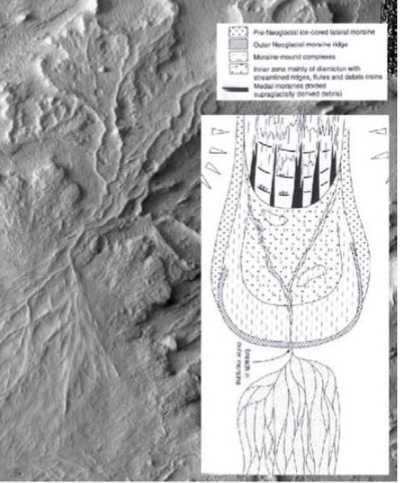
EGU26-8876 | ECS | Posters on site | PS6.3

A New Impact Model for The Norian, Late Triassic Manicouagan Crater 

Sarah Salem, Aisha Al-Suwaidi, and Mohamed El-Maarry

Abstract

Meteorite impacts can lead to significant disruptions of Earth’s systems, potentially affecting the planet's climate, ecosystems, and environment. The Manicouagan impact event is recorded by one of the largest impact craters of the Phanerozoic era, located in Quebec, Canada in the Grenville Province of the Canadian Shield, with a rim-to-rim diameter of 85–100 km. It has a precise age of 215.40 ± 0.16 Ma, yet its environmental aftermath remains poorly constrained, particularly any robust link to the Norian, Late Triassic extinction pulses or carbon-cycle perturbations. Here we present a new impact-Simplified Arbitrary Lagrangian-Eulerian (iSALE) hydrocode simulation against the Manicouagan’s target lithologies to constrain the most plausible impactor diameters and velocities that would reproduce the observed crater morphology. Three best-fit models of crater diameters and velocities of 7.2 km at 20 km s-1, 8.8 km at 15 km s-1, and 10.4 km at 12 km s-1 reproduced crater diameters of 90, 95, and 100 km, respectively. We calculated the kinetic energy delivered by each projectile, which is on the order of 1.17–1.27x10²³ J. The calculated energy is sufficient to vaporize the entire projectile and a considerable amount of the upper target lithologies, and melt large volumes of the target rocks. We then estimated the mass of vapor released into the atmosphere by using scaling relations and assessed the potential post-initial settling of the vapor mass after condensation and re-entry to be ~5x10¹⁷ g. This exceeds the ~1016 g blackout threshold required to cause global cessation of photosynthesis, darkness, and cooling. Our results provide numerical assessments of the environmental consequences of the Manicouagan impact event and a framework for reassessing its potential role in Late Triassic biotic and climatic events.

Keywords

Manicouagan Impact Event, Hydrocode modeling, iSALE simulations, Late Triassic, Environmental consequences.

How to cite: Salem, S., Al-Suwaidi, A., and El-Maarry, M.: A New Impact Model for The Norian, Late Triassic Manicouagan Crater, EGU General Assembly 2026, Vienna, Austria, 3–8 May 2026, EGU26-8876, https://doi.org/10.5194/egusphere-egu26-8876, 2026.

EGU26-11758 | Posters on site | PS6.3 | Highlight

Quantifying Habitability of the Hadean Earth: Impacts, Hydrothermal Systems, and Windows for Life's Emergence 

Oleg Abramov, Anna Medvegy, and Stephen J. Mojzsis

Impacts during the Hadean heavy bombardment profoundly influenced Earth's early habitability, both frustrating and fostering conditions for life's origin through sterilization events and the creation of hydrothermal habitats. This study quantifies probabilistic "sweet-spot" windows for prebiotic chemistry and life's emergence, integrating impact-induced thermal perturbations with biochemical stability constraints in a comprehensive modeling framework.

We employ a well-tested three-dimensional numerical thermal model to simulate heat delivery to Earth's crust from asteroid impacts during late accretion (4.5–3.5 Ga). Simulations incorporate initial magma ocean scenarios, evolving crustal formation, and decreasing geothermal gradients. Bombardment parameters, including mass flux and size distributions, are derived from recent dynamical models informed by geochronology and geochemistry. Model outputs are validated against the Hadean zircon age spectra, providing constraints on impact flux and thermal history.

From these simulations, we calculate global habitable volumes, delineate coherent hydrothermal zones with steep thermal gradients conducive to prebiotic synthesis, quantify impact-driven localized sterilization, and apply Bayesian optimization for probabilistic "sweet-spot" analysis. Integrating hydrothermal activity, sterilization statistics, and thermal limits for biomolecule stability (e.g., RNA, proteins), we identify an optimal window for life's origin between approximately 4.4 and 4.3 Ga, postdating peak bombardment yet leveraging impact-generated habitats.

These findings highlight impacts' dual role in delaying yet enabling early life, align with emerging evidence for hydrothermal vents as cradles of biogenesis and recent molecular biology estimates placing the microbial community of the Last Universal Common Ancestor (LUCA) at ca. 4.2 Ga (4.09 - 4.33 Ga), and offer new insights into habitability of the Hadean Earth.

How to cite: Abramov, O., Medvegy, A., and Mojzsis, S. J.: Quantifying Habitability of the Hadean Earth: Impacts, Hydrothermal Systems, and Windows for Life's Emergence, EGU General Assembly 2026, Vienna, Austria, 3–8 May 2026, EGU26-11758, https://doi.org/10.5194/egusphere-egu26-11758, 2026.

EGU26-14285 | Posters on site | PS6.3

Characterization of recent impact craters on the Moon by the upcoming MANI mission.  

Anna Losiak and the MANI team


The surface of the Moon is shaped by the impact processes, with new ones being formed as we watch (Robinson et al., 2015, Speyerer et al. 2016, Fairweather et al. 2022, Rizos et al. 2026). Understanding the current impact rate is crucial for the safety of the future lunar missions, determining the rate of foreign material delivery, defining the space weathering rates, and better understanding the shallow seismic sources before new seismometers will be deployed there to probe the lunar crust (Yamada et al., 2011). Impacts of particles larger than a gram can sometimes be observed as lunar flashes (Ortiz et al., 2000) that are formed because a small fraction (<0.5%) of the impact energy is released as a flash of light.

Over 600 lunar flashes has been observed up to this point (Sheward et al., 2023). Those events last ∼10 ms to a ∼1 s (Bouley et al., 2012). To better determine the properties of the impactor, it is necessary to better constrain the energy partitioning during the observed impact flashes. This can be done by identifying and characterizing the craters formed because of such an event. Because those craters are in the order of meters, most of those craters are still unknown. In fact, only a couple of craters were unequivocally linked with a newly formed crater, e.g., an event on 17th March 2013 was shown to be associated with an 18.8 m diameter crater (Mark S. Robinson et al., 2015). Hundreds of recent craters were also identified based on pre- and post- impact pairs of LRO images (Speyerer et al. 2016).

Efforts to study these craters were limited by the absence of high-resolution, specifically targeted images.  For example, LRO’s NAC with a ~0.5 m/px resolution at 50 km altitude only allows the identification of craters larger than a couple of meters in diameter, and to properly measure the properties of the craters, they need to be at least >>10 meters in diameter (Sheward et al., 2022). Unfortunately, there are only a couple of craters of this size.

MANI MISSION, approved in December 2025 for A/B1 mission stage by ESA, will map the lunar surface using high-resolution imagery and create detailed 3D maps of the Moon’s terrain with resolution of ~20 cm /px. It will be accomplished by employing a targeted multi-angular photoclinometric mapping approach to chart the Moon’s key regions of interest. Its goal is to acquire orbital images of the lunar surface, including the polar regions, at the highest possible resolution across a wide range of observation geometries. From these images, Máni will produce detailed maps of topography and reflectance properties at a resolution comparable to that of the images themselves.

This new dataset will allow us to characterize in 3D craters only a couple meters in diameter, and thus substantially improve our ability to understand the current impact rate on the Moon, the energy partitioning on airless bodies as well as use crater properties to back-engineer the properties of target rocks all over the Moon.

How to cite: Losiak, A. and the MANI team: Characterization of recent impact craters on the Moon by the upcoming MANI mission. , EGU General Assembly 2026, Vienna, Austria, 3–8 May 2026, EGU26-14285, https://doi.org/10.5194/egusphere-egu26-14285, 2026.

EGU26-14985 | ECS | Posters on site | PS6.3

A rapid route for even big planets to get big moons 

Jacob Kegerreis, Vincent Eke, Thomas Sandnes, and Harrison Davies

Earth’s Moon is really big. Both the satellite and the giant impact that created it have played key roles in our planet’s evolution into a life-supporting world; stabilising the planet’s spin for a consistent climate, and driving the ocean tides that could stimulate prebiotic chemistry. Giant impacts are common across planet formation. So, as observational techniques improve, we might expect to find large moons among the now thousands of detected exoplanets, many of which are more massive than Earth. A barrier to this is that giant impacts onto larger planets create hotter debris disks of mostly vapour, especially for ice-rich worlds. This gas would drag any small growing moonlets to rapidly spiral down to the planet, prohibiting any large moons from forming out of the disk.

However, using high-resolution 3D smoothed particle hydrodynamics (SPH) simulations of giant impacts, we find that big moons can be immediately placed onto wide orbits, safely outside the thick, dragging disk. This could allow large rocky and even large icy worlds to gain a big moon.

This impact scenario had previously been demonstrated as an option for forming Earth’s Moon, for a limited range of tested parameters. Here we identify multiple regions of parameter space across which large immediate satellites can form (of order 1% the mass of the planet), for target planets ranging from 0.5 to 10 Earth masses, inclusive. We also confirm consistent results using the new SPH scheme REMIX, designed to improve the treatment of mixing and discontinuities in impact simulations. Furthermore, the rate of increase of the vapour mass-fraction with the system mass depends on the impact scenario, such that the post-impact disks of even the largest of these planets may not be fully vaporised.

Large moons may still be uncommon in general, but giant impacts offer a pathway for Super-Earths and even mini-Neptunes to gain fractionally massive satellites and the potential benefits of one for life.

How to cite: Kegerreis, J., Eke, V., Sandnes, T., and Davies, H.: A rapid route for even big planets to get big moons, EGU General Assembly 2026, Vienna, Austria, 3–8 May 2026, EGU26-14985, https://doi.org/10.5194/egusphere-egu26-14985, 2026.

EGU26-20750 | ECS | Posters on site | PS6.3

When Does Strength Matter? Assessing the Role of Material Strength in Planetary Impacts 

Harrison Davies, Jacob Kegerreis, and Gareth Collins

Impact processes spanning in scale from cratering to that of catastrophic disruption determine both the development and ultimate habitability of terrestrial planets. Numerical simulations have played a key role in our understanding of these processes, demonstrating how impacts drive growth [1], deliver water [2], and lead to moon formation following giant impacts [3].

Most of these impact studies adopt the simplifying assumption that these collisions occur in the gravity-dominated regime, where material strength is relatively weak and so often simplified or neglected entirely. These approaches are motivated by a desire to limit the computational cost of simulations and hence maximise the number and resolution of simulations that can be performed. However, little work has been done to test this assumption and assess when the effects of material strength are important or negligible. Using the recent addition of strength models to the smooth particle hydrodynamics (SPH) code SWIFT [4], we can test the limits of these assumptions at high resolutions across a broad range of length scales.

We will present results from a suite of these simulations, comparing leading strength models [5] in this field with strengthless SPH, to provide detailed predictions for where scientific conclusions might be sensitive to the choice of strength model. We will investigate collisional outcomes such as the extent of melting in giant impacts and the catastrophic disruption threshold, assessing the scaling law relations commonly applied in planetary accretion models with implications for planetary habitability.

References:
[1] Crespi, S., et al., 2024, Protoplanet collisions: New scaling laws from smooth particle hydrodynamics simulations, Astronomy & Astrophysics, 685, A86
[2] Burger, C., et al., 2020, Realistic collisional water transport during terrestrial planet formation, Astronomy & Astrophysics, 634, A76
[3] Canup, R., 2004, Simulations of a late lunar-forming impact, Icarus, 168, 433-456
[4] Schaller, M., et al., 2024, Swift: a modern highly parallel gravity and smoothed particle hydrodynamics solver for astrophysical and cosmological applications, Monthly Notices of the Royal Astronomical Society, 530, 2378-2419
[5] Collins, G., et al., 2004, Modeling damage and deformation in impact simulations, Meteoritics & Planetary Science, 39, 217-231

How to cite: Davies, H., Kegerreis, J., and Collins, G.: When Does Strength Matter? Assessing the Role of Material Strength in Planetary Impacts, EGU General Assembly 2026, Vienna, Austria, 3–8 May 2026, EGU26-20750, https://doi.org/10.5194/egusphere-egu26-20750, 2026.

Dichotomous thinking also known as “black-and-white” and “all-or-nothing” thinking is a common cognitive distortion in which one sees things in absolute extremes without any middle ground. Not only does this bias distort reality and lead to interpersonal conflicts, but it also hinders problem solving. In the Geosciences, this bias is the source of a > 100 years old divide between tectonicists, i.e., early supporters of Continental Drift Theory (e.g., Alfred Wegener, Alexander du Toit), and paleontologists, who argued for (now sunken) land bridges between the continents based on similar fossil records (e.g., Charles Schuchert, John Gregory, Hermann von Ihering, Bailey Willis). Despite explaining the similar fossil record on continents now separated by oceans, Land Bridge Theory implied continental fixity. It was therefore completely abandoned in the 60–70s with the growing body of evidence supporting continent motion. Continental Drift Theory was then fully accepted without any middle ground despite the fossil record suggesting prolonged connection between the continents at specific localities. Possible causes for the black-or-white approach of the Geoscience community include (1) simplicity: easier to envision one hypothesis being right rather than a compromise of both, (2) guilt: Alfred Wegener had died in Greenland in 1931 only to be proven right 30 years later upon acceptance of continent motion, and (3) a feeling of inferiority amongst paleontologists and feeling of superiority (i.e., feeling of inferiority in disguise) amongst tectonicists upon demonstrating continental motion.

Since then, paleontologists have explored new hypotheses to explain the migration of species at times when oceans are believed to have fully separated the continents, e.g., migration of primates from western Africa to South America and of lizards the other way around in the Oligocene. A hypothesis under testing involves floating vegetation islands rafting the species as small groups of individuals across the ocean. This hypothesis implies that enough individuals survived the crossing, i.e., enough food and/or quick journey, and found one another upon landing.

Neither the new hypotheses nor the old ones take into account all the evidence, e.g., microcontinents along major transform faults (e.g., Romanche and St Paul fault zones) and correlation of all former land bridges with major transform faults and rift-oblique orogens on the adjacent margins (e.g., Central African Orogen in western Africa and Sergipano Belt in northeastern Brazil). Orogenic Bridge Theory reconciles these with both continent motion and the fossil record. Orogenic bridges are ribbons of continental crust transected by orogenic structures highly oblique to the active rift. These structures are unsuitably oriented to thin the crust and thus hinder rifting, delay breakup, and control the formation of major transform faults and elongated microcontinents. Orogenic bridges have the potential to form prolonged land connections between the continents while oceanic crustal domains form on either side, thus further allowing the spreading of terrestrial species while hindering that of marine species. This illustrates the need for more multidisciplinary collaboration across the geosciences. Creating a more flexible community that is both inclusive and mindful of diversity is key to enhance collaboration.

How to cite: Koehl, J.-B. and Foulger, G.: Black and white: the bias that shaped plate tectonics and the ongoing > 100 years old divide of the geoscience community, EGU General Assembly 2026, Vienna, Austria, 3–8 May 2026, EGU26-507, https://doi.org/10.5194/egusphere-egu26-507, 2026.

EGU26-1165 | ECS | Orals | BG5.1

Interacting environmental and evolutionary controls on shifting marine biodiversity hotspots through Cenozoic 

Venu Gopal Kella and Devapriya Chattopadhyay

Marine biodiversity hotspots are regions characterized by exceptionally high species richness compared to surrounding areas. Fossil and molecular evidence indicate that these hotspots have shifted across space and time throughout the Cenozoic; yet the mechanisms driving their emergence and relocation remain inadequately understood. Here, we examine these dynamics—and their links to environmental change—using genus-level fossil data for molluscs, cnidarians, and foraminifera compiled from the Paleobiology Database and published sources.

Because publicly available fossil occurrence data exhibit strong geographic and temporal sampling inhomogeneities, sampling standardization is essential for robust interpretation of diversity patterns. To reduce sampling biases, we applied Shareholder Quorum Subsampling (SQS) and identified paleo-hotspots as regions where sampling-standardized richness exceeded global confidence intervals. We detected 40 paleo-hotspots exhibiting distinct clade-specific macro-evolutionary signatures. Using models based on Hierarchical Bayesian structural equations reveal that environmental conditions (sea surface temperature, shelf area, sea level) influence hotspot development formation predominantly by modulating macro-evolutionary processes (origination, extinction, immigration), though the strength and direction of these pathways differ among groups. Cnidarian hotspots arise from high evolutionary turnover, where elevated origination rates and expansive shelf area strongly increase hotspot probability. In contrast, for both benthic and planktic foraminifera, no single environmental or macro-evolutionary factor exerts a dominant direct influence; rather, interconnected processes indirectly shape diversity and, ultimately, hotspot formation. Together, these results show that marine biodiversity hotspots arise through distinct, clade-specific macro-evolutionary mechanisms influenced by the environment.

How to cite: Kella, V. G. and Chattopadhyay, D.: Interacting environmental and evolutionary controls on shifting marine biodiversity hotspots through Cenozoic, EGU General Assembly 2026, Vienna, Austria, 3–8 May 2026, EGU26-1165, https://doi.org/10.5194/egusphere-egu26-1165, 2026.

EGU26-1434 | ECS | Orals | BG5.1

Volcanic forcing of oxygenation dynamics in the mid-Proterozoic 

Longfei Sun, Jeroen E. Sonke, Simon W. Poulton, Dongjie Tang*, Xiaoying Shi, Xinqiang Wang, Xiqiang Zhou, Lin Meng, Baozeng Xie, Lei Xu, Shaochen Yang, and Romain Guilbaud

Large Igneous Province (LIP) volcanism is commonly considered to have driven ocean deoxygenation and associated mass extinctions during the Phanerozoic. However, the impacts and feedback mechanisms associated with LIP emplacement in the prevailingly low-oxygen Precambrian environment remain poorly understood. Here, we present mercury isotope, iron speciation and phosphorus phase partitioning data for mid-Mesoproterozoic marine sediments of the Shennongjia Group, South China, to reconstruct the response of the phosphorus cycle to LIP volcanism. Our data indicate that LIP volcanism triggered an expansion in marine euxinia, which enhanced phosphorus recycling and stimulated surface ocean primary production, thereby promoting increased burial of organic carbon and pyrite. This facilitated net marine oxygenation, with repeated volcanic pulses ultimately resulting in enhanced ventilation of the mid-Proterozoic ocean. We propose that while mid-Proterozoic LIP volcanism may have caused short-term ecological crises, the ensuing redox-nutrient feedbacks ultimately stimulated progressive oxygenation of Earth’s surface environment.

How to cite: Sun, L., Sonke, J. E., Poulton, S. W., Tang*, D., Shi, X., Wang, X., Zhou, X., Meng, L., Xie, B., Xu, L., Yang, S., and Guilbaud, R.: Volcanic forcing of oxygenation dynamics in the mid-Proterozoic, EGU General Assembly 2026, Vienna, Austria, 3–8 May 2026, EGU26-1434, https://doi.org/10.5194/egusphere-egu26-1434, 2026.

EGU26-1919 | ECS | Orals | BG5.1

Widespread chemically oscillating reactions and the phosphatization of hematite filaments and tubes in the oldest BIF from the Nuvvuagittuq Supracrustal Belt  

Yuzhou Ge, Dominic Papineau, Zixiao Guo, Zhenbing She, Jonathan O'Neil, and Marion Garçon

Accurately distinguishing between biotic and abiotic microstructures is crucial for understanding the evolution of early life and the search for extraterrestrial life. The oldest putative fossils reported occur in the form of hematite filaments and tubes in the jasper-carbonate BIF from the Nuvvuagittuq Supracrustal Belt (NSB), Québec, possibly as old as 4.3 Ga. Although these twisted and branched hematite filaments and tubes are very similar to the Fe-oxyhydroxide filaments produced by Fe-oxidizing bacteria in modern hydrothermal deposits, they are still being questioned because morphologically and compositionally similar abiotic filamentous biomorphs can be produced in “chemical gardens”. Additionally, the origin of ubiquitous circularly concentric rosettes that occur with the filaments and tubes remains unclear. Systematic mineralogical and morphological characterization of these microstructures using a variety of correlated in-situ micro-analytical techniques such as polarizing microscopy, Raman spectroscopy, SEM-EDS, and XPS now yield a new understanding of these ancient microscopic objects.

Firstly, new observations of hematite filaments and tubes preserved in apatite crystals indicate phosphatization as another taphonomic mode of preservation. These apatites with filaments that are several hundred micrometers in size, and usually distributed in discontinuous bands between the silicon-rich and iron-rich microbands. The diameter of these hematite filaments and tubes is 4 to 8 μm, while their lengths are 10 to 200 μm. They are thinner than those previously reported preserved in quartz and their diameter is closer to that of modern iron-oxidizing bacteria. As for co-occurring hematite tubes, their interior is usually filled with apatite. The walls of tubes are often straight, and even crossing crystal boundaries between apatite and microcrystalline quartz. Furthermore, new Raman spectra show the occasional presence of organic matter in these filaments preserved in apatite, independently supporting a biological origin.

Secondly, rosettes widely present in the quartz have circularly concentric layers, radially geometric crystals of acicular hematite, and circular double or triple twins. These microstructures are akin to patterns seen in botryoidal minerals and likely produced by abiotic chemically oscillating reactions (COR). In addition, the walls of the tubes preserved in quartz are also sometimes wavy, curved, or botryoidal-like, along with concentric layers, which is comparable to botryoidal coatings on modern hollow filaments of ferrihydrite in deep-sea hydrothermal ecosystems, indicating the interaction between iron-containing minerals and decaying organic matter from biomass during diagenesis.

The latest observations suggest that in the early Earth's submarine hydrothermal environments rich in phosphate and organic acids, the widespread phosphatisation enables the oldest life preserved in the apatite in the form of hematite filaments and tubes. The new observations also emphasize the potential role of abiotic COR in the formation of rosettes, as well as the modifications of the surface features of microfossils during diagenesis. These biological and abiotic “biosignatures” provide a valuable reference to search for life signals in extraterrestrial environments such as Mars and icy moons.

How to cite: Ge, Y., Papineau, D., Guo, Z., She, Z., O'Neil, J., and Garçon, M.: Widespread chemically oscillating reactions and the phosphatization of hematite filaments and tubes in the oldest BIF from the Nuvvuagittuq Supracrustal Belt , EGU General Assembly 2026, Vienna, Austria, 3–8 May 2026, EGU26-1919, https://doi.org/10.5194/egusphere-egu26-1919, 2026.

EGU26-2111 | Orals | BG5.1

Phanerozoic trends in deep water rejuvenation: Is there a relation between global temperature and ocean mixing?  

Or Mordechay Bialik, Anta-Clarisse Sarr, Yannick Donnadieu, and Alexander Pohl

The concept of a warm, sluggish ocean recurs in the palaeoceanographic literature, yet over the last few years, both observation and model studies have challenged this concept repeatedly. Nevertheless, observations in the modern do link the ongoing anthropogenic warming to the slowing down of oceanic circulation. This mismatch between the different scales of observations presents a critical problem to our understanding of the past ocean. Here, we present a critical evaluation of this concept through an extensive series of intermediate complexity Earth system model experiments. Multiple paleogeographic scenarios across the Phanerozoic, CO2 concentration, and orbital configuration have been simulated to evaluate the relations between planetary surface temperatures and deep-water rejuvenation rate. Combined, the results of these simulations present a very limited contribution of warm climates to the global ocean circulation slowdown. For most experiments, warmer conditions enhanced overall oceanic turnover due to an increase in vertical density gradient, supporting more efficient downwelling. However, this state is only achieved in the long term, with some slowdown after the initial warming. The overall range of turnover time, even during the slowest period of deep-water rejuvenation, remains within the same order of magnitude as the modern. In light of these findings, it is unlikely that at any point through the Phanerozoic did oceanic turnover rate changed in a magnitude that would impact the mixing state of most marine dissolved chemical elements, at least at current flux state.

How to cite: Bialik, O. M., Sarr, A.-C., Donnadieu, Y., and Pohl, A.: Phanerozoic trends in deep water rejuvenation: Is there a relation between global temperature and ocean mixing? , EGU General Assembly 2026, Vienna, Austria, 3–8 May 2026, EGU26-2111, https://doi.org/10.5194/egusphere-egu26-2111, 2026.

EGU26-3338 | ECS | Posters on site | BG5.1

Early Cenozoic mammal radiation coincides with increased terrestrial habitability 

Nicholas Hadjigavriel

Environmental variables like temperature, land availability and food availability constrain the ecological niches of terrestrial animals and, along with atmospheric oxygen levels, likely had a direct effect on their evolution and distribution over geological time. In this study we develop an agent-based terrestrial palaeoecological model, which we couple to an Earth system model to reconstruct how Earth’s habitability for terrestrial mammals has changed over the Mesozoic to Cenozoic eras. This allows us to investigate whether there was an environmental component to the early Cenozoic mammal radiation. Our findings indicate that Earth’s habitability for terrestrial mammals was maximised during the Cretaceous–Paleogene interval, due to the combination of elevated plant Net Primary Productivity (NPP), expansion of continental land areas, minimal glaciation, and elevated atmospheric oxygen levels. We propose that the rapid diversification of mammals during this period, while clearly enabled by the extinction of non-avian dinosaurs, was also influenced by the enhanced habitability of Earth’s surface during this time. Similar environmentally-driven changes in terrestrial habitability likely also play a significant role for other palaeobiological events.

How to cite: Hadjigavriel, N.: Early Cenozoic mammal radiation coincides with increased terrestrial habitability, EGU General Assembly 2026, Vienna, Austria, 3–8 May 2026, EGU26-3338, https://doi.org/10.5194/egusphere-egu26-3338, 2026.

EGU26-4337 | ECS | Posters on site | BG5.1

A Plate-Tectonic Framework for Predicting Ore Deposit Formation 

Jakub Ciazela, Taras Gerya, Christian Verard, Robert Stern, Matthew Leybourne, and Wenyong Duan

Long-term sustainability of human civilization depends on secure supplies of metals and critical minerals that underpin energy systems, infrastructure, and technology (IEA, 2021; UNEP, 2024). By 2040, total mineral demand from clean energy technologies is expected to double or quadruple (IEA, 2021), raising concerns about long-term supply sustainability as anthropogenic extraction operates on timescales and magnitudes unconstrained by geological ore-forming rates. Although recycling and substitution can mitigate pressure, widely adopted outlooks still require substantial expansion of primary supply and are commonly framed around reserves, production, and announced project pipelines (IEA, 2024; USGS, 2025).

We present a plate-kinematic framework to forecast ore deposit formation over the next 10 Myr by coupling tectonic setting–specific deposit-generation functions to a forward plate-motion model. Unlike reserve- or discovery-trend extrapolations, this approach explicitly links plate tectonics to mineralization rates, providing a first-order estimate of Earth’s natural “mineral renewal” capacity (IEA, 2024; USGS, 2025). We apply the method to two deposit types: (1) porphyry–epithermal systems in continental arcs, parameterized by plate convergence rates and lithospheric factors (crustal thickness, slab composition, and proxies for slab oxidation state), reflecting how rapid convergence and thick crust favor porphyry formation, while explicitly accounting for melt–fluid–driven mass transfer of copper and oxidized species within subduction zones; and (2) mid-ocean ridge seafloor massive sulfides (SMS), linked to spreading rate, ridge depth, and detachment fault occurrence at slow-spreading centers. These parameterizations are integrated into a global 1°-resolution plate model extrapolated 10 Myr into the future to produce spatially explicit, time-dependent maps of ore-forming potential. Because most new oceanic crust is not subducted within a 10 Myr horizon, our model estimates gross SMS formation within a limited accessibility window (controlled by sediment burial), while acknowledging subduction recycling as a longer-term sink.

The resulting formation- and accessibility-weighted metrics provide benchmarks for Earth’s natural mineral replenishment rate, against which scenario-based demand projections can be compared, thereby strengthening sustainability discussions with geodynamically grounded constraints.

References:

International Energy Agency (IEA): The Role of Critical Minerals in Clean Energy Transitions, IEA, Paris, 2021.

International Energy Agency (IEA): Global Critical Minerals Outlook 2024, IEA, Paris, 2024.

United Nations Environment Programme (UNEP) and International Resource Panel (IRP): Global Resources Outlook 2024 – Bend the trend: Pathways to a Liveable Planet as Resource Use Spikes, UNEP, 2024, doi:20.500.11822/44901.

U.S. Geological Survey (USGS): Mineral Commodity Summaries 2025 (ver. 1.2, March 2025), U.S. Geological Survey, 212 pp., doi:10.3133/mcs2025, 2025.

How to cite: Ciazela, J., Gerya, T., Verard, C., Stern, R., Leybourne, M., and Duan, W.: A Plate-Tectonic Framework for Predicting Ore Deposit Formation, EGU General Assembly 2026, Vienna, Austria, 3–8 May 2026, EGU26-4337, https://doi.org/10.5194/egusphere-egu26-4337, 2026.

EGU26-5361 | ECS | Posters on site | BG5.1

Tracking the spatial extent of redox variability in the mid-Proterozoic ocean 

Yafang Song, Benjamin Mills, Fred Bowyer, Morten Andersen, Frantz Ossa Ossa, Alexander Dickson, Jason Harvey, Shuichang Zhang, Xiaomei Wang, Huajian Wang, Donald Canfield, Graham Shield, and Simon Poulton

Emerging geochemical evidence suggests highly heterogeneous ocean redox conditions in the mid-Proterozoic. Quantitative estimates of the extent of different modes of anoxia, however, remain poorly constrained. Considering the complementary redox-related behaviour, uranium and molybdenum isotopes can be combined to reconstruct ancient marine redox landscapes, which has not been applied to the mid-Proterozoic. In this study, we present new δ238U and δ98Mo data for shales from the ~1.4 Ga Xiamaling Formation, North China Craton, together with independent redox proxies, including Fe speciation and redox-sensitive trace metals. We find that most oxic and dysoxic samples retain low U and Mo concentrations, with δ238U and δ98Mo values indistinguishable from continental crust. While euxinic samples record the highest authigenic δ238U and δ98Mo, consistent with efficient reduction of U and Mo. Samples deposited under ferruginous conditions exhibit a wider range of δ238U and δ98Mo values that generally fall between the (dys)oxic and euxinic end-members. Using a coupled U-Mo isotope mass balance model, we infer limited euxinia but extensive low productivity, ferruginous conditions in mid-Proterozoic oceans.

How to cite: Song, Y., Mills, B., Bowyer, F., Andersen, M., Ossa Ossa, F., Dickson, A., Harvey, J., Zhang, S., Wang, X., Wang, H., Canfield, D., Shield, G., and Poulton, S.: Tracking the spatial extent of redox variability in the mid-Proterozoic ocean, EGU General Assembly 2026, Vienna, Austria, 3–8 May 2026, EGU26-5361, https://doi.org/10.5194/egusphere-egu26-5361, 2026.

Prevailing interpretations of large underground cavities in carbonate terrains are predominantly based on karst-related genetic models, in which dissolution-driven hydrological processes are assumed to be the primary mechanism of formation. While effective for explaining certain cave types, these models commonly rely on an implicit assumption: that underground cavities should be analyzed as isolated natural features. This assumption has limited the recognition of broader spatial patterns and system-level organization.

This study proposes a geoarchaeological, system-based approach to the interpretation of underground spaces, using the Zagros Mountains as a key case study. Given the extensive carbonate lithology of the region, classical karst theory would predict cave development closely associated with active or fossil drainage networks. However, field observations reveal a contrasting pattern, with numerous underground openings located at elevated positions, often on cliff faces or near ridgelines, lacking any evidence of hydrological concentration or outlet channels.

A focal example is provided by the Deh Sheikh area (central Zagros), where multiple underground entrances occur at the same elevation level and are separated by relatively regular horizontal distances. Such repeated and level-aligned configurations are difficult to reconcile with stochastic karstic dissolution processes and instead suggest a coherent spatial logic that becomes visible only when these features are considered collectively rather than individually.

Additional evidence includes stable arched geometries and persistent cavities that contrast with the irregular, downward-oriented erosion expected from water-dominated processes. These observations indicate that natural processes observed today are largely secondary modifications, overprinting earlier phases of space formation.

Rather than rejecting natural cave formation mechanisms, this study argues that, in the Zagros region, a system-based geoarchaeological framework provides a more coherent and parsimonious interpretive model. The results highlight the importance of analytical scale and interdisciplinary perspectives in re-evaluating underground spaces.


How to cite: Baghbani, F. and Baghbani, H.: From Isolated Caves to Spatial Systems: A Geoarchaeological Re-reading of Underground Spaces in the Zagros Mountains, EGU General Assembly 2026, Vienna, Austria, 3–8 May 2026, EGU26-5975, https://doi.org/10.5194/egusphere-egu26-5975, 2026.

EGU26-6597 | ECS | Orals | BG5.1

Distinguishing Snowball Earth climate modes using field data and climate simulations 

Chloe Griffin, Thomas Gernon, Minmin Fu, Elias Rugen, Anthony Spencer, Geoffrey Warrington, and Thea Hincks

The degree to which Earth’s climate retained seasonality and ocean-atmospheric coupling during the two Cryogenian snowball Earth glaciations, the Sturtian (~717-658 Ma) and Marinoan (~654-635 Ma), is unknown. The classic hypothesis envisions ice at equatorial latitudes with a largely quiescent hydrological cycle. However, other observations imply the persistence of open water in the tropics, permitting ocean-atmospheric coupling and reconciling photosynthetic survival with low-latitude glacial activity. Consequently, open questions remain as to whether internal climate cycles could operate during snowball Earth, and if so, what their expression reveals about the extent of open ocean and the dynamics of the Cryogenian climate system; important climate questions that carry key biological implications. Varve-like laminites provide high resolution records of climatic variability as far back as the Proterozoic. However, varved sediments that retain climatic information are rare in the Cryogenian. Here, we analyse field data from rhythmic laminites from the Port Askaig Formation (Scotland). Petrographic and spectral analysis indicates that the laminites represent glacio-lacustrine annual varves, which reveal statistically significant centennial to interannual periodicities strongly similar to solar phenomena and modern ocean-atmospheric climate patterns. We interpret these signals with fully coupled Cryogenian climate simulations using the Community Earth System Model (CESM) under varying degrees of ice coverage to reconstruct climate variability during this interval of the Sturtian glaciation. These simulations suggest that open water is present to some degree in the tropics. Our study reveals a wider range of climatic variability than previously envisaged under snowball Earth conditions, and hints at the possibility of unfrozen tropical waters during this discrete interval of the Sturtian glaciation, or yet unexplored mechanisms of interannual variability on icy worlds.

How to cite: Griffin, C., Gernon, T., Fu, M., Rugen, E., Spencer, A., Warrington, G., and Hincks, T.: Distinguishing Snowball Earth climate modes using field data and climate simulations, EGU General Assembly 2026, Vienna, Austria, 3–8 May 2026, EGU26-6597, https://doi.org/10.5194/egusphere-egu26-6597, 2026.

The shift from the climate of the “boring billion” without evidence for major glaciations to the globally ice-covered “Snowball Earth” events of the Cryogenian (720–635 million years ago, Ma) remains enigmatic. Various factors have been suggested to drive the cooling in the early Neoproterozoic (1000–539 Ma), most prominently decreasing carbon-dioxide levels due to enhanced weathering of tropical continents or fresh volcanic material. However, these processes should have operated during the boring billion as well, triggering the quest for alternative explanations. It has been suggested, for example, that the increase in both the diversity and the biomass of eukaryotic algae around 800 Ma could have contributed to the cooling via the emission of dimethyl sulfide (DMS), a source of cloud condensation nuclei instrumental in forming bright clouds over dark ocean surfaces. Here, we investigate this hypothesis with a coupled climate–ocean biogeochemistry model, allowing for the first time the quantification of the relevant marine carbon cycle feedbacks. We confirm that the increase in cloud condensation nuclei cools the Neoproterozoic climate and can lead to global glaciation at low atmospheric carbon-dioxide concentrations. Our analysis sheds light on the positive and negative feedback loops associated with the rise of algae and demonstrates that changes in cloud cover remain a plausible contribution to Neoproterozoic cooling.

How to cite: Feulner, G., Hofmann, M., Eberhard, J., and Petri, S.: Ocean biogeochemistry amplifies cooling caused by increase in cloud condensation nuclei from algae prior to Cryogenian Snowball Earth events, EGU General Assembly 2026, Vienna, Austria, 3–8 May 2026, EGU26-6828, https://doi.org/10.5194/egusphere-egu26-6828, 2026.

EGU26-7017 | ECS | Orals | BG5.1

African paleogeography since 30Ma : setting boundary conditions for climatic, physiographic and biodiversity models. 

Raphaël Tournier, Laurent Husson, Sandrine Prat, Jean-Renaud Boisserie, Doris Barboni, Nicolas Bellahsen, Cécile Doubre, Raphaël Pik, Tristan Salles, Pierre Sepulchre, and Christel Tiberi

The African continent has undergone major Cenozoic transformations, including the formation of the East African Rift System and the opening of the Red Sea and the Gulf of Aden. The impact of these transformations on the various components of the Earth system over time—climate, hydrographic networks, and the dispersal and evolution of biological species—raises multiple questions.

In this context, we aim to reconstruct the paleogeographic evolution of continental Africa over the past 30 million years using a multi-layered modelling approach. First, the integration of several geodynamic components (including mantle-driven dynamic topography, the history of crustal tectonics, plate tectonic motions, and volcanic eruptive dynamics) allows us to produce an elevation model for Africa since 30 Ma that is continuous in space and time. This elevation model is then used as a boundary condition for climate simulations, followed by physiographic simulations, generating a more comprehensive and coherent representation of past environments.

The simulation outputs reveal the sensitivity of climate reconstructions to topographic boundary conditions, as well as temporal variations in hydrographic networks. These new topographic, climatic, and physiographic constraints provide improved calibration for future eco-evolutionary studies (e.g., geographic barriers, water availability, resource distribution, and environmental stability) on the African continent.

We then evaluate the spatial and temporal accuracy of these reconstructions by confronting them with field-based evidence. This assessment identifies the scales at which the models are most robust, informing which interrogation can be explored with confidence. It also highlights where the reconstructions are consistent with geological, paleoenvironmental, and paleontological data, and where their precision may require further refinement.

Looking ahead, the objective is to continuously update these maps and simulations, which will also be used to investigate the dispersal and evolutionary changes of Cenozoic faunal communities in Africa, notably early hominids. This whole study offers a coherent spatio-temporal context for evaluating links between the different components of the Earthsystem.

How to cite: Tournier, R., Husson, L., Prat, S., Boisserie, J.-R., Barboni, D., Bellahsen, N., Doubre, C., Pik, R., Salles, T., Sepulchre, P., and Tiberi, C.: African paleogeography since 30Ma : setting boundary conditions for climatic, physiographic and biodiversity models., EGU General Assembly 2026, Vienna, Austria, 3–8 May 2026, EGU26-7017, https://doi.org/10.5194/egusphere-egu26-7017, 2026.

EGU26-7068 | ECS | Posters on site | BG5.1

How palaeogeographic reconstructions influence climate: the Permian-Triassic Boundary case study 

Byeongseok Kang, Laure Moinat, Charline Ragon, Christian Vérard, and Maura Brunetti

Paleogeographic reconstructions of the deep past are affected by large uncertainties due to limitations in dating, the scarcity of sedimentary sequences, and imperfect constraints on the positions of tectonic plates. These uncertainties in the boundary conditions propagate into climate simulations, affecting their accuracy.

In this study, we compare two paleogeographic reconstructions, Panalesis [1] and PaleoMap [2], to assess how differences in the paleogeographic reconstructions influence the climate response at the Permian-Triassic Boundary. Climate simulations are performed using biogeodyn-MITgcmIS [3], a recently developed modelling tool in which the dynamical core of both the atmosphere and the ocean is provided by the MIT general circulation model, while offline coupling ensures the consistent evolution of vegetation and ice sheets (when present).

Beyond the direct comparison of paleogeographic reconstructions, aquaplanet and simplified configurations are employed under the same paleoclimate conditions to isolate feedbacks arising from land distribution. The resulting steady-state climates are systematically compared with those obtained using Pangea configurations derived from Panalesis and PaleoMap. The impact on terrestrial vegetation is also estimated and discussed. Overall, the results provide a framework for systematically assessing how paleogeographic reconstructions affect coupled climate-biosphere dynamics.


References

[1] Vérard, Geological Magazine 156, 320 (2019)

[2] Scotese, Atlas of Earth History, PALEOMAP Project (2001)

[3] Moinat et al., EGUsphere [preprint], https://doi.org/10.5194/egusphere-2025-2946 (2025).

How to cite: Kang, B., Moinat, L., Ragon, C., Vérard, C., and Brunetti, M.: How palaeogeographic reconstructions influence climate: the Permian-Triassic Boundary case study, EGU General Assembly 2026, Vienna, Austria, 3–8 May 2026, EGU26-7068, https://doi.org/10.5194/egusphere-egu26-7068, 2026.

EGU26-7342 | ECS | Posters on site | BG5.1

Can CO2 outgassing explain Lomagundi Excursion? 

P a Janaarthanan and Sanjeev Kumar

The Lomagundi-Jatuli event (2.3-2.0 Ga) is one of the grandest carbon isotopic (δ13Ccarbonate) excursion events in the Earth’s history, marked by anomalous δ13Ccarbonate reaching up to + 30 ‰. Several hypotheses have been proposed to explain this excursion; however, they remain inadequate due to associated drawbacks. The conventional explanation is organic carbon burial due to enhanced productivity. But, the lack of organic rich stratas synchronous with the excursion demands the reconsideration of alternative biogeochemical processes to explain this isotopic anomaly. Moreover, the excursion is observed only in the evaporitic and nearshore carbonates, with no evidence from open ocean; demanding facies based biogeochemical explanation. Here, we explore the possibility of CO2 outgassing and calcite precipitation as potential drivers responsible for this excursion as these two processes remain the least explored among the proposed hypotheses. Through sedimentological evidences from previous studies and Rayleigh fractionation calculations, we argue that dominant loss of DIC through CO2 outgassing in the evaporitic facies and calcite precipitation in the nearshore facies along with a well-mixed DIC reservoir in the open ocean led to observed Lomagundi Excursion.

How to cite: Janaarthanan, P. A. and Kumar, S.: Can CO2 outgassing explain Lomagundi Excursion?, EGU General Assembly 2026, Vienna, Austria, 3–8 May 2026, EGU26-7342, https://doi.org/10.5194/egusphere-egu26-7342, 2026.

EGU26-7347 | Orals | BG5.1

The different approaches for reconstructing palæogeography at the global scale in deep time 

Christian Vérard and Florian Franziskakis

Plate tectonic reconstructions are different from palæogeographic reconstructions. The latter can be derived from the former, but not the opposite.

Many end-users (palæontologists, palæoclimate or mantle dynamics modellers) use a map (often without citing the source) of the palæogeography for a given time. However, there are various reconstructions of palæogeographies, based upon numerous plate tectonic models.

Aimed primarily at end-users, the presentation will focus on what are the main similarities and differences when creating a plate tectonic model. Then, different ways (mainly two) of proposing palæogeographies will also be discussed.

This information is crucial when using such maps and can have a significant impact on interpretations drawn from climate simulations or studies of the evolution of life through Earth history.

How to cite: Vérard, C. and Franziskakis, F.: The different approaches for reconstructing palæogeography at the global scale in deep time, EGU General Assembly 2026, Vienna, Austria, 3–8 May 2026, EGU26-7347, https://doi.org/10.5194/egusphere-egu26-7347, 2026.

EGU26-7546 | ECS | Posters on site | BG5.1

Climate Sensitivity in a Pre-Plant World: Why High CO₂ May Not Have Been Sufficient to Maintain a Paleozoic Hothouse 

Niklas Werner, Florian Franziskakis, Andrew Merdith, Christian Vérard, Maura Brunetti, Taras Gerya, and Paul Tackley

Despite evidence for generally elevated atmospheric CO₂ concentrations, the climate of the early Phanerozoic appears to have been neither uniformly warm nor stable. Proxy records, climate simulations, and paleogeographic reconstructions all carry large uncertainties, yet taken together they suggest that greenhouse forcing alone may not fully explain observed climatic variability, including intervals of pronounced cooling, such as the Hirnatian Glaciation. Understanding how early Phanerozoic climate responded to high CO₂ therefore requires explicit consideration of the boundary conditions under which greenhouse forcing operated.

Here, we examine the combined roles of paleogeography, land-surface properties, and reduced solar luminosity in shaping early Phanerozoic climate states. Using an intermediate-complexity Earth system model, we systematically explore climate sensitivity across a wide range of atmospheric CO₂ concentrations under pre-vegetation boundary conditions and early Paleozoic paleogeographic configurations. The experimental design focuses on how land–sea distribution, continental arrangement, and surface characteristics influence large-scale heat transport, cryospheric feedbacks, and the CO₂ levels required to maintain ice-free conditions.

Our working hypothesis is that early Phanerozoic climates were intrinsically biased toward cooler states relative to later, vegetated periods, due to higher surface albedo, altered hydrological cycling, and reduced incoming solar radiation. In such a climate system, maintaining temperate conditions may have required persistently high CO₂ concentrations, while gradual CO₂ drawdown could have positioned the system close to critical thresholds. Under these circumstances, comparatively small paleogeographic changes—such as shifts in continental connectivity or topographic relief—may have been sufficient to trigger short-lived glacial episodes, without invoking abrupt or extreme changes in greenhouse forcing.

By framing early Phanerozoic climate evolution as a problem of threshold behavior under uncertain boundary conditions, this work aims to clarify why high CO₂ and cooling are not necessarily incompatible. The results will help constrain which combinations of forcing and boundary conditions are physically plausible and guide more robust interpretations of proxy records and future paleoclimate modeling efforts.

How to cite: Werner, N., Franziskakis, F., Merdith, A., Vérard, C., Brunetti, M., Gerya, T., and Tackley, P.: Climate Sensitivity in a Pre-Plant World: Why High CO₂ May Not Have Been Sufficient to Maintain a Paleozoic Hothouse, EGU General Assembly 2026, Vienna, Austria, 3–8 May 2026, EGU26-7546, https://doi.org/10.5194/egusphere-egu26-7546, 2026.

EGU26-7612 | ECS | Orals | BG5.1

Effect of the Milankovitch cycles on climate multistability for the last 1 Myr 

Laure Moinat, Christian Vérard, Daniel N. Goldberg, Jérôme Kasparian, Taras Gerya, John Marshall, and Maura Brunetti

During the last million years, the growth and retreat of massive ice sheets in North America and Eurasia defined the alternating climate conditions of the glacial-interglacial cycle. The main driver of these climatic oscillations is the combined effect of precession, eccentricity, and obliquity frequency modes (Milankovitch cycles) [1]. However, the climate expected from the Milankovitch cycles does not always align with the records from the Marine Isotope Stages [2].

To address this discrepancy, we test the hypothesis that multiple climatic steady states (attractors) exist for a given CO2 concentration and can be destabilized by different combinations of Milankovitch forcing. We developed a biogeodynamical coupled setup, biogeodyn-MITgcmIS [3], which has the MIT general circulation model as its dynamical core, and asynchronously couples hydrology, ice sheets, and vegetation. The results of this new coupled model show that including the long-term dynamics of vegetation and ice sheets is crucial to evaluate past and future climate trajectories.  
 
First, we construct the bifurcation diagram by varying the CO2 concentration between 180 ppm and 320 ppm (i.e., within the observed range over the last 1 Myr). We analyze the stability range of the cold (glacial) and warm (interglacial) attractors, and identify their tipping points at the global scale. Second, we repeat selected simulations with different Milankovitch configurations to evaluate the robustness of the bifurcation structure. Finally, to detect signatures of climate multistability, we compare the simulation outputs with global mean sea level and temperature reconstructions [4], and we discuss preliminary results. 


[1] Barker et al. Science 387, eadp3491 (2025)

[2] Past Interglacials Working Group of PAGES, Rev. Geophys. 54, 162–219 (2016)

[3] Moinat et al. EGUsphere [preprint], https://doi.org/10.5194/egusphere-2025-2946 (2025).

[4] Clark et al. Science 390, eadv8389 (2025)

How to cite: Moinat, L., Vérard, C., Goldberg, D. N., Kasparian, J., Gerya, T., Marshall, J., and Brunetti, M.: Effect of the Milankovitch cycles on climate multistability for the last 1 Myr, EGU General Assembly 2026, Vienna, Austria, 3–8 May 2026, EGU26-7612, https://doi.org/10.5194/egusphere-egu26-7612, 2026.

EGU26-7891 | ECS | Orals | BG5.1

Timing and magnitude of Phanerozoic plant diversification are linked to paleogeography and atmospheric CO2 

Julian Rogger, Bethany Allen, Philip Donoghue, Dirk Karger, Tristan Salles, Alexander Skeels, and Dan Lunt

The evolution of plant diversity through Phanerozoic time is often understood as a succession of dominating evolutionary floras. Following the onset of land plant expansion and diversification in the Silurian to Middle Devonian, these include the successive dominance of plant ecosystems by spore-bearing plants (Paleophytic flora), gymnosperms (Mesophytic flora), and angiosperms (Cenophytic flora). The succession of these floras is associated with major evolutionary innovations in plant growth forms, physiology and reproductive systems, allowing for new strategies to utilize resources and diversify. In concert with biological innovation, environmental conditions over the Phanerozoic have strongly varied due to plate tectonic rearrangements of continents and topography, together with variation in atmospheric CO2 and climate. However, our understanding of how biological innovation and environmental changes interacted to shape the diversity of land plants through deep time is limited by a fragmentary geologic record of both plant diversity and environmental conditions.

Here, we reconstruct high-resolution climatologies (0.5° in longitude and latitude) over the last 470 million years using the fully coupled atmosphere-ocean general circulation model HadCM3 [1], the landscape evolution model goSPL [2], and the mechanistic climate downscaling algorithm CHELSA [3]. Applying the trait-based plant diversity model TREED [4] we then investigate how paleogeographic changes, variation in atmospheric CO2, and climate conditions shaped the Phanerozoic plant diversification. Combining the model-based diversity reconstruction with an analysis of 140,000 plant fossil occurrences from the Paleobiology Database, we show that Phanerozoic plant genus originations were strongly associated with variation in atmospheric CO2 and the tectonic supercontinent cycle, both limiting terrestrial resource and niche availability, and modulating the efficiency of environmental heterogeneity to generate diversity. We further show that the angiosperm terrestrial revolution is unique not only due to the intrinsic diversification potential of flowering plants, but also because of the exceptional environmental opportunities following the Pangea supercontinent breakup.


[1] P. J. Valdes, et al., The BRIDGE HadCM3 family of climate models: HadCM3@Bristol v1.0. Geoscientific Model Development 10 (10), 3715–3743 (2017), doi:10.5194/gmd-10-3715-2017, https://gmd.copernicus.org/articles/10/3715/2017/

[2] T. Salles, et al., Landscape dynamics and the Phanerozoic diversification of the biosphere. Nature 624 (7990), 115–121 (2023), doi: 10.1038/s41586-023-06777-z, https://www.nature.com/articles/s41586-023-06777-z

[3] D. N. Karger, et al., Climatologies at high resolution for the earth’s land surface areas. Scientific Data 4 (1), 170122 (2017), doi:10.1038/sdata.2017.122, https://www.nature.com/articles/sdata2017122

[4] J. Rogger, et al., TREED (v1.0): a trait- and optimality-based eco-evolutionary vegetation model for the deep past and the present (2025), doi:10.5194/egusphere-2025-6002, https://egusphere.copernicus.org/preprints/2025/egusphere-2025-6002/

How to cite: Rogger, J., Allen, B., Donoghue, P., Karger, D., Salles, T., Skeels, A., and Lunt, D.: Timing and magnitude of Phanerozoic plant diversification are linked to paleogeography and atmospheric CO2, EGU General Assembly 2026, Vienna, Austria, 3–8 May 2026, EGU26-7891, https://doi.org/10.5194/egusphere-egu26-7891, 2026.

During the Cambrian explosion, animals underwent profound ecological and evolutionary configuration. Small shelly fossils (SSFs), micrometre- to millimetre-scale skeletal elements representing multiple animal phyla, are particularly valuable for early Cambrian biostratigraphy and intercontinental correlation because of their widespread distribution. SSFs from North Greenland provide a high-resolution record of biotic and environmental change along the eastern margin of Laurentia. Here, we document a SSF assemblage that includes molluscs, hyoliths, brachiopods, ecdysozoans, echinoderms, and several problematic taxa from the Aftenstjernesø Formation in North Greenland. This integrated dataset enables detailed correlation with other Cambrian Series 2, Stage 4 successions on several palaeocontinents, including Gondwana, Siberia, and peri-Gondwana, based on shared taxa. During this period, many regions record a major faunal collapse associated with the first widely recognized Phanerozoic extinction event, the so-called Sinsk event, which has been linked to marine anoxia, decrease of diversity, and body-size reduction. In contrast, the Laurentian margin records pronounced taxonomic turnover dominated by faunal replacement rather than a net loss of diversity. This difference underscores the importance of palaeogeography and local geodynamic conditions in modulating how early Cambrian environmental crises were expressed biologically, and it demonstrates the utility of SSFs for reconstructing the biotic response to early Cambrian environmental crises.

How to cite: Oh, Y., Park, T.-Y. S., and Peel, J. S.: Global correlation of small shelly fossils from North Greenland and their importance for early Cambrian ecosystem change, EGU General Assembly 2026, Vienna, Austria, 3–8 May 2026, EGU26-8575, https://doi.org/10.5194/egusphere-egu26-8575, 2026.

EGU26-9305 | ECS | Orals | BG5.1

Geodynamic controls on long-term carbon cycle: insights from fully integrated virtual planets 

Marie Martin, Nicolas Coltice, Yannick Donnadieu, Pierre Maffre, Tristan Salles, Julian Rogger, Maëlis Arnould, Laurent Husson, Jonathon Leonard, Sabin Zahirovic, and Loïc Pellissier

Over geological timescales climate is regulated by the long carbon cycle, in which a balance is struck between CO2 degassing from the solid Earth and CO2 consumption by continental silicate weathering stabilizing atmospheric CO2 levels and maintain habitable conditions. Geodynamic processes regulate both CO2 degassing rates as well as the distribution and elevation of continents, thereby controlling continental weatherability and, ultimately, atmospheric CO2 and long-term climate.

However, long-term carbon cycle models are often limited by their definition of degassing independently of geodynamics evolution and their inevitable attribution of continental weatherability as the primary driver of long-term climate. Furthermore, the sparsity of the geological record means that models often rely on observations of present-day Earth to simulate past Earth states. All these constrains provide limited insight into how geodynamics interacts with climate, and surface processes to regulate atmospheric CO2 over geological timescales.

To address these limitations, we use fully integrated "digital siblings” of the Earth: 3D fully virtual planets designed to simulate internally consistent evolution of habitable planets over a several 100~Myr timescales, not necessarily aiming to replicate Earth. We integrate three numerical models in a dynamically interdependent framework: the geodynamic model StagYY (Coltice et al., 2019), the climate model PLASIM-GENIE (Holden et al., 2016), and the surface processes model goSPL (Salles et al., 2023).

From these simulations, we compute time-dependent CO2 degassing rates, using geodynamic outputs, and weathering fluxes, using the formulation of West (2012). Our results reveal fluctuations in degassing rate over a factor of about three, consistent with reconstruction of Earth (Müller et al., 2024) and correlated with seafloor production rate. Weatherability strongly depends on True Polar Wander during supercontinent aggregation, and on sea level fluctuations controlled by seafloor production. Together, these results highlight how geodynamic evolution may regulate the long-term carbon cycle through its interdependent effects on degassing and continental weatherability.

How to cite: Martin, M., Coltice, N., Donnadieu, Y., Maffre, P., Salles, T., Rogger, J., Arnould, M., Husson, L., Leonard, J., Zahirovic, S., and Pellissier, L.: Geodynamic controls on long-term carbon cycle: insights from fully integrated virtual planets, EGU General Assembly 2026, Vienna, Austria, 3–8 May 2026, EGU26-9305, https://doi.org/10.5194/egusphere-egu26-9305, 2026.

EGU26-10596 | ECS | Posters on site | BG5.1

 Numerical Simulation of True Polar Wander during Supercontinent Assembly 

Yusen Liu, Zheng-Xiang Li, and Xi Liu

The supercontinent cycle is often accompanied by True Polar Wander (TPW) events (Evans, 2003) — reorientation of the silicate Earth relative to its spin axis in response to internal mass redistribution. During TPW events, the maximum inertia axis (Imax) aligns with the spin axis to conserve the angular momentum (Gold, 1955). While an assembled supercontinent typically reside near the equator once it has developed its own degree-2 mantle structure driven by a circum-supercontinent subduction girdle with two antipodal superplumes (Li et al., 2023), this configuration is not always instantaneous with the assembly of a supercontinent. Supercontinent is in fact believed by some to assembly over a degree-1 mantle structure: a cold downwelling beneath the supercontinent and a hemispheric superplume on the opposite hemisphere (Zhong et al., 2007; Zhong and Liu, 2016). The resulting TPW behavior during such processes remains poorly constrained. Here we report a novel computational framework that couples 3D spherical mantle convection (CitcomS) with Earth’s rotational dynamics to simulate TPW driven by both convective mass anomalies and rotational bulge readjustment. We particularly examined the effect of varying upper/lower mantle viscosity ratios (ηum/ηlm).

Our results reveal a critical dependence of TPW behavior on viscosity stratification. For high ηum/ηlm (1:30), supercontinents assemble near the pole over a degree-1 mantle structure. Subsequent formation of a subduction girdle triggers TPW, transporting the supercontinent to the equator. In contrast, low ηum/ηlm (1:100) with a mean lower-mantle viscosity of 3×10²² Pa·s promotes equatorial assembly. Here, girdle development induces TPW that transports the supercontinent toward the pole, where it stabilizes for a considerable period. However, reducing lower-mantle viscosity destabilizes this polar position, causing rapid return to the equator. These dynamics arise because viscosity stratification determines the structure of the geoid kernel, which governs the geoid’s response to mass anomalies and thereby modulates TPW pathways. Our models demonstrate that before a stable degree-2 structure (e.g., modern LLSVPs) is developed, TPW can drive complex supercontinent trajectories—including equator-to-pole-to-equator round-trip migrations. Future work integrating plate reconstruction with viscosity constraints will refine predictions for specific supercontinents.

Evans, D. True Polar Wander and Supercontinents. Tectonophysics 362, 303-320 (2003).

Gold, T. Instability of the Earth’s axis of rotation. Nature 175, 526–529 (1955).

Li, Z.-X., Liu, Y. & Ernst, R. A dynamic 2000–540 Ma Earth history: From cratonic amalgamation to the age of supercontinent cycle. Earth-Science Reviews 238, 104336(2023).

Zhong, S., Zhang, N., Li, Z.-X. & Roberts, J. H. Supercontinent cycles, true polar wander, and very long-wavelength mantle convection. Earth and Planetary Science Letters 261, 551–564 (2007).

Zhong, S. & Liu, X. The Long-Wavelength Mantle Structure and Dynamics and Implications for Large-Scale Tectonics and Volcanism in the Phanerozoic. Gondwana Research 29: 83-104 (2016).

How to cite: Liu, Y., Li, Z.-X., and Liu, X.:  Numerical Simulation of True Polar Wander during Supercontinent Assembly, EGU General Assembly 2026, Vienna, Austria, 3–8 May 2026, EGU26-10596, https://doi.org/10.5194/egusphere-egu26-10596, 2026.

EGU26-10751 | ECS | Orals | BG5.1 | Highlight

Ending the Proterozoic: A Poetic Reimagining  

Kate Simpson

The Ediacaran-Cambrian Transition (approx. 550-539 mya) was one of the planet’s most revolutionary events, marking the emergence of diverse and abundant animals. Changing environmental conditions – such as oxygen availability, carbon cycling and nutrient levels – are likely to have been both constricting and galvanising, resulting in the rapid radiation of diverse body plans alongside a permanently altered ocean-atmosphere system. For my PhD research, as part of the UK’s first Doctoral Training Programme in Extinction Studies, I took a biocultural approach, seeking to acknowledge both the catastrophic and creative aspects of ecological regime shifts, whilst offering an artistic response to the complex processes that occur at key chronostratigraphic boundaries, from mass extinctions and evolutionary radiations to global oxidation events. Combining palaeontological study and creative practice, I established a novel methodology conducting ‘lyric fieldwork’ at Global Stratotypes and Section Points, writing a radically ‘indisciplined’ thesis and accompanying long poem spanning deep time, from the Precambrian through to the Phanerozoic. In this presentation – a performative reading – I will share an excerpt of my poem, focusing on the closing moments of the Proterozoic Eon and the start of the Phanerozoic Era, where the Ediacaran Period moves into the Cambrian Period, and where major geochemical perturbations correspond with an ‘explosion’ of biological innovations, from biomineralisation and the evolution of hard body parts to the rise of predator-prey dynamics and increased locomotive strategies. 

How to cite: Simpson, K.: Ending the Proterozoic: A Poetic Reimagining , EGU General Assembly 2026, Vienna, Austria, 3–8 May 2026, EGU26-10751, https://doi.org/10.5194/egusphere-egu26-10751, 2026.

EGU26-11212 | ECS | Posters on site | BG5.1

Modelling the Phanerozoic: Discrepancies and conformity with the geological record 

Chiara Krewer and Benjamin J. W. Mills

The Phanerozoic Eon is characterized by profound variability in global climate and biogeochemical cycles, driven by some combination of the formation and break up of supercontinents, changes to tectonic degassing, the emplacement of Large Igneous Provinces and by biosphere evolution. Understanding the key drivers of these environmental transitions is an ongoing challenge in deep-time Earth system science.

The Spatially Continuous IntegratiON (SCION) climate-biogeochemical model is often used for the analysis these processes, and has successfully reproduced a number of first-order global trends through the Phanerozoic (1) and Neoproterozoic (2), including reconstructions of atmospheric CO₂, atmospheric O₂, and surface temperature. But many notable mismatches still occur, e.g. during the late Paleozoic icehouse interval and in the underestimation of warmth during the Cretaceous greenhouse period. Furthermore, many novel or revised proxy records have not yet been compared to the model outputs (e.g. global erosion rates (3), or new records for Phanerozoic temperature evolution (4) and atmospheric CO₂ (5)).

Here, we present a new integration of multiple environmental proxy record compilations with the SCION model outputs. We determine the key periods of model-data mismatch and explore possible solutions within the current model formulation, or possible model extensions. We then suggest critical intervals where proxy development or sampling work may be best directed.


(1) Merdith et al., 2025, Science Advances

(2) Mills et al., 2025, Global and Planetary Change

(3) Hay et al., 2006, Palaeo3

(4) Judd et al., 2024, Paleoclimate

(5) Steinthorsdottir et al., 2024, Treatise on Geochemistry

How to cite: Krewer, C. and Mills, B. J. W.: Modelling the Phanerozoic: Discrepancies and conformity with the geological record, EGU General Assembly 2026, Vienna, Austria, 3–8 May 2026, EGU26-11212, https://doi.org/10.5194/egusphere-egu26-11212, 2026.

During the Neoproterozoic, early land biota consisted of cyanobacteria, microalgae and various fungi or fungi-like communities. Although called micro-organisms, their role in stabilising environments, and driving and controlling nutrient cycles [1], creates a macro-scale impact. Photosynthetic microbial mats are predicted to have been present ~3 billion years ago, creating microcosms of oxygen-rich environments that contribute towards global net primary productivity, weathering and nitrogen fixation [2]. However due to the lack of fossil evidence and understanding of their role in a non-vegetated environment, it is unclear what their impact is on biogeochemical cycling and thus the shaping of Neoproterozoic climate. Building on the new process based spatial vegetation model [3], we try to understand the role of expanding microbial communities on events such as the Neoproterozic Oxygenation Event and Snowball Earth.


[1] Taylor, T.N., Krings, M. (2005) Fossil microorganisms and land plants: Associations and interactions. Symbiosis 40:119-135

[2] Lenton, T.M., Daines, S.J. (2016) Matworld- the biogeochemical effects of early life on land. New Phytologist 215: 505-507

[3] Gurung, K., Field, K.J, et al. (2024) Geographic range of plants drives long-term climate change. Nature Comms 15: 1805

How to cite: Gurung, K. and Mills, B. J. W.: Influence of terrestrial productivity by photosynthetic microbial mats on biogeochemical cycles over the Neoproterozoic landscape, EGU General Assembly 2026, Vienna, Austria, 3–8 May 2026, EGU26-11296, https://doi.org/10.5194/egusphere-egu26-11296, 2026.

EGU26-11517 | ECS | Posters on site | BG5.1

Modelling the changes in marine ecosystem and carbon cycle after the K/Pg boundary event 

Tomoki Takeda and Eiichi Tajika

The mass extinction occurred at the Cretaceous/Paleogene (K/Pg) boundary event, approximately 66 million years ago, which resulted in global-scale biotic turnover that was ecologically diverse but selective. This extinction coincides with both the activities of Deccan Traps volcanism spanning approximately one million years and a large asteroid impact which formed the Chicxulub crater on the Yucatan Peninsula, Mexico. These two events and their environmental and biological consequences left a global imprint in the deep-sea sediments. Deep-sea sediment records indicate the collapse of the oceanic bottom-to-surface gradient of carbon isotope ratio and the carbonate compensation depth (CCD) deepening for several hundred thousand years after the K/Pg boundary. The collapse of the carbon isotope gradient has been variously interpreted as changes in biological production, including a global shutdown of primary production, reduced export production, and enhanced spatial heterogeneity. However, these interpretations remain insufficiently tested for consistency with the geological records. The pronounced long-term decline of carbonate mass accumulation rates (MAR) after the K/Pg boundary is also indicated from deep-sea records. This suggests the necessity of a prolonged reduction in biological carbonate productivity. However, existing boron isotope-based ocean surface pH reconstructions do not support prolonged and severe ocean acidification, making it difficult to explain the long-term decrease of carbonate MAR.

Here, we first investigate changes in marine biological productivity and particulate organic matter (POM) decomposition rate using a vertical one-dimensional ocean carbon cycle model to interpret the collapse of the vertical carbon isotope gradient. We find that, provided POM production and burial persist in coastal regions, the collapse can be explained by either reduced export productivity in the open ocean or reduced POM sinking rates, but cannot discriminate them from the modeling of this study with existing data. These results support the discussion of Kump (1991) and the Living Ocean hypothesis (e.g., D’Hondt et al., 1998). In this model, the CCD deepened, but carbonate production rate was comparable to previous modelling studies, and we were unable to reproduce the pronounced long-term decline of carbonate MAR after the K/Pg boundary event.

Next, we explore an alternative explanation for the long-term decline in carbonate MAR based on changes in the structure of primary producers. At the K/Pg boundary, calcareous nannoplankton, such as coccolithophores, experienced catastrophic extinction, whereas non-calcifying phytoplankton, such as diatoms, were relatively resilient. In addition, enhanced diatom productivity has been suggested for several hundred thousand years following the K/Pg boundary in the South Pacific. Therefore, climate change and ocean eutrophication following the K/Pg boundary may have favored diatom primary production at the expense of carbonate production by calcareous nannoplankton, but its quantitative contribution remains poorly constrained. We will distinguish calcareous nannoplankton and diatoms by their physiological characteristics and explore how background environmental changes sustain enhanced diatom abundance and reduced carbonate production.

How to cite: Takeda, T. and Tajika, E.: Modelling the changes in marine ecosystem and carbon cycle after the K/Pg boundary event, EGU General Assembly 2026, Vienna, Austria, 3–8 May 2026, EGU26-11517, https://doi.org/10.5194/egusphere-egu26-11517, 2026.

EGU26-11558 | ECS | Posters on site | BG5.1

Paleolatitude bias in reconstructions of Cenozoic greenhouse climates 

Bram Vaes, Yannick Donnadieu, Alexis Licht, Erwan Pineau, Pierre Maffre, Thomas Chalk, and Pietro Sternai

Cenozoic greenhouse climates offer important insights into Earth’s climate system and carbon cycle under elevated CO2 conditions. A major challenge in simulating these warm intervals lies in the accurate reconstruction of the paleogeography, yet its impact on modeled climates and their agreement with proxy data remains poorly quantified. In this study, we systematically assess the sensitivity of fully coupled climate simulations to alternative paleogeographic reconstructions for the Paleocene, early Eocene, and middle-late Eocene. Using the IPSL-CM5A2 Earth System Model, we find that regional climates are particularly sensitive to the paleolatitudinal position of landmasses and ocean basins. Latitudinal shifts of more than 5°, arising from the choice of mantle versus paleomagnetic reference frame, significantly alter modeled regional temperature and precipitation patterns, as well as ocean circulation patterns. Moreover, we demonstrate that reconciling simulated climates with temperature proxy data depends strongly on the reconstructed paleolatitude of the proxy sites. In regions such as the southwest Pacific, correcting for paleolatitude bias induced by a mantle frame reduces model-data temperature misfits by up to 5°C. Our results further show that the regional climatic impact of paleogeography can equal or even exceed that of a doubling of atmospheric CO2, particularly at mid-latitudes. These findings highlight the importance of using accurate paleogeographic reconstructions and an appropriate reference frame for improving paleoclimate simulations and their integration with proxy data.

How to cite: Vaes, B., Donnadieu, Y., Licht, A., Pineau, E., Maffre, P., Chalk, T., and Sternai, P.: Paleolatitude bias in reconstructions of Cenozoic greenhouse climates, EGU General Assembly 2026, Vienna, Austria, 3–8 May 2026, EGU26-11558, https://doi.org/10.5194/egusphere-egu26-11558, 2026.

EGU26-13853 | ECS | Orals | BG5.1

Phanerozoic paleogeography and its impact on long-term climatic change and habitability 

Eivind Straume, Trond Torsvik, Mathew Domeier, and Aleksi Nummelin

Paleogeography is a key boundary condition for reconstructing Earth’s climatic evolution and habitability. On geological timescales, paleogeographic changes control the latitudinal positioning of environments, governing received and reflected solar radiation and climatic zonation. The distribution and morphology of continents and oceans further control ocean–atmosphere circulation and influence the evolution and dispersal of marine and terrestrial biota.

Here we present a new effort to construct a continuous (1 Myr resolution) global paleogeographic digital elevation model for the entire Phanerozoic (540–0 Ma). The reconstructions integrate new and previously published plate models, and global and regional paleo-elevation datasets. Building on and extending methodologies previously applied to the Cenozoic (66–0 Ma), our approach incorporates dynamic topography from mantle circulation (100–0 Ma), oceanic lithospheric ages, sediment thickness, detailed continental margin evolution, parameterized subduction zones, and spatiotemporal interpolation between topographic datasets of different time intervals. The reconstructions focus in detail on key paleogeographic features relevant for ocean circulation, climate, and biogeography, including oceanic gateways, land bridges, and large-scale orogenies.

Finally, we present results from a variety of fully coupled Earth system model experiments, mainly with Cenozoic paleogeographic boundary conditions (e.g., present, Eocene–Oligocene, Late Eocene, and the DeepMIP Early Eocene ensemble), to demonstrate how paleogeographic changes influences planetary energy budgets, ocean circulation, and climate sensitivity. These results highlight systematic relationships that offer potential for extrapolation throughout the Phanerozoic.

How to cite: Straume, E., Torsvik, T., Domeier, M., and Nummelin, A.: Phanerozoic paleogeography and its impact on long-term climatic change and habitability, EGU General Assembly 2026, Vienna, Austria, 3–8 May 2026, EGU26-13853, https://doi.org/10.5194/egusphere-egu26-13853, 2026.

EGU26-14220 | Posters on site | BG5.1

Reconstructing volcanic ash input to the Pacific Ocean: how does it link to Cenozoic climate? 

Jack Longman, Ann G. Dunlea, and Andrew S. Merdith

Volcanic ash is known to influence a range of biogeochemical processes once deposited in the oceans, with explosive volcanism inputting large amounts of highly reactive and nutrient-rich material to the oceans every year. This material can stimulate increases in primary productivity, with ash alleviating nutrient limitations. This may eventually lead to enhanced carbon burial at the seafloor, with evidence from deep time suggesting this process may play a role in episodes of global cooling. As a result, reconstructing the amount of volcanic ash entering the oceans is important for understanding the role explosive volcanic activity has on global climates. However, extant records of changing volcanic intensity are either limited to regional studies of small numbers of volcanoes or are based on imperfect methods such as visible tephra layer counting.

In this work, we use the output of a model-derived dataset of sediment provenance from the Pacific Ocean, which provides estimates of changing volcanic material input for 67 sites. We use these data, and an inverse weighting approach, to reconstruct changing levels of volcanic ash input for the Cenozoic Period (66 million years ago to present). With around 75% of all active volcanoes located in the Pacific Ring of Fire, this record likely represents the majority of all volcanic ash through the Cenozoic, and so we compare it to known climate change through the period. We see increases in volcanic ash input around 35 million years ago and 10 million years ago, which can be linked to eruptions from the Sierra Madre Occidental, and Izu Bonin Arc, respectively. The first uptick occurs at the same time as the Eocene-Oligocene transition, an episode of global climate cooling, whilst the second covers the descent into the Pleistocene glaciations. These findings hint at the climatic impact of ash input, one which has major implications for the development of the Earth system.

How to cite: Longman, J., Dunlea, A. G., and Merdith, A. S.: Reconstructing volcanic ash input to the Pacific Ocean: how does it link to Cenozoic climate?, EGU General Assembly 2026, Vienna, Austria, 3–8 May 2026, EGU26-14220, https://doi.org/10.5194/egusphere-egu26-14220, 2026.

EGU26-15332 | ECS | Orals | BG5.1

Local diversity remained relatively stable across the Great Ordovician Biodiversification Event (GOBE) in South China 

Hanhui Huang, Tianyi Chu, Yiying Deng, Linna Zhang, Junxuan Fan, and Erin E. Saupe

The Great Ordovician Biodiversification Event (GOBE) marks one of the most profound radiations of marine life in Earth history. Numerous hypotheses have been proposed for the drivers of the increase in richness during this interval. Distinguishing among these factors requires biodiversity to be evaluated at both local and regional scales across different environments. Here, we compiled a high-resolution, assemblage-level dataset comprising 557 stratigraphic sections and 12,898 fossil occurrences from South China. We integrated these records using a quantitative stratigraphic approach, to examine changes in local (assemblage-level) and regional marine species richness from the Furongian (late Cambrian) to the Middle Ordovician across four depositional environments: littoral, platform, slope, and deep-shelf. We additionally assessed faunal differences across environments and geographic space. Our results suggest regional richness increased four-fold during the GOBE, closely paralleling the spatial expansion of fossil-bearing environments, especially the platform and slope. In contrast, local (assemblage-level) richness remained relatively stable and low through the study interval, despite fluctuations within the slope environment. The taxonomic composition of the platform and slope environments diverged during the GOBE, and spatial turnover increased from the early to late stages of the GOBE. Our findings suggest the expansion of shallow-marine environments tied to increasing sea levels may have been one of the primary drivers of the Ordovician marine biodiversification in South China, with increased faunal differentiation across both environment and space.

How to cite: Huang, H., Chu, T., Deng, Y., Zhang, L., Fan, J., and Saupe, E. E.: Local diversity remained relatively stable across the Great Ordovician Biodiversification Event (GOBE) in South China, EGU General Assembly 2026, Vienna, Austria, 3–8 May 2026, EGU26-15332, https://doi.org/10.5194/egusphere-egu26-15332, 2026.

EGU26-15410 | ECS | Orals | BG5.1

Biogeodynamic controls on Caribbean community structure during the formation of the Isthmus of Panama  

Amanda Godbold, Aaron O’Dea, Ethan L. Grossman, Brigida de Gracia, Javier Pardo Díaz, Sven Pallacks, Jonathan Todd, Kenneth Johnson, and Sean R. Connolly

The progressive restriction of seaways between the Caribbean and Pacific during the formation of the Isthmus of Panama fundamentally reorganized ocean circulation, biogeochemical cycling, and marine ecosystem structure across the tropical Americas. This tectonically driven reorganization provides a natural experiment for examining how long-term Earth system processes influence the structure, stability, and resilience of biological communities. The Bocas del Toro region of Caribbean Panama preserves a rich fossil record that captures ecological responses to these coupled physical and environmental changes.

This study examines temporal variation in marine community composition and functional trait structure using fossil assemblages from four marine formations: Cayo Agua, Escudo de Veraguas, Old Bank, and Isla Colón, spanning approximately 6.0 to 0.43 Ma. The analyses integrate multiple taxonomic groups, including bivalves, gastropods, bryozoans, corals, and fishes, enabling comparison of ecological responses among organisms that differ in life habit, mobility, feeding strategy, tiering, and ecological function. By incorporating multiple clades with contrasting ecologies, this approach allows assessment of whether community change reflects reorganization within broadly conserved functional roles or more fundamental shifts in ecosystem structure.

Community dynamics are quantified using a combination of model-based ordination, taxon-specific response analyses, and functional diversity metrics applied within a stratigraphic framework. These methods explicitly account for variation in sampling intensity and taxonomic richness, allowing ecological patterns to be distinguished from sampling effects. Biological patterns are evaluated alongside sedimentological and geochemical records to place community dynamics within their environmental context. Environmental–trait and environmental–taxon relationships are evaluated within a generalized linear latent variable modeling (GLLVM) framework to assess how changes in physical conditions, sedimentary processes, and geochemical variability influence community reorganization before, during, and after the formation of the Isthmus of Panama. Comparisons among contemporaneous formations allow local ecological responses to be distinguished from regionally coherent environmental signals.

Overall, this study aims to clarify how long-term tectonic and oceanographic reorganization shapes marine ecosystem structure and stability, providing a stratigraphically grounded perspective on the links between Earth system processes and ecological dynamics over geological timescales.

How to cite: Godbold, A., O’Dea, A., Grossman, E. L., de Gracia, B., Pardo Díaz, J., Pallacks, S., Todd, J., Johnson, K., and Connolly, S. R.: Biogeodynamic controls on Caribbean community structure during the formation of the Isthmus of Panama , EGU General Assembly 2026, Vienna, Austria, 3–8 May 2026, EGU26-15410, https://doi.org/10.5194/egusphere-egu26-15410, 2026.

The reconstruction of paleogeography, that is, the reconstruction of Earth’s surface elevation within a plate tectonic context, is crucial for understanding changes in past climate, sea level, as well as variations in biodiversity through deep time. Although often presented as picturesque maps in publications or even museums, paleogeography reconstructions can provide important geoscientific context and serve as a key boundary condition in many aspects of Earth science including, but not limited to, the simulation of past climates and landscape evolution modelling. However, despite the potential influence and impact of paleogeography on many aspects of Earth’s history, there are very few published global reconstructions of paleogeography, and available reconstructions are often constrained to a single time slice (e.g., Middle Miocene, ~15 Ma), or are available in and represent longer (~5–10 Myr) increments. Additionally, there are major uncertainties in reconstructions of paleogeography, in part due to the poor temporal and/or spatial coverage of proxy data, but also uncertainties within the underlying workflows used to derive its key components. Here, I examine published paleogeography reconstructions throughout the Cenozoic, focusing on key time intervals. I compare the similarities and differences in reconstructions, including aspects of their workflows and sources of uncertainties within them. Finally, I present new approaches for generating paleogeography and quantified uncertainties in a more open and reproducible framework, allowing for future advances in proxy data and other constraints to be incorporated.

How to cite: Wright, N.: Current state and future directions in paleogeography reconstructions throughout the Cenozoic, EGU General Assembly 2026, Vienna, Austria, 3–8 May 2026, EGU26-15492, https://doi.org/10.5194/egusphere-egu26-15492, 2026.

Insects are the most diverse groups on earth and preserved with plenty of fossils. Disentangling their ecological roles are crucial for understanding the evolution of terrestrial ecosystems, however, reconstructing the adaptive evolution of extinct insects has been proven to be highly challenging. Here, we conduct integrated approaches to reveal the macroevolution of two insect clades, katydids (Hagloidea) and giant cicadas (Palaeontinidae), on the basis of newly compiled morphological datasets. Our results provide novel information for coevolution of insects and vertebrates in the Mesozoic, and highlight the significance of fossil morphologies. 1) Acoustic evolution of katydids. We present a database of the stridulatory apparatus and wing morphology of Mesozoic katydids and analyze the evolution of their acoustic communication. Our results demonstrate that katydids evolved complex acoustic communication including mating signals, intermale communication, and directional hearing, by the Middle Jurassic; evolved high-frequency musical calls by the Late Triassic. The Early—Middle Jurassic katydid transition coincided with the diversification of mammalian clades, supporting the hypothesis of the acoustic coevolution of mammals and katydids. 2) Flight evolution of giant cicadas. We reveal the flight evolution of the Mesozoic arboreal insect clade Palaeontinidae. Our analyses unveil a faunal turnover from early to late Palaeontinidae during the Jurassic–Cretaceous, accompanied by a morphological adaptive shift and improvement in flight abilities including increased speed and enhanced maneuverability. The adaptive aerodynamic evolution of Palaeontinidae may have been stimulated by the rise of early birds, supporting the hypothesis of an aerial evolutionary arms race between Palaeontinidae and birds.

How to cite: Xu, C.: Coevolution of Insects and vertebrates in the Mesozoic: examples from katydids and giant cicadas, EGU General Assembly 2026, Vienna, Austria, 3–8 May 2026, EGU26-15628, https://doi.org/10.5194/egusphere-egu26-15628, 2026.

EGU26-16017 | ECS | Posters on site | BG5.1

Tectonic and climatic influence on sediment-hosted ore deposits in deep time  

Sheree Armistead and Simon Williams

Sediment-hosted copper–cobalt and base metal deposits are critical to the global energy transition, yet the environmental conditions that favour their formation and preservation through Earth history remain poorly understood. Evaporites are considered crucial for the formation of sediment-hosted ore deposits as they generate saline brines that circulate metals and sulphur. These tend to form in desert belts at particular latitudes where evaporation outpaces rainfall. The world’s largest sediment-hosted Cu-Co deposits – located in the Central African Copperbelt – are hosted by Neoproterozoic rocks that formed during one of Earth’s most chaotic climatic periods. Whether this is a coincidence, or whether extreme climate plays a role in mineralisation remains to be tested. The relative roles of tectonic setting, climate and latitude remain poorly constrained but have important implications for predicting where sediment-hosted ore deposits formed in deep time.

We integrate a global database of sediment-hosted ore deposits with full-plate tectonic reconstructions spanning the last billion years to explore the relationship between deposits, paleolatitude and tectonic setting. Plate reconstructions and fossil rift margin datasets are used to assess the spatial association between ore deposits and long-lived extensional settings, with a focus on Neoproterozoic basins.

Preliminary results indicate a spatial correlation between sediment-hosted ore deposits and rifted continental margins. Paleolatitude reconstructions suggest that many deposits formed at low to mid latitudes; however, their distribution varies through time, which may be driven by major climatic fluctuations, including global-scale glaciations. Ongoing work integrating depositional age constraints from key regions and paleoclimate model outputs aims to further quantify these relationships and refine predictive frameworks for underexplored sedimentary basins.

How to cite: Armistead, S. and Williams, S.: Tectonic and climatic influence on sediment-hosted ore deposits in deep time , EGU General Assembly 2026, Vienna, Austria, 3–8 May 2026, EGU26-16017, https://doi.org/10.5194/egusphere-egu26-16017, 2026.

EGU26-16603 | ECS | Posters on site | BG5.1

Linking paleogeography and Earth system dynamics to evolutionary innovation during the Cambrian Explosion  

Anna Lewkowicz, Antonin Affholder, Nicolas Coltice, Marie Martin, Tristan Salles, Niklas Werner, Jonathon Leonard, and Loïc Pellissier

Geodynamic redistribution of continents fundamentally reshapes Earth’s climate, ocean circulation, and nutrient cycles, thereby exerting a first-order control on biological evolution. A possible example of this coupling is the Cambrian explosion, a rapid diversification of animal life that followed profound tectonic, climatic, and oceanographic reorganization during the late Neoproterozoic. However, identifying the causal drivers of the Cambrian explosion remains challenging due to the fragmentary geological record.  To circumvent these limitations, we implement aintegrated, mechanistic simulation framework that integrates the key Earth system processes governing climate, circulation, surface evolution, and marine biogeochemistry, allowing their interactions to be explored consistently in space and time. These components provide time-evolving boundary conditions for biological productivity, oxygen availability, and nutrient supply, which are then used to study how changing environmental states shape the range of biologically feasible organismal strategies.  Rather than simulating realized biodiversity or reconstructing a specific episode of Earth history, the model explores the full dynamical evolution of an Earth-like system across a supercontinent cycle, from continental assembly to breakup. In this framework, changing Earth system states expand or restrict the range of biologically feasible organismal strategies, providing a quantitative link between paleogeographic restructuring and the environmental opening of functional trait space relevant to the Cambrian explosion.  

How to cite: Lewkowicz, A., Affholder, A., Coltice, N., Martin, M., Salles, T., Werner, N., Leonard, J., and Pellissier, L.: Linking paleogeography and Earth system dynamics to evolutionary innovation during the Cambrian Explosion , EGU General Assembly 2026, Vienna, Austria, 3–8 May 2026, EGU26-16603, https://doi.org/10.5194/egusphere-egu26-16603, 2026.

EGU26-16889 | Orals | BG5.1

Biogeodynamic Barrier: Lithospheric Delamination and Delayed Miocene Faunal Migration in the Anatolian Highland 

Oğuz H Göğüş, Joel Saylor, Demet Biltekin, Kurt Sundell, Chelsea Mackaman-Lofland, Xutong Guan, Cem Özyalçın, and Ömer Bodur

Biogeodynamics research seeks to link lithospheric scale processes with surface ecosystem evolution. Western Anatolia-Aegean region provides a critical testing ground for this coupling, where mantle dynamics have driven dramatic topographic reversals. Tectonostratigraphic and geomorphic insights indicate that Western Anatolia maintained elevated landscapes prior to and through Early Miocene extension. These observations are inconsistent with simple rift-related thinning but support dynamic uplift driven by removal of dense lithospheric mantle. Here, we integrate geodynamic modeling with geological observations to reconstruct the region's paleoelevation and its control on intercontinental faunal connectivity.  Our results indicate that lithospheric delamination (slab peel-back) was the primary driver of Early Miocene topographyNumerical models show that slab peeling from beneath the crust and subsequent asthenospheric upwelling triggered a transient surface uplift of > 1 km and southward younging volcanism from İzmir-Ankara suture to the western Taurides. Supported by metamorphic constraints indicating crustal thickness consistent with elevations of 2–3 km, these results are in good agreement with the existence of a paleo-"Anatolian Highland" at ~20 Ma Crucially, this geodynamically sustained topography acted as a significant biogeographic barrier. Synthesizing our models with recent fossil record analyses, we suggest that high elevations delayed faunal migration between Eurasia and Afro-Arabia, severing connectivity despite the closure of the Neo-Tethys. The timing of increased biotic interchange in the Middle–Late Miocene coincides with evidence for topographic lowering linked to post-delamination driven by crustal stretchingWe conclude that the thermal and mechanical evolution of the Anatolian lithosphere exerted a first-order control on the timing of biotic exchange, highlighting the direct link between lithosphere dynamics and vertebrate evolution.

How to cite: Göğüş, O. H., Saylor, J., Biltekin, D., Sundell, K., Mackaman-Lofland, C., Guan, X., Özyalçın, C., and Bodur, Ö.: Biogeodynamic Barrier: Lithospheric Delamination and Delayed Miocene Faunal Migration in the Anatolian Highland, EGU General Assembly 2026, Vienna, Austria, 3–8 May 2026, EGU26-16889, https://doi.org/10.5194/egusphere-egu26-16889, 2026.

EGU26-17018 | ECS | Posters on site | BG5.1

Assessing Sediment Flux Evolution for the entire Phanerozoic with Palaeogeography and Palaeoclimate simulations 

Florian Franziskakis, Niklas Werner, Christian Vérard, Sébastien Castelltort, and Grégory Giuliani
Deep-time Earth reconstructions, through plate tectonic models and derived products such as palaeogeography provide information about the location of continents, the size of oceans basins and the variations in sea level, hundreds of millions of years back.
Due to the uncertainties in plate tectonic models, and the current limitations of palaeogeographic reconstructions, understanding global scale surface processes such as the erosion of continental areas, the transport of these sediments and their deposition remains a challenge, despite recent advances (Salles et al., 2023a), who calculated the sediment fluxes at the global scale over the last 100 million years with the goSPL software (Salles et al., 2023b).
We present here new sediment fluxes calculations spanning the entire Phanerozoic (44 reconstructions over the last 545 million years). We use high resolution (10x10km) palaeogeographic maps created from the PANALESIS plate tectonic model (Franziskakis et al., 2025), together with climate simulations from the PLASIM model, to calculate the sediment flux at the local (drainage basin) scale following the BQART equation (Syvitski & Milliman, 2007).
We consider scenarios with increasing complexity in parameters, to assess the influence of ice coverage, climate zones and intensity of runoff. Our estimates allow us to better understand the distribution of sediment fluxes at outlet points and their variation in time at the global scale.
 
References:
Franziskakis, F., Vérard, C., Castelltort, S., & Giuliani, G. (2025). Global Quantified Palaeogeographic Maps and Associated Sea-level Variations for the Phanerozoic using the PANALESIS Model [Dataset]. Zenodo. https://doi.org/10.5281/zenodo.15396265
Salles, T., Husson, L., Rey, P., Mallard, C., Zahirovic, S., Boggiani, B. H., Coltice, N., & Arnould, M. (2023). Hundred million years of landscape dynamics from catchment to global scale. Science, 379(6635), 918–923. https://doi.org/10.1126/science.add2541
Salles, T., Husson, L., Lorcery, M., & Hadler Boggiani, B. (2023). Landscape dynamics and the Phanerozoic diversification of the biosphere. Nature, 624(7990), 115–121. https://doi.org/10.1038/s41586-023-06777-z
Syvitski, J., & Milliman, J. (2007). Geology, Geography, and Humans Battle for Dominance over the Delivery of Fluvial Sediment to the Coastal Ocean. Journal of Geology, 115(1), 1–19. https://doi.org/10.1086/509246

How to cite: Franziskakis, F., Werner, N., Vérard, C., Castelltort, S., and Giuliani, G.: Assessing Sediment Flux Evolution for the entire Phanerozoic with Palaeogeography and Palaeoclimate simulations, EGU General Assembly 2026, Vienna, Austria, 3–8 May 2026, EGU26-17018, https://doi.org/10.5194/egusphere-egu26-17018, 2026.

EGU26-17538 | Posters on site | BG5.1

Timing and mode of initial marine flooding in the southern Pannonian Basin: new U-Pb age constraints from the Prnjavor and Tuzla basin 

Oleg Mandic, Nevena Andrić-Tomašević, Robert Šamarija, Stjepan Ćorić, Ljupko Rundić, Armin Zeh, Davor Pavelić, Sejfudin Vrabac, and Patrick Grunert

The Pannonian Basin in Central and Southeastern Europe is a huge landlocked basin delineated by Alpine-Carpathian-Dinarides chain. This extensional backarc basin originating by tectonic rifting in the Early Miocene, was successively flooded by the Central Paratethys Sea. Slovenian Corridor along the Alpine-Dinarides junction enabled its communication with the Mediterranean Sea.  Marine flooding of the southern part of the Pannonian Basin - between the Styrian Basin in Austria and Velika Morava Basin in Serbia - is still poorly understood. While the conflicting biostratigraphic interpretations contribute to ongoing discussion on timing and mode of this major environmental turnover, independent radiometric data are still rare.  The present study contributes three new U-Pb zircon ages which are the very first such data on the Miocene marine transgression in northern Bosnia and Herzegovina. Dating from autochthonous tephra airfalls prove uniformly the middle Badenian age for marine transgression, with a 0.5 Ma eastwards-younging trend of its onset. This trend stays in line with the literature data suggesting a steady eastwards propagation of extension along the Pannonian Basin southern margin. Towards a better understanding of interplay between tectonic and glacioeustatic forcing of the regional marine progression, a review of published stratigraphic data has been conducted, depicted correspondingly in four paleogeographic maps of one-million-year resolution. Building on these data, we bracket the initial gradual flooding interval to the late Burdigalian–early Serravallian time interval, respectively, attaining up to 3.5 Myr overall duration in a step-wise manner.  Although the tectonic phases were main drivers in the creation of accommodation space, along the NE Dinarides, glacioeustasy driven by the global climate suspended landward propagation of the coastline during sea-level low-stands at long obliquity nodes. This result enables a more precise reconstruction of the interplay between landward sea ingression, regional climate change and effects to endemic evolution of biota inhabiting long-lived paleolakes in adjoining intramountainous basins.

This research was funded by the Austrian Science Fund (FWF) grant DOI 10.55776/I6504 and by the Deutsche Forschungsgemeinschaft (DFG) grant no. TO 1364/3-1.

How to cite: Mandic, O., Andrić-Tomašević, N., Šamarija, R., Ćorić, S., Rundić, L., Zeh, A., Pavelić, D., Vrabac, S., and Grunert, P.: Timing and mode of initial marine flooding in the southern Pannonian Basin: new U-Pb age constraints from the Prnjavor and Tuzla basin, EGU General Assembly 2026, Vienna, Austria, 3–8 May 2026, EGU26-17538, https://doi.org/10.5194/egusphere-egu26-17538, 2026.

EGU26-18914 | Posters on site | BG5.1

Understanding the drivers of the Phanerozoic strontium isotope record 

Benjamin Mills, Jack Longman, and Andrew Merdith

The strontium isotope ratio of 87Sr/86Sr is one of the best-defined tracers of Earth’s evolving surface environment over the Eon of macroscopic life, due to the long residence time of Sr in the ocean. If offers tantalising clues about past CO2 emissions and the rate of continental weathering, which are vital considerations for understanding Earth’s changing surface temperature, climate, and atmospheric oxygen abundance. However, the Sr isotope ratio has strong regional lithological control, with mafic and felsic rocks having dramatically different isotopic compositions, which limits any simple analysis of Sr ratios over Phanerozoic timescales. We present an update to the SCION Earth Evolution Model, which allows it to track the spatial distribution of lithologies and Sr compositions over deep time, enabling regional-scale Sr isotope inputs to be assessed in the context of wider Earth system evolution. We use this to explore to what degree we currently understand the Phanerozoic Sr record, and how it can be used as a proxy to validate or falsify theories about long-term climate change and oxygen levels.

How to cite: Mills, B., Longman, J., and Merdith, A.: Understanding the drivers of the Phanerozoic strontium isotope record, EGU General Assembly 2026, Vienna, Austria, 3–8 May 2026, EGU26-18914, https://doi.org/10.5194/egusphere-egu26-18914, 2026.

EGU26-19123 | Posters on site | BG5.1

 Arctic cold-water corals record depleted radiocarbon signatures during the Holocene  

Jacek Raddatz, Martin Butzin, Sascha Flögel, Andres Rüggeberg, Klaus Wallmann, and Norbert Frank

Changes in atmospheric CO2 concentrations during the last deglaciation have been attributed to the release of fossil carbon. However, the processes and mechanisms of the various carbon sources that contributed to this change in the carbon cycle are not yet fully understood. Cold-water corals and their ecosystems are considered important carbonate factories in the Arctic and are particularly vulnerable to changes in the carbon cycle and present an unique archive recording such changes.

Here, we present paired 230Th/U and radiocarbon (14C) measurements on pristine fragments of the scleractinian cold-water coral Desmophyllum pertusum, combined with measurements of stable carbon isotopes (δ13C) on various benthic foraminifera from a sediment core taken from the Lopphavet CWC reef (71°N, 21°E) covering the last 10 kyrs. This combined approach helps to narrow down sources of carbon cycled within this Holocene CWC reef in the Arctic.

Our results show Δ14C values that are as low as -500 ‰ resulting in extremely high bottom- atmosphere ages of up to 6000 years. Radiocarbon simulations performed with the 14C-equipped model CLIMBER-X show that such negative Δ14C values and high ventilation ages cannot be explained by oceanographically controlled changes in the marine radiocarbon cycle of the Arctic Ocean. Furthermore, the δ¹³C values of various benthic foraminifera with different microhabitats show the expected offsets, suggesting that the carbon source does not originate from dissociations of gas-hydrates.

We suggest that a continuous retreat of the ice-sheets has led to an accelerated release of terrestrial organic carbon into the Norwegian Arctic Ocean on which the corals fed on.  

Our results therefore highlight the need for further studies that constrain the mechanism and processes of organic carbon pathways from high-latitude terrestrial regime into the Arctic Ocean, especially in high latitude carbonate factories.  


How to cite: Raddatz, J., Butzin, M., Flögel, S., Rüggeberg, A., Wallmann, K., and Frank, N.:  Arctic cold-water corals record depleted radiocarbon signatures during the Holocene , EGU General Assembly 2026, Vienna, Austria, 3–8 May 2026, EGU26-19123, https://doi.org/10.5194/egusphere-egu26-19123, 2026.

EGU26-19221 | ECS | Orals | BG5.1

Reef crises as an Earth-system driver of marine biodiversity loss 

Danijela Dimitrijevic and Wolfgang Kiessling

Metazoan reefs have experienced repeated crises throughout the Phanerozoic, marked by geologically rapid declines in reef carbonate production. While some of these crises coincided with major biotic turnovers, others left reef-building communities largely intact, and no simple relationship exists between crisis magnitude and ecological change. Consequently, the extent to which reef crises reshaped reef community composition and whether they triggered cascading extinctions among reef-dependent organisms remains unresolved.

Here, we use a global compilation of reef-related fossil occurrences over the Phanerozoic to test whether reef crises affected not only reef builders but also the wider marine biota. We distinguish three cohorts of reef affinity: (i) metazoan reef builders (i.e. colonial corals and sponges), (ii) reef dwellers, and (iii) non-reef organisms. By integrating these data with stage-level changes in reef volume, we evaluate extinction dynamics across four major Phanerozoic reef crises.

We find that reef builders and reef dwellers were tightly coupled over the last 500 million years. Although their background extinction patterns do not indicate simple, one-to-one cascading extinctions, extinction rates in both groups increased significantly during intervals of major reef loss. In contrast, non-reef organisms show no comparable response to reef crises. Our findings highlight the fundamental ecological interdependence between reef-building organisms and the diverse communities they support, and they underscore that the collapse of reef frameworks likely entails the loss of far more biodiversity than reef-building organisms alone.

How to cite: Dimitrijevic, D. and Kiessling, W.: Reef crises as an Earth-system driver of marine biodiversity loss, EGU General Assembly 2026, Vienna, Austria, 3–8 May 2026, EGU26-19221, https://doi.org/10.5194/egusphere-egu26-19221, 2026.

EGU26-22916 | Orals | BG5.1

Ecological and biogeochemical consequences of benthic ecosystem engineer responses to the end-Permian mass extinction   

Alison Cribb, Aspen Sartin, Bethany Allen, Richard Stokey, Pedro Monarrez, and Dominik Hulse

Organisms whose activities impact the availability of resources in their environments, known as ecosystem engineers, are known to have profound controls on ecological and evolutionary dynamics throughout Earth history. Bioturbators – animals that mix seafloor sediments – are especially powerful ecosystem engineers due to their direct impacts on key benthic biogeochemical cycles. The emergence or loss of bioturbators throughout Earth history is associated with unique and profound shifts in benthic ecology and biogeochemistry. The end-Permian mass extinction (EPME), regarded as the most devastating climate-driven mass extinction in Earth history, saw devastating losses in marine benthic biodiversity and bioturbators, with the bioturbation-driven sedimentary mixed layer completely collapsing in some regions. The loss of bioturbating ecosystem engineers during the EPME has long been implicated in the rates of benthic recovery in the Early Triassic, although the precise impacts of bioturbator responses have remain unconstrained. Here, we test the hypothesis that loss of bioturbating ecosystem engineers during the EPME led to unique ecological and biogeochemical consequences in Early Triassic communities. Combining trace fossil data from literature and body fossil data from the Paleobiology Database for continuous stratigraphic sections across the EPME, we construct multiple comparative local time series of ecological responses of bioturbators and local benthic communities. We use the Earth system model cGENIE to reconstruct marine environmental conditions across the EPME, which also serve as boundary conditions for local biogeochemical models. For each region represented by continuous stratigraphic sections, we then use the fossil record to parameterise pre-EPME and post-EPME bioturbation in biogeochemical reactive-transport models and compare the impacts of the complete loss, reduction, or persistence of bioturbation on benthic biogeochemistry. Finally, we run local sensitivity analyses to constrain the impacts of bioturbation responses on biogeochemical change, and effect size analyses to quantify the relative roles of bioturbators and climate change on ecological responses across the EPME. These results address long-standing assumptions about the role of bioturbation in benthic ecosystem recovery through the Early Triassic and underscore the importance of local environments and community ecology for contextualising recovery in the aftermath of mass extinctions.

How to cite: Cribb, A., Sartin, A., Allen, B., Stokey, R., Monarrez, P., and Hulse, D.: Ecological and biogeochemical consequences of benthic ecosystem engineer responses to the end-Permian mass extinction  , EGU General Assembly 2026, Vienna, Austria, 3–8 May 2026, EGU26-22916, https://doi.org/10.5194/egusphere-egu26-22916, 2026.

PS7 – Planetary and Solar System exploration: Mission Support, Instruments, Observations, Applications, Analogues

EGU26-8 | Posters on site | PS7.1

Ion and Neutral Energy and Mass Analyzer for M-MATISSE 

Anthony piney, françois leblanc, jean-jacques berthelier, and valentin steichen

Mars Ion and Neutral Mass and Energy Analyzer (M-INEA) is an instrument selected for the mission M-MATISSE (PI: B. Sanchez-Cano, University of Leicester, UK) proposed in the frame of the ESA M7 call and, at present, in a competitive phase A (2024-2026). M-MATISSE is a project with two spacecrafts around Mars dedicated to the characterization of Mars’ environment from its induced magnetosphere down to its lower atmosphere combining in situ with remote observations. One of the goals of M-MATISSE will be to characterize the composition, density, wind and temperature in the upper thermosphere/ionosphere of Mars, as well as its atmospheric escaping rate. A two points measurements strategy will allow M-MATISSE to distinguish between time and spatial variabilities and to follow solar events encountering Mars from the solar wind down to Mars’ surface.

M-INEA is an instrument developed and tested at LATMOS. It is part of the M-MATISSE payload and is dedicated to the measurement of the density, composition, wind and temperature of the Martian thermosphere and to the measurement of the atmospheric escape and its dependence on the solar conditions. The main target of M-INEA is to measure the energy distribution function (density, temperature and drift velocity along the axis of sight of the instrument). The instrument is based on an original electrostatic design specially designed to achieve an energy resolution better than 0.3 eV over an energy range of 0-20 eV, as well as a temperature resolution better than 50 K and mass resolution of the order of 20. Such performances are also possible thanks to the use of an original ion source using carbon nano-tubes for the emission of electrons.

The mechanical and electronic designs of the instrument are being done as well as first tests demonstrating M-INEA's performances and a end-to-end simulation of M-INEA operation in Mars’ exosphere.

How to cite: piney, A., leblanc, F., berthelier, J., and steichen, V.: Ion and Neutral Energy and Mass Analyzer for M-MATISSE, EGU General Assembly 2026, Vienna, Austria, 3–8 May 2026, EGU26-8, https://doi.org/10.5194/egusphere-egu26-8, 2026.

EGU26-1963 | ECS | Orals | PS7.1 | Highlight

The Music of Cosmic Rays: Askaryan Effect as a Novel Planetary Geophysical Sensing Technique 

Emily Costello, Rebecca Ghent, Peter Gorham, Ali Bramson, and Andrew Romero-Wolf
Ultrahigh-energy cosmic rays continuously bombard planetary and small-body surfaces. When an ultrahigh-energy cosmic ray travels from space into a solid, particulate material, or atmosphere, it produces a relativistic cascade of secondary charged particles and an intense, coherent, wideband, linearly polarized electromagnetic pulse via the Askaryan Effect. This electromagnetic pulse is physically analogous to a sonic boom. Each electromagnetic pulse propagates through and is reflected and refracted by subsurface geophysical structures. Thus, cosmic rays serve as a pervasive, natural, non-destructive electromagnetic source for planetary geophysical sensing.
 
Here, we present an overview of a novel planetary remote sensing and in-situ measurement approach that leverages the electromagnetic ‘music’ made by cosmic rays via the Askaryan Effect and their detectable, interpretable radio signals. For the Moon, we present high-technology-readiness-level remote and in-situ instrumentation concepts that would detect and discover lunar ice deposits and geologic structures: The Cosmic Ray Lunar Sounder (CoRaLS) and the Askaryan Regolith Imaging Array (ARIA). We also present novel theoretical support for using the detection of signals generated by cosmic ray impacts and the Askaryan Effect to characterize near-subsurface structures on icy Ocean Worlds, such as Europa, including faults, subsurface lakes, and the depth of the icy regolith, and geophysical characterization of small bodies such as asteroids and comets.
 
This presentation is supported by the NASA Early Career Award in Planetary Science (80NSSC24K1214).

How to cite: Costello, E., Ghent, R., Gorham, P., Bramson, A., and Romero-Wolf, A.: The Music of Cosmic Rays: Askaryan Effect as a Novel Planetary Geophysical Sensing Technique, EGU General Assembly 2026, Vienna, Austria, 3–8 May 2026, EGU26-1963, https://doi.org/10.5194/egusphere-egu26-1963, 2026.

EGU26-1964 | Posters on site | PS7.1

A Novel Approach to Lunar Subsurface Exploration: the Cosmic Ray Lunar Sounder (CoRaLs) 

Rebecca Ghent, Emily Costello, Andrew Romero-Wolf, Peter Gorham, Christian Tai Udovicic, and Payton Linton

The idea that Earth’s Moon may host substantial reserves of water ice buried beneath layers of regolith in the polar permanently shadowed regions (PSR) has excited much interest over the past decade.  Here, we present numerical modeling in support of a new instrument concept for exploration of the Moon’s PSR: the Cosmic Ray Lunar Sounder, or CoRaLS, under development via a NASA DALI (Development and Advancement of Lunar Instrumentation) grant.  CoRaLS is a passive radio-frequency (RF) receiver, tuned to receive direct and reflected radio signals from the subsurface of the Moon.  These signals are created via the Askaryan effect, in which high-energy cosmic rays incident on the lunar regolith collide with atomic nuclei and initiate relativistic cascades of charged particles.  These particle showers in turn create coherent, linearly-polarized, wideband radio pulses that propagate along the shower path, faster than the phase velocity of light in the regolith, in a Cherenkov cone. These signals can reflect from subsurface interfaces, or scatter from buried objects, thus providing an opportunity to probe the subsurface from orbit.  Because this radiation originates from within the regolith, using a passive sensor to detect reflected signals mitigates the effect of strong spurious off-nadir reflections that plague traditional active-source RF systems.  We posit that if deposits of relatively pure water ice reside within the upper ~10 m of the lunar surface in PSR, a CoRaLS-style instrument would be uniquely equipped to find it.

Radio pulses generated by the Askaryan effect have been observed in Earth’s atmosphere, in terrestrial glaciers, and in salt deposits in the laboratory. They have also been predicted, and should be expected, to develop in the lunar regolith.  Our work to date represents the first systematic investigation of the use of this well-established phenomenon in exploration of the lunar regolith, and in particular, prospecting for deeply buried ice in the lunar polar regions.

In this presentation, we show the results of a series of 3D finite-difference time domain (FDTD) numerical simulations of the electric field generated by Askaryan-induced radiation from cosmic ray showers in the lunar regolith.  Our simulation volumes consist of layered regolith with an embedded pure ice layer at 6 m depth.  We vary the thickness of the ice layer and explore the strength and nature of the electric field from direct and reflected Askaryan pulses as observed at a range of positions both on the surface and at a range of angles and elevations above the surface.  We find that in these simulations, we can detect reflections from pure ice layers as thin as 10 cm.  For thicker layers, we observe distinct reflections, with opposite polarity, from the upper and lower surfaces of the ice layer, that are stronger than and distinguishable from the direct signals.  These simulations inform our ongoing work to calculate likely event detection rates for a variety of mission architecture scenarios, as we continue to develop the CoRaLS concept.

How to cite: Ghent, R., Costello, E., Romero-Wolf, A., Gorham, P., Tai Udovicic, C., and Linton, P.: A Novel Approach to Lunar Subsurface Exploration: the Cosmic Ray Lunar Sounder (CoRaLs), EGU General Assembly 2026, Vienna, Austria, 3–8 May 2026, EGU26-1964, https://doi.org/10.5194/egusphere-egu26-1964, 2026.

EGU26-6154 | ECS | Orals | PS7.1

Imaging Modeling and Calibration Framework of a Hybrid Solid-State LiDAR for Small Celestial Body Exploration 

Qingfan Zhang, Huan Xie, Xiongfeng Yan, Yanmin Jin, Yuanting Xi, and Xiaohua Tong

High-precision 3D terrain mapping and navigation are critical for missions exploring small, fast-rotating asteroids, such as the Tianwen-2 mission to 2016 HO3. This study analyzes a hybrid solid-state LiDAR system developed for such missions, which integrates a 32×32 single-photon avalanche diode (SPAD) array, dual fast-steering mirrors (FSMs), and a Dammann grating beam splitter. While this multi-stage architecture enables high-resolution scanning, it introduces complex geometric errors and pixel-dependent non-uniformities, particularly under the photon-limited conditions typical of deep-space exploration.

We established a rigorous imaging model that explicitly characterizes the multi-stage optical deflection and the single-photon timing mechanism. A Monte Carlo error propagation analysis was performed to quantify the impact of eleven systematic error sources, identifying FSM angular misalignments and internal timing jitter as the dominant contributors to 3D reconstruction uncertainty. To address the challenges of array non-uniformity and signal-dependent range biases, we propose a robust two-stage calibration framework. Unlike traditional geometric calibration methods, this approach incorporates a photon-count-sensitive range correction strategy. By utilizing photon-count statistics as intermediate variables to model the dependence of range bias on acquisition settings (such as varying emission powers and target reflectance), we implemented a per-pixel correction that mitigates range errors. Building on this range-calibrated data, residual angular errors are then corrected via a Jacobian-based least-squares optimization.

The proposed framework was validated through systematic ground experiments at the Deep Space Integrated Test Site, Tongji University. For pixel-wise range calibration, experiments using planar targets demonstrated that the photon-count-indexed correction significantly suppresses signal-strength-dependent trends, reducing ranging dispersion (3σ) from 2.43 cm to 0.82 cm. For system-level evaluation under asteroid-analogue conditions, we constructed a 12 m × 12 m outdoor terrain model simulating the topographic features of asteroid 2016 HO3. Ground truth was provided by a RIEGL VZ-2000i scanner and a Leica TS30 total station. The validation results demonstrate that the calibrated system achieves a ranging accuracy of approximately 2.86 cm (3σ) in global mapping mode (MODE-A) and maintains stable performance (~3.10 cm, 3σ) in step-scanning navigation mode (MODE-B) over ranges of 34–83 m. This study validates the effectiveness of the proposed modeling and photon-driven calibration methods, providing a reliable workflow for enhancing the performance of array-based single-photon LiDARs in complex deep-space environments.

How to cite: Zhang, Q., Xie, H., Yan, X., Jin, Y., Xi, Y., and Tong, X.: Imaging Modeling and Calibration Framework of a Hybrid Solid-State LiDAR for Small Celestial Body Exploration, EGU General Assembly 2026, Vienna, Austria, 3–8 May 2026, EGU26-6154, https://doi.org/10.5194/egusphere-egu26-6154, 2026.

EGU26-6749 | ECS | Posters on site | PS7.1

APSO Tuning for Time-Efficient NIM Mass Spectrometer Optimisation Aboard the JUICE Spacecraft 

Samuel Wyler, André Galli, Audrey Vorburger, and Peter Wurz

The JUpiter ICy moons Explorer (JUICE) mission carries a suite of scientific instruments designed to investigate the Jovian system. Among them, the Neutral and Ion Mass spectrometer (NIM) is dedicated to measuring the composition of neutral and ionized particles in the spacecraft environment. NIM operates by applying a set of predefined voltages to its internal components to ionize, guide and analyse incoming particles. In nominal operation, this configuration consists of 22 voltage values, defined in a voltage set. The 19 voltages applied in the ion source and ion optics must be optimized to achieve the physically attainable sensitivity and mass resolution of the instrument. Subsequent steps involve adjustments to regulate molecular fragmentation effects induced by electron impact ionization within the ion source and to administer operational trade-offs between instrument performance and instrument lifetime. Therefore, some of these voltage optima vary from one instrument start-up to another, while others are primarily temperature or other environmental variables dependent. Still others are only dependent on the operational strategy or remain largely unchanged. Furthermore, variations as a function of the instrument operating hours must be expected. We investigate how sensitive signal intensity and mass resolution respond to variations of selected voltages. Based on these observations, conclusions are drawn to configure the implemented NIM Adaptive Particle Swarm Optimizer (APSO), which is used to optimize the instrument voltage configuration, automatically in flight, in a time-efficient and case-specific manner. Three scenarios are considered: a complete loss of signal with no valid voltage set available, the presence of preliminary knowledge of a usable voltage set with the intention to further explore the APSO search space, and rapid fine-tuning of an already well-performing voltage set. The tuneable parameters of the NIM APSO include the initial cognitive and social acceleration coefficients, as well as parameters to control their evolution, the global limitation of the evolutionary velocity, the choice of the generation to particle ratio, and the selected elitist learning strategy. The influence of tuning individual factors is examined, and the total time efficiency increase of APSO optimization is quantified.

How to cite: Wyler, S., Galli, A., Vorburger, A., and Wurz, P.: APSO Tuning for Time-Efficient NIM Mass Spectrometer Optimisation Aboard the JUICE Spacecraft, EGU General Assembly 2026, Vienna, Austria, 3–8 May 2026, EGU26-6749, https://doi.org/10.5194/egusphere-egu26-6749, 2026.

EGU26-8937 | Orals | PS7.1

JunoCam Out Of The Box 

Gerald Eichstädt, John Rogers, Heidi Becker, Glenn Orton, Anton Ermakov, Mike Ravine, Candice Hansen, and Scott Bolton

 JunoCam, the wide-angle visible light imager of NASA's Juno mission to Jupiter delivers excellent close-up images of Jupiter's cloud tops. Juno's mission on its elliptical, and precessing polar orbit was initially anticipated to end before crossing Europa's orbit. Any data taken from the Europa flyby onwards has come from a mission extension with opportunistic and serendipitous observations. Besides unprecedented close-up views of Jupiter's north polar region in the visible light spectrum, JunoCam was able to take close-up image sequences of Io, including specular reflection from the glassy surface of some of its calderas. A very subtle streak of light through Io observed after a violent eruption of one of its volcanoes suggests the demand for follow-up observations by other instruments such as JWST, in order to find out whether this is simply an instrument artefact, or whether we see Io inducing an arc of material escaping its Hill sphere with possible implications for a steady supply of material to Europa. While JunoCam was intended to take close-up images of Jupiter's dayside, it transitioned to taking close-up images of Jupiter's night side. Due to JunoCam's design using time-delayed integration, it can take sharp images despite the camera being statically attached to the rotating spacecraft. This technology, together with thorough image cleaning, was successfully applied to capture lightning and an auroral arc. Juno's precessing polar orbit brings the spacecraft closer to Jupiter's most intense radiation belt. Charged particles, mostly energetic electrons, cause visible energetic particle hits on the CCD, and they degrade the detector. While this creates challenges for processing pretty images, and even for instrument health, it can also be used to retrieve qualitative data on charged particle flux and total dose. 

How to cite: Eichstädt, G., Rogers, J., Becker, H., Orton, G., Ermakov, A., Ravine, M., Hansen, C., and Bolton, S.: JunoCam Out Of The Box, EGU General Assembly 2026, Vienna, Austria, 3–8 May 2026, EGU26-8937, https://doi.org/10.5194/egusphere-egu26-8937, 2026.

EGU26-9985 | ECS | Posters on site | PS7.1

Complementary Use of Laboratory and Spaceborne LIMS for Quantitative Chemical Analysis of Planetary Materials 

Luca N. Knecht, Salome Gruchola, Marek Tulej, Andreas Riedo, and Peter Wurz

Laser Ablation Ionisation Mass Spectrometry (LIMS) is widely applied for elemental and isotope analysis of solid materials, with applications ranging from geochemical characterisation to planetary exploration. Elemental compositions provide key constraints on grain size mineralogy, geological context, and potential astrobiological relevance (1, 2). Our compact LIMS system has been selected for flight within NASA’s Artemis Commercial Lunar Payload Services (CLPS) programme for in situ chemical analysis of lunar regolith at the lunar south pole (3). This compact flight instrument is optimised for robustness and low resource consumption, but naturally, its mass resolution is limited. High-performance laboratory instruments are therefore essential for interpreting spaceborne measurements and for establishing reliable reference datasets.

Measurements conducted using our space-prototype LIMS instrument were accompanied by parallel measurements on a high-resolution femtosecond LIMS system, the Laser Mass Spectrometer – Gran Turismo (LMS-GT) (4, 5) to establish a direct laboratory reference for spaceborne mass spectra. The high mass resolution of LMS-GT of up to 10’000 allows for the resolution of isobaric interferences and identification of polyatomic species that could contribute to unresolved peaks that might be observed using our compact LIMS system. Systematic deconvolution and interpretation of complex spectra is facilitated by a newly developed data analysis workflow that supports peak identification. This approach provides a quantitative framework for evaluating detection uncertainties and for assessing how molecular and polyatomic interferences influence apparent peak intensities in lower-resolution instruments.

The capabilities of LMS-GT for quantitative trace element analysis of dielectric reference materials were assessed using NIST SRM 610 silicate glass samples with ppm quantities of trace elements. All measurements were conducted on both gold-coated and uncoated NIST SRM 610 to evaluate the influence of surface charging on spectral stability, sensitivity, and reproducibility (6). While broadly comparable abundance trends are observed, uncoated measurements exhibit increased signal instability and reduced spectral quality due to surface charging, a known challenge for quantitative analysis of dielectric materials. The results demonstrate that laboratory scale (LMS-GT) and spaceborne LIMS systems form a complementary instrument pair, where high-resolution laboratory measurements enhance the scientific return of compact in situ instruments. This approach provides a valuable framework for mission support, data interpretation, and future applications to planetary exploration and sample return.

[1] A. Riedo, et al., 2021, https://doi.org/10.3389/fspas.2021.726373
[2] R. E. Russo, et al., 2002, https://doi.org/10.1016/S0039-9140(02)00053a-X
[3] P. K. Schmidt, et al., 2025, https://doi.org/10.1109/AERO63441.2025.11068749
[4] M. Tulej, et al., 2021, https://doi.org/10.3390/app11062562
[5] C. P. de Koning, et al., 2021, https://doi.org/10.1016/j.ijms.2021.116662
[6] S. Gruchola, et al., 2023, https://doi.org/10.1039/D3JA00078H

How to cite: Knecht, L. N., Gruchola, S., Tulej, M., Riedo, A., and Wurz, P.: Complementary Use of Laboratory and Spaceborne LIMS for Quantitative Chemical Analysis of Planetary Materials, EGU General Assembly 2026, Vienna, Austria, 3–8 May 2026, EGU26-9985, https://doi.org/10.5194/egusphere-egu26-9985, 2026.

EGU26-12532 | Orals | PS7.1

Defying Gravity: The Many Uses of Radio Doppler Data for Planetary Science 

Dustin Buccino, Marzia Parisi, and Ryan Park

All deep space exploration probes communicate using radio signals to large-aperture antennas such as NASA’s Deep Space Network. The received frequency at the Earth-based antenna is affected by the Doppler shift, a consequence of the relative motion between the spacecraft and the receiving antenna. Because the primary force driving the motion of the spacecraft is due to gravitation, one can perform radiometric tracking on the received signals and use the measured Doppler shift to calculate the mass and gravitational field of celestial objects. The radio signal is also modified by propagation effects, for which one can also take advantage of to measure planetary atmospheres, ionospheres, and magnetospheric plasma features. In planetary science, this is referred to as the discipline of radio science. One of the primary objectives of the Juno mission, in orbit around Jupiter since 2016, is to precisely measure the gravity field of Jupiter using this technique; and although not originally intended or designed to do so, the radio science team has adapted the radio system to also make precise measurements of the atmosphere and ionosphere of Jupiter and it’s moons, along with measuring plasma properties of magnetospheric features on Jupiter such as the Io Plasma Torus and the Io Alfven wings. This work aims to discuss the many uses of radio Doppler data in the context of the Juno mission and how Juno adapted the radio system – designed for radio communications, navigation and gravity measurements – into a complete radio science investigation.

How to cite: Buccino, D., Parisi, M., and Park, R.: Defying Gravity: The Many Uses of Radio Doppler Data for Planetary Science, EGU General Assembly 2026, Vienna, Austria, 3–8 May 2026, EGU26-12532, https://doi.org/10.5194/egusphere-egu26-12532, 2026.

EGU26-12755 | Posters on site | PS7.1

PANDOR-I: Preliminary vacuum chamber experimental set-up of dust layering, ice-regolith lunar analogues in reflectance (1.8 – 20 µm) 

Fiona Henderson, Neil Bowles, Katherine Shirley, Namrah Habib, and Henry Eshbaugh

Hydration on the Moon’s surface is widely detected in orbital datasets (e.g. M3 on Chandrayan-1), yet its abundance and physical form (-OH, H2O, frost, and/or ice) remain poorly constrained. The lunar surface is covered in regolith fines, which impacts local thermophysical conditions, obscures underlying volatiles and modifies detectable hydration bands. Our interpretation of hydration form and abundance on the lunar surface is further limited by existing experimental constraints of water-ice spectral behaviour at the regolith interface (photometric effects) and by the restriction of current orbital datasets to the near-infrared (< ~3 µm O–H stretching mode). We are developing a laboratory approach to quantify how dust layering, regolith maturity, grain size, composition, and ice abundance control the spectral expression of water-ice across the near- and mid-infrared (1.8–20 µm), with emphasis on the ~3 and 6 µm diagnostic regions. This poster presents a preliminary experimental set-up developed ahead of the full operation of a custom-built vacuum chamber, Polar Analogue of Dust Overlying Regolith–Ice (PANDOR-I), intended to simulate airless-body and cryogenic polar conditions. In this initial laboratory set-up, the sample compartment of a Bruker 70V Fourier Transform Infrared (FTIR) spectrometer is isolated using potassium bromide (KBr) windows to enable controlled, low-pressure (~0.2 mbar) reflectance measurements of anhydrous and hydrated analogue configurations to (i) characterise the spectral expression of hydration-related structure in the ~3 and 6 µm regions under regolith simulant fines, and (ii) provide benchmark spectra for direct comparison with a Mie–Hapke forward model (band shape,depth, and mixing trends) prior to cryogenic and airless body simulations with PANDOR-I. This preliminary work will establish an empirical reference for model validation and for designing the subsequent PANDOR-I cryogenic experiments, enabling a more robust interpretation of spectrally mixed hydration signatures in forthcoming lunar datasets.

How to cite: Henderson, F., Bowles, N., Shirley, K., Habib, N., and Eshbaugh, H.: PANDOR-I: Preliminary vacuum chamber experimental set-up of dust layering, ice-regolith lunar analogues in reflectance (1.8 – 20 µm), EGU General Assembly 2026, Vienna, Austria, 3–8 May 2026, EGU26-12755, https://doi.org/10.5194/egusphere-egu26-12755, 2026.

EGU26-12868 | ECS | Orals | PS7.1

Determining Near-Surface Aerosol Properties Using Low Powered Lasers 

Alex Innanen, Charissa Campbell, Brock Kokh Nichol, and John Moores

 The planetary boundary layer, the layer of the atmosphere which is adjacent to and directly influenced by the surface, is an important region of study due not only to its interactions with the planetary surface but also on its influence on the atmosphere as a whole.  We aim to create a low-powered, relatively inexpensive instrument to probe aerosol properties in this area. In this work, we examine the utility of low-powered lasers in combination with an all-sky camera to infer properties of near-surface aerosols in planetary atmospheres.

Our preliminary setup consists of three class 3R continuous lasers (wavelengths 450, 520 and 635 nm) with a 180° field of view camera, tested under both laboratory and field conditions. Aerosol properties such as the single scattering phase function can be inferred from imaged laser backscatter.

In the laboratory, we suspend microspheres of three known sizes (3, 20 and 90 μm) and known concentration in a 160 L aquarium. Each laser beam is reflected several times through the aquarium by mounted mirrors, increasing the path length of the laser. We are able to see the extinction of the laser beam as well as the scattering phase function. We also compare the laser behaviour with a mie scattering model to examine how differing microsphere radii impact these properties. From this we see that at the smaller particle sizes, the phase functions at the different wavelengths tend to diverge more, whereas the phase functions are very similar at each wavelength at a larger particle size where geometric optics tend to take over.

We furthermore analyse images taken in Argentia, Newfoundland, Canada on two nights of heavy fog. We derive the spectral radiance along each laser beam and will use this to determine the optical depth and liquid water content of the fog in a method similar to that used with the Phoenix Lander lidar and Stereo Surface Imager (Moores et al., 2011).

Finally, by the time of the meeting we aim to extend this work and estimate the minimum laser power required to derive aerosol properties on various planetary bodies.  The ability to use low-powered lasers to infer near-surface aerosol properties could be of great interest in the design of future low-cost planetary missions.


E. Moores, L. Komguem, J. A. Whiteway, M. T. Lemmon, C. Dickinson, and F. Daerden. Observations of near-surface fog at the Phoenix Mars landing site. Geophysical Research Letters, 38(4). doi: 10.1029/2010GL046315.

How to cite: Innanen, A., Campbell, C., Kokh Nichol, B., and Moores, J.: Determining Near-Surface Aerosol Properties Using Low Powered Lasers, EGU General Assembly 2026, Vienna, Austria, 3–8 May 2026, EGU26-12868, https://doi.org/10.5194/egusphere-egu26-12868, 2026.

EGU26-13312 | ECS | Orals | PS7.1

Using Mastcam Multispectral Data from Curiosity to Correct Orbital Observations of Gale Crater, Mars 

Alivia Eng, Frances Rivera-Hernández, Nicolas Thomas, Livio Tornabene, Adomas Valantinas, and James Wray

Atmospheric corrections of spectral and image data are important as they are required to remove the effects of the atmosphere to isolate surface composition. Several studies have developed methods to correct for both CO2 and mitigate atmospheric scattering effects arising from time-variable aerosols (e.g. McGuire et al., 2009; Wolff et al., 2009; Doute et al., 2024; Tornabene et al., 2024). While the volcano-scan method is used to atmospherically correct CO2 for Compact Reconnaissance Imaging Spectrometer for Mars (CRISM) observations, it does not address the additive and multiplicative effects from scattering components in the VNIR. CRISM has an excellent spectral resolution, and its data has been ground-truthed by missions like the Curiosity and Perseverance rovers (e.g. Johnson et al., 2017; Fraeman et al., 2020; Horgan et al., 2023). However, its spatial resolution ranges from 18 to 180 m/pixel depending on its observation mode. In our previous studies, we have attempted to ground truth higher spatial resolution color data (25 cm/pixel, 3 color bands) from the High-Resolution Imaging Science Experiment (HiRISE) and 4-band spectra from the Colour and Stereo Surface Imaging System (CaSSIS; 4 m/pixel, 4 bands) with Curiosity data. We found that the relative relationships between HiRISE band ratios of different geologic members were similar to that of Curiosity’s Mastcam (445 nm-1012 nm). However, these findings were not consistent across multiple observations which have different viewing geometries and vary w.r.t. aerosol optical depths, prompting the need for a more robust method that allows for co-analysis of rover- and orbital- based data.

Here we present a new bootstrap atmospheric correction method that relates the reflectance received by rover multispectral cameras (Mastcam and Mastcam-Z) to that of orbital imaging systems. By implementing Mastcam multispectral observations taken at optimal geometries and optical depths (see Lemmon et al. 2024), we can effectively correct CaSSIS observations over Curiosity’s traverse for photometric and atmospheric effects. This method yields CaSSIS spectral data comparable to that of the rover cameras. As expected, higher optical depths increase the contribution from scattered radiance. Moreover, the scattered radiance shows the least significant effects in the BLU filter of CaSSIS, and more in the RED and NIR filters which is in line with findings from Landis & Hyatt (2006). Spectra from uncorrected CaSSIS cubes show similar ferric dust-like shapes regardless of the feature they are extracted from. After correction, there is more spectral variability originating from the surface and a clearer distinction between ferric and ferrous materials. The Bagnold Dunes show olivine-bearing spectra, and there is evidence for hematite-bearing signatures at locations where Curiosity has identified it. The lower Stimson formation is also more distinct. In future work, acquiring more orbital observations of Curiosity’s traverse with different optical depths and geometries could allow for the application of this method beyond rover localities. Preliminary results using our atmospheric model allows for consistent comparison between CaSSIS and rover spectral data. In turn, this could allow for quantitative extension of geologic members defined by the rovers, their enhanced context, and thus better constraints on their paleoenvironments.

How to cite: Eng, A., Rivera-Hernández, F., Thomas, N., Tornabene, L., Valantinas, A., and Wray, J.: Using Mastcam Multispectral Data from Curiosity to Correct Orbital Observations of Gale Crater, Mars, EGU General Assembly 2026, Vienna, Austria, 3–8 May 2026, EGU26-13312, https://doi.org/10.5194/egusphere-egu26-13312, 2026.

EGU26-13778 | Posters on site | PS7.1

A Miniature Solar WInd Sensor (MSWIS) for future low-cost, constellation, and deep-space missions 

Keiichi Ogasawara and Clark Schiferl

Providing solar wind parameters is critical to understanding the physical processes related to space weather and their impacts at Earth and other planets. CubeSats are now capable and flexible platforms that can be configured for a wide range of science mission profiles, either as a standalone platform, as a daughter spacecraft, or in swarms and constellations. A Miniature Solar WInd Sensor (MSWIS) is an extremely compact, low-power, and high-performance solar wind analyzer to measure ion velocity distribution functions (VDFs) and determine bulk solar wind moments with accuracies comparable to state-of-the-art solar-wind sensors with minimal resources (1 U, 1.5 kg, 4.7 W).

The novel MSWIS design gives an energy per charge range of 100 eV/q to >10 keV/q with 5% resolution. The sensor total field of view covers 44° x 44° with 132, 4° x 4° sensor segments. Each segment points to different arrival directions, and MSWIS can instantaneously image the 2D (elevation x azimuth) distributions. Energy scan by sweeping a single internal electrode completes the 3D VDFs.

In this presentation, we discuss the sensor concept, the proof-of-concept model of MSWIS with laboratory verification study results, and the sensor packaging efforts to achieve the goal of 1U size. A compact and versatile solar wind sensor like MSWIS is very attractive for many future Heliophysics or Planetary missions, particularly for nanosatellite/multi-satellite platforms. Such instruments are also attractive for space weather, for inputs to modeling the space environment variability all around the Solar System and understanding the interactions of the solar wind and/or the magnetospheric environments in which they are embedded.

How to cite: Ogasawara, K. and Schiferl, C.: A Miniature Solar WInd Sensor (MSWIS) for future low-cost, constellation, and deep-space missions, EGU General Assembly 2026, Vienna, Austria, 3–8 May 2026, EGU26-13778, https://doi.org/10.5194/egusphere-egu26-13778, 2026.

EGU26-15977 | Posters on site | PS7.1

KEVIon: An Ion Irradiation Facility for Transformative Research in Space Science at the University of Virginia 

Adam Woodson, Catherine Dukes, John Ihlefeld, Robert Johnson, Petra Reinke, Robin Garrod, and Ilse Cleeves

The KiloElectron Volt Ion (KEVIon) irradiation facility for space science — a new NASA Planetary Science Enabling Facility — is under development within the Laboratory for Astrophysics and Surface Physics at the University of Virginia (LASP-UVa). This user-focused facility is comprised of four integrated components: (1) multiple ion sources including a low energy ion gun (< 5 keV), a medium energy light ion accelerator (< 50 keV), and a Pelletron ion accelerator (< 300 keV) to provide positive atomic or molecular ions over a wide range of species, charges, and energies; (2) a novel ultrahigh vacuum (UHV) chamber called "GRAINS" that integrates X-ray photoelectron spectrometry, mass spectrometry, medium-energy ion scattering, hyperspectral imaging, surface charge measurement, and more for holistic studies of mineralogical samples and other materials; (3) an established cryogenic UHV chamber, named "ICE", for studies involving irradiation, temperature-programmed desorption, and mass spectrometry of condensed gas targets; and (4) a user-configurable UHV chamber called "TEST" for instrument testing, calibration, and prototyping. KEVIon is expected to facilitate transformative research in space weathering, radiolysis, radiosynthesis, sputtering, radiation damage, surface charging, and instrument development/response testing. A variety of experimental results obtained using KEVIon instrumentation will be presented and discussed to showcase the capabilities of the new facility.

KEVIon is accessible to researchers either in-personcontingent upon required safety and instrument trainingor remotely as a pay-for-services facility. A full-time instrument scientist is available to assist with experiment planning, instrument operation, instrument training, data acquisition, and data analysis. Nominal hourly rates for academic, industrial, and government-affiliated users are provided on the KEVIon website at https://engineering.virginia.edu/kevion, along with details about facility instrumentation and analytical techniques. For more information or to schedule a consultation, please email Cathy Dukes (PI) at cdukes@virginia.edu, or Adam Woodson (Instrument Scientist) at akw8r@virginia.edu.

Acknowledgments: The authors would like to thank the NASA PSEF program for making this facility possible through award 80NSSC23K0200.

How to cite: Woodson, A., Dukes, C., Ihlefeld, J., Johnson, R., Reinke, P., Garrod, R., and Cleeves, I.: KEVIon: An Ion Irradiation Facility for Transformative Research in Space Science at the University of Virginia, EGU General Assembly 2026, Vienna, Austria, 3–8 May 2026, EGU26-15977, https://doi.org/10.5194/egusphere-egu26-15977, 2026.

EGU26-17145 | Posters on site | PS7.1

Particle Count from Camera Suite on Formation Flying Spacecraft Pair in HEO 

Mathias Benn, John Leif Jørgensen, Peter Siegbjørn Jørgensen, and Troelz Denver

Onboard the Proba-3 mission, each spacecraft is suited with three micro-Advanced Stellar Compass (µASC) CCD-based cameras providing simultaneous attitude data, supporting the onboard GNC kernel and the Vision Based Sensor (VBS) for formation flight.

Alongside the image analysis process for star location, the particle induced CCD effects are isolated and counted for each of the individual cameras. This count information is reported out alongside the attitude information telemetry, associating the data with an attitude and timestamp.

The Proba-3 mission operates in a Highly Elliptical Orbit (HEO) regime with perigee at 600km and apogee at 60.000km, and an orbit period of 19.7hours. This orbit configuration enables great coverage of both the inner and outer particle zones of the Earths magnetic field, with the ability to provide both high and low frequency variations in the detection streams. Furthermore, the asymmetric shielding structure and distributed pointing directions of the individual cameras provides directional information of the detected particles.

In this work we present the observed data of the up-till now detections observed aboard the Proba-3 mission, aligned with position, direction and solar activity, resulting in a detailed radiation map for the given energy ranges that the µASC system is sensitive to.

How to cite: Benn, M., Jørgensen, J. L., Jørgensen, P. S., and Denver, T.: Particle Count from Camera Suite on Formation Flying Spacecraft Pair in HEO, EGU General Assembly 2026, Vienna, Austria, 3–8 May 2026, EGU26-17145, https://doi.org/10.5194/egusphere-egu26-17145, 2026.

EGU26-17165 | Orals | PS7.1

High accuracy formation flight beyond GNSS support 

John Jørgensen, Mathias Benn, Peter Jørgensen, Jack Connerney, and Daniel Serrano

We present a novel use of spacecraft navigation sensors to enable accurate formation flight, which in turn enables heretofore unachievable space mission performances.

Accurate spacecraft formations enable missions with accuracies, operations and robustness unachievable by even the largest space platforms. Moreover, since each spacecraft segment of the formation may be of moderate size and complexity, cost and flexibility advantages relative to use of conventional large spacecraft result.

With few exceptions, space mission performance may benefit from a formation flight configuration. However, to release this potential, the individual segments of the formation must be capable of or forming, maintaining, and if needed to reconfigure formations. The actual acquisition of a loose constellation formation may be achieved with GNSS support, after which the accurate formation may be formed using dedicated instrumentation on each space segment. 

GNSS support may not be available for many applications, e.g. those outside low Earth orbit, or when independence from GNSS is desired for other reasons. A robust, resilient and accurate formation flight sensor-suite must encompass ways to achieve detection and tracking of all spacecraft of the constellation during formation acquisition, maintenance, reconfiguration and dilution.

The key to realization of these objectives is thus to empower each spacecraft with the knowledge of the position and time of the other segments of the constellation. This task requires two novel uses of space navigation sensors, if to be realistic with respect to volume, mass, power and operations.  Where the GNSS-enabled constellations use huge resources on positioning and timing, a constellation of smaller satellites must obtain this information within the constellation. 

We present an instrument concept enabling the required local, autonomous, high accuracy position, attitude and timing of a group of satellites, developed for the ESA PROBA3 formation flight coronagraph. This instrument suite is based on optical, navigation type, cameras and multiple access inter-satellite timing units.

The operations and functionality of this instrument suite has been demonstrated and verified by the ASC star trackers onboard the NASA Juno spacecraft, where literally hundreds of thousands of objects were acquired and tracked, and later by similar instruments on other NASA and ESA missions. Close, accurate, formation flight was first realized by the same instruments on the Swedish PRISMA mission. Full performance of the sensor suite was first demonstrated by the instruments on the ESA PROBA3 mission.

We present the achievable range and accuracies of this novel use of space navigation sensors.

How to cite: Jørgensen, J., Benn, M., Jørgensen, P., Connerney, J., and Serrano, D.: High accuracy formation flight beyond GNSS support, EGU General Assembly 2026, Vienna, Austria, 3–8 May 2026, EGU26-17165, https://doi.org/10.5194/egusphere-egu26-17165, 2026.

EGU26-17424 | Orals | PS7.1

Cruising and Flyby Sciences with Multi-Purpose Instruments onboard Japan's First Outer Planet Exploration Spacecraft "OPENS-0" 

Hajime Yano, Takeshi Imamura, Shuji Matsuura, Naoya Sakatani, Hiroki Ando, Kazuyoshi Arai, Hajime Kawahara, Naoya Ozaki, Yuhito Shibaike, Kakeru Tokunaga, Atsushi Tomiki, and Ryu Funase

In 2025, JAXA/ISAS selected "OPENS-0" (Outer Planet Exploration by Novel and Small Spacecraft-Zero), which aims to demonstrate key enabling technologies for a single, small spacecraft to conduct outer planet exploration, as the first mission for its newly-created "Eco and Fast" small-class category.    While the 100-kg-class OPENS-0 spacecraft has severe limitations in both resources and operational capabilities, unlike legacy outer plane missions, its lighter mass and smaller size can be advantages for power and thermal management, as well as delta-V requirements.  Although the spacecraft design cannot enjoy abundant resources for dedicated scientific payloads, the OPENS-0 maximizes its scientific outputs, during 10+ years of the interplanetary cruising and multiple flyby occasions, with several "multi-purpose" instruments such as (1) the optical navigation telescopic and wide-field cameras to observe the "Pale Blue Dot" as a reference of Earth-like exoplanets, zodiacal light variation through the Main Asteroid  Belt, extragalactic background light in the outer planet region, main belt asteroid morphology; (2) the ultra-stable oscillator and deep space transponder for radio occultation of the solar flare, and the planetary atmospheres of Venus and Saturn; and (3) the PVDF-layered MLI for interplanetary micrometeoroid flux at 1-10 AU heliocentric distance.  Once the spacecraft eventually arrives in the vicinity of Saturn at the finale of the mission, all three instruments will be coordinated for integrated sciences focused on Saturn's ring structures, ranging from the retrograde satellite dust torus to the E-ring region, as well as the main rings and gaps, in complementary spatial resolutions among them.   

How to cite: Yano, H., Imamura, T., Matsuura, S., Sakatani, N., Ando, H., Arai, K., Kawahara, H., Ozaki, N., Shibaike, Y., Tokunaga, K., Tomiki, A., and Funase, R.: Cruising and Flyby Sciences with Multi-Purpose Instruments onboard Japan's First Outer Planet Exploration Spacecraft "OPENS-0", EGU General Assembly 2026, Vienna, Austria, 3–8 May 2026, EGU26-17424, https://doi.org/10.5194/egusphere-egu26-17424, 2026.

EGU26-18247 | ECS | Posters on site | PS7.1

Towards an all-sky ion composition detector for the Saturnian system 

Gabriel Maynard Hernandez, Gabriel Giono, Ali Varsani, Gunter Laky, and Christiane Helling

Our current knowledge of the Saturnian moons is based in great part on measurements from the Cassini-Huygens mission; however, to this day, there are still outstanding questions regarding their habitability and prebiotic chemistry. In order to close these gaps, ESA’s next large-class mission (L4) has set its target on Enceladus. This mission will aim to characterise the chemically complex environment of Enceladus’ surface, plumes and exosphere, and their interaction with the external environment, such as Saturn’s magnetosphere and particles from the E-ring. In order to address these objectives, the inclusion of an ion mass spectrometer with increased mass resolving power would allow to determine the inventory of organic molecules in the atmosphere and, furthermore, determine if there’s organic synthesis proceeding within Enceladus.

The Cosmic Dust Analyser (CDA) and the Ion and Neutral Mass Spectrometer (INMS) from the Cassini-Huygens mission reported indirect evidence for the presence of complex organic molecules and bioessential compounds in Enceladus’ plume. These instruments relied on ionisation techniques that fragment molecules, which complicated the molecule identification from the mass spectra reconstruction. Carbon-foils usually used in ion mass spectrometers also induce fragmentation of molecules. To avoid physical impact and potentially provide direct measurement of complex molecules, we propose to pursue modulated Time-of-Flight (TOF) ion mass spectrometer technique, such as the Hadamard gating used by the Planetary Ion CAMera (PICAM) onboard the BepiColombo mission. In this poster, we report the progress on our Combined Hybrid Ion Mass Energy Resolver for Astrobiology (CHIMERA) instrument concept, an all-sky ion composition detector based on the heritage from PICAM. We present the design and performance requirements necessary for this instrument along with the preliminary ion optics configuration.

How to cite: Maynard Hernandez, G., Giono, G., Varsani, A., Laky, G., and Helling, C.: Towards an all-sky ion composition detector for the Saturnian system, EGU General Assembly 2026, Vienna, Austria, 3–8 May 2026, EGU26-18247, https://doi.org/10.5194/egusphere-egu26-18247, 2026.

Small ice particles play an important role in atmospheric and extraterrestrial chemistry. Circumplanetary ice particles that are encountered by space probes at hyper velocities play a critical role in the determination of surface and subsurface properties of their source bodies. Here we present an instrument for the generation of low-intensity beams of single mass-selected charged ice particles under vacuum (SELINA). They are produced via electrospray ionization of water at atmospheric pressure and undergo evaporative cooling when transferred to vacuum through an atmospheric vacuum interface. m/z selection is achieved through two subsequent quadrupole mass filters operated in the variable-frequency mode, and post acceleration is achieved by a LINAC.  From the known electrostatic acceleration potentials and settings of the quadrupoles the particle masses, charges, and velocities can be accurately controlled. The selected ice nanoparticle accelerator hypervelocity impact mass spectrometer (SELINA-HIMS) features hypervelocity ice grains and enables real analogue experiments in the laboratory. Results will be presented for coupling/testing the ice accelerator with a high-resolution time-of-flight instrument. Ultimately, we present first experiments with a mass detector with a resolution of R=66000 based upon orbitrap technology. All components in combination will enable an ultimate analogue experiment for present and future missions to the ice moons of our solar system. 

How to cite: Abel, B., Spesyvyi, A., Zabka, J., and Charvat, A.:  A Single ice particle accelerator in combination with a high(est) resolution mass detector: towards an ultimate laboratory analogue experiment for present and future ice moon missions , EGU General Assembly 2026, Vienna, Austria, 3–8 May 2026, EGU26-18271, https://doi.org/10.5194/egusphere-egu26-18271, 2026.

EGU26-20112 | ECS | Posters on site | PS7.1

Towards a Longitude Network of Io Torus Observatories 

Baptiste Billotte, Michel Blanc, Nicolas Andre, Giuliano Vinci, Zouhair Benkhaldoun, Bilal Benmahi, Remi Cabanac, Marie Devinat, Kjetil Dohlen, Marc Ferrari, Fei He, Vincent Hue, Masato Kagitani, Laurent Lamy, Zhi-Yang Liu, Jeffrey P. Morgenthaler, and Fuminori Tsushiya

The Io Plasma Torus (IPT) plays a key role in the workings of the Jupiter System at large. It is a complex system driven by Io’s volcanism and surface-atmosphere that interacts with numerous Jupiter System objects. Despite significant and varied modelling efforts, the description of its spatial structure and temporal variability remains challenging, especially because of insufficient data coverage.

In this EGU Poster, we analyze the IPT's spectral emissions and spatio-temporal dynamics to establish the optical specifications for a future ground-based observation system. Our main conclusions are as follows:

1- Temporal variability: the large diversity of objects in the Jupiter System with which the IPT interacts, and the complex, highly non-linear nature of these interactions, contribute to the strong observed temporal variability of the IPT, which displays a broad range of time scales, from hourly to multi-decadal. Capturing all timescales requires hourly, intercalibrated observations, necessitating dedicated space platforms and/or a longitudinal ground network.

2- Spatial scales: the Io system includes interconnected objects of very different spatial extensions, from tens of km with Io’s volcanoes and plumes, to more than 1000 Rj with the nebula(e). Hence, an observation system covering the Io system in a comprehensive way will need to combine observations with very diverse spatial coverages, from sharp AO observations (e.g. 0.02’’ achieved with the LBT) to 5.5°.

3- Spectral extension: electromagnetic emissions generated by the Io system cover a very large part of the electromagnetic spectrum, and the different components of the system emit to a large part in different wavelength ranges and in the different spectral lines corresponding to different neutral and ionized species. Hence, a combined set of telescopes covering this system in a comprehensive way will have to optimally combine observations of different spectral lines in different spectral ranges. 

4- Complementary observations: beyond the body of UV / EUV observations from space, ground-based observations over the last 50 years have also borne very valuable fruit. Indeed, instrumentation necessary to image the IPT does not necessarily need to be expensive: simple designs using smart "amateur-class" equipment already allow for the observation of the brightest lines. As spaceborne and ground-based observations offer complementary advantages and limitations, a future comprehensive observation system for the IPT will likely have to combine both.

Given stringent time resolution constraints, and aiming at an affordable budget envelope, the development of a longitudinal network of telescopes appears as particularly cost-effective and promising. It could build on the successful IPT telescopes that already exist in different longitude sectors and complement them with one or several ones at key locations, including the European and African sectors. In France, such an effort will be coordinated at the national level, allowing one to take full advantage of synergies between radio observations at Nançay and new optical observations. In this poster, we outline design guidelines for a smart, multi-site, multi-spectral system capturing the IPT's spatiotemporal dynamics and coupling processes that will address the choice of telescope as well as of the spatial (coronagraph) and spectral (color filters) filtering systems.

How to cite: Billotte, B., Blanc, M., Andre, N., Vinci, G., Benkhaldoun, Z., Benmahi, B., Cabanac, R., Devinat, M., Dohlen, K., Ferrari, M., He, F., Hue, V., Kagitani, M., Lamy, L., Liu, Z.-Y., Morgenthaler, J. P., and Tsushiya, F.: Towards a Longitude Network of Io Torus Observatories, EGU General Assembly 2026, Vienna, Austria, 3–8 May 2026, EGU26-20112, https://doi.org/10.5194/egusphere-egu26-20112, 2026.

EGU26-20787 | Posters on site | PS7.1

Ion mass spectrometry, new approach in Hadamard modulation of the Time-of-Flight 

Ali Varsani, Gabriel Giono, Gabriel Maynard-Hernandez, Helmut Lammer, Gunter Laky, Harald Jeszenszky, Daniel Schmid, Rumi Nakamura, Wolfgang Baumjohann, and David Fischer

Conventional ion mass spectrometers, often measure the Time-of-Flight (ToF) of a particle using a single input pulse. Subsequently, the mass-per-charge of each particle can be retrieved, knowing their energy and the instrument properties. However, the duty cycle for this method is known to be effectively very short, leading to the loss of ion counts; in particular in low density space environments. 
To tackle the issue, instead of a single pulse, multiple distinguishable signals are sought to be accumulated and increase the ion counts. Hadamard modulation, is a technique of such, which was used for the first time in space in BepiColombo mission. It successfully increased the duty-cycle of SERENA-PICAM sensor from <1% to 50%, enabling that spectrometer to detect the ion species near planet Mercury. However, observations showed that the Signal-to-Noise (SNR) lowered in various plasma environments; meaning that there is a need to reduce the artificial noise, for a better result.
We present new approaches for the Hadamard technique operation with an aim to improve the SNR, and in addition to that, increase the duty cycle to potentially 100%.

How to cite: Varsani, A., Giono, G., Maynard-Hernandez, G., Lammer, H., Laky, G., Jeszenszky, H., Schmid, D., Nakamura, R., Baumjohann, W., and Fischer, D.: Ion mass spectrometry, new approach in Hadamard modulation of the Time-of-Flight, EGU General Assembly 2026, Vienna, Austria, 3–8 May 2026, EGU26-20787, https://doi.org/10.5194/egusphere-egu26-20787, 2026.

EGU26-21086 | Orals | PS7.1

Future ultraviolet space telescope mission LAPYUTA 

Fuminori Tsuchiya, Go Murakami, Atsushi Yamazaki, and Shingo Kameda

Life-environmentology, Astronomy, and PlanetarY Ultraviolet Telescope Assembly (LAPYUTA) is a future ultraviolet (UV) space telescope that is selected as a candidate for JAXA's 6th M-class mission. Launch is planned for the early 2030s. LAPYUTA will perform spectroscopic and imaging observations in the far-ultraviolet spectral range (110-190 nm) with a large effective area (>300 cm2) and a high spatial resolution (0.1 arcsec). LAPYUTA has the following four objectives: (1) atmospheres of solar system planets, (2) atmospheres of exoplanets around the habitable zone, (3) structures of present-day galaxies, and (4) synthesis process of heavy elements from observations of neutron star mergers. The key to addressing these scientific goals is the measurement of the physical state of hydrogen, oxygen, and carbon. These elements are common in the universe and are involved in understanding the structure and evolution of the universe at various spatial scales, from planets to stars to galaxies, and UV spectral measurement is adequate for measuring the physical state of the elements. LAPYUTA aims to achieve resolution and sensitivity in the far-UV wavelength range comparable to the Hubble Space Telescope (HST) while using JAXA’s small scientific satellite. The mission part consists of a Cassegrain telescope with a 60 cm aperture primary mirror, four focal plane instruments, a medium dispersion spectrograph (MRS), a high dispersion spectrograph (HRS), a UV slit imager (UVSI), and a wide-field fine guide sensor (FGS). To achieve a highly effective area and high angular resolution, we are developing three key technologies: UV mirror deposition, a large high-precision detector, and a pointing disturbance correction function, as well as studying the concept of the telescope structure. The key technologies for ultraviolet observations developed here will serve as a stepping stone for Japan's participation in the Habitable Worlds Observatory (HWO).

How to cite: Tsuchiya, F., Murakami, G., Yamazaki, A., and Kameda, S.: Future ultraviolet space telescope mission LAPYUTA, EGU General Assembly 2026, Vienna, Austria, 3–8 May 2026, EGU26-21086, https://doi.org/10.5194/egusphere-egu26-21086, 2026.

EGU26-1113 | ECS | Orals | PS7.2

The effect of present-day mantle temperature anomalies on crustal thickness inversions for the Moon 

Sabatino Santangelo, Ana-Catalina Plesa, Adrien Broquet, Doris Breuer, and Matthias Grott

Considering a laterally variable crustal thickness has important effects on modeling the 3D geodynamical evolution of terrestrial bodies (e.g., Plesa et al., 2016; Fleury et al., 2024; Santangelo et al., 2025). On the one hand, it provides an orientation for the geodynamic model by correlating subsurface regions with surface features such as craters and volcanic centers. On the other hand, it improves the geodynamic model, allowing it to capture temperature fluctuations induced by thickness variations in a radiogenically enriched and low-conductivity crust.

Asymmetries in the subsurface temperature predicted by geodynamical models at present-day will induce gravity field anomalies that can, in turn, affect crustal thickness inversions. In the case of the Moon, a present-day thermal asymmetry between near- and far-side has been predicted by several studies (e.g., Laneuville et al., 2013, 2018; Park et al., 2025; Santangelo et al., 2025), possibly induced by the concentration of radioactive isotopes underneath the nearside crust. This 100–200 K temperature anomaly in the mantle translates to a large-scale and prominent negative density anomaly, which is yet to be accounted for by inversions of gravity data for the crustal thickness of the Moon (e.g., Wieczorek et al., 2013).

In this work, we couple geodynamic models together with gravity and topography inversions of crustal thickness to provide self-consistent estimates of the lunar mantle and crustal structure. We convert subsurface thermal anomalies predicted by the thermal evolution model into density anomalies using a pressure- and temperature-dependent parameterization of the thermal expansivity (Tosi et al., 2013). The density anomalies are used as input to invert for the crustal thickness distribution. The crustal thickness inversion model used in this study has been adapted from the setup described in Broquet et al., (2024). 

For self-consistency, we iterate between the crustal thickness and the geodynamic model, as the density anomalies obtained in the geodynamic model result from crustal thickness variations and associated distribution of radiogenic isotopes, while the crustal thickness inversion itself depends on the density anomalies and associated density contrast at the crust-mantle boundary. Convergence is reached within a couple of iterations. 

We find that a positive temperature anomaly associated with the enrichment of radiogenic isotopes beneath the lunar near side, as required to explain the Apollo 15 and Apollo 17 heat flux measurements (Langseth et a., 1976), induces a crustal thinning up to 8.5 km in the Procellarum KREEP Terrane (PKT) region. Conversely, the positive density anomaly associated with a colder lunar interior underneath the thin-crust South-Pole Aitken basin produces a crustal thickening of ~3 km.

Our coupled geodynamic crustal thickness models show that the effects of subsurface temperature anomalies can lead to changes in crustal thickness estimates comparable to the uncertainty in the seismically derived crustal thickness measurements (~8 km; Chenet et al., 2006). Thus, considering temperature anomalies on crustal thickness modeling has important implications for our understanding of the crustal structure of the Moon. Upcoming seismic and heat flow measurements will, therefore, be critical to discriminate between different interior structure models. 

How to cite: Santangelo, S., Plesa, A.-C., Broquet, A., Breuer, D., and Grott, M.: The effect of present-day mantle temperature anomalies on crustal thickness inversions for the Moon, EGU General Assembly 2026, Vienna, Austria, 3–8 May 2026, EGU26-1113, https://doi.org/10.5194/egusphere-egu26-1113, 2026.

EGU26-1845 | ECS | Orals | PS7.2

Magnetic characterisation of volcanic rocks from the Tajogaite eruption. 

Ángel Melguizo Baena, Miguel Ángel Rivero Rodríguez, Alberto López Escolano, Sergio Fernández Romero, Leonardo Ntelakrous Karnavas, Joana S. Oliveira, and Marina Díaz Michelena

The Tajogaite eruption provides a recent example of the construction of a volcanic edifice and an opportunity to track the evolution of the volcano and its products. The eruption was active from 19 September to 13 December 2021, making its surface incursion into the Cumbre Vieja volcanic rift. Over the months, there were several eruptive vents that built a main edifice. Among its main products were tephritic and basanitic lava flows, some reaching the coast; pyroclastic materials near the cone, such as bombs; and ash ejection throughout the process.

The aim of this work is to study the mineralogical composition through the magnetic characterisation of the rocks. The lavas from the 2021 eruption have similar compositions, ranging from tephrites to basanites, emitted in the early and late stages of the eruption, respectively, with the former being richer in amphibole and the latter richer in olivine. Rocks emitted by the Tajogaite volcano are compared with those from other eruptions on the island, such as San Juan (1949) and Tacande (1480).

To this end, a methodology is employed which consists, firstly, of collecting field samples for magnetic characterisation. With the aid of a Vibrating Sample Magnetometer, the natural remanence of the samples, the first magnetisation curves and the hysteresis loops are measured.

An original contribution of this work is the use of a normalisation of the first magnetisation curves. Depending on their shape and changes in slope, compositional differences in the samples can be identified due to variations in their magnetic carriers. Therefore, we associate different curves with different rock compositions.

How to cite: Melguizo Baena, Á., Rivero Rodríguez, M. Á., López Escolano, A., Fernández Romero, S., Ntelakrous Karnavas, L., Oliveira, J. S., and Díaz Michelena, M.: Magnetic characterisation of volcanic rocks from the Tajogaite eruption., EGU General Assembly 2026, Vienna, Austria, 3–8 May 2026, EGU26-1845, https://doi.org/10.5194/egusphere-egu26-1845, 2026.

EGU26-3345 | Posters on site | PS7.2

Exploration of Degree-1 Heterogeneities in the Lunar Mantle Using CitcomSVE 

Alex Guinard, Javier Abreu-Torres, Agnès Fienga, Shijie Zhong, and Anthony Mémin

Recent reprocessing of NASA's GRAIL mission gravimetric data in the work of Park et al. (2025) allowed for the estimation of the third-degree lunar tidal Love number, k3, at a monthly tidal period of 27.3288 days. The obtained value, k3 = 0.0163 ± 0.0007, is significantly higher than predictions based on spherically symmetric models of the lunar interior. This same study suggests that this high k₃ value could be explained by the presence of a degree-1, order-1 anomaly in the lunar mantle shear modulus, with an amplitude of approximately 3%.

In this work, we investigate the tidal response of laterally heterogeneous lunar interiors using 3-D viscoelastic modeling and considering not only elastic framework but also viscoelastic rheology. Using CitcomSVE – a finite-element code initially developed for modeling glacial isostatic adjustment deformations – we model the lunar interior as suggested in the results of Park et al. (2025), i.e., for degree-1, order-1 mantle anomaly in shear modulus. We further quantify tidal dissipation at both monthly and yearly (365.260 days) forcing periods to assess whether the dissipation predicted by this model is consistent with current observational constraints on lunar tidal dissipation.

How to cite: Guinard, A., Abreu-Torres, J., Fienga, A., Zhong, S., and Mémin, A.: Exploration of Degree-1 Heterogeneities in the Lunar Mantle Using CitcomSVE, EGU General Assembly 2026, Vienna, Austria, 3–8 May 2026, EGU26-3345, https://doi.org/10.5194/egusphere-egu26-3345, 2026.

EGU26-3738 | Posters on site | PS7.2

Composition and Provenance of the Chang’e-4 Landing Area 

Hongbo Zhang, Dawei Liu, Zhibin Li, Zongyu Zhang, and Chunlai Li

This study systematically analyzes the composition and origin of materials in the Chang’e-4 landing area (Von Kármán crater) using 131 in-situ lunar soil spectra from the first 60 lunar days obtained by Visible and Near-infrared Imaging Spectrometer onboard Yutu-2 rover and spectral data from the Moon Mineralogy Mapper (M3). Results show that the 2μm absorption center of the landing area aligns with that of Finsen ejecta, while the 1μm absorption center shifts toward longer wavelength, suggesting an enrichment in olivine or glass of the landing area. The surface materials at the landing area might originate from the distal ejecta of Finsen crater.

Based on the Chang'e-2 Digital Orthophoto Map(DOM) data and the geological characteristics along the traverse area of Yutu-2 rover, we found that the rock types in and around the Von Kármán crater can be classified into three categories. (1)Basalts formed in two different periods. The late-stage basalt is flood lava (approximately 320m thick), originating from Leibniz crater. The old basalts represent the basement rock at the bottom of Kármán crater; (2)Widely distributed weathered deposits. Although their spectra are similar to those of Finsen ejecta, these deposits are located at the distal end of the ejecta rays, exhibit variable thickness, and reveal local fragmented blocks beneath them. This suggests that the deposits likely represent a mixture of ejecta material and local substrate; (3) Highland rocks. The basement rocks that predate the Von Kármán and Von Kármán M craters are represented by a large number of highland rocks, which form the rim plateau around the Von Kármán crater. The distal position and heterogeneous thickness of the Finsen ejecta at the landing area indicate that the Finsen-forming impact event only modified the composition of landing area surface regolith at millimeter- to centimeter-scale depths, without causing significant topographic alteration.

How to cite: Zhang, H., Liu, D., Li, Z., Zhang, Z., and Li, C.: Composition and Provenance of the Chang’e-4 Landing Area, EGU General Assembly 2026, Vienna, Austria, 3–8 May 2026, EGU26-3738, https://doi.org/10.5194/egusphere-egu26-3738, 2026.

EGU26-3845 | ECS | Orals | PS7.2

On the Crustal Architecture of the Terrestrial Planets 

Adrien Broquet, Julia Maia, and Mark A. Wieczorek

The crust is the outermost solid layer of a rocky body with a composition that substantially differs from the deeper interior (mantle and core). Due to its lower thermal conductivity, the crust thermally insulates the interior, and thus the thickness of the crust controls the rate at which a planet cools in time (Plesa et al., 2022). The crust preserves a record of a planet’s geologic history, hosting remanent magnetization from interior dynamos (e.g., Langlais et al., 2010), and has been scarred by tectonic (e.g., Andrews-Hanna & Broquet, 2023), impact (e.g., Melosh et al., 2013), volcanic (e.g., Carr & Head, 2010) and erosional processes (e.g., Hynek et al., 2010). For these reasons, understanding the structure and composition of the crust is fundamental for uncovering the diverse geologic pathways of rocky bodies in the solar system.

In this work, we provide a broad overview of our current knowledge of the composition and structure of planetary crusts following Broquet et al. (2025). We summarize the different geophysical approaches to characterize the shape of the crust and propose improvements to existing inversions of observed gravity and topography for crustal thickness from both conceptual and theoretical perspectives. In particular, we discuss how the gravity field resolution, data filtering, crustal density as well as the elastic and dynamic support of topography all affect crustal thickness inversions. Based on these improvements, we propose refined crustal thickness models for Mercury, Venus, Mars, and the Moon.

Andrews-Hanna, J.C., & Broquet, A. (2023). The history of global strain and geodynamics on Mars. Icarus 395. doi: 10.1016/j.icarus.2023.115476.

Broquet, A., Maia, J., & Wieczorek, M.A. (2025). On the crustal architecture of the terrestrial planets. J. Geophys. Res. Planets 130, e2025JE009139. doi: 10.1029/2025JE009139

Carr, M.H., & Head, J.W. (2010). Geologic history of Mars. Earth Planet. Sci. Lett. 294. doi: 10.1016/j.epsl.2009.06.042.

Hynek, B.M., Beach, M., Hoke, M.R. (2010). Updated global map of Martian valley networks and implications for climate and hydrologic processes. J. Geophys. Res. Planets 115(E9). doi: 10.1029/2009JE003548.

Langlais, B., Lesur, V., Purucker, M. et al. (2010). Crustal Magnetic Fields of Terrestrial Planets. Space Sci. Rev. 152, 223–249. doi: 10.1007/s11214-009-9557-y.

Melosh, H.J., Freed, A.M., Johnson, B.C., et al. (2013). The Origin of Lunar Mascon Basins. Science 340. doi: 10.1126/science.1235768.

Plesa, A.-C., Wieczorek, M.A., Knapmeyer, M., Rivoldini, A., Walterová, M., Breuer, D. (2022). Chapter Four - Interior dynamics and thermal evolution of Mars - a geodynamic perspective. Adv. Geo. 63. 10.1016/bs.agph.2022.07.005.

How to cite: Broquet, A., Maia, J., and Wieczorek, M. A.: On the Crustal Architecture of the Terrestrial Planets, EGU General Assembly 2026, Vienna, Austria, 3–8 May 2026, EGU26-3845, https://doi.org/10.5194/egusphere-egu26-3845, 2026.

EGU26-6046 | Orals | PS7.2

Synchronisation of the Pluto-Charon binary by inward tidal migration. 

Michael Efroimsky, Michaela Walterova, Yeva Gevorgyan, Amirhossein Bagheri, Valeri V. Makarov, and Amir Khan

The dwarf planet Pluto and its largest moon Charon represent a fully tidally evolved system: their orbital eccentricity is almost zero and their respective rotational periods are equal to the mutual orbital period. According to a widely accepted hypothesis, Charon as well as other Pluto moons originated in a giant oblique impact (e.g., Canup et al., 2005; Arakawa et al., 2019), forming on a tight orbit above the synchronous radius, and evolved by tidal recession from the primary, which was endowed with a large angular momentum and thus fast rotation. A recent, alternative scenario proposes formation by collisional capture (Denton et al., 2025), resulting in Charon’s emplacement on an initially circular close-in orbit and a primordial synchronisation at high spin rate.

A tidally evolving binary is subjected to surface stresses that are strongly dependent on the mutual distance and, for small orbital separations, may lead to the formation of tidally-oriented fractures in the ice shell similar to those on Enceladus or Europa. The orientation of fractures identified on images from the New Horizons mission is, however, not correlated with expected tidal stresses and has instead been attributed to ocean freezing, which would have postdated the full orbital evolution (Rhoden et al., 2020). Moreover, an initially quickly rotating Pluto (and Charon) consistent with the giant impact scenarios would lead to a considerable rotational bulge that would only be able to relax before present in the case of a thin lithosphere and a weak ice shell above a subsurface ocean (McKinnon et al., 2025).

Here, we present a model of the Pluto-Charon synchronisation that predicts lower tidal stresses and does not require initial fast rotation of the partners, thus potentially alleviating some of the challenges posed by the standard tidal recession scenario. We propose that the binary was formed by a capture of a highly inclined retrograde minor planet (proto-Charon) by a prograde-rotating Pluto and subsequently evolved by tidal approach. Following this line, we perform numerical simulations of the binary’s orbital evolution, studying the effect of various initial spin rates, eccentricities, and interior properties. During the evolution, Pluto acquires its present-day retrograde rotation and, depending on ice viscosity, Charon may experience episodes of higher spin-orbit resonances (such as 3:2 or 2:1). Since the evolution of a planet with a retrograde moon proceeds at distances greater than the present-day semi-major axis, both Pluto and Charon experience tidal heating and stresses two orders of magnitude lower than in the tidal recession scenario.

How to cite: Efroimsky, M., Walterova, M., Gevorgyan, Y., Bagheri, A., Makarov, V. V., and Khan, A.: Synchronisation of the Pluto-Charon binary by inward tidal migration., EGU General Assembly 2026, Vienna, Austria, 3–8 May 2026, EGU26-6046, https://doi.org/10.5194/egusphere-egu26-6046, 2026.

EGU26-10257 | ECS | Posters on site | PS7.2

Computing the size of Mercury’s impact basins and ring systems through gravity data modelling 

Salvatore Buoninfante, Mark A. Wieczorek, Valentina Galluzzi, Gene W. Schmidt, and Pasquale Palumbo

Impact basins on terrestrial planets have been thoroughly investigated from imagery and topography data. Previous work has already shown the presence of peak-ring basins on terrestrial planets and estimated their size (e.g., [1]), utilising topography and morphological data. However, the modelling of gravity and crustal thickness data can be a powerful approach in detecting hidden impact basins and estimating the diameters of their rim and inner rings. This is also useful in updating the basin catalogue of terrestrial planets and provides valuable constraints to accurately estimate the impact rate during the early Solar System.

NASA’s MESSENGER mission provided most datasets used in the last decade to model the internal structure of Mercury and characterize its surface. Image products derived after MESSENGER have been widely used to detect impact basins and provide a consistent database [2, 3]. More recently, Mercury’s gravity anomalies have also been used to re-update this catalogue [4].

Here we model Bouguer gravity anomalies of Mercury using the MESS160A gravity field model [5] to properly estimate the size of inner rings. We first quantify a regional value of the Bouguer gravity anomaly, which is defined as the average value obtained from azimuthally averaged profiles in the spatial range 1.5D to 2D, where D is the basin diameter. The size of the Bouguer gravity high is derived as the radius where the profiles first intersect the regional values. The uncertainties represent the ±1σ values of the regional values taken in the same spatial range. We performed tests on filtered GRAIL gravity data, consistently with the spatial resolution of Mercury’s gravity field, to understand how the resolution affects the size estimates of certain lunar basins [6]. The used approach can be reliable for inner ring diameters ≳ 70 km when considering the highest gravity resolution for Mercury.

We present preliminary results for selected certain impact basins [2, 3, 7] in the northern hemisphere where the current gravity data is characterized by higher resolution, and for putative or uncertain basins [2, 3]. The results confirm the existence of the investigated certain and putative basins, and provide updated inner ring sizes.

This approach will be first used to identify potential unknown impact basins, re-evaluate the existing databases of impact basins on Mercury, and it can be valuable in assessing the existence and number of multi-ring basins on Mercury. Though our current database focuses on basins in the northern hemisphere, the approaching ESA-JAXA BepiColombo mission will provide higher-resolution gravity data in the southern hemisphere, allowing us to better quantify the impact basins size at these latitudes.

References

[1] Baker D. M. H. et al. (2011). Planet. Space Sci., 59(15).

[2] Fassett C. I. et al. (2012). JGR: Planets, 117(E12).

[3] Orgel C. et al. (2020). JGR: Planets, 125(8).

[4] Szczech C. C. et al. (2024). Icarus, 422.

[5] Konopliv A. S. et al. (2020). Icarus, 335.

[6] Neumann, G. A. et al. (2015). Sci. Adv., 1(9).

[7] Hall G. P. et al. (2021). JGR: Planets, 126(9).


Acknowledgements: We gratefully acknowledge funding from the Italian Space Agency (ASI) under ASI-INAF agreement 2024-18-HH.0.

How to cite: Buoninfante, S., Wieczorek, M. A., Galluzzi, V., Schmidt, G. W., and Palumbo, P.: Computing the size of Mercury’s impact basins and ring systems through gravity data modelling, EGU General Assembly 2026, Vienna, Austria, 3–8 May 2026, EGU26-10257, https://doi.org/10.5194/egusphere-egu26-10257, 2026.

EGU26-13434 | Orals | PS7.2

Lunar Optical Very Broad Band: a high-performance seismometer for Moon deep interior study 

Sebastien de Raucourt, Frédéric Guattari, Gabrielle Chabaud, Mélanie Drilleau, Taichi Kawamura, Philippe Lognonné, Tanguy Nebut, Olivier Robert, and Sylvain Tillier

More than 50 years after Apollo, the Moon deep interior structure is still not well known. Several seismic experiments are expected on the Moon surface in the coming year (Chang’e 7, Chandrayan, Artemis III, FSS and SPSS). All of those seismometers are not expected to resolved the seismic background of the Moon and their performances are not meeting the International Lunar Network requirements (10-11 m.s-2/sqrt(Hz)).

To meet this requirement, IPGP is developing an optical seismometer operated in open loop. Its mechanical oscillator is a 1Kg proof mass suspended by a 4 cross blades hinge and a leaf spring with extremely low damping. Its displacement sensor is a Michelson interferometer, associated to a narrow bandwidth laser source and an optical phase readout electronic inherited from fiber optics gyroscope. This instrument will be candidate for all flight opportunities around 2030 (launch date).

The first prototypes performances tests demonstrated the potential of this technology. But it also revealed that stray light inside the interferometer is limiting its performance. Different techniques of characterization of the stray light are compared: in situ coherent detection, characterization using a delay line and short coherency length light source. Tests results are compared to simulation.

Analysis of the stray light impact on the performances through the optical phase readout electronic modulation scheme shows the impact on performances. Expectation and performances potential of the next prototypes generation is discussed.

How to cite: de Raucourt, S., Guattari, F., Chabaud, G., Drilleau, M., Kawamura, T., Lognonné, P., Nebut, T., Robert, O., and Tillier, S.: Lunar Optical Very Broad Band: a high-performance seismometer for Moon deep interior study, EGU General Assembly 2026, Vienna, Austria, 3–8 May 2026, EGU26-13434, https://doi.org/10.5194/egusphere-egu26-13434, 2026.

EGU26-13716 | ECS | Orals | PS7.2

Detection and characterization of the Naturalistas and Tahiche lava tubes (Lanzarote, Canary Islands) using vector fluxgate and scalar magnetometer measurements 

Juan Martin de Blas, Yasmina M. Martos, Jared Espley, Dave Sheppard, Stephen Scheidt, Jacob Richardson, and John Connerney

Lava tubes and other subsurface cavities represent key targets for planetary exploration, as they could provide shelter from radiation for astronauts during future exploration missions and are high-priority astrobiology sites. While these structures have been identified on Mars and the Moon, characterization requires conducting geophysical surveys that may first be proven on terrestrial analogs. Among available geophysical methods, magnetic surveys using aerial platforms (e.g., drones or helicopters) offer a cost-effective and easily deployed approach.


The island of Lanzarote (Canary Islands, Spain) is renowned for its volcanic structures—including volcanoes, calderas, and lava tubes—similar to those found on other planetary bodies, particularly Mars. In May 2023, the NASA Goddard Instrument Field Team acquired vector fluxgate and scalar magnetic measurements over three lava tubes in Lanzarote: La Corona, Los Naturalistas, and Tahiche. Previous analyses of the data collected over the Corona lava tube demonstrated the feasibility of using fluxgate magnetic measurements to detect and characterize subsurface cavities. This study focuses on the Naturalistas and Tahiche tubes, which are significantly shallower, shorter, and narrower than La Corona. Specifically, Tahiche exhibits a complex geometry with abrupt changes in size and trajectory. These varied tube geometries provide complementary case studies for validating magnetic surveys for cavity detection, a critical step before conducting magnetometer surveys on other planetary bodies.


We processed our measurements and calculated magnetic anomalies of both the total magnetic field and each of the fluxgate Cartesian vector components. We also applied several enhancement techniques to constrain the location, size, and depth of the two lava tubes. Lastly, we built 2D magnetic forward models for each magnetic transect to reconstruct the geometry and trajectory of the Naturalistas and Tahiche tubes using magnetic data alone. Those geometries will be compared with LiDAR data collected from the tube interiors during the same field campaign. These results provide important guidelines for designing future magnetic surveys on the surfaces of Mars and Moon.

How to cite: Martin de Blas, J., Martos, Y. M., Espley, J., Sheppard, D., Scheidt, S., Richardson, J., and Connerney, J.: Detection and characterization of the Naturalistas and Tahiche lava tubes (Lanzarote, Canary Islands) using vector fluxgate and scalar magnetometer measurements, EGU General Assembly 2026, Vienna, Austria, 3–8 May 2026, EGU26-13716, https://doi.org/10.5194/egusphere-egu26-13716, 2026.

EGU26-15443 | ECS | Orals | PS7.2

Refining Mercury's tidal Love number h2 through self-registration of MESSENGER laser profiles 

Haifeng Xiao, Attilio Rivoldini, Alexander Stark, Antonio Genova, Tommaso Torrini, Arthur Briaud, Nicola Tosi, Simone Andolfo, Tim Van Hoolst, Hauke Hussmann, Luisa Lara, and Pedro Gutiérrez

Mercury experiences periodic radial surface deformation, quantified by the Love number h2, due to tidal forces exerted by the Sun. Existing measurements come from processing of the Mercury Laser Altimeter (MLA ) profiles using independent approaches: (1) the cross-over analysis (1.55±0.65; Bertone et al., 2021), the self-registration techniques (0.92±0.58; Xiao et al., 2025), and (3) the direct altimetry (1.05±0.29; Stenzel et al., 2025). Unfortunately, the associated uncertainties are still too large to offer meaningful insights into Mercury’s interior (Stenzel et al., this meeting).   

We base our study on Xiao et al. (2025a), but focus on a more polar region of 80°N to 84°N. We permit more reference profiles during the self-registration iterations, adopt higher spatial resolution for the reference terrain model, and minimize projection-induced distortions. To improve the geolocation of MLA footprints, we refine the MESSENGER orbits by carefully modeling non-conservative forces experienced by the spacecraft (Andolfo et al., 2024). Trajectory uncertainty stability is assessed using two independent precise orbit determination frameworks, based on the GEODYN II and MONTE software, respectively. 

The derived tidal deformation time series are shown in Figure 1 and their general trends resemble well that of the tidal signal. After removing the outliers, the inverted tidal h2 converges to between 1.3 and 1.4. Bootstrappings by subsamplings and perturbations considering measurement errors indicate a 3-sigma uncertainty of around 0.1.   

Figure 1. Measured radial tidal deformation against Mercury's mean anomaly (black dots). Theoretical tidal deformation is shown for comparison (blue curves). 

We use the Markov Chain Monte Carlo (MCMC) to infer plausible Mercury interior structure that are consistent with the measured annual libration (Xiao et al., 2025b), tidal Love number k2 (Konopliv et al., 2020), and polar Moment of Inertia (Bertone et al., 2021).  We assume a forsterite/enstatite mantle and a Fe-S-Si core, and consider pressure/temperature dependent properties of the materials. Besides, we take into account the gravitational-pressure couplings at the layer boundaries when estimating the annual libration (Rivoldini and Van Hoolst, 2013). The tidal h2 prediction is around 0.9, which is much smaller than our measurement. 

Currently, we are examining factors that may possibly bias our estimate. We should also note that the study region is extremely limited to within the northern smooth plains which are caused by massive flood volcanism in the past. The large tidal h2 may point to lingering interior heterogeneties, for example, a softer or warmer mantle beneath. 

These activities also stand as a preparation for the upcoming data collected by the BepiColombo Laser Altimeter (BELA) onboard ESA/JAXA’s BepiColombo mission to Mercury (Hussmann and Stark, 2020).  

Acknowledges

AG acknowledges the California Institute of Technology (Caltech) and the Jet Propulsion Laboratory (JPL) for the license of the software MONTE Project Edition. 

References 

Andolfo et al., 2024. JGCD, 47(3), 518-530. Bertone et al., 2021. JGR: Planets, 126(4), e2020JE006683. Hussmann and Stark, 2020. EPJ ST, 229(8), 1379-1389. Konopliv et al., 2020. Icarus, 335, 113386. Rivoldini and Van Hoolst, 2013. EPSL, 377, 62-72. Stenzel et al., 2025. Authorea Preprints. Xiao et al., 2025a. GRL, 52(7), e2024GL112266. Xiao et al., 2025b. EPSC-DPS2025-325. 

How to cite: Xiao, H., Rivoldini, A., Stark, A., Genova, A., Torrini, T., Briaud, A., Tosi, N., Andolfo, S., Van Hoolst, T., Hussmann, H., Lara, L., and Gutiérrez, P.: Refining Mercury's tidal Love number h2 through self-registration of MESSENGER laser profiles, EGU General Assembly 2026, Vienna, Austria, 3–8 May 2026, EGU26-15443, https://doi.org/10.5194/egusphere-egu26-15443, 2026.

EGU26-15471 | ECS | Orals | PS7.2

The Lopsided Moon: Tidal Signals of a Heterogeneous Interior 

Nick Wagner, Alexander Berne, Harriet Lau, and Neal Frankenberg

In the absence of structural asymmetry, the lunar tidal Love numbers should be order independent. Through careful analysis of GRAIL’s non-static gravity field, a recent study by Park et al. (2025; Nature) extracted statistically different ordered Love numbers for the monthly Moon tides, indicative of large scale laterally varying internal structure. In their study, they inverted for variations in shear modulus within the lunar mantle and interpreted these variations in the context of temperature variations. In a complementary, though distinct vein, we jointly invert these new Love numbers, augmented with the same Love numbers for the yearly tides, in tandem with the free-air gravity field and the center-of-mass to center-of-figure offset, to produce a long-wavelength tomographic model of the Moon’s mantle density, elastic, and anelastic properties. To do this, we adapted a normal mode perturbation theory able to predict tidal deformation derived for the Earth that incorporates the Moon's rotation, lateral variations in density, shear and bulk moduli, attenuation, and boundary topography such as the crustal-mantle interface and the core-mantle boundary (Lau et al., 2015; GJI). Since we self-consistently solve for density, shear modulus and attenuation, we are able to interpret our results in the context of both temperature and compositional variations, finding a lower contribution to variations in temperature than in Park et al.’s work and independent density variations within the nearside-farside mantle asymmetry.

How to cite: Wagner, N., Berne, A., Lau, H., and Frankenberg, N.: The Lopsided Moon: Tidal Signals of a Heterogeneous Interior, EGU General Assembly 2026, Vienna, Austria, 3–8 May 2026, EGU26-15471, https://doi.org/10.5194/egusphere-egu26-15471, 2026.

EGU26-16091 | Orals | PS7.2 | Highlight

The South Pole-Aitken basin constrains the early evolution and differentiation of the Moon 

Jeffrey C. Andrews Hanna, Gabriel Gowman, Shigeru Wakita, Brandon C. Johnson, Amanda Alexander, Carys A. Bill, William F. Bottke, Adrien Broquet, Gareth S. Collins, Thomas M. Davison, Alexander J. Evans, James T. Keane, Janette N. Levin, Ananya Mallik, Simone Marchi, Daniel P. Moriarty III, Samantha A. Moruzzi Fresenius, and Arkadeep Roy

The South Pole-Aitken basin (SPA) is the oldest and largest known impact basin on the Moon.  We use gravity, topography, and surface remote sensing data together with impact simulations to reveal new details of the structure and formation of the basin and to place new constraints on the structure, differentiation, and early evolution of the Moon. The geophysical expression of SPA reveals an elongated, tapered basin formed in a southward-directed oblique impact. Impact simulations show that the downrange excavation from the core of a differentiated impactor can explain the tapered shape of the basin. Remote sensing reveals an asymmetric ejecta blanket rich in thorium, consistent with asymmetric excavation of late-stage lunar magma ocean liquids enriched in incompatible elements such as potassium, rare earth elements, and phosphorus (KREEP). The distribution of Th-rich ejecta can be explained in the context of models of magma ocean crystallization, in which progressive solidification of the magma ocean caused it to become concentrated beneath regions of thinner crust, eventually pinching out to zero thickness beneath the farside highlands and finally concentrating within the nearside Procellarum KREEP terrane.  At an intermediate stage, a thin and discontinuous layer of late-stage magma ocean liquids would have been present beneath the southwestern half of the basin extending onto the nearside, which explains the observed distribution of Th-rich SPA ejecta. Material excavated by SPA on the farside and the younger Imbrium basin on the nearside reveal the evolution of the late-stage magma ocean products in space and time. The ages of these basins and Th concentrations of their ejecta match the modeled compositional evolution of the magma ocean.  Thus, the ejecta of SPA provides a means to sample the late-stage magma ocean as well as the lunar mantle.  High-resolution gravity data reveals an annulus of large-amplitude, short-wavelength gravity anomalies surrounding the basin, consistent with the predicted distribution of material excavated from the lunar mantle. Remote sensing observations of craters excavating into this material indicate a heterogeneous mantle at the time of impact, containing both orthopyroxene-rich and clinopyroxene-rich material. Experimental work predicts that these distinct compositions should form early and late in the magma ocean crystallization sequence, respectively. Thus, the observed compositions are consistent with partial or ongoing overturn of the lunar mantle at the time of the SPA impact. Together, these analyses show how the Moon’s oldest known impact basin provides a key constraint on the interior structure, differentiation, and early evolution of the Moon.  This work provides context for recent, ongoing, and future missions exploring the lunar farside that offer the opportunity for in situ exploration of materials derived from the SPA impact.

How to cite: Andrews Hanna, J. C., Gowman, G., Wakita, S., Johnson, B. C., Alexander, A., Bill, C. A., Bottke, W. F., Broquet, A., Collins, G. S., Davison, T. M., Evans, A. J., Keane, J. T., Levin, J. N., Mallik, A., Marchi, S., Moriarty III, D. P., Moruzzi Fresenius, S. A., and Roy, A.: The South Pole-Aitken basin constrains the early evolution and differentiation of the Moon, EGU General Assembly 2026, Vienna, Austria, 3–8 May 2026, EGU26-16091, https://doi.org/10.5194/egusphere-egu26-16091, 2026.

EGU26-16905 | ECS | Orals | PS7.2

Insights into pitted cones at Isidis Planitia through synthesis of interior and surface 

Jelte Bijlsma, Bart Root, and Sebastiaan de Vet

The Isidis Planitia impact basin on Mars is located on the north-south dichotomy boundary, bordered by Utopia Planitia and the Syrtis Major volcanic province. The basin records a long geological history of global and regional events of impact-induced, volcanic and sedimentary processes. This is evident in the presence of a high-density subsurface mass concentration, the strongest on Mars outside the major volcanic provinces. The nature of this interior structure remains poorly understood despite modelling efforts (e.g., [1-3]). Isidis Planitia’s surface also hosts the densest clustering of pitted cones [4,5]. The formation mechanism of these landforms, characterised by a conical mound with a central depression, remains debated as volcanic [6], sedimentary [4] or glacial [7].

We present an integrated approach to Isidis Planitia, showing that pitted cones are topographically constrained by surface wrinkle ridges driven by its subsurface structure. The subsurface is modelled using impact scaling laws combined with geological context to formulate a multi-layered model, which is fit to the local gravity field. Resultant structural elements are consistent with impact theory [8-10], estimated structures below Lunar basins [11,12], as well as mapped basins [13]. However, the gravity field cannot be constrained using infill, scaling laws and realistic density values. The models require mantle-like materials in the innermost parts of the basin. This element does not reconcile with expectations of impact theory nor basin infill, and is interpreted as significant post-impact plutonic intrusions.

This intrusive element is linked to a set of wrinkle ridge surface expressions with anomalous direction and dip. Two distinct formations of ridges are identified: an initial radial set of ridges and a latter concentric inward-dipping formation. This anomalous concentric set is not mirrored in Lunar basins [14,15] nor in Martian basins Utopia and Hellas [16,17]. The initial set is likely driven by regional compressive effects. The latter formation is driven by a stress field in the inner basin, which could be achieved during pluton inflation.

The pitted cones are shown to correlate with the basin topography dominated by the wrinkle ridges. The population conforms to both sets of pre-existing wrinkle ridges in distinct surface flow patterns. They are most consistent with volcanic rootless cones formed by lavas interacting with near-surface volatiles. The lava could be sourced from the intrusive magmatism, addressing the lack of other sources [6]. Overall, this study links Isidis Planitia’s subsurface structure to surface morphology. It could redefine the complex and dynamic basin, offering new insights into the active geological evolution of Mars.

References: [1] Wieczorek et al. (2022). [2] Ding et al. (2024). [3] Zhong et al. (2022). [4] Mills et al. (2024) Icarus 418. [5] Chen et al. (2024). [6] Ghent et al. (2012). [7] Guidat et al. (2015). [8] Freed et al. (2014). [9] Johnson et al. (2018). [10] Potter (2015). [11] Runyon et al. (2022). [12] Spudis et al. (2014). [13] Christeson et al. (2021). [14] Collins et al. (2023). [15] Tariq et al. (2024). [16] Carboni et al. (2025). [17] Head et al. (2002).

How to cite: Bijlsma, J., Root, B., and de Vet, S.: Insights into pitted cones at Isidis Planitia through synthesis of interior and surface, EGU General Assembly 2026, Vienna, Austria, 3–8 May 2026, EGU26-16905, https://doi.org/10.5194/egusphere-egu26-16905, 2026.

EGU26-17615 | ECS | Posters on site | PS7.2

A Generalized Method for the three-dimensional characterization of the internal structure of planetary bodies based on Markov Chain Monte Carlo (MCMC) techniques 

Gabriele Boccacci, Martina Ciambellini, Anna Maria Gargiulo, and Antonio Genova

This study presents a novel Bayesian framework for the three-dimensional characterization of the internal structure of planetary bodies, accounting for their irregular layering. The interior model inversion is formulated within a Markov Chain Monte Carlo (MCMC) approach and relies on three-dimensional model equations linking the physical properties of the internal layers to the spherical harmonic coefficients of the gravity field. The method produces statistically consistent posterior distributions of parameters that define the internal structure of each accepted model that match the target distributions of the observed gravity coefficients and complementary geophysical constraints (e.g., Love number k2, librations).

Each interior model consists of concentric uniform ellipsoidal layers defined by size, density, and rheological properties. Crustal thickness variations are represented as deviations from a reference ellipsoid, providing a computationally efficient alternative to fully voxel-based representations while retaining sensitivity to lateral heterogeneities. Gravity coefficients are computed as the sum of a hydrostatic contribution, determined by the ellipsoidal shape of each layer, and a non-hydrostatic contribution derived from degree-dependent admittance.

The framework yields global grids of the crustal thickness together with the corresponding gravity spectra and associated residuals. These outputs provide constraints that cannot be captured by 1-D (spherical) or 2-D (ellipsoidal) interior models commonly adopted in the literature. The proposed approach is particularly suited to small bodies of the Solar System, including icy moons and dwarf planets, for which shape irregularities exert a first-order control on internal structure and geological evolution.

How to cite: Boccacci, G., Ciambellini, M., Gargiulo, A. M., and Genova, A.: A Generalized Method for the three-dimensional characterization of the internal structure of planetary bodies based on Markov Chain Monte Carlo (MCMC) techniques, EGU General Assembly 2026, Vienna, Austria, 3–8 May 2026, EGU26-17615, https://doi.org/10.5194/egusphere-egu26-17615, 2026.

EGU26-19577 | ECS | Posters on site | PS7.2

Design and Performance of the MaCro Crosslink Radio Science Instrument for M-MATISSE 

Tobias Vorderobermeier, Tom Andert, Martin Pätzold, Silvia Tellmann, Dirk Plettemeier, Martin Laabs, Jan Budroweit, Takeshi Imamura, Hiroki Ando, Antonio Genova, Matthias Hahn, Katsuyuki Noguchi, Janusz Oschlisniok, Kerstin Peter, Wolfgang Schäfer, Beatriz Sanchez-Cano, and Francois Leblanc

The M-MATISSE mission, currently in Phase A with ESA as an M7 candidate, is a dual-spacecraft concept designed to investigate the coupled Martian magnetosphere, ionosphere, and thermosphere (MIT coupling) under varying space-weather and lower-atmosphere conditions. Two identical spacecraft, “Henri” and “Marguerite,” will fly complementary orbits with apocenters of 3,000 km and 10,000 km and common pericenters at 250 km, enabling highly diverse radio occultation geometries through an inter-satellite crosslink.

This contribution focuses on the M-MATISSE Crosslink Radio Science (MaCro) instrument, a dedicated mutual radio occultation payload optimized for Mars ionospheric and atmospheric profiling. MaCro employs software-defined radios based on the AD9361 transceiver, dual-band omnidirectional antenna assemblies (UHF/S-band), and ultrastable master reference oscillators with Allan deviation on the order of 10⁻¹³ at 100 s. Simultaneous UHF and S-band links allow separation of dispersive ionospheric effects from neutral atmospheric contributions, while flexible SDR filtering and automatic gain control accommodate large signal dynamics during occultation ingress and egress.

We present the MaCro instrument architecture and its expected performance, highlighting design challenges specific to crosslink radio occultation instruments. We provide bounds on the achievable frequency and refractivity retrieval accuracy and its sensitivity to the carrier-to-noise ratio, integration time, and clock stability, and discuss the implications for high-resolution profiling of Mars’ ionosphere and neutral atmosphere.

How to cite: Vorderobermeier, T., Andert, T., Pätzold, M., Tellmann, S., Plettemeier, D., Laabs, M., Budroweit, J., Imamura, T., Ando, H., Genova, A., Hahn, M., Noguchi, K., Oschlisniok, J., Peter, K., Schäfer, W., Sanchez-Cano, B., and Leblanc, F.: Design and Performance of the MaCro Crosslink Radio Science Instrument for M-MATISSE, EGU General Assembly 2026, Vienna, Austria, 3–8 May 2026, EGU26-19577, https://doi.org/10.5194/egusphere-egu26-19577, 2026.

EGU26-21183 | Posters on site | PS7.2

Uranus gravity field investigations from an orbiter mission 

Daniele Durante and Ivan di Stefano

High-precision radio tracking from a future Uranus orbiter may provide key constraints on Uranus’ internal structure and dynamics, provided suitable instrumentation and an optimized orbital tour. We present the results of radio science simulations to evaluate gravity field recovery performance across different orbital configurations.

We run numerical simulations of the gravity experiment by using NASA/JPL MONTE orbit determination software, assuming the orbiter to be equipped with high-end radio tracking system capable of generating accurate Doppler and range observables at both X- and Ka-band, supporting triple-link plasma calibration. Two representative mission scenarios are analyzed: (i) southern-hemisphere periapses at an altitude of ~7000 km, passing outside the ring system, and (ii) low-altitude periapses at ~1000 km, passing inside the rings. The results show indeed a strong dependence of gravity field recovery on orbital geometry. In the higher-altitude scenario, only the J2 and J4 zonal harmonics can be estimated with sufficient accuracy, whereas the lower-altitude configuration enables the reliable determination of J6.

In parallel, we investigate the effect of Uranus’ normal modes of oscillation on the spacecraft dynamics. The free oscillation spectrum is computed assuming a simplified internal structure model, adapted from approaches developed for the Juno and Cassini missions. Although individual mode frequencies are unlikely to be resolved, their cumulative effect produces time-variable perturbations on the low-degree zonal harmonics that may act as a source of noise in gravity field estimation.

These results highlight the critical role of high-end radio tracking instrumentation and orbital design in maximizing the scientific return of gravity science at Uranus and provide a quantitative framework for evaluating the observability of its interior and dynamical processes.

How to cite: Durante, D. and di Stefano, I.: Uranus gravity field investigations from an orbiter mission, EGU General Assembly 2026, Vienna, Austria, 3–8 May 2026, EGU26-21183, https://doi.org/10.5194/egusphere-egu26-21183, 2026.

EGU26-22989 | ECS | Posters on site | PS7.2

Integration of Radio Tracking and Feature-based Optical Measurements for Geophysical Investigations 

Anna Maria Gargiulo, Simone Andolfo, Tommaso Torrini, Cristina Re, and Gabriele Cremonese

Accurate estimation of geophysical parameters, including total mass, moment of inertia and rotational state of planetary bodies is essential for understanding their degree of differentiation, constraining their internal structure, and gaining insights into their evolutionary path. To improve the accuracy of these key estimates, we have developed an integrated framework that combines Earth-based radio tracking data with navigation measurements based on the observation of relevant surface features on the body’s surface.

Two-way Doppler and range measurements provide robust constraints on the spacecraft motion along the line of sight and are traditionally used for gravity and geophysical investigations. Surface imagery of the central body offers complementary information, supporting the estimation of the target body’s spin vector and deviations from uniform rotational state, such as longitudinal librations.

The proposed approach leverages the tracking of relevant surface features to jointly reconstruct the spacecraft trajectory and estimate geophysical parameters of the target body. Features tracked across partially overlapping images acquired sequentially during closely spaced orbital passes improve the internal consistency of the trajectory reconstruction, whereas features observed across different mission phases contribute to the refinement of the body’s rotational state. To address challenges arising from variable illumination conditions and resolution discrepancies in planetary images, hybrid strategies are adopted for feature tracking, combining conventional computer vision with Artificial Intelligence-based feature detection and matching.

The framework is validated using data from the MESSENGER spacecraft during its science orbital phase around Mercury. The novel approach improves estimation accuracies with respect to single-instrument solutions and provides a flexible, effective tool for maximizing the scientific return of deep-space missions.  

How to cite: Gargiulo, A. M., Andolfo, S., Torrini, T., Re, C., and Cremonese, G.: Integration of Radio Tracking and Feature-based Optical Measurements for Geophysical Investigations, EGU General Assembly 2026, Vienna, Austria, 3–8 May 2026, EGU26-22989, https://doi.org/10.5194/egusphere-egu26-22989, 2026.

EGU26-23097 | ECS | Posters on site | PS7.2

Structural Controls on Volcanic Eruptions: Insights from the Copland-Rachmaninoff Tectonic Regime on Mercury 

Gene Schmidt, Salvatore Buoninfante, Valentina Galluzzi, and Pasquale Palumbo

Tectonic activity from global contraction and its influence on the location of volcanic eruptions (i.e. faculae) continues to elicit diverse interpretations, with the underlying structural controls of many faculae still poorly constrained [1;2]. At the boundary of the Rachmaninoff basin area and the northern smooth plains lies a large 800 km long, 100km wide, and 1000-3500 km high elevation structure which terminates at the 200 km diameter Copland crater. 400 km north of this boundary is a parallel structure of similar dimensions, implying a shared formation mechanism. Topographic profiles perpendicular to these structures reveal that both have asymmetric positive relief indicative of thrust fault scarps (i.e. lobate scarps and rupes), with a steep sloping forelimb followed by a more gently sloping backlimb. Although these structures are generally taller and wider than even the largest thrust fault scarps on Mercury (e.g. Enterprise Rupes with <2500 m of relief), we present evidence that these structures contain a significant amount of shortening and may be unidentified thrust faults which strike east and dip to the south. Specifically, they outline the rims of relic craters (b50 and b72, [3]), meaning that crustal shortening utilized preexisting crater wall bounding normal faults. This shortening is identified from the deformation induced on Copland crater where its southern rim is elevated 1,250 m respect to its northern rim. Mapped faults in the area have noted smaller lobate scarps in the area, and one which passes through the center of Copland and offsets its floor by 400 m [4], however this is dwarfed by the deformation caused by the deflected large thrust which has uplifted the southern rim of Copland crater. Furthermore, the presence of volcanic eruptions (Neidr and Nathair Faculae, [5]) along the southern edge of the scarp, the hanging wall, is typical of thrust fault activity on Earth [6]. The parallel trend shared with the long-wavelength topography (broad troughs and crests, [7]) may also indicate a shared formation mechanism. Revelations from the BepiColombo mission, particularly the updated high-resolution topography, will facilitate more interpretation of the local tectonic regimes on Mercury and may reveal many undetected shortening structures and faculae, and in turn a full appreciation of their geospatial relationships can be achieved.

References

[1] Banks, M. E. et al. (2015). JGR: Planets, 120(11), DOI: 10.1002/2015JE004828

[2] Jozwiak, L. M., et al. (2018). Icarus, 302, 191-212. DOI: 10.1016/j.icarus.2017.11.011

[3] Orgel, C., et al. (2020). JGR: Planets, 125(8), e2019JE006212. DOI: 10.1029/2019JE006212

[4] Bernhardt, H., et al. (2025). (No. EPSC-DPS2025-2108). Copernicus Meetings. DOI: 10.5194/epsc-dps2025-2108

[5] Wright, J., et al. (2024). Earth and Space Sci., 11(2). DOI: 10.1029/2023EA003258

[6] Gaffney, E. S., et al. (2007). Earth and Planet. Sci. Let., 263(3-4), 323-338. DOI: 10.1016/j.epsl.2007.09.00

[7] Schmidt, G. W., et al. (2026). JGR: Planets, 120(11). DOI: 10.1029/2025JE009233

Acknowledgements: We gratefully acknowledge funding from the Italian Space Agency (ASI) under ASI-INAF agreement 2024-18-HH.0.

How to cite: Schmidt, G., Buoninfante, S., Galluzzi, V., and Palumbo, P.: Structural Controls on Volcanic Eruptions: Insights from the Copland-Rachmaninoff Tectonic Regime on Mercury, EGU General Assembly 2026, Vienna, Austria, 3–8 May 2026, EGU26-23097, https://doi.org/10.5194/egusphere-egu26-23097, 2026.


The Boulby Underground Laboratory (BUL) is the UK’s deep underground science facility located in north-east of England, 1.1 km below the surface in the ICL Boulby Mine, an active polyhalite mine.  

BUL was established in 1988 to search for dark matter, because with an overburden of 2805 meters water equivalent, the cosmic radiation is decreased a million-fold, making BUL one of a few underground laboratories around the world suitable for experiments requiring low background radiation conditions. In the beginning, BUL was purely focused on rare-event searches but has since branched out into multidisciplinary studies and the establishment of a biosciences programme.  

The current underground facility includes clean room laboratory space and an Outside Experimentation Area, as well as expansion plans for an underground laboratory five times the size of the current one. The Outside Experimentation Area is well-suited for astrobiology research and analogue space studies, as it is in a layer of 200-million-year-old salt, in a hot, dusty and, in a sense, extreme environment. The flagship of the bioscience programme is the Mine Analogue Research (MINAR) Programme which BUL has hosted since 2013 in collaboration with the University of Edinburgh UK Centre for Astrobiology. Arranged yearly, MINAR brings together international teams from NASA, ESA, and universities in the UK and abroad down to Boulby for a short duration to study life in the extreme and test planetary exploration technologies. 

We will give a summary of the Boulby underground laboratory and environment, and the past, present and future of our biosciences programme, with special attention to its role as an analogue site for space exploration. The Boulby lab is funded and operated by the Science and Technologies Facilities Council (STFC) operating under the United Kingdom Research and Innovation. 

How to cite: Puputti, J.: Biosciences at Boulby Underground Laboratory: a Deep Subsurface Analogue Test Environment for Planetary Exploration and Astrobiology , EGU General Assembly 2026, Vienna, Austria, 3–8 May 2026, EGU26-111, https://doi.org/10.5194/egusphere-egu26-111, 2026.

EGU26-2594 | Posters on site | PS7.3

Landslides and nearby impact events on Ceres: evidence of triggering through morphological analysis and absolute model dating 

Maria Teresa Brunetti, Marco Emanuele Discenza, Lisa Molaro, Mariacarmela Minnillo, Goro Komatsu, and Enrico Miccadei

Landslides are widespread geomorphic features on solid bodies across the Solar System [1]. On Ceres, a densely cratered dwarf planet, landslides are common [2-5] and affect more than 20% of craters larger than 10 km [4]. However, their triggering mechanisms remain poorly constrained given the absence of active geological processes. Previous studies have proposed two impact-related landslide triggers on Solar System bodies: i) direct strikes on pre-existing slopes [4] and, ii) impact-induced ground shaking [6,7].

Based on criteria including freshness, well-defined margins, optimal illumination and no crater saturation, we selected eight landslides  ̶ out of fifty-seven associated with nearby impact craters  ̶  for detailed morphological analysis. All of the selected landslides occurred on the outer rim of impact craters, and in most cases within the wall of an older, pre-existing crater. Each landslide was mapped using high-resolution LAMO imagery and the 100 m global shape model [8].

Crater size-frequency distributions were measured on both landslide deposits and impact crater ejecta using two approaches: i) including all craters and, ii) considering only primary craters. A Voronoï tessellation was used to filter out secondary impact areas [9], and absolute model ages were computed using the lunar-derived model [10].

The crater counting method revealed that the eight landslides are geologically young, ranging from ~13.5 Ma to ~107 Ma. Notably, these ages are consistent with those of the nearby impact crater ejecta, indicating a temporal overlap between landslides and impact events.

Overall, the analyses revealed a spatial and temporal correlation between the landslides and nearby impacts on Ceres, which provides evidence for the mechanism that triggered the mass movements [12]. The results from Ceres show that this approach is effective in identifying similar relationships between impact events and landslides on other Solar System bodies.


References:

[1] Brunetti M. T. and S. Peruccacci (2023) Oxford Res. Encyclop. Planet. Sci.

[2] Schmidt B. E. et al. (2017) Nature Geosci. 10, 338–343

[3] Chilton H. T. et al. (2019) J. Geophys. Res. Planets 124, 1512–1524

[4] Duarte K. D. et al. (2019) J. Geophys. Res. Planets 124, 3329–3343

[5] Parekh, R. et al. (2021) J. Geophys. Res. Planets 126, e2020JE006573

[6] Neuffer D. P. and R. A. Schultz (2006) Q. J. Eng. Geol. Hydrogeol. 39, 227–240

[7] Bickel V. T. et al. (2020) Nat. Commun. 11, 2862

[8] Park R. S. et al. (2019) Icarus 319, 812–827

[9] Discenza et al. (2022) Planet. Space Sci. 217, 105503

[10] Hiesinger et al. (2016) Science 353, 6303

[11] Discenza et al. (2025) Commun. Earth & Environ. 6, 1042

How to cite: Brunetti, M. T., Discenza, M. E., Molaro, L., Minnillo, M., Komatsu, G., and Miccadei, E.: Landslides and nearby impact events on Ceres: evidence of triggering through morphological analysis and absolute model dating, EGU General Assembly 2026, Vienna, Austria, 3–8 May 2026, EGU26-2594, https://doi.org/10.5194/egusphere-egu26-2594, 2026.

EGU26-6966 | ECS | Posters on site | PS7.3

Monte Carlo simulations of the Martian surface and subsurface radiation environment for human missions 

Nicole Orientale, Lorenzo Bonechi, Diletta Borselli, Raffaello D'Alessandro, Catalin Frosin, and Sandro Gonzi

One of the most critical challenges to expand human exploration on the surface of Mars is radiation protection for astronauts on long-duration missions, due to the severe health effects that can be caused by long-term exposure to radiation.

In space there are two main sources of radiation: Galactic Cosmic Rays (GCRs) and Solar Particle Events (SPEs). Mars does not have an intrinsic magnetic field capable of providing any significant shielding from space radiation. As a result, energetic particles in GCRs and SEPs can penetrate the Mars atmosphere and interact with the atmosphere, before reaching the surface, and with the Martian subsurface, generating many secondary particles. These interactions result in a complex radiation spectrum, given by primary and secondary particles, that depend on the planetary atmospheric and geological properties. An understanding of the Martian radiation environment is important to identify potential natural shelters for astronauts, that can lead to incoming radiation loss of energy through ionization processes and provide a long-term reduction of the exposure to radiation from above. Possible shelter candidates are subterranean lava tubes, natural underground tunnels formed by flowing lava that cools and solidifies on the surface while molten lava continues to flow beneath, that can be large and structurally stable, potentially offering natural protection from cosmic radiation, solar wind, strong temperature excursion, dust and micrometeorite impacts, for future exploration and habitation. Recent works [1] have highlighted the presence on Mars of voluminous underground caves and potential lava tubes with sizes typically ranging from around 50 meters and depths often exceeding 100 meters.

We implemented Monte Carlo simulations, using CORSIKA 8 [2] [3] and FLUKA [4], to study the radiation environment on Mars, with a precise modelling of the cascade of secondary particles generated during interactions and a detailed atmospheric model. Therefore, we made a precise quantification of the change of particle spectra under different shielding environment like at Martian surface, subsurface and within Martian caves, for different given subsurface compositions and solar activity conditions. Also, we compared the simulated radiation levels within caves to surface conditions, in order to quantify the benefits offered by subsurface environments.

[1]           Sauro F., et al., Lava tubes on Earth, Moon and Mars: A review on their size and morphology revealed by comparative planetology, Earth Science  Reviews, 2020.

[2]           Engel R., et al., Towards A Next Generation of CORSIKA: A Framework for the Simulation of Particle Cascades in Astroparticle Physics, 2019.

[3]           Alameddine J. M., et al., Simulating radio emission from particle cascades with CORSIKA 8, 2025.

[4]           Battistoni G., et al., Overview of the FLUKA code, Annals of Nuclear Energy, 2015.

How to cite: Orientale, N., Bonechi, L., Borselli, D., D'Alessandro, R., Frosin, C., and Gonzi, S.: Monte Carlo simulations of the Martian surface and subsurface radiation environment for human missions, EGU General Assembly 2026, Vienna, Austria, 3–8 May 2026, EGU26-6966, https://doi.org/10.5194/egusphere-egu26-6966, 2026.

EGU26-10438 | ECS | Posters on site | PS7.3

Designing a penetrating radar system for lunar surveys as part of the HARLOCK project 

Giuseppe Esposito, Gianluca Gennarelli, Carlo Noviello, Giovanni Ludeno, Ilaria Catapano, and Francesco Soldovieri

Developing science-driven instrumentation and methodologies for the investigation of lunar subsurface materials, such as water ice, and surface to near-surface mineral resources is the main goal of HARLOCK (High-resolution Autonomous Resource Lunar Observation & Characterization Kit) project, which is a strategic Italian project coordinated by CNR and INAF, as part of the PRORIS initiative [1].

Among the HARLOCK technologies, the penetrating radar is one of the few ones having a high Technology Readiness Level since it has been an effective payload for rover and lander adopted in Moon observation missions, for instance the China missions Chang'e-3-6 [2] - [6]. However, as well-known, the penetrating radar provides a high-resolution subsoil image only once the collected data are processed properly. In this frame, an open issue is the design of imaging approaches based on reliable mathematical models of signal propagation and diffraction in stratified media (air/soil), whose electromagnetic characteristics are typical of the planetary environment of interest. Furthermore, another relevant issue is the capability of exploiting the increased information content offered by multi-antenna systems collecting data by using more than one transmitting and receiving antenna.

This contribution deals with two imaging approaches for multi-antenna penetrating radar systems, which face the imaging in a stratified medium as a linear inverse scattering problem. The approaches exploit two different ray-based propagation models: Interface Reflection Point (IRP) model and  Equivalent Permittivity (EP) model. These models were previously proposed for single transmitter single receiver penetrating radar system [7], and adopted to process Chang'E-4 Lunar Penetrating Radar data [8]. Specifically, a performance analysis comparing the approaches in terms of reconstruction capabilities and computational burden will be presented at the conference. It is worth pointing out that the performance analysis in terms of resolution supports the definition of the penetrating radar system requirements for a given soil, while considering the size of the objects to be detected. Furthermore, computational efficiency is essential to move towards real time imaging.

References

[1] PRORIS Consortium (2024), PRORIS – Programma di Ricerca Spaziale di Base, INAF–CNR Joint Program. Available at: https://www.proris.it

[2] Ip, W.-H., et al. Preface: The Chang’e-3 lander and rover mission to the Moon. Res. Astron. Astrophys. 14, 1511, 2014.

[3] Jia, Y. et al. The scientific objectives and payloads of Chang’E− 4 mission. Planet. Space Sci. 162, 207–215, 2018.

[4] Li, C. et al. The Moon's farside shallow subsurface structure unveiled by Chang'E-4 Lunar Penetrating Radar, Science Advances, 6 (9), 2020.

[5] Su, Y. et al. Hyperfine Structure of Regolith Unveiled by Chang’E-5 Lunar Regolith Penetrating Radar. IEEE Trans. Geosci. Remote Sens. 60, 1–14 (2022)

[6] Li, C. et al. Nature of the lunar farside samples returned by the Chang’E-6 mission. Natl. Sci. Rev. nwae328, 2024.

[7] Catapano, I. et al. Contactless ground penetrating radar imaging: State of the art, challenges, and microwave tomogra-phy-based data processing. IEEE Geoscience and Remote Sensing Magazine, 10.1: 251-273, 2021.

[8] Soldovieri, F. et al. Microwave tomography for Lunar Penetrating Radar data processing in Chang'e 4 mission. Scientific Reports, 15(1):5219, 2025.

How to cite: Esposito, G., Gennarelli, G., Noviello, C., Ludeno, G., Catapano, I., and Soldovieri, F.: Designing a penetrating radar system for lunar surveys as part of the HARLOCK project, EGU General Assembly 2026, Vienna, Austria, 3–8 May 2026, EGU26-10438, https://doi.org/10.5194/egusphere-egu26-10438, 2026.

EGU26-12311 | ECS | Posters on site | PS7.3

Martian Surface / Atmosphere Web Interface 

Fabio Massimo Grasso, Simone Silvestro, Umberto Rizza, David Alegre Vaz, and Lori Fenton

Aeolian processes are a dominant agent of surface modification on Mars, and the distribution, orientation, and morphology of wind-formed bedforms provide key constraints on both present-day atmospheric circulation and past climatic conditions. However, direct measurements of near-surface winds are limited to a small number of landing sites, restricting our ability to characterize wind regimes at regional and global scales. Atmospheric General Circulation Models (GCMs) therefore play a central role in reconstructing Martian wind patterns, but their outputs require substantial post-processing to be meaningfully compared with geomorphological observations. Systematic and accessible tools that link atmospheric simulations to aeolian surface processes are essential for model validation and for interpreting the climatic significance of observed landforms.
We present the Martian Surface/Atmosphere Web Interface, a freely accessible, web-based platform designed to facilitate the investigation of wind-driven sediment transport and bedform formation on Mars. The interface is built upon atmospheric simulations produced by the NASA Ames Global Circulation Model and provides an integrated workflow that converts modeled near-surface winds into quantitative predictions of sand flux and bedform orientations. By enabling remote execution of computationally intensive analyses through a user-friendly interface, the platform removes the need for local installations and specialized expertise in handling large GCM datasets.
Sand fluxes are derived using two complementary parameterizations that reflect different physical assumptions about aeolian transport. The first follows the formulation of Kok (2010), which accounts for saltation hysteresis by distinguishing between fluid and impact thresholds, allowing sediment transport to persist under lower wind stresses. The second approach is based on Rubanenko et al. (2023) and adopts the Martin and Kok (2017) saltation flux law, which assumes a linear scaling of sediment flux with shear stress, supported by field observations and theoretical considerations of splash-dominated entrainment. The parallel implementation of these formulations allows users to evaluate the sensitivity and robustness of transport predictions.
The resulting sand fluxes are further used to estimate bedform orientations through implementations of two end-member formation mechanisms: the bed instability mode and the elongation mode. The interface provides directional statistics and circular plots of transport vectors, enabling rapid comparison between modeled wind regimes and observed aeolian patterns. The underlying simulation dataset spans approximately the last 400 kyr of Martian climate history and explores a broad range of climatic scenarios, including variations in atmospheric pressure, axial obliquity, orbital eccentricity, and longitude of perihelion. These parameters capture the influence of orbital forcing and atmospheric density on near-surface winds and sediment transport.
The Martian Surface/Atmosphere Web Interface provides a unified and accessible framework to explore surface–atmosphere interactions across Mars. It supports the validation of atmospheric models, aids in distinguishing active from relict aeolian landforms, and offers new opportunities to investigate the role of climatic variability in shaping the Martian surface through time.

How to cite: Grasso, F. M., Silvestro, S., Rizza, U., Vaz, D. A., and Fenton, L.: Martian Surface / Atmosphere Web Interface, EGU General Assembly 2026, Vienna, Austria, 3–8 May 2026, EGU26-12311, https://doi.org/10.5194/egusphere-egu26-12311, 2026.

EGU26-19426 | Posters on site | PS7.3

Identifying and Protecting Geological Heritage in the Solar System 

Barbara De Toffoli

The pace of space exploration has visibly accelerated, reminiscent of the 1960s space race era. However, following this reinvigorated drive to establish a presence in the Solar System, a critical issue demands attention: exogeoconservation, the protection of irreplaceable geological heritage on celestial bodies beyond Earth. As scientific and commercial ventures prepare to exploit extraterrestrial resources at increasingly faster pace, exogeoconservation can no longer be ignored. The worlds we seek to explore and exploit contain invaluable records of Solar System evolution and quantitative, data-driven foundations are now required for balanced policies enabling responsible resource utilization while protecting the geological heritage.

While planetary protection policies set strict rules to prevent biological contamination of other worlds, no parallel system exists for managing the impact on abiotic environments and materials. Over 20 years ago, the concept of "planetary parks" was proposed to protect unique geological sites [1]. More recently, authors have called for the establishment of exogeoconservation as a discipline based on terrestrial geoconservation practices that protect geoheritage, i.e. geological features of scientific, cultural or aesthetic importance [2]. However, implementation has stalled.

Existing international laws like the Outer Space Treaty lack mechanisms to identify and designate geological conservation areas on celestial bodies. And, although it has been proposed to draw an example from the Antarctic Treaty System’s regulation system, a fundamental barrier remains: criteria for identifying exogeoheritage features are undefined and attempts to directly translate geoconservation methods to Mars using orbital data have failed to pinpoint targets for protection [3]. This underscores the fundamental lack of strategies and policies to inventory and assess the significance of extraterrestrial geological environments in the context of a fast evolving exploration pace. On Earth, geoconservation relies on extensive field mapping and hierarchization based on rarity, scientific value, and other factors, and now analogous exogeoheritage assessment tools and benchmarks tailored to remote planetary data are needed. The new space race era presents both challenges and opportunities, and it is a collective responsibility to seize this moment and chart a course that balances progress with conservation.


[1] Cockell, C., & Horneck, G. (2004). A planetary park system for Mars. Space policy, 20(4), 291-295.

[2] Matthews, J. J., & McMahon, S. (2018). Exogeoconservation: Protecting geological heritage on celestial bodies. Acta Astronautica, 149, 55-60.

[3] Fletcher, C., Van Kranendonk, M., & Oliver, C. (2025). Practical exogeoconservation of Mars: Lessons from the Mars Desert Research Station, Utah. Planetary and Space Science, 256, 106038.

How to cite: De Toffoli, B.: Identifying and Protecting Geological Heritage in the Solar System, EGU General Assembly 2026, Vienna, Austria, 3–8 May 2026, EGU26-19426, https://doi.org/10.5194/egusphere-egu26-19426, 2026.

The “Earth Moon Mars” (EMM) Research Infrastructure has been established within the framework of the Italian National Recovery and Resilience Plan (PNRR) to support scientific activities across multiple domains, particularly in the areas of Planetary Sciences and Earth Observation. EMM is conceived as a distributed research ecosystem articulated into a set of complementary elements, including an upgrade of the Sardinia Radio Telescope aimed at extending its reception capabilities to deep-space signals, an initiative addressing feasibility studies and prototypical developments for a lunar outpost and Moon-based instrumentation for Universe and Earth observation, and the Earth and Mars Research Network (EMN), which provides an integrated system specifically designed to enable long-term observational, modelling, and data integration capabilities across Earth and planetary science domains. EMM is the outcome of a joint effort involving the National Institute for Astrophysics (INAF), the National Research Council (CNR), and the Italian Space Agency (ASI), which contribute distinct but synergistic expertise and assets.

At the time of writing, the EMM Research Infrastructure is evolving from an initial construction and consolidation phase toward a fully operational configuration. Within this context, the present contribution focuses on the EMN component, realized as  a composite and distributed system that implements an end-to-end scientific workflow, ranging from observations to modelling activities. EMN integrates heterogeneous elements including hardware facilities, software environments, data resources, and consolidated scientific and technological know-how. Its architecture supports the full observational and analytical chain, encompassing calibration and validation of satellite data, radiative transfer modelling, data fusion approaches, data assimilation systems, and meteorological and climate models applicable to both terrestrial and planetary atmospheres.

A central aspect of EMN lies in its capacity to promote interaction and cross-fertilization between Earth Observation and Planetary Sciences communities. This interaction is pursued through the integration of observational assets and modelling tools, as well as through the harmonization of methodologies and workflows that are traditionally developed within separate disciplinary contexts. In this sense, EMN provides a structure in which observational data and modelling activities are jointly exploited, enabling consistent interpretation and enhanced scientific use of multi-source datasets.

The contribution outlines how the various EMN segments have been progressively developed during the course of the EMM project These include observational infrastructures, modelling and simulation environments, data processing and analysis chains, and knowledge-based components supporting interpretation and scientific exploitation. Together, these elements form an integrated system designed to operate across a wide range of spatial and temporal scales.
EMN is expected to enter its operational phase in 2026 and will be made available to the international scientific community for at least a decade, supporting a wide range of Earth and planetary science applications. While operating as an autonomous component, EMN remains tightly integrated with the other elements of the EMM Research Infrastructure, contributing to its overall coherence and long-term sustainability.

How to cite: Cortesi, U.: The Earth and Mars Research Network: an end-to-end component of the EARTH MOON MARS Research Infrastructure , EGU General Assembly 2026, Vienna, Austria, 3–8 May 2026, EGU26-21448, https://doi.org/10.5194/egusphere-egu26-21448, 2026.

EGU26-21837 | Posters on site | PS7.3 | Highlight

Human Factors in Lunar Boulder Mapping: Can Citizen Scientists Support Experts? 

Sandro Rossato, Laura Criscuolo, Cristina Da Lio, Gregorio Dal Sasso, Gianluca Frasca, Valentina Marzia Rossi, Gianna Vivaldo, Luca Zaggia, Maurizio Pajola, and Filippo Tusberti

While AI and neural networks automation advance, human interpretation of planetary imagery remains essential for mapping surface features, yet it introduces uncertainty due to variable expertise, fatigue, and ambiguous boundaries. Standardized protocols, best practices, and scalable participation are increasingly important to ensure reproducibility while addressing the growing volume of data. This study examines whether non‑expert individuals, after targeted training, can integrate with or substitute expert researchers in identifying and mapping boulders on the lunar surface, and quantifies where human variability most affects outcomes.

Two high‑resolution Lunar Reconnaissance Orbiter image subsets in Mare Crisium, east of the Luna‑24 landing site and adjacent to a fresh ~1‑km Copernican crater, served as test areas (pixel scale ~0.5 m). An expert benchmark was established by three professional mappers and compared against two participant cohorts: 26 trainees from a winter school focused on planetary geological mapping and 65 amateur astronomers contributing via Zooniverse, a Citizen‑Science web platform. All participants received concise training to independently map two areas with different boulder densities. Detection performance and internal consistency were evaluated as a function of observer-related factors, image features, and boulder size/density, alongside the impact of simple workflow rules designed to reduce ambiguity.

Results reveal observer‑dependent variability, with larger discrepancies in the amateur cohort, particularly in dense fields and for smaller features close to the detection threshold. Agreement is highest on isolated, high‑contrast boulders and declines where shadowing, albedo variations, or overlapping features complicate the interpretation. Short, standardized criteria and targeted examples reduce differences in results between observers, especially among trainees, while improving repeatability within each cohort. Aggregating multiple non‑expert annotations and applying basic quality gates, such as mapped features abundance, produces outputs approaching expert‑level reliability.

Non‑expert contributors, when provided with focused instruction and lightweight quality control, can reliably augment expert efforts in lunar boulder mapping, particularly for routine counting and mapping in simple settings. However, they do not fully substitute experts in ambiguous contexts, where professional judgment remains remarkably better for consistent classification and boundary decisions. These findings support an hybrid approach combining expert‑defined standards, brief training modules, consensus‑based citizen contributions, and standardized workflows to enhance throughput without compromising scientific robustness, reliability, and consistency. More broadly, the structured approach demonstrated here, by combining expert-defined standards, targeted training, and consensus mechanisms, offers a potentially transferable methodological framework for research domains facing similar challenges of graphic data volume and interpretive complexity.

How to cite: Rossato, S., Criscuolo, L., Da Lio, C., Dal Sasso, G., Frasca, G., Rossi, V. M., Vivaldo, G., Zaggia, L., Pajola, M., and Tusberti, F.: Human Factors in Lunar Boulder Mapping: Can Citizen Scientists Support Experts?, EGU General Assembly 2026, Vienna, Austria, 3–8 May 2026, EGU26-21837, https://doi.org/10.5194/egusphere-egu26-21837, 2026.

EGU26-21972 | Posters on site | PS7.3

Prokaryotic Communities in polar Brines: Ecological and Astrobiological Insights from Antarctica 

Maurizio Azzaro, Angelina Lo Giudice, Alessandro Ciro Rappazzo, Mauro Guglielmin, and Maria Papale

Brine pockets embedded within Antarctic permafrost and subglacial environments represent natural laboratories for studying microbial life under polyextreme conditions—high salinity, sub-zero temperatures, and oligotrophy. These analogues to extraterrestrial environments, such as the sub-ice oceans of Europa or the briny regolith of Mars, are crucial to astrobiological investigations looking to define the limits of life. As part of the Italian National Research Programme in Antarctica (PNRA) in the framework of the CLICPERECO project, a structured sampling campaign was conducted in the Tarn Flat (TF) area of Northern Victoria Land, where multiple brine inclusions were discovered and sampled. Samples were collected from a triangular sampling grid with vertices TF1, TF2, and TFB, each 18 meters apart, and from a central point (TF3) at three depths: 380, 460, and 510 cm (TF3-380, TF3-460, TF3-510), along with a sediment sample at the lake bottom (SED-TF3). DNA was extracted using the DNeasy PowerSoil Kit, followed by 16S rRNA gene amplicon sequencing on the Illumina HiSeqX platform. Taxonomic assignment was performed using the SILVA 138.1 database. The prokaryotic community displayed substantial spatial and vertical heterogeneity. Across all samples, Actinomycetota, Bacteroidota, and Proteobacteria were the dominant phyla. In the triangular grid, Actinomycetota reached over 32% at TF1 and TFB, while Cyanobacteriota dominated TF2 (29.4%), suggesting influence from light exposure or surface dynamics. In the central borehole, clear depth-related stratification was observed. Actinomycetota decreased from 48.9% at TF3-380 to 14.6% at TF3-510, whereas anaerobic lineages like Thermodesulfobacteriota (from 0.02% to 4.3%) and Campylobacterota (up to 2.1%) increased with depth, indicating a shift toward more reduced conditions. At the genus level, “Candidatus Aquiluna” and Ilumatobacter dominated surface layers, while deep samples harbored sulfate reducers such as Desulfoconvexum, Desulfuromusa, and Geopsychrobacter. The genus Thiomicrorhabdus surged from <0.01% in surface layers to >11.6% at 460 cm, further indicating sulfur-driven metabolisms in deeper brines. The detection of high abundances of Patescibacteria (up to 7.5% at TF3-460), a superphylum comprising ultra-small, often symbiotic bacteria, suggests that deep brine ecosystems may support complex, syntrophic microbial interactions.

These findings highlight the presence of stratified, diverse microbial consortia finely tuned to microenvironmental gradients within analysed brines. The ecological novelty and functional potential of these communities extend the known boundaries of microbial life on Earth and offer compelling analogies for life detection strategies beyond our planet. Future work integrating metagenomics, metabolomics, and in situ geochemical measurements will be crucial to uncover the evolutionary and adaptive mechanisms underlying life in these cryo-habitats.

How to cite: Azzaro, M., Lo Giudice, A., Rappazzo, A. C., Guglielmin, M., and Papale, M.: Prokaryotic Communities in polar Brines: Ecological and Astrobiological Insights from Antarctica, EGU General Assembly 2026, Vienna, Austria, 3–8 May 2026, EGU26-21972, https://doi.org/10.5194/egusphere-egu26-21972, 2026.

The number of launches and objects in space has been growing fast in the last few years, particularly due to the growth of satellite mega-constellations. Defunct satellites and other space junk products collide and create a collisional cascade of smaller space debris. Space debris ablates and burns up in the atmosphere upon re-entry and thereby metals and rare materials are injected, some of which already exceed the natural input of exogenous material today.

Quantifying the influx of these anthropogenic materials into the atmosphere is essential to address the possible environmental consequences, through constraining the physico-chemical atmospheric models. This quantification can be done using catalogs of spacecraft being launched, but not all manufacturers provide these data. Small micro-debris can be used as tracers of their larger counterparts through the collisional cascade, which would complement these existing catalogs, for the inventory of elemental compositions of human-made materials in Low EarthOrbit that will re-enter in the atmosphere.

We propose in situ measurements of sub-micrometer and micrometer sized particles as tracers of the larger space debris, using in situ mass spectrometers with a velocity grid, that were originally designed for cosmic dust measurements.

These instruments can measure the elemental composition (impact-speed dependent), mass distribution, surface charge, impact velocity vector, and time-resolved fluxes of dust and debris particles. Moreover, measuring the natural cosmic dust flux itself is necessary as a benchmark for the debris.

In this talk we introduce in situ cosmic dust measurements in the past, the different measurement methods, and measurements of micrometer-sized space debris so far with “active” (time-resolved) and “passive” (sample return) methods. We elaborate on the particles we can expect to measure in orbit, and the science goals to be achieved through such measurements that are useful for both the assessment of the anthropogenic influx into the atmosphere and for space debris research in Low Earth Orbit.  

Elemental composition measurements of these micro-debris particles, combined with orbital velocity and location data, offer a new avenue for quantifying the chemical influx of anthropogenic material into Earth’s atmosphere, and for assessing more thoroughly the broader space debris populations.

How to cite: Sterken, V. and Manelli, M.: Constraining the atmospheric influx of anthropogenic materials using in situ micro-debris composition measurements , EGU General Assembly 2026, Vienna, Austria, 3–8 May 2026, EGU26-1032, https://doi.org/10.5194/egusphere-egu26-1032, 2026.

EGU26-1943 | ECS | Orals | AS3.37

Update on an Experimental Approach to Assess Particle Formation from Re-entering Spacecraft 

Dominik Kuenstler, David Leiser, Martin Eberhart, Stefanos Fasoulas, and Stefan Loehle

There is a significant lack of knowledge about the impact of the ever-increasing number of satellites in the Low Earth Orbit (LEO) that are supposed to demise during re-entry into the upper atmosphere. Aluminum is injected into the upper atmosphere as a rather new element, because it is a major constituent of satellites, while being only a minor constituent of micrometeorites [1]. The impact of this new trace element on the atmospheric behavior is hardly investigated so far.

Current research assumes the immediate oxidation of molten or evaporated aluminum due to the high abundance of reactive atomic oxygen in the upper atmosphere. The reaction leads to either gaseous aluminum monoxide (AlO), to aluminum hydroxides (Al(OH)x), or solid aluminum oxide (Al2O3) particles are formed. During the re-entry airborne observation campaign of the CYGNUS-OA6 re-entry in 2016, we detected spectral signatures of AlO at an altitude of approximately 70km [2]. The formation of (Al(OH)x) [3], as well as the formation of solid aluminum oxide (Al2O3) particles is discussed in literature [4] [5]. However, few experimental data sets are available of these processes. In our group, we are trying to experimentally evaporate aluminum and detect the paths toward aluminum containing products by suitable diagnostic means.

These experimental simulations are performed in the plasma wind tunnels at the Institute of Space Systems (IRS) at the University of Stuttgart. We observed the evaporation of aluminum in a series of experiments using different experimental setups. The sole injection of solid aluminum only led to larger molten droplets released form the solid. In a second setup, a sample of aluminum powder cured in epoxy resin was placed in the plasma flow. The sample ablated, which lead to the evaporation of aluminum powder. A formation of AlO was observed by acquiring spectral signatures of known AlO bands. In a new approach, aluminum powder was ejected against the plasma flow direction through a water-cooled brass probe. This injection method allows for a higher entrainment time and the evaporation of aluminum. Again, the formation of AlO was observed through spectral signatures.

In this presentation, we will give a detailed insight in the experimental work developing an experimental setup to study the processes after the demise of re-entering satellites. Also, we will provide an outlook in the development of experimental setups for the detection of eventually formed solid particles. These experimental studies are of high interest to gain an understanding of the environmental impact of the rising number of re-entering satellites.

[1] Schulz and Glassmeier, Advances in Space Research, 2021.

[2] S. Loehle et al., Meteoritics and Planetary Science, 2021.

[3] Plane et al., JGR Space Physics, 2021

[4] Maloney et al., JGR Atmospheres, 2025.

[5] Park and Leyland, Acta Astronautica, 2021. 


How to cite: Kuenstler, D., Leiser, D., Eberhart, M., Fasoulas, S., and Loehle, S.: Update on an Experimental Approach to Assess Particle Formation from Re-entering Spacecraft, EGU General Assembly 2026, Vienna, Austria, 3–8 May 2026, EGU26-1943, https://doi.org/10.5194/egusphere-egu26-1943, 2026.

EGU26-4786 | ECS | Orals | AS3.37

Development of space transportation launch and re-entry emission inventories for 2019-2025 

Jan-Steffen Fischer, Jens Neubert, Stefanos Fasoulas, Matthias Nützel, and Anja Schmidt

The space sector has experienced significant growth in recent years, with rocket launch rates increasing from 102 in 2019 to 329 in 2025. Launch and re-entry operations of space transportation systems are the only source of anthropogenic emissions in the upper atmosphere. This increase in space activities is raising concerns about both ozone and climate effects. In recent years, there has been an increasing number of studies assessing the effects of these emissions using global Earth system models. For accurate assessments of the atmospheric effects, emission inventories that take into account the individual characteristics (trajectory, propellant, engine parameters, materials) of launches and re-entries are required.
This study addresses the general problem of how to model launch and re-entry emissions of space transportation systems under contemporary and near-future operational conditions. Here, we present results using the Launch Emissions Assessment Tool (LEAT) and the Re-entry Emissions Assessment Tool (REAT) to model all orbital space transportation missions conducted between 2019 and 2025. We show that the combined LEAT–REAT framework enables modelling of emission composition, trajectories, and altitude-dependent chemical effects of afterburning for multiple propulsion technologies and vehicle configurations. Compared to previous approaches that relied on generic profiles, the new toolset captures individual flight paths, staging and fragmentation events, and vehicle-specific launch and re-entry combustion modelling, pointing out uncertainties compared to previous emission inventories. The results are compared with natural sources such as meteorites and other anthropogenic sources. An assessment of uncertainties via the implementation of a parameter study concludes the presentation.
In a further step, future measures for modelling the reaction pathways in the upper atmosphere are presented.

How to cite: Fischer, J.-S., Neubert, J., Fasoulas, S., Nützel, M., and Schmidt, A.: Development of space transportation launch and re-entry emission inventories for 2019-2025, EGU General Assembly 2026, Vienna, Austria, 3–8 May 2026, EGU26-4786, https://doi.org/10.5194/egusphere-egu26-4786, 2026.

EGU26-7078 | ECS | Orals | AS3.37

Sensitivity analysis of radiative effects of alumina particles from spacecraft re-entries 

Selina Bernlochner, Matthias Nützel, Bernhard Mayer, Anja Schmidt, and Christopher Maloney

The rapid growth of satellite mega-constellations is expected to substantially increase spacecraft disposal and atmospheric reentry rates in the coming decades. As most spacecraft are composed primarily of aluminum, reentries are anticipated to release aluminum oxide (Al2O3, alumina) particles into the upper atmosphere. Alumina efficiently scatters solar radiation and has therefore also been discussed in potential solar radiation modification (SRM) scenarios. However, the respective climatic impact, and even the sign of the radiative forcing, remain highly uncertain due to limited constraints on particle size distributions and associated microphysical processes. Here, the radiative effects of alumina aerosols are investigated using sensitivity experiments with the radiative transfer model libRadtran, complemented by a simplified global climate model to estimate stratospherically adjusted radiative forcings. The analysis focuses on the influence of aerosol particle size, injection altitude, and background atmospheric conditions on radiative forcing and heating rates. Alumina distributions based on two scenarios from Maloney et al. (2025) are considered as reference cases and form the basis for the sensitivity studies: RS1, representing small particles with effective radii of approximately 10nm, and RS2, representing larger particles around 0.1μm. The results demonstrate a strong dependence of both the magnitude and sign of the radiative forcing on particle size and atmospheric background assumptions, particularly cloud configurations. Although the simulated forcings fall within the uncertainty range of Maloney et al. (2025), the RS1 scenario generally produces a positive radiative forcing, whereas the RS2 scenario leads to a negative forcing under most conditions, resulting in signs opposite to their reported best estimates. Potential reasons for these discrepancies are currently being investigated; however, the results generally emphasize the key role of aerosol microphysics and the large uncertainties in the climatic impact of alumina aerosols.

How to cite: Bernlochner, S., Nützel, M., Mayer, B., Schmidt, A., and Maloney, C.: Sensitivity analysis of radiative effects of alumina particles from spacecraft re-entries, EGU General Assembly 2026, Vienna, Austria, 3–8 May 2026, EGU26-7078, https://doi.org/10.5194/egusphere-egu26-7078, 2026.

EGU26-7192 | Posters on site | AS3.37

Understanding the Atmospheric Effects of Spacecraft Re-entry 

Adam Mitchell

As part of ESA’s Green Agenda, the Agency is committed to driving the design of space products and services towards minimising environmental impacts across their entire life cycle. With the rapidly increasing frequency of satellite launches and spacecraft re-entries, robust assessment of their atmospheric and environmental consequences has become a critical scientific priority.

This presentation emphasises the importance of acquiring real-world observational data and advancing our understanding of the chemical and physical processes associated with spacecraft launch and re-entry emissions. Recent studies indicate that anthropogenic metal emissions from spacecraft re-entry may become a significant contributor to the stratospheric particle burden, in some cases approaching the natural meteoritic influx for specific elements. Observations from high-altitude aircraft and ground-based facilities have already identified metal-rich aerosols in the stratosphere, raising concerns regarding their roles in cloud formation, radiative forcing, ozone depletion, and broader atmospheric chemistry.

The presentation addresses key scientific, engineering, and environmental challenges related to spacecraft launch and re-entry, including the initiatives of the Atmospheric Impacts of Re-entry and Launch (AIRL) working group, ESA’s targeted measurement campaigns, and ongoing and future research opportunities. It highlights the need for coordinated, cross-disciplinary approaches that integrate observations, laboratory studies, and modelling. As space activities continue to accelerate, sustained upper-atmosphere research and science-driven policy development are increasingly essential. This presentation highlights ESA’s initiatives in responding to these challenges, reinforcing the need of atmospheric impact assessment in shaping the future of sustainable space operations.

How to cite: Mitchell, A.: Understanding the Atmospheric Effects of Spacecraft Re-entry, EGU General Assembly 2026, Vienna, Austria, 3–8 May 2026, EGU26-7192, https://doi.org/10.5194/egusphere-egu26-7192, 2026.

EGU26-7304 | Posters on site | AS3.37

Updating the inventory of spacecraft reentries: challenges and limitations 

Jonathan McDowell

A crucial input to the scientific study of anthropgenic effects on the upper
atmosphere is a reliable inventory of reentering objects. Some studies
have relied on the US Space Force catalog as a finding list for reentries,
but it is severely incomplete as it does not include objects which stay in
space for less than a few orbits. The General Catalog of Space Objects
(planet4589.org) includes an `auxiliary catalog' which adds these missing
objects, mostly launch vehicle upper stages. For the past three years
the catalog has been enhanced to include approximate reentry locations,
mostly based on NOTAM and similar warning area notifications, permitting
a spatially dependent assesment of the input reentry flux; the study
by Barker, Marais and McDowell (2024) has made use of this data.
I will discuss some features of the catalog as well as its limitations.


How to cite: McDowell, J.: Updating the inventory of spacecraft reentries: challenges and limitations, EGU General Assembly 2026, Vienna, Austria, 3–8 May 2026, EGU26-7304, https://doi.org/10.5194/egusphere-egu26-7304, 2026.

EGU26-8240 | Posters on site | AS3.37

Sustaining the Future in Low Earth Orbit 

Daniel N. Baker

The developments rapidly (and alarmingly) playing out in low-Earth orbit (LEO) are significantly affecting aspects of radio astronomy, nighttime ground-based astronomy, space weather remote sensing, space physics, solar observing, and access to space itself. It is suggested that space-involved organizations should step in to promote actions to regulate the nearly $400 billion space industry that presently is operating in a Wild West , essentially unregulated, fashion due to the inadequacy of current licensing and launch practices. Many forums have provided compelling evidence from scientists and engineers about the interference that communications spacecraft are having on research programs. When the added—and extremely concerning—consequences of exponentiating orbital debris associated with satellite launches and collisions are folded in, we are seeing the equivalent of Garrett Hardin’s “Tragedy of the Commons” in near-Earth space (Science, 1968). It is enticing to citizens world-wide to have low-priced, essentially global, and unfettered communications. However, this is coming at a significant cost to science in our cosmic “backyard”. If satellites continue to increase in number and attendant debris continues to fill bands around Earth, it will soon be nearly impossible to observe the universe beyond our planet with ground-based telescopes or even safely launch and operate scientific satellites in LEO. What is quite clear is that the uncontrolled and unregulated flooding of LEO now is encouraging further players to do the same as what the U.S. is doing.  This will not ‘self-regulate’ for economic reasons: an earlier 2021 NSF-funded study by the JASON committee, titled “The Impacts of Large Constellations of Satellites”, found that the perceived and persistent positive economic payoff return vs. investment cost would not limit the rapid deployment trend even beyond 100,000 satellites. Until the problems and dangers of the populating LEO are better understood and until mitigation is possible, research bodies should be insisting that governments (as well as non-government players) be constrained from carrying out more massive launches. It would be hoped that this presentation will allow an examination of the issues and will lead to productive discussion of policy approached that can help address the growing problem including:

  • Regulatory Framework and Governance
  • Sustainability of Satellite Operations
  • Astronomical Obscuration
  • Radio Astronomy Interference
  • Satellite Collisions and Orbital Debris
  • International Cooperation and Coordination

How to cite: Baker, D. N.: Sustaining the Future in Low Earth Orbit, EGU General Assembly 2026, Vienna, Austria, 3–8 May 2026, EGU26-8240, https://doi.org/10.5194/egusphere-egu26-8240, 2026.

EGU26-8332 | Posters on site | AS3.37 | Highlight

Spacecraft, Ablation Processes, and Metals in the Stratosphere 

Daniel Murphy, Gregory Schill, and Michael Lawler

Both metals from meteoroids and metals from the reentry of rocket boosters and satellites are incorporated into natural sulfuric acid particles in the stratosphere. Numerous elements from both meteoroids and spacecraft reentry have been measured in stratospheric particles.

In many cases, the measurements can separate how much of a given metal came from meteoroids and how much from spacecraft. These data provide constraints on both the amounts of ablated metals and the ablation process. For example, the aluminum to iron ratio in particles from meteors constrains the ablation fraction for aluminum. The amounts of metals from spacecraft can be compared to an inventory of the composition of objects re-entering the atmosphere.

How to cite: Murphy, D., Schill, G., and Lawler, M.: Spacecraft, Ablation Processes, and Metals in the Stratosphere, EGU General Assembly 2026, Vienna, Austria, 3–8 May 2026, EGU26-8332, https://doi.org/10.5194/egusphere-egu26-8332, 2026.

EGU26-8440 | ECS | Orals | AS3.37

The Impact of Rocket-Emitted Chlorine on Stratospheric Ozone 

Yuwen Li, Wuhu Feng, John M.C. Plane, Tijian Wang, and Martyn P. Chipperfield

Although stratospheric ozone is showing signs of healing following the implementation of the Montreal Protocol, the impact of the rapidly developing space industry may affect the rate and extent of this recovery. We assess the potential for rocket-emitted chlorine, under different scenarios of launch rates, to offset the decrease in chlorine from controlled long lived Ozone Depleting Substances (ODSs). We use the Whole Atmosphere Community Climate Model Version 6 (WACCM6) nudged to meteorological reanalyses in order to simulate realistic atmospheric conditions and variability. Chlorine emissions from modest (×10) increase in launch rates relative to 2019 causes near-global column ozone depletion of less than 0.1 DU (0.04%), while large (×52) growth causes depletion of 0.59 DU (0.23%). These two scenarios respectively cause local ozone decreases of up to 0.4% and 2% in the upper stratosphere. Lower stratospheric loss and column ozone depletion are largest at high latitudes with a pronounced annual cycle and, in the Arctic, large meteorology-driven variability. The impact on Antarctic ozone peaks in October (additional depletion of 0.5 DU (modest growth) and 3 DU (large growth)), while the impact in the Arctic peaks in April (2 DU for large growth). Although the mean impact in the Arctic is much smaller than for the Antarctic, the ozone loss shows large variability. In very cold years (exemplified by 2010/11 meteorology), the column loss in the Arctic exceeds the Antarctic for all launch scenarios and can exceed 8 DU for large growth. Ozone depletion in both the polar lower stratosphere and upper stratosphere shows a linear dependence on the level of chlorine enhancement. Overall, the estimated impact of rocket-emitted chlorine for reasonable growth scenarios is small but does have the potential to offset some of the gains of the Montreal Protocol. This impact needs to be considered when deciding on propulsion systems for future launches and in projections of ozone layer recovery.

How to cite: Li, Y., Feng, W., Plane, J. M. C., Wang, T., and Chipperfield, M. P.: The Impact of Rocket-Emitted Chlorine on Stratospheric Ozone, EGU General Assembly 2026, Vienna, Austria, 3–8 May 2026, EGU26-8440, https://doi.org/10.5194/egusphere-egu26-8440, 2026.

With the number of rocket launches increasing almost exponentially in the last years, a trend that will presumably continue, the question of the environmental impact of rocket launches becomes more and more important. However, rocket plume investigations in the past were mostly focused on engine monitoring and not on environmental aspects, so the amount of experimental data related to ozone-destroying radicals, carbon oxides and soot is limited.

As a first step in tackling this problem, spectroscopic measurements of rocket exhaust plumes were taken during ground-based LOX/methane rocket engine tests at the test benches at DLR Lampoldshausen.

Emission spectroscopy in the UV-VIS range enables non-intrusive measuring of light emitted by chemically excited species within the plume as they fall back to their ground states. Each atom or molecule emits light at characteristic wavelengths, so it can be identified and analysed in the measured spectra. The focus was placed on OH* and CH*, well-known intermediate products of methane combustion, as well as C2* which could serve as an indicator for soot formation.

Since the shape of the exhaust plume, i.e. the location of the Mach disk, its diameter or its inner structure, can vary drastically during different operating conditions throughout a test run, time resolved comparison of measurement position and plume structure was made possible with complementary imaging of the plume.

Through careful intensity calibrations, post-processing and geometric analysis, the actual amount of the emitting excited state molecules in the plume can then be calculated from the measured spectra and the results will be presented at the conference. While these excited state species do not immediately provide information about the total species population without further analysis, they nonetheless serve as an indicator and solid first step towards a better understanding of near-field rocket exhaust plume chemistry and could potentially also be used to validate numerical models.

How to cite: Lober, L., Knapp, B., and Hardi, J.: Towards Determining OH*, CH* and C2* Concentrations in LOX/Methane Rocket Engine Tests via Emission Spectroscopy as a Potential Means to Assess Climate Impact, EGU General Assembly 2026, Vienna, Austria, 3–8 May 2026, EGU26-11387, https://doi.org/10.5194/egusphere-egu26-11387, 2026.

In space sustainability the so-called “design for demise” (D4D) approach is advocated as the most sustainable option for the end-of-life of Low Earth Orbit (LEO) spacecraft, the goal being that a minimal footprint of re-entering debris mass survives to ground. Instead it is considered preferable that a majority of spacecraft mass is vaporised or aerosolised in the upper atmosphere. As such it is vital that the nature of the generation of these upper-atmospheric pollutants by demising debris is well understood. Such research sits at the intersection of aerospace engineering and atmospheric science, this work seeks to explore a vehicle-specific engineering analysis.

Recent work on the open-source TransAtmospherIc FlighT SimulAtioN tool (TITAN) developed at the University of Strathclyde has enabled the use of the software as an uncertainty quantification tool. This functionality is applied here in order to explore how the distribution of upper-atmosphere mass emission during demise of a typical LEO satellite can be characterised.

In this work the re-entry of a representative model of a tumbling Starlink satellite is simulated, accounting for 6 Degree-of-Freedom trajectory dynamics and transatmospheric aerothermodynamical effects. Perturbations in terms of initial spacecraft state and temperature, as well as flight-relevant atmospheric conditions, are applied. Then a Monte Carlo campaign is used to recover distributions of emitted species across altitude. Due to the high similarity of Starlink satellites such an approach can be considered generalisable across the constellation, enabling mass emissions predictions to be extended to a global scale.

This work hopes to provide both a tutorial on how such analyses can be performed as well as giving information from a spacecraft-specific perspective that can be applied in atmospheric modelling approaches and also potentially used to inform future compliance behaviours and life cycle analyses.

How to cite: Williamson, T. and Fossati, M.: Uncertainty Quantification of Pollutant Generation During Uncontrolled Re-entry with an Open Source Re-entry Simulator, EGU General Assembly 2026, Vienna, Austria, 3–8 May 2026, EGU26-11723, https://doi.org/10.5194/egusphere-egu26-11723, 2026.

EGU26-12155 | ECS | Orals | AS3.37

Evolution of the population of stratospheric aerosols on the 1981-2010 period: focus on injections related to space activities during launch and re-entry of satellites. 

Quentin Taupin, Jérémie Lasue, Anni Määttänen, Michael Zolensky, Victoria Amgoune, Julien Annaloro, and Aurélie Bellucci

Space traffic is increasing rapidly, with a threefold increase in launches and a thirtyfold increase in satellites launched between 2000 and 2024 (Taupin et al., 2025). In 2024, we estimate that the ratio between the re-entered dry-mass from anthropogenic space activities (DISCOSWeb, J.McDowell RCAT) and natural input from Earth’s cosmic natural input (Carrillo-Sánchez et al., 2020) is between 20-40%. For aluminum in particular, this ratio was estimated to exceed 100% in 2024 (Ferreira et al., 2025). In addition, the space traffic increase is mainly occurring below 600 km altitude, where satellites naturally decay in less than ~10 years. This mass is ablated in the form of atoms and solid aerosols that accumulate in the stratosphere. They may impact radiative forcing and ozone depletion, and have other unknown effects at local, regional and global scales (Ferreira et al., 2024, Ross et al., 2014). It is therefore important to accurately quantify the past and present levels of these injections in order to model their atmospheric effects.

First, we present a finely tuned classification that helps to assess the potential origin of solid stratospheric aerosols (~1-100 microns diameter) collected in-situ by aircrafts mostly over the United States by NASA's Cosmic Dust program between 1981 and 2020. Here we study the 1981-2010 period comprising more than 4 400 particles. Based on the Energy Dispersive X-ray spectra of these particles and previous work (Lasue et al., 2010), we have developed a semi-automated method that classifies them into compositional clusters. For example, we identified potential artificial contaminants rich in Al, Cd, Cu and Ti that stand out from other clusters. For clarity, the particle compositions are compared to known minerals and pure elements. A visualization of the classification will be presented for each year in which particles were sampled, showing the evolution of the aerosol population composition.

Soon, this work will be supplemented by a new spectral analysis of 46 particles that will serve as a calibration to improve the quantification of the chemical composition of all particles in the catalogues.

Secondly, we will introduce a new method for estimating the re-entered ablated mass from space waste. Existing methods rely on average ablation coefficients (Schulz et al., 2021) or focus on specific chemical species (Ferreira et al., 2025).  We use the DEBRISK software (from CNES) to estimate several average ablation profiles for a few simplified models of satellites and rocket upper stages based on their different average cross-sections, masses, and orbital parameters. Then, we use these parameters available in DISCOSweb to derive the total ablated mass of satellites and rocket upper stages in the stratosphere from 1981 to 2010. Finally, we estimate the total mass of black-carbon and alumina injected in the stratosphere during all orbital launch on the same period, using a newly created database on propellant masses cross-referencing information from different sources (DISCOSweb, J.McDowell GCAT, user manuals). These numbers will then be compared to the evolution of the solid aerosol population presented in the first part.

How to cite: Taupin, Q., Lasue, J., Määttänen, A., Zolensky, M., Amgoune, V., Annaloro, J., and Bellucci, A.: Evolution of the population of stratospheric aerosols on the 1981-2010 period: focus on injections related to space activities during launch and re-entry of satellites., EGU General Assembly 2026, Vienna, Austria, 3–8 May 2026, EGU26-12155, https://doi.org/10.5194/egusphere-egu26-12155, 2026.

EGU26-12400 | ECS | Posters on site | AS3.37

Particle Collection in High-Enthalpy Supersonic Flows: Objectives and Challenges 

Ciro Salvi and Ali Gülhan

The rapid growth of space-related activities over the past decade has prompted increasing attention to their potential environmental impacts, particularly those associated with launch and atmospheric re-entry events. These processes release high-temperature gases laden with solid and liquid particles spanning a wide size range—from nanometric to millimetric—across a broad spectrum of altitudes. Despite their potential relevance to atmospheric chemistry, radiative balance, and long-term sustainability of space operations, the physical and chemical impacts of such particles on the atmosphere remain poorly understood due to the scarcity of dedicated experimental data.

To address this gap, the German Aerospace Center (DLR) is conducting a multidisciplinary research effort aimed at assessing the atmospheric impact of space activities. Within this framework, the Supersonic and Hypersonic Technologies Department in Cologne is developing a particle collection system certified for high-enthalpy environments. The collector is intended to enable in-situ sampling of particles generated by rocket motor exhausts as well as by material ablation during hypersonic flight and atmospheric re-entry. Subsequent post-flight laboratory analyses of the collected samples will support the generation of a comprehensive dataset, contributing to a deeper understanding of particle properties and their implications for environmental sustainability.

Experimental investigations of particle-laden high-enthalpy flows have been carried out at the arc-heated wind tunnel L2K and in the vertical test section VMK in Cologne. A combination of intrusive and non-intrusive diagnostic techniques has been employed to characterize suspended particulate matter. The L2K facility has been used to study particle-laden flows in CO₂ atmosphere, while the VMK facility has focused on assessing the environmental impact of small-scale solid rocket motors.

This contribution presents recent progress and remaining experimental challenges in the design of a high-enthalpy particle collector, alongside the current state of the art in multiphase flow diagnostics within the department. The methodologies and findings discussed are also relevant to planetary science applications and may, in the future, be extended to the characterization of Martian atmospheric entry conditions, including scenarios involving global dust storms.

How to cite: Salvi, C. and Gülhan, A.: Particle Collection in High-Enthalpy Supersonic Flows: Objectives and Challenges, EGU General Assembly 2026, Vienna, Austria, 3–8 May 2026, EGU26-12400, https://doi.org/10.5194/egusphere-egu26-12400, 2026.

EGU26-13101 | Posters on site | AS3.37

Potential detection and quantification of aluminum oxide aerosols from space debris via infrared limb-emission sounding 

Michael Höpfner, Bernd Funke, Björn-Martin Sinnhuber, Quentin Errera, Felix Friedl-Vallon, Alex Hoffmann, Peter Preusse, and Jörn Ungermann

The planned deployment of satellite mega-constellations will substantially increase the flux of anthropogenic space debris re-entering Earth’s atmosphere. A large fraction of this material is composed of aluminum, which will ablate during re-entry and form aluminum oxide (Al2O3) containing aerosols in the mesosphere and lower thermosphere. These particles represent a new, human-made metal aerosol source that may interact with natural meteoric smoke and potentially impact upper-and middle- atmospheric chemistry, radiative balance, polar mesospheric cloud, polar stratospheric cloud as well as stratospheric aerosol formation. However, observational constraints on the abundance and vertical distribution of such aluminum-bearing aerosols are currently very limited.

Aluminum oxide exhibits characteristic spectral features in the mid-infrared, allowing detection via remote sensing spectroscopic measurements. In contrast to techniques based on scattering in the visible wavelength range, mid-infrared spectroscopic detection is independent of particle size as long as the particle radius remains small compared to the wavelength. This makes it particularly suited to constraining nanometer- to sub-micrometer-sized aluminum oxide aerosols expected from debris ablation. Moreover, spectrally resolved infrared limb measurements enable the quantification of total aerosol volume (and thus mass) profiles, providing a direct link between observed aerosol burdens and modeled debris input fluxes.

In this work, we quantitatively assess the capability of a space-borne infrared limb-imaging instrument to detect and characterize aluminum oxide aerosols from re-entering space debris. We perform end-to-end simulations of atmospheric radiances and instrument response in the mid-infrared, incorporating realistic Al2O3 optical properties and assumed vertical profiles derived from debris model scenarios associated with upcoming mega-constellations. Radiative transfer calculations are used to compute infrared limb-emission spectra and sensitivities, which are then passed through an instrument simulator system representative of the CAIRT (Changing-Atmosphere Infra-Red Tomography) limb-imaging mission concept, studied as an EE11 candidate for ESA’s Earth Explorer program.

We demonstrate that the characteristic mid-infrared absorption features of aluminum oxide remain detectable at realistic noise levels for CAIRT-like performance, over a range of plausible aerosol loads. Sensitivity analyses show that vertical profiles of total Al2O3 aerosol volume can be retrieved, even when particle sizes and shapes are not well constrained. Our results indicate that a CAIRT-type infrared limb-sounding mission could provide the first global, vertically resolved observational constraints on aluminum oxide aerosols from space debris.

How to cite: Höpfner, M., Funke, B., Sinnhuber, B.-M., Errera, Q., Friedl-Vallon, F., Hoffmann, A., Preusse, P., and Ungermann, J.: Potential detection and quantification of aluminum oxide aerosols from space debris via infrared limb-emission sounding, EGU General Assembly 2026, Vienna, Austria, 3–8 May 2026, EGU26-13101, https://doi.org/10.5194/egusphere-egu26-13101, 2026.

EGU26-16722 | ECS | Posters on site | AS3.37

DLR Inventory of Global Emissions by Launchers 2024 

Moritz Herberhold, Jascha Wilken, Steffen Callsen, and Martin Sippel

The rapid growth of orbital launch activity continued in 2024, marking the fourth consecutive year of record-breaking launch rates. Since 2019, the annual number of launches has more than doubled, with total propellant mass burned increasing even more strongly. This trend underscores the need for quantitative assessments of rocket emissions and their impacts on atmospheric chemistry, ozone, and climate.

We present the DLR Inventory of Global Emissions by Launchers 2024, a global, four-dimensional dataset describing direct exhaust from all orbital launches conducted in 2024. The inventory provides spatially and vertically resolved exhaust across all affected atmospheric layers and is designed for direct use in global chemistry–climate models.

All launch systems contributing at least 0.5% of the total propellant burned in 2024 are individually reconstructed and simulated, including Ariane 62, multiple Long March variants, Falcon 9, Starship, Soyuz, and other major systems. Detailed aerodynamic, mass, and engine models capture thrust profiles, engine exhaust, staging, and mass properties for the launchers. This enables estimates of key exhaust species such as CO₂, H₂O, chlorine compounds, and black carbon. The three-dimensional exhaust profiles for the pollutants are derived from ascent and booster return trajectories that are optimized for each individual launch. Smaller systems are represented using surrogate models that preserve propellant mass and engine type.

The DLR Inventory of Global Emissions by Launchers 2024 provides a consistent basis for assessing the growing role of spaceflight emissions in the Earth system. In the coming years, as part of the S3D-BETTER project the inventory will be further improved by adding early plume and intermediate plume simulations and it will be extended to a longer timeframe. Furthermore, it will be used by the DLR Institute of Atmospheric Physics to estimate the climate and ozone impact of launch emissions.

Beyond its role within S3D-BETTER, the inventory will be made publicly available and its use by other projects and institutions is explicitly encouraged.

How to cite: Herberhold, M., Wilken, J., Callsen, S., and Sippel, M.: DLR Inventory of Global Emissions by Launchers 2024, EGU General Assembly 2026, Vienna, Austria, 3–8 May 2026, EGU26-16722, https://doi.org/10.5194/egusphere-egu26-16722, 2026.

EGU26-17205 | Orals | AS3.37

Quantifying the atmospheric and climatic effects of reusable, hydrogen-fueled rocket launches 

Hiroshi Yamashita, Matthias Nützel, Anja Schmidt, Moritz Herberhold, Jascha Wilken, and Volker Maiwald

Rocket launches emit climate-relevant gases and particles in the atmosphere. Although rocket launches are transient and local emission sources, long lifetimes within the upper atmosphere allow the emitted gases and particles to accumulate. This potentially causes a significant climate impact in the future with an expected increasing frequency of launches, e.g. for installation of mega-constellations. The German Aerospace Center (DLR) has launched the S3D-BETTER project in 2026. One of the aims of the project is to assess the potential atmospheric and climatic effects caused by gases and particles emitted from future rocket launches or created in its aftermath via reaction with ambient gases. An exhaust inventory based on hydrogen-fueled reusable launch vehicles from the European Next Reusable Ariane (ENTRAIN) study is used as a case study. The inventory has been developed by DLR and includes eight exhaust species. The atmospheric and radiative effects are calculated for the ENTRAIN rocket launches by using the European Center HAMburg general circulation model (ECHAM) and Modular Earth Submodel System (MESSy) Atmospheric Chemistry (EMAC) model. Our simulations provide initial results on atmospheric effects of those rocket launches, particularly focusing on stratospheric ozone changes, and examine the radiative forcing caused by those rocket launches. Remaining challenges for climate-modelling and for future research is also discussed.

How to cite: Yamashita, H., Nützel, M., Schmidt, A., Herberhold, M., Wilken, J., and Maiwald, V.: Quantifying the atmospheric and climatic effects of reusable, hydrogen-fueled rocket launches, EGU General Assembly 2026, Vienna, Austria, 3–8 May 2026, EGU26-17205, https://doi.org/10.5194/egusphere-egu26-17205, 2026.

EGU26-19631 | ECS | Posters on site | AS3.37

Rocket launch tropospheric NOx emission: Impact on ozone and methane concentrations and launch location sensitivity. 

Alex Walsh, Steve Bullock, Dudley Shallcross, Simon Hanna, Dick Derwent, and Anwar Khan

A global three-dimensional Lagrangian chemistry-transport model (STOCHEM-CRI) is employed to describe the impact of space rocket exhaust NOx emissions on the global distributions of methane (CH4) and tropospheric ozone (O3), the second and third most man-made greenhouse gases after carbon dioxide (CO2). Tropospheric column NOx emissions have been injected above key active launch sites with One-At-A-Time (OAT) sensitivity experiments producing global warming potentials (GWP) for short- and long-term ozone as well as long term methane GWP contributions.  A sensitivity to launch location and timing is observed, opening future work for potential mitigation strategies. Although current impacts of space rocket launch on global distributions of CH4 and O3 are small, future challenges exist with increasing launch cadence requiring further controlling of NOx emissions into the future to avoid further impacts on GWP. 

How to cite: Walsh, A., Bullock, S., Shallcross, D., Hanna, S., Derwent, D., and Khan, A.: Rocket launch tropospheric NOx emission: Impact on ozone and methane concentrations and launch location sensitivity., EGU General Assembly 2026, Vienna, Austria, 3–8 May 2026, EGU26-19631, https://doi.org/10.5194/egusphere-egu26-19631, 2026.

EGU26-19738 | ECS | Posters on site | AS3.37

Tracking Rocket Launch and Spacecraft Re-entry Emissions Across the Space Age 

Connor Barker and Eloise Marais

Deployment of satellite megaconstellations has led to unprecedented growth in the space industry, with record launch rates and anthropogenic mass re-entering the Earth’s atmosphere in 2025. These activities uniquely release air pollutant emissions throughout all atmospheric layers, leading to long lifetimes in upper atmospheric layers where turnover rates are very slow. A growing number of recent studies have highlighted the potential of these emissions to result in extremely effective stratospheric ozone depletion and radiative forcing. With rocket launch emissions in the satellite megaconstellation era (2020-present) now dwarfing those of the 20ᵗʰ century, there is an ever greater need to quantify space industry emissions across the space age. We previously published a 3-D, global inventory of space industry emissions for the megaconstellation era (2020-2022), categorized by whether the launch contained megaconstellation payloads. This inventory, designed for input to global chemistry-climate models, included black carbon (BC), nitrogen oxides (NOx≡NO+NO2), water vapour (H2O), carbon monoxide (CO), alumina aerosol (Al2O3) and chlorine species (Cly≡HCl+Cl2+Cl) from rocket launches and nitrogen oxides (NOx≡NO) and oxidized alumina (AlOx) from re-entries. Here we present a significant expansion to our inventory to cover the entirety of the space age (1957-present), demonstrating significant increases in recent rocket launch and re-entry emissions since 2020. We also introduce new emission species from re-entry (BC, HCl, Cl) and present an online platform to visualise the growth in space industry emissions (https://cbarker211.github.io/). We will use our historical emissions data to drive the calculation of future pathways for the space industry, presenting business-as-usual, conservative, and high-growth scenarios. We will also implement our updated geolocated emissions into the GEOS-Chem 3-D model of atmospheric composition coupled to a radiative transfer model to assess the long-term impacts on ozone and climate.

How to cite: Barker, C. and Marais, E.: Tracking Rocket Launch and Spacecraft Re-entry Emissions Across the Space Age, EGU General Assembly 2026, Vienna, Austria, 3–8 May 2026, EGU26-19738, https://doi.org/10.5194/egusphere-egu26-19738, 2026.

EGU26-21595 | Orals | AS3.37

Lithium Observations in the Mesosphere: Seasonal Variability and the Impact of a Falcon 9 Re-entry 

Michael Gerding, Robin Wing, Wuhu Feng, John Plane, Yanmichel Morfa, Yosuke Yamazaki, Josef Höffner, Jan Froh, Gerd Baumgarten, and Claudia Stolle

Ablation of re-entering satellites and rocket stages is expected to become a significant source of metals in the mesosphere, yet systematic observations remain limited so far. We present our initial Li atom observations between about 80 km and 100 km altitude using our lidar at Kühlungsborn, Germany (54°N, 12°E), covering a period between August 2024 and February 2025. The main source of the Li layer is still thought to be cosmic dust ablation. However, lithium is a crucial species for investigating anthropogenic impacts on the middle atmosphere because of its extensive use in the space industry. Our measurements revealed a column abundance mostly between 1x106 cm-2 and 5x106 cm-2. Initial simulations using the WACCM-Li model are in reasonable agreement with the observations, suggesting natural seasonal variability as the primary driver for the changes in Li abundance. Some of the observations in early 2025 showed, however, an unusually high abundance that cannot yet be explained by natural variation. A notable event occurred on February 19-20, 2025, at 00:21 UTC, with the detection of a Li cloud exhibiting densities ten times higher than typical, reaching up to ~30 atoms/cm³. Back-trajectory analysis with UA-ICON indicated the probed air mass originated from a location west of Ireland, coinciding with the atmospheric re-entry of a Falcon 9 upper stage. Simulations of the re-entry process revealed a beginning metal ablation of this rocket stage already around 100 km altitude due to its shallow entry angle. We will present the details of this case study as well as our observations of the typical Li layer. Furthermore, we will show first results of our new 3-channel multi-species lidar (MSL) that is set up to search for different species expected to be ablated by re-entering space debris, like Cu, Hf, AlO, etc., along observations of Li and (purely natural) Na.

How to cite: Gerding, M., Wing, R., Feng, W., Plane, J., Morfa, Y., Yamazaki, Y., Höffner, J., Froh, J., Baumgarten, G., and Stolle, C.: Lithium Observations in the Mesosphere: Seasonal Variability and the Impact of a Falcon 9 Re-entry, EGU General Assembly 2026, Vienna, Austria, 3–8 May 2026, EGU26-21595, https://doi.org/10.5194/egusphere-egu26-21595, 2026.

The end-Guadalupian (Middle Permian) mass extinction represents a pivotal yet enigmatic event in Earth's history. Its drivers, often attributed to the emplacement of the Emeishan Large Igneous Province, are intensely debated, with proposed mechanisms ranging from volcanic outgassing to sea-level fluctuations and widespread marine anoxia. However, a critical lack of high-resolution, multi-proxy records from key paleo-tropical regions has hindered a unified model. This study presents a fully integrated dataset combining field sedimentology, microfacies analysis, and a comprehensive suite of major, trace, and rare earth element geochemistry from the Wordian carbonates of the Salt Range, Pakistan, a classic Neotethyan margin. Our data reveal a pronounced transgressive systems tract, marked by a shift from peritidal cycles to deeper-water carbonates. Crucially, geochemical proxies (e.g., Sr/Ca, Mn/Sr) confirm this sea-level rise was accompanied by a shift in oceanic chemical budgets. More significantly, we identify a pre-extinction perturbation in redox-sensitive trace elements (e.g., V/Cr, U/Th, Mo enrichment) and nutrient tracers (P, Ba), indicating a trend towards deoxygenation and increased nutrient loading in the Tethyan ocean during the Wordian. We interpret this coupled sedimentological-geochemical signal as a direct record of eustatic rise-driven oceanographic stagnation. The transgression likely flooded vast continental shelves, enhancing organic matter burial and fostering the development of stratified, anoxic water masses on a near-global scale. The synchronicity of this event with the onset of Emeishan volcanism suggests a powerful feedback mechanism: sea-level rise created the environmental context in which the effects of volcanism (e.g., nutrient runoff, greenhouse warming) were dramatically amplified. By providing a high-resolution record from the Tethyan gateway, this research places the Wordian of the Salt Range as a vital recorder of pre-extinction environmental deterioration. Our findings demonstrate that the stage for the end-Guadalupian catastrophe was set several million years earlier by oceanographic upheaval, forcing a re-evaluation of the extinction's triggers and providing a critical ancient analogue for modern sea-level rise and ocean deoxygenation.

How to cite: Wadood, B.: Pre-Extinction Stress in the Salt Range: Wordian Eustasy and its Role in the End-Guadalupian Crisis, EGU General Assembly 2026, Vienna, Austria, 3–8 May 2026, EGU26-546, https://doi.org/10.5194/egusphere-egu26-546, 2026.

On the modern Earth, oxidative weathering of continental crust constitutes the dominant source of most nutrient elements to the ocean that ultimately sustains the biosphere over geological timescales. However, continental crust exposed above sealevel may have been scarce on the early Earth, and oxidation was limited prior to the rise of atmospheric O2 at ca. 2.4-2.3 billion years ago (Ga). Several experimental and modelling studies have therefore suggested that anoxic seafloor weathering and hydrothermal alteration provided the major sources of bioessential elements such as phosphate and transition metals. Here, these datasets are reviewed, and new supportive evidence is presented from the Paleoarchean North Star and Mount Ada basalts (3.5-3.47 Ga) in the Pilbara craton, Western Australia. Alteration gradients reveal depletion in key nutrients, supporting the idea that this process contributed to sustaining microbial ecosystems at that time. Direct evidence of a Paleoarchean seafloor biosphere is preserved in the form of microbialites found in an offshore marine setting with no evidence of felsic material influx. Collectively, these findings show that life could be maintained on an ocean-dominated planet; however, continental emergence was perhaps important for biological diversification and innovation over the later course of Earth’s history.

How to cite: Stüeken, E.: Exploring seafloor alteration as a viable mechanism to sustain Earth’s earliest biosphere, EGU General Assembly 2026, Vienna, Austria, 3–8 May 2026, EGU26-2631, https://doi.org/10.5194/egusphere-egu26-2631, 2026.

EGU26-2702 | Posters on site | CL4.16

 Banded Iron Formations as archives for ca. 3.5 Ga old marine environments: Insights from REE and Hf-Nd isotope signatures 

Sebastian Viehmann, Johanna Krayer, Jaganmoy Jodder, Josua Pakulla, Carsten Münker, Axel Hofmann, Toni Schulz, Christian Koeberl, and Stefan Weyer

Banded Iron Formations (BIFs) are authigenic marine sedimentary rocks that record the composition of Precambrian seawater and provide key insights into early marine environments. The Paleoarchean Algoma-type Tomka BIF from the Daitari Greenstone Belt (India) is considered to be ~3.37–3.50 Ga old and to have experienced only greenschist-facies metamorphism, in contrast to many Eo- to Paleoarchean BIFs that were metamorphosed under much higher amphibolite-facies conditions. Despite this relatively low metamorphic overprint, the potential of the Tomka BIF as a reliable archive of ancient seawater chemistry has not yet been evaluated. Still, this location may be crucial to better understand the evolution of Palaeoarchean marine habitats and their interactions with early landmasses and the atmosphere.

To better constrain both the depositional age and the paleoenvironmental conditions of the Tomka BIF, we analysed major and trace element abundances together with radiogenic Hf–Nd isotope compositions of individual Fe- and Si-rich BIF layers, as well as an associated shale. Tomka BIF samples lacking detrital contamination and post-depositional alteration display typical Archean, shale-normalised seawater-like rare earth and yttrium (REYSN​) patterns. These include positive LaSN, EuSN​, and GdSN​ anomalies, superchondritic Y/Ho ratios, the absence of negative CeSN​ anomalies, and enrichment of heavy relative to light REYSN​. Collectively, these signatures indicate deposition in an anoxic marine environment influenced by high-temperature submarine hydrothermal activity.

BIF samples preserving pristine Hf–Nd isotope compositions define coherent trends along the 176Lu–176Hf and 147Sm–143Nd reference isochrons corresponding to the inferred depositional age of 3.37–3.50 Ga. Initial εNd values (+0.1 to +5.3) indicate a juvenile source contribution to Tomka seawater, while the associated shale (εNd = -0.3 to +1.1) reflects a similarly juvenile provenance for the detrital component. In contrast, initial εHf​ values of the BIFs (-4.8 to +145) are strongly decoupled from the Nd isotope system and from the so-called terrestrial array, which reflects the coupled behaviour of Hf-Nd in magmatic systems. A Hf-Nd isotope decoupling in low-temperature systems, however, is related to incongruent Hf weathering, as described by the so-called zircon effect. Applied to the Daitari BIFs, this decoupling likely reflects the emergence and weathering of a zircon-bearing crust in the proto-Singhbhum Craton, which influenced Archean seawater chemistry by at least 3.37 Ga.

How to cite: Viehmann, S., Krayer, J., Jodder, J., Pakulla, J., Münker, C., Hofmann, A., Schulz, T., Koeberl, C., and Weyer, S.:  Banded Iron Formations as archives for ca. 3.5 Ga old marine environments: Insights from REE and Hf-Nd isotope signatures, EGU General Assembly 2026, Vienna, Austria, 3–8 May 2026, EGU26-2702, https://doi.org/10.5194/egusphere-egu26-2702, 2026.

EGU26-2744 | ECS | Posters on site | CL4.16

A reconstruction of Lower Danube-Black Sea climate history. First insights from novel loess-paleosol sequences. 

Andrew Trott, Daniel Veres, Diana Jordanova, and Guido Wiesenberg

Loess–paleosol sequences (LPS) constitute continuous terrestrial archives of Quaternary climate change, recording both local environmental conditions and large-scale atmospheric dynamics. While LPS have been extensively studied worldwide, those of the Lower Danube–Black Sea (LDBS) region of Romania and Bulgaria remain comparatively underexplored. Situated at the nexus of Mediterranean, central European, and continental western Asian air masses, the LDBS region offers a unique opportunity to investigate large-scale climate shifts and their associated environmental responses.

The LOEs-CLIMBE project, funded by the Swiss National Science Foundation (SNSF) through the Multilateral Academic Projects (MAPS) scheme with support from the Romanian (UEFSCDI) and Bulgarian funding agencies, addresses this gap through a high-resolution, multi-proxy investigation of two key LPS sites: Urluia (Romania) and Kolobar (Bulgaria). Spanning the last ~800 ka, with particular focus on the Mid-Brunhes Event onwards (MBE), the project integrates elemental composition, stable isotope records, and molecular biomarkers within a newly established chronological framework. These proxies support reconstructions of vegetation dynamics, climate variability, and pedogenic processes across multiple glacial–interglacial cycles.

Here, we present preliminary results from both LPS. The site at Urluia, located in southeastern Romania, is a former quarry exposing a >20 m thick, continuous LPS. The sequence comprises multiple complex palaeosols (S1–S5), interpreted as interglacial soils, interbedded with massive loess units deposited during glacial periods.

Near the village of Kolobar, situated in northeastern Bulgaria and distal from both the Danube and the Black Sea, is an active quarry. Here, a ~25 m thick LPS is exposed with ~1.1 m of modern soil on top. Approximately seven major palaeosols (S1–S7) extend back to ~800 ka. Field observations identify a marked stratigraphic shift at S4, from thick loess units with thin palaeosols above to massive palaeosols with thinner loess below. This transition coincides with an increase in bulk density from ~1.41 to 1.61 g cm⁻³ and is interpreted as the onset of the MBE, a transition not represented at Urluia. Carbonate precipitation is observed in all palaeosols above the S7, while loess dolls occur in the L1 and L2. Bioturbation, including crotovinas from mammals and earthworm burrows as well as root traces, is widespread throughout the whole sequence. However, this is present at different depths in different assemblages. Altogether, these field observations argue for an apparent grass steppe vegetation with fluctuating populations of burrowing organisms throughout the last 800 ka, while hydrological and sedimentary conditions have changed considerably between periods with predominant loess sedimentation and stronger soil formation. We will present these first findings and support them with elemental and stable isotope composition alongside organic matter composition gained from infrared spectroscopy measurements.

How to cite: Trott, A., Veres, D., Jordanova, D., and Wiesenberg, G.: A reconstruction of Lower Danube-Black Sea climate history. First insights from novel loess-paleosol sequences., EGU General Assembly 2026, Vienna, Austria, 3–8 May 2026, EGU26-2744, https://doi.org/10.5194/egusphere-egu26-2744, 2026.

EGU26-3482 | Orals | CL4.16

Water-Induced Mantle Overturns Leading to the Oxidation of Archean Upper Mantle 

Zhongqing Wu, Xing Deng, and Jian Song

As a consequence of the evolution of the water-bearing basal magma ocean (MO), water-induced mantle overturn can well account for many puzzling observations in the early Earth, such as the formation of the Archean continents, the Archean–Proterozoic boundary, and high Archean paleomagnetic field (Wu et al., 2023; Wang and Wu 2026). The early Earth may have experienced a deep-water cycle totally different from the current. High pressure studies suggest that the whole-mantle MO evolved into an outer MO and a basal MO. With the solidification, water in the basal MO moved toward the core-mantle boundary and the basal MO eventually became gravitationally unstable because of the enrichment of water (Fig.1). The instability triggered the massive mantle overturns and resulted in the major pulses of the thick SCLM and continental crust generations in the Neoarchean. The mantle overturns eventually got rid of the whole basal MO and the mechanism which generated the Archean-type SCLM and continents likely no more worked after the overturns. Thus, water-induced mantle overturns can account for why Archean-type SCLM and continents basically occurred in the Archean (Wu et al., 2023). The mantle overturn can substantially accelerate the cooling of the core and strengthen the geomagnetic field, which explains well the high paleointensity records from ~3.5–2.5 Ga (Wang and Wu 2026).

Besides the enrichment of water, the basal MO was enriched with ferric iron. This study shows that the ascent of ferric-rich basal MO and its mixing with the upper mantle could account for the observed shift in the redox state of the upper mantle during the Archean. Both the redox state shift and the generation of Archean continents result from these mantle overturns. Therefore, it is expected that the shift in mantle fO2 aligns with the timing of continental generation, which is supported by the observations. The mantle overturns are rare with age > ~ 3.6 Ga, but their frequency increases with age < ~3.6 Ga and reaches the maximum in the Neoarchean. The combined effects of the ascent of the deep oxidized material, the emergence of continents, and oxygenic photosynthesis generated the broader First Redox Revolution of the Earth system, ultimately initiating the GOE shortly after the end of the Archean.


Wu, Z., Song, J., Zhao, G., and Pan, Z. (2023). Water-induced mantle overturns leading to the origins of Archean continents and subcontinental lithospheric mantle. Geophysical Research Letters, 50, e2023GL105178. https://doi.org/10.1029/2023GL105178

Wu, Z., and Wang, D. (2026) Water-Induced Mantle Overturn Explains High Archean Paleointensities. National Science Review. https://doi.org/10.1093/nsr/nwaf578

Figure 1. Schematic illustration of the water-induced mantle overturns (superplumes). The waterdrop is used to describe the hydrous silicate melts although hydrogen mainly exists as hydroxyls in silicate melts. (a) The solidification of a whole mantle magma ocean (MO) at the mid mantle forms an outer MO and a basal MO. (b) The basal MO eventually becomes gravity unstable and generates mantle overturns because of the enrichment of water

How to cite: Wu, Z., Deng, X., and Song, J.: Water-Induced Mantle Overturns Leading to the Oxidation of Archean Upper Mantle, EGU General Assembly 2026, Vienna, Austria, 3–8 May 2026, EGU26-3482, https://doi.org/10.5194/egusphere-egu26-3482, 2026.

EGU26-5038 | ECS | Posters on site | CL4.16

Paleoenvironmental and Paleoclimate Changes in the Gulf of Edremit (Northern Aegean Sea) during the Holocene based on Sedimentological and Geochemical Multi-Proxy Records 

Zeynep Duru Vurmuş, İrem Erol, Demet Biltekin, Kürşad Kadir Eriş, Hakan Atabay, Eren Özsu, Ömer Faruk Çiftbudak, Leyla Gamze Tolun, Onur Akyol, Süheyla Kanbur, Beyza Ustaoğlu, Derya Evrim Koç, Gülsen Uçarkuş, and Georg Johannes Schwamborn

Understanding the dynamics between past global climate events and their impact on marine ecosystems and paleoclimate is essential for the estimation of potential future changes. Accordingly, sedimentary archives accumulating on the seafloor provide crucial information on climate-driven environmental variability during the late Quaternary. Sediment cores were taken from the Gulf of Edremit, which is located in the northern Aegean Sea. We aimed to provide a preliminary, multi-proxy parameters, including sedimentological and geochemical records during the Holocene. During the marine survey with the R/V TÜBİTAK MARMARA Research Vessel, three sediment cores (E-01, E-02, and E-03A) obtained from different water depths across the gulf were investigated. Lithological observations from all cores indicate a sedimentation pattern dominated by fine-grained clay- and silt-sized deposits. However, locally occurring black laminae and FeS bands reflect depositional conditions sensitive to variations in bottom-water oxygenation. Fluctuations in the density and magnetic susceptibility measured by MSCL further support variability in sediment input and depositional processes at the sea floor. TOC data from core E-02 (at a water depth of 86 m) show low values (0.8–1.0 wt%) in the lower part, indicating low productivity and/or poor preservation of organic matter. TOC then rises to ~1.0–1.5 wt% further up the core, suggesting improved productivity or preservation. The highest values (1.5–2.0 wt%) in the uppermost 0–10 cm may reflect the presence of sapropelic material. XRF data from core E-03A reveal a Sr/Ca peak at 40–50 cm, which indicates increased salinity during drier periods. At 140–150 cm, the Sr/Ca ratio decreases while the Ca/Ti ratio increases, suggesting enhanced carbonate deposition relative to detrital input. In core E-01, a Mn/Fe peak at 10–15 cm reflects changes in redox and oxygen conditions. There is strong variability in Ca/Ti and Sr/Ca at 45–50 cm: higher Sr/Ca above this depth indicates greater carbonate production, while lower Ca/Ti implies reduced clastic input. Below 65 cm, falling Sr/Ca and rising Ca/Ti suggest diminished carbonate production and a return to lithogenic dominance. As a conclusion, sedimentation in the Gulf of Edremit appears to be highly sensitive to climate and carbon cycle changes.

This study was granted and supported by the TÜBİTAK (The Scientific and Technological Research Council of Türkiye) with Project number 123Y108.

Keywords: Gulf of Edremit, Holocene, multi-proxy analysis, TOC, XRF.

How to cite: Vurmuş, Z. D., Erol, İ., Biltekin, D., Eriş, K. K., Atabay, H., Özsu, E., Çiftbudak, Ö. F., Tolun, L. G., Akyol, O., Kanbur, S., Ustaoğlu, B., Koç, D. E., Uçarkuş, G., and Schwamborn, G. J.: Paleoenvironmental and Paleoclimate Changes in the Gulf of Edremit (Northern Aegean Sea) during the Holocene based on Sedimentological and Geochemical Multi-Proxy Records, EGU General Assembly 2026, Vienna, Austria, 3–8 May 2026, EGU26-5038, https://doi.org/10.5194/egusphere-egu26-5038, 2026.

EGU26-5153 | ECS | Posters on site | CL4.16

Tracking phosphorus redox speciation in microbial carbonates through Earth’s history and beyond 

Marialina Tsinidis and Eva Stueeken

Phosphorous availability is required for biological productivity, nutrient cycling and oxygenation. Over recent years, reduced phosphorous (phosphite) has moved into focus as a potentially new proxy that can provide information about environmental conditions and biogeochemical cycles in deep time. Phosphite can be generated by a range of biological and abiotic processes, but its distribution and implications are so far poorly understood.

To address this knowledge gap, we investigated phosphate and phosphite concentrations in stromatolites spanning from the Archean to the modern. Stromatolites are among the oldest life forms found on Earth, preserved in the fossil record, dating back to 3500 million years ago. They are formed in shallow water, mostly by the metabolic activity of a diverse microbial ecosystem. They are composed of carbonate minerals, which can trap both phosphate and phosphite in their crystal lattice. 

We measured phosphorus speciation with Ion Chromatography and Inductively coupled plasma mass spectrometry. The data reveal that carbonate-associated phosphate and phosphite date back to the early Precambrian, presenting the first record of phosphite in carbonate rocks of low metamorphic grade. The phosphite may be of biogenic origin, but also non-biological sources such as meteorite impacts, hydrothermal activity or weathering of high-grade metamorphic rocks are plausible. These abiotic sources could potentially be more important on Mars, whose mantle has a lower oxygen fugacity, and where impact debris is well-preserved near the surface. Our study reveals that carbonate records can be used to reconstruct the history of phosphorus redox speciation on Earth and perhaps early Mars.


How to cite: Tsinidis, M. and Stueeken, E.: Tracking phosphorus redox speciation in microbial carbonates through Earth’s history and beyond, EGU General Assembly 2026, Vienna, Austria, 3–8 May 2026, EGU26-5153, https://doi.org/10.5194/egusphere-egu26-5153, 2026.

EGU26-5244 | Posters on site | CL4.16

Stable isotope composition of precipitation and temperature seasonal distribution from the South Carpathians: insights for climate variations in the interval 2012 to 2025 

Ana-Voica Bojar, Stanisław Chmiel, Hans-Peter Bojar, Andrzej Pelc, and Florin Vaida

Isotope distribution in precipitation along with climate monitoring data such as amount of precipitation, temperature and relative humidity were collected from a region characterized by a high continentality index, region situated in the external sector of the Southern Carpathians. Stable isotope composition of hydrogen and oxygen in precipitation were collected monthly from 2012 to 2025, with climate monitoring measured automatically each 30 minutes. The isotope and temperature signals were split in two groups including October to April and May to September, variations over an interval of 14 years being statistical presented. For the intervals considered, the LMWL show the effect of secondary evaporation of falling raindrops with lower slope for the warm season. The data support significant relationships between d18O and d D values and average air temperatures with r2 = 0.7, n = 150. Deuterium excess values over the year are compatible with seasonal variations for the origin of moisture, with high values during wintertime, possible resulting from the input of seasonal related Mediterranean moisture during November to February. The strong seasonal distribution of precipitation amount combined with elevated temperature peaks during July have a strong impact on the clastic multi-layered aquifers situated in the Lower Quaternary deposits, driving during the last years to complete evaporation of the highest aquifer.

How to cite: Bojar, A.-V., Chmiel, S., Bojar, H.-P., Pelc, A., and Vaida, F.: Stable isotope composition of precipitation and temperature seasonal distribution from the South Carpathians: insights for climate variations in the interval 2012 to 2025, EGU General Assembly 2026, Vienna, Austria, 3–8 May 2026, EGU26-5244, https://doi.org/10.5194/egusphere-egu26-5244, 2026.

EGU26-7126 | ECS | Orals | CL4.16

Reconstructing marine redox conditions during the Toarcian Oceanic Anoxic Event constrained by combined U-Mo isotopes in black shales 

Viona Klamt, François-Nicolas Krencker, Thomas Mann, Andreas Kaufmann, Gernot Arp, Bas van de Schootbrugge, Sebastian Viehmann, and Stefan Weyer

Oceanic anoxic events represent major perturbations of marine redox conditions with varying spatial extents of ocean deoxygenation through Earth’s history. The isotopic composition of redox-sensitive elements, preserved in sedimentary archives, particularly molybdenum (Mo) and uranium (U) isotopes, are powerful proxies for reconstructing past ocean oxygenation. However, Mo and U isotope compositions can be influenced by both global ocean anoxia and local depositional conditions. Both isotope systems show opposite isotope fractionation behavior under variable local redox conditions but are expected to be shifted in the same direction (towards lower values) at a global expansion of seafloor anoxia, allowing combined U-Mo isotope analyses to discriminate between local and global redox signals. The Toarcian Oceanic Anoxic Event (T-OAE; ~183 Ma) represents an Early Jurassic interval of marine deoxygenation and environmental perturbation, but it remains incompletely understood whether ocean anoxia was globally extensive or locally restricted.

Here, we present combined U-Mo isotope data from black shales deposited during and after the T-OAE at two locations within the European Epicontinental Sea (Schandelah, North German Basin, and Metzingen, South German Basin). During the T-OAE, all sections are characterized by light Mo and U isotope compositions, reaching values as low as 0.61-0.73 ‰ for δ⁹⁸Mo and -0.19 to -0.13 ‰ for δ²³⁸U. Following the T-OAE, both isotope systems show an increase towards heavier δ⁹⁸Mo values between 1.66 and 1.73 ‰ and δ²³⁸U values between 0.12 and 0.19 ‰ across both sites. This observed positive correlation between Mo and U isotope compositions is consistent with a global expansion of seafloor anoxia. To further exclude potential local effects, we used redox- and salinity-sensitive proxies, such as Fe/Al, Sr/Ba, B/Ga, and TS/TOC ratios. These proxies show no significant variations across the T-OAE interval and beyond, indicating stable depositional conditions at both localities. Therefore, the U-Mo isotope shifts in the black shales likely reflect a global expansion of seafloor anoxia during the T-OAE.

How to cite: Klamt, V., Krencker, F.-N., Mann, T., Kaufmann, A., Arp, G., van de Schootbrugge, B., Viehmann, S., and Weyer, S.: Reconstructing marine redox conditions during the Toarcian Oceanic Anoxic Event constrained by combined U-Mo isotopes in black shales, EGU General Assembly 2026, Vienna, Austria, 3–8 May 2026, EGU26-7126, https://doi.org/10.5194/egusphere-egu26-7126, 2026.

EGU26-7400 | Orals | CL4.16

Reconstructing climate dynamics on terrestrial environment using the stable isotope composition of earthworm calcite granule: An experimental approach 

Charlotte Prud homme, Thomas Rigaudier, Apolline Auclerc, and Mathieu Daëron

Reconstructing past climate dynamics on terrestrial environment remains a major challenge in paleoclimate research. Improving our understanding of how continental ecosystems responded to abrupt climate oscillations is essential for assessing future climate impacts on terrestrial environments and human societies. While ice-core and marine archives document large-scale and rapid climate variability, the links between climate and continental surface processes remain poorly constrained. Identifying robust climate proxies in continental sedimentary records is therefore crucial.

Fossil earthworm calcite granules preserved in loess–paleosol sequences have recently emerged as promising archives of past climate conditions, providing insights into temperature and precipitation during the last glacial period in Western Europe. However, the climatic interpretation of these proxies requires a robust calibration based on modern earthworm calcite granules to better constrain the environmental and biological parameters controlling granule formation, such as temperature, soil moisture, and litter composition.

Here, we present an experimental calibration approach using modern earthworms (Lumbricus terrestris) reared under controlled environmental conditions. Soil temperature and food sources were systematically varied to assess their influence on granule production and isotopic signatures. Calcite granules were analysed for δ¹⁸O and δ¹³C, while δ¹³C was also measured in soil organic matter and litter. For the first time, clumped isotope (Δ₄₇) measurements were performed on earthworm calcite granules, allowing direct temperature estimates independent of past soil-water δ¹⁸O.

This experimental approach provides new constraints on vital effects and isotopic fractionation in earthworm calcite granules and improves their use as quantitative paleoclimate proxies. Our results complement previously established empirical relationships between (i) the oxygen isotopic composition of meteoric water, granules, and temperature, and (ii) the δ¹³C of litter and the δ¹³C of granules, strengthening the potential of earthworm calcite granules for reconstructing past terrestrial climate dynamics.

How to cite: Prud homme, C., Rigaudier, T., Auclerc, A., and Daëron, M.: Reconstructing climate dynamics on terrestrial environment using the stable isotope composition of earthworm calcite granule: An experimental approach, EGU General Assembly 2026, Vienna, Austria, 3–8 May 2026, EGU26-7400, https://doi.org/10.5194/egusphere-egu26-7400, 2026.

EGU26-7765 | Orals | CL4.16

 A regional scale data–model comparison of modern oxygen stable isotopes in precipitation (Swabian Alb, southwest Germany)  

Armelle Ballian, Muriel Racky, Markus Maisch, Valdir Novello, Desirée Lo Triglia, and Kira Rehfeld

The analysis of isotopic composition (δ18O and δ2H) in precipitation is a powerful approach for investigating (paleo)climatic processes within the hydrological cycle. Variations in δ18O and δ2H in precipitation result from successive isotopic fractionation processes during atmospheric transport and are observed across both spatial and temporal scales. While modern isotopic records are extensively documented, e.g., through the IAEA/WMO network, European datasets are largely limited to monthly resolution and remain sparse at the regional scale. This is particularly the case for the Swabian Alb (or Swabian Jura) in southwestern Germany, a karst plateau south of Stuttgart, approximately 220 km long and 40 km wide, with mean elevations around 500 m and peaks reaching 1110 m. The Swabian Alb holds international significance as a UNESCO Global Geopark and includes six caves designated as UNESCO World Heritage sites. The region constitutes a natural divide between two significant European basins: the Rhine and the Danube. The oxygen isotopic composition of meteoric water from the Swabian Alb provides key insights into modern moisture sources and, when preserved in paleoclimate archives such as speleothems, offers valuable information on past atmospheric circulation and hydroclimate.

Here, we compare measured δ18O and δ2H in meteoric water with simulations of isotope-enabled climate model (ECHAM6-wiso) to investigate spatial and temporal variabilities, and identify climatic factors influencing regional isotopic patterns. We present δ18O and δ2H records of weekly to monthly sampled rainwater across the Swabian Alb from October 2023 to present-day. We examine simulated and observed interannual changes in precipitation, teleconnections, and seasonality patterns. In addition, we fill a gap by providing daily δ18O and δ2H values of meteoric water collected at a weather station located in Tübingen.

Investigating variations in modern water isotope records across the Swabian Alb is essential for regional paleoclimate research and allows the validation of isotope-enabled climate models on the local scale. Our results show the first model–data comparison for the Swabian Alb and pave the way towards regional climatic reconstructions e.g., paleoclimate of the last glacial period, when modern humans occupied caves of the Swabian Alb.

How to cite: Ballian, A., Racky, M., Maisch, M., Novello, V., Lo Triglia, D., and Rehfeld, K.:  A regional scale data–model comparison of modern oxygen stable isotopes in precipitation (Swabian Alb, southwest Germany) , EGU General Assembly 2026, Vienna, Austria, 3–8 May 2026, EGU26-7765, https://doi.org/10.5194/egusphere-egu26-7765, 2026.

EGU26-7870 | ECS | Posters on site | CL4.16

A not so tranquil basin: recording of the west-European geodynamics amidst marine incursions and retreats in the Paris Basin. 

Mathilde Beernaert, Laurence Le Callonnec, Fabrice Minoletti, Hugues Bauer, and Florence Quesnel

Around the Late Priabonian-Early Rupelian, the Paris Basin is characterized by an incomplete succession of sediments deposited at the marine-continent interface. In the overall marine record, this interval is marked by the Eocene-Oligocene Transition (EOT), characterized by a climate deterioration and a significant sea level drop, associated with the permanent establishment of the Antarctic ice cap. Nevertheless, the EOT is poorly documented and understood in terrestrial areas.

Located between the active tectonic regions of the Pyrenean and Alpine orogens and the West-European Cenozoic Rift Systems, the lagoon to lacustrine deposits of the Paris Basin therefore enable to acutely record both global and local processes (glacio-eustasy, climate, tectonic). A detailed stratigraphic framework is consequently necessary to estimate the contribution of each of these controls. This study is based on: 1) a large-scale correlation of boreholes in order to study the 3D organization of deposits and their lateral and vertical variations, and 2) an elementary and isotopic geochemical, mineralogical, and paleontological study to clarify the depositional environments and the causes of the observed variations (sea level, tectonic and hydrological changes). The analyzed sites are located around tectonic structures (the Bray, Beynes-Meudon, and Remarde anticlines and the Saint-Denis syncline) and in various areas, ranging from the edges to the center of the Paris Basin.

We established a correlation between lagoon-marine deposits of the center of the basin and lacustrine deposits of its southern and eastern edges. Detailed sedimentological studies of the sites reveal a two-steps evolution. The first step is marked by marls deposited during the latest Priabonian. Their mineralogical and chemical composition indicates a deposition evolving from a clastic to a chemical-dominated system in a wetter to drier climate. The second step, during Early Rupelian times, shows the return to detrital deposition in a wetter climate. More specifically, the sections show a mineralogical, chemical and environmental separations. The Priabonian cycle is influenced by sea level variations (marine incursion, then confinement of the basin) and a climate changing from wetter to drier. The Rupelian cycle shows a global transgression in a wetter climate, briefly interrupted by a confinement of the basin, but above all the reactivation of tectonic structures linked to the Pyrenean compression, which caused palustrine deposits on the anticlines and marine deposits in the synclines.

The Paris Basin shows to a lesser extent the same record of the EOT as several marine sites. The major regression is only illustrated by the confinement and partial emersion of the basin in the latest Priabonian; the cooling seems to be recorded by the progressive increase in oxygen isotope values, and the aridification by mineralogical proxies and the known floral evolution. The basin also reflects the west-European regional geodynamics with the recurrence of tectonic structures in the Early Rupelian associated with the African-Eurasian convergence, illustrated for instance as well by the inversion of the Cotentin and Hampshire basins, further north of the Paris Basin. 

How to cite: Beernaert, M., Le Callonnec, L., Minoletti, F., Bauer, H., and Quesnel, F.: A not so tranquil basin: recording of the west-European geodynamics amidst marine incursions and retreats in the Paris Basin., EGU General Assembly 2026, Vienna, Austria, 3–8 May 2026, EGU26-7870, https://doi.org/10.5194/egusphere-egu26-7870, 2026.

EGU26-10177 | Posters on site | CL4.16

Carbon isotope excursions during the Oxfordian: multi-proxy constraints on carbon cycle dynamics 

François-Nicolas Krencker, Johanna Hansen, Malte Rudolph, Simon Andrieu, Martin Blumenberg, Thomas Mann, and Ulrich Heimhofer

The Oxfordian interval is characterized by a long-term (~6 Myr) increase in carbon isotope values, punctuated by several short-lived (<1 Myr) positive carbon isotope excursions (CIEs) occurring in the lower Oxfordian, and in the middle Oxfordian. These excursions have only been recognized in a limited number of sections and their spatial extent, stratigraphic reproducibility, and paleoenvironmental significance remain poorly constrained, and their potential relationship to oceanic anoxic events (OAEs) remains uncertain.

Here, we present a high-resolution, multi-proxy chemostratigraphic dataset from shallow-marine Oxfordian successions of northwestern Europe, integrating inorganic and organic carbon isotopes (δ13Cinorg and δ13Corg), palynofacies analysis, and Rock-Eval pyrolysis. The dataset combines subsurface data from the Konrad #101 borehole (southeastern Lower Saxony Basin, northern Germany) with new outcrop data from the northern Paris Basin (Normandy, France). Both successions are constrained by robust biostratigraphic frameworks, enabling detailed intra- and interbasinal correlations.

Our results reveal pronounced and reproducible carbon isotope trends, including a ~3.0‰ positive CIE recorded in both δ13Cinorg and δ13Corg within the lower to middle Oxfordian interval. Comparison with available records from Europe, western Asia, and the Gulf of Mexico suggests that these excursions may reflect regionally synchronous perturbations of the exogenic carbon cycle, although the degree of global synchronicity remains equivocal. The integration of geochemical and palynofacies data provides new insights into the paleoenvironmental context of these events by demonstrating that the observed carbon isotope fluctuations are not driven by changes in organic matter preservation or mixing of organic matter sources (e.g., marine versus terrestrial inputs). This multi-proxy approach allows a critical assessment of whether Oxfordian CIEs constitute robust chemostratigraphic markers and whether they can be plausibly linked to episodes of widespread marine oxygen depletion.

How to cite: Krencker, F.-N., Hansen, J., Rudolph, M., Andrieu, S., Blumenberg, M., Mann, T., and Heimhofer, U.: Carbon isotope excursions during the Oxfordian: multi-proxy constraints on carbon cycle dynamics, EGU General Assembly 2026, Vienna, Austria, 3–8 May 2026, EGU26-10177, https://doi.org/10.5194/egusphere-egu26-10177, 2026.

EGU26-10242 | Orals | CL4.16

Ultra-low background gamma-ray spectrometry, SEM-EDX and XRD investigation of a fragment of the Mundrabilla (Australia) iron meteorite. Rare cosmogenic 26Al and 60Co radioisotopes evidenced 

Delia-Georgeta Dumitras, Cristiana Radulescu, Romul Mircea Margineanu, Calin Ricman, Ana-Maria Blebea-Apostu, Claudia Gomoiu, Ioana-Daniela Dulama, Claudia Stihi, Ion-Alin Bucurica, Octavian G. Duliu, Stefan Marincea, and Doina Smaranda Sirbu-Radaseanu

The Mundrabilla meteorite can be classified as a medium octahedrite nickel-iron type, the kamacite being the dominant mineral. The meteorite was discovered in 1911 in Mundrabilla (Australia), the most important fragments weighing between 3.5 kg and 24 tons.

To get more information concerning the structure and composition of a 1.5 kg fragment of the Mundrabilla meteorite existing in the collection of the National Geological Museum, Bucharest, a small fragment was extracted using a water jet cutter. More analytic techniques, such as XRD, SEM-EDX, and ultra-low background gamma ray spectrometry, were used to analyse it.

A detailed investigation performed by XRD evidenced the presence of the α-FeNi phase, identified as kamacite. Its crystal chemical formula, calculated based on SEM-EDX analysis, was Fe0.937Ni0.063. The cell parameters of kamacite, as determined by least squares refinement of the X-ray powder data, are: a = 2.8717(7) Å and V = 23.68 Å3. On the diffraction pattern, minor peaks were observed, which could be attributed to γ-FeNi taenite.

The geochemical composition determined by SEM-EDX investigation is typical of iron-bearing meteorites. XRD indicates as main phase kamacite, but traces of other elements reflect the presence of other minor mineral phases. The presence of quite abundant C and minor Si fits with the presence as minor phases of moissanite (SiC) and cohenite (Fe,Ni)3C. The S content could be related to traces of troilite (FeS) or pyrrhotite (Fe1-xS), while the presence of minor P could be attributed to rhabdite (Fe, Ni)P.

The gamma-ray spectroscopy performed in the ultra-low background laboratory at the Slanic (Prahova) salt mine evidenced the presence of 26Al and 60Co, two cosmogenic radionuclides produced by cosmic neutrons through the spallation of 28Si or resulting from the β-decay of 60Fe, which is also generated by the neutron activation of the stable 28Fe. Both 26Al and 60Fe are long-lived isotopes with half-life times of 0.747 and 2.62 My, respectively, which explain their presence in meteorites.

How to cite: Dumitras, D.-G., Radulescu, C., Margineanu, R. M., Ricman, C., Blebea-Apostu, A.-M., Gomoiu, C., Dulama, I.-D., Stihi, C., Bucurica, I.-A., Duliu, O. G., Marincea, S., and Sirbu-Radaseanu, D. S.: Ultra-low background gamma-ray spectrometry, SEM-EDX and XRD investigation of a fragment of the Mundrabilla (Australia) iron meteorite. Rare cosmogenic 26Al and 60Co radioisotopes evidenced, EGU General Assembly 2026, Vienna, Austria, 3–8 May 2026, EGU26-10242, https://doi.org/10.5194/egusphere-egu26-10242, 2026.

Lead (Pb) and its isotopes are known to be released incongruently during early chemical weathering in continental settings. Incongruent weathering implies that a chemical weathering induced continental runoff trace metal isotope signature is not identical to bulk rock isotopic compositions. The incongruent release of Pb can mostly be ascribed to preferential chemical weathering of less weathering resistant accessory uranium and thorium-rich mineral phases present that are most abundant in differentiated continental crust. If this continental crust is ancient, these accessory mineral phases contain present-day Pb isotopic signatures that are in places extremely radiogenic, as well as substantially different from bulk rock Pb isotopic compositions. Several studies that investigated the Pb isotopic runoff evolution in the Labrador Sea, NW Atlantic and Arctic Beaufort Sea already reported very radiogenic Pb isotopic runoff signatures in these marine basins bordering the Laurentide Ice Sheet (LIS) during key time intervals of the last deglaciation. These earlier results require the existence of very radiogenic Pb isotopic freshwater signatures inland North America that were generated during incipient post-glacial chemical weathering reactions in response to the retreat of the LIS during the last deglaciation.

We targeted subarctic Lake Melville in central Labrador aiming to resolve how the Pb specific chemical weathering signature changed in response to deglacial warming, in an initially subglacial setting that transitioned to completely ice-free conditions in the early Holocene. Lake Melville is a fjord‑like subarctic estuary in central Labrador that receives most of its freshwater and sediment from the Churchill River and other major tributaries draining a large early to mid-Proterozoic shield. We analysed two sediment cores from central Lake Melville that together archived the ambient dissolved Pb isotope signature over the past 13 ka. Our authigenic Pb isotope records are complemented by associated bulk detrital Pb isotope compositions, enabling us to compare the dissolved Pb isotope signature in the lake with corresponding sedimentary signatures. The lake was covered by the LIS until about 10.3 ka BP, yet still located in an ice-proximal setting until 8.5 ka BP. The region Labrador-Québec was ice free after ca. 5.7 ka BP.

The most striking result of our record is the observation of (i) very radiogenic authigenic Pb isotope compositions throughout that are (ii) much elevated relative to the associated detrital compositions, which are rather unradiogenic. Very invariant Pb isotopic signatures observed until 10.5 ka BP confirm the suggested subglacial lacustrine sedimentary setting in the oldest section. The subsequent deglaciation witnessed most variable compositions, with most radiogenic compositions seen at ~8.2 ka BP. The record becomes substantially smoother after ~6 ka BP when the catchment area was no longer influenced by direct glacial runoff. While the detrital compositions suggest some geographic variability in sediment sourcing, the authigenic Pb isotopic compositions are not following these detrital signatures. Our results highlight the unique geological setting that make authigenic Pb isotopes in proximal North American sediment cores a sensitive proxy for for the detection of elevated deglacial runoff fluxes in circum-North American marine basins.   

How to cite: Gutjahr, M., Thomsen, S., Hallmaier, M., Gebhardt, C., and Ohlendorf, C.: Continental runoff lead isotopic signatures released during incongruent chemical weathering in subarctic Lake Melville associated with the retreat of the Laurentide Ice Sheet over the past 14 ka, EGU General Assembly 2026, Vienna, Austria, 3–8 May 2026, EGU26-10274, https://doi.org/10.5194/egusphere-egu26-10274, 2026.

This presentation examines recent developments in the application of oxygen stable isotope analyses to lacustrine invertebrate remains (e.g. chironomids) within palaeoenvironmental science. We explore improvements to instrumentation and measurement, and the opportunities that this presents for a more nuanced palaeoenvironmental approach. The improvements to the existing methodology of δ18Ochitin measurements now allow the possibility of taxon specific δ18Ochitin reconstructions and thus the potential to enhance our understanding of paleoclimate dynamics. Opportunities to reduce the sample size required have come from improvements to instrumentation, through more sensitive Thermal Conversion Elemental Analyser isotope ratio mass spectrometry (TC/EA-IRMS). We discuss the considerations needed to assess the sample size measured and avoid systematic bias. Is smallest always best or does this lead to a biased environmental reconstruction? Further, it is also unclear what between-taxa offsets exist for different chironomid morphotypes and whether δ18Ochitin offsets between taxa are stationary across large climate transitions, and the extent to which changing vital effects play a role. We present new data on taxon-specific trends from the robustly dated late-glacial sediment record from Lake Llangorse, UK. This will allow us to determine whether temperature is the main driver of the δ18Ochitin signal of each taxon, or if vital effects play a role.

How to cite: Lamb, A. and Engels, S.: Stable isotope analyses of lacustrine chitinous invertebrate remains: analytical advances, challenges and potential., EGU General Assembly 2026, Vienna, Austria, 3–8 May 2026, EGU26-10452, https://doi.org/10.5194/egusphere-egu26-10452, 2026.

EGU26-11051 | ECS | Posters on site | CL4.16

An evaluation of phases in banded iron formation of the 3.25 Ga Fig Tree Group (Barberton Greenstone Belt) suitable as a seawater archive  

Vanessa Winkler, Johanna Krayer, Axel Hofmann, Stefan Weyer, and Sebastian Viehmann

Banded iron formations (BIFs) are authigenic marine sedimentary rocks that formed in Precambrian oceans. They may record the chemical composition of the ambient seawater and are thus important archives for reconstructing ancient marine environments. The ca. 3.25 Ga Algoma-type BIF of the Fig Tree Group in the Barberton Greenstone Belt, South Africa, provides insights into the Palaeoarchaean marine environments and seawater chemistry during the early development of the Kaapvaal Craton [1,2]. However, it remains incompletely understood, which mineral phases within this BIF most reliably preserve primary seawater-derived signatures and therefore represent the most suitable archives for palaeo-environmental reconstructions.

We present trace and major element concentrations of 28 individual layers of Fig Tree Group BIF. These layers are dominated by either magnetite, chert, or siderite. In addition, mudstones intercalated with BIF were also analysed. All samples originate from the BARB 4 drill core and were digested using HF–HNO₃–HCl digestion combined with ICP-MS and OES analyses to investigate the geochemical composition of the different mineral phases and their reliability as archive for ancient seawater chemistry.

Immobile element (Zr, Th) concentrations are in the ppb to ppm level range and vary over four orders of magnitude between the BIF samples. Samples with the highest immobile element concentrations show non-seawater-like shale-normalised (subscript SN) rare earth element and yttrium (REY) patterns and a positive correlation of REY and immobile element concentrations (e.g. Zr), in indicating detrital contamination. However, cherts and five of the magnetite samples with the lowest immobile element concentrations show typical Archaean seawater-like signatures with positive LaSN GdSN, and YSN anomalies as well as a depletion of light REY relative to heavy REYSN, indicating a seawater-derived origin. Positive EuSN anomalies indicate contributions of high-temperature hydrothermal fluids. The lack of negative CeSN anomalies indicates anoxic depositional conditions with respect to the Ce3+-Ce4+ redox couple. The chert layers, however, show Th/U fractionation compared to the value of the continental crust, suggesting redox-dependent uranium mobilization, indicative of slightly oxic conditions.

We identified chert and magnetite, if devoid of detrital contamination, to be the most suitable phases in Fig Tree Group BIF for obtaining information to reconstruct their depositional environment. The remaining layers, on the contrary, do not reflect pure seawater precipitates and have to be excluded for interpretations regarding ancient seawater chemistry.


[1] Hofmann, 2005, Precambrian Res. 143, 23-49

[2] Satkoski et al., 2015, EPSL 430, 43-53

How to cite: Winkler, V., Krayer, J., Hofmann, A., Weyer, S., and Viehmann, S.: An evaluation of phases in banded iron formation of the 3.25 Ga Fig Tree Group (Barberton Greenstone Belt) suitable as a seawater archive , EGU General Assembly 2026, Vienna, Austria, 3–8 May 2026, EGU26-11051, https://doi.org/10.5194/egusphere-egu26-11051, 2026.

EGU26-11598 | ECS | Posters on site | CL4.16

Investigating the controlling factors of nucleoside bacteriohopanepolyol abundances in soils 

Olga Novik, Stefan Schouten, Yufei Chen, Melissa Berke, Gerd Gleixner, Helen Mackay, Marcel van der Meer, Ellen Hopmans, and Darci Rush

There is a growing need within the paleoclimate community for robust soil paleoproxies capable of reconstructing past terrestrial environments with high precision. Existing proxies for past mean annual air temperature (MAT), such as branched GDGTs (1) and chironomids (2), suffer from large uncertainties (i.e., ≥ 4°C error on these land temperature reconstructions), which limit their applicability.

Bacteriohopanepolyols (BHPs) are pentacyclic triterpenoid membrane lipids produced by bacteria that are ubiquitous in terrestrial and aquatic environments (3). Functionalized BHPs have a large structural diversity both in the rings and head groups. They have been detected in sedimentary archives extending back 1.2 Myr (4), underscoring their considerable potential as tools for reconstructing past climatic conditions.

BHPs with nucleoside (adenosyl and inosyl) head groups (Nu-BHPs) have been widely used as indicators of terrestrial organic matter input into marine systems (Rsoil) (5). Recently, a large range of previously unknown Nu-BHPs were identified thanks to a newly developed method using Ultra High Performance Liquid Chromatography – high resolution Orbitrap Mass Spectrometry (6). The relative abundances of several Nu-BHPs found in Alaskan soils were shown to correlate with pH and temperature and thus are potential paleotemperature proxies (7). To validate these correlations on a global scale, we present Nu-BHP abundances analyzed across 89 globally distributed surface soil samples. These include soils previously used to calibrate branched GDGTs (1), as well as soils from Northern Norway and Finland and Brazil, to complete coverage from the Arctic to the tropics. Complementary analyses included six soil environmental variables (pH, latitude, total organic carbon (TOC), C/N, δ¹³C, δ¹⁵N) and four climate parameters (mean annual and warmest quarter air temperature, obtained from CHELSA climatological data (8), annual and wettest quarter precipitation, retrieved from the Copernicus Climate Change Service (9)).

Forty-eight Nu-BHPs were identified in soils with a pH range of 3.3-8.1 and total organic carbon (TOC) range of 0.2 and 48.4%. The most dominant compound in the dataset is adenosylhopane with 0 methylations. Of the forty-eight Nu-BHPs, thirty compounds were present in trace amounts (less than 1% of total relative abundances). The remaining eighteen Nu-BHPs were further used to investigate climatic controls on Nu-BHP abundances.

This showed that only a few Nu-BHPs showed a good correlation with pH (R2 ~0.65), while temperature did not appear to influence Nu-BHP distributions. Non-metric multidimensional scaling analysis was conducted on relative abundance of these eighteen Nu-BHPs, along with the soil environmental variables and climate parameters (Fig. 1).  This revealed that none of the measured parameters measured fully explains the variability in Nu-BHP distributions. We hypothesize that the main control factors instead are related to nutrient availability and/or bacterial community diversity. Future work includes investigating these variables using samples with strong nutrient and pH gradients; and known bacterial community abundances.

 References

  • Weijers et al., 2007.
  • Brooks et al., 2001. 
  • Cooke et al., 2009. 
  • Zhu et al., 2011.
  • Talbot et al., 2014. 
  • Hopmans et al., 2021. 
  • O’Connor, 2025. 
  • Krager et al., 2017. 
  • Dorigo et al., Copernicus Climate Change Service (C3S) Climate Data Store (CDS).

How to cite: Novik, O., Schouten, S., Chen, Y., Berke, M., Gleixner, G., Mackay, H., van der Meer, M., Hopmans, E., and Rush, D.: Investigating the controlling factors of nucleoside bacteriohopanepolyol abundances in soils, EGU General Assembly 2026, Vienna, Austria, 3–8 May 2026, EGU26-11598, https://doi.org/10.5194/egusphere-egu26-11598, 2026.

EGU26-12194 | Posters on site | CL4.16

Effect of pH and temperature on oxygen and carbon isotope fractionation during ACC transformation to crystalline carbonates. 

Aurélie Pace, Michael Pettauer, Martin Dietzel, Gerald Auer, and Maria P. Asta

Carbonates are widely used as paleoenvironmental archives because they record past environmental conditions through their chemical and isotopic signatures. However, primary crystallization processes and subsequent diagenetic alterations can modify these signatures, potentially affecting their reliability as paleoenvironmental proxies.


This study investigates isotopic changes during the precipitation of amorphous calcium carbonate (ACC) into crystalline CaCO₃ under variable pH and temperature (T) conditions, in order to better constrain the role of ACC in calcification processes and its influence on the final isotopic composition of the crystalline carbonate polymorphs. ACC was synthesized by automated titration of an equimolar CaCl₂ solution into NaHCO₃ (+NaOH) solutions. A first set of experiments was conducted over a pH range of 8–11 and at temperatures of 10, 20, and 30 °C. A second set was performed at pH 8 and T of 10, 20, and 30 °C in the presence of polyaspartic acid (pASP) to simulate biomineralization effects on ACC metastability and its transformation to crystalline CaCO3 polymorphs. Precipitates were characterized using scanning electron microscopy, Fourier-transform infrared spectroscopy, X-ray diffraction and in-situ Raman; oxygen and carbon isotope ratios were measured by isotope-ratio mass spectrometry.

The onset of vaterite precipitation from ACC occurs rapidly at all investigated pH and T conditions, with transformation times less than 1 min. In the presence of pASP, ACC is stabilized and crystalline phase precipitation is delayed to 5 min. The transformation of ACC into calcite is strongly T dependent, with shorter transformation time periods at higher T for all pH conditions. Spherulitic ACC size is strongly controlled by pH and T, decreasing from ~0.25 µm at pH 8 and 10 °C to ~0.10 µm at pH 11 and 30 °C.


For all investigated temperatures and pH conditions, oxygen isotope values of the initial ACC (e.g. at 10 °C and pH 8: δ¹8OVPDB = –4.94 ‰) decrease during CaCO₃ precipitation, reaching lower values in the resulting calcite (e.g. δ¹8OVPDB = –6.10 ‰), with values systematically decreasing with increasing T and pH. In contrast, carbon isotope values are comparatively more constant, showing only limited differences between ACC and crystalline phases (e.g. at 10 °C and pH 8, δ¹³CVPDB= –3.99 ‰ for ACC and –4.95 ‰ for calcite). This relative stability reflects the weaker temperature dependence of carbon isotope fractionation and the dominant control exerted by pH on dissolved inorganic carbon (DIC) speciation, sensitive to pH variations.

Oxygen and carbon isotope equilibrium between carbonate phases and the initial reactive water is variably approached depending on pH, T, and mineral phase. At high pH (≥10) and elevated T, isotopic equilibrium is not reached for ACC and the resulting crystalline phases due to rapid precipitation and transformation kinetics that limit isotope exchange with the aqueous phase. Lower pH and moderate T favor closer approach to equilibrium, whereas low water/solid ratios and the presence of pASP promote isotopic disequilibrium by limiting recrystallization-driven exchange.

These results highlight the potential for kinetically controlled isotopic signatures in carbonates formed via amorphous precursors, with implications for paleoenvironmental interpretations.

How to cite: Pace, A., Pettauer, M., Dietzel, M., Auer, G., and Asta, M. P.: Effect of pH and temperature on oxygen and carbon isotope fractionation during ACC transformation to crystalline carbonates., EGU General Assembly 2026, Vienna, Austria, 3–8 May 2026, EGU26-12194, https://doi.org/10.5194/egusphere-egu26-12194, 2026.

Constraining the weathering history of the British Isles in the Cenozoic is limited by the sparse distribution of terrestrial rock units of appropriate age.  This has prompted many workers to rely on examination of the regional marine record to make inferences about terrestrial weathering and climate in this era.  We have begun a project to date supergene mineral deposits across the region to provide direct temporal information about the timing and extent of weathering processes.  We show first results of dating with the 40Ar/39Ar technique on cryptomelane (KMn8O16) from Scotland, suggesting a late Miocene age.  A full sample suite from across Great Britain and Ireland is currently being analysed.

In addition to dating of cryptomelane and other Hollandite group minerals, the NEIF argon isotope laboratory at SUERC has developed the capability of dating difficult hydrous sulphate minerals alunite and jarosite that occur across the region and will be the subject of future weathering studies. Sample preparation remains a challenging aspect of dating supergene minerals.  This is because of the fine-grained nature of the material coupled with the intergrowth of potentially complicating phases such as clay, feldspar or quartz.  HF leaching of materials to remove silicate impurities have shown promise, suggesting a reduction in the budget of trapped atmospheric argon, and reproducible ages have been obtained for samples as young as Pleistocene.  Attempts at micro-sampling, for example, growth layers in cryptomelane using microdrill techniques, have met with limited success.  Future work will look at laser micro-sampling coupled with high precision and high sensitivity 40Ar/39Ar analysis on the next-generation THERMO ARGUS VI mass spectrometer.

How to cite: Barfod, D. and Pickersgill, A.: Progress on supergene mineral dating utilising the 40Ar/39Ar technique and terrestrial weathering in Great Britain & Ireland, EGU General Assembly 2026, Vienna, Austria, 3–8 May 2026, EGU26-12719, https://doi.org/10.5194/egusphere-egu26-12719, 2026.

EGU26-14831 | Orals | CL4.16

Evidence and significance of the oldest Paleoarchean to Mesoproterozoic evaporites 

Barbara Kremer and Maciej Bąbel

Evaporites are rarely recorded in the Precambrian. In the oldest rocks they are known mostly from pseudomorphs of salt minerals, or can be inferred from other sedimentary and geochemical features. Only in some younger rocks are they present as salt minerals.

About 50 inferred or definitive occurrences of evaporites in Archean through Mesoproterozoic rocks were compiled. These data allow characterisation of the mineralogy and sedimentary environments of the earliest evaporite sediments and insight into their evolution over time.

The earliest documented evaporites are from the Archean eon, with about 15 occurring mostly in the Paleoarchean (3.6–3.2 Ga) and Neoarchean era (2.8–2.5 Ga). 

The earliest Paleoarchean deposits considered as „evaporitic” in origin are bottom-grown barite crystals, formerly interpreted as pseudomorphs after gypsum, and silica pseudomorphs after radiating splays of aragonite in North Pool Chert of the Dresser Formation (3.48 Ga old), Australia. Barite and aragonite presumably crystallized in a volcanic caldera evaporitic basin from brine of both hydrothermal and seawater derivation. However barite, unlike aragonite, cannot be classified as an evaporite mineral due its very low solubility. The other Palaeoarchean evaporites are represented mostly by enigmatic pseudomorphs (after possible gypsum, aragonite, nahcolite, halite, and others). The Archean evaporite crystals are interpreted as precipitated in both marine and non-marine environments, including soils or weathering zones where they could represent terrestrial or pedogenic evaporites.

In the Proterozoic eon the most frequent occurrences are from the Paleoproterozoic (Rhyacyan, Orosirian and Statherian; 2.3–1.6 Ga). Their appearance directly follows the beginning of the Great Oxidation Event in Siderian at about 2.4 Ga. The first abundant evaporites, with mineralogy similar to the present-day marine evaporites (carbonates, Ca-sulphates, halite, and KMg sulphates), appear in the Mesoproterozoic and include several saline giants (evaporites with volume ≥ 1000 km3). The oldest ones are: a) 2.31 Ga old Gordon Lake Formation, Canada, and Kona Dolomite, USA, b) ca 2.0 Ga old Tulomozero Formation, Onega Basin, Karelian craton, Russia (with preserved KMg salts), c) 2.1 Ga old Juderina Formation, Yilgarn craton, Australia. They strongly suggest appearance of marine water very similar to the modern ocean water.

Information about evaporite minerals from the Archean era is uncertain and ambiguous, coming from enigmatic pseudomorphs and geochemical signals. This evidence originates from sedimentary environments that are not widely recognised, including marine, terrestrial, hydrothermal and/or lacustrine environments. Such evidence does not provide a basis for unambiguously characterising the composition of Archean seawater.

How to cite: Kremer, B. and Bąbel, M.: Evidence and significance of the oldest Paleoarchean to Mesoproterozoic evaporites, EGU General Assembly 2026, Vienna, Austria, 3–8 May 2026, EGU26-14831, https://doi.org/10.5194/egusphere-egu26-14831, 2026.

EGU26-16562 | Orals | CL4.16

Timing the Cambrian Sauk Transgression in the Southeastern Arabian Plate: Evidence from Radiogenic Strontium of Early Calcite Cement 

Mohamed El-Ghali, Mohamed Moustafa, Iftikhar Ahmed Abbasi, Olga Shelukhina, Osman Salad Hersi, and Arshad Ali

The Cambrian Sauk transgression marks one of the most extensive episodes of marine inundation in Earth’s geological record. Despite its importance, accurately constraining its timing remains problematic in many regions because of limited biostratigraphic indicators and the scarcity of robust chronometric tools. In this study, we introduce an integrated petrographic, geochemical, and geochronological framework to constrain the age of the Sauk transgression on the southeastern Arabian Plate. This is achieved through analysis of trace-fossil burrows developed along the Cambrian maximum flooding surface (Cm20 MFS) within the middle Miqrat Formation of central Oman. Microscopic examination shows that calcite cement infilling the burrows is characterized by a drusy crystal fabric and occupies loosely arranged framework grains, indicating early cementation under near-surface conditions soon after sediment deposition. This interpretation is corroborated by clumped isotope (Δ47) data, which indicate calcite precipitation temperatures between 33.8°C and 36.4°C, with a mean value of approximately 34.8°C. These temperatures align well with independently estimated middle Cambrian sea-surface conditions. Measured Sr87/86 ratios of the burrow-filling calcite range from 0.7088456 to 0.7090134 (mean 0.7089270), yielding an inferred age of approximately 508.20–509.86 Ma, with an average age of 509.26 Ma. This age assignment falls within the middle Cambrian and is marginally younger than the maximum depositional age of ~511 Ma obtained from detrital zircon analyses. The ages reported here represent the first direct numerical constraints on the Sauk transgression from the southeastern Arabian Plate and demonstrate consistency with equivalent ages documented from the northern and northwestern parts of the plate. Overall, the results highlight the effectiveness of Sr87/86 isotope analysis of early diagenetic calcite as a chronostratigraphic tool. Because such calcite precipitates from marine-derived fluids shortly after deposition, it faithfully records the seawater isotopic composition at the time of cementation, allowing reliable dating of sedimentary successions.

How to cite: El-Ghali, M., Moustafa, M., Ahmed Abbasi, I., Shelukhina, O., Salad Hersi, O., and Ali, A.: Timing the Cambrian Sauk Transgression in the Southeastern Arabian Plate: Evidence from Radiogenic Strontium of Early Calcite Cement, EGU General Assembly 2026, Vienna, Austria, 3–8 May 2026, EGU26-16562, https://doi.org/10.5194/egusphere-egu26-16562, 2026.

The geochemical signatures of clastic sedimentary sequences are determined by the parent rocks, weathering intensity, and the complex processes of transport and deposition. These variables define the mineralogical and chemical attributes of the basin fill, offering significant insights into the prevailing geodynamic settings and paleoclimatic conditions. The Upper Cretaceous deposits in the Lesser Caucasus are widely distributed and represent a vital geological archive for studying the region’s history. To reconstruct the paleogeographic and depositional conditions of the northeastern slope of the Lesser Caucasus, Inductively Coupled Plasma Mass Spectrometry (ICP-MS) was employed for high-precision elemental analysis, while X-ray diffraction (XRD) was utilized to determine the mineralogical composition of the sequences. The terrigenous sequences of the region comprise the diverse lithological assemblages, primarily categorized as shales, iron-rich shales (Fe-shales), and greywackes. These rocks exhibit low compositional and mineralogical maturity, indicating accumulation in high-energy environments with a significant influx of fresh volcaniclastic material. Geochemical proxies for chemical weathering reveal a transition from intensive to moderate alteration. This low maturity is further substantiated by the preservation of primary silicates, which is characteristic of rapid sediment burial. Elemental analysis indicates that the detrital material was predominantly derived from first-cycle mafic and ultramafic magmatic sources, reflecting the significant erosion of ophiolitic and associated sequences. Geochemical indicators confirm a first-cycle sedimentary regime with minimal recycling and limited hydraulic sorting. Tectonic discrimination functions identify an oceanic island arc setting, where volcaniclastic and terrigenous debris accumulated in basins governed by active subduction and convergence processes. These findings are consistent with semi-humid and semi-arid paleoclimatic conditions that prevailed during the Late Cretaceous. Collectively, these indicators elucidate the geodynamic setting of the region and emphasize the interplay between arc volcanism and the regional tectonic framework in shaping the Mesozoic sedimentary record.

How to cite: Guliyev, E. and Aliyeva, E.: Geodynamic and paleogeographic settings of the Upper Cretaceous terrigenous successions, northeastern slope of the Lesser Caucasus: Geochemical and mineralogical constraints , EGU General Assembly 2026, Vienna, Austria, 3–8 May 2026, EGU26-16974, https://doi.org/10.5194/egusphere-egu26-16974, 2026.

EGU26-18474 | ECS | Posters on site | CL4.16

Late Miocene to Pleistocene deep water Productivity in the Southeast Atlantic: Evidence from Benthic Foraminiferal Assemblages 

Rudra Narayan Mohanty, Anil Kumar Gupta, and Jeet Majumder

Benthic foraminifera are widely considered as marker proxy for past changes in surface and deep water productivity, organic matter flux, bottom water oxygenation, and deep water circulation. This study presents benthic foraminiferal relative abundance records from ODP Site 1087 (31°27.9137’S, 15°18.6541’E, water depth 1374m), located in the southeast Atlantic Ocean beneath the productive Benguela Upwelling System (BUS). The main objective is to assess long-term productivity and oceanographic variability in the region from the Late Miocene to Pleistocene. Our results indicate a major shift in regional oceanographic conditions at ~10 Ma. A distinct increase in the relative abundance of Bulimina striata, a dysoxic, infaunal species associated with elevated flux of organic matter, suggests enhanced surface productivity and marks the emergence of the BUS. This timing closely matches with the onset of the BUS as inferred from multiple independent proxy records. The late Miocene–early Pliocene biogenic bloom (~ 8–5 Ma), characterised by sustained and widespread high productivity across the Indian, Pacific and Atlantic Oceans, is often indicated by higher relative abundance of Uvigerina proboscidea, a suboxic, infaunal species associated with high delivery rates of organic matter to the seafloor. A similarly higher relative abundance of U. proboscidea is clearly recorded in our benthic assemblages, pointing to intensified export productivity during this interval. Additionally, an increased relative abundances of the opportunistic species Epistominella exigua during ~8 to 6 Ma and ~3.7 to 3.0 Ma indicate seasonal input of phytodetritus from the surface waters due to extensive phytoplankton blooms associated with the strengthening of the upwelling. The early Pliocene interval between ~5 and 3.7 Ma is marked by the co-occurrence of Globocassidulina subglobosa, U. proboscidea, and B. striata. This assemblage reflects alternating oxic and suboxic–dysoxic benthic environments, which might be linked to oligotrophic and eutrophic surface conditions, respectively. Decreased surface productivity related to reduced upwelling and enhanced oxygenation of bottom waters favoured oxic species, but the continued presence of dysoxic-suboxic species indicate a continuous nutrient supply, perhaps related to Agulhas Leakage. A rapid increase in U. proboscidea and Uvigerina peregrina during the Plio–Pleistocene cooling reflects re-intensification of BUS-related productivity. Overall, benthic foraminiferal assemblages at ODP Site 1087 provide a robust record of productivity and associated oceanographic changes in the Southeast Atlantic Ocean between the Late Miocene and Pleistocene.

How to cite: Mohanty, R. N., Gupta, A. K., and Majumder, J.: Late Miocene to Pleistocene deep water Productivity in the Southeast Atlantic: Evidence from Benthic Foraminiferal Assemblages, EGU General Assembly 2026, Vienna, Austria, 3–8 May 2026, EGU26-18474, https://doi.org/10.5194/egusphere-egu26-18474, 2026.

EGU26-18713 | ECS | Posters on site | CL4.16

Zr/Hf ratios in Banded Iron Formations as tracers of Early Ocean evolution  

Johanna Krayer, Arathy Ravindran, Josua J. Pakulla, Carsten Münker, Stefan Weyer, and Sebastian Viehmann

The Zr/Hf ratio of modern seawater (150-3001) is significantly fractionated relative to the chondritic value (32.7-34.22) and magmatic systems. This deviation is driven by the higher particle reactivity of Hf relative to Zr in low-temperature, aqueous systems, resulting in preferential sorption of Hf onto (particle) surfaces. The Zr/Hf ratio of aqueous systems increases from the continents towards the open oceans, varies with water depth and water mass age, making it a powerful tool for tracing water masses. While reasonably well constrained in modern aquatic systems, the Zr/Hf composition of ancient seawater remains poorly understood, but may provide unique insights into the circulation of water masses.

To investigate the Zr/Hf evolution of the seawater throughout Earth’s history, banded iron formations (BIFs) represent a viable archive for the Precambrian seawater chemistry because they are chemical sedimentary rocks and reflect the chemistry of the seawater from which they precipitated. Here, we present new high-precision Zr–Hf data from Precambrian BIFs, complemented by available literature data, to evaluate the Zr/Hf ratio as a paleoceanographic tracer of ancient water masses.

Archean BIFs predominantly display near-chondritic Zr/Hf ratios, with ratios not exceeding 75. The first super-chondritic Zr/Hf ratios occur in individual BIF-layers at ~2.51 Ga, and the formation showing overall super-chondritic Zr/Hf ratios is the ca. 2.4 Ga Hotazel Formation, indicating widespread Zr/Hf fractionation in marine environments. Formation-scale averages largely remain near-chondritic until ~2.0 Ga, while younger BIFs show predominantly super-chondritic ratios. This secular trend from chondritic towards super-chondritic Zr/Hf ratios in the early to mid Proterozoic likely reflects changing seawater conditions that enabled widespread Zr–Hf fractionation. The increasing availability of Fe–Mn(oxide) particles, based on increasing atmospheric oxygenation but also the progressive development of modern-style estuarine and shelf environments, may have led to global Zr-Hf fractionation in marine systems by that time. Within individual formations, Zr/Hf ratios correlate with Mn/Fe ratios, indicating a link between Zr-Hf fractionation and the redox-evolution of the Earth. Moreover, regional differences among coeval BIFs suggest variable depositional settings and distinct water-mass circulation patterns already in the Neo-archean. Thus, our results highlight the potential of Zr/Hf ratios in BIFs and other chemical sedimentary rocks to trace the redox-evolution of the Earth with the appearance and spatial heterogeneity of oxygenated water masses in Early Earth oceans.

 1Godfrey et al., 1996, GCA 60

 2Münker et al., 2025, GPL 36

How to cite: Krayer, J., Ravindran, A., Pakulla, J. J., Münker, C., Weyer, S., and Viehmann, S.: Zr/Hf ratios in Banded Iron Formations as tracers of Early Ocean evolution , EGU General Assembly 2026, Vienna, Austria, 3–8 May 2026, EGU26-18713, https://doi.org/10.5194/egusphere-egu26-18713, 2026.

In many carbonate archives, Δ47 signatures appear to be primarily driven by crystallization temperatures, with little evidence for other influencing factors, implying that 13C and 18O isotopes are effectively (re)distributed among carbonate isotoplogues in accordance with thermodynamic stability during or just before mineralization. This is not the case for all types of carbonates, but appears to hold true for biocarbonates such as bivalves, gastropods, or planktic foraminifera. For historical reasons, things are not as clear-cut when it comes to benthic foraminifera, a particularly important source of information on past marine environments at the scale of the Cenozoic and beyond. In hope of fostering productive discussions, we revisit this issue with a focus on the following questions:

  • What is the current body of evidence from modern/recent observations?
  • How much do the various Δ47 calibrations currently applied to foraminifera differ?
  • Is there any practical difference between Δ47 calibrations based exclusively on modern/recent foraminifera and "composite" calibrations based on many different types of carbonates?
  • What should be the foraminifer Δ47 community's next steps to try and resolve these issues?

How to cite: Daëron, M. and Gray, W.: Does it matter whether benthic foraminifera achieve clumped-isotope thermodynamic equilibrium?, EGU General Assembly 2026, Vienna, Austria, 3–8 May 2026, EGU26-19790, https://doi.org/10.5194/egusphere-egu26-19790, 2026.

EGU26-20576 | Orals | CL4.16

Rare Earth Elements as tracers for past ocean chemistry 

Patrick Blaser, Ricardo Monedero-Contreras, Florian Scholz, Samuel L. Jaccard, and Martin Frank

The rare earth elements (REE) are transported and transformed coherently in the environment, yet subtle differences in their chemical properties cause variable fractionation patterns. In the ocean, their relatively long residence times (centuries to millennia) allow REE to be advected across basins while recording fractionation processes en route. Scavenging onto sinking particles – especially metal oxides and organic matter – leads to their burial on the seafloor, where their abundances can be further modified by early diagenetic processes. The fraction of REE preserved in sediments enters the geological record where it can be used to reconstruct past ocean chemistry provided their marine geochemical cycling is understood well enough.

Here we present REE concentration data from authigenic phases of a global suite of marine sediments. We assess which environmental parameters they predominantly relate with, how early diagenesis affects the archived REE, and whether authigenic REE can be used to reconstruct past ocean chemistry and particle fluxes.

How to cite: Blaser, P., Monedero-Contreras, R., Scholz, F., Jaccard, S. L., and Frank, M.: Rare Earth Elements as tracers for past ocean chemistry, EGU General Assembly 2026, Vienna, Austria, 3–8 May 2026, EGU26-20576, https://doi.org/10.5194/egusphere-egu26-20576, 2026.

EGU26-21375 | Orals | CL4.16

Elemental mapping and stable isotope analyses of cryogenic cave carbonates from Scărișoara Ice Cave, Romania 

Cristina Montana Pușcaș, Ciprian Cosmin Stremțan, Aurel Perșoiu, and Lukas Schlatt

Cryogenic cave calcite is a relatively rare type of cave deposit formed in periglacial environments by drip water freezing and discharging its soluble components in form of mostly calcium carbonates. While cryogenic calcite formation as a phenomenon was recognized early on by researchers (see [1,2] for references), most studies to date have focused on the morphological characteristics of these deposits or their stable isotope composition.

In this contribution we investigate the elemental and stable isotopic composition of cryogenic cave carbonate deposits (pearls) from the Scărișoara Ice Cave, Romania. The pearls were collected from within the cave at locations where active drip water was present. Samples (millimeters to centimeters in diameter) were embedded in epoxy resin, cut in half and the exposed surface was analyzed. Laser ablation inductively coupled mass spectrometry (LA ICP TOF MS) was used to identify the qualitative distribution of trace elements that can we expected to reach the cave from atmospheric deposition above the cave, rather that from the bedrock. A Teledyne Photon Machine 193 nm wavelength excimer laser Iridia was used in conjunction with Nu Instruments Vitesse time-of-flight ICP MS for elemental mapping. Stable isotopic (δ13C and δ 18O) composition was explored using laser ablation isotope ratio mass spectrometry (Photon Machines Fusions CO2 laser coupled to a Sercon HS2022 IRMS).

Elemental data shows highly zoned structures in the studied deposits. Layers of clear detrital input (characterized by high 89Y and low 48Ca+/28Si+) alternate with layers with monotonous chemical composition. Furthermore, the layers of detrital input are often characterized by the presence of 3–5 micron Au-containing particles. We believe those particles to be anthropogenic pollutants windblown from areas with historically intense Au mining located in relative proximity of the cave. 

[1] I.D. Clark, B. Lauriol, Kinetic enrichment of stable isotopes in cryogenic calcites, Chem. Geol. 102 (1992) 217–228.

[2] K. Žák, B.P. Onac, A. Perşoiu, Cryogenic carbonates in cave environments: A review, Quat. Int. 187 (2008) 84–96.

How to cite: Pușcaș, C. M., Stremțan, C. C., Perșoiu, A., and Schlatt, L.: Elemental mapping and stable isotope analyses of cryogenic cave carbonates from Scărișoara Ice Cave, Romania, EGU General Assembly 2026, Vienna, Austria, 3–8 May 2026, EGU26-21375, https://doi.org/10.5194/egusphere-egu26-21375, 2026.

The mechanisms that allowed the oxygenation of the Earth’s atmosphere to occur at the end of the Archean, an event known as the Great Oxidation Event (GOE), remain unclear. For the GOE to occur, two conditions must be met: first, oxygenic photosynthesis must evolve; second, the net production of dioxygen by photosynthesizers (i.e. the imbalance between carbon fixation and respiration corresponding to burial of organic matter), must exceed oxygen sinks such as reduced volcanic gases. Evidence points toward oxygenic photosynthesis evolving long before the traces of the GOE appear in the geological record. Thus, the oxygenation of Earth’s atmosphere may have been triggered by a combination of an increase in the burial flux of organic carbon (net O2 source) or a decreased O2 sink (e.g. via a decrease in the volcanic emissions of reduced gases). However, the drivers and dynamics of each of these processes are complex, and leveraging the geological record (e.g. stable carbon isotope record) to draw mechanistic conclusions about geochemical cycling at the time of the GOE remains challenging.

Recent modeling studies have highlighted the role of ecological competition for nutrient between anoxygenic and oxygenic photosyntheses as a potential driver for a delayed oxygenation of the atmosphere following the emergence of oxygenic photosynthesis (Ozaki et al 2019; Olejarz et al 2021). Here, I use adaptive dynamics theory (Metz et al., 1992) to rigorously and efficiently model the outcome of ecological competition in the upper layer of the Archean ocean as a function of boundary conditions set by the compositions of the deep ocean and of the atmosphere. Using a separation of timescales assumption, I then use the steady-state outcome of this ecological model as a boundary condition in a simplified geochemical model of phosphorous and iron cycling, and atmospheric oxygen.

The model shows how small perturbations in the delivery rate of iron or phosphorous to the deep ocean can trigger reversible or irreversible global oxygenation events. I examine a scenario where the upper ocean is initially phosphorous-limited and photoferrotrophs (anoxygenic photosynthesis where the electron donor is soluble iron) competitively exclude oxygenic photosynthesis. Then I assume that delivery rates of iron and phosphorus evolve or are perturbed such that the upper ocean transitions to conditions where photoferrotrophs would be iron-limited, giving oxygenic photosynthesis a fitness advantage (owing to its use of abundant water as an electron donor). In this scenario, an initially rare variant performing oxygenic photosynthesis may take come to dominate phototrophic primary production while the total remains constant, if local oxidation of soluble iron by dioxygen is fast enough (i.e. if the pH is high enough). The model demonstrates that coexistence between anoxygenic and oxygenic photosyntheses may not prevent oxygenation of the atmosphere, if the total productivity is high enough, and determines conditions where small perturbation in the geochemical system can trigger reversible or irreversible atmospheric oxygenations.

How to cite: Affholder, A.: Eco-Evolutionary dynamics of oxygenic and anoxygenic photosyntheses in the late Archean., EGU General Assembly 2026, Vienna, Austria, 3–8 May 2026, EGU26-21473, https://doi.org/10.5194/egusphere-egu26-21473, 2026.

Banded Iron Formations (BIFs) are important archives of early Earth's history, offering critical geochemical insights on Archaean oceanic and atmospheric chemistry. BIFs provide critical constraints on ancient seawater conditions, temperature, pH, nutrient cycles, redox processes and the evolution of microbial metabolisms, which are fundamental to understanding early planetary habitability. In the Singhbhum Craton of India, their immense economic importance has made BIFs a primary research target for decades.

But so far, the different BIF units exposed within the Singhbhum Craton remain yet to be dated and characterized. Numerous BIF units are distributed within the Singhbhum Craton, which holds immense potential to unravel deep insights into not only seawater chemistry but also conditions related to the emergence of the craton and/or presence of terrestrial landmass. Recent studies have placed BIFs exposed in the southern part of the Singhbhum Craton amongst some of the oldest BIFs with evidence for terrestrial inputs around ca. 3.37 Ga. Here, we report ancient BIFs of the Gorumahisani Greenstone Belt that are well exposed near the mining town of Gorumahisani, with alternate banding of Si- and Fe-rich bands and intercalated with cherts. To date, the age of this critical iron formation within the Gorumahisani greenstone sequence remains poorly known. We dated an intrusive granitoid within the BIF sequence. U-Pb dating of zircon crystals recovered from the intrusive granitoid provided a 207Pb/206Pb age of 3286 ± 10 Ma. The emplacement age of this granitoid brackets the minimum age for the Gorumahisani greenstones, and on the other hand, it is identified as part of the Singhbhum Granitoid Complex (i.e., the Singhbhum Suite). Field and geochronological evidence confirms the presence of Palaeoarchaean BIFs in the Gorumahisani belt, establishing a critical foundation for future studies to determine precise depositional constraints and unravel details of early Earth surface processes.


How to cite: Jodder, J. and Elburg, M.: Banded Iron Formation of the Gorumahisani Greenstone Belt, Singhbhum Craton, India: Insights into Archaean surface processes., EGU General Assembly 2026, Vienna, Austria, 3–8 May 2026, EGU26-21888, https://doi.org/10.5194/egusphere-egu26-21888, 2026.

The Azores Front marks the boundary between subtropical and
subpolar water in the North Atlantic. Its position during glacial periods
is debated, tracing it would improve our understanding of glacial ocean
circulation. Neodymium (Nd) isotopes are an important tracer for past and
current water mass mixing. They are however subject to overprinting on
local scales by processes including erosion and volcanic activity.
Cold-water corals incorporate Nd into their skeletons without
fractionation, making them valuable archives. In this work, the epsilon-Nd
of corals from several locations close to the Azores Islands was measured.
The corals were previously dated by U/Th measurements, which revealed ages
between 0.458 and 22.14 ka. The epsilon-Nd measurements found a range of
values between -12.07 and -1.26. The results reveal clear
evidence of radiogenic overprinting, which occurs on decadal timescales
and can most likely be attributed to volcanic activity. The extent and
frequency at which this overprinting occurs does not depend on climate
phases. A part of the samples may represent unaltered seawater values,
these show no evidence of a change in water mass mixing over the last 20
ka.'

How to cite: Schöfer, C. and Frank, N.: Epsilon-Nd-Signatures and Radiogenic Overprinting in Cold-Water Corals near the Azores, EGU General Assembly 2026, Vienna, Austria, 3–8 May 2026, EGU26-22506, https://doi.org/10.5194/egusphere-egu26-22506, 2026.

EGU26-879 | ECS | Posters on site | CR6.3

 PANTHER – First experimental demonstration of using Jovian radio bursts as an illuminator of opportunity for passive radar echo detection 

Thorsteinn Kristinsson, Sean Peters, Joana Voigt, Gregor Steinbrugge, Christopher Hamilton, Serina Diniega, Jonathan Williams, Gustavo Alfonso, and Andrew Romero-Wolf

The use of astronomical radio sources has been demonstrated for sounding and echo detection using quiescent solar emissions in VHF (300 MHz). Here, we present the first demonstration of using Jovian HF radio bursts (25 MHz) to detect a reflection off the hills of Dante’s View in Death Valley, California.

Solar emissions are governed by blackbody radiation, which at HF is not resolvable from the galactic background noise. In contrast, Jovian bursts are governed by the interaction of Jupiter’s magnetosphere and Io’s magnetic field, which produces a significantly stronger and detectable HF emission on Earth, Mars, and Europa. While this mechanism is not continuous, it is highly predictable, as the orbital parameters of Jupiter System III central meridian longitude and Io’s orbital phase dictate the probability of a burst occurring.

As part of the Passive Autonomy, Navigation, Topography, and Habitability Exploration Radar (PANTHER), our system setup uses an HF dipole antenna and software-defined radio (Ettus X310 TwinRX) to receive radio signals at a 25 MHz center frequency with a 20 MHz bandwidth. The expectation of the experiment was to observe the reflection of a Jovian burst from Badwater Basin, which behaves like a flat specular reflector. However, during the field demonstration, the timing of the bursts—combined with Jupiter’s elevation angle and viewing geometry from Dante’s View—did not produce a basin reflection. Instead, this experiment required a more complex geometric analysis and signal processing to determine a reflection point on the hillside of Dante’s View. We emphasize that demonstrations using Jovian bursts thus require additional geometric and timing constraints that were not required for prior passive sounding experiments using continuous quiescent solar emissions. In addition to predicting the burst windows, this technique requires selecting an antenna location that provides favorable reflection geometry.

Our results provide the first demonstration of a Jovian radio burst as an HF source for passive radar echo detection, which is the first step towards a low-resource passive HF system that uses Jovian bursts for future planetary sounding missions. Building on this first demonstration, PANTHER aims to utilize the benefits of the HF signal and its lower attenuation coefficient to sound geologic targets in Iceland including glaciers, lava flow fields, and subsurface ice deposits.

How to cite: Kristinsson, T., Peters, S., Voigt, J., Steinbrugge, G., Hamilton, C., Diniega, S., Williams, J., Alfonso, G., and Romero-Wolf, A.:  PANTHER – First experimental demonstration of using Jovian radio bursts as an illuminator of opportunity for passive radar echo detection, EGU General Assembly 2026, Vienna, Austria, 3–8 May 2026, EGU26-879, https://doi.org/10.5194/egusphere-egu26-879, 2026.

EGU26-1380 | ECS | Orals | CR6.3

A radar equation for snow-covered targets in radar altimetry 

Hoyeon Shi and Rasmus Tonboe

Waveform simulators are commonly used to retrack ice surface elevations from radar altimeter observations. Most simulators apply the radar equation to estimate backscattered power, but this formulation often overlooks refraction at the snow surface. Because snow alters the propagation direction of the radar pulse, refraction modifies both the incidence angle and the geometry of the propagating wavefront.

In this study, we derived a modified radar equation for snow-covered ice surfaces that explicitly accounts for refraction. Implementing this formulation within a waveform simulator produces waveforms that are systematically dampened and broadened relative to those generated using the conventional radar equation. Two main mechanisms account for these differences: (1) changes in wavefront geometry that reduce the returned power by a factor proportional to the square of the snow's refractive index, and (2) decreased incidence angles that increase the returned power at increasing off-nadir distances.

Our results suggest that neglecting refraction in waveform-simulator-based retracking can introduce biases in track points, as the retracker may compensate for unmodeled refraction by overestimating surface roughness. These findings underscore the importance of incorporating refraction into radar altimetry forward models to achieve accurate measurements over snow-covered ice.

How to cite: Shi, H. and Tonboe, R.: A radar equation for snow-covered targets in radar altimetry, EGU General Assembly 2026, Vienna, Austria, 3–8 May 2026, EGU26-1380, https://doi.org/10.5194/egusphere-egu26-1380, 2026.

In the western Greenland ablation zone, most meltwater is thought to drain to the bed of the ice sheet through moulins or hydrofractures, leading to surface mass loss and seasonal ice velocity variations. However, there is a growing body of work on slow and partial depth hydrofracture, which could store meltwater englacially for longer periods of time. If widespread, this process would reduce total surface mass loss from the ablation zone, delay or reduce meltwater delivery to the subglacial system, and warm the ice through latent heat release, thus modulating all aspects of glacier mass balance.

Here, we investigate a spatially extensive, non-conformal englacial volume scattering horizon observed in Operation IceBridge ice-penetrating radar data collected in the springs of 2011-2019 in the western Greenland ablation zone. The depth of this horizon coincides with thermal anomalies in borehole temperature profiles, suggesting that it may be evidence of englacial liquid water pockets. We test this hypothesis in the Sermeq Avannarleq catchment using a Mie scattering model and show that the radar reflectivity and attenuation of this horizon are most consistent with scattering from sparse, meter-scale water inclusions in a layer of macro-porous ice ~60-80 m thick. These inversion results suggest that around 0.8 m/m2 of liquid water are stored over winter in the bottoms of surface crevasses at this site. At this same site, we also show that interannual variability in the attenuation anomaly from the scattering horizon is highly correlated with the preceding summer’s melt volume, providing further evidence linking this structure to water storage. Finally, we map the extent of this scattering horizon across the western Greenland ablation zone and find extensive spatial coverage in almost every glacier catchment from 60°-77° N. Our results show that englacial water storage is likely ubiquitous in the western Greenland ablation zone and therefore may play a more important role in modulating englacial temperature, surface mass balance, and subglacial drainage than previously assumed.

How to cite: Culberg, R. and Seleen, C.: Radar Evidence for Widespread Englacial Over-Winter Water Storage in Greenland’s Ablation Zone, EGU General Assembly 2026, Vienna, Austria, 3–8 May 2026, EGU26-2010, https://doi.org/10.5194/egusphere-egu26-2010, 2026.

EGU26-8480 | ECS | Posters on site | CR6.3

3D full-waveform inversion of asteroid interior from monostatic radar data and its implications for acquisition geometry optimization 

Zhiwei Xu, Yuefeng Yuan, Peimin Zhu, Fenghzu Zhang, Shi Zheng, Ruidong Liu, and Shuanlao Li

Understanding the interior structure and lithology of asteroids is crucial for gaining insights into their origin and evolution. The European Space Agency’s (ESA) Hera and China’s Tianwen-2 asteroid missions will employ monostatic orbital radar to investigate the interiors of the target asteroids Dimorphos and 2016 HO3, respectively. While most previous studies have focused on imaging asteroid interiors using bistatic radar data, relatively few have explored the same task using monostatic radar data (MRD). To support the measurement strategy and upcoming data processing for the two missions, it is essential to investigate potential imaging methods for reconstructing asteroid interiors from MRD. In this study, we propose a three-dimensional (3D) full-waveform inversion (FWI) approach to obtain the internal structure and permittivity distribution from MRD. Numerical experiments on 3D rubble pile and onion shell asteroid models validate the feasibility and accuracy of the proposed method. Additionally, a sensitivity analysis is performed using the 3D onion shell model to assess the influence of three factors—radar measurement points, number of orbits, and distance between adjacent orbits—on the FWI results. This study offers an effective approach for imaging asteroid interiors using MRD and provides valuable insights for optimizing acquisition geometries in future asteroid missions.

How to cite: Xu, Z., Yuan, Y., Zhu, P., Zhang, F., Zheng, S., Liu, R., and Li, S.: 3D full-waveform inversion of asteroid interior from monostatic radar data and its implications for acquisition geometry optimization, EGU General Assembly 2026, Vienna, Austria, 3–8 May 2026, EGU26-8480, https://doi.org/10.5194/egusphere-egu26-8480, 2026.

EGU26-9941 | ECS | Orals | CR6.3

 Simulation-based inference of depth-resolved radar attenuation rates  

Leah Sophie Muhle, Guy Moss, Rebecca Schlegel, and Reinhard Drews

Radar attenuation rates are required to infer basal properties, to identify subglacial water and to characterise the thermal state of ice sheets. However, existing methods of estimating attenuation rates from radar measurements only provide depth-averaged values and rely on simplifying assumptions such as spatially constant reflectivity along the bed reflector or near-constant reflectivity of internal reflection horizons (IRHs) within the ice column. Comparisons of these methods on the same radar data set clearly show that depth-averaged attenuation rate estimates are strongly method-dependent and exhibit significant biases, which hinder the full interpretation of radar data.

Here, we present a novel approach that provides improved depth-averaged attenuation rate estimates and, unlike previous works, can estimate depth-resolved attenuation rate profiles. We cast the problem of estimating attenuation rates as a Bayesian inference problem. To solve for the posterior distribution of attenuation rates underlying radar data, we first design a radar forward model that can generate realistic radar traces given depth profiles of attenuation rates. Subsequently, we apply Neural Posterior Estimation, a machine learning technique for estimating Bayesian posterior distributions, and train it on pairs of simulated radar traces and attenuation rate profiles. For synthetic radar data, our approach robustly infers both depth-averaged and depth-resolved attenuation rates and outperforms existing methods. We further demonstrate its transferability to ground-penetrating radar data collected at two distinct ice-dynamic settings in Antarctica: South Pole Lake and Rutford Ice Stream. In both cases, the temperature profiles derived from the inferred depth-resolved attenuation rates match in-situ borehole temperature measurements. This is a significant step forward in recovering englacial temperatures from ground-penetrating radar data, as well as in achieving an uncertainty-constrained interpretation of the basal reflection power. 

How to cite: Muhle, L. S., Moss, G., Schlegel, R., and Drews, R.:  Simulation-based inference of depth-resolved radar attenuation rates , EGU General Assembly 2026, Vienna, Austria, 3–8 May 2026, EGU26-9941, https://doi.org/10.5194/egusphere-egu26-9941, 2026.

Satellite remote sensing is the primary way to monitor seasonal as well as long-term changes across broad portions of the Arctic. Subject to certain conditions (e.g., illumination), these data are collected continuously with known spatiotemporal coverage and resolution. And when supplemented with ground-based in situ calibration/validation measurements, satellite measurements can be used to infer some of the critical geophysical properties (e.g., surface elevation change, surface melting, etc.) that underpin our ability to project long-term ice sheet and ice cap evolution to in the future.

 This workflow however relies on the assumption that how the actual in situ conditions affect and manifest within the satellite measurements is constant or predictable through time and space. Put another way, that the in situ measurements used in calibration and validation are 1) representative of all transient (e.g., seasonal and/or multi-annual) conditions, or 2) that we can reliably modify/correct our satellite data interpretations to account for these changes. Recent work on the Greenland Ice Sheet has started to show that this assumption may be violated during periods of extreme warming; where warming may impact the satellite measurements in one way in one region (e.g., as an increase in radar altimetry echo strength), but in a different way in another (e.g., a fall in radar altimetry echo strength). Without a fuller understanding of how melting is affecting the ice sheet near-surface, these differences directly complicate the recovery of temporally comparable long-term satellite records.

 As an alternative to costly in situ calibration/validation campaigns, in this study we investigate the transient changes in the surface conditions of Arctic ice caps (i.e., Flade Isblink in Greenland, Austfonna in Svalbard and Vatnajökull in Iceland) via their impact on multiple satellite datasets. Small Arctic ice caps are useful in this regard as they often experience more variable climate forcings than remote interior portions of the Greenland Ice Sheet and therefore stronger seasonal patterns. Specifically, we are interested in developing a consistent model for how seasonal melt alters the near-surface of these ice caps by integrating Copernicus Sentinel-2 (optical), ESA CryoSat-2 (Ku-band radar altimetry), ISRO/CNES SARAL/AltiKa (Ka-band radar altimetry), Copernicus Sentinel-1 (C-band SAR), ESA SMOS (L-band passive microwave), and JAXA AMSR-2/E (multi-frequency passive microwave) satellite datasets. Our interpretation of these satellite datasets are supplemented with in situ measurements where available.

How to cite: Scanlan, K. M.: Unravelling Seasonal Changes in Arctic Ice Cap Surface Conditions through Multi-Satellite Synthesis, EGU General Assembly 2026, Vienna, Austria, 3–8 May 2026, EGU26-10425, https://doi.org/10.5194/egusphere-egu26-10425, 2026.

EGU26-12953 | Posters on site | CR6.3

Anomalous Shallow Subsurface Radar Reflections Detected by MARSIS in the South Polar Layered Deposits 

Andrea Cicchetti, Roberto Orosei, Elena Pettinelli, Sebastian Lauro, Raffaella Noschese, and Marco Cartacci

Analysis of Flash Memory [1] data acquired by the Mars Advanced Radar for Subsurface and Ionosphere Sounding (MARSIS) instrument aboard ESA’s Mars Express spacecraft, confirms the presence of additional strong subsurface reflections within the South Polar Layered Deposits, located near the northernmost extent of the previously identified subglacial water bodies [2,3].
Figure 1 shows the ground track of orbit 10786 over the topography of the Martian South Pole, where anomalous subsurface reflections have been recorded, highlighted by the blue dots.


Fig. 1. Topography Maps of the investigated area.

The ground track of orbit 10786 (Figure 2, panel a) crosses the Martian south polar region where these anomalous reflections are detected at shallow depths, occurring approximately 5μs after the surface echoes. A comparison between the observed radar signals and electromagnetic simulations of surface returns (Figure 2, panels b and d) demonstrates that these features are authentic subsurface reflections rather than lateral clutter. The analysis of surface and subsurface echo power (Figure 2, panel e) reveals that, in several signals, the subsurface echoes are significantly stronger than the corresponding surface echoes, indicating a pronounced dielectric contrast variation, between the overlying medium and the subsurface target. Constraining the dielectric properties and the nature of the subsurface material, requires further investigation. This effort will be supported by future MARSIS observations planned for August 2027 and, in particular, April 2029, when the instrument will observe the region during the deep Martian night, thus minimizing ionospheric attenuation and distortion effects.

Fig. 2. Science Investigation. a) Zoom of the topography map. b) Comparison between real and simulated data at echo level. c) Simulated Radargram. d) Real data. e) Trends of surface and subsurface echo power.

References:
[1] A. Cicchetti, et al., Observations of Phobos by the Mars Express radar MARSIS: Description of the detection techniques and preliminary results. Adv. Space Res. 60, 2289-2302 (2017).
[2] Orosei R. et al., “Radar evidence of subglacial liquid water on Mars”, 2018, Science, 361
[3] Lauro S.E. et al., “Multiple subglacial water bodies below the south pole of Mars unveiled by new MARSIS data”, 2022, Nature Astronomy


This work was supported by the Italian Space Agency (ASI) through contract 2024-40-HH.0

How to cite: Cicchetti, A., Orosei, R., Pettinelli, E., Lauro, S., Noschese, R., and Cartacci, M.: Anomalous Shallow Subsurface Radar Reflections Detected by MARSIS in the South Polar Layered Deposits, EGU General Assembly 2026, Vienna, Austria, 3–8 May 2026, EGU26-12953, https://doi.org/10.5194/egusphere-egu26-12953, 2026.

EGU26-14142 | Posters on site | CR6.3

A compact FMCW Radar as a Proximity Sensor and Subsurface Analyzer for Landers or CubeSats in Planetary or Small Body Missions 

Dirk Plettemeier, Martin Laabs, and Fabian Geißler

Planetary and small-body lander missions, as well as CubeSat-based exploration platforms, require robust proximity sensing capabilities to support descent, landing, and surface operations. This contribution presents a compact, coherent dual-channel FMCW radar designed as a proximity sensor for planetary and small-body missions. The radar features a volume of less than half a CubeSat unit and operates over a wide, mission-configurable frequency range from 10 MHz to 6 GHz, allowing adaptation to antenna accommodation, platform constraints, and planetary protection or regulatory requirements. The integrated power amplifier provides a transmit power of up to 2 W, while the minimum detectable signal reaches −125 dBm. Output power and sensitivity can be further extended using external amplification stages if required.

The radar is fully software-configurable, offering flexible control over RF bandwidth, sweep duration, intermediate-frequency sampling rate, and output power. It supports up to two transmit and two fully independent, phase-coherent receive channels. Depending on the operational duty cycle, average power consumption can be as low as 2.5 W, making the system suitable for resource-constrained CubeSat and lander platforms.

Designed for autonomous operation, the system performs real-time, on-board signal processing to provide deterministic, terrain-relative proximity measurements independent of external navigation or communication infrastructure. In its primary mode, the radar functions as a radar altimeter and descent monitor, delivering continuous estimates of range to the surface and relative vertical velocity. These measurements are well suited for guidance, navigation, and control during terminal descent, landing detection, and post-landing assessment.

In secondary mode, the radar can be used as a surface analyzer and subsurface sounder. Due to its enormous bandwidth and high dynamic range, the radar can be operated as a surface analyzer to map surface permittivity and roughness and, in GPR mode, to characterize the shallow subsurface with high spatial resolution. In the low-frequency range, the instrument is capable of performing deep sounding measurements with high penetration depth to analyze the deep interior of small bodies or planetary subsurface structures.

In addition, a cooperative transponder mode enables two-way FMCW ranging between multiple mission elements, such as a lander and an accompanying CubeSat or orbiter, supporting relative navigation and formation tracking. Operating at low frequencies with link budgets of up to approximately 155 dB, this mode allows the use of simple, non-directional antennas. A low-data-rate communication mode can also be implemented on the same hardware to support beaconing and basic command and housekeeping functions during descent and surface operations.

The presented radar system is intended as mission-agnostic proximity-sensing infrastructure for planetary exploration. Owing to its coherent architecture, it is inherently compatible with advanced processing techniques, including synthetic aperture processing for surface characterization and subsurface sounding, which are identified as promising directions for future work.

How to cite: Plettemeier, D., Laabs, M., and Geißler, F.: A compact FMCW Radar as a Proximity Sensor and Subsurface Analyzer for Landers or CubeSats in Planetary or Small Body Missions, EGU General Assembly 2026, Vienna, Austria, 3–8 May 2026, EGU26-14142, https://doi.org/10.5194/egusphere-egu26-14142, 2026.

EGU26-14385 | ECS | Orals | CR6.3

Preliminary tests to combine X-ray microtomography and dielectric measurements to assess the radar properties of pure water ice 

Flavia Cimbolli Spagnesi, Barbara Cosciotti, Sebastian Emanuel Lauro, Elisabetta Mattei, and Elena Pettinelli

Two large space missions, JUICE and EUROPA Clipper are on their way to reach the icy satellites of Jupiter in the early 2030s. One of the main scope of these missions is to find liquid water below/inside the icy crusts and to assess the habitability conditions of such ocean worlds. Radar sounders, on board these missions, will play a fundamental role in detecting position, depth and composition of the water. However, presently our understanding of the composition and thermal state of such icy crusts is poorly constrained, which makes the detection of liquid water using radio waves very difficult. Therefore, it is of paramount importance to perform systematic measurements of the dielectric properties of a large set of icy materials having different salt composition and temperature, to define the range of penetration of the radar signals in different scenarios and to assess the detectability limit of the water.

To reach this goal, as a first step, it is important to determine the dielectric properties of pure water ice in the frequency range typical of planetary radar sounders (1-100 MHz). The aim of this work was to optimize the laboratory procedure to assess such properties, combining X-ray micro-computed tomography images with low/high frequency dielectric measurements. The experimental activity was first focused on defining a procedure to produce polycrystalline Ih ice samples, minimizing the presence of defects like air bubbles and cracks - which are known to affect the results of the dielectric measurements. To achieve this purpose, different samples were prepared using different sample holders and cooling rates and then analysed qualitatively and quantitatively using microtomography. Once the most reliable procedure to minimize ice defects was assessed, samples of pure ice were produced in a climatic chamber simultaneously using the microtomography and the dielectric cells, to test the possibility to perform structural analysis and dielectric measurements on the same type of ice. Dielectric measurements were performed using both a capacitive cell connected to an LCR-meter instrument and a coaxial line connected to a VNA. The results of this work confirm that this procedure can be successfully applied to control the integrity of the sample and to assess, at the same time, the dielectric properties of pure Ih ice.

How to cite: Cimbolli Spagnesi, F., Cosciotti, B., Lauro, S. E., Mattei, E., and Pettinelli, E.: Preliminary tests to combine X-ray microtomography and dielectric measurements to assess the radar properties of pure water ice, EGU General Assembly 2026, Vienna, Austria, 3–8 May 2026, EGU26-14385, https://doi.org/10.5194/egusphere-egu26-14385, 2026.

EGU26-14842 | ECS | Orals | CR6.3

Dielectric Characterization of Salty-Ice Analogues and Simulations of Radar Signal Propagation Through the Icy Crust of Jovian Moons  

Gabriele Turchetti, Sebastian Lauro, Elena Pettinelli, Barbara Cosciotti, Elisabetta Mattei, and Alessandro Brin
 

The Jovian icy moons – Ganymede, Europa, and Callisto – are of great astrobiological and geophysical interest due to the potential presence of liquid water inside/beneath their icy shells. Among all geophysical methods, Radio Echo Sounding (RES) appears to be the most suitable technique to detect such hidden water, especially as it can operate from an orbiting platform. Starting early 2030s, RIME and REASON, the radar sounders aboard JUICE and Europa Clipper missions, will extensively explore the internal structure of the Galilean moons to search for any evidence of liquid water and to help assessing the habitability conditions of such icy bodies. In order to properly interpret the radar data, the dielectric behaviour of the material composing the crust must be known. Data regarding the dielectric behaviour of salty ices are sparse, especially in the frequency range of such radar sounders, and poorly understood.  

Given the ambiguity in the composition of the icy crusts, a large set of icy analogues should be explored, although laboratory measurements are time consuming and difficult to be properly performed. In this work we start addressing this problem, combining dielectric properties measured in laboratory with radar signal propagation simulations. 

Because the capability of radio waves to investigate deep in the crust depends on signal attenuation that, in turn, is controlled by temperature, type of salt and salt concentration, we performed dielectric measurements at various temperatures and salt concentrations.  We started by considering the most problematic salt, NaCl, as it is known to be able to enter the ice lattice and affect the conductivity of the icy mixture (and thus signal attenuation). We measured the complex dielectric permittivity of NaCl-doped ice samples over a radar frequency range of 1-100 MHz for the salt concentration range 10-1000 mM and the range of temperature 198-292 K, using a two-port Vector Network Analyzer (VNA) coupled with a coaxial cage cell inserted in a climatic chamber. Then, we used the results of such measurements to generate different subsurface scenarios and to run radar simulations at 9 MHz (one of the operational frequencies of RIME and REASON), to assess the detectability of various targets inside the icy crusts and to validate the performance of the radars. 

Our results provide a first hint on the detectability of the water inside/below an NaCl-icy crust and on the penetration depth of the radar signals in different thermal and salt concentration profiles.  

How to cite: Turchetti, G., Lauro, S., Pettinelli, E., Cosciotti, B., Mattei, E., and Brin, A.: Dielectric Characterization of Salty-Ice Analogues and Simulations of Radar Signal Propagation Through the Icy Crust of Jovian Moons , EGU General Assembly 2026, Vienna, Austria, 3–8 May 2026, EGU26-14842, https://doi.org/10.5194/egusphere-egu26-14842, 2026.

EGU26-14949 * | ECS | Orals | CR6.3 | Highlight

Polarimetric Synthetic Aperture Radar Altimeter (PoSARA): progress towards a new Earth Observation mission concept for snow depth and cryosphere remote sensing 

Rosemary Willatt, Julienne Stroeve, Melody Sandells, Vishnu Nandan, Heather Selley, Anna Hogg, Robbie Mallett, Steve Baker, Amy Macfarlane, Lanqing Huang, Monojit Saha, Alicia Fallows, and Carmen Nab

Sea ice and its snow cover play key roles in Earth's climate. Snow depth and sea ice thickness are World Meteorological Organisation-designated Essential Climate Variables, but their complexity and heterogeneity can pose a challenge for remote sensing. Satellite radar altimetry can provide data over large length and timescales, but there are uncertainties associated with the penetration and scattering of the EM radiation used in these Earth Observation approaches and hence data products. Validation from satellite, airborne and surface-based campaigns do not present a coherent set of results, leading to a lack of clarity on the physics and the way forward for remote sensing approaches. 


The depth of snow on sea ice also remains a major source of uncertainty in sea ice thickness retrievals. Using the KuKa surface based, fully polarimetric dual-frequency radar instrument, deployed in multiple Arctic and Antarctic field campaigns, it has been demonstrated that using dual-polarisation techniques could provide accurate retrievals of snow depth, performing better than dual-frequency Ku- and Ka-band approaches at the surface-based scale, along with coincident sea ice freeboard estimates. We present data over Arctic and Antarctic sea ice, and Arctic tundra, demonstrating the performance of the techniques across these scenarios. Via funding from the European Space Agency's New Earth Observation Mission Ideas (NEOMI) grant, we have developed the concept through scientific readiness levels 1-3. We explore the possibility of scaling to satellite scale and future possibilities for polarimetric altimetry over the cryosphere, using modelling and considerations of upscaling of findings from surface-based campaigns, and contrast our techniques against dual-frequency approaches.

How to cite: Willatt, R., Stroeve, J., Sandells, M., Nandan, V., Selley, H., Hogg, A., Mallett, R., Baker, S., Macfarlane, A., Huang, L., Saha, M., Fallows, A., and Nab, C.: Polarimetric Synthetic Aperture Radar Altimeter (PoSARA): progress towards a new Earth Observation mission concept for snow depth and cryosphere remote sensing, EGU General Assembly 2026, Vienna, Austria, 3–8 May 2026, EGU26-14949, https://doi.org/10.5194/egusphere-egu26-14949, 2026.

EGU26-16088 | ECS | Orals | CR6.3

Unveiling the Origin and Ice vs Lithic Composition of the Mars North Polar Basal Unit with Multiband Radar Analyses 

Stefano Nerozzi, Michael Christoffersen, and Jack Holt

The basal unit (BU) of Planum Boreum (PB) on Mars is an ice-rich sedimentary deposit between the Late Amazonian North Polar Layered Deposits (NPLD) and the Late Hesperian Vastitas Borealis interior unit. Its two subunits, rupēs and cavi, represent records of polar geologic and climatic processes across most of the Amazonian (~3.3 Ga). The cavi unit likely consists of alternating sand and ice sheet remnants of past polar caps, reflecting volatile–sedimentary interplay, while little is known about rupēs. Thanks to recent advances in radar data processing and dense coverage by the Mars Advanced Radar for Subsurface and Ionosphere Sounding (MARSIS), it is now possible to reconstruct the stratigraphy and composition of the BU, and reveal the enigmatic nature of the rupēs unit.

We analyzed over 600 MARSIS profiles at 3, 4, and 5 MHz, leveraging optimized ionospheric corrections and deep penetration to map the full thickness of the BU and retrieve its frequency-dependent complex dielectric permittivity. We find that the rupēs unit spans the western half of PB and part of Olympia Planum as a continuous body beneath the cavi unit with a pole-facing upper unconformity, occupying ~191,000 km³ (~53% of BU volume). Dielectric inversions yield a real permittivity ε’ = 4.0±0.8 (consistent at all frequencies) and a frequency-dependent loss tangent tanδ = 0.017±0.006 (3 MHz) to 0.012±0.006 (5 MHz). Both components of the dielectric permittivity exhibit strong spatial heterogeneity, with values increasing toward Hyperborea Lingula (ε’ > 6, tanδ > 0.02).

These results indicate that the rupēs composition differs substantially from that of the cavi unit, with large loss tangent values indicating the presence of significant amounts of lithic materials despite the low real permittivity. Basalt alteration products with tanδ > 0.02 are required to explain the high loss tangent measurements, while their strong frequency-dependence matches the water ice imaginary permittivity behavior. We find a best match of real dielectric permittivity and loss tangent results using a mixture of 85-90% water ice and 10-15% basalt alteration products like hydrated sulfates (e.g., gypsum), clays, and ferric oxides, which are supported by spectroscopic detections at visible exposures. Rupēs lithic materials may have been transported from lower latitude sources, where aqueous alteration is more viable than at polar latitudes. However, the strong spatial heterogeneities suggest that significant localized alteration occurred in situ during the Amazonian period, perhaps facilitated by warmer high-obliquity periods predicted to occur during the last 3 Gyr. Regardless of their source, the volume of these materials corresponds to a 24 cm–thick global layer, indicating that the rupes unit constitutes a substantial sediment reservoir, not merely one of water ice. Finally, the high loss tangent measured in Hyperborea Lingula explains the lack of rupēs basal detections by SHARAD despite the relatively low thickness (i.e., 150-200 m) of the rupēs unit at that location.

How to cite: Nerozzi, S., Christoffersen, M., and Holt, J.: Unveiling the Origin and Ice vs Lithic Composition of the Mars North Polar Basal Unit with Multiband Radar Analyses, EGU General Assembly 2026, Vienna, Austria, 3–8 May 2026, EGU26-16088, https://doi.org/10.5194/egusphere-egu26-16088, 2026.

Ice internal thermophysical properties are key factors in the study of dynamics and thermodynamics of ice sheet. Due to the capability of microwave to penetrate ice, several studies have illustrated the feasibility of using active and passive microwave remote sensing approaches to determine the ice internal thermophysical properties, such as temperature profile of ice sheet. On one hand, based on the sensitivity difference across different frequencies to different depth, multifrequency brightness temperature can be used to retrieve ice sheet internal temperature profile. On the other hand, the radar attenuation derived by the ice penetrating radar echo is also strongly correlated with ice temperature. Thus, several studies have tried to develop combined active and passive remote sensing approaches to make better constraints of ice sheet internal temperature profile. In our recent study, a combined active and passive retrieval algorithm for ice sheet internal temperature profile has been developed and demonstrated with ultrawideband radiometer and ice penetrating radar data on Greenland, and an active and passive microwave suite named ICE Penetrating Radar and Thermal Profiler (ICEPATH) including ice penetrating radar and ultrawideband radiometer system is also developed, aiming to detect the internal structure and physical properties of ice sheets and glaciers. This naturally leads us to wonder whether such active and passive microwave remote sensing approaches can be used to make detection of ice shell internal thermophysical properties on icy moons. This study aims to explore the application of active and passive microwave remote sensing approaches on earth polar region in icy moon detection, discussing the mechanism and feasibility of using active and passive microwave remote sensing approaches to detect the ice shell internal thermophysical properties. The results are expected to provide technical basis and serve as important reference for the icy moon exploration missions, supporting the thermal evolution analysis and providing new critical evidences for the existence of subsurface ocean and habitability of icy moon.

How to cite: Bai, D. and Zhu, D.: Active and Passive Microwave Remote Sensing of Ice Internal Thermophysical Properties: from Earth Polar Region to Icy Moon, EGU General Assembly 2026, Vienna, Austria, 3–8 May 2026, EGU26-16102, https://doi.org/10.5194/egusphere-egu26-16102, 2026.

EGU26-16505 | ECS | Posters on site | CR6.3

Deep-Penetrating UAV-GPR Imaging for Inapparent Landslide Investigation in Rugged Terrain 

Wuji Wang, Tianyang Li, and Nian Yu

An inapparent landslide refers to a subsurface mass movement that develops without producing obvious surface deformation or destruction . Such landslides commonly occur within rock or soil masses that are highly susceptible to fracturing and possess inherently weak internal structures. When triggered by external factors such as rainfall, these concealed landslides can accelerate and expand rapidly, causing abrupt changes in topography and resulting in severe losses of life and property. Crucially, recent studies have identified the bedrock interface as the decisive factor for the stability analysis and early warning of such landslides. However, conventional ground-based monitoring methods provide only sparse point measurements and fail to resolve the continuous subsurface structure.

Unmanned Aerial Vehicle-based Ground-Penetrating Radar (UAV-based GPR) is an efficient and non-destructive geophysical detection technology. It generally consists of the UAV platform, a GPR subsystem, the flight control and basic positioning sensors of the UAV, high-accuracy positioning sensors, and a communications subsystem (Figure 1). Compared to conventional ground-based GPR, UAV-based GPR offers offers a promising non-contact solution for such landslides, enabling rapid and safe surveys over hazardous terrain Nevertheless, in complex mountainous environments, dense vegetation and steep, undulating topography significantly degrade data quality, leading to severe imaging artifacts and interpretation ambiguity .

In this study, we propose reverse time migration (RTM) formulated in a curvilinear coordinate system for UAV-based GPR. Subsequently, we introduce an interface extraction technique to accurately identify the continuous bedrock interface from the migration profiles. For data acquisition, we deploy a low-frequency UAV-based Stepped‑Frequency Continuous‑Wave GPR (SFCW-GPR) system in the landslide-prone regions of Sichuan Province. The system achieves effective penetration depths of up to 20 m while maintaining stable imaging quality. These results indicate that the proposed framework provides a practical and high-resolution solution for the identification and structural characterization of inapparent landslides in complex mountainous environments.

Figure 1 The UAV-based GPR system used for landslide investigation.

How to cite: Wang, W., Li, T., and Yu, N.: Deep-Penetrating UAV-GPR Imaging for Inapparent Landslide Investigation in Rugged Terrain, EGU General Assembly 2026, Vienna, Austria, 3–8 May 2026, EGU26-16505, https://doi.org/10.5194/egusphere-egu26-16505, 2026.

EGU26-17069 | Posters on site | CR6.3

Performance assessment of JuRa internal structure imaging of Didymos using gradient descent algorithms with a linearized forward operator 

Yann Berquin, Alain Hérique, Yves Rogez, Wlodek Kofman, and Sonia Zine

This study details preliminary work for the data processing of JuRa spaceborne planetary sounding radar which will investigate the interior of the binary S-type asteroid Didymos in 2027 as part of the ESA Hera mission [1]. Spaceborne planetary sounding radars are designed to remotely probe planetary bodies subsurface at decametric to metric resolutions at depths ranging from few hundred meters up to few kilometers depending on the carrier frequency used. These radar characteristics are driven by geophysical (e.g. penetration and spatial resolution) and technical considerations (e.g. power and antenna size). JuRa was designed as a monostatic radar with an antenna composed of two crossed 1.5m dipoles able to emit Binary Phase Shift Keying (BPSK) coded signals in a 20 MHz bandwidth centered around a 60 MHz carrier, and 5 W peak power. Such configuration allows to emit and receive with either dipole antennas allowing full polarization characterization. In order to perform 3D internal structure imaging, a sufficient diversity of geometry of acquisition is required involving multiple orbits and sounding measurements on each orbit. One of the major challenge when exploiting radar data data to reconstruct the internal structure of kilometric-size planetary bodies lies in the relatively large size of the planetary body with regard to the radar carrier signal wavelength. Accordingly, processing JuRa downlinked data using Full Waveform Inversion (FWI) to reconstruct the internal structure of Didymos (800m diameter) and its moon Dimorphos (160m diameter) will prove a computationally challenging task given the relatively short radar carrier signal wavelength (~5m). In order to overcome this limitation, we investigate the possibility to use gradient descent algorithms with a linearized forward operator to process data from spaceborne planetary sounding radar dedicated to asteroid interior imaging. Performances of the proposed internal structure imaging algorithm are evaluated on a previously published asteroid analog anechoic chamber dataset [2] using Discrete Dipole Approximation to compute electric fields. Results showcase the ability to recover main interior structures in the analog case opening promising perspectives for JuRa data processing and for future asteroid interior sounding radars.

[1] P. Michel, M. Küppers, A. C. Bagatin, B. Carry, S. Charnoz, J. De Leon, A. Fitzsimmons, P. Gordo, S. F. Green, A. Hérique, et al., “The esa Hera mission: detailed characterization of the Dart impact outcome and of the binary asteroid (65803) Didymos,” The planetary science journal, vol. 3, no. 7, p. 160, 2022.

[2] A. Dufaure, C. Eyraud, L.-I. Sorsa, Y. Yusuf, S. Pursiainen, and J.-M. Geffrin, “Imaging of the internal structure of an asteroid analogue from quasi-monostatic microwave measurement data – I. the frequency domain approach,” Astronomy & Astrophysics, vol. 674, p. A72, 2023.

How to cite: Berquin, Y., Hérique, A., Rogez, Y., Kofman, W., and Zine, S.: Performance assessment of JuRa internal structure imaging of Didymos using gradient descent algorithms with a linearized forward operator, EGU General Assembly 2026, Vienna, Austria, 3–8 May 2026, EGU26-17069, https://doi.org/10.5194/egusphere-egu26-17069, 2026.

EGU26-18760 | Posters on site | CR6.3

Cryo-TEMPO: a CryoSat-2 Thematic Product over Land Ice 

Malcolm McMillan, Karla Boxall, Alan Muir, Alessandro Di Bella, Michele Scagliola, and Jérôme Bouffard

Since its launch in 2010, CryoSat-2 has continued the long-term radar altimeter record, and provided over a decade of measurements with which to monitor and understand the polar ice sheets. Although these datasets have historically been distributed by ESA as Level-2 products, following consultations with the wider glaciological community, it has become increasingly clear that there is significant untapped value that can be realised by expanding the user-base through the development of a dedicated L2 Thematic Land Ice Product. Crucially, this requires simplified, agile and state-of-the-art products and processing flows, which are updated regularly, and deliver an easy-to-use dataset whilst maintaining the native along-track sampling of the original Level-2 products. Thus, ESA has embarked on a new path towards developing CryoSat-2 Thematic Products, which aim to drive further innovation and exploitation, and have created a model that has now been replicated across other radar altimeter missions.

Here, we present the latest Cryo-TEMPO Land Ice product. The over-arching objectives of Cryo-TEMPO are (1) to implement dedicated, state-of-the-art processing algorithms, (2) to develop agile, adaptable processing workflows, that are capable of rapid evolution and processing at high cadence, (3) to create products that are driven by, and aligned with, user needs; thereby opening up the data to new communities of non-altimetry experts, and (4) to deliver transparent and traceable uncertainties. We provide an overview of the Land Ice product, a review of the current generation of this thematic product, and look ahead to the evolutions planned for the next phase of the study.

How to cite: McMillan, M., Boxall, K., Muir, A., Di Bella, A., Scagliola, M., and Bouffard, J.: Cryo-TEMPO: a CryoSat-2 Thematic Product over Land Ice, EGU General Assembly 2026, Vienna, Austria, 3–8 May 2026, EGU26-18760, https://doi.org/10.5194/egusphere-egu26-18760, 2026.

EGU26-20497 | Posters on site | CR6.3

Quantifying runoff in Greenland’s percolation zone with phase-sensitive radar and firn modeling 

Falk M. Oraschewski, Baptiste Vandecrux, Anna Puggaard, Reinhard Drews, Nanna B. Karlsson, Keith W. Nicholls, Andreas P. Ahlstrøm, Andrew Tedstone, Horst Machguth, and Anja Rutishauser

Surface melting and runoff account for about half of the current mass loss of the Greenland Ice Sheet. Regional climate models (RCMs) project runoff to increase further over the 21st century, but the magnitude of this trend varies strongly between different models. This variability arises because RCMs rely on simplified representations of the complex firn hydrological system in Greenland’s percolation zone. However, key parameters for parametrizing meltwater retention and runoff processes remain poorly constrained due to a lack of time-resolved, in situ observations of firn liquid water content.

We address this gap by demonstrating that the Autonomous phase-sensitive Radio-Echo Sounder (ApRES) can continuously trace the amount of liquid water in the firn. At three automatic weather station sites on the ice sheet (KAN_U, DYE-2 and Camp Century), we acquired hourly ApRES time series between spring 2023 and 2025, covering two melt seasons. By analyzing these observations in combination with a firn model, we quantify rates of lateral meltwater flow. Comparison with runoff simulations from three RCMs shows that all models overestimate local runoff at KAN_U, and that some even predict runoff at DYE-2 (2124 m a.s.l.), where our observations indicate that all meltwater is refrozen. Expanding these observations will support the development of improved representations of Greenland’s firn hydrological system in RCMs and ultimately enhance the accuracy of GrIS mass balance projections.

How to cite: Oraschewski, F. M., Vandecrux, B., Puggaard, A., Drews, R., Karlsson, N. B., Nicholls, K. W., Ahlstrøm, A. P., Tedstone, A., Machguth, H., and Rutishauser, A.: Quantifying runoff in Greenland’s percolation zone with phase-sensitive radar and firn modeling, EGU General Assembly 2026, Vienna, Austria, 3–8 May 2026, EGU26-20497, https://doi.org/10.5194/egusphere-egu26-20497, 2026.

Changing climate conditions are causing significant impacts for Arctic communities and the landscapes, ecosystems and infrastructure they rely on. Rapid permafrost degradation is not uniform over space or time and there are a variety of variables contributing to the vulnerability of different infrastructure to thaw-related hazards. These include event-based changes such as heat waves, rainfall, and storm surge events, and longer term shifts such as rising sea levels, groundwater processes during thaw season, and heat transfer from construction materials. The relative influences and interactions between these controls on the rate and nature of permafrost degradation remain poorly understood.

This work leverages correlated Ground Penetrating Radar (GPR) validated with ground probing to examine the spatial changes of the depth to base of the active layer. The GPR data have been characterised into different landscape types; those with a sand/sea interface, untouched tundra, road construction, airport aprons, and made (constructed) ground. The use of GPR prevents destruction and disruption to the already vulnerable permafrost and provides continuous subsurface mapping data. Simplified 2D numerical models have been created using electromagnetic simulation software (gprMax) to parameterise the findings from the measured field data. The purpose of this is to verify the assumptions of the processed GPR data, without the need for destructive borehole testing or coring, as would have been used historically. The combination of modelling and survey data shows the impact of the different landcover types on permafrost degradation and provides the community with valuable knowledge on the impacts of distinct alterations in land use on permafrost, allowing more informed decisions on best building practices.

These findings demonstrate the impact of assumptions made in the field of GPR settings and highlight its effectiveness in detecting the permafrost to active layer interface under different conditions. When combined with the 2D model interpretations GPR surveys offers a targeted training dataset that can potentially be scaled with earth observation data, targeting specific features, settings and infrastructure that impact permafrost degradation.

How to cite: Coote, G., Warren, C., Lim, M., Lee, R., Martin, J., and Whalen, D.: Characterising the spatial variability of permafrost measurements in different landscape types at the climate impacted coastal communities in the Inuvialuit Settlement Region, Canada, using Ground Penetrating Radar , EGU General Assembly 2026, Vienna, Austria, 3–8 May 2026, EGU26-22545, https://doi.org/10.5194/egusphere-egu26-22545, 2026.

EGU26-2564 | Orals | ESSI1.18

Physics-Aware Hybrid Deep Visual-Inertial Odometry Based on Graph Attention Networks for GNSS-denied Environment 

Yubing Jiao, Shijie Liu, Changjiang Xiao, Wei Ouyang, and Xiaohua Tong

In GNSS-denied deep space exploration missions, high-precision state estimation and navigation positioning are critical to ensuring the successful completion of complex mission objectives. However, the environmental characteristics of extraterrestrial surfaces, such as drastic illumination changes, monotonous textures, and sparse features, often lead to the failure of traditional visual navigation systems. Meanwhile, IMUs, despite their high-frequency and anti-interference capabilities, face the challenge of integration error accumulation caused by biases and noise. Although Visual-Inertial Odometry (VIO) achieves complementary advantages through multi-source fusion, existing end-to-end deep learning methods often lack explicit physical modeling, this deficiency leads to a sharp degradation in generalization performance and susceptibility to drift in extreme environments, thereby failing to meet the stringent standards required for aerospace-grade missions.

To address the extreme environments of extraterrestrial bodies and the limitations of existing methods regarding the lack of physical consistency and insufficient generalization, we propose a Physics-Aware Hybrid Deep Visual-Inertial Odometry (PDVIO) navigation method suitable for extraterrestrial bodies, this framework is dedicated to deeply coupling physics-driven kinematic priors with data-driven deep representation capabilities to construct a navigation system that possesses both strong robustness and high precision. Specifically, this study comprises three core contributions: First, addressing the integration drift caused by IMU noise, we designed an analytical physical pre-integration module based on Lie Group Theory, unlike traditional networks that directly regress pose parameters, this module explicitly constructs IMU motion differential equations on the SE(3) manifold, embedding hard rigid body dynamic constraints directly into the network structure, thereby substantially reducing the risk of model divergence in extreme environments. Second, to cope with visual perception degradation caused by high-dynamic illumination changes and sparse textures, we introduce a FlowNet-enhanced multi-scale feature encoder, by extracting hierarchical spatiotemporal optical flow features via a pyramid structure, this enables the system to effectively capture ego-motion states based on optical flow field consistency even in regions with extreme textures, significantly enhancing the stability of front-end tracking. Finally, addressing the drawback of traditional methods relying on fixed noise covariance, we propose a differentiable factor graph back-end framework based on Graph Attention Networks (GAT). Utilizing an attention mechanism to dynamically learn the confidence weights of visual and inertial modalities according to the real-time dynamic environment, this successfully achieves adaptive end-to-end joint optimization from feature extraction to state estimation, greatly improving the system's adaptability and navigation accuracy in complex deep space environments.

Experiments conducted on simulation datasets and real-world ground data demonstrate that, while maintaining the efficiency of deep learning feature extraction, this method significantly enhances the robustness and generalization capability of the navigation system, specifically, the trajectory estimation error is markedly reduced compared to traditional end-to-end models, effectively mitigating long-term integration drift. Therefore, this study not only validates the effectiveness of embedding physical priors into deep learning frameworks, addressing the issues of insufficient robustness and limited autonomy inherent in purely data-driven methods within aerospace scenarios, but also provides a highly reliable and high-precision navigation solution for future planetary exploration missions involving precise pinpointing and navigation.

How to cite: Jiao, Y., Liu, S., Xiao, C., Ouyang, W., and Tong, X.: Physics-Aware Hybrid Deep Visual-Inertial Odometry Based on Graph Attention Networks for GNSS-denied Environment, EGU General Assembly 2026, Vienna, Austria, 3–8 May 2026, EGU26-2564, https://doi.org/10.5194/egusphere-egu26-2564, 2026.

EGU26-2757 | ECS | Posters on site | ESSI1.18

AI-driven analysis of dangerous space weather: finding dominant modes in space-based measurements 

Maria Hasler, John Coxon, and Andy Smith

A specific aspect of space weather that remains poorly understood is the exchange of information from space to the ground through the ionosphere. A central component of this process involves understanding how current systems such as field-aligned currents transfer energy and momentum between the magnetosphere and the ionosphere. However, the non-linear behaviour of these current systems poses significant challenges for identifying the drivers of ionospheric currents and understanding the inner dynamics of the ionosphere itself.
To tackle these complexities and their effects on the ground, we adopt a data-driven approach using space-based observations from the Active Magnetosphere and Planetary Electrodynamics Response Experiment (AMPERE). Specifically, we focus on gaining insights into what drives these current systems by finding underlying statistical patterns (dominant modes) in the data using unsupervised machine learning methods. We employ techniques such as β - Variational Autoencoders (β-VAEs), which have been proven useful in identifying patterns in unlabelled observational data.
We extract dominant modes and connect them to physical drivers of the system with a two-step approach. First, we quantify model performance using a physically motivated goodness-of-fit metric to ensure that the learned model reconstructions capture the essential dynamics in the current system. Second, we analyse the model’s latent space, representing a compressed representation of the high dimensional input data. We then analyse the latent space and connect the influence of the individual latents to physical drivers of the system through the usage of the OMNI dataset. This approach enables a systematic interpretation of the model’s internal representations in terms of underlying physical processes.

How to cite: Hasler, M., Coxon, J., and Smith, A.: AI-driven analysis of dangerous space weather: finding dominant modes in space-based measurements, EGU General Assembly 2026, Vienna, Austria, 3–8 May 2026, EGU26-2757, https://doi.org/10.5194/egusphere-egu26-2757, 2026.

Both observations and simulations have revealed that magnetic reconnection occurs at thin current sheets within the transition region of collisionless shock waves. These ion- and electron-scale structures arise from stream instabilities and turbulence in the shock layer, contribute significantly to repartition of energy across the shock, and propagate far into the downstream region. In a recent study [Gingell et al. 2023, Physics of Plasmas, 30, 0123902], a series of 2D hybrid particle-in-cell simulations were used to explore the shock-driven generation and decay of reconnecting structures over a broad range of parameters. Magnetic field line integration was used to quantify reconnection in each simulation, classifying each cell in the domain as having “closed” or “open” magnetic field topology. Here, we use these classifications to train a convolution neural network (CNN) to identify regions of the simulation that are undergoing (or have undergone) magnetic reconnection. This is performed by splitting each simulation domain into a series of 1D virtual trajectories, with a view to creating a dataset equivalent to a series of in situ observations. We find that the trained CNN is able to effectively identify structures of interest in simulations that have different plasma and shock parameters to the training data set, as well as in those with different dimensionality (i.e. 3D simulations). Further, we present a pipeline for applying this simulation-trained CNN to in situ observations of shocks by the Magnetospheric Multiscale and Solar Orbiter spacecraft, and demonstrate successful detection of reconnection sites embedded in the shock layer. We discuss these techniques more generally as a case study for using machine learning to identify structures of interest in spacecraft data, which may contribute to on-board event selection for burst modes in spacecraft with relatively limited downlink capacity.

How to cite: Gingell, I. L.: Connecting hybrid plasma simulations of collisionless shockwaves to in situ observations with machine learning, EGU General Assembly 2026, Vienna, Austria, 3–8 May 2026, EGU26-3944, https://doi.org/10.5194/egusphere-egu26-3944, 2026.

EGU26-4379 | ECS | Posters on site | ESSI1.18

Texture based classification of geological materials using Deep Learning - Proof of concept for Planetary Surface Analysis 

Siddhant Shrivastava, Aswathy Rema, Sanjeev Kumar, and Mohinder Pal Singh Bhatia

Recent studies in machine learning (ML) and geology have demonstrated a strong potential for automated classification of rocks and minerals. Though, the performance of ML models like Convolutional Neural Networks (CNNs), for pattern recognition of geological textures remains limited under controlled microscopic imaging conditions. This study explores the possibility of automated classification of multiple rocks and minerals including visually similar samples using microscopic texture information.

Initially, microscopic images of terrestrial basalt and magnetite which are visually similar under RGB microscopy, were captured using a digital USB microscope under varying illumination and magnification settings. These materials were selected to evaluate the performance of CNN models on differences in grain size, crystallinity and surface reflectance. A dataset comprising 2500 images per class was created and expanded using several augmentation techniques to increase the robustness of the model. With transfer learning, multiple models were trained amongst which InceptionV3 model achieved the highest validation accuracy for the initial binary classification problem.

The trained model achieved a validation accuracy of 98.30% and a test accuracy of 95%, demonstrating strong generalization capabilities. To assess the model’s effectiveness, performance metrics such as Precision, F1-Score, Confusion Matrix and ROC curve were examined. These findings provide insight into the strengths of CNN based pattern recognition in geological applications and demonstrate how deep learning techniques can be used for automated texture based classification.

Also, while this study does not directly utilize planetary datasets, it establishes a foundation for future applications of texture based ML methods in autonomous rover operations for geological analysis. We aim to extend this study to multiple basaltic variants and lithological classes under conditions relevant to Martian exploration, for building robust ML algorithms which can be used for geological image analysis.

How to cite: Shrivastava, S., Rema, A., Kumar, S., and Bhatia, M. P. S.: Texture based classification of geological materials using Deep Learning - Proof of concept for Planetary Surface Analysis, EGU General Assembly 2026, Vienna, Austria, 3–8 May 2026, EGU26-4379, https://doi.org/10.5194/egusphere-egu26-4379, 2026.

EGU26-5189 | Orals | ESSI1.18

AI-Based Coronal Hole Detection and Solar Wind Model Validation 

Kalpa Harindra Perera Henadhira Arachchige, Barbara Perri, Allan-Sacha Brun, Antoine Strugarek, Eric Buchlin, Victor Reville, and Marie Ausseresse

The properties and the spatial distribution of the large-scale structures of the Solar Corona (SC) determine the observed solar wind structure at 1 AU. Coronal Holes (CHs) are the primary source of the fast solar wind, which is the most geoeffective component of solar wind, and they appear as large dark patches in the Extreme Ultraviolet (EUV) images from the Atmospheric Imaging Assembly (AIA) on the Solar Dynamic Observatory (SDO) and the Extreme Ultraviolet Imaging Telescope (EIT) on the Solar and Heliospheric Observatory (SoHO). These observatories provide images of the SC at different wavelengths, which enables the identification of CH morphology and other large-scale structures along a given line of sight. It is crucial to understand the CH regions and their properties for effective space weather forecasting. This work is part of the WindTRUST project, with the primary goal of improving the reliability of solar wind models for space weather forecasting. Here, we aim to develop an automatic threshold-based CH detection tool for predictions across solar cycles 23, 24, and 25. We also plan to integrate this CH detection tool into a solar wind model validation pipeline, creating a fully automated validation system that provides a quantitative assessment of predictions. We categorized the large-scale features of the SC, such as active regions, solar flares, coronal mass ejections (CMEs), and filaments, based on their spatial distribution, phase of the solar cycle, and additional properties, including the GOES solar flare class. A Sequential Neural Network (NN) model was then trained by optimizing the architecture of the hidden layers to achieve higher predictive accuracy. The resulting model estimates the threshold required for integration into the Coronal Hole (CH) detection scheme, thereby enabling automated, consistent identification of CH boundaries in EUV images across solar cycles 23, 24, and 25. To interpret the performance of our NN model, we divided the predicted CH results into solar minimum and maximum cases across the solar cycles 23, 24, and 25. We also provide a comparison of our CH detection results with those obtained from other detection tools. Once we identify CH contours from our model, we validate them using a diagnostic test against CH contours from the Potential Field Source Surface (PFSS) model (non-MHD) and the WindPredict (WP) model (Polytropic and Alfven Wave) (MHD). Finally, we couple the CH detection tool with the validation pipeline to develop an automation tool for solar wind predictions.

How to cite: Henadhira Arachchige, K. H. P., Perri, B., Brun, A.-S., Strugarek, A., Buchlin, E., Reville, V., and Ausseresse, M.: AI-Based Coronal Hole Detection and Solar Wind Model Validation, EGU General Assembly 2026, Vienna, Austria, 3–8 May 2026, EGU26-5189, https://doi.org/10.5194/egusphere-egu26-5189, 2026.

EGU26-6050 | ECS | Orals | ESSI1.18

Probabilistic Solar Wind Estimation for Operational Space Weather Prediction at Mars 

Abigail Azari, Kelly Hayes, and Matthew Rutala

Unlike Earth, Mars does not possess an upstream solar wind monitor. This lack of continuous solar wind observations has fundamentally limited scientific studies that investigate solar wind impacts on the Mars space environment, and with increasing relevance, operational tasks for predicting space weather at the planet. Previous estimates of the solar wind have been pursued through physics-based modeling (e.g. magnetohydrodynamic models) or empirical (e.g. assuming statistical relationships with downstream observations) proxies. Proxies are often based on downstream observations from multiple orbiting spacecraft. These spacecraft pass in and out of the bow shock providing a semiregular sampling of the pristine solar wind. The most complete, and ongoing, set of the solar wind’s magnetic field and plasma parameters is from the NASA MAVEN spacecraft. MAVEN has orbited Mars since 2014, but additional assets add resolution to this dataset such as including ESA’s MEX mission which has been in orbit since 2003, the CNSA’s Tianwen-1 orbiter since 2021, and NASA’s ESCAPADE mission scheduled for orbital insertion in 2027.

In this presentation we will summarize a prior effort to create a continuous solar wind estimation upstream from Mars. This virtual solar wind monitor, or vSWIM (see Azari, Abrahams, Sapienza, Halekas, Biersteker, Mitchell, Pérez et al., 2024, doi: 10.1029/2024JH000155) was trained and assessed on MAVEN data with Gaussian process regression. Gaussian process regression, a type of machine learning, was used to provide predictions, and uncertainties on these predictions, at various temporal resolutions. vSWIM currently enables informed solar wind estimation at Mars for most of the time since 2014. We will then discuss current progress on improving vSWIM’s capacity for multi-spacecraft integration for enhanced operational space weather prediction efforts at Mars.

How to cite: Azari, A., Hayes, K., and Rutala, M.: Probabilistic Solar Wind Estimation for Operational Space Weather Prediction at Mars, EGU General Assembly 2026, Vienna, Austria, 3–8 May 2026, EGU26-6050, https://doi.org/10.5194/egusphere-egu26-6050, 2026.

EGU26-6301 | ECS | Posters on site | ESSI1.18

Comparing analytical and machine learning heat flux closures 

Emanuel Jeß, Simon Lautenbach, Sophia Köhne, Rainer Grauer, and Maria Elena Innocenti

In many plasmas, physical processes of relevance occur over ranges of scales covering many orders of magnitude. Thus, modelling plasmas comes with a trade-off between physical accuracy and computational cost. Fully kinetic models correctly self-consistently describe collisionless plasmas by advancing the velocity distribution functions (VDFs) in time, either directly (Vlasov methods) or sampling it through computational particle (PIC codes). A computationally cheaper but physically less accurate alternative are multi-fluid models. Instead of the VDFs, these models evolve fluid quantities and can approximate kinetic processes of interest by choosing a suitable closure for the hierarchy of fluid moment equations, i. e., an equation for the divergence of the heat flux in the case of ten-moment fluid models. In most heliospheric plasmas, including for example the solar wind, the observed VDFs are non-Maxwellian, which gives rise to many different instabilities that exchange energy between particles and fields. We investigate the use of machine learning models for the discovery of heat flux closures, as an alternative to the typically employed Hammett-Perkins-like analytical closures. As a test case, we use the two-stream instability, which occurs when there is a large velocity drift between two electron populations with respect to their thermal speed, and causes the formation of electron holes and electric field saturation in its nonlinear stage. While the linear stage of the two stream instability is well reproduced by 10-moment models with analytical closures, reproducing electric field evolution at saturation is a challenge for reduced models. In this work, we compare fully kinetic Vlasov simulations against two-fluid 10-moment simulations employing both analytical and ML-driven closures.

How to cite: Jeß, E., Lautenbach, S., Köhne, S., Grauer, R., and Innocenti, M. E.: Comparing analytical and machine learning heat flux closures, EGU General Assembly 2026, Vienna, Austria, 3–8 May 2026, EGU26-6301, https://doi.org/10.5194/egusphere-egu26-6301, 2026.

Accurate prediction of rare but high-impact events is a recurring challenge in planetary science and heliophysics, where strongly imbalanced data distributions are common (e.g. extreme space-weather conditions). Standard empirical risk minimization tends to bias machine-learning models toward frequently observed regimes, often leading to poor performance on scientifically and operationally critical tail events. Existing mitigation strategies, such as loss re-weighting or synthetic over-sampling, have shown mixed and problem-dependent success.

We present PARIS (Pruning Algorithm via the Representer theorem for Imbalanced Scenarios), a data-centric framework that addresses imbalance by optimizing the training dataset itself rather than modifying the loss function or model architecture. PARIS exploits the representer theorem for neural networks to compute a closed-form representer deletion residual, which quantifies the change in validation loss induced by removing an individual training sample—without requiring retraining. Using an efficient Cholesky rank-one downdating scheme, this enables fast, iterative pruning of uninformative or performance-degrading samples.

We demonstrate PARIS on a real-world space-weather regression problem (Dst prediction), where it reduces the training set by up to 75% while preserving or improving overall RMSE and outperforming loss re-weighting, synthetic over-sampling, and boosting baselines. These results highlight representer-guided dataset pruning as a computationally efficient, interpretable, and physically relevant approach for improving rare-event regression in heliophysics and related planetary science applications.

Preprint: https://www.arxiv.org/abs/2512.06950

How to cite: Camporeale, E.: PARIS: Pruning Algorithm via the Representer theorem for Imbalanced Scenarios, EGU General Assembly 2026, Vienna, Austria, 3–8 May 2026, EGU26-6702, https://doi.org/10.5194/egusphere-egu26-6702, 2026.

EGU26-6977 | ECS | Orals | ESSI1.18

LuNeRF: How Neural Radiance Fields Can Advance Very High Resolution Lunar Terrain Reconstruction 

Chloé Thenoz, Dawa Derksen, Jean-Christophe Malapert, and Frédéric Schmidt

Modeling the lunar terrain is a key challenge for lunar missions, having impact on mission planning, resource planning and the establishment of sustainable human bases on the Moon. Thanks to the Lunar Reconnaissance Orbiter (LRO) and its Narrow Acquisition Cameras (NACs) acquiring images at a spatial resolution of 50cm, a large collection of images are now available. Despite this, automatically generating digital elevation models (DEMs) on the Moon remains a challenge. Classic methods like multi-view stereovision or photoinclinometry struggle with lunar specificities such as the large shadows and the permanently shadowed regions (PSRs) and the absence of atmosphere, the complex lighting conditions and the homogeneity of the lunar surface texture.

In 2020, a new self-supervised neural-network-based method called Neural Radiance Fields (NeRF) was introduced and demonstrated outstanding 3D reconstruction capacities from multi-view images. Recent advancements adapted the methodology to the challenging field of satellite imagery of the Earth and exhibited competing or even better results than classic methodologies. Some recent works tried to transfer to the Moon but either constrained their studies to simulated data or rather reused existing models.

In this work, we explore the potential of NeRF to learn the 3D shape of the lunar surface at a very high resolution from LRO NACs data, supported by a coarse estimation of the ground given by processed data from LRO’s altimetric sensor called the Lunar Orbiter Laser Altimetry (LOLA). Our main contributions are the generation of a LRO NeRF-ready dataset on a Moon South Pole region that we intend to openly share and the development of a specific model coined LuNeRF. We demonstrate that, with an adapted radiance modeling, LuNeRF can recover the geometry of small craters, as well as perform novel view synthesis and relighting tasks.

How to cite: Thenoz, C., Derksen, D., Malapert, J.-C., and Schmidt, F.: LuNeRF: How Neural Radiance Fields Can Advance Very High Resolution Lunar Terrain Reconstruction, EGU General Assembly 2026, Vienna, Austria, 3–8 May 2026, EGU26-6977, https://doi.org/10.5194/egusphere-egu26-6977, 2026.

EGU26-9144 | ECS | Posters on site | ESSI1.18

Automatic Segmentation, Inpainting, and Tracking of CMEs By A Pixel-Annotation-Free System 

Yi Yang, Zhiyang Wang, and Fang Shen

Coronal mass ejections (CMEs), one of the most significant and intense solar eruptive activities, exert profound impacts on Earth and the interplanetary space environment. Consequently, prompt detection and tracking of CMEs are important for mitigating their impacts. Considering the complexity of manually annotating regions of CME on coronagraph images and the presence of anomalous data, we have developed a new automatic CME tracking system that does not rely on pixel-level annotations and can handle obvious data errors. The proposed system consists of three processes: error area segmentation and inpainting, CME segmentation, and CME tracking. All deep learning algorisms in our system are trained on the dataset without pixel-level labels, which can be easily constructed from publicly available CME catalogs. Moreover, by comparison with existing catalogs and methods, we demonstrate that the proposed system is reliable in providing CME initial kinematics, facilitating future studies on the origin and propagation of CMEs.

How to cite: Yang, Y., Wang, Z., and Shen, F.: Automatic Segmentation, Inpainting, and Tracking of CMEs By A Pixel-Annotation-Free System, EGU General Assembly 2026, Vienna, Austria, 3–8 May 2026, EGU26-9144, https://doi.org/10.5194/egusphere-egu26-9144, 2026.

EGU26-9809 | ECS | Posters on site | ESSI1.18

Integrating Physics-Informed Neural Networks with Convolutional Neural Networks for Solar Flare Prediction 

Aribim Bristol-Alagbariya, Jonathan Eastwood, and Ben Moseley

Accurate forecasting of extreme solar flares is essential for mitigating space weather impacts on critical infrastructure, yet current deep learning approaches face fundamental limitations in operational reliability. Models often lack physical interpretability and may fail to generalize to configurations under-represented in training data, which are critical weaknesses
when forecasting rare extreme events. We take steps toward addressing these gaps by developing physics-informed architectures that embed magnetohydrodynamic (MHD) constraints directly into neural network training.

Using SDO/HMI SHARP vector magnetograms (2010–2021, 13,298 observations), we compare three approaches for 24-hour multi-class flare forecasting: (1) a ResNet34 baseline, (2) a reconstruction-physics hybrid enforcing MHD constraints through magnetic field reconstruction, and (3) a probability-physics hybrid coupling physics-derived features to classification probabilities. The probability-physics model achieves macro-averaged True Skill Statistic (TSS) of 0.389 [95% CI: 0.355–0.425] versus baseline 0.338 [0.301–0.375], a statistically significant 15% improvement (p < 0.001). Critically, physics-constrained models reduce divergence violations by two orders of magnitude, ensuring predictions satisfy fundamental conservation laws and remain physically interpretable across a broader range of magnetic configurations, including those under-represented in training data.

Feature space analysis reveals that intermediate C-class flares occupy transitional magnetic states with extensive overlap between non-flaring and extreme configurations, highlighting an intrinsic forecasting challenge that persists across architectures. M+ (M- and X-class) events maintain strong discrimination (AUC > 0.87) despite severe class imbalance, indicating that physically meaningful features can aid identification of extreme events even when training samples are scarce.

Our results suggest that embedding first-principles MHD constraints—divergence-free conditions, force-free equilibrium, and energy conservation—enhances both forecast skill and physical plausibility without increasing computational cost. The integration of physics-informed learning with CNN-based flare prediction offers a pathway toward improving operationally deployed systems with enhanced reliability for extreme event forecasting. For operational forecasters, improved physical interpretability may provide greater confidence in model predictions during critical decision-making, while reduced false alarm rates minimize unnecessary protective actions for satellite operators and power grid managers.


Keywords: extreme space weather, solar flare forecasting, physics-informed neural net-
works, operational reliability, magnetohydrodynamics, infrastructure risk mitigation

How to cite: Bristol-Alagbariya, A., Eastwood, J., and Moseley, B.: Integrating Physics-Informed Neural Networks with Convolutional Neural Networks for Solar Flare Prediction, EGU General Assembly 2026, Vienna, Austria, 3–8 May 2026, EGU26-9809, https://doi.org/10.5194/egusphere-egu26-9809, 2026.

EGU26-11886 | ECS | Orals | ESSI1.18

Machine Learning for Solar Coronal Structure Segmentation on SDO AIA Data and Applications 

Panagiotis Gonidakis, Stefaan Poedts, and Jasmina Magdalenic

Automated identification of coronal structures using machine-learning techniques can support forecasting of extreme solar events, enable autonomous solar-observing missions, and accelerate understanding of physical processes in the solar atmosphere. Existing approaches typically focus on large-scale regions or adopt conservative segmentation strategies that limit structural detail. We train a lightweight variant of the You-Only-Look-Once (YOLO) object-detection framework [1] and, in parallel, design a scheme based on classical computer-vision operations and morphological filtering. Both are compared against the deep-learning-based SCSS-Net [2]. All three frameworks detect active regions and coronal holes in images from the Atmospheric Imaging Assembly onboard the Solar Dynamics Observatory. To reduce bias, training and testing use masks from multiple sources, including SPoCA [3], CHIMERA [4], Region Growth [5], and custom annotations. Methods are evaluated for scientific performance and computational cost using standard metrics such as the Dice score and Intersection over Union (IoU). We further assess on-board feasibility by outlining potential use cases and current technical limitations, and by evaluating performance on raw, uncalibrated data to ensure operational compatibility and robustness. Finally, we examine coronal hole mapping across multiple AIA wavelength channels and analyse correlations with signed and unsigned magnetic flux.


References

[1] Redmon et al. "You only look once: Unified, real-time object detection." Proceedings of the IEEE conference on computer vision and pattern recognition. 2016.

[2] Mackovjak et al. "SCSS-Net: solar corona structures segmentation by deep learning." Monthly Notices of the Royal Astronomical Society 508.3 (2021): 3111-3124.

[3] Verbeeck et al. "The SPoCA-suite: Software for extraction, characterization, and tracking of active regions and coronal holes on EUV images." Astronomy & Astrophysics 561 (2014): A29.

[4] Garto et al. "Automated coronal hole identification via multi-thermal intensity segmentation." Journal of Space Weather and Space Climate 8 (2018): A02.

[5] Tlatov, A., K. Tavastsherna, and V. Vasil’eva. "Coronal holes in solar cycles 21 to 23." Solar Physics 289.4 (2014): 1349-1358.

How to cite: Gonidakis, P., Poedts, S., and Magdalenic, J.: Machine Learning for Solar Coronal Structure Segmentation on SDO AIA Data and Applications, EGU General Assembly 2026, Vienna, Austria, 3–8 May 2026, EGU26-11886, https://doi.org/10.5194/egusphere-egu26-11886, 2026.

EGU26-16681 | ECS | Posters on site | ESSI1.18

Automated Identification of Foreshock Transients 

Shi Tao, Lucile Turc, Souhail Dahani, Veera Lipsanen, Milla Kalliokoski, Mirja Ojuva, Nicolas Aunai, Hui Zhang, Shan Wang, and Savvas Raptis
Foreshock transients (FTs) are short-lived mesoscale structures near Earth's bow shock, typically generated by interactions between solar wind discontinuities and either the bow shock or foreshock backstreaming ions. They are characterized by a hot, low-density core, with reduced magnetic field strength and plasma velocity, and bounded by compressed edges.
 
In this study, we develop a machine learning pipeline to identify FTs using Cluster 1 spacecraft data from 2003–2009. We start with a catalog of 83 FT events and 300 solar wind/foreshock intervals, each has a time duration of 6 minutes and including magnetic field, plasma parameters, and 31 channels of backstreaming ion energy spectrogram as features. Seven 1D Convolutional Neural Networks (1D CNNs) are trained using a leave-one-year-out cross-validation approach. After that, each model is validated on solar wind/foreshock (SWF) regions corresponding to the held-out year. The model detects about 280 new FTs between 2003–2009 with precision of around 0.3. These detections, along with false positives, are then added to the training set to improve performance. When applied to 2010 SWF data, the updated model identifies 24 true positives with a precision of 0.5, compared to a precision of 0.2 when the additional training data is not included.
 
This study demonstrates the feasibility of an automated approach for FT detection. The updated model can be applied to data from other years or different Cluster spacecrafts. The resulting comprehensive FT catalog will support future studies on the properties of FTs, while the downstream false positives can serve as a calibration of the SWF catalog.

How to cite: Tao, S., Turc, L., Dahani, S., Lipsanen, V., Kalliokoski, M., Ojuva, M., Aunai, N., Zhang, H., Wang, S., and Raptis, S.: Automated Identification of Foreshock Transients, EGU General Assembly 2026, Vienna, Austria, 3–8 May 2026, EGU26-16681, https://doi.org/10.5194/egusphere-egu26-16681, 2026.

EGU26-16741 | ECS | Posters on site | ESSI1.18

The Deep Learning-Based Dual-Branch Multimodal Fusion Model for Solar Flare Prediction 

Zhao Limin, Chen Xingyao, Zhu Xiaoshuai, Zhao Dong, and Yan Yihua

Solar flares are intense eruptive events caused by the rapid release of magnetic energy, often impacting Earth's space environment through electromagnetic radiation and high-energy particles. Accurate flare prediction is critical for space weather forecasting. However, many existing deep learning approaches often rely on single-modal inputs or shallow feature fusion, limiting their ability to capture complementary information. In this study, we propose a dual-branch multimodal fusion deep learning model for 24-hour solar flare prediction. The model integrates magnetograms and magnetic parameters through cross-attention mechanisms, followed by cross-scale interactions at the feature level to enhance multi-scale representation. It is designed to perform both binary prediction of ≥ C-class flares and multi-class classification of C, M, and X-class flares. To ensure rigorous evaluation, we employ a stratified group five-fold cross-validation scheme to preserve class representativeness and adopt a splitting-before-sampling strategy based on active region number to prevent data leakage. Experimental results show that the model achieves a TSS of 0.661 and an HSS of 0.630 for binary ≥ C-class prediction, while notably attaining a TSS of 0.780 and an HSS of 0.785 for X-class flares in the multi-class task. Compared with existing approaches, the model demonstrates superior performance in predicting intense X-class flares, effectively suppresses the false alarm rate, and exhibits strong generalization capability.

How to cite: Limin, Z., Xingyao, C., Xiaoshuai, Z., Dong, Z., and Yihua, Y.: The Deep Learning-Based Dual-Branch Multimodal Fusion Model for Solar Flare Prediction, EGU General Assembly 2026, Vienna, Austria, 3–8 May 2026, EGU26-16741, https://doi.org/10.5194/egusphere-egu26-16741, 2026.

EGU26-17564 | ECS | Orals | ESSI1.18

Modelling of space plasma from Vlasov to fluid: machine learning applied to the closure problem 

Pietro Dazzi, Felipe Nathan de Oliveira Lopes, Hyun-Jin Jeong, Eric Calvet, and Rony Keppens

In our solar system, the main source of plasma is the Sun, which produces the so-called solar wind by continuously pushing its outermost layer -the corona- into space. The turbulent solar wind impinges on our planet and interacts with its magnetic field, creating a region of space called Earth’s magnetosphere. From its birth to its impact on our planet, the solar wind still harbors numerous unanswered questions. Answering these questions requires the numerical modelling of the plasma itself.

The most physically accurate numerical methods are based on kinetic modeling, which tracks the particles' velocity distribution function. However, these methods are numerically demanding since they involve modeling the complex six-dimensional particle distribution function as it evolves in time. To simplify the problem, such distribution is integrated over the velocity coordinates leading to the (more efficient) three-dimensional fluid plasma framework. Still, the passage to the fluid equations comes with an important caveat. The fluid system of equations needs to be closed by choosing a proper “closure”. The objective of this work is to tackle the closure problem by employing a combination of kinetic simulation and machine learning techniques.

We perform multiple decaying turbulence plasma simulations using a Hybrid-PIC [1] (i.e. kinetic ions, fluid electrons) model. By varying different physical parameters, notably the ion beta, we explore the variability of the solar wind. These kinetic simulations serve as the ground truth to train a machine learning model. The machine's task is to "learn" the best approximation for the closure equation. We focus in particular on the reconstruction of the pressure tensor. We explore various machine learning techniques [2, 3] (CNN, GAN, FNO) that have shown promise in atmospheric science but are new to this specific problem. We show how this reconstructed closure performs better than other analytical approximations [4] (polytropic, CGL, CGL+FLR effects). The final goal is to learn a closure equation that can effectively incorporate complex kinetic physics into a simplified, yet more accurate, fluid simulation. This will significantly increase the fidelity of solar wind models without making them prohibitively expensive to compute.

[1] Behar, Etienne, Shahab Fatemi, Pierre Henri, e Mats Holmström. «Menura: A Code for Simulating the Interaction between a Turbulent Solar Wind and Solar System Bodies». Annales Geophysicae 40, fasc. 3 (2022): 281–97. https://doi.org/10.5194/angeo-40-281-2022.

[2] Kovachki, Nikola, Zongyi Li, Burigede Liu, et al. «Neural Operator: Learning Maps Between Function Spaces». Preprint, 2 maggio 2024. https://doi.org/10.5555/3648699.3648788.

[3] Jeong, Hyun-Jin, Mingyu Jeon, Daeil Kim, et al. «Prediction of the Next Solar Rotation Synoptic Maps Using an Artificial Intelligence–Based Surface Flux Transport Model». The Astrophysical Journal Supplement Series 278, fasc. 1 (2025): 5. https://doi.org/10.3847/1538-4365/adc447.

[4] Hunana, P., A. Tenerani, G. P. Zank, et al. «An Introductory Guide to Fluid Models with Anisotropic Temperatures. Part 1. CGL Description and Collisionless Fluid Hierarchy». Journal of Plasma Physics 85, fasc. 6 (2019): 205850602. https://doi.org/10.1017/S0022377819000801.

How to cite: Dazzi, P., de Oliveira Lopes, F. N., Jeong, H.-J., Calvet, E., and Keppens, R.: Modelling of space plasma from Vlasov to fluid: machine learning applied to the closure problem, EGU General Assembly 2026, Vienna, Austria, 3–8 May 2026, EGU26-17564, https://doi.org/10.5194/egusphere-egu26-17564, 2026.

EGU26-18188 | ECS | Orals | ESSI1.18

Probabilistic Solar Flare Forecasting via Weakly Supervised Contrastive Refinement of VAE Latent Spaces 

Ekatarina Dineva, Jasmina Magdalenic, George Miloshevich, Panagiotis Gonidakis, Francesco Carella, and Stefaan Poedts

Reliable solar flare forecasting is limited by two forms of class imbalance in active region time series: (i) the overwhelming dominance of the non-flaring, quiet state over the eruptive state, and (ii) the insufficient separability between common, physically similar event classes (e.g. C-class versus M-class flares). Although empirical parameters derived from the photospheric vector magnetic field (VMF), such as those provided by SDO/HMI SHARP products, capture aspects of active region complexity and free energy buildup, they often evolve smoothly and overlap across flare classes. Consequently, while many models can distinguish between flares and no-flares reasonably well, they struggle to distinguish flare magnitude and association with eruptive phenomena (e.g. CMEs) using photospheric information alone. This suggests that improved flare-class separation requires (a) the explicit definition of what constitutes 'similarity' between pre-flare states, and (b) parametrization that emphasizes flare-relevant structure over common active region features.

We investigate a representation learning strategy that combines the parametrization of SDO/HMI SHARP VMF cutouts using a Variational Autoencoder (VAE) with a contrastive stage to reshape the resulting embedding geometry. First, a VAE is trained to encode SHARP cutouts into compact latent vectors that capture active region morphology. These vectors are then refined using a Siamese-like objective constructed from weak supervision, which uses event labels and empirical SHARP parameters as proxies for elevated flare likelihood. The contrastive stage then uses this weak supervision to encourage a latent geometry that better reflects flare-relevant evolution. This study emphasizes latent-space structure, i.e. neighborhood consistency and class-conditional clustering, and evaluates whether these properties facilitate improved probabilistic prediction across multiple forecast horizons, by training lightweight downstream models on (i) empirical parameters, (ii) VAE latents and (iii) their combined representations.

How to cite: Dineva, E., Magdalenic, J., Miloshevich, G., Gonidakis, P., Carella, F., and Poedts, S.: Probabilistic Solar Flare Forecasting via Weakly Supervised Contrastive Refinement of VAE Latent Spaces, EGU General Assembly 2026, Vienna, Austria, 3–8 May 2026, EGU26-18188, https://doi.org/10.5194/egusphere-egu26-18188, 2026.

EGU26-18327 | ECS | Posters on site | ESSI1.18

A Data-Driven Phase-Space View of Sub-Alfvénic Magnetic-Cloud Coupling 

Sayanee Haldar

Sub-Alfvénic solar wind intervals predominantly transpire into the core of magnetic clouds (MC) during interplanetary coronal mass ejection (ICME) events, facilitating an intense mode of solar wind-magnetosphere interaction wherein energy and information can propagate via magnetic field lines. These phenomena are associated with intense magnetic fields, low plasma beta, heightened Alfvénic activity, and exceptionally effective energy transfer to the magnetospheric domain. This study employs a physics-informed machine learning framework to identify and characterize the sub-Alfvénic magnetic cloud regime using data from many solar cycles. A feature space motivated by physical principles is established based on the plasma characteristics of upstream solar wind observed from the L1 point, along with metrics of wave activity obtained from time-frequency analysis. Employing unsupervised machine learning, the high-dimensional solar-wind feature space is mapped onto a low-dimensional latent space that elucidates the intrinsic organization of solar-wind plasma regimes. By integrating recognized MC occurrences and disparate individual case studies of sub-Alfvénic flow onto the established phase-space map, it has been deduced that severe coupling conditions are indicative of a cohesive global regime of solar wind behavior rather than isolated anomalies. This framework also illustrates transition paths among background solar wind, sheaths, and magnetic cloud cores, utilizing the evolution of coupling conditions during interplanetary coronal mass ejection passages.


How to cite: Haldar, S.: A Data-Driven Phase-Space View of Sub-Alfvénic Magnetic-Cloud Coupling, EGU General Assembly 2026, Vienna, Austria, 3–8 May 2026, EGU26-18327, https://doi.org/10.5194/egusphere-egu26-18327, 2026.

EGU26-18421 | ECS | Posters on site | ESSI1.18

Automatic Spatio-Temporal Differential Emission Reconstruction Method 

Junyan Liu, Stefaan Poedts, Chenglong Shen, and Jiajia Liu

Current analyses of solar differential emission measure predominantly rely on two-dimensional (2D) imaging and interpretation, which inherently limit our ability to fully capture the true three-dimensional (3D) characteristics of coronal structures and dynamic processes. This 2D perspective consequently hinders a comprehensive understanding of the complex physical processes governing the solar atmosphere.

To address these limitations, we present a novel methodology for the spatio-temporal reconstruction of the low solar corona, with several machine learning techniques. This approach enables us to reconstruct several physical parameters, including EUV radiation, temperature, and electron density, across varying altitudes and observation time. Based on these 3D reconstruction results, our method can further generate synthetic observational images from various viewpoints and times, providing a comprehensive visualisation of the corona's dynamic 3D structure. Furthermore, it can estimate missing wavelength observations for missions such as Solar Orbiter. This significantly supports multi-spacecraft collaborative observations and data fusion efforts. Besides, our reconstructed results can also serve as an enhanced initial state for coronal and interplanetary simulations.

How to cite: Liu, J., Poedts, S., Shen, C., and Liu, J.: Automatic Spatio-Temporal Differential Emission Reconstruction Method, EGU General Assembly 2026, Vienna, Austria, 3–8 May 2026, EGU26-18421, https://doi.org/10.5194/egusphere-egu26-18421, 2026.

EGU26-18949 | Posters on site | ESSI1.18

Advancing Inter-Satellite Radio Occultation with MaCro on the M-MATISSE Mission 

Tom Andert, Martin Pätzold, Tobias Vorderobermeier, Matthias Hahn, Silvia Tellmann, Janusz Oschlisniok, Kerstin Peter, and Benjamin Haser

Radio occultation (RO) techniques provide valuable remote-sensing insights into planetary ionospheres and atmospheres by measuring the bending of radio signals as they traverse atmospheric layers. Mutual radio occultations between the Trace Gas Orbiter (TGO) and Mars Express (MEX) demonstrated the feasibility of this approach but were limited by hardware not designed for radio science occultation measurements—most notably, the absence of ultra-stable oscillators, single-frequency operation, and restricted timing precision.

The Mars Magnetosphere ATmosphere Ionosphere and Space-weather SciencE (M-MATISSE) mission—currently in its Phase A study by the European Space Agency (ESA)—is a Medium-class (M7) candidate that will overcome these constraints through the dedicated MaCro (Mars Crosslink Radio Occultation) instrument: a dual-frequency, precision-timed, ultra-stable radio system purpose-built for inter-satellite occultations. MaCro’s design enables high-accuracy profiling of the Martian ionosphere and atmosphere across diverse geometries and solar conditions.

This study systematically investigates how the known limitations of TGO–MEX influenced the retrieved electron density profiles and explores how modern machine-learning techniques—for example regression-based drift correction—can enhance the data-processing pipeline. The outcomes of this work will support the development of MaCro’s data processing chain and contribute to the improvement of its performance.

How to cite: Andert, T., Pätzold, M., Vorderobermeier, T., Hahn, M., Tellmann, S., Oschlisniok, J., Peter, K., and Haser, B.: Advancing Inter-Satellite Radio Occultation with MaCro on the M-MATISSE Mission, EGU General Assembly 2026, Vienna, Austria, 3–8 May 2026, EGU26-18949, https://doi.org/10.5194/egusphere-egu26-18949, 2026.

EGU26-22082 | Posters on site | ESSI1.18

Physics-informed time-dependent deep neural network for solar wind prediction 

Veronique Delouille, Kaijie Li, Farzad Kamalabadi, and Joseph Davila

In this work, we aim to advance the prediction of solar wind speed several days in advance. The approach is based on analyzing solar coronal images in conjunction with solar wind speed.  We create labelled data pairs from over a decade of EUV images obtained from the SDO/AIA and solar wind data at 1AU recorded by ACE, WIND, and DISCOVR.  We use the archived SDO machine-learning ready dataset (SDO-ML), and the solar wind speed at 1AU from the NASA OMNIWEB dataset. We construct a deep neural network model and capture the temporal component of the solar wind propagation with a time-dependent neural network, e.g., Recurrent Neural Network. Physical constraints are incorporated to train the model and optimize the prediction. The generalization capability of our model is investigated via cross-validation, whereby careful separation into training, validation, and test datasets is performed as a function of solar activity. We report on the impact of the deep neural network architecture as a universal function approximation in its ability to capture the temporal relationship between solar EUV characteristics and solar wind speed at 1 AU. 

How to cite: Delouille, V., Li, K., Kamalabadi, F., and Davila, J.: Physics-informed time-dependent deep neural network for solar wind prediction, EGU General Assembly 2026, Vienna, Austria, 3–8 May 2026, EGU26-22082, https://doi.org/10.5194/egusphere-egu26-22082, 2026.

EGU26-595 | Orals | ESSI4.7

From Observation to Understanding: The Lithotectonic Framework as Foundation for Europe's Digital Geological Infrastructure 

Kris Piessens, Kristine Asch, Isabelle Bernachot, Paul Heckmann, Esther Hintersberger, Hans-Georg Krenmayr, Benjamin Le Bayon, Stefan Luth, María J. Mancebo Mancebo, Sandra Mink, Maxime Padel, Ondrej Pelech, José Rodriguez, Francisco J. Rubio Pascual, Jørgen Tulstrup, and Jan Walstra

Geological mapping stands at a methodological crossroads. While traditional chronostratigraphic and lithostratigraphic approaches are effective at documenting observable rock patterns and temporal sequences, modern geological applications increasingly demand maps that directly relate to geological processes and events. The Lithotectonic Framework (LTF), developed within the GSEU project (grant 101075609), revisits lithotectonic concepts from the 1970s with the first rigorous theoretical framework. Complementing parallel European initiatives (doi.org/10.1051/bsgf/2022017; doi.org/10.31223/X5RT28), it organizes geological knowledge based on our understanding of Earth's history, rather than from observed rock age or lithological composition only.

The LTF's boundary-first principle defines geological units based on the events that created them, producing maps that reflect uniform geological histories. Consider the Paris Basin and North Sea Basin that are chronostratigraphically continuous, but lithotectonically distinct: the former is linked to post-Variscan subsidence, and the latter to Atlantic rifting. This event-based approach complements traditional mapping methods: chronostratigraphy provides robust temporal correlation, lithostratigraphy captures compositional variation, while LTF reveals the tectonic and sedimentary processes that shaped Europe's geology. The framework is equally applicable to polydeformed basement and sedimentary sequences, offering a systematic treatment of overprinting relationships through a hierarchical structure.

Beyond cartographic advantages, LTF's conceptual foundation unlocks transformative digital capabilities. By describing geology conceptually rather than descriptively, its hierarchical structure translates directly into semantic knowledge systems. Unlike traditional geological databases that catalogue and describe map features, LTF knowledge bases formally encode the theoretical relationships between geological entities. This enables dynamic visualizations, such as temporal "undressing" to expose deeper or earlier geological levels, thematic extraction for applied research, and crucially, machine-assisted geological reasoning. Preliminary testing demonstrates that LTF's conceptual structure enables AI systems to reason correctly about novel geological questions, outperforming geologists unfamiliar with the framework.

The paradigm shift is profound: geological mapping evolves from producing static maps with implicit knowledge to dynamic knowledge bases, where maps become interactive visualizations of deeper insights. Traditional geological mapping discovered that rocks form traceable patterns across continents, leading to the realization that geology records Earth's history. The LTF builds upon that foundation, introducing a self-organizing framework – where structure emerges from conceptual principles – that transforms geological knowledge from implicit expertise into explicit, queryable infrastructure. For Europe's geological community, this is not a replacement but an evolution: a digital geological infrastructure that preserves the strengths of traditional mapping while unlocking computational capabilities essential for modern Earth science applications.

How to cite: Piessens, K., Asch, K., Bernachot, I., Heckmann, P., Hintersberger, E., Krenmayr, H.-G., Le Bayon, B., Luth, S., Mancebo Mancebo, M. J., Mink, S., Padel, M., Pelech, O., Rodriguez, J., Rubio Pascual, F. J., Tulstrup, J., and Walstra, J.: From Observation to Understanding: The Lithotectonic Framework as Foundation for Europe's Digital Geological Infrastructure, EGU General Assembly 2026, Vienna, Austria, 3–8 May 2026, EGU26-595, https://doi.org/10.5194/egusphere-egu26-595, 2026.

EGU26-2291 | ECS | Orals | ESSI4.7

Global Localization of the Perseverance Rover via Orbiter-UAV-Rover Collaborative Matching 

Zilong Cao, Xiong Xu, Qipeng Chen, Changjiang Xiao, Chao Wang, Yongjiu Feng, Huan Xie, and Xiaohua Tong

The precise global localization of the Mars rover serves as a fundamental prerequisite for long‑distance scientific traverses and in‑situ geological investigation. As Mars represents a typical GNSS‑denied environment, accurate positioning is typically accomplished through the registration of rover‑acquired imagery with orbital maps. Mainstream methodologies address the substantial perspective and scale differences between ground‑level and orbital images by first generating orthophotos from rover imagery, which are then aligned with satellite‑based imagery for localization.

The successful deployment of the Mars Helicopter (Ingenuity) enables the use of acquired UAV imagery as an intermediate bridge for the rapid and accurate global localization of the Perseverance rover. Accordingly, this study proposes an orbiter-UAV-rover collaborative matching framework, as illustrated in Fig.1. This framework sequentially performs three core steps: (1) cross-perspective matching between rover and UAV imagery, (2) cross-scale matching between UAV and orbiter imagery, and (3) a matching connection strategy that integrates the two matching sets to establish a continuous geometric transformation chain.

Figure 1. Schematic diagram of the proposed global localization framework.

Specifically, the rover-UAV image matching procedure is implemented through the following sequential steps, and the efficacy of this approach is demonstrated in Fig. 2.

(1) Horizon-based Pose Estimation: The visual horizon within the rover image is segmented using a Mask R-CNN model. This horizon line is then analytically processed to derive the pitch and roll angles of the rover camera.

(2) Cross-Perspective Image Rectification and Matching: Leveraging the estimated orientation angles, the rover image is orthographically rectified to approximate a nadir view, thereby aligning its perspective with that of the UAV imagery. A deep learning-based feature matching network is subsequently applied between the rectified rover image and the UAV image to establish dense, pixel-wise correspondences.

(3) Correspondence Projection: The matched feature points from the rectified image pair are back-projected onto their original coordinates in the raw rover image.

Figure 2. Comparison of cross-view feature matching results before and after orthographic rectification.

Following the establishment of correspondences between rover and UAV imagery, the matching results between the UAV and orbital data are subsequently derived using our previously proposed method [1]. This process culminates in the formation of a two-tier correspondence chain, effectively linking the rover, UAV, and orbiter, as visually summarized in Fig. 3.

Figure 3. Visualization of cross-platform feature matching results.

Figure 4. Results of collaborative matching and localization.

Table 1. Localization error of the Perseverance rover for different sites.

Localization experiments were conducted at multiple sites along the Perseverance rover's traverse. As shown in Fig. 4 and Table 1, multi-platform images were well-associated, achieving an average accuracy of 0.4 m (resolution of the orbital image is 0.25m). High-precision rover positioning information enables the precise fusion of multi-site local geological mapping products and ensures the accurate integration of rover and orbital-scale geological mapping products.


Reference:

[1]   CAO Z, FU H, XU X, et al. A Novel Template Matching Method Incorporating a Multi-Candidate Region Optimization Strategy for the Initial Localization of Mars Helicopter. Transactions in GIS, 2025, 29(2): e70052.


How to cite: Cao, Z., Xu, X., Chen, Q., Xiao, C., Wang, C., Feng, Y., Xie, H., and Tong, X.: Global Localization of the Perseverance Rover via Orbiter-UAV-Rover Collaborative Matching, EGU General Assembly 2026, Vienna, Austria, 3–8 May 2026, EGU26-2291, https://doi.org/10.5194/egusphere-egu26-2291, 2026.

EGU26-4181 | Posters on site | ESSI4.7

Multi-Source Data Fusion and Multi-Scale Constraints for Continuous Surface-Subsurface 3D Geological Modeling 

Kuo-Jen Chang, Mei-Jen Huang, Chuan-Chi Wang, and Kaiyi Haung

The inherent uncertainty of subsurface geological conditions remains a primary challenge in underground spatial planning and rock engineering. The rationality of engineering design is fundamentally dictated by the spatial distribution and continuity of geological structures. However, in complex environments—characterized by intense tectonic fracturing or rapid lithological transitions—traditional 2D projections often fail to capture the anisotropic nature and spatial evolutionary trends of the rock mass, leading to significant interpretative gaps. Discrepancies between predicted and encountered geology frequently stem from a 2D conceptual framework that oversimplifies the 3D connectivity of fault planes, shear zones, and joint sets. This study addresses these limitations by utilizing the Zhaishan Tunnel system in Kinmen, characterized by its granitic basement, as a research platform. By integrating UAV LiDAR, Terrestrial Laser Scanning (TLS), and SLAM technologies, we established a high-resolution 3D spatial database that bridges the gap between surface and subsurface geological data. The core research focus is the development of a workflow for continuous surface-subsurface 3D geological modeling. By incorporating surface topography, outcrop mapping, and in-situ structural measurements into a unified 3D coordinate system, the study employs multi-scale data constraints to enhance the reliability of geological interpretations. Macro-scale surface terrain data are utilized to constrain the meso-scale structural interpretations within the tunnel, ensuring that the model maintains structural consistency across different depths. The significance of this research lies in transforming geological outputs from static, post-survey records into dynamic, 3D interpretative engines. This approach allows for the visualization of discontinuity extensions in three dimensions, providing a data-driven framework for anticipating geological hazards. Ultimately, this shift ensures that geological interpretations are no longer fragmented, providing a high-integrity information base for modern underground space development and structural stability analysis.

How to cite: Chang, K.-J., Huang, M.-J., Wang, C.-C., and Haung, K.: Multi-Source Data Fusion and Multi-Scale Constraints for Continuous Surface-Subsurface 3D Geological Modeling, EGU General Assembly 2026, Vienna, Austria, 3–8 May 2026, EGU26-4181, https://doi.org/10.5194/egusphere-egu26-4181, 2026.

EGU26-4801 | ECS | Orals | ESSI4.7

Building a large-scale 3D geological model of the Swiss Alps: First results 

Ferdinando Musso Piantelli, Eva Kurmann, Lukas Nibourel, Philip Wehrens, Pauline Baland, and Herwig R. Müller

From 2024 to 2030, the Swiss Geological Survey (swisstopo) leads the Swiss Alps 3D (SA3D) project as part of the swisstopo National Geological Model (NGM) program. The project brings together eight modelling and research teams from several universities with the objective to develop one coherent, large-scale 3D geological model of the Swiss Alps subsurface. The model targets the major structural and lithostratigraphic boundaries of the region and will serve as a regional geological reference framework for future high-resolution studies. It will support a wide range of applications, including infrastructure planning, groundwater management, georesource assessment, natural hazard analysis, as well as education and research.

This contribution presents results from the first two years of SA3D modelling in the Subalpine Molasse, Prealps, Helvetic, and Western Penninic tectonic domains, with emphasis on practical solutions developed to address key methodological challenges. The SA3D models are structured around four core components: (i) input datasets, (ii) 2D geological maps, (iii) reference cross-sections, and (iv) 3D meshes. Ensuring internal consistency among these elements, both at the surface and at depth, represents a primary challenge. This challenge is amplified by sparse subsurface data, limited seismic profiles and boreholes, the large extent of the study area, and the extreme structural complexity of the Alpine Orogen. These constraints limit the range of applicable modelling approaches (implicit versus explicit) and require rigorous integration of all components. Coordinating eight independent projects to produce a unified, technically and conceptually consistent model demands close collaboration and methodological harmonization across the different modelling teams.

By addressing these challenges, SA3D provides unprecedented insight into the largely unexplored Alpine subsurface. Reconstruction of the three-dimensional network of lithostratigraphic contacts and structures reveals large-scale structural and lithological patterns down to depths of  10 km, significantly improving our understanding of regional tectonic evolution. Beyond the resulting 3D model and its scientific outcomes, SA3D promotes a collaborative community of Alpine geologists and 3D geological modellers, setting the stage for continued for continued high-level research and exploration of the Alpine subsurface.

How to cite: Musso Piantelli, F., Kurmann, E., Nibourel, L., Wehrens, P., Baland, P., and Müller, H. R.: Building a large-scale 3D geological model of the Swiss Alps: First results, EGU General Assembly 2026, Vienna, Austria, 3–8 May 2026, EGU26-4801, https://doi.org/10.5194/egusphere-egu26-4801, 2026.

EGU26-6514 | ECS | Orals | ESSI4.7

Unravelling the tectono-stratigraphic link of buried and exposed structural fronts of the Northern Apennines through integrated geological mapping (CARG Sheet 160 Pavia, Italy) 

Paola Bellotti, Francesca Stendardi, Daniel Barrera, Andrea Di Giulio, and Giovanni Toscani

Understanding the structural and stratigraphic connection between the exposed sectors of collisional belts and their external thrust front buried beneath foreland basin sediments remains a long-debated issue, largely due to the need for integration of heterogeneous surface and subsurface datasets. This research focuses on the Northern Apennines front, at the transition between the exposed Oltrepo Pavese hillslopes and the buried thrust front beneath the Po Plain, investigated within the Italian Geological Mapping Project (CARG, Pavia Sheet - 160). Detailed field mapping resulted in an original 1:10.000 scale geological map of the exposed belt, supported by petrographic and biostratigraphic analyses. These surface data were integrated with seismic profiles and deep well data, from a regional 3D model of the central Po Plain, which reconstruct the geometry of the buried thrust system displacing the Plio-Pleistocene sequence in the Po Plain, in order to link the exposed and buried stratigraphic units. The integration of surface and subsurface data allows the recognition of structures otherwise hided beneath vegetation and Quaternary colluvial covers in the hillslopes. In particular, seismic interpretation allows to localize buried structures and constrains their geometric relationships with respect to the attitude of the outcropping units.

The stratigraphic record in the exposed area includes Paleocene to Lower Eocene turbiditic succession of the Val Luretta Formation, which thrusts over a Tortonian to Piacentian sequence. This latter records a progressive shallowing upward trend in the environment, from a deep-sea setting to shallow marine, deltaic and then continental environments associated with the Messinian Salinity Crisis, followed by the Pliocene marine transgression.

Interpretation of subsurface dataset allows the recognition of a south-dipping, north-verging thrust system affecting both the exposed and the buried units, with multiple splays and blind thrusts active until the Lower Pleistocene.

These results provide new constraints on the geometry and the evolution of this sector of the Northern Apennines front, demonstrating the effectiveness of combining field-based geological data with subsurface data to link outcropping and buried portions of orogenic belts

How to cite: Bellotti, P., Stendardi, F., Barrera, D., Di Giulio, A., and Toscani, G.: Unravelling the tectono-stratigraphic link of buried and exposed structural fronts of the Northern Apennines through integrated geological mapping (CARG Sheet 160 Pavia, Italy), EGU General Assembly 2026, Vienna, Austria, 3–8 May 2026, EGU26-6514, https://doi.org/10.5194/egusphere-egu26-6514, 2026.

EGU26-6560 | Posters on site | ESSI4.7

Optimization of Modeling Accuracy for Mobile Mapping Systems in Large-Scale Environments 

Kai-Yi Huang, Chuan-Chi Wang, Jung Chiang, and Kuo-Jen Chang

Geospatial data acquisition technology has been widely integrated into geological and engineering geology research, significantly enhancing the spatial precision and structural integrity of topographical interpretations. In the era of high-performance computing, 3D geological modeling has emerged as a pivotal trend for engineering applications. However, the practical depth of these models is often constrained by challenges in accuracy and reliability, arising from varying data resolutions and the complexities of integrating multi-source information. These issues complicate model validation, particularly in large-scale or high-complexity engineering environments. As data collection methods become increasingly diverse, Simultaneous Localization and Mapping (SLAM) technology has revolutionized traditional surveying by offering superior operational flexibility and mobility. Unlike static terrestrial laser scanning (TLS), handheld or mobile LiDAR systems (MMS) can efficiently traverse indoor spaces, narrow urban corridors, and densely vegetated areas, facilitating the construction of comprehensive, blind-spot-free 3D spatial datasets. Despite these advantages, achieving and maintaining engineering-grade precision in GNSS-denied or signal-unstable environments remains a critical technical bottleneck. This study aims to investigate a robust workflow for large-scale field model construction using a "batch processing and stitching fusion" strategy. Using the National Taipei University of Technology (NTUT) campus as an experimental field, high-density point cloud data were collected using the mobile mapping system. The research methodology focuses on optimizing geometric fidelity by rigorously analyzing two key variables: first, a comparative evaluation of trajectory adjustment modes, specifically contrasting loop-closure correction with Post-Processed Kinematic (PPK) technology; and second, an assessment of how the quantity and spatial distribution of Ground Control Points (GCPs) influence the model’s global stability and absolute correctness.

The experimental results demonstrate that through optimized GCP deployment and refined trajectory adjustment, the absolute accuracy of the point cloud model can be maintained within an RMSE of 5 cm, with the relative accuracy on ground surfaces controlled within 2 cm. Furthermore, in the measurement of high-rise structures, the ghosting effect (layering) is restricted to within 4 cm at a 30-meter operational radius, while an average point spacing of 4 cm is maintained to ensure the geometric integrity of model details. These findings confirm that mobile LiDAR systems, when supported by optimized workflows, can meet the stringent precision requirements of engineering-grade projects while retaining high flexibility.

In conclusion, this research establishes a high-precision 3D digital foundation for the campus. This methodology is highly extensible to geological fields, including outcrop geometric measurement, quantitative analysis of landslide volumes, and structural surveys in GNSS-denied environments such as tunnels and caves.

How to cite: Huang, K.-Y., Wang, C.-C., Chiang, J., and Chang, K.-J.: Optimization of Modeling Accuracy for Mobile Mapping Systems in Large-Scale Environments, EGU General Assembly 2026, Vienna, Austria, 3–8 May 2026, EGU26-6560, https://doi.org/10.5194/egusphere-egu26-6560, 2026.

EGU26-6674 | Posters on site | ESSI4.7

Precision and Accuracy Evaluation of 3D Modeling in Indoor Confined Environments: Integrating Mobile Mapping System and BIM 

Chuan-Chi Wang, Kai-Yi Huang, Jung Chiang, and Kuo-Jen Chang

With the increasing demand for 3D spatial data in engineering and geological applications, constructing practical 3D models efficiently and effectively has become a critical challenge in geology, underground engineering, and architectural documentation. In recent years, Simultaneous Localization and Mapping (SLAM) technology has been widely adopted in complex environments to collect high-density point clouds with high efficiency. However, the reliability and applicability of SLAM-derived results in geological and engineering contexts still require verification through practical case studies. This research utilizes the Building of the Civil Engineering at National Taipei University of Technology as the primary experimental site. A mobile SLAM system was employed to collect 3D point cloud data, which was subsequently integrated into the Building Information Modeling (BIM) framework—a standard in Taiwan's engineering industry—to assist in model construction and application. Furthermore, the study extends to several representative engineering and geological sites, including the Zhaishan Tunnel in Kinmen, the Kinmen Ceramics Factory, and the coastal rock outcrops at Qixingtan in Hualien, to explore the feasibility of SLAM-based 3D modeling under diverse environmental conditions.Regarding engineering applications, this study compares different positioning modes, including pure SLAM, SLAM combined with PPK, and SLAM integrated with RTK. Both absolute and relative accuracy at the architectural scale were analyzed using control points. Additionally, the impact of control point distribution on the geometric consistency of the models was investigated. These findings serve as a technical reference for selecting SLAM positioning strategies and operational workflows in engineering practice.In terms of geological and underground engineering applications, the research focuses on using SLAM point clouds for the 3D reconstruction and visualization of tunnel morphology, rock wall geometric features, and coastal outcrops. The results demonstrate the potential of this technology in tunnel geological recording, engineering planning, and outcrop preservation, providing a foundation for geological modeling in analytical tasks. In conclusion, this study proposes a practice-oriented workflow that integrates SLAM point clouds with BIM. By balancing engineering precision analysis with geological modeling applications, this research provides a high-efficiency 3D modeling solution with significant practical value for the architectural, tunneling, and geological sectors.

How to cite: Wang, C.-C., Huang, K.-Y., Chiang, J., and Chang, K.-J.: Precision and Accuracy Evaluation of 3D Modeling in Indoor Confined Environments: Integrating Mobile Mapping System and BIM, EGU General Assembly 2026, Vienna, Austria, 3–8 May 2026, EGU26-6674, https://doi.org/10.5194/egusphere-egu26-6674, 2026.

EGU26-6989 | Orals | ESSI4.7

In search of lithological truth – sceptical non-geologists in the non-English speaking world 

Urszula Stępień, Daniel Zaszewski, Aleksandra Fronczak, and Wiktor Witkowski

The main objective of the study was to check how popular, free versions of AI chatbots cope with questions related to lithology. The assumption of the study was that a potential user is not a geologist, does not know how to formulate prompts correctly, and is sceptical enough about new technologies that they avoid logging in. Lithological issues may occur, for example, in descriptions of educational paths. The entire study was conducted in Polish. In order to shorten the study time, all prompts were formulated, and their order was imposed. The aim was, among other things, to see how the answer would differ depending on how precise the question was. In addition, the prompts were deliberately designed not to comply with the rules for asking questions, as we assumed that potential users would lack such knowledge. We asked people with geological knowledge to participate in the study so that they could assess its substantive value after receiving the results.

The rapid expansion of large language models (LLMs) into scientific workflows raises important questions concerning their reliability, transparency, and suitability for specialised disciplines such as the geosciences. This contribution presents the results of a survey-based assessment of selected AI-powered tools conducted in Polish between February and May 2025. The study involved 202 respondents, including professional geologists, academic staff, and students of geosciences, who evaluated AI-generated responses to seven tasks of varying complexity.

The study confirmed that the precise formulation of queries, especially those specifying source requirements and an expert-level perspective, substantially improves the quality of AI-generated content. This effect was particularly evident in questions involving linguistically ambiguous terms, where models often addressed only one interpretation while omitting alternative meanings relevant to geological sciences. Such omissions may result in incomplete or misleading answers when the user lacks sufficient domain knowledge to identify inaccuracies.

The opinions expressed in the Polish-language survey present an ambivalent picture. While the functional benefits and efficiency gains offered by AI tools are widely recognised, substantial methodological, substantive, and ethical limitations remain. The competence and awareness of the user have been identified as pivotal factors in determining whether the adoption of AI results in the creation of genuine value or the dissemination of errors and misinformation. The study emphasises the necessity for enhanced citation practices, the prioritisation of peer-reviewed literature, an augmentation in the number of high-quality non-English open geological publications, an enhancement in the semantic understanding of specialised terminology, and the development of regionally adapted language models. These measures are considered essential for ensuring transparent, reliable, and responsible use of AI in geoscientific research and communication.

How to cite: Stępień, U., Zaszewski, D., Fronczak, A., and Witkowski, W.: In search of lithological truth – sceptical non-geologists in the non-English speaking world, EGU General Assembly 2026, Vienna, Austria, 3–8 May 2026, EGU26-6989, https://doi.org/10.5194/egusphere-egu26-6989, 2026.

EGU26-7419 | Posters on site | ESSI4.7

Strong or weak? What controls magnetic anomalies in the Admiralty igneous complex, northern Victoria Land, Antarctica 

Antonia Ruppel, Barbara Ratschbacher, Nikola Koglin, and Andreas Läufer

The Devonian-Carboniferous Admiralty igneous complex (i.e. Admiralty plutonites and Gallipoli volcanics) of northern Victoria Land, Antarctica, forms part of a widespread magmatic system comprising felsic volcanic, subvolcanic and plutonic lithologies. Due to extensive snow and ice coverage, aeromagnetic data has been used to interpret the extent of igneous bodies where surface exposure of igneous rocks is limited. However, some exposures generate strong positive magnetic anomalies, while others produce weak or negligible responses, raising questions about the factors controlling magnetic susceptibility and interpretation of aeromagnetic data where exposure is absent.

We focus on several key locations with exposed Admiralty igneous rocks showing strong positive anomalies (Everett, Salamander and southern Alamein ranges, Mariner Plateau), negligible anomalies (Tucker Glacier region), and a combination of weak and strong anomalies (Yule Bay) to explore how variations in rock properties and geochemical composition relate to observed magnetic anomalies.

Combining aeromagnetic surveys and in-situ susceptibility measurements with detailed petrology, modal mineralogy, whole-rock geochemistry (major, minor, and trace elements) and ongoing age dating allows a better understanding of the causes of low versus high magnetic anomalies in rocks previously ascribed to a single magmatic event. In particular we are testing whether (a) multiple, compositionally distinct magmatic pulses, (b) variable degrees of alteration, and/or (c) different levels of exposure can account for the observed discrepancies in magnetic anomalies.

Magnetic and susceptibility data, when combined with petrological and geochemical analyses, provide a powerful tool to investigate the origin of variations in magnetic susceptibility, particularly in regions with limited outcrops.

How to cite: Ruppel, A., Ratschbacher, B., Koglin, N., and Läufer, A.: Strong or weak? What controls magnetic anomalies in the Admiralty igneous complex, northern Victoria Land, Antarctica, EGU General Assembly 2026, Vienna, Austria, 3–8 May 2026, EGU26-7419, https://doi.org/10.5194/egusphere-egu26-7419, 2026.

EGU26-7588 | Orals | ESSI4.7

Differentiable Geomodelling: Towards Geomodel Insight and Task-Oriented Sensitivity Analysis 

Florian Wellmann and Miguel de la Varga
Structural geological models are widely used for the prediction of geological structures and properties in science and engineering tasks. These predictions are often related to specific questions, for example the reservoir depth at a target location, unit thickness along a planned well trajectory, or distance-to-fault for safe subsurface storage. However, understanding which input parameters most strongly influence these task-specific quantities of interest (QoIs) remains challenging, particularly when models involve hundreds to thousands of input parameters.

In this contribution, we evalaute how automatic differentiation techniques, implemented in modern machine learning frameworks, can help.
While automatic differentiation and adjoint methods have become established tools in geophysical inversion and reservoir simulation, their systematic application to structural geological modeling with sensitivities to geometric features such as depth, thickness, or distance-to-fault remains limited. In this work, we introduce \emph{differentiable geomodelling} as a practical pathway to task-oriented sensitivity analysis. Building on implicit structural modelling concepts and the open-source geomodelling library GemPy, we formulate QoIs that remain differentiable with respect to geological inputs and compute local sensitivities via automatic differentiation using modern machine-learning frameworks (PyTorch).

The approach is tested in simplified settings and a realistic scenario with tens of input points and orientation measures. The results show that, rather than replacing global sensitivity analysis or uncertainty quantification, the proposed approach complements existing methods by providing an efficient screening and structuring tool for additional insight.

How to cite: Wellmann, F. and de la Varga, M.: Differentiable Geomodelling: Towards Geomodel Insight and Task-Oriented Sensitivity Analysis, EGU General Assembly 2026, Vienna, Austria, 3–8 May 2026, EGU26-7588, https://doi.org/10.5194/egusphere-egu26-7588, 2026.

EGU26-7883 | ECS | Posters on site | ESSI4.7

Modern applications for basin-wide revision mapping in the Old Red Sandstone, Scotland 

Theodore Reeves, Katie Whitbread, Timothy Kearsey, Tara Stephens, Sarah Arkley, Holly Unwin, Ben Murphy, Eileen Callaghan, and Torin Hughes

The Strathmore Basin is an extensive Silurian-Devonian basin which spans the entire width of Scotland. This basin has had a long and complex tectonic history, including periods of significant volcanic activity, faulting, basin folding, and several movements along the basin-bounding Highland Boundary Fault. Today, the basin is largely covered by substantial glacial deposits; bedrock exposure is limited.

Some areas of the basin were last mapped in the 1880’s (i.e., before aerial photography, and nearly a century before the theory of plate tectonics). Progressive mapping of adjacent map sheets up to the 1970’s has led to mismatches at sheet boundaries, significant inconsistencies in structural interpretation, and irregularities in stratigraphic relationships. Addressing these legacy issues in geological maps is critical for ensuring suitability for 21st century applications; these data are used to inform the management of the regional aquifer within the Devonian sandstones, and for evaluation of potential geothermal energy resources.

A novel basin-wide approach has been taken to revise the geological mapping to improve map quality and consistency across the Strathmore Basin. This has involved a range of techniques, including digital terrane analysis, targeted field visits, the integration of published geochronological data, and the compilation of basin-wide datasets of over 4,000 structural measurements and more than 20,000 observation points from multiple BGS data sources. This approach has allowed for a new large-scale structural interpretation of the fold and fault systems, particularly related to the Highland Boundary Fault, as well as a new understanding of key stratigraphic markers and a more coherent representation of the geology across the basin. This approach highlights the value of using both modern and historic datasets, and crucially, revisiting targeted outcrops in the field.

As traditional survey styles become less affordable, and the need for seamless maps more acute, regional approaches provide an important methodology, helping to maximise the value of existing data and targeting areas for new data collection. Understanding these strengths and limitations is essential for the future of resurvey, especially in countries such as the UK with a long surveying history and high demand for accurate and consistent geological information to manage energy, water, and mineral resources.

How to cite: Reeves, T., Whitbread, K., Kearsey, T., Stephens, T., Arkley, S., Unwin, H., Murphy, B., Callaghan, E., and Hughes, T.: Modern applications for basin-wide revision mapping in the Old Red Sandstone, Scotland, EGU General Assembly 2026, Vienna, Austria, 3–8 May 2026, EGU26-7883, https://doi.org/10.5194/egusphere-egu26-7883, 2026.

EGU26-8046 | Posters on site | ESSI4.7

3D geological modelling at the Swiss Geological Survey: Development of national-scale models 

Eva Kurmann-Matzenauer, Philip Wehrens, Ferdinando Musso Piantelli, Salomè Signer, Anina Ursprung, and Lance Reynolds

Within the framework of the National Geological Model (NGM), a long-termed federal program (2022–2030), the Swiss Geological Survey (swisstopo) is developing a series of three-dimensional geological models at national scale. The primary objective is to achieve full spatial coverage of Switzerland with harmonized 2D and 3D geological models representing the geometry of major tectonic structures, lithostratigraphic units, and the bedrock surface. These models form a consistent geological framework that supports sustainable subsurface use and long-term spatial planning.

Switzerland comprises three principal geological domains with contrasting structural styles and stratigraphic architectures: the Jura fold-and-thrust belt, the Foreland Plateau, and the Alpine orogenic domain. These domains differ significantly in terms of deformation mechanisms, lithological complexity, data availability, data type and depth of geological investigation. This requires domain-specific modelling strategies and tailored approaches to uncertainty management. In addition, subsurface utilization and associated societal demands, such as infrastructure development, groundwater management and hazard assessment, vary markedly between regions.

The 3D modelling group at swisstopo has implemented a domain-based modelling strategy by subdividing Switzerland into three regional modelling areas corresponding to the main geological domains. For each domain, regional-scale 3D geological models are constructed through the integrated interpretation of surface geological maps, borehole and geophysical data, cross-sections and geological concepts and constraints. These models provide a consistent structural and stratigraphic framework that translates traditional geological mapping into digital, reproducible subsurface representations suitable for national-scale applications.

This contribution presents an overview of the current status of four complementary modelling projects developed by the 3D Group at the Swiss Geological Survey: swissBEDROCK, Jura3D, GeoMol, and swissAlps 3D.

swissBEDROCK provides a nationwide 3D bedrock model of Switzerland based on an automated and reproducible workflow with explicit uncertainty representation and regular versioned updates. Jura3D focuses on high-resolution structural and stratigraphic modelling of the folded and thrust-faulted sedimentary sequences of the Jura fold-and-thrust belt. GeoMol addresses the Foreland Plateau at regional scale, emphasizing stratigraphic architecture and basin geometry. swissAlps 3D targets the structurally complex Alps, with a strong emphasis on the tectonic development of the main lithostratigraphic and structural units supported by scientific argumentation. This contribution further highlights the importance of collaborative workflows involving federal and cantonal authorities, academia, and private partners in the development of consistent national 3D geological models.

These projects together illustrate how diverse geological modelling approaches are integrated within a coherent national framework. Moreover, they bring together geological knowledge and 3D modelling workflows across contrasting geological domains.

How to cite: Kurmann-Matzenauer, E., Wehrens, P., Musso Piantelli, F., Signer, S., Ursprung, A., and Reynolds, L.: 3D geological modelling at the Swiss Geological Survey: Development of national-scale models, EGU General Assembly 2026, Vienna, Austria, 3–8 May 2026, EGU26-8046, https://doi.org/10.5194/egusphere-egu26-8046, 2026.

EGU26-8372 | ECS | Posters on site | ESSI4.7

From Deterministic to Probabilistic: Quantifying Layer Boundary Uncertainty in Hydrostratigraphic Models 

Rasmus Bødker Madsen, Ingelise Møller, Frederik Falk, Lars Troldborg, and Anne-Sophie Høyer

Hydrostratigraphic models are commonly used as structural frameworks for groundwater and subsurface studies. Traditionally, these models are treated as deterministic representations, providing a single “best estimate” of subsurface structure. While practical, this approach conceals the inherent uncertainty in geological interpretation, particularly in the spatial placement of layer boundaries, and limits the transparency and robustness of subsequent modelling workflows. Recognising and quantifying this uncertainty is a necessary step towards more probabilistic approaches to hydrostratigraphic modelling.

This contribution presents GDM (geology-driven modelling), a method for explicitly quantifying interpretation uncertainty in the placement of hydrostratigraphic layer boundaries through ensembles of 3D subsurface realisations. GDM operates on existing hydrostratigraphic models, assuming a fixed framework in terms of layer definition and conceptual interpretation, while focusing on the spatial variability of layer interfaces. The method is computationally efficient, enabling application at regional or national scales. Its national-scale implementation, allows interpretation uncertainties to be assessed across entire hydrostratigraphic frameworks, providing a consistent basis for revisiting legacy models.

As an illustration, we demonstrate how GDM was used to quantify interpretation uncertainties in the national-scale hydrostratigraphic model of Denmark and how the resulting ensemble of subsurface realisations was incorporated into the hydrological modelling workflow. The ensemble describes the range of equally plausible geometries supported by the available data and assumptions, providing a structured way to explore how interpretation uncertainty propagates through geological models.

This example serves as a starting point for reflecting on broader implications. In particular, it illustrates how approaches that explicitly quantify interpretation uncertainty can help bridge the gap between established deterministic models and future strategies that increasingly embrace probabilistic representations. At the same time, these approaches introduce new considerations for both modellers and users/end-users of geological models.

How to cite: Madsen, R. B., Møller, I., Falk, F., Troldborg, L., and Høyer, A.-S.: From Deterministic to Probabilistic: Quantifying Layer Boundary Uncertainty in Hydrostratigraphic Models, EGU General Assembly 2026, Vienna, Austria, 3–8 May 2026, EGU26-8372, https://doi.org/10.5194/egusphere-egu26-8372, 2026.

EGU26-8376 | Orals | ESSI4.7

3D geological and geotechnical subsurface model for the Einstein Telescope study area in Sardinia (Italy) 

Lorenzo Lipparini, Matteo Cagnizi, Flavia Ferranti, Peppe Junior Valentino D'Aranno, Giuseppe Sappa, Wissam Wahbeh, Quintilio Napoleoni, and Maria Marsella

The Einstein Telescope (ET) research infrastructure is envisioned as Europe’s pioneering next-generation underground observatory for gravitational-wave detection.

Its engineering design requires a multi-criteria approach capable of identifying and addressing geological, geotechnical, environmental, and landscape challenges. To manage these complexities, the ET-3G Lab at Sapienza University of Rome (as part of the ETIC PNNR project), has produced an advanced digital multi-scale 3D model for the Sardinia site identified as a potential location.

The model integrates surface and subsurface data at both regional and local scales, consolidating all available geological, geophysical, and geotechnical datasets to support a coherent reconstruction of key subsurface features, including lithotypes, faults, and fracture networks. It incorporates data from surface observations and drilled calibration wells, encompassing geological and petrophysical information, laboratory tests on undisturbed samples, fracture analyses, and geophysical investigations conducted by the ET scientific community. This integrated representation strengthens the linkage between surface and subsurface information.

As a result, a comprehensive 3D geological model of the ET Sardinia site has been developed, enabling visualization of the subsurface down to a depth of approximately one kilometer.

This advanced modeling approach is intended to support the minimization of geotechnical risks, the optimization of construction strategies and associated costs, and the implementation of scenario-based design analyses.

How to cite: Lipparini, L., Cagnizi, M., Ferranti, F., D'Aranno, P. J. V., Sappa, G., Wahbeh, W., Napoleoni, Q., and Marsella, M.: 3D geological and geotechnical subsurface model for the Einstein Telescope study area in Sardinia (Italy), EGU General Assembly 2026, Vienna, Austria, 3–8 May 2026, EGU26-8376, https://doi.org/10.5194/egusphere-egu26-8376, 2026.

Three-dimensional geologic modeling is a well-established technique developed in the last twenty years and currently applied in terrestrial mining, environmental management, and hydrogeology [1,2]. It also represents a critical frontier for planetary exploration, from fundamental scientific research and the search for subsurface life to operational applications such as mission planning or In-Situ Resource Utilization (ISRU).  As missions increasingly target the shallow subsurface of the Moon and Mars, reconstructing subsurface architectures from available observations has become essential.

The primary challenge in planetary subsurface modeling lies in the extreme scarcity of direct subsurface data compared to the abundance of orbital remote sensing observations. Consequently, geologic mapping becomes the foundational prerequisite, providing the primary spatial and qualitative data needed to interpolate and propagate geologic contacts through three-dimensional volumes.

This work explores modeling approaches through experiments designed to test their applicability to planetary science. These include a volumetric model of Tempe Terra on Mars based solely on geological map information, and a benchmark study of a terrestrial impact crater using sparse drilling data to define the contact between bedrock and impact ejecta. Key findings relate to uncertainty evaluation and the importance of defining modeling objectives, which directly affect model complexity.

This research emphasizes avoiding "black box" solutions by adopting Free and Open Source Software workflows to ensure interoperability, traceability, and reproducibility—critical requirements in the demanding operational context of space exploration. Current results and modeling environments are promising for extraterrestrial applications. By integrating scientific reasoning with advanced interpolation algorithms, three-dimensional geologic modeling can generate robust predictive models essential for planning future robotic and human exploration missions.

References: [1] P. Calcagno et al. en. In: Physics of the Earth and Planetary Interiors 171.1-4 (Dec. 2008), pp. 147–157. [2] F. Wellmann and G. Caumon. In: Advances in Geophysics. Vol. 59. Elsevier, 2018, pp. 1–121.

Acknowledgements: This study is carried out within the Space It Up project funded by the Italian Space Agency, ASI, and the Ministry of University and Research, MUR, under contract n. 2024-5-E.0 - CUP n. I53D24000060005.

How to cite: Frigeri, A.: Three-Dimensional Geologic Modelling Beyond Earth: Challenges and Perspectives, EGU General Assembly 2026, Vienna, Austria, 3–8 May 2026, EGU26-8462, https://doi.org/10.5194/egusphere-egu26-8462, 2026.

EGU26-8882 | Orals | ESSI4.7

Geological Maps and Data Gaps Assessment: The Key factors for a Solid Geological Background 

Urszula Stępień, Hans-Georg Krenmayr, Kristine Asch, Paul Heckmann, Kris Piessens, Dana Capova, Pavla Kramolisova, and Maria Mancebo

In 2007, the INSPIRE Directive became a catalyst for re-examining fundamental geological data represented on maps. A major milestone was the OneGeology-Europe project (2008–2010), which for the first time approached 1:1,000,000-scale geological maps as structured datasets. With the involvement of nearly all EuroGeoSurveys member surveys, GeoSciML, the OGC standard for geological data exchange, was adopted and tested, providing feedback that helped consolidate the standard. In parallel, datasets were documented using metadata compliant with ISO 19115 and the INSPIRE metadata profile.
These initiatives encouraged geological surveys to intensify efforts towards the development of geological vector maps at larger scales. However, such work is highly time-consuming and labour-intensive, and despite significant progress over the years, substantial challenges and data gaps remain. To address them effectively, gaps need to be identified and assessed to provide a clear basis for coordinated action.  Advances in geoscientific knowledge frequently require renewed field investigations and the revision of existing maps/data sets to improve the accuracy and quality. 
The GSEU project aims to identify gaps not only in terms of missing data, but also with respect to completeness and consistency, the nature of attributes describing geological units, as well as issues of semantic and geometric harmonisation across map series. Such harmonisation challenges often reflect the evolution of scientific knowledge, classification schemes and mapping best practice over time.
A robust foundation, provided by fundamental geological maps ranging from continental-scale overview products such as IGME5000 to highly detailed maps depicting local geological structures, is essential for guiding future research and development. Geological maps form the foundation for a wide range of applied and scientific activities, including mineral resource exploration, geo-energy assessments, groundwater modelling, geoengineering, vulnerability assessments, spatial planning, and subsurface management.
This contribution presents initial assessments of the current state of geological data coverage across Europe and highlights the importance of comprehensive, harmonised and well-structured  geological map databases for emerging applications, including artificial intelligence (AI) and large language models (LLM).
The GSEU project will also provide an organisational, technical and semantic framework for the digitisation, harmonisation and presentation of datasets describing Europe’s fundamental geology at multiple scales.

How to cite: Stępień, U., Krenmayr, H.-G., Asch, K., Heckmann, P., Piessens, K., Capova, D., Kramolisova, P., and Mancebo, M.: Geological Maps and Data Gaps Assessment: The Key factors for a Solid Geological Background, EGU General Assembly 2026, Vienna, Austria, 3–8 May 2026, EGU26-8882, https://doi.org/10.5194/egusphere-egu26-8882, 2026.

Exploration datasets such as borehole logs and geophysical profiles form the fundamental basis of geological modeling. Among these, borehole records are particularly influential, as they typically include detailed descriptions and interpretations of petrography and stratigraphy. Such information is essential for constructing three-dimensional representations of lithostratigraphic units, which can be affected by inconsistencies or errors skewing borehole interpretations. Distinguishing reliable borehole data from problematic records is therefore critical, but becomes increasingly challenging when dealing with large datasets. Although visual assessment of the resulting geological models can help identify questionable boreholes, this approach typically requires many iterative modeling steps, making the process inefficient and costly.
To improve the efficiency of borehole data quality assessment, we developed B-QualMT, a Python-based borehole quality management tool with a GUI interface that enables automated filtering of borehole records using both a user-defined quality check as well as a purely data-driven approach. The software applies a suite of deterministic tests that incorporate auxiliary information such as existing 3D geological models and regional geological knowledge, including expected stratigraphic successions, to identify anomalous borehole logs within geologically similar areas. Furthermore, spatial outliers can be identified using a combination of borehole similarity analysis, various clustering techniques, and a Bayesian-based novelty detection system. To evaluate the functionalities and edge cases of these methods, synthetic borehole data besides real borehole data were used. Different test scenarios were utilized to systematically control and test the outlier detection approaches, enabling workflow optimization and a detailed assessment of their performance, limitations, and sensitivity under controlled synthetic conditions. The limitations identified during testing with synthetic data are subsequently used to inform and improve the interpretation of results derived from more complex real borehole logs.

How to cite: Schönfeldt, E., Hiller, T., and Giese, J.: How to find the baddies - a borehole quality management and outlier detection software for 3D-model data selection, EGU General Assembly 2026, Vienna, Austria, 3–8 May 2026, EGU26-9273, https://doi.org/10.5194/egusphere-egu26-9273, 2026.

EGU26-10293 | Posters on site | ESSI4.7

Geological maps of the Future: Leveraging on the methodology of the 1:5M Map to construct a 1:1 Geologic Map of the World 

Manuel Pubellier, Harvey Thorleifson, Yang Song, Benjamin Sautter, James Ogg, Francois Robida, Matthew Harisson, Pierre Nehlig, and Jorge Gomez Tapias

The efficiency of having a simple scheme for creating small scale international geological maps and to offer them in a simple, usable and standardised format has been showcased by the international collaboration of the Commission for the Geological Map of the World (CGMW), the Deep Time Digital Earth (DDE) and the CAGS (Chinese Academy of Geological Sciences) programme, and by some Geological Surveys. The success of the World 1:5M map pilot project and its follow-up toward multi-layers products has given us the confidence to achieve a unified World Geological Map at the scale of 1:1M., a dream initially envisaged by the OneGeology project.

A spectacular milestone of the global 1:5M map, the largest seamless digital geological map ever compiled, was the first phase. A following phase of this program is to create the first “basement map” of the world, by simply removing the youngest sediments from sedimentary basins and continental shelves.

While layering techniques such as basement mapping is accelerating, a new vivid vision is to compile a rigorous 1:1M global bedrock geology under protocols for sharing and regular updating of databases from willing Surveys. Compiling data into a harmonized Geological Map of the World at 1:1M scale is now the new ambitious objective of CGMW. The endeavour poses scientific, technical and geopolitical challenges, and will require the participation and efforts of partners from as many countries as possible, who must be willing to openly share information, as well as the active involvement of experts. Building on the robust methodology used for the 1:5M, we are exploring options to foster the harmonization, including using AI tools.

However, not all the national source maps are available in digital format and in English, use the same coordinate system, or comprehensive databases. Therefore, we anticipate the necessity to digitize or vectorize some geological data and to arrange a standardized database for all the maps. In some cases, boundary contrasts of resolution will require additional work. Another time-consuming task will be the cross-border correlation of geological structures and units by applying high-quality digital terrain models (DTMs), multi-spectral satellite data, or larger scale regional maps. Finally, the validation of the data by experts and Geological Surveys will be necessary. This initial digital mapping will be completed in 2D as a first step toward a future 3D geological map and a powerful Digital Twin. The multi-layer 3D version will be developed in the long term as data availability, priority, and partnerships allow. Our EGU2026 poster and associated discussions are an ideal opportunity to present the 1:1M project and to foster collaborations, for example with CGI and the OneGeology

How to cite: Pubellier, M., Thorleifson, H., Song, Y., Sautter, B., Ogg, J., Robida, F., Harisson, M., Nehlig, P., and Gomez Tapias, J.: Geological maps of the Future: Leveraging on the methodology of the 1:5M Map to construct a 1:1 Geologic Map of the World, EGU General Assembly 2026, Vienna, Austria, 3–8 May 2026, EGU26-10293, https://doi.org/10.5194/egusphere-egu26-10293, 2026.

EGU26-10753 | ECS | Posters on site | ESSI4.7

EMODnet Geology continues to advance marine geological data for Europe  

Anu M. Kaskela, Susanna Kihlman, Aarno T. Kotilainen, Joonas Wasiljeff, and EMODnet Geology network

EMODnet Geology, one of the thematic pillars of the European Marine Observation and Data Network (EMODnet), harmonises and delivers pan European geoscientific data to support sustainable marine management. Since its launch in 2009, EMODnet Geology has successfully integrated diverse marine geological datasets covering seabed substrate, sedimentation rates, seafloor geology, coastal behaviour, geological events, marine minerals, and submerged landscapes into harmonised data products accessible via the EMODnet Portal: https://emodnet.ec.europa.eu/en. The thematic network spans the European regional seas and extends into the Caribbean Sea.

EMODnet Geology focuses on delivering harmonised data products (e.g., thematic maps) while providing metadata links to original data providers. By transforming fragmented datasets into standardized, interoperable products, it supports maritime spatial planning, environmental assessments, and sustainable resource management. The project also facilitates third-party data contributions via direct submission or through EMODnet Data Ingestion, engaging both public and private sector data holders.

A new project phase (September 2025–September 2027), coordinated by the Geological Survey of Finland GTK and executed by a consortium of 39 organisations from EuroGeoSurveys and other expert institutions, introduces significant enhancements in thematic coverage and data quality. These developments include compilation of novel datasets on organic carbon content of seabed sediments, carbon-14 measurements of strata, geotechnical properties of seabed as well as flora and fauna on the submerged landscapes. In addition, the network continues updating its existing data products with new and refined data. EMODnet Geology also contributes to the European Digital Twin Ocean (EDITO), by supporting the development of a shared, cloud-based data lake and enabling next-generation digital ocean applications.

EMODnet Geology, along with other EMODnet thematics: bathymetry, biology, chemistry, human activities, physics, and seabed habitats, provides open-access, FAIR in situ marine data and data products all accessible via the EMODnet Portal. These datasets support a wide range of scientific, policy, and industrial applications.

The current EMODnet Geology phase is funded by The European Climate, Environment and Infrastructure Executive Agency (CINEA) through contract CINEA/EMFAF/2024-25/3.6/4500124305 for European Marine Observation and Data Network (EMODnet) - Lot2/CINEA/2024/OP/0006 (Geology).

How to cite: Kaskela, A. M., Kihlman, S., Kotilainen, A. T., Wasiljeff, J., and network, E. G.: EMODnet Geology continues to advance marine geological data for Europe , EGU General Assembly 2026, Vienna, Austria, 3–8 May 2026, EGU26-10753, https://doi.org/10.5194/egusphere-egu26-10753, 2026.

Building implicit 3D geological models requires the detailed integration of diverse data sources, including legacy drill logs, technical reports, and stratigraphic descriptions. While this process is fundamental to understanding the subsurface, the manual translation of unstructured text into quantitative model inputs is a time-intensive task. Large Language Models (LLMs) offer promising capabilities to assist in processing data presented as text, but their application requires rigorous control to ensure geological validity. We present an ongoing research project developing a Human-in-the-Loop (HITL) workflow that leverages uses a collaborative human-AI approach to structure raw descriptions into inputs that will be used for implicit modeling.

The proposed workflow grounds the LLM in a formal Axiom-Based reasoning framework designed to minimize hallucinations and ensure consistency. The process begins with entity extraction, where the LLM parses depths and lithological descriptions from raw logs, followed by an axiomatic reasoning phase where units are categorized based on standardized rules (e.g., the Lithotectonic Framework). Crucially, the workflow integrates a dedicated validation interfaces that empowers geologists to go beyond simple verification. Experts use this environment to contextualize interpretations, test different stratigraphic hypotheses, and inject external knowledge such as fault definitions or regional correlations, before the structured output is finalized. This effectively translates text into the specific geometric parameters and interface points required to initialize the GemPy modeling engine.

We are applying this workflow to legacy data from the Campine Basin. The objective is to demonstrate how AI can function as a reliable assistant for data structuring, potentially reducing the time required for model initialization. Our workflow shifts the priority from slow data processing to critical validation; we aim to allow geologists to focus more on conceptual definitions and uncertainty analysis rather than data management. Ultimately, this research seeks to facilitate the creation of self-updating geological models that can continuously ingest and interpret new textual data as it becomes available. 

How to cite: Welkenhuysen, K., Rodriguez, J. D., and Piessens, K.: From Unstructured Geological Data to 3D Models: A Human-in-the-Loop LLM assisted Workflow for Automated Geological Model Building, EGU General Assembly 2026, Vienna, Austria, 3–8 May 2026, EGU26-10918, https://doi.org/10.5194/egusphere-egu26-10918, 2026.

EGU26-12149 | Posters on site | ESSI4.7

Revealing the Subsurface in 3D: A Series of Short Films Focusing on Recent Applications 

Philippe Calcagno, André Burnol, Séverine Caritg, Thomas Janvier, Simon Lopez, Marc Saltel, Anne-Sophie Serrand, Jean Fauquet, Bertrand Groc, Elsa Lievin, and Pierre Vassal

BRGM - the French Geological Survey – has launched an intriguing video series comprised of seven episodes that reveal the subsurface in 3D, offering a unique perspective on its applications across various fields. Topics include water resources, geothermal energy, natural risk, mineral resources, anthropic risk, and geological knowledge and training, along with significant insights into methodologies and tools that have been developed.

Each episode is designed to provide perspectives into how these different areas benefit from advanced geological modelling. Scenarios highlight the value of 3D approach both to describe geology and as a framework for simulating real-world processes. The stories are narrated from the perspective of practical applications, which makes them accessible and engaging for viewers. The collaboration with L’Esprit Sorcier TV enhances the production quality and ensures that complex information is presented in an engaging and accessible manner. Viewers can expect to see a blend of expert insights, practical applications, and captivating visuals, making the content both informative and enjoyable.

The episodes provide an essential resource for scientists, students, professionals and stakeholders in relation with the presented topics, and anyone interested in expanding their understanding of geology. By delving into real-world applications and contemporary issues, this series provides perspectives on how geological knowledge can inform better decision-making in various sectors.

Don’t miss the opportunity to explore these engaging episodes and renew your view of subsurface geology and its implications in our everyday lives.

This engaging series is freely available in French language with English subtitles on the BRGM’s YouTube channel:
https://www.youtube.com/playlist?list=PLfgMUGQz1vBPClcglLDF74GZrJQ0u6qrA.

Selection of references for the applications depicted in the series; more are available in the end credits of each episode:

  • Audion, A.S. BRGM report BRGM/RP-62718 (2013)
  • Burnol, A. et al. Remote Sensing 15, 2270 (2023) doi: 3390/rs15092270
  • Calcagno, P. et al. Phys. Earth Planet. Inter.171, 147-157 (2008) doi: 1016/j.pepi.2008.06.013
  • Courrioux, G. et al. 17th IAMG Conf proc. pp. 59-66 (2015)
  • Janvier, T. BRGM report BRGM/RP-73278 (2023)
  • Mas, P. et al. Sci Data 9, 781 (2022) doi: 1038/s41597-022-01876-4
  • Saltel, M. et al. Hydrogeol J. 30, 79-95 (2021) doi: 1007/s10040-021-02410-3

How to cite: Calcagno, P., Burnol, A., Caritg, S., Janvier, T., Lopez, S., Saltel, M., Serrand, A.-S., Fauquet, J., Groc, B., Lievin, E., and Vassal, P.: Revealing the Subsurface in 3D: A Series of Short Films Focusing on Recent Applications, EGU General Assembly 2026, Vienna, Austria, 3–8 May 2026, EGU26-12149, https://doi.org/10.5194/egusphere-egu26-12149, 2026.

EGU26-12405 | Posters on site | ESSI4.7

EMODnet Seafloor Geology: The wavy cruise towards a hierarchical, machine-readable geomorphology vocabulary 

Kristine Asch, Anett Blischke, Verner B. Ernsten, Bartal Hojgaard, Teresa Medialdea, Lis Mortensen, Dimitris Sakellariou, Paul Heckmann, Maike Schulz, Alexander M. Müller, and the EMODnet Geology network

The European EMODnet Geology project started in 2009. One of its aims is to provide geological map data of the European seas, harmonised as far as possible and made available according to FAIR data principles.

The EMODnet Geology Workpackage “Seafloor Geology” is not only compiling map layers of the geology of the seafloor (Quaternary and pre-Quaternary but is also mapping layers of the geomorphology of the European seas and beyond. Semantic and geometric harmonisation is essential to understand geological information across administrative (EEZ) boundaries. The main method to provide semantically harmonised data layers is common and agreed upon terms to describe a unit: a vocabulary.

To describe the characteristics of the seafloor geology, the vocabularies of the European INSPIRE Directive Data Specifications Geology (INSPIRE Thematic Working group Geology 2013) could be applied to describe the age, lithology and genesis (event environment, event process) of the marine geology.

While the INSPIRE vocabularies are comprehensive, they nevertheless lack terms to describe the marine geomorphological features. EMODnet Geology fills that gap and is developing hierarchical scientific vocabularies for marine geomorphology to describe the concepts to which geometrical descriptions (lines and polygons) can be linked. This controlled vocabulary consists of a hierarchical, machine-readable list of terms and definitions needed to describe the European seafloor geomorphological units.

The process to set up vocabularies for the marine domain faces considerable challenges, such as:

  • Finding suitable terms and definitions
  • Avoiding duplication
  • Agreeing internationally on the terms and description
  • Coping with obsolete and/or strictly regional terms
  • Considering multiple hierarchies

The presentation demonstrates the project’s approach to build pan-European applicable vocabularies to describe marine geomorphological features and presents use cases for its application.

How to cite: Asch, K., Blischke, A., Ernsten, V. B., Hojgaard, B., Medialdea, T., Mortensen, L., Sakellariou, D., Heckmann, P., Schulz, M., Müller, A. M., and network, T. E. G.: EMODnet Seafloor Geology: The wavy cruise towards a hierarchical, machine-readable geomorphology vocabulary, EGU General Assembly 2026, Vienna, Austria, 3–8 May 2026, EGU26-12405, https://doi.org/10.5194/egusphere-egu26-12405, 2026.

EGU26-13012 | ECS | Posters on site | ESSI4.7

Unravelling a fault-related footwall canyon feature along the Roer Valley Graben System, the Netherlands 

Selçuk Aksay, Maryke den Dulk, Johan ten Veen, and Susanne Nelskamp

The sedimentary basin fill of the Cenozoic Roer Valley Graben System (the Netherlands) has gone through multiple phases of tectonic deformation during the Alpine orogeny, resulting in a variety of extensional and compressional structures, syn-tectonic sedimentary features and a complex and multidirectional fault pattern. The characteristics of these features, such as lithological properties, associated faults and their geometries, are crucial in geological investigations that focus on energy transition studies and/or water management. The present study seeks to enhance the geological understanding of a complex syn- and post-kinematic sedimentary feature, resembling a canyon-shaped collapse structure that formed on a relay ramp along the northern graben shoulder. Particular emphasis will be on methodology, mapping results and understanding the role of inherited faults on its development.

Since the late twentieth century, the Geological Survey of the Netherlands (GDN-TNO) has played an important role in advancing scientific understanding of the country’s subsurface geology. A major accomplishment of the GDN-TNO is the creation of comprehensive, country-wide subsurface models, using numerous 2D and 3D seismic surveys of various vintages as well as a substantial number of exploratory wells and more recently the results of the SCAN (Seismic Campaign for Accelerating Geothermal Energy) program.

Past and recent systematic inspection of this legacy data of the GDN enables us to examine both the geometry (i.e. the shape and spatial arrangement) and mechanisms of faults and associated specific sedimentary features, such as hanging-wall collapse and accretionary channel infill structures, as well as a plausible sedimentary wedge downslope of the hanging wall. Combining this with the results of our subsurface geological models, we present the potential relevance of inherited tectonics and fault reactivation on the development of these syn- and post-kinematic sedimentary features in the subsurface of the Netherlands. 2D seismic data may not always be sufficient to understand the fault orientation and length. To address these challenges and improve the accuracy of our geological modelling approach, we will incorporate and present our findings from adjacent 3D seismic datasets combined with conceptualized tectonic diagrams and real world analogues.

How to cite: Aksay, S., den Dulk, M., ten Veen, J., and Nelskamp, S.: Unravelling a fault-related footwall canyon feature along the Roer Valley Graben System, the Netherlands, EGU General Assembly 2026, Vienna, Austria, 3–8 May 2026, EGU26-13012, https://doi.org/10.5194/egusphere-egu26-13012, 2026.

When large areas of the UK were mapped over 100 years ago priority was given to identification of mineral resources. Many such ‘drift’ maps therefore are not consistent with modern scientific understanding, nor do they reflect current stakeholder interests. Surface and groundwater flooding represent a major hazard to homes, infrastructure, and land management across the Tweed catchment. Recent work by BGS Groundwater has indicated that slope deposits are far more widespread than previously identified and play a significant role in groundwater connectivity. Updating the superficial geology map across the ~5000 km² catchment is therefore critical for improving flood forecasting, and the design of a major baseline monitoring project, the Flood-Drought Research Infrastructure funded by NERC. 

The Tweed Mapping Project applies spatial Random Forest models using DTM derivatives at 25 m resolution to predict twelve different deposit classes (e.g. till, alluvium, regolith, talus). Model training data are derived from detailed mapping surveys dated 2005, 2009 and 2012.   

Initial results indicate that slope deposits have been under-mapped, with till being the dominant deposit predicted. Both over and under-sampling are a significant issue; sample adjustment methods are unable to compensate. Minor deposits are therefore under-represented in model outputs. 

Model outputs have been checked in the field in Cheviot, Tweedsmuir and Galashiels areas during 2025. Geomorphological mapping, section logging, and bulk sampling of deposits are being used to provide up-to-date training data to enable more reliable and accurate model predictions. Outstanding issues include: (i) the absence of LiDAR data away from major river channels and settlements, (ii) over-representation of specific field observations, and (iii) limited geomorphological inputs to the model.  

How to cite: Roberson, S.: The Tweed Mapping Project: machine learning methods for rapid Quaternary mapping, EGU General Assembly 2026, Vienna, Austria, 3–8 May 2026, EGU26-14282, https://doi.org/10.5194/egusphere-egu26-14282, 2026.

EGU26-14705 | ECS | Orals | ESSI4.7

Integrating geology-informed constraints into machine learning–based borehole interpretations for subsurface modelling: A case study from the Netherlands 

Sebastián Garzón, Willem Dabekaussen, Eva De Boever, Freek Busschers, Siamak Mehrkanoon, and Derek Karssenberg

Geological mapping and 3D subsurface modelling require consistent geological interpretations across large datasets with heterogeneous spatial coverage and information density. In the Netherlands, several subsurface models rely heavily on borehole lithological descriptions to map lithostratigraphic units and geological structures. Automated interpretation approaches based on machine learning (ML) are being developed to transfer expert geological interpretations to previously unseen boreholes, thereby increasing the number of interpreted boreholes that can be incorporated into subsurface models. However, existing neural network-based approaches for borehole interpretation often struggle to consistently respect the stratigraphic and spatial relationships derived from expert geological knowledge.  In practice, automated interpretations can produce stratigraphically inconsistent successions, with younger units incorrectly predicted to occur below older ones, or units appearing outside their known regional extent. This limitation stems from ML training objectives that prioritise local classification accuracy (e.g., categorical cross-entropy loss) over regional geological plausibility. 

To improve the geological plausibility of ML-generated interpretations, we introduce geology-informed loss functions that account for stratigraphic consistency and the spatial extent of lithostratigraphic units. The proposed loss functions are combined with a standard classification loss during model training on expert-interpreted boreholes and evaluated on previously unseen boreholes drawn from the same national dataset, comprising 7,500 boreholes in total. By varying the relative weight of each loss function during model training, we found that ML models trained with a combination of geology-informed loss functions and standard categorical cross-entropy substantially reduce geologically implausible stratigraphic transitions, increasing the proportion of stratigraphically consistent transitions from approximately 90% to up to 95%, and making fewer predictions of lithostratigraphic units outside their known regional extent.  These improvements in geological plausibility do not lead to a noticeable change in overall classification accuracy (≈ 75% across different loss-weight combinations). Incorporating geology-informed training objectives, therefore, provides a practical way to improve the plausibility and consistency of automated borehole interpretations used in large-scale subsurface modelling workflows.

How to cite: Garzón, S., Dabekaussen, W., De Boever, E., Busschers, F., Mehrkanoon, S., and Karssenberg, D.: Integrating geology-informed constraints into machine learning–based borehole interpretations for subsurface modelling: A case study from the Netherlands, EGU General Assembly 2026, Vienna, Austria, 3–8 May 2026, EGU26-14705, https://doi.org/10.5194/egusphere-egu26-14705, 2026.

Accurate characterisation of planetary surface topography and reflectance at metre and sub-metre scales is critical for geological interpretation, understanding regolith processes, and supporting surface exploration. We present LUMOS (LUminosity-constrained Multi-angular Observation Super-resolution), a physics-based framework for the joint reconstruction of super-resolution digital elevation models (DEMs), spatially varying surface reflectance, and uncertainty estimates from multi-angular orbital imagery. The method overcomes key limitations of classical shape-from-shading approaches, which typically assume Lambertian reflectance and provide no uncertainty quantification.

Figure 1 Area of the reconstructed terrain centred on the Apollo 15 landing site.
(a) LOLA elevation map at its native resolution. (b) LUMOS-derived DEM shown in nadir view.
(c,d) Oblique views of the LUMOS DEM.

LUMOS formulates surface reconstruction as a Bayesian inverse problem that explicitly couples topography and photometry. Observed radiance is modelled using a non-Lambertian, kernel-driven bidirectional reflectance distribution function (BRDF), adopting the Ross–Thick Li–Sparse (RTLS) formulation to represent isotropic, volumetric, and geometric scattering effects. This enables physically consistent treatment of anisotropic regolith scattering, shadowing, and viewing-geometry dependence. A low-resolution laser altimetry DEM is incorporated as a prior to constrain long-wavelength topography, while fine-scale surface structure is recovered from photometric variations across multiple illumination and viewing angles. The coupled system is solved efficiently using a Sylvester-equation-based formulation, avoiding empirical tuning parameters and allowing uncertainties in image radiance and prior information to propagate into the final products.

Figure 2 Slope uncertainty map. Uncertainty increases in shadowed regions and where viewing geometry is limited.

We demonstrate LUMOS using multi-angular LROC NAC observations of the Apollo 15 landing site. The reconstructed DEM achieves a spatial resolution of 0.53 m/pixel, corresponding to the native resolution of the NAC imagery and representing more than a two order of magnitude increase in sampling density relative to the Lunar Orbiter Laser Altimeter (LOLA) prior. Large-area comparisons show that the LUMOS DEM preserves consistency with LOLA-derived long wavelength trends while resolving fine scale morphological features, including small craters, subtle relief variations, and local undulations unresolved in altimetric data. Detailed views further illustrate surface continuity and the absence of illumination correlated artefacts.

Beyond elevation, LUMOS retrieves spatially resolved reflectance parameters and provides pixel-wise uncertainty estimates for both elevation and slope. Derived slope maps reveal metre-scale variations sensitive to reflectance modelling assumptions, with Lambertian-based reconstructions exhibiting systematic biases relative to the RTLS solution. These differences have implications not only for operational assessments, such as landing-site hazard evaluation, but also for scientific interpretation of small-scale morphology, regolith roughness, and slope-controlled geological processes.

The LUMOS framework is constrained primarily by observational resolution rather than algorithmic limitations. While the present results are bounded by the resolution of available NAC data, the methodology directly benefits from higher-resolution, multi-angular observations. As such, LUMOS constitutes a cornerstone of the ESA Máni mission (Phase A), which aims to acquire dense multi-angular imagery at spatial resolutions of approximately 0.17–0.2 m/pixel. Applied to Máni data, LUMOS is expected to further enhance topographic fidelity, reflectance characterisation, and uncertainty-aware surface mapping.

How to cite: Fernandes, I., Mosegaard, K., and Schmidt, F.: Physics-Informed Joint Super-Resolution Topography and Reflectance Inversion From Multi-Angular Planetary Imagery — The LUMOS Framework, EGU General Assembly 2026, Vienna, Austria, 3–8 May 2026, EGU26-15157, https://doi.org/10.5194/egusphere-egu26-15157, 2026.

Geologic maps are undergoing a paradigm shift from static illustrations to dynamic, intelligent knowledge platforms. Traditionally, geologic maps have served specialized fields in fixed image formats. However, their closed information systems, weak interactivity, and difficulties in cross-domain integration have limited the full release of their value. In recent years, advancements in Artificial Intelligence (AI) and Multimodal Large Language Models (MLLMs) have provided a new pathway for the digital reconstruction and intelligent application of geologic maps.

In collaboration with Microsoft Research Asia, our project team has proposed and constructed an open, extensible intelligent platform for geologic map comprehension and service. This platform is based on high-quality digitized geologic map datasets and utilizes MLLMs to achieve semantic parsing, knowledge association, and natural language interaction with geologic maps. The established platform not only supports the accurate identification and extraction of fundamental map elements (such as legends, lithology, and structures) but also enables the following multi-level application scenarios:

  • Intelligent Interaction and Q&A: Users can directly query geologic information using natural language—for example, "What faults are distributed in this area?" or "What is the formation age of a certain rock layer?" The system generates accurate answers by integrating graphic-text information and domain knowledge.
  • Scientific Research and Educational Tools: It provides an interactive, annotatable interface for geologic map learning, supporting classroom teaching, professional training, and interdisciplinary research.

The platform is supported by core technologies including the first-ever multimodal benchmark for geologic map understanding, GeoMap-Bench, and the intelligent agent framework, GeoMap-Agent, which significantly outperforms general-purpose vision-language models on multiple tasks. Geologic maps are no longer merely "base maps" or "reference maps"; they have become an intelligent knowledge base connecting geologic data, professional expertise, and multi-domain applications.

Looking ahead, the geologic map platform will further integrate real-time sensor data, remote sensing information, and socio-economic factors, driving the earth sciences towards a new era characterized by openness, collaboration, and intelligence. It is poised to play a central role in scientific discovery, engineering safety, sustainable resource utilization, and the building of societal resilience.

How to cite: Song, Y. and Huang, Y.: The Geologic Map Intelligent Platform: AI-Enabled Digital Transformation and Building a Multimodal Application Ecosystem, EGU General Assembly 2026, Vienna, Austria, 3–8 May 2026, EGU26-16524, https://doi.org/10.5194/egusphere-egu26-16524, 2026.

EGU26-16620 | ECS | Posters on site | ESSI4.7

Geodiversity and Seafloor Substrate Mapping to Support Marine Management in the Åland Islands, Baltic Sea – Results from the Biodiversea LIFE IP Project  

Satu Virtanen, Sami Jokinen, Anu Kaskela, Meri Sahiluoto, Antti Sainio, and Nikolas Sanila

The Biodiversea LIFE IP project (2021–2029) is Finland’s largest coordinated initiative to safeguard biodiversity of the Baltic Sea and promote the sustainable use of its marine environment. The Geological Survey of Finland GTK conducted marine geological surveys around the Åland Islands to support informed marine management and conservation.

The work combined seismo-acoustic methods, including subbottom profiling, multibeam echosounder, and sidescan sonar, with extensive surface sediment sampling. These surveys produced detailed information on seabed geodiversity, sediment distribution, and substrate types, indicating a highly geologically diverse seafloor around the Åland Islands. The resulting datasets improve our understanding of the physical and geological properties of the seafloor, which form the foundation for biodiversity and habitat development in the area.

We describe the geological setting, the applied survey methods, and the contribution of geoscientific information to multidisciplinary marine conservation planning. The results highlight the importance of geological data for understanding marine ecosystems and for supporting science-based decision-making in marine management.

The Biodiversea LIFE IP project is coordinated by Metsähallitus. In addition to GTK, project partners include the Baltic Sea Action Group (BSAG), Finnish Environment Institute (SYKE), Ministry of the Environment, Natural Resources Institute Finland (Luke), Turku University of Applied Sciences, Åbo Akademi University, and the Åland Provincial Government. The project has received funding from the LIFE Programme of the European Union. The material reflects the views of the authors, and the European Commission or CINEA is not responsible for any use that may be made of the information it contains.

How to cite: Virtanen, S., Jokinen, S., Kaskela, A., Sahiluoto, M., Sainio, A., and Sanila, N.: Geodiversity and Seafloor Substrate Mapping to Support Marine Management in the Åland Islands, Baltic Sea – Results from the Biodiversea LIFE IP Project , EGU General Assembly 2026, Vienna, Austria, 3–8 May 2026, EGU26-16620, https://doi.org/10.5194/egusphere-egu26-16620, 2026.

EGU26-16704 | Orals | ESSI4.7

An international vocabulary for anthropogenic deposits to improve geological mapping and modelling 

Cecile Le Guern, Jeroen Schokker, Urszula Stępień, Jan Walstra, Paul Heckmann, Kristine Asch, and Hans-Georg Krenmayr

Anthropogenic deposits are widespread in various environments. Some consist of displaced natural materials, and others of anthropogenic (human-made) materials, or they contain a mixture of both. Human-made materials include demolition materials (such as concrete), industrial waste and by-products (e.g., slags), mining residues, and domestic waste. Excavated soils and dredged sediments are examples of displaced natural materials. Anthropogenic deposits can be linked to hazards like geotechnical instability and contamination, potentially resulting in health and environmental risks (e.g., to soil, water, biodiversity, stable site foundation) with associated economic, legal, and social impacts. On the other hand, some deposits can represent valuable resources. Former mining or urban deposits, for example, may contain extractable amounts of critical raw materials (CRM). They may also be reused during land development or hold geoheritage value, such as in the case of prehistoric burial constructions. However, our knowledge of anthropogenic deposits is still poor. Improving their representation in geological maps and models is therefore crucial. Against this background, the European GSEU project is developing a set of coordinated vocabularies to standardise the describtion of anthropogenic deposits.

Existing national and international vocabularies and definitions were collected and compiled into a comprehensive list. In parallel, a conceptual data model was developed as a basis to systematically organise and classify the terms. This allowed establishing hierarchical lists of terms to structure the vocabularies and provide space for additional information on anthropogenic deposits, such as their purpose and geometry. A coherence and consistency check between the various vocabulary lists was conducted to ensure alignment across all terms. Real-world examples (use cases) of anthropogenic deposits were used to test the effectiveness and relevance of the vocabularies.

A “lithology-based” approach was chosen to describe anthropogenic deposits. The terms for displaced natural materials originate from the lithology vocabulary, which is being compiled in parallel within the GSEU project. For human-made materials an existing classification from materials science is used, with some adaptations and additions. The set of vocabularies includes additional attribute lists linked to the origin of the materials present in the deposit, the original purpose of the deposit, the shape of the deposit, as well as its environment (natural, anthropic). The selected use cases cover various situations (former landfill, redevelopment area, archaeological site, mine tailing, industrial residue, reclaimed land) in several environments (urban, rural, mining, industrial, coastal and fluvial environment). The associated environmental and social issues include sanitary aspects linked to soil pollution, surficial and groundwater quality, geotechnical stability (vulnerability to collapse, landslide, ground subsidence, erosion, etc.), and cultural heritage.

The developed scientific vocabularies dedicated to anthropogenic deposits are designed for use with multiscale spatial geological datasets in both 2D and 3D formats. These can be integrated within geological maps and 3D models to support various applications, such as spatial planning, area development, resource extraction, and risk management. The final hierarchical lists of terms will be delivered for implementation in EGDI, the European platform to share, integrate and access geological data.

How to cite: Le Guern, C., Schokker, J., Stępień, U., Walstra, J., Heckmann, P., Asch, K., and Krenmayr, H.-G.: An international vocabulary for anthropogenic deposits to improve geological mapping and modelling, EGU General Assembly 2026, Vienna, Austria, 3–8 May 2026, EGU26-16704, https://doi.org/10.5194/egusphere-egu26-16704, 2026.

EGU26-16761 | Posters on site | ESSI4.7

Harmonized seabed substrate datasets and insights from EMODnet Geology 

Susanna Kihlman, Anu Marii Kaskela, Aarno Tapio Kotilainen, and Joonas Wasiljeff and the EMODnet Geology network

Human activities and increasing pressures on marine and coastal environments have highlighted the need for accessible, reliable, and harmonized marine information. Since 2009, the EMODnet (European Marine Observation and Data Network) Geology project has been collecting and harmonizing geological data from all European sea areas, and Caspian and Caribbean Seas. This work, carried out in collaboration currently with 39 partners and subcontractors, has focused on creating cross-boundary, multiscale datasets from scattered and heterogeneous sources for diverse applications.

Seabed substrate is one of the main parameters describing marine environment. Project addresses seabed substrates and related characteristics and over the years, EMODnet Geology has developed several data products such as harmonized seabed substrate maps based on sediment grain size, sedimentation rate datasets, and a seabed erosion index derived from literature. These products have evolved, incorporating additional attributes like seabed surface features (e.g., seagrass meadows, bioclastic bottoms, ferromanganese concretions) and confidence assessments to improve usability and usefulness.

Building on this foundation, the latest phase of the project introduces new data additions to the data catalogue. One of the additions to complement existing sedimentary information is organic carbon data, which is essential for understanding carbon cycling, climate regulation, and ecosystem health. At the same time, we have initiated work on identifying and classifying sedimentary environments within national datasets to better capture dynamic processes and environmental variability, to support modelling and interpretation of marine systems. Basic work on these new datasets is underway, and we are in the early stages of method development to integrate this new information.

After more than fifteen years, EMODnet Geology has established itself as one of the main providers of publicly available, harmonized in situ seabed data. Continued development, both updating existing products and introducing new datasets, will ensure the relevance of this information for addressing future challenges in marine and coastal management and research.

The EMODnet Geology project is funded by The European Climate, Environment and Infrastructure Executive Agency (CINEA) through contract CINEA/EMFAF/2024-25/3.6/4500124305 for European Marine Observation and Data Network (EMODnet) - Lot2/CINEA/2024/OP/0006 (Geology)

How to cite: Kihlman, S., Kaskela, A. M., Kotilainen, A. T., and Wasiljeff, J. and the EMODnet Geology network: Harmonized seabed substrate datasets and insights from EMODnet Geology, EGU General Assembly 2026, Vienna, Austria, 3–8 May 2026, EGU26-16761, https://doi.org/10.5194/egusphere-egu26-16761, 2026.

EGU26-16992 | ECS | Posters on site | ESSI4.7

PyMeshIt: An Open-Source Python modelling engine in PZERO and a standalone software for Conforming Tetrahedral Mesh Generation 

Waqas Hussain, Mauro Cacace, Andrea Bistacchi, and Riccardo Monti

Three-dimensional geological models can be used to simply return a visual representation of complex subsurface structures; however, when they are used to define the geometry and properties of bodies used in downstream numerical simulations (e.g., geothermal, geomechanical, and/or fluid flow simulations), their application is limited by the difficulty in generating computational meshes that preserve the geological topology. In particular, intersecting faults, unconformities, and stratigraphic contacts present challenges because numerical simulations require watertight models, with consistently defined surface intersections that do not pose any ambiguity whatsoever regarding the attribution of a certain 3D region to a given closed volume. As such, to generate watertight models and meshes is the critical step that quite often hinders practical downstream applications of geological models.

We present PyMeshIt (https://github.com/waqashussain117/PyMeshit), a pure-Python open-source modelling engine that addresses this bottleneck by automating the generation of conforming tetrahedral meshes from complex geological interpretations. PyMeshIt is available both as a standalone application and as an integrated meshing engine within the PZero geological modelling platform (https://github.com/gecos-lab/PZero), supporting a wide range of geomodelling workflows without imposing assumptions on downstream simulations.

PyMeshIt implements an interactive multistage workflow that supports point clouds, triangulated surfaces, well trajectories, and model boundaries. The central focus of the software is the explicit preservation of geological/topological relationships during meshing. Surface-surface and polyline-surface intersections are computed automatically, producing intersection polylines that trace fault cutoffs, unconformity truncations, and formation contacts. Locations where three or more geological features converge are identified as triple points and are retained as topological constraints. These intersections and junctions are used as constraints during surface reconstruction and volumetric meshing to ensure that element faces align with the geological boundaries in the final mesh.

Material regions are assigned through interactive seed-point placement, allowing tetrahedral volumes to be consistently attributed to geological units. The output formats include VTK/VTU for visualisation, STL for CAD applications, and EXODUS II for numerical modelling frameworks. When used within PZero, PyMeshIt directly accesses the geological model entities without intermediate file conversion, preserving pre-triangulated geometries and allowing the possibility of creating geological interpretations within a single framework, thereby ensuring a complete open-source workflow from geological interpretation and modelling to meshing.

How to cite: Hussain, W., Cacace, M., Bistacchi, A., and Monti, R.: PyMeshIt: An Open-Source Python modelling engine in PZERO and a standalone software for Conforming Tetrahedral Mesh Generation, EGU General Assembly 2026, Vienna, Austria, 3–8 May 2026, EGU26-16992, https://doi.org/10.5194/egusphere-egu26-16992, 2026.

Geological mapping of the 25 × 25 km Torma 1:50,000 map sheet is challenged by:

  • the crossing of the Ordovician–Silurian carbonates boundary,
  • Devonian siliciclastic rocks overlapping parts of the area,
  • alternating Quaternary cover of primarily glacial origin.

The bedrock geology is further complicated by a north–south oriented facies transition within the Ordovician succession, from relatively shallow carbonate facies towards more deep facies. Drilling-based constraints are limited: historical borehole information is sparse, descriptions too general, and locally conflicting, while available cores are of insufficient quality for reliable stratigraphic control. To improve geological understanding within restricted budgets, we selected towed time-domain electromagnetics (tTEM) as a rapid data acquisition method for regional-scale mapping.

We report results from over 100 km of tTEM profiling, acquired predominantly with a 3 × 3 m 1-turn transmitter configuration. Data were collected primarily along unpaved roads, smaller roads, and paths, complemented by targeted measurements on selected fields. This mixed acquisition strategy produces strongly variable lateral sampling density and enables an assessment of how survey geometry and data coverage influence interpretational confidence. Road-based acquisition enables rapid spatial coverage but with lower effective lateral resolution compared to field grids, and introduces additional noise and artefacts related to infrastructure. While mapped utilities can be considered during planning, abandoned cables and scattered ferrous objects (e.g., signs, posts, culverts) create intermittent interference that must be identified and mitigated during processing and interpretation.

Preliminary results do not support the presence of a large buried valley previously inferred from multiple older (now lost) drill cores; this is consistent with nearby seismic lines at the reported locations. Across most of the area, tTEM provides the most continuous constraint on Quaternary thickness, and field-based segments resolve internal variability sufficiently to discriminate between different Quaternary units with higher resistivity contrasts, providing a new tool for Quaternary mapping in Estonia as well. Bedrock-related contrasts are detectable in parts of the survey area, but not consistently across all geological situations. Thickness estimates of the uppermost bedrock units correlate well with drill-core control where available, yet indicate substantially higher spatial variability elsewhere than expected from existing conceptual models.

The dataset highlights the areas where drilling remains necessary to resolve key ambiguities, while providing a markedly improved basis for defining regional trends and constructing geological models and updated maps in a complex carbonate–siliciclastic setting.

How to cite: Ani, T. and Kuusk, C.: How much tTEM coverage is enough to trust a geological interpretation? Evidence from mixed road/field-based data acquisition across the Ordovician–Silurian boundary and Devonian cover in Estonia, EGU General Assembly 2026, Vienna, Austria, 3–8 May 2026, EGU26-17117, https://doi.org/10.5194/egusphere-egu26-17117, 2026.

EGU26-17659 | ECS | Posters on site | ESSI4.7

Application of multispectral Sentinel-2 images for Geo-environmental terrain classification mapping based on landforms: an example of the Campo de Cartagena, SE Spain 

Indira Rodríguez, Pablo Valenzuela, Eduardo García-Meléndez, Inés Pereira, and Montserrat Ferrer-Julià

The terrain classification through Terrain Mapping Units (TMU) consists of the definition of homogeneous relief units that integrate different aspects of the natural environment (geology, geomorphology, drainage, land use, vegetation, etc.), providing a solid basis for multidisciplinary studies focused on aspects such as mining, geotechnics, natural hazard analysis and environmental assessment, among others. This approach may be of particular interest in countries that lack a comprehensive geological and geomorphological mapping infrastructure, providing a basic characterization of their main geographical, geological and environmental characteristics. Currently, the wide variety of available remote sensing products constitutes an advantage when tackling this type of cartography.

The main goal of this study is to evaluate the usefulness of freely available remote sensing products, accessible online on a global scale, for producing TMUs. To achieve this goal, a combined analysis of several remote sensing products was addressed for the Campo de Cartagena (SE Spain), a semi-arid and heavily anthropized area including the Mar Menor lagoon, the Neogene and Quaternary detrital deposits from the Campo de Cartagena plain and the surrounding mountain ranges, formed by Palaeozoic, Permian and Triassic metamorphic rocks.

Remote sensing products used are: (1) a digital elevation model – DEM with spatial resolution of 30 m, derived from the Shuttle Radar Topography Mission (SRTM, NASA), and (2) a multispectral Sentinel-2 dataset, with spatial resolutions of 10 and 20 m. On this basis, two different spatial resolution TMU maps were developed and compared to test their different capabilities for mapping purposes: (1) based on the 30 m spatial scale DEM and Sentinel-2 bands at 20 m spatial resolution, and (2) based on the 30 m spatial scale DEM and the Sentinel-2 bands at 10 m spatial resolution. Processing the DEM using a Geographic Information System – GIS resulted in hillshade, slope and flow accumulation models, which were used to characterise the main topographic features. In addition, the combination of different spectral bands and the application of digital image processing techniques enabled the identification of differences in surface composition. Based on these observations, homogeneous TMUs were delineated according to three main criteria: (1) relief, (2) drainage network and (3) surface composition variability. Accuracy analysis and validation were implemented by field-work observations and by comparing the resulting terrain classification map with the already existing geological and geomorphological maps at 1:50000 scale from the Spanish Geological Survey (IGME). This study highlights the potential of freely available remote sensing products, accessible online on a global scale for mapping TMUs in an area affected by intense agricultural and mining activities.

Acknowledgements: Research Project PID2023-150229OB-100 (HYPERLANDFORM) financed by MICIU/AEI/10.13039/501100011033 and by FEDER, UE. The participation of Inés Pereira was supported by an FPU (FPU21/04495) contract from the Spanish Ministry of Universities.

How to cite: Rodríguez, I., Valenzuela, P., García-Meléndez, E., Pereira, I., and Ferrer-Julià, M.: Application of multispectral Sentinel-2 images for Geo-environmental terrain classification mapping based on landforms: an example of the Campo de Cartagena, SE Spain, EGU General Assembly 2026, Vienna, Austria, 3–8 May 2026, EGU26-17659, https://doi.org/10.5194/egusphere-egu26-17659, 2026.

EGU26-17722 | Posters on site | ESSI4.7

What helps and what hurts tailored AI in geological modelling: beyond the hype, evidence from data-scarce shallow geothermal modelling in Cyprus 

Bartlomiej Ciapala, Evangelos Papaefthymiou, Lazaros Aresti, Dimitris Pasias, Dimitrios Graikos, Georgios A. Florides, and Paul Christodoulides

Artificial intelligence is often expected to revolutionise geological modelling, but in practice its performance is strongly controlled by how geological information is collected, encoded, constrained, and by how well the AI workflow is tailored to the task. In this contribution we analyse what helps and what hurts AI-based geological modelling under data-scarce conditions, using shallow geothermal modelling in Cyprus as a testbed.

Within the WAGEs project on shallow geothermal energy, we compiled borehole profiles from across Cyprus, harmonising heterogeneous lithological descriptions into a simplified but consistent scheme and linking them to tectonic units and basic spatial information. Classical, off-the-shelf neural-network approaches performed poorly on this limited and noisy dataset, highlighting the vulnerability of generic architectures to inconsistent lithological classifications and incomplete metadata.

We therefore developed a tailored, sequence-based machine-learning workflow in which each borehole is encoded as a one-dimensional string combining depth-ordered lithologies, tectonic context, and location. A supervised learning algorithm was trained on existing boreholes and tested on independent control sites. In phase-one experiments, the model reached about 85% accuracy when the two top-ranked predicted lithological profiles were considered for the full borehole depth. This metrics was selected due to existing rock types that may be easily misclassified (marl-chalk) or interpreted (decayed rock at the surface – rock, soil or surface deposit). Algorithm’s skill was highest where lithological contrasts were strong, while more gradational successions remained difficult to distinguish. The model showed partial ability to infer the presence of faults from lithological patterns, while it was not designed to localise them nor supplied with relevant information.

From this case study we distil key factors that help tailored AI-based geological modelling (standardised, information-rich lithological logs; task-specific encoding that reflects geological settings; explicit tectonic context) and those that hurt it (lack of identification protocol; inconsistent rock descriptions; loss of detail during digitization). Our results indicate that robust AI-based geological modelling does not necessarily require massive datasets, as long as the available information is consistent and well structured. However, in data-scarce settings the main ceiling for AI performance is informational rather than algorithmic: more complex models add little once the underlying geological description is noisy or underspecified. In practice, tailored workflows are most powerful as tools for scenario ranking and for identifying where additional boreholes or geophysical surveys would most effectively reduce subsurface uncertainty, rather than as engines for fully automatic geological models. We conclude that the community should treat AI primarily as a tool for rapid, big-picture or illustrative geological modelling and for stress-testing geological knowledge. Its main value lies in exposing gaps in our subsurface descriptions (including quantitative uncertainty estimates), rather than providing a shortcut that can replace careful geological thinking.

How to cite: Ciapala, B., Papaefthymiou, E., Aresti, L., Pasias, D., Graikos, D., Florides, G. A., and Christodoulides, P.: What helps and what hurts tailored AI in geological modelling: beyond the hype, evidence from data-scarce shallow geothermal modelling in Cyprus, EGU General Assembly 2026, Vienna, Austria, 3–8 May 2026, EGU26-17722, https://doi.org/10.5194/egusphere-egu26-17722, 2026.

EGU26-19869 | Orals | ESSI4.7

Filling in the white ribbon – Airborne lidar bathymetry and RGB imaging in combination with ROV video imaging and seabed sampling for seabed nature mapping in the coastal zone (Danish waters) 

Verner Brandbyge Ernstsen, Mikkel Skovgaard Andersen, Lars Øbro Hansen, Isak Ring Larsen, Nina Lei Juul Nielsen, Carlette Neline Blok, and Zyad Al-Hamdani

The shallow water nearshore area is often referred to as the white ribbon due to a low density or even a lack of data in this transition zone between land and sea. Historically, it was challenging to generate detailed 3D maps in this transition zone with the available technologies. However, emerging technologies during the last decade such as airborne lidar bathymetry (ALB) has enabled full-coverage, high-resolution seabed mapping in such environments (e.g. Andersen et al., 2017).

Seabed mapping in the shallow water coastal zone is paramount in relation to a wide spectrum of societal challenges, e.g. climate change adaptation with coastal protection in relation to storm surges and sea level rise, green energy transition with connection of offshore windfarms to land, nature restoration and protection for preserving or enhancing nature and biodiversity, and safety of critical infrastructure in nearshore areas.

We present examples of and experiences from national seabed mapping projects combining airborne lidar bathymetry and RGB imaging with ROV video imaging and seabed sampling for mapping seabed morphology, substrates and habitats in shallow water nearshore areas in Danish waters.

We demonstrate the potential of applying a combination of platforms (airborne, vessel borne and underwater) and instruments (optical and acoustical) in a multiscale remote sensing approach to acquire composite datasets tailored for seabed nature mapping in shallow water nearshore areas – filling in the white ribbon.


References

Andersen MS, Gergely A, Al-Hamdani Z, Steinbacher F, Larsen LR, Ernstsen VB (2017). Processing and performance of topobathymetric lidar data for geomorphometric and morphological classification in a high-energy tidal environment. Hydrology and Earth System Sciences, 21: 43-63, DOI: 10.5194/hess-21-43-2017.

How to cite: Ernstsen, V. B., Andersen, M. S., Hansen, L. Ø., Larsen, I. R., Nielsen, N. L. J., Blok, C. N., and Al-Hamdani, Z.: Filling in the white ribbon – Airborne lidar bathymetry and RGB imaging in combination with ROV video imaging and seabed sampling for seabed nature mapping in the coastal zone (Danish waters), EGU General Assembly 2026, Vienna, Austria, 3–8 May 2026, EGU26-19869, https://doi.org/10.5194/egusphere-egu26-19869, 2026.

EGU26-20682 * | Posters on site | ESSI4.7 | Highlight

Geological and Geophysical Investigation of Grindavík, Iceland, in Response to Volcanic Activity and Fissure Movements at the Sundhnúkar Eruption Fissure 

Ögmundur Erlendsson, Magnús Á. Sigurgeirsson, Gunnlaugur M. Einarsson, Jóhann Ö. Friðsteinsson, Jón Haukur Steingrímsson, Gregory Paul De Pascale, Elisa Johanna, Catherine Rachel Gallagher, Hallgrímur Örn Arngrímsson, Steinunn Hauksdóttir, and Daniel Ben-Yehoshua

A powerful earthquake swarm related to accumulation of magma in a shallow reservoir beneath Svartsengi, on the Reykjanes Peninsula SW Iceland began in October 2023. On 10 November 2023 a large dike intrusion occurred beneath the town of Grindavík leading to the formation of a graben structure on the west side of town. Subsequently, 11 more dike intrusions have occurred along the Sundhnúkur crater row, with another graben forming on the east side of town. The maximum subsidence measured in the town is 1.5 m, and further fault movements were triggered throughout Grindavík. These events resulted in the opening of numerous fractures and caused damage to critical infrastructure. Following these events, the Icelandic Civil Protection authorities commissioned a detailed geological and geophysical investigation of the area.

A final report, alongside numerous technical memoranda, is now available, presenting the main results. One of the key outcomes of the project is a detailed fracture map of Grindavík. The map identifies seven distinct fracture zones that have been active during the ongoing unrest: Stamphólsgjá, Hópssprunga, Austurhópssprunga, Víðihlíðarsprunga, Bröttuhlíðarsprunga, Stakkavíkursprunga, and Strandhólssprunga (see:https://www.map.is/grindavik/). Stamphólsgjá is the deepest (>30 m) and widest fracture (3 m). In addition, depths greater than 20 m were measured within fractures of the Hópssprunga and Bröttuhlíðarsprunga zones. It is important to note that Stamphólsgjá and Hópssprunga are several thousand years old, and not all of the observed widening can be attributed to the current events. Historical aerial photographs show that Stamphólsgjá was already significantly open prior to the development of the town. No evidence of Austurhópssprunga, Víðihlíðarsprunga, Bröttuhlíðarsprunga, or Stakkavíkursprunga is visible on older aerial imagery, indicating that these fractures likely formed during the ongoing events. Most fractures are typically 20–60 cm wide and 1–5 m deep, while relatively few locations exhibit fractures wider than 80 cm and deeper than 8 m. It is important to consider that substantial material collapse has occurred into many fractures, and often only surface depressions and subsidence are visible, indicating the presence of open fractures beneath the surface. The investigation employed various methods, including aerial photo interpretation, LiDAR elevation measurements, ground-penetrating radar (GPR), magnetic surveys, electrical resistivity measurements, and visual inspection.

Excavations carried out in connection with road repairs provided valuable opportunities to examine several meters into the bedrock and assess its composition. These observations revealed that the upper 4–10 m of the bedrock consist of four postglacial lavas, separated by sedimentary layers and soil. No deeper hyloclastite formations from the last glacial period were observed. The youngest lava exposed at the surface is the Sundhnúkur (sh) lava (~2200 years old). Previously known fissures in Grindavík are prominent in older lava flows (>8000 years old) but are scarcely visible in Sh.

Importantly, the volcano-tectonic unrest in and around the town is ongoing, and further fracture movements may occur in the future, and existing surface fractures continue to evolve due to unconsolidated materials moving within the fractures underscoring the importance of continued monitoring.

How to cite: Erlendsson, Ö., Sigurgeirsson, M. Á., Einarsson, G. M., Friðsteinsson, J. Ö., Steingrímsson, J. H., Pascale, G. P. D., Johanna, E., Gallagher, C. R., Arngrímsson, H. Ö., Hauksdóttir, S., and Ben-Yehoshua, D.: Geological and Geophysical Investigation of Grindavík, Iceland, in Response to Volcanic Activity and Fissure Movements at the Sundhnúkar Eruption Fissure, EGU General Assembly 2026, Vienna, Austria, 3–8 May 2026, EGU26-20682, https://doi.org/10.5194/egusphere-egu26-20682, 2026.

EGU26-20772 | Orals | ESSI4.7

Establishing the Austrian General Geological Legend (EAGLe) 

Esther Hintersberger and Christoph Kettler and the EAGLe-Team

In 2024, Geosphere Austria initiated the project EAGLe (Establishing the Austrian General Geological Legend) to develop a harmonized nationwide geological dataset at a scale of 1:50,000 by the end of 2026. The primary objective is the creation of a hierarchically structured general legend by standardizing and harmonising the lithostratigraphic terms that are used in the different map sheets. This work is carried out by regional teams with varying starting conditions: The Quaternary and Neogene teams relied on already existing comprehensive lists, such as general legend only for Quaternary lithogenetic and geomorphological terms and the stratigraphic chart description for the Cenozoic eratherm. On the other hand, for the regions with basement rocks at the surface (such as the Tauern Window and the Bohemian Massif), regional teams faced the additional challenge of establishing coherent concepts for the lithostratigraphic and lithodemic terms in the respective regions. In some cases, legend descriptions —particularly from older maps—are either ambiguous or significantly outdated, yet they represent the only available information for certain geological units. Without field surveys, these entries can only be assigned to very general geological units. A comprehensive revision and mapping of all legend descriptions is therefore not feasible at this stage; consequently, the original legend descriptions will be included in the final dataset to ensure transparency.

The data base for this compilation consists of over 25000 legend descriptions from published geological map sheets at the scale of 1:50,000, added by GeoFAST maps at the same scale (maps compiled from selected archival material without additional fieldwork), as well as regional maps, partly at a scale of 1:25,000. However, the corresponding vector datasets exhibit considerable heterogeneity in both geological content and data structure. In some cases—particularly for older maps—vector data are entirely absent. Therefore, the second major objective is to consolidate these different datasets into a unified structure and to digitize older analogue maps to close existing digital gaps. It should be noted that this initial version will not include any geometric adjustments (e.g., correction of “sheet boundary faults”).

The first version of the integrated dataset, incorporating the preliminary general legend as far as possible, will be published on the Tethys Data Repository (www.tethys.at) by the end of 2026 and will be made publicly accessible via the Geosphere Austria web service (www.maps.geosphere.at). An additional metadata layer will provide information on the quality of the underlying published sources.

How to cite: Hintersberger, E. and Kettler, C. and the EAGLe-Team: Establishing the Austrian General Geological Legend (EAGLe), EGU General Assembly 2026, Vienna, Austria, 3–8 May 2026, EGU26-20772, https://doi.org/10.5194/egusphere-egu26-20772, 2026.

EGU26-21060 | ECS | Posters on site | ESSI4.7

A New High-Detail, Color Vision Deficiency-Friendly Geological Map of the Orientale Basin (Moon) 

Yelena Caddeo, Giacomo Nodjoumi, Piero D'Incecco, and Gaetano Di Achille

The Orientale Basin, centered at ~19°S, ~93°W, is one of the most characteristic features on the surface of the Moon. Constituted by three concentric rings, the largest of which is between 930 and 950 km in diameter, this multi-ring basin is one of the youngest large impact basins on the Moon (Orientale is estimated to date back ~3.81 Ga) and one of the best-preserved large basins in the entire Solar System. Inside, its central depression hosts a relatively thin infilling of dark, smooth material interpreted as a mare basalt, whilst outside the outermost ring an ejecta blanket drapes the surrounding topography sometimes reaching over 1,400 km from the center of the basin. Throughout the years, the importance of the Orientale Basin has led to the creation of several geological maps at various scales, none of which, however, a scale greater than 1:200,000. Additionally, these maps never try to put together the two main methodological approaches adopted internationally up to this point at global scale for the Moon. Our work tries to bridge this gap by presenting a new medium-to-large-scale (1:118,000) geological map of both the inner and outer facies which makes use of a combination between a traditional planetary geological scheme and a more morphometric criterion.

The map was created with the latest long-time stable release of QGIS (vrs. 3.40) mainly using the 59 m/px resolution Lunar Orbiter Laser Altimeter (LOLA)-Kaguya Shaded Relief and the 59 m/px resolution LOLA-Kaguya DEM. These two datasets, only covering latitudes within ±60° were utilized to distinguish the different units and subunits based off their general morphology, textures, and locations, but also to identify the structures. The 100 m/px resolution, grayscale mosaic of the Lunar Reconnaissance Orbiter Wide Angle Camera (LROC-WAC) and the 118 m/px LOLA elevation model were additionally used to make up for the missing portion of the LOLA-Kaguya datasets. The Clementine UVVIS colored mosaic (200 m/px) and the mineral abundance (wt% of Ol, Cpx, Opx, Pl, FeO) Kaguya mosaics also allowed to add a layer of information regarding differences in composition of apparently visually uniform features and terrains.

We managed to identify over 20 between units and sub-units that we grouped based on the terrain or morphological feature they are related to (e.g. crater, mare, …), and over 10 classes of structures. Our final product represents the highest resolution map available for the Orientale Basin and when compared with already existing medium-scale maps, appears to depict with more detail and accuracy its complexity. Additionally, we made use of a color vision deficiency-friendly color scheme to make the map more accessible also to that part of the population having limited sensitivity to colors.

How to cite: Caddeo, Y., Nodjoumi, G., D'Incecco, P., and Di Achille, G.: A New High-Detail, Color Vision Deficiency-Friendly Geological Map of the Orientale Basin (Moon), EGU General Assembly 2026, Vienna, Austria, 3–8 May 2026, EGU26-21060, https://doi.org/10.5194/egusphere-egu26-21060, 2026.

This work seeks to encourage reflection and discussion on the ability and suitability of traditional classified geological maps to represent the full complexities of geology in the wild, and to consider why this is important to think about in order to serve 21st century geological mapping purposes.

The key components of traditional classified geological maps are boundary lines (in 2D), and boundary surfaces (in 3D); both of which must be ‘closed’ to form polygons or volumes representing the various classes of the map. These lines, polygons, surfaces, and volumes carry geological meaning, but what exactly?

The boundary lines that we traditionally construct geological maps from represent changes in geology, such that the geological properties on one side of the line should be different from the geological properties on the other. But, at any point along a drawn boundary line, which geological properties are changing, and by how much, and how sharply is this change occurring?

The line-based construction of the traditional classified geological map gives a restrictive view of geology. A line gives an on/off binary indication of a change in geological properties. Are we to believe that the change in geological properties is equal at all points along the perimeter of any geological polygon? Logically, the magnitude of change in geological properties (perhaps assume the sum of magnitudes of change for all properties, but it could also be for an individual property) must have a maximum somewhere along the perimeter of the polygon – perhaps this is the point that is most deserving of being represented by the line, but does the entire perimeter deserve to be represented by that line?

The use of a line to indicate a boundary also implies infinite sharpness; that the change in geological properties is instantaneous on crossing the line. Whilst this may be appropriate for faults and unconformities, lines leave us unable to fairly represent the many gradational processes that are inherent to the geological system, examples of which include partial melting, fractional crystallisation, gradational sediment deposition and diagenesis.

So where do these limitations of traditional line-and-polygon based geological mapping leave us? Representing geology in its true complexity requires mapping the individual geological properties themselves through space rather than only delineating where they significantly and collectively change. If we map the geological properties as a collection of scalar fields (as in implicit geological modelling), then all changes – big and small – for all properties are revealed in the magnitude of their gradients. Correspondingly, it appears that traditional hand-drawn geological maps attempt to approximate the sum of the magnitude of the gradients of commonly considered geological properties (age, composition, texture), albeit with a thresholded presentation owing to the line-based approach (the line doesn’t have an intensity, it either is or is not) and some necessary inconsistencies to enable polygon closure. When we consider these points, going beyond the traditional classified geological map seems crucial for progressing the completeness of our geological knowledge in the 21st century.

How to cite: Kirkwood, C.: Geological boundary dispute: reflecting on the ability of the traditional classified geological map to fully represent geology, EGU General Assembly 2026, Vienna, Austria, 3–8 May 2026, EGU26-21401, https://doi.org/10.5194/egusphere-egu26-21401, 2026.

EGU26-21538 | Orals | ESSI4.7

Technical studies for offshore energy potential, geological and environmental mapping towards support of windfarm developers' decisions 

Pedro Brito, Fátima Abrantes, Catarina Aires, Jaime Almeida, Luís Batista, Rúben Borges, Pedro Costa, Teresa Drago, Marta Neres, Vítor Magalhães, João Noiva, Dulce Oliveira, Ângela Pereira, Carlos Ribeiro, Marcos Rosa, Emília Salgueiro, Alexandra Silva, Liliana Trindade, Vasco Valadares, and Pedro Terrinha and the PRR-RP-C21-i07.01 Team

Within the framework of Portuguese policy for the energy transition and economy decarbonisation, the Portuguese Institute for the Sea and the Atmosphere (IPMA) is carrying out project RP-C21-i07.01 – Technical studies for offshore energy potential. This project, funded with 42 M€ by the European Recovery and Resilience Plan, through the component C21-REPOWEREU of the Climate Transition dimension, aims to support Portugal’s ambitions regarding energy independence and ecological transition, in the context of new geopolitical and energy market challenges.

Led by the Marine Geology and Geophysics Laboratory (SEISLAB) team at IPMA, the projects is developing studies to provide detailed data on the geological, geophysical and geotechnical properties of the seafloor, as well to define an environmental baseline. The main objective is to support offshore wind farm developers regarding engineering and financial planning, thereby providing the basis for launching auctions in offshore areas designated for windfarm development in the Portuguese Allocation Plan for Offshore Renewable Energy (PAER).

This project started in early 2024, has a duration of 2.5 years and focuses on surveys in the PAER areas of Leixões and Figueira da Foz, totalling approximately 2000 km2, located offshore the western Portuguese mainland coast, at water depths ranging from 120 m to 530 m.

Hydrographic and geophysical survey methodologies included multibeam echosounder (MBES), side scan sonar (SSS), magnetometer (MAG), two sub-bottom profilers (SBP) and multichannel ultra high-resolution seismic (UHRS) reflection data. Geotechnical methodologies included cone penetrating tests (CPT) and sedimentological and physical properties of sediments recollected with grabs and Vibrocoring (VC).

Preliminary works conducted in 2024 included desktop studies and exploratory surveys with the acquisition of approximately 2000 km of geophysical data (MBES, SBP, UHRS). Survey activities carried out in 2025 involved the acquisition of circa 15000 km of geophysical data (MBES, SSS, MAG, SBP, UHRS), 122 grabs samples, 71 VCs and 43 CPTs.

Seafloor surface characterisation relied on cartographic products derived from the MBES and SSS mosaic datasets, as well as on the identification of outcropping units from the seismo stratigraphic model calibrated with the geotechnical data. Seafloor features, including landforms and contacts were interpreted from the MBES and SSS data and validated against magnetic anomalies. These included anthropogenic features like shipwrecks, trawl marks and lost objects (e.g. fishing gear) and geological features like sorted bedforms, boulders, sinkholes and outcrops.

Sub-seafloor seismic data reveal a complex geological framework associated with the rifted margin and orogenic units. The upper units are dominated by unconsolidated sediments and polyphase channel complex events associated with sea level variations, while the lower units frequently display mass-transport deposits, extending for tens of kilometres, tectonic deformation and faulting.

Environmental analysis are based on water and sediment analytical work and on the characterisation of species communities, aiming to establish the biodiversity baseline and assess the environmental condition. Surveys were conducted in compliance with the Joint Nature Conservation Committee guidelines.

The thematic cartography resulting from these pioneering and unprecedented studies in Portugal constitutes a key asset for the development of the floating offshore wind industry, supporting the ongoing Portuguese energy transition

How to cite: Brito, P., Abrantes, F., Aires, C., Almeida, J., Batista, L., Borges, R., Costa, P., Drago, T., Neres, M., Magalhães, V., Noiva, J., Oliveira, D., Pereira, Â., Ribeiro, C., Rosa, M., Salgueiro, E., Silva, A., Trindade, L., Valadares, V., and Terrinha, P. and the PRR-RP-C21-i07.01 Team: Technical studies for offshore energy potential, geological and environmental mapping towards support of windfarm developers' decisions, EGU General Assembly 2026, Vienna, Austria, 3–8 May 2026, EGU26-21538, https://doi.org/10.5194/egusphere-egu26-21538, 2026.

At the Federal Institute for Geosciences and Natural Resources we develop a wide variety of 3D-Models of the subsurface. These models range from basin-wide structural models to small scale models of an artificial fracture.

In many cases it is important to present these 3D-Models to stakeholders or the general public. One big challenge lies in the fact that many of the spectators are not professionals in geology.  Therefore, these complex 3D-Models have to be presented in a way non-professionals can easy access and understand.

Visualizing data and models in real 3D is not only very helpful in communicating our models to the general public. It can also be very helpful during the creation of 3D-model itself. Especially in very complex models, parts of the model may obstruct the view to other parts of the model. Seeing the 3D-model in real 3D provides the modeler with a better and easier impression of complex structures in the subsurface and allows

Experience has shown, that there is not one best way of visualizing 3D-data. In contrary, the 3D-visualisation has to be chosen and adapted not only for every model, but also for every target audience.

We present several methods of 3D-visualisation, ranging from 3D-Projectors and Virtual Reality over gamification (transferring 3D-models into computer games) to using 3D-printers. For each method we will present an application and evaluate the main advances and disadvantages.

How to cite: Steuer, S.: Look at it! – Visualizing 3D geological data in real 3D, EGU General Assembly 2026, Vienna, Austria, 3–8 May 2026, EGU26-21613, https://doi.org/10.5194/egusphere-egu26-21613, 2026.

EGU26-1123 | ECS | Posters on site | GI4.2

Deep Learning-Based Hydrometeor Classification from E-Profile Ceilometers Using Cloudnet Reference Data 

Ana del Águila, Anne-Claire Billault-Roux, Eric Sauvageat, Adrián Canella-Ortiz, Laurel Molina-Párraga, Lucas Alados-Arboledas, and Alexander Haefele

Ground-based lidar networks have expanded rapidly in recent years, providing continuous, high-resolution profiles of aerosols, precipitation and clouds for both operational meteorology and climate research. Among them, the EUMETNET E-Profile network now operates more than 400 single-wavelength ceilometers, enabling unprecedented spatial and temporal coverage of backscatter measurements. However, unlike synergistic radar-lidar systems such as Cloudnet, ceilometers alone do not provide operational target classification of hydrometeors or aerosol/clear-sky discrimination.

In this study, we explore the capability of artificial intelligence methods to infer Cloudnet-level target classifications directly from ceilometer backscatter profiles. The approach treats standardized 24-h time-height backscatter as image-like inputs and applies convolutional encoder-decoder architectures for semantic segmentation of atmospheric structures. Training and validation were performed using data from multiple Cloudnet reference stations at different latitudes under diverse meteorological conditions, enabling the model to learn station-agnostic spatio-temporal patterns associated with hydrometeors and aerosol layers.

Initial results demonstrate that key Cloudnet hydrometeor categories and clear-sky/aerosol regions can be recovered from ceilometer-only input, even in the absence of synergistic radar information. These findings indicate that single-wavelength backscatter can be used as input in computer-vision models, in order to extract physically meaningful patterns from the temporal evolution of the signal.

This work establishes the basis for a future near-real-time classification framework scalable to the E-Profile network. The methodology also opens new opportunities for cross-validation with spaceborne lidar and radar products, particularly from the EarthCARE mission, and for generating long-term occurrence statistics that may inform studies on cloud processes, aerosol-cloud interactions and model performance.

Acknowledgements:

This research is part of the Spanish national project PID2023-151817OA-I00, titled DeepAtmo, funded by MICIU/AEI/10.13039/501100011033 and Horizon Europe program under the Marie Sklodowska-Curie Staff Exchange Actions with the project GRASP-SYNERGY (grant agreement No. 101131631). This work is also part of the 2024 Leonardo Grant for Researchers and Cultural Creators from the BBVA Foundation. Ana del Águila is part of Juan de la Cierva programme through grant JDC2022-048231-I funded by MICIU/AEI/10.13039/501100011033 and by European Union “NextGenerationEU”/PRTR.

How to cite: del Águila, A., Billault-Roux, A.-C., Sauvageat, E., Canella-Ortiz, A., Molina-Párraga, L., Alados-Arboledas, L., and Haefele, A.: Deep Learning-Based Hydrometeor Classification from E-Profile Ceilometers Using Cloudnet Reference Data, EGU General Assembly 2026, Vienna, Austria, 3–8 May 2026, EGU26-1123, https://doi.org/10.5194/egusphere-egu26-1123, 2026.

EGU26-1153 | ECS | Posters on site | GI4.2

Atmospheric classification using lidar data and deep learning-based image segmentation 

Adrián Canella-Ortiz, Siham Tabik, Sol Fernández-Carvelo, Onel Rodríguez-Navarro, Lucas Alados-Arboledas, and Ana del Águila

Reliable identification of aerosols and clouds in multiwavelength lidar observations remains essential for atmospheric monitoring and climate research. However, conventional processing pipelines rely heavily on expert-driven inversions and threshold-based algorithms. In this work, we present a deep-learning (DL) image segmentation framework designed to operate directly on image-like representations of the range-corrected signal (RCS) and applicable across distinct lidar platforms.

The models were trained on DL4Lidar, a new expert-annotated dataset derived from the ALHAMBRA multi-spectral Raman lidar (Granada, Spain). Using Mask R-CNN implemented using Detectron2 framework, we systematically explored wavelength selection, visualization scale bounds, and architectural variants to maximize the discrimination of atmospheric structures. The resulting class-specific models capture the characteristic morphology and spatiotemporal variability of aerosols and clouds without relying on inversion-based preprocessing, demonstrating the suitability of computer-vision techniques for processing raw lidar observations.

To assess robustness beyond the training instrument, the trained models were directly applied, without retraining or domain adaptation, to measurements from MULHACEN, an independent Raman lidar located in the same facilities as ALHAMBRA but with different hardware characteristics and signal levels. Despite these instrumental differences, the models exhibit stable behavior, correctly identifying cloud and aerosol structures across a wide range of atmospheric situations. This cross-instrument evaluation highlights the capacity of the proposed method to generalize under realistic domain shifts, suggesting that morphological characteristics learned from RCS imagery are transferable across similar ground-based systems.

Experiments and sensitivity analysis of the models will be evaluated for different variables such as attenuated backscatter vs. RCS used as input images. Moreover, the best DL model resulting from the sensitivity analysis will be tested on other lidar instruments within the EARLINET/ACTRIS network and spaceborne observations such as ATLID onboard the EarthCARE mission.

Overall, this work introduces a unified DL-based pipeline for atmospheric structure segmentation from multi-wavelength lidar measurements, demonstrating its potential for operational use and large-scale automated analysis for atmospheric classification across heterogeneous lidar platforms.

Acknowledgements

This research is part of the Spanish national project PID2023-151817OA-I00, titled DeepAtmo, funded by MICIU/AEI/10.13039/501100011033.

How to cite: Canella-Ortiz, A., Tabik, S., Fernández-Carvelo, S., Rodríguez-Navarro, O., Alados-Arboledas, L., and del Águila, A.: Atmospheric classification using lidar data and deep learning-based image segmentation, EGU General Assembly 2026, Vienna, Austria, 3–8 May 2026, EGU26-1153, https://doi.org/10.5194/egusphere-egu26-1153, 2026.

EGU26-2474 | ECS | Posters on site | GI4.2

Machine Learning Reveals Hidden Bias in ERA5 Cloud Heights Over Earth's Third Pole 

Wei Zhao, Yinan Wang, and Yubing Pan

Accurate cloud base height (CBH) over the Tibetan Plateau—Earth's Third Pole—is essential for constraining Asian monsoon dynamics, glacial melt projections, and water security, affecting 1.9 billion people downstream. However, ERA5 reanalysis systematically underestimates CBH by up to 5.20 km in southern regions, propagating errors into climate models and hydrological forecasts. Here, we present a two-step machine learning framework that progressively eliminates this hidden bias. Step 1 refines the ERA5 retrieval algorithm using three years of ground-based lidar observations (October 2021–December 2024), reducing the site-level mean bias error from 1.8 km to 0.1 km and improving the regional correlation with CALIPSO from 0.25 to 0.40. Step 2 applies an Optuna-optimized XGBoost model trained on high-confidence CALIPSO observations (N=106,718), fusing the refined ERA5 data with vertical atmospheric profiles and surface attributes. The final product achieved a test-set RMSE of 1.87 km (R²=0.71, MBE=−0.02 km), with seasonal correlations reaching 0.72–0.86 and southern plateau bias reduced from −5.20 km to −0.11 km, a 97.9% improvement. This scalable approach enables reliable, long-term CBH reconstruction, which is critical for advancing climate model parameterizations and water resource assessments across High Mountain Asia.

How to cite: Zhao, W., Wang, Y., and Pan, Y.: Machine Learning Reveals Hidden Bias in ERA5 Cloud Heights Over Earth's Third Pole, EGU General Assembly 2026, Vienna, Austria, 3–8 May 2026, EGU26-2474, https://doi.org/10.5194/egusphere-egu26-2474, 2026.

Doppler wind Lidars (DWLs) have been widely used to detect wind vector variations, based on ground monitoring of atmospheric boundary layer and wind shear. This study evaluates the performance between three DWLs and in situ balloon radiosonde. Lidars data comparison focuses on low altitudes (height < 2 km) from July to September 2021 from three producers: MSD (Minshida), CUIT (homemade), and WP (windprofile) Lidars. Within the research height range, comparisons show the root mean square errors (RMSE) for wind speed were 1.11 m s-1, 4.45 m s-1, and 5.15 m s-1, while wind direction RMSE were shown at 49.83°, 82.89°, and 84.87°, respectively. The measurement accuracy decreases with the altitude increase (up to 2km). The Lidar performance requires a certain amount of aerosol backscattering, when PM2.5 ranges within 35-50 µg m-³, MSD Lidar exhibited the highest wind speed correlation (R² = 0.82) with radiosonde, and the wind direction accuracy observed with the three Lidars is enhanced with the increase of aerosol concentration, indicating that particle loading is the critical factor affecting the wind profile. Lidar performance varied significantly with planetary boundary layer heights (PBLH), particularly, the Lidar performance is relatively optimal when the PBLH within 500-750 m, with the Pearson correlation coefficients (PCCs) of wind speed are 0.97, 0.92, and 0.72, while the wind direction is shown at 0.98, 0.75, and 0.70, respectively. The vertical relationship between cloud base height (CBH) and PBLH had also varied influences on the Lidar measurements. Machine learning was used to remove anomalies and complement missing values, the random forest (RF) demonstrated superior performance, with the Area Under the Curve (AUC) of 0.93(CUIT) and 0.90(WP) in the Receiver Operating Characteristic (ROC) curves. RF-based correction of CUIT data enhanced the R² from 0.42 to 0.65. The R² between the RF-based CUIT and Aeolus satellite data was 0.83, indicating that the method effectively improved data, even in circumstances of anomalies. We proposed a new correction algorithm combined with the isolation forest (IF) and RF to handle high-dimensional and incomplete datasets. Our procedure could increase the Lidar measurement quality of wind.

How to cite: Zhang, Y., Hu, H., Luo, J., and Wu, H.: Comparison of the Performance between Three Doppler wind Lidars and a Novel Wind Speed Correction Algorithm, EGU General Assembly 2026, Vienna, Austria, 3–8 May 2026, EGU26-4831, https://doi.org/10.5194/egusphere-egu26-4831, 2026.

EGU26-5579 | Orals | GI4.2

Water Vapor DIAL in Space: Which Performance Should you Expect? 

Martin Wirth and Silke Groß

Water vapor is the key trace gas component of the air and involved in virtually all relevant atmospheric processes. To know the vertical profile with decent resolution is crucial in all cases. For example, there are several regions of the atmosphere where numerical weather prediction models show biases which are not understood. And recent studies have shown that the boundary layer moisture and isolated lofted humidity layers play a key role in the initiation of convection.  So, after aerosol/cloud and wind lidars have been very successfully applied within space missions, the natural next step would be the profiling of water vapor by a Differential Absorption Lidar (DIAL) from a satellite on a low Earth orbit. Thanks to the European spaceborne lidar missions Aeolus/2, EarthCARE, and MERLIN now the major building blocks for such a water vapor DIAL have reached the necessary technological readiness and the last open issue, a high-power laser source at 935 nm, is currently addressed by an ESA project.

A key tool to assess the impact of certain design decisions on the performance is a full end-to-end simulation tool. DLR has developed and kept up to date such a tool over the past years. In our presentation we will show the achievable resolution and precision of a spaceborne H2O-DIAL in dependence of key design parameters like number of wavelengths, laser power, telescope diameter and detector noise for several real-world atmospheric scenes that have been captured with our airborne demonstrator. Special focus will be given to non-standard profile situations where especially passive sounding systems have difficulties due to their limited vertical resolution. This presentation is thought as a starting point for further discussions with potential users of data from a space-borne H2O-DIAL to refine the observational requirements and adjust the lidar-parameters on the system level.

How to cite: Wirth, M. and Groß, S.: Water Vapor DIAL in Space: Which Performance Should you Expect?, EGU General Assembly 2026, Vienna, Austria, 3–8 May 2026, EGU26-5579, https://doi.org/10.5194/egusphere-egu26-5579, 2026.

EGU26-5843 | Posters on site | GI4.2

The space lidar mission LUCE: a multi-disciplinary observatory for Earth Sciences 

Paolo Di Girolamo and the LUCE

LUCE, formerly Cloud and Aerosol Lidar for Global Scale Observations of the Ocean-Land-Atmosphere System (CALIGOLA), is an advanced multi-disciplinary space lidar mission for Earth Sciences, primarily focusing on the observation of the atmosphere and oceans, aimed at advancing global knowledge on the coupled atmosphere-ocean-land system. It is the first spaceborne Raman-elastic-fluorescence lidar, created through an Agenzia Spaziale Italiana (ASI) and National Aeronautics and Space Administration (NASA) partnership. This mission has been conceived with the aim to provide the international scientific community with an unprecedented dataset of geophysical parameters capable to increase scientific knowledge in the areas of atmospheric, aquatic, terrestrial, cryospheric and hydrological sciences. The mission is planned to be launched in the time frame 2035-2037, with an expected lifetime of 3-5 years. This conference contribution aims at providing an overview of the different mission scientific objectives, with a primary focus on atmospheric and ocean sciences, and a preliminary assessment of the expected system performance in a variety of environmental scenarios.

How to cite: Di Girolamo, P. and the LUCE: The space lidar mission LUCE: a multi-disciplinary observatory for Earth Sciences, EGU General Assembly 2026, Vienna, Austria, 3–8 May 2026, EGU26-5843, https://doi.org/10.5194/egusphere-egu26-5843, 2026.

EGU26-6439 | Orals | GI4.2

Planetary Boundary Layer Height and Air Quality during Heatwaves in contrasting climate regions from CALIPSO lidar retrievals. 

Simone Lolli, Andreu Salcedo-Bosch, Francesc Rocadenbosch, Carina Argañaraz, Gabriele Curci, and Yuanjian Yang

The Height of the Planetary Boundary Layer (PBLH) plays a key role in controlling how air pollutants accumulate and disperse during heatwaves, yet its large-scale behaviour across different climate regimes remains poorly understood. In this study, we use a 10-year PBLH dataset derived from CALIPSO CALIOP Level-1 backscatter data, retrieved with a Random Forest model trained on radiosonde-based PBLH observations, to investigate boundary-layer dynamics during heatwaves across several regions of the world. The resulting product provides PBLH estimates at approximately 20 × 20 km resolution and shows good performance in mid-latitude regions under a wide range of aerosol and cloud conditions.

Heatwaves are identified using ERA5 daily maximum temperature anomalies, applying region-specific percentile and persistence criteria over the Mediterranean and central Europe, the United States, eastern China megacities, and selected arid–subtropical areas. For each region, we construct composites of the diurnal evolution of PBLH during heatwave and non-heatwave summers and relate them to co-located surface PM2.5 and ozone observations from air-quality monitoring networks. This approach allows us to quantify regional differences in PBLH anomalies and in the sensitivity of PM2.5 and ozone to PBLH variations during heatwaves. We also examine how different stages of the heatwave life cycle are reflected in PBL evolution and the persistence of residual layers, highlighting implications for compound heatwave–air-pollution risks in a warming climate.

How to cite: Lolli, S., Salcedo-Bosch, A., Rocadenbosch, F., Argañaraz, C., Curci, G., and Yang, Y.: Planetary Boundary Layer Height and Air Quality during Heatwaves in contrasting climate regions from CALIPSO lidar retrievals., EGU General Assembly 2026, Vienna, Austria, 3–8 May 2026, EGU26-6439, https://doi.org/10.5194/egusphere-egu26-6439, 2026.

EGU26-7182 | Orals | GI4.2

Long-term (2010-2024) lidar observations of cirrus clouds at Wuhan (30.5°N, 114.4°E), China 

Yun He, Tingyang Fu, Zhenping Yin, Weijie Zou, Dongzhe Jing, Fan Yi, and Longlong Wang

Cirrus clouds play a crucial role in the Earth’s climate by regulating its radiative balance. Their optical and radiative properties exhibit significant variability, influenced by both spatial and temporal distribution. This study investigates the geometrical and optical properties of cirrus clouds using 15 years (2010–2024) of 532-nm ground-based polarization lidar observations at Wuhan (30.5°N, 114.4°E), a mid-latitude site over central China. A cloud detection algorithm and optical parameter inversion procedure were developed to identify overall 2033 cirrus cases. The geometrical and optical characteristics of these clouds were analyzed in detail. Cirrus clouds have cloud top and base heights of 12.4±2.1 km and 9.7±2.6 km, respectively, with thickness of 2.7±1.6 km and cloud top temperature of -50.2 ± 9.0 °C. Cloud top height reaches its maximum in summer (13.8 km) and minimum in winter (9.6 km). The cloud optical depth is variable, mainly ranging from 0 to 1 with an average of 0.34±0.35, suggesting that cirrus clouds are predominantly optically thin to moderately thick. The lidar ratio is 28.58±12.57 sr, while the volume and particle depolarization ratios are 0.32±0.08 and 0.40±0.11, respectively. These findings generally reflect the typical characteristics of cirrus clouds in the Asian mid-latitude region.

How to cite: He, Y., Fu, T., Yin, Z., Zou, W., Jing, D., Yi, F., and Wang, L.: Long-term (2010-2024) lidar observations of cirrus clouds at Wuhan (30.5°N, 114.4°E), China, EGU General Assembly 2026, Vienna, Austria, 3–8 May 2026, EGU26-7182, https://doi.org/10.5194/egusphere-egu26-7182, 2026.

EGU26-7551 | Orals | GI4.2

MERLIN laser transmitter - Laser performance for critical mission objectives and outlook for future missions 

Jana Ammersbach, Heinrich Faidel, Martin Giesberts, Bastian Gronloh, Tristan Heider, Hans-Dieter Hoffmann, Jörg Luttmann, Melina Reiter, Rolf Versteeg, and Matthias Winzen

The Methane Remote Sensing LiDAR Mission (MERLIN) is a Franco-German cooperation between the French Space Agency CNES and the German Space Agency at DLR.

The Laser Optical Bench for the IPDA LiDAR instrument is currently being built at Fraunhofer Institute for Laser Technology, based in Aachen, Germany. The laser bench is one of the core parts of the payload, for which Airbus Defence and Space GmbH is the Prime Contractor. The laser and laser housing design were developed and optimized in close cooperation between Airbus Defence and Space GmbH and Fraunhofer Institute for Laser Technology.

This presentation will provide an overview of the flight hardware’s assembly, integration and test status, the qualification status of all optical components and the lifetime test results for critical components. Furthermore, we will highlight the inherent stability aspects of the laser: for example, the demonstrated stable and full-performance operation of the oscillator and the amplifier over a wide range of thermal boundary conditions. Currently, the last optical stage of the laser, the pre-assembled and fully aligned optical Parametric Oscillator (OPO) is being integrated on the flight laser bench. The qualification module is already completely optically integrated. In the frame of the presentation, we will be showcasing current optical performance of the laser transmitter for flight and qualification module. Additionally, we will provide an outlook on future LiDAR laser concepts based on the developments within the MERLIN project.

How to cite: Ammersbach, J., Faidel, H., Giesberts, M., Gronloh, B., Heider, T., Hoffmann, H.-D., Luttmann, J., Reiter, M., Versteeg, R., and Winzen, M.: MERLIN laser transmitter - Laser performance for critical mission objectives and outlook for future missions, EGU General Assembly 2026, Vienna, Austria, 3–8 May 2026, EGU26-7551, https://doi.org/10.5194/egusphere-egu26-7551, 2026.

EGU26-8018 | ECS | Orals | GI4.2

Long-term analysis of Raman lidar water vapour profiles over the ACTRIS AGORA Granada station 

Arlett Díaz Zurita, Víctor Manuel Naval Hernández, David N. Whiteman, Onel Rodríguez Navarro, Jorge Andrés Muñiz Rosado, Daniel Pérez Ramírez, Lucas Alados Arboledas, and Francisco Navas Guzmán

Water vapour is a crucial and highly variable greenhouse gas in the Earth's atmosphere that plays a major role in the radiative balance, energy transport and photochemical processes. It can also affect the radiative budget indirectly through cloud formation and by altering the size, shape, and chemical composition of aerosol particles. Moreover, monitoring water vapour remains challenging due to its high temporal and spatial variability. Consequently, systematic and accurate observations of water vapour are essential to improve our understanding of its role at both local and global scales and for enhancing climate projections.

Advances in remote sensing techniques have enabled continuous acquisition of precipitable water vapour (PWV) measurements using sun/star photometry, microwave radiometry and the Global Navigation Satellite System (GNSS). Nevertheless, none of these instruments provides information on the vertical distribution of water vapour, a critical information considering that water vapour concentrations typically vary by up to three orders of magnitude between the surface and the upper troposphere. In this context, Raman lidar has demonstrated its ability to capture the spatial and temporal evolution of water vapour in the troposphere. Accurate retrievals of the water vapour mixing ratio from Raman lidar measurements rely on robust and well-characterised calibration procedures as well as on an accurate estimation of the differential atmospheric transmission term, which accounts for extinction differences between the molecular reference (nitrogen and oxygen) and water vapour wavelengths.

In this study, the lidar calibration constant was determined using a hybrid calibration method, which combines correlative PWV measurements for lidar calibration with Numerical Weather Prediction (NWP) data to reconstruct the water vapour profile within the incomplete overlap region of the lidar system. The differential transmission was estimated using an automated method to account for the aerosol contribution, based on sun photometer Aerosol Optical Depth (AOD) measurements and an exponential decay function with attitude to model aerosol extinction (Díaz-Zurita et al., 2025). Subsequently, a long-term database of water vapour profiles over the period 2009-2022 was generated, providing high vertical and temporal resolution measurements of water vapour over the city of Granada, in Southern Spain. A comprehensive statistical analysis was conducted to characterise the vertical distribution of water vapour over a 14-year period, representing the first long-term vertical characterisation of water vapour in this region. Mean interannual and seasonal water vapour profiles were derived for the entire study period, and trend analyses were performed to assess long-term variations in water vapour content in the lower troposphere. Additionally, lidar-derived PWV values were compared with those obtained from microwave radiometer and GNSS observations.

This research was funded by Grant PID2021-128008OB-I00 funded by MICIU/AEI/ 10.13039/501100011033 by ERDF/EU European Union, and by the Spanish national projects CNS2023-145435, PID2023-151817OA-I00 and Marie Skłodowska-Curie Staff Exchange Actions with the project GRASP-SYNERGY (grant agreement no. 10113163).


Diaz-Zurita et al. (2025).  Remote Sens. 2025, 17(20), 3444; https://doi.org/10.3390/rs17203444

How to cite: Díaz Zurita, A., Naval Hernández, V. M., Whiteman, D. N., Rodríguez Navarro, O., Muñiz Rosado, J. A., Pérez Ramírez, D., Alados Arboledas, L., and Navas Guzmán, F.: Long-term analysis of Raman lidar water vapour profiles over the ACTRIS AGORA Granada station, EGU General Assembly 2026, Vienna, Austria, 3–8 May 2026, EGU26-8018, https://doi.org/10.5194/egusphere-egu26-8018, 2026.

EGU26-8349 | ECS | Orals | GI4.2

Ground Based Demonstration of an Airborne High Spectral Resolution Temperature Profiling Lidar 

Madison Hetlage, Johnathan Hair, Taylor Shingler, David Harper, and Amin Nehrir

There is a strong desire for improved airborne thermodynamic profiling capabilities, particularly within the planetary boundary layer. While active temperature profiling lidars using rotational Raman scattering and differential oxygen absorption (DIAL) exist for ground-based use, these techniques are limited by the inefficiency of Raman scattering and oxygen DIAL’s need for collocated water vapor and aerosol measurements. This work aims to investigate the sensitivities and signal-to-noise of a temperature high spectral resolution lidar (HSRL) measurement approach for airborne tropospheric temperature profiling and add this capability to the NASA LaRC first generation airborne aerosol and profiling instrument, HSRL-1.

The temperature HSRL technique relies on the thermally sensitive Doppler broadening of the Rayleigh scattering signal. In an aerosol HSRL, a spectral notch filter is used to differentiate between molecular and aerosol backscattering. The addition of a second molecular channel (using a second notch filter with a distinct transmission spectrum) enables an observation dependent on the molecular scattering spectral lineshape (i.e. temperature and pressure) and independent of aerosol scattering. The implementation of an additional channel to the HSRL-1 instrument leverages the current HSRL-1 instrument and data acquisition infrastructure, particularly the flight-tested Nd:YVO4 laser, receiver, and detectors, and exploits the strong signal strength of elastic scattering, resulting in a measurement well suited for the moving, airborne platform.

This presentation will cover the temperature HSRL retrieval technique and discuss the theoretical optimization and experimental characterization of the required HSRL-1 system modifications. The reconfigured system has been operated in a ground-based, zenith-pointing configuration to test the new thermal profiling capability. A set of these results will be examined and compared to co-located radiosonde measurements. Additionally, the expected airborne performance, which has been simulated using signal levels from previous HSRL-1 field deployments, will be presented.

How to cite: Hetlage, M., Hair, J., Shingler, T., Harper, D., and Nehrir, A.: Ground Based Demonstration of an Airborne High Spectral Resolution Temperature Profiling Lidar, EGU General Assembly 2026, Vienna, Austria, 3–8 May 2026, EGU26-8349, https://doi.org/10.5194/egusphere-egu26-8349, 2026.

EGU26-8670 | ECS | Posters on site | GI4.2

AecroFormer: Fast, Noise-Robust Aerosol Microphysical Retrieval for Multiwavelength Raman Lidar 

Weijie Zou, Zhenping Yin, Zhichao Bu, Xuan Wang, and Detlef Müller

Aerosol microphysical parameters (e.g., size distributions and complex refractive index) control scattering and absorption and underpin quantitative estimates of aerosol radiative effects and aerosol–cloud interactions. Retrieving them from multiwavelength Raman lidar is inherently ill-posed: measurement noise and systematic uncertainties quickly erode multi-channel constraints under weak signals, and conventional LUT/iterative inversions are too slow (seconds to minutes per profile) for network-scale or high-throughput processing.

We propose AecroFormer, an end-to-end regression model that incorporates multi-head attention to learn cross-wavelength coupling and deliver physically coherent, range-resolved vertical-profile retrievals with improved stability under real-world SNR and noise. For channel combinations such as 3β+2α, AecroFormer achieves an inference speed of 7.4×10⁻⁵ s per range gate on an NVIDIA GeForce RTX 5080, delivering orders-of-magnitude acceleration relative to LUT/iterative schemes that typically operate from minute-level down to sub-second per range gate (e.g., Müller et al., 1999; Wang et al., 2022). Noise robustness tests show that the model maintains practical accuracy as noise increases: even at 20% noise, it remains stable with MAE(mᵣ) ≈ 0.0758 and MRE(rₑ) ≈ 32.9%.

Focusing on the two important application-critical profile products—effective radius (rₑ) and aerosol volume concentration—we assessed real-world applicability through  an observation-based consistency check using operational measurements from the Aksu site (Xinjiang, China) in January 2024, selecting four days for validation. Retrieved aerosol volume concentrations were converted to 0–2 km boundary-layer mean PM₂.₅ using an empirical density assumption and matched against surface air-quality observations (n = 28). The comparison yields a PM₂.₅ bias of 4.69 ± 26.87 µg/m³ and a relative bias of 3.29%, indicating that the method reproduces both the magnitude and variability observed by ground monitoring in a network-operational setting.

Overall, AecroFormer substantially reduces the computational cost while preserving noise-robust retrieval performance, enabling a practical transition from offline, slow microphysical inversions to near-real-time, high-throughput, and deployable processing. It also provides a reusable algorithmic foundation for future extensions under more realistic bimodal forward assumptions and tightly controlled uncertainty constraints.

How to cite: Zou, W., Yin, Z., Bu, Z., Wang, X., and Müller, D.: AecroFormer: Fast, Noise-Robust Aerosol Microphysical Retrieval for Multiwavelength Raman Lidar, EGU General Assembly 2026, Vienna, Austria, 3–8 May 2026, EGU26-8670, https://doi.org/10.5194/egusphere-egu26-8670, 2026.

Accurately understanding the vertical distribution of major global atmospheric gases is a critical issue in climate change research and response. The  Low Earth Orbit-to-Low Earth Orbit (LEO-LEO) infrared laser occultation (LIO) detection technology enables three-dimensional, all-time, and high vertical-resolution simultaneous detection of multiple atmospheric composition (CO2, CH4, H2O, O3, N2O, CO, etc.) and line-of-sight wind speed. This approach is expected to complement existing greenhouse gas column total measurement methods in the future. The LIO system consists of a transmitter and a receiver. It employs eleven carefully selected infrared laser signals within the shortwave infrared (SWIR) spectral region of 2–2.5 µm. Based on the differential absorption lidar (DIAL) principle, the system retrieves vertical profiles of greenhouse gases and further derives line-of-sight wind speed via spectral Doppler frequency shift. During an occultation event, the laser signal emitted by the transmitter is attenuated by the atmosphere before reaching the receiver. The transmitter realizes differential absorption atmospheric spectral detection through multiple laser channels. Each detection element adopts dual-channel detection, and the receiver performs high-sensitivity detection for each spectral channel. To ensure precise laser wavelength control, the LIO system adopts optical frequency comb stabilization technology. Additionally, a spatial heterodyne spectrometer is used to achieve extremely high spectral resolution within a narrow field of view. By scanning the Earth's atmosphere from top to bottom, the system allows for high-precision retrieval of trace gases profiles. Currently, no LEO-LEO occultation mission has been deployed in space. Research has been focused on frequency selection evaluation, inversion algorithm refinement, occultation orbit design, and detection performance simulations. The continued development of infrared laser occultation technology can provide essential vertical atmospheric datasets for future global climate change research.

How to cite: Wang, X., Zhang, Z., and Zong, X.: Advances in Space-borne Infrared Laser Occultation for Atmospheric Composition Profiles Detection, EGU General Assembly 2026, Vienna, Austria, 3–8 May 2026, EGU26-10217, https://doi.org/10.5194/egusphere-egu26-10217, 2026.

A wide range of weather phenomena, including for example valley circulations and convective initiation, are connected to mesoscale wind fluctuations. Their representation in convective-scale numerical weather prediction models, particularly in complex terrain, remains uncertain but may significantly affect forecast quality.
To quantify the potential added value of denser wind observation networks, we assimilate 3 months of data from a network of 12 Doppler wind lidars obtained during the Swabian MOSES campaign around the Black Forest region in southwestern Germany during summer 2023. Vertical profiles of the horizontal wind components up to approximately 4 km altitude retrieved from the wind lidars were assimilated using the regional forecasting system of the German Weather Service based on the Kilometer-Scale Ensemble Data Assimilation (KENDA) system using a Local Ensemble Transform Kalman Filter (LETKF) and the ICOsahedral Non-hydrostatic (ICON) model.Overall, ICON represents the wind fields well and the assimilation reduces short-term forecast errors. As expected, the observation influence is largest within the campaign region but also spreads horizontally and vertically away from it. Differences between observations and model tend to be particularly large during convective conditions. Moreover, assimilating the dense wind information leads to small but systematic differences in wind speed and direction compared to an experiment without Doppler wind lidar assimilation. On average, the zonal wind speed is slightly overestimated in the model, while the meridional wind speed is underestimated, resulting in a rotation of the wind direction. The underlying causes of this bias are currently under investigation.

How to cite: Oertel, A., Thomas, J., Reich, H., Keller, J., and Knippertz, P.: The influence of assimilating Doppler wind lidar observations from the Swabian MOSES 2023 campaign on mesoscale wind variability over southwestern Germany, EGU General Assembly 2026, Vienna, Austria, 3–8 May 2026, EGU26-10835, https://doi.org/10.5194/egusphere-egu26-10835, 2026.

Wildfire activities across Canada have increased significantly in the last several years. Intense wildfires release large amounts of smoke aerosols that can be lifted into the upper troposphere and lower stratosphere, providing a large episodic source of carbonaceous aerosols, composed primarily of organic carbon and black carbon. These smoke particles can persist for weeks to months and be transported over long distances, whereby extending their atmospheric influence far from the source regions. Smoke particles can greatly impact the Earth’s climate directly by scattering and absorbing solar radiation and indirectly by modifying cloud formation and properties. During long-range transport, smoke aerosols undergo chemical and microphysical aging, which may alter their size, composition, optical properties, and ice nucleation ability. In addition, smoke particles in the high altitudes can act as ice-nucleating particles (INP) to trigger cirrus cloud formation via heteorogeneous nucleation, modifying ice crystal number concnetrations, particle size and cloud optical properties. From the end of May 2025, extreme wildfire outbreak in Canada lifted smoke particles up to the lower stratosphere that were transported across the North Atlantic to Europe. In this study, we paramerize the aging transformations of smoke aerosols by comparing their lidar ratios (= extinction-to-backscatter ratio) and particle linear depolarization ratios (PLDR) directly retrieved by ATLID (the ATmospheric LIDar) onboard the EarthCARE satellite along the transport pathway of the smoke plumes. To do so, we make use of the HYSPLIT forward trajectories to track the smoke plume evolving from fire locations. Furthermore, we derive the cirrus cloud PLDR from ATLID as well as ice crystal number concentration (Ni) and effective radius (Re) from the lidar-radar synergy combing co-located ATLID and CPR (the Cloud Profiling Radar). Finally, we are able to compare PLDR, Ni, and Re between disturbed cirrus clouds by smoke aerosols and pristine ones to identify the impact of smoke particles on cirrus clouds. 

How to cite: Li, Q. and Gross, S.: Aerosol aging and cirrus cloud modification from Canadian wildfire smoke transported to Europe in 2025 observed by EarthCARE, EGU General Assembly 2026, Vienna, Austria, 3–8 May 2026, EGU26-11060, https://doi.org/10.5194/egusphere-egu26-11060, 2026.

Aerosols play a key role in air quality, weather, and climate. Ground-based active remote sensing can contribute to the continuous monitoring of aerosol vertical profiles, especially when operating within regional, national and international networks. In fact, networked Automated-Lidar-Ceilometers (ALC) are now widely used to this purpose, monitoring the low and middle troposphere. However, conversion of their raw data into quantitative geophysical information is not straightforward.

In this work, we present a model-supported approach to retrieve vertically-resolved aerosol optical and physical properties (aerosol backscatter and extinction coefficients, surface area, volume and mass concentrations) from elastic lidar systems. It extends previous results and processing capabilities of lidar and/or ALC data developed and employed within the Italian ALC network ALICENET (Dionisi et al., 2018; Bellini et al., 2024). In particular, we present here an upgraded version of the model, which relies on a Monte Carlo framework generating a large ensemble of light-scattering computations at multiple, lidar-relevant wavelengths (355, 532, 910, and 1064 nm) and targeted to reproduce a continental aerosol type mixed to low-to-moderate contributions of desert dust. With respect to previous model configurations (e.g., Dionisi et al., 2018), the new version simulate the coarse, dust particles as spheroids, taking advantage of the open-access spheroid package GRASP (Dubovik et al., 2006). This also allows computation of the aerosol depolarization ratio in addition to the other aerosol optical and physical properties. The model simulations are then used to derive mean functional relationships linking aerosol backscatter and particle depolarization ratio to the other aerosol properties. This upgraded version of the model was indeed developed within ALICENET to assist inversion of new commercially available ALC systems with polarization capability (PLC, as the Vaisala CL61). In this work, we will present: a) the numerical model simulations results, b) their evaluation through independent aerosol data from AERONET sun-photometers and 3) their practical use within the operative ALICENET inversion of PLC data to derive aerosol optical and physical properties. In fact, application of the new functional relationships shows improved agreement of PLC-retrievals with columnar aerosol optical depth and in situ mass measured at ground level in dust-loaded conditions. These results suggest that the proposed methodology could be applied to operational ALC/PLC networks operating in low-to-moderate dust-affected conditions, thus supporting radiative transfer, atmospheric chemistry, and air quality studies.

References:

  • Dionisi, et al., A multiwavelength numerical model in support of quantitative retrievals of aerosol properties from automated lidar ceilometers and test applications for AOT and PM10 estimation, Atmos. Meas. Tech., 11, 6013–6042, https://doi.org/10.5194/amt-11-6013-2018, 2018.
  • Bellini, et al., ALICENET– an Italian network of automated lidar ceilometers for four-dimensional aerosol monitoring: infrastructure, data processing, and applications, Atmos. Meas. Tech., 17, 6119–6144, https://doi.org/10.5194/amt 17-6119-2024, 2024.
  • Dubovik et al., Application of spheroid models to account for aerosol particle nonsphericity in remote sensing of desert dust, J. Geophys. Res., 111, D11208, https://doi.org/10.1029/2005JD006619, 2006.

How to cite: Goi, A., Diémoz, H., Bellini, A., Bracci, A., and Barnaba, F.: Model-assisted retrievals of aerosol properties from Polarization-sensitive Automated Lidar-Ceilometers and test applications to Vaisala CL61 measurements during desert dust transport episodes, EGU General Assembly 2026, Vienna, Austria, 3–8 May 2026, EGU26-11591, https://doi.org/10.5194/egusphere-egu26-11591, 2026.

EGU26-12298 | Posters on site | GI4.2

Studying differences in microphysics of ice clouds in the Arctic depending on airmass origin using lidar-radar synergy 

Silke Gross, Georgios Dekoutsidis, Martin Wirth, and Florian Ewald

The climate in the Arctic is changing rapidly. The near-surface air temperature increased much faster than on global average in recent years, a phenomenon called Arctic Amplification. This Arctic Amplification leads to a weaker and wavier jet stream, potentially allowing a more frequent transport of airmasses into the Arctic which have their origin in the mid-latitude. These mid-latitude airmasses are responsible for an influx of warm and moist air, significantly influencing the energy budget in the Arctic due to their radiative effects. But airmass transport from the mid-latitudes has also an impact on cloudiness in the Arctic as well as on cloud properties, as they strongly depend on the conditions under which the clouds form. The main focus on cloud so far, however, was on lower-level clouds. Arctic high level ice clouds are hard to study. Satellite measurements do often not provide data with sufficient accuracy or resolution, and in-situ measurement have rarely been performed.


In March and April 2022, the HALO-(AC)3 campaign was conducted, using the German High Altitude and LOnge range (HALO) research aircraft equipped with a remote sensing payload. With HALO it was possible to perform high altitude measurements deep inside the Arctic. The measurements provided high accurate and highly resolved information about the atmosphere along the flight path. Key instruments during HALO-(AC)3 have been the combined airborne water vapor differential absorption and high spectral resolution lidar WALES, and the Doppler cloud radar MIRA-35. We use the measurements of the lidar to characterize the environmental conditions in Arctic and mid-latitude airmasses, i.e. the humidity field. Ice cloud microphysical properties are derived from the synergy of lidar and radar using an optimal estimate retrieval. The combination of the characterization of the environmental conditions and the cloud properties allows to study differences in the microphysics of ice clouds in the Arctic depending on the origin of the airmasses they are forming in. We will give an overview of our measurements, the characterization of the environmental conditions, and will show differences in the cloud macro- and microphysical properties of the observed ice clouds.

How to cite: Gross, S., Dekoutsidis, G., Wirth, M., and Ewald, F.: Studying differences in microphysics of ice clouds in the Arctic depending on airmass origin using lidar-radar synergy, EGU General Assembly 2026, Vienna, Austria, 3–8 May 2026, EGU26-12298, https://doi.org/10.5194/egusphere-egu26-12298, 2026.

EGU26-12789 | ECS | Posters on site | GI4.2

CO2 Profiling with Automated Scanning Raman Lidar 

Moritz Schumacher, Diego Lange, Andreas Behrendt, and Volker Wulfmeyer

Carbon dioxide is the most important anthropogenic greenhouse gas. Therefore, measuring its distribution and variability in the atmosphere with high precision, accuracy, and resolution is key to a better understanding of the carbon cycle and radiative forcing. Especially, continuous profiling at the same location over longer periods of time provides insights about local sources and sinks. Since most of these are located on the ground, ground-based lidar systems with their ability of range-resolved measurements are particularly interesting because passive remote sensing satellites (e.g. OCO-2/3) cannot provide range-resolved data close to the surface. To realize carbon dioxide measurements, we integrated an additional channel into our eye-safe, fully automated ground-based Raman lidar ARTHUS (Atmospheric Raman Temperature and HUmidity Sounder) [1]. So far, more than 90 nights of CO2 profiles have been collected at the Land-Atmosphere Feedback Observatory (LAFO) of the University of Hohenheim, Stuttgart, Germany [2]. Profiles of CO2, temperature, and humidity, as well as particle extinction and particle backscatter coefficients, are measured simultaneously with five receiver channels. With averaging of 1 h and 400 m under nocturnal, cloud-free conditions, the uncertainties of the CO2 mixing ratio measurements are only <2.8 ppm up to a distance of 2 km . When averaging over the full night, e.g., 13 hours and 400 m, the uncertainties are <1 and <2 ppm up to distances of ~2.5 and 4.0 km, respectively. Compared to measurements presented at last year’s EGU General Assembly [3], the lidar CO2 signal intensity could be improved by a factor of up to 8.

Since 2025, a newly installed two-mirror scanner enables measurements in any direction. In December 2025, we performed measurements with an elevation angle of 2° close to the surface in order to investigate CO2 sources and sinks. Furthermore, nearby in-situ CO₂ sensors on towers at 2 and 10 m height above ground at distances of 600 and 1000 m to the lidar now allow for improved calibration and comparisons. We will present and discuss these new low-level scans at the conference.


References:

[1] Lange, D. et al.: Compact Operational Tropospheric Water Vapor and Temperature Raman Lidar with Turbulence Resolution. Geophys. Res. Lett. (2019). DOI: 10.1029/2019GL085774

[2] Späth, F., et al.: The land–atmosphere feedback observatory: a new observational approach for characterizing land–atmosphere feedback. Geoscientific Instrumentation, Methods and Data Systems (2023). DOI: 10.5194/gi-12-25-2023

[3] Schumacher, M., D. Lange, A. Behrendt, V. Wulfmeyer: CO2 Measurements with Raman Lidar in the Lower Troposphere. EGU25-8872 (2025) DOI: 10.5194/egusphere-egu25-8872

How to cite: Schumacher, M., Lange, D., Behrendt, A., and Wulfmeyer, V.: CO2 Profiling with Automated Scanning Raman Lidar, EGU General Assembly 2026, Vienna, Austria, 3–8 May 2026, EGU26-12789, https://doi.org/10.5194/egusphere-egu26-12789, 2026.

EGU26-13239 | Posters on site | GI4.2

Studying Land-Atmosphere Feedback Processes With a Synergy of Six Scanning Lidars 

Andreas Behrendt, Moritz Schumacher, Diego Lange, Linus von Klitzing, Syed Abbas, Oliver Branch, Matthias Mauder, and Volker Wulfmeyer

We will present the strategy and results of a combination of six scanning lidars to investigate the interplay between daytime surface fluxes, surface layer gradients, convective boundary layer dynamics and development, as well as the characteristics of the interfacial layer and the lower free troposphere. Our observations were made above the agricultural fields of University of Hohenheim [1], Stuttgart, Germany in spring and summer 2025 in the frame of the research unit Land Atmosphere Feedback Initiative (LAFI, https://lafi-dfg.de/) of the German Research Foundation (DFG). For this, the automated Raman lidar ARTHUS (Atmospheric Temperature and Humidity Sounder) built in our institute in recent years, was extended with a scanner for atmospheric measurements in the surface layer just above the canopy. ARTHUS [2] is an eye-safe rotational Raman lidar with five receiver channels detecting the elastic backscatter signal at 355 nm, two rotational Raman signals with opposite temperature dependence, as well as the two vibrational Raman signals of water vapor and carbon dioxide. These scanning measurements were performed during intensive observation periods for 50 minutes of each hour while during the remaining 10 minutes of each hour as well as during non-IOP days vertical pointing measurements were made. These surface layer observations of ARTHUS were combined with data measured with two Doppler lidars making simultaneously cross-cutting low-level scans for horizontal wind profiling near the surface. Two more Doppler lidars were measuring vertical wind fluctuations and horizontal wind speed and direction. One of these two Doppler lidars was operated in constant vertical pointing mode while the other was operated in a six-beam scanning mode with an elevation angle of 45°. Our water vapor differential absorption lidar (WVDIAL) made vertical-pointing observations of turbulent moisture fluctuations up to the free troposphere. The WVDIAL uses a Titanium-Saphire laser pumped with the second-harmonic radiation of a Nd:YAG laser as transmitter emitting online and offline laser pulses near 820 nm with 200 Hz into the atmosphere. The atmospheric backscatter signals are collected with a 80-cm telescope. While also the WVDIAL can scan in any direction, it was operated in constant vertical-pointing mode during LAFI.


[1]        Späth, F., et al.: The land–atmosphere feedback observatory: a new observational approach for characterizing land–atmosphere feedback. Geoscientific Instrumentation, Methods and Data Systems (2023). DOI: 10.5194/gi-12-25-2023

[2]        Lange, D. et al.: Compact Operational Tropospheric Water Vapor and Temperature Raman Lidar with Turbulence Resolution. Geophys. Res. Lett. (2019). DOI: 10.1029/2019GL085774

How to cite: Behrendt, A., Schumacher, M., Lange, D., von Klitzing, L., Abbas, S., Branch, O., Mauder, M., and Wulfmeyer, V.: Studying Land-Atmosphere Feedback Processes With a Synergy of Six Scanning Lidars, EGU General Assembly 2026, Vienna, Austria, 3–8 May 2026, EGU26-13239, https://doi.org/10.5194/egusphere-egu26-13239, 2026.

EGU26-14184 | Orals | GI4.2

Vertical profiling of aerosol optical, microphysical, and chemical properties using elastic-Raman-LIF lidars and in situ aerosol measurements during the 2024–2025 CHOPIN campaign 

Alexandros D. Papayannis, Marilena Gidarakou, Nikos Kafenidis, Igor Veselovskii, Romanos Foskinis, Olga Zografou, Maria I. Gini, Konstantinos Granakis, Paul Zieger, Aiden Jonsson, Julia Schmale, Konstantinos Eleftheriadis, and Athanasios Nenes

The Cleancloud Helmos OrograPhic site experimeNt (CHOPIN) campaign took place at mount Helmos, Greece (37.98°N, 22.2°E; 1700-2314 m a.s.l.) to  study the aerosol-cloud interactions during two distinct periods: autumn/winter (October–November 2024) and spring (April–May 2025). In situ aerosol sampling at the Helmos Atmospheric Aerosol and Climate Change Station (HAC)2 was performed at 2314 m a.s.l. along with aerosol lidar vertical measurements. (HAC)2 is located on a strategic site at a crossroad of different air masses containing various aerosol types (wildfire smoke, mineral dust, continental pollution, marine aerosols, and biogenic particles). Two lidar systems were deployed: the AIAS depolarization lidar (532 nm parallel and cross, 1064 nm) and the ATLAS-NEF multi-wavelength elastic-Raman-LIF lidar (355, 387, 407 and 420-520 nm). The vertically resolved aerosol optical properties (extinction and backscatter coefficient, lidar ratio, Ångström exponent, particle depolarization) and water vapor mixing ratios, alongside with fluorescence backscatter profiles, were provided from near-ground up to 5-7 km a.s.l. Lidar-inversion algorithms were used to retrieve the aerosol microphysical properties (effective radius, single scattering albedo, and complex refractive index). The aerosol chemical composition was retrieved using the ISORROPIA thermodynamic model. The aerosol fluorescence measurements highlighted enhanced presence of bioaerosols in selected cases. Saharan dust particles exhibited high depolarization ratios (δ532 ~0.20–0.25) and lidar ratios (LR ~40–55 sr), while biomass burning plumes showed distinct microphysical and chemical signatures. Comparison of in situ and lidar-derived optical, microphysical and chemical properties at 2.314 m a.s.l. was found to be quite satisfactory, paving the way for a novel synergistic approach to further elucidate the aerosols’ role in cloud formation and radiative forcing. These lidar data are used to improve Machine Learning algorithms in the frame of the F-LIDAR-M project.

Funding: The research project, entitled “Real-time detection/Speciation of bio-aerosols profiling using Fluorescence LiDAR techniques and Machine Learning (F-LIDAR-M)” is implemented in the framework of H.F.R.I call “3rd Call for H.F.R.I.’s Research Projects to Support Faculty Members & Researchers” (H.F.R.I. Project Number: 25096).


How to cite: Papayannis, A. D., Gidarakou, M., Kafenidis, N., Veselovskii, I., Foskinis, R., Zografou, O., Gini, M. I., Granakis, K., Zieger, P., Jonsson, A., Schmale, J., Eleftheriadis, K., and Nenes, A.: Vertical profiling of aerosol optical, microphysical, and chemical properties using elastic-Raman-LIF lidars and in situ aerosol measurements during the 2024–2025 CHOPIN campaign, EGU General Assembly 2026, Vienna, Austria, 3–8 May 2026, EGU26-14184, https://doi.org/10.5194/egusphere-egu26-14184, 2026.

EGU26-15933 | Posters on site | GI4.2

Vertical Wind Shear and Turbulence Detection Using Doppler Lidar and Radiosonde at NARO Space Center in South Korea 

Juseob Kim, Jung-Hoon Kim, Dan-Bi Lee, and Soo-Hyun Kim

 Atmospheric turbulence mainly induced by Vertical Wind Shear (VWS) can alter significantly the accurate positioning of space launching vehicles due to any possible distortions in their heading angles during their early stages of the flights. In this study, we developed the observation-based real-time detection system of the objective magnitude of atmospheric turbulence derived from the VWS near the NARO Space Center (NSC) in South Korea for ensuring successful launch missions of currently planned and future space vehicles. Here, we estimated an objective turbulence intensity, as a function of Eddy Dissipation Rate (EDR) that is converted from the VWS based on directly measured wind data from a Doppler wind lidar and intensive field experiments of radiosondes at the NSC for launching missions. First, we applied rigorous quality control (QC) of wind observation data to remove and filter out spurious wind data, which resulted in a high degree of agreement between the radiosonde and Doppler wind lidar measurements. This allowed us to calculate more reliable VWS to be converted to EDR using the lognormal mapping technique. Probability density functions (PDFs) of the VWS in different seasons and altitudes were established, and then used to construct the best-fit curves of prescribed lognormal function by minimizing the root mean square errors from the actual PDFs. Using the mean and standard deviation of these best-fit curves, the relationships between VWS and EDR were finally obtained and used to develop a real-time EDR estimation algorithm based on the observed wind data at the NSC. Newly developed real-time EDR estimation will provide a critical information to make a final Go or No-Go decision of the launching missions by rapidly detecting VWS-based EDR signals at the NSC site.

Acknowledgement: This work was funded by the Korea Meteorological Administration Research and Development Program under Grant KMI2022-00310 and the NARO Space Center Advancement Project of Korea Aerospace Administration.

How to cite: Kim, J., Kim, J.-H., Lee, D.-B., and Kim, S.-H.: Vertical Wind Shear and Turbulence Detection Using Doppler Lidar and Radiosonde at NARO Space Center in South Korea, EGU General Assembly 2026, Vienna, Austria, 3–8 May 2026, EGU26-15933, https://doi.org/10.5194/egusphere-egu26-15933, 2026.

EGU26-17151 | ECS | Posters on site | GI4.2

Insights into long-term Atmospheric Profiling with the Vaisala CL61 Ceilometer 

Viet Le, Ewan J. O’Connor, Maria Filioglou, and Ville Vakkari

The Vaisala CL61 is increasingly deployed in both research infrastructures, such as ACTRIS, and operational meteorological networks for applications including aviation and air-quality forecasting. As a new generation elastic backscatter lidar, it extends conventional ceilometer capabilities by providing depolarization ratio measurement. While this measurement is highly valuable, especially for unattended, autonomous operation, its use in network applications requires careful characterization.

We developed a methodology for identifying background signals and suitable liquid cloud layers to evaluate the long-term performance of multiple CL61 instruments across different sites. Results show some variability between instruments, with several of these early production units exhibiting a pronounced decrease in laser power over time, accompanied by increased background noise. Although internal calibration normally compensates for laser power degradation, external atmospheric calibration at the Lindenberg site revealed that this compensation becomes insufficient when laser power falls below 40%.

Termination hood measurements were used to characterize instrument noise and bias profiles. Both were found to exhibit temperature dependence and to deviate from zero in the near range, below approximately 2 km but extending up to 5 km for one instrument. A method for bias correction, along with an estimation of the associated uncertainty, is presented. In addition, an aerosol inversion approach is also introduced for retrieving the profile of aerosol particle backscatter coefficient, aerosol depolarization ratio, and their corresponding uncertainties. A case study demonstrates that bias-corrected, aerosol-inverted depolarization ratio can differ by up to 0.1 from the original instrument values, emphasizing the importance of accounting for instrumental bias and, in particular, molecular contributions at the CL61 operating wavelength of 905 nm.

Lastly, we observed signal loss in one instrument and found that it was due to optical lens fogging caused by insufficient internal heating linked to firmware behaviour. It is particularly important to identify and exclude such periods to ensure the reliability of the measurement.

How to cite: Le, V., J. O’Connor, E., Filioglou, M., and Vakkari, V.: Insights into long-term Atmospheric Profiling with the Vaisala CL61 Ceilometer, EGU General Assembly 2026, Vienna, Austria, 3–8 May 2026, EGU26-17151, https://doi.org/10.5194/egusphere-egu26-17151, 2026.

EGU26-18094 | ECS | Posters on site | GI4.2

From the Troposphere to Thermosphere: Compact Doppler Lidar units for observation networks 

Jan Froh, Josef Höffner, Alsu Mauer, Thorben Lüke-Mense, Ronald Eixmann, Frederik Ernst, Pablo Saavedra Garfias, Gerd Baumgarten, Alexander Munk, Sarah Scheuer, and Michael Strotkamp

We present the current status of our transportable, multi-purpose lidar units for investigating small- to large-scale processes in the atmosphere. An array of compact lidars with multiple fields of view will allow for measurements of temperatures, winds, aerosols and metals with high temporal and vertical resolution.

Our lidar units enable the investigation of Mie scattering (aerosols), Rayleigh scattering (air molecules), and resonance fluorescence (e.g. potassium atoms) from the troposphere (5 km) to the thermosphere (100 km). The unique frequency scanning laser and filter techniques allow multiple observations (wind, temperature, aerosols, metal density). The combination of a tunable alexandrite laser emitter and receiver enables high-resolution spectral characterization of the backscattered Doppler signals at day and night. In future, the relevance of such lidar networks will increase for improved weather prediction and long-term trends, monitoring of metal densities (meteoric and space debris impact) as well as calibration and validation of spaceborne missions.

We will present the progress of our lidar development in the IR and UV wavelength range, expanded measurement capabilities (e.g. aerosols, wind) and current results of measurements at 54°N and 69°N.

How to cite: Froh, J., Höffner, J., Mauer, A., Lüke-Mense, T., Eixmann, R., Ernst, F., Saavedra Garfias, P., Baumgarten, G., Munk, A., Scheuer, S., and Strotkamp, M.: From the Troposphere to Thermosphere: Compact Doppler Lidar units for observation networks, EGU General Assembly 2026, Vienna, Austria, 3–8 May 2026, EGU26-18094, https://doi.org/10.5194/egusphere-egu26-18094, 2026.

EGU26-18569 | ECS | Posters on site | GI4.2

Evaluating Turbulent Kinetic Energy Dissipation Parametrizations Using Doppler Lidars in the Convective Boundary Layer 

Syed Saqlain Abbas, Andreas Behrendt, and Volker Wulfmeyer

In mesoscale models, turbulent kinetic energy (TKE) dissipation is commonly parameterized as a function of bulk TKE, implicitly assuming isotropic turbulence in the convective boundary layer (CBL). In this study, we use long-term Doppler lidar observations at the Land-Atmosphere Feedback Observatory (LAFO), University of Hohenheim, Stuttgart, Germany to evaluate this assumption. Two continuously operated Doppler lidars, one in vertical staring mode and one in six-beam scanning mode, provide high-resolution wind measurements within the CBL (Späth et al., 2023). We have analyzed the statistical relationships between vertical velocity variance <w’2>, TKE dissipation (Wulfmeyer et al., 2024), and TKE (Bonin et al., 2017) under daytime convective conditions (06:00–18:00 UTC). The results reveal a nonlinear relationship between <w’2> and TKE, with dissipation scaling to (<w’2>)3/2. The TKE-based dissipation parametrization from Mellor-Yamada-Nakanishi-Niino (MYNN) shows only lower agreement (R2 = 0.50) with lidar observation, whereas the <w’2>-based dissipation shows a significantly stronger agreement (R2 = 0.80). Despite this difference, the turbulent length scales derived from TKE and <w’2> exhibits similar characteristics. These findings highlight limitations of bulk-TKE-based parameterizations and demonstrate the value of Doppler-lidar-based diagnostics for improving the turbulence representation in mesoscale models.

References:

Bonin et al., 2017, https://doi.org/10.5194/amt-10-3021-2017

Späth et al, 2023, https://doi.org/10.5194/gi-12-25-2023

Wulfmeyer et al, 2024, https://doi.org/10.5194/amt-17-1175-2024

How to cite: Abbas, S. S., Behrendt, A., and Wulfmeyer, V.: Evaluating Turbulent Kinetic Energy Dissipation Parametrizations Using Doppler Lidars in the Convective Boundary Layer, EGU General Assembly 2026, Vienna, Austria, 3–8 May 2026, EGU26-18569, https://doi.org/10.5194/egusphere-egu26-18569, 2026.

EGU26-19607 | ECS | Posters on site | GI4.2

Retrieval of 3 wavelengths aerosol properties from combined measurements of two ACTRIS lidar systems in troposphere and stratosphere 

Michael Haimerl, Nikolaos Siomos, Volker Freudenthaler, Hannes Vogelmann, and Michal Posyniak

Multi-wavelength lidar measurements are crucial for aerosol remote sensing as they can provide additional information for aerosol characterisation. For such measurements typically the fundamental of Nd:YAG lasers at 1064nm and the first and second harmonic at 532nm and 355nm are used. However, due to limitations in the dynamic range and quantum efficiency of detectors, signal detection for the near infrared is challenging. Accordingly, special focus lies on the contribution of our new ACTRIS CARS (Centre for Aerosol Remote Sensing) reference lidar module for 1064nm equipped with novel APD recorder setups providing high signal quality at 1064nm compared to what was possible so far. (Haimerl, 2025)  

For the EGU conference 2026 we will present intensive aerosol properties retrieved for 3 wavelengths from combined measurements in troposphere and up to lower stratosphere of the portable reference lidar system POLIS-9 of ACTRIS CARS at LMU and of the quality assured ACTRIS lidar system TONI.

The measurements were conducted in the context of an intercomparison campaign at the KIT IMK-IFU* institute in Garmisch-Partenkirchen between 01.10.2025 and 13.11.2025. The POLIS-9 reference lidar system is a combination of two portable lidar modules POLIS-6 and POLIS-1064. POLIS-6 has co- and cross-polar channels for 355nm and 532nm and vibrational Raman channels respectively. The POLIS-1064 upgrade offers 1064nm co- and cross-polar channels and a rotational Raman channel. TONI at KIT IMK-IFU is equipped with co- and cross-polar channels and vibrational Raman channels at 355nm and 532nm and a total elastic channel at 1064nm. For additional observational capabilities in the stratosphere also a lidar from KIT IMK-IFU located on nearby Zugspitze Mountain with one 532 total channel was utilized. (Haimerl, 2026) 

Aerosol products were retrieved for different aerosol cases, like smoke layers on several days during the campaign, a Saharan Dust layer on 13.11.2025 up to 4km and clean atmosphere condition on 07.11.2025. Moreover, we also try to characterise a persistent layer between 10km and 20km in the stratosphere, potentially attributed to volcanic aerosol. (Trickl, 2024)

A detailed discussion of retrieval results will then be presented at the conference. Also, we are aiming to take close overpasses of the EarthCare satellite during our campaign into account and use our retrieval results for validating the satellite data.


This project receives funding from European Union’s Horizon research and innovation programme under grant agreement No. 871115. ACTRIS-D is funded by German Federal Ministry for Education and Research (BMBF) under grant agreements 01LK2001A-K & 01LK2002A-G.


Haimerl, M. (2025) POLIS1064 – A polarization Raman lidar with state-of-the-art recorders for minimizing analogue signal distortions, Proc. European lidar conference Warsow 2025.

Haimerl, M. (2026) Retrieval of tropospheric and stratospheric aerosol properties at 3 wavelengths from combined measurements of two ACTRIS lidar systems, Proc. ACTRIS Science Conference Oslo, 2026.

Trickl, T. et. al (2024) Measurement report: Violent biomass burning and volcanic eruptions – a new period of elevated stratospheric aerosol over central Europe (2017 to 2023) in a long series of observations, Atmos. Chem. Phys., 24.

(*IMK-IFU: Institute of Meteorology and Climate Research, Atmospheric Environmental Research Department)

How to cite: Haimerl, M., Siomos, N., Freudenthaler, V., Vogelmann, H., and Posyniak, M.: Retrieval of 3 wavelengths aerosol properties from combined measurements of two ACTRIS lidar systems in troposphere and stratosphere, EGU General Assembly 2026, Vienna, Austria, 3–8 May 2026, EGU26-19607, https://doi.org/10.5194/egusphere-egu26-19607, 2026.

EGU26-533 | ECS | PICO | GM6.1

Inventory of young mass wasting events in Mars' Southern Hemisphere: Insights into characterization and formation mechanisms 

Deniz Yazıcı, Oguzcan Karagoz, Thomas Kenkmann, Filippo Carboni, and Tolga Görüm

Landslides are key geomorphic features on Mars that record past climate conditions, slope stability, and volatile-driven processes. We present a regional inventory of 290 landslides between 20°S and 50°S on Mars, focusing on Late Amazonian events underrepresented in global databases. To map landslides, we used high-resolution Context Camera (CTX) (5 m/px) satellite imagery, and detailed morphometric analyses were performed using stereo-derived CTX Digital Elevation Models (DEMs) (6 m/px) satellite. The mapped landslides were classified into three major types: rock avalanches, slumps, and ejecta-type features. Our results indicate that landslide areas range from 0.26 to 174 km², with estimated volumes between 0.003 and 5.72 km³. The height-to-length (H/L) ratios, varying from 0.00013 to 0.268, reveal substantial differences in mobility and formation mechanisms. Approximately 40% of landslides at high southern latitudes display morphologies suggestive of basal ice lubrication or cryosphere involvement, supporting ice-facilitated movement mechanisms. Crater size-frequency distribution (CSFD) analysis constrains absolute model ages of these landslides between 3.50 and 480 Ma (Middle to Late Amazonian), indicating repeated mass-wasting activity over extended geological timescales.

Spatial correlation analyses between landslides and glacial features such as Lineated Valley Fill (LVF), Lobate Debris Aprons (LDA), and Concentric Crater Fill (CCF) reveal a strong association between ice-bearing terrains and enhanced landslide mobility. These findings indicate that subsurface ice acted as both a stabilizing and lubricating agent, reducing basal friction while promoting high mobility under favourable thermal conditions.

These results provide the first comprehensive dataset of southern mid-latitude landslides, filling a major gap in Martian landslide inventories. The morphometric variability observed in this region demonstrates that cryosphere-substrate interactions play a crucial role in shaping Martian slope processes. Our findings underscore the complexity of mass wasting dynamics and their strong linkage to past climate fluctuations, providing new constraints on the timing and preservation conditions of buried ice deposits across Mars' recent geological history.

How to cite: Yazıcı, D., Karagoz, O., Kenkmann, T., Carboni, F., and Görüm, T.: Inventory of young mass wasting events in Mars' Southern Hemisphere: Insights into characterization and formation mechanisms, EGU General Assembly 2026, Vienna, Austria, 3–8 May 2026, EGU26-533, https://doi.org/10.5194/egusphere-egu26-533, 2026.

EGU26-2886 | PICO | GM6.1

Formation of lunar swirls: Implications from Chang’E-1 Interference Imaging Spectrometer data 

Dawei Liu, Zhibin Li, Zongyu Zhang, Hongbo Zhang, and Chunlai Li

Lunar swirls remain one of the most enigmatic geological features on the Moon's surface. They appear as sinuous, high albedo patterns that are interwoven with “dark lanes” and stand out against the low-albedo background. Their unique spectral properties and strong correlation with lunar magnetic anomalies have attracted widespread scientific interest. The origin of lunar swirls is still debated. The prevailing solar wind deflection model suggests that pre-existing magnetic anomalies deflect incoming solar wind particles, leading to different degree of space weathering inside and outside the swirls and resulting in their distinctive spectral characteristics. As a key product of space weathering, nanophase iron (npFe0) directly reflects this differences inside and outside the swirls. In this study, we investigated the npFe0 content distribution of the swirl regions, offering a new perspective on the origin of lunar swirls.

In this study, we developed a model to estimate npFe0 content in lunar highland and maria soils using band ratio of remote sensing data based on laboratory-measured spectral data and npFe0 content of returned Apollo lunar samples. Then, this model was employed to the hyperspectral data acquired by Chang’E-1 Interference Imaging Spectrometer (IIM) to map the npFe0 content across five typical lunar swirl regions including Reiner Gamma, Mare Ingenii, Rima Sirsalis, Airy, and Firsov. Our results showed that npFe0 content in on-swirl regions is lower than that in off-swirl regions, indicating a suppressed space weathering effect within the swirl regions. Moreover, the relative npFe0 abundance between swirl dark lanes and surrounding off-swirl regions seems to be linked to different stages of space weathering. The distinct difference in npFe0 abundance between on-swirl regions and off-swirl fresh craters could be due to their different weathering processes. Additionally, we found a correlation between npFe0 abundance and the intensity of lunar magnetic anomalies in swirl regions. This indicates that the shielding effect of magnetic anomalies against solar wind particles may be influenced by the strength of the magnetic field. A potential relationship between npFe0 and OH-/H2O distributions within swirl regions also offer valuable insights into the solar wind-induced formation of lunar surface water. These findings support the hypothesis that incoming solar wind particles are deflected in swirl regions, leading to reduced space weathering on their surfaces.

How to cite: Liu, D., Li, Z., Zhang, Z., Zhang, H., and Li, C.: Formation of lunar swirls: Implications from Chang’E-1 Interference Imaging Spectrometer data, EGU General Assembly 2026, Vienna, Austria, 3–8 May 2026, EGU26-2886, https://doi.org/10.5194/egusphere-egu26-2886, 2026.

EGU26-2921 | ECS | PICO | GM6.1

Ground Verification Test for Tianwen-2 Payloads 

Chunlai Li

China's Tianwen-2 exploration mission is designed to perform comprehensive remote sensing, in-situ exploration, and sample return from the target small celestial bodies (2016HO3 and the main-belt comet 311P) through a series of operations including flyby, orbiting, landing, and sample collection. The mission will further investigate the formation and evolution of these target celestial bodies, their orbital dynamics, as well as correlations between the returned samples, meteorites, and data obtained from ground-based and remote sensing observations. Prior to the launch of the Tianwen-2 mission, we carried out comprehensive ground-based test to verify the detection capabilities of its nine onboard payloads and to assess the accuracy of the data they are designed to acquire. 

Results show that all payloads have met the predetermined test objectives, demonstrating robust detection performance and reliable data validity. The images obtained by the Asteroid Medium Angle Camera and Narrow Angle Camera deliver images with a modulation transfer function (MTF) ≥ 0.2, capable of providing high‑quality imagery for morphological studies. The Asteroid Laser Detection and Ranging achieves a measurement accuracy better than 3cm, enabling precise acquisition of three-dimensional topographic data of the asteroid surface. Spectral data obtained by the Asteroid Multispectral Camera, Visible and Infrared Imaging Spectrometer, and Thermal Emission Spectrometer show good agreement with reference measurements from standard instruments, confirming their capability to identify various minerals. The Dust Multi-properties Analyzer module of the Asteroid Dust and Volatiles Analyzer successfully measures dust‑particle size, morphology, velocity, and mass. The Volatiles Ion Trap Analyzer module of the Asteroid Dust and Volatiles Analyzer can detect no fewer than 14 gas species, with concentration measurement accuracy better than 33%. Using a dual‑probe gradient magnetic‑field measurement method, the Asteroid Magnetometer effectively suppress spacecraft magnetic interference and acquired valid magnetic-field information of the detection target. The Asteroid CoreScan Radar can achieve penetration depths of 35m and 5m for its low-frequency and high-frequency channels, respectively.

How to cite: Li, C.: Ground Verification Test for Tianwen-2 Payloads, EGU General Assembly 2026, Vienna, Austria, 3–8 May 2026, EGU26-2921, https://doi.org/10.5194/egusphere-egu26-2921, 2026.

EGU26-5111 | ECS | PICO | GM6.1

Flow dynamics and behavioural characteristics of sublimation-driven granular flows under laboratory conditions 

Sharon Diamant, Susan Conway, Lonneke Roelofs, Matthew Sylvest, Zoe Emerland, Jonathan Merrison, Jens Jacob Iverson, Maarten Kleinhans, Jim McElwaine, Manish Patel, and Tjalling de Haas

Throughout our Solar System, erosional processes reshape the surfaces of terrestrial and icy bodies, ranging from planets and moons to asteroids and comets. One such process is mass wasting, which transports loose material downslope driven by gravity, forming slides, avalanches or flows depending on conditions. Over the past decades, the role of volatiles in their formation has been debated. Our understanding of extraterrestrial mass wasting relies heavily on Earth analogues; however, these are mostly influenced by liquid water, which is not stable on other planetary surfaces. Yet, numerous extraterrestrial landforms indicative of mass wasting occur on planetary surfaces with (seasonal) ice or frost and on slopes too gentle for dry material to move unaided.
Ice sublimation is a potentially plausible mechanism for driving extra-terrestrial mass wasting, whereby solid volatiles directly transition into vapour. This can initiate flow and reduce friction between sediment particles. However, because of the lack of terrestrial analogues and the complexity of producing a usable numerical model, the mechanics of sublimation on sediment mobilisation, particle dynamics and flow behaviour remain unclear. Here, we investigate the roles of volatiles and environmental conditions on the mobility and dynamics of sublimation-driven mass wasting and the morphology of their deposits.
Over the past two years, we created flows driven by sublimating CO2 using flume set-ups in two low-pressure chambers at the Open University (Milton Keynes, United Kingdom) and Aarhus University (Aarhus, Denmark). Ambient pressure was varied stepwise from 0.1 to 1000 mbar to cover the
environmental conditions of a broad range of terrestrial and icy bodies. The mass flows consisted of dry ice mixed with either high-density (∼ 2600 kgm−3) or low-density granular material (410 - 1300 kgm−3), the latter was utilised to simulate reduced gravity. The results show that reduced ambient pressures increase the volume flux of gas, thereby enhancing the fluidisation, flow mobility and runout length, particularly for low-density flows. This suggests that terrestrial bodies with lower surface gravity have more mobile sublimation-driven flows. The behaviour of the mass flows varied noticeably with ambient pressure, showing transitions through different fluidisation regimes, each marked by distinct features. At high pressures (> 20 mbar), we observe steady flows. In the 20 - 1 mbar range, the flows start to exhibit bubbles, surges and outbursts. Below 1 mbar, turbulent behaviour emerges with a diffuse particle suspension flowing above a dense layer. These behavioural regimes are similar to the regimes observed in fluidised bed experiments and have been recognised in snow avalanches and pyroclastic density currents on Earth. Currently, we are analysing internal particle dynamics and velocities for these regimes using particle tracking software. Our research shows that sublimation can be an effective driver for mass wasting on terrestrial bodies with low ambient pressures, low gravity and the presence of volatiles other than water, and might operate in distinct fluidisation regimes.

How to cite: Diamant, S., Conway, S., Roelofs, L., Sylvest, M., Emerland, Z., Merrison, J., Iverson, J. J., Kleinhans, M., McElwaine, J., Patel, M., and de Haas, T.: Flow dynamics and behavioural characteristics of sublimation-driven granular flows under laboratory conditions, EGU General Assembly 2026, Vienna, Austria, 3–8 May 2026, EGU26-5111, https://doi.org/10.5194/egusphere-egu26-5111, 2026.

EGU26-5639 | PICO | GM6.1

Fluvial to deltaic clinoforms observed by Curiosity in Gale crater’s Mount Sharp 

Gwénaël Caravaca, Nicolas Mangold, Gilles Dromart, William Rapin, Edwin S. Kite, Rebecca M. E. Williams, Stéphane Le Mouélic, Olivier Gasnault, Erwin Dehouck, Nina Lanza, Ashwin Vasavada, and Abigail Fraeman

The Curiosity rover continues its exploration of Mount Sharp, Gale crater’s ~5000 m-high sedimentary pile, and has been traversing for the past three years the Layered Sulfate unit (LSu), an interval initially characterized from orbit and thought to have recorded a global climatic transition toward the more arid conditions we observe nowadays on Mars. This unit, also informally known as the Mirador formation, is rich in sulfates and record mostly aeolian settings. Unexpectedly, the rover has also encountered numerous strata arguing for a recurring aqueous activity punctuating the overall arid, aeolian depositional environment.

Lately, Curiosity explored the “boxwork” unit, a high-interest region named after the orbital observation of “box-forming”, (deca-)meter-scale rectilinear features cropping out of the ground. Diagenetically-altered, fine-grained rocks making the most of the boxwork unit are probably of lacustrine origin, stressing out the importance of these aqueous conditions in the midst of the LSu. But when looking at the walls of this valley, made up of the Texoli, Mishe Mokwa and Cordillera buttes, we notably observe coarser-grained, erosion-resistant beds displaying a wealth of multi-scale sedimentary structures.

Among them are several occurrences of clinoform geometries that we sorted into three classes. Type 1 are characterized by inclined, sigmoidal to poorly cross-bedded strata, filling meter-scale, individualized lens-shaped bodies. Type 2 are characterized by inclined strata, sigmoidal but more cross-bedded strata. They are also observed filling lens-shaped bodies, but contrary to Type 1, these lenses are laterally stacked and cross-cutting each other’s immediate neighbor. Finally, Type 3 clinoforms occur in unconfined packages evidencing clearly sigmoidal, steeply-dipping (15-20°) and non-cross-bedded strata. While they are conformable with lower sub-horizontal layers pertaining to the bedrock, their top is mostly truncated by unconformable sub-horizontal layers. At the outcrop, the steeply dipping, sigmoidal strata also define a conspicuous lobate shape.

We interpret Types 1 and 2 clinoforms as the record of fluvial channels, with Type 1 a record of braided rivers and Type 2 a record of laterally migrating bars of a meandering river. Type 3 marks a conspicuous change and we interpret the vertical tripartite stratal pattern as bottomsets, foresets and topsets of a Gilbert-deltaic suite. These strata reflect fluvial to deltaic depositional settings with decreasing levels of energy from strictly fluvial, individual channels (Type 1), meandering channels (Type 2) and finally within a delta (Type 3).

These settings are in line with the quieter, presumably lacustrine, environment the boxwork unit’s strata likely origin from, and could represent the local sedimentary input. They contrast with the overall arid, aeolian structures observed to make most of the surrounding buttes and overall LSu. They nevertheless highlight a recurrence of humid episodes throughout the LSu. These events illustrate a more complex and unpredictable climatic pattern as Mars became colder and more arid.

How to cite: Caravaca, G., Mangold, N., Dromart, G., Rapin, W., Kite, E. S., Williams, R. M. E., Le Mouélic, S., Gasnault, O., Dehouck, E., Lanza, N., Vasavada, A., and Fraeman, A.: Fluvial to deltaic clinoforms observed by Curiosity in Gale crater’s Mount Sharp, EGU General Assembly 2026, Vienna, Austria, 3–8 May 2026, EGU26-5639, https://doi.org/10.5194/egusphere-egu26-5639, 2026.

EGU26-7823 | ECS | PICO | GM6.1

The Effect of Sand-Mediated Non-Contact Interaction Between Barchans onTheir Steady-State Profiles 

Sofia Navarro Yabe, Kojiro Otoguro, Hirokazu Ninomiya, Masashi Shiraishi, and Hiraku Nishimori

Barchans are crescent-shaped dunes found in deserts with little sand, where winds blow continuously in one direction. They migrate in the downwind direction at speeds of several meters per year as sand eroded from the upwind slope is deposited on the downwind side. A characteristic feature of barchans is the localized sand outflow from their downwind-extending horns. Because barchans typically exist in clusters, this horn outflow can become sand inflow to barchans located further downwind, inducing sand-mediated interaction between upwind and downwind barchans.Most previous studies on barchan interaction have focused on direct contact interactions, i.e., collisions. However, it has recently been recognized that non-contact interaction mediated by sand transport can occur without collision. Studies on this type of interaction remain limited.This research focuses on non-contact sand-mediated interaction between upwind and downwind barchans. The interaction is investigated using a simplified crest line model [1]. This model is characterized by a small number of variables, which provides a distinct advantage in making theoretical analysis tractable.We obtain an analytical steady-state solution. The steady-state barchan shape is symmetric with respect to the sand supply source. The steady-state configuration consists of two parabolic solutions whose axes are laterally shifted due to sand inflow and connected at the supply source. Both the crest height of the steady-state barchan and the lateral displacement of the axes can be obtained analytically. We find that the steady-state barchan shape is determined by the migration velocity of the barchan and the sand inflow rate. In addition, the inverse proportionality between barchan height and migration velocity is theoretically confirmed in this study, a relationship well known in previous studies.The analytical solution shows good agreement with our previous numerical results. Our results provide deeper mathematical insight into non-contact sand-mediated interaction in barchan dune fields and offer a foundation for future studies on barchan collisions.

[1] L. Guignier. et al., Sand dunes as migrating strings, Physical Review E (2013)

How to cite: Navarro Yabe, S., Otoguro, K., Ninomiya, H., Shiraishi, M., and Nishimori, H.: The Effect of Sand-Mediated Non-Contact Interaction Between Barchans onTheir Steady-State Profiles, EGU General Assembly 2026, Vienna, Austria, 3–8 May 2026, EGU26-7823, https://doi.org/10.5194/egusphere-egu26-7823, 2026.

This study aims to isolate the effect of gravity on delta morphodynamics, a key uncertainty in interpreting Martian deltaic systems. Terrestrial deltas are commonly used as a framework to interpret deltas on Mars, yet the planet’s lower gravity fundamentally alters sediment transport processes and, consequently, delta morphology and evolution. Previous work has demonstrated that reduced gravity enhances net sediment transport for a given discharge and channel geometry, promoting a higher proportion of suspended sediment transport (Braat et al., 2024). However, the implications of these effects for delta morphodynamics have remained largely unexplored.

We conducted physical experiments in the Earth Simulation Laboratory at Utrecht University. Deltas were formed autonomously in a 3 cm-deep flume with a constant water (300 L/h) and sediment supply (2 L/h). Martian gravity was simulated by reducing the sediment particle weight through the use of low-density grains (nutshell particles, ~1350 kg/m³), thereby isolating sediment density as a proxy for gravitational effects. This approach generated higher mobility sediment and a greater fraction of suspended transport, consistent with expectations for Martian conditions. The resulting low-density deltas were compared to reference deltas formed with standard silica sand (~2650 kg/m³).

The experiments show that reduced sediment density leads to deltas with gentler equilibrium slopes and larger surface areas. The lower equilibrium slope requires little aggradation, and most of the sediment supply can be used for progradation. Low-density deltas also develop more pronounced levees, likely due to enhanced suspended sediment transport. These levees, together with minimal gradient advantages across the delta plain, result in reduced system dynamics: channels are more stable, and large-scale avulsions occur at relatively low frequencies. In contrast, normal-density deltas exhibit more frequent channel migration and avulsions. As a result, low-density deltas develop more irregular, multi-lobed planform geometries, whereas normal-density deltas tend to remain semi-circular or half-oval in shape.

These findings demonstrate that gravity alone can exert a first-order control on delta morphodynamics. Morphological characteristics commonly interpreted on Mars as indicators of fine grain sizes, high sediment mobility, or elevated discharges may instead arise from the effects of reduced gravity. Consequently, caution is required when interpreting Martian deltas solely based on terrestrial analogues.


How to cite: Braat, L.: Rethinking Martian Deltas: The Influence of Reduced Gravity on Delta Morphology and Evolution, EGU General Assembly 2026, Vienna, Austria, 3–8 May 2026, EGU26-11314, https://doi.org/10.5194/egusphere-egu26-11314, 2026.

EGU26-12154 | ECS | PICO | GM6.1

Slope Lineae as Potential Geologic Markers of Recent Devolatilization on Mercury 

Valentin T. Bickel, Giovanni Munaretto, Silvia Bertoli, Gabriele Cremonese, Pamela Cambianica, and Natalia A. Vergara Sassarini

Slope lineae are bright, elongated streaks on Mercury’s slopes. Along with hollows, lineae are considered one of the youngest geologic features on Mercury. Past surveys suggested a qualitative relation between lineae and subsurface volatiles, implying that lineae could be geologic markers of the recent – and potentially ongoing – release of subsurface volatiles on Mercury. However, lineae have not been systematically mapped across Mercury and no quantitative analysis of their abundance, distribution, and geostatistical properties has been conducted. In [1], we use a deep learning-driven approach to scan through ~112,000 MESSENGER images and catalog slope lineae across Mercury to a) characterize their spatial distribution as well as their morphometric and spectral properties and b) use geostatistical and change detection approaches to explore whether lineae are active today – and whether they could be tied to recent or ongoing devolatilization on Mercury. Our analysis presents several arguments for a direct link between lineae formation and devolatilization: 1) lineae appear to feature a blue spectral slope, like hollows, 2) lineae largely source from hollows and hollow-like features, 3) lineae are predominantly hosted by small, young impact craters that penetrated volcanic deposits, i.e., in a geologic context that facilitates (vertical and lateral) access to subsurface volatiles, 4) lineae tend to cluster on equator-facing slopes, 5) lineae appear to be hosted by terrain with slightly higher (modelled) bi-annual peak temperatures at the surface and at shallow depth, and 6) several lineae occur on shallow slopes well below the angle of repose of dry regolith, suggesting the presence of volatiles as a fluidizing agent (more details are presented in [1]). We do not observe any lineae activity between 2011 and 2015, such as changed or newly formed lineae, implying that lineae activity occurs below MESSENGER’s spatial resolution and/or on timescales longer than ~4 years. Devolatilization-driven lineae activity is a hypothesis that will be scrutinized by the ESA/JAXA (European Space Agency, Japanese Aerospace Exploration Agency) BepiColombo spacecraft and the SIMBIO-SYS instrument suite (Spectrometer and Imaging for MPO BepiColombo Integrated Observatory SYStem) that are expected to initiate their science investigations in early 2027.


[1] Bickel et al. (2026). Slope lineae as potential indicators of recent volatile loss on Mercury. Communications Earth & Environment (in press).

How to cite: Bickel, V. T., Munaretto, G., Bertoli, S., Cremonese, G., Cambianica, P., and Vergara Sassarini, N. A.: Slope Lineae as Potential Geologic Markers of Recent Devolatilization on Mercury, EGU General Assembly 2026, Vienna, Austria, 3–8 May 2026, EGU26-12154, https://doi.org/10.5194/egusphere-egu26-12154, 2026.

EGU26-13591 | PICO | GM6.1

Secondary pyroclastic cones created by syn-eruptive wind  

Thomas J. Jones and Bartosz Pieterek

Mafic eruptions and their associated lava fountains are a widespread form of volcanism on both Earth and other planets. These eruptions typically produce scoria and spatter cones, or hybrids of the two, and both the characteristics of the associated tephra blanket and the morphology of the pyroclastic cone can forensically provide quantitative information about the eruption conditions. However, the morphology of a pyroclastic cone results from a complex interplay between syn-eruptive processes (e.g., volume of magma erupted, grain size of pyroclasts produced, syn-eruptive wind) and post-formation erosional processes. Thus, to quantitatively use cone geomorphology to inform on volcanic processes, the contribution of each of these factors must be disentangled. Specifically, here, we focus on the effect that atmospheric winds have at the time of the eruption in controlling the resultant cone morphology. We investigate Volcán del Cuervo, a pyroclastic cone in Lanzarote that has a complex morphology consisting of a distinct, elongated shape, with a second accumulation of pyroclastic material adjacent to the main crater. Here, we use an unnamed aerial vehicle to acquire a high-resolution, photogrammetrically derived digital elevation model (DEM). This DEM allows us to quantify the cone morphology and the precise location of the associated pyroclastic deposits. Samples were collected and associated grain size and density measurements were performed to characterise the pyroclastic material constituting the cone. Together, these data were then used in a ballistic trajectory model to constrain the critical wind and eruptive conditions required to form a secondary cone. Through transplanetary analogies, we conclude that secondary cone formation by this mechanism may bias remotely sensed detections of eruptive centres on planetary surfaces. Misinterpretation of these cones as separate eruptive vents would lead to an overestimation of past volcanism. Correct identification of secondary cones can instead provide direct constrains on eruption dynamics and past atmospheric conditions, including prevailing wind directions—an aspect that is particularly important in planetary environments where direct field validation remains unfeasible.

How to cite: Jones, T. J. and Pieterek, B.: Secondary pyroclastic cones created by syn-eruptive wind , EGU General Assembly 2026, Vienna, Austria, 3–8 May 2026, EGU26-13591, https://doi.org/10.5194/egusphere-egu26-13591, 2026.

EGU26-14513 | PICO | GM6.1

Interannual variability of sand dune fluxes and the influence of dust storms across Mars 

Matthew Chojnacki, David Vaz, and Simone Silvestro

Diverse aeolian bedforms, including dunes, megaripples, and ripples, are migrating across the surface of Mars today, as driven by seasonally variable winds. While long-term sand flux and their regional boundary conditions have been well constrained for many dune fields, an understanding of annual sand transport variability (or consistency) is lacking. Here we provide a decadal-scale analysis of migration patterns for Martian aeolian dune systems and test the hypothesis that global dust storm (GDS)-related winds can influence bedform sediment fluxes.

Annual migration was assessed at select sites in High Resolution Imaging Science Experiment (HiRISE) orthoimages (0.25–1-m/pix) and digital terrain models. Displacements were recorded by manually mapping polylines along the dune crests in GIS over 3-8 Mars years’ worth of images. Sand fluxes were computed using slipface heights from the HiRISE topography, along with dune migration estimates – see Urso et al. 2017; Chojnacki et al. 2024. A total of 20 dune fields were analyzed from 85°N-45°S for Mars years (MY) 28-36, where sites were chosen based on data availability and long-term migration trends.

Migration rates for dunes ranged between 0.3-1.2-m/Earth year, with dune median heights of 6-17-m. Whereas median sand fluxes for sites ranged between 1-10-m3/m/yr over decadal-scale time periods, annual measurements may vary by an order of magnitude. The north polar erg dunes yield the highest rates despite being largely frozen and immobile during the northern autumn, winter, and spring. Here, the seasonal cap thickness and springtime defrost timing dictate how long winds can transport sand. There were notable sand flux maxima over the MY28-29 timestep and minima in MY34-35. The most notable events during these periods were the MY28 and MY34 global dust storms, which impacted the polar vortex, temperatures, and CO2 ice deposition. MARCI and HiRISE image mapping demonstrated that MY29 (early defrost) and MY35 (late) were endmembers in terms of spring defrosting. These events were attributed to the observed sand flux heterogeneity for some polar dune fields - see Chojnacki et al., 2024.

Equatorial or tropical latitude sites also showed significant deviations of sand transport rates, including during GDS years. Five dune fields showed reduced sand fluxes (33-49%) during the 2018/MY34 (~Ls 180-240°) GDS, relative to the prior year’s measurements. This reduction of nominal sand transport may be due to the depressed daytime surface temperatures or misaligned storm track directions (relative to nominal dune-forming winds) during the 2018 GDS, which were reported in the literature. In contrast, four dune fields were observed with increased fluxes (16-39%) in that GDS year. Elevated transport rates may relate to the alignment of dunes with dust storm corridors that experienced elevated wind shear or more localized factors. Finally, three sites showed no significant deviations in annual measurements, suggesting some bedforms may be in steady state in terms of sand transport. Climate factors such as global dust storms, seasonal ice cycles, and temperature variability appear to have a crucial role in sand availability and transport for Martian dunes; these factors demonstrate the complex interplay of boundary conditions on Mars.

How to cite: Chojnacki, M., Vaz, D., and Silvestro, S.: Interannual variability of sand dune fluxes and the influence of dust storms across Mars, EGU General Assembly 2026, Vienna, Austria, 3–8 May 2026, EGU26-14513, https://doi.org/10.5194/egusphere-egu26-14513, 2026.

EGU26-15361 | ECS | PICO | GM6.1

Numerical assessment of celerity scaling laws for ice ripples in turbulent shear flows 

Diego Perissutti, Cristian Marchioli, and Alfredo Soldati
We investigate the morphodynamics of melting ice in turbulent shear flows using an interface-resolved numerical framework, with a focus on the formation and downstream propagation of quasi-2D scallops (ripples) on the ice–water interface. At high shear rates, these ripples enhance local melting and modify hydrodynamic drag [1], yet their dynamics remain unclear due to the complex coupling between turbulence, heat transfer, and melting-freezing. The ripple migration speed (celerity) provides a compact measure of the ice morphology evolution and reflects variations in heat flux, as well as in flow conditions [2]. Direct numerical simulations (DNS) are performed for a turbulent open-channel flow capped by an evolving ice–water interface. The incompressible Navier–Stokes equations are coupled with an energy equation and a phase-field formulation capable of describing melting and freezing. Simulations are carried out using a pseudo-spectral, parallel, GPU-accelerated solver [3], allowing for fully resolved turbulence and interface dynamics at high shear rates. A parametric study is conducted to assess the influence of thermal and hydrodynamic control parameters. Three Stefan numbers spanning two orders of magnitude are considered to examine the role of latent heat, while three shear Reynolds numbers (up to 1600) are simulated to quantify shear effects. The resulting ice morphologies are analyzed in terms of ripple celerity, roughness amplitude, and characteristic wavelength. The simulations reveal clear dependencies in ripple geometry and migration speed on both shear intensity and latent heat. Based on these results, we propose a scaling law for ripple celerity as a function of Reynolds and Stefan numbers. The proposed scaling is consistent with linear stability analysis [2], while extending its applicability beyond the small-amplitude limit and into low–Stefan-number regimes, providing new insights into ice morphodynamics in turbulent flows.

[1] Bushuk M., Orton P.M., Holland D.M., Stanton T.P., Stern A.A., Gray C., Laboratory observations of ice–water interface morphodynamics in turbulent shear flow, J. Fluid Mech., 841, 614–646, 2018.
[2] Hsu K.S., Locher F.A., Kennedy J.F., Forced-convection heat transfer from irregular melting wavy boundaries, J. Heat Transfer, 101(4), 598–602, 1979.
[3] Perissutti D., Marchioli C., Soldati A., Time and length scales of ice morphodynamics driven by subsurface shear turbulence, J. Fluid Mech., 1019, A34, 2025.

How to cite: Perissutti, D., Marchioli, C., and Soldati, A.: Numerical assessment of celerity scaling laws for ice ripples in turbulent shear flows, EGU General Assembly 2026, Vienna, Austria, 3–8 May 2026, EGU26-15361, https://doi.org/10.5194/egusphere-egu26-15361, 2026.

EGU26-15988 | PICO | GM6.1

Schirmacher Oasis, Antarctica: An Earth Analog for Glaciofluvial Landforms and Process on Early Mars? 

Mohamed Ramy El-Maarry, Omar Aldhanhani, Yogesh Ray, and Aisha Alsuwaidi


Past studies of Martian-analogue landscapes in Antarctica have focused on the Dry Valleys [e.g., 1-3] with the goal of understanding the drivers and potential evolution of geomorphic features in predominantly “cold and dry” conditions. Here we present a new study of a Martian analogue-landscape from the seldom studied Schirmacher Oasis (SO, 70°45′30″S 11°38′40″E) which contains landlocked lakes, polygonal patterns attributed to seasonal thermal contraction and ice wedging, in addition to chloride surface deposits, and even desiccation features associated with the seasonal and long-term drying of the land-locked lakes [e.g, 4, 5]. The features of SO have been observed on Mars, including in terrains that have been dated to Early Mars (The Noachian Period, more than 3.6 Gya).

 We investigated a number of land locked lakes using drone surveys, onsite characterization, and sample collection (Figure. 1). Preliminary results indicate that Schirmacher Oasis indeed provides a potential analogy for specific terrain on Mars, namely those associated with chloride deposits in lacustrine setting. Specifically, we propose that at least a subset of these terrains on Mars may have experienced a similar evolutionary history to that observed in SO; a fluvial, lacustrine and periglacial activity in a previously glaciated area. Studying such regions could help provide new insights into the geological and climatic evolution of Mars, particularly on regional scale, and in periods of transient warming under prevalent cold/icy conditions.

Figure 1: [Top] Geomorphological map of SO adapted from [6]. The legend has been slightly modified to highlight only a few selected units that are of relevance to this study. [Bottom] Satellite view of SO from Google Earth showing the sites visited and sampled in this study.

Acknowledgments: This work was carried out under an MOU between the Indian National Center for Polar and Ocean Research (NCPOR) and the Emirates Polar Program (EPP). The scope of work and collected materials were approved under the research permit MoES/CAG-EP/2025/45-ISEAlP1/23 from the Indian Government’s Ministry of Earth Sciences in full compliance with the Antarctic Treaty. We are deeply indebted to the support throughout from NCPOR under the guidance of Dr. Thamban Meloth, including all logistical support before travel and “on the ground” by the NCPOR team and Goa and at Maitri Station.

References: [1] Marchant, D. R., & Head, J. W. (2007). Icarus, 192(1), 187–222. [2] Tamppari LK, et al. (2012). Antarctic Science. 2012;24(3):211-228.  [3] Heldmann, J. L. et al. (2013). Planetary and Space Science 85, 53-58. [4] Phartiyal, B., et al. (2011). Quaternary International 235,  128–136. [5] Dharwadkar, A., et al. (2018). Polar Science 18, 57–62. [7] Geological Survey of India (2006). Retrieved from: https://ncpor.res.in/files/40 Antarctic Exp/Schirmacher Oasis map.pdf. 

How to cite: El-Maarry, M. R., Aldhanhani, O., Ray, Y., and Alsuwaidi, A.: Schirmacher Oasis, Antarctica: An Earth Analog for Glaciofluvial Landforms and Process on Early Mars?, EGU General Assembly 2026, Vienna, Austria, 3–8 May 2026, EGU26-15988, https://doi.org/10.5194/egusphere-egu26-15988, 2026.

EGU26-18079 | ECS | PICO | GM6.1

Beyond Size Sorting - Shape segregation in aeolian megaripple 

lior saban, Itzhak Katra, and Hezi Yizhaq

Aeolian megaripples develop on bimodal sands and are stabilized by an armoring layer enriched in coarse grains that developed on the crest. While size-selective transport is central to the segregation mechanism involved in megaripple formation, recent field observations indicate that shape segregation may also contribute to megaripple formation (Saban et al, Geosci. Lett., 2025). Here, we quantify the shape contrast between fine and coarse fractions of megaripples across multiple sites worldwide and investigate the physical mechanism that may explain it. Additionally, we investigate how ripple formation is affected by shape segregation through controlled wind tunnel experiments.

We analyzed samples from megaripple crests at multiple sites. Each sample was divided into sub-samples of fine fraction (<355µm) and a coarse fraction (>710µm), which represent the bimodal grain size distribution (GSD) of all the samples. Grain shape was quantified using a Circularity index (isoperimetric quotient), computed from a 2D projected grain outline derived from microscopy images. Grain outlines were produced by automated segmentation and were manually validated to ensure accuracy. Mineralogical composition and GSD were also measured and used as proxies for mechanical durability and abrasion history contrasts between the size fractions.

Across most sites, the coarse fraction is more angular (less circular) than the fine fraction, indicating a robust shape contrast between size fractions. To explain this pattern, we used a physically motivated combined index that accounts for the size contrast and the quartz contrast between the fine and coarse fractions. Sites where the fine grains are both relatively finer and more quartz-rich compared to the coarse fraction show a stronger shape contrast (i.e., fines are more circular). This suggests that abrasion history and mechanical durability influence grain shape.

Finally, we designed a wind tunnel experiment to isolate the role of shape segregation in the formation of nascent megaripple. We used mixtures of angular natural sand and spherical glass beads with the same grain size. These mixtures were subjected to wind above the fluid threshold until ripple formation. Spatial distribution analysis of grain shape at the end of the experiments reveals clear sorting patterns, driven solely by shape segregation, where angular grains accumulate on the crest and form an armoring-like layer.

How to cite: saban, L., Katra, I., and Yizhaq, H.: Beyond Size Sorting - Shape segregation in aeolian megaripple, EGU General Assembly 2026, Vienna, Austria, 3–8 May 2026, EGU26-18079, https://doi.org/10.5194/egusphere-egu26-18079, 2026.

EGU26-20367 | ECS | PICO | GM6.1

Investigating the formation conditions of glacier-like forms using Bayesian inversion.  

Mórrigan Jones, Lydia Sam, Donal Mullan, Brice Rea, and Anshuman Bhardwaj

Glacier-like forms (GLFs) are one subtype of glacial features found on the Martian surface. They are located within the mid-latitudes of Mars (30-60 degrees) in both hemispheres. These features having formed within the Amazonian period during a period of higher obliquity than Mars' is at today which allowed for the preferential accumulation of icy material in the mid-latitudes. While previous studies have investigated the geographic controls on GLF formation, their former extent, and their former dynamics (Souness, et. al., 2012; Brough, et. al. 2016, 2019), the boundary conditions under which GLFs formed remain poorly constrained, particularly on a local-scale.

Our primary aim is to improve our understanding of how Martian GLFs formed and evolved with respect to their climactic and geomorphological setting using terrestrial rock glaciers as analogues. As there is still ongoing debate as to the formation dynamics of rock glaciers on Earth, be they permafrost-derived or derived from debris-covered glaciers, with the issue being that both start points can adequately describe the end-state of palaeo rock glaciers, we need to take an approach which acknowledges this issue of equifinality. Bayesian inversion is one such method that can do this. We start with the assumption that these GLFs represent permafrost-derived ice bodies where ground-temperature is a key boundary-condition for their formation. With this method, we use observed glacier geomorphology to reconstruct the former extent, volume, and thickness of the GLF to compute a posterior probability distribution for ground temperatures that are physically consistent with the reconstructed geometry of the palaeo glacier. We also consider near-surface air temperature as a secondary factor in accumulation feasibility. 

Here we present our ongoing work in this effort. We manually demarcated the geomorphological constraints of multiple GLFs on Mars within GIS software based on identifiable geomorphology within the orthorectified imagery that mark the former maximum extent of the glacier, and extract morphometric data using the georeferenced HiRISE DEM. We then used the perfect-plasticity approximation to reconstruct palaeo ice-thicknesses and volume of the palaeo glacier. These morphometrics are then compared with modelled outputs for glacier deformation, employing Bayesian logic to constrain a boundary range of long-term mean ground temperature that would be compatible to produce the reconstructed glacier morphology. We also investigate several terrestrial rock glaciers in order to assess the accuracy and validity of our approach against measurable analogue examples, which further enables us to compare the dynamics of terrestrial and Martian glaciers.

References:

Brough, Stephen, Bryn Hubbard, and Alun Hubbard. 2016. “Former Extent of Glacier-Like Forms on Mars.”, Icarus 274 (August): 37–49. https://doi.org/10.1016/j.icarus.2016.03.006.

Brough, S., Hubbard, B., & Hubbard, A. (2019, 02). Area and volume of mid latitude glacier-like forms on mars. Earth and Planetary Science Letters, 507 , 10–20. Retrieved from https://linkinghub.elsevier.com/retrieve/pii/S0012821X18306903 doi: 10.1016/j.epsl.2018.11.031

Souness, Colin, Bryn Hubbard, Ralph E. Milliken, and Duncan Quincey. 2012. “An Inventory and Population-Scale Analysis of Martian Glacier-Like Forms.” Icarus 217 (1): 243–55. https://doi.org/10.1016/j.icarus.2011.10.020.

How to cite: Jones, M., Sam, L., Mullan, D., Rea, B., and Bhardwaj, A.: Investigating the formation conditions of glacier-like forms using Bayesian inversion. , EGU General Assembly 2026, Vienna, Austria, 3–8 May 2026, EGU26-20367, https://doi.org/10.5194/egusphere-egu26-20367, 2026.

EGU26-5107 | ECS | Posters on site | GMPV8.2

High-pressure elastic properties of GeO2 polymorphs up to 120 GPa 

Gulshan Kumar, Sumit Ghosh, Sharad Babu Pillai, and Rajkrishan Dutta

This study presents a comprehensive first-principles investigation of the pressure-dependent phase transitions and elastic properties of GeO2. Using density functional theory, complete sets of single-crystal elastic constants were calculated at 0 K for all structurally stable phases over a wide pressure range (0 -120 GPa). Strain analysis identifies the rutile-to-CaCl2 type transition at a critical pressure of 14.57 GPa (Ghosh et al., 2025). Moreover, this transition is a second-order phase transition. Within the framework of classical Landau theory, this transition is described by symmetry-adapted strain order parameters. We have also shown the evolution of elastic moduli with pressure using Landau coefficients obtained from the parent tetragonal phase (rutile). The results show elastic softening as the critical pressure is approached, manifested by clear anomalies in the bulk modulus and compressional wave velocity (Vp), both of which exhibit a distinct minimum near the transition pressure. Following this analysis, we have also computed the elastic constants for the α-PbO2 and pyrite-type phases of GeO2. Elastic anisotropy analysis reveals a strong mechanical instability across the tetragonal-to-orthorhombic transition, driven primarily by a rapid reduction in shear wave velocity. These results provide a unified, elastic, and symmetry-based interpretation of pressure-induced phase transitions in GeO2, with implications for understanding the mechanical stability and seismic properties of rutile-type oxides under extreme conditions.

How to cite: Kumar, G., Ghosh, S., Pillai, S. B., and Dutta, R.: High-pressure elastic properties of GeO2 polymorphs up to 120 GPa, EGU General Assembly 2026, Vienna, Austria, 3–8 May 2026, EGU26-5107, https://doi.org/10.5194/egusphere-egu26-5107, 2026.

EGU26-5558 | Posters on site | GMPV8.2

Thermodynamic and Kinetic Trapping of NaCl in Ice VII 

Xi Zhu and Razvan Caracas

High-pressure ices (ice VI and ice VII) are believed to be the major constituents of the deep interiors of icy satellites and water-rich exoplanets. Incorporation of the impurities is a central problem as it alters the physical and chemical properties of high-P ices and thus influences the interiors of planets. However, the solubility of salt in ice VII remains poorly constrained. Different experiments have reported different estimates. Here, we address this discrepancy from a thermodynamic perspective.

We first developed a machine-learning interatomic potential based on the r²SCAN functional, covering a P-T range of 5–30 GPa and up to 1600 K. The predicted ice VII melting curve matches two recent experimental determinations across the investigated pressure range. Free-energy calculations indicate that the equilibrium solubility of NaCl in ice VII is limited to sub–mol% levels, substantially lower than several previously reported experimental estimates.

Deep-supercooling simulations of homogeneous saline liquids reveal rapid three-dimensional nucleation and growth of ice VII. During this process, the crystallization front advances much faster than solute transport in the liquid, leading to efficient solute trapping and incorporation of salt at concentrations far above the equilibrium limit. We further performed interfacial simulations near solid–liquid coexistence conditions, which show that solute diffusion in the solid remains strongly limited even close to the liquidus.

These results imply that salt retention in high-pressure ice is highly sensitive to the thermodynamic path by which the solid forms. The extremely low diffusivity of salt in the solid also suggests that kinetically produced, supersaturated “salty” high-pressure ice can persist over long timescales at low temperatures.

How to cite: Zhu, X. and Caracas, R.: Thermodynamic and Kinetic Trapping of NaCl in Ice VII, EGU General Assembly 2026, Vienna, Austria, 3–8 May 2026, EGU26-5558, https://doi.org/10.5194/egusphere-egu26-5558, 2026.

Water and ammonia are of vital importance in planetary science and are regarded as the main constituents of icy giants (Uranus and Neptune) as well as of icy satellites such as Titan, Triton, and the dwarf planet Pluto. In addition, high-pressure ionic phase-transition studies of ammonia and water are particularly crucial for verifying the physical feasibility of the magnetic-field models of icy giants—models in which the field is dominated by a quadrupole term rather than the dipole term seen in other Solar-System planets. Some previous studies have shown that both water ice and ammonia ice undergo ionic phase transitions under high pressure, whereas investigations of the ionic phase-transition behaviour of ammonia–water mixtures at pressures beyond the commonly encountered DMA phase are scarce. In this study, high-pressure Raman scattering and X-ray diffraction are employed to investigate the ionizing phase transitions of ammonia hydrates of different concentration ratios up to 202 GPa, and the transition mechanisms together with their variation with concentration are summarized. The experiments extend high-pressure investigations of ammonia hydrates of different concentrations into a new pressure range, elucidate two phase-transition mechanisms—ionization and hydrogen-bond symmetrization—occurring in ammonia hydrates under high pressure, provide fresh experimental evidence for pressure-driven proton motion, and offer new insights into the study of ionic and superionic phases of the ammonia–water and related mixture systems.

How to cite: Yuan, X., Li, X., and Li, F.: Pressure-induced ionization and hydrogen-bond symmetrization of ammonia hydrates: implications for the magnetic-field architectures of ice giants, EGU General Assembly 2026, Vienna, Austria, 3–8 May 2026, EGU26-6389, https://doi.org/10.5194/egusphere-egu26-6389, 2026.

EGU26-7054 | ECS | Orals | GMPV8.2

Dissolution of gases in magma oceans on Sub-Neptunes 

Mathilde Andronaco

Sub-Neptunes are a category of exoplanets, with radius between 1.75 and 3 Earth radius, sufficiently large to accumulate a thick atmosphere composed mostly by H2 and He on top of a rocky support. Most of the observed Sub-Neptunes orbit around their star in less than 100 days. Based on the relative position to their star and the size of the atmospheres, the temperatures and pressures at the atmosphere/mantle interface could go up to 4000K and 10GPa[1]. At such conditions, their condensed surface should be completely molten creating magma oceans. This magma ocean or magma ponds react with the atmosphere in a way that it can affect the mass and composition of the planets [2]. Such interactions forge the mass-radius relation.

Here, we use ab-initio molecular dynamics to study the chemical exchanges between magma ocean and atmosphere. These exchanges consist of outgassing, dissolution of volatiles into the magma, and redox reactions [3]. We focus on the redox reactions mediated by the presence of Fe. We work on two extremes systems: Fe + H2O and FeO + H2. We monitor the chemical reactions between the different phases present in our systems, the oxidation state of iron and finally the catalytic role of Fe. Our simulations show that Fe is a catalyst for H2O dissociation of the Fe + H2O systems, and a H2O generator in FeO + H2 systems. The immiscibility gap is closed at 4000K for chemical systems at all pressures. 

How to cite: Andronaco, M.: Dissolution of gases in magma oceans on Sub-Neptunes, EGU General Assembly 2026, Vienna, Austria, 3–8 May 2026, EGU26-7054, https://doi.org/10.5194/egusphere-egu26-7054, 2026.

EGU26-7287 | ECS | Posters on site | GMPV8.2

Ultra-fast visualisation of plasticity in polycrystalline MgO under shock compression 

Amrita Chakraborti, Hélène Ginestet, Julien Chantel, and Sébastien Merkel and the EuXFEL 6659 community proposal

MgO is an important planetary material and computational studies has shown some fascinating mechanical behaviour of this material. At very low strain rates (10-16 /s) and high pressures, the slow diffusion of oxygen impedes dislocation recovery and strengthens MgO dramatically.  At high pressures above 50 GPa, a change in deformation mechanism is predicted where the slip system changes from [110](110) to [110](100). Here, we demonstrate the mechanical behaviour of MgO at conditions up to 160 (20) GPa and 2000 (300)K. We use laser shock compression along with ultra-fast diagnostics at the European XFEL to probe how the rapidly changing pressure-temperature conditions affect the dominant deformation mechanisms in polycrystalline MgO. These observations, coupled with elasto-viscoplastic self-consistent (EVPSC) simulations, unequivocally prove that MgO attains plastic regime in the nano-seconds scale which we can then study and model in terms of strength and deformation mechanisms. The experiments point to a rich intricate mechanical behaviour in shocked polycrystalline ceramics for the first time, which may have profound impact on the viscosity and rheological behaviour of Earth and Earth-like exo-planets.

This work is the result of experiments performed under the EuXFEL 6659 community proposals led by J. Eggert and G. Morard. 


How to cite: Chakraborti, A., Ginestet, H., Chantel, J., and Merkel, S. and the EuXFEL 6659 community proposal: Ultra-fast visualisation of plasticity in polycrystalline MgO under shock compression, EGU General Assembly 2026, Vienna, Austria, 3–8 May 2026, EGU26-7287, https://doi.org/10.5194/egusphere-egu26-7287, 2026.

EGU26-9833 | ECS | Orals | GMPV8.2

Atomic-Scale Investigation of Thermal Conductivity in Lower Mantle Minerals 

Amrendra Kumar Tiwari and Sandro Jahn

Understanding heat transport across the core-mantle boundary (CMB) is essential for constraining Earth’s thermal evolution and the dynamics of its magnetic field. Here we quantify the lattice thermal conductivity of key lower-mantle minerals: periclase, bridgmanite, and post-perovskite, under geophysically relevant pressure-temperature-composition (P-T-X) conditions. Our methodology combines the Boltzmann Transport Equation (BTE), Green-Kubo Molecular Dynamics (GKMD), and Non-equilibrium molecular dynamics (NEMD) within a unified, cross-validated framework that remains robust up to 150 GPa and 4000 K. To extend both accuracy and accessible length and time scales, we incorporate machine-learning interatomic potentials (MLIPs) based on advanced architectures such as MACE, enabling ab initio-quality predictions of phonon-mediated heat transport across strongly anharmonic regimes. We further explore compositional effects in Fe-bearing periclase and observe a pronounced reduction in thermal conductivity for Mg0.75​Fe0.25​O compare to MgO, highlighting the importance of disorder scattering for deep-mantle heat transport. This ML-accelerated, multi-method approach provides improved constraints on mineral-scale conductivity relevant to CMB heat flux and Earth’s long-term thermal evolution.

How to cite: Tiwari, A. K. and Jahn, S.: Atomic-Scale Investigation of Thermal Conductivity in Lower Mantle Minerals, EGU General Assembly 2026, Vienna, Austria, 3–8 May 2026, EGU26-9833, https://doi.org/10.5194/egusphere-egu26-9833, 2026.

EGU26-11922 | Posters on site | GMPV8.2

Element Covariation Reveals Diverse Core Differentiation Histories among Magmatic Iron Meteorites 

Tong Zhou, Kun-Feng Qiu, and Razvan Caracas

Iron meteorites preserve key records of early planetary differentiation and core formation processes. However, the combined effects of metal–silicate separation, core crystallization, and subsequent impact modification have produced complex and variable geochemical signatures, complicating efforts to reconstruct their parent-body origins and evolutionary histories. To address this challenge, we compiled a comprehensive geochemical dataset of iron meteorites and developed a process-oriented statistical framework that characterizes iron meteorite geochemistry through element covariation patterns and compares their internal chemical structures across different meteorite groups. The results reveal distinct and internally consistent geochemical structures among major magmatic iron meteorite groups. IIAB and IIIAB irons show strong positive correlations among HSEs and systematic anticorrelations with Ni, consistent with well-developed metal crystallization trends and relatively continuous core differentiation histories. In contrast, IVA and IVB irons exhibit weaker coupling between HSEs and other elements, together with subdued or decoupled Ga–Ge behavior, suggesting more complex or non-equilibrium differentiation pathways. The IID group displays intermediate and less coherent correlation structures, indicating greater heterogeneity in internal processes or parent-body conditions. This process-oriented framework provides a quantitative basis for comparing the internal geochemical architectures of iron meteorite groups and offers new perspectives on the diversity of differentiation histories recorded by metallic planetary cores.

How to cite: Zhou, T., Qiu, K.-F., and Caracas, R.: Element Covariation Reveals Diverse Core Differentiation Histories among Magmatic Iron Meteorites, EGU General Assembly 2026, Vienna, Austria, 3–8 May 2026, EGU26-11922, https://doi.org/10.5194/egusphere-egu26-11922, 2026.

EGU26-13143 | Posters on site | GMPV8.2

Pure Fe and Fe-Ni-Si alloys under high-pressure and high temperature at the European XFEL 

Sébastien Merkel, Hélène Ginestet, Claire Zurkowski, and Guillaume Morard and the EuXFEL 3063 and 5700 community proposals

The Earth’s inner core presents interesting properties such as seismic velocity anisotropy and a complex internal structure that is still under investigation. Establishing the phase diagram of the relevant iron alloys and, first, of pure iron itself is necessary to improve our understanding of planetary cores. The iron phase diagram at high pressure and temperature is still discussed despite numerous experimental and simulation studies. The addition of other elements even complexifies the issue, and, to this day, phase diagrams and melting temperatures of Fe alloys under Earth's core conditions remain to be established.

In this work, we explore the phase diagram of Fe and and Fe-Ni-Si alloy up to over 200 GPa and up to melting through a different thermodynamical pathway from conventional laser-heated diamond anvil cell experiments.  The experiments rely on new facilities at the European X-Ray Free-Electron Laser, which provides extremely intense X-ray flashes repeated up to every 220 ns. The facility, coupled with the High Energy Density (HED) instrument, allows heating, melting, and crystallizing iron samples repeatedly and probe for its crystal structure as the sample cools from its previous state.

The first step of the work was to establish the data processing technique and metrology for working on such dataset, which has now been published very recently (Ginestet et al, J Appl Phys, 2026). In this presentation, I will show our latest results on pure Fe and FeNiSi alloys up to pressures on the order of 200 GPa.

How to cite: Merkel, S., Ginestet, H., Zurkowski, C., and Morard, G. and the EuXFEL 3063 and 5700 community proposals: Pure Fe and Fe-Ni-Si alloys under high-pressure and high temperature at the European XFEL, EGU General Assembly 2026, Vienna, Austria, 3–8 May 2026, EGU26-13143, https://doi.org/10.5194/egusphere-egu26-13143, 2026.

EGU26-13480 | Orals | GMPV8.2

The influence of low-spin ferrous iron on the oxidation state of the Earth's mantle 

Paolo Sossi, Alice Girani, Sylvain Petitgirard, Sergey Yaroslavtsev, Georgios Aprilis, James Badro, Antoine Bézos, and Hugh St.C. O'Neill

The Earth's mantle has elevated Fe3+ contents relative to those of other telluric bodies, a property thought to reflect the disproportionation of ferrous iron into its metallic and ferric counterparts during core formation. However, how the oxidation and electronic state of iron change as a function of pressure in compositions relevant to that of Earth's mantle are not fully understood. In this study, we present in-situ energy domain synchrotron Mössbauer spectra of 57Fe-enriched peridotitic- and basaltic glasses at 298 K compressed from 1 bar to 174 GPa in a diamond anvil cell. Glasses were synthesised with different Fe3+/[Fe3+ + Fe2+] ratios, 0.02 ± 0.02 and 1.00 ± 0.02, respectively, as determined by colorimetry. At 1 bar, the spectrum of the Fe3+-basaltic glass is well fit by a single doublet. In contrast, the spectra of both Fe2+-rich peridotitic and basaltic glass are fit by two doublets, D1 (~92 %) and D2 (~8 %) at 1 bar. As pressure increases, the integral area of the D2 doublet increases at the expense of D1 to reach a D2/(D1 + D2) ratio of 0.65 by 172 GPa. Because this transition is reversible with pressure and no metallic iron is detected, the D2 feature is ascribed to Fe2+ in its low spin (LS) state, whereas D1 is consistent with Fe2+ high spin (HS). This assignment resolves a long-standing controversy on the interpretation of the Mössbauer spectra of basaltic glasses. As a consequence of the stabilisation of Fe2+ with pressure, terrestrial planets more massive than Earth likely do not host increasingly oxidising mantles.

How to cite: Sossi, P., Girani, A., Petitgirard, S., Yaroslavtsev, S., Aprilis, G., Badro, J., Bézos, A., and St.C. O'Neill, H.: The influence of low-spin ferrous iron on the oxidation state of the Earth's mantle, EGU General Assembly 2026, Vienna, Austria, 3–8 May 2026, EGU26-13480, https://doi.org/10.5194/egusphere-egu26-13480, 2026.

EGU26-13887 | Posters on site | GMPV8.2

Structural changes in CaSiO3 glass up to lower mantle pressures 

Clemens Prescher, Christoph Otzen, Giuseppe Cocomazzi, Konstantin Glazyrin, and Hanns-Peter Liermann

The physical properties of silicate melts at temperature and pressure conditions of the Earth’s mantle have a fundamental influence on the chemical and thermal evolution of the Earth. However, direct investigations of melt structures at these conditions are experimentally very difficult or even impossible with current capabilities. To still be able to obtain an estimate of the structural behavior of melts at high pressures and temperatures, amorphous materials have been widely used as analogue materials.

Here we present the structural response of CaSiO3 glass as a proxy for deep mantle melts up to 108 GPa via total X-ray scattering experiments. The measurements were carried out at beamline P02.2 at DESY, Germany, utilizing the newly commissioned Soller Slit configuration. Due to the pronounced size contrast between Ca2+ and Si4+, the Si–O correlations are readily resolved in the pair‐distribution function—something that is impossible in other three component silicate glasses, like MgSiO3 where the Mg–O and Si–O peaks overlap at a larger pressure.

We observe smooth pressure-induced changes in the structure factor and pair distribution function, along with a clear increase in Si–O coordination from four-fold to six-fold within the first 50 GPa. This behavior will be examined in detail, with emphasis on mechanistic differences relative to pure SiO2 and in comparison with other reported results for silicate glasses under similar pressure conditions.

How to cite: Prescher, C., Otzen, C., Cocomazzi, G., Glazyrin, K., and Liermann, H.-P.: Structural changes in CaSiO3 glass up to lower mantle pressures, EGU General Assembly 2026, Vienna, Austria, 3–8 May 2026, EGU26-13887, https://doi.org/10.5194/egusphere-egu26-13887, 2026.

EGU26-14407 | Orals | GMPV8.2

Do Larger Rocky Exoplanets Outgas More Oxidized Atmospheres? 

Meng Tian and Kevin Heng

Telescopes with higher resolution are enabling humanity to explore and characterize rocky worlds beyond the Solar System. These low-mass exoplanets tend to lose their primordial H2-He atmospheres, and derive secondary atmospheres from outgassing supplied by silicate mantles. The oxidation state of an outgassed atmosphere has broad implications for habitability, and it hinges on the redox state of degassing rocks or melts. Over the past decades, both experimental and modeling studies have pointed out that high pressures stabilize ferric (Fe3+) over ferrous (Fe2+) iron in a magma ocean. This implies that a larger planet with a deeper magma ocean would have a higher Fe3+/Fe2+ ratio, which would lead to a higher mantle oxygen fugacity and thus a more oxidized atmosphere. We synthesize previous experimental and modeling findings into an improved computational tool to explore how a rocky (exo)planet’s interior redox state depends on its size, density, and bulk silicate composition. Our model predictions are testable through future observations of rocky exoplanets.

How to cite: Tian, M. and Heng, K.: Do Larger Rocky Exoplanets Outgas More Oxidized Atmospheres?, EGU General Assembly 2026, Vienna, Austria, 3–8 May 2026, EGU26-14407, https://doi.org/10.5194/egusphere-egu26-14407, 2026.

EGU26-14995 | Posters on site | GMPV8.2

Constraining mineral-physics models of planetary interiors using high-pressure-high-temperature Brillouin scattering measurements 

Alexander Kurnosov, Tiziana Boffa Ballaran, Giacomo Criniti, and Daniel Frost

Simultaneous measurements of acoustic wave velocities and densities of minerals relevant to the Earth’s and other planetary interiors are essential for interpreting seismic observations in terms of possible mineral compositions present at depth. Such combined measurements provide internally consistent data that are independent of external pressure calibrations and can therefore be extrapolated more accurately to conditions that are not yet reachable in the laboratory. However, such measurements at elevated pressures and temperatures are still challenging, especially when using in-house facilities. Here, we present acoustic wave velocities collected for garnet and ringwoodite single crystals with compositions relevant to the Martian mantle, using a Brillouin scattering system coupled with an X-ray diffractometer and a CO₂ laser heating setup.

How to cite: Kurnosov, A., Boffa Ballaran, T., Criniti, G., and Frost, D.: Constraining mineral-physics models of planetary interiors using high-pressure-high-temperature Brillouin scattering measurements, EGU General Assembly 2026, Vienna, Austria, 3–8 May 2026, EGU26-14995, https://doi.org/10.5194/egusphere-egu26-14995, 2026.

EGU26-15248 | ECS | Orals | GMPV8.2

Experimental determination of melting relations in Fe-S-O system and its subsystems under Mars’ core conditions 

Lola Perruchon-Monge, Nicolas Guignot, Silvia Boccato, Guillaume Morard, Léon Andriambariarijaona, Ingrid Blanchard, Églantine Boulard, Lucie Canet, Paul Chauvigné, Lélia Libon, Paraskevas Parisiades, Jose Luis Rodrigo Ramon, Benoît Baptiste, Ludovic Delbes, Béatrice Doisneau, Imène Esteve, Lianjie Man, Bin Zhao, and Daniele Antonangeli

Space missions, along with ground-based observations, are providing unprecedented geophysical data regarding the interiors of the telluric planets in the solar system. Results from the Insight lander mission indicate that Mars has a large core, mostly, if not entirely, molten, composed of an iron alloy rich in light elements. Chemical analysis of Martian meteorites and planetary differentiation models point to sulfur and oxygen as the most abundant light elements in the core. Yet, the phase diagram and the thermo-elastic properties of solid and liquid alloys in the ternary Fe-S-O system under the pressure and temperature conditions of the Martian core remain largely unconstrained.

We thus investigated the Fe-S-O system and its subsystems by performing X-ray diffraction measurements at the PSICHÉ beamline of the SOLEIL synchrotron using laser-heated diamond-anvil cells. Data were collected on FeS and FeO end-members, as well as on alloys in the Fe-O binary and Fe-S-O ternary systems, in the 10-85 GPa range up to 4000 K. The ability to control the shape of the heating laser combined with temperature mapping enabled by the 4-color pyrometry system, ensured homogenous heating and precise temperature determination. Melting was constrained by tracking the appearance and evolution of the diffuse scattering signal typical of liquids, along with parallel assessment of discontinuities in the optical properties of the investigated samples.

In this presentation, we will outline the developed experimental protocol and present the subsolidus phase diagram and melting curves obtained for FeS and FeO as well as the eutectic melting curve for the Fe-O binary system. Preliminary results for the Fe-S-O ternary system will also be shown. Our results will be compared with previous determinations, addressing ongoing controversies and providing a foundation for an improved understanding of the melting relations in the Fe-S-O ternary system under the conditions of the Martian core.

How to cite: Perruchon-Monge, L., Guignot, N., Boccato, S., Morard, G., Andriambariarijaona, L., Blanchard, I., Boulard, É., Canet, L., Chauvigné, P., Libon, L., Parisiades, P., Rodrigo Ramon, J. L., Baptiste, B., Delbes, L., Doisneau, B., Esteve, I., Man, L., Zhao, B., and Antonangeli, D.: Experimental determination of melting relations in Fe-S-O system and its subsystems under Mars’ core conditions, EGU General Assembly 2026, Vienna, Austria, 3–8 May 2026, EGU26-15248, https://doi.org/10.5194/egusphere-egu26-15248, 2026.

EGU26-19233 | ECS | Orals | GMPV8.2

The effect of Iron on the structure and density of silicate melts under extreme conditions 

Lucie Canet, Angelika Rosa, Clemens Prescher, Christoph Otzen, Silvia Boccato, Paolo Sossi, Lélia Libon, Charles Lelosq, Renaud Deguen, Max Gerin, Joao Rodriguez, Bjorn Wehinger, Anna Pakhomova, Jean-Alexis Hernandez, Emin Mijit, Mohamed Mezouar, and Guillaume Morard

Seismic observations of ultra-low velocity zones (ULVZs) at the core-mantle boundary (~2900 km depth) suggest the presence of a dense silicate melt layer at the base of the mantle [1]. Such a layer is commonly interpreted as a remnant basal magma ocean, preserved after metal-silicate differentiation and partial crystallization of the early Earth’s mantle. The existence of a stable melt layer at these extreme conditions has important implications for the chemical stratification of the lowermost mantle, the evolution of mantle convection, and the long-term storage of incompatible elements and volatiles [2],[3]. Geodynamic models and geochemical proxies support the potential for melt retention at the core-mantle boundary, yet the stability of silicate melts remains debated due to their typically lower density relative to surrounding crystalline phases [4]. Resolving this requires quantitative constraints on melt density and structure under lower-mantle pressures.

Experimental data addressing the effect of iron on silicate melt properties at relevant pressures, however, remain sparse because of the challenges associated with probing weakly scattering amorphous materials at extreme conditions. To address this, we conducted in situ synchrotron X-ray diffraction experiments on Fe-bearing silicate glasses of composition (Mg1-xFex)SiO3 (x = 0, 0.1, 0.2, 0.4) up to 135 GPa at the ESRF ID27 beamline. High-energy X-rays (55 keV) combined with an optimized multichannel collimator system [5] allowed data acquisition over an extended Q range, enabling detailed pair distribution function analyses. Mass density indicates a pronounced effect of Fe content above ~20 GPa, while the atomic density remains nearly constant. This is consistent with Fe substituting for Mg in the silicate structure. These observations provide experimental constraints on iron-induced density variations in deep silicate melts, informing models of melt stability at the base of the mantle.

To investigate the effect of volatiles on silicate melt structure and density, a new beamtime is scheduled on ID27 beamline at ESRF in January 2026. Depending on the outcomes, results on CO2- and H2O-enriched silicate glasses in the (Ca,Al,Na,Mg)SiO system will be presented. These experiments aim to provide novel constraints on the structural and density changes induced by volatiles in silicate melts at lower-mantle pressures.

Combined, these studies advance our understanding of the physical and chemical behavior of silicate melts at core-mantle boundary (CMB) conditions, addressing fundamental questions about melt stability and help to model the coupled effects of CO2 and Fe, Mg and Ca at CMB pressures on the silicate glass density. Such constraints are critical for linking geophysical observations, geochemical signatures, and geodynamic models of Earth’s deep interior, providing new insights into the formation and long-term evolution of the basal magma ocean and its role in the Earth’s volatile budget. 


References :

[1] Labrosse et al., 2007. Nature, 450(7171), 866 869

[2] Hirose et al., 2002. Physics Of The Earth And Planetary Interiors, 146(1-2), 249-260

[3] Garnero, E. J., et al. (2016). Nature Geoscience, 9(7), 481-489

[4] Dragulet and Stixrude. Geophysical Research Letters, 51(12)

[5] Mezouar et al., 2024. High Pressure Research, 44(3), 171–198

How to cite: Canet, L., Rosa, A., Prescher, C., Otzen, C., Boccato, S., Sossi, P., Libon, L., Lelosq, C., Deguen, R., Gerin, M., Rodriguez, J., Wehinger, B., Pakhomova, A., Hernandez, J.-A., Mijit, E., Mezouar, M., and Morard, G.: The effect of Iron on the structure and density of silicate melts under extreme conditions, EGU General Assembly 2026, Vienna, Austria, 3–8 May 2026, EGU26-19233, https://doi.org/10.5194/egusphere-egu26-19233, 2026.

EGU26-19668 | Orals | GMPV8.2

Ultrasonic Interferometry Measurements on Bridgmanite up to Mid–Lower Mantle Conditions 

Lianjie Man, Rémy Pierru, Guoliang Niu, Cheng Qian, Alexander Kurnosov, Amrita Chakraborti, Wenyi Zhou, Xiaokang Feng, Robert Farla, Chunyin Zhou, Zhaodong Liu, Tiziana Boffa Ballaran, and Daniel Frost

The Fe and Al-bearing MgSiO3 bridgmanite is the most predominant mineral in the lower mantle, constituting more than approximately 75% of its volume. Given the lack of direct access to the Earth’s deep interior, the composition and mineralogy of the lower mantle are primarily estimated by comparing compressional- (Vp), and shear-wave velocity (Vs) profiles determined from seismological observations with those calculated for candidate mineral assemblages, under pressure and temperature conditions that correspond to those of the lower mantle. In this study, we conducted ultrasonic interferometry measurements on MgSiO3 and (Mg,Fe)(Si,Al)O3 bridgmanite in a large volume press up to 42 GPa and 1500 K using advanced multi-anvil techniques, towards the conditions of middle lower mantle. This is a radical extension in the conditions at which the high-pressure ultrasonic interferometry technique has been used, and the temperature dependency of bridgmanite’s sound velocity at high pressures has been evaluated with unprecedented accuracy. Using the new data, we constructed an integrated thermoelastic model for bridgmanite, providing improved constraints for interpreting seismological observations and for refining models of lower-mantle composition.

How to cite: Man, L., Pierru, R., Niu, G., Qian, C., Kurnosov, A., Chakraborti, A., Zhou, W., Feng, X., Farla, R., Zhou, C., Liu, Z., Boffa Ballaran, T., and Frost, D.: Ultrasonic Interferometry Measurements on Bridgmanite up to Mid–Lower Mantle Conditions, EGU General Assembly 2026, Vienna, Austria, 3–8 May 2026, EGU26-19668, https://doi.org/10.5194/egusphere-egu26-19668, 2026.

EGU26-19831 | ECS | Posters on site | GMPV8.2

Oxygen Diffusion in the Perovskite-Dominated Lower Mantle 

Maximilian Schulze and Gerd Steinle-Neumann

Perovskite-structured solids are widely known for their tendency to exhibit rapid oxygen diffusion mediated by vacancy hopping. This has important implications for chemical transport in the deep Earth, given that large portions of the lower mantle are composed of perovskite minerals — bridgmanite (MgSiO3) and davemaoite (CaSiO3). Here, we present a comparative study of extrinsic oxygen diffusion in both minerals using machine learning molecular dynamics simulations. We show that the extended time scales enabled by machine learning potentials allow oxygen diffusion in these materials to be studied with high accuracy, permitting reliable determination of their Arrhenius parameters, namely the pre-exponential factor and activation enthalpy. We discuss differences in these properties between the two minerals in light of their crystal structures. Finally, we consider the broader implications of our diffusion results for chemical exchange and electrical conductivity across distinct mantle reservoirs.

How to cite: Schulze, M. and Steinle-Neumann, G.: Oxygen Diffusion in the Perovskite-Dominated Lower Mantle, EGU General Assembly 2026, Vienna, Austria, 3–8 May 2026, EGU26-19831, https://doi.org/10.5194/egusphere-egu26-19831, 2026.

EGU26-22044 | Orals | GMPV8.2

Metal–silicate partitioning of highly siderophile elements during Earth's core formation 

Rebecca Fischer, Jack Sheehan, Terry-Ann Suer, Jesse Gu, Emma Bullock, Austin Akey, Kanani Lee, Michael Walter, and Junjie Dong

Highly siderophile elements (HSEs) are those with such a strong affinity for iron metal that they are expected to be nearly completely removed from the bulk silicate Earth (BSE) during core formation. Their presence in the BSE today in higher-than-expected absolute abundances and chondritic relative abundances is taken as evidence of late accretion, the addition of the final ~0.5–1% of Earth’s mass after core formation ceased. However, the behaviors of most HSEs have not been studied to the extreme conditions of Earth’s core formation. Here we present new experiments on the metal–silicate partitioning of Pd, Pt, Ru, and Rh to >40 GPa and >4000 K. All of these HSEs become significantly less siderophile at these conditions, to such an extent that core formation ought to leave too much of these elements in the BSE. We will discuss implications for the absolute and relative abundances of HSEs and various processes that can help reconcile their observed values.

How to cite: Fischer, R., Sheehan, J., Suer, T.-A., Gu, J., Bullock, E., Akey, A., Lee, K., Walter, M., and Dong, J.: Metal–silicate partitioning of highly siderophile elements during Earth's core formation, EGU General Assembly 2026, Vienna, Austria, 3–8 May 2026, EGU26-22044, https://doi.org/10.5194/egusphere-egu26-22044, 2026.

EGU26-1247 | ECS | Posters on site | SM6.4

A 2D joint inversion method for Rayleigh wave phase velocity and attenuation coefficient 

Piao Yang and Youyi Ruan

Seismic attenuation is important to understand the thermal and compositional state of the lithosphere, therefore sheds light on its deformation process. However, measuring the attenuation coefficient of seismic waves is still a challenging task because the phase and amplitude can be affected by both elastic velocity structures and anelastic attenuation, let alone these effects are coupled. Here, we developed a 2D joint inversion T-matrix method for the Rayleigh-wave phase velocity and attenuation coefficient simultaneously. Using a matrix inversion calculation to update the background medium Green functions with scattering series, the scattered wavefield can be fully represented in the frequency domain. First, the T-matrix method takes the coupling of elasticity and attenuation on waveform into consideration by joint inversion. Secondly, by calculating the anelastic scattering effects, 2D distribution can be obtained even for weak attenuation, which is a step towards 3D Q structure. Without time domain wave propagation simulations, the method is affordable in regional problems. Therefore, the method can be used to invert 2D Rayleigh wave phase velocity and attenuation coefficients.

How to cite: Yang, P. and Ruan, Y.: A 2D joint inversion method for Rayleigh wave phase velocity and attenuation coefficient, EGU General Assembly 2026, Vienna, Austria, 3–8 May 2026, EGU26-1247, https://doi.org/10.5194/egusphere-egu26-1247, 2026.

Characterizing high-frequency (~10 Hz) seismic wave propagation is essential for understanding strong ground motions and improving seismic hazard assessment. High-frequency components are strongly influenced not only by source processes but also by small-scale heterogeneity along the propagation path. In the crust, vertical layering coexists with lateral heterogeneity, which plays a key role in controlling the propagation and attenuation of seismic waves. During propagation, seismic energy is reduced by intrinsic attenuation, in which energy is dissipated into heat and acoustic energy, and by scattering due to heterogeneity, which can produce apparent attenuation or amplification. In this study, we analyze S-wave coda from the 2016 Gyeongju earthquake using Multiple Lapse Time Window Analysis (MLTWA) to estimate the intrinsic (Qi), scattering (Qs), and total (Qt) quality factors in discrete frequency bands. Over the central frequency range of 1.5–22 Hz, the inferred Qs values range from approximately 398 to 4399, Qi from 185 to 1390, and Qt from 120 to 1041, revealing a pronounced frequency dependence of attenuation. The observed Qs–frequency relationship is then interpreted using a von Kármán autocorrelation model, yielding crustal heterogeneity parameters ε = 0.048, κ = 0.32, and a = 8.0 km. These parameters reproduce the empirical Qs curve and are used to generate random heterogeneous media for numerical simulations of high-frequency wave propagation. By integrating observation-based heterogenous crustal modeling, this study quantitatively constrains the influence of crustal heterogeneity on high-frequency seismic wave propagation and provides a physical basis for refining strong ground motion prediction models and improving the reliability of seismic hazard assessments.

How to cite: Lee, S., Cho, C. S., and Song, S. G.: High-Frequency Seismic Wave Simulations in Qs-Constrained von Kármán Random Media for the 2016 Gyeongju Earthquake, South Korea, EGU General Assembly 2026, Vienna, Austria, 3–8 May 2026, EGU26-2494, https://doi.org/10.5194/egusphere-egu26-2494, 2026.

EGU26-2933 | Orals | SM6.4

Integrating Seismic Anisotropy, Attenuation, and Machine Learning for Advanced Subsurface Characterization 

Fateh Bouchaala, Jun Matsushima, and Guibin Zhao

Seismic anisotropy and attenuation, often quantified by the inverse of the quality factor (), are powerful, but often underexploited, indicators of fracture architecture, fluid content, and small-scale heterogeneity in the subsurface. At the same time, machine-learning (ML) methods offer flexible, data-driven mappings between seismic attributes and subsurface properties yet are not often designed to exploit seismic anisotropy and attenuation. In this contribution, an integrated workflow that combines laboratory measurements, borehole and VSP data, and surface seismic attributes with ML modelling to achieve advanced subsurface characterization in fractured carbonate systems.

Seismic waveforms collected in Abu Dhabi in the United Arab Emirates (UAE), were recorded at wide frequency range from Hertz to MHz, in the field and laboratory. The lithology of Abu Dhabi subsurface is dominated by carbonates, which are known by their high heterogeneity and multiple fracturing systems. To address the complexity caused by lithology, new methods and processing workflows have been developed and applied on the data. This includes new methods for calculating seismic attenuation from surface seismic, vertical seismic profiling (VSP), and sonic data, allowing an estimate of attenuation magnitude and its anisotropy, in addition to separating between scattering and intrinsic attenuation.

The study includes a suite of field and laboratory studies that quantify azimuthal P-wave attenuation, separate intrinsic and scattering contributions, and relate these to fracture systems and tar-mat occurrence in Abu Dhabi carbonate subsurface. These include multi-offset azimuthal VSP analyses that recover fracture strike and discriminate between open and cemented fractures using attenuation anisotropy, detailed attenuation-mode separation from VSP and sonic data, AVAz-based fracture characterization from 3D surface seismic, and ultrasonic measurements that document the sensitivity of  to petrophysical properties and saturation in carbonate core plugs. Building on this physical understanding, we extend recent work on ML-based prediction of Thomsen’s parameters from synthetic and VSP data to explicitly incorporate multi-scale attenuation attributes. Training data is generated by finite-difference modeling in anisotropic, fractured carbonate media constrained by well logs, FMI, and core information from an offshore Abu Dhabi oilfield. Input features include azimuthally dependent amplitudes of direct and reflected waves, frequency- and traveltime–derived attributes. We benchmark several ML regressors (support vector regression, extreme gradient boosting, multilayer perceptrons, and 1D convolutional neural networks) and use explainable AI tools to rank the relative importance of attenuation- versus kinematics-based features.

This study demonstrates that jointly exploiting anisotropy, attenuation, and ML substantially improves the interpretability and resolution of fracture and fluid systems in complex carbonate media. The proposed workflow is generic and can be transferred to other fractured and heterogeneous settings, offering a practical route to physics-aware, data-driven seismic characterization for reservoir development and monitoring. 

How to cite: Bouchaala, F., Matsushima, J., and Zhao, G.: Integrating Seismic Anisotropy, Attenuation, and Machine Learning for Advanced Subsurface Characterization, EGU General Assembly 2026, Vienna, Austria, 3–8 May 2026, EGU26-2933, https://doi.org/10.5194/egusphere-egu26-2933, 2026.

EGU26-3654 | Posters on site | SM6.4

A high-resolution broadband crustal Lg attenuation model beneath Colombia and its implication for triple-junction tectonics 

Lian-Feng Zhao, Zhen Liu, Xiao-Bi Xie, Carlos A. Vargas, Baofeng Tian, and Zhen-Xing Yao

The existence of a typical triple junction in Colombia is crucial for understanding plate convergence and coupling among the South American Plate, the subducting Nazca Plate, and the Caribbean Plate. However, locating this triple junction is challenging due to complex geodynamic evolution and uncertainty in the slab boundaries. Here, we developed a high-resolution Lg-wave attenuation model for Colombia and surrounding areas to constrain crustal magmatic activity, link deep processes with surface volcanism, and identify potential slab boundaries. The area encompassing Central America, western Colombia, and Ecuador exhibits strong Lg attenuation and a concentration of volcanoes, indicating thermal anomalies in the crust. In line with the velocity structure, volcanism, seismicity, and isotopic dating, the thermal anomalies associated with the subducting Nazca and Caribbean slabs suggest the presence of three subducting slabs beneath the South American Plate, with a triple junction located at approximately 7.5°N, 77°W. This research was supported by the National Natural Science Foundation of China (42430306).

How to cite: Zhao, L.-F., Liu, Z., Xie, X.-B., Vargas, C. A., Tian, B., and Yao, Z.-X.: A high-resolution broadband crustal Lg attenuation model beneath Colombia and its implication for triple-junction tectonics, EGU General Assembly 2026, Vienna, Austria, 3–8 May 2026, EGU26-3654, https://doi.org/10.5194/egusphere-egu26-3654, 2026.

Anelasticity is an intrinsic property of Earth’s interior and it is closely associated with temperature, partial melt, and water content. To date, the development of seismic attenuation models has lagged behind that of velocity models, due to the difficulty in distinguishing attenuation effects from velocity heterogeneities in waveforms, as well as inconsistencies across inversion methods and their resulting attenuation structures. To address these challenges, we recently developed a novel anelastic scattering-integral-based full waveform inversion (FWI) method. Its effectiveness has been verified through numerical experiments using the Northwestern United States region as a realistic case study. Specially, the method can accurately solve 3D anelastic wave equation even in the presence of strong attenuation and computes full anelastic sensitivity kernels incorporating both effects of physical dispersion and dissipation. As an application, we utilize abundant seismic waveform data from the China National Seismic Network to establish, for the first time, a high-resolution 3D anelastic structure model of the lithosphere and asthenosphere in the eastern Tibetan Plateau. Waveform comparisons and checkerboard tests verify the reliability of the inverted model, which achieves a maximum horizontal resolution of 0.6°×0.6°and a maximum vertical resolution of 25 km. This highly accurate anelastic model provides important structural constraints for understanding the deep processes of material extrusion at the eastern margin of the Tibetan Plateau.

This work is supported by the National Natural Science Foundation of China (42204056).

How to cite: Wang, N.: 3D anelastic full waveform inversion and its application, EGU General Assembly 2026, Vienna, Austria, 3–8 May 2026, EGU26-4131, https://doi.org/10.5194/egusphere-egu26-4131, 2026.

EGU26-4344 | Posters on site | SM6.4

Probing Mantle Deformation beneath the Southern Granulite Terrain Using Seismic Attenuation Anisotropy 

Ritima Das, Faris Hamza, and Utpal Saikia

The Southern Granulite Terrain (SGT) in peninsular India is a high-grade metamorphic region formed by intricate Precambrian tectonic processes, serves as a natural laboratory for examining the seismic properties of solid continental lithosphere. Attenuation anisotropy shows how seismic energy loss changes with direction, giving extra information beyond just how fast seismic waves move through rock. It is particularly good at showing processes like grain-boundary relaxation, dislocation creep, and fluid assisted deformation. We have measured the shear-wave splitting parameters (, ) and attenuation anisotropy (, ) for the SKS phases recorded at 13 stations spread over the SGT using the second eigenvalue minimisation method and the instantaneous frequency matching technique, respectively. The attenuation anisotropy parameters for each station, obtained through a weighted-stacking process, vary from 0.1s to 0.85s for differential attenuation () with an average of ~0.36s and -82° to 88° for fast polarisation direction (), with the apparent fast wave () attenuating more, indicating the presence of fluid-filled fractures. Removing the attenuation effects, the station-averaged delay time () lies between 0.73s and 1.27s, with an average of ~0.99s, and fast polarisation direction () lies between -87° and 58°. We further analysed the backazimuthal dependence of the splitting parameters. The melt inclusions and the anisotropic layers beneath each station are characterised using the squirt flow model. The fractures are striking at an angle between ~49° and ~306°, and dipping at an angle between ~36° and 50°. The anisotropic layer thickness varies from 33 km to 115 km beneath the stations. Variations in attenuation anisotropy across major shear zones, like the Palghat–Cauvery and Achankovil sutures, offer important information about reactivated shear deformation, fossil lithospheric fabrics, and potential asthenospheric contributions in the SGT. This information helps to clarify the tectonothermal evolution of this ancient crustal block.

How to cite: Das, R., Hamza, F., and Saikia, U.: Probing Mantle Deformation beneath the Southern Granulite Terrain Using Seismic Attenuation Anisotropy, EGU General Assembly 2026, Vienna, Austria, 3–8 May 2026, EGU26-4344, https://doi.org/10.5194/egusphere-egu26-4344, 2026.

EGU26-4670 | ECS | Orals | SM6.4

Crustal Lg and upper mantle Pn attenuation structure beneath the Yangtze craton and its implications for the ancient cratonic nucleus 

Lin Shen, Lian-Feng Zhao, Xu Chang, Xiao-Bi Xie, and Zhen-Xing Yao

Cratons are traditionally considered to be long-lived and stable owing to their great thickness and rigid lithospheric roots. However, increasing evidence suggests that some cratons have experienced significant lithospheric thinning and destruction. The Sichuan basin, a cratonic basin within the Yangtze Craton, is widely regarded as the cratonic nucleus owing to its long-term tectonic stability and continuous sedimentary subsidence. However, the oldest Archean basement of the Yangtze Craton, represented by the Kongling Complex, is mainly exposed in the eastern Sichuan Basin, raising the question of the spatial location of the ancient nucleus for the Yangtze Craton. Since the Mesozoic, the Yangtze Craton has been affected by the combined influences of Paleo-Pacific subduction and Cenozoic eastward extrusion of the Tibetan Plateau, and the preservation and spatial distribution of its deep lithospheric root remain poorly constrained by geophysical observations. Here, we constructed a high-resolution crustal-upper mantle attenuation model using regional Pn and Lg phases to constrain the coupling/decoupling characteristics between crust and upper mantle beneath the Yangtze Craton. The weak crustal Lg attenuation in the Sichuan Basin does not correspond to the weak Pn attenuation in the upper mantle, indicating that the lithospheric root may mechanically migrate to the eastern Sichuan Basin. The phenomenon is likely associated with the Cenozoic eastward extrusion of the Tibetan Plateau, yet the eastern Yangtze Craton appears to have undergone overall lithospheric thinning and destruction related to Mesozoic Paleo-Pacific subduction. This study was supported by the National Natural Science Foundation of China (42474084) and Deep Earth Probe and Mineral Resources Exploration-National Science and Technology Major Project (2025ZD1005302).

How to cite: Shen, L., Zhao, L.-F., Chang, X., Xie, X.-B., and Yao, Z.-X.: Crustal Lg and upper mantle Pn attenuation structure beneath the Yangtze craton and its implications for the ancient cratonic nucleus, EGU General Assembly 2026, Vienna, Austria, 3–8 May 2026, EGU26-4670, https://doi.org/10.5194/egusphere-egu26-4670, 2026.

EGU26-4722 | Posters on site | SM6.4

Rayleigh-wave attenuation in the southern Korean Peninsula from Helmholtz tomography 

Seungwoo Park and Sung-Joon Chang

Seismic attenuation offers insights into subsurface material properties, which are independent of the velocity information obtained from seismic tomography. Because seismic‐wave amplitude attenuation is sensitive to several factors such as temperature, mineral grain size, partial melt, and compositional variations, quantitative attenuation analysis provides additional constraints on the thermal and rheological state of the Earth’s interior. However, compared to seismic imaging studies, attenuation characteristics of the subsurface beneath the southern Korean Peninsula remain poorly constrained. In this study, we analyze seismic waveforms recorded at approximately 40 broadband seismic stations deployed across the southern Korean Peninsula between 2009 and 2012, and derive preliminary Rayleigh-wave attenuation estimates over the period range of 20–120 s. The results show generally low attenuation at short periods (20–30 s), which are primarily sensitive to the crust and uppermost mantle, whereas relatively high attenuation is observed at longer periods (80–120 s), corresponding to asthenospheric depths. These patterns likely reflect increasing temperature and rheological heterogeneity in the upper mantle. Future work will expand station coverage and invert the attenuation measurements to construct a detailed depth‐dependent attenuation model beneath the southern Korean Peninsula.

How to cite: Park, S. and Chang, S.-J.: Rayleigh-wave attenuation in the southern Korean Peninsula from Helmholtz tomography, EGU General Assembly 2026, Vienna, Austria, 3–8 May 2026, EGU26-4722, https://doi.org/10.5194/egusphere-egu26-4722, 2026.

EGU26-5110 | ECS | Posters on site | SM6.4

Multi-parameter seismic attenuation tomography of the Calabrian crust (Italy) using MuRAT3D 

Gaia Caporale, Mario La Rocca, Rita de Nardis, and Luca De Siena

Abstract

Seismic attenuation, controlled by scattering and intrinsic absorption processes, represents a fundamental property for investigating crustal heterogeneity, fracturing, and fluid distribution. Here we present results from 3D attenuation tomography in the Calabrian Arc (Southern Italy), based on a relocated local-earthquake dataset analyzed within the MuRAT3D framework (De Siena et al. 2014). The study relies on a dedicated dataset of ~490 local earthquakes recorded between 2016 and 2024 by integrating local and national seismic networks. Event selection was designed to ensure homogeneous spatial and depth coverage while limiting clustering effects. P- and S-wave arrivals were manually picked, and earthquakes were relocated using a combined deterministic–probabilistic approach, producing a robust dataset optimized for attenuation analysis (Schweitzer, 2001; Chiappetta and La Rocca, 2024).

MuRAT3D enables a multi-parameter characterization of seismic energy loss by exploiting different portions of the seismic waveform. Scattering is investigated through Peak Delay (PD) derived from envelope broadening, while total and intrinsic attenuation are described by the quality factors Q and Qc. Analyses were carried out at discrete frequencies (1.5, 3, 6, 12, and 18 Hz), showing that only specific frequency bands yield stable and physically consistent attenuation parameters, reflecting the validity limits of the underlying assumptions and different seismic wave propagation regimes. The resulting 3D attenuation images display coherent, laterally variable patterns, with strong contrasts between continental and offshore domains and localized anomalies related to pronounced crustal heterogeneities and possible interactions with deep structures.Ongoing analyses aim to further refine attenuation patterns and their geological interpretation.

How to cite: Caporale, G., La Rocca, M., de Nardis, R., and De Siena, L.: Multi-parameter seismic attenuation tomography of the Calabrian crust (Italy) using MuRAT3D, EGU General Assembly 2026, Vienna, Austria, 3–8 May 2026, EGU26-5110, https://doi.org/10.5194/egusphere-egu26-5110, 2026.

EGU26-5341 | ECS | Orals | SM6.4

Pn-wave attenuation tomography in Anatolia and its implications for slab break-off, mantle upwelling, and plateau uplift 

Qing-Yang Cheng, Lian-Feng Zhao, Tuna Eken, Xiao-Bi Xie, Hong-Yi Li, and Zhen-Xing Yao

Within the collision zone between the Arabian and Eurasian plates, the Anatolian Plateau represents an early stage in the closure of the Neo-Tethys Ocean (Teknik et al., 2025). The uplift mechanism of the Anatolian Plateau remains debated, as the primary geodynamic drivers likely vary regionally. While upper-crustal shortening dominates the northern margin of Central Anatolia, slab break-off and mantle upwelling are key along the southern and interior margins (Şengör et al., 2008; Yildirim et al., 2011). These processes are not isolated but may be geodynamically linked through subsequent shifts in plate motion and mantle flow following slab break-off. The Pn wave is a seismic phase that propagates primarily within the uppermost mantle. Its attenuation characteristics serve as a proxy for physical properties such as temperature, pressure, and water content in this region. Therefore, high-resolution attenuation tomography of the uppermost mantle using Pn waves can provide key constraints on the tectonic evolution of the Anatolian Plateau. 

In this study, we collected 23,830 seismic waveform data from 853 events recorded by 717 seismic stations between July 1996 and August 2025. Using a joint inversion method (Zhao et al., 2015), we constructed a broadband (0.05 - 20.0 Hz) high-resolution (1.0  1.0) Pn-wave attenuation model for the Anatolian Plateau. A prominent high-Q region observed in the southwestern part of the study area represents the Aegean Slab while a localized high-Q zone surrounded by low-Q anomalies (at approximately 36°E, 39°N) correlates with volcanism in the Central Anatolian Plateau. This work was supported by the National Natural Science Foundation of China (No. 42430306).

How to cite: Cheng, Q.-Y., Zhao, L.-F., Eken, T., Xie, X.-B., Li, H.-Y., and Yao, Z.-X.: Pn-wave attenuation tomography in Anatolia and its implications for slab break-off, mantle upwelling, and plateau uplift, EGU General Assembly 2026, Vienna, Austria, 3–8 May 2026, EGU26-5341, https://doi.org/10.5194/egusphere-egu26-5341, 2026.

Seismic attenuation provides key constraints on the thermo-mechanical state and small-scale heterogeneity of the crust, but high-frequency observations are strongly affected by the coupling between intrinsic attenuation (Qi) and scattering attenuation (Qsc). This coupling hampers conventional attenuation inversions, particularly in tectonically complex regions such as the eastern margin of the Tibetan Plateau. High-frequency seismic coda wave envelopes provide critical insights into the influence of attenuation structures on energy evolution and serve as an essential data source for scattering studies.  In this study, we combine unsupervised machine learning and physics-based envelope modeling to investigate crustal intrinsic and scattering attenuation across the Longmenshan Fault Zone and adjacent regions. We first apply a Conditional Variational Autoencoder (CVAE) to tens of thousands of high-frequency (2–4 Hz) P- and S-wave envelopes, including their coda, recorded by a regional seismic array. By conditioning on source–receiver distance, the CVAE suppresses geometric effects and extracts latent variables that characterize lateral and vertical variations in envelope shape. Two latent variables are sufficient to describe the dominant envelope features: the first is primarily associated with variations in P-to-S energy ratios and correlates with intrinsic attenuation, while the second reflects changes in envelope width and peak timing, consistent with scattering strength. The spatial distribution of the intrinsic-attenuation-related latent variable reveals a clear contrast between the Tibetan Plateau and the Sichuan Basin, whereas scattering-related variations are mainly controlled by local small-scale heterogeneity and show no systematic dependence on large-scale tectonic units. Guided by these results, we further perform three-dimensional high-frequency envelope modeling using radiative transport theory on ~61,000 three-component seismograms. We constructed two-layer models of intrinsic attenuation and small-scale scattering structures for the crust of Sichuan Basin and Tibetan Plateau regions, respectively. The sedimentary layer of the Sichuan Basin displays strong scattering and intrinsic attenuation, suggesting a porous, potentially fluid-rich structure, which aligns with the presence of abundant oil and gas resources. The relatively weak scattering and intrinsic attenuation in the Sichuan Basin's crust indicate its nature as an ancient, stable geological block. The lower crust of the Tibetan Plateau shows stronger intrinsic attenuation than the upper crust but significantly weaker scattering, suggesting the presence of a high-temperature, viscous flow structure in the region. The upper crust of the Tibetan Plateau exhibits significantly stronger scattering and intrinsic attenuation compared to that of the Sichuan Basin, reflecting the extensively faulted and fractured structure due to ongoing tectonic collisions.

How to cite: Zhang, B., Li, J., Ni, S., and Zhang, H.: Crustal Scattering and Intrinsic Attenuation Across the Eastern Margin of the Tibetan Plateau Revealed by High-Frequency Coda Waves, EGU General Assembly 2026, Vienna, Austria, 3–8 May 2026, EGU26-6112, https://doi.org/10.5194/egusphere-egu26-6112, 2026.

EGU26-6591 | ECS | Orals | SM6.4

Spatiotemporal monitoring of soil moisture dynamics from Rayleigh-wave attenuation: A controlled field experiment 

Xinyu Liu, Binbin Mi, Jianghai Xia, Jianbo Guan, Jie Zhou, and Haoyuan Sun

Seismic attenuation provides a highly sensitive constraint on fluid-driven processes in the shallow subsurface. These attenuation-derived spatiotemporal insights complement conventional seismic velocity monitoring and can be used for environmental monitoring and engineered subsurface infrastructure management. In this study, we implemented time-lapse Rayleigh-wave attenuation measurements during controlled shallow water injections to quantify the coupled evolution of seismic attenuation and pore-fluid infiltration. The monitoring experiment was conducted over a 14-day period at a localized test site where two vertical wells were hydraulically connected by a permeable pipeline. The frequency-dependent Rayleigh-wave attenuation coefficients are estimated from spectral-ratio slope fitting of multichannel active-source surface-wave records. These measurements are subsequently combined with phase velocities and S- and P-wave velocities to invert for depth-dependent energy dissipation factors  and  within a layered medium. The resulting attenuation variations are interpreted as proxies for changes in fluid saturation and hydrological properties in the shallow subsurface. The attenuation images clearly delineate the boundary between the pipeline and the surrounding medium and exhibit pronounced temporal variations driven by injection-induced fluid migration. Daily time-lapse variations of attenuation over the 14-day experiment reveal frequency-dependent responses to the intermittent injection schedule, with peak values near the period of maximum injection. These patterns reflect the migration and redistribution of pore fluids within the near-surface formation. The inverted Q images further identify localized low-Q zones around the pipeline and the two wells, indicating enhanced energy dissipation associated with fluid accumulation and increasing saturation. This study establishes a powerful framework for monitoring fluid migration and its physical impacts from time-lapse seismic attenuation. Our results highlight the importance of attenuation-based imaging for advancing high-resolution characterization of near-surface hydrological and engineered subsurface environments.

How to cite: Liu, X., Mi, B., Xia, J., Guan, J., Zhou, J., and Sun, H.: Spatiotemporal monitoring of soil moisture dynamics from Rayleigh-wave attenuation: A controlled field experiment, EGU General Assembly 2026, Vienna, Austria, 3–8 May 2026, EGU26-6591, https://doi.org/10.5194/egusphere-egu26-6591, 2026.

We estimated shear-wave splitting parameters and splitting intensity using core-refracted phases (SKS and SKKS) recorded at 90 digital broadband seismic stations across the South Indian Shield, encompassing the Western Dharwar Craton (WDC), Eastern Dharwar Craton (EDC), and Southern Granulite Terrain (SGT). Observed delay times range from 0.4 to 1.5 s, with a mean of ~0.9 s, while fast polarization directions vary from NW to NE–NNE. Although delay times show no significant variation among the three tectonic domains, fast polarization directions exhibit pronounced spatial differences. The EDC is characterized predominantly by NE–NNE orientations, the WDC by N–S to NW directions, and the SGT by a mixed pattern ranging from NW to NE. The splitting intensity varies smoothly across the region, with values ranging from 0.8 to 1.0. These observations suggest that seismic anisotropy beneath the South Indian Shield reflects a complex interplay between the Archean lithospheric architecture and subsequent domain-specific deformation driven by deep Earth processes.

How to cite: Saikia, U., Shameer, S., and Das, R.: Seismic Anisotropy and Splitting Intensity Beneath the South Indian Shield: Evidence for Archean Lithospheric Fabric and Post-Archean Deformation, EGU General Assembly 2026, Vienna, Austria, 3–8 May 2026, EGU26-6793, https://doi.org/10.5194/egusphere-egu26-6793, 2026.

EGU26-6910 | Posters on site | SM6.4

A spectral-ratio-constrained joint inversion of source parameters and attenuation 

Xu Chang, Lin Shen, and Lian-Feng Zhao

Strong trade-offs between earthquake source and attenuation term remain a major challenge in source parameters inversion and attenuation structure. Spectral ratio methods alleviate this problem by using nearby small earthquakes with highly correlated waveforms as empirical Green’s functions (EGF), thereby reducing path and site effects and enabling robust relative estimation of source parameters, particularly corner frequency. However, limited signal-to-noise ratios and spikes at high frequencies significantly affect the estimation of corner frequency. In addition, different choices of EGF may further increase the uncertainty in corner frequency estimations. To reduce the effects of high-frequency spectral instability and EGF selection on spectral ratios, we first perform single-spectrum fitting to obtain physically constrained and smoothed amplitude spectra. These fitted spectra are then used to construct spectral ratios, from which corner frequencies can be robustly estimated. The source parameters constrained by the spectral ratio analysis are then incorporated as prior information, with the introduction of controlled perturbations, a joint inversion of the source parameters (M0 and fc) and the attenuation factor t* is carried out using single spectra fitting. We applied this method to earthquakes that occurred in the southern Sichuan Basin. We applied this method to 257 earthquakes with magnitudes ≥1.5 recorded in the Weiyuan area of the southern Sichuan Basin, China, between November 2015 and November 2016. Seismic moments and corner frequencies are obtained through the combined use of spectral ratio analysis and single spectral fitting, from which stress drops are estimated assuming a circular crack model. The resulting t* measurements are subsequently used to invert for the regional attenuation structure, providing an independent evaluation for the robustness of the inferred source parameters. This study was supported by the National Natural Science Foundation of China (42474084).

How to cite: Chang, X., Shen, L., and Zhao, L.-F.: A spectral-ratio-constrained joint inversion of source parameters and attenuation, EGU General Assembly 2026, Vienna, Austria, 3–8 May 2026, EGU26-6910, https://doi.org/10.5194/egusphere-egu26-6910, 2026.

EGU26-8977 | ECS | Posters on site | SM6.4

Quantifying attenuation and scattering in skull-like phantoms using the spectral element method 

Isha Lohan, Patrick Marty, and Andreas Fichtner

In both geophysics and medical physics, the propagation of seismic waves through highly complex, heterogeneous viscoacoustic-viscoelastic media follows the same physical principles. The attenuation of seismic waves in the Earth's heterogeneous interior is identical to the way ultrasound waves behave when passing through the human skull or bones (transcranial ultrasound).
In this work, we utilize the core concepts of wave physics and spectral element method (SEM), a well-known numerical simulation technique within geophysics that is used to study the scattering and attenuation caused by the skull during transcranial ultrasound. In the Earth, P-waves can convert to S-waves at interfaces; similarly, at the interface of the skull, ultrasound undergo mode conversions, and also generates Lamb waves, which further complicates the energy transmission. Despite the massive difference in physical scale, both medical ultrasound and geophysics involve a similar number of wavelengths between the source and receiver.

The interface between the skull and soft brain tissue creates a high impedance contrast causing most of the energy to reflect and only a small amount of energy is transmitted through skull.
3D numerical phantoms replicating skull-like properties with varying thicknesses were constructed. SEM, a high-order numerical modeling technique, is used for full waveform modeling of both elastic-acoustic and viscoacoustic-viscoelastic waves through heterogeneous media. A conformal hexahedral mesh is implemented to precisely resolve the irregular geometry of the bone. This ensures that the simulated reflections and refractions are physically accurate and thereby avoid numerical staircasing artifacts. 

The difference in the amplitude and waveform propagation is studied between the acoustic-elastic and viscoacoustic-viscoelastic mediums. Elastic modeling assumes energy is conserved, while viscoelastic modeling incorporates the quality factor (Q) to simulate intrinsic attenuation. 
Amplitude decay measures the difference between the peak pressure value of the transmitted waves. Amplitude decay and difference between wavefields are analyzed to quantify how the heterogeneous internal structure affects the wavefront, and also demonstrating that SEM, a proven geophysical method, effectively simulates and quantifies medical ultrasound wave propagation.

How to cite: Lohan, I., Marty, P., and Fichtner, A.: Quantifying attenuation and scattering in skull-like phantoms using the spectral element method, EGU General Assembly 2026, Vienna, Austria, 3–8 May 2026, EGU26-8977, https://doi.org/10.5194/egusphere-egu26-8977, 2026.

EGU26-9760 | ECS | Orals | SM6.4

Ambient Noise Tomography Reveals Heterogeneous Structure of the Igneous Rocks in Hong Kong’s Upper Crust 

Zhanwen Li, Xi Wang, Xin Liu, Hongfeng Yang, and Guochun Zhao

Hong Kong, one of the most densely populated financial centers in the world, has received limited attention in subsurface structure imaging due to its tectonic quiescence. However, it sits atop the core of the Lianhuashan Fault Zone and was a center of multiple super volcanic eruptions during Yanshanian movement. The complex fault systems and widespread geothermal resources in adjacent region are legacies of these intense tectonic events. We deployed a temporary array of 13 portable seismic nodal sensors covering Hong Kong core area and recorded 21-day seismic data. Using ambient noise adjoint tomography, we imaged the upper 8 km of the crust at high resolution. Significant fault-controlled heterogeneity revealed indicates both geothermal potential and seismic hazard. A deep-seated fault beneath Lantau Island experienced intense fault dilation and volcanic activity as it served as a main magma conduit during Mesozoic. It left behind fractured felsic rocks (low velocity) and rigid mafic intrusions (high velocity), forming a potential seismogenic structure. Pronounced low-velocity anomaly beneath Tai Mo Shan may reflect geothermal activity. Combined with pervasive fracturing and abundant precipitation in Hong Kong, this suggests the presence of an uplift-driven convective geothermal system in the region.

How to cite: Li, Z., Wang, X., Liu, X., Yang, H., and Zhao, G.: Ambient Noise Tomography Reveals Heterogeneous Structure of the Igneous Rocks in Hong Kong’s Upper Crust, EGU General Assembly 2026, Vienna, Austria, 3–8 May 2026, EGU26-9760, https://doi.org/10.5194/egusphere-egu26-9760, 2026.

EGU26-10547 | ECS | Posters on site | SM6.4

Lg Wave Attenuation across the Indo-Eurasian Collision Zone 

Shirish Bose, Chandrani Singh, and Arun Singh

The collision between the Indian and Eurasian plates has resulted in one of the most tectonically active zones in the world. To characterize the crustal structure and thermal properties of the region, we present a high resolution Lg wave attenuation model along with Lg wave propagation efficiency map for the Indian Shield, the Himalayas, and the Tibetan Plateau and neighbouring areas. Using a dataset comprising more than 1,800 regional earthquakes recorded by 795 broadband seismic stations, we inverted spectral amplitudes using the least squares orthogonal factorization (LSQR) method to map the lateral variation of the Lg wave quality factor (QLg ) and its frequency dependence (η). The resulting tomographic images reveal a sharp contrast in crustal attenuation across the collision zone. The Indian Shield exhibits significant tectonic stability and low attenuation (high QLg ) along with high Lg wave propagation efficiency, consistent with the transmission of seismic energy through a rigid cratonic lithosphere. Conversely, the Tibetan Plateau is dominated by widespread high attenuation (low QLg ) and significantly reduced Lg wave propagation efficiency, with the lowest values observed beneath the Qiangtang and Songpan-Ganzi terranes. The variation in the η parameter highlights the distinction between intrinsic and scattering attenuation, correlating strongly with regional heat flow variations. We observe a clear spatial correlation between low QLg anomalies and the presence of partial melt or aqueous fluids within the Tibetan crust. These results provide new insights into the geophysical understanding of the collision zone and the geometry of the crustal structure.

How to cite: Bose, S., Singh, C., and Singh, A.: Lg Wave Attenuation across the Indo-Eurasian Collision Zone, EGU General Assembly 2026, Vienna, Austria, 3–8 May 2026, EGU26-10547, https://doi.org/10.5194/egusphere-egu26-10547, 2026.

EGU26-12286 | ECS | Posters on site | SM6.4

New Insight into the Indo-Burma Subduction Zone: Implications from Seismic Attenuation Tomography in Central Myanmar 

Yilin Feng, Yinshuang Ai, Zhuoran Zhang, Yumei He, Mingming Jiang, S. Shawn Wei, Chit Thet Mon, Myo Thant, and Kyaing Sein

Myanmar is located at the southeastern margin of the collision zone between the Indian and Eurasian plates, occupying a key position in the Eastern Himalayan Syntaxis. It serves as a natural laboratory for studying oblique subduction, accretionary orogeny, and crust-mantle dynamics. However, the complex crust-mantle kinematic decoupling mechanism in this region, as well as the control of deep slab geometry on magmatic thermal evolution, remain subjects of debate. Since seismic attenuation is highly sensitive to temperature, partial melting, and fluid content, conducting high-resolution attenuation tomography is crucial for revealing the deep physical state of materials and geodynamic processes in this area. In this study, we performed high-resolution 3-D P-wave attenuation tomography of the Myanmar Orogen using seismic data recorded by 70 stations from the China-Myanmar Geophysical Survey in the Myanmar Orogen (CMGSMO I) between June 2016 and February 2018. We utilized 2,313 seismic events obtained from a deep-learning-based catalog and extracted 14,273 high-quality P-wave t* measurements. By employing the trans-dimensional Bayesian Markov Chain Monte Carlo (MCMC) method, we constructed a high-precision 3-D attenuation model of the study region. The inversion results reveal two significant high-attenuation anomalies: a shallow high-attenuation zone beneath the Indo-Burma Ranges (IBR) at depths of 0–40 km, and a deep high-attenuation anomaly beneath the Central Basin at depths of 80–120 km. The shallow high-attenuation zone coincides well with low-velocity structures; we attribute this to high porosity and fluid saturation within the accretionary wedge sediments, as well as fluid overpressure and rheological weakening caused by deep metamorphic dehydration. This rheologically weak layer likely acts as a lower crustal detachment, facilitating kinematic decoupling between the upper crust and the underlying lithosphere. The deep high-attenuation anomaly reflects asthenospheric upwelling triggered by a "slab window" resulting from the tearing of the Indian Plate. The injection of high-temperature material into the mantle wedge induces partial melting and significantly enhances seismic wave attenuation.

How to cite: Feng, Y., Ai, Y., Zhang, Z., He, Y., Jiang, M., Wei, S. S., Mon, C. T., Thant, M., and Sein, K.: New Insight into the Indo-Burma Subduction Zone: Implications from Seismic Attenuation Tomography in Central Myanmar, EGU General Assembly 2026, Vienna, Austria, 3–8 May 2026, EGU26-12286, https://doi.org/10.5194/egusphere-egu26-12286, 2026.

EGU26-13919 | ECS | Posters on site | SM6.4

Attenuation Tomography Analysis in the Val d’Agri Oilfield 

Martina Avella, Luca De Siena, Alexander Garcia, and Lucia Zaccarelli

The Val d’Agri basin in southern Italy is largest onshore hydrocarbon systems in Europe and, at the same time, one of the most seismically active sedimentary basins in the Apennines. This area appears as an ideal natural laboratory for investigating how fluids, rock damage and stress interact in the shallow crust thanks to the production and fluid injection that take place in this oilfield.
We analyze a dense local earthquake dataset recorded in the Val d’Agri area using seismic attenuation tomography. Attenuation is imaged with the MuRAT workflow, a Matlab algorithm that exploits multi-frequency measurements of direct and coda-wave amplitudes to recover three-dimensional distributions of scattering and absorption. These parameters are highly sensitive to fracture density, lithology, and fluid saturation, and therefore provide a physically meaningful view of the reservoir and fault system.
The resulting attenuation volumes allow us to identify zones of strong energy loss and high heterogeneity that may correspond to highly fractured, fluid-rich areas within the sedimentary cover and along major fault systems. Such features are particularly relevant in a georesource context, as they can act both as preferential fluid pathways and as mechanically weak volumes prone to seismic activation. Results of these analyses provide new light on the internal structure of the reservoir and its surrounding fault network, while also highlighting their interaction with industrial operations.
Overall, this work demonstrates how seismic energy attenuation tomography can provide a powerful framework for imaging fluid–fault interactions in active hydrocarbon systems. The results offer new insights into the processes controlling induced and triggered seismicity in the Val d’Agri basin and contribute to the development of geophysically informed strategies for sustainable resource exploitation and seismic risk management.

How to cite: Avella, M., De Siena, L., Garcia, A., and Zaccarelli, L.: Attenuation Tomography Analysis in the Val d’Agri Oilfield, EGU General Assembly 2026, Vienna, Austria, 3–8 May 2026, EGU26-13919, https://doi.org/10.5194/egusphere-egu26-13919, 2026.

EGU26-14980 | ECS | Orals | SM6.4

Experimental characterization of urban-like scattering and attenuation from a dense nodal array: implications for seismic ground motion 

Malcon Humberto Celorio Murillo, Philippe Guéguen, Rita Touma, and Philippe Roux

Attenuation is a fundamental process of seismic wave propagation, yet its role in site–city
interaction remains poorly constrained and rarely quantified. In particular, un- derstanding
how buildings collectively dissipate seismic energy through scattering and absorption is essential
for assessing earthquake impact in urban areas. Numerical studies have recently introduced the
concepts of urban attenuation and urban mean free path to describe these processes. However,
observational evidence based on real data is still lack- ing, leaving open questions about how
such mechanisms manifest in practice.
In this study, we address this gap using the META-FORET experiment, in which a dense
pine forest is considered as a natural analogue of an urban environment. Trees act as distributed
reso- nant scatterers, allowing us to investigate urban-like scattering and attenuation processes
under well-characterized and repeatable conditions. We analyze both ambient noise and active
shot data to extract key ground motion parameters that are directly relevant to seismic hazard
assessment, including horizontal-to-vertical spectral ratios (H/V), spatial variability of ground
motion, wave attenuation and intensity indices. Passive data reveal frequency-dependent
scattering signatures around tree resonances (20 and 50 Hz), includ- ing perturbations of H/V
curves, reduced coherence and absorption.
Active shot analyses further show a systematic reduction of Arias intensity and a strong
increase in Trifunac duration within the forest compared to the open field, especially near
resonance frequencies. These observations indicate that resonant scatterers redistribute seismic
energy, reducing direct-wave amplitudes while enhancing coda wave durations.
This study provides the first experimental quantification of urban-like scattering and
attenuation from real seismic data. By bridging fundamental wave physics and ground motion
indicators, we propose a noise-based technique to characterize seismic wave atten- uation in
urban environments.

Keywords: urban-like scattering, wavefield coherence, absorption, seismic attenuation,
spectral ratios.

How to cite: Celorio Murillo, M. H., Guéguen, P., Touma, R., and Roux, P.: Experimental characterization of urban-like scattering and attenuation from a dense nodal array: implications for seismic ground motion, EGU General Assembly 2026, Vienna, Austria, 3–8 May 2026, EGU26-14980, https://doi.org/10.5194/egusphere-egu26-14980, 2026.

EGU26-15304 | Posters on site | SM6.4

Attenuation Tomography of the Baihetan Reservoir: Separating Fluids from Fractures in Induced Seismicity 

Yansong Hu, Luca De Siena, Ruifeng Liu, Xinjuan He, and Lisheng Xu

Impoundment of the Baihetan Reservoir has triggered intense micro-seismicity, raising questions about the underlying hydro-mechanical drivers. While stress drop variations suggest fluid lubrication reduces effective normal stress, distinguishing fluid-saturated conduits from dry fracture networks remains challenging with traditional tomography. Standard attenuation imaging (Qt-1) inherently conflates scattering (structural heterogeneity) and intrinsic absorption (anelastic loss), obscuring the true physical state of the subsurface.

To resolve this, we apply Multi-Resolution Attenuation Tomography (MuRAT) to a dense local seismic array dataset. By utilizing Radiative Transfer Theory, we independently invert for scattering (Qsc) and absorption (Qi) attenuation coefficients. Our results reveal a distinct spatial decoupling of these mechanisms. Scattering anomalies (low-Qsc) correlate strongly with the surface traces of the Zemuhe and Xiaojiang fault zones, effectively imaging the pre-existing fracture network. In contrast, intrinsic absorption anomalies (low-Qi) are concentrated at depths of 5–10 km. These high-absorption features are spatially consistent with theoretical zones of fluid infiltration. By separating structural damage from fluid presence, we provide independent geophysical constraints that support fluid-diffusion hypotheses derived from source parameter analysis.


How to cite: Hu, Y., De Siena, L., Liu, R., He, X., and Xu, L.: Attenuation Tomography of the Baihetan Reservoir: Separating Fluids from Fractures in Induced Seismicity, EGU General Assembly 2026, Vienna, Austria, 3–8 May 2026, EGU26-15304, https://doi.org/10.5194/egusphere-egu26-15304, 2026.

EGU26-17001 | Orals | SM6.4

Crustal Weakening by Mantle Upwelling in Southeastern Tibetan Plateau 

Haijiang Zhang, Jiachen Wang, Zengqian Hou, Bo Xu, Hao Guo, Clifford Thurber, and Robert van der Hilst

The conspicuous eastward expansion of the Tibetan Plateau is evident and uncontroversial from geological surface expressions and remote sensing, but the mechanisms that cause it have remained enigmatic. The extrusion has been attributed to ductile deformation of a weak crust. This is consistent with the discovery of mid-lower crustal low (seismic) velocity zones (LVZs), but the cause of crustal weakness and the origin and nature of the LVZs are debated, with competing hypotheses including channel flow from central Tibet, local fluid content, and mantle-derived processes. We present a high-resolution 3D seismic attenuation (Qp) model of the crust and uppermost mantle in southeastern Tibetan Plateau. Our results reveal high-attenuation anomalies in the middle-lower crust that overlap with previously imaged LVZs but extend across the Moho into the uppermost mantle. These anomalies correlate spatially with Cenozoic magmatism, mantle-derived helium isotope signatures, Zircon Hf-isotopes, and major strike-slip faults. This suggests that the crust in southeastern Tibetan plateau is weakened from below, possibly by upwelling induced by tearing of the subducted Indian slab.

How to cite: Zhang, H., Wang, J., Hou, Z., Xu, B., Guo, H., Thurber, C., and van der Hilst, R.: Crustal Weakening by Mantle Upwelling in Southeastern Tibetan Plateau, EGU General Assembly 2026, Vienna, Austria, 3–8 May 2026, EGU26-17001, https://doi.org/10.5194/egusphere-egu26-17001, 2026.

EGU26-19330 | Posters on site | SM6.4

Magnitude and source spectra estimation using an elastic radiative transfer modelling of seismic wave-field attenuations: application to a French dataset.  

Grégoire Heller, Olivier Sèbe, Ludovic Margerin, Paola Traversa, Marie Calvet, and Jessie Mayor

Accurate magnitude estimates and reliable propagation models are essential for seismic hazard assessment. Unfortunately, the magnitudes of small earthquakes remain subject to significant uncertainties, primarily due to complex high-frequency propagation effects. Similarly, spatial variations in attenuation properties are crucial for refining ground motion models and reducing epistemic uncertainties in seismic hazard assessment. This study proposes (1) to map attenuation properties (scattering and absorption) in Metropolitan France using the radiative transfer theory of elastic waves, and (2) to simultaneously estimate source and site spectra through a generalized inversion. The recovered source spectra provide access to the moment magnitude Mw​, corner frequency fc​, and apparent stress σapp​.

We apply the entire inversion procedure to approximately 21,000 recordings from the EPOS-FR and CEA databases, including events with local magnitudes ML​ ranging from 2.0 to 5.9, and stations with hypocentral distances of less than 250 km. The estimated attenuation maps reveal strong spatial and frequency-dependent variations. Scattering dominates absorption at low frequencies (< 1 Hz), while absorption prevails at high frequencies. Strong scattering anomalies are concentrated in recent sedimentary basins at low frequencies and in deformed regions or deep sedimentary basins at medium and high frequencies. Conversely, Variscan units exhibit low scattering attenuation, especially at low frequencies. Absorption is highest in the French Alps and the western Pyrenees and lowest in the Armorican Massif. Concurrently, a catalog of 1,279 Mw​ magnitudes and 577 site terms is established for Metropolitan France. The obtained magnitudes are consistent with those in the unified Euro-Mediterranean catalog. Its comparison with the SI-Hex catalog highlights the importance for correcting the attenuation variations before extracting source parameters and especially the magnitude. The analysis of the apparent stress σapp​ reveals a moderate increase with the seismic moment M0​ (scaling exponent of 0.24±0.08), without any marked regional trend. Finally, we emphasize the importance of rigorously correcting for site effects, using reference stations on bedrock and of ensuring inter-event connectivity during the generalized inversion process through the existence of common stations across event records. The next step is to integrate this approach and related results in CEA seismic alert operational framework.

How to cite: Heller, G., Sèbe, O., Margerin, L., Traversa, P., Calvet, M., and Mayor, J.: Magnitude and source spectra estimation using an elastic radiative transfer modelling of seismic wave-field attenuations: application to a French dataset. , EGU General Assembly 2026, Vienna, Austria, 3–8 May 2026, EGU26-19330, https://doi.org/10.5194/egusphere-egu26-19330, 2026.

CC BY 4.0